This book is not a defence of Ayurveda. A sound, scientific framework of healthcare that has saved countless lives over 5000 years does not need defenders. It needs champions, and to be given wings. In a world that needs Ayurveda more than ever, Dr G.G. Gangadharan, who has been researching both the theory and the practice for the past thirty-five years, shows in his book the logic behind the science.
Let us take a look into some essential tips from this book, so that you can find the secret to greater happiness through balance and long-lasting health.
~
Ayurveda||Dr G.G. Gangadharan
The plant that the West calls Rauwolfia serpentina is known in Ayurveda as ‘sarpagandha’. Ayurveda has been using it for centuries for the treatment of high blood pressure without any side-effects. Modern scientists have researched this plant and identified a master molecule named reserpine. They extracted it
from the plant, synthesized it in a laboratory and used it to make medicines that would reduce blood pressure. The medicine achieved this objective, but also caused side-effects that included depression and suicidal tendencies.* After many fatal incidents, the medicine had to be retracted from the market.
There’s a larger story behind this phenomenon—what I call the ‘Sarpagandha Syndrome’. To understand this story, we need to know how nature works and how Ayurveda has moulded itself to fit into nature’s contours.
Nature, Wholeness and the Dynamic Equilibrium
We know that nature abhors a vacuum. Let’s also acknowledge that nature abhors the lack of wholeness. At every point in time since the formation of our planet, every life form and substance found in nature has remained in a state of dynamic equilibrium— within itself and also with respect to its environment. If there is a momentary imbalance in that—for instance, if an unstable isotope is created—nature quickly restores the substance to its whole and natural state.
Meanwhile, nature uses chemistry to change biology over vast periods of time, so that every life form continuously evolves to a higher level of resilience.
Since nature sets such exacting standards for itself, is there any wonder that Ayurveda trusts it implicitly? By extension, Ayurveda trusts every plant and human body to be whole and complete. In the human body, this dynamic equilibrium is maintained by, among other phenomena, homeostasis; Claude Bernard, the father of experimental physiology, called this self-regulating ability the milieu interior. Since the human body and other natural life forms are designed this way, any imbalance in the human body—that manifests as a disease—can be addressed by using the restorative power of nature.
When we take a step back and look at the entire universe, we realize that nature is awe-inspiring. We realize that every life form is a microcosm of the entire universe. Since humans tend to be self-obsessed, let us rewrite that sentence as follows: The human body is a microcosm of the entire universe. The matter of the universe is in the human body and what is in the human body is in the universe. After all, astronomy tells us that the atoms that make up our body were produced inside a star. We share chemistry with the universe and, therefore, everything we find in it is potentially therapeutic for us.
So for the vaidya—the practitioner of Ayurveda—our planet is a boundless pharmacy. This makes the vaidya a bridge connecting the whole nature with the whole human being.
We will now look at how Ayurveda embraces the wholeness of the plant while also treating the human being in its entirety. In simpler terms, Ayurveda does not reduce a plant to its constituent bio-molecules. Nor does it reduce the human being to a set of ailing organs. Life is undoubtedly enabled by molecules and organs, but life is experienced in its entirety. Therefore, the processes that nurture and preserve life must be wholesome.
The first sign that Ayurveda is wholesome is the fact that its medicines do not cause side-effects if used appropriately.
No Side-Effects
Yes, Ayurvedic medicines cause no side-effects. The brazenness of this claim is made apparent by the fact that many allopathic medicines have a list of side-effects that’s longer than the list of chemicals used to make them. Despite painstaking research that can last years—including clinical trials on various life forms and multiple iterations of development—allopathic medicines have been unable to shrug off the bane of unwanted externalities. Take antibiotics, for example—every generation of antibiotics is made stronger so as to vanquish newer generations of more resilient superbugs. This also means that every new generation of antibiotics takes a stronger toll on the human body, with the side effects becoming starker. In such a dynamic domain, Ayurveda continues to use medicines free of side-effects, conceptualized and created many centuries ago. How has Ayurveda achieved this?
Well, Ayurveda studies plants in their entirety. Roots, stems, bark, flowers, fruits and leaves are understood—as constituent yet interconnected parts of the plant—and the therapeutic value of each part is understood. That done, Ayurveda identifies the best way to extract the plant’s essence for human use.
Any part of any plant has hundreds of types of bio-molecules, such as alkaloids and saponins. In many cases, only one bio-molecule among these is capable of acting as the master molecule that combats the ailment. While allopathy will isolate, extract and synthesize this bio-molecule, Ayurveda will extract the
entire part because it believes that the other bio-molecules in the plant negate the side-effects caused by just one of them.
This throws new light on the Sarpagandha Syndrome mentioned earlier. The plant sarpagandha behaves like a team, whereas reserpine behaves like the star player of that team, who is completely lost without his teammates.
The long and short of it is that Ayurveda trusts nature’s design to be more holistic than its counterpart, the human design, and by embracing nature’s holism, it manages to do away with potential side-effects.
Having said that, let’s make another statement that, which at first glance, may appear contradictory: We don’t take all parts of the plant or even everything within a single part of the plant.
All we are saying is that molecular-level selection of matter leads to problems. So, in Ayurveda, the vaidya removes those parts of the plant that are neither necessary for treatment, nor easily ingested by the human body. Through well-considered extraction methodologies, the physician makes the therapeutic qualities of the plant accessible to humans.
Sarbpreet Singh left the shores of his homeland, Sikkim, and went to America in his early twenties. When he learned about the lives of the Gurus, the trials and tribulations they faced, and the glorious story of the Sikh Empire, he felt his spirit soar like it never had before. Following his interest, in The Story of the Sikhs, he penned down the rich historical context that defined the foundational principles which guided Sikhs during the era of each Guru.
Here’s an excerpt from his book about Guru Nanak, who spent his entire life fighting injustice, superstition and ritualism, passing of the torch to Guru Angad.
*
The Story of the Sikhs || Sarbpreet Singh
One winter’s night, during heavy rainfall, a part of the wall of the Guru’s house collapsed. The commotion woke up the household, including both of his sons. Several of the Guru’s most devout Sikhs also gathered, many sleepily rubbing their eyes, shivering under the coarse shawls they had tossed around their shoulders to ward off the rain and the cold. The Guru decreed that the wall be fixed immediately!
There was much hemming and hawing and shuffling of feet. Some wondered privately if the Guru was going senile. Finally his sons mustered the courage to speak. ‘It is past midnight father and bitterly cold. Please go back to bed. In the morning we will engage a mason and labourers and take care of this.’ The Guru merely looked at the group and said, ‘Why do I need masons and labourers when I have all of you?’ Everyone breathed a sigh of relief when Lehna stepped up, inwardly laughing at his foolishness. After all, what was the need to repair the wall at once?
Lehna got to work under the watchful eye of his master as the rest of the Sikhs, including Sri Chand and Lakhmi Das, returned to their warm beds. Lehna diligently rebuilt a large section of the wall and found the Guru looking over his shoulder as he worked. ‘It is crooked Lehna,’ said the Guru. Without a moment’s hesitation Lehna tore down the wall and started again. This time the Guru let him build it and examined it critically when it was finished. ‘You built it in the wrong spot Lehna! You are going to have to move the wall.’ Uncomplaining, Lehna threw down the wall and started to build it for the third time.
It was dawn by then and the Sikhs began to wake up. Some gathered around Guru Nanak’s house watching Lehna work. Finally, when the wall was completed, the Guru once again expressed dissatisfaction and commanded Lehna to tear it down yet again. Some of the Sikhs began to titter. The Guru’s sons mocked Lehna, calling him a fool for obeying such unreasonable orders. Lehna went back to his work unperturbed.
Lehna continued to serve his master for three more years in this manner. Guru Nanak grew increasingly fond of Lehna and spent a lot of time instructing him. The Guru’s sons had grown jealous of Lehna’s deepening relationship with their father and began to openly express their dislike for him. The Guru, sensing the depth of the animosity, decided to send Lehna away to Khadur. Of course, his disciple left with no hesitation and started to live a disciplined life of prayer and meditation in his hometown, garnering great respect from the locals. Although he was distraught at being separated from his master, he never complained, certain that Guru Nanak must have had a reason for sending him away…
Finally came the fateful day when the Guru assembled everyone on the banks of the Ravi and formally anointed Angad as his successor.
14 June 1539 was a warm summer’s day in Punjab. A strange scene unfolded on the banks of the river Ravi, which flows by the town of Kartarpur. Guru Nanak was surrounded by his family and his beloved Sikhs, but he was doing something most unusual, even disconcerting. Surely unbefitting an elderly patriarch whose followers loved him and respected him like none other, Guru Nanak rose from his seat—the Guru’s seat—and to it he led Angad, who looked embarrassed and nonplussed. Guru Nanak, with a reassuring smile, gestured towards the Guru’s seat and bid Angad to sit. Angad looked reluctant, but being the most obedient of his master’s followers, he gingerly lowered himself into the seat. To the assembly’s astonishment, Guru Nanak reverently placed an offering of five paise or pennies and a coconut before his disciple and prostrated himself before him. The assembly gasped audibly. The Guru rose and turned to Bhai Buddha, another of his beloved disciples, a solemn man, who had been known as ‘Buddha’ or the wise old man, since he was a precocious lad! Bhai Buddha, on the Guru’s command, anointed Bhai Lehna’s forehead with a Tilak or saffron mark, signifying royalty. The torch had been passed. Visibly and dramatically. The humblest of Guru Nanak’s disciples, Bhai Lehna, now known as Guru Angad, was now his successor.
**
Now that you have had a glimpse of the life of Guru Nanak, who had paved the path of spirituality for many, read in detail more about other Sikh Gurus in Sarbpreet Singh’s The Story of the Sikhs.
The onset of monsoon brings all the book aficionados to the window on balmy mornings, letting them enjoy the whiff of their freshly brewed coffee mixed with the sweet breeze. Nestled in the porch, when the rain makes you feel grey, curl up in a corner with a book or two or maybe six (you may find that, like a chip or a cookie, you can’t stop after one). So, taking care of your moods to suit the light drizzles, heavy showers, and oh-when-will-it-rain-again days, we bring to you our latest releases that are sure to lighten your heart, brighten your days, and enrich your soul.
Are you now ready to rekindle the romance with books this monsoon season?
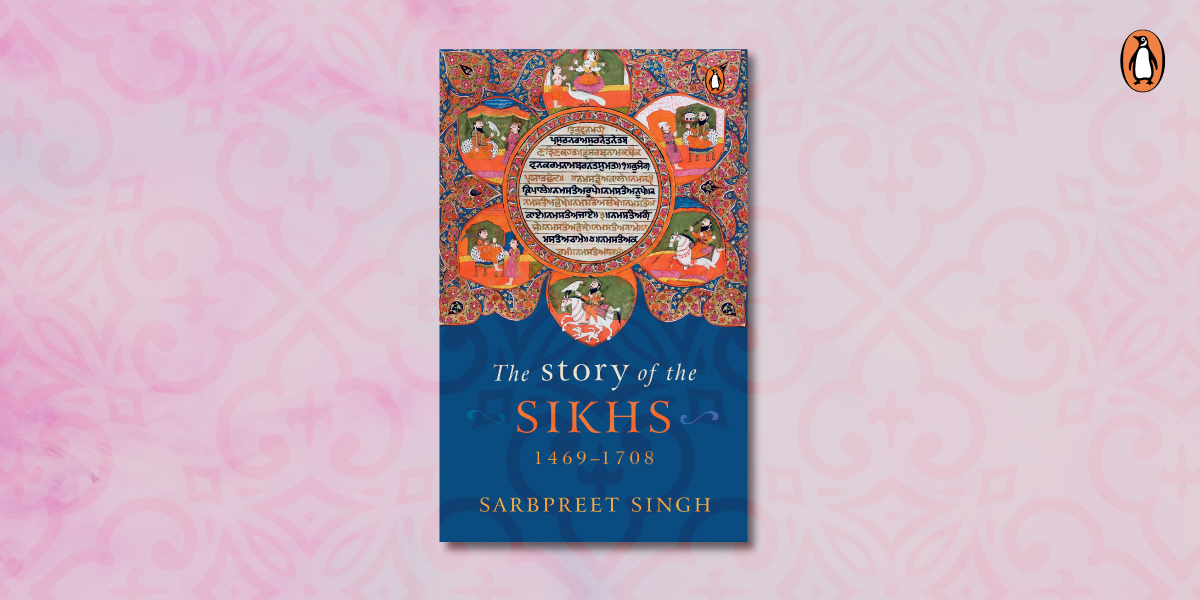
The Story of the Sikhs
The Story of The Sikhs || Sarbpreet Singh
In The Story of the Sikhs, author Sarbpreet Singh helps us reimagine the lives of the Sikh Gurus through a rich narrative that that intricately weaves in selections from the Guru Granth Sahib, the Dasam Granth and epic Braj poetry.
Starting from the birth of the first guru, Guru Nanak, the book charts the lives of the ten Gurus. Through carefully curated stories, the book does not just show the egalitarian ideals and compassionate worldview that have come to define the faith, but also sheds light on the historical context that defined the foundational principles which guided Sikhs during the era of each Guru.
Sarbpreet has deliberately approached this retelling as a storyteller rather than as a student of history in an attempt to make the work accessible and engaging. Immersive and expansive, The Story of the Sikhs is a tour de force that weaves a multi-dimensional tapestry of narrative and poetry.
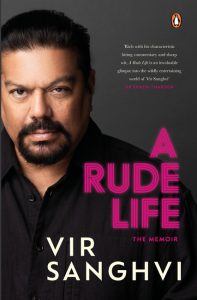
A Rude Life
A Rude Life || Vir Sanghvi
Vir Sanghvi, in A Rude Life, turns his dispassionate observer’s gaze on himself, and in taut prose tells us about all that he’s experienced, and nothing more for he’s still a private man. He unhurriedly recounts memories from his childhood and college years, moving on to give us an understanding of how he wrote his biggest stories, while giving us an insider’s view into the politics and glamour of that time.
This is an explosively entertaining memoir that details one of the most eventful careers in Indian journalism. Studded with a cast of unforgettable characters like Morarji Desai, Giani Zail Singh, Amitabh Bachchan, Dhirubhai Ambani and a host of other prominent political and cultural figures, A Rude Life is a delicious read.
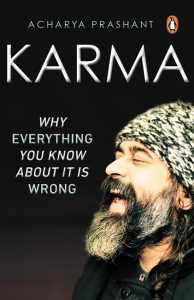
Karma
Karma || Acharya Prashant
The meaning of ‘Karma’ stands distorted by centuries of misplaced fictionalization. Karma remains a disquieting enigma to the few who refuse to accept compromised notions. This book is for them.
If to live rightly is to act rightly, what then is right action? This has tormented us since ages. The scriptures answer this, but without stooping from their cryptic heights. Nor do they advise how their ancient words apply to the present. Acharya Prashant’s work provides the missing link. He imparts clarity, leaving nothing to conjecture or belief.
Acharya Prashant demolishes ubiquitous beliefs and outdated notions to reveal some simple truths. When we ask, ‘What to do?’, the book handholds us into ‘Who is the doer? What does he want from the deed?’ This shift provides the solutions, and finally the dissolution of the question.
By My Own Rules
By My Own Rules || Ma Anand Sheela
Irrepressible, honest, bold and charming, very few can claim to have lived life on their own terms as Ma Anand Sheela has. Yet controversy continues to follow her. Whether it is her portrayal in Wild Wild Country or the Osho International Foundation’s take on the Netflix series, a wide spectrum of opinions has cloaked for too long the real Sheela Birnstiel. In the 1980s, she was the personal secretary of Bhagwan Shree Rajneesh and managed the Rajneesh commune in Wasco County, Oregon, USA. She was eventually sentenced to prison, served her time and walked out in three years.
Today, she runs homes for the disabled and the elderly in Switzerland. Almost three decades later, she is still in love with Bhagwan and his teachings. From rebuilding her life from scratch in Switzerland to an interview with Karan Johar on her grand return to India, she is adored and vilified by the world at the same time. In her memoirs, By My Own Rules, Ma Anand Sheela bares all-her life, her lessons, her beliefs, her inspiration and what makes her live life on her own terms.
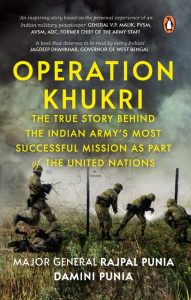
Operation Khukri
Operation Khukri || Major General Rajpal Punia, Damini Punia
This is the true story behind the Indian Army’s Most Successful Mission as part of the United Nations. The year was 2000. Sierra Leone, in West Africa, had been ravaged by years of civil strife. With the intervention of the United Nations, two companies of the Indian Army were deployed in Kailahun as part of a United Nations peacekeeping mission.
Soon, the peaceful mission turned into a war-like standoff between Major Punia’s company and the Revolutionary United Front (RUF) rebels in Kailahun, with the Indian peacekeepers cordoned off for seventy-five days without supplies. The only way home was by laying down their weapons.
Operation Khukri was one of Indian Army’s most successful international missions, and this book is a first-hand account by Major Rajpal Punia, who, after three months of impasse and failed diplomacy, orchestrated the operation, surviving the ambush of the RUF in a prolonged jungle warfare twice, and returning with all 233 soldiers standing tall.
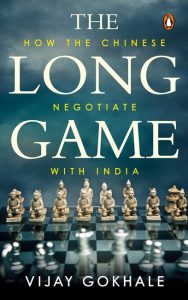
The Long Game
The Long Game || Vijay Gokhale
India’s relations with the People’s Republic of China have captured the popular imagination ever since the 1950s but have rarely merited a detailed understanding of the issues. Individual episodes tend to arouse lively debate, which often dissipates without a deeper exploration of the factors that shaped the outcomes. This book explores the dynamics of negotiation between the two countries, from the early years after Independence until the current times, through the prism of six historical and recent events in the India-China relationship. The purpose is to identify the strategy, tactics and tools that China employs in its diplomatic negotiations with India, and the learnings for India from its past dealings with China that may prove helpful in future negotiations with the country.
A Begum and A Rani
A Begum and A Rani || Rudrangshu Mukherjee
Exploring the lives of two remarkable women who chose to enter a field of activity which, in the middle of the nineteenth century, was seen a male domain, this book brings to light how unusual circumstances catapulted Begum Hazrat Mahal of Awadh and Rani Lakshmibai of Jhansi into the rebellion of 1857. Both of them sacrificed their lives trying to overthrow the British rule, which they considered to be alien and oppressive. Their resistance and their deaths are heroic and poignant.
The book captures the different trajectories of their lives and their struggles. In different but adjacent geographies these two women, both married into royal houses, decided to uphold traditions of ruling and culture that their husbands had established. These traditions had been subverted by the policies of Lord Dalhousie who had annexed both Awadh and Jhansi. While noting these similarities, it should be highlighted that Awadh was a large and sprawling kingdom with a long history whereas Jhansi was a small principality.
The rani and the begum never met, even though they were embroiled in the same struggle. It is the rebellion of 1857-58 that provides the context, which makes these two outstanding women feature in the same narrative. This book tells the story of two women in a rebellion.
The afterlives of the begum and the rani took on very different hues. The rani was made a nationalist icon: a woman on horseback with a raised sword, who died in battle. The begum was a relatively forgotten figure who did not get her due place in the roll call of honour. Revisiting the revolt of 1857 from a unique perspective and looking at their afterlives, the myths, this book attempts to set the record straight.
Looking at the revolt of 1857 from a different perspective, A Begum & A Rani is an act of retrieval.
Khwabnama
Khwabnama || Akhtaruzzaman Elias
Bengal in the 1940s. Having overcome the famine and the revolt of the sharecroppers, Bengal’s peasants are uniting. Work is scarce and wages are low. There is barely any food to be had. The proposal for the formation of Pakistan, the elections of 1946, and communal riots are rewriting the contours of history furiously. Amidst all this, in an unnamed village, a familiar corporeal spirit plunges into knee-deep mud. This is Tamiz’s father, the man in possession of Khwabnama.
At first glance, Khwabnama is the tale of a harmless young farmhand who becomes a sharecropper and dreams of a future that has everything to do with the land that he cultivates and the soil that he tills. The fabric of his dreams, though, have as much to do with the history of
the land as its future, and as much to do with memories as with hope.
In this magnum opus, which documents the Tebhaga movement, wherein peasants demanded two-thirds of the harvest they produced on the land owned by zamindars, Akhtaruzzaman Elias has created an extraordinary tale of magical realism, blending memory with reality, legend with history and the struggle of marginalized people with the stories of their ancestors.
A Passage North
A Passage North || Anuk Arudpragasam
A Passage North begins with a message from out of the blue: a telephone call informing Krishan that his grandmother’s caretaker, Rani, has died under unexpected circumstances-found at the bottom of a well in her village in the north, her neck broken by the fall. The news arrives on the heels of an email from Anjum, an impassioned yet aloof activist Krishnan fell in love with years before while living in Delhi, stirring old memories and desires from a world he left behind.
As Krishan makes the long journey by train from Colombo into the war-torn Northern Province for Rani’s funeral, so begins an astonishing passage into the innermost reaches of a country. At once a powerful meditation on absence and longing, as well as an unsparing account of the legacy of Sri Lanka’s thirty-year civil war, this procession to a pyre ‘at the end of the earth’ lays bare the imprints of an island’s past and the unattainable distances between who we are and what we seek.
Written with precision and grace, Anuk Arudpragasam’s masterful novel is an attempt to come to terms with life in the wake of devastation, and a poignant memorial for those lost and those still alive.
The Incomparable Festival
The Incomparable Festival || Mir Yar Ali “Jan Sahib”
The Incomparable Festival (Musaddas Tahniyat-e-Jashn-e-Benazir) by Mir Yar Ali (whose pen name was Jan Sahib) is a little known but sumptuous masterpiece of Indo-Islamic literary culture, presented here for the first time in English translation. The long poem, written in rhyming sestet stanzas, is about the royal festival popularly called jashn-e-benazir(the incomparable festival), inaugurated in 1866 by the Nawab Kalb-e-Ali Khan (r. 1865-87) with the aim of promoting art, culture and trade in his kingdom at Rampur in northern India. The task of commemorating the sights and wonders of the festival was given to the hugely popular writer of rekhti verse, the tart and playful sub-genre of the ghazal, reflecting popular women’s speech, of which Jan Sahib is one of the last practitioners.
Structured as an ode to the nawab, the poem is a world-album depicting various classes on the cusp of social upheaval. They include the elite, distinguished artists and commoners, brought together at the festivities, blurring the distinction between poetry, history and biography, and between poetic convention and social description. The book is a veritable archive of the legendary khayal singers, percussionists, and instrumentalists, courtesans, boy-dancers, poets, storytellers (dastango) and reciters of elegies (marsiyago). But, above all, the poem gives voice to the ‘lowest’ denizens of the marketplace by bringing to light their culinary tastes, artisanal products, religious rituals and beliefs, and savoury idioms, thereby focusing on identities of caste and gender in early modern society.
This Penguin Classics edition will be of interest not just to the Urdu and Hindi literary historian, but to specialists and readers interested in the histories of music, dance, and the performative arts, as well as scholars of gender and sexuality in South Asia. Lovers of Urdu poetry will find in it a forgotten masterpiece.
Savarkar
Savarkar || Vikram Sampath
Decades after his death, Vinayak Damodar Savarkar continues to uniquely influence India’s political scenario. An optimistic advocate of Hindu-Muslim unity in his treatise on the 1857 War of Independence, what was it that transformed him into a proponent of ‘Hindutva’? A former president of the All-India Hindu Mahasabha, Savarkar was a severe critic of the Congress’s appeasement politics. After Gandhi’s murder, Savarkar was charged as a co-conspirator in the assassination. While he was acquitted by the court, Savarkar is still alleged to have played a role in Gandhi’s assassination, a topic that is often discussed and debated.
In this concluding volume of the Savarkar series, exploring a vast range of original archival documents from across India and outside it, in English and several Indian languages, historian Vikram Sampath brings to light the life and works of Vinayak Damodar Savarkar, one of the most contentious political thinkers and leaders of the twentieth century.
Strictly at Work
Strictly At Work || Sudha Nair
Simi works in marketing at a furniture company. Ranvir is an analyst at a finance startup.While their desks happen to be on the same floor at Bizworks, a swanky co-working space in Bangalore, their paths aren’t meant to cross. But as circumstances bring them together again and again, they find it harder to deny the spark between them.
In a live-in relationship with his girlfriend, Ranvir doesn’t expect to have feelings for someone else. And while Simi’s family pushes for the perfect arranged match for her, she knows she doesn’t love the man her parents want her to marry.
When their personal lives clash with their attraction at work, Simi and Ranvir must decide if they want to remain just co-workers or mean more to each other.
Harsh Realities
Harsh Realities || Harsh Mariwala, Ram Charan
Breaking away from the shackles of family-run Bombay Oils Industries Ltd, Harsh Mariwala founded Marico in 1987. Today, the homegrown Marico is a leading international FMCG giant which recorded an annual turnover of over Rs 8000 crore last year. Their products, like Parachute, Nihar Naturals, Saffola, Set Wet, Livon and Mediker, are market leaders in their categories. This is the story of grit, gumption and growth, and of the core values of trust, transparency and innovation which have brought the company to its current stature. Co-authored by leading management thinker and guru Ram Charan, Harsh Realities is a much-awaited business book by an innovative and clear-headed leader who built a highly professional, competitive business from the ground up.
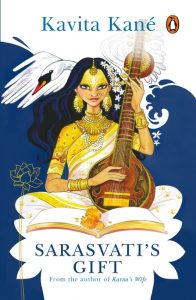
Sarasvati’s Gift
Sarasvati’s Gift || Kavita Kane
Sarasvati, the feminine force worshipped as the goddess of learning, is a household name, yet we barely know much about the goddess. She is known as a lost river and seen as a singular goddess, never as part of a couple, such as Shiva-Parvati or Lakshmi-Narayan. In Sarasvati’s Gift, Kavita Kane brings to light Sarasvati’s story-the goddess of art, music and knowledge-told in the voices of nameless celestials, powerful gods and lesser mortals. The book explores her relationship with her Creator, Brahma, and their unusual marriage-a union of fiercely independent minds and the most non-conforming, unconventional of the Triumvirate couples. As these peripheral figures and silent catalysts take centre stage, we get a glimpse of an extraordinary woman and her remarkable story, obscured and buried under myths and legends.
Brand Activism
Brand Activism || Philip Kotler, Christian Sarkar
What happens when businesses and their customers don’t share the same values? Or, for that matter, when employees of a company don’t share the same values as their executives? Welcome to the world of Brand Activism.
Companies no longer have a choice. Brand Activism consists of business efforts to promote, impede, or direct social, political, economic, and/or environmental reform or stasis with the desire to promote or impede improvements in society. It is driven by a fundamental concern for the biggest and most urgent problems facing society.
Brand Activism: From Purpose to Action is about how progressive businesses are taking stands to create a better world.
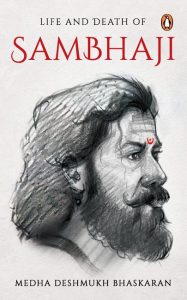
Life and Death of Sambhaji
Life and Death of Sambhaji || Medha Deshmukh Bhaskaran
It begins to dawn on the nine-year-old Sambhaji that his father has fled from the clutches of the Mughal badshah Aurangzeb and left him behind. He must now find his way back home with the help of strangers . . .
Under the shadow of an illustrious father, Sambhaji finds himself thrust into the Maratha-Mughal conflict from a tender age. His mistakes cost him dearly and when his father suddenly dies and he becomes the chhatrapati, it is as if he has inherited a crown of thorns.
In the nine years that follow, he faces a constant battle-internally, as palace intrigues simmer to kill him, and externally, as Aurangzeb descends on the Deccan with full military force.
Even Chhatrapati Shivaji had never faced a full-blown Mughal aggression.
Will he be able to protect the Maratha nation and Swaraj that was his father’s dream? Will he prove to be a worthy son to his father-in life as well as in death?
History has been unfair to Sambhaji, but it can’t deny that he inspired a generation of Maratha warriors, who eventually ensured the end of Aurangzeb’s jihad.
Asoca
Asoca || Irwin Allan Sealy
Asoca-often spelled Ashoka-was hailed as Ashoka the Great, the emperor who ruled most of the Indian Subcontinent and was pivotal in the spread of Buddhism from India to other parts of Asia in the third century BC.
But his life as emperor was not always led by non-violence. History has it that he masterminded one of the biggest and deadliest wars ever fought, and it was the insurmountable grief he experienced at the sight of the people dying and dead on the battleground that made him turn to Buddhism and take a vow of ahimsa.
Who was the man, and who was the king? What were his demons, and what gave him strength? This historical novel, drawn from research and portrayed with energy and complexity, transports the reader to the era of the Mauryan dynasty with atmospheric vividness and insight. Epic in scope and Shakespearean in drama, Asoca: A Sutra leaves the reader breathless with the full-bodied richness of Sealy’s prose, his trademark whimsy and his imaginative modern reconstruction of that enigmatic and brilliant ruler of the Indian subcontinent.
Brands, in what they show, tell, feel, smell and taste like, say a lot. Our five senses play a significant role in the recognition of a brand and how it is received by the audience. Sandeep Dayal tells how brain sciences can help brand ambassadors and brand theatres of operations engage the human senses. It would be right to say that all the cognitive brand marketers must note the finer nuances for branding that this book offers.
Let us read this extract from his book to understand that when designing and executing brand experiences, it is important to think of a plan for each sense, or at least consider its impact on them.
*
Right Between the Ears || Sandeep Dayal
Most real-world brands have a ‘theatre of operations’ and ‘ambassadors’. They go to market through retail stores and/or a salesforce.
Sergio Zyman was the chief marketing officer of the Coca-Cola Company when they sponsored the Summer Olympics in Atlanta in 1996. Years later, I was Sergio’s chief marketing officer in his consulting company. Sergio told me that at the time when he ran the sponsorship for the Olympics, he had his teams build a thick binder called the ‘Red Book’, which was a detailed playbook for everything that Coke would do at the games. How and where Coke would be seen, who would do and say what and when, what it all meant and how it fit together in a single brand mosaic.
The Olympics would be Coke’s theatre of operation. Anyone with the red Coke shirt would be a brand ambassador, and every moment would be choreographed according to the Red Book.
When consumers step into a brand’s theatre of operations or interact with its brand ambassadors, there is an opportunity to build immersive experiences for them by engaging their five senses. The strongest brand experiences, as we learnt before, are those that are associated with other prior experiences. They are recalled more easily and better than others, last longer and feel more important to the brain. When marketers weave their brands with the human senses, they create even more associations with the experience, making it easier to recall. That’s why immersive sensory brand experiences make deep impressions on our brains.
If you walk down the Magnificent Mile in Chicago, even if you have never done that before, you can recognize the Burberry store with its trademark black-and-brown tartan cross hatches from blocks away with no help at all. The store design itself makes a statement about the brand. As you step inside, you can smell it.
During spring and summer, Zaluti scent machines diffuse the spring crocus scent and during autumn and winter, a special autumn scent. You look around and see that the wall colors are neutral with darker accents and furniture. That is deliberately orchestrated to bring to mind Burberry’s classic trench coat or tartan.
The personal shopper who greets you leaves an impression with how they look and sound, and how they gently direct you to where you want to go in the store. Every one of those sensations embody the Burberry brand.
The brand theatre of operations does not end with the store. Burberry also live-streams its runway shows, to share the excitement of decloaking new fashions as they happen with its fans worldwide, and lets them buy select new products online with its ‘see now, buy now strategy’.
Even brands like Away, Glossier, Farmer’s Dog, Made In Cookware, Lively Intimates and Everlane, which started out as pure online brands, have opened exciting stores on Lafayette Street in New York. They realized that bringing people to a brick-and-mortar store was the best way to create immersive experiences for customers—and that is what many consumers want. Virtual companies like Facebook and Google have opportunities to expand their brand theatre of operations into the real world with events and sponsorships.
**
Read Sandeep Dayal’s Right Between the Ears to get insights into the fascinating world of branding and hold on to the anchors in the age of hyper-competition by understanding why people make the choices they do and how to keep a brand relevant.
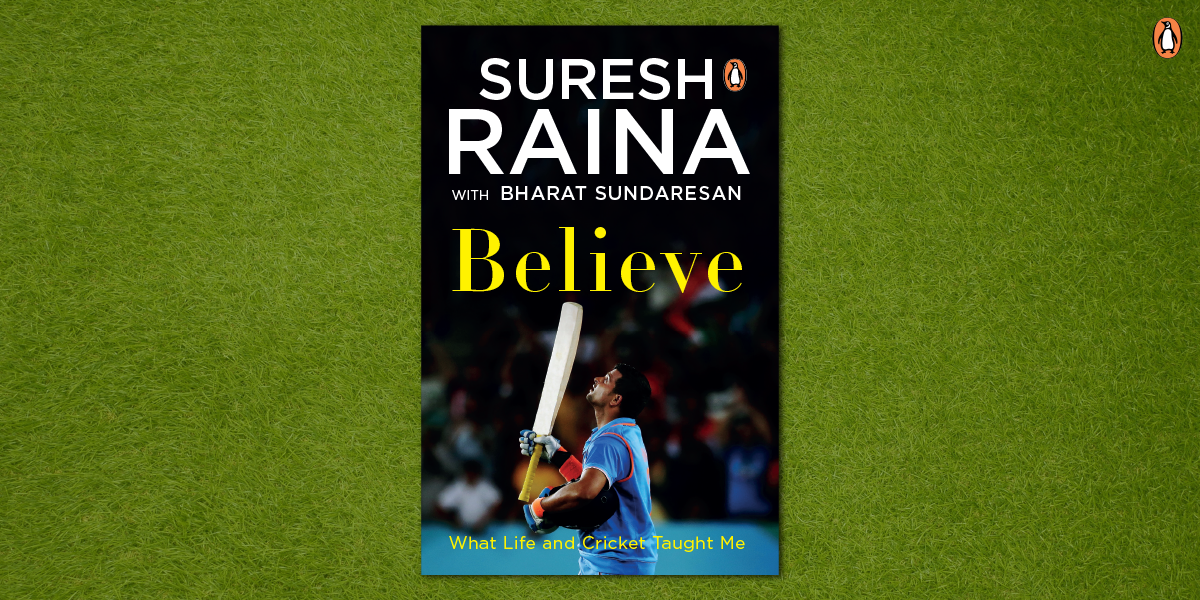
In his book Believe, Suresh Raina takes us through the challenges he faced as a young cricketer. He was bullied in school and at cricket camps, but he always punched above his weight, overcoming every adversity life threw at him and never giving up. This is the story of the lessons he learnt and the friendships he built.
Peppered with invaluable insights – about the game and about life – that Raina acquired from senior colleagues like M.S. Dhoni, Rahul Dravid, Anil Kumble, Sachin Tendulkar and Sourav Ganguly, among others, this book will make you believe in the power of hard work, love, luck, hope and camaraderie. It is a journey through the highs and lows in the cricketing career of a man who saw his world fall apart and yet became one of the most influential white-ball cricketers India has ever seen.
Enjoy this little excerpt that explores his relationship with the legend M.S. Dhoni.
~
Believe||Suresh Raina, Bharat Sundaresan
Mahi Bhai always makes fun of me for being clumsy. I’ve seen him talk about how if I am around in his room, I would end up dropping something or walking into something. ‘Tu rahega toh kuch na kuch hoga,’ he likes to say. Maybe there’s some truth there. I am just a very energetic person, and I am always up and about as you might have seen me on the field.
There’s another thing that he is amused by. He’ll talk about how I would saunter into his room, order a lot of food over room service and not even wait for it to arrive. I’ll tell you why I am always keen on ordering my own food. What happens with a lot of them is that they would order nothing but chicken and roti. I, on the other hand, am a vegetarian. Moreover, I never have maida, because back home, I was used to having rotis made of ragi atta. My eating habits are pretty desi, so I need a good number of vegetable dishes and can’t do without a dal.
So, Mahi would ask me to order my own food. But often, after ordering, I would remember that I had a gym session and end up not eating that food. But I made it a point to not waste it and would go back later for it, even if by then the food had gone cold.
Talking of room service always reminds me of the times Robin Uthappa and I would order food on Mahi Bhai’s tab. And of that time in Pakistan when Rahul Bhai was captain and said, ‘Boys, order whatever you want. It’s on me.’ We made him pay for that reckless statement.
It involved, me, Irfan, Robin and Mahi Bhai. It was Dhoni’s idea. He just called up room service and asked for a double of everything we had ordered. Two milkshakes, an extra biryani, two extra rotis, two more dals, two more sabzis. Rahul Bhai couldn’t stop laughing at us. He eventually admitted that he’d learnt his lesson and that he would never give us a free hand again with room service. We did end up finishing everything we’d ordered, though.
That’s the kind of fun Mahi Bhai and I would have at other people’s expense all the time. We are like partners in crime when it comes to pulling someone else’s leg. I’ve been at the receiving end too at times, when he decides to turn on me. We’ve had an interesting relationship over the years.
I have also gone through so much because of our friendship. Like the whole bias angle. People would say, ‘Oh, Raina gets picked because he is Dhoni’s friend.’ But people forget the contributions I have made for teams captained by him—India as well as CSK. That’s how you build trust in a player as captain.
For us, it was like how when you have a neighbour over at your place all the time. You can take liberties with that person, saying yeh toh ghar ki baat hai. I played so much of my career down the order, and he would say let some of the others play at the top. At times I would say, ‘Humein bhi upar khelna hai.’ But he would respond, ‘Nahi, tu at will chhakke marta hai . . .’ and say that the others, be it Rohit or Virat or Ajju (Ajinkya Rahane), were better off at the top of the order. I was more reliable in those situations. He knew my mindset. He knew what brought the best out of me. And I trusted him. It would hurt when people kept linking our friendship to my being part of the team. I don’t think the numbers lie. I’ve always earned my spot in the team, just like I earned Mahi Bhai’s trust and respect. I was there for him. He always made me feel special. Nobody can take away from that. And it doesn’t matter what people say . . .
We grew closer and closer, and even got to know a lot about each other’s personal lives and families. I went to his house and met his family. After meeting them, I realized why he is so sorted. Sakshi and he came to meet my parents soon after their wedding. A UP–Bihar cultural connection there as well.
There’s always a lot of talk about Mahi Bhai being Captain Cool. But I can tell you that is not his greatest strength as captain. He will never compromise on the game. That’s what I like about him the most. That’s what I think makes him such a legendary captain and a fantastic leader.
With the world opening up slowly, it seems that travel might be a possibility in the near future, especially if you’re fully vaccinated. Does this mean it’s time to really think about where to go, once we can?
Here is a list of books by authors who’ve written about different places and their experiences. You’re sure to get some inspiration. If you’re not planning to travel at all, these books will help you leave your daily routine to travel to someplace far, through the comfort and safety of your home.
Don’t Ask Any Old Bloke For Directions
After twenty years in the Indian Administrative Service, P.G. Tenzing throws off the staid life of a bureaucrat to roar across India on an Enfield Thunderbird, travelling light with his possessions strapped on the back of his bike. On the nine-month motorcycle journey without a pre-planned route or direction, he encounters acquaintances who appear to be from his karmic past: from the roadside barber to numerous waiters and mechanics― fleeting human interactions and connections that seem pre-ordained. Life on the road is full of pot holes in more ways than one, but Tenzing acquires a wheelie’s sixth sense.
Kathmandu
Kathmandu is the greatest city of the Himalayas a unique survival of cultural practices that died out in India 1000 years ago. It is a carnival of sexual license and hypocrisy, a jewel of world art, a hotbed of communist revolution, a paradigm of failed democracy, a case study in bungled Western intervention and an environmental catastrophe. Kathmandu follows the author’s story over a decade in the city and unravels the city’s history through successive reinventions of itself. Erudite, entertaining and accessible, this is the distinctive chronicle of a fascinating city.
Tales of the Open Road
Ruskin Bond’s travel writing is unlike what is found in most travelogues, because he will take you to the smaller, lesser-known corners of the country, acquaint you with the least-famous locals there, and describe the flora and fauna that others would have missed. And if the place is well known, Ruskin leaves the common tourist spots to find a small alley or shop where he finds colourful characters to engage in conversation. Tales of the Open Road is a collection of Ruskin Bond’s travel writing over fifty years.
The Other Side of the Divide
Pegged on journalist Sameer Arshad Khatlani’s visit to Pakistan, this book provides insights into the country beyond what we already know about it. These include details on the impact of India’s soft power, thanks to Bollywood, and the remnants of Pakistan’s multireligious past, and how it frittered away advantages of impressive growth in the first three decades of its existence by embracing religious conservatism.
Dare Eat That
From using sign language to haggle over ant eggs in Bangkok to being hungry enough to eat a horse in Luxembourg, from finding out the perfect eel to barbecue to discovering the best place to source emu eggs in India, Dare Eat That explores their journey to eat every species on earth, at least once!
Invisible Cities
In Invisible Cities Marco Polo conjures up cities of magical times for his host, the Chinese ruler Kublai Khan, but gradually it becomes clear that he is actually describing one city: Venice. As Gore Vidal wrote ‘Of all tasks, describing the contents of a book is the most difficult and in the case of a marvellous invention like Invisible Cities, perfectly irrelevant.’
A Moveable Feast
Hemingway’s classic memoir of Paris in the 1920s, published for the first time as he intended – from the Nobel Prize-winning author of A Farewell To Arms.
Published posthumously in 1964, A Moveable Feast remains one of Ernest Hemingway’s most beloved works. Since Hemingway’s personal papers were released in 1979, scholars have examined and debated the changes made to the text before publication. Now this new special restored edition presents the original manuscript as the author prepared it to be published.
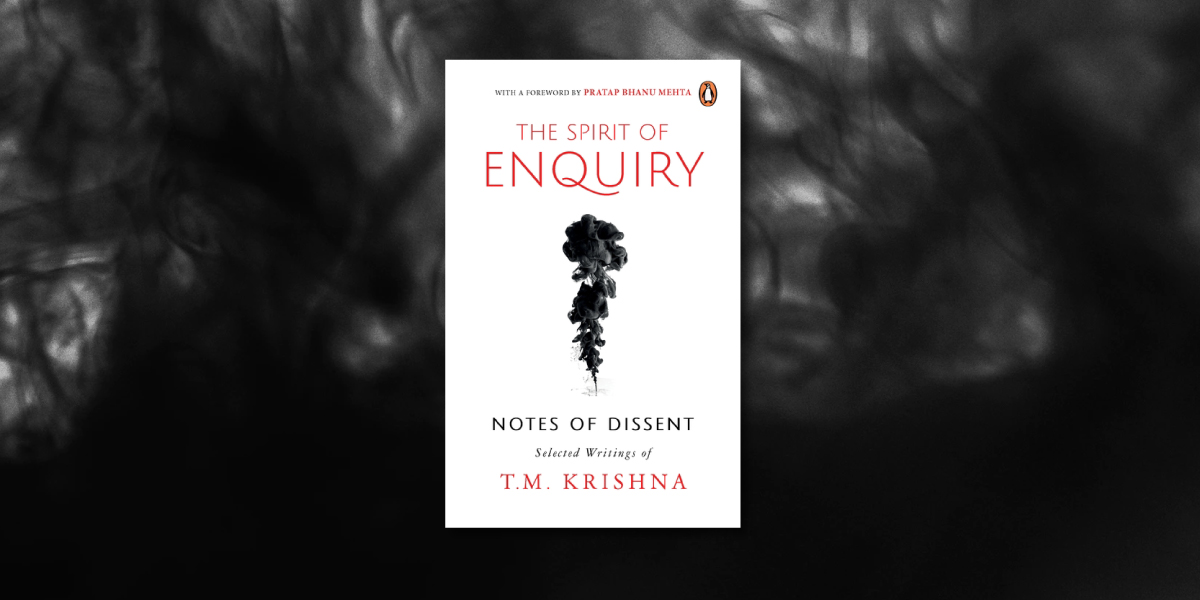
The Spirit of Enquiry by Carnatic vocalist and writer T.M. Krishna has a spectacular piece on the legendary singer S.P. Balasubrahmanyam that highlights the range and depth in SP’s music and how his brilliance came from being musically selfless. Read on for a glimpse!
*
SPB happens!
SPB was in love, surprised, joyous, excited, fearful, sad, contemptuous and disgusted. He was the father, son, lover, brother, friend, villain and hero. He was the voice of the privileged and the questioning voice of the oppressed and marginalized. He was an urbanite, a villager and could belong to any era. In his voice we found every social, cultural and aesthetic possibility. This allowed every individual, irrespective of their sociopolitical location, to find himself/herself within his voice at one time or another. This self identification gave SPB a universalism that has eluded every other Indian playback singer. And I would like to stress with extra emphasis that no other ‘voice’ in Indian film history has belonged to such a diverse cross-section of Indian society.
SPB came from a certain social construction and to be able to debaggage that in his work would have been impossible, unless he was able to leave S.P. Balasubrahmanyam the person behind the moment
he stood in front of the mike. SPB had an instinctive way of tapping into various cultures and demographics. This is emotional insight of the highest order and difficult to explain. For all other singers, there was and is a social-range limit to their voice.
There is one possible answer to this mystery. Great musicians are those who listen carefully, attentively and receive with respect. Listening is not limited to music; it is as much about accent, dialect and pronunciation. It is beyond listening in the sonic sense; it includes learning varied body languages, internalizing social contexts and realities. SPB seems to have been able to absorb this from all that he witnessed in life. In other words, he let life imbue his musicality. Therefore, when he sang a song, it had a larger story to tell; not just the one being communicated by the director, music director, cinematographer or actor. SPB’s voice became the voice of the idea. He abstracted the song from the specificity of the film and made it a human calling.
If there is one indicator of the nuance in his listening, it is in the way he enunciated the words in a song. Most people do not realize that pronouncing a word is entirely different from singing it. As a part of music, the word becomes a musical body and its highs, lows, elongation and emphasis undergo a subtle but crucial transformation. Only if these happen will the music flow. Added to this complication is the fact that these alterations are language-, dialect- and culture specific. In other words, depending on the character SPB was singing for, the musical word had a specific etched acoustic form. And SPB gave every musical word, phrase and line the social, political and aesthetic identity it demanded.
The Spirit of Enquiry || T.M. Krishna
Such a person had to be selfless, musically. This comes from a realization of one’s role that as a musician, one is a catalyst and not an originator. When you are a bridge between people, ideas and feelings, ‘I’—the individual identity—has to become invisible. This sounds very close to an actor’s reality, but is actually much harder to accomplish. The actor enters the secondary reality of the film using the character he is playing, separating himself from the role. The two realities are clearly demarcated.
On the other hand, the playback singer comes in momentarily to lend his voice. In the studio, away from any semblance of the cinematic reality, he needs to give life to an idea, keeping in mind the described context, the actor’s image and the music director’s composition. And while adhering to all these requirements, he needs to somehow find his own bearings.
SPB lived selflessly, transcending the imagination of all these people but yet put aside the craving for the ‘spotlight’. He realized that the ‘self’ is established when it forgets its own presence.
**
For the first time, T.M. Krishna’s key writings have been put together in this extraordinary collection. The Spirit of Enquiry: Dissent as an Art Form draws from his rich body of work, thematically divided into five key sections: art and artistes; the nation state; the theatre of secularism; savage inequalities; and in memoriam.
At present, there are hundreds of skin-care products promising effective results and miraculous changes. With a wide range of ingredients packed and presented on a platter, to judge and choose the ones that are truly beneficial for your skin is a task. How do you figure out which product is ideal for your skin type and which one is an absolute no-no?
Dr Anupriya Goel, an aesthetic dermatologist and a leading expert in non-surgical aesthetic medicine, shares some ways to help you understand the different elements of a product label. So, before you stock your shelves with random skin-care products, consider the given markers and know what all they offer.
Here’s an excerpt from her book on how one can read a product label like a pro.
*
How to Get Glass Skin || Dr Anupriya Goel
A Louis Vuitton and a Hidesign bag are both made of leather. Yet the price difference is a world apart. It’s up to you, the consumer, to choose the price point. A Hidesign bag is a really good-value leather bag. It’s the same for skincare. Expensive does not necessarily mean good. Not all that glitters is gold. Especially when it comes to skincare products. In fact, especially with skincare products, what’s inside a bottle or jar counts more than the packaging. But there’s a catch. How do you really know if the product you want to buy will deliver all that it claims to? After all, you do want value for every buck you spend.
The best way to know if a product is worth your money is to be able to understand the ingredients it contains. You already know what active ingredients you need to look out for that work best for your skin type and skin condition. Now let’s learn how to read a product label, so you are guaranteed those ingredients for what you are paying.
The elements of a product label
Even though the outer packaging of every product seems different, the story behind every label is rather similar. Every product that is legitimate needs to follow the FDA guidelines and state the following:
1. Brand name and product name
2. Description of the product/product type
3. List of ingredients
4. Net quantity of the product
5. Contact details of manufacturer
For example, in the picture, the brand name of the product is ‘Berkowits’ and the product name is ‘Nourish’. The product type is a conditioning shampoo. The net quantity of the product is 1 litre. The details of the
manufacturer are mentioned on the right hand side of the label (behind the bottle). It is extremely important to know the quantity of the product before you pay the bill, so check whether it’s giving you value for money.
Now, other than the information above, it is vital to understand the list of ingredients and the meaning of the symbols on every product.
What is an INCI List?
An INCI (International Nomenclature for Cosmetic Ingredients) list is simply the ingredients mentioned on the back of the product in their chemical and Latin forms.
For example, the chemical name for water is aqua.
Below are some INCI list names of common ingredients:
1. Aqua: water
2. Caprylic/capric triglyceride: liquid fraction of coconut oil
Some preservatives commonly used for natural cosmetics and skincare products: Benzyl alcohol, dehydroacetic acid, potassium sorbate, sodium benzoate.
You can find the complete list of preservatives and perfume agents on the INCI decoder website (www.incidecoder.com).
**
To know more about the ingredients in products, what the symbols on the packaging of products mean, and how does one read an INCI List, dive into the informative pages of Dr Anupriya Goel’s book How to Get Glass Skin.
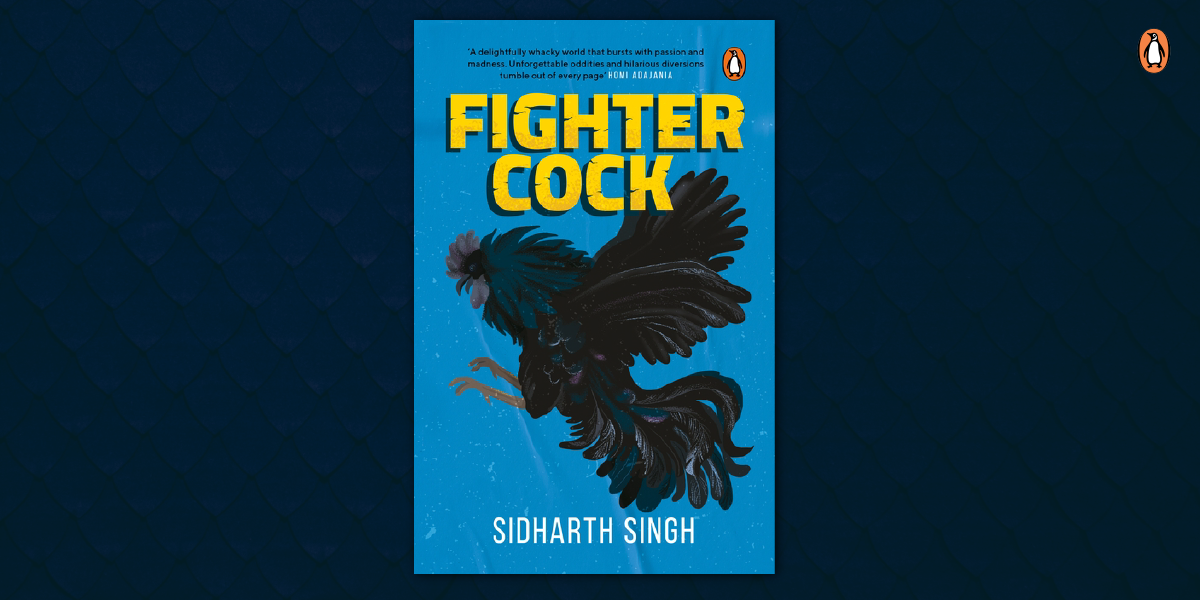
This is a narrative about the clash within the royal family which traces the arc of gory violence and brutal bloodshed. In all of Raja Ratan Shah’s life, nobody had made him feel more insecure than his own bastard son, Teja. With no heir in sight, Teja felt entitled to usurp the power. This marked the beginning of a series of cockfights and conflicts.
Here’s an excerpt from the book which gives a glimpse of one of the many cockfights.
*
Fighter Cock || Sidharth Singh
One of Teja’s men brought a fierce-looking Aseel into the pit. The raja picked one of his Karianaths, a young battle stag that was taken inside the pit by its handler. The cocks were pitted by a touch of beaks, and the fight began. The Karianath was aggressive from the get-go, circling the Aseel in top spinner style, using quick footwork. The Aseel, a battle cock of some repute, stood its ground, weaving and bobbing, looking for an opening. As the Karianath tried to take the Aseel head-on, the Aseel jumped up in the air and came crashing down on its head, slashing its neck with a short-blade fitted on its left foot, killing it instantly. Half the crowd ‘ooh’ed in pity while the other half ‘aah’ed in joy. A lot of money exchanged hands. This was Teja’s sixth straight win of the night, and he was jubilant.
An old Bollywood hit played shrilly on loudspeakers installed around the arena. Teja and his henchmen danced wildly to the song, rousing the crowd to join in, and turned the arena into a rave. The raja plied Sheru with more mahua as he moved on to another ganja chillum, blowing smoke like a steam engine and descending further into the grip of lunacy. By now, Sheru was also drunk and had no choice but to drop his guard and enjoy this insane spectacle. The raja signalled for the music to stop and for the next fight to begin. Teja decided to field the winning cock once again while the raja entered his top fighter, the champion battle cock ‘Toofani’, in this bout.
As earlier, the cocks were pitted beak to beak and the fight began. Teja’s Aseel, overconfident from the previous bout, went for the kill immediately, attacking the Karianath from all angles, in a departure from its earlier bob-and-weave style. Toofani circled around in a slinky top-spinning style, its quick hopping reminiscent of B-grade kung fu films. The Aseel took a few quick jabs at the Karianath, who warded them off with ease. Then the Aseel charged down the pit and took a giant leap. The Karianath countered with a massive on-the-spot jump, and, in a gory mid-air collision, kicked the Aseel in the eyes with both its long-bladed feet and blinded it completely.
Blood gushed out of the Aseel’s eyes and the crowd went berserk, shouting with bloodlust. The raja jumped up from his seat and screamed, ‘Kill the bastard! Kill the motherfucker!’ The Aseel hopped around the pit in panic. Toofani strutted to the far end for a long run-up and, then, charging down the pit, leapt into the air and pounced on the helpless Aseel, pinning it to the ground. It then proceeded to kill its foe with repeated machine-gun pecks to its head and neck in a crazed quick-beak style. By the end of the fight, Toofani was drenched in the blood of its victim. It walked up, as if drunk on its gory victory, towards the cheering spectators and fanned its wings violently, splashing blood on the crowd, and making them ecstatic.
**
To know more about the conflicts and cockfights in the royal household of Shikargarh dive into the pages of Sidharth Singh’s rough and ready noir titled Fighter Cock.
Banaras, Varanasi, Kashi. India’s holy city on the banks of the Ganges has many names but holds one ultimate promise for Hindus. It is the place where pilgrims come for a good death, to be released from the cycle of reincarnation by purifying fire.
As the dutiful manager of a death hostel in Kashi, Pramesh welcomes the dying and assists the families bound for the funeral pyres that burn constantly on the ghats. He lives contentedly with his wife, Shobha, their young daughter, Rani, the hostel priests, his hapless but winning assistant, and the constant flow of families with their dying.
But one day the past arrives in the lifeless form of a man pulled from the river-a man with an uncanny resemblance to Pramesh. Called ‘twins’ in their childhood village, he and his cousin Sagar were inseparable until Pramesh left to see the world and Sagar stayed back to look after the land. For Shobha, Sagar’s reemergence casts a shadow over the life she’s built for her family. Soon, an unwelcome guest takes up residence in the death hostel, the dying mysteriously continue to live and Pramesh is forced to confront his own ideas about death, rebirth and redemption.
***
The City Of Good Death||Priyanka Champaneri
As the sun broke free from the horizon like a balloon slipping from a child’s grasp, the light lift ed the veil of fog from Kashi and beyond. The white sands of Magadha winked with the allure of crushed pearls. Birds skated along the air above, traveling in perfect circles over the land, dipping toward a pair of dogs that snarled and fought, spiraling above a tented barge that trundled along the river on an aimless journey. The Ganges, calm and composed in the absence of the monsoon, gathered the early morning pink over its expanse like a sari laid out to dry in the sun, the edges curling against the many carved stone steps leading up to the city . The buildings towering above the ghats gleamed iridescent in the halo of light washing over the water. The bells rang in the temples; the monkeys watched with indifferent faces from their perches atop the roofs. Men bobbed in the water, dunking themselves once, twice, holding their noses closed with one hand while the other directed the holy river over heads, arms, bellies. Women wrung out their wet saris and crowded near each other as they changed into fresh clothing. The ghaatiye—priests who sat on snug platforms with large umbrellas fanning behind them like cobra hoods—collected coins from the bathers, passed a cracked mirror to one man, said a blessing for another, listened to the dilemma of a third. A perpetual stream of people flowed down to the river and back up the steps, hurried feet sidestepping the drunk stretched out with an earthenware pot clutched in his arms. Funeral pyres crowded a stone platform at the bottom of the steps, Flames crackling, the surrounding men looking like cotton spindles from a distance with their shaved heads and sheer white dhotis. Chants laced the air, each word crisp and new as if emerging for the first time from the lips of red-eyed priests. Black smoke spangled with the occasional swirling orange spark rose up and over the stairs, where the walls bordering the alleyways and lanes drew closer, cinching all who passed through in a concrete embrace that blocked out all light and sense of direction. Four men shouldering a bier navigated tight corners
and crowded alleys. Wrapped in coarse white fabric that rose in crisp lines over the nose, the shoulders, the knobby toes, the body had become nameless, an insect tucked and tightly wound with spider’s silk. Their voices, frozen in a monotone chant, echoed in the lanes. Rama Nam Satya Hai. Rama Nam Satya Hai. Rama is truth. God is truth. The chant chased after the feet of a delivery boy, an old woman walking with quick steps, a white dog trotting out of the open mouth of an alley. The dog sniffed at a discarded tobacco wrapper and paused to scratch behind its ear. It looked back and then raised its nose into the air and disappeared into the alley, its tail held upward like a sail, intent on an errand whispered by the breeze. The news traveled quickly, and speculation trailed after to fill the holes that remained. The note found in the dead man’s pocket could have pointed to suicide . . . but the rope tied around the wrist suggested an accidental drowning. And what of the two boatmen who dragged the body back, who certainly could have been murderers? All the other boatmen at Lalita ghat stuck up for the pair except for Raman. Annoyed that his craft required exorcizing and purification by priests, who insisted that it would take an entire day and a hefty sum of rupees, Raman sat on the topmost steps of the ghat cursing his luck and smoking beedi after mango-flavored beedi. The others sat around gossiping or shouted theories as they passed each other on trips up and down the river. All focused on one detail. “They found a note, didn’t they? Has anyone read it?” “A love letter, most probably,” a priest called out from the middle of the ghat as he scratched his chest. “Always a woman to blame,” he added to no one in particular as he labored up the stairs. “Debts, more likely.”
“Perhaps he had a curse on his head.”
“Or he was looking for Yamraj—see how close he was to Magadha?” “Nonsense. He was drunk and fell over.” “That Raman should have secured things better. What kind of duffer leaves his boat free for anyone to take?” “Well, he died in Kashi, so at least he will find peace.”
“What fool would call that a good death, Kashi or no?”
*
Priyanka Champaneri’s novel is an exquisitely lyrical ode to Banaras where where death is so blatantly placed alongside everyday life.