Publish with Us

Follow Penguin

Follow Penguinsters

Follow Penguin Swadesh

Stay home, stay well and well-read

With April comes the spring! Unfortunately, with the current state of the world, it’s advised you spend more time indoors – for your own safety and that of others.

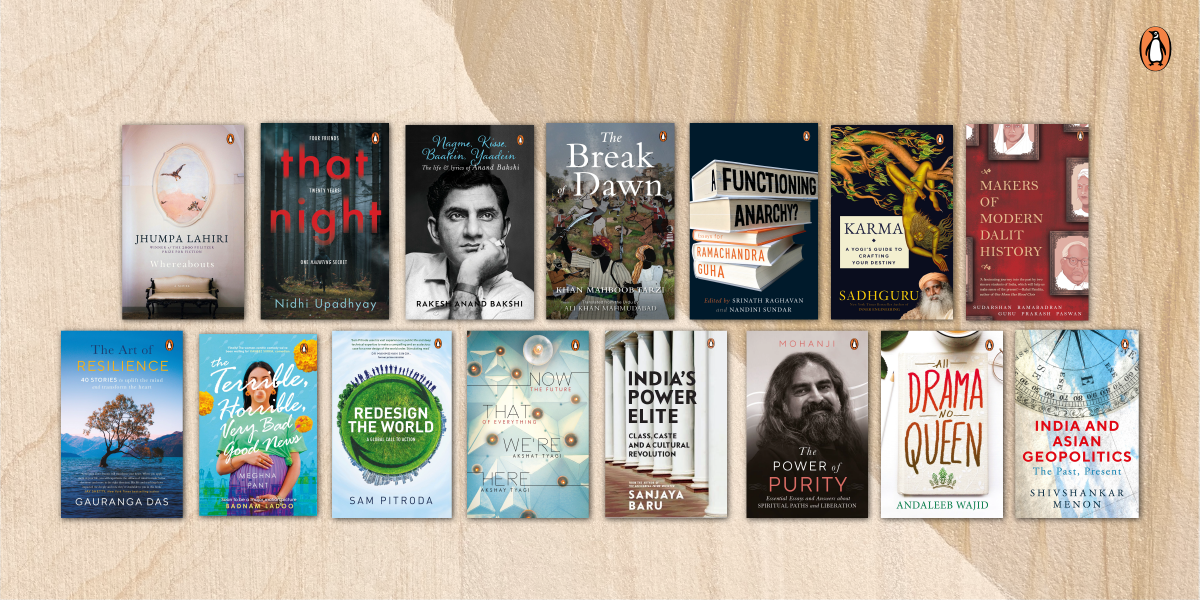
Make the most of this time spent at home, dear reader. Here is a list of new releases from Penguin Random House India coming your way. We’re sure you’ll find something to keep yourself busy, informed and entertained!


All Drama, No Queen

Front cover of All Drama No Queen
All Drama, No Queen || Andaleeb Wajid

Farida’s parents passed away in an accident when she was twelve. And for years, she’s had to fend off Reshma Phuppu, a distant relative plotting to gain control of her parents’ house in Bangalore. When all the drama gets too much, she runs away to stay with her best friend, Priya. Farida deeply feels the absence of a family, and only has memories of her distant cousin, Irshad. She’s had a crush on him since she was a twelve-year-old, but they lost contact when her parents died. Nearly two decades later, Priya’s boyfriend, Ajay, serendipitously finds Irshad….

*

That Night

Front cover of That Night
That Night || Nidhi Upadhyay

Natasha, Riya, Anjali and Katherine were best friends in college – each different from the other yet inseparable – until that night that began with a bottle of whisky and a game of Ouija but ended with the death of Sania, their unlikeable hostel mate. The friends vowed never to discuss that fateful night.

But now, someone has begun to mess with them, threatening to reveal the truth that only Sania knew. Is it a hacker playing on their guilt or has Sania’s ghost really returned to avenge her death?

That Night is a dark, twisted tale of friendship and betrayal that draws you in and confounds you at every turn.

*

The Terrible, Horrible, Very Bad Good News

Front cover of The Terrible, Horrible, Very Bad Good News
The Terrible, Horrible, Very Bad Good News || Meghna Pant

Thirty-four-year-old Ladoo, a simple middle-class divorcée from Rishikesh, wants only one thing from life–a baby. She eats gondh halwa, drinks badam milk, and takes folic acid, to stop her ticking biological clock and become the world’s most fertile woman.

Along the way, Ladoo must figure out whether motherhood means marriage, whether being a single mother means loneliness, whether ‘my body, my rules’ applies to women, and whether doing something scandalous is outrageous or courageous.

*

The Power Of Purity

Front cover of The Power Of Purity
The Power of Purity || Mohanji

Power of Purity is a compilation of Mohanji’s spontaneous answers to questions posed during various satsangs (spiritual discourses) and interactions across the world. With razor-sharp clarity and wit, Mohanji provides the reader with deep, subtle, yet easy-to-understand insights into the varied aspects of human existence, uniting the seemingly contrasting goals of spiritual mastery and worldly success. Many can use this book as a guide to finding solutions to life’s myriad problems by randomly turning to one of its pages.

*

Nagme, Kisse, Baatein, Yaadein

Front cover of Nagme, Kisse, Baatein, Yaadein
Nagme, Kisse, Baatein, Yaadein || Rakesh Anand Bakshi

An intimate peek into the life of the soldier-turned-lyricist Anand Bakshi, from his formative years in undivided Punjab to eventually moving to Bombay and landing his first film Bhala Aadmi in 1958. Along the way, he lost his mother, his place of birth, and his home and wealth, but his zeal to stand up and walk after every stumble and his desire to become a film artist never abated. He eventually rose to become one of the most revered and sought-after lyricists in Hindi cinema, writing nearly 3300 songs in about 630 films over the next five decades. Written by his son, this is an inspiring story of faith, dreams, success and, above all, human values.

*

Karma: A Yogi’s Guide to Crafting Your Destiny
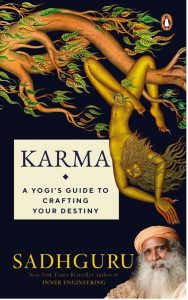
 

Front cover of Karma
Karma || Sadhguru

Through this book, not only does Sadhguru explain what Karma is and how we can use its concepts to enhance our lives, he also tells us about the Sutras, a step-by-step guide to navigating our way in this challenging world. In the process, we get a deeper, richer understanding of life and the power to craft our destinies.

*

Redesign the World

Front cover of Redesign the World
Redesign the World || Sam Pitroda

Redesigning The World is not about looking at it from the point of view of liberal or conservative; left or right; capitalism or socialism; public or private; democracy, dictatorship or monarchy; open or closed systems; rich or poor; urban or rural; east or west; white, brown, black or yellow. This proposed redesign of the world has the planet and its people at the centre; it is built on the foundations of sustainability, inclusion, equality, equity and justice so that everyone on earth can enjoy peace and prosperity. It is not an idealist or utopian vision, but one with humanity at its core.

*

A Functioning Anarchy
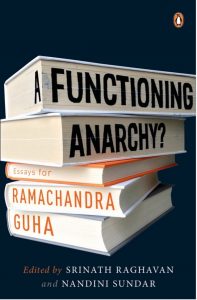
Front cover of A Functioning Anarchy
A Functioning Anarchy || Ramachandra Guha


In a long and versatile career spanning thirty-five years, Ramachandra Guha has produced a vast body of work. In each of these, Guha has broken new ground: his pioneering environmental histories of India and his still relevant work (with Madhav Gadgil) on ecology and equity; his social histories of Indian cricket; his monumental history of the Indian republic; his biographies of Verrier Elwin and Gandhi; his anthologies of ecological, social and political thought in India; and his collection of biographical and political essays.

A Functioning Anarchy is a collection of essays by world-renowned historians, lawyers, scientists and journalists sparked by Guha’s work.

*

India’s Power Elite

Front cover of India's Power Elite
India’s Power Elite || Sanjaya Baru

How the post-Covid world will be reshaped by class conflicts and caste prejudices remains to be seen. India’s Power Elite, though, is about pre-Covid India. It is an examination of the nature of power and elitism in the economic and political context of India. The morphology of the Indian power elite presents a complex structure, which is what Baru aims to deconstruct—whether it is the civil services, landed gentry or the remnants of the feudal elite. Aimed at the socially engaged reader, this book will also interest students and those who wield power.

*

India and Asian Geopolitics
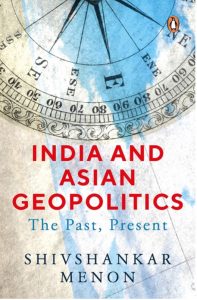
Front cover of India and Asian Geopolitics
India and Asian Geopolitics || Shivshankar Menon

Documenting the changes in India’s foreign policy: from Independence to the Modi era, Shivshankar Menon addresses the many questions, which perplex India as the nation seeks to find its way in the increasingly complex world of Asian geopolitics. From its leading role in the ‘nonaligned’ movement during the Cold War to its current status as a perceived counterweight to China, India often has been an after-thought for global leaders-until they realize how much they needed it.

*

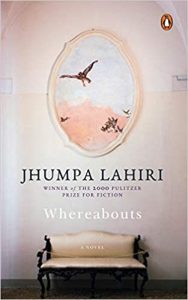
Whereabouts

Front cover of Whereabouts
Whereabouts || Jhumpa Lahiri

Exuberance and dread, attachment and estrangement: in this novel, Jhumpa Lahiri stretches her themes to the limit. The woman at the center wavers between stasis and movement, between the need to belong and the refusal to form lasting ties. The city she calls home, an engaging backdrop to her days, acts as a confidant: the sidewalks around her house, parks, bridges, piazzas, streets, stores, coffee bars. We follow her to the pool she frequents and to the train station that sometimes leads her to her mother, mired in a desperate solitude after her father’s untimely death. In addition to colleagues at work, where she never quite feels at ease, she has girl friends, guy friends, and “him,” a shadow who both consoles and unsettles her.

*

The Art of Resilience

Front cover of The Art of Resilience
The Art of Resilience || Gauranga Das

In this first volume of Yoga Stories, Gauranga Das takes you on an inner journey to explore your inner self, beyond the hills of expectation, through the valleys of disapprovals and beneath the layers of self-deception. Thus, bringing you closer to the home of your heart, enabling you to open the door and introduce yourself, to finally meet, the real you.


*

Makers of Modern Dalit History
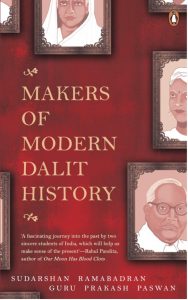
Front cover of Makers of Modern Dalit History
Makers of Modern Dalit History || Sudarshan Ramabadran, Guru Prakash Paswan

Featuring several inspiring accounts of individuals who tirelessly battled divisive forces all their lives, this book seeks to enhance present-day India’s imagination and shape its perception of the Dalit community. Makers of Modern Dalit History will be a significant addition to the Dalit discourse. This definitive volume on some of the foremost Dalit thinkers, both past and present, promises to initiate a much-needed conversation around Dalit identity, history and politics.

*

Now That We’re Here

Front cover of Now That We're Here
Now That We’re Here || Akshat Tyagi, Akshay Tyagi

The hyperconnected world that once seemed futuristic is now here. And now that we’re here, it’s time for us to educate ourselves for sweeping and endless possibilities. One way to do that is to blur the lines between technology, democracy, design, economics and data, and reconfigure our approach to learning altogether. This book is a giant leap in that direction. By harnessing the wisdom of thought leaders and intellectuals throughout history, by blending business and humanity, industry and society, and by covering cross-disciplinary themes, authors Akshay Tyagi and Akshat Tyagi give us a groundbreaking, genre-defying and utterly mind-bending collection of essays that will help us prepare for the here and now.

*

A loaf of bread, a glass of bubbly, and thou

By Ashok Ferrey 

So the stage is set, the curtain about to rise. Tomorrow, Sarasavi Bookshop at One Galle Face will be launching my first book in 5 years. I don’t know really know why, but there’s something of a feeding frenzy going on. Old aunties in kaftans and dangling earrings are jostling for pole position, rising from their covid-stricken beds, throwing caution and turmeric to the winds. I have explained to everyone that there’s a pandemic on, and please, they mustn’t feel the need to humour me by turning up.

‘How could we not?’ they say in incredulous tones. ‘We simply HAVE to be there for you!’

And who am I to spurn such loyalty? Though it’s something of a toss-up whether they’re there for me, or because they’re fed up having sat at home socially isolated all year. Or perhaps they’re coming for the bubbly that’s going to be served, in plastic cups. (Never spoil an Auntie, has always been my motto.)

In the middle of all this chaos, Colombo Fashion Week rings up.

‘Is it true you’re launching your book on the last night of fashion week?’ they ask sternly. Obviously I have committed some grave social faux pas, though I do not know quite what. (In the normal way of things, Ashok Ferrey knows as much about fashion as Mother Theresa does about disco dancing.)

‘Yes,’ I reply tremulously. ‘But it’s an early show, 4.30 – 6 pm.’

‘So that’s OK then,’ they reply. ‘Because we’ll be requiring you on stage to recite the opening poem. At 7.30 sharp.’

‘But I’ll be tired,’ I bleat.

front cover of The Unmarriageable Man
The Unmarriageable Man || Ashok Ferrey


You? Tired?’ They curl their upper lip. (Colombo Fashion Week does a very good curled upper lip.)

‘Don’t be late. Wardrobe will be in touch to let you know which designer you’re wearing.’

It seems that I have to recite the alternate lines of a song, with the amazing Julius Mitchell singing, and on keyboards.

I think to myself: It’s a good thing Ashok Ferrey isn’t going to be the one singing. Otherwise it really will be the last night of Colombo Fashion Week. Forever.

Hey, now that’s an idea . . .


The three critical rules of working as a consultant

Management consulting is seen as a glamorous profession. But behind the mystique are the consultants who put in extraordinary effort, cultivate great problem-solving skills and display fine personal attributes to capture the attention and respect of their clients.

The Mind of a Consultant opens up that world to the readers through the story of Samantha Thomas, a character modelled on many excellent consultants, who gives us a glimpse of what goes on inside the mind of a consultant.

Here is an excerpt from when Samanta is an intern and learns the three critical rules of working as a consultant.


‘Is the presentation ready?’ Hamid was unapologetic in his question.

It was 2 a.m. Samanta had been working for more than eighteen hours straight on the presentation for the client leadership team that was to be presented the next day. She was expected to be part of the presenting team alongside Hamid, the project manager and partner who owned the account. Hamid was six years her senior and from the same institute she was attending. He was highly respected by his colleagues and the project team members looked to him for guidance.

She thought back over the past few weeks, remembering the first day she had arrived at Pinnacle for her internship. It was like a dream come true. Her first official day as an intern at Pinnacle. She, along with thirty-five fellow interns from some of the best management institutes in the world, had been participating in the internship orientation. Two of the senior partners and a few engagement managers who could make it were part of the two-day programme.

While partners spoke about the culture and the attributes of great consultants, the engagement managers were more operational. They spoke about the tools and the support that were available to interns. They shared Pinnacle’s knowledge base, along with templates for ppts and Excel sheets, which were life-savers for the interns when they started out.

At the end of the second day, the interns were provided with laptops and their project assignments. Samanta was assigned to a large organization-transformation project in the retail industry. The organization was exploring strategies to enhance growth and increase efficiency amid changing industry dynamics. Her project manager for the assignment was Hamid. At the time, Hamid was participating in more than half a dozen similar assignments worldwide. He was always up to date on the latest happenings in the industry and often considered an expert in the field.

The first time Samanta and Raghav, a fellow intern, met Hamid to work on the project, he came across as passionate and knowledgeable. It was obvious that he was an accomplished consultant.

‘I want you guys to challenge me,’ he told them. ‘it’s important that you get a head start and not waste time doing things that don’t matter to this project.’

He gave them presentations and materials to read, a brief on the client requirements and the names of some resources in the firm that he thought could be helpful.

‘Get ready to fly out tomorrow to meet the client,’ he said. ‘We’re having meetings with some of the key management team members before doing a few store visits to understand their set-up. You need to be up to speed on everything that we know about the client by then.’

One thing Samanta learnt from Day One was that consulting constantly needed one to learn and travel. That was the best part about being at Pinnacle. It treated its team members as star talent, and believed that its people could figure out a way to deliver on even the toughest assignments.

Samanta and Raghav spent their time leading up to their trip reading more on the retail industry in general and the company in particular. Pinnacle had some wonderful case studies and industry knowledge available that they found helpful. There were different terminology and business metrics that Samanta and Raghav had never encountered before, but Hamid encouraged them to learn all of it, and learn it well.

‘You don’t want to be seen as novices. You should be able to ask and understand questions in areas that are relevant even to the CEO.’

The following day, Samanta, Raghav and Hamid started on their trip to see the client. Samanta had been told that she was lucky to be doing her first project with Hamid, so she took advantage of the uninterrupted cab drive to ask him questions. there was one in particular she couldn’t help asking.

‘How did you earn so much respect from your peers?’

Hamid raised his eyebrow at her, a smile on his face. Samanta shifted uncomfortably in her seat. She was probably the first intern to ever ask him that.

Hamid gave a short laugh at her discomfort before answering. ‘How do you think, Sammy? And you too, Raghav.’ Samanta thought for a moment. There were several possible reasons, or, more likely, a combination of several of them.

Raghav chimed in first. ‘Maybe hard work? or domain knowledge?’

Samanta nodded. She had been thinking along the same lines. She added her own thoughts. ‘I would think project-management expertise would have something to do with it. Is that part of the reason?’

Hamid nodded and smiled. ‘All of those are correct, but there are three main rules I live by in this firm.’ he held up his fingers as he counted them off.

‘Rule 1: strive for knowledge.

‘Rule 2: build your best coalition.

‘Rule 3: Always be ahead of the client.

‘Each of these is critical when working as a consultant.’

The Mind of a Consultant hands you all the tools necessary to build a successful professional career in an easy-to-understand manner.

How infidelity unravels

Sometimes when you’re desperate to leave the past behind, the past is eager to catch up!

Anuradha leaves Gurgaon when Dhruv chooses his family over her. She thinks that chapter of her life has ended, and starts afresh in Mumbai. But strangely, it seems her past is trying to catch up. Dhruv suddenly comes back into her life. Even as they try to figure out their relationship, horrible things start happening to people they know. Together, Anuradha and Dhruv need to find out who it is that cannot bear to see them together. Who is carrying out these shocking crimes? Are they really soulmates cursed to stay apart, or is there some karmic debt they have to repay?


Read on for a look at the psychological aftermath  of an extra-marital affair


Only The Good Die Young | Akash Verma

Mumbai has unnerved me every single time I’ve set foot here in the last few months. It wasn’t like this before. It used to be like any other city. Just that I frequented it more as my advertising agency, C&M, is headquartered here. But now, since you have been here for about a year, coming to this city has never been the same. Work still brings me here—a couple of times a month at least—for a sales review or a client meeting. But every time I am here, I feel like running to you first, clasping you to my chest and not letting you go. Yes, that’s what I still feel, Anuradha, after pushing you so far away from my life. The first few months after you left were tough—to come to work each day with you not being in office; to live without you in Gurgaon; not hearing your voice; and not feeling your touch. Despite having Shalini and the kids back in my life, there was this one large gash in my heart. However hard I tried, it refused to heal. It stayed there, untended and bleeding. My head feels heavy with the weight of a sack inside it.. ‘“Don’t do it!” didn’t we warn you?’ the pebbles inside the sack which rests in my head scream in unison. ‘You can’t love two people at the same time.’ ‘I didn’t do it knowingly. It wasn’t in my control,’ I protest. ‘Oh, come on! Liar, liar, pants on fire!’ squeals one. ‘You had a rock-solid marriage, a lovely family. Didn’t you know what you were getting into?’ ‘I know. All my fault. I thought I could handle it. I loved them both, you know. I just couldn’t stop.’ One of the pebbles has a throaty voice. It’s smaller than the rest. ‘Look where this “love” has led you to. No one’s happy. Neither Shalini, nor you and I guess not even Anuradha.’ ‘Well, who knows?’ I say. ‘Maybe she has found someone. Why “maybe”? I am sure she has someone in her life by now. She is young, beautiful, successful . . . she can easily be happy. Don’t you think so?’ The pebble glances at me, scrutinizing me. ‘Yes . . . maybe. Will you be happy if she has found someone?’ I clear my throat, ‘Why not? Yes.’ ‘Sure?’ I nod. ‘Yes. I will be happy as long as she is.’ ‘Do you want to meet her?’ the pebbles chorus. ‘No. It’s over, isn’t it? Why would I want that?’ ‘Ah, come on,’ one of them says. ‘It’s what you want the most. To meet her. Isn’t it?’ I fumble for an appropriate answer. Unsuccessful. I go quiet, then. The plane has landed. I get out of the airport and spot the driver holding a placard with my name on it. I purse my lips and force a smile; a familiar weakness sweeps over me. He signals to me to wait and hurries off to get the car when I nod. I glance at the passengers leaving the airport, people gathered around the arrival gate, greeting incoming passengers: relatives and friends. I wish you too were here, waiting for me, Anuradha . . .Such feelings seem even more unreal after the way our relationship ended. But then how is one supposed to conceal one’s true feelings from oneself? How can I hide that I love you? Even after you lied to me. Even after I promised my wife, Shalini, that our affair happened in the heat of the moment and was well over. How can my feelings for you ever cease to exist? Maybe I really am the asshole that the people I love think me to be. Shalini and you. Maybe I don’t deserve love from either of you. My relationship with my wife will never go back to what it was. I have done enough to scar it and I don’t know if those scars will ever fully disappear. ‘We have struck a compromise for our children, Dhruv,’ was what Shalini told me at the dinner table one day when the kids were asleep. ‘It can never be the same again,’ she had said. Shalini is a headstrong, self-made woman who sticks to her word in her personal life as much as she does when treating her patients.

COVID-19 : The past and the future

Anirban Mahapatra’s COVID-19 is a meticulous dive into the pandemic that changed the 21st century world. In this excerpt, he delves into what the future could look like, and what kind of a situation we’re likely to have on our hands in the near future:

~

Envisioning what the future holds in store is like imagining what dry land is like while in a storm in the middle of the ocean. Even in the best of times, predicting the future is a risky enterprise. A devastating pandemic of this scale and severity imposes additional challenges because we have no reference point in the modern era for something like this. Off-the-cuff comments may be forgotten but writing tends to stick around and haunt the writer. If you’re too certain with your pronouncements, you’re almost certain to be wrong. If you’re too vague, no one will read what you have to say.

We are only coming to terms with the direct fallout of the pandemic, but what will be the ramifications for long-term health and planning? What will be the implications for travel, for immigration and for commerce? Will countries continue to look inward once the pandemic is over?

Certain aspects of human life and society have changed due to the immediate effects of the pandemic. It is possible, therefore, to make short-term predictions. What will happen five, ten, or fifteen years down the road because of the ongoing, cataclysmic event and our responses to it are more difficult to say.

Will there be more public interest in interest in infectious diseases and medicine? Will it become a field that attracts more of the brightest minds as engineering, information technology, finance and business management have in preceding decades? Will physicians take up more active roles in framing public policy? Will economists stress-test catastrophic economic events of this nature?

Human societies are designed to maximize connections. Over the course of a day, most of us have dozens of close interactions with other people. The design of cities, buildings, jobs, transportation and commerce keeps the human need for connection in mind more than the rare threat of a disease that spreads by human-to- human interaction.

Front cover COVID-19 Separating Fact from Fiction
COVID-19||Anirban Mahapatra

What can we say looking at the past? Based on a study of the H1N1 influenza pandemic of 1918, the historian Nancy Bristow writes, ‘If history is any guide, not much will change in the wake of the COVID-19 pandemic.’4 Yet, it is impossible to use history as guide, because the world has changed immensely in a century. In 1918, viruses had not been characterized. Colonial powers ruled the world and were in the middle of World War I. Commercial airline travel was non-existent. There was no Internet to allow the lay public to read research articles immediately and view daily statistics on illness and death.

… We can assume that the pandemic will irrevocably change some business practices. There will be more people working from home permanently and less business travel to meet clients and for conferences. Technological solutions that were embraced perhaps with a bit of trepidation during the pandemic will become wider habits.

Distancing is challenging in factories, warehouses, prisons, airplanes, dormitories and ships where space is maximized. Due to a premium being put on space in cities and the density of population, buildings have grown vertically. Property values have risen globally since the Great Recession. Gentrification had led to a return to economically disadvantaged areas. It is possible that there will be a reshaping of how urban spaces are used, with more people now moving outward instead of flocking to New York, Mumbai or London. But the experience of Hong Kong, Taiwan and Tokyo in the first year of the pandemic has demonstrated that even within densely populated cities, measures can be taken to keep infections low. There may be a reshaping of urban societies, but it is still too early to tell. People tend to go where there are economic opportunities.

More broadly, will humans finally address the pressing problems of the day which the pandemic brought into stark relief?

Problems of inequality, poor access to healthcare and economic opportunities, and lack of equal rights are prevalent globally.

The pandemic allows humans to face difficult challenges that we have been ignoring, instead of denying or downplaying them. It gives us a chance to reframe priorities and reimagine society.

As humans we tend to focus on immediate problems. Our ancestors were good at hiding from tigers and other dangerous animals, finding caves to sleep in when it was raining, and building a fire when it was cold. Longer-term planning for problems does not come easily. This is applicable to both people individually and to us as a species.

… We keep asking ourselves, ‘When will the pandemic end?’ But we can’t mark the end as the date when it is over only for those of us who are privileged. We know that the biological pandemic will end one day. What we must also ensure is that there is an end to the social one.

~

COVID-19 is an excellent and insightful read. Anyone can read this book, and everyone should read this book.


The Absence of Adolescence

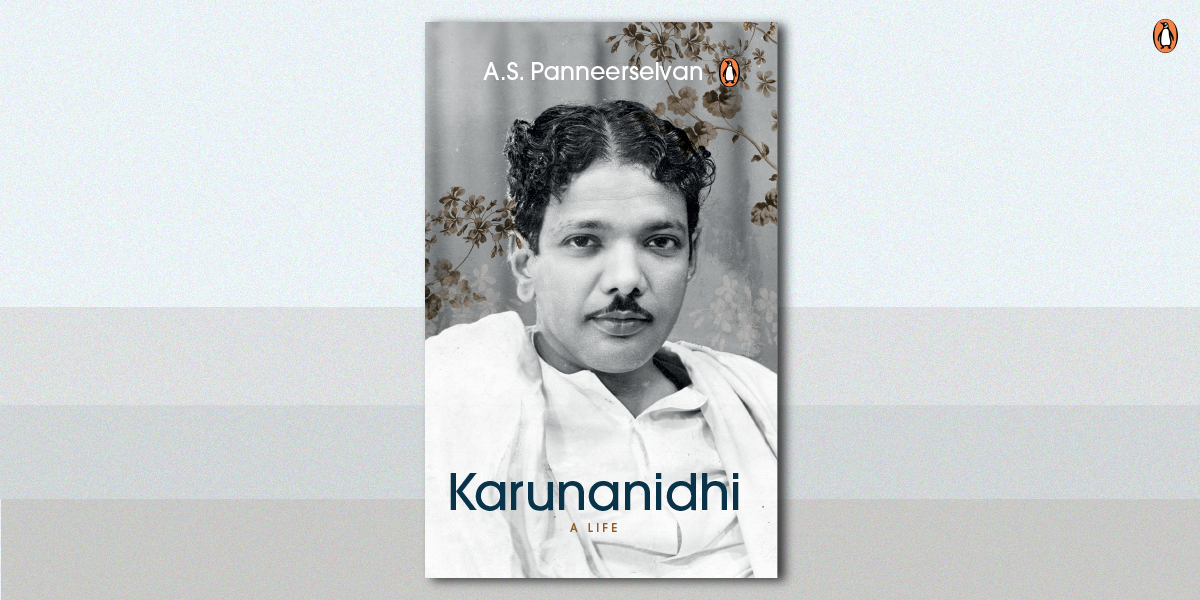
Writer – politician Muthuvel Karunanidhi is amongst the most important political leaders India has ever seen. In Karunanidhi: A Life, author A.S. Panneerselvan tells the story of the man who became a metaphor for modern Tamil Nadu, where language, empowerment, self-respect, art, literary forms and films coalesced to lend a unique vibrancy to politics.

Here is an excerpt from the chapter titled, The Absence of Adolescence.

Karunanidhi
Karunanidhi A Life || A.S. Panneerselvan


Like many underprivileged children, karunanidhi’s life moved straight to adulthood from childhood, bypassing the phase of indulgent adolescence. The politicization that began with the anti-Hindi agitation and exposure to the literature of the Self- Respect Movement propelled karunanidhi into becoming an activist right from his days in the second form. The police excesses and the custodial deaths of two anti-Hindi agitators, Thalamuthu and natarajan, had a profound impact on the young karunanidhi.


The late 1930s witnessed varied crises for all the political players: the imperial government was getting ready for the Second World War; the great Depression and its fallout was taking its toll; Mahatma gandhi’s supremacy was challenged within the Congress by the election of Subhas Chandra Bose as the party president for the second time; and the Left was emerging as a distinct political force with its leaders gaining a hold over decision-making in both the Congress as well as other popular fronts. There was also a shift in Dravidian politics with the leadership moving from the wealthy section among the non-Brahmins to Periyar and Annadurai.


The twists and turns of the Left’s mobilization need elaboration in order to understand how, despite its revolutionary aura, karunanidhi remained with the Dravidian Movement’s social reform agenda. in his essay, in the January–March 1984 issue of The Marxist, E.M.S. namboodiripad points out that when the Congress Socialist Party was formed in 1934, the Communist Party of india initially branded it as Social Fascist. With the Comintern’s change of policy towards the politics of the Popular Front, the indian communists’ relationship to the inC witnessed a reversal. The communists joined the Congress Socialist Party (CSP), which worked as the left wing of the Congress. Once they had joined, the Communist Party of india (CPi) accepted the CSP demand for the Constituent Assembly, which it had denounced two years before.1


in July 1937, the first kerala unit of the CPi was founded at a clandestine meeting in Calicut. The five persons present at the meeting were E.M.S. namboodiripad, krishna Pillai, n.C. Sekhar, k. Damodaran and S.V. ghate. The first four were members of the CSP in kerala; ghate was a CPi Central Committee member, who had come from Madras. Contacts between the CSP in kerala and the CPi had begun in 1935, when P. Sundarayya (Central Committee member of CPi, based in Madras at the time) met with EMS and krishna Pillai. Sundarayya and ghate visited kerala several times and met with the CSP leaders there. The contacts were facilitated through the national meetings of the Congress, CSP and All india kisan Sabha.


in 1936–1937, the cooperation between socialists and communists reached its peak. At the second congress of the CSP, held in Meerut in January 1936, a thesis was adopted which declared that there was a need to build ‘a united indian Socialist Party based on Marxism-Leninism’. in kerala the communists won control over the CSP, and for a brief period controlled the Congress there.2


While the Congress in kerala had a distinct leftward tilt, in Tamil nadu it was virtually under the conservative leadership of stalwarts such as C. Rajagopalachari and S. Satyamurti.


Thiruvarur became a microcosm of the play of these multiple forces. Smitten by Periyar’s radicalism and Annadurai’s eloquence, karunanidhi began devouring the entire oeuvre of Dravidian literature. Periyar had already published the Tamil version of The Communist Manifesto in 1937; a number of serious political publications were being published from various parts of the state. Periyar’s Kudiarasu (The Republic) was the key vehicle for dissemination as well as articulating new ideas and planning political mobilization towards an egalitarian society.3


While Muthuvelar and Anjugam were rejoicing at their son’s tireless learning, little did they realize what he was reading about. Textbooks were last on karunanidhi’s reading list. The extensive literature in politics was revelatory for young karunanidhi. For the first time, he realized that he too had two priceless possessions—his oratory and his pen. His first public speech was a clear pointer. it was a school competition. And karunanidhi decided to make a mark. He looked at some of the redeeming features of the so-called villains within Hindu mythology. karunanidhi spoke at length about the friendship between karna and Duryodhana—a friendship that cut across both caste and class.


The speech was well-received, and the teachers developed a new respect for their wayward student. But, what they did not know was the effort that went behind this oratory. karunanidhi worked on the text of the speech for nearly a week; rehearsed the speech frequently before the mirror; changed the words, similes and metaphors to get the rhythm that would alter the art of public speaking in Tamil forever.


He also created his own publication—Maanavanesan (Friend of students). A handwritten fortnightly of eight pages in demy size that dealt with a range of issues—from questioning orthodoxy to exploring the poetics of early Tamil. He and his friends would make about fifty copies of the magazine and circulate it for a modest fee that managed to just cover the cost of the paper. Years later, when i met him at Murasoli along with Kungumam editor Paavai Chandran for a short interview for the Illustrated Weekly of India, karunanidhi said the handwritten journal was a great learning experience. ‘We could not afford to make any spelling mistakes or grammatical errors. A single mistake meant rewriting fifty copies. The sheer labour of correcting made me write a very clean first draft, without any corrections or overwriting,’ he recalled. He also took pains to mail a copy of the magazine to the leaders of the Self-Respect Movement.


But not all of karunanidhi’s icons were happy with the handwritten magazine. Bharathidasan, the well-known poet and a life-long supporter of the Dravidian Movement and karunanidhi, called it a waste of time and effort. He told karunanidhi: ‘The madness of expecting changes from handwritten publications can only be compared to the madness in thinking that development will happen due to spinning charkhas.’


Muthuvel Karunanidhi was ardent as a social reformer and unrelenting as an opposition leader. To read more about him, his life and his work, get your copy of Karunanidhi: A Life.

Whereabouts: Jhumpa Lahiri’s latest literary landscape

Exuberance and dread, attachment and estrangement: in this novel, Jhumpa Lahiri stretches her themes to the limit. The woman at the center wavers between stasis and movement, between the need to belong and the refusal to form lasting ties. The city she calls home, an engaging backdrop to her days, acts as a confidant: the sidewalks around her house, parks, bridges, piazzas, streets, stores, coffee bars. We follow her to the pool she frequents and to the train station that sometimes leads her to her mother, mired in a desperate solitude after her father’s untimely death. In addition to colleagues at work, where she never quite feels at ease, she has girl friends, guy friends, and “him,” a shadow who both consoles and unsettles her. But in the arc of a year, as one season gives way to the next, transformation awaits. One day at the sea, both overwhelmed and replenished by the sun’s vital heat, her perspective will change. This is the first novel she has written in Italian and translated into English. It brims with the impulse to cross barriers. By grafting herself onto a new literary language, Lahiri has pushed herself to a new level of artistic achievement.


Here is an excerpt from the book Whereabouts by Jhumpa Lahiri:


The city doesn’t beckon or lend me a shoulder today. Maybe it knows I’m about to leave. The sun’s dull disk defeats me; the dense sky is the same one that will carry me away. That vast and vaporous territory, lacking precise pathways, is all that binds us together now. But it never preserves our tracks. The sky, unlike the sea, never holds on to the people that pass through it. The sky contains nothing of our spirit, it doesn’t care. Always shifting, altering its aspect from one moment to the next, it can’t be defined.


Whereabouts| Jhumpa Lahiri


This morning I’m scared. I’m afraid to leave this house, this neighborhood, this urban cocoon. But I’ve already got one foot out the door. The suitcases, purchased at my former stationery store, are already packed. I just need to lock them now. I’ve given the key to my subletter and I’ve told her how often she needs to water the plants, and how the handle of the door to the balcony sometimes sticks. I’ve emptied out one closet and locked another, inside of which I’ve amassed everything I consider important. It’s not much in the end: notebooks, letters, some photos and papers, my diligent agendas. As for the rest, I don’t really care, though it does occur to me that for the first time someone else will be using my cups, dishes, forks, and napkins on a daily basis.


Last night at dinner, at a friend’s house, everyone wished me well, telling me to have a wonderful time. They hugged me and said, Good luck! He wasn’t there, he had other plans. I had a nice time anyway, we lingered at the table, still talking after midnight.


I tell myself: A new sky awaits me, even though it’s the same as this one. In some ways it will be quite grand. For an entire year, for example, I won’t have to shop for food, or cook, or do the dishes. I’ll never have to eat dinner by myself.


I might have said no, I might have just stayed put. But something’s telling me to push past the barrier of my life, just like the dog that pulled me along the paths of the villa. And so I heed my call, having come to know the guts and soul of this place a little too well. It’s just that today, feeling slothful, I’m prey to those embedded fears that don’t dissipate.

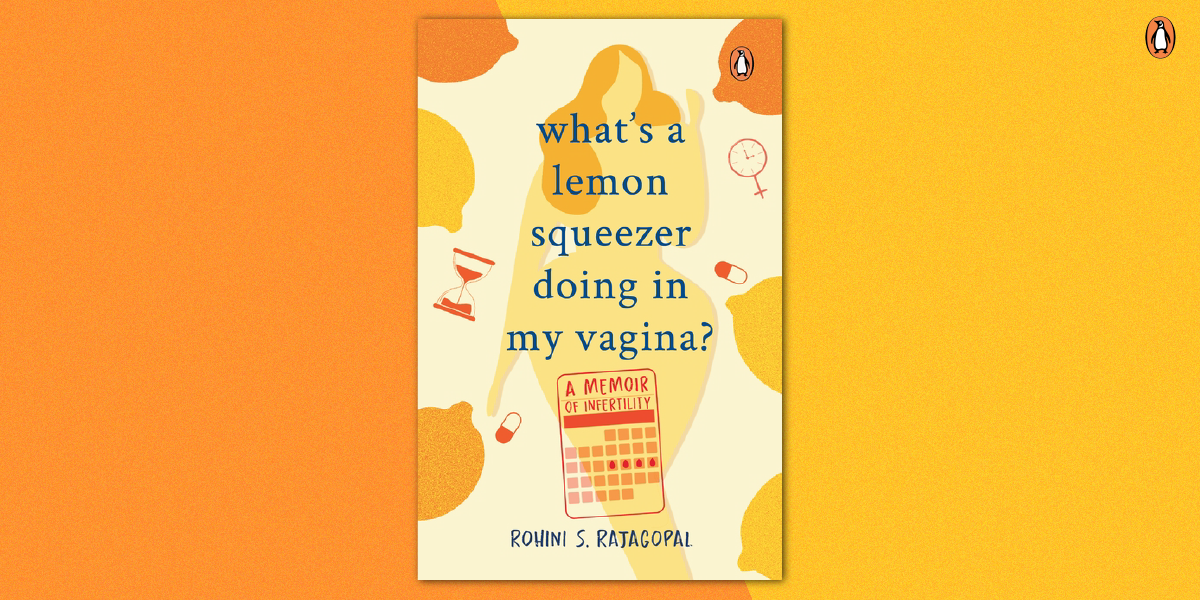
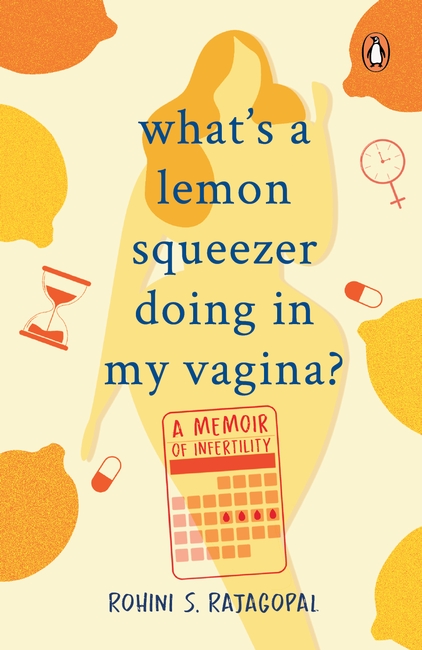
Battling Infertility and what they don’t tell you

What’s a Lemon Squeezer Doing in My Vagina? is a witty, moving and intensely personal retelling of Rohini’s five-year-long battle with infertility, capturing the indignities of medical procedures, the sting of prying questions from friends and strangers, the disproportionate burden of treatment on the woman, the everyday anxieties about wayward hormones, follicles and embryos and the overarching anxiety about the outcome of the treatment.


Here is an excerpt from the chapter where she first encounters a lemon squeezer.


I heard of ‘artificial insemination’ for the first time in a Malayalam movie when I was eight or nine years old. It was Malayalam cinema’s cult classic Dasharatham (1989), which was so ahead of its time that even now I am not sure if its time has come. A leading mainstream actor, Mohanlal, plays a rich, spoilt man-child who decides to act on a whim and have a child through surrogacy. He finds a desperate woman who needs money for her ailing footballer husband’s medical treatment and agrees to rent her womb. They draw up a contract, turn up for the procedure, and fifteen days later she is pregnant! No failed attempts, cancelled cycles or any other complications. With this movie lodged in my brain for reference, I thought fertility treatments were an easy-peasy lemon-squeezy affair. To be fair to the movie, it is not about infertility. It’s about a healthy, fertile couple who use artificial insemination for conception. It may well have happened that quickly and effortlessly in real life too. But the movie glosses over the unseemliness and hardships of the treatment. For those who have seen the movie, I hate to burst your bubble. Welcome to the world of ART.

I began our first IUI in July 2011 with the earnestness of a debutant, expecting early and prompt success. I had not dealt with sickness or physical incapacity in any significant manner until then, being blessed with a constitution that rarely fell prey to illness. I sailed through ten years of school without any noteworthy episodes of fever. My haemoglobin level typically hovered near the fourteen mark. When Ranjith caught the swine flu, despite my being in close contact with him my natural immunity provided the necessary shield against the deadly virus. My good health was my secret pride and I had taken it for granted all my life, expecting the body to tag along in whichever direction I pulled it. Therefore when we started treatment I anticipated the same level of responsiveness and performance from it. But for the first time, my body, specifically the reproductive apparatus, proved to be a terrible let-down, insolently ignoring my instructions.

The procedure itself was relatively simple with only a few key steps. The first step was pills to stimulate my ovaries to release multiple eggs. The second was follicular study. Follicles are tiny fluid-filled balloons in the ovaries that function as the home of the egg. They may expand from the size of a sesame seed (2 millimetres) to the size of a large kidney bean (18 mm to 25 mm) during the course of the menstrual cycle, eventually bursting to push the egg out. The follicles are measured at regular intervals during a cycle to ascertain if they have matured and are ready to release the egg. This is done through a transvaginal ultrasound (TVS).

I was not a big fan of TVS. It involved insertion of a long, slim plastic probe into my vagina and twisting it around to get a close look at the uterus. Magnified images of the uterus appeared on a computer screen. I was appalled the first time when the doctor covered the transducer with a condom and dipped it in lubricating gel, indicating that it had to enter an orifice in my body. I thought that scans, by definition, were non-invasive. It caused some discomfort, but it was not very painful. Eventually, I learnt to relax my muscles and spread my legs far apart to make things easier. I wished I didn’t have to get a TVS, but if I had to then I could tolerate it.

The cycle got off on the wrong foot from the very beginning. The first ultrasound showed only one big-enough follicular blob (at 13 mm). The other four or five follicles were too small, indicating they might not reach maturity. This meant I might have only one egg despite taking drugs to stimulate the release of many.

In the next ultrasound, my ovarian plight did not show improvement. The lead follicle was still only at 15 mm (way below the 18 mm mark of maturity) and the others had not grown at all, looking like they were giving up on ovulation altogether.

There were no outward symptoms to show if the follicles were fattening or dying (this is true for most reproductive processes). So at every ultrasound I went in expecting miracle growth, only to be told that my seeds were lagging poorly behind. I felt helpless at the response from my body because there was nothing I could do to expand the follicles. If it were an outwardly manifest condition I could have applied my inner reserves of resolve and determination to improve the outcomes, in the same way that I would do daily exercise and physiotherapy to regain strength in an injured leg. But my action, or inaction, had no bearing on the ungovernable follicles.

We waited a couple of more days and did a third ultrasound. This time the news was worse. The lead follicle had ruptured; it hadn’t waited for the others to catch up or even to reach its own full maturity. There was nothing left to do but to hurriedly put the sperm inside the uterus since an egg (presumably underdeveloped) had arrived and was waiting. The sperm transfer was scheduled for the same day.

what’s a lemon squeezer doing in my vagina | Rohini S. Rajagopal

I rang up my manager and said I would be taking the day off to address a personal emergency. An hour later, Ranjith drove in from his office to give a semen sample. He came in, gave the semen sample and left. He did not stay any longer because he had meetings that could not be rescheduled at such short notice.

I had come to the clinic at eight in the morning assuming I would just pop in for the ultrasound and pop out. An easy day with only the bother of TVS. But when I heard that I would have to stay back for the IUI, I inwardly experienced a mini-heart attack. Early on, while describing the procedure, Dr Leela had mentioned that the sperm would be injected inside the uterus using a catheter. Having heard the words ‘inject’ and ‘catheter’ in conjunction with my vagina, I thought it best to look up the process in detail on the Internet. One of the first search results showed that during an IUI the doctor uses a ‘speculum’ to pass the catheter into the uterus. It was a surgical instrument inserted inside the vagina or anus to dilate the area and give the doctor a better view. I did a quick search on Google Images to know what it looked like. The photos that flashed on my screen sent ripples of shock through

my system. It looked like the stainless-steel lemon squeezer found in a kitchen. It was made of metal and about the same size as the kitchen tool. It had two blades to widen and hold open the vagina and a third handle with a screw to lock the instrument into place.

What’s a Lemon Squeezer Doing in my Vagina offers a no-holds-barred view of Rohini S. Rajagopal’s circuitous and highly bumpy road to motherhood.

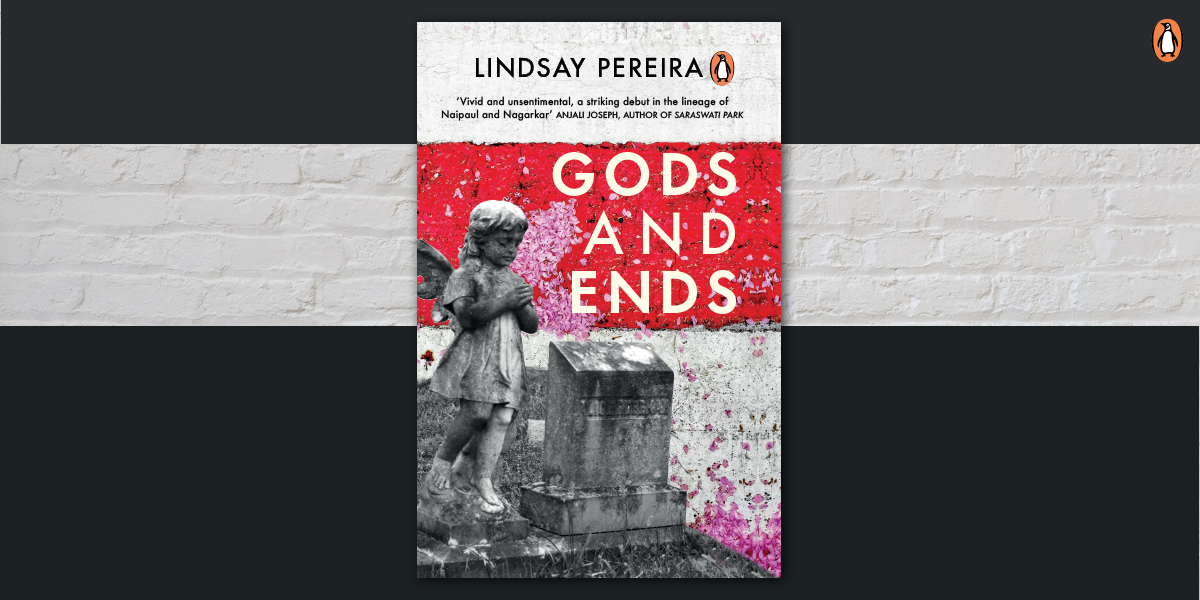
Jude Sequeira’s drunken escapades in Bombay’s Orlem

Philomena Sequeira knows what she wants by the time she turns fourteen. Her father wants something else. Her neighbours deal with adultery, abandonment and abuse, by hoping for a place in heaven.

Life is unyielding for the tenants of the rundown Obrigado Mansion in Orlem, a Roman Catholic parish in suburban Bombay. They grapple with love, loss and sin, surrounded by abused wives and repressed widows, alcoholic husbands and dubious evangelists, angry teenagers and ambivalent priests, all struggling to make sense of circumstances they have no control over.

Gods and Ends takes up multiple threads of individual stories to create a larger picture of darkness beneath a seemingly placid surface. It is about intersecting lives struggling to accept change as homes turn into prisons. This is a book about invisible people in a city of millions, and the claustrophobia they rarely manage to escape from.

**

The well appeared to have been there forever, sunk into the earth at a time when there couldn’t have been too many people around to use it. And yet, as any careful observer might have noticed, it had once been cared for, its sides carefully scoured, solid stone steps marking circles as they disappeared into its gloomy depths. Until the outer wall collapsed, sliding slowly into the murky green water, there may have been a few informal meetings held nearby. Some of the early residents of Orlem may well have stopped to chat around it on sunny mornings, to discuss dissolute husbands or the latest scandal from the goan villages they came from, while stooping down to draw water.

On the night of 24 December, only one voice was heard. It was between 1 and 2 a.m., and the water lay undisturbed, its opaque surface broken only by lethargic leaves slipping, sliding, gliding down from laburnum trees looming darkly above and around the well. The only other sound came from an unsteady stream of urine pattering down, over the ruined edge, through a space where the wall once stood.

front cover of Gods and Ends
Gods and Ends || Lindsay Pereira


‘Come from England, come from Scotland, come from Ireland,’ the voice slurred tunelessly. ‘Looking out for a pleasant holiday? Come to Bombay, meri hai.’

Jude Sequeira pissed his cares away. He was dimly aware about urinating into a source of drinking water for some of his neighbours, but was too drunk to care. The half bottle of cheap whisky he had consumed lay volatile in his stomach, warming him, while making his head swim ever so gently. The song he was singing continued to pour out of him, its lyrics a jumble. After singing it twice, he looked up and stopped in awe. Above him, in a hole cut out through the trees that formed a canopy, a few stars twinkled brightly. He couldn’t remember the last time he had seen stars.

Smiling to himself, he shook his penis half-heartedly, the last few drops wetting his toes. As he tried to zip up, something caught his eye. A mouse? A cat? Swaying slightly, he turned. There was a sudden moment of clarity when he recognized the figure standing before him. His lips moved as he struggled to articulate something that seemed to be just out of reach. Teetering for a few seconds, suddenly on the brink of sobriety, he slipped. The splash echoed briefly before receding into the night. The waters closed over, stifling a scream before it reached his throat. As he went down, Jude found the name he was looking for.

On the ground above, all that remained were his slippers: a pair of grimy Bata chappals, their blue straps long faded. In time, a milky sun rose, its appearance heralded by noisy sparrows.

**

Do you have what it takes to survive in Uttar Pradesh politics?

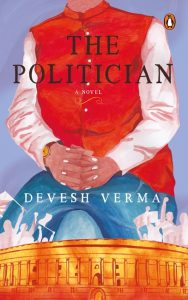
Beginning at the peak of Nehruvian era and ending in the early seventies, Devesh Verma’s  sharply funny saga The Politician  gives an enthralling, evocative view of provincial northern India-once the political heartland of the country-and the ebb and flow of the fortunes of its protagonists.

Ram Mohan is an intrepid and ambitious young man in newly independent India, who refuses to be held down by his humble origins. Spurred on by his diehard optimism, he aims for things usually inaccessible to people of his extraction. However, he soon realizes that without political or bureaucratic power, the idea of a respectable life in India is nothing but pretence.

Ram Mohan’s fascinating character and the darkly comic situations that he is forced to navigate to stay afloat in the tumultuous sea of provincial realpolitik offer some interesting insights.

We have conducted a detailed analysis of his methods to come up with a the ultimate quiz to determine whether you are a Pradeshi Political Player and true inheritor of Ram Mohan’s legacy or if you are a Certified Civilian like the rest of us!

**

If you are ever sidelined by the fickle opinions of your political party at the very inception of your political career, what would you do?

A-Sputter in rage at public meetings

B-Lie low and temporarily focus on an alternate career

That was not without reason. Ram Mohan had an alternate calling to fall back on, which he found equally, if not more, agreeable. Rather he was a trifle relieved. He could now get down to some serious research work with no distraction, though he had not given up on his chances in politics. His apparent stoicism was calculated to help him calmly assess the political ball game while engaged in an academically fulfilling pursuit.


MLK may have considered violence to be the last refuge of the incompetent but sometimes in the heartlands of provincial Uttar Pradesh a certain display of ruthlessness is imperative. Which of these most closely matches your views towards violence?

A-Reject violence in any form

B-Use it strategically, mostly through other people

They all made a dash as Mahavir Wilson had already received several blows. Gulab Singh stopped Ram Mohan and along with his two men fell on the thugs with lathis. Employing violence as starkly as a butcher—allowing no room for dickering—he had become adept in gaining control over situations apparently hazardous. He had long discovered this method to be immensely effective, which made even more powerful adversaries doubtful about their own strength.


Are you capable of displaying Ram Mohan’s incredible verbal and psychological dexterity at handling the inflated egos of pompous personages around you?

A-Never, you are a master at deflating egos and enraging important people

B-Yes, you would absolutely pander to them if it benefitted you eventually

While dealing with a high caste personage, he would use arguments designed to humour; he had already made inroads into the upper-caste consciousness in the area, as he would try to be regarded as their well-wisher. At the election for the posts of village chief, he had ensured Gulab Singh’s victory, which held no surprise as Gulab Singh was Ram Mohan’s friend. But his going all out to support a Brahman candidate for the same position in another village— where the real fight was between a Brahman and a Thakur candidate—earned him some goodwill indeed;

Front cover of The Politician
The Politician || Devesh Verma


Are you willing to occasionally swallow your pride and opt for a strategic defeat if necessary?

A-No, victory or nothing

B-Patience is the name of the game

In Fatehpur, Ram Mohan would win laurels even in defeat. I mean he’d get his hands on so many votes that Congress would have to take note, which would brighten up his chances in future. They might offer him something else in the bargain.’


Discretion is certainly the better part of valour, and every politician needs spades of it. When handed a significant piece of information what is your first instinct

A-Expound upon it to your worshipping coterie

B-Ensure no leaks occur that can derail your plans

No, it’s important we keep a clear head and be discreet about it for now. What’s more, I’m still chewing it over. As of now I’ve shared it with only three people, you, Saansad ji and Ram Mohan. Let’s keep it that way until after the elections. Because then I’d have some concrete grievance to ground my decision on.


While we all wish we had truly impressive personalities, it’s time for a little honest introspection. Does your personality in any way come close to this stirring description of Ram Mohan’s personality?

A-Not really, I’m mostly quiet

B-Yes, I think I’m a fair match

Ram Mohan had a personality, which did not blend in with the general run of people. His face that radiated profundity in a literary gathering could be like thunder if the occasion warranted; his eyes and words articulating pure menace. He could frighten the life out of a lout.


Upon achieving something you’ve worked long and hard for, which of these actions would be your first instinct?

A-Gloat about it obnoxiously

B-Couch it in terms of benefit to others

Ram Mohan rose and touched Saansad ji’s feet as the latter continued, ‘It’s confirmed. Just the day before yesterday Kapur called and read out all the six names of the Congress candidates for Rajya Sabha. Yours is at number four. And I feel doubly joyous. Firstly, because I have been able to do something for you; secondly, I may not be in her inner circle but now I know Indira ji values my opinion.’

 —

RESULTS!

Mostly As-Certified Civilian. Enjoy your unproblematic life!

Mostly Bs-Pradeshi Political Player. Ram Mohan anoints you his heir!

error: Content is protected !!