




While many use religion to justify why they are being unfair to a person’s gender and sexuality, Devdutt Pattanaik in his books The Pregnant King and Shikhandi And Other Queer Tales They Don’t Tell You shows how mythologies across the world appreciate what we deem as queer.
Here are 6 quotes on what it means to be a man, a woman, or a queer.
What it feels to be a woman

Repercussion of Patriarchy

The meaning of queer in different mythologies

Should the queer hide or be heard like the thunderous clap of the hijra?

The functions of the forms

Traces of feminism in Hindu mythology

Read Devdutt Pattanaik’s The Pregnant King and Shikhandi And Other Queer Tales They Don’t Tell You and make sense of queerness and the diversity in society.
Category: Features
articles features main category
A glimpse into the unraveling of infidelity
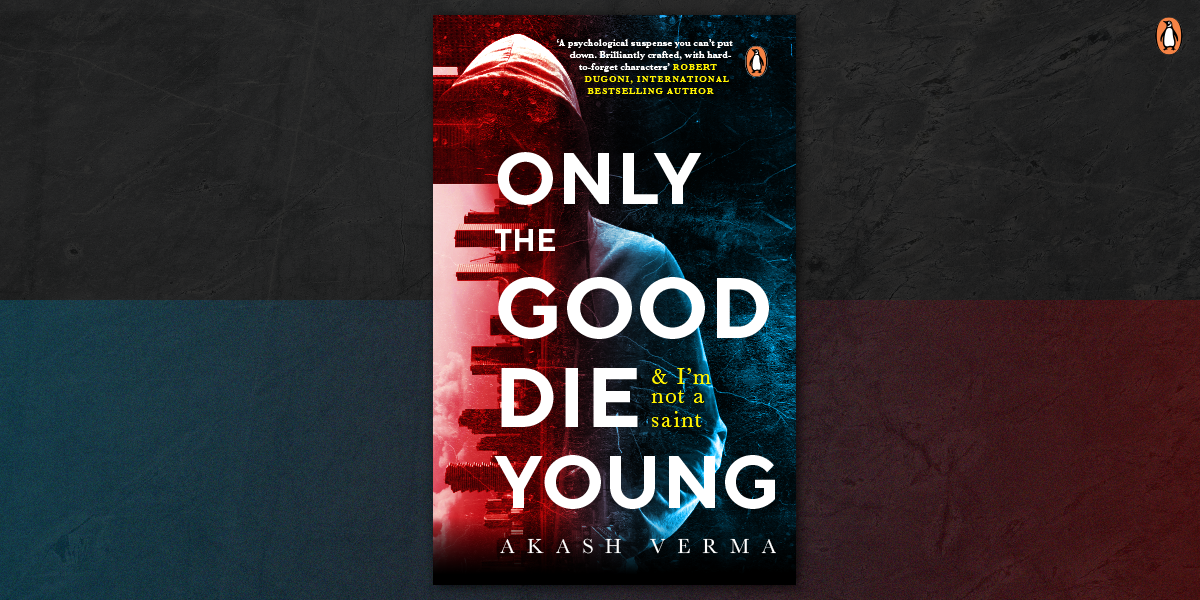
Sometimes when you’re desperate to leave the past behind, the past is eager to catch up!
Anuradha leaves Gurgaon when Dhruv chooses his family over her. She thinks that chapter of her life has ended, and starts afresh in Mumbai. But strangely, it seems her past is trying to catch up. Dhruv suddenly comes back into her life. Even as they try to figure out their relationship, horrible things start happening to people they know. Together, Anuradha and Dhruv need to find out who it is that cannot bear to see them together. Who is carrying out these shocking crimes? Are they really soulmates cursed to stay apart, or is there some karmic debt they have to repay?
Read on for a look at the psychological aftermath of an extra-marital affair.

Mumbai has unnerved me every single time I’ve set foot here in the last few months. It wasn’t like this before. It used to be like any other city. Just that I frequented it more as my advertising agency, C&M, is headquartered here. But now, since you have been here for about a year, coming to this city has never been the same. Work still brings me here—a couple of times a month at least—for a sales review or a client meeting. But every time I am here, I feel like running to you first, clasping you to my chest and not letting you go. Yes, that’s what I still feel, Anuradha, after pushing you so far away from my life. The first few months after you left were tough—to come to work each day with you not being in office; to live without you in Gurgaon; not hearing your voice; and not feeling your touch. Despite having Shalini and the kids back in my life, there was this one large gash in my heart. However hard I tried, it refused to heal. It stayed there, untended and bleeding. My head feels heavy with the weight of a sack inside it.. ‘“Don’t do it!” didn’t we warn you?’ the pebbles inside the sack which rests in my head scream in unison. ‘You can’t love two people at the same time.’ ‘I didn’t do it knowingly. It wasn’t in my control,’ I protest. ‘Oh, come on! Liar, liar, pants on fire!’ squeals one. ‘You had a rock-solid marriage, a lovely family. Didn’t you know what you were getting into?’ ‘I know. All my fault. I thought I could handle it. I loved them both, you know. I just couldn’t stop.’ One of the pebbles has a throaty voice. It’s smaller than the rest. ‘Look where this “love” has led you to. No one’s happy. Neither Shalini, nor you and I guess not even Anuradha.’ ‘Well, who knows?’ I say. ‘Maybe she has found someone. Why “maybe”? I am sure she has someone in her life by now. She is young, beautiful, successful . . . she can easily be happy. Don’t you think so?’ The pebble glances at me, scrutinizing me. ‘Yes . . . maybe. Will you be happy if she has found someone?’ I clear my throat, ‘Why not? Yes.’ ‘Sure?’ I nod. ‘Yes. I will be happy as long as she is.’ ‘Do you want to meet her?’ the pebbles chorus. ‘No. It’s over, isn’t it? Why would I want that?’ ‘Ah, come on,’ one of them says. ‘It’s what you want the most. To meet her. Isn’t it?’ I fumble for an appropriate answer. Unsuccessful. I go quiet, then. The plane has landed. I get out of the airport and spot the driver holding a placard with my name on it. I purse my lips and force a smile; a familiar weakness sweeps over me. He signals to me to wait and hurries off to get the car when I nod. I glance at the passengers leaving the airport, people gathered around the arrival gate, greeting incoming passengers: relatives and friends. I wish you too were here, waiting for me, Anuradha . . .Such feelings seem even more unreal after the way our relationship ended. But then how is one supposed to conceal one’s true feelings from oneself? How can I hide that I love you? Even after you lied to me. Even after I promised my wife, Shalini, that our affair happened in the heat of the moment and was well over. How can my feelings for you ever cease to exist? Maybe I really am the asshole that the people I love think me to be. Shalini and you. Maybe I don’t deserve love from either of you. My relationship with my wife will never go back to what it was. I have done enough to scar it and I don’t know if those scars will ever fully disappear. ‘We have struck a compromise for our children, Dhruv,’ was what Shalini told me at the dinner table one day when the kids were asleep. ‘It can never be the same again,’ she had said. Shalini is a headstrong, self-made woman who sticks to her word in her personal life as much as she does when treating her patients.
Cars through the ages
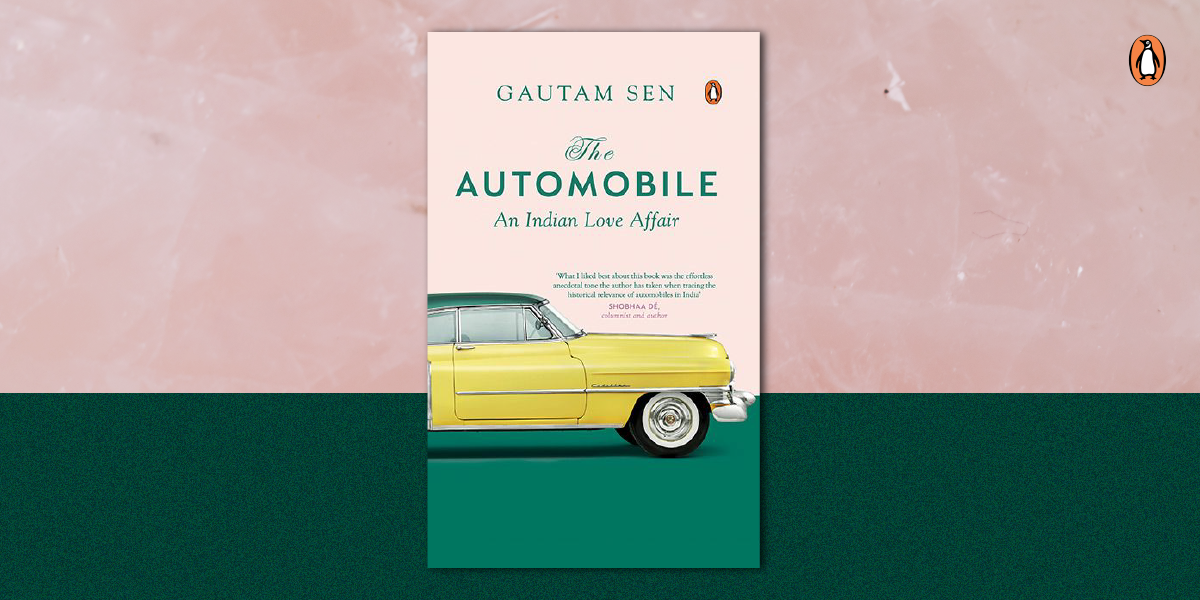
Cars are such an intrinsic part of our lives that it is difficult to visualise a world without them. Although they are the second biggest villain when it comes to air pollution, some villains come in attractive packages and arouse varied passions in the human heart. Gautam Sen’s articulate and extremely readable look at cars, ‘The Automobile: An Indian Love Affair’ gives us a peek into the past and how this industry has evolved. An insight that traverses down the memory lane giving us snippets of information that creates a clearer picture of a familiar and well-loved subject. Knowing about the evolution of the automobile is never a dull subject because all of us regardless of what generation we belong to, have witnessed this gradual unfolding of the multitudinous avatars of the four wheeler.

The biggest patrons of cars in the early 20th century were the several princely states during the British Raj. For the Maharajas owning cars was more of a quirk than actually a means for transportation. There are exceedingly entertaining anecdotes of how the Maharaja of Bharatpur converted his Rolls Royce into a hunting car equipped with a howdah (a seat for elephants usually) and how another Maharaja after being insulted by the sales person in London proceeded to buy a whole fleet of luxury cars that would only carry the garbage of the city! Let’s not forget that the Indian royalty were genuine connoisseurs and patrons of the growing automobile industry. The love affair with cars in India continued as industrialists joined the royalty in their predilection for cars. Bentleys, Rolls Royces, Jaguars, Cadillacs and Mercedes Benz were some of the names that became commonly known amongst the upper class in the country. There are interesting instances of art collectors from princely families tracing and acquiring rare vehicles. Owing to a desire to embrace modernity a lot of these erstwhile owners of fancy luxury cars abandoned them, but for some it became a passion of a lifetime to salvage them. Protap Roy a prince from Bengal and Roni Khan from Mumbai were two such individuals. Like-minded people created the Vintage and Classic Car Club of India and a passion for maintaining old cars as the auto heritage of India manifested in the shape of the Auto World Vintage Car Museum.
Moving on from the romance of the classical styles to the more functional ones over the decades post independence, the evolution of cars and their influence on society and culture is not without its own drama. In Hindi films we saw a surfeit of Impalas, and the films generally ended with a car chase where breaks would fail over a precipice. Fiats and ambassadors were the most common cars seen on Indian roads during the 60s and 70s. With the advent of the 80s the tiny Maruti made its debut on the scene and there was a rush to book this car of the future. In Indian villages folk songs were composed in praise of this car and the owner of a Maruti car was judged as someone quite successful in his life. However, these were still times when families owned just one car, the family car regardless of its size. Cars weren’t air-conditioned and it was quite an agony to be driving in the hot Indian summer with the car packed with the entire family.
Slowly with liberalisation and globalisation the Indian economy took off, and since cars are truly the barometer of the economic health of a country, a variety of new cars could be seen on the Indian roads. New competition made Maruti bring out more luxurious and larger cars into the market. Korean, Japanese, American motor companies were some that found a willing market in India. Recent history is something we are all aware of, there are cars available for every taste and to suit every pocket. Easy car loans make it possible for the young to buy a car fairly easily. In fact now our problem is a surfeit of cars and the horrific traffic situation in larger towns. One also sees more women drivers on the roads as the easy availability of cars is synonymous with the independence and safety of women in our country. Most families have several cars to facilitate all the members of the family and most people are constantly looking to upgrade their mode of transport depending on their financial situation. A love for travel and adventure sports has brought in a variety of SUVs, larger utility vans as well as jeeps into the market. Culturally we aren’t really very different from the western world when it comes to emotions aroused by a car. So these lyrics from the Tracy Chapman song Fast Car make a lot of sense when it comes to young dreams:
You got a fast car
I got a plan to get us outta here
I been working at the convenience store
Managed to save just a little bit of money
Wont have to drive too far
Just ‘cross the border and into the city
You and I can both get jobs
And finally see what it means to be living.
Mir Taqi Mir: Scenes from the life of a pioneering poet

Mir Taqi Mir (1723-1810), known as the god of Urdu poesy (Khuda-e Sukhan), is widely admired for his poetic genius. The most prolific among all Urdu poets, he produced six divans. His deceptively simple poetry had an unusual mellowness and natural flow. Mir was the first poet to demonstrate the hidden beauty and genius of the Urdu language. From the raw Braj of Agra to the sophisticated Persian of Delhi and the mellow Awadhi of Lucknow, he wove them all into his verse. He took the half-baked Rekhta of the mid-eighteenth century to new heights, reaching the pinnacle of literary Urdu’s poetic and creative journey.
Gopi Chand Narang paints a poignant picture of the poet in The Hidden Garden, introducing readers of the grossly misunderstood poet, embellished with a substantial selection of Mir’s most memorable ghazals.
**
Mir was born in February 1723 in Akbarabad (as Agra was known then). He was named Mir Muhammad Taqi. When he grew up, he chose Mir as his takhallus (nom de plume). His ancestors had migrated to India from Hijaz in Iran a few generations ago. They first came to Dakan, then moved to Ahmedabad, and finally settled in Agra. His grandfather got the job of a faujdaar (a position in the Mughal army) and he lived a decent life; he died while he was travelling to Gwalior, leaving behind two sons. Mir’s father, a dervish who was called Ali Muttaqi out of reverence, pursued the path of inner knowledge from his early age. Over the years, he gained a lot of followers within and outside the community. He remained busy day and night, his eyes moist with tears, in the remembrance of God. He was a man of utmost humility,a man free of prejudice, a perfect Sufi. He never became a burden for anyone else. In his autobiography, Zikr-e Mir, Mir talks about his father in a highly respectful and reverent tone, dwelling at length about the lessons that his father gave him from his early years. Here, in a nutshell are some of the things he was told:
ai pisar i’shq bavarz, I’shq ast k dariin karkhaana mutasarrif ast:
Son, always adopt love because love is the dynamic force that binds and controls this universe. Nothing great can happen unless you put a lot of love into your endeavour. If you take love out of your life, it becomes barren. All things around you are the manifestation of love. Water is love, so is fire. Even death is love’s drunken stage. The night is the time when love sleeps; the day is when it wakes up. When you fill your heart with love, it attains perfection. Virtue is its union with love; sin arises when it separates itself from love. Paradise is attractive because it is filled with love; hell is a place of horror because there is no love to be found there. The practice of love is more significant than any prayer or pursuit of knowledge. Son, this world is nothing but a momentary excitement. Don’t indulge too much in it. Love for God is the only real thing. Prepare for the journey that starts after this life is over. My son, you are the treasure of my life. What kind of fire burns in your heart? What is your passion? What do you want to be in your life? (When Mir heard his father ask these questions, he had no answer; tears rolled down his cheeks.) Son, be a nightingale whose spring never ends. Admire beauty whose colours never fade. Keep your heart always strong. Always be ready to face odds in life. The world changes continuously. Do not be depressed when things get bad.

There is no doubt that these teachings had a lasting impact on Mir’s psyche, and he tried to live his life following these high ideals. Mir mentions that one day his father felt the urge to go to Lahore to meet another Sufi who gave sermons by the river Ravi. The old man reached Lahore with great difficulty, but to his disappointment, this so-called Sufi was a fraud who was deceiving poor people by muttering some words in Dari language which they did not understand. On his return journey, God rewarded his father by giving him a disciple, known as Sayyid, whom he brought with him to Agra, and this guest gradually became a member of the household. Sayyid taught Mir, who was seven years old at the time, to read the Quran. Mir called this person ‘uncle’ out of affection. His father and his ‘uncle’ became spiritual companions, andthey could not live without each other’s company. When Sayyid died, a part of his father died with him. Mir wrote, ‘My father threw away his turban, tore open his shirt, and scarred his chest with constant battering.’ On the third day after the death, when friends and admirers gathered to mourn, Mir’s father announced that from that day onwards, he should be called Aziz Murda—someone who has lost a dear friend or a companion. He became famous by this name, and he spent the rest of his life shedding tears each day.
**
Budhini Mejhan – ‘The woman who persevered’
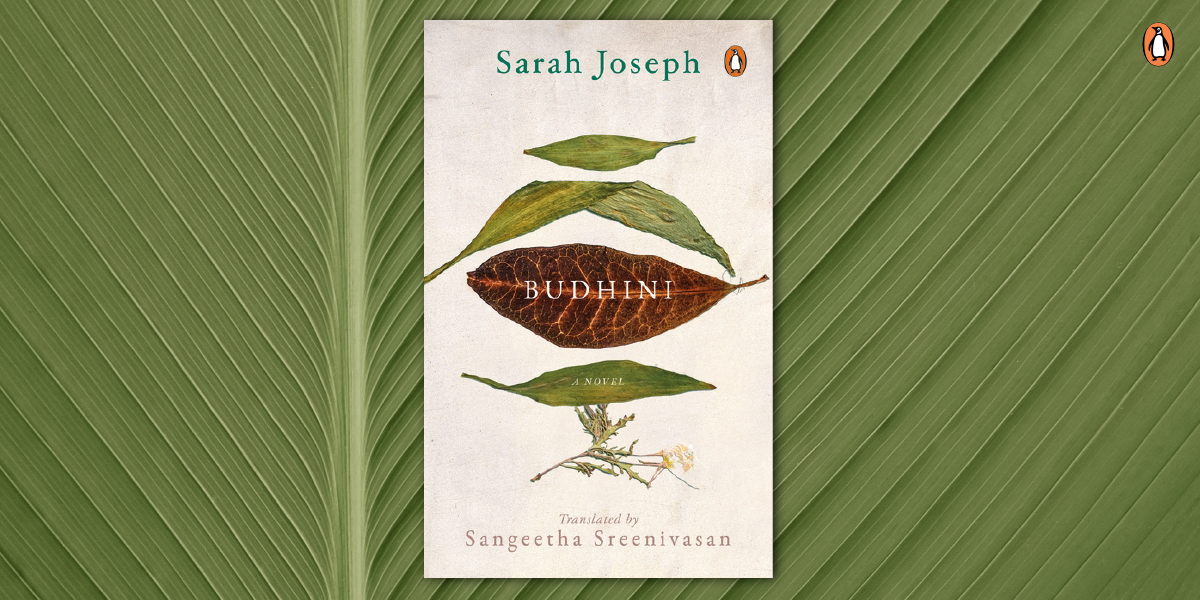
The story of Budhini Mejhan is a nexus of several socio-political strcutures. She was ostrasized by her village and lost her job for an innocent gesture, which was seen as a violation of Santhal traditions. Through Sangeetha Srinivasan’s beautiful translation, Sarah Joseph’s literary sketch of Budhini Mejhan is vivacious, hopeful and endearing. Here is an excerpt:
~
Let us begin with the woman who persevered. Not how she recaptured the dancing ground, but how she ran incessantly without knowing whose land to set foot in. Waking up in the fourth phase of the night, she lit her stove and boiled some water. If she had a pinch of tea leaves or rice, she would have made some tea or gruel.

‘Oye, Ratni, wake up! We have to be there straight away. Please don’t wake your baba. The moment he’s up he will start whining, “Why toil over something in vain, Ratni’s ma? You have been running for a long time now, haven’t you? Will your complaints reach their ears? Better get back to sleep than wear off the soles of your feet.” But, Ratni, it doesn’t work like that; we should barge in and vex them as often as not. In the end, they will be forced to make a decision. Your baba is depressed, but could we endure more than this! Put your blankets over those boys, Ratni. Poor kids, they have been cold all night. Here, take this hot water. It’s not likely that Jauna Marandi will wait for us. His tongue has no bones. And if we don’t make it on time, he will go on grumbling about it till we get there.’
Languorous but still on her feet, Ratni staggered out of the house. Could this shack covered with asbestos sheets, tattered burlaps and rags, sandwiched between the walls of two multi-storeyed buildings, be called a home? Shoving the ragged fabric covering the back of the house aside, the child squatted on the ground and peed. From the mud kanda on the ground, she diligently filled water in a coconut shell and rinsed her mouth and face. She shuddered because of the cold.
‘Ratni Mei!’ Hearing her mother call out in a hushed voice, she went inside without delay. A little black dog followed her into the room, squeezed itself to make space between the sleeping boys and then curled up on the floor. Looking into her eyes, it wagged its tail in concern.
…‘We are very late, Ratni Mei. It seems Jauna Marandi has already left.’ Ratni’s mother was dejected. Loosening the knot at the end of her pallu, she took out some coins and counted. ‘Jauna had promised to take us for free. What should we do now! I saved these coins to buy medicine for your baba, but now we will have to spend them on bus tickets. But if you can walk, Ratni, there is a shorter route through the forest.’
Ratni didn’t say whether she could walk or not. Her teeth chattered, thanks to the cold.
While life saunters, the sun might as well rise in the west one day, marking the end of order. Then daybreak will turn into the hour of darkness. Like time suspended, nothing will be understood. Not everyone will overcome the bewilderment that is yet to come.
As Jauna’s jeep climbed up the road from Asansol to Dhanbad, an arm adorned with thick silver bangles suddenly appeared right in front of his vehicle. A strong arm! Nothing else was visible in the fog. Jauna forced his weight down on the brake pedal.
‘Get in,’ he bawled.
The DVC workers noticed the woman and child get into the jeep through the impenetrable fog. The woman wore a mud- coloured sari with a green border and the girl a crimson sweater. The child carried a bundle of clothes which she hugged close in a bid to protect herself from the insufferable cold. She looked not more than seven or eight. The woman had a grey shaded shawl wrapped around her and a lengthy red fabric bag on her shoulder. There was no seat. They hunkered down on the floor.
It was only the next day that Jauna Marandi realized, much to his shock, that the woman and child had boarded his jeep and alighted at the gates of the DVC to commit suicide.
~
Budhini is an exploration not only of the social laws of identity through the story of Budhini Mejhan but also the imbalanced burden that modernization and urbanization places on communities reliant on ecological methods of sustenance.
Lighten your soul—Love, forgive, bless
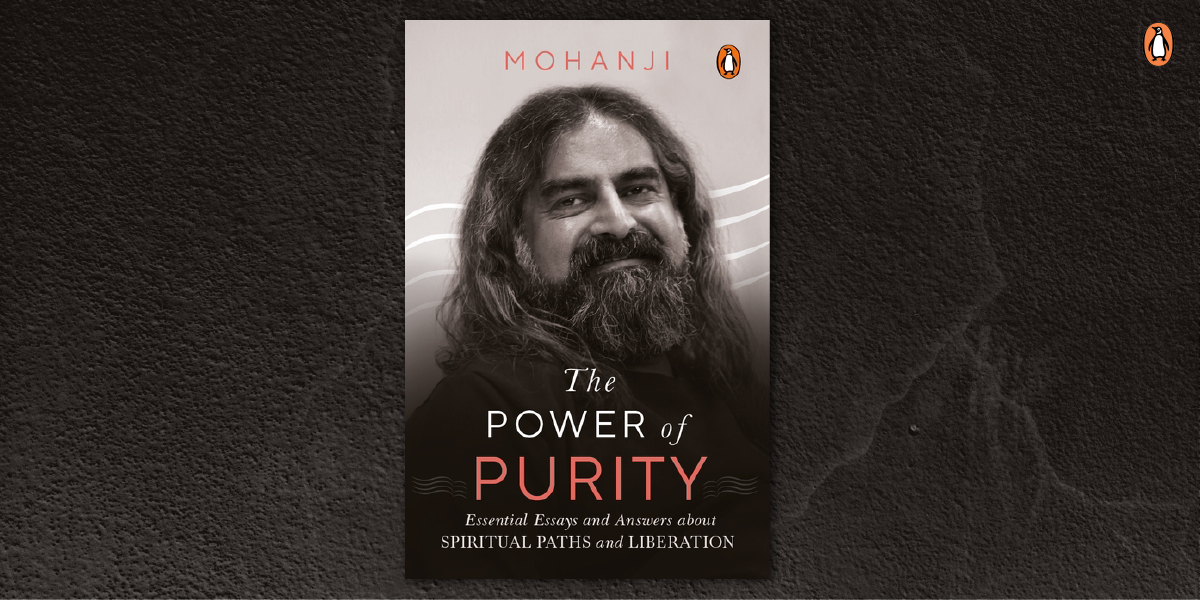
With our birth begins our life cycle and it ends with our death. We all are transitory beings. We can own nothing on Earth on a permanent basis. When we understand that all relationships, situations, sufferings, and emotions are perishable, we realise that the only conquest useful to us is our own mind. The real and only worthwhile journey is into our selves and our soul, for our soul is our greatest guru. When we understand our own soul, we understand all souls. They are all one. The Power of Purity aims to familiarise us with the nuances of our lives and to remind us to steer away from the illusions that the world offers.
Here’s an excerpt from the book in which the author introduces us to a way of life that will help us become aware of ourselves and elevate our soul.
*
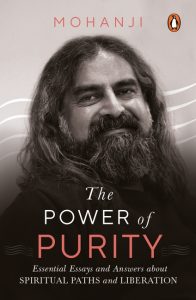
Bless all. It will make you serene and light. Blessing expands you. It makes you light. When we bless all the people we like and all the people we do not like, we truly become the perfect expression of the Almighty. His true expression is unconditional love. When we remove all hatred and fear from our mind, we become an embodiment of love. Love expands. Love makes our life enjoyable. When we express sincere gratitude to all the objects and beings that helped our existence on Earth, we become universal. Once we understand the true relevance of the food that we have consumed so far, the houses that sheltered us, the books that gave us knowledge, our parents and our teachers, and, above all, the element of divinity that sustained us, we will be filled with humility and deep gratitude. Most of our vital functions, including respiration, circulation, digestion, heartbeat and even sleep, for that matter, are controlled by our subconscious mind. All these things are working in perfect synchronization because our conscious mind has nothing to do with it. We are given the time, space, intellect and situation to act out our inherent traits. What do we have in our control? Why do we blame others? Why do we entertain guilt at all? What is there to be afraid of? All experiences have been lessons. We could not have changed anything. So what else can we do, except express unconditional love and compassion? What else can we do but bless everybody and everything? When we realize that we are not really the one who does everything, we will see our ego getting nullified and our doership getting dissolved. We will then operate in perfect awareness and gratitude.
God is within us. God is to be loved, not feared. The soul element that fuels our existence is the God within all of us. God, the one who generates, operates and dissolves. Hence, all of us possess the same god element. No one is inferior nor superior to anyone. Some evolved higher through rigorous practices, contemplation and meditation. Through lifetimes of efforts, they attained higher awareness. That’s all. In principle, all are one and the same. The same soul element fuels the existence of all living beings, which includes plants and animals. Just like the same electricity is used to operate various equipment, the same soul operates various bodies, and some of them are human.
All of us are temporary custodians of a body, of money and possessions. It is the same with relationships. Everything is temporary. Everything has a definite longevity. There is no room for egocentric expressions, if we digest this truth. All we can do is forgive everything. Bless everything.
**
To understand your consciousness, the meaning of life, and the various facets of existence, read Mohanji’s The Power of Purity.
Alaap – A glimpse into the imminent
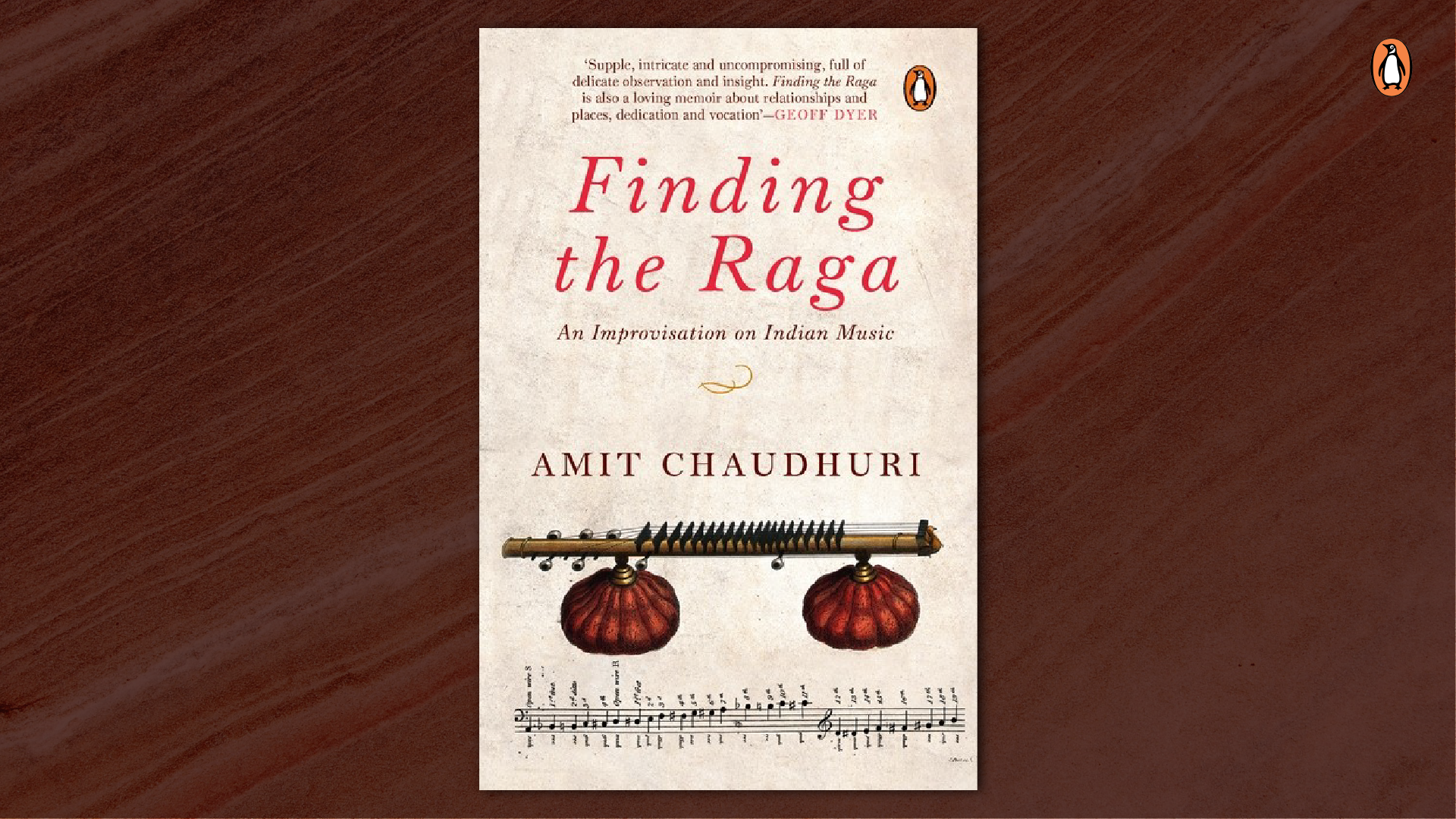
Finding the Raga is Amit Chaudhuri’s singular account of his discovery of, and enduring passion for, North Indian music. A work that simultaneously serves as an essay, memoir and cultural study on an ancient, evolving tradition. It aims at altering the reader’s notion of what music might – and can – be. Tracing music’s development, Finding the Raga dwells on its most distinctive and mysterious characteristics: its extraordinary approach to time, language and silence; its embrace of confoundment, and its ethos of evocation over representation. The result is a strange gift of a book, for musicians and music lovers, and for any creative mind in search of diverse and transforming inspiration.
Here is a glimpse into this profound work of art.
~
Not long ago, I found myself discussing narrative with a group of academics over dinner. Someone said that narrative doesn’t have to have a beginning, middle, and end in that order. I pointed out that there were narratives in which the beginning took up so much time that you didn’t know when you were going to arrive at the actual story. Personally, that was the sort of narrative I liked. I told the academics what the filmmaker Gurvinder Singh had said in a talk in Delhi about the screening of his first film Anhe Ghore da Daan (‘Alms for a Blind Horse’) at a film festival in Canada. Singh said that the ten-tofifteen-
minute prologue – which he showed us before his talk – had presented the director of the film festival with a problem. She wanted him to cut it and move straight to the main narrative. He said he’d rather not show the film at all than dispense with the opening. The film’s prologue was significant. Nothing happened in it except the establishment of a certain meandering lifelikeness. Since this lifelikeness, this quality of constantly revisiting the present moment, is more important to me than the story, I actually wanted Gurvinder’s entire film to have been a prologue.
While writing these pages, I wondered if I could call the first chapter ‘alaap’, thereby playing on the meaning of the main segment of khayal. ‘Alaap’ means – presumably in all North Indian languages – ‘introduction’. It’s also a major component of khayal. The initial delineation of the raga, before the vilambit or slow composition starts to the tabla’s accompaniment, is called ‘alaap’. So is the broaching and exploration of the raga in the vilambit composition, where the singer ascends reluctantly from the lower to the upper tonic, subjecting the notes and the identifying phrases to repeated reinterpretation. This is the alaap too; through a progression of glissandos, it contributes to a full emotional and intellectual engagement with a raga, and can take up to half an hour or more, depending on the singer’s inventiveness or obduracy. The alaap is all; its detail justifies the genre’s name – ‘khayal’, Arabic for ‘imagination’. From alaap we move to drut, fast-tempo segments, which are more virtuosic, less lyrical and tardy in character. No other music tradition allows the prologue to be definitive in this way; not even the Carnatic or South Indian tradition, or the dhrupad, precursor to the khayal, has a counterpart to the alaap’s divagation. Carnatic performance has alapana, a long opening without percussion in which the raga is established. But alapana, like the nom tom alaap in dhrupad, soon takes on a quasi-rhythmic form: that is, the syllables are sung in and out of metre, although percussive accompaniment is still to come in. The rhythmic element in alapana and in the dhrupad’s long introductory passages creates a sort of excitement to do with the climactic; in the khayal, though, all expectation of the climactic is set aside. In fact, the rhythmless alaap in khayal is relatively short; the percussion instrument, the tabla, soon joins the singer, playing a tala (a cyclical measure with a fixed number and allocation of beats) at an incredibly retarded tempo. The singer proceeds in free time, heedless of the tala and the tabla player except when they must return, after an interval, with the composition to the one, the first beat, of the time cycle: the sama. Otherwise, unlike Carnatic music or the dhrupad, free time reigns over the exposition, notwithstanding the tabla, which, in a feat of dual awareness, the singer nods to and largely ignores. The alaap is a formal and conceptual innovation of the same family as the circadian novel, in which everything happens, in an amplification of time, before anything’s begun to happen. At what point North Indian classical singing allowed itself the liberty of making the introduction – that is, the circumventory exploration that defers, then replaces, the ‘main story’ – become its definitive movement, I don’t know; it could go back to the early twentieth century, when Ustad Abdul Wahid Khan’s romantic-modernist proclivities left a deep impress on North Indian performance.
The alaap corresponds with my need for narrative not to be a story, but a series of opening paragraphs, where life hasn’t already ‘happened’, ready for recounting, but is about to happen, or is happening, and, as a result, can’t be domesticated into a perfect retelling. Should I call this chapter ‘alaap’, then? Or should I give the book that name?
Celebrating Ruskin Bond with his books for grown-ups!

Ruskin Bond started his writing career with the publication of The Room on the Roof at age seventeen. Since then, he is well-known (and definitely well-loved!) for his hundreds of short stories for both children and adults.
If you grew up loving him and his work, we’re sure you’d love to get your hands on some titles written for grown-ups. Here is a list of books written by Ruskin Bond, for adults.
The Best of Ruskin Bond

Are you a fan of Ruskin Bond? Have you been trying to compile his best works and read them along? If yes, then this book, ‘The Best of Ruskin Bond’ is the perfect solution for you. These exemplary stories from the legendary author are here for the taking, all compiled in a single book and provided with some of the best excerpts ever written. This consolidated volume brings together selected prose and poetries that have been written by the award winning author, Ruskin Bond. During his entire career, he has captivated readers across the world with his writing talent.
The Night Train at Deoli

Adorned with 30 beautiful stories from Ruskin Bond, The Night Train at Deoli and other stories effortlessly makes in to the must-have, must-read list of every reader. Simple, heart-warming and thought-provoking stories will take you to heavenly grounds of Dehradun and Mussoorie, where the author himself has spent his childhood and teenage years. The stories in the book speak of simple folk, who live in the technology untouched valleys and hills, the lush greenery and little crowded markets.
Collected short stories

Ruskin Bond wrote his first short story, Untouchable, at the age of sixteen, and has written memorable fiction ever since. He is famous not only for his love of the hills, but for imbuing the countryside with life and vibrancy through moving descriptions. The simple people who inhabit his stories evoke sympathy and laughter in equal measure. This wonderful collection of seventy stories, including classics like A Face in Dark, The Kitemaker, The Tunnel, The Room of Many Colours, Dust on the Mountain and Times Stops at Shamli, is a must-have for any bookshelf.
The Little Book of Comfort

”So I went out into the night, walked up the hill, discovered new things about the night and myself, and came home refreshed. For just as the night has the moon and the stars, so the darkness of the soul can be lit up by small fireflies – such as these calm and comforting thoughts that I have jotted down for you…” Ruskin Bond
Time Stops at Shamli

Ruskin Bond’s simple characters, living amidst the lush forests of the Himalayan foothills, are remarkable for their quiet heroism, courage and grace, and age-old values of honesty and fidelity. Residents of nondescript villages and towns, they lead lives that are touched by natural beauty as well as suffering—the loss of a loved parent, unfulfilled dreams, natural calamities, ghostly visitations, a respected teacher turned crooked, strangers who make a nuisance of themselves—which only reinforces their abiding faith in God, family and neighbour. Told in Bond’s distinctive style, these stories are a magnificent evocation of an India that may be fast disappearing.
Rain in the Mountains

It is a collection of stories, snippets, essays and poems penned by the writer after having lived in many hamlets across the mountains in the Himalayas. Through his subtle, simple and lucid writing, the author beautifully brings alive many natural sights and sounds that evoke the essence of natural mountain life.
Both prose and poetry in the book are centred around nature with all the purity that it holds. Rain in the Mountains: Notes from the Himalayas touches a raw nerve for an urban dweller when it describes the beauty of mountain wilderness, surrounded by chirping birds, squirrels, a blue sky with moving clouds casting light and shade shadows.
Delhi is not Far
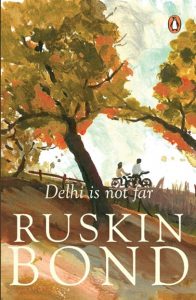
The residents of Pipalnagar, a dull and dusty small town, hope to one day leave behind their humdrum lives for the thrills of Delhi. Deep Chand, the barber, dreams of giving the prime minister a haircut; Pitamber wishes to ride an autorickshaw instead of pulling a cycle-rickshaw; and Aziz will be happy with a junk-shop in Chandni Chowk. Sharing their dreams of escape is the narrator Arun, a struggling detective fiction writer. As he waits for inspiration to write a blockbuster, he seeks and discovers love in unusual places-with the young prostitute Kamla, wise beyond her years and the orphan and epileptic Suraj, surprisingly optimistic despite his difficult circumstances.
Our Trees Still Grow in Dehra
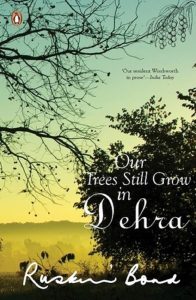
Fourteen engaging stories from one of India’s master story-tellers Semi-autobiographical in nature, these stories span the period from the author’s childhood to the present. We are introduced, in a series of beautifully imagined and crafted cameos, to the author’s family, friends, and various other people who left a lasting impression on him. In other stories we revisit Bond’s beloved Garhwal hills and the small towns and villages that he has returned to time and again in his fiction. Together with his well-known novella, A Flight of Pigeons (which was made into the film Junoon), which also appears in this collection, these stories once again bring Ruskin Bond’s India vividly to life.
A Face in the Dark and Other Hauntings

In Ruskin Bond’s stories, ghosts, jinns, witches—and the occasional monster—are as real as the people he writes about. This collection brings together all of his tales of the paranormal, opening with the unforgettable, ‘A Face in the Dark’ and ending with the shockingly macabre, ‘Night of the Millennium’. Featuring thrilling situations and strange beings, a Face in the Dark and Other Hauntings is the perfect collection to have by your bedside when the moon is up.
Death Under the Deodars

It was death at first sight . . .
Miss Ripley-Bean was sitting on a bench beneath the deodars, having a quiet moment to herself, when suddenly two shadows, larger than life, appeared on the outside wall; they were struggling with each other. Only afterwards, when a dead body was discovered, did Miss Ripley-Bean realize she had witnessed a murder – and that the murderer had seen her.
In this marvellous collection of brand-new stories set in the Mussoorie of a bygone era, Ruskin Bond recounts the deliciously sinister cases of a murdered priest, an adulterous couple, a man who is born evil and the body in the box bed; not to forget the strange happenings involving the arsenic in the post, the strychnine in the cognac, a mysterious black dog and the Daryaganj strangler.
The Room on the Roof
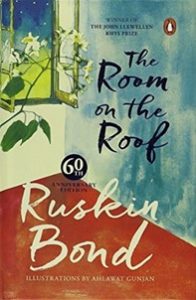
Rusty, a sixteen-year-old Anglo-Indian boy, is orphaned and has to live with his English guardian in the claustrophobic European part in Dehra Dun. Unhappy with the strict ways of his guardian, Rusty runs away from home to live with his Indian friends. Plunging for the first time into the dream-bright world of the bazaar, Hindu festivals and other aspects of Indian life, Rusty is enchanted … and is lost forever to the prim proprieties of the European community.
Written when the author was himself seventeen, this moving story of love and friendship, with a new introduction and illustrations will be enjoyed by a whole new generation of readers.
What’s your favourite story for Ruskin Bond? Tell us in the comments!
A diving holiday, disturbing discovery, and kidnapping
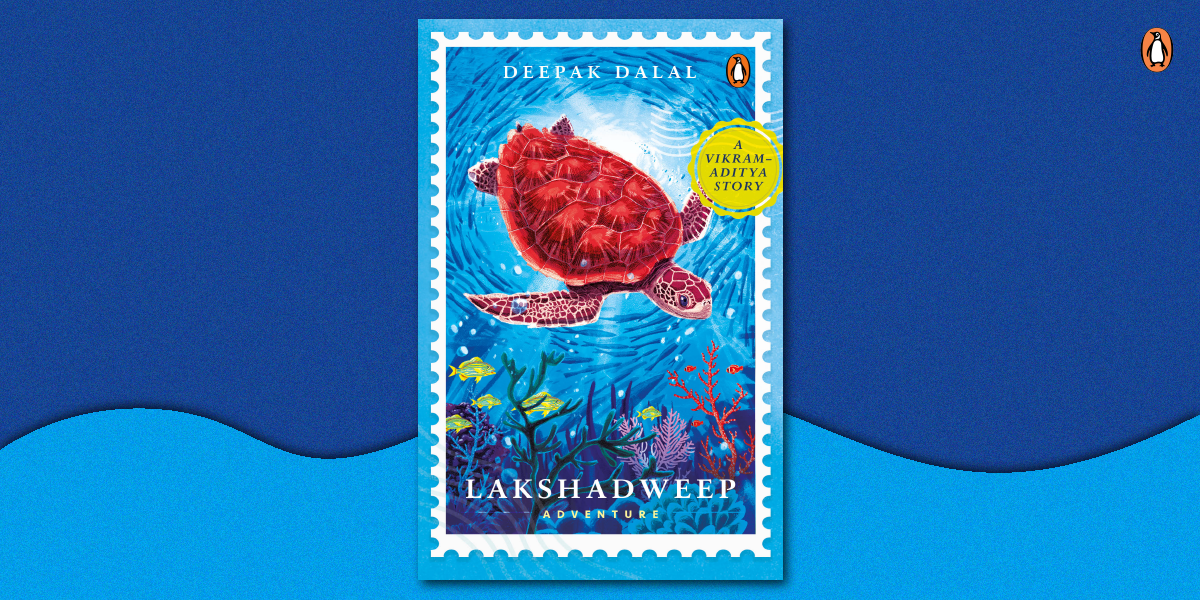
Far out in the Arabian Sea, where the waters plunge many thousands of metres to the ocean floor, lies a chain of bewitching coral atolls – the Lakshadweep Islands. Vikram and Aditya dive into lagoons with crystal-clear water and reefs that are deep and shrouded in mystery. But when they stumble upon a devious kidnapping plot, their idyllic holiday turns into a desperate struggle for survival.
Here is an excerpt from Deepak Dalal’s new book, Lakshadweep Adventure where Faisal – the boy who’s care Vikram and Aditya are left in – makes a disturbing discovery.

Faisal was in a bad mood. His uncle’s impending arrival hovered like a dark cloud above him. And his friends’ decision to abandon him for the day only made things worse.
Faisal had noticed the wind the moment he had strolled out on to the beach, and his mood had soured even further when he saw his friends enjoying themselves. He wished he had accepted Aditya’s offer as he watched them speed their boards across the lagoon. But it was too late now. His uncle would be arriving shortly.
Faisal sat under a palm tree. He passed time drawing figures in the sand. Above him, palm fronds shook and fluttered as the wind whistled through them. The sun shone brightly. The sand intensified its glare, forcing Faisal to shut his eyes. It was pleasant under the tree and the wind was crisp and enjoyable. The rustling of the palms overhead soothed him and he soon fell asleep.
The tide slowly crept up the beach and finally washed over Faisal’s feet, waking him with a start. He looked at his watch, muttering softly to himself. It was past midday.
Basheer uncle would have arrived by now. He dusted sand from his clothes and rose hurriedly to his feet.
Faisal heard raised voices from the living room window when he entered the yard. He crept forward till he was below the window and peeped in.
His uncle was standing in the centre of the room, facing a group of men.
Basheer Koya was a copy of Faisal’s father, except that he was fatter and there was hardly any hair on his head. But unlike his brother, whose manner was calm and collected, Basheer Koya’s face was contorted with rage. His cheeks were dark and red and he was shouting like a man possessed.
‘Fools!’ thundered Basheer Koya in Malayalam. ‘Monkeys have more brains than you lot. Idiots. I thought you had ears. But obviously you don’t. You weren’t to set foot in Kalpeni. How many times did I tell you not to come here? Yet, not only do you come to the island, but even more brainlessly, you visit my home.’
A bearded man with big, wide shoulders spoke. ‘Sir,’ he began. ‘Sir—’
Basheer Koya ranted on, cutting off the man. ‘I travelled all the way to Kochi to make certain that no suspicion fell on me and I returned only after the operation was over. And you? I come home and see you fools sitting in my house. I take all these precautions and now everyone on this island can link me to you and from there to the operation.’
‘But, sir—’
‘You were under orders to head to Tinakara Island. What are you doing here?’
‘Sir. I was trying to explain just that, sir. We were headed for Tinakara. But we had engine trouble, sir. A terrible rattling noise came from the engine and we were forced to head for the nearest island. You can speak to the mechanic, sir. He looked at our boat and said we were lucky to make it here to Kalpeni.’
The explanation diminished Basheer Koya’s rage, yet he continued to glare at the bearded man. ‘Kumar. Where is Kumar?’ he barked.
‘Kumar is safely on board, sir. There’s no need to worry about him. He is in the lower cabin and one of our men is with him all the time. He can’t make a sound or do anything. He won’t be able to alert the mechanics.’
Faisal froze. This was not for his ears. It was wrong of him to eavesdrop. He wondered if he should leave, but who was Kumar and what was his uncle up to?
‘No one is to know that we have a prisoner on board,’ growled Basheer Koya. ‘Even Allah will not be able to help you if he is discovered. I make no allowances for mistakes.’ Basheer Koya stared at his men, shifting his gaze from one to the other. ‘Do you understand?’
There was silence in the room.
Faisal understood full well what his uncle meant. He shuddered.
***
Journey through these breath-taking islands with a tale of scuba diving and sabotage, set in one of India’s most splendid destinations.
The ‘Third Vision’ of the world is need of the hour
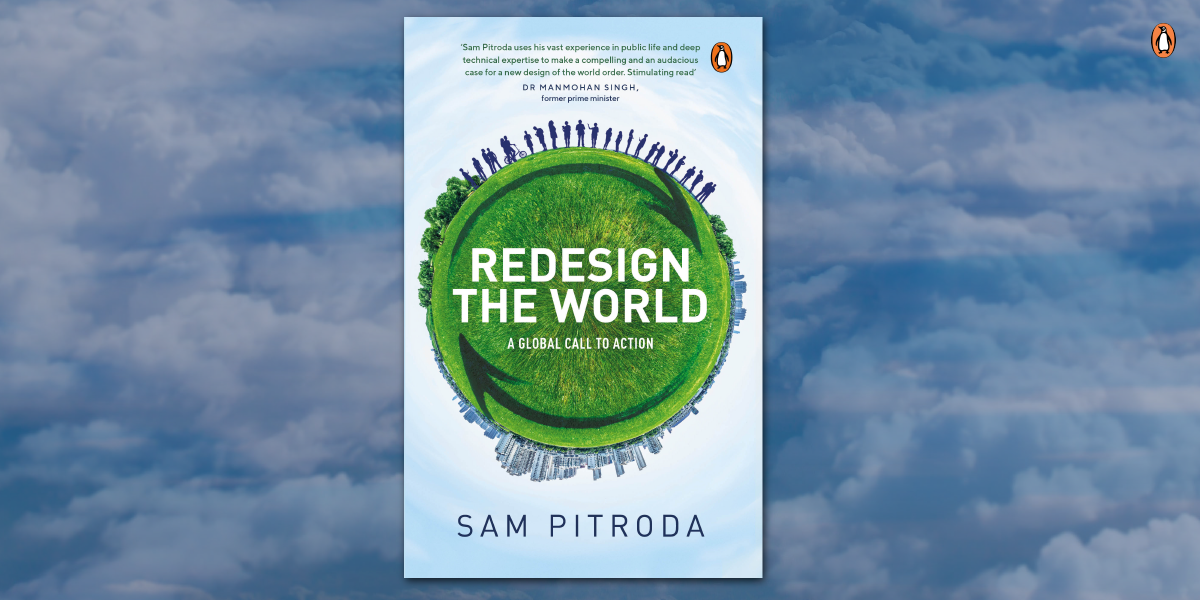
We essentially need a ‘third vision’ of the world that transcends national interests and takes into account global issues, from trade to environmental impacts. We need a vision that values human capital more than financial capital. A vision that works for everyone to attain a multipolar world, where people at the bottom of the economic pyramid benefit the most. We need to ask the world’s people: Do they want to live forever with poverty and hunger, with inequality and unemployment, under the shadow of discrimination and fear, with the police at every corner and the military at all borders? Or do they want to live in peace with friendly neighbours, in a clean environment, and with respect, dignity, equality, opportunities and hope for all? The present reality is scary. Don’t we want to change it?

We do not want just the ‘open’ vision of America or the ‘closed’ vision of China. We want a third vision of the world where America is open to engagement, and China is engaged in openness. We want a reset of the world so that we can redesign it. We want to reset international interests over national interests, human diversity over human differences, globalism over nationalism, inclusion over exclusion, non-violence over violence, rationality over religion, and respect over race. We want international cooperation on climate change, global health, poverty, hunger, violence, security, amity with neighbours and much more.
I firmly believe that it is possible to redesign the world with this third vision because multiple, intricate and timely technologies with incredible innovations in information, genetics, bio, nano and material sciences are now all coming together. They are taking deep roots across the social, political and economic landscape, which will profoundly impact our livelihood and longevity. This will give new meaning to life, work, values, wisdom and progress. It will lead to a new development model based on cooperation, collaboration and communication, which can finally deliver peace, justice and prosperity to all by the middle of this century.
We are so used to thinking and behaving traditionally with our narrow compartmentalization of people and their ideas, values and experiences. We always tend to look at past experiences and our history to find solutions. We find pleasure in the past, comfort in the present, and fear for the future. The future is prosperous with new bold ideas and different toolkits, such as hyperconnectivity, which did not exist earlier. The future demands a new mindset with creativity, innovation and courage. I firmly believe that we are at a crossroads because of hyperconnectivity. We must think very differently to redesign the global organizational architecture. Only with this can we achieve new goals and growth for humanity’s sake. Connectivity is the key to break our past, transcend our present, and build bridges to network for the future.