Publish with Us

Follow Penguin

Follow Penguinsters

Follow Penguin Swadesh

Raja Rao’s Gandhi – A life in words

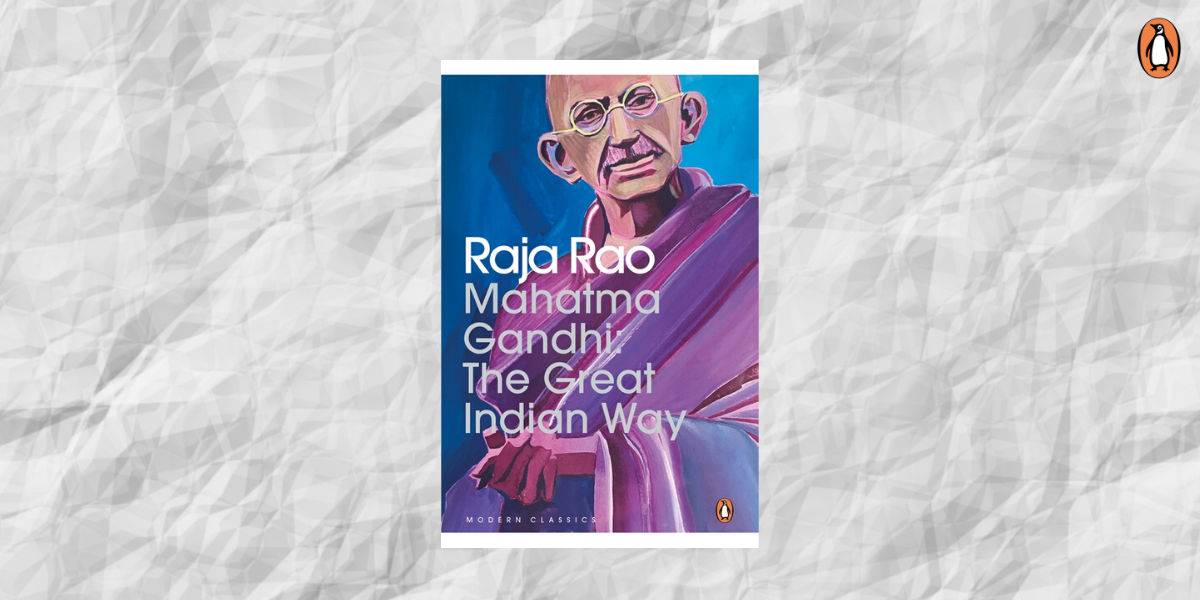
In many ways, Raja Rao changed the way Mahatma Gandhi is read and written about. Get a glimpse into the processes of his writing through Makarand R. Paranjape’s introduction to Mahatma Gandhi: The Great Indian Way: 


In the symposium on Raja Rao on 24 March 1997, I had spoken on his forthcoming book The Great Indian Way: A Life of Mahatma Gandhi. This was a marvellous retelling of Bapu’s life in the form of a modern purana. Rao had called it ‘an experiment in honesty’, adding that the ‘Pauranic style, therefore, is the only style an Indian can use’.

The publisher was Kapil Malhotra of Vision Books, who in 1996 had published The Meaning of India. Malhotra had inherited one-half of what used to be Dina Nath Malhotra’s Hind Pocket Books, India’s first paperback imprint. Malhotra, believing in Rao’s genius, had also published The Chessmaster and His Moves in 1988. That book had won Rao the coveted Neustadt Prize. The manuscript was part of a veritable treasure trove of unpublished material that some of us, who were close to Rao, had been fortunate to be able to see. But there were many more such unpublished works, which I had seen at the Harry Ransom Humanities Research Center, where Rao’s papers now rested.

front cover The Great Indian Way
Mahatma Gandhi: The Great Indian Way||Raja Rao

After the Chessmaster, Malhotra published On the Ganga Ghat (1989) too. It was a unique collection of short stories with the common theme and location of Varanasi. It was clear that we were in the midst of a quiet Raja Rao efflorescence. It would culminate in his being posthumously awarded India’s second-highest civilian honour, the Padma Vibhushan, in 2007, ten years after the prestigious Sahitya Akademi Fellowship mentioned earlier.

What was so special about Rao’s book, yet another of the hundreds written on Gandhi? Why had Mulk Raj Anand called it ‘Among the most authentic accounts of the Mahatma’s life and work’? It was this question that I had tried to answer in my presentation on Rao in the symposium in 1997.

The clue came from Rao himself. ‘Facts of course are there,’ he says in the preface, ‘but facts are shrill.’ Facts, in other words, do not tell the whole truth: ‘They have a way of saying more than they mean, and disbelievingly so. The silences and the symbols are omitted, and meaning taken out of breath and performance.’

What else do we have other than facts? It is, as Rao says, the ‘rasa, flavour, to makes facts melt into life’. The Indian experience is complex and multi-layered, requiring a special style to express it, even in modern times: ‘the Indian experience is such a palimpsest, layer behind layer of tradition and myth and custom go to make such an existence: gesture is ritual, and each act a statement in terms of philosophy, superstition, historical or linguistic provincialism, caste originality, or merely a personal one, and yet it’s all a whole, it’s India.’

Rao, next, makes a very bold statement: ‘Thus to face honesty against an Indian event, an Indian life, one’s expression has to be epic in style or to lie.’ Facts alone cannot tell the Indian story, nor can myths, rituals, or fables by themselves. The two must be combined in a unique manner. That was Rao’s reinvented pauranic style. Not in the manner of the old puranas, with— from the point of modern history—their unverifiable material. Nor the contemporary histories which were slaves to facts. But a unique combination of both.

This is what I called ‘seeing with three eyes’. The first eye sees only facts. The second espies the fable behind and around the fact. It is only the third eye, the eye of wisdom, that can combine both to see into the depths of things, their secret significance and meaning.

This special way of seeing is what Rao calls ‘fact against custom, history against time . . . geography against space.’ In his book on the Mahatma, this is precisely what Rao accomplishes, making ‘life larger than it seems, and its small impurities and accidents and parts, must perforce be transmuted into equations where the mighty becomes normal, and the normal in its turn becoming myth. Prose and poetry thus flow into one another, the personal and the impersonal, making the drama altogether noble and simple.’

An important feature of traditional Indian society, which persists to this very day, is its enormously rich and varied method of chronicling and celebrating life. In rural society, for instance, even humble craftspersons like weavers, potters, blacksmiths and wood workers have a specially designated bhiksha vritti jati, a group of mendicant performers, to record and disseminate their deeds. Thus, all our communities have their own jati puranas or community histories. Likewise, each village, each region, each state has its own legends, songs and stories. All these go into making up our rich narrative traditions.

Raja Rao, as he himself has often reiterated, belongs very much to this pauranic tradition. He has performed his duty as a writer as faithfully and sincerely as our ancient poets, who have told the stories of gods and demons, heroes and villains, apsaras and princesses, sages and mendicants with such zealous relish. A key and recurring figure in Raja Rao’s works is one of the greatest men of our times, Mahatma Gandhi. This book is Rao’s retelling of and tribute to Gandhi’s extraordinary life.

~

Through Mahatma Gandhi: The Great Indian Way, Raja Rao changed the rules of biography writing. The book paints a holistic and in-depth picture of a man who was larger than life.

The cost of freedom – Hamid Ansari’s battle for survival

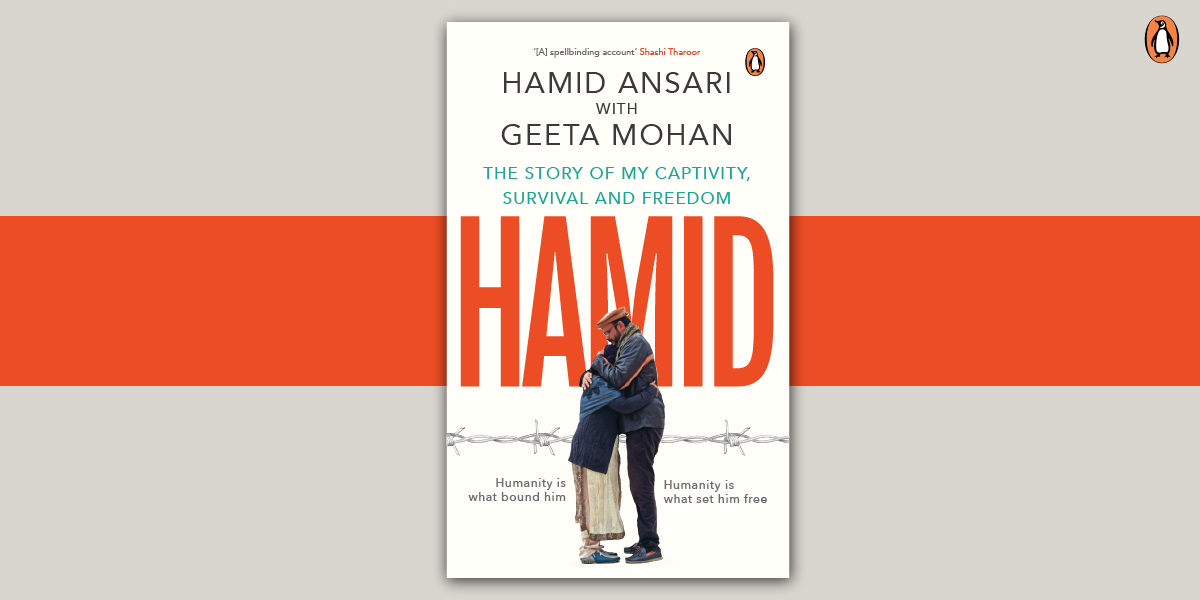
Betrayed by his friends, Hamid Ansari found himself labelled a spy by Pakistani authorities. He battled for his innocence, surviving brutal interrogation sessions and long periods of confinement. This is an important read for anyone who wishes to understand the exact machinations of the event, and how state power can irreparably alter individual lives. Here is an extract:

It was not as cold as one would have expected on 19 September 2014. Zeenat waited with her mother at the bus stop for her trip to Karak. Her mother blessed her and wished her a safe journey. ‘Be careful, Zeenat. While Fauzia needs you, your family needs you more. May Allah bring you success.’

Zeenat reached Karak and went to Atta-ur-Rahman’s residence. She paid him and he told her exactly what had happened. He mentioned Abdullah Khattak, who was to receive Hamid in Kohat and help him rescue Fiza.

With all honesty, he said that he didn’t know why and how Hamid was picked up but that he had informed Fiza’s father and that is who must have informed the authorities. ‘It could be Abdullah too, you never know,’ he added.

… Since Kohat was an hour away from Karak, she immediately took the bus there and called up Abdullah on the way, introducing herself as a journalist from Lahore, saying she wanted to meet regarding a story. He readily agreed.

They met at the bus stop and went to a dhaba nearby. Zeenat told him why she was there—to track a story about an Indian called Hamid Ansari, who had been written about in the papers. He looked worried and asked her how she knew that he was Hamid’s contact. She told him that she was following up with the family back home and they had a few numbers.

‘How did they get my number?’ He knew very well that he could be in trouble.

Zeenat figured out that he was nervous. ‘Abdullah, consider me a friend. You did what was right so you have nothing to worry about. I am just trying to join the dots. How did he manage to enter our country and what was he up to?’ she said.

Her words calmed his nerves and he told her, ‘Imagine, he thought he could just enter our country and take one of our girls from here. I made sure that didn’t happen.’

Front cover Hamid
Hamid||Hamid Ansari, Geeta Mohan

‘Good. But was she not going to be a victim of wani?’ she asked while she took out her notepad.

He nodded, embarrassed, but went on, ‘Zeenat, whatever may be the case, he shouldn’t have thought that he would get away with it. I did what I thought was right.’

… He told her about Hamid’s plans, how he had connected with him, and of Palwasha Hotel, where he was taken. He also narrated the entire episode of his arrest. Zeenat listened intently and took notes, occasionally interrupting him for details such as the address of the hotel, time of arrival, last call, etc.

…They parted ways. It was evening. But Zeenat knew what she had to do next. She went straight to Palwasha Hotel and asked the boy at the reception to call the manager. A while later, a young man stepped out.

Zeenat asked them about the Indian who had come there on 14 November 2012. The manager looked shocked but feigned ignorance. Zeenat gave him a knowing look and flashed her press card. ‘I am here to do a story and I know everything. So please share whatever information you have. Where is your guest register? Show it to me.’

He hesitated and said, ‘We are a small establishment and don’t want any trouble. Please don’t put this in the paper. We don’t want people thinking we allow shady people or terrorists in. We don’t know who or where the man was from but we did have him here around that time. He was picked up by the agencies, I think.’

She understood their concern and assured them that she was only trying to find out some details. He pulled out the register and showed it to her.

She went to the entries for 2012 and sifted through them to reach November. When she reached 13 November, she saw that the next page was for 15 November. She looked carefully and ran her fingers through the binding of the register to see the remnants of a torn page.

She looked up at the manager questioningly. He understood what she was asking and said, ‘Well, the cops had come to inquire about the man and a few days later some other officers came and tore the page out. They instructed me not to breathe a word to anyone.’

…The man was a hotel manager in a small town. He was straight in his ways and didn’t mince words. He looked down and then turned around and left, before returning with a sheet of paper in his hand.

‘I didn’t throw it away since I didn’t trust the men. In case someone else came asking for him from the agency then I would have had no proof, that is why I saved this paper. Here it is.’ He gave it to Zeenat.

She saw the paper and noticed the name of one guest registered as Hamza. The manager pointed at it and said that that was the guy. Zeenat felt that Hamid obviously must not have revealed his real name. ‘Who was here with him?’ she asked.

The younger boy who stood beside the manager said, ‘I was here that night. There was a local man called Abdullah who had booked the room in advance. This other man looked like an outsider. A city boy from Lahore or Karachi. He checked in and left immediately after. He never returned. Only cops came in late that night to collect his belongings.’

‘Where was he taken?’
The manager replied, ‘Kohat police station.’


Hamid is a tale of survival, resilience and a relentless battle against the faceless power of the state.

Test Your Attention!

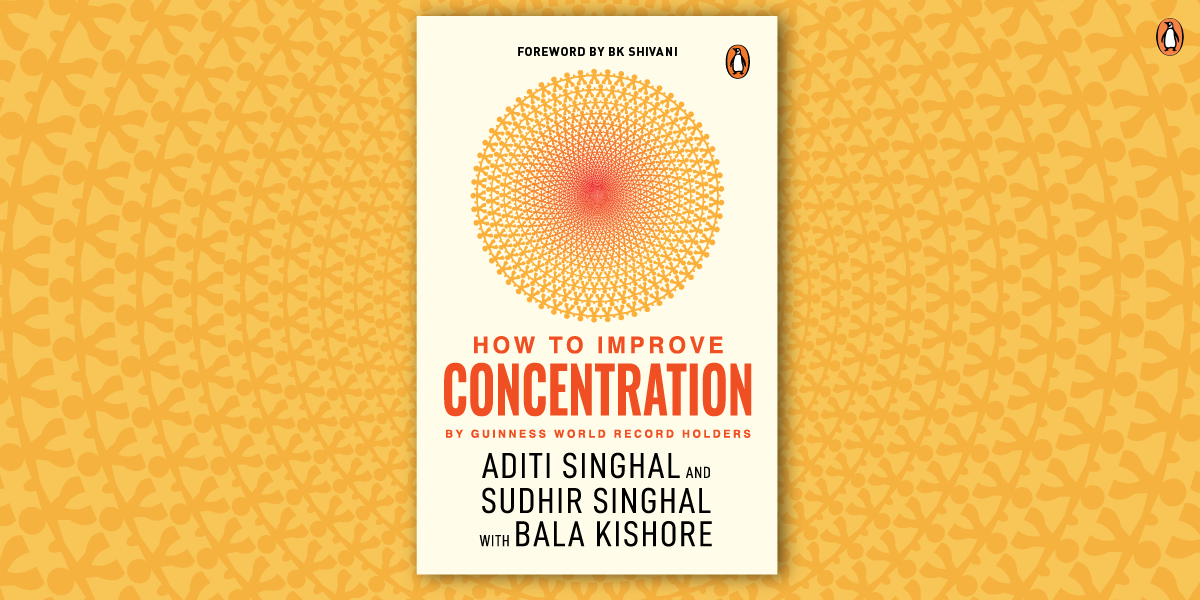
Our world today is filled with distractions that demand our attention every few seconds. The constant messages, notifications and pop-ups have a huge impact on our physical and mental health, making it difficult for us to concentrate on any task. In such a fast-paced world, attention is our most important resource. But we are largely unaware of the key role it plays in shaping our everyday lives.

Here is an interesting test, excerpted from How to Improve Concentration, by memory experts Aditi and Sudhir Singhal, and digital wellness coach Bala Kishore, to ascertain your level of attention.

**

In order to complete the test quickly, you must first go through the questions carefully. It’s a very simple test. Your aim should be to complete it as fast as possible.

Let’s start:


  1. Without looking at your shirt, count the number of buttons on it.
  2. How many zeroes are there in the number 10000000000086?
  3. Circle this instruction.
  4. How many ‘/’ are there in the following pattern?

\\\////\\\\////\\//\////\//\//

  1. Count the letter W in the group of letters given below:

WMMWMMWMWWMWWMWWMM MMWMMMWMWWWWWWMWM MWMWWMMWWMMWWWMWMW MWWWMWWMMMWMWMWMW

  1. Calculate the answer: 7 – 4 × 2 + 3
  2. Count the number of vowels in the sentences given below:
    • Observation is a skill that takes time to hone.
    • Keep practising, even if you think you will never

improve your concentration.

  1. Draw a star on the upper-right corner of this page.
  2. Convert these four numbers—6, 10, 13, 5—into letters using the coding given below and write the letters in the reverse order.

1=A, 2=B, 3=C, and so on.

  1. Now that you have finished reading all the questions carefully, do only question 4.

SOLUTION

front cover of How to Improve Concentration
How to Improve Concentration || Sudhir and Aditi Singhal, Bala Kishore


If you solved all the ten questions, we are sure the last one made you laugh. Just because you did not pay attention to the instructions given at the outset (‘In order to complete the test quickly, you must first go through the questions carefully’) you unnecessarily spent so much time and energy on tasks that weren’t even required.

In case you read and followed the instructions carefully, and solved just question 4 to get the answer ‘18’, then congratulations! You did have your attention focused solely on the test.


The fine art of balance – Deanne Panday’s guide to a wholesome life

Deanne Panday tackles all facets of modern life in her new book, from home-cooked food and finances to spirituality and joy, nudging us towards a holistic approach to wellness. Here is a glimpse into her insights on climate change:

~

The COVID-19 pandemic changed the way we experience life in so many ways. One of the most drastic impacts was on the environment when half the world was forced to stay home, and reduce movement and travel. All those days, I woke up to a clear, blue sky instead of the smoggy, unclear one I’ve gotten used to in the years I’ve lived in Mumbai. With no vehicles on the streets and polluting industries shut, people were able to breathe probably the cleanest air of their lives. It’s a pity it took a life-threatening virus to steer us to a way of life we should anyway strive for.

Our reckless and ignorant attitude towards the environment has brought us where we are today. We are all guilty of willingly choosing the things that convenience us, no matter how much it endangers others. As long as it doesn’t harm us, as long as our needs are met, we’re ready to turn a blind eye to the destruction we leave in our wake. I see children learning about various subjects in school and then spending more hours gaining more knowledge, but yet not enough to change their lives in a way that they can reduce pollution in their surroundings and work to reverse it.

According to the National Green Tribunal, more than 60 per cent of sewage generated by urban India is untreated and enters water bodies, such as rivers, making the water in them unfit for consumption.1 We somehow think that whatever we throw away will be cleaned by someone else. It’s an ignorant attitude, and we need to raise our children to be responsible for their own actions. Littering, even if it is a small packet of single-use plastic, doesn’t do any immediate harm, but this attitude is part of the reason we are the fifth most polluted country in the world. People blame it on several things, but it’s never themselves. The power to reverse ecological damage lies with the people, but we often forget the responsibilities that accompany that power.

Front cover balance
Balance||Deanne Panday

I learnt a lot more about our impact on the environment when I took up an online course offered by Harvard University  during the lockdown. I discovered just how badly we have abused our planet without realizing that we have abused ourselves in the process. Working out regularly and eating healthy can mean very little when the air we breathe is of poor quality. We are all partly responsible for that unbreathable air. By not taking care of the environment, we are endangering the lives of our children and our grandchildren. If you’re as old as I am, think back to your childhood. Wasn’t the environment much cleaner then? In just thirty to forty years—barely a blip when we consider the age of the Earth—we have damaged our planet to such a grave extent that we, along with other living creatures, are all struggling to live. If just a few decades can do this, imagine how bad it will be in the next couple of decades. I shudder at the thought.

That is why I decided to include this chapter in my book. Turning a blind eye towards climate change does not make you immune to it. I hope better awareness will help you take a step towards a better life for yourself and the coming generations.

…While governments need to bring out drastic changes in policy to go green, on an individual level there is a lot we can do too. After all, when a toxic environment can affect our health so badly, how can we not make changes to our lifestyles? We can all contribute in the simplest ways, whether it is by walking or hopping on to a bicycle instead of taking the car to places that are close to us. Not only will this result in more exercise, but it will also ensure the air we breathe is cleaner.

A clean environment is one of the vital foods of a balanced life. As we work internally and externally on making ourselves happier and our lives more fulfilled, we also have to be mindful that our existence doesn’t impact the world adversely. After all, all that we do today affects our children’s and grandchildren’s lives in the future. I don’t want my loved ones to struggle to breathe clean air because of our ignorance and mistakes. Do you?

… I strongly believe that once our mindset changes, everything else will follow. In school and college, we’re taught about finance, science and history, yet spreading knowledge about the environment is overlooked and treated as less significant. We are raising our children to be intelligent enough to hold top rankings in prestigious universities around the world but ignorant of how the world is inhabited, polluted and taken for granted. For every action, there is an equal and opposite reaction. It’s time we inculcate respect for the planet in our lives rather than just our test papers and studies, and understand that every negative action of ours has an equal or more drastic effect on our planet. Climate change is more real than ever now. It is time to act.

~

Balance focuses on thirteen key elements that we all need for a happier, healthier life. It is customized to our benefit, and also serves as a guide to managing the deteriorative aspects of our life – anger, stress and dissatisfaction.

Lessons on temporality from the last days of the Buddha

The one certainty in life, the one appointment which each of us will just have to face, is the one for which we do the least to prepare-death.

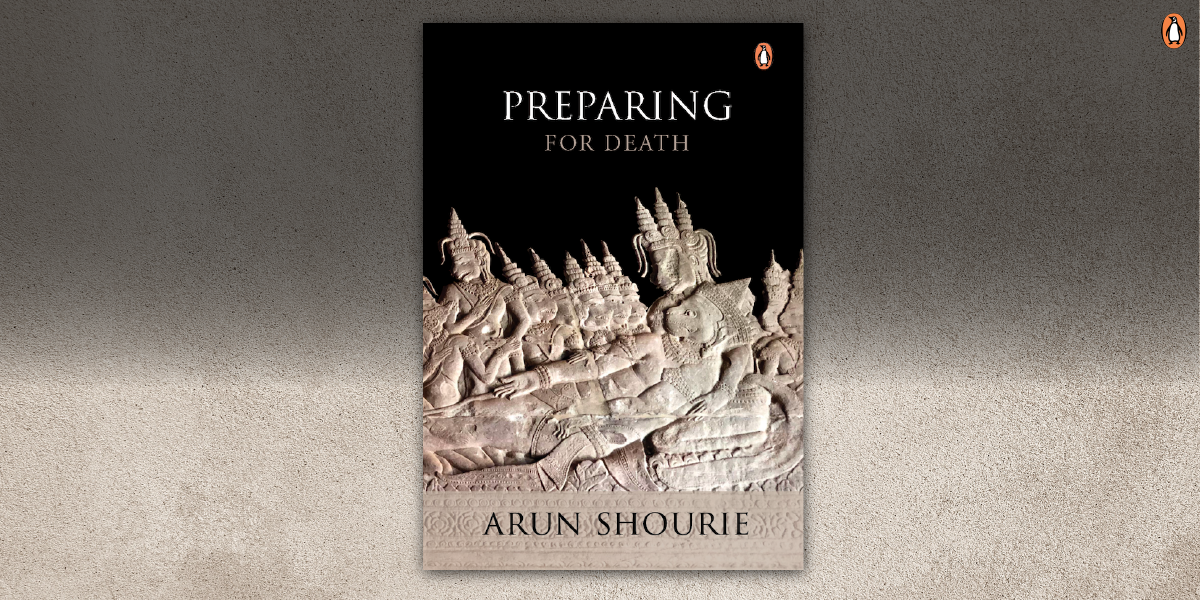
Preparing for Death explores the questions that have puzzled humanity from the very beginning as evinced by the rituals, texts and philosophies that surround death. From the lives and last days of the Buddha, Ramakrishna Paramahamsa, Ramana Maharshi, Gandhiji, Vinoba; from our religious texts and teachings of great meditation masters; from santhara to sannyas , Arun Shourie explores all  these, for their  views on how to prepare oneself for the end.

Perhaps some of the most lucid and stark discussions as to the nature and inevitability of death exist in the teachings of the Buddha. With a lyrical look at the final discourses of the Buddha, Shourie offers guidelines on how to live so that one prepares oneself to face death with equanimity.


  1. Worldly troubles plague even the Perfect Ones

‘Ananda, I am now old,’ the Buddha says, ‘worn out, venerable, one who has traversed life’s path, I have reached the term of life, which is eighty . . .’ And pain is a constant blight: ‘It is only when the Tathagata withdraws his attention from outward signs, and by the cessation of certain feelings, enters into the signless concentration of mind, that his body knows comfort.


  1. Both in life, and in the preparation for death it is wise to withdraw the need for outside support, to removes one’s dependence on another’s existence and to find refuge within oneself

Therefore, Ananda, dwell with yourselves as your own island, with yourselves as your own refuge, with no other refuge; dwell with the Dhamma as your refuge, with no other refuge That is why, the Buddha counsels, it is well for a monk—and surely, for each of us—‘to review, from time to time, his own faults . . . another’s faults . . . his own attainments . . . another’s attainments’. And to dissolve by mindfulness the obsessions and ill-intentions that arise.


  1. A certain purity of thought and intention allows one to face death with equanimity.

And the Buddha draws a lesson from Devadatta’s fall, a lesson apt for the way we live our lives. Devadatta went to perdition, the Buddha says, because he had been overpowered by thoughts of gain and loss, of fame and obscurity, of honour and infamy; because he had been consumed by evil intentions and poisoned by evil friendship.


  1. Death invariably seems something that happens to other, so the first acceptance of the temporality of all things-including oneself

Ananda, have I not told you before: All those things that are dear and pleasant to us must suffer change, separation and alteration? So how could this be possible? Whatever is born, become, compounded, is liable to decay—that it should not decay is impossible.


  1. The idea of ‘preparing for death’ also encompasses an acceptance that there are no guarantees, no certainties as to when and where the final moment will occur. Thus our lives itself are ordered in a way that one is, by necessity-preparing for death.

As the Buddhist teachers say, even though we see death every other day, our general attitude is, ‘Yes, yes, I know I will die. But I won’t be dying this year, certainly not this week. In any case, not today.’ The Buddha placed great emphasis on reversing this complacence. He wanted us to always bear in mind: death is certain, but its manner, place, time are absolutely uncertain. He wanted us to internalize these facts, and order our lives accordingly.


  1. Death ultimately subsumes all possessions both material and immaterial.

Each of the ones now lying on the pyre or on those wretched rails had come empty-handed, each is going empty-handed. The assets they had acquired, the honours they had won, the services they had performed, the high positions they had held—none of these could save them, nor was any possession or honour accompanying them.


  1. Death is inescapable, even for the enlightened who have freed themselves from all material fetters, even for the Tathagata himself.

Even in the case of those Bhikkhus who are arahants, whose taints are destroyed, who have lived the holy life, done what had to be done, laid down the burden, reached their own goal, utterly destroyed the fetters of existence, and are completely liberated through final knowledge: even for them this body is subject to breaking up, subject to being laid down.


  1. Preparing for death is in itself a discipline-as the Buddha’s address to his monks at Vesali before departing for his final pilgrimage suggests.

Ripe I am in years. My life-span’s determined.Now I go from you, having made myself my refuge. Monks, be untiring, mindful, disciplined,Guarding your minds with well-collected thought. He who, tireless, keeps to law and discipline, Leaving birth behind will put an end to woe.

Learning to prepare for death

The one certainty in life, the one appointment which each of us will just have to face, is the one for which we do the least to prepare-death.

Preparing
Preparing For Death

Preparing for Death explores the questions that have puzzled humanity from the very beginning as evinced by the rituals, texts and philosophies that surround death. From the lives and last days of the Buddha, Ramakrishna Paramahamsa, Ramana Maharshi, Gandhiji, Vinoba; from our religious texts and teachings of great meditation masters; from santhara to sannyas, Arun Shourie explores all  these, for their  views on how to prepare oneself for the end, and to face death with equanimity.


But to get back to the incidents. They are a consolation, they put our difficulties in perspective: if even the Buddha had to contend with such mundane troubles, who are we to complain? In any case, even the most fleeting glimpse of these great souls has always bewitched me. On occasion, therefore, I have included longish extracts from contemporary accounts: we see them in their natural habitat, so to say; we hear them talk, we see how they spent their day, what they ate, sometimes even what they lookedlike. Our Adit is forty-four now, but he is small for his age— bound as he is to his wheelchair, he weighs just about 112 lbs; and so I was astonished out of my wits when I read in Pyarelal’s The Last Phase, that when, just a few days before he was assassinated, Gandhiji was weighed, he was just 109 lbs. A man of a mere 109 lbs—‘a little man,’ as British commentators used to call him, all of 5’4’’—had brought down the imperial fortress. So, I have included extracts that have details which I hope will entrance the reader too. But there is another reason also. At first glance the extracts from diaries and the rest will seem far removed from the subject of this book—death. And yet, one of the exercises for the reader is to always keep asking what that seemingly irrelevant detail or event—the equanimity with which the Buddha bears calumny, for instance—tells us about how the personages attained the way they died.

Final lessons

In our present context, reading about their last days is especially instructive. And it is natural to seek lessons from their dying. Indeed, as we shall see, when their end came, the Buddha, Sri Ramakrishna, Sri Ramana deliberately kept their disciples and even lay followers close by so that the latter may learn the final lessons from their life, that is, from their dying. The Buddha had asked a disciple to fold the cloth in four and spread it on the ground between two sal trees. He lay down. He sent for the disciples. As they stood around him, one of the most revered Tibetan monks of the last century, Pabonka Rinpoche, told the thousands who had gathered to hear him—the Buddha pulled away his upper garment so that they could see his body—‘It is only rarely that anyone gets the chance to see the body of a Tathagata.’ And the Buddha said to them, ‘This too. You too’—this happens to Buddha too; it will happen to you too. So, to the last years and days of a few great men, and one woman who was ‘ordinary’ enough that she could have been our mother. What happened in the last few months and days? What choices had they to make? What painful decisions had relatives, disciples and associates to make? Did they slide into death or did the ‘delusion of reprieve’ alternate with despair? How did doctors respond? Were they of one mind, or did their diagnoses differ? Would new treatments show improvement? Would the improvement last, or would the hopes it had triggered be dashed in a few days?

  • Most important for our subsequent discussion, in those final days:
  • What could they no longer control?
  • Over what did they retain control?
  • What had prepared them for the control that they retained till the end?
  • What stages did their bodies pass through, and their minds, before they eventually died? What decisions did they have to take on the way? That such and thus medical procedure must not be undertaken—in one instance an injection, in another amputation. To take at least water or not even that? For such are the decisions that we will have to take, in some instances to enforce on those looking after us in those final days.

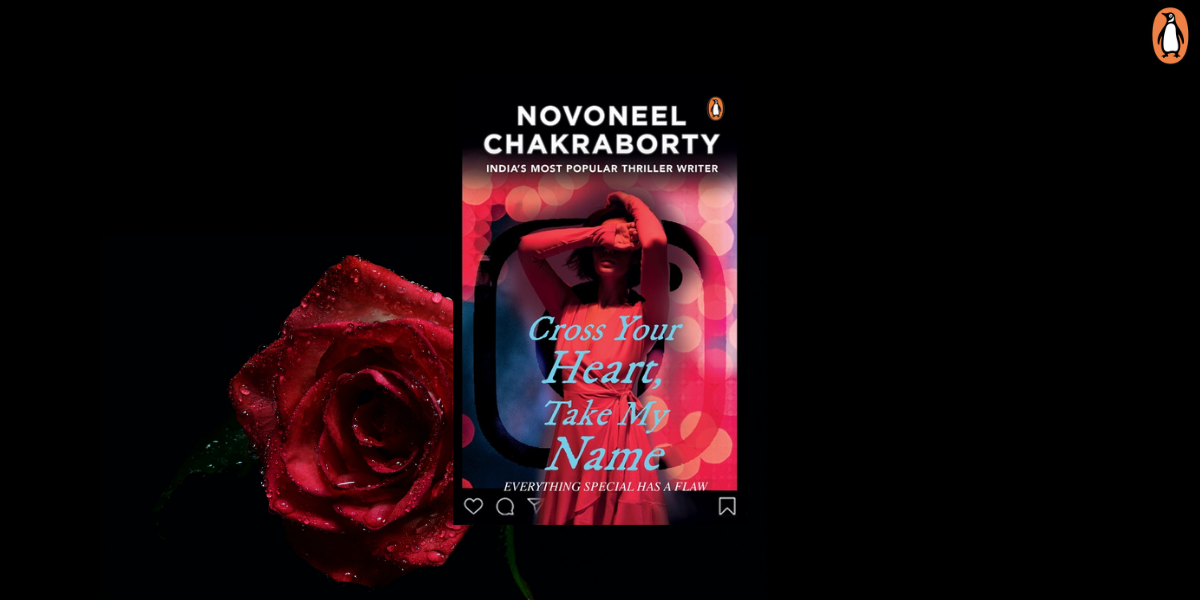
Novoneel Chakraborty’s new thriller is an intricate game of smoke and mirrors

‘She was a blur when I first saw her.’

No matter how deeply we believe we know someone, there is always something that eludes us. Yahvi eluded Garv, and she’s nowhere to be found. Get a taste of Novoneel Charkaborty’s latest thriller Cross Your Heart, Take My Name with this excerpt:

~

‘Let’s play a game.’
‘Game? Whoa, all right.’
‘Yeah, a game. A game of any sort always makes the moment interesting.’
‘Second that. So . . . ’
‘So, the game is that we don’t give out any details about ourselves. The other person has to guess intelligently from whatever he or she can deduce.’

Impressive, I thought and said, ‘Bring it on.’
‘I’ll start. Then we can alternate.’
‘Got it.’
‘The fact that you haven’t brought your phone out in the last ten minutes or so tells me you aren’t into social media. You are the type who uses it when you need it,’ she said.

Wow! Is the game more interesting or the woman? I wondered and said, ‘Bang on. I really don’t like to . . . ’

‘We don’t have to give any justification or explanations. Just say true or false. Your chance.’

I took a few seconds before responding. I didn’t want to sound dumb with my observation.

‘Since you brought along an old Samsonite, I believe you don’t travel much. Else you would . . . ’

‘True!’ She didn’t let me complete my sentence. But a childlike happiness filled me when she confirmed my guess.

‘My turn,’ she said and added, ‘You aren’t a reader.’

‘Why do you say that?’

‘Someone who gets a flimsy magazine to pass time before a delayed flight is more about pictures than words.’

‘Kind of true.’ I was looking straight at her and yet wasn’t able to decipher much from her expression. That was a problem with me. I couldn’t understand what a person was thinking from his or her face. I knew a lot of people who could. And it was a helpful skill as it let you get ahead in conversations like these.

‘Kind of?’ She sounded bemused.

‘All right, I don’t read much. In fact, I didn’t buy the magazine for the pictures either.’

‘Ah, you were seeking some kind of company.’
‘Maybe. Weren’t you?’
‘That’s the game. What makes you think I was?’
I knew I had to think on my feet. And I did.
‘Why else would you sit here with a stranger and play a game? You also want to pass time like me. I had my magazine. You have me.’ The remark was a bit flirtatious, and I didn’t know if it was too direct or made her uncomfortable.

‘A magazine can be flipped through at will. Not a human being.’

The change in the tone of her voice took me by surprise. If she was a book, even though I was not much of a reader, this was when I would conclude that ‘she’ was unputdownable.

…‘Time to leave,’ she said and excused herself to join the queue. The way she went off, without a care, told me she was good at severing connections. In today’s times, I thought, that was one helluva skill to have. The ability to detach oneself just like that. I too stood up and walked towards the gate.


Front cover Cross Your Heart
Cross Your Heart, Take My Name||Novoneel Chakraborty

… Garv was feeling lonely. The way you felt when you had someone in your mind but not beside you. And then there were questions to make the loneliness worse. What had she meant  by that message? They did meet. They had tea together. She kissed him as well. He couldn’t  possibly have imagined all these things. She told him loud and clear that their plan to disappear had to wait for some time. And he understood. Like he always did, without questioning her.  This was not a Mills & Boon romance. Both of them were married to different people.

The note Garv had written and placed under the vase of fresh lilies was for his wife, Nihira. He’d taken an entire day to think what he could write to justify his act. What could a husband say to a wife before leaving her abruptly for no fault of hers? He simply didn’t have the courage to tell her the truth. That was wrong, he knew. And he’d convinced himself that a note would make up for it. After dwelling on it for a long time, he thought the best thing, instead of a long emotional message, would be to write three simple words: I am sorry. To tell Nihira that he still loved her, he kept the note under the vase with lilies, her favourite. Few words; old- fashioned symbolism—the end of a relationship.

Nihira was supposed to fly back from Bengaluru today. And what did he have for her? A note stating that he was sorry. The more Garv thought about it now, the more ridiculous he felt. How had he come to this decision? Was he simply being impulsive? As he tore up the note and threw it in the dustbin, Garv realized he had something more important to find out: Where on earth was Yahvi? He had been messaging her since last night; he had tried her number twice in an interval of three hours but there had been no response. The first time it rang but the second time the number was switched off. Had the battery drained out or had she intentionally switched it off? Garv wondered but concluded she must be up against some problem. And beyond a phone call or a WhatsApp message, there was no way he could reach her. Yet this was the person with whom he had decided to ‘disappear’ for the rest of his life and create an alternate reality.

… Garv drove to the Pune airport to pick up Nihira. This was the longest they’d gone without meeting. and the first sight of her made him feel guilty.

… Right then, Nihira’s phone rang and she excused herself to answer it. Garv could make out it was a work call. He drove to their apartment in silence.

As they neared their gated apartment block, they saw a crowd gathered at the entrance. Garv honked his way in. He wasn’t interested in knowing what the bedlam was about, but Nihira immediately jumped out once the car stopped and walked to the main gate. Perhaps it was this insatiable curiosity that made her want to get involved in people’s stories. and that is why she was doing so well at the NGO.

Garv was unlocking the main door of their flat when Nihira came up, her eyes clouded over.

‘A woman died in the afternoon. Didn’t you get to know when you left the building to come to the airport?’ Nihira asked.

‘No, I came straight from office.’
‘I see.’
‘Some Yahvi Kothari,’ Nihira said. Garv froze for a second before recovering quickly and turning the key one last time. The news left him numb.

~

The excerpt is not enough, we know. Cross Your Heart, Take My Name will keep you racing through the pages.


What’s new this December: books you can gift (or keep!)

‘Tis the season to be jolly – and what better way to be jolly than with some new books! Here’s what’s new at Penguin Random House this month. Choose to gift a fellow bookworm, or treat yourself!


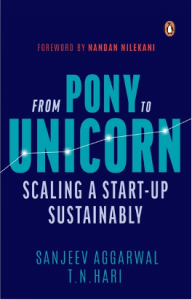
From Pony To Unicorn
Front cover of From Pony to Unicorn
From Pony to Unicorn || Sanjeev Aggarwal, T.N. Hari


From Pony to Unicorn lucidly describes the X-to-10X journey that every start-up aspiring to become a unicorn has to go through. The book effortlessly narrates the fundamental principles behind scaling. Peppered with anecdotes, insights and practical wisdom, the book is a treasure trove of lessons derived from the authors’ rich personal experiences in both building and guiding several start-ups that went on to attain the ‘unicorn’ status and became public-listed companies.

*

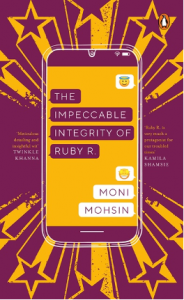
The Impeccable Integrity Of Ruby R.
Front Cover of The Impeccable Integrity of Ruby R.
The Impeccable Integrity Of Ruby R. || Moni Mohsin


Ruby Rauf is an idealistic, industrious scholarship student with a fixed plan. She is going to ace her exams and get a decent job so she never has to suffer the daily degradation of poverty again. Yet, when she meets the compelling actor-turned-politician Saif Haq, her world is upended. Dazzled by his charisma, inspired by his zeal, she quits her degree midway to join his campaign as his social media manager.

With quicksilver dialogue, shrewd political insight and a thoughtful take on the MeToo debate, this sparkling novel reveals Moni Mohsin on top satirical form.

*

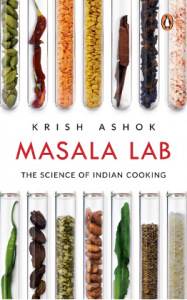
Masala Lab
Front cover of Masala Lab
Masala Lab || Krish Ashok


Masala Lab by Krish Ashok is a science nerd’s exploration of Indian cooking with the ultimate aim of making the reader a better cook and turning the kitchen into a joyful, creative playground for culinary experimentation. Just like memorizing an equation might have helped you pass an exam but not become a chemist, following a recipe without knowing its rationale can be a sub-optimal way of learning how to cook.

 *

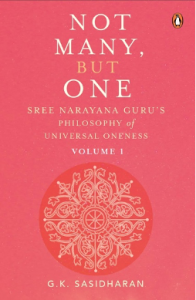
Not Many, But One Volumes I & II
Front cover of Not Many, But One Volume 1
Not Many, But One Volume 1 || G.K. Sasidharan
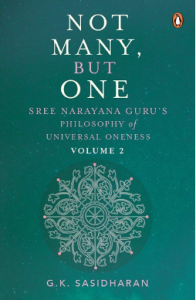
Front Cover of Not Many, But One Volume 2
Not Many, But One Volume 2 || G.K. Sasidharan


Sree Narayana Guru (1855-1928) was a spiritual leader and social reformer who led powerful movements to promote social equality. Not Many, But One brings together his work in two rich volumes of translation and interpretation, pieced together for a modern readership.

*

Your Best Day Is Today!
Front Cover of Your Best Day is Today!
Your Best Day is Today! || Anupam Kher


Your Best Day Is Today! is a compendium of experiences, lessons, and positive takeaways that will help you deal with the dark times in your life. It is a guide to getting in touch with your inner self and finding solutions to the problems that arise with adapting to changes in life. It is also a reminder of how you are not alone and there is always a way to make the best of any situation life throws at you. This book will inspire you and fill your heart with immense love, faith, and joy.

*

Non Obvious Megatrends
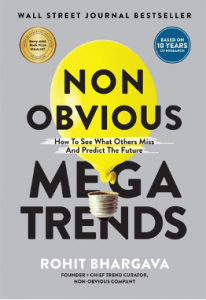
Front Cover of Non Obvious Megatrends
Non Obvious Megatrends || Rohit Bhargava


For the past ten years, Rohit Bhargava’s signature annual Non-Obvious Trend Report has helped over a million readers discover more than 100 trends changing our culture. Now for the first time, Rohit and his team of Non-Obvious trend curators reveal ten revolutionary new Megatrends that are transforming how we work, play and live.

*

Deadly Cross
Front Cover of Deadly Cross
Deadly Cross || James Patterson


A scandalous double homicide opens the psychological case files on Alex Cross… When a glamorous socialite and high school principal are found murdered, lying half naked in a car, the shocking double homicide dominates tabloid headlines. In a world of trouble, corruption, and secrets, Cross is left facing a desperate choice between breaking a trust and losing his way…

*

Paris By Starlight
Front Cover of Paris by Starlight
Paris by Starlight || Robert Dinsdale


Every night on their long journey to Paris from their troubled homeland, Levon’s grandmother has read to them from a very special book. Called the nocturne, it is a book full of fairy stories and the heroic adventures of their people who generations before chose to live by Starlight. And with every story that Levon’s grandmother tells them in their new home, the desire to live as their ancestors did grows. And that is when the magic begins…

*

Ready Player Two
Front Cover of Ready Player Two
Ready Player Two || Ernest Cline


Days after winning OASIS founder James Halliday’s contest, Wade Watts makes a discovery that changes everything. Hidden within Halliday’s vaults, waiting for his heir to find, lies a technological advancement that will once again change the world and make the OASIS a thousand times more wondrous—and addictive—than even Wade dreamed possible.

With it comes a new riddle, and a new quest—a last Easter egg from Halliday, hinting at a mysterious prize.

*

Dearly
Front Cover of Dearly
Dearly: Poems || Margaret Atwood


Before she became one of the world’s most important and loved novelists, Margaret Atwood was a poet. Dearly is her first collection in over a decade. It brings together many of her most recognisable and celebrated themes, but distilled — from minutely perfect descriptions of the natural world to startlingly witty encounters with aliens, from pressing political issues to myth and legend. Dearly is a pure Atwood delight, and long-term readers and new fans alike will treasure its insight, empathy and humour.


What is the BJP’s economic ideology?

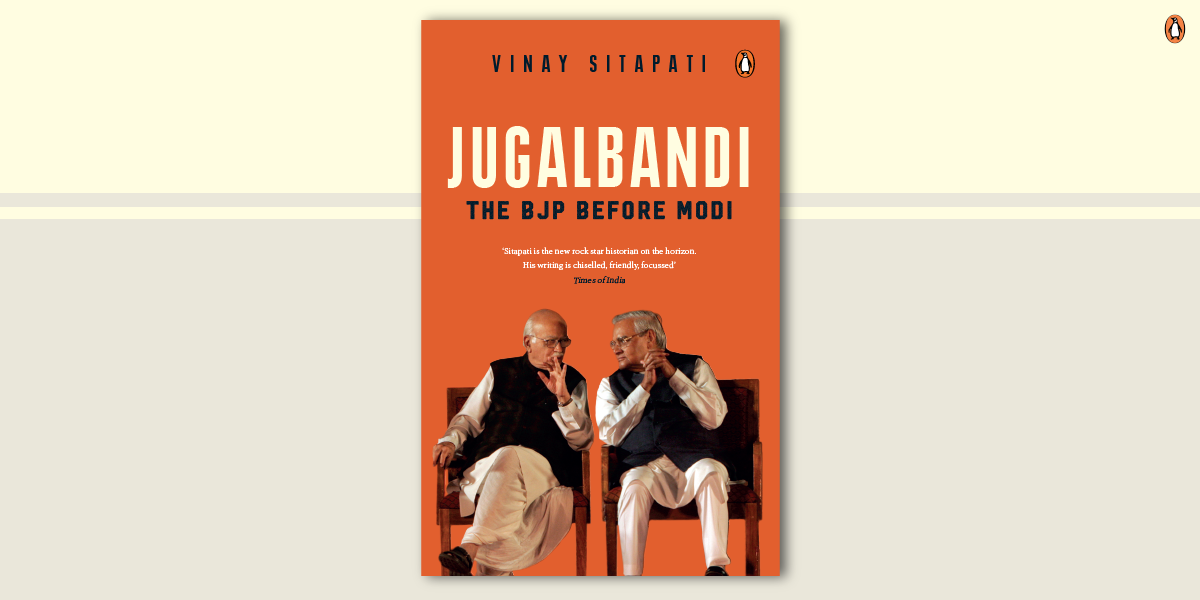
Narendra Modi has been a hundred years in the making. Vinay Sitapati’s Jugalbandi provides this backstory to his current dominance in Indian politics. It begins with the creation of Hindu nationalism as a response to British-induced elections in the 1920s, moves on to the formation of the Bharatiya Janata Party (BJP) in 1980, and ends with its first national government, from 1998 to 2004. And it follows this journey through the entangled lives of its founding jugalbandi: Atal Bihari Vajpayee and Lal Krishna Advani.


Here is an excerpt from the book that talks about BJP’s economic ideology.


Balraj Madhok was not the only one within his party critiquing state controls of the economy. By 1970, the economist Subramanian Swamy had been influenced enough by opposition leader Jayaprakash Narayan to give up a faculty position at Harvard University, and return to India. His essay in favour of India acquiring a nuclear bomb impressed the Hindu nationalists, for whom this had been an ideologic fixture. Just thirty one years of age at the time, Swamy says he soon became beloved of the RSS, and was asked to draft an economic plan for the Jana Sangh. His plan envisaged a reduction in state controls, but in a nod to the party’s indigenous hankerings, was called the ‘Swadeshi’ plan. In these early years, Vajpayee and Swamy were not the antagonists they would later become; it was Vajpayee who first taught the ‘foreign educated’ Swamy to wear a dhoti. Swamy remembers: ‘In 1970 and [the] first quarter of 1971, Vajpayee couldn’t spend one day without calling me. He was living in 1 Feroze Shah Road. Mrs Kaul also liked me, because she was thinking, “Since he is from the West, he will understand our relationship.”’ But Swamy’s rapid rise began to threaten a Vajpayee who was still consolidating his grip over the party. Vajpayee’s insecurities were heightened by Swamy’s tendency to speak rashly and promote himself relentlessly.
Yet another factor pushing the Jana Sangh in favour of a strong line against Indira’s socialism were the Bombay-based industrialists who were now funding the party. They were culturally and financially unlike the shopkeepers and traders (and even Rajmata Scindia) who had funded the party in the 1960s. They were against Indira Gandhi’s economics, and had read the 1967 elections as heralding the Jana Sangh as a national alternative to the Congress. These Bombay corporates were, however, motivated by self-interest rather than principle. While supporting free enterprise for domestic entrepreneurs like themselves, they lobbied to keep the external controls that prevented multinationals from entering.

The credit for bringing these Bombay businessmen into contact with the northern Indian Jana Sangh lay with Chandikadas Amritrao ‘Nanaji’ Deshmukh, the incorruptible treasurer of the Jana Sangh. His legend was built on relentless pursuit of lucre for the party, including running on foot after a horse-riding prince to entice him to give money. Nanaji was also uncommonly honest, so much so that the party would send him alone to collect money. ‘After him, two people go now. To make sure,’ N.M. Ghatate says. ‘[But] with Nanaji there was never any doubt.’ Through the early 1970s, Nanaji cultivated the Tatas, Mafatlals and other industrial houses. He also got to know R.V. Pandit. Pandit would himself part with much money for the party—cheque only, since he was against black money—and would become one of Vajpayee and Advani’s closest friends. ‘I used to give the cheque directly to Advaniji and Atalji and George and Jaswant,’ Pandit says, providing his bank statements as evidence for this. Of all these patrician industrialists who gave money to the party, the most prominent was also the most unusual. At the time one of the richest groups in India, the Wadias were Parsis who had made their money during colonial rule. Their flagship Bombay Dyeing textiles was a household name. The scion of the Wadia group, Nusli, wasn’t just uncommonly rich, he was also the grandson of Muhammad Ali Jinnah. The founder of Pakistan had disinherited his daughter Dina when she had married the non-Muslim Neville Wadia. When partition came, Jinnah had moved to Pakistan, leaving behind Dina and grandson Nusli. ‘As long as Nusli’s father was alive he forbade him from politics,’ a friend of Nusli Wadia says. ‘Basically, he [Nusli’s father] felt that one politician in the family had caused enough problems. But once he died, Nusli began links with [the] Jana Sangh.’ Nusli Wadia became acquainted with Nanaji in the late 1960s when they were introduced by a businessman friend. It was Nusli who then introduced Nanaji to J.R.D. Tata. And by the 1970s, Jinnah’s grandson was funding large parts of the Jana Sangh. One illustration provides a sense of his influence.

Based on private papers, party documents, newspapers and over two hundred interviews, this is a must-read for those interested in the ideology that now rules India.


Get moving into a healthy life

‘Movement is the cure’

– Shwetambari Shetty


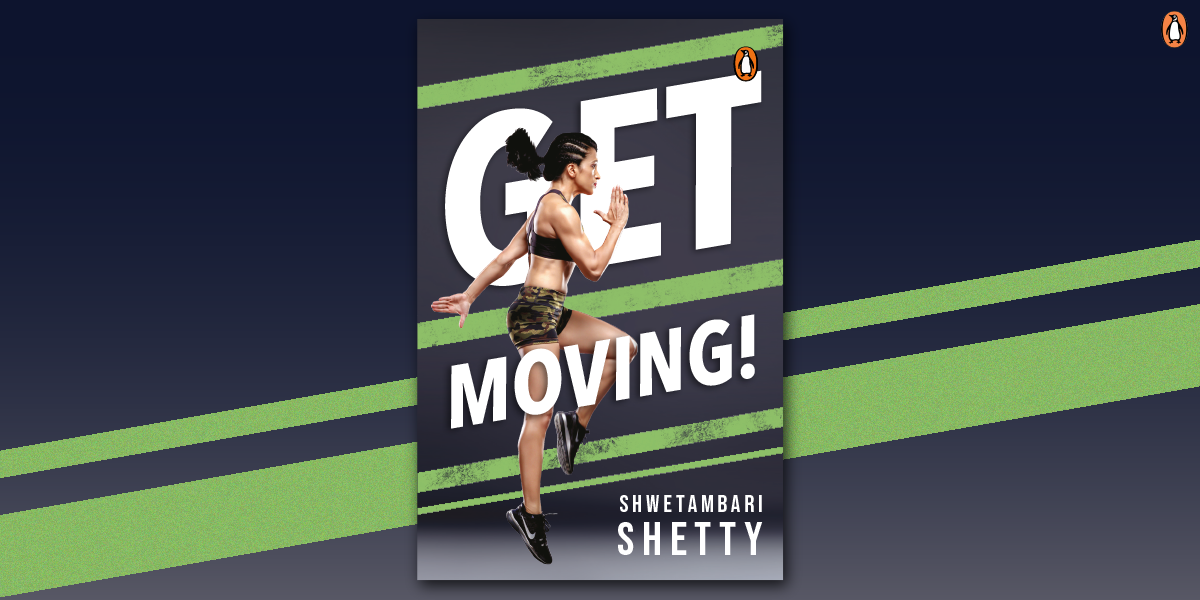
‘I’ve trained with many people who completely turned around their circumstances once they started incorporating exercise they enjoyed in their fitness regime’, writes Shwetambari Shetty. Her book, Get Moving!, is, among other things, a curation of the ways of fitness. The focus of her exercises, and the broader driving philosophy is that the human body is made for movement; it is in its natural habitat when moving. In her book, Shetty also details how exercise, diet and fitness routines have helped people with lifestyle diseases, and she explains the impact of physical movement on some of these medical conditions:


  1. Diabetes

Regular exercise keeps blood glucose levels low, and Shetty says that a brisk 45-minute walk for 5–6 days a week is a great start. If yoga or weight training is added to the routine, it enhances the benefits. Weight gain in diabetes is most likely due to inactivity, and a well-planned diet with reduced sugar intake can help reduce excess fat. Taking the stairs instead of the lift, watering the plants instead of assigning it to someone else, doing the dishes instead of using a dishwasher or walking to the grocery store instead of taking your car are small changes that can have a big positive impact on our health.


  1. Thyroid

A modified diet should be accompanied by training 4 to 6 times a week. Patients with hypothyroidism can boost their metabolism through exercise, but intense activities can cause fatigue. The key here is to choose medium- to low-intensity workouts. Combining cardio and light weight training is a constructive change, in addition to functional training and circuit training without heavy lifting. If this not possible, brisk walking once or twice a day can clock in 10,000 to 12,000 steps daily, and is a good substitute.

front cover Get Moving
Get Moving!||Shwetambari Shetty


  1. PCOS/D

Working out regularly stabilizes the hormone levels in the body, and helps manage PCOS/D more easily. Walking, running, dancing, rowing, boxing and exercising on the cross trainer or treadmill are all great. Another good option is cycling, which works the abs and burns a lot of calories. Swimming also works as great strength and cardio training. Combining it with a bit of light weight training protects the muscle mass and make fat burn more effective.


  1. Arthritis

People with arthritis should avoid processed food (especially sugar) as it causes inflammation and bloating. Bone broths, on the other hand, are extremely beneficial. In addition to diet, the focus in terms of exercise should be on strengthening the muscles around the joints. Stronger muscles help mitigate the pain and increase the range of motion, delaying stiffness, allowing you to keep exercising and managing the condition better. Water-based activities such as water walking (if you can’t swim) are much safer and less painful. They build resistance, help gain strength and burn calories in the process. Aerobics, dance, weightlifting and squats too can be done more easily in water.


A lot of the conditions described are amplified by a sedentary lifestyle, and therefore, consistent activity throughout the day is a good way to keep the symptoms at bay. Lifestyle diseases do not preclude people from working out; it only means that the workouts need to be tailored in such a way that they address the specific problems at hand. Movement, as a rule of thumb, is the best way to avoid these conditions from getting out of control, allowing us more manageable and healthy lifestyles, where nothing is an impediment.


error: Content is protected !!