The Victory Project || Saurabh Mukherjea, Anupam Gupta
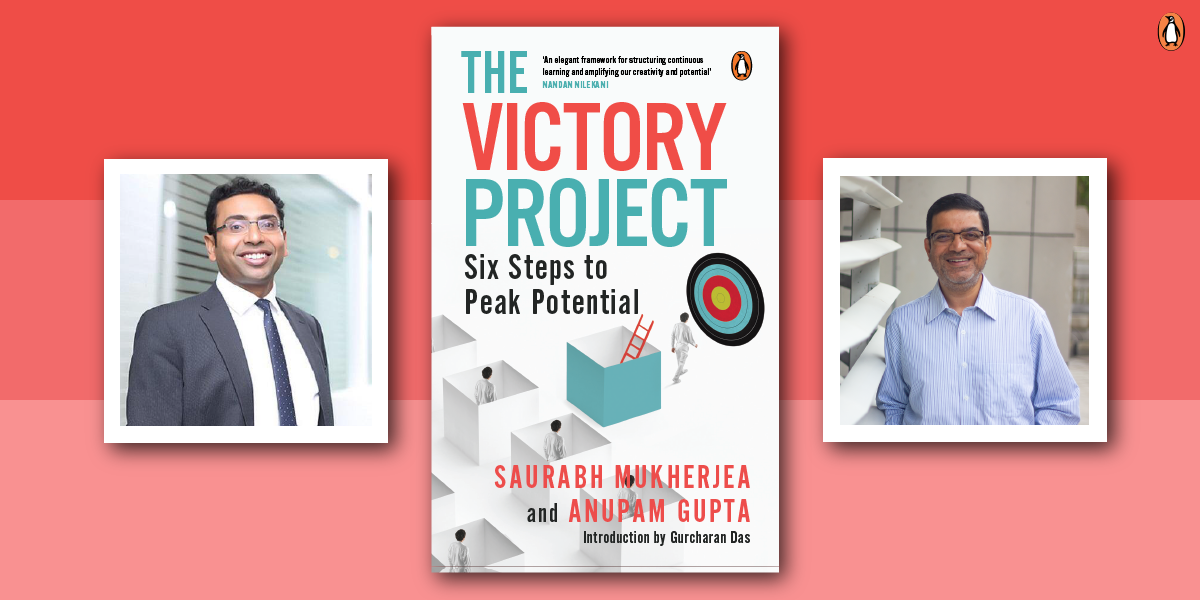
The Victory Project is the ultimate guide to surviving and thriving in the professional and social domains, which are increasingly becoming tough, competitive, often cutthroat and deeply political. It delves into a treasure trove of material from global gurus as well as from highly successful Indian and American professionals, and it draws on the authors’ own careers to show how readers can apply these principles to the fields of business and investment, even to life itself.
Here’s an insightful Q/A session with Saurabh Mukherjea and Anupam Gupta, the authors of The Victory Project. Saurabh Mukherjea is the founder of Marcellus Investment Managers and a bestselling author and Anupam Gupta is a chartered accountant, investment research consultant and podcast host.
**
Questions we asked Saurabh
What has been your greatest learning while writing The Victory Project?
Saurabh: Every single expert we interviewed for the book spent 1-3 hours with us. During that time period, these experts gave us their undivided attention. For example, we have spoken to Mark Mobius several times over the last couple of years. In some instances our discussions have extended beyond 90 minutes. Not once has Dr Mobius interrupted the meetings to take phone calls or read his Whatsapp messages. In fact, the longer the meeting goes on, the greater the powers of concentration of this 83 year old investment legend who did much to build the asset class that is today called Emerging Market Equities.
When we met Prof Sanjay Bakshi, the managing partner at Value Quest Capital, in Delhi at the Lodhi Hotel to interview him for the book, the meeting lasted for over two hours. Prof Bakshi is a big believer in the idea of intense focus and cutting off all distractions to spend quality time on a single idea. He showed his phone, which had a blank home screen and no notifications. Throughout our meeting, his phone did not beep or light up or ring even once. In those two hours he gave us some of the deepest insights into fierce focus that I have received in my career. Chapter 3 of The Victory Project contains these insights.
Similarly when we interviewed Sanjiv Bikhchandani of Infoedge – arguably amongst the most successful VC investors in contemporary India – for The Victory Project, the meeting lasted for over 90 minutes. During that time, he did not once look at his mobile phone or entertain other visitors.
Do you think there’s an increased acknowledgement of the negative impact of highly stressful professional environments in the present times? What do you think has prompted this awareness?
Saurabh: As we discuss in the Prologue to The Victory Project, divorce and depression rates in our large cities have risen sharply over the past decade. Most Indian professionals can now clearly see that their peers and their friends are at the receiving end of these stressors. Corporate captains can also see that this has an adverse impact on employee productivity. The question is what should be done about it. The superficial corporate response is to organise a helpline for employees wherein they can speak to a counsellor. As our interview with Dr Sharmila Banwat, a psychologist in Mumbai indicates, what is required is a much deeper rethink by employees and employers around how hard working, ambitious professionals can hit peak potential without burning themselves out. This issue is the key focus in The Victory Project and hence the subtitle of the book is ‘Six Steps to Peak Potential’.
How do you relax and recharge after a hectic work day?
Saurabh: My unwind routine is a hot shower followed by dinner with the family which in turn is followed by telling the kids their bedtime story. I usually doze off during the narration of the bedtime story!
How successful have you been in applying the principle of ‘decluttering’ to your own life?
Saurabh: I have had modest success in this regard. I don’t have social media apps on my phone. I make it difficult for people to reach me and for me to reach other people. Other than books, I typically don’t buy anything else for myself. I avoid parties and networking events. It helps that I enjoy sitting by myself and reading for hours on end. The only challenge is that I enjoy writing so much that every other year I end up committing to write another book for Penguin!
Questions we asked Anupam
What changes do you think organisations can introduce at their level to reduce stress at the workplace?
Anupam: The Simplicity Paradigm in our book can work as a guide for organizations as well. If organizations can, for example, find ways to a) help employees towards their specialization b) put them in teams that collaborate cohesively c) encourage creativity among employees – all of this can go a long way in employees and teams working towards common goals and, as a result, reduce stress. Spirituality also plays a vital part here and meditation, as we’ve detailed in our book, can also help in reducing stress and improving productivity.
What role do you think support systems like families, friends, partners, play in ensuring an individual’s professional success?
Anupam: Support systems play an important role within the overall Simplicity Paradigm and hence for an individual’s success. In our book, we’ve written about mentorship as part of honing your skills. Similarly, colleagues and bosses play an important role in collaboration. Friends with whom you can talk on a diverse set of topics can inspire creativity.
What has been your biggest takeaway from writing The Victory Project?
Anupam: Meeting the diverse set of experts has been an inspiration on the power of the Simplicity Paradigm construct. While the books we read for preparing The Victory Project gave us great background material, watching these experts embody the steps of the Simplicity Paradigm and achieve outsized success was truly the biggest takeaway.
Please recommend some of your favourite books to us.
Anupam: I’m a big fan of corporate history so all the books on great companies (mentioned in The Victory Project) are my favourites:
Steve Jobs by Walter Isaacson
The Everything Store: Jeff Bezos and the age of Amazon by Brad Stone
Ambani & Sons by Hamish McDonald
Disrupt and Conquer by T.T. Jagannathan and Sandhya Mendonca
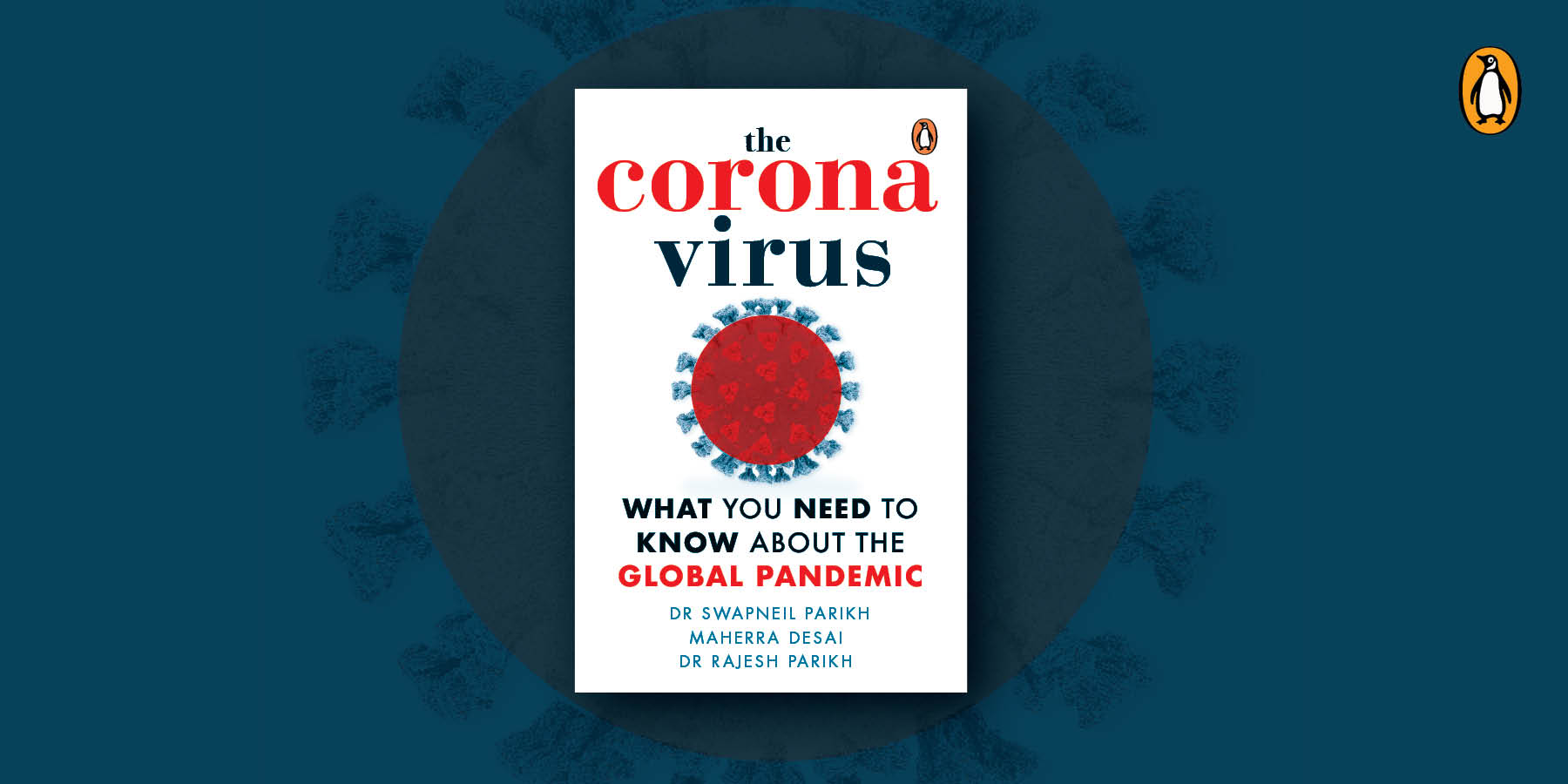
Written by Dr Swapneil Parikh, Maherra Desai and Dr Rajesh Parikh, The Coronavirus is an immense resource that comes to us at a time when accuracy of information is just as immediate and necessary as sound medical infrastructure. Dedicated to the health professionals who have been risking their lives at the frontlines of this erratic pandemic, the book dissects the disease from every possible angle in the most accessible and comprehensive way, and is a must-read for anyone trying to understand the past, present and possible future of not only the Coronavirus itself but the turning of the world at large. We bring you a few of the many predictions and speculations the authors get absolutely right.
The Coronavirus||Dr Swapneil Parikh, Maherra Desai, Dr Rajesh Parikh
As China lifted its restrictions, many feared the virus would spread again.
So it has. China confirmed around 1300 new cases mostly from Wuhan, Jilin and Shulan. Mid-May onwards, Wuhan managed to test every single person in its 11 million population over a ten-day period.
There is fear that cases are going undetected in some countries, especially those with weak healthcare systems. In an interview in July, Professor Brahmar Mukherjee, a leading epidemiologist, said India possibly had 30 million undetected COVID-19 cases at that time, going up to a 100 million in just six weeks.
Researching flight data of outward-bound flights from Wuhan for January 2020, many models predict that the virus should have had a wider spread than reported in many countries.
This has been confirmed. medRxiv has shown that the passengers travelling outside China two weeks before Wuhan’s lockdown were headed for Asia, Europe, the US and Australia, all of which showed unprecedented jumps in confirmed cases in the months that followed.
Information coming from China about COVID-19 related statistics has been under scrutiny for tampering. In fact, when the US started to investigate the accuracy of the Chinese data, China immediately announced an additional 1300 fatalities due to COVID-19 that had been misreported earlier. This translated to a 50% increase in total number of deaths reported from Wuhan. The authors of the book ask if China was simply sanitizing its narrative rather than doing due diligence. Turns out, it was the former.
In India, some experts continued to claim there was no community transmission, facetiously portraying the low number of confirmed daily cases as a low number of daily new infections. With few daily tests, the writers suspect that India had far more daily new infections than new daily confirmed cases. Despite the government repeatedly denying community transmission in India, the Kerala Chief Minister Pinarayi Vijayan on July 17 confirmed that there were cases of community transmission in Kerala. In fact, when on July 19 the Indian Medical Association confirmed community transmission in the country, Dr Arvind Kumar, Chairman of the Centre for Chest Surgery, Sir Ganga Ram Hospital said that this mode of transmission had been rampant in the country for quite some time.
Many countries may already have more cases than South Korea, but unless testing is significantly scaled up, several new cases will go undetected. This was proven true to the letter in India, US, Russia, Brazil, countries that soon surpassed every other nation after a surge of cases.
The book predicted that by mid-April, there will be thousands of COVID-19 cases detected in India, and several thousand more will go undetected.
By mid-April, India had indeed crossed the 1000 mark of COVID-19 cases. On April 13, there were 1243 new cases and the 7-day average had hit 811.
Perhaps human social contact patterns will change drastically with changing weather (unlikely), or an unprecedented successful social distancing strategy might be implemented (possible) or the virus itself could change for better or worse (possible). Any or all of these factors could affect the eventual number infected and dead. The movement of the pandemic and related statistics has unfolded as predicted. With increased testing, the number of active cases has also increased because there is more extensive documentation of cases.
The writers of The Coronavirus wrote that millions of tests worldwide are needed, and we must prepare for an eventuality where we need billions. This has now been acknowledged by both WHO & CDC.
The book also states that the pandemic is far from over in China which was successful at disrupting transmission by essentially shutting down the country and economy. Beijing saw a recurrence as late as June 11, 2020 where a 52-year-old man tested positive for the virus.
It is important to state that containment and mitigation are not mutually exclusive; we must do both, but somecontainment strategies are devastating to the world economy and stigmatize the sick. While we must continue containment strategies that are effective, we must aggressively try to mitigate the destruction that COVID-19 leaves in its wake. Many countries have adopted policies that are more tempered, attempting to strike a balance between restricting inessential movement and safely opening up the sectors which impact the economy greatly.
The book calls for a readiness to significantly change our daily lives. With a surge in cases, various countries including India are implementing drastic social distancing measures, including closure of schools, cancellation of mass gatherings, work from home, voluntary home isolation for mild cases and aggressive exposure avoidance for high-risk individuals. Our lives have become compartmentalised into ‘pre-pandemic’ and ‘post-pandemic’. In fact, it is becoming increasingly unclear if we will ever fully return to the former.
The strategies come at a huge cost. The economic, social, developmental and mental health cost must be justified by aggressive increases in testing, tracing and treatment capacities. Social distancing strategies are never meant to be permanent; they can buy us a few weeks or months to scale up our health infrastructure. We need to use that time wisely.
This is also a widely adopted and acknowledged strategy now, with more investments being made in testing kits and ventilators.
A pandemic cannot be stopped by spending billions in North America and just a few millions in Africa. A pandemic does not respect geographical boundaries or military arsenals. There needs to be an agreement between the private sector and governments of the world that during a pandemic, medical supplies will go not to the highest bidder but will be distributed strategically to save lives. A Californian company is now using drones to deliver medical supplies in Rwanda and Ghana, a delivery strategy that was also used in China and Chile. India has also sent medical supplies to 13 African nations.
Infections that spread via droplets are strictly speaking not airborne but can be said to be borne by air. Some nuance can be lost in the oversimplified false dichotomy of airborne versus droplet transmission; they are not mutually exclusive. The book cited the 1934 paper on the Wells evaporation-falling curve and postulated airborne transmission long before the paper was revisited and then widely accepted.
The book states thatjust one sick passenger can cause an outbreak all over the world. “If a sick passenger coughed or sneezed on his hands, the virus would get deposited onto his hands. If he took out a magazine during the flight, the infectious viruses would rub off onto the magazine, and the magazine becomes a ‘fomite’”. Having now been proved as a fact, extensive measures and restrictions have been implemented regarding travel, especially air travel.
The increase in infections isn’t because of a change in the virus but because of a change in human behaviour. While the book anticipated this, it is now a fact accepted by all including ICMR. Recognizing the impact of human behaviour on the pandemic, news outlets have criticised gathering, inessential travel and hoarding essentials among other things. Instances like ‘COVID parties’ in the US have been severely disparaged because they end up creating coronavirus hotspots. The Outbreak Communications Planning Guide by the (WHO) states that behaviour changes can reduce the spread by as much as 80%.
However, with a new virus like SARS-CoV-2 the weather is unlikely to significantly affect transmission because the entire human population is susceptible. Across the globe, various regions experience different seasons and temperatures at one point in time. A steady increase in infected cases globally dampens hope that the weather will affect transmission.
No correlation has been established between seasonal conditions and transmission. Initial claims that tropical regions would withstand the spread better have been voided as the virus has seen an exponential surge over the hottest months in India.
What is so special about children that they seem protected? Maybe children are just healthier because they get good nutrition, plenty of exercise, regenerate better and have been exposed to lower cumulative doses of environmental pollution. Children are far less likely to smoke or to have diseases like diabetes, and their lungs have much less background inflammation. Research has indicated that children have less ACE2 and these levels increase with ageing. A child’s angiotensin system might be immature and therefore less susceptible to SARS-CoV-2 infection. Acquired data from antibody blood tests suggests that children under the age of 12 in particular are less likely to catch the virus than adults. Scientists are also positive that children are more likely to remain asymptomatic.
Coronaviruses can also cause Antibody-Dependent Enhancement (ADE). High concentrations of antibodies prevented SARS-CoV from infecting the cells but low concentrations of antibodies caused ADE. This has been found to be the case for COVID-19.
It is possible that varying levels of antibodies against common cold coronaviruses may be causing ADE of SARS-CoV-2 infection, but the evidence of this so far borders on speculation. High concentrations of partially cross-reactive antibodies in children may overwhelm the virus and neutralize it but low antibody levels in the elderly may cause ADE and severe infection. This was verified for COVID-19.
When the Th1 and Th2 cells are in balance, the immune system functions properly. However, when there is an imbalance between these cells, the immune system may either be predisposed to severe infections or it may attack its own tissues. Research found it true for COVID-19.
RT-LAMP (Reverse Transcription Loop-Mediated Isothermal Amplification) test, which is faster and easier to perform, has been combined with CRISPR, an innovation that can make it simpler, cheaper and quicker to test. The testing process can be done with minimal training and this offers tremendous promise for low resource settings. RT-LAMP based COVID-19 diagnostic kits are in use, and Union Health Minister Harsh Vardhan has said that the test is quick, accurate and cost effective that has very low and easily manageable infrastructural needs and does not require any special expertise.
Antigen tests are rapid tests that give results in minutes. While these tests hold promise because of their low cost, quick results and simplicity, in the past similar tests have not been very sensitive. Nevertheless, there are several such tests in research and development for SARS-CoV-2 and if scientists perfect this technology, they could be combined with rapid antibody tests. These combined rapid tests, if accurate, would be powerful tools in the pandemic. This claim has also materialised. The developed rapid test kits are easy to use, can test patients with and without symptoms, and most importantly can be deployed in COVID hotspots.
A study published in The Lancet used mathematical predictive models to test the preparedness and vulnerability of developing nations, especially African countries. Considering strong economic ties between China and many African nations, and the flight data available for travel following the outbreak and before the lockdown in China, Egypt, Algeria and South Africa had the highest chances of acquiring COVID-19, with a moderate to high capacity to manage the outbreak. This was also proved to the very last detail. In March, out of the 1300 confirmed coronavirus cases in the African continent, Egypt, South Africa and Algeria alone accounted for over 58% of the cases.
While it is premature to gauge to what extent AI will affect the COVID-19 outbreak, AI will probably play a role in containing this outbreak and even more so in future outbreaks. In fact, Artificial Intelligence start-ups like Closedloop, Clevy.io and Mantle Labs have been extremely active in identifying the virus and communicating related information.
To You, With Love is the story of Sahil and Ayra who are very different from each other, right from childhood. While Sahil is careless, carefree, ‘new money’ and ‘the brat’, Ayra is sensitive, reserved, shy and not easy to talk to. And that is probably what attracts Sahil to her. Their story progresses slowly and delicately, and things gradually take on a love-tinged hue between them.
Today, we are looking at six moments from the book that are sure to make you wish you too had a love story like Sahil and Ayra’s.
**
When Sahil talked about love at first sight and we couldn’t help but nod our heads in agreement
People tell you that love happens in one moment, at ‘one sight’, and the truth is that it actually does! Whether that moment is going to be the first moment when you see her or the hundredth, it cannot be predicted by anyone, but it will happen in one single moment.
When Sahil made us realise that the best love stories start from friendships and we couldn’t help but blush
I realized how we were each other’s first friends, and first friendships are deeper than most bonds in the world.
When Sahil showed us that flaws make us human and loveable
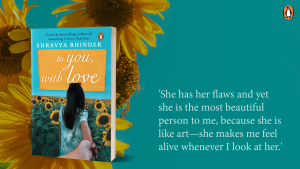
She has her flaws and yet she is the most beautiful person to me, because she is like art—she makes me feel alive whenever I look at her.
When we were reminded that true love isn’t about volatile emotions but a feeling of tranquility
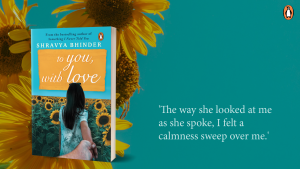
The way she looked at me as she spoke, I felt a calmness sweep over me. The image of her beautiful face was imprinted somewhere deep in my heart.
When Sahil perfectly summed up the feeling of finding the right one
Her entry in my life made something click, like when a key clicks inside a lock and you know that you have found the right one.
And finally,
When we found out the content of Ayra’s heart-breaking love note to Sahil that left us a weepy mess
Life means many things to many people and so does love—neither life nor love can be lived in a way where there is nothing new to add or nothing old to remove. Definitions change with time, place and the people who define it, yet the essence remains the same.
Events and epochs in history have, in many ways, shaped our world the way we know it today. History is full of rich stories, inspiring figures and still-relevant lessons, which is why we believe that the past matters.
We are inviting you along today to take a journey through space and time to revisit some memorable, unforgettable stories that still present us with crucial lessons to take away.
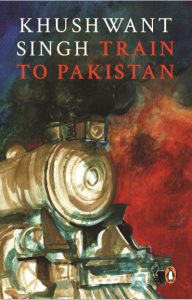
Train to Pakistan
Khushwant Singh
Train to Pakistan || Khushwant Singh
It is the summer of 1947. But Partition does not mean much to the Sikhs and Muslims of Mano Majra, a village on the border of India and Pakistan. Then, a local money-lender is murdered, and suspicion falls upon Juggut Singh, the village gangster who is in love with a Muslim girl. When a train arrives, carrying the bodies of dead Sikhs, the village is transformed into a battlefield.
First published in 1956, Train to Pakistan is a classic of modern Indian fiction.
The Rise of Goliath
A.K. Bhattacharya
The Rise of Goliath || A.K. Bhattacharya
What can best illustrate India’s journey in the last seven decades? Disruptions.
Almost every decade of India’s history since Independence has been marked by major disruptions.
If the Emergency in 1975 shook the foundations of India’s democracy, the unprecedented balance-of-payments crisis of 1990 turned India towards a path of economic reforms. Just as the reservation of jobs for backward castes changed the idiom of India’s politics, the movement for building a temple for Ram drove India closer to becoming a majoritarian state.
This is the story of twelve disruptions that changed India.
Sapiens: A Brief History of Humankind Yuval Noah Harari
Sapiens | Yuval Noah Harari
What makes us brilliant? What makes us deadly? What makes us Sapiens?
Earth is 4.5 billion years old. In just a fraction of that time, one species among countless others has conquered it: us.
In this bold and provocative book, Yuval Noah Harari explores who we are, how we got here and where we’re going.
A Short History of Nearly Everything Bill Bryson
A Short History of Nearly Everything | Bill Bryson
Bill Bryson describes himself as a reluctant traveller, but even when he stays safely at home he can’t contain his curiosity about the world around him. A Short History of Nearly Everything is his quest to understand everything that has happened from the Big Bang to the rise of civilization – how we got from there, being nothing at all, to here, being us.
The ultimate eye-opening journey through time and space, A Short History of Nearly Everything reveals the world in a way most of us have never seen it before.
Makers of Modern India Ramachandra Guha
Makers of Modern India || Ramachandra Guha
Ramachandra Guha profiles nineteen Indians whose ideas had a defining impact on the formation and evolution of our republic and presents rare and compelling excerpts from their writings and speeches. These men and women were not only influential political activists – they also wrote with eloquence, authority and deliberation as they reflected on what Guha describes in his illuminating prologue as ‘the most contentious times in the most interesting country in the world’.
Their writings take us from the subcontinent’s first engagement with modernity in the nineteenth century, through the successive phases of the freedom movement, on through the decades after Independence.
The Modern Monk Hindol Sengupta
The Modern Monk || Hindol Sengupta
He loved French cookbooks, invented a new way of making khichdi, was interested in the engineering behind ship-building and the technology that makes ammunition. More than 100 years after his death, do we really know or understand the bewildering, fascinating, complex man Swami Vivekananda was?
From his speech in Chicago that mesmerised America to his voluminous writings and speeches that redefined the idea of India, Vivekananda was much more than a monk. His work sweeps through Indian politics, economics, sociology, arts and culture, and of course religion. So ubiquitous are his sayings that they pop everywhere from the speeches of politicians to t-shirts and mugs.
Origin Story: A Big History of Everything David Christian
Origin Story | David Christian
How did we get from the Big Bang to today’s staggering complexity, in which seven billion humans are connected into networks powerful enough to transform the planet? And why, in comparison, are our closest primate relatives reduced to near-extinction?
David Christian brings us the epic story of the universe and our place in it, from 13.8 billion years ago to the remote future!
The History Book: Big Ideas Simply Explained
The History Book
From the dawn of civilization to the lightning-paced culture of today, take a fascinating journey through the most significant events in history and the big ideas behind each one. Bring history to life as you explore the Law Code of Hammurabi, the Renaissance, the American Revolution, World War II, and much more.
As part of DK’s award-winning Big Ideas Simply Explained series, The History Book uses infographics and images to explain key ideas and themes, making the last 4000 years of history engaging and accessible.
Nationalism Rabindranath Tagore
Nationalism || Rabindranath Tagore
Nationalism is based on Rabindranath Tagore’s lectures delivered during the First World War. While the nations of Europe were doing battle, Tagore urged his audiences in Japan and the United States to eschew political aggressiveness and cultural arrogance. His mission, one might say, was to synthesize East and West, tradition and modernity. The lectures were not always well received at the time, but were chillingly prophetic.
As Ramachandra Guha shows in his brilliant and erudite Introduction, it was by reading and speaking to Tagore that those founders of modern India, Gandhi and Nehru, developed a theory of nationalism that was inclusive rather than exclusive.
Republic of Rhetoric: Free Speech and the Constitution of India Abhinav Chandrachud
Republic of Rhetoric | Abhinav Chandrachud
Exploring socio-political as well as legal history of India, from the British period to the present, this book brings to light the idea of ‘free speech’ or what is popularly known as the freedom expression in the country. Analysing the present law relating to obscenity and free speech, this book will evaluate whether the enactment of the Constitution made a significant difference to the right to free speech in India.
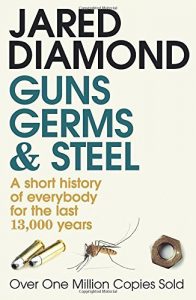
Guns, Germs and Steel: A short history of everybody for the last 13,000 years Jared Diamond
Guns Germs & Steel | Jared Diamond
Jared Diamond puts the case that geography and biogeography, not race, moulded the contrasting fates of Europeans, Asians, Native Americans, sub-Saharan Africans, and aboriginal Australians.
An ambitious synthesis of history, biology, ecology and linguistics, Guns, Germs and Steel is a ground-breaking and humane work of popular science that can provide expert insight into our modern world.
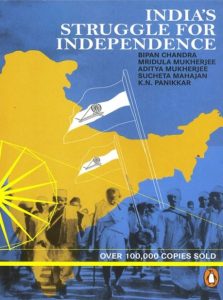
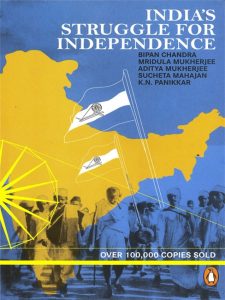
India’s Struggle for Independence Bipan Chandra
India’s Struggle for Independence || Bipan Chandra
India’s Struggle for Independence is the first and most reliable study of India’s epic struggle for freedom. This classic work begins with the abortive revolt against the British in 1857 and culminates in Indian Independence in 1947. Based on years of research as well as personal interviews with hundreds of freedom fighters, it presents a lucid and enduring view of the history of the period.
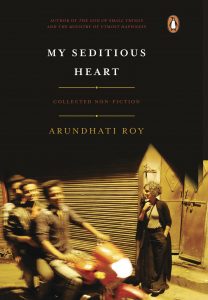
My Seditious Heart: Collected Non-fiction Arundhati Roy
My Seditious Heart || Arundhati Roy
My Seditious Heart collects the work of a two-decade period when Arundhati Roy devoted herself to the political essay as a way of opening up space for justice, rights and freedoms in an increasingly hostile environment. Taken together, these essays trace her twenty year journey from the Booker Prize-winning The God of Small Things to the extraordinary The Ministry of Utmost Happiness: a journey marked by compassion, clarity and courage.
Radical and readable, they speak always in defence of the collective, of the individual and of the land, in the face of the destructive logic of financial, social, religious, military and governmental elites.
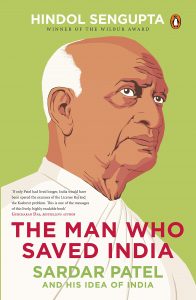
The Man Who Saved India Hindol Sengupta
The Man Who Saved India || Sardar Patel
There is perhaps no political figure in modern history who did more to secure and protect the Indian nation than Sardar Vallabhbhai Patel. But, ironically, seventy years after Patel brought together piece by piece the map of India by fusing the princely states with British India to create a new democratic, independent nation, little is understood or appreciated about Patel’s enormous contribution to the making of India. Caricatured in political debate, all the nuances of Patel’s difficult life and the daring choices he made are often lost, or worse, used as mere polemic.
The Man Who Saved India is a sweeping, magisterial retelling of Sardar Patel’s story.
Sixteen Stormy Days Tripurdaman Singh
Sixteen Stormy Days || Tripurdaman Singh
Sixteen Stormy Days narrates the riveting story of the First Amendment to the Constitution of India-one of the pivotal events in Indian political and constitutional history, and its first great battle of ideas.
Passed in June 1951 in the face of tremendous opposition within and outside Parliament, the subject of some of independent India’s fiercest parliamentary debates, the First Amendment drastically curbed freedom of speech; enabled caste-based reservation by restricting freedom against discrimination; circumscribed the right to property and validated abolition of the zamindari system; and fashioned a special schedule of unconstitutional laws immune to judicial challenge.
Amidst the stress of juggling high expectations in a highly competitive work environment, how does our generation, achieve our goals while leading fulfilling lives? Saurabh Mukherjea and Anupam Gupta attempt to answer this question by using the principles of Simplicity, Specialization, Creativity and Collaboration. They delve into a treasure trove of material from global gurus and successful business professionals while and drawing on their own careers to show how readers can apply these principles to the fields of business and investment, even to life itself. The Victory Project is the ultimate guide to surviving and thriving in the professional and social domains.
The Victory Project || Saurabh Mukherjea, Anupam Gupta
**
Things were not like this, our parents told us. But our parents lived in simpler times in a world of closed economies, government jobs, cocooned from the rest of the world, happy with 10 per cent increments and one-month bonuses. Their biggest dreams were to send their kids abroad and enjoy a retired life on government pensions in government colonies. T.V. Mohandas Pai, the former chief financial officer (CFO) of Infosys and current chairman of Manipal Global Education, tells us: ‘When I was growing up, we had a very simple life. We were happy with whatever we had—from a radio to a cycle to a company-owned car. We’d go to the library, read a book or read a comic. There was not much growth for us and no impetus to change. We had lower incomes and we didn’t know what more we could do as opportunities were scarce. The economy grew slowly! There wasn’t even a television to show us the world outside.’ Nearly thirty years after India opened up its economy to the world, our lifestyles—and those of youngsters after us—have seen a sea change that makes our lives almost unrecognizable to our parents. The plus side is the immense wealth created and enjoyed as new sectors and new careers propelled us forwards. The minus side is the price we have paid in physical and mental health. India’s weak infrastructure, unable to cope with decades of rapid economic growth, has only added to the pressures. Our aspirations might be on par with developed countries, but we are trying to fulfil those aspirations with gridlocked traffic, overflowing local trains and decrepit bridges. Pai says, ‘China invested in human capital to export to the world. They took the surpluses from that and put the money into improving infrastructure, improving the school and college networks. They incentivized heavy industry and so they went to a commanding position. We never put enough money into infrastructure. Now in India, human capital hasn’t grown much. The economy can grow at 8 per cent compound annual growth rate (CAGR) for a long time but employees simply can’t grow at that pace in their jobs and be more productive, and the infrastructure simply can’t keep up with the economy. As a result, the stress on their managers, on the C-Suite has gone up . . . All these things have resulted in the increased stress of urban living in India.’ When our ambitions get shackled by the limitations of the world around us, we seek help to cope. And the Internet is at our service. In all probability, while you are reading this book, you have notifications for twelve unread emails, fifteen WhatsApp pings and sundry other alerts on your mobile clamouring for your attention. And then there is infotainment—everything from TED Talks to National Geographic documentaries, books on pop psychology and behavioural finance to podcasts on history, science and politics. Thanks to the Internet, we have easy access to enormous amounts of wisdom and—remarkably enough—most of it can be accessed for free or at a nominal charge. And yet this cornucopia of knowledge flatters to deceive. As we show in the next chapter, psychologists and cognitive and behavioural scientists are now moving towards a view that our brains are experts at fooling us. How does this cluttered mind affect us? For one, we lose focus and our attention span suffers. There is also the small matter that this diversity of material does not seem to be making us wiser or happier or less stressed. In fact, stress levels in India are: (a) higher compared to other countries; and (b) rising ever higher for the employed workforce.
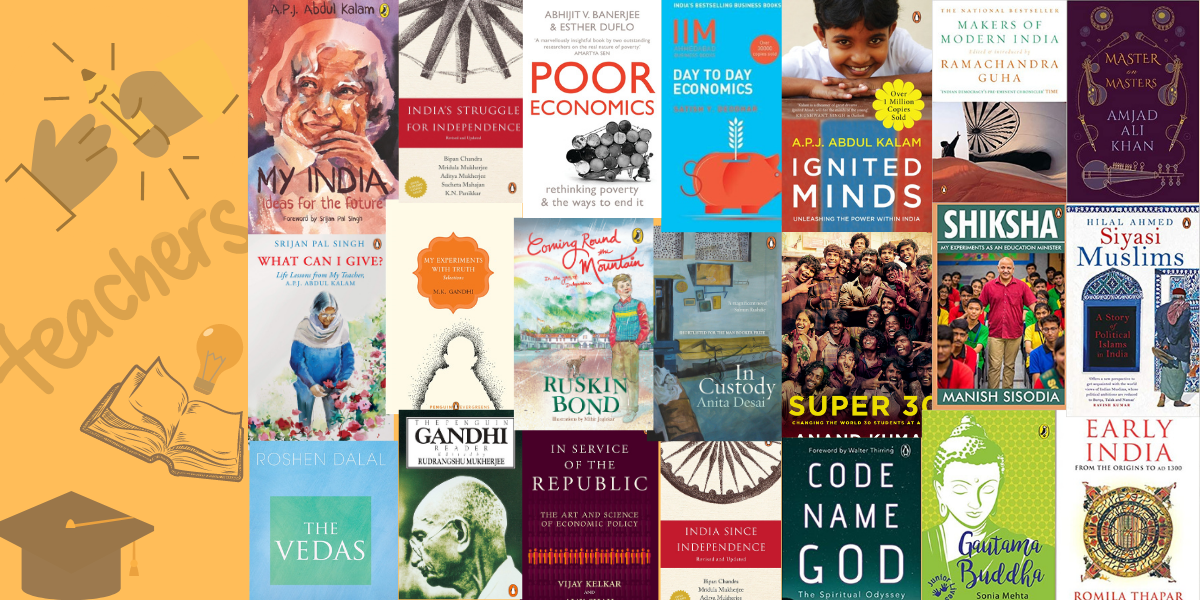
Teachers’ Day is a beloved event for the entire nation. While it creates the space for children to connect with their teachers beyond the formality of a classroom setup and express their gratitude in different ways, it is also a gentle reminder for us to ponder upon the immensity of the degree to which we owe our educators. As we grapple with online learning systems and disproportionately increased screen times in this unfamiliar, pandemic-ridden territory, teachers who have had to adapt their entire modus operandi deserve more than simply our appreciation and understanding. They work tirelessly and thanklessly while shaping our minds and futures. This Teachers’ Day, join us as we celebrate books that have marked our learning indelibly, and that we find ourselves returning to time and again. Here are some memorable books to pick up, especially for those of us who will read to or with our young and budding readers:
*
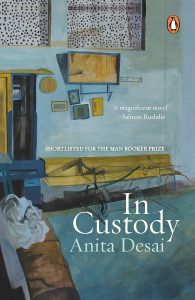
In Custody
Anita Desai
In Custody || Anita Desai
Anita Desai’s novel is a documentation not only of the erosion of a language and its cultural coordinates but also of the formation of small intimacies and unexpected relationships in the midst of loss. This poignant tale takes you along Deven’s journey, a Hindi teacher, as he forms a bond where he learns more about his own language than he ever has in a classroom.
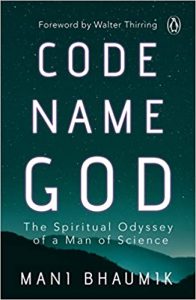
Code Name God
Mani Bhaumik
Code Name God || Mani Bhaumik
Mani Bhaumik’s meditations dismantle the synthetic binary of science and faith, proposing a spiritual completeness that is achieved only when one learns to navigate both belief systems with equal respect. Code Name God is an eye-opening read, following his fame as a pioneer of LASIK surgery and his yearning for a spiritual self-realisation. It comes with the very important lesson that if we succumb to dichotomies, we can never live a fulfilled and conscious life.
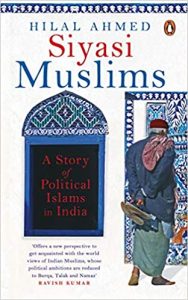
Siyasi Muslims: A Story of Political Islam in India
Hilal Ahmed
Siyasi Muslims || Hilal Ahmed
In Siyasi Muslims, Hilal Ahmed navigates difficult questions around the Muslim identity through the portraiture of the quotidian realities of Muslims in India. This is a thought-provoking rendering of important issues, and leaves readers with much to learn and think about. In other words, it is a perfect teachers’ day read.
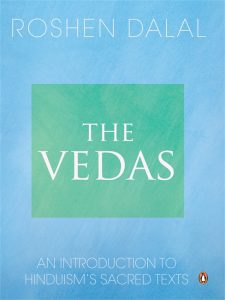
The Vedas
Roshen Dalal
The Vedas || Roshen Dalal
Historian Roshen Dalal brings us an accessible yet exhaustive introduction to the texts at the cornerstone of Hinduism – The Vedas. Founded on diligent research, this is a work that appreciates not only the philosophical and cultural core of the texts but also the poetic tinge that colours its lines.
In Service of The Republic : The Art and Science of Economic Policy Vijay Kelkar and Ajay Shah
In Service of the Republic || Vijay Kelkar and Ajay Shah
Writing from the nexus of political economics and administrative policy, economists and former civil servants Kelkar and Shah shed a unique light on the economic structures and machinations of our country. This work is an immense resource for anyone hoping to understand policy and economics with more clarity. Teachers’ Day marks a wonderful occasion to learn from In Service of the Republic.
The Penguin History of Early India: From the Origins to AD 1300 Romila Thapar
The Penguin History of Early India || Romila Thapar
Romila Thapar brings us an exhaustive, researched and immensely detailed rewriting of her extremely popular work History of India – Volume One, thirty-four years after it was published for the first time. Once again, Professor Thapar gives us a work that is richer than any classroom, and brings us her brilliant work as a redoubtable educator.
Poor Economics Esther Duflo and Abhijit V. Banerjee
Poor Economics || Abhijit Banerjee, Esther Duflo
Nobel Laureates Esther Duflo and Abhijit V. Banerjee bring us a work based on models of economic impact from the very grassroots. Through the Poverty Action Lab, the duo’s use of randomized control trials has changed the landscape of developmental economics. Undoing the binary between theory and praxis, Poor Economics follows not only the money but also its differential impact, and Teachers’ Day is the ideal occasion to read a work which is an endless resource of learning.
Makers of Modern India Ramachandra Guha
Makers of Modern India || Ramachandra Guha
Ramachandra Guha, “Indian democracy’s pre-eminent chronicler” according to Time magazine, complies selections from the writings and speeches of nineteen Indians whose ideas range across nationalism, gender, caste, democracy and economics. Spanning the development of Indian modernism, Guha gives us unique insights into unique thinkers, from Rabindranath Tagore to Hamid Dalwai, and takes our learning curve on a steady increase.
Ignited Minds A.P.J. Abdul Kalam
Ignited Minds || A.P.J. Abdul Kalam
This teachers’ day, share the spark of endless possibilities with your children. This book will not chart out the path to success or provide readymade formulas; there is no list of hacks or a blueprint for that. Instead, Dr. Kalam dives into various aspects with detailed research and a deep understanding of everything that plagues us as a nation. Narrated with his hallmark humility and profundity, Ignited Minds is a book to return to again and again.
Shiksha: My Experiments as an Education Minister Manish Sisodia
Shiksha || Manish Sisodia
Shiksha is Manish Sisodia’s detailed articulation of the massive changes he brought to the public education sector in Delhi. As an unyielding believer in the power of education, Sisodia altered the fabric of the education system through his focus on bettering institutions and their capacity to impact lives in myriad positive ways. This Teachers’ Day, discover the immensity of what a sound educational structure can achieve, and share the importance of this discovery with your children as they navigate this structure on a daily basis.
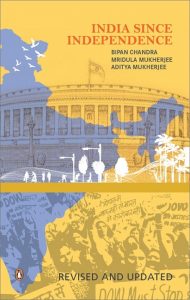
India Since Independence
Bipan Chandra, Mridula Mukherjee, Aditya Mukherjee
India Since Independence || Bipan Chandra
Beginning with the framing of the constitution, formulations of foreign policy and anti-caste politics, this tome covers a panorama of the pedestals on which India was founded after independence and the anti-colonial struggle. A brilliant outline of the formation and growth of the nation, India Since Independence is a literary masterclass in post-independence history.
India’s Struggle for Independence || Bipan Chandra
Right from the mutiny of 1857, India’s nascent struggle of anti-British revolt, Bipan Chandra charts the long anti-colonial fight through personal interviews and an astonishing breadth of research. History comes alive through his writing in an incredible learning experience.
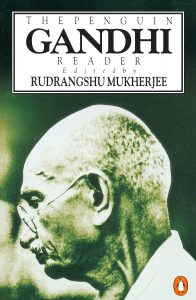
The Penguin Gandhi Reader Rudrangshu Mukherjee
The Penguin Gandhi Reader || Rudrangshu Mukherjee
The freedom fighter we revere is explored here through careful selections of his own writings. Mukherjee compiles this reader centring it on the core philosophies of Gandhi’s theories and praxes, and Bapu comes alive for us in his own words mediated through the editorial lens of Mukherjee.
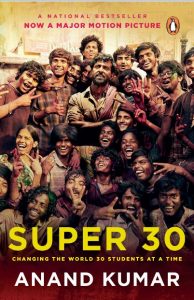
Super 30 Anand Kumar
Super 30 || Anand Kumar
Anand Kumar set up an innovative school in 2002 that uses creative and unconventional learning methods, changing the lives of underprivileged children by preparing them for the IIT JEE. Stirring and inspiring, Super 30 is a story that turns Kumar’s own tribulations and sacrifices into the furnace where the futures of these children are forged, enabling them to rise above the chains of their circumstances.
What Can I Give? Srijan Pal Singh
What Can I Give? || Srijan Pal Singh
Dr. A.P.J. Abdul Kalam’s student, Srijan Pal Singh, asks the question that we should think about, irrespective of whether or not it is Teachers’ Day – what can we give back to the teachers who change our lives? Documenting moments from Dr. Kalam’s life and the time Singh spent with him, this is a loving memoir dedicated to one of the brightest minds and most visionary thinkers of the country.
My Experiments with Truth M.K. Gandhi
My Experiments with Truth || M.K. Gandhi
This autobiography chronicles Gandhi’s odyssey, from his childhood in Porbandar and Rajkot, his school days and marriage, to his journeys to England and South Africa, mapping the movement of a shy young boy to a man who would one day become one of the pioneers of the anti-colonial struggle, and a source of great fear for the British Empire.
IIMA – Day to Day Economics Satish Y. Deodhar
Day to Day Economics || Satish Y. Deodhar
Satish Y. Deodhar, a professor of Economics at IIM Ahmedabad brings us this book to make economics and its intricacies accessible and easily understandable. A great contribution to making academic concepts fun and interesting, Day to day Economics goes a long way in laying out the details of a field that impacts us all at every level.
Master on Masters Ustad Amjad Ali Khan
Master of Masters || Amjad Ali Khan
In this affectionate and warm book, Ustad Amjad Ali Khan unpacks for us the greatest figures in Indian Classical Music. Anecdotal and personal, Khan manages to present artists of mystical stature in a way that is endearing, awe-inspiring and relatable all at once.
~ Don’t forget to invite some young readers along for these ones, or to simply (re)connect with your own younger selves!
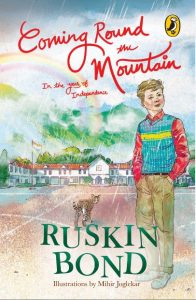
Coming Round the Mountain Ruskin Bond
Coming Round the Mountain || Ruskin Bond
Like every other work by Ruskin Bond, this one is difficult to put down. Walking his readership through the years of a young Bond eating jalebis, reading, goal-keeping, and growing up, what makes this book subtly complex is its setting – the year 1947, and the impending partition. A joy for both children and adults, this book is even more rewarding when shared with the young readers in your life.
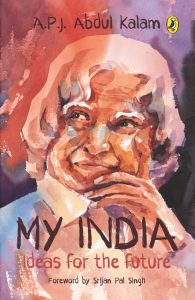
My India A.P.J Abdul Kalam
My India || A.P.J. Abdul Kalam
Dr. Kalam’s last book for children is a wave of inspiration and energy, a lesson on resilience and determination that we all could learn from. Drawing excerpts from his speeches, this book collates his ideations on science, compassion and nation-building to name a few, and delivers a figment of his genius to us, expressed with his trademark humility and earnestness. This is a work that both you and your children will enjoy, especially if you read it with them!
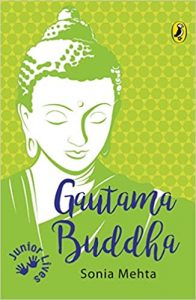
Gautama Buddha (Junior Lives) Sonia Mehta
Gautama Buddha || Sonia Mehta
This is the fourth in a series of beautifully illustrated books, aimed at making great people and their stories accessible to our young readers. The gorgeous visuals take us through the unique life of Prince Siddhartha as he becomes the enlightened Buddha. Share this wonderful confluence of art and storytelling with the young readers you love!
Readers, can you believe it’s September already? Well, we still can’t wrap our heads around how or where this year went. Oh, right! We were all quarantining within the safety of our homes. As always, books came to our rescue and proved to be our most steady companion through this turbulent period.
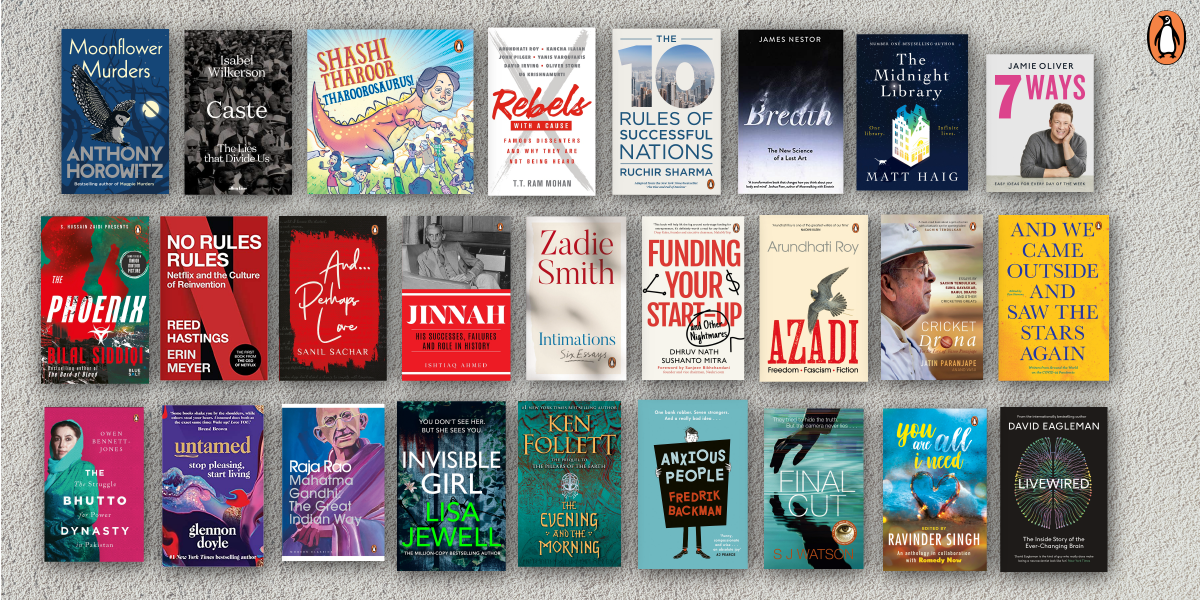
To keep this camaraderie going, we have prepared a massive list of twenty-six new books for you. So without further ado, let’s jump right in!
**
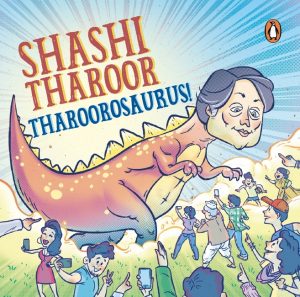
Tharoorosaurus
Shashi Tharoor
Tharoorosaurus || Shashi Tharoor
Shashi Tharoor is the wizard of words. In Tharoorosaurus, he shares fifty-three examples from his vocabulary: unusual words from every letter of the alphabet. You don’t have to be a linguaphile to enjoy the fun facts and interesting anecdotes behind the words! Be ready to impress-and say goodbye to your hippopotomonstrosesquipedaliophobia!
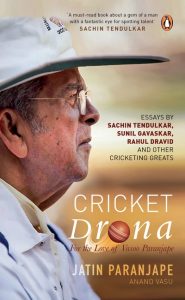
Cricket Drona
Jatin Paranjape and Anand Vasu
Cricket Drona || Jatin Paranjape, Anand Vasu
Cricket Drona takes us through the life of cricketing genius Vasoo Paranjape, who left a defining impact on the game, shaping the careers of some of Indian cricket’s greatest figures, from Sunil Gavaskar to Sachin Tendulkar, from Rahul Dravid to Rohit Sharma. This book is a first-hand chronicle of stories, life lessons and game-changing experiences, written in the words of those who were lucky enough to have crossed paths with Paranjape at just the right time in their careers.
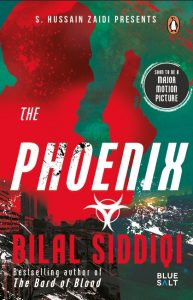
The Phoenix
Bilal Siddiqui
The Phoenix || Bilal Siddiqi
The Phoenix tells a dystopian tale of espionage and global terror, of sleeper cells and double agents, of biological warfare and suicide attacks. But at its heart there’s a message of hope and one man’s love for his family and country.
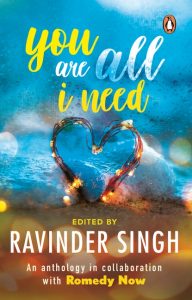
You are All I Need
Ravinder Singh (Ed.)
You are All I Need || Ravinder Singh (Ed.)
Whether it is a distant lover or someone you see every day but can’t confess to; whether it is a love that grows silently or a love that’s not acceptable by society; whether it is a love that will never be yours or a love that is pure and untainted by jealousy-love will always finds a way to survive, to make life more beautiful, more liveable. That’s why we say, ‘Love makes the world go round!’
You Are All I Need is a collection of touching stories selected by Ravinder Singh to bring to the readers the myriad facets of love. This book will make you laugh, cry, think and feel, all at the same time. It is an eclectic collection of love stories that will warm the cockles of your heart.
Funding You Startup: And Other Nightmares
Dhruv Nath and Sushanto Mitra
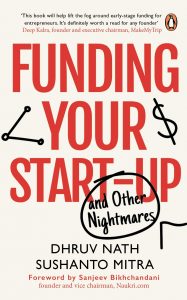
Funding Your Start-Up || Dhruv Nath, Sushanto Mitra
Are you finding it tough to fund your start-up? Especially in the post-COVID-19 world, where money is scarce? Well, then, this book is for you. It takes you through stories of early-stage start-ups and how they successfully managed to raise funding. Even better, it takes you through stories of failures-start-ups that couldn’t raise funding, and why. After all, you can learn as much from failures as you can from successes.
Rebels with a Cause
TT Ram Mohan
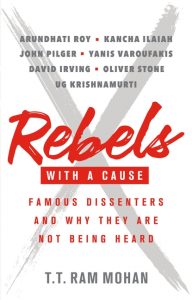
Rebels with a Cause || T.T. Ram Mohan
In his new book, Prof. T.T. Ram Mohan profiles well-known dissenters Arundhati Roy, Oliver Stone, Kancha Ilaiah, David Irving, Yanis Varoufakis, U.G. Krishnamurti and John Pilger to illustrate how, in practice, dissent tends to be severely circumscribed. In the book he underscores that the dissenters are marginalized and even ostracized because as a society we find change of any sort threatening.The book asks hard questions to challenge the way we view, and live in, the world-an important read for anyone who refuses to accept the status quo.
And We Came Outside and Saw the Stars Again
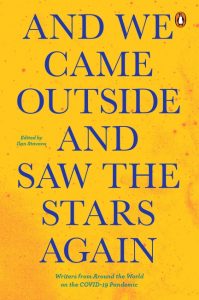
And We Came Outside and Saw the Stars Again
In this rich, eye-opening and uplifting anthology, dozens of esteemed writers, poets, artists and translators from more than thirty countries offer a profound, kaleidoscopic portrait of lives transformed by the coronavirus pandemic. As COVID-19 has become the defining global experience of our time, writers offer a powerful antidote to the fearful confines of isolation: a window onto corners of the world beyond our own.
And We Came Outside and Saw the Stars Again takes its title from the last line of Dante’s Inferno, when the poet and his guide emerge from hell to once again behold the beauty of the heavens. In that spirit, the stories, essays, poems, and artwork in this collection detail the harrowing realities of the pandemic, while pointing toward a more connected future.
Azadi
Arundhati Roy
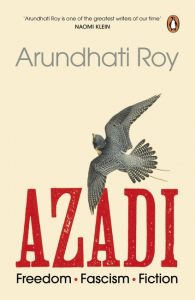
Azadi || Arundhati Roy
In this series of electrifying essays, Arundhati Roy challenges us to reflect on the meaning of freedom in a world of growing authoritarianism. The essays include meditations on language, public as well as private, and on the role of fiction and alternative imaginations in these disturbing times. The pandemic, Roy says, is a portal between one world and another. For all the illness and devastation it has left in its wake, it is an invitation to the human race, an opportunity, to imagine another world.
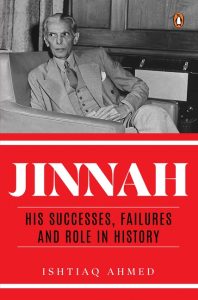
Jinnah
Ishtiaq Ahmed
Jinnah || Ishtiaq Ahmed
Using a wealth of contemporary records and archival material, Dr Ahmed traces Jinnah’s journey from Indian nationalist to Muslim communitarian, and from a Muslim nationalist to, finally, Pakistan’s all-powerful head of state. How did the ambassador of Hindu-Muslim unity become the inflexible votary of the two-nation theory? Did Jinnah envision Pakistan as a theocratic state? What was his position on Gandhi and federalism? Asking these crucial questions against the backdrop of the turbulent struggle against colonialism, this book is a path-breaking examination of one of the most controversial figures of the twentieth century.
And…Perhaps Love
Sanil Sachar
And…Perhaps Love || Sanil Sachar
A new normal has replaced the established order. Distant relationships, virtual work, blurred futures and measuring our way back to this reality occupy us every day. Negotiating these changes, Sanil Sachar’s And… Perhaps Love will work as your companion. It is a silent observer for when you want to read it, and a patient listener when you wish to communicate with it. Capturing the ideas of love, darkness and the attempt to find balance in life, this is a book for now and forever.
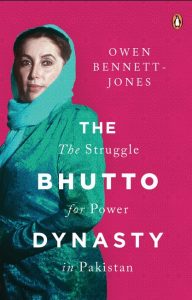
The Bhutto Dynasty
Jones Owen Bennett
The Bhutto Dynasty || Owen Bennett Jones
The Bhutto family has long been one of the most ambitious and powerful in Pakistan. But politics has cost the Bhuttos dear. Drawing on original research and unpublished documents gathered over twenty years, Owen Bennett-Jones explores the turbulent existence of this extraordinary family, including their volatile relationship with British colonialists, the Pakistani armed forces and the United States.
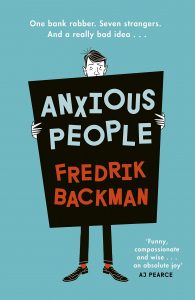
Anxious People
Fredrik Backman
Anxious People || Fredrik Backman
In a small town in Sweden it appears to be an ordinary day. But look more closely, and you’ll see a mysterious masked figure approaching a Bank… Two hours later, chaos has descended. A bungled attempted robbery has developed into a hostage situation – and the offender is refusing to communicate their demands to the police. Within the building, fear quickly turns to irritation for the seven strangers trapped inside. If this is to be their last day on Earth, shouldn’t it be a bit more dramatic? But as the minutes tick by, they begin to suspect that the criminal mastermind holding them hostage might be more in need of rescuing than they are…
Caste
Isabel Wilkerson
Caste || Isabel Wilkerson
The hierarchy of caste is not about feelings or morality. It is about power – which groups have it and which do not’ Beyond race or class, our lives are defined by a powerful, unspoken system of divisions. In Caste, Pulitzer Prize-winning author Isabel Wilkerson gives an astounding portrait of this hidden phenomenon. Linking America, India and Nazi Germany, Wilkerson reveals how our world has been shaped by caste – and how its rigid, arbitrary hierarchies still divide us today. With clear-sighted rigour, Wilkerson unearths the eight pillars that connect caste systems across civilizations, and demonstrates how our own era of intensifying conflict and upheaval has arisen as a consequence of caste.
The 10 Rules of Successful Nations
Ruchir Sharma
The 10 Rules of Successful Nations || Ruchir Sharma
This short primer distils Ruchir Sharma’s decades of global analytic experience into ten rules for identifying nations that are poised to take off or crash. A wake-up call to economists who failed to foresee every recent crisis, including the cataclysm of 2008, 10 rules is full of insights on signs of political, economic, and social change. Rethinking economics as a practical art, 10 rules is a must-read for business, political and academic leaders who want to understand the most important forces that shape a nation’s future.
Mahatma Gandhi: The Great Indian Way
Raja Rao
Mahatma Gandhi: The Great Indian Way || Raja Rao
The life of Mahatma Gandhi is the story of a legend. In Mahatma Gandhi: The Great Indian Way, Raja Rao upends the genre of the literary biography with inventive non-linear chronology, through dialogue and anecdote, situating the physical within the metaphysical, and with a text that is both retrospective and contemporary at the same time. By mapping genealogies and distilling them, Rao focuses on Gandhi’s years in South Africa, the birth of non-violent resistance, and then moves into the epic freedom struggle in India, which brought Gandhi to worldwide renown in his own lifetime.
7 Ways
Jamie Oliver
7 Ways || Jamie Oliver
Jamie Oliver is back with new, achievable, exciting and tasty recipes. Jamie’s done his homework and looked at the top ingredients we buy week in, week out. We’re all busy, but that shouldn’t stop us from having a tasty, nutritious meal after a long day at work or looking after the kids. So, rather than trying to change what we buy, Jamie wants to give everyone brand new inspiration for their favourite ingredients, the kind of things you can pick up in any supermarket. Jamie will share 7 achievable, exciting and tasty ways to cook 19 hero ingredients, and each recipe will have no more than 8 ingredients within it. At least 5 recipes from each 7 way will be everyday options from both an ease and nutritional point of view, meaning you’re covered for every day of the week.
Untamed
Glennon Doyle
Untamed || Glennon Doyle
Soulful and uproarious, forceful and tender, Untamed is both an intimate memoir and a galvanizing wake-up call. It is the story of how one woman learned that a responsible mother is not one who slowly dies for her children, but one who shows them how to fully live. It is the story of navigating divorce, forming a new blended family, and discovering that the brokenness or wholeness of a family depends not on its structure but on each member’s ability to bring her full self to the table. And it is the story of how each of us can begin to trust ourselves enough to set boundaries, make peace with our bodies, honor our anger and heartbreak, and unleash our truest, wildest instincts so that we become women who can finally look at ourselves and say: There She Is.
No Rules Rules
Reed Hastings and Erin Meyer
No Rules Rules || Reed Hastings, Erin Meyer
It’s time to do things differently. Trust your team. Be radically honest. And never, ever try to please your boss. These are some of the ground rules if you work at Netflix. They are part of a unique cultural experiment that explains how the company has transformed itself at lightning speed from a DVD mail order service into a streaming superpower – with 190 million fervent subscribers and a market capitalisation that rivals the likes of Disney. Finally Reed Hastings, Netflix Chairman and CEO, is sharing the secrets that have revolutionised the entertainment and tech industries. With INSEAD business school professor Erin Meyer, he will explore his leadership philosophy and how it plays out in practice at Netflix. For anyone interested in creativity, productivity and innovation, the Netflix culture is something close to a holy grail.
The Midnight Library
Matt Haig
The Midnight Library || Matt Haig
Between life and death there is a library. When Nora seed finds herself in the midnight library, she has a chance to make things right. Up until now, her life has been full of misery and regret. She feels she has let everyone down, including herself. But things are about to change. The books in the midnight library enable Nora to live as if she had done things differently. With the help of an old friend, she can now undo every one of her regrets as she tries to work out her perfect life. But things aren’t always what she imagined they’d be, and soon her choices place the library and herself in extreme danger. Before time runs out, she must answer the ultimate question: What is the best way to live?
The Evening and the Morning
Ken Follett
The Evening and the Morning || Ken Follett
It is 997 CE, the end of the Dark Ages, and England faces attacks from the Welsh in the west and the Vikings in the east. Life is hard, and those with power wield it harshly, bending justice according to their will – often in conflict with the king. In these turbulent times, three characters find their lives intertwined. And each in turn comes into dangerous conflict with a clever and ruthless bishop who will do anything to increase his wealth and power.
Thirty years ago we were introduced to Kingsbridge in The Pillars of the Earth, and now in this masterful prequel international bestseller Ken Follett will take us on a journey into a rich past, which will end where his masterpiece begins.
Intimations
Zadie Smith
Intimations || Zadie Smith
Written in the first months of the coronavirus pandemic, as the global situation changed almost hourly, Intimations is a series of six deeply personal essays responding to the ever-evolving experience of lockdown. Crafted with Zadie’s trademark intelligence, wit and style but also suffused with a striking intimacy and tenderness, these essays attempt to organize the feelings and thoughts that the events of 2020 so far have provoked. A vital work of art, a gesture of connection and an act of love, Intimations is an essential book in extraordinary times.
Livewired
David Eagleman
Livewired || David Eagleman
The greatest technology we have ever discovered on this planet is the three-pound organ carried around in the vault of the skull. This book is not simply about what the brain is, but what it does. The magic of the brain is not found in the parts it’s made of, but in the way those parts unceasingly re-weave themselves in an electric, living fabric. Surf the leading edge of neuroscience atop the anecdotes and metaphors that have made Eagleman one of the best scientific translators of our generation. Covering decades of research to the present day, Livewired also presents new discoveries from Eagleman’s own laboratory, from synaesthesia to dreaming to wearable neurotech devices that revolutionize how we think about the senses.
Moonflower Murders
Anthony Horowitz
Moonflower Murders || Anthony Horowitz
So when an English couple come to visit with tales of a murder that took place in a hotel the same day their daughter Cecily was married there, retired publisher Susan Ryeland can’t help but find herself fascinated.
And when they tell her that Cecily has gone missing a few short hours after reading Atticus Pund Takes The Case, a crime novel Susan edited some years previously, Susan knows she must return to London to find out what has happened.
The clues to the murder and to Cecily’s disappearance must lie within the pages of this novel. But to save Cecily, Susan must place her own life in mortal danger…
Final Cut
SJ Watson
Final Cut || S J Watson
Blackwood Bay. An ordinary place, home to ordinary people. It used to be a buzzing seaside destination. But now, ravaged by the effects of dwindling tourism and economic downturn, it’s a ghost town – and the perfect place for film-maker Alex to shoot her new documentary. But the community is deeply suspicious of her intentions. After all, nothing exciting ever happens in Blackwood Bay – or does it?
Breath
James Nestor
Breath || James Nestor
There is nothing more essential to our health and wellbeing than breathing: take air in, let it out, repeat 25,000 times a day. Yet, as a species, humans have lost the ability to breathe correctly, with grave consequences. Journalist James Nestor travels the world to figure out what went wrong and how to fix it. The answers aren’t found in pulmonology labs, as we might expect, but in the muddy digs of ancient burial sites, secret Soviet facilities, New Jersey choir schools, and the smoggy streets of São Paulo, Brazil. Drawing on thousands of years of medical texts and recent cutting-edge studies in pulmonology, psychology, biochemistry and human physiology, Breath turns the conventional wisdom of what we thought we knew about our most basic biological function on its head.
Invisible Girl
Lisa Jewell
When Saffyre Maddox was ten, something terrible happened, and she’s carried the pain of it ever since. The man who she thought was going to heal her didn’t, and now she hides, learning his secrets, invisible in the shadows.
Invisible Girl || Lisa Jewell
Owen Pick is invisible too. He’s never had a girlfriend; he’s never even had a friend.
Nobody sees him. Nobody cares.
But when Saffyre goes missing from opposite his house on Valentine’s night, suddenly the whole world is looking at Owen.
Accusing him. Holding him responsible for Saffyre’s disappearance…
Invisible Girl is an engrossing, twisty story of how we look in the wrong places for bad people while the real predators walk among us in plain sight.
We all have a pre-pandemic people-watching streak! If like us, you miss some casual people watching routines in the café or on the metro – scroll down this post to find out which character you would be like if you were a people-watcher from the (extravagant) world of Kevin Kwan’s latest – Sex and Vanity!
**
The Conversationalist – Charlotte
‘Sizing up his outfit of white and blue striped seersucker trousers, crisp white button down shirt conspicuously monogrammed with the initials “MVE” just above his left midriff, navy polka-dot cravat tied around his throat, and Cleverley wing-tips, Charlotte knew exactly how to engage with him.’
If you are a Charlotte, your people-watching skills actually make you a great conversationalist! You are good at gauging people by watching them, their attire, their movements – and know JUST how to talk to them.
*
The Storymaker – Lucie
‘Lucie glanced covertly at the people seated around her. She loved checking people out and making up stories in her mind about them. On her left was a young attractive Italian couple, looking longingly into each other’s eyes, on their honeymoon, possibly? To her right were two smartly dressed men—an American guy with dark blond hair in a blue striped t-shirt and navy 63 blazer talking to an Asian guy with a goatee wearing a pair of round 1930s retro-style sunglasses. They looked like they worked in fashion and were here on business.’
If you are a Lucie, then you are a (pretty good) storyteller! The world is your oyster, everyone around you a potential character with awesome backstories!
*
Sex and Vanity || Kevin Kwan
The Fashion Critic – Mordecai
‘She’s a Barclay. Of course, only a Barclay can afford to look this unfashionable in Capri.’
‘Who on earth was this woman, and what possessed her to think she could join his group wearing those flamingo pink sweatpants?’
Even if you are not one, we bet you have known at least one Mordecai in your life! A Mordecai will judge your entire lineage, character, ancestry on the basis of your fashion sense.
*
The Clueless – Cecil
For us, Cecil incorporates all the folks who need to learn to read a room, with the number of times he has failed to correctly watch and read people. A mortifying flashmob proposal with him singing into a makeshift hotdog microphone is all the visual is all we need to prove that statement!
All the Cecils are the ones who need people-watching lessons!
___
Drop us a line below on which Kevin Kwan-esque people-watcher you are (honest answers only!) and don’t forget to compare notes with your friend-groups!
Don’t forget to step into the world of Sex and Vanity for more of absolute fun people-watching.
Friendships and companionship have proven to be crucial human bonds, even more so in these socially-distant times. We had a chat with Shubha Vilas, motivational speaker and author of The Magic of Friendships – about friends, friendships and maintaining human bonds in these times.
—
Do you feel friendships have acquired a new and deeper meaning in these times?
Was there a time when friendship was not important? But yes, you could say today it is more important than ever because of nuclear families and working parents. Friends have replaced family too. Friendship is the single most relationship that has the potential to make you or break you.
The Magic of Friendships || Shubha Vilas
As the world has become more virtual and relatively more isolated in the pandemic, how can we maintain and strengthen our friendships today?
The virtual world is an important tool in forming and maintaining friendships. If used judiciously. Imagine your friends are accessible at all times? Isn’t that a boon? We may be physically isolated, but together in consciousness.
Principles of friendship are the same in every era. What changes is the context. You can pick any friendship story from any yuga…any century…any country…any culture…the principles will never change. Friendship as a concept is eternal.
What does it mean to be a ‘good’ friend?
You are a good friend if you can – appreciate the good in others, encourage their potential, respect the differences, tolerate the unchangeable and forgive their mistakes.
Social media is a lot about numbers, but it has also helped us stay connected with the world in these times. What would you say the impact of the digital age has been on friendships and companionship?
The digital age has redefined friendship! Now even though I may not know a person, I can end up being friends on social platforms! Therefore, in my book I mention levels of friendship. Not all friends are in the same category. Some are circumstantial, some are dear while some are soulmates.
What prompted you to write The Magic of Friendshipsand what kind of research went behind writing it?
All my books involve a lot of research because I dabble in non-fiction. The USP of my books is the scriptural connect with contemporary life. That’s the focus of my research.
And why a book on friendship? Because I love people…I love making, keeping and understanding friends – and I thought why not share my insights with the world? There’s nothing more important in life than relationships. And no other relationship as important as friendship. Friendship is the crown of all relationships. Friendship for me personally is what makes life special.
Is making friends easier than maintaining friendships while growing up?
Although it may seem to be easier, it is not really true. Growing up years are full of turmoil and confusion. Kids and teenagers grapple with self-image, self-confidence, identity crisis, bullies, living up to expectations…making friends can become a complex phenomenon. Of course, adults have their own set of challenges. But whichever generation you belong to, friends make life worth living.
Did you have a target reader in mind while writing The Magic of Friendships?
Yes actually I did. This time I wanted to focus only on young adults. But given a universal theme like friendship which crosses all barriers, this book appeals to all those who consider friendship to be important.
As concepts, do friendship and companionship always go hand-in-hand?
As concepts, friendship and companionship are probably merging into each other. Society is changing rapidly and in a world which is a global village today, the distinction between friend and companion is obsolete. Friends are companions and companions are friends. There is no divide.
In 1994, twenty-year-old Gunjan Saxena boards a train to Mysore to appear for the selection process of the fourth Short Service Commission (for women) pilot course. Seventy-four weeks of back-breaking training later, she passes out of the Air Force Academy in Dundigal as Pilot Officer Gunjan Saxena.
The Kargil Girl || Gunjan Saxena and Kiran Nirvan
On 3 May 1999, local shepherds report a Pakistani intrusion in Kargil. By mid-May, thousands of Indian troops are engaged in fierce mountain warfare with the aim to flush out the intruders. The Indian Air Force launches Operation Safed Sagar, with all its pilots at its disposal. While female pilots are yet to be employed in a war zone, they are called in for medical evacuation, dropping of supplies and reconnaissance.
This is the time for Saxena to prove her mettle. From airdropping vital supplies to Indian troops and casualty evacuation from the midst of the ongoing battle, to meticulously informing her seniors of enemy positions and even narrowly escaping a Pakistani rocket missile during one of her sorties, Saxena fearlessly discharges her duties, earning herself the moniker ‘The Kargil Girl’. This is her inspiring story, in her words.
Here’s an excerpt from the book that recounts the feelings that Gunjan experienced as she prepared herself to face one of the toughest interviews in the country.
**
Job interviews are generally tailored to judge how well the interviewee can convince the interviewer that he or she is fit for the job. It is even more challenging when the interviewer is hell-bent on finding a good reason to deem the candidate unfit. How do you convince them in such a situation? The answer is—with honesty. That is what is required in the personal interviews of the SSB exam, according to Papaji. He would tell me that if I missed even one of the prerequisite qualities, the armed forces would not even consider my candidature; it would not put the lives of its men and women at risk just because someone like me would lose a job opportunity. So making sugar-coated statements wasn’t going to help at all. If one is not chosen, it’s better to accept the inevitable rather than feel disheartened, prepare well and execute better in the next SSB exam. On the morning of the fifth day, just before the personal interviews were to commence, I promised myself I would not crib or cry if I failed—I would accept the results calmly and go back like a true fighter.
‘I wonder if we’ll get tickets to go back home tonight, in case we don’t get recommended?’ Deepa asked. We were all sitting in rows outside the conference hall, waiting for the interviews to begin. There were two bulbs fitted to sockets above the hall’s door, one red and one green. The red one was glowing, indicating an interview was in progress inside.
‘You think you won’t make it?’ I asked Deepa in a hushed tone.
‘We can’t be too sure, can we?’ she replied.
‘It’s all about being confident,’ Aditi said. ‘I’ve only shown them what they needed to see. There’s no chance I’m going back today without a yes.’
‘Such overconfidence!’ Hema couldn’t keep herself from commenting. Aditi rolled her eyes detestably. ‘If I can see it, surely they can too,’ Hema said to me faintly. ‘I can bet a wager on her rejection.’
I had my eyes fixed on the bulbs. As soon as the green one glowed, I’d be only one candidate away from my interview. I looked at my attire for the day—my pants and shirt were neatly ironed, my hair was tied in a tight bun. I cleared my throat. I was set. And as if on cue, the green light flashed.
As soon as the interviewee went inside, the light turned from green to red. My gaze was fixed on the bulb. It must have been less than ten minutes, but it felt like an eternity before the candidate came out. She seemed relaxed. After about another two minutes, the green bulb lit up again. I could feel my heart flutter as I stood up to go in. Hema wished me luck and I smiled back at her. I pulled open the door of the conference room and, just as I had imagined, I saw in front of me a panel of six officers sitting behind a rounded table. They were all familiar faces I had encountered during our various tests.
‘May I come in?’ I asked.
‘Please be seated,’ Wing Commander Pathak signalled. He was the interviewing officer (IO) I had seen during the PABT.
I seated myself on the edge of the chair, both my hands carefully folded on my lap. Sqn Ldr Yadav and Sqn Ldr Virk smiled at me. I was too nervous to smile back. The others were busy going through the files that had been kept in front of them. I guessed it was my personal information questionnaire form, which each of us had filled up on the first day of the SSB. I patiently waited for the IO to shoot the first question.
‘How was your SSB experience, Ms Saxena?’ he finally lifted his head and asked.
‘Informative, Sir,’ I replied at once, ‘and memorable.’ ‘How many friends did you make here?’ he asked.
I’ve interacted with all the other candidates, and I plan to keep in touch with them, Sir, regardless of how things pan out,’ I replied. I didn’t want them to think I was partial and avoided telling them that Hema was the only one I could call a ‘friend’ there. But the truth was that I had interacted with all of them. The IO then asked me basic questions about my family and education. The more I talked, the more relaxed I felt. But there was one question that made me stop and think for a while.
‘Tell us why you want to join the Indian Air Force?’
I knew the answer to this question. I had prepared for it all my life. What I did not know was how to frame my answer. Should I sound passionate? What if I sounded desperate instead? How could I tackle this? What should I say to convince them? There was no time to plan or prepare. I had to be quick.