Publish with Us

Follow Penguin

Follow Penguinsters

Follow Penguin Swadesh

Meet Kunwar Narain: One of the Finest Writers of Modern Time

Kunwar Narain (1927-2017), an iconic figure in Indian literature. He is regarded as one of the finest writers and thinkers of modern time.


Kunwar Narain

He read widely, across literatures and disciplines, and blended an international sensibility with a grounding in Indian history and thought.

1960s, Lucknow Study

He has written in diverse genres of poetry and prose, including three epics recognised as classics of Indian literature, poems across eight collections, translations of poets like Cavafy, Borges, Herbert and Rózewicz, two short story collections, criticism, essays, memoirs, and writings on world cinema, ideas and the arts.

1980s, Lucknow Study

His oeuvre of seven decades, since his first book in 1956, has evolved continuously and embodies, above all, a unique interplay of the simple and the complex.

1950s, Kilbury Forest

After over five decades in Lucknow, where a major part of his writing was done, he moved to Delhi. Widely translated, his honours include the Sahitya Akademi Award; Kabir Samman; Warsaw University’s honorary medal; Italy’s Premio Feronia for distinguished world author; India’s civilian honour Padma Bhushan; the Senior Fellowship of India’s Academy of Letters; and the Jnanpith, India’s highest literary award.

2000s, Delhi Study

A reclusive presence, he has published selectively; some works remain unpublished.

1994, Venice

In vivid English translation for the first time, The Play of Dolls is a collection of Kunwar Narain’s short stories. These unusual short stories broke new ground and rejuvenated the genre when they appeared on the Indian literary landscape in 1971. The collection also offers valuable insight into what India’s struggle with social change looked like in the sixties.

1970s, Lucknow House Garden

The Play of Dolls is available now.

Can Urdu Regain Its Lost Glory?

The Minority Conundrum is the second volume in the Rethinking India series. It explicates what it means to be a minority in majoritarian times. The contributors identify vulnerabilities that encumber the quest for the realization of substantive citizenship by minority groups.

In an essay titled ‘Is There a Future for Urdu?’ Mahtab Alam explores whether the language can regain it’s glory.

Here are some points he makes:

Treat Urdu as a mother tongue


…Urdu should be treated as a mother tongue rather than just a language of a religious, cultural or linguistic minority group.

What does treating it as a mother tongue mean….

There are two components to my proposition: first, primary education should be imparted in one’s mother tongue, and secondly, it has to be of high quality, as providing mediocre education in the mother tongue will not solve the problem.

Promote the language through books

Commissioning and publishing quality Urdu translations of good books across genres and languages is another useful mechanism to promote the language.


Use Urdu to bridge the cultural gap

In addition to translating from Indian languages, useful texts from Arabic, Persian and other world languages, apart from English, should be translated into Urdu. All this is important because there is an availability of rich literature in these languages. Moreover, this will also help in bridging the cultural gap, which is very important given the growing segregation of our societies.


Provide more fellowships to scholars, researchers and translators

In order to publish and promote quality content in Urdu (translations as well as original writing), fellowships and grants must be provided to scholars, researchers and translators.

Focus on digital is also important

Similarly, special efforts should be made to make Urdu digital-friendly. In this regard, special consultation with different stakeholders (such as software developers, writers, translators, online search engine optimization specialists, etc.) must take place.


The government would also need to pitch in…

The role of the government and its agencies is very crucial because both the promotion as well as development of the language require capital investment and human resources.

His conclusion:

In short, the promotion and development of Urdu in the current scenario would require a multifaceted, long-term and planned approach straddling education, research, digital advancement, cultural activities, to making it a language of day-to-day use.


The Minority Conundrum is a thought-provoking volume that considers the minority question in India.

The essays deal with educational attainments, employment prospects in a liberalized economy, possibilities of equal opportunity, violence of the state and vigilante groups, emerging questions of citizenship and employment, linking language with the material life of its speakers, and the receding political voice of minorities amidst a majoritarian upswing.

Do you Feel Lost without HIS Presence?

To be a better spiritual being and to better even that with every step is the goal of every soul so it can then ultimately merge into The One . . .

Rudra is exactly where he wants to be-with his kind, loving BABA, talking about life and the laws of the spiritual realm. He is taken to various villages to see for himself what the right way to live and pray is.

As he serves his BABA and asks Him questions, much is revealed to him: ‘When you pray with such intensity that The One shall listen to your prayer, then your purity, intensity, devotion and yearning will get wings to reach The One’

BABA also talks about how we should be in life, how our relationships should be, how jealousy and anger are detrimental to the development of good karma and how conducting oneself without cribbing and complaining takes on to the higher plane.

Take the journey withing with The Fakir.

Here’s an excerpt from the book:

Very often baba would disappear for a few days and Rudra realized that on those days he was unusually preoccupied with some mundane things. Stuff that needed to be sorted out in the cottage or he was simply not in the zone to do anything and be dazed, all appointments cancelled, he preferred being by himself. He never understood how every time Baba would leave, Rudra’s days were either packed with worldly chores or just depressing.

On those days he drank far more than he should but always outside the cottage, never within its holy premises. He always made sure the oil lamps burnt twenty-four seven, and Baba would light a small fire, mainly burning embers, which Rudra would tend to in order to always keep the fire awake. Without Baba’s physical presence Rudra was lost, though he knew that he should not be as Baba was always with and within him.

Rudra always remembered Baba’s words to him. He had told him in the early days of their meeting, ‘Beta, heaven is filled with those who have failed but who have got back on their feet, dusted off their mistakes and follies, smiled and walked on with The Name on their lips and the comfort of a compassionate heaven in their hearts.’

Rudra missed serving Baba and massaging His feet. When Baba was physically with him Rudra’s day would be remarkably the same, making sure Baba was taken care of, from the innumerable cups of chai to hot bowls of soup to prayers and laughter and conversations ending the day with him massaging Baba’s feet. He loved to massage His feet.

The last time when Baba had left, there was a tremendous forest fire in California. Rudra always noticed that whenever Baba would leave the cottage, some place in the world would be going through unusual turmoil or devastation. It was as though He was needed and He had to be alone. Rudra never pried or questioned Baba. Rudra just served silently and joyously.

Blondie, Boy and Girl never left Rudra’s side when Baba was not present. It was as though they understood that he was alone and they rallied around him and sought his attention. On those days, Rudra would give them a bath and pedicures and pamper them as he needed to be active to prevent the ache felt in his heart because of Baba’s absence.

Heaven is filled with those who have failed but who have got back on their feet, dusted off their mistakes and follies, smiled and walked on with The Name on their lips and the comfort of a compassionate heaven in their hearts.


What other lessons can BABA teach you? Read The Fakir to find out!

Author speak: Writing on T20, cricket and more!

In Cricket 2.0: Inside the T20 Revolution, Tim Wigmore and Freddie Wilde take us on a whirlwind tour of the cricket format that has taken the world by storm. From its inception, when T20 was accepted by a narrow vote of the Marylebone Cricket Club, to its current global popularity, from its original superstar Chris Gayle to newcomers like Rashid Khan and Sandeep Lamichhane, T20 has become a phenomenon that has resurrected the game of cricket.

What inspired them to write this book? Read an interview with Tim Wigmore and Freddie Wilde below to find out:


What inspired you to write this book?

T20 has changed cricket so profoundly since it was created in 2003, and we wanted to read an account bringing this all together, explaining what had changed on and off the field, bringing the characters together and looking at what would come next. No one had written this book, so we wrote the book that we wanted to read.


When did you start writing it?

I [Tim] first suggested the concept to Freddie early in 2017. We then spent the next year or so with the idea on the backburner, only having done a few chapters, before then taking about another year to finish it off after we got a UK publishing contract in 2018.


Were there any challenges?

The biggest challenge was the lack of recording of T20 games – there has been almost no literature published on the game, so we had to do lots of primary research ourselves, rather than lean upon what had come before.


How did you carry out the research for this book?

This book is defined by the contributions of our interviewees, both on and off the field, who we are hugely grateful to for speaking so honestly and thoughtfully about the game. And of course we looked over scorecards old games, rewatched footage of crucial moments and talked lots between ourselves about how to develop the project.


While writing, did you discover a fact that surprised you?

The level of strategising and planning – both for the IPL auction and matches themselves – was fascinating, and some of the secrets of the IPL auction – like teams bidding for players they don’t really want to drive up the prices so other teams have less cash. Unlearning – the idea that batting is more important than bowling in T20. The more we looked at it the more it became clear that you absolutely need five strong bowlers to be a good T20 team. This is probably the biggest difference between CSK and RCB in the IPL – CSK have recognised the essential importance of bowling, while RCB have been more focused on batting all-stars. And as we know that hasn’t worked.


What do you think the future of cricket will be?

We have a chapter at the end with predictions for the future based on our research so I don’t want to give away too much! But two obvious ones – the continued rise of short-format cricket; and the growing importance of club-based cricket. Ultimately I envisage the structure of cricket becoming more like football – with the calendar dominated by domestic leagues, and international cricket being more about tournaments, and less about bilateral fixtures.


5 reasons why people should check out this book
  • Until now, much of the most interesting aspects of T20 have been hidden from the public. We hope our book helps change that.
  • We’ve talked to over 80 leading players and coaches, including Brendon McCullum, Rahul Dravid, Eoin Morgan, Ricky Ponting, R Ashwin, Kieron Pollard, Jos Buttler and Rashid Khan.
  • Front cover of Cricket 2.0
    Cricket 2.0 || Tim Wigmore, Freddie Wilde
  • No sport has changed as much as cricket this century – read our book to understand how, why and what’s next, whether you’re already a T20 fan or are new to the format.
  • We’ve won the Wisden Book of the Year award for 2020 – no book on T20 has ever won that before.
  • We explain how the IPL is really won and lost – Chennai fans will enjoy this more than Bangalore ones!


Any writing advice for people who wish to write on sports?

The best advice I could give would be to try and find interesting areas that you think are undercovered and you want to read more about them. If you want to read more, others probably do too. Find new areas and topics – don’t reproduce what you already read.


Intrigued? Check out the e-book of Cricket 2.0 to know more!

We shall overcome: Your dose of inspiration from sportstars!

These are times of collective struggle, and inspiration is more important than ever. As our future is thrown into uncertainty, it can oftentimes get difficult to see the light at the end of the tunnel.

The ‘Dear Me’ series of letters first appeared in Hindustan Times in 2017. These columns, penned by India’s top sporting icons, were published with the intent to inspire a young generation of struggling sportspersons, to serve as the light at the end of the tunnel for them.

We are revisiting some powerful letters that have given us an unexpected zeal for overcoming hardships and survive!


Milkha Singh

Also called the Flying Sikh, Milkha Singh is an Indian track and field athlete. He was the first Indian man to reach the final of an Olympic athletics event—the 400m race at the 1960 Olympic Games in Rome.

He writes to is sixteen-year-old self:

You have endured enough, but your hardships are not over. Later on you will realize that what doesn’t kill you makes you stronger. It will be four more years before you discover running. However, I do wish you would have found your passion at least four years earlier because I don’t want you to lose an Olympic medal.

The quest for survival will take you to the world of sports. As a teenager, you may not have an idea about running as a sport. As an orphan, it will not only be about learning how to survive the brutal world, but also about carving out an identity for yourself.

*


Abhinav Bindra

Abhinav Bindra is an Indian shooter who is also a Rajiv Gandhi Khel Ratna awardee. He was the country’s first individual Olympic gold medallist.

He writes to his fourteen-year-old self:

The support you receive from your family and the fact that your every training need is fulfilled may well be held against you when you go on to achieve success. Yours cannot be the conventional story of adversity to redemption that many usually look for. Never mind that.

You do this for yourself and for what it can mean to others who understand. You will need to earn every success, and no one else can do it for you. This will make you the man you aspire to be.

*

Bhaichung Bhutia

Bhaichung Bhutia is a former Indian footballer. Dubbed the ‘Sikkimese Sniper’, Bhutia is known for his superb accuracy. He has been awarded the Padma Shri and Arjuna Award.

He writes to his eight-year-old self:

Young man, the one thing you need to realize is that you won’t win all the time. So stop fighting and crying every time you lose a match. In other words, stop being a bad loser. Your oldest brother, Rapden, is very good at football and thinks you are very talented, but he finds it difficult to deal with your tantrums when you lose. Winning and losing are part of the game, and you will have to take them in your stride. The sooner you accept this, the further you will go.

*

Jwala Gutta

Jwala Gutta is a professional badminton player who has represented India at international events, both in mixed and women’s doubles.

She writes to her eleven-year-old self:

As you soar, remember you will also have to accept your share of criticism. It comes with that thing called success. You will be labelled a ‘cribber’ for speaking out. But then, you have faced criticism since you were eleven. So, it will not affect you any more.

What works for you is the belief your parents have in you and the fact that they have taught you to stand up for your rights. Both these lessons will take you far.

*

Joshna Chinappa

Joshna Chinappa has won global recognition as a hugely successful junior squash player. She became the first Indian ever to win a British Junior Open title in 2005.She writes to her thirteen-year-old self:

She writes to her eighteen-year-old self:

I know you are a happy-go-lucky person. But now you will be facing the biggest challenges in life. You will need to have the right kind of people around you when it comes to friends or social situations.

You should probably be a little bit more aware of the kind of people you want to let into your life because your inner circle determines everything.

You will have to foresee everything that will go on in your life. I know you like to talk to everyone, you are always happy to chat with anybody and everybody, but if you continue this later in life you will wish you had been a bit more selective.


Whether in the sporting world or anywhere else, these struggles and words of wisdom and advice from some of the biggest sportsstars in the country are certainly relevant for all of us. Head over to the ebook to explore more such words that will inspire you towards persistence, struggle, and survival.


The Economics of COVID-19

On the eve of 31 December 2019, as the world celebrated the start of a new decade, the province of Wuhan alerted the World Health Organization of several ‘flu-like’ cases. Less than a week later, a novel coronavirus, was identified. In February, the disease it caused was named COVID-19. Even now, as the global infection rate crosses 1,00,000 and the death toll surpasses 3000, we are yet to understand the threat posed by this new coronavirus. There is no vaccination to prevent it, and no antiviral to cure the sick. While high numbers are being reported daily, agencies may still be unaware of many cases.

While some of us may find it easier to resign ourselves to fate, what we need most right now is credible and comprehensive information from professionals that can help us understand what the Coronavirus is, and how we can prepare and protect ourselves against it. The Coronavirus is the first book that addresses the history, evolution, facts and myths around the pandemic.

Here’s an excerpt from the book below:

‘Give me a one-handed economist. All my economists say “on the one hand”, then “but on the other . . .”’
—Harry Truman

Since the economists that President Truman sought are even more elusive than Sundarbans tigers, the ambidextrous opinions of even-handed experts could map our strategies.

Each new infection moderately severe or worse is estimated to cost approximately $570 million or 0.7 per cent of global income, according to the World Bank. On 9 March, economists at the United Nations estimated the economic impact of COVID-19 to range from $1 trillion to $2 trillion, depending on the ability of various governments to mitigate its impact.

According to World Bank estimates, six major zoonotic outbreaks between 1997 and 2009—Nipah, West Nile fever USA, SARS, HPAI or bird flu, Bovine Spongiform Encephalopathy or mad cow disease, and Rift Valley fever—have cumulatively cost the world at least $80 billion. While the global economic cost of the Spanish flu pandemic of 1918–19 is unknown, McKibbin and Fernando have estimated that if it repeated itself in the year 2020, it could cost the global economy up to $9 trillion.

The SARS outbreak of 2002–03 cost the global economy about $54 billion as per World Bank estimates. The Ebola outbreak in West Africa in 2014 exemplified the grave economic toll of an emerging infectious disease in an unprepared region. Gross Domestic Product (GDP) growth in Liberia and Sierra Leone dropped from 8.7 per cent and 5.3 per cent respectively, to less than 1 per cent between 2013 and 2014, despite the illness-related death toll falling during the same time. Guinea saw a GDP growth of 0.1 per cent for 2015, compared to the 4 per cent predicted. The outbreak cost these three nations a total loss of $1.6 billion, whereas the rest of the world lost about $550 million.

MERS hit South Korea in 2015. With over 16,000 quarantined and thirty-eight deaths, 41 per cent fewer tourists visiting the country, residents avoiding public spaces like malls, restaurants and theatres, the impact on the economy
was severe. Eventually, the Bank of Korea was forced to reduce its interest rates to a record low, and the country faced a total loss of roughly $12 billion. Saudi Arabia was estimated to have lost $16 billion during the MERS outbreak due to a complete standstill on pilgrim activities. The Zika epidemic in Latin America and the Caribbean drained their economy of an estimated $7–18 billion between 2015 and 2017. Influenza, which returns annually causing about 700,000 deaths, costs the economy roughly $500 million each year, according to a 2017 WHO study by Victoria Fan and colleagues.

Disease outbreaks affect economies, both directly and indirectly. Government expenses increase as it intervenes to provide basic amenities to its people. Often this involves lowering prices of goods and commodities and reduced direct taxation on companies. Companies face setbacks as sales plummet with people less likely to spend on non-essential goods and leisure activities. This further lowers income from value-added taxation. Illness or forced quarantines impact labour and production and manufacturing abilities of industries. At the individual level, people face increased medical costs, lost pay due to sickness, mortality and loss of close ones. Private and foreign investors do not invest in an uncertain market.

Even if the disease is contained, its aftermath lingers. With business hurt, economy disrupted, stigma and fear plaguing citizens, with the most vulnerable populations hardest hit, the outbreak has far-reaching social, economic, political and psychological effects.


The Coronavirus: What You Need to know about the Global Pandemic brings together medical experts Dr. Swapneil Parikh, Dr. Rajesh Parikh, and Maherra Desai, to present a timely and reliable narrative on the Covid 19 pandemic and possible ways forward.

What Makes India Different?

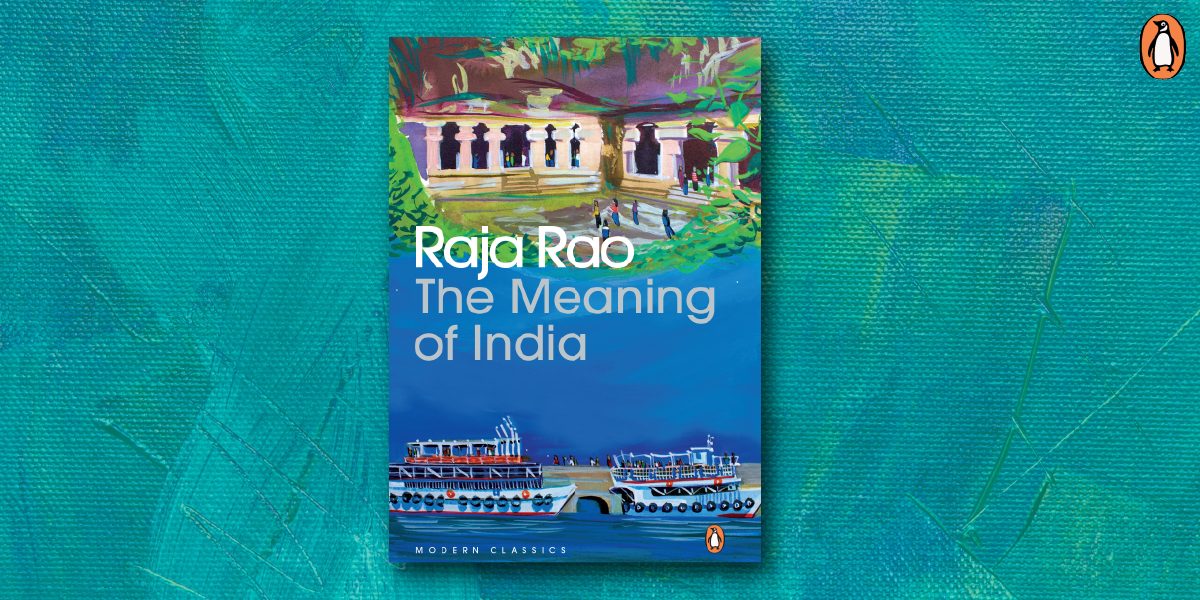
First published in 1996 when he was eighty-eight years old, The Meaning of India is a selection of nearly six decades of Raja Rao’s non-fiction. It is an audacious contemplation on the deeper significance of India. A combination of fables, journeys, discussions and meditations, the book advances the view that India is not just a geographical entity, or even a civilization-state. India is, above all, a metaphysic, a way of being and regarding the self and the world.

Read an excerpt from the book below:

In  The  Meaning  of  India,  Raja  Rao  declares,  ‘India  is  not  a  country  (desa);  it  is  a  perspective  (darsana).’  The  word  ‘darsana’, incidentally,  is  the  Hindu  word  for  philosophy;  it  means  seeing,  experience,  vision,  perception,  standpoint,  insight  and  outlook.  But  what  darsanadoes  India  embody?  Absolute, non-dual consciousness, according to Rao. Even if there  was  no  India  in  a  physical,  material  sense,  India  as  an  idea would always exist. As Rao puts it, ‘India has no enemies. She only has adversaries’ , and she ‘has to turn defeat into victory’.

The  entire  universe,  sentient  and  non-sentient,  in  its  own infinitely rich and diverse ways, also seeks the Absolute. That, I think, is what the Buddha meant when he said that the whole universe is on fire: ‘“What does not disappear does not  exist.”  For  every  sense  perception  is  afire.  “Look,  the  universe is burning!”’ Again, to quote Rao, “There can be  no  world  without  duality,  yet  there  can  be  no  peace  in  duality.’ Duality is primordial unhappiness. That is why everything  that  exists  experiences  this  dukkha, which  is  the  very essence of duality. Duality, two-ness, implies separation from  the  source.  Whatever  has  individuality  is  therefore  separated, ego-bound, vibhakt (divided), and therefore seeks self-transcendence—in  dissolution  or  union—as  the  means  to regain its lost wholeness.

But if everyone and everything seeks the same ‘thing’ that India seeks, what makes her different?

The  difference  is  that  it  is  in  India  where  this  seeking  has  become  self-conscious,  reiterated  generation  after  generation,  down the centuries. Not just that, one might even say that India has not only sought but found the Absolute. There is a prevalent Buddhist belief that if the world is to be saved from destruction, the  inspiration  for  the  radical  transformation  in  consciousness  must come from India.

Rao also states this position quite unequivocally:

There are, it seems to me, only two possible perspectives on human  understanding:  the  horizontal  and  (or)  the  vertical.  They  could  also  be  named  the  anthropomorphic  and  the  abhuman. The vertical movement is the sheer upward thrust towards the unnamable, the unutterable, the very source of wholeness. The horizontal is the human condition expressing itself,  in  terms  of  concern  for  man  as  one’s  neighbour—biological  and  social,  the  predicament  of  one  who  knows  how to say, I and you.

The  vertical  rises  slowly,  desperately,  to  move  from  the I to the non-I, as non-dual Vedanta would say. It is the move towards the impersonal, the universal (though there is no universe there, so to say) reaching out to ultimate being, where there are no two entities, no you and I.

The horizontal again, on its long, arduous and confused pathways, will reach the same ultimacy by stripping the I of its  many  vestments,  through  concern  and  compassion  for  the other . . .The vertical then is the inherent reality in the horizontal . . . (139–140)

Or again:

There  are  only  two  pathways  to  looking  at  the  world:  the  causal  way  or  the  unpredictable:  or  to  use  my  metaphor  .  .  .  the  horizontal  or  the  vertical  .  .  .  In  the  context  of  Indian  philosophy, we could say, either there is duality or non-duality.(194)

Rao,  using  a  method  akin  to  scientific  reductionism,  ensures  that the crux of the matter boils down to one contest—between duality and non-duality.

For  him,  ‘There  are  indeed  no  horizontal  solutions,  the human  has  no  answer  ever.’  Locating  this  contrast  in  a  trans-civilizational dialogue with André Malraux, Rao quotes the latter as saying, ‘You remember what Dostoevsky said: Europe is a cemetery of ideas—yes, we cannot go beyond good and evil. We can never go, as the Indians can, beyond duality.’

Excerpted with permission from the “Introduction to the New Edition”, written by Makarand Paranjape.


The Meaning of India is available now.

A Book I Love: We Share Our Favourites this World Book Day

There are characters that brought us closer to ourselves, and stories that we didn’t know we needed to read.

If you ever wondered which books left a mark on the people who work on (almost) all your favourite books, here’s a list this World Book Day:

The God of Small Things by Arundhati Roy

As a (trying) writer, a lot of the books I get attached to are those that bring me closer to the themes I want to write about. Arundhati Roy’s fiction is rooted in the rawest socio-political fabric of India. This one is my pick because of the surprise element – I picked it up accidentally, not really braced for the enormity of the characters, themes, story of the book. It was cinematic and incredibly immersive, and left me with a hangover of sorts where I couldn’t read anything new for about three months. I think her characters really blend fact and fiction; the way she writes about the pit, absolute rock bottom of human suffering shakes you to the core. Not to mention that this has some of the most powerful lines I have read: “…the fact that something so fragile, so unbearably tender had survived, had been allowed to exist, was a miracle.”

This was one of the very few books that have made me bawl.

– Swara, Freelancer – Digital

To Kill A Mocking Bird by Harper Lee

To Kill a Mockingbird will never stop being a good book, and it will never stop inspiring people. This richly textured novel, woven from the strands of small-town life, lets readers walk in the shoes of one fully realized character after another. It’s one of the most important books of our times, Atticus Finch’s message should be heard in the midst of all the global conflicts that we hear of on the news every night.

Importantly, everyone who reads it can take something out of it which no one has before.

Sanjeeta, Assistant Manager – Marketing & Digital


The Shadow Lines by Amitav Ghosh

My favourite read and re-read is the The Shadow Lines. No matter how many times you read it, you find something new. What are the shadow lines? Are they around me? There are days when I actually feel like Tridib. That’s the magic of this book.

I was in college when I first read it. I thought that my life was not perfect because I had just come out of a relationship and everything felt bad. But when I started reading this book, I started to think differently. This book helped me understand the importance of having multiple perspectives.

Soumili, Senior Executive – Digital

Jane Eyre by Charlotte Brontë 

The book that I keep going back to again and again is Jane Eyre. It was the first classic I read and I really enjoyed reading about a simple, stubborn and intelligent woman who beat the odds stacked against her. Jane and Mr. Rochester ignited a passion for reading in me and I cannot thank this book enough for it!

I revisted the book in college and loved analyzing it’s depths especially the character of Bertha Mason.

Kadambari, Consultant – Digital

The Boy, The Mole, The Fox and The Horse by Charlie Mackesy 

Nothing I say about The Boy, The Mole, The Fox and The Horse can ever explain how it feels like a warm hug on a cold night. You don’t have to be feeling lost or down to find a ray of light in it. It’s a book about friendship, love, kindness and hope, but it’s not preachy at all. Everything in this book is so beautiful; the flow, the illustrations and the characters. It’s a story I wish I had read a long time ago.

Ananya, Consultant – Marketing & Digital


Quarantine Travels: Take a Trip into These Books

‘Reading gives us someplace to go when we have to stay where we are.

– Mason Cooley


If you are a reader like us – we’re sure you’d agree that we have never needed to step out to have our own adventures and travels. Times are uncertain and quarantining is not always easy. But one perk of being a book lover is that we always have an escape within reach!

We have piled up some (e)books that you can dive into if you are craving a bit of retreat from the real world!

The Best of Ruskin Bond

What better to transport you than Ruskin Bond?

This one brings together the best stories and poetry from one of our favourite storytellers. This literary landscape is worth disappearing into for its rich web of emotions and unforgettable characters.

*

The Torchbearers

We suggest bringing some exciting adventure into your homes with Prem, Kushal and Samhita – three endearing kids whose designated roles as ‘The Torchbearers’ set them on the path to fight demons and find the Nectar of Immortality to bring the gods back in power.

Also – there is a very punny fish in there!


Puffin Book of Bedtime Stories

Here’s one for the restless young ones! From a wandering elephant to a helpful yeti, from flying houses and faraway galaxies; delight the kids with a range of imaginative stories that would make their bedtime more exciting and active.

*

Artemis Fowl Series

Impossible to recommend just one – so we advise diving into this whole series of misadventures!

Join twelve-year-old Artemis in discovering a whole new a world of armed and dangerous – and extremely high-tech – fairies.

This is a major Disney film now, so we think it’s high time to prepare on the page before the onscreen adventure!

*

Little Women

Timeless tales are perfect to transport yourself into different times and memories. Meg, Jo, Amy and Beth are always a delight to revisit in the rural neighbourhood of Marmee in Masuchusetts.

*

The French Lieutenant’s Woman

A classic, delightful, and often irreverent postmodernist novel, this one takes you to back to the Victorian age in the most metafictional way possible. AND you get to choose from three endings!

*

The Shadow Lines

Another celebrated classic – Amitav Ghosh’s story a must-read in these times for its themes of memory and its stream-of-conscious narrative. This is a perfect read to tie in with the reflective and nostalgic headspace we are in these days.

*

Chats with the Dead

Whodunnits are so brilliant at sucking you in – and Shehan Karunatilaka’s novel puts a delightful spin on the genre! This one takes you to a lot of places: the aftermath of the Sri Lankan civil war, life, afterlife, and everything in-between.

*

Sarojini’s Mother

This literary masterpiece is in our list mostly because of Kunal Basu’s cinematic prose that would take you right into the sights and scenes of Calcutta. This is a perfect window to the city to transport you while sitting on your beds and chairs.


As eclectic as we have tried to keep this, there are ALWAYS more worlds out there to step into. If you know about them, hit us up!

Familial Love and (Re)Connections: Touching Grandfather-Granddaughter Moments in Misty Assam

Loya is twenty-five: solitary, sincere, with restless stirrings in her heart. In an uncharacteristic move, she sets off on an unexpected journey, away from her mother, Rukmini, and her home in Bengaluru, to distant, misty Assam. She seeks her grandfather, Torun Ram Goswami, someone she has never met before.

Twenty-five years ago, Rukmini – Loya’s mother – had been cast out of the family home by her mother, the formidable and charismatic Usha, while Torun watched silently. Loya now seeks answers, both from him and from the place that her mother once called home.

The story of Torun and Loya is filled with heavier, unspoken moments of regret, longing, , love and connection – punctuated with some mundane banter that bring them both closer. We take a look at some of these that made their relationship all the more poignant for us.


Little Moments

Every relationship has its own quirks and mundanities. Loya and Torun are no different; and their periodic games of scrabble are quite heartwarming.


Despite his old age and slipping memory, Torun proceeded to trounce Loya at every game. So much for youth.

‘It is that electronic junk that is turning your brain to mush!’

Torun waved at her phone and laptop.

As Torun deliberated over his move, Loya thought of how Roy had laughed when he heard of the scrabble games with her grandfather. She had been angry, but held back from a response. These days she was holding back on all emotions with Roy.

AFFORESTATION. Torun made a long word.

Loya laughed. ‘Good word!’

*

Holding Back

With the history between them, there is a certain precariousness to their relationship in the beginning. We were touched by Torun’s apprehension in the beginning, where he longed to be called koka – Assamese for ‘grandfather’ – by Loya.


Torun scowled. The girl still refused to call him koka, although she had no trouble addressing Robin as one.

He took a deep breath. He saw Rukmini’s beloved face in front of him; it was cocked like hers, as if the heavy braid was too much for her small head. She smiled at him. Torun’s eyes filled unexpectedly.

‘Majoni,’ he said to Loya, ‘My dear girl. I am so sorry for all that has happened. Let me do what I can now.’


Koka

When Loya finally gets around to addressing Torun as her grandfather, our hearts swelled right with Torun.


For three full days Torun hugged the word to himself.

Koka. Grandfather.

‘What’s going on, Deuta?’ Romen teased. ‘You look pleased.’

‘You won’t understand.’

‘Try me!’

‘It’s a secret.’

‘As long as you are happy.’

The girl was stretched out on a sofa, reading. Torun looked at her for a moment.

He was happy.

*


Unspoken Love

This particular moment between the two of them carried exceptional emotional weight for us.


The girl then rose from her seat and came across to him.

She squatted and put her long arms across his shoulders. ‘I love

you, I think, Koka.’

He watched her make her way back to her bedroom and drained the last of the amber liquid into his glass. He swallowed the last words, lest they escaped him.


A delicate, poignant portrait of family and all that it contains, Undertow is an exploration of much more: home and the outside world, the insider and the outsider, and the ever-evolving nature of love itself.

error: Content is protected !!