The success of a business depends on many factors, the most important of which is the decision regarding what industry it would like to pursue. In management terms, the blueprint for any business as to which niche it would like to operate in is called a ‘business model’. It is imperative to have a business model in place for it provides focus and direction to the management. Without such a structured approach, a business is likely to falter.
In Some Sizes Fit All, Akhil Gupta explains how the most important pillar for the success of any business is clarity on its business model. There are seven main issues which need to be considered and agreed upon for setting up a solid business model.
1. The line of activity
Almost all industries have multiple segments, referred to as ‘lines of activity’, which the management needs to carefully consider and choose from. In most cases, one would have to choose one or some of them as it may be neither necessary nor possible to pursue all possible lines.
2. Geography
It is important to identify the region in which the management would like to operate. The choice of geography would depend on the resources and ambitions of the management.
3. Target Customer
Companies need to carefully choose the segments of customers they wish to serve since the business strategy and required actions will depend upon this.
4. Sequencing and pacing of expansion
If multiple choices exist in any of the parameters above, it would be prudent to decide on sequencing and priorities and the milestones/time period for the introduction of specific products/services or specific geographies.
5. Revenue and profitability model and timing
It is important to have a clear revenue model, that is, a proper understanding of how and from where the revenue will come in, and also to have a time frame within which the revenue will start coming in. Companies that cannot demonstrate a revenue and profitability model do go out of favour sooner or later.
6. Clarity of objective
Every business needs to be clear as to what its main goal is—is it philanthropy or running a profitable business?Ideally, the objective should be to run a successful and profitable business with rapid scale-up using ethical means.
7. Revisit the business model at regular intervals
It is important for every company to revisit and review all aspects of its business model at regular intervals. These intervals can be time-based, say, annually, or can depend on specific events, such as regulatory changes, new technological innovations, the emergence of new markets, etc.
Some Sizes Fit All is an attempt to explain the fundamental pillars for any kind of business. An authentic and lucid presentation of management concepts and practices-which Akhil Gupta has tried and tested first hand through his illustrious career-this is a must-read for anyone trying to build a robust and financially sound business.
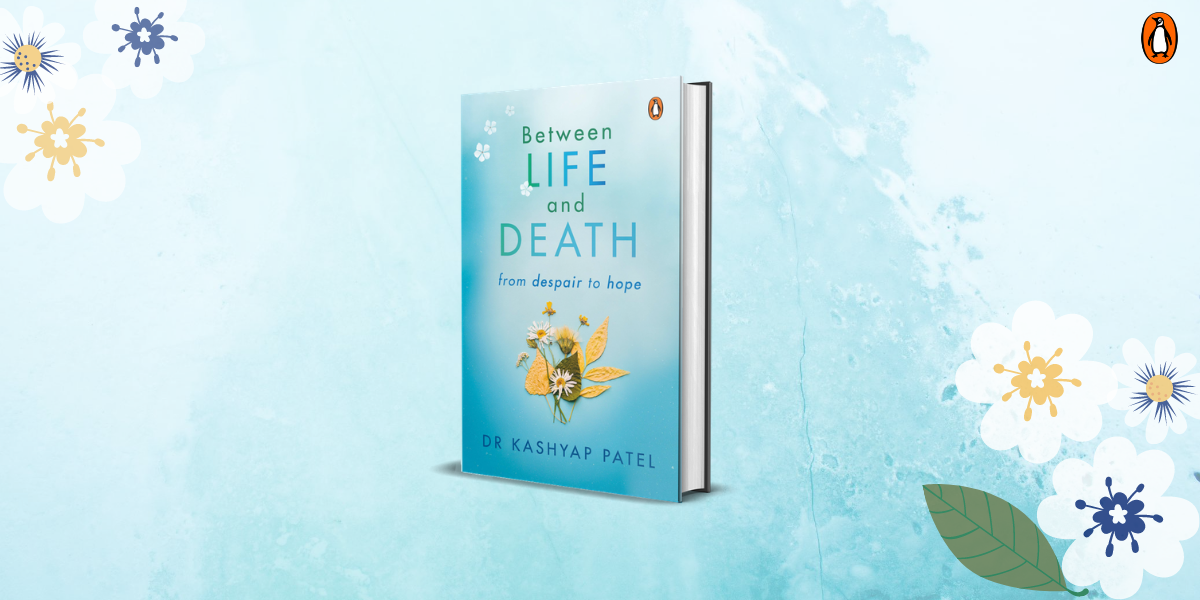
Dr Kashyap Patel is a renowned oncologist in the US who works with terminally ill cancer patients. In his book Between Life and Death, we meet Harry, who, after a life full of adventure, is diagnosed with terminal lung cancer. As he stares death in the face, Harry leans on Dr Patel, an expert in understanding the process of death and dying. His questions and fears are addressed through the stories of many other patients that Dr Patel has treated-from the young and vivacious to those who had already lived full lives, from patients who could barely afford their rent to those who had been wildly successful. What ties these stories together is the single thread of the lessons Harry learns along the way, lessons that ultimately enable him to plan his own exit from the world gracefully-dying without fear.
Between Life and Death || Dr Kashyap Patel
Here’s a moving excerpt from the book.
**
‘Hi, Kashyap, this is John.’
I was taken aback. John never called me at home or on weekends. My wife and I were getting ready to go see my son Maharshi at Duke University and take him out to dinner. The only time John had called during non-business hours was when his mother, Lily, was dying. Before I could solve the puzzle of his unusual timing, I remembered that I had promised John I would help him celebrate his fifth year of remission from cancer.
‘Hey, John! So good to hear from you. What’s up?’ I was somewhat apologetic as I had been meaning to call him. ‘I was planning a big party for your victory over your cancer. You chased it away! Let me know some dates, and I’ll start getting things together.’
There was awkward silence at the other end.
‘Are you okay? Is everyone all right in your family? I still recall the funny conversations we had at Maharshi’s send-off to join the Blue Devils at Duke. We had a great time.’
‘I’m afraid it’s over, Kashyap,’ John said sombrely.
‘What do you mean?’
‘Kashyap, it’s all over,’ John said again. ‘The beast came back with a vengeance a month after we dropped Maharshi off at Duke.’
I could feel my heart pounding at his news. ‘Tell me what happened. I know there are many options out there. Latest therapies, new surgical procedures—we can try many things . . .’
‘Sorry to interrupt, but I did some of those promising options, and they did not work. I have, maybe, a few weeks. If I’m lucky, a couple of months. So my docs say. They want to keep trying too. But I feel like I’m done with it all. Time for me to move on.’
John sounded resigned to the inevitable. ‘I wanted to call you and let you know I have decided to pack my bags and move on, literally and figuratively, away from Charlotte and beyond this human life. Do you remember my beach house at Ocean Isle, where we sailed and had lots of fun with jet skis?’
‘Yes, yes, I loved that place. I would love to retire to a place like that.’ My desire now was to cut short the painful parts of the discussion and keep John focused on happier times.
‘Well,’ John continued, ‘I’m going to retire from work and life to move down there to prepare for my journey beyond this life. I’ve packed my bags. I’ve given away whatever I could, while holding on to a few sweet and sour memories. I wish I could erase all memories and press Ctrl+Alt+Del to reboot the bad memories and enjoy the rest of the days. Never mind. We have to go through our destiny.’
‘You sound like a philosopher, my friend! I never knew you were so good at such metaphors!’
‘I was and I wasn’t. Time changes everything, Kashyap. I hope you’ll never have to go through what I have been through in my life. I lost everything. My battle against cancer, my sanity, my house and my sweet wife.’ John paused briefly. ‘Now I am patiently awaiting the Grim Reaper’s arrival for me.’
Understandably, he sounded discouraged and sad. I had no words to console him, no strength to infuse any optimism into him, no language to ease his anguish. Finally, I gathered the courage and asked, ‘Where are you, John? Can I come and see you right now?’
‘Well, I’m moving down to the beach today. Lots to catch up on. I wish I had the time to catch up with you and put some closure to our lives together.’
As John was speaking, Robert Frost’s words were ringing in my ears:
The woods are lovely, dark and deep And I have promises to keep
And miles to go before I sleep
And miles to go before I sleep.
‘Listen, Kashyap, I wanted to say goodbye, forever, for sure.’ His voice sounded choked. ‘Please convey my love to Alpa, Maharshi, TJ, Bobby, Charles and Jim.’
‘John, I will visit you at the beach as soon as I can.’
‘I may not be alive then. See if you can. If not, I sure will wait for you in unknown lands, maybe in heaven. Goodbye for now.’
John hung up.
**
Between Life and Death shows us how we can learn to accept the inevitable with grace and courage.
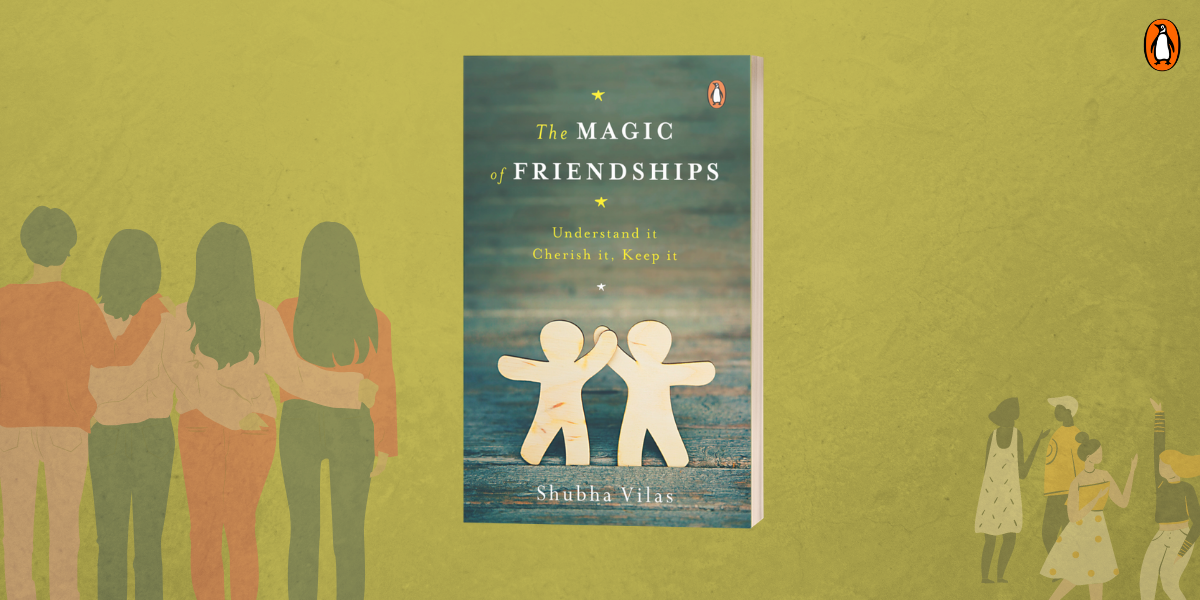
Friendships and sustainable, in-depth human bonds are crucial for survival and individual fulfillment. But like any relationship, friendships also need care and emotional investment for sustenance and strength.
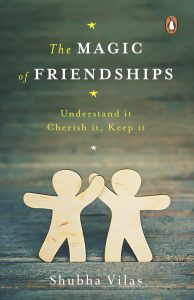
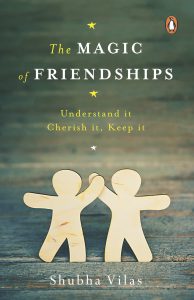
In his latest book The Magic of Friendships, motivational speaker Shubha Vilas explores, in a straightforward, anecdotal manner, some accessible advice on how to sustain strong and magical friendships in your life. We take a look:
**
Growing as an individual
‘Unless we work on our bad attitude and develop the right attitude and mindset, genuine friendship will always elude us.’
The Magic of Friendships || Shubha Vilas
Symbiotic and mutualistic dynamic
‘[A symbiotic relationship] should ideally not be developed with the intention of deriving gains from the other person, but should be born of compassion and empathy towards one another.’
Putting friends at the centre of our lives
‘Friendship begins when we get rid of our self-centred mindset. As long as we remain at the centre of our lives, making good friends is out of the question. […] As long as we are focused on serving our own needs, interests and concerns, there is no time or desire to focus on the needs, interests and concerns of another person.’
Be your own friend first
‘To be a friend to another person, you first need to be a friend to yourself. Before you take on the responsibility of a friendship, you first need to take responsibility for your own self. The responsibility for changing ‘me’
Invest time and effort
‘[Deep friendships] cannot be developed overnight. They need patient nursing, which requires time.’
—-
In these challenging, socially-distanced times, it is more important than ever to keep your friends close. The Magic of Friendships is a testament to the fact that those friendship goals are way more attainable than you think!
1994, twenty-year-old Gunjan Saxena boards a train to Mysore to appear for the selection process of the fourth Short Service Commission (for women) pilot course. Seventy-four weeks of back-breaking training later, she passes out of the Air Force Academy in Dundigal as Pilot Officer Gunjan Saxena.
On 3 May 1999, as the Kargil war begins, the time comes for Saxena to prove her mettle. From airdropping vital supplies to Indian troops in the Dras and Batalik regions and casualty evacuation from the midst of the ongoing battle, to meticulously informing her seniors of enemy positions and even narrowly escaping a Pakistani rocket missile during one of her sorties, Saxena fearlessly discharges her duties, earning herself the moniker ‘The Kargil Girl’.
The Kargil Girl || Gunjan Saxena, Kiran Nirvan
This is her inspiring story, in her words. Read on for some fascinating insights into the meticulous training and strategic testing that goes into the making of an officer of the Indian Defence Forces.
Testing involves almost superhuman levels of co-ordination and dexterity ‘Using one’s peripheral vision, one had to press the buttons on an adjacent panel as they lit up. A red and green light on the screen had to be switched off using one’s left hand. All this had to be done quickly and simultaneously.’
The psychological tests to determine the mental strength of people who will lead in battle form a major chunk of the SSB exam—the Word Association Test (WAT), the Thematic Appreciation Test (TAT), the Self-Description (SD) test and the Situation Reaction Test (SRT). ‘These might just sound like acronyms to many, but for defence aspirants, these are the devils that stand at the gates of any SSB centre, ready to peek into the darkest corners of their minds and reveal their true, hidden selves.’
There is almost no margin for error in even a single applicant-as the strength of the chain is only as much as that of the weakest link. ‘The rate of error has to be zero—one wrong selection and an entire platoon, battalion or even a division may suffer. Someone can be denied for being too young, too old, for having flat feet, anxiety, phobias and so on.’
There are several levels of testing and training that must be passed before one becomes a commissioned army officer ‘Getting recommended was only the beginning. The path to glory was strewn with obstacles, ones that would almost break me.’
Training commences with ordeals designed to engender the highest levels of fitness ‘Introductions began with us—the first-termers—in high-plank position. Some of us couldn’t even remain in the position for thirty seconds. Whenever one of us fell flat on the floor, the others were asked by the seniors to do more push-ups.’
A lack of preparation is simply not an option in the Indian military. ‘I spent the night thinking about what had gone wrong. I knew the answer, but I was not quite ready to accept it—not until the next day, when I finally told the CFI that it was the result of my lack of preparation. A long lecture followed, a lecture that shook me nice and proper, and I decided to pull up my socks after the incident.’
Every possible emergency is thrown at one out of the blue to test your ability to handle difficult situations instantly. ‘In the absence of rudders, which control the nose of the helicopter, it becomes difficult to balance the flight. I had never imagined Group Captain Sapre would ask me to perform this emergency procedure.’
The intense course culminates in a passing out parade that requires even greater levels of rigorous preparation! ‘Exhausted from the morning parade practice, we would hardly be left with any energy to go for it again in the afternoons. The scorching heat of peak summer, mixed with the heat reflected from a metalled parade ground, would leave us drenched in sweat.’
And despite all of this-the brave cadets who undergo this have no regrets in doing their duty. ‘Indian military is one place that is free from any gender bias or discrimination. If I could spend the rest of my life in uniform serving in the armed forces, I would willingly do so.’
Do you have numerous friends on social media, but hardly any in real life?
Do you find that your relationships don’t last?
Sustaining quality friendships and bonds have become even more important in today’s times. The warmth and companionship that a good friend can provide is unmatched.
In The Magic of Friendships, Shubha Vilas discusses, in a simple and straight-forward manner, what is missing in our friendships today and the various scenarios that prevent people from making and maintaining good friends. Find an excerpt below that explores the need for quality and strength of the friendship over the number of friends.
**
Friendships Should Bring Joy
Blood relationships are formed when you share DNA, the substance of the body. Friendship is formed when you share the substance of the mind.
Most people today form friendships due to circumstances. These are called ‘circumstantial friendships’. Though some of them may end up becoming genuinely deep bonds, usually, they do not cross the first level of friendship. Now you may think, ‘What is Level 1 of friendship? How many levels does friendship have?’ Let me introduce you to the various levels of friendship before we take this conversation ahead. I will start with an example. Kamla was a smart and talented girl. It was no wonder she was popular in college. She also knew what made people happy: a little bit of kindness and a few words of appreciation. She used these generously in her dealings with everyone, and people were drawn towards her. Her life was busy, what with so many invitations and so many friends wanting her company all the time. She was always surrounded by people. Life felt like it could not have been better or happier for Kamla.
The Magic of Friendships || Shubha Vilas
One day, she woke very excited: they were celebrating Friendship Day in college. She had given a lot of thought to the matter of whom she wanted to give gifts to. She had many friends to choose from and she didn’t want anyone to feel left out. But she couldn’t possibly give gifts to each and every friend she had! So she finally settled on two people she had recently befriended. Of course, she was as excited about receiving gifts as she was about giving them. However, she was not prepared for what happened next.
She sought out both her friends, as she had planned, and gave them their gifts. They laughed and smiled as they chatted, but they did not give anything to her. She waited all day for gifts to come her way. She had imagined friends falling all over her, showering gifts on her. But nothing like that happened. In fact, she was the only girl in class who did not receive a single gift! She was in such shock that she went home in tears. How was it that a girl who was the life of every party did not receive a single present? Did she not smile and hug her friends often enough? Did she not call them regularly to chat with them? Did she not attend their parties when they invited her? All this and yet, no one thought of her as a friend? It was too much for her to bear.
Her family consoled her, but her mother pointed out that perhaps, in her effort to be a friend to everyone, she had not been a true friend to anyone; in an attempt to win a large number of friends, she had undermined the importance of building quality friendships. Kamla understood her mother’s words, but what could she do now?
**
Which of your friends are you remembering today? Do drop them a (virtual) hug in the comments below!
Right from childhood, Sahil and Ayra have been very different from each other. While Sahil is careless, carefree, ‘new money’ and ‘the brat’, Ayra is sensitive, reserved, shy and not easy to talk to. And that is probably what attracts Sahil to her. Their story progresses slowly and delicately, and things gradually take on a love-tinged hue.
Find an excerpt below that gives a glimpse into how Sahil and Ayra’s relationship blooms.
**
The earthy smell of damp soil filled the void between us. Semi-drenched, we took shelter in the nearest shop and I gave her the scarlet silk scarf that I had bought from the store earlier that evening—my first ever present to her. ‘Happy birthday!’ I wished her again as she placed the scarf around her neck. It complimented her skin and she looked lovely. Yes, I did curse myself for not being able to give her the pair of earrings, which were waiting for us at the restaurant but this was no way less. Like us, many other people pushed themselves under a tiny shelter and so she had to come closer to me. We spoke in whispers and marvelled at the rain. as the rain clouds started to disperse, people moved away and so did she. after around half an hour later, the rain finally stopped. It was time for us to part ways as I had to go to attend college the next day in another city and she had to get back home in time because that evening she was to be home alone. I offered to arrange a ride for her to go back home but she preferred to take an uber instead after she dropped me at the airport.
‘I hope I didn’t hurt you,’ she revisited the topic one last time as we were about to say goodbye to each other at the airport. There were so many people around going in and out of the place. I didn’t want to go in; I wanted to talk to her all night that night but I knew that we both had to go. It was getting dark already and a sudden worry around her safety crept into my head.
‘No!’ I said shaking my head. I was amazed that she felt the way she did because if someone had to be sorry it had to be me. Meeting her that day and then going away made me realize that I did not want to go back. all this was so new to me—the meeting and the parting all happening at such short notice. I wanted to know her more and ask her everything that she had to tell me. I knew that it was all so sudden and also kind of rushed. But you cannot control your feelings—I felt embarrassed by my feelings despite being aware that they were as genuine as they can be. She had touched my heart with her genuineness and I smiled at her to tell her that it was all good—nothing that she ever said could have hurt me.
To You, With Love || Shravya Bhinder
She gave me a warm smile in return and moved her tongue over her lips while she framed her thoughts into a sentence. In a grave, low voice—the kind that one uses with kids to make them understand very important matters of life—she told me, ‘Sometimes I feel that intelligent people are so full of doubts nowadays while fools are full of themselves and overly confident. If intelligent people do not follow their dreams and only fools do, the world will be a circus for the next generation. Think about it.’ With these words, she gently kissed my right cheek making me the happiest man at the airport at that time and murmured a soft goodbye. She walked away not looking back at me even once as I stood there almost melting under the cold breeze.
She was broken but pure magic. Her understanding of things made life so much simpler. Her presence was what I had been looking for in my life and by then I knew that as well.
When I reached home that night, I decided to work on my book as soon as I was done with the assignment from college. I will have to accept that I did struggle a lot trying to brush aside the memories of the gentle goodbye kiss, which took me by surprise. It was all happening very quickly and I wondered if I was living in some parallel universe. She was too good to be true and we had known each other for only a few weeks, yet it felt as if we had known one another for decades, and if you look at it, we really did. Her entry in my life made something click, like when a key clicks inside a lock and you know that you have found the right one.
**
A beautiful story about how true love triumphs over all odds that life throws its way, To You, With Love is sure to tug at your heartstrings.
There’s nothing like a book that touches your heart and stirs your soul. Coming across such books is often followed by a joyous realisation that we have, perhaps due to sheer serendipity, chanced upon a writer we would keep going back to.
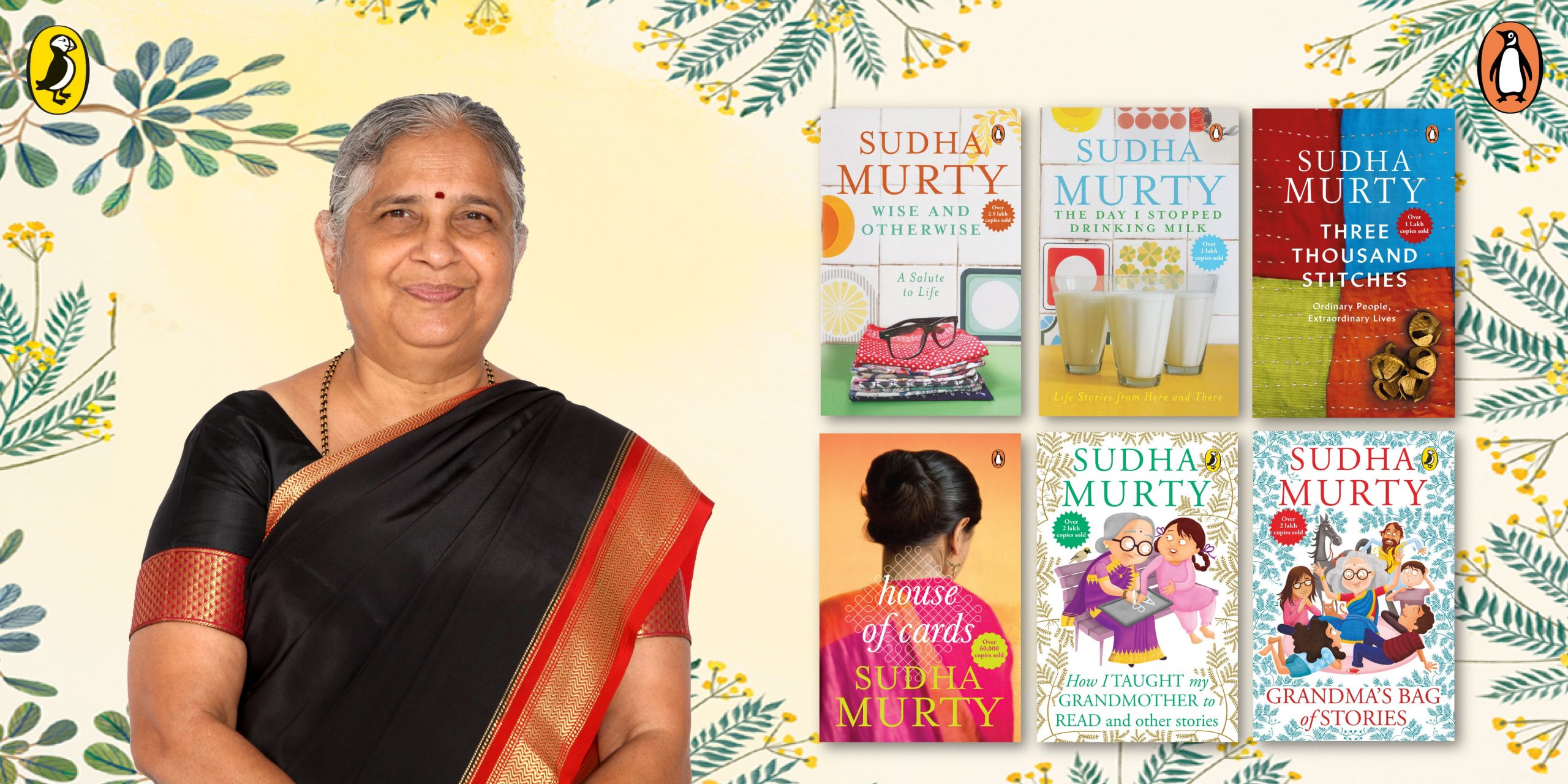
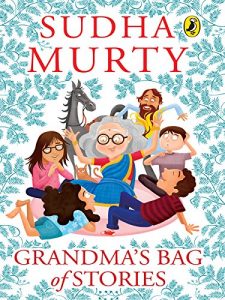
Today, we are celebrating 70 years of Sudha Murty by revisiting some of our favourite quotes by the writer, whose words deeply resonate with us and to whose books we often turn to for comfort and wisdom.
Three Thousand Stitches || Sudha Murty
‘We all lose a few battles in our lives, but we can win the war.’ ―Three Thousand Stitches: Ordinary People, Extraordinary Lives
The Day I Stopped Drinking Milk || Sudha Murty
‘I realized then that only diseases and not honesty and integrity are passed down to the next generation through genes.’
―The Day I Stopped Drinking Milk: Life Lessons from Here and There
How I Taught My Grandmother to Read and Other Stories || Sudha Murty
‘Doing what you like is freedom, liking what you do is happiness.’ ―How I Taught My Grandmother to Read and Other Stories
Wise and Otherwise || Sudha Murty
‘Life is an exam where the syllabus is unknown and question papers are not set. Nor are there model answer papers.’ ―Wise and Otherwise
Grandma’s Bag of Stories || Sudha Murty
‘We should always have some aim in life which we must try to achieve while being of help to others.’ ―Grandma’s Bag of Stories
House of Cards || Sudha Murty
‘Every woman values her freedom to choose— much more than her husband’s money or position.’; ― House of Cards
~
We have a feeling these quotes would make you wish you could delve further into the brilliance of Murty’s elegant prose. To discover more such gems by her, you can simply visit here.
The first characteristic that I gave Tara was that she’s great at Maths, and that’s very funny, because I’m not, and it’s like projecting my fantasy of being a maths whiz onto my character. I had this image in my mind of this super sharp, entrepreneurial girl, one of those people you can’t pull one over. She’s always on her feet, boys her age are afraid to mess with her, and all of this stems out of the fact that she’s always felt put down by her cousins and her uncle, so she’s always trying to over-prove herself. It’s justa. mixture of some things I wished I was, some things I am, and also a synthesis of different people I have met in my life.
What is it like being a young author in India today?
I am not sure, because I actually don’t meet that many writers my age. To me it is a way of life and I can’t imagine not doing it. It’s really nice as well because I think India is a country hungry for stories, but also full of them, so I feel like a middleman trying to capture these stories and narrating them. The not-so-nice part is that there is a huge expectation on writers to have a huge following, so I feel many writers focus on that, being ‘authorpreneurs’ which is a bit of a ridiculous term- as a writer, one’s job is to write a good story, everything else should be secondary.
Your first book, Once Upon a Curfew, was set during the Emergency, while Lallan Sweets is set in the 90s. Is the element of nostalgia deliberate and where does it come from?
Once upon a Curfew was a bit more serious because it was a severe, dangerous time. There were great challenges, and it needed a lot of research because it’s so far in the past for me. 90s, however, was a much more fun time- there was all this foreign culture coming in after 1991, candies and food that people before never dreamt of. There was more to watch than Doordarshan, this great Bollywood era of Shah Rukh Khan and Yashraj and the feeling that love conquers all- I think it was a very fun and optimistic time, unencumbered by the limitless possibilities that technology offers, rendering an innocence to the time. I grew up in the nineties, and simply sought to capture my childhood by making it a setting for Lallan Sweets.
Lallan Sweets || Srishti Chaudhary
Lallan Sweets also talks about themes of family and traditions. What do those words mean to you – as an individual and as an author?
Family of course is the most enriching part of being human- there are these four or five humans around you who drive you absolutely nuts, but at the same time are crazy about you. Nobody else in the world is more annoying and more loving, and that is the dichotomy of family- they are there for you all the time (even when you don’t want). Traditions are nice and fun, if taken lightly; if you ask me, traditions are meant to be flouted, just like rules are meant to be broken. Traditions stop being important the moment they curtail someone’s freedom. Lallan Sweets shows that a traditional magic ingredient may be passed down for generations- but in the end, it’s what you make of the journey that counts.
What was the process of writing Lallan Sweets like and what kind of research did you do for it?
I had to find out about different cities since the story goes across Mathura, Agra, Bareilly, Delhi, Chandigarh and Ludhiana. The most fun part was creating my own little small town, Siyaka, which was a mixture of several small towns I have seen, but mostly a manifestation of my own childhood memories, which although was in a big city, yet my world was very small, so it had the feeling of a small town. Since it’s set in the 90s I got to revisit the pop culture of the time, which was honestly so fun- going back to Hum Paanch, Filmi Chakkar, Shaktimaan- all these series we used to watch. The games were different, past times had nothing to do with a screen- research was super fun because it was going back to an old me, like a friend I had forgotten about.
What advice do you have for other young authors aspiring to break out in the publishing space today?
Just to focus on writing a good story, make your friends read it, get sound feedback, and pitch like there is no tomorrow. Never ever be afraid of rejection- I go by the philosophy ‘fail faster, succeed sooner’ 🙂
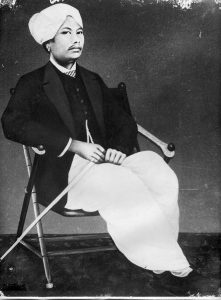
The Anglo-Manipuri War of 1891 was hotly debated for months in Australia, Singapore, Great Britain and the United States. Highly controversial in the unfolding of the events of 1891 was the execution of Crown Prince Tikendrajit of Manipur. Today, the 13th of August, the day of the execution, is observed as Patriots’ Day in Manipur.
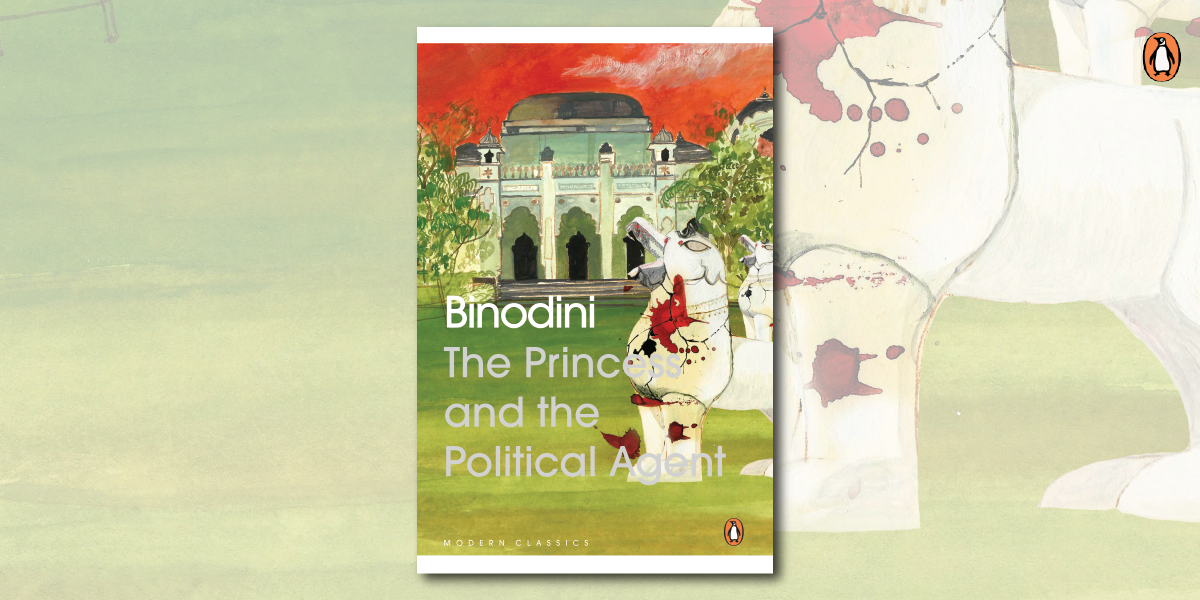
The day her uncle Crown Prince Koireng Tikendra Bir Singh was executed on the Mound of the Eunuchs by the royal market. Sanatombi saw this vividly before her eyes. It was the last time she saw her uncle. She leaned on a post and stood stock-still. She thought, ‘My uncle, hanged! Was the Indian who was also hanged for siding with the crown prince the Indian my uncle talked about? No, that was Niranjan the subedar. Then who was it? … … … Uncle, so was this what you meant when you said you would be back?’ Binodini, ‘The Princess and the Political Agent’.
Bir Tikendrajit
The Anglo-Manipuri War of 1891 was a highly controversial war that deeply convulsed the British Empire. In 1825, after seven years of occupation of the Tibeto-Burman kingdom of Manipur by the Burmese kingdom of Ava, the army of the East India Company and an army of Manipuri princes called the Manipur Levy joined forces to expel the Burmese. The subsequent Treaty of Yandabo of 1826 recognised the independence of Manipur.
The kingdom became a buffer state between the British and the Burmese. In 1834, under the regency of Crown Prince Narasingh, the Political Agency of Manipur was instituted by the British as a medium of communication between the East India Company and Manipur about the frontier between Manipur and Burma. The function of the Political Agent was dependent on the will and pleasure of the Maharaja of Manipur. British records described him as a British officer under Manipur surveillance.
The 1850s and the 1860s, however, saw a series of succession wars after the death of the popular and able Maharaja Narasingh in 1850. The instability led the British to provide a unilateral guarantee of protection of Manipur in 1865 by declaring Maharaja Chandrakirti Singh as an “Asiatic power” in alliance with the Queen of Britain.
In 1874 Chandrakirti and Lord Northbrook, Viceroy of India, reaffirmed the Anglo-Manipuri treaty of 1833. In 1886, the powerful and friendly Chandrakirti died and the British annexed Upper Burma as well. The weakened Manipur’s importance as a buffer state for the British came to an end. But the kingdom remained strategically important as it was located between Burma and Assam, two important possessions of the British Empire.
After the accession to the throne by Maharaja Surchandra, the eldest son of Chandrakirti, there was a palace coup in September 1890 led by his younger brother Prince Tikendrajit. The rebel faction deposed Surchandra and proclaimed Kulachandra, the next oldest brother, the king. Surchandra fled to Calcutta where he appealed to Viceroy Lord Lansdowne to reinstall him on the throne.
Instead, the British dispatched James Quinton, the Chief Commissioner of Assam, with an army to Manipur. His mission was to recognise Kulachandra as the king under the condition that they be allowed to arrest the coup leader Crown Prince Tikendrajit and deport him from Manipur. This aggressive imposition of British law in a sovereign state was rejected by the king, precipitating the Anglo-Manipuri War of 1891. The Anglo-Manipuri War was fought for over a month in the spring of 1891.
In its first phase, the British under the cover of night before daybreak attacked the palace of Manipur, in present day Kangla Fort. Defeated, they retreated but Manipuri forces surrounded the British Residency and five British representatives — Quinton, Frank Grimwood, the Political Agent in Manipur, and three other officers — emerged from the Residency under a flag of truce. A durbar was held with the king at Kangla Fort.
The British representatives were asked to surrender their arms. Upon their refusal, the officers were arrested and tried in the royal military court. The five were executed in Kangla Fort for their crime against the monarch. In the second phase of the war, the British invaded Manipur with three columns from the west, north and east. The Manipuris were defeated at the decisive Battle of Khongjom and in April, the British captured the palace of Manipur at Kangla Fort.
Maharaja Kulachandra and his brothers were deported to the British penal colony in the Andaman Islands. Queen Victoria tried to save Tikendrajit. She thought hanging him “would create very bad feeling in Manipur and in all India.”The Viceroy threatened to resign and refused to comply. He proceeded with the death sentence of Tikendrajit. The Crown Prince was hanged to death in August 1891. The deposed Surchandra died in British custody in Calcutta later that year.
The House of Parliament in Westminster debated the future status of Manipur. The British Raj declared that Manipur state was forfeited to the Crown, but decided to regrant it to a scion of another branch of the dynasty. Eight-year-old Churachand, great grandson of Maharaja Narasingh, was installed as the new king of Manipur in September 1891 by Political Agent Henry St. P. Maxwell. The Anglo-Manipuri War was hotly debated by the international community and remained for months on the front pages of newspapers in Great Britain, the US, and the crown colonies of Australia, New Zealand and Singapore.
Representatives of Great Britain had, in an act of defiance of the British Empire, been beheaded by the public executioner in the presence of a big crowd. The imperial British could not accept the capital punishment meted to their five officers by a small kingdom. They termed it as “treachery” and “rebellion”, and as an act of barbarism. The New York Times opined that the conflict was a serious and threatening blow to British prestige, for instead of being the result of a casual riot, the murder of the English representatives was a quasijudicial act on the part of the native government.
International opinion also held Quinton guilty of attempting to capture Tikendrajit and for attacking a sovereign state without a proclamation of war. The international community censured the subsequent execution: “They were soldiers, but they were taken from their prison, led to a scaffold and there hanged like ordinary murderers.”
Coming after the Sepoy Mutiny of 1857, native Indian newspapers condemned it as British colonialism, declaring the war as part of the general uprising against foreign rule in India.
Somi Roy is a film and media curator, cultural conservationist, and the translator of the works of his mother M.K. Binodini Devi. His latest translation, ‘The Princess and the Political Agent’, Binodini’s historical novel set in the years and events around 1891, is published by Penguin Random House India. Wangam Somorjit is a historian and the author of ‘The Chronology of Meetei Monarchs’ (2010) and ‘Manipur: The Forgotten Nation of Southeast Asia’ (2016). He lives in Imphal.
This article was first published in The Daily Guardian.
The Princess and the Political Agent || Binodini (Author), L. Somi Roy (Translator)
From stories of hope to the charm of friendships – our bookshelf for this month is all about life, love, companionship, and individual potential. We are sure everyone will have something to take away for those growing TBR piles!
Some Sizes Fit All
Some Sizes Fit All || Akhil Gupta
An oft-repeated dictum every time a company fails to replicate its past successes when introducing a new product or entering a new market is that one size does not fit all. Business gurus advise that every new situation, market and environment calls for a fresh approach and requires ‘unlearning’ what one might have learnt elsewhere, even if that had met with great success.
This is a must-read for anyone trying to build a robust and financially sound business.
The Victory Project
The Victory Project || Saurabh Mukherjea, Anupam Gupta
India’s economy has tripled in size over the past twenty years. And yet, the generation that propelled this growth is facing rising levels of stress and depression. Furthermore, the new generation entering the workforce today dreams big but faces a highly competitive work environment. How can both these generations fire on all cylinders and lead fulfilling lives?
The Victory Project is the ultimate guide to surviving and thriving in the professional and social domains, which are increasingly becoming tough, competitive, often cutthroat and deeply political.
Between Life and Death
Between Life and Death || Dr. Kashyap Patel
Dr Kashyap Patel is a renowned oncologist in the US who works with terminally ill cancer patients. Through him, we meet Harry, who, after a life full of adventure, is diagnosed with terminal lung cancer. As he stares death in the face, Harry leans on Dr Patel, an expert in understanding the process of death and dying.
His questions and fears are addressed through the stories of many other patients that Dr Patel has treated-from the young and vivacious to those who had already lived full lives, from patients who could barely afford their rent to those who had been wildly successful.
The Magic of Friendships
The Magic of Friendships || Shubha Vilas
Today, more than ever, friendship has become more important than any other relationship. The warmth and companionship that a good friend can provide is unmatched and each one of us craves for that special friend to whom we can unburden our heart or seek help from in troubled times.
Shubha Vilas discusses, in a simple and straight-forward manner, what is missing in our friendships today and the various scenarios that prevent people from making and maintaining good friends.
To You, With Love
To You, With Love || Shravya Bhinder
Right from their childhood, Sahil and Arya have been very different from each other. While Sahil is careless, carefree, ‘new money’ and ‘the brat’, Arya is too sensitive, reserved, shy and not easy to talk to. Slowly and very delicately their story progresses, and in comes love and things begin to take on a golden hue.
However, soon their life begins to unravel. Sahil learns why Arya is so private when the most damning truth about her life is revealed. And as soon as they cross that bridge and move on, another cruel blow threatens to tear them apart.
Running Toward Mystery
Running Toward Mystery || The Venerable Tenzin Priyadarshi
The Venerable Tenzin Priyadarshi’s profound account of his lifelong journey as a seeker. At its heart is a story of striving for enlightenment, the vital importance of mentors in that search, and of the many remarkable teachers he met along the way, among them the Dalai Lama, Archbishop Desmond Tutu, and Mother Teresa.
Running Toward Mystery is the beautiful story of a singular life compelled to contemplation, and a riveting narrative of just how exciting that journey can be.
You People
You People || Nikita Lalwani
The Pizzeria Vesuvio looks like any other Italian restaurant in London – with a few small differences. The chefs who make the pizza fiorentinas are Sri Lankan, and half the kitchen staff are illegal immigrants.
At the centre is Tuli, the restaurant’s charismatic proprietor and resident Robin Hood, who promises to help anyone in need. But when Tuli’s guidance leads them all into dangerous territory, and the extent of his mysterious operation unravels, each is faced with an impossible moral choice.
The Three-Box Solution Playbook
The Three Box Solution Playbook || Vijay Govindrajan, Manish Tangri
Along with Manish Tangri, a corporate dealmaker at Intel, Govindarajan goes deeper into the most crucial box of all: creating the future. Together they provide a repeatable process for companies to create new breakthroughs–from ideation through incubation to scaling.
Full of worksheets, exercises, tools, and examples, The Three-Box Solution Playbook is the guide you and your team need to drive innovation and growth–and continually revitalize your company.
Coronavirus: Leadership and Recovery (Insight Series)
Coronavirus: Leadership+Recovery || Harvard Business Review
Lead through the crisis and prepare for recovery.
As the Covid-19 pandemic is exacting its toll on the global economy, forward-looking organizations are moving past crisis management and positioning themselves to leap ahead when the worst is over. What should you and your organization be doing now to address today’s unprecedented challenges while laying the foundation needed to emerge stronger?
Think Like a Rocket Scientist
Think Like A Rocket Scientist || Ozan Varol
In this accessible and practical book, Ozan Varol reveals nine simple strategies from rocket science that you can use to make your own giant leaps in work and life — whether it’s landing your dream job, accelerating your business, learning a new skill, or creating the next breakthrough product. Today, thinking like a rocket scientist is a necessity. We all encounter complex and unfamiliar problems in our lives. Those who can tackle these problems — without clear guidelines and with the clock ticking — enjoy an extraordinary advantage.
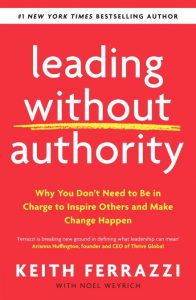
Leading Without Authority
Leading Without Authority || Keith Ferrazzi
The world of work is changing at an unprecedented rate leaving many organisations struggling to cope. At a time when constant innovation, agility, and speed often mean the difference between success and failure, we can no longer afford to waste time navigating the complex bureaucracy present in most companies.
Drawing on a decade of research and over thirty years helping CEOs and senior leaders drive innovation and build high-performing teams Ferrazzi reveals how we can all transform our business and our relationships with the people around us.
The Body
The Body || Bill Bryson
Full of extraordinary facts and astonishing stories The Body: A Guide for Occupants is a brilliant, often very funny attempt to understand the miracle of our physical and neurological make up.
A wonderful successor to A Short History of Nearly Everything, this new book is an instant classic. It will have you marvelling at the form you occupy, and celebrating the genius of your existence, time and time again.
Rodham
Rodham || Curtis Sittenfeld
‘Awfully opinionated for a girl’ is what they call Hillary as she grows up in her Chicago suburb. Smart, diligent, and a bit plain, that’s the general consensus. Then Hillary goes to college, and her star rises. At Yale Law School, she continues to be a leader- and catches the eye of driven, handsome and charismatic Bill. But when he asks her to marry him, Hillary gives him a firm No.
How might things have turned out for them, for America, for the world itself, if Hillary Rodham had really turned down Bill Clinton?
The Authenticity Project
The Authenticity Project || Clare Pooley
Julian Jessop is tired of hiding the deep loneliness he feels. So he begins The Authenticity Project – a small green notebook containing the truth about his life.
Leaving the notebook on a table in his friendly neighbourhood café, Julian never expects Monica, the owner, to track him down after finding it. Or that she’ll be inspired to write down her own story.
Redhead by the Side of the Road
Redhead by The Side of The Road || Anne Tyler
Micah Mortimer isn’t the most polished person you’ll ever meet. He is content with the steady balance of his life.
But then the order of things starts to tilt. His woman friend Cassia (he refuses to call anyone in her late thirties a ‘girlfriend’) tells him she’s facing eviction because of a cat. And when a teenager shows up at Micah’s door claiming to be his son, Micah is confronted with another surprise he seems poorly equipped to handle.
Out-Innovate: How Global Entrepreneurs – from Delhi to Detroit – Are Rewriting the Rules of Silicon Valley
Out-Innovate || Alexandre Lazarow
Startups have changed the world. In the United States, many startups, such as Tesla, Apple, and Amazon, have become household names. The economic value of startups has doubled since 1992 and is projected to double again in the next fifteen years.
For decades, the hot center of this phenomenon has been Silicon Valley. This is changing fast. Thanks to technology, startups can now take root anywhere–and they are, from Delhi to Detroit to Nairobi to Sao Paulo.
With rich and wide-ranging stories of frontier innovators from around the world, Out-Innovate is the new playbook for innovation – wherever it has the potential to happen.
FAKE: Fake Money, Fake Teachers, Fake Assets: How Lies Are Making the Poor and Middle Class Poorer
Fake || Robert Kiyosaki
Robert kiyosaki ― author of the #1 personal finance book of all time ― has built a legacy around simplifying complex and often-confusing subjects like money and investing. He continues to challenge conventional wisdom and asks the questions that will help readers sift through today’s information overload to uncover ways to assess what’s real… and what isn’t. And use truth and facts as a foundation for taking control of their financial lives.