Publish with Us

Follow Penguin

Follow Penguinsters

Follow Penguin Swadesh

How were you parented, and what does it mean?

Raageshwari Loomba Swaroop, through childhood anecdotes, personal experience and thorough research, emphasizes the need for conscious, compassionate and mindful parenting so that the little ones can thrive and grow in her book, Building a Happy Family.

We’re curious. How were you parented? Answer these questions to find out what category you’d fall into!

Pandemic in the Times of Social Media

 ‘Social media and technology are not agents of change. They are just tools. We the connected people are the agents of change.’

—Stuart J. Ellman

In The Coronavirus: What You Need to Know about the Global Pandemic¸ authors Dr. Swapneil Parikh, Maherra Desai, and Dr. Rajesh Parikh recall a haunting video of Wuhan, wherein a desolate woman bangs a gong in her balcony and cries: ‘There’s nothing I can do, please can someone come help us. Help! Somebody please come!’ Even though it was deleted within a day, it managed to mobilize and alert a huge population of the crisis.

Since 2004, following the inception and launch of Facebook, human interaction has changed drastically. The digital age has played a significant role in generating information, awareness, responses and collective strategies for this pandemic. In a time where it is more necessary than ever for the world to stay connected, social media and the digital age have risen to the occasion.


Personal Stories and Unofficial Reports: Alerting the World from China

In the Chinese province of Wuhan, where the epicenter of the virus lies, Ophthalmologist Dr. Li Wenliang tried to warn his groups on WeChat about a possible outbreak on 30th December 2019. It garnered a lot of traction across social media channels, which resulted in him reprimanded. He eventually died of Covid-19 in early February; and was hailed as one of the earliest whistleblowers in China.

As the crisis in China unfolded, social media revealed its world-shaping power by enabling a decentralized record of humanity and human interaction accessible to anyone with an Internet connection. This record is maintained on smartphones in pockets, computers in bedrooms and massive data centres all over the world. In China, authoritarian leaders have tried desperately to censor and control this record. However, their attempts have only revealed that while an individual’s truth is powerful, a society’s collective truth is unstoppable.
Through social media and many unsung heroes, we learnt of the true scale of the outbreak. Users shared horrific stories, images and videos in WeChat groups and on Weibo. The videos depicted heartrending, heart-breaking scenes of patients pleading for help and families crying and grieving over their dead. Social media posts shared personal stories of what it was like to live in the epicentre of the outbreak. In one video, a lady in her forties, without a mask, without her face censored, shielded only by her courage, cried in desperation ‘Nobody cares about our lives, ordinary people’s lives. You cannot get medicine, even if you are rich. You cannot get a hospital bed, even if you have money.’

Other users posted horrific scenes of Chinese law enforcement teams in hazmat suits dragging people from their homes and locking them in small boxes loaded on trucks. No one knows where they were taken. Videos depicted trucks, aerial vehicles and numerous workers spraying roads and pavements with disinfectant. A once-busy city looked like a deserted ghost town with empty streets and shuttered stores.

Besides keeping the world informed of the experience of the people of China through the outbreak, social media provided organizations like the WHO and CDC actionable data about the outbreak. According to the WHO, over 60 per cent of initial outbreak reports were from ‘unofficial informal sources’. Were it not for social media, it is possible that the Chinese government would have been less forthcoming with information about the outbreak.

The Coronavirus: What you Need to Know about the Global Pandemic|| Dr Swapneil Parikh , Maherra Desai , Dr Rajesh Parikh

Enabling Research, Novel Tools, and Real-time Information

During the COVID-19 outbreak, social media platforms have been extensively used to access accurate information from the WHO and CDC. News outlets have used Twitter and Facebook to keep users informed of the latest statistics about the disease. YouTube has provided access to a tremendous number of excellent videos about the virus and the disease.

The CDC routinely tracks tweets and Facebook posts for signs of a disease outbreak in various parts of the world. Using social media, they follow digital epidemiology to better understand the disease. Google tracks search trends; a spike in specific search terms can detect public health concerns or epidemics.

Social media platforms also provide scientists and researchers with new tools to access new data sets and to share information in real time. A team at the Center for Systems Science and Engineering (CSSE) at Johns Hopkins University built an interactive dashboard to visualize and track reported cases of the COVID-19 in real time. They obtained their data from DXY.cn, a Chinese healthcare social network.

Information available on social media has also enabled a new era of digital epidemiological research. Researchers at the US National Institute of Health used a new approach to study the epidemiology and progression of the COVID-19 outbreak. The novelty of their approach was the reliance on social media and news reports for data.


The Other Side: Myths and Misinformation

During the initial phase of the COVID-19 outbreak, there was little factual information. Social media content creators churned out half-baked theories and blatant falsehoods. As has been observed in past outbreaks, the absence of reliable information coupled with an increasing death count results in panic, confusion and the suspension of critical thinking and fact-checking abilities.

By February 2020, this reached such a crescendo that the WHO declared a ‘massive infodemic’ of COVID-19 misinformation. The WHO leveraged the same tools causing the infodemic to quell it. Further, these tools came in handy for WHO to make information more accessible to the public at large. It created simple infographics and content and shared accurate information on their social media handles. social networking platforms including Facebook, YouTube, WhatsApp, Weibo, Twitter and TikTok, took it upon themselves to clean up their sites. They used fact-checking agencies and AI-based tools to screen misinformation, which was deleted, and redirected visitors to more reliable and accurate information sources.

*

These times are unprecedented and have called for real-time information and communication across the globe for strategy, safety and survival. Even though there have been downsides to social media, in terms of inducing panic (or false sense of safety) through misinformation and propaganda – the larger world has definitely benefited from the accessibility of information social media has been able to present.

On a personal and human level – social media and digital platforms have also helped us stay connected. Community and human support have not been hindered due to isolation and quarantine strategies. Although the future is still uncertain – survival, to a large extent, has been made possible through social media.

The Coronavirus: What You Need to know about the Global Pandemic brings together medical experts Dr. Swapneil Parikh, Dr. Rajesh Parikh, and Maherra Desai, to present a timely and reliable narrative on the Covid 19 pandemic and possible ways forward.


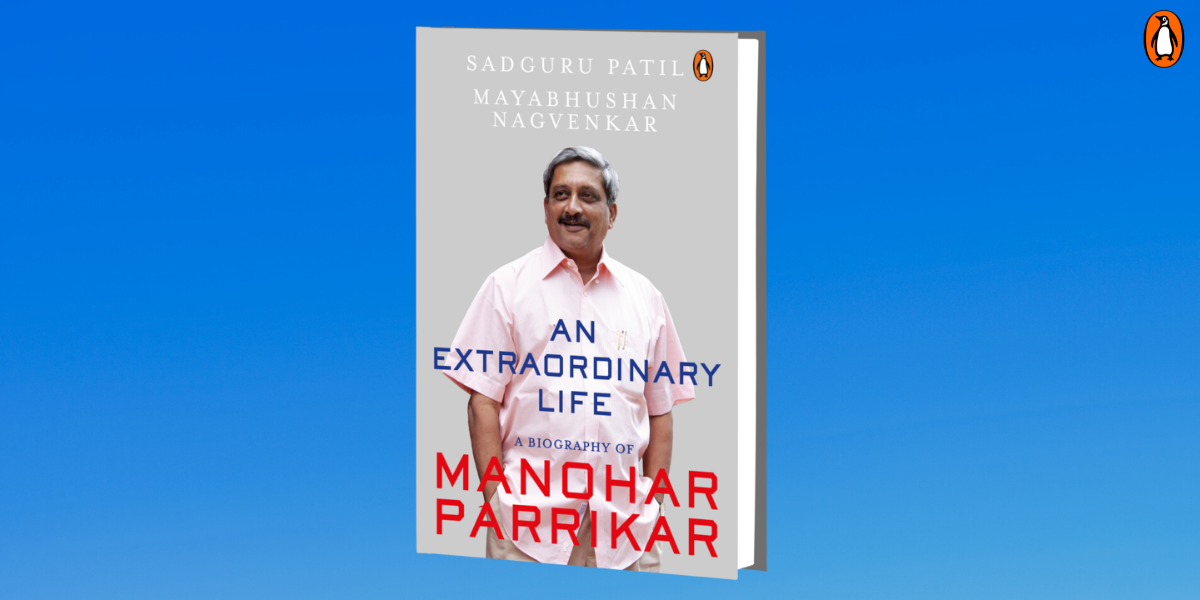
Anecdotes from An Extraordinary Life

Over the last two decades, the exploits of one man, an IIT-Bombay alumnus, changed the way mainstream India looked at Goa and the political goings-on in the country’s smallest state.

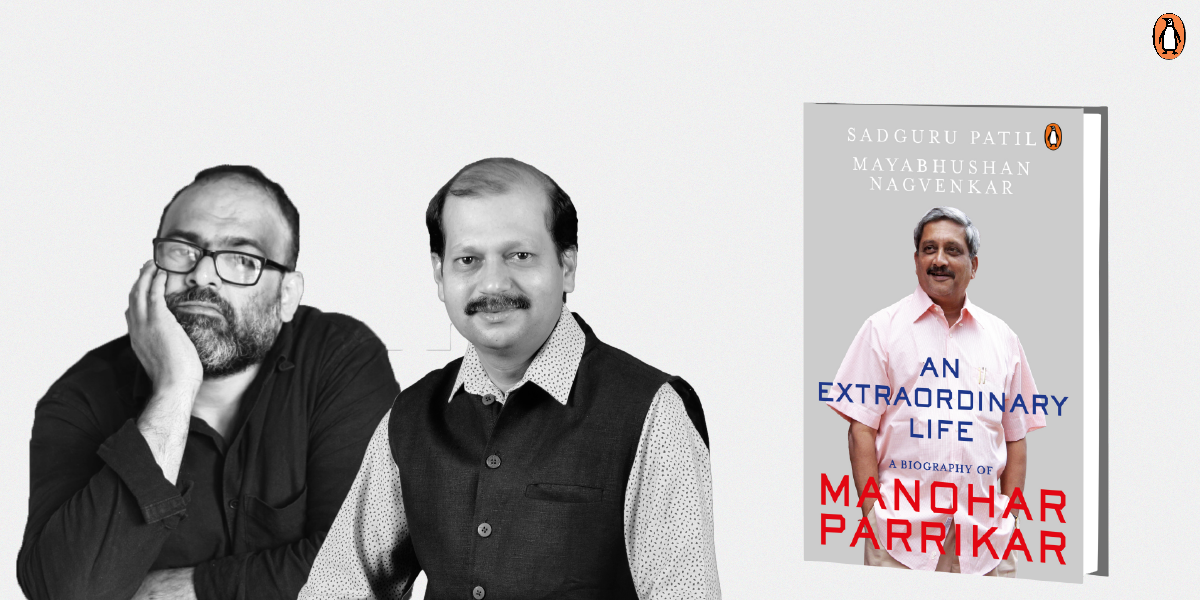
An Extraordinary Life by Sadguru Patil and Mayabhushan Nagvenkar traces the life and times of Manohar Parrikar through the informed voices of his relatives, friends, foes, bureaucrats and IIT contemporaries. The daily battles of a gifted individual are brought to the fore as he encounters love and vices.

Find an excerpt below that narrates an anecdote from his childhood and family that made for one of the many moments defining Mahor Parrikar’s personality as an individual and politician.

*


Maths, Masti and Mapusa

Falling into trouble isn’t rare when one is young. But even at the age of eight, Manohar had the temperament to find a way out of it. Avdhoot, his elder brother, had seen Manohar emerge from several sticky situations with little more than some quick thinking. Avdhoot was nine, a year older than Manohar, when the latter fell into a deep, dry rainwater ditch near their ancestral house in Parra village. The gutter was deep enough to make Manohar’s efforts to climb out of it futile. Avdhoot was in a state of panic too. He could not pull Manohar out, because he did not have enough body strength to lift his younger brother up.

Where their collective brawn failed, Manohar thought of a plan.

Like in many rural homes at the time, the Parrikar household also reared a few head of cattle, mostly cows. There was one particular calf whom the Parrikar siblings called Mangala. She was particularly adored by Manohar and Avdhoot. There was also a greedy bull named Diglo who would always try to hog and gorge a major share of the fodder. During dry weather spells, their father, Gopalkrishna, would stock feed, mostly bundles of dry straw, which were stacked together near the house.

‘Manohar told me to fetch at least five bundles of straw. They weren’t too heavy, so I brought them one by one and, on his direction, threw them into the gutter. He piled them one on top of the other and managed to climb out,’ Avdhoot recalled.

The next morning, the telltale signs—dry grass strewn along the gutter bed—were not missed by other members of the family, but they smiled and ignored them.

With time and maturity, Parrikar the politician learnt not to leave behind such telltale signs.

But when he was born at Mapusa’s Dr Olavo Ribeiro Hospital, at 4.04 a.m. on 13 December 1955, Kaiee, the elderly mother of Manohar’s cousin Kashinath, did see signs of greatness, according to Parrikar’s elder sister Lata.

‘Kaiee told my mother that the boy will bring laurels to the Parrikar household,’ she said.

For an infant who would grow up to sting his political opponents with his acerbic wit and sharp intellect, Parrikar was born under the Scorpio star sign, while his nakshatra was Anuradha, symbolized by a blooming lotus. Kaiee, one must say, was not too off her mark, because under Parrikar’s watchful care, the lotus, the symbol of BJP, did eventually bloom in Goa.


The book narrates the daily battles of a gifted individual as he encounters love and vices. But more importantly, it showcases his rise in politics from the son of a grocery store owner in a nondescript town, a sanghachalak in Mapusa town, an Opposition MLA and leader, to a chief minister (on multiple occasions) and, finally, to a defence minister.

How you can be Inspired by Captain Vijayant Thapar, a Young Soldier

“As time passed [at the Indian Military Academy], it became clear that his apparent outspoken nature, which initially was mistaken for arrogance, was anything but that. He was genuine and not afraid to speak his mind. He had all the qualities of an ideal GC—fitness, enthusiasm and vigour. He did not hesitate to take a stand. His optimism and cheerfulness were infectious, and these, along with his never-give-up attitude, made him endearing. No matter what his fri

ends asked him, Robin never said, ‘I don’t know.’ Mostly he did know. And even if he didn’t, he tried to figure it out.”

Here are some traits of Captain Vijyant,who was only twenty-two when he was martyred in the Kargil War, from his biography, Vijyant at Kargil writtenby his father and Neha Dwivedi.


He loved adventure (and the outdoors)

“Robin was growing up to be a warm, friendly, ever-curious and outgoing child. He was now a happy three-year-old who was always seeking adventure.”

“When made to study, he would ask his father to read to him instead. Being inherently outdoorsy, the need to absorb bookish information was lost on him. He learnt far better by experimenting and exploring.”

*

He was self-sufficient

“On the nights his parents were busy and couldn’t read to him, Robin would pick up one of his books and flip through the pages himself till he fell asleep.”

*

He was emotionally mature

 “At six, Robin could feel the kind of emotions that were lost on people much older than him.”

*

He liked to teach others what he already knew

“Having learnt how to cycle at an early age, Robin now thought himself to be an expert and fully equipped to teach other children.”

*

 He adapted well to situations

Robin was seven years old then. Learning to adapt to new cities and making new friends came naturally to him. Still a lover of the outdoors, he was happiest when out in the open, playing his favourite games.”

*

He wasn’t easily offended

“One time, when all the boys were chatting among each other, including Robin and Parag, it was revealed that both Robin and his little brother were named after birds. The boys found this funny and started teasing Robin about it. He simply laughed along and did not let it get to him. He did not fight back or hold a grudge against anyone. Parag couldn’t help but admire this quality in someone his own age.”

*

Robin took great pleasure in the success and achievement of his friends and loved ones.

“He didn’t have a jealous bone in his body. One day, he came home jumping with joy because Donny had stood third in class.”

*

He was a responsible boy, even at age 10

“Running with his big brother was a moment to cherish for Birdie. Robin, too, would be careful not to race and would pace himself instead. He was aware that his younger brother would emulate him and so would act accordingly in his presence. Mamoon had an uneven ground, thorny shrubs, plenty of insects and birds, even small animals waiting to be discovered.”

*

He very happily indulged his younger brother (by six years)

“Instead of competing with him, he would let him win. He always thought of Birdie as his responsibility, and would always be available to solve his problems or give him gentle pushes when he needed them.”

*

He was assertive

“Robin always tried to do everything better than the rest. Often, he would be the one asking extra questions, eliciting silent groans from the rest of the class. He was aware of the sentiment, but his focus was rock solid. He was assertive and did not hesitate to take a stand, a quality mostly found in leaders.”

*

He had many admirable qualities

“He had great qualities like consideration, concern and kindness for others. But he was also humble. He felt embarrassed talking about his achievements. With a shy smile, he would brush aside any compliment given to him.”

*

He was faithful to his beliefs

“Robin had immense faith in his beliefs and once he had made up his mind about something, there was little one could do to change it.”

*

He was always setting an example for others

“His spirit often motivated others around him. He took immense pride in his turnout, and so his kits and rigs would always be spick and span and ready. He also always had a spare set of web equipment, cleaned and polished, which he gladly lent to his peers. He even kept his cabin shipshape, setting an example for others.”

Vijyant At Kargil: The Biography of A War Hero || Col V.N. Thapar, Neha Dwivedi

The Boy, The Mole, The Fox and The Horse – An Excerpt

Enter the world of Charlie’s four unlikely friends, discover their story and their most important life lessons.

The boy, the mole, the fox and the horse have been shared millions of times online – perhaps you’ve seen them? They’ve also been recreated by children in schools and hung on hospital walls. They sometimes even appear on lamp posts and on cafe and bookshop windows. Perhaps you saw the boy and mole on the Comic Relief T-shirt, Love Wins?

Here, you will find them together in this book of Charlie’s most-loved drawings, adventuring into The Wild and exploring the universal thoughts and feelings that unite us all.


Read below an excerpt from the book:


The Boy||The Mole||The Fox and The Horse, Charlie Mackesy


Get your copy of The Boy, The Mole, The Fox and The Horse here 🙂

Books to Understand the Indo-China Relationship Better

There has been constant conflict on the Indo-China frontier for many years. As Indian troops face a standoff with the Chinese along the Indo-Tibetan border, it’s a good time to better understand the genesis of this conflict between the two countries.

We’ve put together a list of books by various authors to help you understand this relationship better.


What China and India Once Were – The Pasts That May Shape the Global Future

In the early years of the twenty-first century, China and India have emerged as world powers. In many respects, this is a return to the historical norm for both countries. For much of the early modern period, China and India were global leaders in a variety of ways. In this book, prominent scholars seek to understand modern China and India through an unprecedented comparative analysis of their long histories. Using new sources, making new connections, and reexamining old assumptions, noted scholars of China and India pair up in each chapter to tackle major questions by combining their expertise.

*

Super Economies: America, India, China and the Future of the World

With its demographic advantage, a surplus of skilled labour, a potentially rising GDP, a strategic geographic location and a new, decisive political leadership, India has every chance of becoming the third Super Economy after the USA and China. Drawing on history, current affairs and political and economic analyses, Super Economies projects how India can soon become a world leader and help secure a future of peace and prosperity for all.

*

India Turns East: International Engagement and US-China Rivalry

India Turns East tells the story of India’s long and difficult journey to reclaim its status in a rapidly changing Asian environment increasingly shaped by the US–China rivalry and the uncertainties of US commitment to Asia’s security. The Look East policy initially aimed at reconnecting India with Asia’s economic globalization. As China became more assertive, Look East rapidly evolved into a comprehensive strategy with political and military dimensions.

*

India & China: The Battle Between Soft & Hard Power

India and China focuses on these two countries, both in the middle stages of market-led development and grappling with the problem that societies have faced since the dawn of capitalism- reconciling equity with the claim that free markets are not just efficient but just. The author charts out trajectories for both China and India.

*

A Great Clamour: Encounters with China and its Neighbours

Full of unexpected ideas and fresh insights, A Great Clamour is an extraordinary account of contemporary Asia from one of our finest essayists. Journeying through China, Tibet, Mongolia, Taiwan, Indonesia, Malaysia and Japan, Mishra explores the contradictions and dynamism of modern-day China, simultaneously drawing a vivid portrait of its neighbours and the shadow the restless giant casts over its stage.

*

The Great Game in the Buddhist Himalayas: India and China’s Quest for Strategic Dominance

The Great Game in the Buddhist Himalayas includes several unknown insights into the India-China, India-Tibet and China-Tibet relationships. It reads like a geopolitical thriller, taking the reader through the intricacies of reincarnation politics, competing spheres of sacred influence, and monastic and sectarian allegiances that will keep the Himalayas on edge for years to come.

*

Fateful Triangle: How China Shaped US-India Relations During the Cold War

A key question today is whether India and the United States can or should develop ever-closer ties as a way of countering China’s desire to be the dominant power in the broader Asian region. In Fateful Triangle, Tanvi Madan argues that history shows that such a partnership is neither inevitable nor impossible. Fateful Triangle updates our understanding of the diplomatic history of US-India relations, highlighting China’s central role in it, reassesses the origins and practice of Indian foreign policy and non-alignment, and provides historical context to the interactions between the three countries.

*

Running with the Dragon: How India Should Do Business with China

Running with the Dragon seeks answers about what Chinese companies are likely to do next to expand in the Indian market under different scenarios. Things are likely to change as the government is keen on removing stumbling blocks for Chinese investments amidst a decelerating economy. Indian businesses in different sectors will have to decide if they want to fight the new competition or collaborate with rivals. The book reflects the experience of over forty Indian and Chinese businesspeople, officials and experts besides the author’s own analysis.

*

Belt and Road: A Chinese World Order

China’s Belt and Road strategy is acknowledged to be the most ambitious geopolitical initiative of the age. Covering almost seventy countries by land and sea, it will affect every element of global society from shipping to agriculture, digital economy to tourism and politics to culture. Most importantly, it symbolizes a new phase in China’s ambitions as a superpower: to remake the world economy and crown Beijing as the new centre of capitalism and globalization.
Bruno Macaes traces this extraordinary initiative’s history, highlighting its achievements to date and its staggering complexity.

*

The China – Pakistan Axis: Asia’s New Geopolitics

China and Pakistan, India’s two most powerful neighbours, share an ‘all-weather’ relationship that is as reputed for its depth as it is layered in secrecy. Based on years of research and interviews, Andrew Small has put together the story of China and Pakistan’s growing, and in parts troubled, friendship.
Essential reading to understand the economic, political and security map of Asia, especially India’s neighbourhood.

*

The Noodle Maker of Kalimpong: My Untold Story of the Struggle for Tibet

For over half a century, noodlemaker Gyalo Thondup has been a familiar figure in the Himalayan hill town of Kalimpong. But it was not until 2010 that the townsfolk discovered his true identity: Gyalo Thondup is none other than the older brother of the Dalai Lama and his special envoy, a trusted interlocutor between Tibet and foreign leaders from Chiang Kai-shek to Jawaharlal Nehru, Zhou Enlai to Deng Xiaoping. Indeed, only the Dalai Lama himself has played a more important role in the political history of modern, tragedy-ridden Tibet.

Now, for the first time, Gyalo Thondup is prepared to tell his story.

*

An Officer and His Holiness

In 1959, the Dalai Lama escaped from Tibet into India, where he was granted refuge. Few know about the carefully calibrated operation to escort him safely from the Indian border. An Officer and His Holinessnarrates how political officer Har Mander Singh successfully managed this assignment in the North East Frontier Agency (NEFA) with limited resources, and despite a treacherous terrain and external threats.

Har Mander Singh kept careful diary entries of the period, which have been reproduced for the first time in this book.

*

Staggering Forward: Narendra Modi and India’s Global Ambition

Analysing Prime Minister Modi’s foreign and military policies in the context of India’s evolving socio-political and economic milieu, this book offers a critical perspective that helps explain why India has not progressed much towards becoming a consequential power. Argumentative and thought-provoking, Staggering Forward is a must-read to understand India’s foreign and national security policies since 2014.


Raja Rao Contemplates the Deeper Significance of India

First published in 1996 when he was eighty-eight years old, The Meaning of India is a selection of nearly six decades of Raja Rao’s non-fiction. It is an audacious contemplation on the deeper significance of India. A combination of fables, journeys, discussions and meditations, it advances the view that India is not just a geographical entity, or even a civilization-state. India is, above all, a metaphysic, a way of being and regarding the self and the world.


How does the book use fables, journeys, discussions and meditations? Read these excerpts from the book to find out:


India—A Fable

‘Your country—you get there by sailboat?’ he asked.

I said, ‘No. One goes there on steamers. One goes night and day, and for fifteen days. Then one comes to India.’

‘India,’ he repeated. He left the camel on the gravel. He sat by the pool, thinking.

‘And you? Have you a princess?’

‘Yes,’ I said. ‘I even have two. They are not princesses. They are goddesses. One on my right hand and one on my left hand.’

‘One on your right hand, and one on your left hand. They are goddesses.’

‘Yes.’

‘What is a goddess, a goddess, Monsieur le Prince?’


Journeys (From ‘When Malraux Meets Jawaharlal Nehru’)

Twenty-two years later, in the autumn of 1958, there was a telephone call from André Malraux. I had just come back from Trivandrum (I spent about six months in Trivandrum and six months in Paris every year). Malraux said, ‘I have today, in fact only a few moments ago, been asked by General De Gaulle to head the first diplomatic mission abroad, of his new government. And where do you think it is going to—to India. Since it is you, mon ami, who first made me meet Pandit Jawaharlal Nehru, I want you to accompany me on this historic visit.


Discussions (From ‘My First Meeting with Pandit Jawaharlal’)

‘Romain Rolland spoke to me about you,’ he said after a long silence as we were walking back to the pension. I still remember the sun was completely unaware of himself and the trees stood inordinately still. They seemed aching for a breath, a touch, an efflorescence of the noncontingential. Everything seeks its own death and discovery, for suchness alone is meaning.

‘Oh, did he?’ I mumbled from nowhere.

‘Yes, and he said you knew your France well.’

‘I suppose it’s because I recognize my India so deeply, Panditji. With Indian eyes all is meaning.’

‘Do you always speak like this?’

‘I always speak to the tree,’ I answered. I did not mention the Bodhisattva.


Meditations (From ‘Look, the Universe Is Burning!’)

Is man the universe’s centre or Truth the centre of man?—that’s the only real question. Or, may it be the truth of the universe and the truth of man coincide, cancelling each other out, as it were, taking us vertically to the supreme non-dual affirmation. The non-dual is also the non-causal. The great Vedantic philosopher Gaudapada (fourth century ad?) says, cause and effect are like proving the father is the son of the son, or the son is the father of the father, thus there is neither father nor son. 


These are some excerpts from Raja Rao’s The Meaning of India. To read them all, check out the book here: The Meaning of India

What to Read this Eid

Eid Mubarak, everyone! We wish you and your family lots of positivity and happiness. To be a part of the joy, we’ve put together a list of books you might like to take a look at today!

Prophet of Peace: The Teachings of Prophet Muhammad

Maulana Wahiduddin Khan, one of the most eminent scholars of Islam in the contemporary Muslim world, draws on original Arabic sources to correct misconceptions about Islam’s early history and to establish that the revolution brought about by the Prophet was entirely bloodless. In fact, the Prophet Muhammad formulated an ideal ideology of peace which he faithfully and rigorously put into practice. In his time, there were some minor skirmishes, but no full-fledged wars.

*

Indica: A Deep Natural History of the Indian Subcontinent

Researching across wide-ranging scientific disciplines and travelling with scientists all over the country, biochemist Pranay Lal has woven together the first compelling narrative of India’s deep natural history, filled with fierce reptiles, fantastic dinosaurs, gargantuan mammals and amazing plants. This story, which includes a rare collection of images, illustrations and maps, starts at the very beginning—from the time when a galactic swirl of dust coalesced to become our life-giving planet—and ends with the arrival of our ancestors on the banks of the Indus. Pranay Lal tells this story with verve, lucidity and an infectious enthusiasm that comes from his deep, abiding love of nature.

*

Makers of Modern India

In Makers of Modern India you will see caste, religion, colonialism, the economy language, gender, nationalism, democracy and secularism in a historical context. The book is a treat for those who are curious about the formation of the multifarious collection of people, ideas and religions in India.

The author shows you how the lack of unison in the opinions of the makers of India complemented each other and resulted in the finished product called India.

*

Collected Short Stories 

Ruskin Bond wrote his first short story, ‘Untouchable’, at the age of sixteen, and has written memorable fiction ever since. He is famous not only for his love of the hills, but for imbuing the countryside with life and vibrancy through moving descriptions. The simple people who inhabit his stories evoke sympathy and laughter in equal measure. This wonderful collection of seventy stories, including classics like ‘A Face in Dark’, ‘The Kitemaker’, ‘The Tunnel’, ‘The Room of Many Colours’, ‘Dust on the Mountain’ and ‘Times Stops at Shamli’, is a must-have for any bookshelf.

*

Absolute Khushwant

Absolute Khushwant covers Khushwant Singh’s life since his birth in 1915 in the pre-partitioned Punjab thereby making him a witness of the various political, economic and social changes that the nation had undergone prior to independence and thereafter. Being gifted with a unique style of writing, Khushwant Singh captured the many of the historical events of modern India in his writings. Not only that, Khushwant Singh was a well read man on religion and had at times produced works of highly volatile and controversial issues.

*

Pax Indica

The book Pax Indica: India and the World of the 21st Century, written by an Indian author Shashi Tharoor, is an emphasis on the Indian diplomacy and its role in the global world. The book gives us an insightful and an interesting coverage of India’s foreign policies and how the policies affect the common man. It also explains that in Indian politics why policies are important to an India focused on domestic transformation. Shashi Tharoor surveys and examines the major International relationships, offers suggestion about the country’s need for the required platform, along with the country’s responsibilities to maintain its position globally, making his book an informative text to the people of the world.

*

Sea of Poppies 

A motley array of sailors and stowaways, coolies and convicts is sailing down the Hooghly aboard the Ibis on its way to Mauritius. As they journey across the Indian Ocean old family ties are washed away and they begin to view themselves as jahaj-bhais or ship brothers who will build new lives for themselves in the remote islands where they are being taken. A stunningly vibrant and intensely human work, Sea of Poppies, the first book in the Ibis trilogy confirms Amitav Ghosh’s reputation as a master storyteller.

*

The Mirror of Beauty

It is the sunset of the Mughal Empire. The splendour of imperial Delhi flares one last time. The young daughter of a craftsman in the city elopes with an officer of the East India Company and so we are drawn into the story of Wazir Khanam: a dazzlingly beautiful and fiercely independent woman who takes a series of lovers, including a Navab and a Mughal prince and whom history remembers as the mother of the famous poet Dagh. But it is not just one life that this novel sets out to capture: it paints in rapturous detail an entire civilization.

*

In an Antique Land

Packed with anecdote and exuberant detail, In an Antique Land provides magical and intimate insights into Egypt from the Crusades to Operation Desert Storm. It exposes the indistinguishable and intertwining ties that bind together India and Egypt, Hindus and Muslims and Jews. By combining fiction, history, travel writing and anthropology, to create a single seamless work of imagination, Ghosh characteristically makes us rethink the political boundaries that divide the world and the generic boundaries that divide narratives.

*

Notes of a Dream: The Authorized Biography of A.R. Rahman

Who really is A.R. Rahman? We know the music. But do we know the man? For the first time, a nation’s pride-winner of National Film awards, Oscars, Grammys and hearts-opens up about his philosophies: hope, perseverance, positivity and love. From his early days as a composer of advertisement jingles to his first big break in feature films, from his keenness to integrate new technology with good old-fashioned music scores to the founding of his music school, from his resounding entry on to the international stage to his directorial debut, from his philanthropy to his inner life, Notes of a Dream captures Rahman’s extraordinary success story with all the rhythm and melody, the highs and lows, of a terrific soundtrack by the man himself.

*

The Complete Book of Muslim and Parsi Names

On the day of Qayamat you will be called by your names and the names of your fathers. Therefore keep good names.’―The Prophet The Complete Book of Muslim and Parsi Names is a practical guide for choosing the perfect name for your child. The result of several years of research; it is an erudite and thorough compilation of approximately 30;000 names taken from ten languages. With the actual and the construed meanings and the history or mythology associated with the name given against each entry; this is a precise and invaluable sourcebook for scholars and lay readers alike.

*

Siyasi Muslims: A Story of Political Islams in India

How do we make sense of the Muslims of India? Do they form a political community? Does the imagined conflict between Islam and modernity affect the Muslims’ political behaviour in this country? Are Muslim religious institutions-mosques and madrasas-directly involved in politics?Are Muslims truly nationalists? Or do they continue to remain just an ‘other’ in India?

While these questions intrigue us, we seldom debate to find pragmatic answers to these queries.

*

Ghalib: A Thousand Desires 

In this lively, witty and illuminating account, Ghalib emerges from these pages as a man of his time but also one who looms large over history.
Raza infuses his research with just the right amount of anecdote and trivia, evoking Ghalib as an outspoken genius, a game-changer who never shied away from aiming a witty barb (or three) at his rivals. Moreover, Ghalib also lived in a crucial age that saw the end of Mughal rule and the destruction of his beloved Delhi.

*

The Colours of My Heart: Selected Poems

Faiz Ahmed Faiz is widely regarded as the greatest Urdu poet of the twentieth century and the iconic voice of a generation. Although he is best remembered for his revolutionary verses that decried tyranny and called for justice, his oeuvre also extended to scintillating, soulful poems of love. In this remarkable selection of Faiz’s most memorable poems and ghazals, readers will be able to experience a new dimension of the great poet’s genius.

*

Uparwali Chai: The Indian Art of High Tea

The ultimate teatime cookbook, with an Indian twist

From Saffron and Chocolate Macarons to Apricot and Jaggery Upside Down Cake to a Rooh Afza Layer Cake, Uparwali Chai is an original mix of classic and contemporary desserts and savouries, reinvented and infused throughout with an utterly Indian flavour. A beautifully curated set of recipes full of nostalgic flavours and stories, this is a book every home cook will be referring to for generations to come.

*

Dastan-e-Ghadar: The Tale of the Mutiny

Zahir Dehlvi, an accomplished poet and young official in the court of Bahadur Shah Zafar, lived through the cataclysmic 1857 Revolt that changed the course of history, marking the end of Mughal dominion and the instatement of the British Raj.
Dehlvi’s memoir, written on his deathbed, not only chronicles the fading glory of the Mughal court and his entry into a vanishing way of life, but also, most importantly, pivots on the horrifying spectacle of the Revolt and its aftermath-from the violent siege of Shahjahanabad to the bloody reprisals that followed.

What it take to Build a Happy Family

You can’t have a happy family unless you’re happy yourself. Raageshwari Loomba, an award-winning speaker on mindfulness, shows us how to create an excellent atmosphere for the entire family to thrive in. Her relateable style is coupled with real-life examples, such as that of Albert Einstein, who couldn’t speak till the age of four and was a poor student. His parents encouraged him with love and allowed him to learn at his own pace. This, she shows, is the way to bring up your own little genius.
Building a Happy Family brings to you 11 simple mindfulness philosophies that will enrich and strengthen your and your children’s inner world. Through scientific research and her own intimate story of heartbreak and facial paralysis, Raageshwari emphasises how our thoughts can manifest further struggles or glory, and how teaching children early that our inner world attracts our outer world is key. Parents are taught to encourage their children’s original expressions, creativity and joy, and not lose sight of it in their own lives too. This is the secret to a happy family.


Read an excerpt from the book below:


Why Mindfulness?


There are many inner-work philosophies, just as there are many meditation techniques. To counter anxiety, restlessness, anger, stress and depression, we can turn to the following:
  • The zen method, wherein we build our centre by focusing only on one object.
  • The mantra method, wherein we build our awareness by consistent repetition of a mantra or a shloka.
  •  The t’ai chi, yoga or qigong method, wherein we build our alertness with slow body movements to align with our inner feelings and thoughts.
However, mindfulness is particularly brilliant for parents because it gently reminds us to be present, to live to the fullest now, to not be concerned about getting to the next place. By being present now, we give children what they crave— our complete attention. Not to mention, we learn to be happy, we learn to be grateful and we alleviate stress and anxiety. In short, we become like children.
Santhosh Babu, founder, OD Alternatives, and mindfulness coach, says, ‘Psychologists, whichever branch of psychology they believe or practice, collectively agree that our behavioural patterns are shaped at an early stage of our lives. The most important influence for most of us at an early stage is the influence of our parents. Thus, our parenting styles, our behaviour towards children and the way we bring them up become the most influencing factors in who they end up becoming. Here, the importance of mindful parenting comes into the picture. Are we projecting our unfulfilled dreams on to our children? The way we react or act in front of our children could shape their world view and belief system. So how can we be the role models who allow healthy mental development in our children while we live in a world of distractions? Mindfulness philosophy and mindfulness techniques help us to be fully present for our children which in turn develop empathy and emotional resilience in them.’
Why is mindfulness important?
Do you wake up exhausted, thinking, ‘What needs to be done today?’ Wake up spouse, wake up children, pack the tiffin, get to school, get to work, answer emails, answer texts and oh! We are hosting a dinner tonight!’ Do you keep thinking about what needs to be done next? Do you always seem to be in a rush? All these are classic symptoms that you are never fully HERE and are constantly anxious and stressed about the next action on the to-do list.  You are overwhelmed and constantly snapping. You get irritated and provoked by family, friends and especially your children. Rather than listening and being still for a while, you react impulsively. Then you keep thinking about it and regretting your outburst.  The same pattern of anxiety, restlessness, worry and anger, followed by regret, continues in your life. Hence, mindfulness is important.  With mindfulness, we can train ourselves to slow down so that we can achieve much more. We can learn to enjoy this moment NOW and savour its memories.  Our family, friends and colleagues will then see that we can listen with love and reason with patience. Our relationships will flourish. With a few simple changes and techniques, you will see how your life is in your control again. You will have patience, presence, more focus, less anger and more insight.  The fact that you are able to focus on the present moment will take away a great deal of stress and anxiety from your life.
But what does my mindfulness have to do with the mindfulness of my children?
The philosophy of mindfulness is all about not being judgemental and being present. Today, parenting is the opposite of mindfulness; it is all about judging and rushing around. Children are naturally mindful as they are not culturebound, have zero judgemental qualities, zero prejudices, are happy without a reason and not concerned about getting to the next destination.They are born with the gift to understand that our inner world creates our external world.  Children are naturally curious and filled with wonder. They cheer up quickly and forgive and forget easily. Their desires are simpler; they wish to touch a pebble or wave at another kid passing by or simply play in the rain. They love being present in the NOW and are not even aware of the great gift they possess. Children lose this gift because of conditioning and well-meaning adults. Adults are the ones rushing them and urging them to get to the next moment or next destination. For example, a parent taking their child to a birthday party will say, ‘We don’t have time, get into the car. We don’t have much time, so we must reach soon.’ Once they are at the party, the parent says, ‘Eat the cake quickly and take the balloons if you want to. We don’t have time and we have to leave now to avoid the terrible traffic.’ And before we know it, the child has turned out just like them. Adults unknowingly train children to believe that happiness is a moving target and life is all about reaching the next destination. Hence, it’s ironic and amusing to see adults trying to achieve mindfulness, a quality that we once possessed in abundance as kids and were forced to let go of. Sadly, this terrible cycle continues with our own children. So, as parents, it is vital that we learn how to be mindful all over again so that we can allow our children to grow into mindful individuals.
How can I be mindful when a child irritates me?
Sometimes, when our children take too long to get ready and we have chores to finish, or when they are rude and angry, we immediately want to clarify who’s boss and fire back promptly. But do remember, our anger can never defuse a child’s anger, only calmness can. We are all sensitive to vibrations, and children are brilliant at sensing ours. On an external level, when children see us acting stressed, angry and restless, they internalize this behaviour and present it back to us in their times of distress. Let us remind ourselves that asking someone to hurry up too many times only triggers and escalates stress and anger. Hence, children reflect this behaviour. It is just like a boss hovering around us, waiting for us to finish a task. ‘Hurry up, I said. Hurry up, will you? Are you listening to me? Goodness, how slow are you?’ I wonder how well we would do a task under such circumstances. Just like an irate and hyper individual comes across as weak, so too does an irate and hyper parent. Stress and anger are a chain reaction, just like peace, patience and mindfulness.  An angry parent asking a child to be calm will not work for long. A parent who rarely gives focused attention to a child cannot expect the child to communicate effectively with them in the future. Hence, can you be mindful of your emotions the next time your child upsets you? It is in your control to stop the vicious cycle of helplessness and start the cycle of mindfulness. Just be still, sip some water and breathe. Reframe your thinking, focus on something that brings you joy. Now observe the same child; you will notice a shift in their behaviour too.  When we are at ease and show confidence, our children take us far more seriously and naturally reflect that. This book is about training you to take the onus on yourself in every situation. This book is about you accepting the reality that parenting is all about bringing up the parent and not the child. Once you master this art, you will magically navigate every situation. This is science. This is the magic of mindfulness!

Get your copy of Building a Happy Family here 🙂

A Soldier’s Sacrifice: A glimpse into Captain Vijyant Thapar’s life

Captain Vijyant Thapar was twenty-two when he was martyred in the Kargil War, having fought bravely in the crucial battles of Tololing and Knoll. A fourth-generation army officer, Vijyant dreamt of serving his country even as a young boy. In this first-ever biography, titled Vijyant at Kargil, we learn about his journey to join the Indian Military Academy and the experiences that shaped him into a fine officer.

Told by his father, Col. V.N. Thapar and Neha Dwivedi, a martyr’s daughter herself, the anecdotes from his family and close friends come alive, and we have a chance to know the exceptional young man that Vijyant was. His inspiring story provides a rare glimpse into the heart of a brave soldier. His legacy stays alive through these fond memories and his service to the country.

Here is an excerpt from the prologue of the book that talks about his last few moments, and the reaction of his friends and family as they received the news of his martyr.


28 June 1999

Finally, the time had come. Men with faces covered with camouflage paint, with the white of their eyeballs visible in the dark, started moving forward silently like ghosts, clutching their AKs tightly. Muscles taut, jaws clenched, they advanced towards the crest. Robin raised his right arm and everyone froze as a shell burst in the sky some distance away, followed by a rattle of fire from the hill about 800 metres ahead. It was still dark but soon the almost full moon would rise and light up the entire area.

He looked at his sturdy G-Shock watch, which read 1945 hours, 28 June. In a few minutes, they would reach their destination. Around fifteen minutes ago, at 1930 hours, heavy artillery fire had started. He did not want to wait a minute longer than required, now that he was so close to the enemy. Suddenly, the machine guns opened up behind him. It was time. They held their breath in anticipation for the signal to move, their eyes fixed on the silhouette of the hill in front, from where flashes of fire were visible. And then it happened. A shell from the enemy guns landed in their midst.

29 June 1999

All of India was in the middle of Operation Vijay. The Indian Army was fighting almost impossible battles on the extremely tough and unforgiving heights of Drass and Kargil. After weeks of bloody struggle, the tables had turned. News of spectacular victories and stories of unbelievable courage of the valiant men in uniform were flooding the news channels, newspapers and magazines. While some just read the news with their morning cup of tea, others extended support to the officers and jawans by way of inspirational letters, cards and other gestures. This was the first time the country was privy to inside news from the war zone, thanks to the various reporters, who brought it right into their living rooms.

On this day, the country was waking up to the glorious news of another important feature, namely Knoll, being captured, ever so bravely, by the officers and men of the ‘Ever-Victorious’ 2 Rajputana Rifles, one of the most prestigious units of the Indian Army. But some families were destined to face the flip side of the victory. The painful side of war.

They woke up to the much-awaited call from the front. However, this time, they didn’t hear the voice they longed for.

A brother had no strength left to hold the receiver of the phone after hearing about his only sibling’s brave sacrifice.

A mother had her heart torn out as she was summoned home in the middle of her working day.

A father, who was always planning and building the brightest future for his son, bit by bit, had his dreams shattered into more pieces than he could count.

A young girl, who was busy counting the days until she would meet the handsome young officer her heart belonged to, was left abandoned.

A little child, who had perhaps learnt to smile again because of her angel in uniform, would never see his face again.

A friend, who was oceans away, had just dreamt of his best friend and woken up with a start, oblivious to what the phone call that would come barely a few minutes later had in store.

To the world he was but a man, but to many others he was the world.

The ‘world’, however, did come together, as the people of Noida made their way to Col Virender Thapar’s house on a hot Tuesday afternoon when they learnt of the brave sacrifice of a son of their own. The young boy—who had run on the streets and exercised in the parks till a couple of years ago, who had donned the smart uniform for barely six months after years of preparation—had breathed his last in the highest tradition of the Indian Army. They couldn’t wait to get a glimpse of the courageous son of their soil. The reaction the sacrifice of this young and valiant officer drew from an entire city was the first of its kind. Until that day, no other event had united the people of the city in such a manner. Men, women and children alike, with an overwhelming feeling of love and respect, came together in large numbers to pay respect to the fallen hero and extend their heartfelt support to the bereaved family. The brave soldier deserved the utmost respect from his country, and every person present was determined to give him just that.

Thousands of people surrounded his house and waited for him to arrive, wrapped in the tricolour. His family and friends tried to hold their own. Their eyes were wet and their hearts heavy despite being full of pride. No one said it aloud, but each one of them silently wished: ‘I wish it isn’t our Robin. Not our sweet Robin.’


Get to know the exceptional young man, and brave soldier, Captain Vijyant Thapar by reading his biography, Vijyant at Kargil. Order the e-book here.

error: Content is protected !!