In a world overflowing with books, finding the right one to start with can be overwhelming. Whether you’re looking for a thrilling mystery, a deep dive into history, career guidance, or financial wisdom, we’ve got you covered. Start here and read on with these six compelling titles that promise to entertain, inspire, and enlighten.
The Girl on Fire – A Thriller That Keeps You on Edge
Three bodies, burnt to a crisp, and a missing nurse on the run—The Girl on Fire is a gripping crime thriller that follows IPS officer Simone Singh as she unravels a web of secrets, lies, and danger. If you love psychological thrillers, mystery novels, and crime fiction, this book is your next obsession.
The Naga Warriors – A Tale of Myth, War, and Power
Step into the world of ancient warriors, secret brotherhoods, and legendary battles in The Naga Warriors. This historical thriller transports you to an era where duty and destiny collide. If Indian mythology books and intense storytelling intrigue you, this book is a must-read.
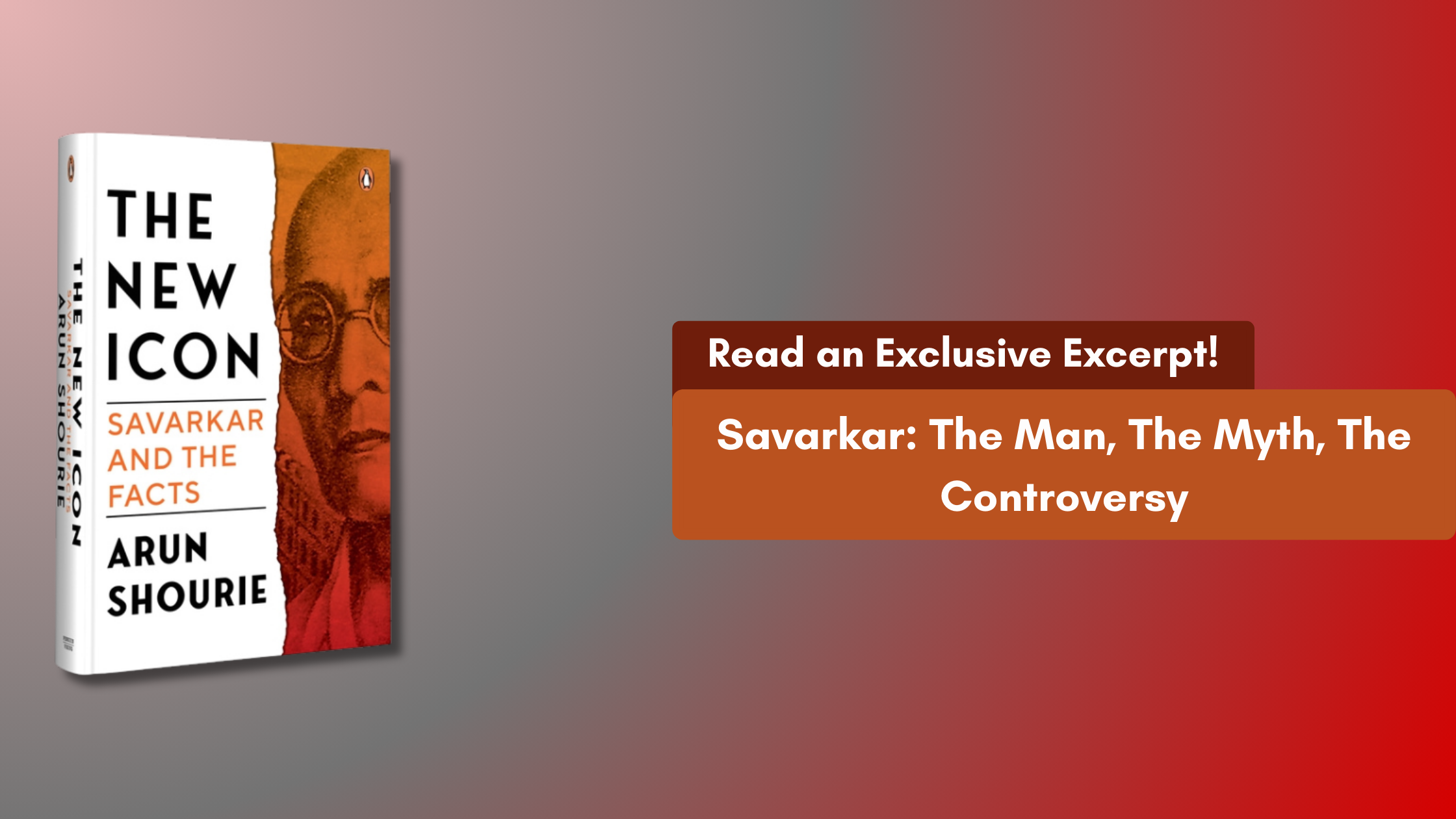
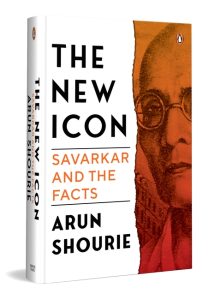
Some stories redefine leadership and resilience, and The New Icon does just that. Explore the journey of individuals who rise above challenges to make an impact. If you’re inspired by biographies, success stories, and motivational books, this one belongs on your shelf.
Renowned author Sudha Murty brings another heartfelt collection of inspiring stories that reflect life’s deepest lessons. The Circle of Life is a book that touches the soul, perfect for those who seek self-improvement books and meaningful reflections.
Money, Myths, and Mantras – The Ultimate Investment Guide
Demystify investing and take charge of your financial future with Money, Myths, and Mantras. Written by expert Devina Mehra, this book breaks down common investment myths and provides a roadmap to smart financial decisions. If you want to learn about wealth management, personal finance, and investment strategies, start here.
Career growth is a journey, and Build an Epic Career by Ankur Warikoo is your perfect guide. Packed with career advice, professional development tips, and success strategies, this book helps you navigate the complexities of professional life with clarity and confidence. Whether you’re just starting out or looking to level up, this book is your go-to resource.
No matter your mood or interest, there’s a book on this list for you. Start here, read on, and let these stories shape your perspective, fuel your ambition, and transport you into extraordinary worlds.
As the calendar turns to the start of the year, we’re reminded that life, too, is a story—an unwritten chapter waiting for our pen. Resolutions are the promises we make to ourselves, declarations of the changes we wish to see. But as the days slip by, the ink of intention often fades, leaving our aspirations adrift.
What if this year, you could keep those promises alive?
Audiobooks offer a rare gift: the power of words and stories to accompany us in the quiet spaces of our lives—during a walk, a commute, or a solitary moment of reflection. With each listen, they become companions, guiding us toward our aspirations and sparking the will to turn resolutions into reality.
At the start of this year, discover the perfect audiobook to match your goals. Let these words not just inspire but transform, offering new ways to begin, grow, and thrive.
Resolutions Paired with Perfect Listens
To stop procrastinating – Do It Today
Procrastination is the thief of time, stealing moments we’ll never reclaim. In Do It Today, Darius Foroux unpacks the barriers holding you back and offers practical wisdom to overcome them. Begin the year by doing, not delaying.
Wealth, like a garden, flourishes only when tended with care. Ankur Warikoo’s Make Epic Money is a masterclass in nurturing your finances, helping you sow the seeds of smart decisions and reap the rewards of financial freedom.
To let go and start anew – I Don’t Love You Anymore
Letting go is an act of courage, a quiet declaration of hope for tomorrow. Rithvik Singh’s I Don’t Love You Anymore is a lyrical exploration of healing, renewal, and finding the strength to move forward.
To be informed of constitutional principles – Who Is Equal
Equality is the cornerstone of justice, yet its meaning evolves in every era. Who Is Equal invites you to delve into the foundations of fairness, offering clarity and perspective on the principles that shape us as a society.
To spend quality time bonding with your family – Grandpa’s Bag of Stories
Stories are the threads that bind generations, weaving memories into moments of joy. Sudha Murty’s Grandpa’s Bag of Stories is a treasure trove of warmth and wonder, perfect for family evenings spent together.
To boost well-being with mindfulness – Energize Your Mind
In the rush of life, stillness becomes a luxury. Gaur Gopal Das’s Energize Your Mind offers gentle guidance on embracing mindfulness, cultivating peace, and finding the balance we often seek but rarely achieve.
To embrace second chances in love and life – Fool Me Twice
Life’s second acts are often its most profound. Fool Me Twice is a poignant reminder that love and redemption often appear when least expected. Step into the start of the year with hope in your heart and faith in new beginnings.
Your mindset shapes the world you see. With Attitude, discover how optimism and resilience can transform challenges into opportunities, empowering you to navigate life’s twists and turns with grace.
The start of the year is not just a marker of time—it’s a turning point, a blank page. Each audiobook is a guide, a whisper of encouragement, reminding you that every resolution is a promise worth keeping.
Let these stories inspire action, cultivate change, and illuminate the path ahead. This year, don’t just dream of transformation—listen, act, and make it yours.
You Will Be Alright is intended to serve as an anchor for those dealing with grief and those supporting someone who is dealing with grief.
Read the excerpt to know more.
You Will Be Alright || Sonali Gupta
The first few days of loss can be extremely disorienting and exhausting, where we have little or no energy to do much. As the rituals and ceremonies come to an end and relatives leave, we are left to ourselves and may begin to wonder, ‘What happens to my life now?’ Clients in therapy ask, ‘Does the grief ever go away? It seems like I will never be able to do away with it. Will it always pain this much?’
There is no recovery or getting over grief. We learn to live with the grief and also hold space for love. We miss our loved one, who is no more with us, and we know that the world will never feel the same. At the same time, as we continue to do the work of dealing with our emotions, processing, accepting and integrating, our grief shifts. It stays, but it feels different.
As Anne Lamott says, ‘You will lose someone you can’t live without, and your heart will be badly broken, and the bad news is that you never completely get over the loss of your beloved. But this is also the good news. They live forever in your broken heart that doesn’t seal back up. And you come through. It’s like having a broken leg that never heals perfectly—that still hurts when the weather gets cold, but you learn to dance with the limp.’
As I pondered on the subject of this chapter, a statement that came to me instinctively was, ‘Do we ever ask what happens to our love?’ Just as love stays, grief stays. Grief is an extension of the love which we have felt for our loved one. Just because they have passed away, we don’t stop thinking about them. We carry both grief and love in our hearts. I have found it useful to think that a huge part of processing our grief is acknowledging that the presence of our loved one felt like sunshine and hope. We were lucky to have them, and they made our world a better place. Now, when they are no more, we can make a choice to carry forward what they stood for, by imbibing qualities that we always associated with them. We can choose to celebrate them whenever life offers an opportunity. Personally speaking, my father was a huge foodie and loved exploring new cuisines. Over the years, on his birthday and death anniversary, I often order his favourite food—and while I am not a big foodie, I think I have become someone who savours the cuisine. All good food reminds me of him. Although I must mention that it has taken years to imbibe and see it this way, I’m glad it has happened.
As we continue processing our grief, it becomes integrated, and we begin to accept the loss. We start to recognize that our world has changed, and now one slowly needs to adapt to this new reality.
Early in therapy, clients often ask me these questions, and I have always felt that one can give hope and yet be honest with
people. Truth and compassion can co-exist—my experience over and over has been that clients accept it well. As a young therapist, I thought it would be hard for them to hear this. But almost two decades later, I realize that grief is hard enough, and knowing what to expect realistically becomes an anchor, helping people rather than pushing them into a state of despair. I remember working with a seventy-year-old client, Naresh, who had reached out to me three years after the loss of his wife due to a chronic illness. He seemed quite agitated and distressed. He said to me, ‘I have been to therapists and doctors, and everyone tells me that it’s been three years and so, I must move on. I don’t understand how I can move on and see life as the same. When the person I loved for fifty years is no more, everybody still wants recovery and wants me to be done with grief. It has taken me a lot to come here, and I don’t think I can recover.’
I told him, ‘You are right, there is no recovery from grief. No matter how much work you do with me, all I can help you is with grief integration and acceptance. Our grief is not an illness or condition that we can wish away. Your wife was your world and so, it will always hurt. Yet, we can work together to address what you are feeling. Perhaps we can move forward with her memories and the love that you hold for her.’
***
Get your copy of You Will Be Alright on Amazon or wherever books are sold.
In a world plagued by love gurus and hopeless romantics, Unloved presents a guide to loving oneself through the process of heartbreak. The chaos after the calm, this self-help book offers an antidote to heartache with a uniquely Indian point of view.
Unloved Harshita Gupta
Once upon a time, relationships followed a script as straightforward as a ‘90s sitcom plotline. Two people met, sparks flew, they fell madly in love and the credits rolled. Cue applause. Fast forward to the present, and the dating world is more of a ‘Choose your own adventure’ novel, written in invisible ink on a rollercoaster.
Welcome to this chapter where we toss aside the rose-coloured glasses and take a daring plunge into the swirling whirlpool of modern romance. Relationships these days are less of ‘happily ever after’ and more of ‘let’s see how this goes . . . and maybe consult a survival guide’.
In the era of swipes, likes and emojis that convey emotions even Shakespeare couldn’t have imagined, decoding relationships feels like trying to solve a Sudoku puzzle designed by a naughty wizard. It has more twists and turns than a soap opera script on caffeine.
In the labyrinth of contemporary courtship, be prepared for plot twists, unexpected cliffhangers and characters who ghost faster than a phantom in a haunted mansion. Buckle up, because in the dating maze, the only thing guaranteed is that nothing is guaranteed.
Let’s dive into the chaos, decode the signals and emerge on the other side with our sanity and sense of humour intact. It’s time to rewrite the rules and find comedy in the chaos of twenty-first-century love.
Scenario 1
A: ‘I don’t know what’s wrong with me. I just can’t. . . fall in love.’
A furrows their brow. ‘Aromantic? Is that like not being into flowers or something?’
B chuckles softly. ‘Not quite. It’s more about not feeling romantic attraction to others. You know, like how some people just aren’t into superhero movies or jazz music? It’s just a different way of experiencing relationships.’
A nods slowly, beginning to understand. ‘So, it’s not about being broken or missing out on something?’
B shakes their head. ‘Exactly! Being aromantic is just one of many ways people experience love and relationships. It’s not better or worse, just different.’
A smiles, feeling a weight lift off their shoulders. ‘Well, that’s a relief. I guess I’ve just been looking for something that’s not in my nature.’
B grins. ‘Exactly! You’re just being true to yourself. And who needs grand romantic gestures anyway? I bet you’ll find your own unique way to connect with people.’
A laughs, feeling a newfound sense of freedom. ‘You know what? You’re right. Maybe I’ll embrace my inner secret agent and navigate the world of relationships on my own terms.’
B raises an eyebrow playfully. ‘And who knows? Maybe instead of a decoder ring, you’ll get a cool gadget that lets you see the world in a whole new way.’
A grins, feeling excited about the possibilities ahead. ‘Now that’s a mission I can get behind.’
Definition of aromantic: Aromanticism is a romantic orientation characterized by a lack of romantic interest or a limited desire for romantic relationships. People who identify as aromantic may still experience other forms of attraction, such as platonic or aesthetic attraction, but they do not typically experience the same level of romantic attraction as those who identify as romantic.
Harshita speaks: Kyunki inko aata hi nahi hai, inko pata hi nahi, inse hota hi nahi hai. Hopeless romantic ki zindagi barbaad ho gayi. (Because they don’t know, they don’t understand, and they can’t do anything. The life of a hopeless romantic has been ruined.)
Scenario 2
A: ‘She only ever seems to text me after I’ve given up on hearing from her.’
B: ‘Ah, the classic “I’ll-subtly-reappear-when-you’ve-moved-on” tactic.’ That’s textbook benching, my friend.’
A sighed, feeling like they were caught in a dating drama series with too many plot twists. ‘Benching? Seriously? I didn’t even know we were playing a sport. What’s next? Penalty kicks for missed date opportunities?’
B chuckled, leaning back as if sharing the wisdom of the dating oracle. ‘Dating is the Olympics of emotions, my dear friend. Bench-warming is just one of the many events.’
A raised an eyebrow. ‘So, what’s my strategy here? Do I start doing push-ups and jumping jacks to stay in the game?’
B smirked. ‘Nah, that’s too old school. The next time she texts, hit her with a hurdle. Something like, “Oh, sorry, I was too busy mastering the art of patience.”’
A: Mastering patience?’
B winked. ‘Exactly. Show her you’re not just a player. And if she tries to bench you again, well, let her know you’re too busy.’
***
Get your copy of Unloved by Harshita Gupta on Amazon or anywhere books are sold.
Meticulously researched, authoritative and unputdownable, Tipu Sultan: The Saga of Mysore’s Interregnum (1760–1799) opens a window to the life and times of one of the most debated figures from India’s history.
Tipu Sultan || Vikram Sampath
There was hardly any respite for a battle-weary Haidar. Despite his commanding position in the final stages of the First Anglo–Mysore War and his ability to dictate the terms of peace to the British at the very gates of their power in Madras, he hardly got a chance to even savour this hard-won victory. The Marathas were knocking at the door yet again. Under Mahimaji Sindhia, the Maratha foujdar of Chikkaballapura, a force of 400 horses and an alliance of neighbouring palegars, the Marathas had invaded the southern country and attempted to capture Gurramkonda. Haidar dispatched a strong force of 5000 horse, 4000 foot and 4000 irregulars to combat them under Berki Srinivasa Rao and Mir Ali Raza Khan. The two sides clashed in July 1769, when the Maratha army was so comprehensively routed that Mahimaji retreated in despair. The secret treaty between Haidar and Nizam Ali in 1767 had brought Cudappah, Kurnool and other places that lay between the Tungabhadra River and the northern borders of Mysore into the nominal control of Haidar. To consolidate his hold over these regions, Haidar began a swift tour to levy tributes on the chieftains in Kotikonda, Kupgal and other places. Talpul, which was held by Rakhmaji Bhonsle, was taken over by Haidar. He invited Rakhmaji for talks but treacherously seized him and his men and put them to death. However, in Bellary, Haidar was pushed back with considerable loss.
Gopal Rao Patwardhan protested against this aggression of Haidar and the latter replied: ‘It was agreed between us that within four months Sira, Hoskote and Ballapur taluk would be returned to me, but even after the lapse of two years with a man of your worth as the go-between this has not been done. Please request the Peshwa to right this wrong. Mahimaji Sindhia, qiladar of Ballapur, was taking into his service some of our dissatisfied men and was fomenting trouble in our own territory. Hence, I drove him out.’ Haidar similarly spread his wings across the entire frontier, exacting tributes from Chitradurga, Harpanahalli, Harihar, Savanur and Gutti. The territories of his old foe Murar Rao were all taken over with just the fort of Gutti left for him. Haidar even summoned him to his camp like a subordinate, causing much consternation for the Maratha side. Murar Rao was directed to pay Rs 50,000 as an annual indemnity to Srirangapatna.
That Haidar had come so menacingly close to the very borders of the Maratha Empire, and his newly acquired stature after the Treaty of Madras, sent obvious alarm bells ringing in the Peshwa court in Poona. Madhav Rao could simply not digest the fact that his previous two campaigns to subjugate Haidar totally had been abortive, despite his bravery and statesmanship—once due to the intrigues of his uncle Raghunath Rao who had a secret understanding with Haidar and the second time, due to the vacillations of his treacherous ally, Nizam Ali. That Haidar was quietly instigating the Peshwa’s opponents, be it his secret dalliance with Raghunath Rao or by stirring up Janoji Bhonsle against the Peshwa in 1769, even after their rapprochement, was added reason for Madhav Rao’s irritation. Principally, questioning Haidar’s right to levy contributions on the palegars who, he claimed, came under his suzerainty, Madhav Rao used that as a ruse to make his third invasion of Mysore in December 1769 with an army of nearly 75,000. Haidar marked a quick retreat from the northern borders near the Maratha territories on his favourite elephant, Imam Baksh, towards the forest of Udagani. About 25,000 troops were kept under Tipu, Mir Raza, Berki Venkata Rao and Makhdoom Ali in the borders of Bidanur. About 20,000 troops were scattered across the kingdom and nearly 35,000 were with him at all times. He had fortified Bangalore and Srirangapatna where he was hopeful of being able to hold out for four to six months till the monsoons arrived.
But Madhav Rao, who was determined to fight to the finish this time, hotly pursued him, along with the palegar of Chitradurga, Madakari Nayaka, who had an old axe to grind with Haidar, and the long-standing foe, Murar Rao. They marched towards Srirangapatna, by the way of Penukonda, overrunning all the Mysorean territories on the way, till Nagamangala. They virtually encircled Haidar—the Peshwa encamping near Srirangapatna and Gopal Rao Patwardhan near Savanur. The Maratha forces under Gopal Rao Patwardhan, his cousins Parshuram Bhau Patwardhan and Nilkanth Rao Patwardhan and another force under Anand Rao Raste kept a close watch on Haidar’s movements. They planned a twofold attack on Haidar if he emerged from the forest. In trying to stop the Peshwa’s advance, Haidar ordered ‘all straw and wood that could be gathered, to be set on fire, to fill up wells and ponds and send word to people in the villages to retire into the capital city.’
***
Get your copy of Tipu Sultan by Vikram Sampath on Amazon or anywhere books are sold.
Grief, mystery, and dark forces collide when Viji, mourning the loss of her twins, becomes the prime suspect in the drowning of her best friend’s baby. ASP Kanika uncovers a twisted web of black magic, leading her to question if she’s chasing a murderer or something much darker. Is she hunting a twisted killer, or has she awakened an ancient, malevolent force? And if so, how long before it comes for her?
Read the excerpt below to know more.
The Drowning || Nidhi Upadhyay
Vijayalakshmi January 2001 Ajmer, India
‘You should have booked a taxi to Chandigarh,’ my mother-in-law suggested, her voice tinged with concern. ‘Travelling on a train with twins isn’t a good idea, especially in this cold weather,’ she added, observing as I packed the nursing bag for my three-month-old twins in the kitchen.
A few months ago, my husband Ankit convinced me to have our twins at his ancestral home in Ajmer, with his mother keeping a hawk’s eye on us. Being an orphan, I reluctantly agreed, knowing I lacked the experience and support to navigate the chaos of newborn twins alone. Little did I know, what was meant to be a supportive stint turned into a never-ending exile.
While Ankit, the mastermind behind the plan, coded programs for clients in Chandigarh, I spent my maternity leave grappling with my mother-in-law’s relentless advice, feeling like a wrestler in an endless match, nodding along as if it were my only move.
Now, as I hastily packed the twins’ nursing bag in the kitchen, itching to make my escape, my mother-in-law deftly tucked her saree like a pro wrestler gearing up for a title match. With theatrical flair, she motioned for me to hand over the pan and the water bottles.
‘I’ve got this,’ I declared with newfound bravado, causing her to pause. It was high time I asserted myself and showed her who the true mother of the twins was. As I poured boiling water into the thermos, her eyes tracked my every move, like a goalie defending a penalty shot. A splash here, a splash there—more than a few drops found their way on to the counter, allowing her to assert her dominance. Adjusting her gold bangle with the finesse of a queen surveying her domain, she graciously offered, ‘Come, let me lend a hand.’ I believe she meant: Come, let me belittle you. Because what followed couldn’t be described as lending a hand.
‘Back in my day,’ she remarked with a bitter edge, ‘my esteemed mother-in-law would have flipped the entire house over at the sight of such a spill, especially considering we live in a desert where every drop counts. Yet here I am, graciously helping you clean the counter without batting an eye.’ She served her daily dose of ‘you-know-nothing’ and ‘how lucky you are.’
The whistle of the pressure cooker caught her attention, prompting her to turn off the gas. Instead of preparing the aloo puri Ankit had requested for our journey, she continued her relentless track of ‘count your blessings’ detailing the hardships of raising twins and recounting the sleepless nights she endured with my colicky newborns over the past three months. According to her, every problem and every cry from the twins boiled down to hunger or the evil eye. Amidst her sugar-coated advice, her subtle jabs at me and my daughters never missed their mark.
Another one came my way, catching me off guard before I could even brace myself for the impact.
‘Better keep Kavya’s pacifier within arm’s reach. Her wails could resurrect the dead. It seems she inherited that booming voice from your side of the family, given that we could barely even hear Ankit’s cries as a baby,’ she quipped, effortlessly sliding in another jab with her ‘your side of the family’ dagger that seemed permanently lodged in my chest. Oblivious to the verbal wreckage she left behind, she unzipped the nursing bag, meticulously arranged the milk bottles I had carelessly tossed inside earlier and said, ‘You should have resigned or taken unpaid leave. We could have assisted in raising the twins. It is not that you earn a fortune. From what I gather, our estate manager earns a similar salary.’
‘Well, I guess I’m in the wrong line of work. Maybe I should resign from my job as a software engineer in an MNC and apply to become an estate manager, managing the inheritance bestowed upon someone by the Almighty who clearly picks his favourites,’ I replied, my tone laced with sarcasm, hoping she would end this ordeal then and there. But like me, she seemed to have gotten up on the wrong side of the bed, dragging the conversation further. ‘The point you seem to overlook is that you’re no longer an orphan who had to fend for herself. Your husband can more than provide for you, and let’s not forget that everything we own belongs to Ankit as well. So, I fail to comprehend the urgency of dashing off to Chandigarh with three-month-old twins for just a couple of thousand rupees,’ she said.
I should have kept my sarcasm on a tighter leash, a skill I’ve been refining for half a decade, delicately sidestepping certain boundaries with my mother-in-law.
***
Get your copy of The Drowning by Nidhi Upadhyay on Amazon or wherever books are sold.
What exactly is this controversy about Netaji’s ‘disappearance’?
Efforts by the authors led to the declassification of more than 1,300 secret files on Bose.
Does new material offer new evidence on Bose’s reported death in 1945?
Read this excerpt to find out.
The Bose Deception || Anuj Dhar, Chandrachur Ghose
Of all the matters the British military intelligence had taken up with him, this one was rather peculiar for Howard Donovan, the US Consul General in Mumbai. At the end of the Second World War, Subhas Chandra Bose was not of particular interest to the Americans, particularly because the story doing the rounds was that he was dead. Donovan looked intently at the uneasy-looking Lt Col D.M. Hennessey, struggling to grasp the alternative possibility that was oddly emerging months after Bose’s reported death in a plane crash in Taiwan. In an aerogramme to the Secretary of State in Washington, DC, on 23 June 1946, Donovan reported that according to Lt Col Hennessey ‘the hold which Bose had over the Indian imagination was tremendous, and that if he should return to this country, trouble would result which in his judgment would be extremely difficult to quell’.1 How could Bose return if he was dead? That was the question which puzzled Donovan.
It weren’t just the British who were anxious about the return of ‘dead’ Bose. But return from where? Two months after the Hennessey–Donovan meeting, the Pulitzer Prize-winning American journalist Louis Fischer confabulated with M.K. Gandhi in Panchgani, Maharashtra. On 22 July that year, an explanatory letter was forwarded to Fischer at Gandhi’s behest. The letter eventually surfaced when the Louis Fischer Papers at Princeton University became accessible in the mid-1990s. Written in hand by Gandhi’s secretary Khurshedben Naoroji, granddaughter of Dadabhai Naoroji, the letter contained this shocker: ‘At heart, the Indian Army is sympathetic to the Indian National Army. If Bose comes with the help of Russia, neither Gandhiji nor the Congress will be able to reason with the country.’ The political climate in the country was marked by tumultuous upheavals triggered by the trial of the INA soldiers, followed by uprisings in the Royal Indian Air Force and the Royal Indian Navy, by the deep discontent among the workers in railways and the postal department. There was deep uncertainty about the Cabinet Mission plan of an interim government and the Constituent Assembly. Written against this background, Naoroji’s letter expressed the apprehension that the Indian nationalist movement as well the Indian Army might come under the influence of Bose, who might return with Russia’s help if the British failed to deliver on their promises.
These bewildering insights were in the realm of the unknown for decades after the news of Bose’s death, quoting a Japanese news agency announcement, was splashed all over the world on 23 August 1945. In India, the devastating news which appeared in newspapers over the next two days had a numbing effect. Impromptu condolence meetings were held on the streets in Kolkata. Up north, all major markets did not open in Amritsar and a shut-down was observed in Ahmedabad on the 25th. From Pune, Gandhi wrote to Amrit Kaur (would be India’s first health minister), ‘Subhas Bose has died well. He was undoubtedly a patriot though misguided.’ Looking grave as he emerged for his regular evening prayer, he told Congress volunteers to bring the Congress flag down and said nothing. Far away in Abbottabad, the shattering news was delivered to Nehru by reporters. ‘While the news of the death of Subhas Bose has shocked me, it has given me relief that in the struggle for the cause of India’s independence he has given his life and has escaped all those troubles which brave soldiers like him have to face in the end,’ Nehru told a public meeting. Bose’s elder brother Sarat, then imprisoned in Coonoor, saw the Indian Express and The Hindu for the day and his heart burst. ‘Divine mother, how many sacrifices have we to offer at your altar! Terrible mother, your blows are too hard to bear! Your last blow was the heaviest and cruelest of all.’
The Japanese announcement, issued four days after the crash on 18 August and reproduced worldwide, said that the plane carrying Bose to Tokyo for talks with the Japanese government crashed at the Taihoku (now Taipei) airfield at 2 p.m. Bose was ‘given treatment in hospital in Japan, where he died at midnight’. Lt Gen. Tsunamasa Shidei was killed instantly, while Bose’s adjutant Habibur Rahman and four other Japanese officers were injured.
Nothing more was known to the Indian people until the INA soldiers and other Indians associated with Bose’s Provisional Government of Free India (PGFI) returning to India from Southeast Asia started giving out their versions of what happened. The story was largely believed by Indians, even by Bose’s family, except Gandhi. On 27 August, he sent a telegram to Amiyanath informing him that he was suspicious of the news and if the Bose family too shared his suspicion, they shouldn’t perform the customary funeral ceremony.
***
Get your copy of The Bose Deception by Anuj Dhar and Chandrachur Ghose by on Amazon or wherever books are sold.
In Liberal Hearts, Nayantara Violet Alva takes readers into the heart of an elite college in rural Haryana, where privilege, self-indulgence, and academia collide. This debut novel weaves together a college romance and a coming-of-age story, exploring questions of entitlement, identity, and the consequences of cultural divides.
Read the excerpt to know more.
Liberal Hearts || Nayantara Violet Alva
Dear Namya, I’m not sure if I should be flattered or perturbed by the fact that you know I read/ study on my roof every night. Either way, what’s a man to do other than read to keep his imagination alive when his world has shrunk? I don’t know, I somehow prefer the old-school way to the reels my sister enjoys.
Was meaning to tell you that I saw Ted Bundy’s final interview on your recommendation. Really, you’d never be able to tell he was a psychotic, cold-blooded killer. Either way, I hope you have no such intentions with me. Just in case you do, know that I’m way stronger than I might’ve looked in July.
In case you are looking for poetry to read outside of your father’s romantic tastes, you’d be shocked to know that Urdu shayari has set a bar so high that your much-loved Alfred Noyes would be put to shame. But since you’re pretty English medium, I’d suggest Ted Hughes, or W.H. Auden. They have far more realistic takes on life, which might successfully challenge your rosy Mauryan notions.
‘Crow Tyrannosaurus’ and ‘As I Walked Out One Evening’ are simple yet existential enough to send you down a spiral you might just enjoy. They were of great comfort to me during Class 12 ISC.
Also, you’d asked which fictional character I relate to most. I guess I see a lot of myself in Eren Yeager from AOT.
I did end up reading your recommendations and I found The Beauty Myth powerful and quite fresh. If women were as impacted by the beauty standards set by toxic magazines in the Eighties, can’t even imagine their current state with Instagram filters, reels and stories at their fingertips. It makes me understand my Phool in a way that is a tad bit terrifying. I was wondering whether, even as a conventionally attractive girl, you have ever struggled with that kind of thing? Body image issues, I mean. Didn’t mean to probe, please don’t share if you aren’t comfortable.
Either way, do continue to suggest books because I do have some free time in between selling cigarettes, milking the cows and tending to the fields.
—Vir
I have read this note twenty times.
I reach for my book, open it to the page where my pretty yellow bookmark is but just can’t focus.
The poems he recommended have rendered me glum. I look down at the pile of all the notes he’s ever sent me, and I’m beyond impressed. His knowledge of literature, humanities, business and the world at large is nuts. Had Vir been some South Bombay or South Delhi boy at Maurya, everyone would’ve been gaga over him because he, without a doubt, has all the ingredients that mainstream popularity demands. Though he wouldn’t admit it, I’m sure he was all the rage at Spring Valley.
I still can’t forget Phoolkumari’s heartbroken face telling me about how their father died around four years ago. Vir must have been my age when the weight of his family’s subsistence descended upon his shoulders. The unfairness of his situation makes my head spin with frustration.
God, he and I are so different. I would hate for Mehreen to be right! We haven’t spoken since we fought. Maybe I should run to her room right now to fix things?
I look up at Pari to ask for her advice and can’t help but smile as I remember the mini freak-out she had earlier today when she saw another plant growing inside Tony’s pot. She sent her mother pictures and apparently the ‘weed’ is a periwinkle which she has now named Nancy. Pari announced that the two can share a pot and grow together. It is truly astonishing how the same person can be so aggressive yet endearing at the same time. Right now, she is drinking tea and typing belligerently on her laptop. I should take help in anaylsing the note.
‘Hey, Pari, who is Eren Yeager from AOT?’
‘Hmm, don’t ask me; I’m more of a Levi girl. Google karle and if you wanna watch, I’ll send you the link.’ Her eyes don’t move from her screen.
‘Hey, Pari, what exactly does conventionally attractive mean?’
Her eyes still don’t move from her screen. ‘Hot like a young Katrina or Aishwarya, but in politically correct words. Man, I had bi-panic to the max while watching Dhoom 2. Do I look at Hrithik, or do I look at Aishwarya? Mad confusion.’
‘Haha, but are you serious about the meaning? That can’t be right . . .’
***
Get your copy of Liberal Hearts by Nayantara Violet Alva on Amazon or wherever books are sold.
As December wraps up the year, it’s time to lose yourself in stories that feel like a warm hug or a thrilling escape. End the year on a high note—one page at a time! Check out our picks—you might find your next favourite!
Gods, Guns and Missionaries || Manu S. Pillai
In Gods, Guns and Missionaries, Manu S. Pillai takes us through remarkable dynamics. With an arresting cast of characters—maharajahs, poets, gun-wielding revolutionaries, politicians, polemicists, philosophers and clergymen—this book is ambitious in its scope and provocative in its position. Lucid and exhaustive, it is, at once, a political history, a review of Hindu culture and a study of the social forces that prepared the ground for Hindu nationalism. Turning away from simplistic ideas on religious evolution and European imperialism, the past as it appears here is more complicated—and infinitely richer—than popular narratives allow.
Parde ke Peechhey || Ila Arun
Ila Arun burst into public view with the controversial song from Khal Nayak (1993), Choli Ke Peechhey. But several years before that, she was already well known for her contribution to Rajasthani folk music. A writer herself, with several original plays and many adaptations to her credit, this is her first book, an autobiography. Told in her inimitable style, with sincerity and a touch of humour, this is Ila at her candid best, sharing a glimpse into her life and experience onstage and backstage, parde ke peechhey.
The Notbook of Kabir || Anand
Kabir is the most alive of all dead poets. He is a fabric without stitches. No centres, no edges. Anand threads his way in. Over the years, as a publisher and editor, Anand immerses himself in the works of Babasaheb Ambedkar and other anticaste thinkers. The Notbook of Kabir is the result of this pursuit with no end in sight. This is the story of how Anand loses himself trying to find Kabir.
Caged || Gulzar, Sathya Saran
Intimate, subtle and deeply personal, Caged … Memories Have Names is probably Gulzar Saab’s first autobiography in verse. Gulzar Saab ruminates and writes in rainbow colours. From Rumi to Pablo Neruda and Jibananda Das, among others, have coloured him in myriad of hues. With this he has painted the portraits of Birju Maharaj, Mehdi Hasan, Pancham, Asha Bhosle in words. Their palpable presence, thoughts and words are etched in Gulzar Saab’s existence.
The Land of Lost Gods || Ahmet Ümit
As Yildiz Karasum, a Turkish detective, and her mysterious assistant, Tobias Becker, investigates the suspicious murders, they uncover secrets that could destroy the city that stubbornly clings on to its diversity without forgetting its past. And just as they seem to grasp the core of the missing and imperfect pieces of the puzzle, a new name is revealed… And a truth, that is beyond the reach of any mortal justice. Because when the Gods demand a sacrifice, there is always one to be chosen….
Aghori: An Untold Story || Mayur Kalbag
Subbu embarks on the most unique journey of his life, filled with indelible experiences. Aghori 1: An Untold Story is not just a tale, but an opportunity for readers to undergo an exuberant expedition that incorporates different and diverse activities that are spiritual, intriguing, ethereal and, at times, frightening.
Aghori 2: The Untold Story Continues || Mayur Kalbag
Subbu returns from the Himalayas, having spent many remarkable days with the Aghori sadhus. Three powerful mantras have been successfully embedded in him, and must now be extracted and transferred to Subbu’s revered guru. The sequel to the bestselling Aghori 1: The Untold Story is filled with spiritually invigorating adventures that readers will love.
With its focus on Nehru’s understanding of history and of India’s cultural past, the book opens a window to his deep understanding of communalism and commitment to secularism. Six decades after his demise, do Nehru’s principles which reflected the values of India’s independence movement still hold water? Candid, argumentative and thought-provoking, Nehru’s India is a brilliant work on the man who made sincere efforts to discover, champion and defend the idea of India.
The Slaying Sword || Kalki
Can Princess Kundavai fight her way through the web of political intrigue and deceit in which she is trapped? Will valiant Vandiyatevan continue to surmount the colossal challenges fate throws at him? Kalki paints a study in contrasts in The Slaying Sword, the third in the Ponniyin Selvan series, and Gowri Ramnarayan translates his world of conflicts with empathy and adroitness.
The Jewelled Crown || Kaliki
In the fourth part of the sprawling Ponniyin Selvan series, we learn more about the intricate complexities and histories propelling our characters towards their ultimate destiny. What will happen in Kadambur? The mute Mandakini Devi has been forcibly taken to Tanjavur, and Poonkuzhali rushes there to help her aunt. What will happen when the betrayed Mandakini meets the royal family?
Play to Potential || Deepak Jayaraman
Play to Potential offers a refreshing exploration of human potential, emphasizing discovery through play rather than work. Deepak Jayaraman weaves insights from his eponymous podcast, his coaching work and his lived experience to share a powerful yet simple framework that can act as a guide to navigate the pulls and pressures of life. This book is a guide to living a fulfilled life, integrating family, aspirations, value creation, and deep relationships.
The Start-Up Code || Mukesh Bansal
The Start-Up Code is more than just a guide—it’s your road map to transforming bold ideas into enduring success. Whether you’re a fledgling entrepreneur or a corporate leader aiming to ignite innovation within your organization, Bansal’s practical frameworks and proven strategies will empower you to dramatically improve your odds of success.
Why the Heck Not? || K P Singh, Aparna Jain
Through captivating anecdotes and insights, Why The Heck Not delves into Padma Bhushan awardee KP’s interactions with industry leaders, policymakers, farmers and communities. Learn how he navigated challenges, fostered collaborations, and revolutionised the Indian real estate landscape. A must-read for entrepreneurs, business enthusiasts, and anyone seeking inspiration.
The Power of Decision Making || Manoj Tripathi
The Power of Decision-Making is a collection of powerful learnings that will change the way you think about making choices. It will help you make decisions for the better to achieve lasting success in different walks of life. Conceived as a self-help guide, the book includes stories and quotes from some of the most successful people, whose decisions have changed their lives for the better.
The Content Creator Handbook || Varun Mayya, Achina Sirohi Mayya
Every day, millions of videos are uploaded, but only a handful break through to the mainstream. What separates viral content from forgotten content? It’s not luck. It’s not talent—it’s strategy. In this no-nonsense guide, Varun and Achina Mayya—creators of multiple successful YouTube channels and online businesses—reveal the strategies, tactics and insider knowledge that have helped them master the art and science of content creation.
How to Suffer Well || Peter Hollins
Life is tough, so you better get a helmet. You’ll run into pain, anguish, and obstacles. But who says that they need to affect you? How to Suffer Well is a literal guidebook to learn how to defeat the voices in your head that tell you to give up. Instead, they’ll be replaced with voices that tell you it’ll be okay, this will pass, and life can be happy despite the suffering; only if you know how to suffer well.
The Science of Attraction || Patrick King
Like all human interaction, even love is primarily guided by our hormones, and there is a definitive science to attraction. This book is your field manual to understand the instinctual, and evolutionary triggers of attraction. The Science of Attraction is an in-depth look at human attraction and what draws people together. Diagnosing and recommending highly actionable steps to take your dating life to the next level. No tricks, no manipulation; only getting inside the human psyche.
Take charge of your career with HeadStart: Unlock the Secrets to Career Success. This guide is the ultimate toolkit for thriving in today’s competitive job market, packed with expert strategies and real-world insights from Vivek Gambhir and Sunder Ramachandran.
Read the excerpt below.
Headstart || Vivek Gambhir, Sunder Ramachandran
The Power of Knowing When to Quit
Ever feel trapped in a job or situation that’s just not working out? Knowing when to walk away is a powerful skill. Society has typically viewed quitting as a sign of defeat. Phrases like ‘winners never quit, and quitters never win’ get embedded in our minds in the early years, but sometimes quitting is the smartest move you can make.
We idolize athletes who push through serious injuries, even though they are risking their future. Despite the virtues of sticking with something, sometimes stepping away is the real hero move. Stepping away from something that isn’t working allows us to find something better. It frees up our time and resources and enables us to move in a more fulfilling direction.
Let’s talk about goals for a second. You set them at the start of your journey, right? But here’s the thing—they’re not set in stone. They don’t factor in the knowledge and experiences we gain along the way or new information that may arise. Life throws curveballs, and sometimes, those goals just don’t fit any more. Quitting isn’t giving up—it’s making room for something better.
So why do we stay in unfavourable situations? Firstly, unhappiness can make us feel stuck. Additionally, we often worry about how quitting might affect our reputation. But here’s the thing: remaining stuck is far riskier than taking a leap. Cognitive biases also play a sneaky role. Ever heard of the status quo bias? It’s why we stick with the devil we know, even when there’s a better option. Then there’s the sunk-cost fallacy—it’s like continuing to invest time, effort and money into a failing project, hoping it will turn around. And let’s not forget the endowment effect, where we cling to the familiar, even when it’s holding us back.
Here’s the bottom line: Quitting isn’t about giving up—it’s about moving forward. It’s about knowing when to bid farewell to the old and embrace the new. So, if something’s not working, don’t hesitate to shake things up. After all, life’s too short to remain mired in the mud.
These are some dilemmas that we’ve seen younger professionals
struggle with:
• My role is at a dead end.
• I find no fulfilment in my current job.
• Do I need to be bolder in choices and take more risks?
If any of these rings a bell, you’re probably dissatisfied with your
current job and considering a change.
Pro Tip from Vivek: Signs for Career Change
Vivek advises young professionals to focus on three key factors that make work fulfilling: challenge, learning and engagement. If two of these aspects are lacking for six months, it might be time to consider a change.
The three-day rule: Do you feel excited about your work for at least three days a week? If you lack engagement, you won’t be able to grow, learn, develop or add value to your role. Although work may have less engaging phases, if they persist for over six months, they can impact your productivity, mood and overall engagement.
The resume test: Can you consistently update your resume every six months with new and valuable skills and projects? If you’re not feeling challenged or able to develop your skills in your current role, it’s not doing you any good. Eventually, you just go on autopilot and don’t go anywhere.
You are checked out: Do you find yourself zoning out? Are your thoughts drifting away from work? Are you more interested in what else is out there instead of doing your job?
Your 2×2 Push and Pull Matrix
Questions to ask before resigning
Before you send that resignation email, consider the Push and Pull Matrix. It’s a valuable tool for deciding whether to stay
in your current role or move on to new opportunities. Career transitions are often influenced by a combination of push and pull factors which encompass a diverse range of motivations that prompt individuals to leave their current role and pursue new opportunities.
We have observed that young professionals are motivated to leave a role due to push factors like stress, a bad boss, lack of feedback or opportunities. There could also be pull factors that include an interesting role in a new industry, a role with more seniority or a broader remit and increased remuneration. These push and pull factors often interact in complex ways,
and there’s always a little bit of both during transitions. This means that you have to carefully consider both the risks and rewards associated with such a change.
Before putting in your papers, we recommend that you ask yourself the following questions to ensure you are making the right decision.
***
Get your copy of Headstart by Vivek Gambhir and Sunder Ramachandran on Amazon or wherever books are sold.