Publish with Us

Follow Penguin

Follow Penguinsters

Follow Penguin Swadesh

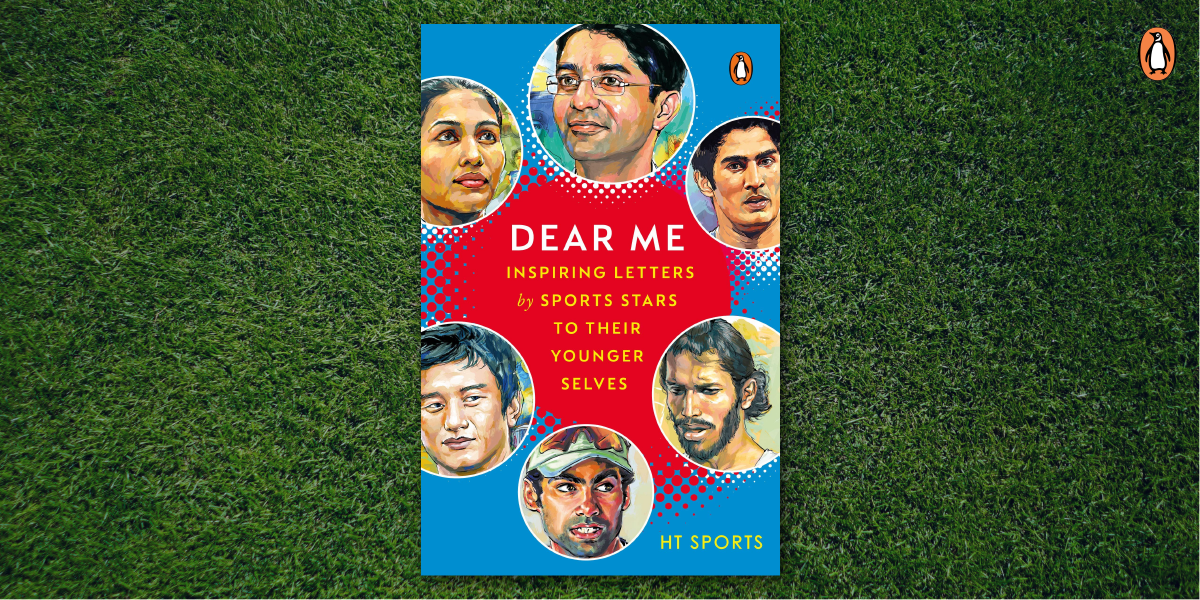
Bhaichung Bhutia writes to his younger self

From Anju Bobby George’s unexpected gold medal at the World Athletics Final in Monaco to Abhinav Bindra’s Olympic gold in Beijing, India’s sportspersons have constantly proved that they stand shoulder to shoulder with the world’s best.

However, as easy as they might make it look, their success is the result of years of struggle, focused training and relentless hard work to overcome several challenges.

The ‘Dear Me’ series of letters first appeared in Hindustan Times in 2017. These columns, penned by India’s top sporting icons, were published with the intent to inspire a young generation of struggling sportspersons, to serve as the light at the end of the tunnel for them.

Dubbed as the ‘Sikkimese Sniper’ of India, footballer Bhaichung Bhutia writes to his younger self in Dear Me, which brings all these letters under one cover.

*

Dear eight-year-old Bhaichung,

It is nice to see you going back to your village for the winter vacations from the boarding school. I know you will again complain about the 10-km walk home. But know that sooner or later there will be a road to your house and electricity in your village.

This holiday though will be different for you since Dad has bought a football for the first time! Knowing you, I am sure you will be impatient to reach home and play with older brother Chewang, who is also returning with you and Dad.

Young man, the one thing you need to realize is that you won’t win all the time. So stop fighting and crying every time you lose a match. In other words, stop being a bad loser. Your oldest brother, Rapden, is very good at football and thinks you are very talented, but he finds it difficult to deal with your tantrums when you lose. Winning and losing are part of the game, and you will have to take them in your stride. The sooner you accept this, the further you will go.

Front Cover of Dear Me
Dear Me || HT Sports

I also know how much you are dying to find someone who could teach you lots of tricks about dribbling the ball and, yes, that someone who would show you how to execute a banana kick! When you return to school, everyone will talk about your talent. Except the games teacher. He will not select you, but don’t worry, you have a wonderful principal in Father George. So when you are not picked, you will tell him and he will help you get into the junior school team. Guess who will be chosen as the best player? You. I know your father keeps telling you to study

well and pass your examinations. I love him for the fact that he does not pressure you to top the class or get a high percentage. He just wants you to pass. Be glad that you don’t have a pushy parent because that will mean you have so much freedom to play and think of football. That is because he loves football and has taken you many times to watch him and Rapden play in the village tournament.


An uplifting reminder that dreams do come true, Dear Me allows you to be inspired by their extraordinary stories.


Kurumba- A Tribe That Possesses Magic

The Maria girls from Bastar practise sex as an institution before marriage, but with rules-one may not sleep with a partner more than three times; the Hallaki women from the Konkan coast sing throughout the day-in forests, fields, the market and at protests; the Kanjars have plundered, looted and killed generation after generation, and will show you how to roast a lizard when hungry.

White as Milk and Rice weaves together prose, oral narratives and Adivasi history to tell the stories of six remarkable tribes of India-reckoning with radical changes over the last century-as they were pulled apart and thrown together in ways none of them fathomed.

Here’s an excerpt from the book below:

Lying on the mattress, Mani follows the movement of his father’s breathing. Moments ago, he had watched his father’s sweaty hips thrust up and down while his stepmother, Bindu, lay still beneath him, muffling her pain. His father stayed silent, though maybe his lips kept moving – he was always moving his lips as though he were talking to someone invisible. A mongrel laid beside Mani’s feet, its ears pricked for the sound. Each time his stepmother moaned, the dog yelped.

Like most other children in Hulikkal, a small village in the Nilgiris, Mani lives in one-room mud hut, where pots and pans are pushed aside every night to make room for mats, where they can hear their parents make love, or whatever else it is, through the mosquito net that hangs between them. He shifts on the floor; his upper back hurts from being slammed against walls by his angry father when he had come back jobless from the Badaga village.

“I can’t pay for the giant morsels you eat any more,” he had shouted as he thrashed Mani. Mani wonders what it must be like growing up in the big Badaga houses he saw today, where children sleep in different rooms, thick brick and cement walls separating them from their parents.

He had not seen anything quite like the homes that appeared in the Badaga village: concrete square structures with windows painted smooth in purple, green and blue, with large vegetable patches or a stretch of tea estate sloping down in front. Each home had a little chimney with smoke swirling from it like the incense sticks his father used for the pujas.

The trees and bushes were all trimmed; from the top of the hills, he could see fields of tea, with men and women moving through them, carrying their baskets on their backs, their feet stained red from the soil. When it rains in the Nilgiris, this red earth trickles like blood under its green skin.

Earlier in the day, Mani and his uncle had walked uphill after getting off the bus; the long walk had made his legs hurt, but that did not bother him. He was willing to cross many more such hills. In the absence of trees, that part of the Nilgiris was full of gusty wind that stung his eyes till tears stained his cheeks.

When his uncle spoke, the winds carried his voice louder than he meant it to be, “I told them you already know sowing”; he’d brought him here for a daily wage job at a tea garden. Mani nodded, although he’d hardly worked in fields: They had only a small plot where they grew vegetables and some millet.

On other days, they ate what they collected – roots of yam, herbs and honey – from the forest where they lived or rice given to them by the government. This village, meanwhile, only housed the Badagas, an educated, prosperous tribe that had migrated to the Nilgiris in the early twelfth century. The estate owner his uncle was taking him to had political aspirations and everything he did was to be transactional, driven by the desire to secure votes. Among his pet constituencies were the hamlets of the Kurumbas, also some of the poorest people in Nilgiris, and the area beyond.

“Call him appa,” his uncle insisted, in the Alu Kurumba language, a mix of Tamil and Kannada.

“Remember, you’re a Kurumba. Do not stare at their family members.” Mani nodded, though his uncle had already told him this many times, just as he had told him to pat his hair down and not to say inane things: They are all educated, so don’t talk any jungle hocus-pocus.

Mani wished people did not speak to him as if he were a jungle idiot; that said, he couldn’t help but gape at the women who were walking their children to school. How smooth their skin was, their hair shining with oil, decorated with jasmine and plaited neatly with ribbons; their eyes, unlike the yellowed eyes of Kurumbas, were as white as their teeth.

Minutes later, Mani waited outside the Badaga man’s house, while a few boys chatted on their way back from school, clapping each other’s backs, laughing as they walked past him. Only a few from his hamlet went to school, but he could read what was written on their bag – “Government”. He recognised the word from its shape – it was on every pamphlet and poster handed to them.

One of the boys said something that made the others shout with laughter. Mani bunched the hole in his shirt with his fist while admiring their uniforms. They then slowed their steps to look back at their friends coming behind them, signalling them to join. That was what he wanted to do when he got older – saunter with friends through these neat little hills, talk and laugh.

When Mani looked at them again, one of the them seemed to be pointing at him, at his hair matted like a mop on his head, teeming with vermin. After some whispering, one of the boys, pretending timidity, wrung his hands beseechingly before Mani, “Spare me, oh Kurumba! Spare me from your sorcery,” and ran up the lane with the others, received by them with a hoot of laughter and much back-slapping. Mani had squeezed his eyes shut against the fierce brightness in which the boy’s oiled head laughed and moved among the waves of sudden bright sunlight.

When he recovered his vision, Mani ran behind them, but only mustered enough courage to spit in their compound. Before the Badaga estate owner could see them, his uncle tugged at his wrist and hurried him back to the bus stop. The sun was sinking behind the mountains without any play of colours or movement, save for their flustered stomp downhill.

It was only in these last few years that his forest tribe, the Kurumbas, had started working in the fields of Badagas during the day. Until a few years ago, whenever the forest tribals came in view of a Badaga, word flashed through their village, and women and children ran for the safety of home, hiding inside till the Kurumbas had gone.

If Mani knew a spell or two, he would have twisted those boys’ knickers till they fell screaming from groin pain, and practise the sorcery that they claimed his people knew.

The Kurumbas, they said, had medicines that could put all the inhabitants of a Badaga village to sleep before slinking back into the woods. Their ace sorcerer, an odikara, could make openings in the fence, and the Badaga’s livestock, under his spell, would follow him through it without so much as a cluck or a bleat. They could, apparently, turn into bears and kill people, just as they knew how to counter the other spells, to remove or prevent misfortune.

Many decades ago, when the Badaga grandfathers were little boys still hanging from their mothers’ waists, one of their elders returned from a Kurumba settlement situated outside the jungles, where he went to scout a plot for tea planting. He came back breathless, just about stuttering that their end was near and that a monster was around. Now, a Badaga knew that if a Kurumba sorcerer was casting spells, he could be appeased with rice, oil, salt and clothes. But what was this big brown animal he was screaming about, its eyes glowing red?

As the story goes, the goats, hens and cows were restless; they knew for certain that the elderly man had seen an irate Kurumba-turned-monster. All night, they howled in their sheds and tapped the ground, and the villagers slept fitfully, imagining figures and shapes in the hilly darkness.

The Badaga elders today still fear the sorcerer Kurumbas, often banding against them; their school-going children, though, have less faith in the Kurumbas’s magical abilities. “Isn’t your father, what is his name…Moopan? The limping old man who pretends to be a doctor?” a boy had teased Mani at the bus stop.

The Kurumba magic was wearing off, and a pervasive sense of futility remained. There it was, a distant murmur telling Mani that this fat Badaga life was not his birthright; there was always the possibility of running into people who spoke in hushed whispers around him; always a chance that however clean a shirt he wore, a passer-by may assume from his yellow eyes and uncouth hair that he was not a farm owner but the son of Moopan, the limping old sorcerer. His uncle had fallen asleep on the bus ride back home; Mani’s eyes burnt as he looked out at the rolling tea estates of the Badagas.


White as Milk and Rice has stories of India’s isolated tribes.

Life After a War

Translated by Maharghya Chakraborty, this latest translation of Taslima Nasrin’s celebrated memoir recollects Nasrin’s early years against the backdrop of the Bangladesh Liberation War of 1971.

My Girlhood revisits Nasrin’s memories of war, trauma, survival, and the beginning of a journey that redefined her world.

Find an excerpt below that gives us a glimpse into life after the War.

*

After the War

The murmurs continued for a few years. Unrest among the people continued to rise as well. Sheikh Mujib formed a political party called Baksal and prohibited all other parties.

‘What sort of government is this that lets its people die in a famine because they have no food?’ Father said one day. Bearded men wearing fez caps materialized out of nowhere and began to clamour that such an Independence was of no value. The country needed to be put back under Pakistani rule. Boromama sighed and said he did not know which direction the country was headed.

‘The government is doing things that did not happen even when Pakistan was ruling us. They are celebrating Shab-e-Baraat in Banga Bhaban with so much pomp. It never used to happen back when this was East Pakistan. Mujib attended an Islamic conference recently. Russia helped us so much during the war and here Mujib is bent on making Bangladesh a part of the Islamic world. The government is even saying things against India. Would we have become free if India had not sent its forces?’

I understood very little of politics. The only thing I knew was that I liked listening to Sheikh Mujib’s 7 March speech whenever it was played on the radio. I would get goosebumps from excitement. ‘This struggle is a struggle for Independence, this struggle is a struggle for freedom,’ this was not just a slogan but a verse that could make the blood boil. In our music classes we would sing ‘Joy Bangla, long live Bangla!’ It was not merely a song, it was something greater, something that sent a jolt through the heart. Every few days pandals would be built in the neighbourhood for music and dance programmes. Every time they would play something on the mike I would be off to see it. Boys and girls would play the harmonium and practise singing and dancing. They all looked so beautiful and their songs always managed to shake me to the core. Like it used to happen while listening to Khudiram’s songs. Kana mama used to tell us Khudiram’s stories, how a young boy had bombed a British Governor-General and embraced death, all for the sake of freedom. I wanted to be like Khudiram, as courageous and as devil may- care.

Then suddenly one day, quite abruptly, something happened that plunged the city into uneasiness again. People gathered on the roads to talk as if the world was about to come crashing down on them any moment. Some had radios stuck to their ear, faces dry, eyes threatening to pop out. What was the matter again? The days of sticking close to the radio for news had come to an end back in ’71, so what had happened again! Whenever things in the country were tense in any way everyone tended to switch on BBC radio for news. No one had too much faith on our own broadcasters. Father too did as expected. I was asked to turn the knob of the radio to try and catch BBC, a big responsibility I felt very proud of having been given. Father never ordered me to do anything except studying, I was never usually asked to participate in anything else. Earlier it was either Dada or Chotda who were asked to turn the knob while I had to stand apart and watch. But that day Dada was away on a work trip to Sherpur for a couple of days. Chotda was not even living with us any more. Hence, the responsibility fell on me. I had almost found the BBC channel when Father asked me to stop. Words could be heard over the ether, broken fragments of half-truncated news.

Sheikh Mujib was dead.


From her birth on a holy day to the dawn of womanhood at fourteen to her earliest memories that alternate between scenes of violence, memories of her pious mother, the rise of religious fundamentalism, the trauma of molestation and the beginning of a journey that redefined her world, My Girlhood is a tour de force.


A Talib’s Tale – An Excerpt


John Butt came to Swat in 1970 as a young man in search of an education he couldn’t get from his birthplace in England. He travels around the region, first only with friends from his home country, but as he befriends the locals and starts to learn about their culture and life, he soon finds his heart turning irrevocably Pashtoon.

Containing anecdotes from his life both before and since he shifted to Afghanistan, and with a keen and optimistic attitude towards becoming the best version of himself, John Butt tells a wonderful and heartfelt tale of a man who finds a home in the most unexpected place.


Read an excerpt from the book below:


I owe a lot to Maulana Khan Afzal, but two things in particular. For one, he instilled in me a love of India. Secondly, he showed me practically that one should always work for one’s living.
When I said to Samar Gul in Bara that I was going to the Afridi heartland of Tirah Maidan, he immediately mentioned Khan Afzal. Laiq’s family had some land in Tirah, and he and I had decided to move there for the summer. : ‘That is great,’ Samar Gul said, ‘you will be able to study with Maulana Khan Afzal.’ Like the Sarkai maulvi sahib, Maulana Khan Afzal was an eminent scholar, but at the time he did not have any students residing with him. He was able to devote all his time to tutoring me. I believe it was largely because Tirah was so inaccessible that there were no other students studying with the maulana. Later on, in the late nineties when I visited Maulana Khan Afzal again, he had a good ten to twelve students studying with him. He had become a focal point for talibs, as the Sarkai maulvi sahib had been in the 1970s.
Every day, with my books under my arm, I would make the forty-five-minute walk from Saddar Khel, where Laiq lived, to Landi Kas. Tirah Maidan is a huge, expansive plateau, the like of which there are many in Afghanistan—the Gardez and Logar plateaus are two that spring to mind. The difference with Tirah Maidan is that it is surrounded by richly forested hills, while the hills that surround other Afghan plateaus are mostly bare. Two tributaries of the Bara river meet at the centre of Tirah Maidan, the Malik-Din Khel Bagh. It is the natural capital of Tirah Maidan. The land dips towards that point, as do the streams and the people. From the eastern side, the tribes of Zakha Khel and the Lower Qambar Khels, known as Shalobaris, from the western side the huge swathe of Malik-Din Khel territory, and beyond that the Upper Qambar Khels. From Saddar Khel, I would walk down towards the Malik-Din Khel Bagh, then fork right towards Landi Kas, tucked in a hillside between Bagh and Dunga in Sholobar territory.
I had been studying a Sufi type of collection of Hadith, entitled Riyadh’as-Saliheenthe Path of the Righteous. I say it was Sufi oriented since it was mostly organized according to the virtues that Sufis strive to attain—repentance, patience, sincerity, trust in Allah, steadfastness. It is very spiritually oriented. I am glad I began my study of Hadith with this book. It has remained my favourite collection of Hadith—extremely cleansing and refreshing. However, Khan Afzal switched me to the more mainstream and standard Mishkat’al-Masabih. Mishkat is arranged more conventionally, according to the various strands of jurisprudence: prayer, fasting and the other forms of worship or ibadat—one’s interaction with Allah—followed by muamilat—one’s dealings with other human beings. In the entire Islamic canon, there is this distinction between the rights of Allah—huqooq’Allah—and the rights of one’s fellow beings, indeed of all Allah’s creatures—huqooq’al-ibad. While in Hadith study Khan Afzal went for the more orthodox Mishkat, in jurisprudence, his choice of book for my study was distinctly unorthodox. His preference was Taaleem’al-Islam, written in Urdu by his own teacher, Mufti Kefayatullah of Delhi. ‘Along with learning Islamic jurisprudence—fiqh—you will learn Urdu,’ he recommended. For Taaleem’al-Islam I went outside with his elder son Abdul Hakeem, then a teenager. I guess Abdul Hakeem felt more comfortable teaching me with his father not immediately on hand. We sat on the verge of the field, had a laugh and chatted a lot, while at the same time also reading Taaleem’al-Islam.
In encouraging me to learn Urdu, it was as though the maulana had a premonition or was goading me in the direction of study in India. It had not been that long, maybe twenty or twenty-five years, since he had returned from studying in the Aminiya madrasa in Delhi. India had rubbed off on him to a considerable degree, in a way making him an unusual Afridi. He even continued to wear a lungi—a skirt-like garment favoured by Muslims of India—at home. Pashtoons generally consider this garment effeminate. Even the maulana would not be seen in that garment outside the home. I have replicated Maulana Khan Afzal in this regard. Even when I am in Afghanistan, I wear a lungi in my place of residence; when I am in north India, I wear my lungi a little further afield, as far as the local shops; when I am in south India, I wear a lungi pretty much all the time. At the time when I was studying with the maulana, I used to ask him a lot about India. In a memorable phrase, he once told me that ‘even the dogs of India have manly virtues’—’da Hindustan spi ham saritob laree.’ ‘What’s Delhi like, compared to Peshawar?’ I once asked. ‘What is Hangu like compared to Peshawar?’ he asked rhetorically, referring to a town in the Frontier province, where buses set out towards Tirah. I answered that it was just a tiny town by comparison to Peshawar. ‘Well, so is Peshawar tiny compared to Delhi.’
Yet at the same time the maulana was the most staunchly Afridi of all the Panjpiris. He absolutely loved his native Tirah. I am getting ahead of myself here, but when he was expelled from Tirah along with other Panjpiris and resided for a while in Peshawar, he pined for his motherland so much that he used to console himself by reciting poems written by muhajirs—those who had emigrated from Mecca to Medina at the time of the Holy Prophet—expressing their homesickness for Mecca. He was also invariably cordial with his fellow Afridis, irrespective of whether they subscribed to his Panjpiri views or not. I never saw him take issue or argue with anyone about matters of dogma. He would enact his duties as the pre-eminent Islamic scholar in Tirah Maidan, in the course of which he would explain how important it was to believe in the oneness of Allah and to follow the Sunna of the Holy Prophet. These two things—Tauhid and Sunna—are the twin pillars on which Panjpiri dogma is founded. But he would never become aggressive towards those who did not subscribe to Panjpiri beliefs.


A Talib’s Tale –The Life and Times of a Pashtoon Englishman is available now (also as an e-book)!


Unique Traditions of Indigenous Tribes in India

Inhabiting the remote hills and forests of India are isolated communities of people who have survived the ever increasing influence of urbanisation. The Adivasis have their own religious beliefs, traditions and rituals which are far removed from the rest of the country. White As Milk And Rice takes us away from our metropolitan cultural medley and leads us into life stories from six remarkable tribes of India where we see age old traditions manifest in the rapidly changing milieu of their fragile world.

Read on for a glimpse into the traditions of the Adivasis from the stories in White As Milk And Rice

The Halakkis of Karnataka

The Halakkis’s janapada, or folk songs, are passed on from one generation to another as part of their oral history. These folk songs are sung by the Halakki women, unaccompanied by instruments, as they go about their daily chores.  With no formal knowledge of music, the women sing in the same tune ,mostly out of habit, as an expression of joy, sadness, anxiety or contentment.

Why did they all know the chorus to these songs? Sukri wonders. They had inherited these songs orally, rather than in written form. Often, the meaning of the colloquial, ancient words escapes them, but they sing it for the sorority—songs that bind them together through their hardships, but songs Sukri associates only with happiness, with festivals, forests, family, weddings, weeding, working on paddy fields.

The Kanjars of Chambal,Rajasthan

Originally a community of valorous Rajputs, the Bhatus were pushed to the margins of society by multiple invasions in the Indian subcontinent. Of the many Bhati Rajputs that fled into the jungles, some styled themselves as rebels or baghis who operated out of the labyrinthine ravines around Chambal river and came to be known as Kanjars. The Kanjars performed a much revered ritual  before leaving for heists –

The night before, Lala had taken out a silver bowl from one of the bundles in his sikri, brought the empty bowl to his lips and kissed it, closing his eyes, holding his breath as if tasting the tenacity of his ancestors. Later, his wife had poured in kaccha khatiya and some goat blood into the bowl. Sipping on it, Lala had given an oath or a pledge of loyalty to the gang and acceptance of the consequences if a breach of trust was made.

The Kurumbas of the Nilgiris, Tamil Nadu

Descendants of the Pallava dynasty of southern India, the forest-dwelling Kurumbas are regarded as some of the oldest inhabitants of the Indian subcontinent. Scattered in the hills around the Nilgiris, the Kurumbas are believed to possess extraordinary spiritual and supernatural powers. Most Kurumbas survive by selling forest produce and the honey-gathering season is celebrated with ceremony-

Old grandmothers of the hamlet would sing songs in the village square about honey collection; interspersed would be songs on elopement with lovers, extramarital affairs, abnormal sex organs, jackfruits, cucumbers, etc. The men would have played tamabati, or the drum, to which the younger women would dance in circles, clapping their hands together below the waist.

The Marias of Bastar, Chattisgarh

In the Gond society, Ghotul is a tradition that is integral to the Marias socio-religious beliefs. The nightly ritual is announced with the beating of drums and a procession of young boys and girls heads to the ghotul which could be described as a clubhouse. Dressed to please, the young Marias sharpen their seduction skills while enjoying music, dance, games and massages. Most activities are designed to develop intimacy between the sexes.

 ‘In this soft, diffused glow of affection, boys and girls lived together in that dormitory for years; a charming mixture of learning and experimenting with lovemaking, none of it meant to be taken seriously.’

The Khasis of Shillong, Meghalaya

Being a devout Khasi entails a life of discipline and familial duty. In old-fashioned Khasi families the birth of a female child is celebrated with a feast. Learning to keep a home, performing ancestral worship and looking after family members is part of induction to life as a Khasi female.

The Khasis follow the matrilineal principle of descent, residence and inheritance. The youngest daughter inherits, children take their mother’s surname, and once married, the khadduh, or the youngest sister, and her husband live in her mother’s home.

The Konyaks of Nagaland

Straddling the Indo-Myanmar border, the fiercely independent Konyaks are believed to be followers of an indigenous animist religion. Young men in the tribe practise war skills and their training is focused on preparing them for life as  warriors. The tribe’s collection of severed enemy- heads is their pride.

 ‘A “good naomei” protected his comrades and never refused a beautiful woman’s advances. Our village must grow bigger, stronger and for that, enemies’ heads must be secured, brought to the village and fed rice beer. This would bring it prosperity and for the naomei, some virility. The more the heads, the more the reverence.’


Nidhi Dugar Kundalia takes us into the remote regions of India where tribal communities practice and preserve their traditions with reverence even as external forces make inroads into their precariously balanced existence.

To know more about the original inhabitants of India, read White As Milk And Rice!

Should You Dance When You’re Pregnant? – An Excerpt from ‘Amma Mia’

Is my baby not well?

When can I introduce my baby to solid foods?

Becoming a new mother can be an exciting yet overwhelming time. No matter how prepared you are, there will always be many confusing moments, opinions and a whole lot of drama! And just like any other new mom, Esha Deol Takhtani was faced with many such questions soon after the birth of her two daughters-Radhya and Miraya.

Packed with advice, tips, stories and easy and delicious recipes for toddlers, Amma Mia reflects the personal journey of one woman’s transformation into a mother. Informative and easy to follow, this book will help new mothers navigate the ups and downs of raising a healthy toddler and make their child fall in love with food.

Read an excerpt from the book below:


When she[Hema Malini] was five months pregnant, my mother was shooting for two films—Satte Pe Satta and Razia Sultan. In the song, ‘Dukki Pe Dukki Ho’, you can clearly see her bump. That’s me in there! And for Razia Sultan, she had to ride a horse while pregnant. She tells me that I’m restless and energetic because she was physically active during her nine months. She also danced onstage during her pregnancy. You must remember that she was doing this during the 1980s, when it was radical for a woman to be so active while pregnant.


My mother is a superwoman like that, who has always broken the rules and stereotypes of what women should be like. She has always inspired me to push the limits. In fact, I will never forget what she told me when I was pregnant. She said, ‘You’re not sick that you need to rest all the time. You’re simply pregnant. After delivery, your body is at its most elastic and flexible. You can mould it into any shape you want.’


And so I followed her advice unconditionally. I performed the dance ballet, Ramayana, on stage; I worked on a short film called Cakewalk; I wrote this book during my second pregnancy; and I had many other projects in the pipeline.


Channelling your inner creativity is a great way to enrich your nine months because the energy and positivity will most certainly be transferred to your child. That being said, no two pregnancies are alike. If you have complications or have been advised rest by your gynaecologist, do so. Be cautious. Don’t be silly or impulsive. From the day you know you’re pregnant, you must be careful. There will be many people with all sorts of advice during this time but pay heed to only one person: your gynaecologist.


For more tips and tricks, check out Amma Mia by Esha Deol Takhtani.

The Play of Dolls- An Excerpt

Kunwar Narain’s unusual short stories broke new ground and rejuvenated the genre when they appeared on the Indian literary landscape in 1971. Half a century later, in vivid English translation for the first time, they seem just as far-reaching: sometimes in the novelty of their insight, sometimes in their transcendence, sometimes in the world views they together uncover.

Read an excerpt from the short story ‘The Court of Public Opinion’ below:

Sadiq Miyan managed to keep his motives in check at first, but then they went awry. A completely new bicycle, stood completely unclaimed—without even a lock to guard it! He glanced around once, then ran his hand over the bike’s glittering handle, as if caressing the mane of a magnificent Arabian horse. He couldn’t hold back any longer, and jumped on the bike. No one objected, nor noticed; and, well, what could the poor bike say either? He pushed down on the pedal lightly. The youthful cycle was ready to take off with him right away. The people nearby came and went by as usual, just as before.

Sadiq Miyan spurred the bicycle on, and it began to fly like the wind. It was his now.

But, alas, what an awful stroke of bad luck! An endless herd of buffaloes came along, straying right into the middle of the road. Sadiq Miyan lost control and collided with one of the stoutest in the bunch—head-on. What could he do, the poor guy? He hit the ground—his own injury less, the cycle’s, more. Bent and broken, the wheel went from being hoop-shaped to heap-like. The handle, twisted backwards, gazed at the seat, and the mudguard took on a look as if it were not a part of the bike but of the buffalo. The buffalo stood in stunned silence; Sadiq Miyan glanced nervously at the crippled bike. What could he do? He’d really landed himself in a strange sort of trouble. It crossed his mind to abandon the bike and make a run for it. After all, it was only the bike that was broken—nothing wrong with his legs!

But in the meantime, a crowd began to gather all around him, as was only natural. Running just then would have meant getting himself in more trouble. Two, four, six . . .dozens of women, men and children began surrounding him. In the middle lay the mangled bike; with the buffalo, chewing cud, on one side, and Sadiq Miyan, head reeling, on the other.

At first, the people pitied the bike that was now a mess, then their hearts were kindled with compassion for Sadiq Miyan, and finally, they got angry at the buffalo. Because there was clear evidence before them of what happens when one locks horns with a buffalo, they decided to tackle the herdboy instead. It was because of him that the hazard of something like a buffalo had sprung up in the middle of the road, and someone upright like a Sadiq Miyan had become the victim of that hazard.

By consensus, it was decided that they should fix the herdboy properly, right then and there. But Sadiq Miyan objected: in his view, it was more important to fix the bicycle first—and the herdboy should be made to do that. Everyone agreed.

The crowd lifted the bike tenderly and delivered it to a nearby cycle hospital with great care, where its wounds were treated for a cost of ten rupees. But when the herdboy was told to cough up the money, he expressed his inability to do so, and asked how on earth was he supposed to come up with ten rupees when he hadn’t even ten paise to his name then?

Confronted by this new problem, an extraordinary debate took place among the ordinary folk assembled there; so many arguments all at once that it was practically impossible to make out any argument clearly. Nevertheless, one solution somehow seemed to survive intact: whatever the herdboy was wearing should be sold to cover the penalty cost of the repairs.

This too was easier said than done, because the herdboy had nothing but a dhoti around his waist and a lathi in his hand. Even if both these items were taken, it wouldn’t be enough.

Anyhow, after the cycle had recovered, it was agreed that Sadiq Miyan and the cycle should be considered free from the whole dust-up. This was deemed incontestable not only in the eyes of the public, but also in the eyes of the luckless bicycle mechanic, who now, having taken the entire burden of Sadiq Miyan’s ten-rupee misadventure on his own head, was an eager prosecutor of the blameworthy herdboy. As for the public, it was surely commendable that not a single person there was willing to step back until final justice had been delivered, no matter what.

Some wise guy then repeated the suggestion that, if it satisfied the cycle mechanic, the herdboy could also be handily fixed, with a flogging worth ten rupees! But nobody paid much mind to this idiocy, though the herdboy was entirely willing to go along. Everyone’s attention was stuck on the intricate problem at hand: how could they wring ten rupees from the herdboy in his present condition?

One gentleman, who had perhaps trained as a lawyer, or was capable of being a lawyer, came up with a novel proposal: by selling that same buffalo which had given rise to all this mess, the cost of the fine could be recovered. The idea wasn’t unreasonable, and his submission was accepted.

The buffalo again became the centre of attention. For five minutes, the people waited. But where would they find a ready buyer for a thing as big as a buffalo? A buffalo isn’t some wad of paan, a bidi or a cigarette that can be purchased along the road, tucked in one’s pocket, and hung along with the pocket on a peg on some wall back home. It was a matter of responsibility, which could go as far as spelling fortune or disaster for one’s offspring. Second, who had the cash on hand worth a buffalo at this time? As a result, this attempt at justice proved unsuccessful as well.

Around now, everyone was sorely feeling the need for some kind of mastermind in the crowd. A few sights fell on one particular gentleman, and remained on him. He certainly looked like a wiseacre—though some others pegged him as a daydreaming wiseass. They held a vote; and it was decided that he was indeed a wiseacre, not a wiseass, though he himself kept claiming to be nothing less than a prophet.


What will happen next? You’ll have to read The Play of Dolls to find out!

Tête-à-Tête with Arjun Nath

What was your latest “OK Boomer” moment?

This is a tricky one because I’m nearly old enough to be considered a Boomer myself! I was attending a wedding recently and an older gentleman — within a few minutes of meeting me for the first time ever — asked why I wasn’t married yet. When I asked him why he felt I should be married, he said: Vedon mein likha hai ki yeh tumhara dharma hai. Really? So being happy with your highly personal life choices is a big no-no, but preaching a 3000-year-old sacred text at a complete stranger about the ‘right’ way to live their life is somehow fine? OK Boomer.


Any tips on bridging the generation gap with parents?

It’s a big subject and I’m nowhere near qualified enough to be handing out tips on it. But in my experience, parents are nosy as hell. I mean, aside from being the ones with the money, that’s basically their one defining trait. It comes from fear. They don’t want to control your life, they want to know that you’re safe. So throw them a bone once in a while. Let them know when you’ll be out late, and who your friends are. Share any one meal with them every day. It’s no big deal and it’ll make your life much easier.


Any personal #litAF friendship stories you still cherish?

I made a friend when I was at a drug rehab 10 years ago. For the sake of anonymity, let’s call her by the oddly specific name Kajal Sheth. Because she lives in London and I in Delhi, we’ve met only a handful of times since. And because I dread speaking on the phone (to anyone), we are sometimes not in touch for months at a stretch. This is a frustrating, often hurtful, situation for her. And yet, no matter how many calls I don’t take or texts I don’t respond to, she’s always there for me when I need her to be. Gehna’s baby, in the book, is named Sitara after Kajal’s daughter.


Who do you relate more to: Eram or Gehna?

At a circumstantial level, Eram. He had, like myself, a father with Parkinson’s. He also enjoys games of chance, and strives to be better than he is. Gehna is more of a manic pixie — overly sensitive, bipolar, spontaneous, and self-absorbed, and I am none of those things.


Rom-coms or Thrillers?

Thrillers. Rom-coms are a guilty pleasure, and they have this annoying habit of sneaking up on you and stabbing you right in the heart.


Favourite sports movie?

That’s an impossible question. How to narrow it down to just one? Sports movies, even the badly made ones, always make me cry. Probably something to do with the winning-against-all-odds trope that hits deep. In English, Seabiscuit. Closer to home, Lagaan.


What’s the story behind the title [“Not All Those Who Wander”]?

JRR Tolkien, in the Lord of the Rings trilogy, wrote a poem that starts with the couplet: All that is gold does not glitter / Not all those who wander are lost. I borrowed from it for the title of the book, partly as tribute to the literary master craftsman and partly because feeling LOST is such a common experience for teenagers.

What food are you craving right now?

Sev Puri. I am always craving sev puri — even while eating it! Indian street food is the best street food, Chaat is the best Indian street food, and sev puri is the best Indian chaat street food.


Be honest – how many drafts did it take for Not All Those Who Wander to take shape?

I’ll be honest — one draft. I take no pride in that fact. A famous author, I forget who, was asked a similar question in The Paris Review. She (or possibly he) said that there are two kinds of writers. One: those who just put words on a page willy-nilly until the first draft is done and then work out the kinks in the rewrite. Two: those who are constitutionally incapable of moving onto the next sentence until the preceding one is polished and perfect. I’m the latter sort. It takes me a long time to finish a first draft but when I’m done, it’s done.


Any procrastination tactics you employed while writing the novel?

Yes. Netflix, the Internet, and examining the contents of my belly button. Getting anything done without a deadline, a boss, and irate clients is no easy task. The only thing that works is a driving need to see where the story goes.


What’s your typing speed?

Tap…tap…taptaptaptaptaptaptap…taptap………………………………………………………………………………………………………………………………………………………………………………………………………tap.


What’s the last book you read?

George RR Martin’s A Dance with Dragons. Each year I re-read the entire series in the hope that this, finally, will be the year he finishes Book VI, The Winds of Winter. But he never does. I’ve never been more cross with a person in my whole life. He’s probably watching Netflix. Finish the damn book, GEORGE!


Favourite chat slang?

Not a huge fan of chat slang, tbh. All that “wer R u *smh *idk” business drives me up the wall. But I have of late become a rabid emoji user. My favourite is the rolling-your-eyes yellow face. So useful!


What has been your best 3 AM idea?

To cash-out of a poker game. I know you probably meant to ask what has been my best 3 AM story idea, but I’m re-interpreting the question. Cashing out of a poker game is the best idea at any time, and especially at 3 AM. Go home. Get some sleep. Do NOT try to calculate how many meals you can afford for the rest of the month.


An Insight into the Life of The Lone Empress, Jayalalithaa

The Lone Empress is the journey of a proud Ammu to an indefatigable Rossappu Amma. Despite her immense popularity, she felt lonely and vulnerable in personal life after her mother – Veda (popularly known as Sandhya) and her mentor – MGR, passed away. The book tells the story of how a charismatic and talented woman steered through a male-dominated film industry, developed a loyal political fan base without the support of her party seniors, and stood her ground even when sentenced to four years in jail.

Here are a few excerpts that reveal some of the characteristics of her fiery personality.

She was an honour roll student

‘Look closer, you will find J. Jayalalithaa’s name printed in bold white letters, on the annual roll of honour, as the recipient of the Best Outgoing Student Rolling Shield for the year 1964. The school’s Centenary Celebrations (2009) special souvenir carries a photo of a young Jayalalithaa in her school uniform proudly posing with the shield.’ 

She was more than a pretty face

‘The AIADMK’s party conference was being organised on a huge scale and the town people thronged to hear the star speaker who to give her maiden political speech, one that she herself had prepared. MGR was present, too, drawing hordes of men and women, most of them film fans. The town square was a sea of humanity and the theme of Jayalalithaa’s speech was, “Pennin perumai” (woman’s greatness). The public, expecting only to see a pretty face, were in for a big surprise. Jayalalithaa’s speech was fiery and impressive, an instant success. She had arrived, barely having left, as it were, the starting the block.’ 

She honoured MGR at his death ceremony in her own way

‘Jayalalithaa did not shed a tear. She did not wail. She stunned the onlookers and mourners by standing in vigil for two days – thirteen long hours on the first day and eight hours on the second. Because of her enormous will power, she was not exhausted physically, but she experienced the mental and physical torture from other sources. Several women from Janaki’s side stood near her and began stamping on her feet and pinching her to drive her away. But she stood undaunted, swallowing the humiliation, her pride keeping her firmly where she has taken position.’ 

Jail changed her

‘She was in jail for twenty-eight days; and on coming out she appeared to have been hardened rather than chastened. It must have been a traumatic period for her, proud and used to sophistication, like a queen whose feet had never touched the earth and whose head had never felt the heat of the blazing sun. But the jail wardens were struck and deeply touched by the dignity with which she had conducted herself. She hardly spoke to any of them. She spent her time reading books. She later described in graphic detail how she had suffered in the bandicoot-infested jail.’ 

Victory was her goal

‘As long as she lived, victory was her goal. “V” was her symbol. “Naalai namathe”, tomorrow is ours, was her mantra. Now, there is no tomorrow. The Supreme Court waited till her death to release the verdict. She remained “not guilty” till her last breath, innocent, fully acquitted of all charges. She dies in office as the chief minister. She was the victor even in death.’ 


Grab a copy of The Lone Empress to read the dramatic turn of events and the struggles that made Jayalalithaa such a controversial figure.

Channel the Worldly Wisdom of Chanakya

The names Kautilya and Chanakya, representing the same personage, are an integral part of history from the period when Mauryan Emperor Chandragupta reigned over India. Kautilya is well known as the author of the seminal Indian treatise on politics, administration, diplomacy and war called Arthashastra. But it is the vast collection of aphoristic sayings in Sanskrit attributed to Chanakya, and therefore called Chanakya Niti, that have remained relevant and memorable over the centuries.

What is that wisdom which has enabled Chanakya’s verses of observation and advice to keep the place of honour in the oral tradition of India even as these have been lauded across the world in various translations?

Chanakya lures us in with one of his introductory verses:

With perusal of these precepts,

the best of men will understand

the famous teachings on true duty,

 on good and bad, on what to do or not.


Read on for 7 nuggets of worldly wisdom from Chanakya Niti


  1. Chanakya warns against errors of judgement in choosing that which offers immediate succour over learning and values that may carry one through life and beyond.

One who discards the permanent,

and pursues just the transient—

the first values are by him destroyed,

the second perish in any case.

  1. The wise one who rose above his poverty and physical appearance to make himself indispensible to the ruler reminds us to see value in all things.

Nectar seek, even from poison,

gold even from excrement,

knowledge even from one base,

and the girl that is a gem, even from a family low.

  1. Experienced in the ways of the world, Chanakya exhorts man to speak in a measured way and reveal only what is necessary and conceal that which is yet incomplete.

Some work considered in the mind,

when speaking do not public make,

just think about it privately,

till it is indeed accomplished.

  1. Befriending one who has revealed his base nature can lead man down the road of misery. Being a keen observer of virtue, Chanakya reiterates the importance of keeping good company.

Wicked, and badly behaved,

he lives ill, casts evil looks—

one who makes of such a person

a friend will soon get destroyed.

  1. Pouring his enlightened self into a verse that is as simple as it is deep, Chanakya shares a core fact of existence in a way that equalizes all distinction.

Which family is free of faults,

which person has not suffered disease,

who has not faced adversity,

whose happiness is permanent?

  1. Mature and learned as he was, the great teacher Chanakya shares a lesson in moderation.

For beauty great was Sita seized,

Ravana slain for too much pride,

   for giving too much was Bali bound—

 as such, always, excess avoid.

  1. In an unforgettable verse that showcases him as the shrewd master of politics, Chanakya hints at the perils of walking the straight line in a crooked world.

Too upright, straight, one should not be,

go to the forest and there see:

straight trees cut down repeatedly,

while standing stays the crooked tree.


It is perhaps his ability to dig into the depth of human nature and tease out the knotted truths of human behaviour that has kept Chanakya alive for Modern India to engage with.

Haksar writes, ‘Overall, it is both their meaning and their style that has made the Chanakya verses so memorable for so long.’

Translated from the original Sanskrit by A.N.D. Haksar, read Chanakya Niti for more wisdom!

error: Content is protected !!