Publish with Us

Follow Penguin

Follow Penguinsters

Follow Penguin Swadesh

Heartbreaking Lines from Layla and Tanya’s Story

A richly atmospheric, deeply claustrophobic story with a stunning denouement, of two women confronting the everyday realities of their city and country, So All is Peace by Vandana Singhal provides an unflinching insight into love, lust, fear, grief, and the decisions we make, through a cast of sharply drawn characters brought together by an unspoken wrong.

Here are some powerful but heartbreaking lines that stayed with us long after we had turned the last page:

‘…it made me have an epiphany that that is how my life was going to be; its beauty forever marred by ache, its moments of ecstasy shadowed by agony. I was wrong of course. My moments of happiness reached a point and snapped off. Just like that. Never presaged and never returned.’

*

‘That’s Tanya. She was always beautiful, always a better person, always by my side to make me stronger… But when I begin speaking again, the words stumble and lose direction and fall out as droplets of water. Ok. Perhaps I am not ready to speak yet. In time, but not quite just yet. Or perhaps never.’

*

‘All I feel is pain. Unmitigated, unending pain. Like a loud horrible keeeeeeeee of a faulty microphone inside my head. And cold. I am always so cold that I seem to be discovering new parts of my body that are developing little icicles inside them.’

*

‘His restlessness despite his otherwise structured life as a successful award-winning journalist probably comes from the complete lack of emotional support that he received from his parents throughout his life and although it feels a little juvenile and unfair as a thirty-seven year old man to still attribute his lack of emotional depth to his parents, what is undeniable is that they could be from another planet for how much he understood them or how much they have ever understood him.’

*

‘It is difficult to feel unique when there is another person who looks exactly like you, mirroring your every expression, replicating your every action, even if the replicator is as good looking as Layla often is.’

*

‘The spaces for women have been systematically, methodically truncated. Not by any dictate. That would be too obvious…No, there no boards saying ‘Women not Allowed’. But open a map of Delhi and there they are. The many, many places where no woman can go and the many, many more places where no woman can go after sundown. A temporal and areal-shrinking of their boundaries.’

Full of memorable characters and poignant scenes So All is Peace is a crucial commentary on the emotional realities and heartbreaks faced by women in today’s cities.

The Evolution of the Hotel Industry in India

India stands unmatched with its rich culture and tradition in hospitality, which millions of international and local travelers have experienced over the years.  Today’s travelers know what they want and are seekers of authentic, immersive experiences. Hotels are at the center of it all.

The Indian hotel industry, however, has shifted enormously over the years. Read on to know more about its tumultuous history and evolution.

Relying on Relatives

During the 1970s and 1980s, the Indian traveler did not have a decent room to stay in. The only hotels were either poky places with poor hygiene or grand five-stars run by the likes of the Taj or the Oberoi, which were unaffordable. So, there was nowhere decent and affordable for the large middle-class of this country. As a result, most travelers opted to stay with families and friends or in state-run tourist homes.

*


What’s a Brand?

Till the early 1990s, the structure of India’s hotel industry was fairly straightforward. There was an owner, there was a manager and the brand. But in the majority of cases, the hotel owner simply ran the hotel without a brand.

*


Post- Liberalisation

The Indian economy opened up in 1991, leading to high economic growth in the country all through the 1990s and the noughties. Breaking out of the shackles of socialism, India introduced policies that were market and services-oriented and this led to a boom of seeing good midmarket hotels that offered some of the frills of the five stars.

*


Retaining the Throne

The badshahs of Indian hospitality, the Taj, the ITC and the Oberoi—often called the Big Three—have dominated the landscape for decades, with the over-100-year-old Taj having a significant market share in the branded-hotel segment. The Taj and Oberoi are iconic global brands, but their names no longer command the premium and undying loyalty they once did. Instead, post-2000, each of these players has had to work hard to stay relevant in a world where the customer has plenty of choice and is fickle.

*


The Global Goliaths

They came, they saw, they failed to conquer—that was in the 1960s, and then again in the 1970s and 1980s. But if anything, international chains have been persistent in their attempts to occupy the Indian market. And eventually, most of them managed to crack the code. The entry of the international chains has been a really important turning point for Indian hospitality because while the complexity of the Indian market may have challenged them initially, once they got their bearings right, they brought in some important ingredients—discipline, efficiency, transparency and strong processes—to the sector.

*


Lease, not Own

Today, there are five-and-a-half hotel models—OLMFD (Owned, Leased, Managed, Franchised or Distributed). Many hotels are actually not owned but leased for ninety-nine years or less. When they enter into these leases, people assume the lease will be extended for eternity but that’s not the case as seen with the Taj Mahal Hotel on Mansingh Road in New Delhi.

*


The New Brigade

Entrepreneurs with no background in hospitality have jumped into the fray as they think there is a gap that the veteran players have not addressed. These include Ritesh Agarwal of OYO, Gaurav Jain of Aamod, Aditi Balbir of V Resorts, and Prashant Aroor of Intellistay. This new breed of hoteliers has the chutzpah and confidence to venture into this turf and the good news is that they have backing from venture capital and private equity players.

*


The Digital Disrupters

Online travel agents such as Make My Trip, Clear Trip, Yatra and Booking.com that blazed into the digital landscape completely disrupted the hotel industry. They changed the way people chose hotels and booked and created a level playing field for unknown hotels that had no distribution muscle. Thanks to them, a small single-hotel company can now get 100 per cent occupancy while hotel chains with deep distribution networks may struggle to fill up rooms.


  • In From Oberoi to Oyo, Chitra Narayanan chronicles the origins of India’s hospitality industry and its transformation, and even crystal-gazes into what the future holds. Grab your copy of the book today to know more!

What Really is ‘Happily Ever After’?

Sanam is a carefree, but headstrong young girl. A spat with a politician’s son pushes her to take up the challenge of becoming an IAS. At the same time, a small-town boy, Aamir, is nudged into studying for the civil services too. Both become rank holders.

They meet at the IAS Training Academy, Mussoorie. They fall in love and all hell breaks loose. Their religious differences come to the fore, things take a dangerous turn and there is an explosion on social media.

Meet the ambitious Sanam in an excerpt from the book below!

Life has a way of changing things around you with blinding speed, and in a way that you have little choice but to adapt to your new circumstances. Even a smiling sunflower basking in happiness could be dragged under the harshest spotlight the very next instance and whacked to answer questions that burn its yellow tongue. Our Sanam became one such bakra.

Not that you would’ve ever thought that possible, seeing the level of comfort and confidence with which she rode.

Two ‘Best Student’ trophies took pride of place on her desk—the one that had been awarded the previous day at college dwarfed the one presented at school four years ago, in sheer size. A figurine of the Laughing Buddha in onyx reclined next to them, guaranteeing both luck and prosperity.

The biggest challenge for Sanam today was to airbrush her Europe trip itinerary in such a way that she could squeeze out the maximum from this much-awaited time out to spend with her friends.

Two days in Lucerne . . . or just a day trip to Jungfrau, with an extra evening in Innsbruck? Sanam shakes her head. There are no easy answers in life!

But wait! Wasn’t there someone whose biggest preoccupation in life was to make the tough easy for her!

‘Dad!’

Sanam sallies forth to seek the one person who with his magic wand could iron out every crease and wrinkle in her way.

‘Dad!’ she calls out. The television news blared louder than her . . . her call drowning in the reporter’s excited outpouring:

‘Eight people have died as thousands of Dalits took to streets across India, protesting a Supreme Court order that, according to them, undermines a law designed to protect lower-caste and backward communities. Train services have been severely affected and main roads are blocked in a number of states . . .’

Grabbing the remote of the gigantic electronic screen that held her dad spellbound, Sanam reduces the volume.

Two pairs of eyes and ears swivel towards her immediately.


A heady mix of dreams and desire, Trending in Love is a story of undying love in the face of our society’s most dangerous beliefs. Are you all set to meet the couple?


Novoneel Chakraborty on his Inspiration,Characters & More

Novoneel Chakraborty is the bestselling author of fourteen bestselling thriller novels and one short story collection titled Cheaters. Known for his twists, dark plots and strong female protagonists, Novoneel Chakraborty is also called the Sidney Sheldon of India by his readers.

His latest book, Roses Are Blood Red is sure to excite his fans! Here Novoneel answers some of your burning questions:

What inspired you to write Roses Are Blood Red?

The story stemmed out from a very personal experience of mine which pushed me to dissect the concept of ‘love’ in my own manner.

How or Why did you choose these characters?

Unlike my other books, this time I wanted to focus on people from smaller cities and towns. Hence, I chose characters whose overall emotional make-up had the vibe of such a place. I find some earthiness in them and hence are always close to me as a creator.

What could be an alternate title for your book?

I have no idea. I don’t think I ever had an alternate title for this book[Roses Are Blood Red]. Maybe the readers who have read the book may answer this.

What are three reasons to read this book?
  1. It’s a page turner.
  2. It talks about a kind of love you may have not read before.
  3. It has an endearing heart and love story at its centre.
What are you working on next?

It’s too early to talk about it but it’s a one of a kind thriller.

Did the climax of the story change or did it remain the same from the start?

The climax never changed. In fact, this was one of those books whose climax occurred to me before the story. So I chose to stick to it.


Author of the hugely successful Forever series, Novoneel Chakraborty creates a spellbinding story of love, longing and loss in his latest book Roses Are Blood Red.

To find out whether destiny triumphs over a dangerous obsession, read Roses Are Blood Red!

The Bane of Each Other’s Existence- An Excerpt from ‘Pataakha’

They cannot live with each other, they cannot live without each other. As children, they squabbled all day long. When they were old enough, they married two brothers, and took with them their feuds to their in-laws. Boisterous and fiery pataakhas, sisters Badki and Chhutki are the bane of each other’s existence.

Based on Charan Singh Pathik’s eponymous short story, Vishal Bhardwaj’s adaptation is a hilarious tour de force that obliquely and mischievously takes into its ambit notions of patriarchy and diplomacy between nations. This translation, which includes the novella and the screenplay that the film-maker developed from the short story, not only brings to the reader a rustic, elemental tale rooted in the soil, but also provides a unique glimpse into the art of adapting a literary work into film.

Here’s an excerpt from the book below:

Badki’s husband dropped her back to the village after buying her medicines. Although Badki religiously took her medicines as prescribed, she found no relief even after the stipulated three days. Badki’s husband brought her back to the city. This time he showed her to a specialist who ran a battery of tests.

‘I can’t find anything wrong with these results,’ said the mystified specialist. ‘Let me prescribe some other medicines, however. Come back to me after five days.’

Badki flounced out of the doctor’s cabin in a huff and her embarrassed husband ran after her. She turned on him furiously. ‘What kind of a quack is this guy? He knows nothing. How in the name of the devil will he treat me?’ And with that she returned home, deeply annoyed.

At night, she said to her elder son, ‘Call your cousins in Agra. I want to talk to your maasi.’

The soldier, who had just come home from work, answered, ‘Hello, who is this?’
‘It’s me . . . Golu.’

‘Yes, Golu. Tell me . . . is everything okay?’

‘Everything is fine.’

‘Is budhi-maa okay?’ he said, referring to his mother; all the kids were used to calling their grandmother budhi-maa or ‘old-mother’.

‘Yes, she is. Please give the phone to maasi. Ammi wants to talk to her.’

The soldier handed the phone to Chhutki. ‘A call from home.’

Chhutki snatched the phone. ‘I’m Chhutki. Who is this?’

‘It’s me . . . Badki.’

‘Idiot! Why this urgent need to talk to me?’

‘Did you see the Red Fort and the Taj Mahal?’

‘May you suffer, dari.’

‘I’m already very unwell.’

‘You’ll die suffocating,’ Chhutki retorted, unsympathetically.

‘Did you sit in the aeroplane?’

‘Don’t you dare talk, witch! I’m also unwell. Agra’s water doesn’t suit me.’

‘You left me behind to go gallivanting with your husband. You had to pay, so pay!’

‘You’re a monster from another life, dari!’

‘And acting like a lioness just because you are at a safe distance, you hedgehog! If you have any guts, and are a red-blooded man’s daughter, I dare you to come to the village and face me . . .’ Badki challenged again. ‘Trying to behave like a soldier’s wife from far away!’

‘I’ll be back in two days, dari . . . and then see if I don’t grab your braids, twirl you around and hurl you a hundred yards out! Then you’ll know whether I’m the daughter of a red-blooded man or not!’

The soldier was dumbstruck to see the transformation in his wife. She seemed to have instantly thrown off the wan, sickly air that she had been carrying for days now.

Upon hearing that Chhutki was due to return in two days, Badki immediately switched off her phone.

That night she devoured several rotis and polished off a double helping of milk and rabdi. The next day she tossed out the packet of medicines. She announced, ‘It has been ages since I slept as well as I did last night.’


Will things go too far between Badki and Chhutki? You’ll have to read Pataakha to find out!

A Friendship Set in Stone

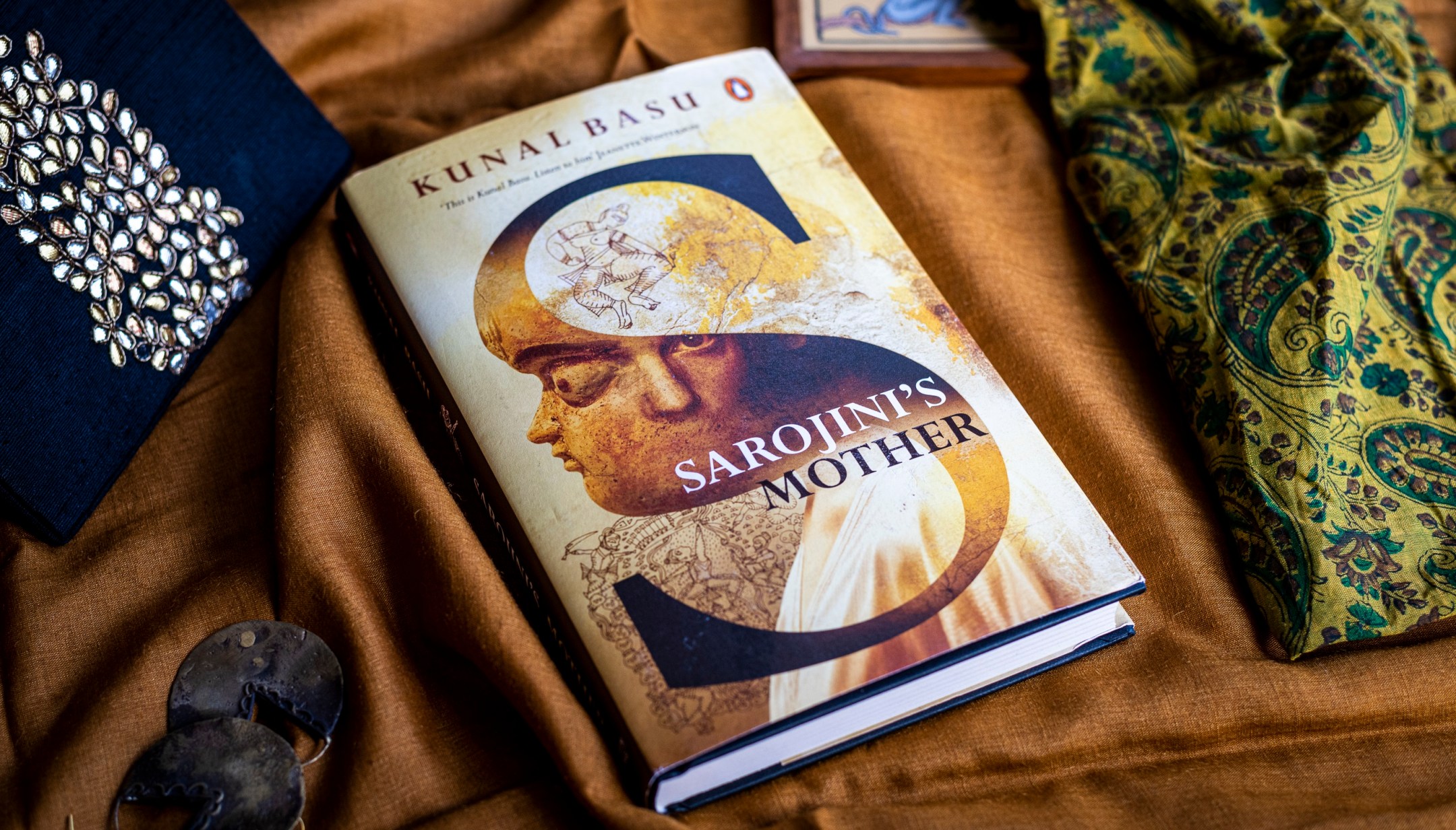
In Sarojini’s Mother, Sarojini-Saz-Campbell comes to India to search for her biological mother. Adopted and taken to England at an early age, she has a degree from Cambridge and a mathematician’s brain adept in solving puzzles. Handicapped by a missing shoebox that held her birth papers and the death of her English mother, she has few leads to carry out her mission and scant knowledge of Calcutta, her birthplace.

Through an emotionally intense journey of survival and mental demons – Sarojini discovers how the concept of motherhood is much more nuanced than simple biology.

Chiru Sen, an Elvis lookalike, becomes her guide and confidante on this journey. Find a glimpse of their first meeting in the excerpt below.


It was easy to spot Saz at the Rex. She was sitting by herself near the window. At first glance she looked Indian, but not fully so, given the way she was flapping the menu around awkwardly, troubled by the flies. She nodded when I mentioned Idris and pointed to the seat across from her. Then she gave a start as I grabbed the menu from her hand and swatted a fly that was about to perch on her half-eaten croissant.

‘Did you have to kill it!’ She scowled; eyes fixed on the dead fly.

‘Not unless you wished to share your meal with it!’ Shrugging, I tried to lighten the air.

She didn’t speak to me for a good while, kept her eyes locked on my face. From her puzzled look you could see she wasn’t expecting Idris’s friend to resemble a rock star. ‘Why do you dress like a dead man?’ Saw asked.

Right away I knew she was special and why Suleiman was bent on saving her from being spoilt.

‘The King isn’t dead!’ I joked.

‘Really! If he was alive, his hair would’ve fallen out by now. Would you have shaved your head then?’ Regaining her composure after the fly incident, she returned tot he croissant, taking small bites and chewing thoroughly.

Words came to my lips, but I kept them closed hoping to hear some more from Saz.

‘Or are you hoping he lives on through you? Like we want our parents and grandparents to keep on living forever.’

I wasn’t expecting philosophy straight up, I have to confess, not before we had discussed matters of hygiene at least. Like the condition of her flat and toilet and the owner’s demeanour, whether she had managed to acquire an Indian SIM for her phone, and stayed healthy from her travels.

Finished with her meal, she avoided the Rex’s yellowing napkin and took out a pack of tissues to wipe her lips. Then she cut into my thoughts.

‘It isn’t all bad to imagine we are somebody else. Especially if there is confusion over who we really are.’

She appeared calm, and the words coming out of her mouth were crisp and clear. Much as I was prepared to strike up a Geordie, a Brummie or a Cockney, her English was clearly BBC.

‘Especially if we aren’t sure where we’ve come from, or where we belong?’

It was my turn for lofty talk, and a chance to impress my new friend. ‘Which is…’

‘Which is true for half the people on this planet!’ She took the words right out of my mouth, ‘like the two of us—you a Bengali Elvis and me a brown Saz Campbell from Bromley!’

Smart girl!—I thought. She was playing my role, out of the wings and joining up two strangers with nothing more than a few chosen words.

Did I want a coffee of the cinnamon tea she’d ordered, Saz asked when the waiter came around. I shook my head. It was too early in our friendship to have her buy me refreshments. ‘A croissant perhaps?’ She smiled, pointing to the menu and keeping it out of my reach to avoid another unnecessary killing.

I wasn’t expecting Suleiman’s ‘girl’ to be a stunner, but her smile was quite extraordinary. The eyes are the most revealing, they say, but in her case it was definitely the smile. Dressed Western but Indian in looks, it made her out to be her own person unattached to a place of birth or home address.


The bestselling author of The Japanese Wife is back with an intimate look at human connections, friendships and family.

Saz, Chiru and his band members set off to help Saz look for her birth mother. Will they be successful? Find out in Kunal Basu’s, Sarojini’s Mother!

Perils of the City: Everyday Realities of Urban

So All Is Peace is a story of twin sisters – Layla and Tanya, who were anointed the ‘Starving Sisters’ when they were found to be starving in an upper middle class gated apartment complex in Delhi. Their news became instantly sensational and nobody could figure out what had caused two educated, beautiful women to starve themselves.

Here are some excerpts from Vandana Singh-Lal’s book, So All Is Peace, that highlights the feelings of alienation that the girls experienced while living in a big city.


Living in Delhi, Layla and Tanya were taught to avoid places where women felt vulnerable to inappropriate glances. Tanya remembers,

“With our carefully controlled outings with Mamma and Papa—shopping only at the malls, going to school in the school bus and to college in university-special or U-special as they are called; never going to any religious festival or a fair or any place where there may be crowds and the potential for a stampede (which was almost every place in Delhi)—our experience of groping fingers and lascivious glances was almost non-existent and we entered the territory that came with being a woman in Delhi or perhaps anywhere in India, unprepared, naked and woefully unarmed.”

*

Soon after their parents passed away, Tanya recalls an incident when feelings of loneliness gripped her, and she couldn’t discuss her harrowing experience of sexual assault with anyone around.

“Like sparks flying out of a short-circuit, it spewed out stray thoughts that I had nobody to share with, pieces of conversations that I could not have, bits of passages that nobody was present to hear, tears of sympathetic neighbours that had no place inside me, whispers of curious onlookers that I could not hide away from, the buzzing and sparking and searing and the absolute emptiness of a house where every room was still filled with the paraphernalia of the living but where everything had died.”

*

With Tanya relocating to Andhra Pradesh, Layla started dating Deepak. He often came to their house because,

“In a country where everything takes place outside in the open, where people bathe, eat, pray, sleep, shit, fight, play, kill and die on the road, the only thing that does not and that cannot happen on the road is love; the making of it, the display of it, or even the allusion to it, except in the larger than life film posters. But the posters too remain coy, allegorical, metaphorical. No kissing is allowed on the roads of the country, no holding of hands, no looking for too long into each others’ eyes either. So Layla had to find a place for them to meet and a relationship; a veneer however thin or translucent or unconvincing.”

*

Raman, the award-winning journalist, who has been tasked to write about the ‘Starving Sisters’ had begun to have strong feelings for Tanya.

Although he had spent relatively short time with her in person, he had devoted long hours to her mentally, analyzing the smallest of her gestures and the tiniest of inflictions in her voice ad-infinitum, and something in her had suggested a kind of depth that he was not used to encountering. Now he has been provided with some more clues about what exists behind her vulnerable tarsier eyes, and he is excited. This is a new challenge. And yet. Wouldn’t it have been easier if she did not have this other side? If she could have been enfolded within the narrative that was furiously being woven about her with the help of disparate threads—some real, most imaginary—but all being accorded the same amount of space and value as if the difference between the fake and the real does not matter anymore as long as everything could be fitted into an easily explained, easily propagated, easily digested world.

*

The gated societies of Delhi often have Residents’ Welfare Association (RWA) that have rules for visitors, especially males. When Deepak had moved in with the twins, Layla was regularly pestered by the head of RWA – Mr. Deol, to submit Deepak’s identity documents. Mr. Deol explained,

“We made the rule that we could not allow any overnight male visitor in any all-women household until they handed over his passport copy and gave us in writing what relationship they had with the man. I personally went to tell the sister that and to give them a copy of the notice. You know, the sister had looked at me very strangely then.’”


Pick your copy of So All Is Peace, to read how the shocking events unfolded in the starving sisters’ lives.

Meet the Characters from ‘Jaipur Journals’

Jaipur Journals is a unique, metafictional novel by Namita Gokhale, one of the founder-directors of Jaipur Literature Festival. Set against the backdrop of the festival itself, the book brings together a rich cast of characters and their even richer stories.

We introduce you to some of the characters whose lives intersect and collide within these pages.


Zoya Mankotia

A writer who identifies herself as pan-sexual and non-binary, Zoya Mankotia is an icon of queer literature and representation. Her most recent novel, The Quilt, created waves, occasioning both outrage and intense appreciation. Her voice holds a mélange of accents.

In the world of Jaipur Journals, we meet her in a panel, where she introduces herself:

‘I am by discipline a novelist […] as passionate about crossover genres as I am about gender fluidity. I am nonbinary and pan-sexual, and I am committed equally to my writing, my raison d’être, and my wife, my monogamous partner. We can be who we are, write as we like. Sexuality, as a narrative, is a freeflowing river.’

Raju Srivastava

Born in Bijnor, Raju Srivastava is a burglar who is passionate about poetry. He is the son of an unsuccessful tailor-master. He arrives in Jaipur to fulfil two purposes: meeting India’s greatest poet, Janab Javed Akhtar, and covering the cost of the trip through some well-executed burglaries.

Raju nurses a deep-seated desire to become a poet, and is an avid reader of poets like Nirala and Dushyant Kumar, Muktibodh and Firaq Gorakhpuri and Faiz Ahmad Faiz. He writes prolifically, and his preferred form of poetry is the ghazal. His hero and idol in the poetry world, however, is Javed Akhtar.

Anura

Anura is short for Anuradha, a twelve-year-old student en route to Jaipur on a school trip. She is a prodigy, having been selected for a Young Adult panel in the Jaipur Literature Festival. She has self-published a dystopian novel.

As is evident from her preference for the shortened form of her name, she is quite taciturn, and likes to save her words for important things.

Anna Wilde

Anna Wilde is a writer from America, who primarily publishes books on meditation and reflection. Anna is quite renowned for her association with the Beat Poets, especially Allen Ginsberg. She is attending the Jaipur Literature Festival to talk about her books The Inner Eye, which was very successful, and The Third Way, which has recently been reissued.

Anna teaches theology at the University of Colorado. She calls herself a Hindu, by ‘dharma and karma’, and has spent many years in India before returning to America.

Rudrani Rana

Rudrani Rana is a woman in her seventies, who sees herself as a ‘failed novelist’. She always carries around a handbag that contains her unpublished magnum opus; which she refers to as UNSUBMITTED.  The novel is actually titled The Face by the Window and is a dedicated to Alice Walker and her book, The Colour Purple.

Rudrani is an alumna of Waverly Girls School in Dehradun. Alongside her unpublished semi-fictional novel, she also writes anonymous letters as a means to express herself.

She is a huge fan of Oprah Winfrey, which is what had drawn her to the Jaipur Literature Festival for the first time, back in 2012. She is often fatigued and lonely, and feels like an outsider within the literature circuit at the festival.

Gayatri Smyth Gandhy

Gayatri Smyth Gandhy is fifty-two, single, divorced and is a self-proclaimed ‘citizen of the world’. She is a  historian and cultural anthropologist with an American green card.  She is also an aspiring novelist.

She is stuck in her novel, struggling to understand herself what it is about. She lived in Jaipur as an adolescent when her father Brig. Gandhy was stationed there. She considers herself a Jaipurite in many respects, and makes annual trips to the city during the festival. She often feels divided between her Indian and Western selves.


Namita Gokhale’s Jaipur Journals  brings together these characters within the setting of the Jaipur Literature Festival, and their stories are as vibrant and diverse as the largest free literary festival in the world!

There’s More to Life than Cricket

Jai is fourteen and dreams of owning a café in Delhi. Inaya is fifteen and dreams of playing cricket for Pakistan.

In 2008, their worlds collide. What unfolds is a story that started way back in 1947 – with the drawing of a line.

Inaya lives with her father in Rawalpindi. Her cricket ambitions don’t always go down well with her family.

Find a glimpse of her story in the excerpt below. 

*

Rawalpindi, Pakistan

A loud crash announced Inaya’s misjudged attempt at hitting a sixer in the tape-ball cricket tournament taking place in the street adjoining Haider Mansion. It startled Mudassar, the Haiders’ elderly help, almost causing him to drop the figurine of the ballerina that he was dusting. A tennis ball covered in insulation tape had shot through the open French windows in the drawing room, bouncing off a painting over the mantelpiece and knocking over a crystal photo frame. The ball deftly made its way through the shards of glass that now covered the floor to finally disappear beneath the large leather sofa. Moments later, a breathless fifteen-year-old burst into the room.

‘Sorry, sorry, Mudassar Chacha,’ Inaya panted, pushing away the mop of unruly curls from her eyes. Impenitently, she crouched down and retrieved the ball. ‘Please blame this on Zain. Please!’

There was the sound of footsteps and Inaya spun around.

‘What are we blaming on Zain, Inaya?’ asked her father, Irfan, as he strode in, followed at a more sedate pace by her grandparents. Inaya gulped and looked at them sheepishly. The trio surveyed the scene in silence. Inaya clutched the ball behind her back, hoping they wouldn’t notice the smashed photo frame.

Inaya’s grandmother straightened the painting that had tilted leftwards with the ball’s impact. ‘If you don’t like your grandfather’s paintings, you should just tell him so, Inaya. As I do,’ said Humaira. ‘Why go to all the trouble of taking potshots at them through windows?’

‘But I do like Daada’s paintings—that was an accident,’ muttered Inaya.

Inaya’s father retrieved the photograph that was on the floor. He carefully removed the fragments of glass and propped the photograph against the ballerina on the mantelpiece.

‘Inaya, look at your great-grandmother—she was . . . the epitome of grace. She would be appalled by all this,’ he said, gesturing at the destruction that lay before him. ‘There’s more to life than cricket, you know.’

­­

In Across the Line, Nayanika Mahtani presents a powerful story of borders and beliefs, shaped by the games people play. Lauded by Vidya Balan as a story that “lingers long after the last page is turned”, Jai and Inaya’s story brings together unlikely worlds across time and borders.

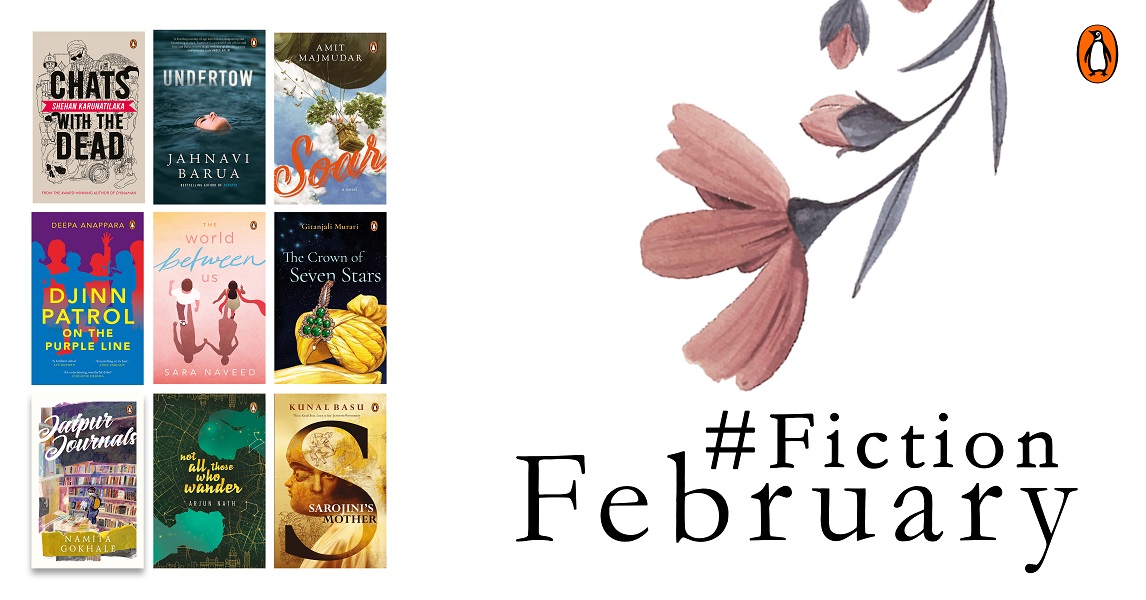
Books to Read This February!

Whether it’s fiction, non-fiction or a picture book on the theme of depression. We have an exciting range of books for you this February. You’ll run out of days before you run out of books to read this month!

Here’s the list of books you should look out for:

Djinn Patrol on the Purple Line

Nine-year-old Jai drools outside sweet shops, watches too many reality police shows and considers himself to be smarter than his friends Pari and Faiz. When a classmate goes missing, Jai decides to use the crime-solving skills he has picked up from TV to find him.

But what begins as a game turns sinister as other children start disappearing from their neighbourhood. Jai, Pari and Faiz have to confront terrified parents, an indifferent police force and rumours of soul-snatching djinns. As the disappearances edge ever closer to home, the lives of Jai and his friends will never be the same again.


Undertow

The tale of the troubled relationships of a family and what it might take to put the pieces back together.

Years ago, Torun Goswami and his charismatic, formidable wife cast their Rukmini away from their home and their lives for marrying out of her community.

Now, Rukmini’s daughter, Loya, twenty-five, solitary and sincere, arrives at Torun’s old yellow house. Will she be able to change her nonexistent relationship with her grandfather and in the process figure out who she is?


Soar

A laugh-out loud book by the author of Sitayana and Godsong. 

Bholanath and Khudabaksh are two soldiers in the British Indian Army, sent off to Europe to fight in World War I.

When a mission in a surveillance balloon goes awry, these two gentle soldiers-along with an exceptionally ill-tempered squirrel-are set adrift high above the Western Front. Follow their grand tragicomic adventure!

The World Between Us

The bestselling queen of romance is back!

When Amal finds out that her disastrous Tinder match is now going to be her boss, she can’t be more annoyed. Qais Ahmed is everything she never wants to be: narcissistic, manipulative and arrogant.

However, despite her relentless efforts, she is unable to resist his charm. Will a disturbing secret tear them apart or bind them together forever?

Calligraphies of Love

Inspired by timeless poems from around the world, Hassan Massoudy’s calligraphy takes us on a visual journey through love in its many forms.

Through his signature broad strokes and vibrant colours, this master calligrapher brings to life the words and wisdom of some of our greatest poets, from Ibn Zaydoun and Rumi to John Keats.


With Love: A Collection of Letters 

Dear Reader,

Letters change people.

They turn forty-year-old men into helpless fathers.
Scared mothers into fierce fighters.
Long-lost pets into possessive exes.
And old lovers into best friends.

They make you spell help.
Give someone a second first chance.
Make you leave behind a home.
And find another in someone.

Sometimes, they’re warnings.
Sometimes, confessions.
And sometimes, a story left untold.

Letters change people, they say.

Let’s hope these change you too.

With love,
Us

Terribly Tiny Tales and Penguin come together on the same page with this book!

The Girl Who Disappeared

The bestselling author of The Girl Who Knew Too Much is back!

At the onset of her getaway to the hills of Himachal Pradesh, Nisha knew something terrible was going to happen. Less than seventy-two hours later, she goes missing under mysterious circumstances.

With barely any leads, the police know they have to work doubly hard if they want to find her, but with each passing day, the mystery around her disappearance gets murkier.

Where is Nisha?

Inside A Dark Box 

A pertinent picture book on depression.

When you get trapped in darkness, finding your way out can be a long and lonely battle, especially when the war is within your own mind. Here’s a peep inside a mind struggling with itself.

Fearless

One girl can change everything.

Through the ages, strong, inspirational women and girls have risen in response to uncertainty and injustice. A timeless call to arms that many like Fatima Jinnah, Asma Jehangir and Malala Yousafzai have always been answering.

Fearless chronicles the lives of fifty such incredible women-scientists, lawyers, politicians, activists and artists-who incite hope, inspire action and initiate dialogue.

Not All Those Who Wander

Quirky and heartfelt, this is a story of millennial friendship that is #litAF.

Seventeen-year-old Gehna Rai has normal friends and belongs to a normally dysfunctional family. Everything about Gehna is normal-except she just found out that she’s going to be a mom.

Eram, a nerdy high-school dropout, dreams of becoming a poker pro while trying to keep his dad, who has Parkinson’s disease, from going completely mental. He has little time for much else-until a chance meeting with a girl blows his life to pieces.

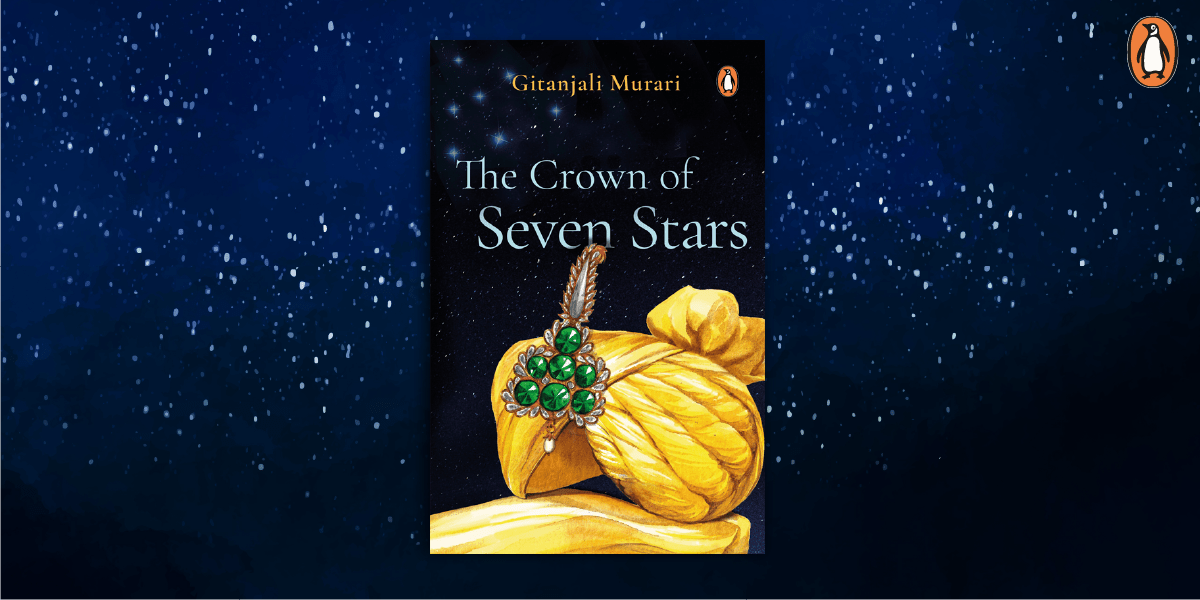
The Crown of Seven Stars

Aum is under attack. The enemies are not external; rather, they are within the kingdom, each obsessed with the Crown of Seven Stars. Early one morning, Destiny rolls her dice. General Saahas, heir to the throne, becomes a hunted man and Aum plunges into chaos, submitting meekly to the tyranny of the self-appointed Raja Shunen and the wily Queen Manmaani.

Rolling the dice once more, Destiny prepares to bend Saahas to her will. She, not Saahas, must decide the winner of the Crown of Seven Stars.

The Other Side of the Divide

A fresh perspective on Pakistan, how Indians view Pakistan and how Pakistanis view India and Indians.

Pegged on journalist Sameer Arshad Khatlani’s visit to Pakistan, this book provides insights into the country beyond what we already know about it. The Other Side of The Divide attempts to present a contemporary portrait of Pakistan as a complicated and conflicted country suspended between tradition and modernity.

Chanakya Niti

Chanakya’s numerous sayings on life and living — popularized in the wake of his successful strategy to put Chandragupta Maurya on the throne, if legend is to be believed — have been compiled in numerous collections and anthologies over time. This entire corpus was referred to as Chanakya Niti.

A.N.D. Haksar’s wonderful translation places this work into context, showing how these verses have endured in the popular imagination for so long.

Endless Song

The Tiruvaymoli is a grand 1102-verse poem, composed in the ninth century by Sathakopan-Nammalvar, the greatest of the alvar poets. Ingeniously weaving a garland of words-where each beginning is also an ending-the poet traces his cyclical quest for union with the supreme lord, Visnu.

In this magnificent translation, Archana Venkatesan transports the flavour and cadences of Tamil into English, capturing the different voices and range of emotions through which the poet expresses his enduring desire for release.

Nava-e-Sarosh


Delhi established a legacy of poets whose words set hearts ablaze for the times to come. Love, with all its wine-infused passions and experiences of yearning, has preoccupied classic poets of the city.

As a patron of Urdu poetry and a resident of Delhi, Sanjiv Saraf’s personal investment in preserving and furthering the arts in the Urdu world led to the creation of this book.

Desire, longing and the complexities of love are therefore open to exploration for you, dear reader and lover, through the words laid out in these ghazals by the ‘voices from beyond’.

An Officer and His Holiness

In 1959, the Dalai Lama escaped from Tibet into India, where he was granted refuge. Few know about the carefully calibrated operation to escort him safely from the Indian border. An Officer and His Holiness narrates how political officer Har Mander Singh successfully managed this assignment in the North East Frontier Agency (NEFA) with limited resources, and despite a treacherous terrain and external threats.

The Story of Yoga

How did an ancient Indian spiritual discipline turn into a GBP 20 billion-a-year mainstay of the global wellness industry?

This comprehensive history sets yoga in its global cultural context for the first time. From arcane religious rituals and medieval body-magic, through muscular Christianity and the British Raj, to the Indian nationalist movement and the arrival of yoga in the twentieth-century West.

error: Content is protected !!