Publish with Us

Follow Penguin

Follow Penguinsters

Follow Penguin Swadesh

Lambton’s Cartographical Adventure- An Excerpt from ‘Mapping The Great Game’

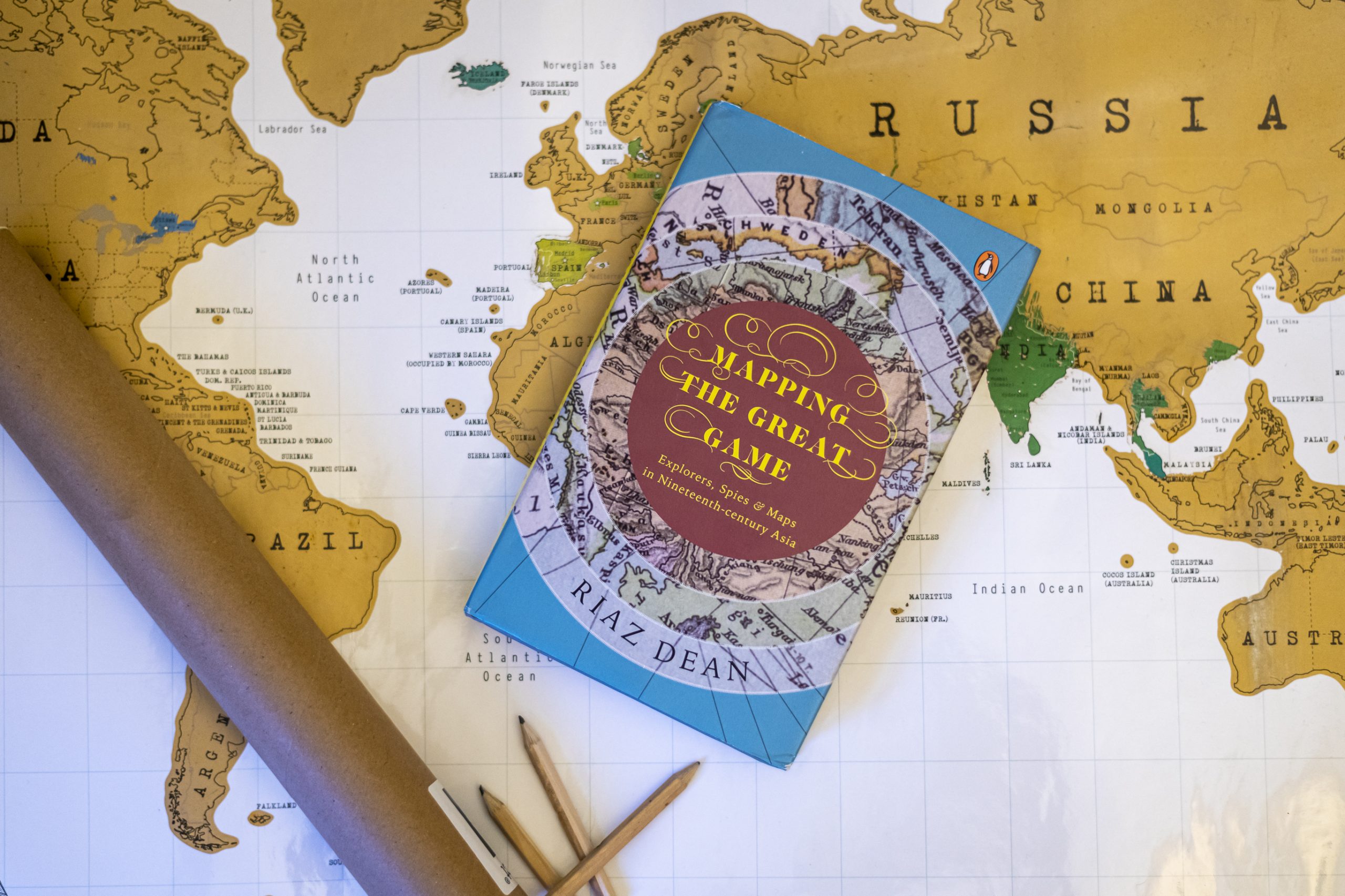
While ‘the game for power’ between Imperial Russia and Great Britain was being played out in the 19th century, a self-educated cartographer named William Lambton began mapping the Great Arc, attempting to measure the actual shape of the Indian subcontinent. It was completed four decades later by a fellow officer working for the Survey of India, George Everest, who would have a special mountain named in his honor.

Featuring forgotten, enthralling episodes of derring-do and the most sincere efforts to map India’s boundaries, Mapping the Great Game is the thrilling story of espionage and cartography.

Read an excerpt from the book below:

—–

Now, nothing stood in Lambton’s way: he could embark on his cartographical adventure, and attempt to solve a key question of geodesy he had pondered for many years. It originated from a knotty problem known as ‘spherical excess’, which arises because the earth is essentially a sphere. In effect this means the angles of a triangle, rather than adding up to 180 degrees as they would on a flat surface, actually exceed this figure, albeit ever so slightly. If the triangles being marked out are relatively small, then this impact is minor and can be ignored, as Mackenzie was doing in his Topographical Survey. Conversely, as the land area being surveyed becomes larger than 10 square miles, the mathematics of trigonometry must be adjusted for this effect. Thus, a survey across the whole peninsula would obviously need to take spherical excess into account. But this was only the first part of the conundrum, and actually the simpler of two problems concerning the earth’s shape.

The second and more complex problem arises from the well-understood fact that the earth isn’t a true sphere, but is flatter at the poles as it spins on this axis. Isaac Newton had postulated this in the late seventeenth century, as a natural consequence to his theory of gravitation. It had been proven in the 1730s, by two separate expeditions sent out from France—at great expense—to measure one degree of latitude at two different points on the earth’s surface. This exercise, which took a number of years to complete and involved much hardship, determined a degree to equal 68.7 miles close to the equator, whereas near the Arctic Circle it measured 69.6 miles. This difference proved beyond doubt that the effect was significant, and must be corrected for if a large-scale survey was to be credible.

The geodetic problem for Lambton boiled down to a similar question: what was the length of one degree of latitude around the tropics where Madras lay? If he knew this, he would have the information needed to determine the extent of spherical excess in this part of the world. Such a discovery would not only improve the accuracy of his own survey, but also, as he put it, ‘determine by actual measurement the magnitude and figure of the earth’. It wouldn’t be just an academic exercise either, as ascertaining this dimension would have immense practical value: for example, it would improve the compilation of navigation tables and sea charts. Moreover, by measuring the actual shape of the earth on the subcontinent, the true positions and heights of all its places, including its towering mountains, could be fixed.

Once he had acquired his precious instruments and measured out the base-line, this question was finally answered in 1802, although it would require a year of painstaking work. First, he triangulated a short arc* just over 100 miles long, equivalent to almost 1½ degrees of latitude. Working down the south coast from Madras, this exercise gave him the arc’s precise ground distance, measured in miles. Next, he determined the latitude of both its extremities through astronomical observations and, by subtracting one from the other, determined the arc’s span in degrees. Since these two values were determined independently of each other, by dividing the length of the arc in miles by its span in degrees, he was able to deduce the precise length of one degree of latitude. In this way, he was able to finally determine the spherical excess figure that had eluded him for so long.


Grab your copy of  Mapping The Great Game  and discover forgotten and enthralling episodes of the most sincere efforts to map India’s boundaries!
Can the Stillness Of Your Mind Dispel the Discord that Threatens the World?

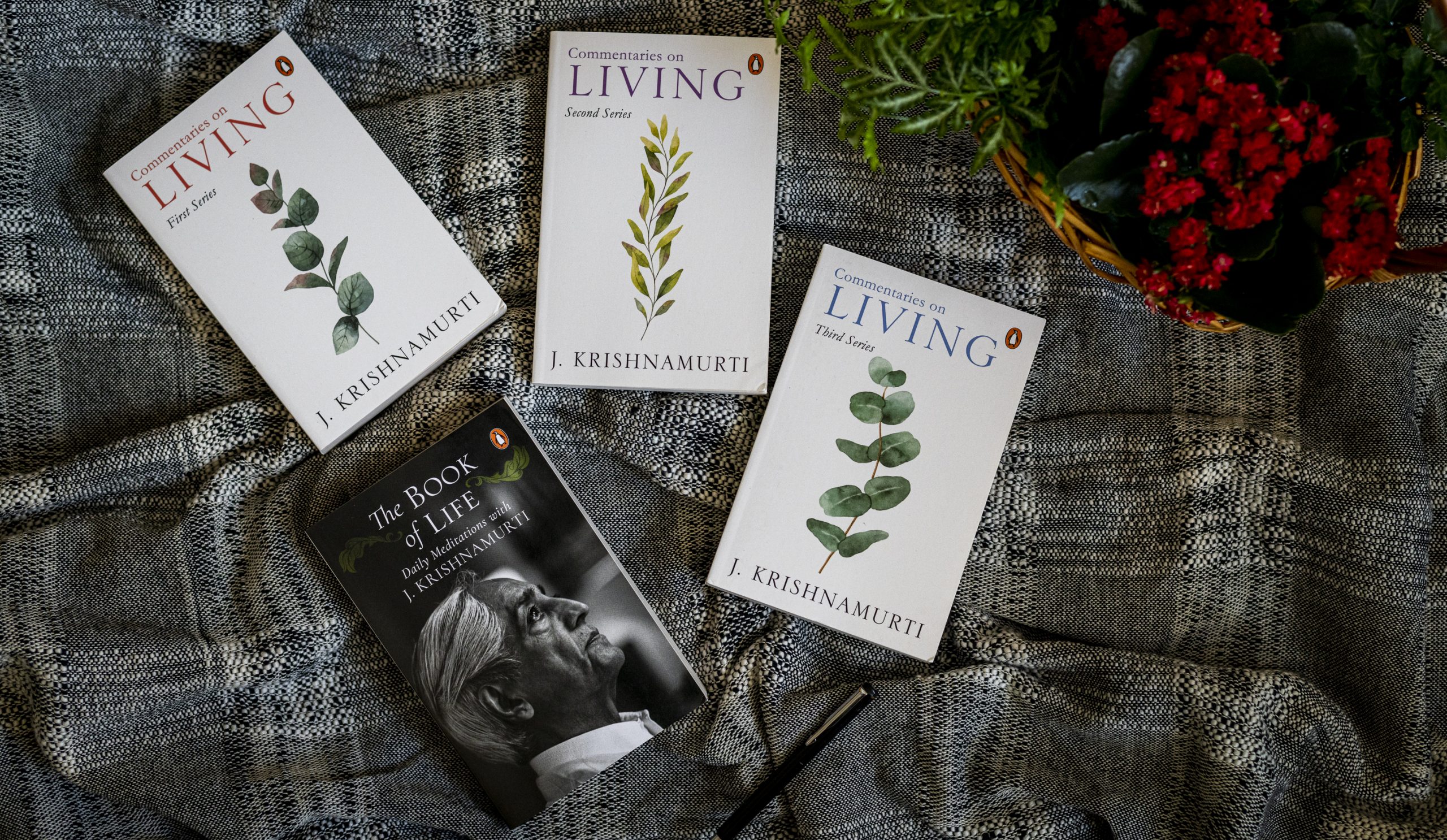
The three-volume series of Commentaries on Living records revered philosopher and teacher J. Krishnamurti’s meetings with individual seekers of truth from all walks of life. While exploring topics as diverse as knowledge, truth, fulfillment, meditation, love and education, these dialogues offer an insight into the struggles and issues common to those who strive to break the boundaries of personality and self-limitation. The essence of Krishnamurti’s teaching is that only through a complete change of heart in the individual can there come about a change in society and so peace to the world.

In his exploration of the conditioning of the mind and its freedom, Krishnamurti raises questions that challenge accepted ways of thinking.

Read on for 6 thought-provoking questions and life lessons from the Commentaries on Living-

Outward simplicity may be an expression of intention but can this take us towards the peace and bliss we seek?

‘Simplicity of the heart is of far greater importance and significance than simplicity of possessions. To be content with few things is a comparatively easy matter. To renounce comfort, or to give up smoking and other habits, does not indicate simplicity of heart. To put on a loin-cloth in a world that is taken up with clothes, comforts and distractions, does not indicate a free being.’

With man becoming a slave of the state, can we find the freedom to awaken our highest intelligence?

‘To be a good citizen is to function efficiently within the pattern of a given society. Efficiency and conformity are demanded of the citizen, as they toughen him, make him ruthless; and then he is capable of sacrificing the man to the citizen. A good citizen is not necessarily a good man; but a good man is bound to be a right citizen, not of any particular society or country.

Identification with something external offers an escape from one’s emptiness; in this endless cycle of substitution of attachments, can we ever face the unwillingness of our mind to be still and free of thought?

‘Attachment to your work is your escape. There are escapes at all the levels of our being. You escape through work, another through drink, another through religious ceremonies, another through knowledge, another through God, and still another is addicted to amusement. All escapes are the same, there is no superior or inferior escape. God and drink are on the same level as long as they are escapes from what we are.’

If ideas are inherently divisive, then can a revolution based on ideology bring about equality?

‘Revolution based on an idea, however logical and in accordance with historical evidence, cannot bring about equality. The very function of idea is to separate people. Belief, religious or political, sets man against man. So-called religions have divided people, and still do. Organized belief, which is called religion, is, like any other ideology, a thing of the mind and therefore separative.’

By lulling man into a state of temporary contentment, do reforms actually impede total transformation?

‘Reform, however necessary, only breeds the need for further reform, and there is no end to it. What is essential is a revolution in man’s thinking, not patchwork reform. Without a fundamental change in the mind and heart of man, reform merely puts him to sleep by helping him to be further satisfied.’

With the acceptance of authority ingrained within us we tend to get influenced by charismatic leaders but does their calm assumption of knowing what’s good for the people really work to our advantage?

‘Every party knows, or thinks it knows, what’s good for the people. But what is truly good will not create antagonism, either at home or abroad; it will bring about unity between man and man; what is truly good will be concerned with the totality of man, and not with some superficial benefit that may lead only to greater calamity and misery; it will put an end to the division and the enmity that nationalism and organized religions have created.


Proclaimed as a saviour at the age of fourteen, J. Krishnamurti travelled the world sharing his wisdom with people and inspiring the likes of Jawaharlal Nehru, Aldous Huxley, George Bernard Shaw and the Dalai Lama. In Commentaries on Living, he helps us to see ourselves as we really are, for it is in seeing with absolute clarity that the inward revolution takes place.


To explore the depths within you, read Commentaries on Living series!

The Game of Business: Excerpt from Simon Sinek’s ‘The Infinite Game’

In today’s world lead by young entrepreneurs, what does competition in businesses actually mean?

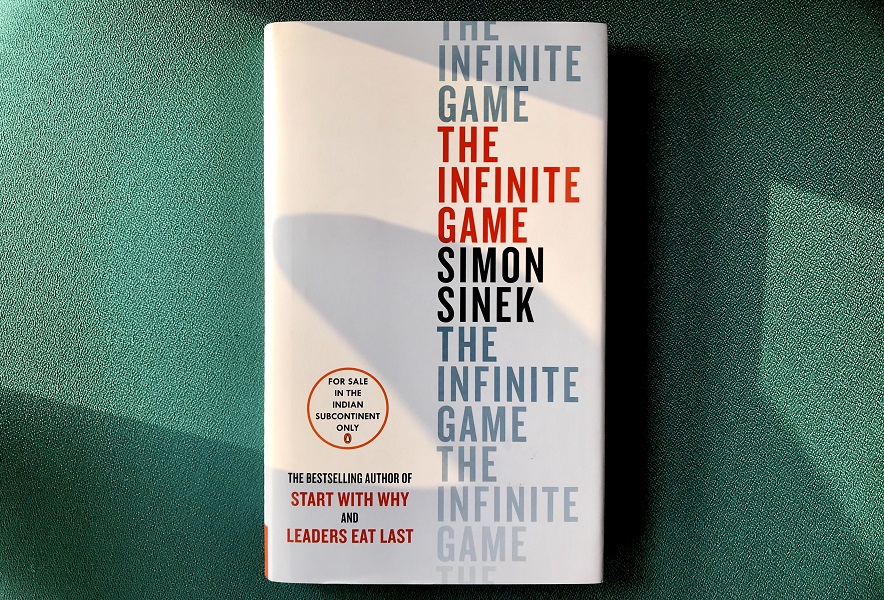
An optimist, motivator and author, Simon Sinek lays out a clear framework to help us navigate the world of business – which he presents as an ‘infinite game’, with no clear finish lines, losers or winners.

Read on for an excerpt that introduces this idea.

The Infinite Game of Business

The game of business fits the very definition of an infinite game. We may not know all of the other players and new ones can join the game at any time. All the players determine their own strategies and tactics and there is no set of fixed rules to which everyone has agreed, other than the law (and even that can vary from country to country). Unlike a finite game, there is no predetermined beginning, middle or end to business. Although many of us agree to certain time frames for evaluating our own performance relative to that of other players – the financial year, for example – those time frames represent markers within the course of the game; none marks the end of the game itself. The game of business has no finish line.

Despite the fact that companies are playing in a game that cannot be won, too many business leaders keep playing as if they can. They continue to make claims that they are the “best” or that they are “number one.” Such claims have become so commonplace that we rarely, if ever, stop to actually think about how ridiculous some of them are. Whenever I see a company claim that it is number one or the best, I always like to look at the fine print to see how they cherry-picked the metrics. For years, British Airways, for example, claimed in their advertising that they were “the world’s favourite airline.” Richard Branson’s airline, Virgin Atlantic, filed a dispute with Britain’s Advertising Standards Authority that such a claim could not be true based on recent passenger surveys. The ASA allowed the claim to stand, however, on the basis that British Airways carried more international passengers than any other airline. “Favourite,” as they used the word, meant that their operation was expansive, not necessarily preferred.

To one company, being number one may be based on the number of customers they serve. To another, it could be about revenues, stock performance, the number of employees or the number of offices they have around the globe. The companies making the claims even get to decide the time frames in which they are making their calculations. Sometimes it’s a quarter. Or eight months. Sometimes a year. Or five years. Or a dozen. But did everyone else in their industry agree to those same time frames for comparison? In finite games, there’s a single, agreed-upon metric that separates the winner from the loser, things like goals scored, speed or strength. In infinite games, there are multiple metrics, which is why we can never declare a winner.


Are you playing an inifinite game or finite game? Read The Infinite Game to find out!

Who is an Indian and Whose India Is It? Shashi Tharoor’s Quest into the Idea of a Nation

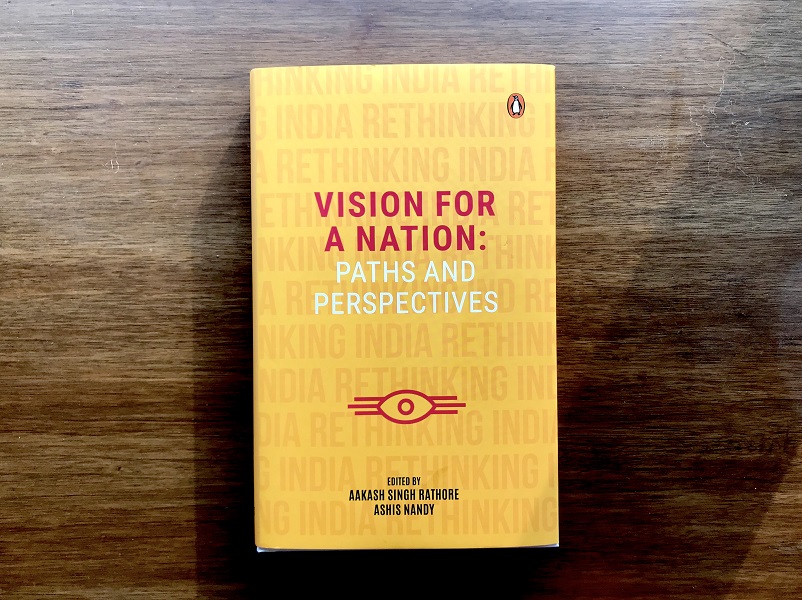
Inundated with a barrage of politically charged agendas, citizens of the world no longer have the luxury of being ignorant aboutin the dynamics of the state. In a nation as diverse and fluid as India, one’s very identity gets threatened by the discourse on nationalism.. Taking us right into the crux of the issues that affect each one of us are the intelligentsia of this vibrant nation, who have come together in Vision for a Nation: Paths and Perspectives to champion a plural, inclusive, just, equitable and prosperous India.

To put in perspective the sheer range and depth of this discussion, Shashi Tharoor writes: ‘Just thinking about India makes clear the immensity of the challenge of defining what the idea of India means. How can one approach this land of snow peaks and tropical jungles, with twenty three major languages and 22,000 distinct ‘dialects’…, inhabited in the second decade of the twenty-first century by more than a billion individuals of every ethnic extraction known to humanity?’


Read on to get a glimpse of the five Visions of India presented by Shashi Tharoor in his essay ‘A Land of Belonging’:


The Plurality of India

The pulsating energy that abounds in every corner of this vast land is the result of a unique convergence of diverse communities that are united in the fact of their nationality yet distinct in their culture. Tharoor points out the anomaly of looking at India in the singular-

There are, as the hackneyed phrase goes, many Indias. Everything exists in countless variants. There is no single standard, no fixed stereotype, no one way. This pluralism is acknowledged in the way India arranges its own affairs: all groups, faiths, tastes and ideologies survive and contend for their place in the sun.’

*

The Unity of India

Symbolic of the heritage of this great civilisation are the epics that demonstrate the impulse of unity, woven into the fabric of India despite the many episodes in Indian history of fractures that render this belief suspect:  

The epics have acted as strong, yet sophisticated, threads of Indian culture that have woven together tribes, languages and peoples across the subcontinent, uniting them in their celebration of the same larger-than-life heroes and heroines whose stories were told in dozens of translations and variations, but always in the same spirit and meaning.’

*

The Duality of India

The preamble of the Constitution encapsulates the vision of India’s founding fathers who believed in a glorious future where the Indian Republic would stand strong on the pillars of justice, liberty, equality and fraternity. And yet, the dichotomy of modern India is evident:

‘Caste, which Nehru and his ilk abhorred and believed would disappear from the social matrix of modern India, has not merely survived and thrived, but has become an instrument for highly effective political mobilization.’

*

The Complexity of India

With pluralism and diversity being the foundation of this nation, India is unique in that the only commonality in its inhabitants is the awareness of their many differences. The identity of an Indian cannot be contained within descriptions of language, ethnicity, religion or geography-

‘It is the idea of an ever-ever land—emerging from an ancient civilization, united by a shared history, sustained by pluralist democracy. India’s democracy imposes no narrow conformities on its citizens.

*

The Secularism of India

The notion of majority and minority in a nation that celebrates diversity can create a dangerous discourse which has the potential to incite violence in the name of religious identifications. Reiterating the essence of Indian Secularism, Tharoor writes:

Western dictionaries defined secularism as the absence of religion, but Indian secularism meant a profusion of religions; the state engaged with all of them but privileged none.’


At a time in history when the world is rife with conflict, India’s foremost intellectuals, academics, activists, technocrats, professionals and policymakers open a discourse on nation and identity. First in a fourteen-volume series titled Rethinking India, Vision for a Nation initiates a discussion on some key issues of our time.

To delve deeper into a subject that is both relevant and challenging, read Vision for a Nation.

5 Indian Ingredients You Can Use in Baking


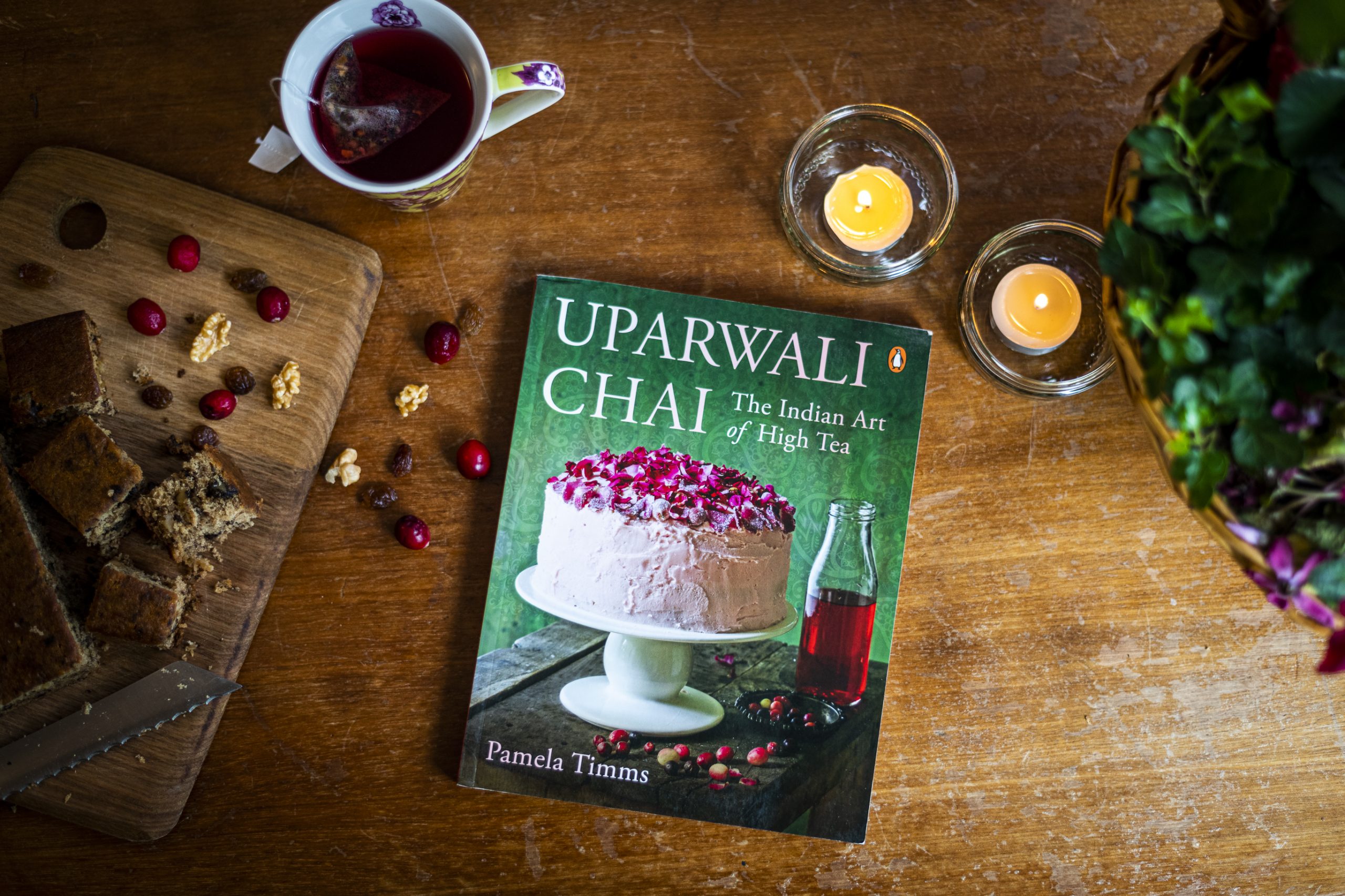
Uparwali Chai is a beautifully curated set of recipes full of nostalgic flavours and stories, this is a book every home cook will be referring to for generations to come.

Baking ingredients are now widely available in major cities but for most of these recipes, local markets and kirana shops will provide everything you need. Here we list down 5 such Indian ingredients and how they can be used in baking:

Yoghurt

It is mostly used as a mixing and a holding agent. It is used to make muffins and cakes in addition to other desserts. Pamela Timms uses it to make Lemon and Cardamom Yoghurt Cake, Refrigerator Bran Muffins and even a Labneh Cheesecake using hung yoghurt!

Saffron

This adds an aroma, flavour and colour  to any food item it is added to. Just a pinch is enough to turn a simple dish into an exotic one! Use it to make Daulat ki Chaat, Saffron and Chocolate Macaroons and many delicious desserts. (All these recipes can be found in the book!)


Mawa

Mawa or khoya is a milk-based ingredient and is often used in cakes, muffins or even biscuits. Delight your family and friends this festive season with Mawa Madeleines.


Mango

The king of fruits! It is not only eaten in abundance in India during the summer but it is also used as an ingredient in many desserts and baked items,  You can make a Mango and Old Monk Trifle if you’d like your dessert to have a kick! Or try out Pamela’s Mango and Gondhoraj Lime No-Bake Cheesecake.


Salted Butter (Amul)

When it comes to using butter, Indian baking mostly makes use of salted butter which is very readily available at every neighborhood grocery store. Add a slight savoury touch to your tea with the Banana Loaf Cake with Chai-spiced Icing or try something new like Mango and Marmalade Flapjacks.


Is your mouth watering already? Use these ingredients to make some of these delightful items and more with Uparwali Chai.


Fear of Transience: Excerpt from Shaheen Bhatt’s ‘I’ve Never Been (Un)Happier’

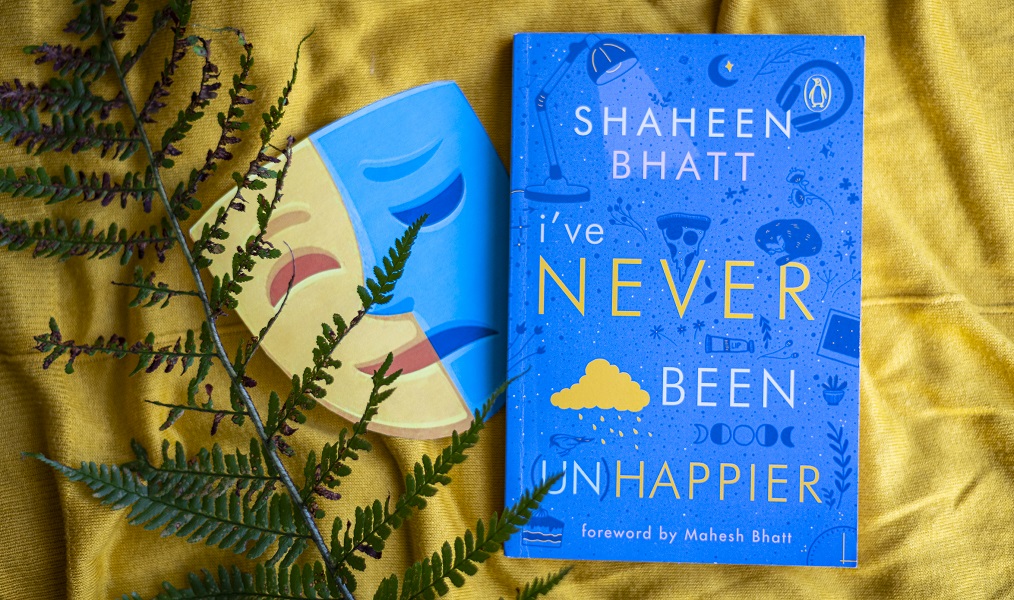
‘I don’t write about my experiences with depression to defend the legitimacy of my pain. My pain is real; it does not come to me because of my lifestyle, and it is not taken away by my lifestyle,’ says Shaheen Bhatt in her multidimensional philosophical tell-all book, I’ve Never Been (Un)Happier.

A poignant illustration of her day-to-day struggles with depression, Shaheen Bhatt’s memoir is crucial in starting a conversation that has been hushed for too long.

Read on to find an excerpt to begin a dialogue around mental health in India.

**

Perpetual bliss does not exist and anyone who peddles the belief that it does, or tries to convince you that there is a secret path through the woods that leads to an oasis of unending peace and happiness is either deluded, or a liar.

For too long we’ve been convinced that the emotional fairy tale—the perfect state of emotional well-being— exists, and that it’s tantalizingly close but just out of reach. We’ve been convinced that it exists and we’ve been convinced that there’s something fundamentally wrong with us for not being able to attain it.

It’s high time that we realize that there’s nothing wrong with us.

There’s something wrong with the fairy tale. Perpetual bliss does not exist, and saying that does not make me a nihilist.

I sit on the same see-saw that we all do and it continuously goes up and down, shifting between darkness and light—it’s the same for us all. Some of us simply stay down a little longer in a dark that’s just a little darker.

Transience is something we’re all so afraid of, and we live in perpetual fear of a new, different reality.

But thank God for transience because even though it means that happiness doesn’t last it also means that pain eventually passes.

It means that neither heaven nor hell are permanent.

There is nothing glorious or freeing or romantic or lovely about depression. Depression is a monster, a villain and thief, but even the worst of experiences teach you something. Depression has taken a lot from me and it has also given me a lot, but only because I eventually demanded it. I demanded my lessons and I took them head on.

‘You must not allow your pain to be wasted, Shaheen,’ my father said to me. I chant that quietly to myself—‘My pain must not be wasted,’ I say—and I try to learn, I try to do. I grieve and cry and hurt but I also take my medication and go to therapy. I watch my soul being bent and twisted into painful, unnatural shapes and marvel at how I’ve never seen it from those angles before. There are still days and weeks and months when I am also consumed by depression, when I forget all my lessons, when I forget everything but the pain. And that’s also when I turn to the very idea I’m afraid of: transience.

I remind myself if happiness is fleeting, then so is sadness.

I remind myself depression is the weather, and I’m a weather-worn tree.

I remind myself even the worst storms pass.

I remind myself I’ve survived them all.


**

A topic of massive interest to anyone with mental health disorders, I’ve Never Been (Un)Happier stretches out a hand to gently provide solace and solidarity. Go get your copy today!

Shaheen Bhatt on the Fear of Transience

‘I don’t write about my experiences with depression to defend the legitimacy of my pain. My pain is real; it does not come to me because of my lifestyle, and it is not taken away by my lifestyle,’ says Shaheen Bhatt in her multidimensional philosophical tell-all book, I’ve Never Been (Un)Happier.

A poignant illustration of her day-to-day struggles with depression, Shaheen Bhatt’s memoir is crucial in starting a conversation that has been hushed for too long.

Read on to find an excerpt to begin a dialogue around mental health in India.

**

Perpetual bliss does not exist and anyone who peddles the belief that it does, or tries to convince you that there is a secret path through the woods that leads to an oasis of unending peace and happiness is either deluded, or a liar.

For too long we’ve been convinced that the emotional fairy tale—the perfect state of emotional well-being— exists, and that it’s tantalizingly close but just out of reach. We’ve been convinced that it exists and we’ve been convinced that there’s something fundamentally wrong with us for not being able to attain it.

It’s high time that we realize that there’s nothing wrong with us.

There’s something wrong with the fairy tale. Perpetual bliss does not exist, and saying that does not make me a nihilist.

I sit on the same see-saw that we all do and it continuously goes up and down, shifting between darkness and light—it’s the same for us all. Some of us simply stay down a little longer in a dark that’s just a little darker.

Transience is something we’re all so afraid of, and we live in perpetual fear of a new, different reality.

But thank God for transience because even though it means that happiness doesn’t last it also means that pain eventually passes.

It means that neither heaven nor hell are permanent.

There is nothing glorious or freeing or romantic or lovely about depression. Depression is a monster, a villain and thief, but even the worst of experiences teach you something. Depression has taken a lot from me and it has also given me a lot, but only because I eventually demanded it. I demanded my lessons and I took them head on.

‘You must not allow your pain to be wasted, Shaheen,’ my father said to me. I chant that quietly to myself—‘My pain must not be wasted,’ I say—and I try to learn, I try to do. I grieve and cry and hurt but I also take my medication and go to therapy. I watch my soul being bent and twisted into painful, unnatural shapes and marvel at how I’ve never seen it from those angles before. There are still days and weeks and months when I am also consumed by depression, when I forget all my lessons, when I forget everything but the pain. And that’s also when I turn to the very idea I’m afraid of: transience.

I remind myself if happiness is fleeting, then so is sadness.

I remind myself depression is the weather, and I’m a weather-worn tree.

I remind myself even the worst storms pass.

I remind myself I’ve survived them all.


**

A topic of massive interest to anyone with mental health disorders, I’ve Never Been (Un)Happier stretches out a hand to gently provide solace and solidarity. Go get your copy today!

Memorable quotes from India’s favourite storyteller, Sudha Murty!

Sudha Murty has won the hearts of the young and adults alike with her inspiring stories and life-lessons.

The Sudha Murty Children’s Treasury brings together some of her most adored short stories in the form of a dazzling hardback edition. Here are some words of wisdom from the book, that would give you your daily dose of motivation!


‘As a teacher, I have seen that sometimes even a bright student may not do well because of the pressures of the final test. There are other ways to examine the depth of knowledge of the student, like surprise exams, open book exams, oral exams etc. The examination should not scare the students, instead it should measure knowledge fairly and give marks accordingly.’

~

Front cover of The Sudha Murty Children's Treasury
The Sudha Murty Children’s Treasury || Sudha Murty

‘When climbing the ladder it is very easy to kick those below, but one must not forget that you cannot stay at the top forever. The higher you go, the longer is the fall.’

~

‘It is not fear that binds you to your boss. Affection, openness and the appreciation of your qualities builds a long-lasting relationship. We spend most of our time at our work places. This time should be spent in happiness, not in blaming each other.’

~

‘What had I learnt from the hard journey that was my life? Did I work for money, fame or glamour? No, I did not work for those; they came accidentally to me. Initially I worked for myself, excelling in studies. After that I was devoted to Infosys and my family. Should not the remaining part of my life be used to help those people who were suffering for no fault of theirs?’

~

‘How long can you keep birds in cages when their wings are strong and they are ready to fly? We can give our children only two things in life which are essential. Strong roots and powerful wings. Then they may fly anywhere and live independently. Of all the luxuries in life, the greatest luxury is getting freedom of the right kind.’


From inspiring real-life encounters as a teacher to timeless stories woven from the memories of her own grandparents’ bedtime tales, The Sudha Murty Children’s Treasury is a must-read collection of all stories that have delighted generations of readers. Gift this to your friends today for their daily dose of inspiration!

An Indian woman in Afghanistan

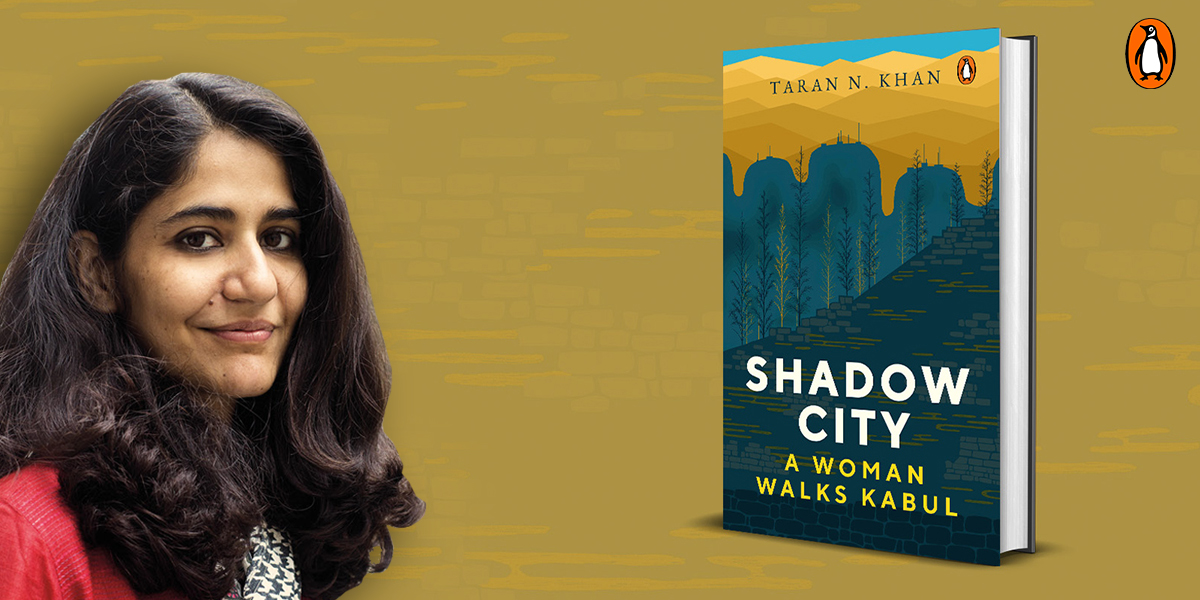
Afghanistan has been under siege for decades and while ‘it is easy to forget that Kabul existed 3000 years ago’, Taran N. Khan renders a vivid account of her travel tales through Kabul in her latest book – Shadow City.

Travel with her through Kabul:

Taran’s first encounter in the land of Pashtuns reminds her that she isn’t far from home

She recollects the time when an immigration officer exclaimed,

‘”Khan?” … “Yes,” I replied, eager to tell my story. “My ancestors were from here.” “Then what are you doing there?” he demanded in good Urdu, amused by my excitement. He stamped the page with a flourish. “Welcome back.”‘


While walking through the city, she uncovers the wonders of Kabul

‘from the Shahr-e-Kohna, or the old city, to the Shahr-e-Nau, or new suburbs’. Step by step she drifts through narrow lanes, relaying historical records, spotting European influences on architecture, capturing the cryptic similarities between the city she was born in – Aligarh, and the city believed to be connected by ‘a bridge (pul) made of straw (kah)’ – Kabul.


Taran comes out of her comfort zone

Shadow City highlights the conservative Muslim culture Taran witnessed while growing up in Aligarh. Being constantly confined to her room, she developed an interest in reading books. She remarks that,

‘… the world outside my door was as distant as a faraway continent. I ventured into it like a tourist. … Books were thus my private continent, providing both excitement and safety.’ But on one of her visits when she forgets to pack her books, she soon manages to find a way to read the city of Kabul, venturing through the lanes to find hidden charms like the ‘bookshop (that) has remained open through each of Kabul’s shifting eras: Communist, Mujahideen, Taliban, ISAF.’ 


Taran feels nostalgic whenever she visits Kabul

Each of her visits reminded her of the stories illustrated by Baba, who was well versed in Persian, uncovering myths like –

‘… He knew that the celebrated Sufi poet Jalaluddin Rumi had been born in Balkh, in northern Afghanistan, rather than Turkey, as I had assumed (which was why in Kabul I often heard him referred to as Maulana Jalauddin Balkhi).’ 


She finds similarities between the culture in Kabul and Aligarh

She delves deeper into the interiors of the city and finds herself getting nostalgic at the sight of finding ‘a functioning cinema in Kabul.’ Watching a film meant evading the confines of a house that women were mostly restricted to in Aligarh. It symbolized freedom and modernity for Taran, even if it meant scurrying out at night with other girls and aunts. She recalls that in Kabul, as in Aligarh,

‘The cinema was so exclusive, … that people were not allowed to enter in traditional Afghan clothes. … From these stories, I learned that in Kabul, like in Aligarh, cinema was an escape. It was also a place of aspiration, a window to a world that was still far away, still full of wonders.’

Taran realizes the nuances of love 

We have seen many a movies relaying emotion of ‘arranged love’. The ties of matrimony are arranged in a distinctly similar manner in most of the South Asian region. As Taran listened to Saleem’s love tales, she wondered that,

‘The fact that the couple had never spoken to each other, the intense scrutiny to nuanced signs— we were accustomed to this. That was how love played out, in Kabul as in Aligarh.’

Taran’s fascinating exploration will inspire you to visit Kabul

As Taran embarks on the journey to explore the fascinating city, nervously repeating

‘”Red stones mean danger,” … “White stones mean safety”’, she paints a beguiling picture of the city that demands a visit.


Discover Kabul through author’s layered lens in her latest book Shadow City.

Dear reader: A letter from Jojo Moyes

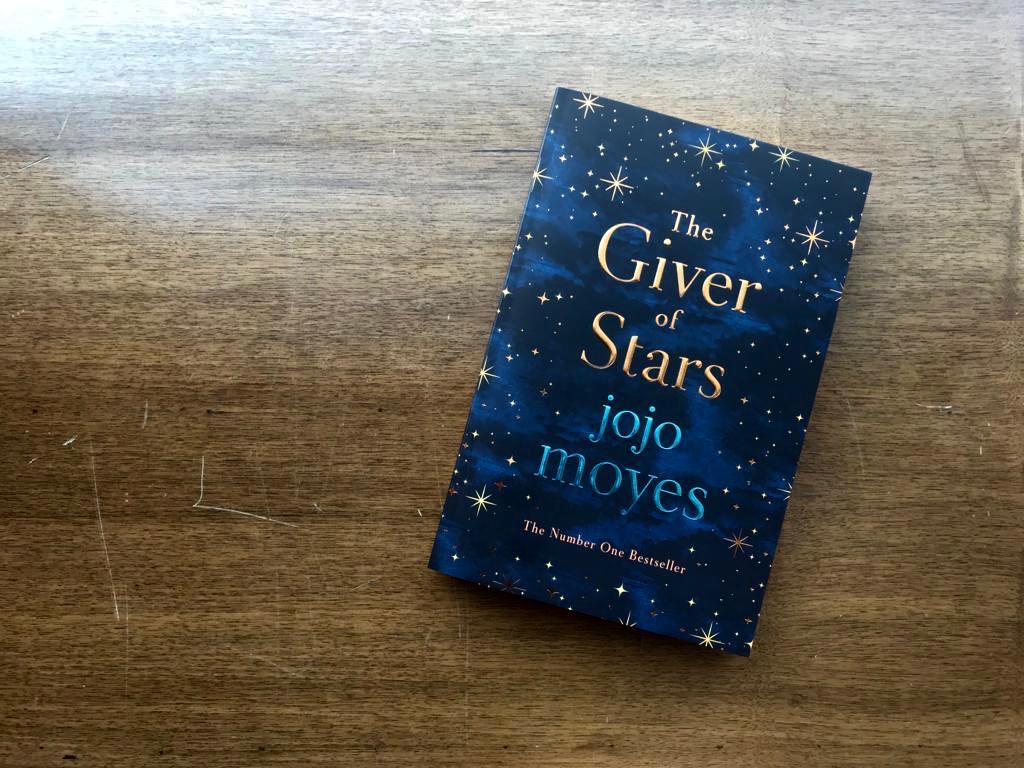
Bestselling author Jojo Moyes’ new book The Giver of Stars is a mesmerising tale of female friendship, romance, and the wonder of books and reading, inspired by a remarkable true story.

Here’s a special letter from the author in which she gives insight into the inspiration behind her novel:


Dear Reader,


Fifteen months ago I read an article in the Smithsonian magazine about the Horseback Librarians of Kentucky — a group of young women employed by the US Government’s WPA scheme to go into the mountains after the Great Depression and take books and magazines to families who might not otherwise read a word.


Enduring harsh conditions and braving all kinds of dangers — snakes, dangerous mountains, moonshiners and criminals — they would saddle up and ride hundreds of miles a week to read to the sick, teach children, encourage the spread of facts in a time where religion and snake oil salesmen were able to battle for people’s minds. They often faced fierce resistance, both for their sex and from families who were suspicious of any reading materials other than The Bible, but worked together in a system that lasted seven years across several states, bringing everything from recipes to comic books biological texts to these remote families. Many of them became beloved to the people they served.


The photographic images of these young women were extraordinary, and their relevance to today hit me hard. I travelled to this remote area of East Kentucky on two separate research trips, rode the trails that the librarians would have ridden and stayed a week in a remote log cabin so that I could experience nature as they would have done (I got told off for moving a snake with a stick). I fell in love with the landscape and the storytelling people who inhabit it.


The Giver of Stars is the result — a story of five such women from very different backgrounds, brought together in a tiny community in the mountains of Kentucky. The story is fictional, but I have rested it on a skeleton of facts. I can honestly say I have never loved writing a book more, or been more inspired by my subject matter. I really hope everyone else enjoys it as much as I have.


Jojo Moyes


Intrigued? The Giver of Stars is available now.

error: Content is protected !!