Publish with Us

Follow Penguin

Follow Penguinsters

Follow Penguin Swadesh

Meet Krishna: An Indian Feminist Icon of the Early 20th Century

Krishna Sobti is a magical being. From her experimental prose to her legendary parties to her unique sense of style to her male alter ego, the writer ‘Hashmat’, everything about her is deeply considered and infused with her special warmth.

Krishna Sobti tells stories in her writing, and in conversation, but she has an equal if not greater interest in language and style. Her preferred forms have been the novella and the essay, and this is perhaps because she has sought to boil sentences, phrases and entire narratives into the smallest number of words possible.

A Gujarat Here, A Gujarat There is a feminist partition novel. Rape and abduction play a huge role in most literary works about the Partition, and Krishna Sobti has not shied away from the topic either in this book or in her other writings. Writing as a young woman, in the more conventional style of her early years, Sobti is already experimenting with brevity and focusing on single words.

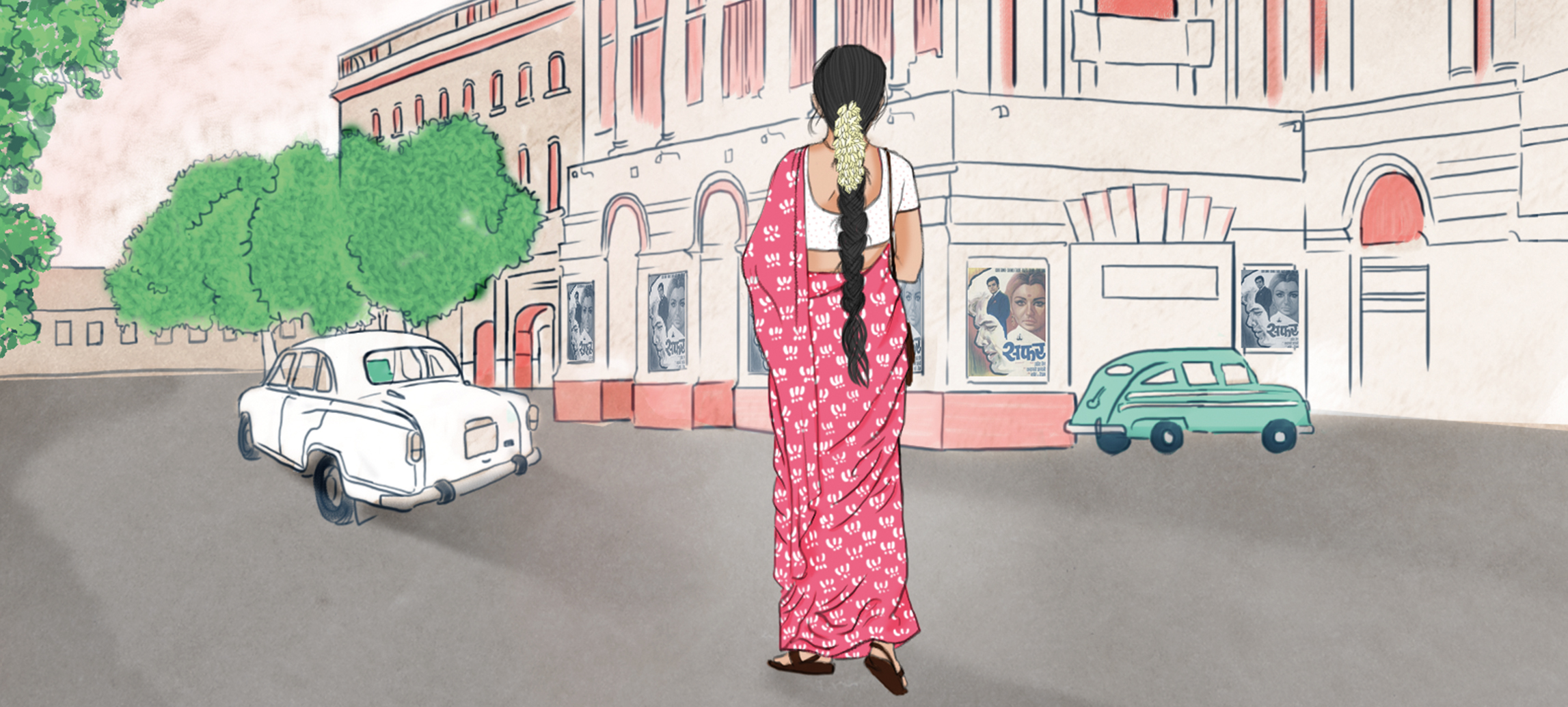
Read on to know why translator Daisy Rockwell considers Krishna Sobti as a feminist icon of her time, especially through her protagonist Krishna


Sobti does not like being considered a ‘woman author’, in the sense that adding in the word ‘woman’ somehow makes one a woman more and an author less. Indeed she regularly wrote essays from the perspective of Hashmat, her male alter-ego, as noted above—a method, perhaps, for shedding her lady-author identity.

~

Krishna, the protagonist, faces sexism and prejudice against refugees through what we would now call constant micro-aggressions. Yet these make her indignant. She never sees herself as weak, and it is that sense of strength and self-confidence, and not being a woman-hyphen-anything, which keeps her focused and protected throughout the narrative.

~

When the young protagonist becomes the governess of Tej Singh, the child Maharaja of Sirohi, she finds herself standing at the site of multiple fissures and contested territories. She is a migrant (from Delhi) and a refugee (from Lahore and Gujrat), newly arrived at a border in the process of being drawn (between Rajasthan and Gujarat), charged with the education of a maharaja whose legitimacy is being contested. Everything is in a state of flux, and no one knows quite where they stand. She is treated as an outsider because she is not from Sirohi, but also because she is a woman who has left home for employment, and additionally because she is viewed as a refugee. The Governess is made of stern stuff, however, and she stands her ground as long as she can, even as she copes with a sense of what has been lost with Partition.

~

The self-reliance of the protagonist mirrors that of the new nation. The flux of the historical moment, including the displacement of Partition, emboldens her to set out and find her own way. Though she is haunted by what has been lost, the sense of mourning gives way to a feeling of lightness—to a nimbleness and lack of encumbrance with ancestral baggage.

~

The protagonist Krishna goes through many trials and tribulations yet is not a victim of Partition; she has her own feminist self-image pretty much reflective of the author’s own identity as a strong feminist.


Part novel, part memoir, part feminist anthem, A Gujarat Here, A Gujarat There is not only a powerful tale of Partition loss and dislocation but also charts the odyssey of a spirited young woman determined to build a new identity for herself on her own terms.


Sip your Way towards Good Health! A Special Tea from ‘The Magic Weight Loss Pill’

What’s the one remedy common to controlling diabetes, hyperthyroidism, kidney and liver stones and excess weight? Lifestyle. Luke Coutinho, co-author of The Great Indian Diet, shows us that nothing parallels the power and impact that simple sustained lifestyle changes can have on a person who’s struggling to lose excess weight or suffering from a chronic disease.

The first part of the book concentrates on the reason we get such diseases in the first place, while the second is filled with sixty-two astonishingly easy and extremely practicable changes that will have you feeling healthier and happier and achieving all your health goals without the rigour and hard work of a hardcore diet or fitness regime.

Here’s a simple recipe from the book to aid your weight loss!

********************************************************

The Magic Weight-Loss Tea

Add this magic tea to your daily regime and lifestyle. You can use a base of black or green tea, or just makean infusion with water and the following ingredients:

™™ 1 square-inch piece of fresh ginger root
™™ Squeeze of a lemon
™™ 2 cups of water
™™ 2–3 peppercorns
™™ 1 cinnamon stick
™™ 2 cardamom pods, crushed
™™ 2 cloves

Boil, simmer, reduce to half, strain and serve hot with or without pure honey.

This amazing potion is detoxifying and highly anti inflammatory, and has the power to rapidly decrease Candida and yeast infections that inhibit weight loss. Ginger is essential to this magic tea recipe due to its amazing benefits. It helps in boosting immunity and cellular health, controlling high blood pressure, lowering cholesterol and stimulating blood rush to sex organs. It also prevents and treats the flu, digestive issues, menstrual pain, PMS, cancer (by building immunity and cellular health), arthritis, joint/ bone pain and ageing.


Get a kickstart to reaching your fit self with Luke Coutinho and Anushka Shetty’s The Magic Weight Loss Pill

An Honest Conversation about the Mindset that Divides Us, Please?

26/11, 9/11, 7//7 – these are the dates that have changed the way see ourselves and those around us. Dates that have changed the world, and not for the better. It’s about time we had an honest conversation about religion, race, caste and the mindset that divides us.

In this collection writers from India, Sri Lanka and Pakistan – Gulzar, Elmo, Jayawardena, Manjula Padmanabh, Poile Sengupta, Kamail Aijazuddin, Bulbul Sharna and others – write about various kinds of conflicts that plague are world today.

In exclusive partnership with Flipkart, we present you to quotes from A Clear Blue Sky.


“‘…There will be moments when we feel unsettled by someone who is different from us. We just need to remember that being different is not a bad thing. It’s not something that should frighten us.’”

*

“‘They are killing each other. Just yesterday we were all friends. Why this sudden madness?’”

*

“His world had split into two – into ‘them’ and ‘us’. ‘They’ were anyone who believed in the teachings of Mohammed. ‘Us’ was the rest of the world.”

*

“‘We cannot always know the wisdom of the Quran. It tells of jinns, of the Day of Judgement and also how to be a true Muslim. Allah will reveal all to those He wants…’”

*

“‘Once he is the deity in a temple only the high-caste priests, royalty and noblemen are allowed inside. Not a low caste like me.’”

*

“She taught me that I have a right to reject

What deep down in my heart I cannot accept

But first I must learn to practice the above

And to be heard by the world, I must say it with love.”

*

“Kartikeyan is forgotten and like him, very soon I will be forgotten too.”

*

“When he carves a goddess he can make the stone smile and when he creates the image of Nataraja, the dancing image of Lord Shiva, it is as if the stone begins to dance.”

*

“‘They are ready to kill,’ the sergeant shouted at them.

‘But we are willing to die if the need be.’”

*

“Life would have been different perhaps had I given him the answer he wanted. Instead I asked for time. I had wanted only a few days, to calm the seething emotions. But the gods granted me a lifetime.”


Get your copy here!

Feel the Nostalgia of Autumn in Pico Iyer’s Words

Returning to his long-time home in Japan after a sudden death, Pico Iyer picks up the steadying patterns of his everyday rites: going to the post office, watching the maples begin to blaze, engaging in furious games of ping-pong every evening. As he does so, he starts to unfold a meditation on changelessness that anyone can relate to: parents age, children scatter, and he and his wife turn to whatever can sustain them as everything falls away.

After his first year in Japan, almost thirty years ago, Iyer gave us a springtime romance for the ages, The Lady and the Monk; now, half a lifetime later, he shows us a more seasoned place-and observer-looking for what lasts in a life that feels ever more fragile.

Here are some lovely quotes from his new book, Autumn Light


Get a copy of Autumn Light for more!

The Book to Read to know more about the RSS

Tracing the growth of the Rashtriya Swayamsevak Sangh (RSS) since its formation in the mid-1920s, Walter K. Anderson and Shridhar D. Damle examine its ideology and training system in their book, The Brotherhood in Saffron. 

Read on to know why you should get your hands on the copy of this book:

It gives insight into the humble origins of the RSS

“The RSS was established in 1925 as a kind of educational body whose objective was to train a group of Hindu men who, on the basis of their character-building experience in the RSS, would work to unite the Hindu community so that India could again become an independent country and a creative society”


It answers interesting questions like whether the British considered the RSS to be a threat 

“In an official report on RSS activity, prepared in 1943, the Home Department concluded, ‘. . . it would be difficult to argue that the RSS constitutes an immediate menace to law and order . . .’


The book is a prequel to the award-winning ‘RSS: A View to the Inside’

Thirty years before they wrote the award-winning ‘RSS: A View to the Inside’, Anderson and Damle published their first path-breaking book on the RSS. As the first significant book on the RSS, this prequel provides readers their first glimpse into the inner workings of the Sangh.


It clarifies what the RSS actually thinks about communal rioting

(Hint: They consider it a weakness!)

“Its(RSS) founder viewed the communal rioting as a symptom of the weakness and divisions within the Hindu community.”


 The book helps you learn more about RSS, a significant cultural organization

The RSS is one of the most significant cultural organizations in India, making this book a powerful and important read.

The Brotherhood in Saffron is AVAILABLE NOW.

What drove these ordinary women to become ‘Queens of Crime’?

Dysfunctional families, sexual abuse, sheer greed and sometimes just a skewed moral compass. These are some of the triggers that drove the women captured in these pages to become lawbreakers.

Queens of Crime co-written by Sushant Singh and Kulpreet Yadav demonstrates a haunting criminal power that most people do not associate women with. The acts of depravity described in this book will jolt you to the core, ensuring you have sleepless nights for months.

Based on painstaking research, these are raw, violent and seemingly unbelievable but true rendition of India’s women criminals.

Here are some hard-hitting facts about a few women criminals from the book!

————— 

Shantidevi – The Drug Queen of Mumbai

“Shantidevi started at the lowest rung. Her task was to peddle brown sugar and hashish. A daily target was set and her beat covered five-star hotels across the city. She learnt the ropes fast. There was a huge demand and she was quick to realize that the supply was barely enough to keep pace with it. Her customers trusted her more because she was a woman. She never cheated anyone, keeping the pricing as explained.”

Meeta- The Queen of the Dark

“She had earned Rs 25,000, the equivalent of five months’ salary, in just one night. Over the next three years, Meeta slept with many men. By the time she turned twenty, she had over fifty regular clients. She had paid off the debt and bought two cars: a Maruti Alto and a Wagon R.”

Resham aka Mummy- The Lady Don of Delhi

“ Mummy was sixty, a powerful don whom everybody dreaded. She had no fear: not of competitors, not of the police, not of the courts. Getting away with murder for so long had emboldened her.”

Preeti- The Tinder Murder

“Laxman tried to speak, but since his mouth was taped, he couldn’t. Preeti stepped forward and pulled off the tape. Before he could utter a word, she hissed into his ear, ‘If you shout, these men will kill you. They don’t know what they are doing. They are high on cocaine.’”

Sanjana- The Baby Killers

“Since she didn’t have a job and her daughters were too young to work, she decided to fall back on stealing. But this time, she trained her daughters as well. They became a gang of three, specializing in purse-snatching, chain-snatching, pickpocketing and shoplifting. The mother taught the girls all the tricks of the trade.”


Get your copy of Queens of Crime today!

How did Abhinav Bindra win an Olympic gold medal? Read the story in his own words

Bright-eyed aspirants in sports-from badminton to gymnastics-are training across the country. Homegrown leagues are attracting the world’s best athletes and professionals. The country boasts multiple World No. 1 teams and athletes, and sporting achievements are handsomely rewarded.

Go! features a never-before-seen collection of essays by leading athletes, sports writers and professionals, who together tell a compelling story of India’s ongoing sporting transformation.

Read an interesting excerpt from the chapter, “Building Indian sports Champions in India”, written by Abhinav Bindra:

——————————-

Sourcing yak milk, balancing on the top of a pole 40 ft high, using screwdrivers and Allen keys, shaving off a few millimetres on a specially sourced shoe sole, eye-tests and matching sights, excess-baggage payments carrying special equipment, the colour of a wall, the wattage of a bulb, Bollywood movies, the right meal, a mother’s love, a father’s resolve, a sister’s belief, a coach’s patience.

What have these motley elements got to do with high performance?

Most often, nothing.

And, as my own journey shows, sometimes it means everything!

Given the type of life I have led over the last twenty years, I won’t blame you for believing that I might have some secret recipe for ‘being a champion’. But honestly, I don’t. I have experimented with my diet, overcome my fears, tweaked my equipment, modified my environment and surrounded myself with the right mix of people who have challenged and supported me unconditionally.

As you can probably tell, I spent a lot of my time experimenting. Trying to be the best shooter I could be. Ask me how this shooter became an Olympic gold medallist and I will happily tell you my story. I can only hope others will find it interesting.

It is true that I have lived the quest to be perfect on the imperfect day. In doing that, I have sometimes succeeded and most times failed. It has been a journey of ups and downs from day to day, season to season, Olympics to Olympics.

Let me tell you a little about the only subject on which I can call myself an expert—myself!

Twenty-two years of competition, 180 medals, five Olympics, three Olympic finals, one Olympic gold. All of it seems a daze. Until it doesn’t.

Looking back, I can now see it all much more clinically and dispassionately. I am no longer a stakeholder in my shooting career. I have exited my investment, as venture capitalists would say. That is my past. And I have a future to think about. But that makes retrospection all the more interesting for me.

I was not a natural athlete. In fact, I was a reluctant sportsperson. Introduced to shooting by my first coach, Colonel Dhillon, I instinctively felt that this was for me. This was something I could see myself doing, making a life of and a career from. For this chance, I navigated my way from dream to reality and built the personal skills that were necessary to win. What do I consider to be the skills that made the difference?

In my early career, I was extremely focused. I was trying all I could to make a name for myself as a young shooter. Inexperience meant that my quest was for perfection, and in my mind, that objective was a stationary target. You can’t blame a shooter for that, can you? To my mind, the goal was clear and the ‘system’ a perfect one. All I needed to do was understand the system and crack the code.

Athens 2004 was a wake-up call. In perhaps the most defining incident of my career, I came a disappointing seventh in the Olympic final after shooting what I thought was the perfect game. Only much later did I find out that the lane position I was allotted had a loose tile underfoot, which reverberated every time I shot. In a game of millimetres, it was amazing that I even hit the target! I went into a depression (literally) after Athens. Months later, I had two obvious choices—one, quit the sport or, two, carry on and accept the incident as a case of ‘bad luck’. I chose a third, and it defined me.

I chose the quest for Adaptability—to try to be perfect on the imperfect day. I started training under deliberately imperfect conditions, even installing a loose tile in my home range and practising regularly while standing on it. I trained in low light and under bright lights, adjusted bulbs and added peculiar shadows, painted the walls the same colours as the relevant Olympic ranges. Extreme behaviour perhaps. But it worked for me and even came to my rescue at Rio 2016, when my carefully chosen rifle-sight, through which I focused on the target, broke just a few minutes before my event. I was able to remain composed and made it to fourth. Had I chosen option two after Athens, I would have probably accepted it as fate and given up! Did I ever again encounter a loose tile? Honestly, I don’t know, and it was not something I thought about ever again when competing. Adaptability gave me versatility and the ability to not latch on to excuses, external conditions or stimuli. My attitude changed to acceptance of the fact that the only thing within my complete control was my own performance—but I was also ready for all the rest that wasn’t!


Go! features a never-before-seen collection of essays by leading athletes, sports writers and professionals, get your copy today!

Delve into the Universe of Algorithms with Kartik Hosanagar

In his new book, A Human’s Guide to Machine Intelligence, Kartik Hosanagar surveys the brave new world of algorithmic decision making and reveals the potentially dangerous biases to which they can give rise as they increasingly run our lives. He makes the compelling case that we need to arm ourselves with a better, deeper, more nuanced understanding of the phenomenon of algorithmic thinking. The way to achieving that is understanding that algorithms often think a lot like their creators-that is, like you and me.

Here is what the author has to say about his journey towards writing the book!

Tell us what your book is about.

If you read the news, you have probably heard the term algorithms: computer code that seem to control much of what we do on the internet, and which are landing us in all sorts of jams. Elections are swayed by newsfeed algorithms, markets are manipulated by trading algorithms, women and minorities are discriminated against by resume screening algorithms — individuals are left at the mercy of machines. There is a lot of fear mongering and we hear terms such as “weapons of math destruction.” But a key question remains unanswered: what are we supposed to do about it? We can’t wish algorithms away – and, frankly, we wouldn’t want to. But they come with huge implications to our personal and professional lives that we need to understand if we’re going to attempt to offset the challenges they pose. This book offers us a way in.

Why did you write this book?

I spend my days helping students understand technology; designing and analyzing studies that probe algorithms’ impact on the world; and writing code myself. And while my subject gets a lot of attention in popular journalism, I feel the public lacks the right mental models to understand algorithms and AI, and as a result the conversation is too fear-oriented, at the expense of being solution-oriented. This is my attempt to address these problems and start a conversation on what the solution should look like.

The germ of the book itself began in my research lab. I was conducting a study I thought would confirm accepted notions that the Internet was democratizing taste and choice; in fact, it showed that commonly used algorithms did the opposite. That led me to work on how to design systems to achieve better social goals and business targets. We need to do something similar here, with this broader challenge – take a forward-looking view to solve the problems, not just worry or create fear about them.

Are algorithms too complex for most of us to understand?

They are not. Many of us are overwhelmed when we hear words like algorithms and AI. But they are concepts all of us can understand and, in fact, need to understand given their growing importance.

Today’s most sophisticated algorithms aren’t simple sets of instructions; they’re black boxes too technical for most of us to get our heads around. Even the regulators trained to monitor these things are years behind the AI that underlies modern algorithms. That’s what this book offers: a way in. In the course of trying to explain why code goes rogue, I came upon a novel insight that offers not only an understanding of algorithms, but points us towards a framework for controlling their power. I found that algorithmic behavior, like human behavior, can be influenced by both nature and nurture – in algorithms’ case, this means how they are coded by their programmers and the real-world data they soak up and learn from. In other words, algorithms go rogue for some of the same reasons humans do: they’re creative and unpredictable, they’re usually wonderful, sometimes dangerous.

This way of viewing algorithms helps us understand what causes algorithms to behave in biased and unpredictable ways, and in turn helps move us away from a fear-driven conversation towards practical solutions to these problems.

So, how concerned should we be that AI and algorithms have biases?

The biggest cause for concern is not that algorithms have biases; in fact, algorithms are on average less biased than humans. The issue is that we are more susceptible to biases in algorithms than in humans. First, despite our emerging skepticism, most people still see algorithms as rational, infallible machines, and thus fail to address and curb their (so-called) “bad behavior” quickly enough. So, elections are swayed, markets are manipulated, individuals are hurt due to our own attitudes and actions towards algorithms. Moreover, human biases and rogue behaviors don’t scale the way rogue software might. A bad judge or doctor can affect the lives of thousands of people; bad code can, and does, affect the lives of billions. So I finish the book by proposing concrete steps we can take towards a solution, including an algorithm bill of rights – a set of basic rights we should all demand and that regulators should provide us.

Is there anything I can do as an individual? Or am I at the mercy of large powerful tech companies?

As individuals, the power we have is knowledge, our dollars, and votes. I have four concrete steps individuals should follow.

  1. Be aware of when algorithms are making decisions a) for you and b) about you.
  2. Understand how this might affect the decisions being made. (Reading this book will help you with this!)
  3. Decide whether this is acceptable – to you as an individual, and as a member of society.
  4. If this is not acceptable, demand changes. Or walk away from algorithms that you think undermine the fabric of society.

What would this look like in a real-life example?

Suppose you are active on Facebook and discover news stories to read on the platform. You wonder if you are getting the full breadth of perspectives on an issue or even if the news and posts are false or manipulated in some way. You can do the following:

  1. First, remember that Facebook’s algorithm has essentially decided which of thousands of stories and posts to show you.
  2. Recall what you’ve learned in my pages: that Facebook’s algorithms choose the news stories from the ones posted by your friends and prioritize them based on which friends’ posts you engage with the most. If you want a breadth of perspectives, then don’t unfriend disengage with people with whom you disagree.
  3. If you find false information has been posted by someone, inform them. Also, with one click you can notify Facebook that the information is false. Facebook’s algorithms can now use your feedback to stop circulating false stories.
  4. Finally, demand transparency from Facebook on why certain posts are shown and others are not.

It works for other examples too where algorithms make decisions about us such as whether we get a mortgage loan or which school our kids can go to. If you’re unhappy with how you’re being treated, ask whether an algorithm was used and what factors were considered. Vote for politicians who will support some basic algorithmic rights for all of us: being informed when algorithms make decisions about us, and some simple way of understanding those algorithmic decisions.

What should we expect from the government and our elected representatives?

In the book, I call for a bill of rights that would make it much easier for individuals to follow the process I describe above; our elected representatives need to support this, as well as create channels for complaints – ways for individuals to flag problematic algorithmic decisions, and ways for the government to act. The EU has incorporated some relevant provisions in its GDPR regulation including a right to explanation, where consumers can demand explanations for algorithmic decisions that affect them. GDPR may not be the right solution for all governments but we need to think hard about how we grant people some basic rights regarding how algorithms make decisions about them.

I also believe in an idea first that was put forward by Ben Schneiderman, a professor of computer science at the University of Maryland. We need a national algorithmic safety board that would operate much like the Federal Reserve, staffed by experts and charged with monitoring and controlling the use of algorithms by corporations and other large organizations, including the government itself. The board’s goal will be to provide consumer protection and minimize and contain risks tied to algorithms.


Human’s Guide to Machine Intelligence is an entertaining and provocative look at one of the most important developments of our time

Know the New Age Man!

Atul Jalan’s book Where Will Man Take Us? gives insights into the effects that technology has on the current world. Exploring the advances in nanotechnology, artificial intelligence, quantum computing and genetics, the book also gives an incredible outlook on the future while also mapping pertinent questions of changes brought about in us – as a society and as a species, as a consequence. It also gives an intriguing perspective on how the technology today is rapidly altering the dynamics of human love, morality and ethics and wonders what’s in store for humankind in the next generation.

Here we give you a snippet of the new age man, as thought by Atul Jalan in this book:


  1. With the advent of Artificial Intelligence making our lives easier for us, the day is not far when AI would be so sophisticated that it would be able to run its own varied functions.


“We will, at some point soon, come to a stage where AI will become capable of recursive self-improvement”


  1. In the wake of swift technological developments and an abundance of machines dominating our lives, there could be a possibility of humans passing from the current forms into a higher form, as noted by William Reade. Further explaining this, Reade calls this theory the second act, as our present time is understood to be only a transitional phase from a human to a post-human era, which would be controlled by machines.


“Cosmologists believe that this future, this second act, could extend into billions of years. Machines might not need this planet and its atmosphere to survive and might be able to explore space extensively, as humans never could”


  1. The book lists a series of possibilities that could occur once the ASI (Artificial Super Intelligence) period comes into being. One of the most interesting outcomes of it would be the creation of a particular kind of technology which would result in distilling our consciousness through neural engineering and passing it on to a computer, thereby reinventing the concept of life after death!


“We might also soon be able to clone our body and then live eternally by moving from clone to clone. Imagine your body is like a smartphone and your consciousness is on the cloud”


  1. Technology has come to have a strong influence on people in the modern world, just as religion has had for years. Atul Jalan explains that the indomitable search for knowledge and advancements in technology has come to express just how important these advancements will prove to be even in the future.


“Much as socialism took over by promising salvation through social justice and electricity, so, in the coming decades, new techno-religions will take over—promising salvation through algorithms and genetics”


  1. Nanotechnology has proved to be another important discovery in the recent years. Scientists are working on brain-computer interfaces which could be used to augment abilities in a human.


“The progress that is being made on brain-computer interfaces verges on science-fiction. This means that soon you will be able to operate the computer with thought, much the same way our thoughts control our speech, movements and feelings”


  1. One of the best break-through in the field of nanotechnology has been the invention of nanobots. When released in our blood streams, these can unclog our arteries, repair organ-damage, and scientists are even speculating that they might even be able to reverse the ageing process in human body!


“But what will really make you sit up is the fact that eventually, they could soon even restore our DNA to how it was when we were in our twenties. This can turn fragile senior citizens into healthy young individuals overnight. In short, the promise of eternal youth”


In this book, Atul Jalan tackles nanotechnology, artificial intelligence, quantum computing and genetics, seamlessly weaving the future of technology with the changing dynamics of human love, morality and ethics.

Get to Know the Wordsmith Behind ‘A Tale of Wonder’, A.N.D. Haksar!

Aditya Narayan Dhairyasheel Haksar is a well-known translator of Sanskrit classics. For many years a career diplomat, he served at the United Nations and as the Indian high commissioner and ambassador in various countries. His translations from Sanskrit include those of several great works by ancient poets like Bhasa and Kalidasa, Bhartrihari and Dandin, Kshemendra and Kalyana Malla, all published as Penguin Classics. He has also compiled A Treasury of Sanskrit Poetry, which was recently translated into Arabic in the UAE.

His recent translated work A Tale of Wonder talks about Yusuf and Zuleikha’s biblical love story that travels across regions-ultimately reaching medieval India where it is transformed by Shaivite overtones. The result is an exquisite epic love poem of love which also attests to the rich diversity of India’s cultural past.

Magnificent in its simple elegance, A Tale of Wonder is a timeless story that challenges the insidious notion that India has always been dominated by one faith only and insular to other cultural and religious influences.

Read more about his research methodology here!

What is your research process like?

There is no specific research process for my translations from Sanskrit. They began as a method for better learning that ancient language on my own. They have continued over the years for bringing its many wonderful but now less known aspects before today’s readers..

What propelled you to translate Yusuf Wa Zuleikha?

The name you have used is of a famous poem in medieval Persian. It inspired another in Sanskrit called Kathakautukam that I translated as A Tale of Wonder. I came across it while translating for Penguin another based on Arabic/Hebraic sources called Suleiman Charitra, Both are remarkable for depicting a little-noted cultural confluence in India’s great language. What led me to translate this one was its description in Sanskrit of the Founder of Islam as paigambar shiromani, or crown jewel of the prophets, to whom this tale was revealed by a divine messenger. This was the first reference to the Prophet that I have seen in Sanskrit.

How was the experience of translating Yusuf Wa Zuleikha different from your other translations?

All my translations have been from the clear and precise wording of classical Sanskrit. This one was not too different. But, done at a trying time for my health, it was a real tonic for me!

How would you see our relationship with Sanskrit in recent times?

Over the last couple of centuries, Sanskrit has tended to be seen as mainly a religious, philosophic and scriptural language. The work of eminent foreign scholars as well as its study system here have also strengthened this impression. This has overshadowed many other dimensions of its vast literature. Apart from the scientific and didactic, these also include the poetic and narrative comic and erotic, cynical and satirical, and common colloquial rather than refined. More translation is one way to present them before today’s readers, and this process has already begun.

How have various cultural and religious influences impacted traditional literature?

This is a very wide question, difficult for a brief answer, All I can say is that there is a cultural confluence reflected in many Sanskrit works that need more exposure today, as also do its other dimensions, already mentioned.


Read A.N.D. Haksar latest take on Srivara’s classic, in A Tale of Wonder

error: Content is protected !!