Publish with Us

Follow Penguin

Follow Penguinsters

Follow Penguin Swadesh

The Story Behind my New Book

by Tanaz Bhathena

The Beauty of the Moment began as a short story, one that I didn’t think I would write, because I’m usually uncomfortable writing about anything that’s too close to my own life.

The story, titled Last Days, First Days, was structured as a series of flashbacks and flash forwards, the flashbacks set in an Indian secondary school in Saudi Arabia, the flash forwards in a public high school in Canada. There was a girl named Susan, a boy who was not named Malcolm, and the story wasn’t about love, but about culture shock.

I grew up in the city of Mississauga, one of the most diverse cities in the greater Toronto area, with a large population of South Asians and Arabs, but the books that I read and the movies I saw catered primarily to a Caucasian demographic.

As a sixteen year old I realized quickly that wearing any Indian clothing made me stand out—and not in a good way. After a racist incident, where a girl tried to run me over with her bicycle, I eschewed my salwar-kurtas and stuck to Western wear for the longest time.

Now, over eighteen years after that incident, things have changed along with the demography. Indian culture has gained popularity in North America—largely thanks to the powers of Bollywood and globalization. Wearing Indian clothing doesn’t make you stand out any more than wearing Western clothing.

In publishing, things were changing, too. Writers in the YA community in America were the ones driving the change, forming an organization called We Need Diverse Books in 2015. In Canada, the Festival of Literary Diversity began in Brampton. Both organizations advocated for more inclusivity in the stories that were being produced and in the writers who were telling the stories. #OwnVoices, coined on Twitter by Corinne Duyvis, was turning into a revolution. More and more readers were demanding diverse stories—and that too by authors who had lived their characters’ experiences.

My first book, which you all know as A GIRL LIKE THAT, would likely still be languishing in a slush pile at a publishing house if not for these movements.

When the time came for me to write another book, I went back to Last Days, First Days and wondered: What if this were a novel?

I’d read a few books starring Indian American teen protagonists such as Tanuja Desai Hidier’s brilliant Born Confused. Yet, there were few if any books about first- or second-generation Indian Canadian teens. And there were no books that I came across that were actually set in Mississauga.

Back when I was a teenager—or even eight years ago (when I wasn’t), I wouldn’t have thought it possible to write a story about these things. I didn’t see myself on the page in North American fiction and I had grown used to my own exclusion.

So I went back to the story I had written, tore it apart and started rewriting a story that had my heart all over it.

I wanted to write a book that broke the monolithic view that North Americans can have of Indians, not realizing how diverse people from my birth country really are. I also wanted to show the world what life is like for Indians in the diaspora—with a focus on the griefs and the joys of displacement.

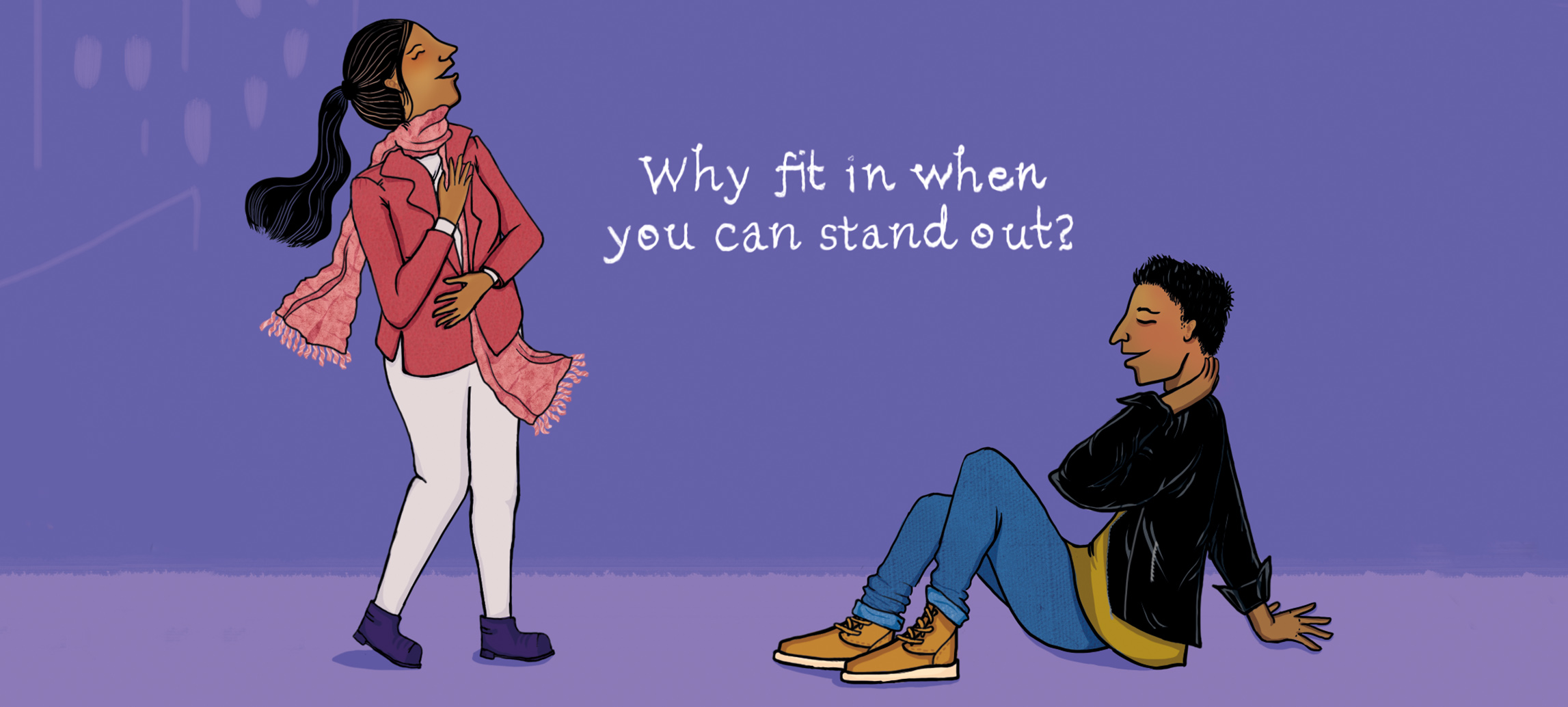
This book combines all three of my identities: Canadian, Saudi and Indian. Like Susan, I do not fit into a neat little compartment or category. But writing this book allowed me to realize that it is okay to stand out at times. To even step outside our comfort zones.

For me, writing a romance definitely was out of my comfort zone. So was allowing my characters to be teenagers and make the mistakes I made when I was that age.

The Beauty of the Moment is not perfect. It certainly isn’t the single best representation of Indian Canadian teens—and I don’t want anyone to see it that way. But I do hope that there will be teen readers who will be able to see themselves in the story and that there will be even more teens who will use the book as a window to cultures and experience different from their own.

Furthermore, I hope other writers—teens and adult—will be inspired add their tales to the repertoire of #ownvoices stories.

If the story you want to read hasn’t been told yet, the you must write it.

The world is waiting for you.


Tanaz Bhathena’s new book, The Beauty of the Moment tells the story of

9 Thankfully Fictional Fathers Who Will Make You Appreciate Your Own Dad a Little More!

This Father’s Day, while you celebrate your father and his contribution to your existence, let us take a moment to look at some of the not-so-great fathers ever written, in some of the greatest books ever written and sympathize with their unfortunate offspring. These fictional fathers, from ragingly violent to downright deranged, will hopefully make you appreciate your own so much more!

Go through our hall of paternal shame and decide if your own father deserves a few extra presents as a mark of your gratitude! After all, ‘to quote one of our Dubious Dads, ‘How sharper than a serpent’s tooth it is to have a thankless child!’


Laius in King ‘Oedipus’-Sophocles

The legends surrounding the royal house of Thebes inspired Sophocles (496–406 BC) to create a powerful trilogy of mankind’s struggle against fate. King Oedipus tells of a man who brings pestilence to Thebes for crimes he does not realise he has committed and then inflicts a brutal punishment upon himself. With profound insights into the human condition, it is a devastating portrayal of a ruler brought down by his own oath

Terrible dad 101- Having been told by an oracle that his newborn son is destined to kill him. Laius binds the infant’s feet together with a pin and orders his wife to kill him.


Walter Morel in ‘Sons and Lovers’ – D.H. Lawrence

Taking its autobiographical inspiration from D.H. Lawrence’s experience of growing up in a coal-mining town, Sons and Lovers is a vivid account of the conflict between class, family and personal desires.

The marriage of Gertrude and Walter Morel has become a battleground. Repelled by her uneducated and violent husband, delicate Gertrude devotes her life to her children, especially to her sons, William and Paul – determined they will not follow their father into working down the coal mines. But conflict is evitable when Paul seeks to escape his mother’s suffocating grasp through relationships with women his own age. Set in Lawrence’s native Nottinghamshire, Sons and Lovers is a highly autobiographical and compelling portrayal of childhood, adolescence and the clash of generations.

Terrible dad 101-Alcoholic, violent and weak and insecure of his own position in his family


King Lear in ‘King Lear’ – Willliam Shakespeare

In William Shakespeare’s moving tragedy of political intrigue and family strife, the ageing King Lear, tired of office, decides to split his kingdom between his three daughters, Goneril, Regan and Cordelia; but the decision to allot their share based on the love they express for him proves to be a terrible mistake. When Cordelia refuses to take part in her father’s charade, she is banished, leaving the king dependent on her manipulative and untrustworthy sisters.

Terrible Dad 101- He distributes his wealth on the basis of flattery and fulsome declarations of love, while completely disregarding his youngest, devoted offspring in favour of his two older daughters.


Pap Finn in ‘The Adventures of Huckleberry Finn’-Mark Twain

Mark Twain’s witty, satirical tale of childhood rebellion against hypocritical adult authority, the Penguin Classics edition of The Adventures of Huckleberry Finn is edited with a critical introduction by Peter Coveney. Mark Twain’s story of a boy’s journey down the Mississippi on a raft conveyed the voice and experience of the American frontier as no other work had done before. When Huck escapes from his drunken, abusive ‘Pap’ and the ‘civilizing’ Widow Douglas with runaway slave Jim, he embarks on a series of adventures that draw him to feuding families and the trickery of the unscrupulous ‘Duke’ and ‘Dauphin’.

Terrible dad 101-One of the most terrifyingly vicious fathers ever written, he is an alcoholic, racist, repellent individual who beats his son to extract whiskey money and almost murders him with a hunting knife.


Harry Wormwood in ‘Matilda’- Roald Dahl

A splendiferous new hardback of Matilda, part of a collection of truly delumptious classic Roald Dahl titles with stylish jackets over surprise printed colour cases, and exquisite endpaper designs. Matilda Wormwood’s father thinks she’s a little scab. Matilda’s mother spends all afternoon playing bingo. And Matilda’s headmistress Miss Trunchbull? Well, she’s the worst of all. She is a big bully, who thinks all her pupils are rotten and locks them in the dreaded Chokey. As for Matilda, she’s an extraordinary little girl with a magical mind – and now she’s had enough. So all these grown-ups had better watch out because Matilda is going to teach them a lesson they’ll never forget.

Terrible dad 101-Pompous with a streak of venom jealousy, he really hates the fact that his daughter is a genius. He is somewhat verbally abusive and destroys her library books, before abandoning her without any noticeable qualms.


Adam Penhallow in ‘Penhallow’- Georgette Heyer

The death of Adam Penhallow on the eve of his birthday seems, at first, to be by natural causes. He was elderly after all. But Penhallow wasn’t well liked. He had ruled over his estate with an iron will and a sharp tongue. He had played one relative off against another. He was so bad-tempered and mean that both his servants and his family hated him. It soon transpires that far from being a peaceful death, Penhallow was, in fact, murdered. Poisoned. With his family gathered to celebrate his birthday, and servants that both feared and despised him, there are more than a dozen prime suspects. But which one of them turned hatred into murder?

Terrible dad 101-Vicious, domineering and gets his thrills from humiliating and controlling his family especially his sons.


Jack Torrance in ‘The Shining’ – Stephen King

Jack Torrance’s new job at the Overlook Hotel is the perfect chance for a fresh start. As the off-season caretaker at the atmospheric old hotel, he’ll have plenty of time to spend reconnecting with his family and working on his writing. But as the harsh winter weather sets in, the idyllic location feels ever more remote . . . and more sinister. And the only one to notice the strange and terrible forces gathering around the Overlook is Danny Torrance, a uniquely gifted five-year-old.

Terrible dad 101-Deranged dad who lets his personal and external demons send him on gleeful spree to murder his wife and son.

Know the untold history of the first all-India team

On the morning of 6 May 1911, a large crowd gathered at Bombay’s Ballard Pier. They were there to bid farewell to a motley group of sixteen Indian men who were about to undertake a historic voyage to London. The persons whom the crowd cheered that sultry Saturday morning were members of the first All-India cricket team.

Conceived by an unlikely coalition of imperial and Indian elites, it took twelve years and three failed attempts before an ‘Indian’ cricket team made its debut on the playing fields of imperial Britain in the blazing coronation summer of 1911.

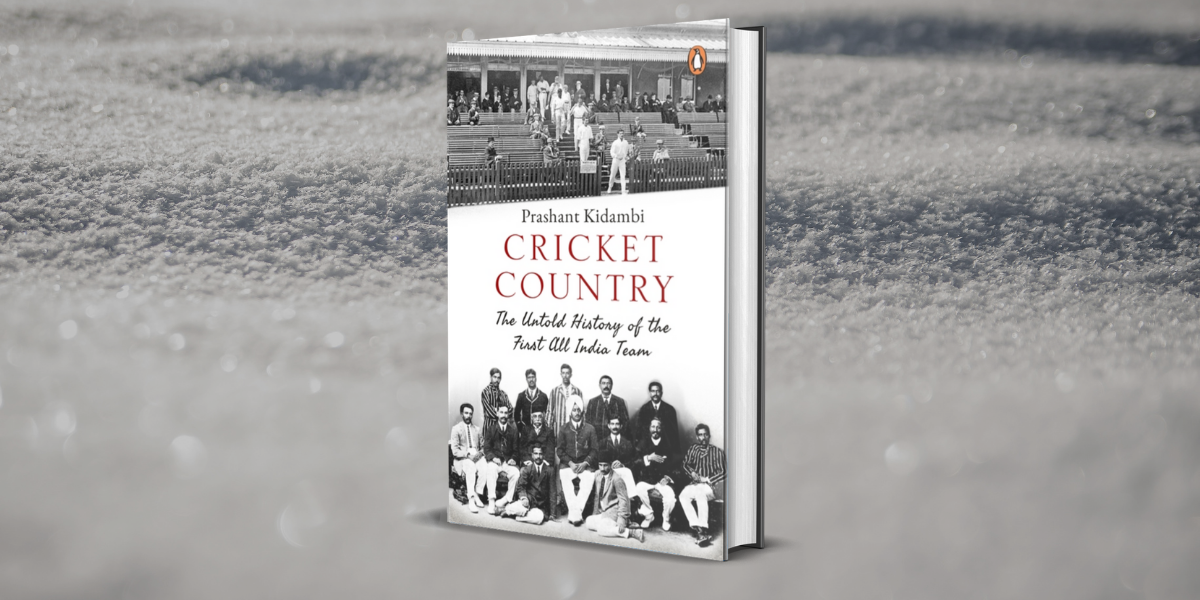
Prashant Kidambi, an associate professor of colonial history at the University of Leicester, introduces us to the first ever cricket team of India, in his book, Cricket Country.

Get to meet the team!


Maharaja Bhupinder Singh of Patiala :The First Captain of the Indian Cricket Team

Maharaja Bhupinder Singh was not the organizers’ initial choice to lead the first Indian Cricket Team. In fact, Framjee Patel wanted H.H. Jam Saheb to become the skipper of the team. The Maharaja was known to use cricket to serve his own political interests. In 1931, he shared strained relations with the Viceroy Willingdon and used cricket to regain influence on imperial affairs.


Major K.M. Mistry

“Said to be in a ‘class by himself’, Mistry had first made his mark as a bowler for the long- established John Bright CC in Bombay… But it was while playing for the famous Patiala team in the late 1890s that Mistry developed into a truly great batsman. This left-handed Parsi was adept at playing strokes all around the wicket, ’attaining the maximum of power with the minimum of power.’


Maneck Chand

“The Bombay Gazzete described the Punjabi as a ‘fast right hand bowler’ who could prove   ‘very deadly’ if the conditions were favourable. Some even considered him the quickest bowler in the entire country.”


Dr. H.D. Kanga

“..Homi was said to possess ‘nerves of steel’ and play ‘a scientific game’…. ‘He is one of those    brilliant cricketers who can bat against all kinds of bowling as calmly as possible and make runs freely.’ wrote one contemporary on the eve of the Parsis’ encounter with the Presidency in September 1905.”


P. Baloo

Palwankar Baloo belonged to the class of ‘untouchables’, “However, it was precisely his tireless toil on the cricket pitch in the face of deep-seated caste prejudice that defined Baloo’s long cricket career.”  In fact, Baloo was considered to be one of the finest bowlers of the twentieth century and gave stellar performances in matches.


J.S. Warden

“The Bombay- born Warden, described by his captain Pavri as ‘a magnificent fellow’ was a relatively new find for the Parsis. This talented twenty-six-year old slow bowler – reputedly ‘one of the best in India’- was said to send down ‘balls which would beat the most wary of batsmen’.” He was a left handed bowler.

M.D. Pai

Mukund Damodar Pai was born in Bombay on 29th July 1883. His early cricket career was marked by consecutive success in playing cricket at schools and clubs. “The Bombay Gazette described Pai as a ‘fast run-getting bat, though. . . not quite of the hurricane type’; besides, he was said to be ‘a brilliant fielder’.”


H.F. Mulla

“Born in Bombay on 4 May 188, Mulla had first burst onto the cricketing scene as an undergraduate at Elphinstone College…. Even half a century later, one observer nostalgically recalled the ‘fabulous Homi Mulla. . . whose very turn to go in was the signal for us small boys to rush out of the tent or shamiana so as to be able to follow the ball as it became a tiny speck in the very clouds’.” He was considered to be a fine wicket keeper too.


K. Seshachari

Seshachari was one of the finest stumpers India has ever had.  He was trained by Charles Studd, one of the most well- known cricket players of his time. In 1906, the Cricket noted that Seshachari’s “… wicket-keeping is quite first-class and brilliant enough for any country…”


Salamuddin Khan

Born as a Pathan, in the Basti Sheikh Darwesh  district of Jullender, Salamuddin Khan was an all-rounder cricketer .It is said that he“ ‘ favourably impressed the Committee with his batting and bowling during the Bombay tour of the Aligarh team’.”


Shafqat Hussain

According the Bombay Gazette, Hussain had “ ‘been a revelation to local cricketers’ and commended his ability to bowl at varying speeds and lengths. ‘He scarcely bowls two balls alike in an over and we have seen no fast bowler in India who more admirable works with his head,’ the paper added.”


Syed Hasan

Syed Hasan was born in Moradabad and belonged to the North Indian Service Gentry. He was considered to be a reliable batsman- wicket keeper. Due to his cricketing abilities, he had also been a part of the Aligarh elite.

M.D. Bulsara

Maniksha Dadabhai bulsara was born in Daman on 2 September 1877. He was considered to be “‘a fast round- arm bowler of exceptional merit’, he was said to be ‘the only man in India who can make the ball “swerve” ‘“. It was said that he “could deliver a vicious leg break ‘that would beat the most wary of batsmen’. ”


R.P. Meherhomji

Meherhomji was a right handed batsman who,  “possessed the ability to time his strokes ‘to a nicety’, and therefore make them look effortless.” In 1905, Framjee Patel wrote that, “ ‘One finds it difficult whether to award the palm to him or Mistry as the most graceful batsman of the present time,’”


B. Jayaram

Jayaram had to face many obstacles in order to learn how to play cricket. However, when he scored his first century against the Yorkshire Regiment, he attracted ‘ widespread attention’  throughout the country. Cricketer Edward Sewel, even commented ,“… cutting is his forte and he is always dashing a bat, never scoring slowly.”

front cover of Cricket Country
Cricket Country | Prashant Kidambi


Noor Elahi

Noor Elahi was considered to be a ” ….fine batsman and a useful bowler”. I t was when he was playing in Kashmir, that he was invited to take part in the Indian Cricket Team tour of Britain. However, in the end Noor Elahi along with Maneck Chand withdrew from the tour. It is assumed that their employer, the Maharaja of Kashmir withdrew his decision of letting them travel abroad with the Indian Cricket team.


Drawing on an unparalleled range of original archival sources, Cricket Country is the untold story of how the idea of India was fashioned on the cricket pitch in the high noon of empire.

Which Guy from ‘Once Upon A Curfew’ Will You Fall For, Rajat or Rana?

Once Upon a Curfew takes us through the journey of Indu and Rajat; their love which blossomed during pre-Emergency India. With the socio-political situation of the time as a subtle backdrop, the book gives us a peek into love and romance in India in the 1980s.

The book introduces us to Rajat and Rana, two strong male protagonists, vying for Indu’s affection – each with a different demeanour and outlook towards life.

Who do you think you would have chosen? Take this quiz and find out.


To get a true glimpse of love in the decade of ’70s, read Once Upon A Curfew  by Srishti Chaudhary.

Ruskin Bond on friendship and farewells

‘It was 1947, and life was about to change quite dramatically for most of us’

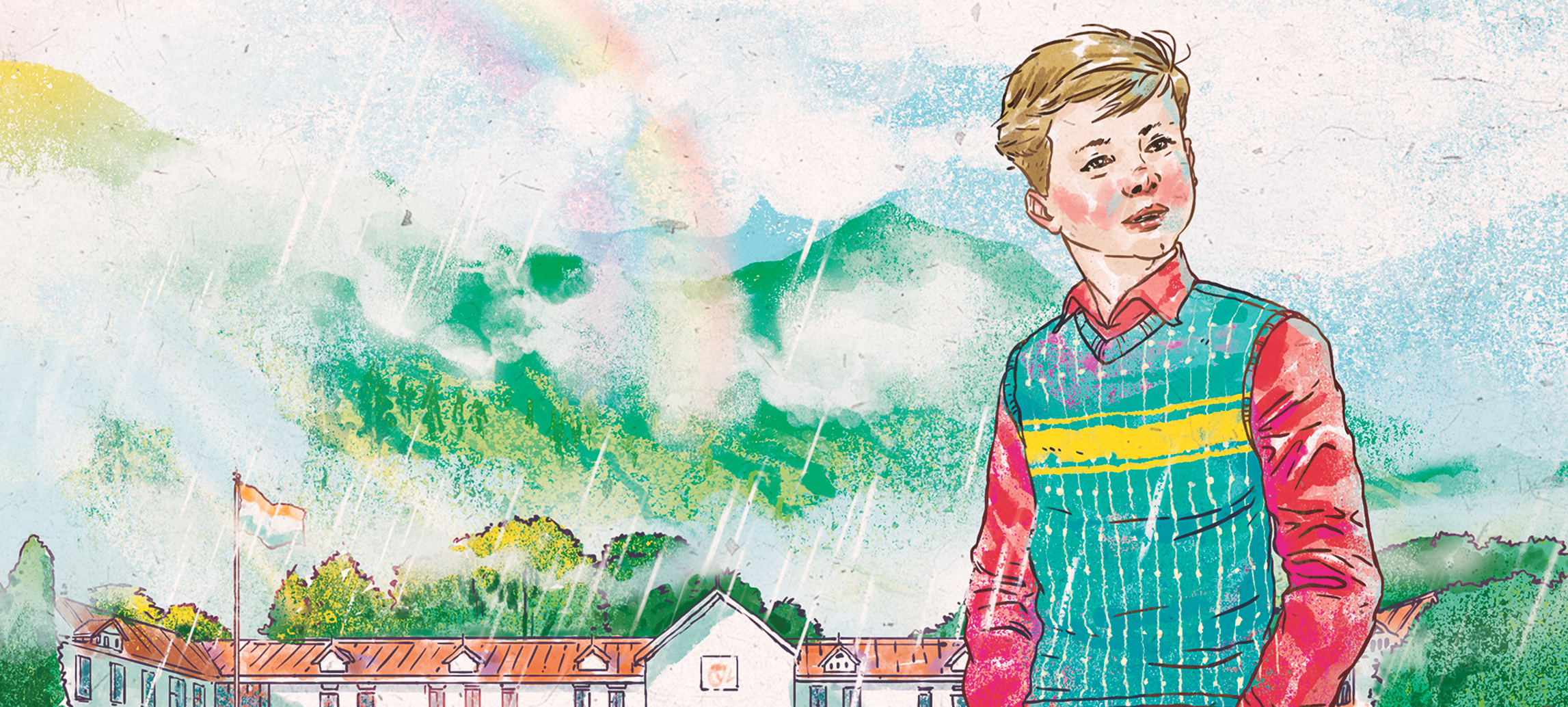
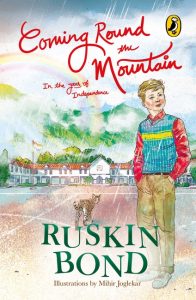
In the third part of his memoir, thirteen-year-old Ruskin Bond is back at school, doing what he loves – reading, goal-keeping, spending time with his friends and eating lots of jalebis. But things seem to be rapidly changing all around him. Whispers of a partition haunt the corridors of his school. Does the formation of a new, independent India mean saying goodbye to old friends-and, with it, the shenanigans they got up to?

In Ruskin Bond’s inimitable style, Coming Round The Mountain gives us some wonderfully wistful and poignant snapshots of friendship and the farewells brought on by the relentless change at the end of an era. Here are some of them:

~

The fearsome-sounding cliques one forms in childhood

‘I was turning thirteen in May that year. My best friends were Azhar Khan, who was my age; Brian Adams, who was a year younger; and Cyrus Satralkar, who was the youngest. We called ourselves the ‘Fearsome Four’, although there was nothing very fierce about us.’

*

The best friends are those who extend a hand when we need it most, whether or not we know precisely that we need them

‘I’d been going through a different period, adjusting to my stepfather’s home in Dehra and learning to cope with the world at large. Although a shy boy, I needed friends, and I was quick to respond to those who offered me friendship.’

 *

The irrelevance of cultural barriers in schoolboy comradeship

‘We were not in the least interested in each other’s religions or regional backgrounds. Adults seemed to think it important; but at thirteen, friendship and loyalty seemed to matter more.’

*

When adversity (or at least a compatibility of vices) brings you together

‘The catalyst for our bonding was that early -morning rouser for PT. For some reason— or different reasons—the four of us overslept one morning and failed to turn up on the first flat for our exercises. Our absence was duly reported by a senior prefect, and we were summoned to the headmaster’s study for the usual punishment. At least three strokes of the cane were to be expected.’

*

A friend who feeds is a friend indeed

‘World War II had been over for more than a year, but some food items—butter, cheese, chocolates—were still hard to come by. Brian divided his Kraft cheese into four portions, and each of us had his share. Now, there was a friend!’

*

The difficult feelings of older people who have to see enormous upheaval in all they have held dear

‘Dunda Hawkes had been deeply affected by the division of India. He was a simple man who, like my father, had been to army school and spent most of his life in barracks or on the march. He had become a boxing champion and was responsible for making sportsmen and athletes out of most of us.’

 *

The poignant uncertainty of goodbyes in that year of changes

‘Azhar was beside me, his arm around my shoulders. ‘Time to say goodbye,’ he said. ‘I’ll write to you. We’ll meet again—some day, somewhere.’ Surely we would meet again. The world hadn’t come to an end. But the light was going out in a lot of lives, and it would be some time before it came on again.’

*

 When the absence of a friend seems like a removal of an aspect of one’s own being
Front cover of Coming Round the Mountain
Coming Round the Mountain || Ruskin Bond

‘Sometimes we don’t really value our friends till we have lost them. Azhar’s departure left quite a gap in my life. He had been someone to whom I could talk freely, someone to whom I could confide and share my dreams.’

 *

The love of a friend does not need to be put in words for one to know that is there 

‘Send me lots of beautiful postcards,’ I said. We shook hands. In those days we were not given to hugs and demonstrations of affection. But I loved my friends, and they knew it and loved me too.’

Rediscover Love During the ’70s with ‘Once upon A Curfew’

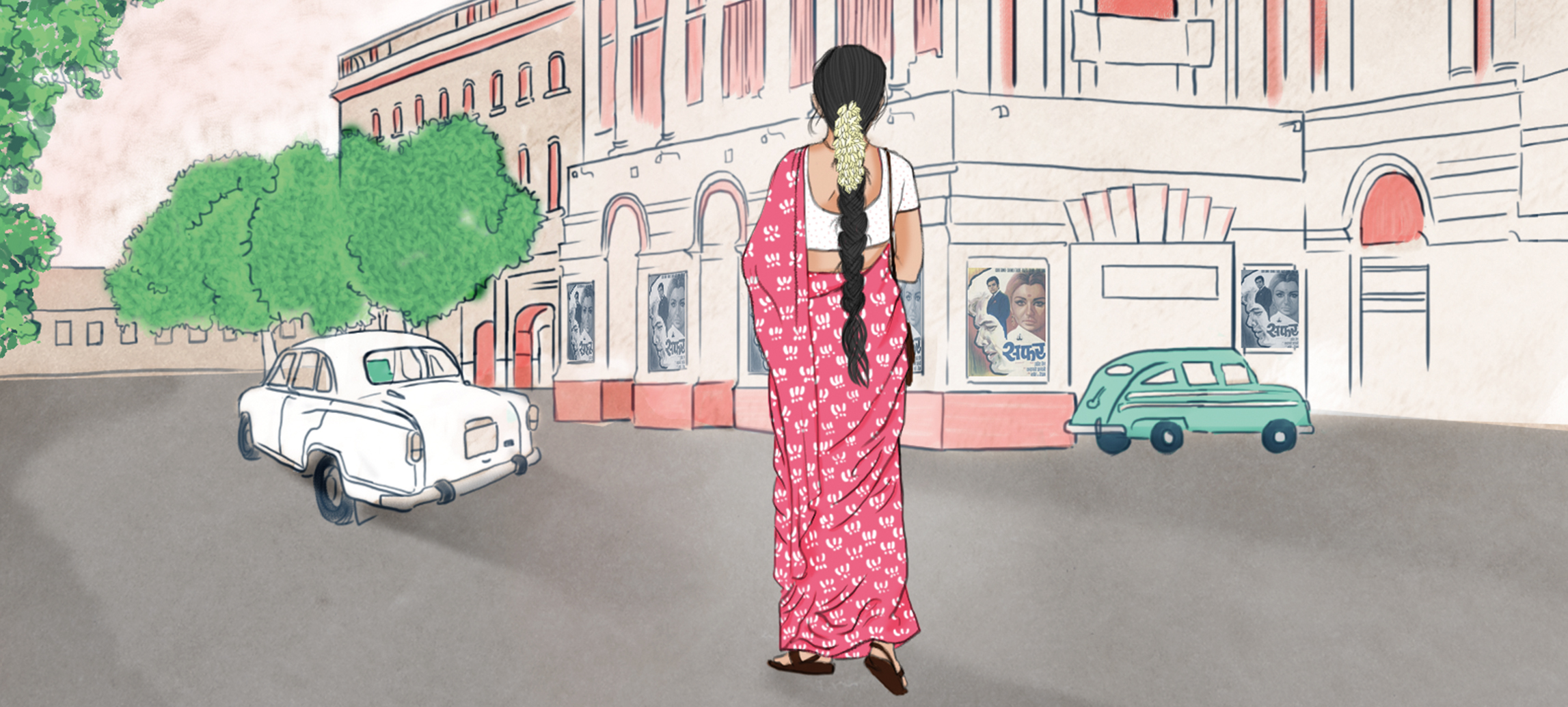
It is 1974. Indu has inherited a flat from her grandmother and wants to turn it into a library for women. Her parents think this will keep her suitably occupied till she marries her fiancé, Rajat, who’s away studying in London.
But then she meets Rana, a young lawyer with sparkling wit and a heart of gold. He helps set up the library and their days light up with playful banter and the many Rajesh Khanna movies they watch together.

When the Emergency is declared, Indu’s life turns upside down. Rana finds himself in trouble, while Rajat decides it’s time to visit India and settle down. As the Emergency pervades their lives, Indu must decide not only who but what kind of life she will choose.

Once Upon A Curfew beautifully portrays the difference between love then, in the 70s and now.

Here are some poignant quotes from the book that will surely melt your heart!


Even an act as tiny as looking into one’s eyes or extending a hand for a shake when meeting each other for the first time was considered bold and gutsy.


The use of first names without any salutation between 2 people who have just met would be a sign of a developing intimacy.


Subtleties were still very much in trend and flirting would almost always be way too polite.


It would not only be scandalous but also very inappropriate for a young boy and girl to meet at each other’s houses or even less crowded or empty public spaces. Coffee shops and restaurants used to be the dating hot joints of the times.


Physical expression of emotion was not the norm of the day; it could send a wrong signal or the person initiating it might actually be judged in a bad way.


The expression of one’s love was mostly through words and silent actions and not outright and sometimes over-the-top declarations of love so characteristic of today’s times.


Physical proximity or public display of affection was frowned upon and was not common so it made couples self-conscious and awkward when they had to diplay even the minutest of affection in public.


Get your copy of Once Upon A Curfew today!

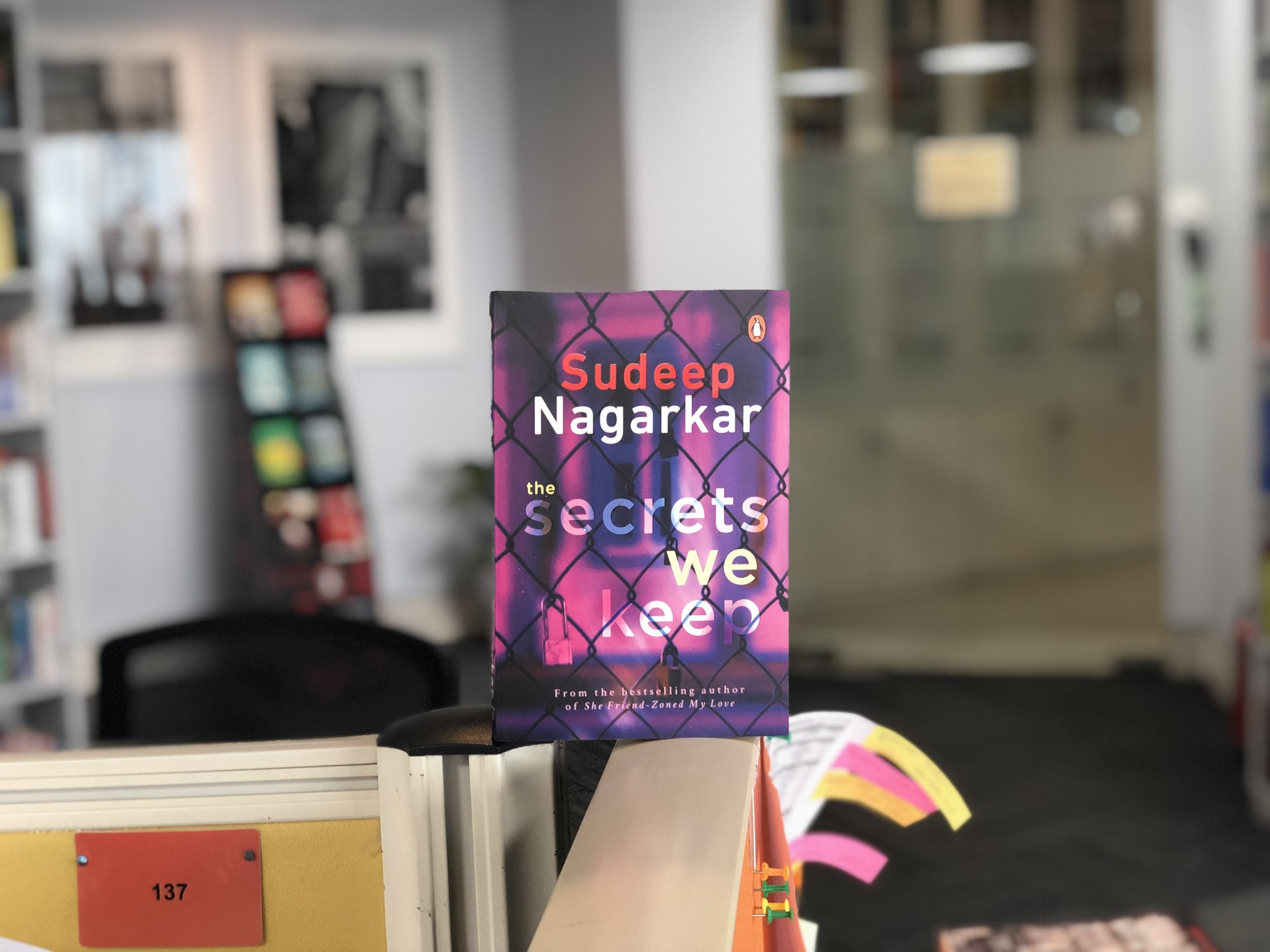
Romantic Quotes from ‘The Secrets We Keep’ that will Give You Butterflies in the Stomach

In this scintillating romantic thriller, Rahul, an intelligence officer on a secret mission, is undercover at a major’s house. In the process, he falls in love with the major’s daughter, Akriti, unknowingly putting her in danger.

Just when he thinks he has found a haven for Akriti, she goes missing. That’s when a research wing officer is put on the job, and Rahul realizes she is someone who seems all too familiar. Or is she really?

As the ghosts of a past passion come back to haunt his love for Akriti, Rahul must race against time to save the girl who holds his happiness in her soul.

Read on for eleven of the most romantic quotes from The Secrets We Keep, lines that will stir your soul while reminding you of the addictive chaos of the most powerful and enigmatic of all emotions.


Get your copy of The Secrets We Keep  today!

Get to Meet ‘The Four Horsemen’

Known as the ‘four horsemen’ of New Atheism, these four big thinkers of the twenty-first century met only once. Their electrifying examination of ideas on this remarkable occasion was intense and wide-ranging. Everything that was said as they agreed and disagreed with one another, interrogated ideas and exchanged insights – about religion and atheism, science and sense – speaks with urgency to our present age.

The dialogue was recorded, and is now transcribed and presented in The Four Horsemen with new introductions from the surviving three horsemen.

Get to know more about these Four Horsemen:

Richard Dawkins (d’Artagnan)

Richard Dawkins is responsible for introducing evolutionary biology and Darwinism to generations. His books The Selfish Gene and The Blind Watchmaker, never out of print, continue to inspire,inform and amaze. As the first holder of Oxford University’s  Simonyi Professorship for the Public Understanding of Science, he acquired a worldwide reputation as a sceptic, ‘passionate rationalist’, ‘proud atheist’, and witty exposer of charlatanism and fakery couched in pseudo-scientific language.


Sam Harris (Aramis)

Harris’s influential books The End of Faith and Letter to a Christian Nation were followed by a later book and subsequent highly popular podcast series called Waking Up, which focus on his great interest in exploring how morality and spirituality can flourish outside religious teaching.


Daniel Dennett (Athos)

Professor Dennett writes on the mind, evolutionary biology, free will and much else besides. His book Breaking the Spell: Religion as a Natural Phenomenon caused plenty of fluttering in academic, intellectual, religious and political


Christopher Hitchens (Porthos)

His preternaturally fluent articulacy, breadth of learning, extraordinary recall, diablerie, sauciness and panache raised his mastery of debate to a level unmatched in his lifetime. We are fortunate that this child of the 1960s and ‘70s did at least make it into the YouTube era; many of his coruscating flagellations of the dim-witted, malevolent, ill-informed and unprepared live on in cyberspace as well as in the pages of his many articles, essays and books.


With a sparkling introduction from Stephen Fry, The Four Horsemen makes essential reading for all their admirers and for anyone interested in exploring the tensions between faith and reason.


Know Anuja Chandramouli, the author of ‘Muhammad Bin Tughlaq’

When his father dies, Prince Jauna Khan succeeds to the throne of Delhi as Muhammad bin Tughlaq. His reign will prove to be epic and bloody, but unsurpassed in splendour, innovation and defeat. A formidable strategist and remarkable scholar, the Sultan will go down in history for his brutality as well as his brilliance, unfairly remembered only as a cruel tyrant who might have been raving mad.

In Muhammad Bin Tughlaq, Anuja Chandramouli, one of India’s best mythology writers, reimagines Muhammad bin Tughlaq’s life and times in incredible detail to bring to life the man behind the monarch.

Here are 6 interesting facts about the author:

————–

Her highly acclaimed debut novel, Arjuna: Saga of a Pandava Warrior-Prince, was named by Amazon India as one of the top five books in the Indian Writing category for 2013. No wonder she swears Arjuna is the great love of her life. Always.

*

Anuja Chandramouli’s articles, short stories and book reviews appear in various publications like the New Indian Express and The Hindu. She says she appreciates the bouquets and doesn’t mind the brickbats or trolls just as long as readers don’t complain to her mom.

*

Anuja regularly conducts story-telling sessions and workshops on creative writing, empowerment and mythology in schools, colleges and various other platforms. She says she is grateful to all who listen to her (or pretend to) and refrain from pelting her with rotten eggs (which apparently is a recurring nightmare).

*

Anuja is a student of classical dance and yoga. She blames the former for her hips and the latter for her inability to sock the deserving in the jaw.

*
Anuja’s first novel along with the second, Kamadeva: The God of Desire and the third, Shakti: The Divine Feminine are getting translated into Hindi, Marathi, Gujarati and Bengali. The author hopes to learn the above mentioned languages by then, and says she has made progress with the cuss words.

*

In 2017, Anuja achieved what many authors dream of – three books in a row released by different publishers. The author is grateful for the love and accolades she received for the triplets but wishes she would lose the baby weight already.


Anuja Chandramouli’s latest novel, Muhammad Bin Tughlaq: Tale of a Tyrant  is AVAILABLE NOW!


Super Century – An Excerpt

What is it about the Indian psyche that makes us so incapable of fulfilling our promise as a nation? Why are we so averse to risk, resigned to mediocrity and mired in a collective lack of confidence? India has so much potential but seems forever stuck on the brink of actualization, unable to muster the political will and geo-economic force to clear the final bar. The stakes are higher than ever, and India’s moment is now.

In Super Century, Raghav Bahl offers a cogent and candid assessment of how we got where we are and a clear blueprint of what we need to do, both at home and in the world, to fulfil our promise going forward.

Here is an excerpt from the book:

—————-

The dawn of the twenty-first century brought new geopolitical opportunities for India and the other fast-developing nations christened the BRICS (Brazil, Russia, India, China and South Africa). In the first decade of the new millennium, the twin catastrophes of 9/11 and the 2008 financial meltdown deeply shook America, weakening its position as the world’s sole superpower. With the US suddenly vulnerable and preoccupied with wars in Iraq and Afghanistan, the BRICS— especially China—stepped into the void, asserting themselves in the economic and diplomatic spheres. They got a boost from the forces of globalization, which levelled the playing field and transformed the very nature of geopolitical power. No longer could a strong, successful state impose global influence solely through its military; the new world order valued economic prowess—leveraged by citizens, businesses and nongovernmental agencies through trade, aid and culture capital—above all else. For India and other rapidly rising countries with huge populations and untapped potential, that shift opened up a world of new possibilities.

As India’s economy grew, Delhi gradually adopted a larger and more defined role in global affairs, increasingly willing to take a principled stand on matters of national—and international—importance. Still, we struggled to win the world’s respect, denied a seat on the United Nations (UN) Security Council and membership in the Group of Seven (G7)—even though India’s economy is bigger than both Canada’s and Italy’s, which do belong to the G7. Such snubs only feed our national insecurity and spur greater defensiveness.

When Modi took office in 2014, he enthusiastically advanced the narrative of India as a leading power, and Indian confidence swelled. The government abandoned all vestiges of non-alignment and introduced an expansive new policy of multi-alignment, centred on increasing engagement—bilateral as well as multilateral and with friends as well as rivals. Delhi revitalized its partnership with Washington, stepped up its leadership in Southeast Asia and artfully managed China through a balance of engagement and containment. Modi took a more assertive stand against Pakistan, retaliating against persistent small-scale crossborder attacks with open and unapologetic surgical strikes, rather than employing covert actions while pretending to ‘turn the other cheek’. And he gave maritime strategy top priority, particularly in the Indian Ocean, with a focus on new security agreements and greater cooperation with India’s democratic neighbours; in 2015, Delhi agreed to build its first overseas military base in the Seychelles.

Modi himself relished the role of traveller-in-chief. In his first three and a half years in office, he visited forty-nine countries— including the US four times—and met with a dizzying array of heads of state, foreign dignitaries and business leaders, among others. His tireless jet-setting may have helped elevate India’s standing abroad, but it earned him ridicule at home, with critics mocking his jovial banter and awkward bear hugs. In retrospect, all that time on the road might have been better spent overhauling India’s economic policy. But Modi was determined to demonstrate his commitment to multi-alignment; in 2016, he became the first Indian leader since 1979 to skip the annual Non-Aligned Movement summit.

In keeping with this mandate, India has asserted itself diplomatically in sophisticated new ways. While continuing to seek entry into traditional Western-dominated international organizations such as the Nuclear Suppliers Group, Asia-Pacific Economic Cooperation (APEC) and the UN Security Council—as well as gain commensurate influence with the West in bodies such as the World Bank and the IMF—Delhi has also embraced the newer, more nimble BRICS-based alternatives, such as the Asian Infrastructure Investment Bank (AIIB) and the Shanghai Cooperation Organisation. Against all odds, India has become a leader on climate change; after years of complaining that emissions caps were unfair to developing countries, Delhi abruptly changed course at the 2015 Paris Climate talks, with Modi joining France’s then President

François Hollande to create an India-based international solar power alliance. And India has taken more initiative in addressing global crises; when a Saudi attack trapped thousands of foreign nationals in Yemen in 2015, India rushed to the rescue, safely evacuating not just its own citizens but civilians from more than two dozen countries—including the US and Pakistan. Indian troops make up one of the largest national contingents of UN peacekeepers.

Going forward, India must continue to pursue greater global engagement. We must look not just West or East, but North and South too, working with big powers and small to shape the global agenda. We have nothing to lose and everything to gain from participating in such diverse multilateral groupings as the ‘Quad’ talks (with Japan, the US and Australia)—as we did for the first time in 2017—and the RIC (Russia–India–China) annual foreign ministerial meetings. Our country’s sheer size, geography and status as the world’s largest democracy make it essential—if not inevitable—that we assume a bigger leadership role in preserving peace and security, both in Asia and the world. That is especially true given today’s rapidly evolving world order, with the US retreating from its multilateral commitments and China eagerly stepping in to fill the void. With Xi Jinping consolidating power and hot-headed rulers in both Russia and the US, India looks relatively stable, reliable and transparent by comparison. It would be a shame to waste that political capital at a time when the world is starved for decisive, rational leadership.


In Super Century, Raghav Bahl offers a cogent and candid assessment of how we got where we are and a clear blueprint of what we need to do, both at home and in the world, to fulfil our promise going forward.

error: Content is protected !!