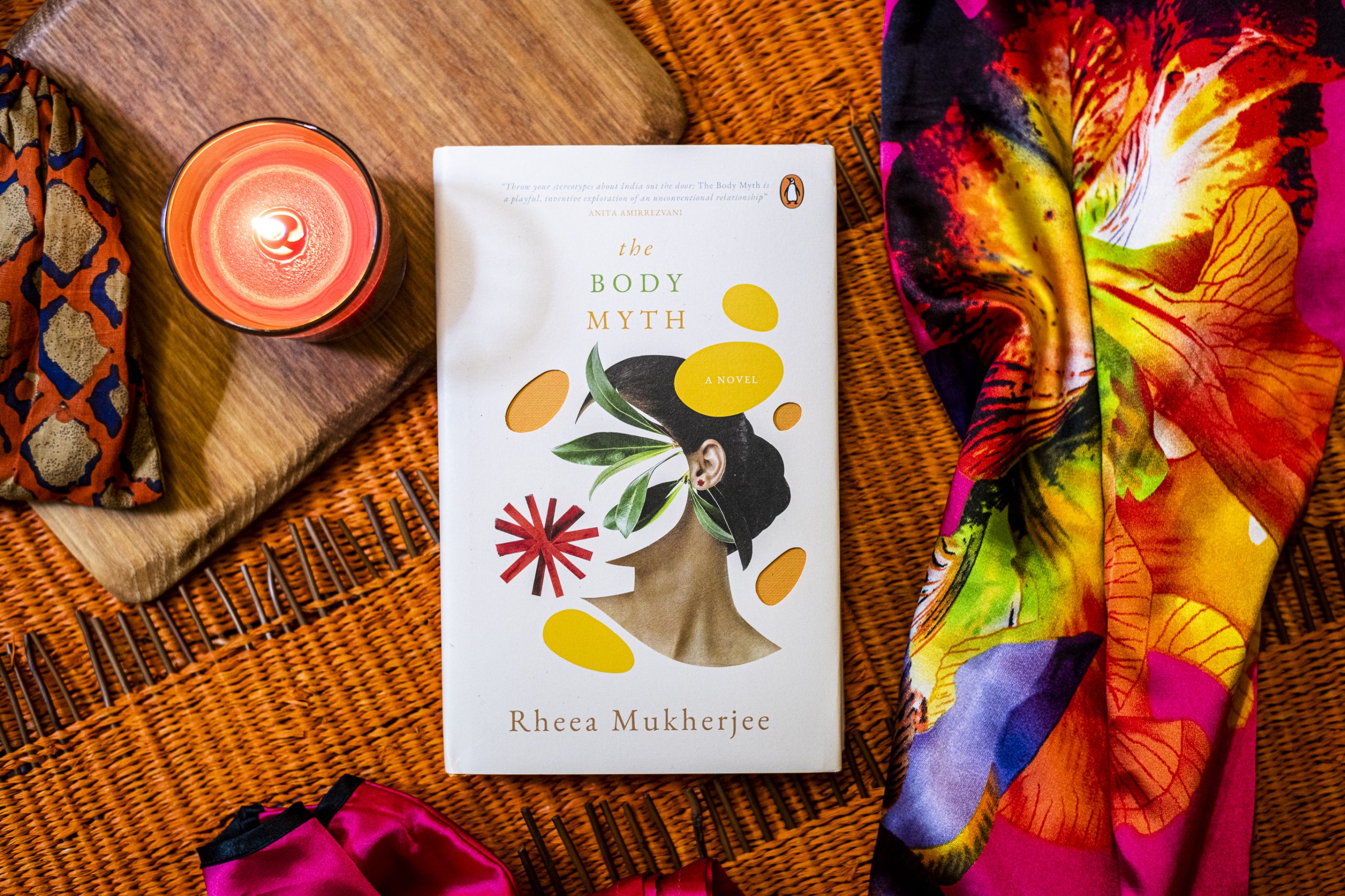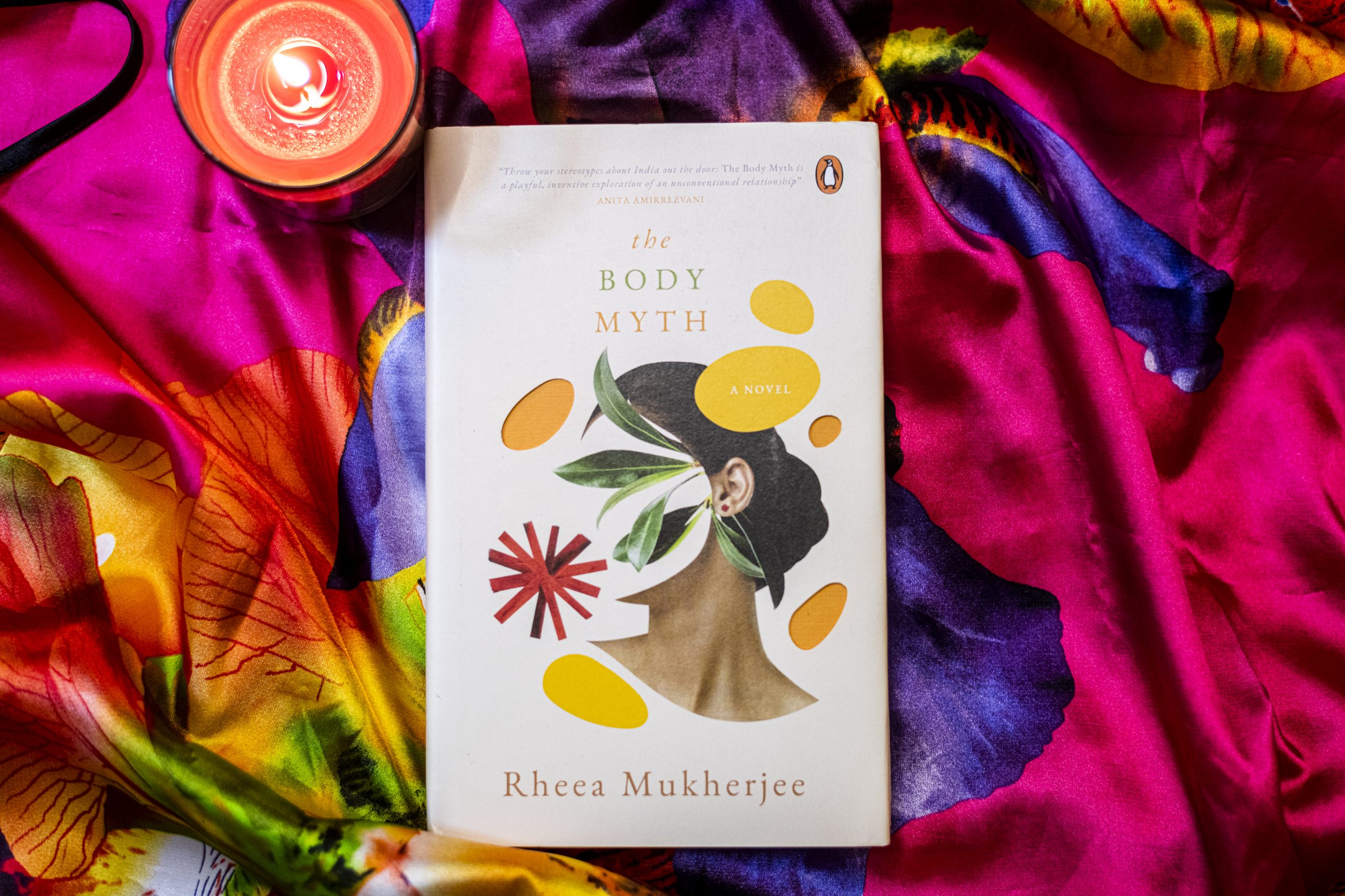
Rhea Mukherjee’s debut novel, The Body Myth features Mira, a teacher living in the heart of Suryam, the only place in the world the fickle Rasagura fruit grows. Mira lives alone, and with only the French existentialists as companions, until the day she witnesses a beautiful woman having a seizure in the park. Mira runs to help her but is cautious, for she could have sworn the woman looked around to see if anyone was watching right before the seizure began.
Mira is quickly drawn into the lives of this mysterious woman Sara, who suffers a myriad of unexplained illnesses, and her kind, intensely supportive husband Rahil, striking up intimate, volatile and fragile friendships with each of them that quickly become something more.
Through Mira’s observant, deeply introspective viewpoint, The Body Myth, explores the questions that haunt all of us at some point, how much do our bodies and minds respectively influence our experiences, history of trauma and the nature of love.
Here are some raw moments from the book that will make you want to turn the page for more!
The exploration of the mind and body connect and the rendering of the body as a source of both agony and healing.
Do we trust what our body is telling us? And how separate is the body from the mind, if at all? Sara’s mental state appears to have a real physiological effect as well. In Mira’s. Mira is drawn to Sara both spiritually and physically, and her sexual relationship with both Sara and Rahil, Mira begins to emerge from intellectual cocoon that she has sought refuge in after her husband’s death and begins to find that she can enjoy simple pleasures once again.
“Emotional pain can be so severe, so profound, so soul breaking that it must reflect on the body. But I couldn’t seem to find my scars when I stood in front of the mirror. Perhaps they disguised themselves moving across my body like a flea on a cat.”
∼
The seamless blending of existentialist philosophy into what Mira considers her very mundane life.
The post-war philosophers play unexpected roles in The Body Myth, Mira’s recovery from her husband’s death is due to her reading a shelf full of them, Foucault pops up in her correspondence and conversations with Sara, and De Beauvoir plays a hilarious role in the loss of her job.
“You might think it was teaching that saved me from the blunt darkness that comes with the loss of a spouse. It was not, I almost committed suicide true, but it was Camus, Sartre, Foucault and De Beauvoir who led me back to life. These philosophers who embraced the absurd made my pain feel silly.”
∼
The faint but tantalizing element of magical realism.
The very mundane but fictional town of Suryam in which the book is set is given a distinct edge of the surreal by being the only place in the world where the exotic Rasagura fruit grows. While the Rasagura’s significance is never explained, its description has a heightened sensual lusciousness. ‘Soaked berry with a hint of mango’ sounds truly celestial!
“We had one other thing that no other town, city or village had, the Rasagura fruit. Pink on the outside, yellow on the inside, speckled with tiny brown seeds, Rasagura thrived in Suryam’s microclimate and no other.”
∼
The exquisite rendering of both the physical and mental aspects of grieving.
Mira’s anguish at her young husband’s death, a pain so sharp she takes a full year to recover, is explored in wrenching detail.
“Like I had no idea what had happened when in fact I could remember every little insult I’d screamed, every word I’d said to Ketan’s dead body. My anger was only artificially tamed. I could feel myself being medicated like a hot water bag on top of a raging, crampy, menstrual tummy.”
∼
The sensitive and nuanced exploration of a polyamorous relationship.
Mira’s intense attraction to Sara, borders on extreme admiration and fascination whereas her sexual relationship with Rahil appears comparatively casual at first. Though Rahil sleeps with Mira he makes it evident that his Sara’s happiness is priority. He also seems almost resentful of Mira’s independent connection with Sara. The uneasiness, the envy, and the mutual attraction-the strange codes of this strange triad are fascinating as they unfold.
“The language of forbidden love has no common book. It’s a series of coded sentences, its meaning created in the head of an individual and choked out to the other. Words that dangle between lovers, each of them finding the meaning they want to hear at the time. And what I wanted to hear that it was okay to love Sara. It was okay to love her and find support and sexual intimacy with her husband at the same time.”
∼
The exploration of trauma through the multiple sources of pain explored in the novel.
There are the buried traumas of childhood caused by a depressed and suicidal parent and by excessively coddling parents in the other, there is the more recent and raw grief of the loss of a husband, and the trauma of the body—of an intensely debilitating and inexplicable illness, of physical pain and open sores and wounds. Running through it all is the thread—is the mind or the body the source and site of trauma?
“Could bliss last forever after you had a lifetime of pain to provide you with context?”
∼
The delicate exploration of the subjective and shifting nature of reality.
The idea of reality as a matter of perspective and the theme of ‘fakeness’ is extensively explored—is intellectualism fake, is Sara ‘faking it’ or is truth simply a function of belief? Can we completely trust either our own bodies or minds?
“For you to understand that untruths, labels and freedom all come together eventually you must walk at my pace.”
Get your copy of The Body Myth today!