Publish with Us

Follow Penguin

Follow Penguinsters

Follow Penguin Swadesh

Learning from the Best of Leadership – An excerpt from ‘The Innovation Capital’

Great leaders of innovation know that creativity is not enough. They succeed not only on the basis of their ideas, but because they have the vision, reputation, and networks to win the backing needed to commercialize them. It turns out that this quality–called “innovation capital”–is measurably more important for innovation than just being creative.

The authors have spent decades studying how people get great ideas (the subject of The Innovator’s DNA) and how people test and develop those ideas (explored in The Innovator’s Method).

Featuring interviews with the superstars of innovation–individuals like Jeff Bezos (Amazon), Elon Musk (Tesla), Marc Benioff (Salesforce), Indra Nooyi (PepsiCo), and Shantanu Narayen (Adobe)–this book will help you position yourself and your ideas to compete for attention and resources so that you can launch innovations with impact.

Here is an excerpt from the book!


The Virtuous Cycle of Innovation Leadership

Whatever your view of Elon Musk, one thing he did when he helped launch Tesla was articulate a lofty vision for the company.

“Our goal [is] . . . to accelerate the advent of sustainable transport by bringing compelling mass-market electric cars to market as soon as possible,” he wrote. “In order to get to that end goal, big leaps in technology are required. ”1 Musk then laid out his “master plan”—a strategy for launching desirable electric vehicles at the high end of the market followed by affordable electric vehicles for the mainstream market.

Sterling Anderson, former head of Tesla Model X and Tesla Autopilot and co-founder of Aurora Innovation (a startup that is successfully providing a full-stack self-driving solution for major automakers like Volkswagen and Hyundai), says that Musk’s success as an innovative leader stems largely from a reinforcing cycle of success triggered by an exciting and inspirational vision:

Elon understands people. He understands that a lofty vision, an inspirational vision, attracts world-class people,
particularly world-class engineers. With those world-class engineers, he’s able to build a better product. That better product attracts customers and attracts investors, and it’s self-reinforcing. As this feeds on itself, engineers are
increasingly inspired to join, not only because of the lofty vision but also because of the increasingly strong brand behind it. These conditions attract increasingly strong talent; it feels good to work there and to be viewed as someone who is helping drive innovation toward that lofty goal.

Without prompting, Anderson independently has described the same virtuous cycle that we have seen many leaders utilize with positive results. This cycle includes the following steps:

1. Identify an exciting, lofty, even inspirational vision. The vision needs to solve an important problem, pursue a big opportunity, or just be exciting.

2. The lofty vision attracts talented human capital (e.g., better engineers and scientists) who want to work on something exciting. It also attracts investors and/or resources from organization leaders who provide the resources and senior sponsorship needed to launch a successful innovation project.

3. The talented human capital increases the odds of developing a better product and customer experience. Put simply, talented people going after a lofty vision produces better results for the customer.

4. The better product or customer experience attracts customers. The increase in happy customers leads to the creation of a valuable, hopefully innovative, reputation. Customers of companies or brands with an innovative reputation experience “identification”—which means their personal identity gets tied up with the products and brand which makes them much more loyal and valuable customers.

The ability to attract customers and build a valuable brand leads to a reinforcing cycle. Going back to step number two: talented human capital and investors are attracted to companies and projects with a valuable brand and loyal customers. Thus, the cycle repeats.


Get your copy of the Innovation Capital today!
Meet Eight Youth Leaders of India and Know their Aspirations

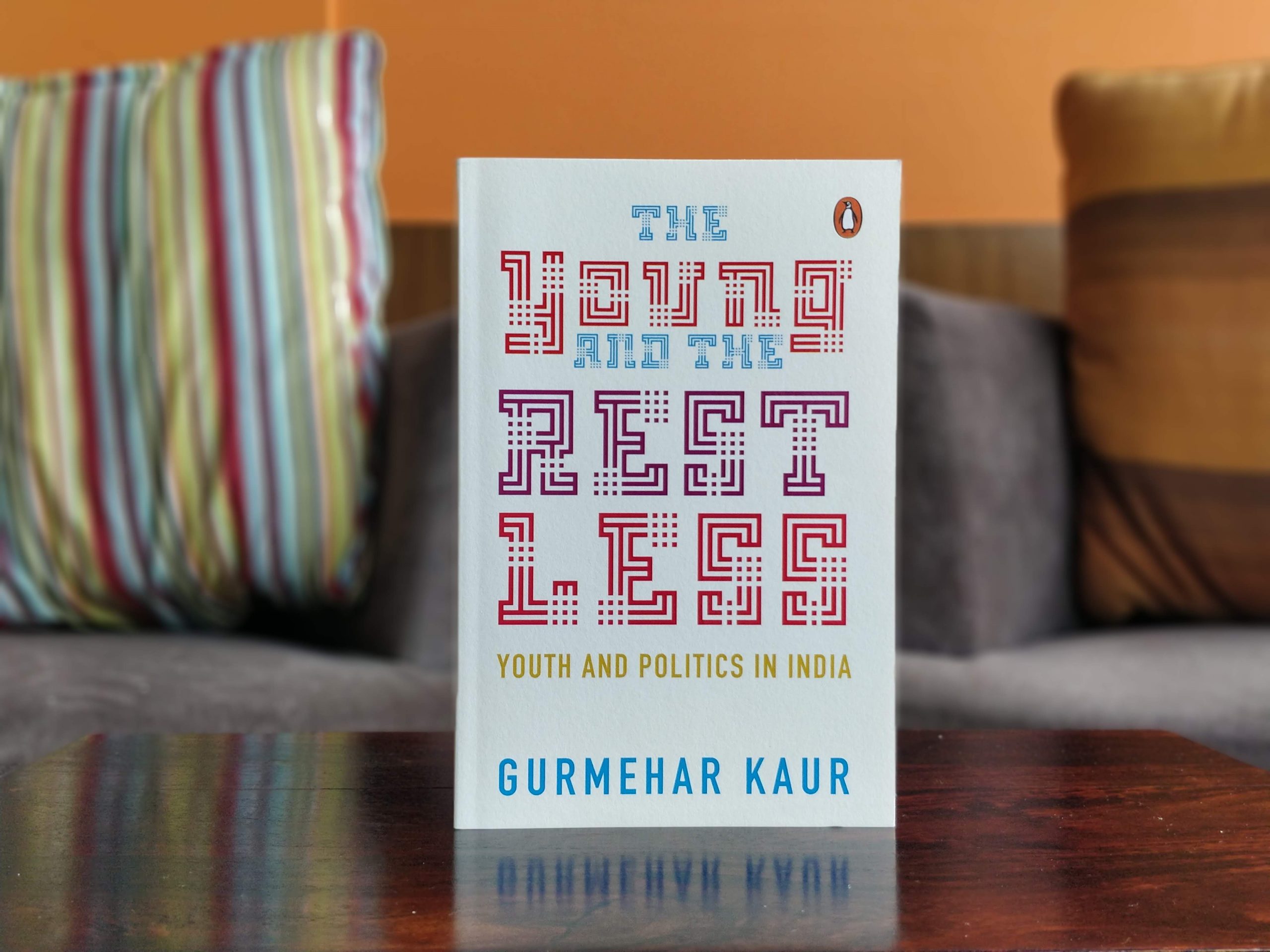
The Young and the Restless by Gurmehar Kaur, maps the journey of eight youth leaders, their aspirations for the country’s youth, their goals for themselves and their ideas for the nation. While giving a comprehensive understanding of the ideas and motivations of these leaders. The book explores whether these leaders are influenced by the shadow of their older party leaders.

Giving a clear narrative of the new-age politics of the country and where it is headed, the book provides a fresh view on the political sphere of the country.

Here we list the aspirations of these inspirational youth leaders for you:

1. Omar Abdullah

The ex-Chief Minister of Jammu and Kashmir, Mr. Omar Abdullah, is a driven politician with a zest to advocate for the peace of his native state. He talks about the Kashmir of his boyhood with its pristine beauty and the changes that have come about in the past few decades. Talking about the Kashmir of yesteryears, he shares what he believes is the best course-of-action for the state.

“That’s why I always say, for me, if we could restore Jammu and Kashmir in some way back to the state we grew up in, that would be the biggest service we could do to the younger generation.”

2. Sachin Pilot

The young Indian politician, puts forward his views about the importance of education in the the country. He believes that an educated society would do well to ward off the many evils of today’s world. With an insight into the many advantages of an educated society, Sachin Pilot explains how this nurtures people in the right direction.

“It’s not just educating children on an academic level, it’s about imparting ethics, values, history, our culture, not in a political way but to understand where we come from.”

3. Sowmya Reddy

Being an environment and animal activist, Sowmya Reddy ,an MLA from Karnataka, has always raised her voice against injustice. When speaking about the the many issues regarding animal cruelty, climate change and social inequalities, she stressed that one can only be more perceptible to social issues when they don’t limit themselves to formal education and have the freedom to learn from outside the world. She believes it is through this freedom that one can bring about a change in the society.

“With that, Sowmya confirmed to me that freedom was important to her and it showed through in all her actions, whether it was her choice to be vegan in a household that enjoyed non-vegetarian food or whether it was studying environmentalism away from home or whether it was to take the road less travelled and start an activist centre and cafe on her own.”

4. Jignesh Mevani

This young political activist and an MLA of Gujarat is known to have had a long history of political struggles during his initial years. Being vocal about caste discrimination from a very young age, he believes in working towards an egalitarian society.

“And what does working for the Dalit community mean? It means to stand up for them when they are oppressed and subjected to violence. that is what I learnt about leadership growing up.”

5. Shehla Rashid

An activist since her student days, Shehla Rashid has been actively supporting the cause of Kashmir and its people, gender and other social issues. She talks about the struggle of getting into the political sphere and hopes to one day be instrumental in bringing about a change for the country.

“I don’t know, there is bad in everything and we need reform everywhere, especially in politics. We need reform in marriage and we need more progressive institutions than marriage; similarly, we need better politics. Otherwise everything is bad.”

6. Aaditya Thackeray

The twenty-eight-year-old political leader from Maharashtra has ushered in a trend of new-age politics. Going against the grain in the political sphere, he has taken actions that represent a progressive understanding of the current world.

I don’t think it plays much into my politics because the way I see politics or the things I’m doing in politics right now, be it the plastic ban or electric buses or trying to reform education, all of these issues are not only very important for me, it affects everyone.

7. Madhukeshwar Desai

The promising young politician,  has proved to be a dynamic leader over the years. As a leader, he is aware of the responsibility he has towards the people and hopes to show people the right path.

I think regardless of what I do, it’s about doing justice to what I do and making sure I don’t bring disgrace to something he did.”

8. Raghav Chadha

The twenty-nine years old leader, is a confident politician who strongly believes in his ideologies. Originally a chartered accountant, he realized the important for a corruption-free India, and hence decided to join politics.

Therefore this thing has always been inside me. how can we actually get rid of corruption?… The common life is of an ordinary person who doesn’t know how to pay for his child’s next meal and that is because there is an unfair distribution of wealth due to corruption. Corruption is at the root of all causes.


The Young and The Restless follows the journeys of eight youth leaders, their aspirations for the country’s youth, their aspirations for themselves and, most importantly, their aspirations for the nation.AVAILABLE NOW!

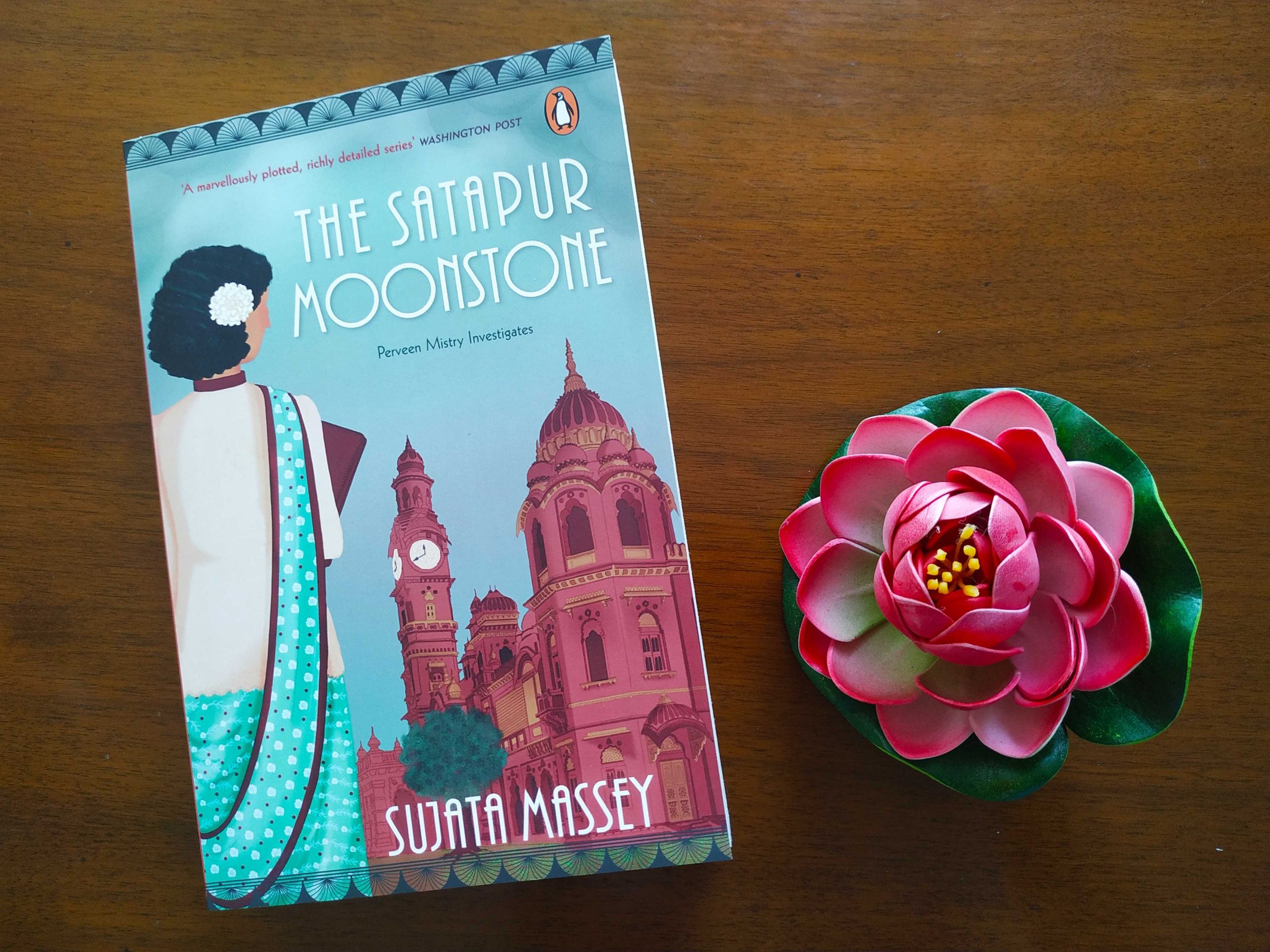
Step into the Wilds of Satapur with Perveen Mistry – An Excerpt

India, 1922. A curse seems to have fallen upon the royal family of Satapur, a princely kingdom tucked away in the lush Sahyadari mountains, where both the maharaja and his teenage son have met with untimely deaths. The state is now ruled by an agent of the British Raj on behalf of Satapur’s two maharanis, the dowager queen and her daughter-in-law.

Here’s an exciting excerpt from The Satapur Moonstone!

————————————————————————-

As she walked, keeping her eyes on the path ahead of her, she saw how many roots there were—how many holes and ridges and places to trip. So many depressions were filling up with water, it was hard to know how deep the water was until she stepped in. If she twisted her ankle, she’d become an impossible burden. The men who had jogged so sure-footedly with the heavy palanquin weren’t singing any more; she imagined it was because their songs were fast-paced and she was forcing them to walk slowly. Or maybe they hated the rain, too.

She wondered if Colin had ever endured a failed palanquin ride. The ordeal of slogging through mud might be impossible with a wooden leg, but if he chose not to use it, his cane would also get stuck. Thinking of this made her step a little more quickly.

Eventually, her journey would end.

The dark rain cloud was both in front of them and behind, and rain continued falling in tiny, cold knife-pricks. She imagined it was probably raining at the circuit house, and that Colin was worrying about her.

When they came out of the trees, her boots were filled with mud. But the journey appeared to be almost done. Ahead lay what looked like a sentry’s tower.

‘We’re almost there!’ Perveen said, pointing to it.

‘No,’ Lakshman said. ‘That’s an old hunting tower.’

‘Should we wait there for the rain to stop?’ she asked hopefully.

Lakshman wiped water from his face before answering. ‘TheSatapur royal family used to hunt here because it is a good place for tigers and leopards. We are not so far from the palace. We should go on.’

Lakshman wanted to protect them all from predators and naturally wished to finish the job. She tried to form a picture in her mind of a bright, comfortable palace filled with lights and warmth. She had everything to look forward to, if she could just keep her feet moving.

After some time, she saw, through a break in the trees, a faraway wall. The wall stretched on. It looked like a walled city, but she was afraid to hear it was another place they couldn’t stay.

Lakshman smiled for the first time. ‘That is Satapur Palace! This is the place where you wished to come.’

She was too fatigued to answer, but his words made her legs move faster. As the fog cleared, she saw the wall was the facade of a giant grey stone palace punctuated with a series of towers topped by onion-shaped domes. The palace was so huge that it was surprising to see its massive arched entry protected by only two durwans. She
guessed they were guards from their blood-red livery, although they were not standing at attention but squatting under the entry’s filigreed brass roof to shelter from the rain.

It took fifteen minutes from first sight to reach the palace wall.

With a wide smile, Perveen rushed the last hundred feet to get underneath the entryway roof. But she realized that her movement looked like an affront, because the durwans cried out and grabbed their bayonets.

‘Do not worry, brothers! She has come to visit the maharanis,’ Lakshman said quickly. He had run up behind her.

‘It cannot be.’ One of the guards spat sideways as he regarded their party. ‘Who are you?’

Perveen realized that she was too bedraggled to look like anyone’s idea of a lady lawyer.


Resolve the mystery along with Perveen Mistry in Satapur Moonstone

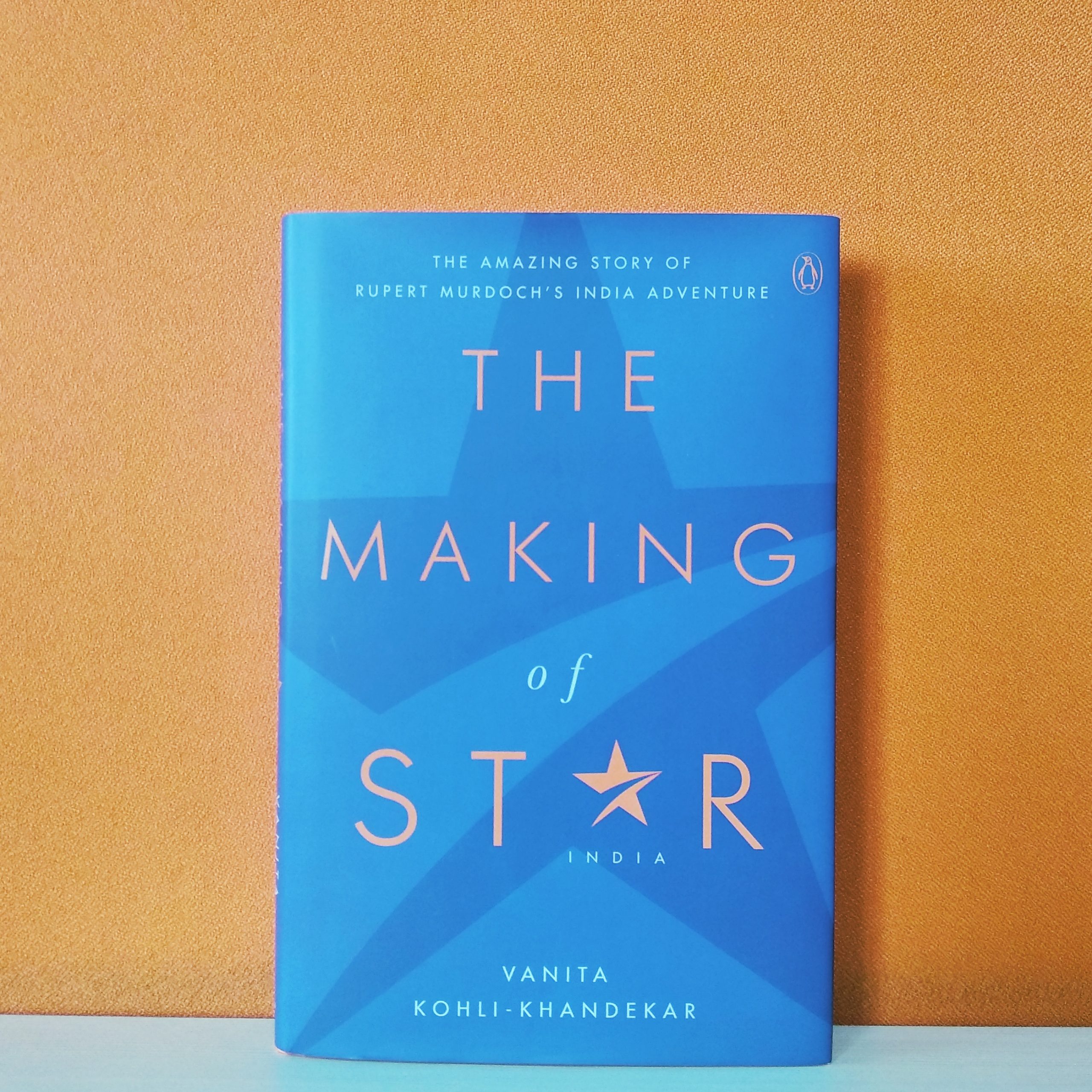
First Mover Advantage? How Star India Beat Its Competition

The Making of Star India by Vanita Kohli-Khandekar is the story of an audacious bet on an unknown market by one of the most colorful media owners in the world. When Rupert Murdoch, executive chairman, News Corporation, bought Star TV in the early 1990s nobody knew that it would become one of the three largest media firms in India with revenues of over $2 billion. Mr. Murdoch’s News Corporation was the first major global media firm to showcase the potential of the Indian media market. Many other companies then followed his lead.


This book maps the ups and downs of Star India with interesting anecdotes. These feature a host familiar names – Richard Li, Rathikant Basu, Peter Mukerjea, Uday Shankar, Sameer Nair and both Rupert and his son James Murdoch.


Here are a few interesting firsts from Star in India:


  1. Star’s first big success in India was the creation of Channel [V], which created a buzz all over the world. It was also India’s first music channel.


  1. Star commissioned its first Indian show in the year 1993, called The India Show by Mr. Raghav Bahl.


  1. Star appointed Mr. Rathikant Basu as its first CEO of News Television India in the year 1996. This was also Star’s first senior appointment within India.


  1. Star’s first big success in the news industry in India was through an English news bulletin, Star News, in the year 1996. The show featured Mr. Prannoy Roy, whose rising popularity helped in the promotion of the news bulletin.


  1. In the year 1998, Star came up with India’s first private news channel Star News.


  1. The year 2001, Star launched India’s first private radio station – Radio City.


  1. Star recorded its first successful year in India in 2003 on the back of popular shows such as Kaun Banega Crorepati, Kyunki Saas Bhi Kabhi Bahu Thi, on Star Plus.


  1. In 2014 Star revived and put on the world stage an ancient Indian game called kabaddi, through the Pro-Kabbadi League. It is now the second most viewed game on TV after cricket.

The Making of Star India tells the thrilling story of Indian television through its most notable protagonist: Star TV . The book is available now!

Meet the firecracker protagonist of ‘You Are Here’

When it first came out in 2008, Meenakshi Reddy Madhavan’s You Are Here was a game changer: unexpectedly candid, surprisingly wise, audaciously explicit.It introduced us to Arshi, a bold and irresistible new voice.
Here are a few things to know about Arshi, the protagonist of the book:

Her blonde American stepmother tries too hard

“Every time I’ve visited their place, Barbara has appeared (in a sari sometimes, if she could contrive it) with a puja thali to do an aarti before I enter.”

Her job in a PR company is shit

“ One time,my boss, Shruti the Horrible, sent me to Janpath to pop in and out of the silver jewellery shops they have there with the list of journos who were invited to some pub inauguration to, get this, buy fifty-four one-of-kind silver earrings for women… Yes,ladies and gentlemen, this, this jewellery choosing, was my job description.”

She has a cool mom

“It wasn’t easy at all, being my mother’s daughter…She was too popular and the kids she taught (Class 9 and up) adored her… She wasn’t the kind of teacher who’d hover around if you wanted to escape somewhere with your best friend and talk for a couple of hours, or even if you wanted a moment alone with your boyfriend.”

Her ex- boyfriend is a lying-cheating-bastard

“We had been seeing each other for exactly a year and a week when he zoomed off to Manali with some colleagues, one of whom happened to be a pretty young thing who was also his work buddy…I guess they were pretty bonded. Evidently they got even more ‘bonded’ in Manali.”

Topsy, her flatmate and best friend, lives a double life

“But if you see Topsy around her parents, you’ll never think she’s the same girl who lives with me. She pulls out all the salwar-kameezes her mother bought for her to wear to college…and speaks in very soft polite tones in a mix of Hindi and English.I don’t know how she grew up the way she did, but she says it was boarding school and the Internet that changed the way she looked at things.”


She wished she had a normal childhood

“ I wanted to be like the ‘normals’ because it seemed like such a safe way to be. In my eyes their lives were superior in every way to the one my family lived.”


This 10th anniversary edition of You Are Here is a reminder of how much, and how little, has changed in the life of a single woman in India. AVAILABLE NOW

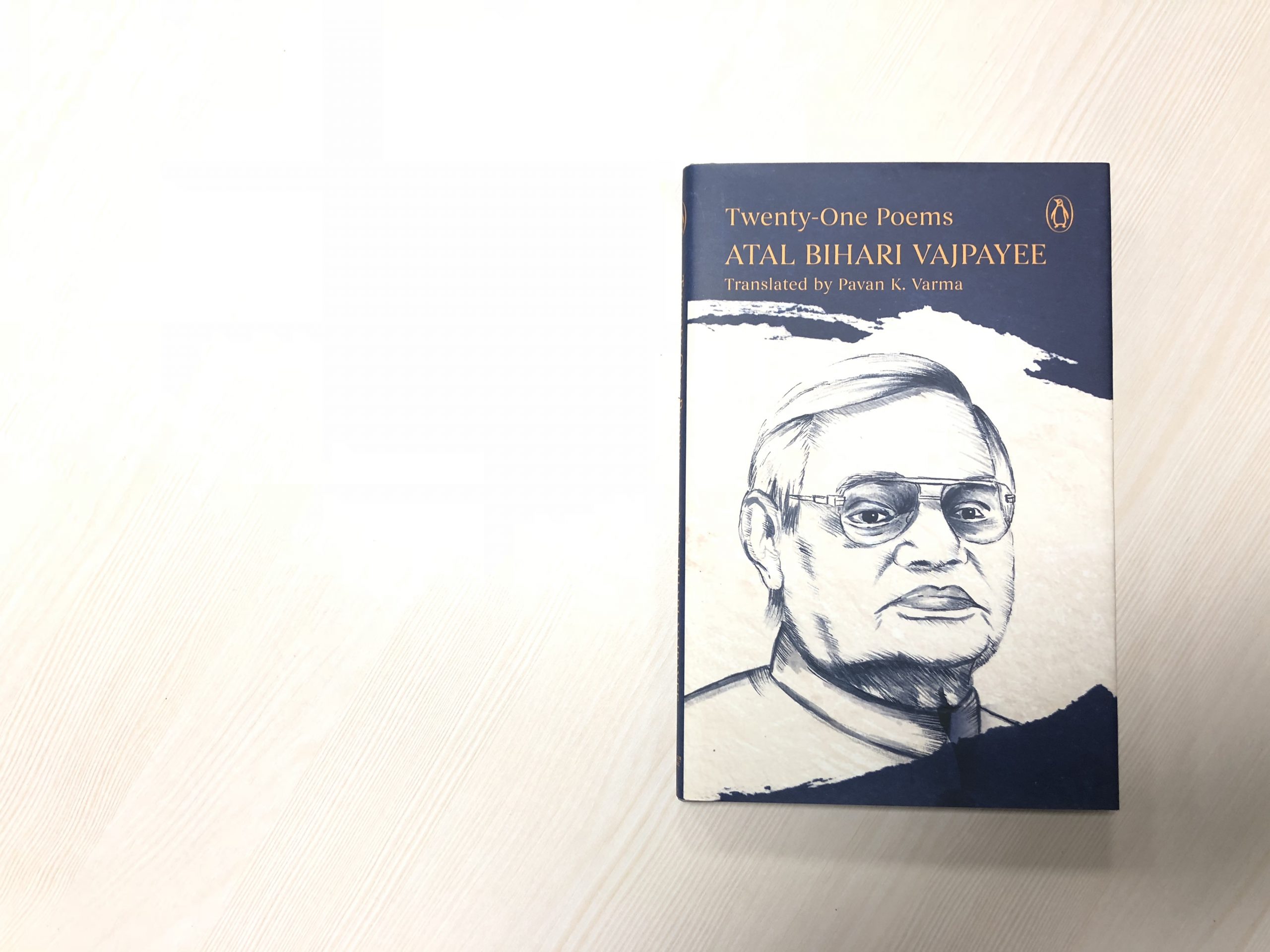
Poems That Give A Rare Glimpse into Atal Bihari’s Mind

Atal Bihari Vajpayee was the prime minister of India from 1998 to 2004 but he was a poet for much longer. Twenty-One Poems is a collection of poems marked by his disarming simplicity, passion and sincerity.
The poems highlight his concerns and convictions, both public and private. The English translations by Pavan K. Varma, retain the simplicity and immediacy of the Hindi originals, which appear alongside the translations in this bilingual edition.
Here are lines from the poems that will give you a glimpse into Vajpayee’s mind:

A New Milestone

“And so a new milestone’s been crossed.

How many more remain, no one knows,

And no one knows when the final

destination will arrive.

The sun is imperishable, the earth indestructible,

Only the body lives and dies;

Another year added is cause for celebration.

A new milestone’s been crossed.”


Two Quatrains

“The kingdom’s changed

The crown’s changed

But the social order

Remains unchanged.”


Never Place Me So High

“A height

Whose touch alone

Turns water to stone,

Such height,

That merely to look upon it is to feel small,

May be deserving of praise,

An invitation to tireless climbers,

A good place to plant your flag.”


Who Are the Kauravas, and Who the Pandavas

“In every panchayat

Draupadi is robbed of her honour.

Without Krishna

Today

The Mahabharata will be fought,

No matter who claims the throne,

The poor will continue to suffer.”


Peace of Mind

“On earth, among the living,

Only a human being

Feels alone in a crowd, and

Besieged by crowds when alone.”


A Battle With Death

“A battle with death!

What a battle it will be!

I had no plans to take her on,

We had not agreed to meet at that curve,

Yet there she stood, blocking my path,

Looming larger than life.”


Twenty-One Poems provides a rare and rewarding glimpse into the mind of the leader of over a billion people.

Meet PG Wodehouse’s Jeeves

PG Wodehouse is one of the most celebrated writers of the 20th century. His writing paved way for a marvelous collection of comic novels and short stories enjoyed by many. He was also a well-known lyricist and playwright. He is fondly remembered for creating the characters Bertie Wooster and his resourceful helper Reginald Jeeves, who starred in many of his famous works. The famed character of Reginald Jeeves was known and loved by everyone who was a great admirer of Wodehouse’s work.
Here we give you a chance to know more about this beloved character:
 

  1. Reginald Jeeves is the adept valet of the wealthy Londoner Bertie Wooster.
  2. The character of Reginald Jeeves first appeared in print in 1915.
  3. Being older and wiser, Reginald Jeeves is the epitome of a British gentleman and also a friend to Bertie Wooster.
  4. With the help of his quick-thinking Reginald Jeeves always succeeds in helping his master out of difficult situations.
  5. In the books, Reginald Jeeves is known to be so smart that his brain bulges at the back of his head.
  6. In his own words, Reginald Jeeves is a “Gentleman’s personal Gentleman”.
  7. Apart from being extremely intelligent, Reginald Jeeves is very observant.


4 Quotes from Sohaila Abdulali’s Book on Rape That Will Get You Thinking

Rape is one of the most abhorrent crimes. It is a violation as much of the body as the psyche of the victim. And whatever spin one gives to it – the girl should have been more careful, women should dress ‘properly’, she was asking for it by being flirtatious, she is known to be promiscuous, women should not venture out alone beyond a certain time at night – there is no condoning it. But these are the very reasons one hears being bandied about. In her book What We Talk About When We Talk About Rape, Sohaila Abdulali points out why these excuses make matters worse, urging us, as a society, to start afresh the conversation about and around rape.
Here is a sneak peek into a few stories that will astound, infuriate and ignite you to take a step forward.
 
Title: Your Love Is Killing Me
‘Girls and boys get completely different messages about sex. We assume that sex feels good for boys, but girls learn early that losing their virginity is supposed to hurt. We create the idea that sex is uncomfortable for girls, and we raise girls who don’t think they deserve pleasure, and boys who at best don’t care about their partner’s pleasure, and at worst are actively abusive.’
 
Title: Good Girls Don’t
‘Who gets raped? Who do we think gets raped? Are girls who can shit and vomit on command immune? What about sex workers? Even if we acknowledge that anyone can be raped, who deserves to be raped? When are we willing to call it rape? At what point do you lose sympathy of your peers? When you’ve drunk too much, when you’ve had sex with x number of men in the past, when you’re just not a nice person? … Maybe acknowledging that all sorts of women get raped by all sorts of men messes too much with the comfortable narrative that says only good girls get raped. Oh, but it also says good girls don’t get raped. Both these things can’t be true, and sex workers aren’t good girls, so how can they be raped, and if they’re raped, they’re human and hurt, and we can’t have that. So let’s just shut our eyes and maybe the whole confusing thing will go away.’
 
Title: What Did You Expect?
‘Much of the confusion comes from the sexist attitudes and cultural norms. But I think there is another aspect to the ease with which we blame ourselves for terrible events. It has to do with that familiar word: control. And if that’s the case, then it’s not necessarily completely pathological to blame yourself a bit. Maybe it’s a coping mechanism.’
 
Title: Oh, Please
‘There’s a subversive little thread that often weaves itself into any discussion of women actually speaking out and taking space to claim their histories of sexual violence. It’s an insidious thread that has choked us for far too long. I call it the Lose-Lose Rape Conundrum. It unwinds like this. If you talk about it, you’re a helpless victim angling for sympathy. If you are not a helpless victim, then it wasn’t such a big deal, so why are you talking about it? If you’re surviving and living your life, why are you ruining some poor man’s life? Either it’s a big deal, so you’re ruined, or it’s not a big deal and you should be quiet.’


In What We Talk About When We Talk About Rape, Sohaila Abdulali asks pertinent questions: Is rape always a life-defining event? Does rape always symbolize something? Is rape worse than death? Is rape related to desire? Who gets raped? Is rape inevitable? Is one rape worse than the other? Who rapes? What is consent? How do you recover a sense of safety and joy? How do you raise sons? Who gets to judge?
 

10 Revealing Facts about Rape from Sohaila Abdulali’s Book ‘What We Talk About When We Talk About Rape’

Rape and sexual assault have become commonplace, but lingering questions still remain. Drawing on exchanges with many survivors, Sohaila Abdulali, a survivor herself, looks at how we – women, men, politicians, teachers, writers, sex workers, feminists, sages, mansplainers, victims and families – think about rape and what we say and what we don’t say.
This book is a must-read in order to normalize conversation around rape. Here’s why.
Rape has different connotations for men and women
‘A bad sexual experience for a man is more likely to be a missed communication, sexual frustration and a sour aftertaste, whereas for a woman the menu is statistically more likely to include humiliation, pregnancy, rape and death.’

~

Shattering the good-girl stereotype
‘What makes a “good girl”? Too often being good means being docile, passive, accepting your lot without question. I hope, in that case, for a new generation of only bad girls, who listen to themselves and follow their own hearts. And get up and straddle their lovers with abandon.’

~

Self-blame becomes an unhealthy coping mechanism
‘Maybe self-blame isn’t always about self-hatred and internalized patriarchy. Maybe sometimes it’s a convoluted way of making the whole thing less scary.’

~

Speak up about rape, when conducive
‘Keeping quiet about rape has a whole other toxic effect: it lets abusers off the hook. I want to be very clear that it is never the victim’s obligation to speak up, or report, or do anything but survive. Her first responsibility is getting through it. But we are all culpable in the silence around rape, a “vast international conspiracy” if there ever was one.’

~

Destigmatize the act
‘It’s going to be a long time until rape is so stigma-free that there’s no penalty for speaking out as a survivor. Sometimes the penalty is to be pigeonholed, somehow diminished.’

~

Revolution is led by mass dissent
‘The #MeToo campaign made it impossible to ignore the scope of sexual harassment and rape, at the same time as we were treated to some unsavoury glimpses of rape culture.’

~

No means no, irrespective of role
‘Being a sex worker doesn’t mean you deserve to be raped. Neither does being a spouse.’

~

Make men accountable
‘We choose to blame each other, maybe out of misogyny, maybe simply out of fear, forgetting, as we do so, that there is someone else in the picture who also has a choice: a man who can choose between decency and dominance.’

~

Consent can have undefined, blurred lines
‘So often we tend to talk about the victims and the ways they went along with, or took advantage of, or kept suspiciously quiet about, rape. They didn’t leap up and stab the man and go running out clutching their clothes to their outraged bosoms, therefore they consented.’

~

Creating healthy boundaries
‘It blurs boundaries, or it can clarify them. Although I paid for my rape in many other ways, it actually helped me draw very clear boundaries, and for that I’ve always been grateful. Not to the rapists, of course, but just to whatever contrarian gene I have that hates being told what to do.’


In What We Talk About When We Talk About Rape, Sohaila Abdulali asks pertinent questions: Is rape always a life-defining event? Does rape always symbolize something? Is rape worse than death? Is rape related to desire? Who gets raped? Is rape inevitable? Is one rape worse than the other? Who rapes? What is consent? How do you recover a sense of safety and joy? How do you raise sons? Who gets to judge?
 

‘Five letter word’- Struggles faced by the invisible men of India

Female-to-male transgender people, or transmasculine people as they are called, are just beginning to form their networks in India. But their struggles are not visible to a gender-normative society that barely notices, much less acknowledges, them. While transwomen have gained recognition through the extraordinary efforts of activists and feminists, the brotherhood, as the transmasculine network often refers to itself, remains imponderable, diminished even within the transgender community. For all intents and purposes, they do not exist. In a country in which parents wish their daughters were sons, they exile the daughters who do become sons.
Here are 7 of the many struggles of transmen in India, quoted from Nandini Krishnan’s book, Invisible Men: Inside India’s Transmasculine Network:
Fear of the unfamiliar
While transwomen have had a peripheral presence in the public sphere, transmen have been conspicuous by their absence.
All of us were terrified of the transwomen we encountered, at traffic signals and on beaches and on trains, clapping their hands boisterously, demanding money, and threatening to lift their skirts or feel up the boys unless they were paid.” “So alien is the concept of transmen to the world that even when I explain they are female-to-male (FTM) and not male-to-female (MTF), the typical response is a puzzled, ‘But then why do they wear saris?’”

~

The language of otherness
The alienation of transmen is further aggravated by ‘offensive’ vocabulary that floats around and enters our psyche.
The term ‘transgender’ is largely acceptable as an umbrella term, but ‘gender change’ could be deeply offensive. To say someone was ‘trapped’ or ‘had the wrong body’ could be offensive too. I met a transman who was deeply hurt because a psychiatrist had written that he ‘suffered’ from gender dysphoria. He did not like referring to his transition as ‘treatment’, because, he said, ‘I’m not ill’.”

~

Disembodied souls or soulless bodies?
Society’s denial of non-binary gender is ruptured by misplaced curiosity that doesn’t allow any integration of form and soul.
Gee Semmalar observes “‘There’s a kind of voyeurism that is involved in piecing together our lives. We’re like lab rats. You place us on the table and you dissect us and you see what our bodies look like and how our bodies change and what surgeries are being done’.”

~

Culturally legitimized violence
Many of them have been victims of forced marriage, even rape. Nearly all have been victims of some form of physical or emotional violence. Not one person told me he had never contemplated suicide. All of them had friends who committed suicide.”

~

The unobtainable organ
“ (…)the fact is that the gender reassignment or sex reassignment surgeries that a lot of transmen opt for are limited to uterus and ovary removal and top surgery, because the phalloplasty or the metoidioplasty for construction of a penis is not a very well-developed surgery in India. The surgery is complicated, and prohibitively expensive.”

~

The circus of certification
If the invisibility of transmen from public life puts them at a disadvantage, their invisibility in law cripples them. Largely invisible in terms of national advocacy, they sometimes have trouble convincing officials they exist.” The Supreme Court of India “allows one to self-identify with a particular gender, irrespective of what his or her birth certificate, hormones, or surgical history say.” However, “Many have paid bribes they could barely afford to get their documents falsified.

~

The schism within

Several transmen told me that because the Transgender Boards (…) comprised mainly transwomen, there was some gatekeeping within the community. ‘They don’t want what is already a small piece of the pie sliced up even further, so you have transwomen putting up all kinds of hierarchies of authenticity, saying transwomen who are post-operative are the most genuine, most authentic and most deserving transwomen and at the bottom of the totem pole are transmen (…).’”


Read Nandini Krishnan’s ‘Invisible Men’ as she investigates this seismic activity and brings it up from the depths to the surface.


error: Content is protected !!