Publish with Us

Follow Penguin

Follow Penguinsters

Follow Penguin Swadesh

Know About the Master Storyteller – Frederick Forsyth

The illustrious author Frederick Forsyth is back with yet another thriller The Fox. This exciting story, comes with a unique conception of the most dangerous weapon on Earth. This weapon, unlike what many would think, is not an ammunition or an abstruse piece of technology but a 17-year-old boy. A boy with an ingenious mind, adept at running rings at the most sophisticated security services around the globe, manipulating it and turning the weaponry against the superpowers themselves.
Forsyth weaves an incredible race-against-time thriller, where in the bid to seize this brilliant mind the author will take you across continents in order to contain this asset and stop him from getting into the wrong hands.
Here are a few facts about the man behind this riveting book:


The Fox is a race-against-time thriller across continents to find and capture, or protect and save, an asset with the means to change the balance of world power. Whatever happens he must not fall into the wrong hands

6 New Concepts that you Learn from ‘Compassion Inc.’

The world is changing, perceptions are shifting, consumers are evolving and Compassion Inc.  will ensure your business keeps up.
In this book, author Gaurav Sinha outlines the economics of empathy for life and for business. He offers solutions to maintain a successful trade in a changing global landscape where conscience, ethics and authenticity are high on the agenda.
Here are six new concepts that you learn from the chapter in this book titled Understanding Monastic Materialism.
The Principal of Respect for Autonomy
“Autonomy comes from the Greek work ‘autonomia’, meaning ‘independence’, and we have an obligation to respect the autonomy of other people and to respect the decisions they make concerning their lives. Live and let live, embrace the principles of human dignity. If you applied this in everyday life or in your business, then it’s about being honest in intent and action and an unfaltering commitment to being tolerant of others and meeting your own obligations. That’s why a brand is quite literally a promise made and a promise kept”
The Principle of Beneficence
“An obligation to bring about good in our actions. To do no harm to be kind, compassionate and considered in intent and action. This is about living a life that is both graceful and generous – being charitable when possible and contributing towards the wellbeing of others. We can apply these principles in business or daily life by assigning equitable action that drives philanthropy and prosperity as a force for good.”
The Principle of Nonmaleficence
“To do no harm, or to persevere in your intent and action to do good. To not  be wasteful and show disregard towards valuable resources. Consume what’s essential, strive to be a net positive contributor in your own life and in the lives of others. The intent and action of being virtuous, productive and self-sufficient without breaching your personal economic viability and not blindly profiteering. Don’t knock a man down in your attempt to climb a mountain.”
The Principle of Social Justice
“We have an obligation to uphold honour and dignity by being fair and considered in our actions towards all. Again, this all about meeting our obligations and ensuring equality and human rights are protected unequivocally, without unnecessary burden on others. Governance, whether of a company of a nation, should be shaped around impartiality, and your intent and actions should be morally steadfast and compassionate towards others.
Thriving on Chaos While Pursuing Simplicity
“If we did not have complexities to resolve, how would we create value for clients through our services and solutions? Business is actually quite straightforward, but people can complicate things. Empathy allows you to  tune in, ethics allow you act in an equitable manner.”
Selfless Compassion | Rational Intent and Action
“Once you’ve found your rhythm, help others find theirs. There’s an old Indian saying: ‘The first step to helping the poor is by not becoming one of them.’ Get your house in order and then help others build their houses.


Be inspired to transform your business to change the world with this book.

Discoveries of Love with ‘The Rabbit and the Squirrel’

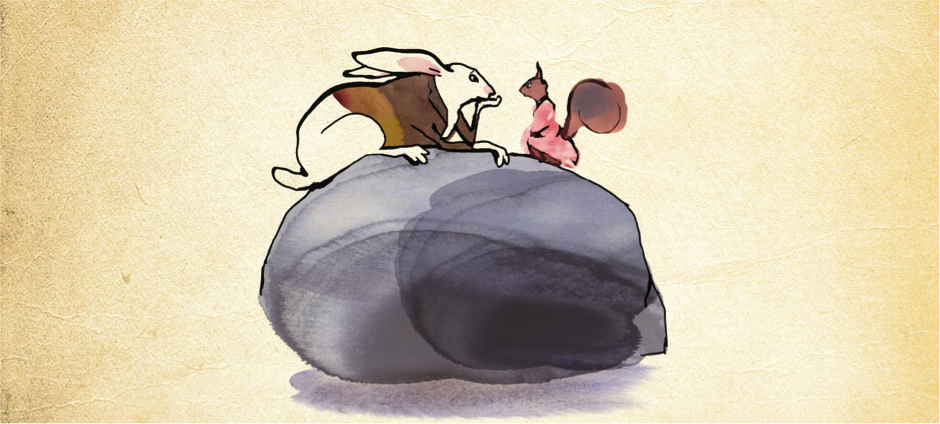
The Rabbit and The Squirrel by Siddharth Dhanvant Shanghvi is a love story about a special bond of friendship between a rabbit and a squirrel. They are inseparable and share a precious bond which goes beyond the quintessential notions of love and admiration. Their greatest joy lies in spending precious moments with each other as they understand each other best. However, their rosy friendship comes to a sudden halt when the Squirrel is forcibly made to marry a wealthy Count Boar. Years of separation has rendered them changed in quite a lot of ways but they still seem unchanged to each other.
A tale for adults about the lasting nature of love and friendship, this book will redefine what it means to love and adore despite the odds.
Here are a few things about love from the book, that you might have thought of differently:
 

  1. A relationship where there are absolutely no inhibitions and the people involved are utterly honest with each other, is the root for an undying bond. 
  2. Contrary to what many would think, the separation of time would not effect a pure connection. This separation has no effect on what one might feel for the other even after a gap. The feelings are constant and so is the strong attachment between the two people. 
  3. Love does not have to be of a certain construct. It could be of a different form as suits the individuals. People have different definitions and understandings of love, which are equally valid.
  4. The acceptance of things that are not under one’s control is also a form of love. It makes the love stronger than the circumstances that tried to come between the love and makes the bond even more precious.


A story of thwarted love, and an ode to the enduring pleasures of friendship, The Rabbit and the Squirrel is a charming fable for grown-ups, in which one life, against all odds, is fated for the other.


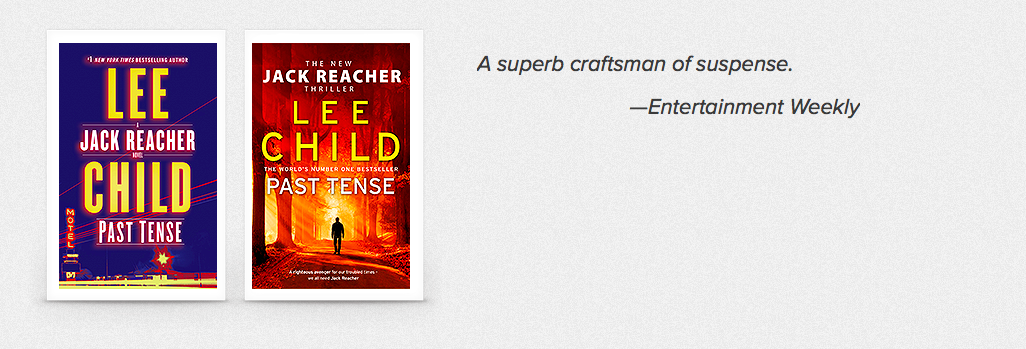
An Excerpt from Lee Child's "Past Tense"

On his way back from Maine, Reacher decides to visit his father’s ancestral home – a place he’d heard a lot about as a kid. But the rural New Hampshire town turns out to be more of a mystery than a homecoming when he discovers no record of anyone named Reacher ever having lived there.
In “The Enemy” Reacher discovered his mother’s history. Now he’s on a quest to find his father’s.

CHAPTER ONE

Jack Reacher caught the last of the summer sun in a small town on the coast of Maine, and then, like the birds in the sky above him, he began his long migration south. But not, he thought, straight down the coast. Not like the orioles and the buntings and the phoebes and the warblers and the ruby-throated hummingbirds. Instead he decided on a diagonal route, south and west, from the top right-hand corner of the country to the bottom left, maybe through Syracuse, and Cincinnati, and St. Louis, and Oklahoma City, and Albuquerque, and onward all the way to San Diego. Which for an army guy like Reacher was a little too full of Navy people, but which was otherwise a fine spot to start the winter.
It would be an epic road trip, and one he hadn’t made in years.
He was looking forward to it.
He didn’t get far.

#

 
He walked inland a mile or so and came to a county road and stuck out his thumb. He was a tall man, more than six feet five in his shoes, heavily built, all bone and muscle, not particularly good looking, never very well dressed, usually a little unkempt. Not an overwhelmingly appealing proposition. As always most drivers slowed and took a look and then kept on going. The first car prepared to take a chance on him came along after forty minutes. It was a year-old Subaru wagon, driven by a lean middle-aged guy in pleated chino pants and a crisp khaki shirt. Dressed by his wife, Reacher thought. The guy had a wedding ring. But under the fine fabrics was a workingman’s body. A thick neck and large red knuckles. The slightly surprised and somewhat reluctant boss of something, Reacher thought. The kind of guy who starts out digging post holes and ends up owning a fencing company.
Which turned out to be a good guess. Initial conversation established the guy had started out with nothing to his name but his daddy’s old framing hammer, and had ended up owning a construction company, responsible for forty working people, and the hopes and dreams of a whole bunch of clients. He finished his story with a little facial shrug, part Yankee modesty, part genuine perplexity. As in, how did that happen? Attention to detail, Reacher thought. This was a very organized guy, full of notions and nostrums and maxims and cast-iron beliefs, one of which was at the end of summer it was better to stay away from both Route One and I-95, and in fact to get out of Maine altogether as fast as possible, which meant soon and sideways, on Route Two straight west into New Hampshire. To a place just south of Berlin, where the guy knew a bunch of back roads that would get them down to Boston faster than any other way. Which was where the guy was going, for a meeting about marble countertops. Reacher was happy. Nothing wrong with Boston as a starting point. Nothing at all. From there it was a straight shot to Syracuse. After which Cincinnati was easy, via Rochester and Buffalo and Cleveland. Maybe even via Akron, Ohio. Reacher had been in worse places. Mostly in the service.
They didn’t get to Boston.
The guy got a call on his cell, after fifty-some minutes heading south on the aforementioned New Hampshire back roads. Which were exactly as advertised. Reacher had to admit the guy’s plan was solid. There was no traffic at all. No jams, no delays. They were bowling along, doing sixty miles an hour, dead easy. Until the phone rang. It was hooked up to the car radio, and a name came up on the navigation screen, with a thumbnail photograph as a visual aid, in this case of a red-faced man wearing a hard hat and carrying a clipboard. Some kind of a foreman on a job site. The guy at the wheel touched a button and phone hiss filled the car, from all the speakers, like surround sound.
The guy at the wheel spoke into the windshield pillar and said, “This better be good news.”
It wasn’t. It was something to do with an inspector from a municipal buildings department, and a metal flue liner above a fireplace in an entrance lobby, which was properly insulated, exactly up to code, except that couldn’t be proved visually without tearing down the stonework, which was by that point already three stories high, nearly done, with the masons booked on a new job starting the next week, or alternatively without ripping out the custom walnut millwork in the dining room on the other side of the chimney, or the millwork in the closet above, which was rosewood and even more complicated, but the inspector was being a hardass about it and needed to see for himself.
The guy at the wheel glanced at Reacher and said, “Which inspector is it?”
The guy on the phone said, “The new one.”
“Does he know he gets a turkey at Thanksgiving?”
“I told him we’re all on the same side here.”
The guy at the wheel glanced at Reacher again, as if seeking permission, or offering an apology, or both, and then he faced front again and said, “Did you offer him money?”
“Five hundred. He wouldn’t take it.”
Then the cell signal ran out. The sound went garbled, like a robot drowning in a swimming pool, and then it went dead. The screen said it was searching.
The car rolled on.
Reacher said, “Why would a person want a fireplace in an entrance lobby?”
The guy at the wheel said, “It’s welcoming.”
“I think historically it was designed to repel. It was defensive. Like the campfire burning in the mouth of the cave. It was intended to keep predators at bay.”
“I have to go back,” the guy said. “I’m sorry.”
He slowed the car and pulled over on the gravel. All alone, on the back roads. No other traffic. The screen said it was still searching for a signal.
“I’m going to have to let you out here,” the guy said. “Is that OK?”
“No problem,” Reacher said. “You got me part of the way. For which I thank you very much.”
“You’re welcome.”
“Whose is the rosewood closet?”
“His.”
“Cut a big hole in it and show the inspector. Then give the client five commonsense reasons why he should install a wall safe. Because this is a guy who wants a wall safe. Maybe he doesn’t know it yet, but a guy who wants a fireplace in his entrance lobby wants a wall safe in his bedroom closet. That’s for damn sure. Human nature. You’ll make a profit. You can charge him for the time it takes to cut the hole.”
“Are you in this business too?”
“I was a military cop.”
The guy said, “Huh.”
Reacher opened the door and climbed out, and closed the door again behind him, and walked far enough away to give the guy space to swing the Subaru around, gravel shoulder to gravel shoulder, across the whole width of the road, and then to take off back the way he had come. All of which the guy did, with a brief gesture Reacher took to be a rueful good-luck wave. Then he got smaller and smaller in the distance, and Reacher turned back and continued walking, south, the way he was headed. Wherever possible he liked to maintain forward momentum. The road he was on was a two-lane, wide enough, well maintained, curved here and there, a little up and down. But no kind of a problem for a modern car. The Subaru had been doing sixty. Yet there was no traffic. None at all. Nothing coming, either way. Total silence. Just a sigh of wind in the trees, and the faint buzz of heat coming up off the blacktop.
Reacher walked on.
 

#

 
Two miles later the road he was on curved gently left, and a new road of equal size and appearance split off to the right. Not exactly a turn. More like an equal choice. A classic Y-shaped junction. Twitch the wheel left, or twitch the wheel right. Your call. Both options ran out of sight through trees so mighty in places they made a tunnel.
There was a road sign.
A tilted arrow to the left was labeled Portsmouth, and a tilted arrow to the right was labeled Laconia. But the right-hand option was written in smaller writing, and it had a smaller arrow, as if Laconia was less important than Portsmouth. A mere byway, despite its road being the same size.
Laconia, New Hampshire.
A name Reacher knew. He had seen it on all kinds of historic family paperwork, and he had heard it mentioned from time to time. It was his late father’s place of birth, and where he was raised, until he escaped at age seventeen and joined the Marines. Such was the vague family legend. Escaped from what had not been specified. But he never went back. Not once. Reacher himself had been born more than fifteen years later, by which time Laconia was a dead detail of the long-ago past, as remote as the Dakota Territory, where it was said some earlier ancestor had lived and worked. No one in the family ever went to either place. No visits. The grandparents had died young and were rarely referred to. There were apparently no aunts or uncles or cousins or any other kind of distant relatives. Which was statistically unlikely and suggested a rift of some kind. But no one other than his father had any real information, and no one ever made any real attempt to get any from him. Certain things were not discussed in Marine families. Much later as a captain in the army Reacher’s brother Joe was posted north and said something about maybe trying to find the old family homestead, but nothing ever came of it. Probably Reacher himself had said the same kind of thing, from time to time. He had never been there either.
Left or right. His call.
Portsmouth was better. It had highways and traffic and buses. It was a straight shot to Boston. San Diego beckoned. The Northeast was about to get cold.
But what was one extra day?
He stepped right, and chose the fork in the road that led to Laconia.
 

#

 
At that same late-afternoon moment, nearly thirty miles away, heading south on a different back road, was a worn-out Honda Civic, driven by a twenty-five-year-old man named Shorty Fleck. Next to him in the passenger seat was a twenty-five-year-old woman named Patty Sundstrom. They were boyfriend and girlfriend, both born and raised in Saint Leonard, which was a small faraway town in New Brunswick, Canada. Not much happened there. The biggest news in living memory was ten years previously, when a truck carrying twelve million bees overturned on a curve. The local paper reported with pride that the accident was the first of its kind in New Brunswick. Patty worked in a sawmill. She was the granddaughter of a guy from Minnesota who had slipped north half a century earlier, to beat the draft for Vietnam. Shorty was a potato farmer. His family had been in Canada forever. And he wasn’t particularly short. Maybe he had been once, as a kid. But now he figured he was what any eyewitness would call an average-looking guy.
They were trying to make it non-stop from Saint Leonard to New York City. Which by any standard was a hardcore drive. But they saw a big advantage in doing it. They had something to sell in the city, and saving a night in a hotel would maximize their profit. They had planned out their route, looping west to avoid the summer people heading home from the beaches, using back roads, Patty’s blunt finger on a map, her gaze ranging ahead for turns and signs. They had timed it out on paper, and figured it was a feasible course of action.
Except they had gotten a later start than they would have liked, due a little bit to general disorganization, but mostly due to the Honda’s aging battery not liking the newly crisp autumnal temperatures blowing in from the direction of Prince Edward Island. The delay put them in a long line at the U.S. border, and then the Honda started overheating, and needed nursing along below fifty miles an hour for an extended spell.
They were tired.
And hungry, and thirsty, and in need of the bathroom, and late, and behind schedule. And frustrated. The Honda was overheating again. The needle was kissing the red zone. There was a faint grinding noise from under the hood. Maybe the oil was low. No way of telling. All the dashboard lights had been on continuously for the last two and a half years.
Shorty asked, “What’s up ahead?”
Patty said, “Nothing.”
Her fingertip was on a wandering red line, which was labeled with a three-digit number, and which was shown running north to south through a jagged shape shaded pale green. A forested area. Which was obvious just from looking out the window. The trees crowded in, still and dark, laden down with heavy end-of-summer leaves. The map showed tiny red spider-web lines here and there, like the veins in an old lady’s leg, which were presumably all tracks to somewhere, but nowhere big. Nowhere likely to have a mechanic or a lube shop or radiator water. The best bet was about thirty minutes ahead, some ways east of south, a town with its name printed not too small and semi-bold, which meant it had to have at least a gas station. It was called Laconia.
She said, “Can we make another twenty miles?”
Now the needle was all the way in the red.
“Maybe,” Shorty said. “If we walk the last ten of them.”
He slowed the car and rolled along on a whisker of gas, which generated less new heat in the engine, but which also put less airflow through the radiator vanes, so the old heat couldn’t get away so fast, so in the short term the temperature needle kept on climbing. Patty rubbed her fingertip forward on the map, keeping pace with her estimate of their speed. There was a spider-web vein coming up on the right. A thin track, curling through the green ink to somewhere about an inch away. Without the rush of high-speed air coming in through her leaky window she could hear worse noises from the engine. Clunking, knocking, grinding. Faint, but definitely there.
Then up ahead on the right she saw the mouth of a narrow road. The spider-web vein, right on time. But more like a dark tunnel through the trees. At the entrance on a frost-heaved post was nailed a board, on which were screwed ornate plastic letters, and an arrow pointing into the tunnel. The letters spelled the word Motel.
“Should we?” she asked.
The car answered. The temperature needle was jammed against the stop. Shorty could feel the heat in his shins. The whole engine bay was baking. For a second he wondered what would happen if they kept on going. People talked about automobile engines blowing up and melting down. Which were figures of speech, surely. There would be no actual puddles of molten metal. No actual explosions would take place. Would they? No, it would just conk out, peacefully. Or seize up. It would coast gently to a stop. In the middle of nowhere, with no passing traffic and no cell signal.
“No choice,” he said, and braked and steered and turned in to the tunnel. Up close they saw the plastic letters on the sign had been painted gold, with a narrow brush and a steady hand, like a promise, like the motel was going to be a high-class place. There was a second sign, identical, facing drivers coming the other way.
“OK?” Shorty said.
The air felt cold in the tunnel. Easily ten degrees colder than the main drag. The trees met overhead. Last fall’s leaf litter and last winter’s mud were mashed together on the shoulders.
“OK?” Shorty said again.
They drove over a wire lying across the road. A fat rubbery thing, not much smaller than a garden hose. Like they had at gas stations, to ding a bell in the kiosk, to get the pump jockey out to help you.
Patty didn’t answer.
Shorty said, “How bad can it be? It’s marked on the map.”
“The track is marked.”
“The sign was nice.”
“I agree,” Patty said. “It was.”
They drove on.

 

The Brontë Sisters of Urdu Literature

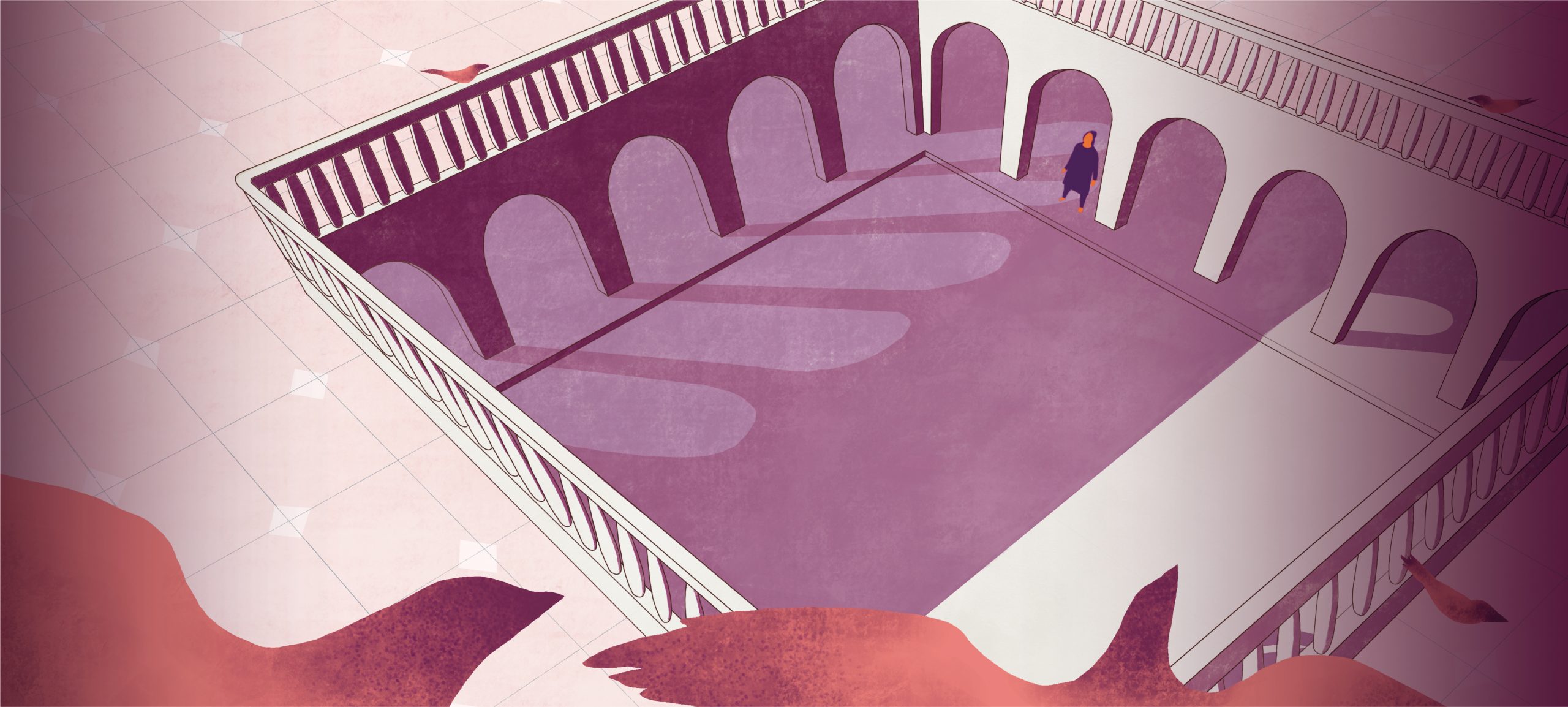
In Khadija Mastur’s The Women’s Courtyard, Aliya lives a life confined to the inner courtyard of her home with her older sister and irritable mother, while the men of the family throw themselves into the political movements of the day. She is tormented by the petty squabbles of the household and dreams of educating herself and venturing into the wider world.
But Aliya must endure many trials before she achieves her goals, though at what personal cost?
Here is an excerpt from the afterword of the book by translator Daisy Rockwell, titled The Brontë Sisters of Urdu Literature.


Khadija Mastur and her sister, Hajira Masroor, have been called the Brontë sisters of Urdu literature. This comparison seems to have been made primarily on a biographical basis— they’d led tragic lives, were meek and unassuming in person, but wrote with conviction. But from a feminist perspective, the comparison is quite apt. Khadija Mastur wrote two novels and five collections of short stories in her fifty-five years, and it is a rare story that does not contain a critique of patriarchy, chauvinism and misogyny. Happy endings are few and far between.
Though the Brontës’ books are often described as romances, they too took a bleak view of male behaviour. The Brontës sometimes came up with a ‘happy’ ending, though it often feels tacked on, for the sake of the formula. ‘Reader, I married him’—Charlotte Brontë’s famous last line in Jane Eyre cannot be seen as a truly happy ending to the brutal tale. After all, our romantic hero is by now old, blind, disabled and semi-homeless. Mr Rochester, as has been explored in countless retellings and analyses, is not a very nice man: one who locked up his mentally ill Creole first wife in the attic, and then lied about her very existence. It is only when Mr Rochester is tragically maimed and reduced in the eyes of society that Jane Eyre can hope for a relationship built on trust and mutual respect. In fact, throughout their works, it is clear that the Brontës did not have a high opinion of male motivations and behaviour—as with Anne Brontë’s description of married life in The Tenant of Wildfell Hall, in which even the supposedly positive character of the male narrator often behaves poorly himself; or the unappealing and disappointing male love interests in Charlotte Brontë’s Villette.

Unlike the Brontës, Mastur and Masroor came of age writing at a time when there was a strong progressive writers’ movement. Though they could have chosen to write romances, they were politically engaged, Mastur for a time serving as the head of the Pakistani Progressive Writers’ Association. Because of her political views, shaped in part by a youth marked by poverty and deprivation, Mastur felt no obligation to deliver happy endings to her readers. It is clear from her writings that she saw patriarchy and classism as systemic poisons that destroy and kill women intellectually, emotionally and physically.
Not that Mastur treated her female characters with unstinting kindness either. Far from it. In characters such as Aliya’s mother and grandmother in The Women’s Courtyard, Mastur paints a detailed and unforgiving portrait of the role that women play in perpetuating the rigid bonds of patriarchy and class hierarchy. Indeed, Aliya’s mother and grandmother play active roles in destroying the lives of those who dare step outside the boundaries of tradition. The behaviour of these women is so brutal at times that they end up looking far worse than the actual patriarchs in the family, whom Aliya regards with love and respect despite their neglect of their families in favour of outside political involvement. Aliya’s mother is by far the most toxic character in the novel; she makes it clear that she considers her mother-in-law a flawed role model, one who ruined the family by failing to poison her own daughter when she was discovered in a romantic liaison with a lowerclass man.
Aliya herself wonders what it is that makes her so forgiving of her father’s and uncle’s neglect of their families’ welfare:

How she wished that Amma hadn’t driven anyone from the house; it was Safdar who had divided everyone, and then Abba was so busy with his animosity towards the English that he wouldn’t even turn and look at anyone. He didn’t even acknowledge her love. But she couldn’t say any of this out loud. She herself wondered why, despite Abba’s indifference, she still loved him the most. Abba’s affectionate eyes were so expressive. She’d never been able to say even one word against him (see p. 77).

Aliya sees her father and uncle as brilliant, politically principled men, even as their families are slowly wiped out financially and emotionally by their failure to step into their roles as patriarchs. But Aliya’s love is an intrinsic part of patriarchy as well—she has infinite forgiveness for her male elders, but little sympathy for the shrewish women who work desperately to keep the family and class structure in place.
Still, Aliya knows that the worst thing she can do to perpetuate the system is to step into the role awaiting her as a wife—specifically as wife to her cousin Jameel. Despite her suppressed love for Jameel, and a certain physical attraction to him, she sees capitulation to his advances as a sure way to end up just like her mother and aunt: a whinging housewife with a neglectful and politically active husband. The only way she can see clear to break the cycle is by refusing to marry. Implicit in this choice is the belief that marriage is a tool to perpetuate the system of patriarchy, a notion that is still radical more than fifty years after the publication of the novel.


The Women’s Courtyard cleverly brings into focus the claustrophobic lives of women whose entire existence was circumscribed by the four walls of their homes, and for whom the outside world remained an inaccessible dream. For more posts like this, follow Penguin India on Facebook!

Things You Didn’t Know About R.K. Narayan

‘R.K. Narayan’s novels are like a box of Indian sweets. Each novel is a delectable treat, different in subtle ways,’ says Alexander McCall Smith. Being one of the leading authors who wrote Indian literature in English, Narayan received many honours including the Padma Bhushan. His most famous works include The Guide, Swami and Friends and Malgudi Days, which explore ordinary life with humour and compassion.
Here are a few things you didn’t know about R.K. Narayan:

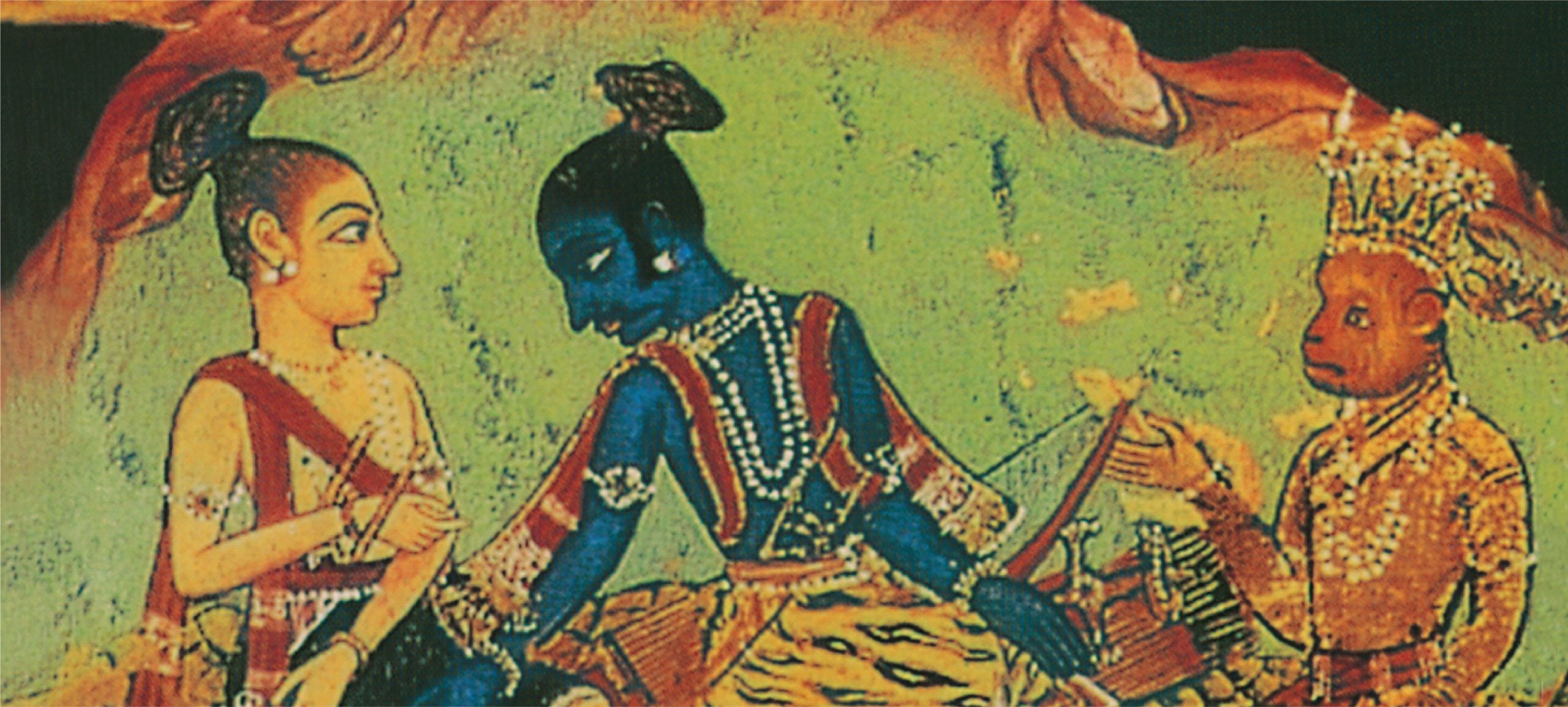
A sweeping tale of abduction, battle, and courtship played out in a universe of deities and demons, The Ramayana is familiar to virtually every Indian. For more posts like this, follow Penguin India on Facebook!

6 Things You Should Know About The Man Who Saved India – Sardar Vallabhbhai Patel

The Man Who Saved India by Hindol Sengupta is an extensively researched book about the man who, as the author tells us, brought together piece by piece the map of India by fusing the princely states with British India to create a new democratic, independent nation. A stoic man, Patel, wrote no personal history about himself.
This book tells the story of Patel and his indispensable role in uniting the nation and creating India. Bringing to the foray, the arguments, quarrels and the power struggles that went into the building of the nation, Hindol Sengupta defines Patel’s legacy for the progeny.
Here are 6 things that you should know about Sardar Vallabhbhai Patel:


Hindol Sengupta’s The Man Who Saved India is destined to define Patel’s legacy for future generations. For more posts like this, follow Penguin India on Facebook!

4 Brands that Won Customers’ Hearts

‘Your most unhappy customers are your greatest source of learning’ – Bill Gates

Games Customers Play by Ramesh Dorairaj deep dives into how reaching out to end consumers can give brands actionable insights. Such insights can then be translated into some change in the brand’s product design or delivery or service management, which makes their product or service more desirable.
Here are case studies of successful brands we all love, that gained customer affinity by reaching out to end consumers in innovative ways:
Asian Paints

Asian Paints did something different: it reached out to the end consumer. The house or building owner did not want to manage multiple vendors to get his house or office painted. Sensing this, Asian Paints co-opted upcoming interior design consultants who went to a potential buyer’s location and photographed his house or office rooms. They then loaded it into a software running on their laptops and showed the owner how different colours would look when applied.
Asian Paints also hired painters who would take those colours and paint the house.
P&G

Fast-moving consumer goods manufacturers like P&G and Unilever compete to get premium retail space. P&G chose a path of consumer-focused innovation.
P&G designed a programme called Living It, where its employees lived with potential customer for several days. A.G. Lafley, its former CEO, cites an example of how Living It helped reach out to the end customer. The Living It team studied the laundry activities of women from lower-middle-class families in Mexico and realized that hard water was a real problem. Softeners were needed, but softeners meant multiple rinses. This meant quite a lot of water, not available in abundance in the semi-urban and rural areas of the country. Figuring out the solution to this problem resulted in the launch of Downey Single Rinse.
Johnson & Johnson
Trust increases the perceived switching costs in a buyer. Johnson & Johnson, the manufacturer of pharmaceuticals and healthcare products, finds a place in Barron’s list of the world’s most respected companies, almost every year. It ranked first in 2016 and in 2017 it was seventh in the list. In 1982, Johnson & Johnson had to recall 31 million bottles of Tylenol (an over-the-counter drug for mild fever and the like) as some deranged person had put 65 mg of cyanide into capsules of Tylenol on some store shelves, leading to the death of seven people in the Chicago area. They had to spend about $100 million to recall all Tylenol capsules.

Such actions improve customer faith that even when things go bad, the seller is capable and willing to rectify the situation without considering the cost of such remedial action.
YouTube star Lily Singh aka | | SuperWoman | |
Consider the case of Lily Singh, a Canadian of Indian origin. Her YouTube channel username is | | SuperWoman | | . From 2010, she started publishing videos of skits that have three characters: father, mother and daughter. All three roles are played by her.

By 2016, her YouTube videos had been viewed more than two billion times and her channel had twelve million subscribers. The twenty-seven-year-old is a UNICEF Global Goodwill ambassador and has been named in the Forbes 30 Under 30 list in 2016. She undertook a tour of places with a significant Indian, and Punjabi, diaspora. She visited India in 2017. Singh reached audiences directly using YouTube, eliminating the middlemen of the entertainment industry.
———–
Games Customers Play, a thought-provoking book by Ramesh Dorairaj, shares valuable perspectives on what drives buyer-seller relationships. Available Now!

Things you didn’t know about India’s struggle for Independence

15th August 1947, a memorable and historical day for all Indians. While we may have learnt about India’s struggle for independence in school, India Since Independence, analyses the challenges India has faced and the successes it has achieved, in the light of its colonial legacy and century-long struggle for freedom. It is is a remarkable account of a nation on the move.
 
The story of the forging of India, the world’s largest democracy, is a rich and inspiring one. Read 6 facts you didn’t know about India’s struggle for Independence:
 
1. To go against the status quo Indian politicians had to remove an educational block.
 

“It [educational system] encouraged learning by rote, memorization of texts, and proof by authority . The rational, logical, analytical and critical faculties of the students remained underdeveloped; in most cases the students could reproduce others’ opinions but had difficulty in formulating their own.”

 
2. India = Britain’s Satellite Economy.
 
The British government was unwilling to offer India the support it needed to develop its industries. The choice was between economic underdevelopment or independence.
 

“India’s policies were determined in Britain and in the interests of the British economy and the British capitalist class. An important aspect of the underdevelopment of India was the denial of state support to industry and agriculture.”

 
3. The British dug their own grave by unifying the country
 
 The British established a uniform system of administration which penetrated even the country’s remotest areas.
 

“Combined with the formation of a unified economy and the development of modern means of communication, colonialism helped lay the basis for the making of the Indian nation.”

 
4. Dissent within the parties became India’s strength
 

“Congress did not insist on uniformity of viewpoints or policy approach within its ranks. It allowed dissent and not only tolerated but encouraged different and minority opinions to be openly held and freely expressed. In fact, dissent became a part of its style.”

 
5. Originally, Gandhi believed religion and politics went hand in hand
 

“ In his early years, Gandhi, a deeply religious person, emphasized the close connection between religion and politics. This was because he believed that politics had to be based on morality , and to him all religions were the source of morality…but when he saw that communalists were using religion as a sectarian belief system to divide the people, he overtly began to preach the separation of religion from politics.”

 
6. Civil rights trumped over ideological differences.
 

“Political trends and groups otherwise critical of each other and often at opposite ends of the political or ideological spectrum vigorously defended each other’s civil rights. The Moderates—Gopal Krishna Gokhale, Surendranath Banerjea and others—defended the Extremist leader Tilak’s right to speak and write what he liked.”


———————————————————————————————————————
 
A thorough and incisive introduction to contemporary India.
AVAILABLE NOW

Know More About Kalki from The Sage’s Secret

It is the year 2025, and twenty-year-old Anirudh starts dreaming of god Krishna. With these recurrent dreams of the god and his life flashing through Anirudh’s mind, he has many tribulations to go through as he slowly comes to terms with his real identity – he is the last avatar of Vishnu. Now the onus falls on him to restore the balance between good and evil.
The Sage’s Secret by Abhinav, is a gripping tale of god Vishnu’s avatar – Kalki, and the story of its manifestation. Here are a few things to know about the character of Kalki from the book:


This gripping read is the first part in the Kalki Chronicles, which unveils the greatest legend of the Kali yuga.
AVAILABLE NOW

error: Content is protected !!