




Abir Mukherjee is the author of the bestselling crime fiction novels A Rising Man and A Necessary Evil. He is the child of Indian immigrants from Calcutta and grew up in West Scotland. A graduate of the London School of Economics, he currently works in finance in London.
He is back with another enthralling crime fiction called Smoke and Ashes.
Here are five things you probably didn’t know about him.


In Smoke and Ashes, Captain Sam Wyndham is battling a serious addiction to opium that he must keep secret from his superiors in the Calcutta police force. For more pieces like this one, follow us on Facebook!
Category: Uncategorized
5 Things to expect from Rick Riordan’s The Trials Of Apollo – The Burning Maze

The third book in the Trials of Apollo series, The Burning Maze, by the bestselling author Rick Riordan is now available wherever books are sold! It follows the former god Apollo on his latest adventure, where he must rescue the next Oracle and defeat a vicious and bloodthirsty Roman emperor.
While your love for Percy Jackson should be good enough for you to pick up The Burning Maze, we made your choice easier and gave you 5 more reasons why this book is a must read!
1. The book hooks and grabs you at every turn.
Expect the same Rick Riordan that we have become accustomed to. With a knack of grappling with and capturing the imaginative minds of readers, this book leaves no stone unturned and has the reader begging to know what’s next.

2. Rick Riordan brings back the fabled labyrinth.
In retrospect, we were first introduced to the labyrinth back when Percy Jackson had no option but to locate Daedalus. Facing many obstacles and battles throughout his journey, the labyrinth marks an encumbering passage from start to finish with no regard to the rules of space and time and now, it now returns with a new level of enticement altogether.

3. Will the much awaited Riddle of Georgina be solved?

The dark prophecy incurs that there’s more to the story of Apollo’s mysterious daughter than meets the eye.
4. The final twist in the plot is the characters and those who enter the maze may not survive-Rick Riordan has a knack of keeping all the main characters generally alive but well–

It’s difficult to fathom how the egotistical god Apollo will take something bad happening to his friends but it will definitely be a nerve-wrecking experience for us fellow readers.
5. Our favorite gardener of all time is back with a bang!
Yes, this means exactly what you’re thinking, the much awaited return of Grover Underwood


Meet 5 People from MS Dhoni’s Life

For over a decade, Mahendra Singh Dhoni has captivated the world of cricket and over a billion Indians with his incredible ingenuity as captain, wicketkeeper and batsman.
Bharat Sundaresan tracks down the cricketer’s closest friends in Ranchi and artfully presents the different shades of Dhoni-the Ranchi boy, the fauji, the diplomat, Chennai’s beloved Thala, the wicket keeping Pythagoras-and lays bare the man underneath. He discovers a certain je ne sais quoi about the man who has a magical ability to transform and elevate everything which comes into his orbit-the Dhoni Touch.
Funny, candid, and peppered with delicious anecdotes, The Dhoni Touch reveals an ordinary man living an extraordinary life.
Here are 5 important people from his life:
Seemant Lohani – better known as Chittu, his closest friend

Chittu was perhaps the first-ever witness to the singular traits of Dhoni, whether it was his single-minded seriousness with his task at hand on the badminton court or his immensely practical approach to all facets of life, including exam time. Chittu has also dealt with being a celebrity confidante better than most and while nobody knows Mahi better than Chittu, nobody is more elusive when it comes to talking about Mahi than Chittu.
Keshav Banerjee, Dhoni’s school coach

The hard-nosed, no nonsense sports teacher was single-handedly responsible for transforming a goalkeeper into the foremost wicketkeeper of his generation. Dhoni was by far the most unique ward he came across in his multiple-decade long career and the one who understood his tough love approach to coaching innately. He’ll always remain a very revered figure in the Dhoni journey with the man himself making it a point to pay his guru a visit whenever he can.
Chottu-bhaiya (Paramjit Singh), who was Dhoni’s former clubmate

Dhoni would go on to become a regular feature in the Forbes’ richest sportstars list for years to come and have the biggest brands in the world at his neck and call. He would also boast of a garage filed with the most opulent two-wheel machines the world has seen. But it was Chottu bhaiya who got him his first sponsor and Chottu bhaiya who indulged his passion for bikes by lending his own RX 100 over two decades ago.
Col. Shankar, a good friend of Mahi’s

The Colonel has played a significant role in enabling Dhoni to indulge in his Fauji passions, be it competing with him in shooting ranges around the country or helping him soak in a little of the Fauji lifestyle. Over the years, the two have also developed a friendship that goes beyond army matters, and the Colonel perhaps understands the Dhoni enigma better than most and has come the closest to unraveling the Dhoni code.
VB Chandrasekhar: former India opener and national selector

Chandrasekhar had a hand in two of the most significant moments in Dhoni’s cricketing career. He was one of the national selectors who backed him the most while Dhoni was still making his way into the team. It was Chandrasekhar again who first pushed Dhoni’s case with N Srinivasan to get him to Chennai Super Kings at the advent of the IPL, before he played a Dhoni-esque game to win him over during the auction to change the demographics of sporting fandom in the country.

Waste of a Nation – Who Actually Handles Waste in our Country?
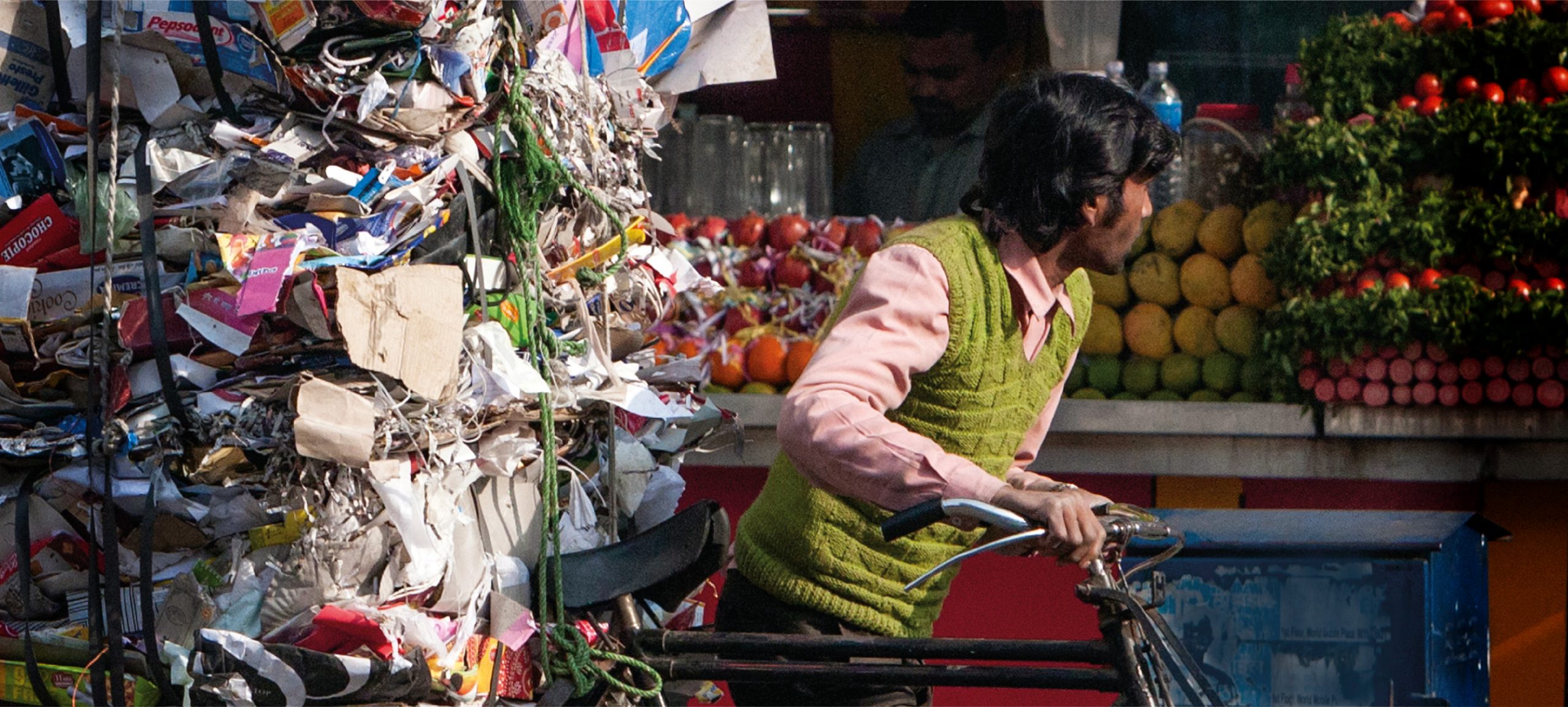
What is your relationship with ‘waste’? At most, your only interaction is when you throw something into the dustbin and then later when you’re driving around the country, you complain of mounts of garbage from the luxury of your car. Perhaps you cross a smelly river or drain. Perhaps you read the headlines of a newspaper talking about how India produces too much waste.
But who are the people who actually hands down deal with it? In New Delhi, a common estimate was that between 200,000 and 350,000 people worked as waste-pickers in an urban area of 16 million people in 2011. Rough calculations suggest that India’s 53 cities with populations of more than 1 million support close to 2 million waste-pickers, and its 465 cities with populations between 100,000 and a million sustain a further 1.5 million.
That’s a lot of people handling waste, and at different levels. To understand this better, we’ve taken an excerpt from Assa Doron and Robin Jeffrey’s book, Waste of a Nation, where they’ve created four categories of occupations that deal with waste.

Waste professionals are the people that local governments turn to for managing waste. These include scientists, engineers, private-enterprise executives, and the public service administrators and finance managers who go with twenty-first-century bureaucracy. They vary in their enthusiasm, knowledge and commitment, but the best of them bring skills, networks, and institutional understanding necessary to improving and maintaining public sanitation in growing towns and great cities. Even for those who never touch a bin or clean a toilet, work associated with garbage brings little prestige and only modest rewards at best. As we have seen, India has always been short of expertise in local government and public health.

At the other end of the waste chain – or at the bottom of the pyramid – are the handlers of waste. These are the people who scratch a living largely by dealing with the expelled materials of their fellow citizens. The way people who collect waste derive their income varies. Some are completely on their own – they find what they can in the streets, around rubbish dumps, and around the skips, or Dumpsters, at street corners or towns and cities. They confront feral animals, police, and better-resourced competitors for items of value. Better-off collectors may be full-time employees of local governments and enjoy some benefits, including regular wages (although often paid irregularly) and even ghetto-style housing. Other collectors may be employees of contractors who work for local governments or for recyclers.

Kabaadiwalas, the third of our categories, buy items of value from householders, merchants, and waste-pickers and carry them to places where they are reborn. India’s long-standing culture of frugality rests on at least three pillars. Certain systems of Hindu belief and practice celebrate asceticism and renunciation, and since the nineteenth-century, Hindu revivalists have emphasized the spirituality of India over the materialism of the West. During the nationalist movement, Mahatma Gandhi made spiritual characteristics key aspects of his program for national redemption. The rural life that characterized most of India until the 1990s meant that most people had little to throw away. And the controlled economy for the first forty years after independence produced few consumer goods. The door-to-door recycler can still be found in towns and cities, and many kabaadiwalas have gone far beyond hauling bags on a bicycle to become substantial middlemen of a kind Adam Minter, author of Junkyard Planet, would recognize at once.

The last category we call facilitators – nongovernmental organizations or self-help groups, which thirty years ago were often called action groups. India is rich with such organizations, usually run by educated, middle-class activists who aim to improve their environment by bringing skills and organization to disadvantaged workers. Such organizations are often at the center of stories of improvement in public sanitation. They suggest promising possibilities, if only…If only the work of the best of them could be scaled up; if only they were capable of surviving the loss of a dynamic founder; if only governments interfered with them less; if only more powerful interests had not muscled in on activities they had made effective and profitable; if only some of them were less enthusiastic about purely market-based solutions.
An examination of these categories of activity and people suggests rich possibilities for a cleaner India if the skills of the professionals, the networks of the recyclers, the energy of the NGOs, and the willing labor of the collectors could be synchronized. Coupled with advocacy networks and propaganda aimed at waste makers, such a combination has the potential to find ways to improve lives by vastly reducing what goes to waste.

13 Facts you Didn’t Know about James Bond Before 007

We all know and are in awe of the famous James Bond 007, but little do we know about just James Bond.
Forever and a Day, the thrilling prequel to Casino Royale, will take us through the action packed life of James Bond, a field agent who was prepped to take up a 00-status, after successfully performing two official assassinations.
Here are some riveting facts that will introduce you to a young Bond still finding himself, learning his skills and what it means to be a 00 agent.


4 Versions of the Epic Ramayana You Didn’t Know

Borrowing from Sanghadasa’s Jaina version, Mandodari, authored by a passionate mythologist, Manini J. Anandani, gives a voice to Ravana’s wife, one of the least known characters of the Hindu epic.
Did you know there is version of Ramayana where Hanuman is not a celibate and one where there is no mention of Ravana? Different religions and societies in Southeast Asia have alternative narratives of the epic.
Here are some vastly different philosophies of various sects, that deviate from the traditional plot we are all familiar with:
Dasaratha Jakarta: The Buddhist version

Dasaratha is the king of Benaras and not Ayodhya, in this version. What’s also different from Valmiki’s version is that instead of being exiled from the kingdom, King Dasaratha sends Rama and Sita away to the Himalayas. He wants to protect them from his over pushy third wife Kaikeyi, who’s the only antagonist in the story. Twelve years later, Rama and Sita return to Benaras, and not Ayodhya, and get married.
Paumachariya: The Jaina version

Titled Paumachariya, in the Jaina version, Rama is a follower of non-violence. Being an ardent follower of Jainism, Rama is the supreme hero in this version as well, and cannot be a killer.
The Jaina version presents a rational view, unlike the Hindu one that is more fantastical.
Instead of a monkey army, this version suggests that there was a warrior clan that beared the monkey as their emblem.
The most intriguing feature in this version is the depiction of Ravana; who’s not shown in a villainous light. On the contrary, he is a magnanimous king and also a believer of Jainism.
Gond Ramayani: The Gond version
This adivasi community that hails from Madhya Pradesh, weaves their own plot into the texts of Ramayana and is called the Gond Ramayani. It is an oral narrative that consists of seven tales told in the folk tradition of the tribe. It also overlaps with some characters of the Mahabharata, for example, Bhim. In this narrative, Lakshman takes centrestage in his pursuit for a bride. Rama is not the protagonist in this version of the katha.

The first chapter is about Lakshman and Indra’s daughter, Indrakamani, with Sita stepping in frequently. In the last tale Sita is exiled by Rama into the forest where their first son Luv is born. Their second son Kush however, is not a natural born. He is created by sages taking care of Sita in the forest. The lore has a happy ending with the family reuniting and returning to their palace.
Ramakien: The Thai version
With a great influence on the arts and culture of Thailand, Ramakien, the Thai version of the Ramayana is considered as Thailand’s national epic, still taught in some schools in the country.

Although fatal, his pursuit for Sita is described as true love.
Though there are some similarities to Valmiki’s version, this tale lays more emphasis on Hanuman. He is not a celibate in this version, rather is quite popular among the women.
———–

Things You Didn’t Know About Enid Blyton

The name Enid Blyton has been synonym to the term children’s literature for over half a century. Being one of the world’s bestsellers in this genre, Blyton’s work continues to impact the sphere of children’s fiction till date. Her most famous works include Noddy, Famous Five, The Secret Seven, which have found a paramount place in libraries around the world. By mastering her passion, she has left behind an exceptional legacy in the field of writing.
Here are a few things that you did not know about Enid Blyton:


All About Jazz! 7 Things You Didn’t Know about Bombay’s Jazz Culture

Bombay, renamed Mumbai after the goddess Mumbadevi, defies definition. Vibrant, engaging and provocative, Bombay, Meri Jaan is an anthology as rich and varied as the city it celebrates.
Salman Rushdie, Pico Iyer, Dilip Chitre, Saadat Hasan Manto, V.S.Naipaul, Khushwant Singh and Busybee, among others, write about aspects of the city. In one piece within the anthology Naresh Fernandes explores the jazz culture of the sixties. Intrigued?
Read on to find out 7 things you didn’t know about the jazz culture of Bombay:
- There was a class divide between musicians and their audience

- There was no correct way to play jazz. You just went with the flow.

- Most jazz musicians were originally from Goa

- What was considered high praise by jazz musicians may surprise you…

- Bollywood songs were arranged and assisted by jazz musicians like Chic Chocolate.

- Jazzy weddings?A jazz song from Lorna Cordeiro’s album became a standard at Goan weddings

- Grave diggers were in high demand

Bombay, Meri Jaan, comprising of poems and prose pieces by some of the biggest names in literature, in addition to cartoons, photographs, a song and a Bombay Duck recipe, tries to capture the spirit of this great metropolis.
Available Now!
Glow – An Excerpt

Vasudha Rai’s Glow brings back the charm of Indian recipes for beauty and nourishment of your skin. From fruits and vegetables that are readily available to the potent Ayurvedic herbs, this book tells you the ways in which you can get the radiance from within. These remedies help in building strength and immunity, as well as cleanse your skin, body and mind.
Here is an excerpt on vitality from the book:
Vitality
We operate out of two emotions—fear and love. Both sentiments make us truly human. However, they’re the opposite of each other. When we work out of fear, the result is usually weak and lacklustre. But when we do something from a place of love, the results are inspirational.
It’s no different with food.
In today’s world there’s so much misplaced knowledge that we eat out of fear. Will this make me fat? Am I allergic to this? Should I feel guilty after an indulgence? With each bite we become more afraid, and consequently, our bodies shut down, refusing to accept nourishment. even when we treat ourselves, we become overwhelmed with guilt, which prevents us from truly enjoying the moment. You see, it’s not just what you eat that is important but also how you eat it. The more you relish your food, the more it will energize you.
Over the last few decades many trends have come and gone. First, fat was the enemy and now it’s our best friend. Meat was also glorified for a brief moment, while carbs were pilloried for causing weight gain. After writing on health and beauty for many years, the only thing I’ve learnt is that today’s remedy could be tomorrow’s poison. Foods that nourish you greatly could be stigmatized because of new research. And ingredients that were considered poisonous may be celebrated again.
The problem begins when we focus just on the outward manifestation of beauty. When washboard abs become more important than an energized body, we fail in the quest for health. The perpetual obsession with superfoods takes away the pleasure of eating. It separates us from the time-tested knowledge of our ancestors. While traditions have always been relevant, you’ll find that they are more applicable today than ever before. In fact, at a time when we’re bombarded with a new trend every day, ancient, time-tested wisdom is worth our trust.
Vitality is the feeling of freshness, energy and strength. It helps us look forward to the day and handle each task with ease, including the chore of self-care. We need to be strong and energized first, before even thinking about the other aspects of beauty such as clarity and radiance. In this part we’ll focus on the basics that make us robust—oils, grains, unrefined sugars and herbs—ingredients from our kitchens that must be included in our everyday diet.
I’ve included carbs and sugars in this selection because I don’t believe in completely eliminating any food group. While I limit my consumption of wheat, milk and sugar because they cause inflammation, I haven’t removed them entirely from my diet. It’s essential to enjoy everything in moderation. Unless you’re intolerant or allergic to any ingredient, there’s really no reason to completely cut it out.
The need of the hour is to stop treating meals as a battlefield. We must eat with the aim of boosting health and longevity, instead of trying to create only the outward shell of a perfect body. After all, there can be outward beauty only when there’s inner health.
***
Coconut
It is the ultimate symbol of joy. Its scent is like a vacation for the mind, its water instantly energizes a tired body and a splash of its milk makes everything tastier. In India, the coconut is revered greatly. We break it open before auspicious occasions as an offering to the gods. It’s so purifying, healing and strengthening that it is essential to bless any celebration. The last decade or so has been especially good for the coconut. We have seen a huge surge in its popularity. We’re applying the oil to frayed cuticles, split ends, dry skin and even mixing spoonfuls in green tea and coffee. But, as with most natural ingredients that are celebrated, coconut is now being demonized too.
A 2017 research conducted by the American Heart Association found that coconut oil has as much (if not more) fat than butter and even beef fat. And, therefore, the study said that it increases cholesterol and causes weight gain. I don’t find it surprising. At the end of the day coconut oil is a saturated fat, and any fat (whether it’s saturated or unsaturated) must not be used in excess. The problem arises when we put food up on a pedestal so high that any shortcomings aren’t even considered a possibility.
In the last decade or so we have leapfrogged from one food to another, calling each the holy grail of health. There were goji berries, avocadoes, wheat bran, acai, cacao and even red meat, which was part of the Atkins diet. The problem is that the moment a food becomes a fad, we start overusing it without proper knowledge. However, there really is no one superfood that resolves all our problems. All plants and all foods have superpowers—each with its own unique property.
Coconut oil has some wonderful benefits, but too much will, of course, increase cholesterol. And if you consume it with ice cream or a cold drink, it will congeal inside your body because it is a saturated fat just like ghee. But to demonize it to an extent where it’s comparable to beef fat is an exaggeration. The one big difference between the two is that beef fat is inflammatory and coconut oil (being plantbased) is anti-inflammatory. Therefore, they’re the opposite ends of the spectrum: inflammation causes disease and foods that control it heal our bodies.
Science
What can be said about coconuts that isn’t already known? They’re rich in trace minerals such as manganese, iron, zinc, copper and selenium, which help in hormone regulation, cell regeneration and even digestion. They also contain small amounts of B vitamins and a ton of fibre, but the real USP is a certain medium-chain fatty acid called lauric acid. When consumed, it turns into monolaurin, which is strong antimicrobial agent that fights against viral and yeast infections. In addition, coconut oil also contains caprylic acid (a powerful fungus-fighter) and capric acid (a potent yeast killer). Because of these properties it is given to people with poor gut health, as one of the main reasons for that is candida (or yeast) overgrowth.
While a small amount of candida is essential for healthy digestion, in excess it can damage organs and release toxic by-products into the bloodstream. Signs of candida overgrowth include regular migraines, intense sugar cravings, bloating, anxiety, digestive issues and low energy. The three acids mentioned above form a powerful antidote that helps break down candida fungus in the body and restore healthy digestion. A safe amount of coconut oil that you can consume daily is 1 tablespoon. If, however, after a couple of months, you don’t see any improvement in your skin, mood or digestion, increase the dosage with the help of a certified nutritionist. Do keep in mind that some of the prime causes for this overgrowth are sugar, wine and antibiotics.
Coconut water is a highly isotonic fluid, meaning the electrolytes in it are very similar to our blood plasma. Therefore it revives us instantly. It’s like a hydrating injection, balancing the electrolytes immediately and fortifying the body with amino acids. Coconuts are alkaline in nature and cleansing for the body, which makes their water the perfect drink to kick-start your day.
Coconut meat is high in fibre and therefore helps promote gut health. The MCTs (medium chain triglycerides) in its oil break down as ketones, which serve as fuel for the brain. This is why they’re useful for memory problems and improving brainpower.
Coconut-and-Clay Toothpaste
- 2 teaspoons bentonite clay
- 1½ teaspoons baking soda
- ½ teaspoon clove powder
- ½ teaspoon cinnamon powder
- 2 teaspoons coconut oil
- ½ teaspoon activated charcoal
- A few drops of peppermint oil
- Mix the bentonite clay, baking soda, clove power and cinnamon power.
- Add the coconut oil, activated charcoal, a few drops of peppermint oil and a bit of distilled water and mix it all.
- Never use a metal spoon or container to make or store this toothpaste as the negative ions in the bentonite clay will bond with the positive charge in many toxins from metals.
- This amount is enough for two people for a month. Keep it stored in a glass jar and do not use a metal spoon to scoop it out.
- This toothpaste helps clean and whiten the teeth without the harmful toxins (such as fluoride) present in commercial toothpastes.
- Instead of using and throwing plastic tubes, you can also reduce waste by making your own toothpaste.
———-
While it is possible to fake great skin with make-up, you can only be truly radiant when you nourish your body from within. After all, outer beauty is only a symptom of inner health.
AVAILABLE NOW
The Origin of Kartikeya – An Excerpt

He was the son of fierce Durga and three-eyed Shiva. He had been born, he had lived, and he would die if need be, for a divine purpose-to kill the Soul Stealer
In Usha Narayanan’s book, Kartikeya and his Battle with the Soul Stealer Surapadma’s reign of terror flourishes and the fate of all creatures-mortal and immortal-hangs in the balance. Shiva’s son, Kartikeya, must destroy several formidable asuras before he can confront the Soul Stealer and salvage the dying, gasping universe.
Who is Kartikeya and what is his story? Let’s find out about his origin in this excerpt from the book!
The mountains were dark and dangerous. Dense woods covered their lower slopes while the peaks were snow-topped. Pishachas and bhootas flashed through the air with devilish hoots. Eerie, moss-covered trees glowed like goblins in the night. Swamps opened their putrid mouths to swallow the heedless traveller. Dense fog descended suddenly to obscure one’s vision, making it easy to plunge down steep cliffs. Venomous snakes raised their dark heads from their holes. Wild beasts hunted their unwary prey. And in their midst, all alone, stood a young child with a stormy face, setting up a loud clamour as he challenged the skies.
The mountain dwellers spoke in awed whispers about his sudden appearance. They had seen a fiery glow illumine the peak one night. Veins of gold, ores of silver and sparkling gems emerged as if by magic, shining with a blinding lustre that brought the ravens cawing, assuming that the day had dawned. The owls, terrified by the sudden light, flew hastily into the darkness of the caves. The hunters heard the cry of a baby the next day, though they could not find out where it came from. On the third day, they caught a glimpse of a glowing child amidst the reeds that fringed the mountain pool. And, the next morning, even as they watched and wondered, they saw him walking and talking. How had he come here, all alone? They had seen no strangers, so where were his parents? Had they abandoned him, fearful that he would bring disaster upon them?
For alas, the child’s face and form were bizarre. They kept their distance, afraid of this extraordinary being.
‘It is against nature’s laws that he should grow so swiftly,’ said one.
‘They say that asura children become full-grown in a matter of days,’ said another. ‘Or perhaps he is a monster who has come to torment us. That would explain his eerie appearance!’
Then one hunter raised his bow. ‘Instead of wondering about who he is, let us kill him before he grows too powerful!’ he said.
‘No!’ exclaimed his wife, forcing his arm down. ‘You cannot kill an innocent child who is forsaken and forlorn. I curse the mother who abandoned him in this manner! He must be hungry, poor little one. I want to take him some food. Look, how unsteady he is on his feet. How will he survive in the forest?’
Even as she spoke, she saw something move behind a rock on the path the child was following. She saw a dark scaly head emerge—that of a poisonous pit viper. It uncoiled its hideous body and flicked its forked tongue in the air as if to sniff its prey. The hunter’s wife gasped and picked up a handful of stones to hurl at the snake. Her husband gripped her arm and shook his head. She looked at him angrily and whispered, ‘We must warn him. What if it bites him? The poison will kill him that very instant.’ She turned quickly again to see if the snake had struck. It was upright and appeared to be waiting for the child to come within striking distance. She tore her arm free and lifted it, ready to throw the stones. Even if they did not reach the snake, at least the boy would be alerted. And the startled snake might retreat.
Suddenly, the snake dropped to the ground, as if prostrating itself before the child who walked past—unaware of the danger he was in. The spectators looked at one other, startled. What did this mean? ‘I told you! There is something unearthly about this child!’ the hunter said. ‘Let us run away before he spots us.’
‘No, I refuse to believe that a child so radiant could be evil,’ his wife protested, resisting his pull on her arm.
‘Let us at least stay away until we find out more about his nature,’ the hunter replied. They hid behind some trees and watched the stranger go past.
The child saw two moving shadows but when he turned, there was no one there. His nostrils flared in response to a delectable smell he had occasionally come across in the forest. He felt a deep pang of loneliness and pain. Hunger stirred in his stomach and he felt a raging thirst. He heard the trumpeting of a herd of elephants moving towards the river, with their young ones safely tucked in their midst. In the tree above his head, he could see a black bird in its nest, pushing food into the throats of its hungry chicks. A monkey clan was watching him warily, with the young ones clinging to the backs of the mothers. Alas, he could not see anyone of his own kind, no tender mother or vigilant father. He had seen footprints like his own on the ground. Was it his clan’s? Why were they avoiding him then? Perhaps he had been cast away as worthless. His foot slipped on some smooth pebbles. He grasped at a bush to steady himself and gasped as the thorns pierced his flesh. He stuck his hand in his mouth, trying to soothe the burning sensation. Quick tears sprang from his eyes. He raised his voice in anguish, breaking the quietness of the morning.
‘Who am I? Why was I born? What is my name?’ he cried out. But he heard no answer. ‘The beasts around me cradle their young. They bring them food and protect them from their foes. But my parents . . . my parents have abandoned me on this cruel mountainside. I am at the mercy of the sun, the wind and the wild creatures that stalk their prey at night!’
Would someone reply, explain the reason for everything that was happening? He waited, his eyes flaming red. But all he heard was Nature herself, speaking with the voices of the elements.
Suddenly, he heard the sound of someone or something crashing through the bushes. A wild boar emerged in his path, huge and menacing. It stood aggressively before him, pawing the ground in challenge, its eyes glinting angrily. Behind it he could see the sow emerging from the bushes, followed by its young ones. But as he stood stock-still, staring at the animals, the mother took a quick look at him and herded her young ones back into cover. The male grunted at him and he grunted back. It stared at him for a few moments, appearing to be in two minds about mounting an attack. Then it turned and followed its brood into cover.
