Publish with Us

Follow Penguin

Follow Penguinsters

Follow Penguin Swadesh

8 Things you Didn’t Know about Bene Israel Jews

An epic tale of a gifted Jewish family that loses and finds itself on Indian soil, The Book of Esther shines fresh light on the Jewish experience in India and becomes an affecting tale about love, home and belonging. The book gives us some interesting facts that you may not have known about the Bene Israel Jew community in India.

  1. Bene Israel Jews don’t work on Saturdays. (They don’t even cook!)

  1. Restrictions were placed on women by the community

  1. Where do they come from? The community isn’t sure.


  1. According to the lore seven couples were shipwrecked off the Konkan coast, these were the first Bene Israel Jews.

  1. Prophet Elijah (Eliyahu Hannabi) is special to the Bene Israel Jews.

  1. Idolatry is forbidden in the community.


  1. Kaala Jaadoo- What’s that? Black magic and the supernatural is rejected by the community.

  1. Your boy becoming a man? Not before there’s a bar mitzvah to celebrate it.


The Unending Game – An excerpt

In God we trust, the rest we monitor . . .
As a country’s stature and reach grow, so do its intelligence needs. This is especially true for one like India that has ambitions of being a global player even as it remains embattled in its own neighbourhood. The Unending Game by Vikram Sood tackles these questions while providing a national and international perspective on gathering external intelligence, its relevance in securing and advancing national interests, and why intelligence is the first playground in the game of nations.
In the book, he  provides a panoramic view of the rarely understood profession of spying to serve a country’s strategic and security interests.
Here is an excerpt on How Spies Work
All in a Night’s Work
The night had to be dark and moonless, so dark that one could not see one’s hand, literally. The time at which the agent would be slipped in had to be synchronized to when the border guards would be away for an hour. This timing was crucial, to enable the agent and his escort to get past no man’s land. The agent would say his prayers and hear whispered good luck messages with last-minute instructions. Then the men would slip away into the darkness. The hushed footsteps would soon fall silent as they headed for the nearest road or railhead to await daybreak. The agent would then be handed over to yet another man who would lead him to his destination.
Infiltrating an agent into a target country meant sleepless nights for the agent’s handler, from the time he was slipped across, to the time he sent a ‘safe arrival’ signal. In those times—even two decades ago—this signal could take days, weeks or even months. This was at a time when one did not have iris recorders and fingerprinted identity cards, so creating a new identity document was easier. In the pre- Internet days when cellphones had not even been thought of, the handler just had to wait patiently to hear from his agent. Sometimes
the mission was to contact a resident source who had been silent for
a while or simply to try and find out what had happened to him.
One always worried about those who went silent from day one. Treachery, a last-minute bout of cold feet, or the wrong use of domestic code—any of these could cause disasters. Communication in domestic code would come via a third country. Secrecy in those days lay in communicating in specially prepared inks with the hope that the opposition would not discover it.
On other occasions, an agent would be equipped with a cumbersome camera of the kind available in the 1970s and be tasked to do a panorama of a strategic road, from point A to B, complete with culverts and bridges. A month later, the man would return, to be debriefed metre by metre of the road by his handler. After which the report would find its way to the headquarters, where it would be smartened up and sent to the consumers. Things moved slowly those days, and wars took their time. Now, handlers do not have to send agents to collect this kind of topographical intelligence. Satellite cameras do it for them; as do Google Maps, accessible on anyone’s cellphone.
A Successful Spy
Intelligence officers do not themselves unlock safes, drive around in fancy cars, wear flashy clothes or have knowledge of judo or karate. They are required to recruit, train and handle men and women who can lie, deceive, steal secrets and manipulate people. Their skill lies in being able to move around inconspicuously while being present. Professional intelligence officers worry about detailed operational plans and finding the right person to handle a task. The ability to elicit information is an asset and is usually linked with an ability to say a lot without revealing anything to pretend an exchange of information is taking place. James Bond is fantasy, George Smiley is reality.
In the strictest sense, a spy who completes a productive career without being discovered and settles down to quiet retirement is a successful spy. As the CIA used to say, ‘The spies that you have read about, by the mere fact that you have read about them, are exceptions. The spies who interest are the ones who do not get caught and who therefore are not to be read about.’ The British described a good espionage operation as a good marriage where nothing out of the ordinary happens, is uneventful, and does not make for a good story.
A good agent (or spy) is one who has access to target information. It is not their rank in an organization or social standing that determines their utility. All other qualities fade away if they do not have access. Someone with discretion, financial standing and unobtrusiveness may be useful as a ‘utility agent’—who organizes safe houses, financial transactions or transport, or who as a talentspotter leads to prospective agents and may also meet them initially to assess them but is eventually required to fade out from the operation. He does not, strictly speaking, engage in any activity that might be deemed anti-national. Behind each operation, especially in a country where the local counter-intelligence is aggressive and vigilant, there is a need to build layers between the actual source and the agent. It works both ways, though. The larger the number of layers, the greater the risk of exposure through indiscretion or a mistake along a long chain.
Many intelligence agencies take the trouble of creating new identities and cover stories even for their officers and agents, teaching them cultural nuances and not just the language of the target country and helping them acquire its nationality in the hope that they would land themselves employment in the areas of interest. This can take years and there is always the risk of the person changing his mind and disappearing, not necessarily out of treachery but because he or she has had a change of mind, or fallen in love, or is finding the new horizons offered by the adopted country lucrative, or even just out of sheer boredom.
Raising and installing a long-term illegal was a practice prevalent in the Cold War years, when access was limited and counter-intelligence could be ruthless. Today, most major intelligence agencies prefer to raise their sources among the nationals of the target country; they are usually persons of credible standing with access to persons who have information of value as these sources have a natural premium.
 

Sacred Games – An Excerpt

Are you hooked onto Sacred Games, by Vikram Chandra yet? Whether you decide to read the book, and then watch the Netflix series, or watch the series and then read the book, you’re bound to get engrossed.
Seven years in the making, Sacred Games is an epic of exceptional richness and power. Vikram Chandra’s novel draws the reader deep into the life of Inspector Sartaj Singh, and into the criminal underworld of Ganesh Gaitonde, the most wanted gangster in India. This is a sprawling, magnificent story of friendship and betrayal, of terrible violence, of an astonishing modern city and its dark side.
If you’re yet to start reading the book, start with this excerpt!
A white Pomeranian named Fluffy flew out of a fifth-floor window in Panna, which was a brand-new building with the painter’s scaffolding still around it. Fluffy screamed in her little lap-dog voice all the way down, like a little white kettle losing steam, bounced off the bonnet of a Cielo, and skidded to a halt near the rank of schoolgirls waiting for the St Mary’s Convent bus. There was remarkably little blood, but the sight of Fluffy’s brains did send the conventeers into hysterics, and meanwhile, above, the man who had swung Fluffy around his head by one leg, who had slung Fluffy into the void, one Mr Mahesh Pandey of Mirage Textiles, that man was leaning on his windowsill and laughing. Mrs Kamala Pandey, who in talking to Fluffy always spoke of herself as ‘Mummy’, now staggered and ran to her kitchen and plucked from the magnetic holder a knife nine inches long and two wide. When Sartaj and Katekar broke open the door to apartment 502, Mrs Pandey was standing in front of the bedroom door, looking intensely at a dense circle of two-inch-long wounds in the wood, about chest-high. As Sartaj watched, she sighed, raised her hand and stabbed the door again. She had to struggle with both hands on the handle to get the knife out.
‘Mrs Pandey,’ Sartaj said.
She turned to them, the knife still in a double-handed grip, held high. She had a pale, tear-stained face and tiny bare feet under her white nightie.
‘Mrs Pandey, I am Inspector Sartaj Singh,’ Sartaj said. ‘I’d like you to put down that knife, please.’ He took a step, hands held up and palms forward. ‘Please,’ he said. But Mrs Pandey’s eyes were wide and blank, and except for the quivering of her forearms she was quite still. The hallway they were in was narrow, and Sartaj could feel Katekar behind him, wanting to pass. Sartaj stopped moving. Another step and he would be comfortably within a swing of the knife ‘Police?’ a voice said from behind the bedroom door. ‘Police?’
Mrs Pandey started, as if remembering something, and then she said, ‘Bastard, bastard,’ and slashed at the door again. She was tired now, and the point bounced off the wood and raked across it, and Sartaj bent her wrist back and took the knife quite easily from her. But she smashed at the door with her hands, breaking her bangles, and her last wiry burst of anger was hard to hold and contain. Finally they sat her down on the green sofa in the drawing room.
‘Shoot him,’ she said. ‘Shoot him.’ Then she put her head in her hands. There were green and blue bruises on her shoulder. Katekar was back at the bedroom door, murmuring.
‘What did you fight about?’ Sartaj said.
‘He wants me not to fly any more.’
‘What?’
‘I’m an air hostess. He thinks . . .’
‘Yes?’
She had startling light-brown eyes, and she was angry at Sartaj for asking. ‘He thinks since I’m an air hostess, I keep hostessing the pilots on stopovers,’ she said, and turned her face to the window.
Katekar was walking the husband over now, with a hand on his neck. Mr Pandey hitched up his silky red-and-black striped pyjamas, and smiled confidentially at Sartaj. ‘Thank you,’ he said. ‘Thanks for coming.’
‘So you like to hit your wife, Mr Pandey?’ Sartaj barked, leaning forward. Katekar sat the man down, hard, while he still had his mouth open. It was nicely done. Katekar was a senior constable, an old subordinate, a colleague really – they had worked together for almost seven years now, off and on. ‘You like to hit her, and then you throw a poor puppy out of a window? And then you call us to save you?’
‘She said I hit her?’
‘I have eyes. I can see.’
‘Then look at this,’ Mr Pandey said, his jaw twisting. ‘Look, look, look at this.’ And he pulled up his left pyjama jacket sleeve, revealing a shiny silver watch and four evenly spaced scratches, livid and deep, running from the inside of the wrist around to the elbow. ‘More, I’ve got more,’ Mr Pandey said, and bowed low at the waist and lowered his head and twisted to raise his collar away from the skin. Sartaj got up and walked around the coffee table. There was a corrugated red welt on Mr Pandey’s shoulder blade, and Sartaj couldn’t see how far down it went.
‘What’s that from?’ Sartaj said.
‘She broke a Kashmiri walking stick on my back. This thick, it was,’ Mr Pandey said, holding up his thumb and forefinger circled.
Sartaj walked to the window. There was a group of uniformed boys clustering around the small white body below, pushing each other closer to it. The St Mary’s girls were squealing, holding their hands to their mouths, and begging the boys to stop. In the drawing room, Mrs Pandey was gazing brightly at her husband, her chin tucked into her chest. ‘Love,’ Sartaj said softly. ‘Love is a murdering gaandu. Poor Fluffy.’
 

Business Law for Managers by Anurag K. Agarwal – An excerpt

Even though most business managers have diverse academic qualifications – engineering being the most common, followed by chartered accountancy, economics, medicine, etc. – few come from a law background. However, it is crucial for a manager to understand the nitty-gritty of law. This hands-on guide to understanding business law is for anyone and everyone looking to run a legal-hurdle-free business.
Let’s read an excerpt from Anurag K. Agarwal’s book, Business Law for Managers.
Defaulters List: Exhilarating and Exhausting
Towards the end of August 2017, the Reserve Bank of India had sent a list of more than two dozen defaulters to commercial banks to recover the money that had been lent to them. Recovery was expected to be sought not just through stringent legal methods, but also by using the method of negotiation and mediation even before filing for mutual arbitration through the National Companies Law Tribunal under the Insolvency and Bankruptcy Code (IBC). This is both exhilarating and exhausting. Exhilarating, because finally some steps have been taken by the central bank to recover the money lent to thick-skinned borrowers, and exhausting, because it feels like having a déjà vu.
This was rather surprising as commercial banks usually dealt with big business families leniently. Also, as large corporates have a battery of lawyers at their disposal it is not always useful for commercial banks to take the legal route. The Insolvency and Bankruptcy Code in India is considered as the panacea for all commercial lending problems of big banks to big borrowers.
Was the intervention of the Reserve Bank of India necessary? It is a question that needs to be answered. Commercial banks, as well as other lenders, know exactly how much money has been lent and to whom. This is something very basic for a bank and even in predigital times, accounts were maintained meticulously to get the complete picture in a bird’s eye view. Despite the issues of confidentiality and privacy, big lenders have often consulted each other—usually on the sly— to know the borrowing pattern and paying capacity of big borrowers. In today’s digital world, it is even more natural and easier for banks to share information among themselves. So this step taken by the RBI appears to be superfluous.
How far will this list help in recovering the money? Not much. These borrowers are habitual and thick-skinned, and that is the reason why there is hardly any sense of shame or remorse to make them pay back. The attitude of bankers and banking practices have to be changed. Knee-jerk reactions are not going to work. Recently UCO Bank, which has been suffering losses and facing uncertainty about its future, ordered that some of its employees in the branches that were not performing well would not be paid salaries. Such an order is ridiculous and tells a lot about the negative and sadistic nature of senior banking officers who took this decision. It is extremely difficult to imagine why the lower-level staff in a bank’s branch should be penalized for decisions primarily made by the middle and senior management. Thankfully, this decision was not enforced.
The real question is of fixing accountability and responsibility for the dismal performance of different banks and exploring the real reason as to why banks keep on lending money to borrowers who repeatedly fail to keep their promises.
The legal procedure of recovering money has always been exhausting. Adjournments on different pretexts have typically made a mockery of court proceedings and unscrupulous big-ticket borrowers have the wherewithal to fight the legal battle till the very end. The newly exhibited zeal by the RBI, the government and the banks is truly exhilarating, and hopefully, it will result in a fruition of efforts. Different tribunals and courts are bound by the procedural rigmarole, which becomes stricter and more rigid in case of money.
It is heartening to see that big business names, which were never expected to default and which in public perception would never do anything wrong, are also not being spared. True efforts with good intentions usually succeed. This is not something unique to Indian banks. Bankers elsewhere have on several occasions resorted to irresponsible behaviour, making their organizations vulnerable. Wells Fargo is an interesting case in the United States.
 

Do You Value These ‘Little Things’ in Your Relationship?

Little Things by Dipen Shah is a new age love story where the couple, Kavya and Dhruv work through their FOMO to bring about a deeper connection between them. The small things that they do for each other are what make their bond special. Does your relationship constitute these ‘little things’?
 
1. A mere text from them makes your day.

 
2. When you have had a really bad day they are always there to make it better.

 
3. You find ways to enjoy yourselves together even when you have to be frugal.

 
4. You enjoy each other’s silence.

 
5. You stick together through the ups-and-downs.

 
6. They pamper you and finish the chores before heading out to work.


10 Things you didn’t know about Agyeya

Agyeya(1911-87) was the pen name of S.H. Vatsyayan, regarded as one of the foremost figures of Hindi literature who was instrumental in pioneering modern trends in the realm of poetry, fiction, criticism, and journalism.
His monumental novel Shekhar: Ek Jeevani, widely regarded as his masterpiece, was drawn from his own experiences in prison and has been published in Penguin Classics as Shekhar: A Life. The book tells the story of an Indian revolutionary Shekhar who finds himself enveloped by his past and wracked by a tumult of emotions on the night before he is to be hanged as a political prisoner.
Agyeya’s Prison Diaries and Other Poems, also represents the pre-independent India. The work was written while he was in prison as a revolutionary in the early 1930s and contains poems highlighting the horrors and tedium of imprisonment.
As riveting as his two works, Agyeya was a charming personality with his varied interests. Here are ten things about the author that you did not know:


Seven Things you didn’t know about Madiha Afzal

Madiha Afzal, author of Pakistan Under Siege: Extremism, Society and the State is a Non-Resident Fellow at the Brookings Institution. She is also an adjunct assistant professor of Global Policy at Johns Hopkins SAIS. She was previously an assistant professor at the University of Maryland’s School of Public Policy.
Her work examines the links between development, politics, and extremism, mainly in Pakistan  – especially focusing on the role of the education system and state policy.
Here are seven things you didn’t know about her.


"Six Fundas that Make Me Happier in my Relationships" by Samah

Samah Visaria is the author of Familiar Strangers and Encounters of a Fat Bride. Though a marketing professional by qualification, she is storyteller by passion and is a keen enthusiast of fashion, food, and films, and wants to trot around the world!
In her new book, Familiar Strangers, the fundamental question she asks is: what if your husband’s ex-girlfriend makes a sudden comeback into your lives? The story revolves around Priya and Chirag, who are like several other modern couples, living life at breakneck speed, unknowingly stuck in the rut of a marriage that is obviously dying, if not already dead. Things start to change when Priya’s position in Chirag’s life is threatened by his past when they least expect it.
In this special piece written by Samah, she talks about the six fundas that make her happier in her relationship.
—-
No one can tell you the secret to a perfect relationship. It’s something you have to devise on your own. Just as our fingerprints are unique, so are our relationships. As we grow, our relationships grow too, and whether people come closer or fall apart depends on which direction they steer the relationship to. While, I don’t believe in a one-fits-all formula for relationships, here are some fundas that help me feel happier and more secure in my relationship, and maybe they could work for you too.
1). Sharing a laugh – My most favourite emotion to share with my partner on a daily basis is laughter. Something about sharing a laugh with my partner makes me feel closer to him. Humour helps me deal with difficulties, grief and monotony in real-life situations, even if it is brought on by something fictional. So go ahead, tell your partner the stupid joke that your colleague cracked at lunch. Tell him how your boss repeatedly referred to Muscat as a country in the board meeting and nobody had the guts to correct him. That book full of potential jokes you have… which you developed when you wanted to make it as a stand-up comedian. Make your girlfriend read it. Enact the jokes, do the accents, be stupid. When you count your blessings, count your laughs twice.
2). Travelling – I love wandering about in a new place with my partner. To know just one person in an unknown place brings about a unique dependency, an unspoken intimacy between two people. The thrill of discovering new cultures and cuisines is best experienced with someone you love. It is the perfect blend of the familiar with the unfamiliar. When my husband and I are not taking a trip, we’re planning one.
3). Developing a hobby  – While maintaining an individual hobby is mandatory for a balanced and complete lifestyle, nurturing a joint hobby could work wonders for two people who want to communicate better and spend more time together. It may not be easy to arrive at something of common interest but you could try out each other’s interests turn by turn. I personally love taking dance classes with my husband. He used to be a non-dancer before we met and now he’s the centre of attention at every party. Keep in mind that a hobby must be something in which you both have active participation, not passive. It must involve the body and the mind, like playing a sport or learning to play an instrument or cooking. So unfortunately, watching Netflix together doesn’t count.
4). Raising a pet – I can barely imagine not being mommy to my year-old kitten (is she a cat now?), Billy, who has swiftly converted us into a family. Having a pet definitely adds to expenditure and responsibility but if you can afford both it is a beautiful experience that can bring you closer to your partner and teach you to take decisions together. It could also be a step towards parenthood if that’s what you have in mind for the near future.
5). Talking – Do one thing. Log out of the app you’re using on your phone. It’s okay, your sister’s ex-boyfriend’s current girlfriend’s Facebook post will still be there tomorrow morning. You don’t need to read it right this minute. Now put your phones on you bedside tables, both of you. In fact, put them in your bedside drawers. Switch the TV off. Lie down if that’s more comfortable. Shut the lights maybe. Talk.
6). Knowing your worth – If you give your relationship your best, not the ‘best’ of ‘I’ll try my best to be there’. If you give it your real best where you think you couldn’t do any better, if you are honest, happy and hard-working then you have nothing to worry about. Don’t doubt without reason. Trust the choice your partner made by choosing you. If you suspect something not right refer to point number five.
Tell us how many do you relate to?
 

Quotes to Live By if you’re on your way to Success

How do you establish your brand to become one of the most beloved and enduring in the country?
 In her book, The Two-Minute Revolution, Sangeeta Talwar tells you just that. She was the first woman executive in the FMCG industry, which established one of our favorite brands: Maggi Noodles!
From her book, we extracted some quotes that you must take a look at, especially if you’re on your way to building an extraordinary brand!


A Murder Mystery Writer’s Favorite Murder Mystery Books

Bulbul Sharma is an artist and author. She has written a number of books, including Book of Devi, Shaya Tales, Ramayana and My Sainted Aunts.
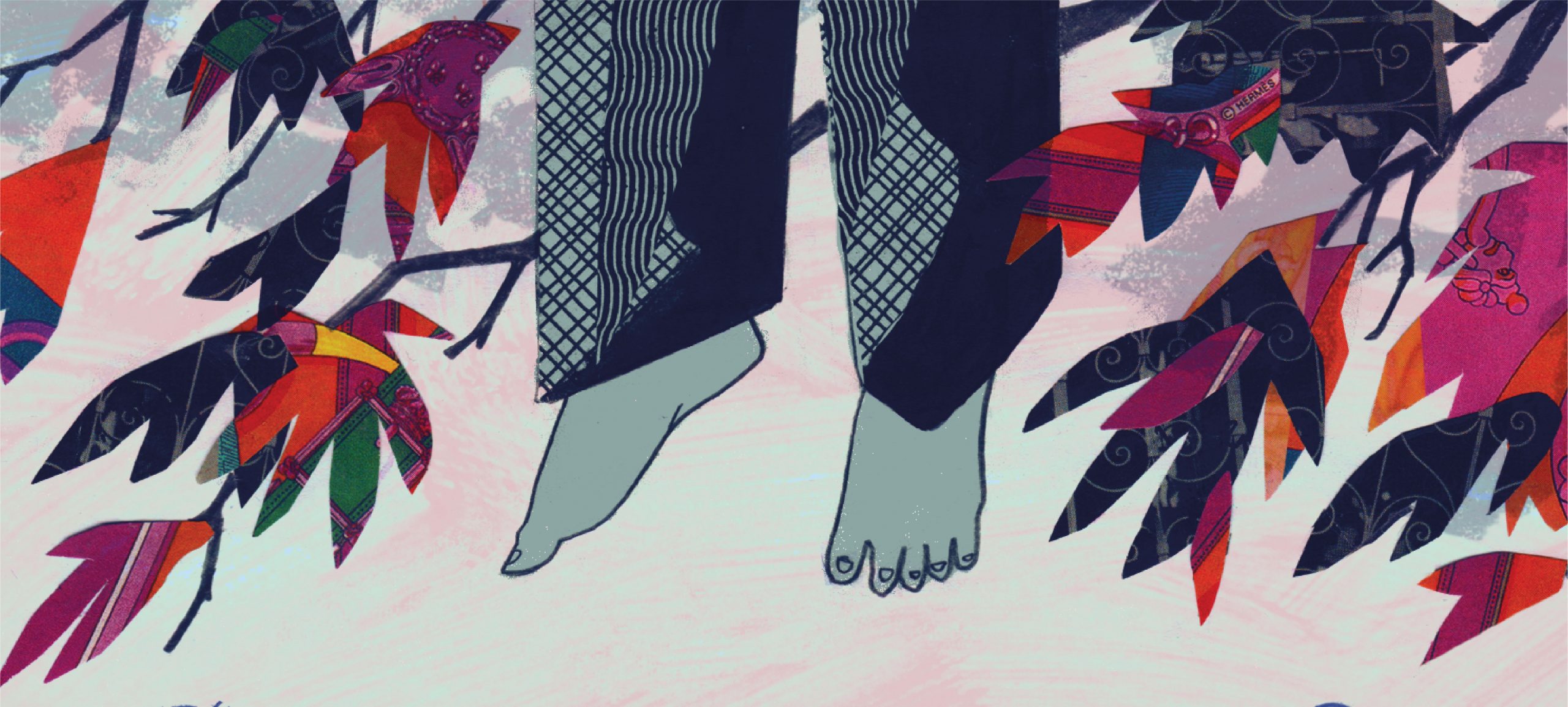
 Her most recent book, titled, Murder at the Happy Home for the Aged is set in the lush landscapes of Goa. The tranquility of the Happy Home for Aged is shattered when a body is found hanging in the garden. The inhabitants come together to solve the mystery, patiently and with flashes of inspiration.
Bulbul Sharma shares with us, a list of her favorite murder mystery books, and tells us why she loves them.
‘And Then There Were None’ by Agatha Christie

One Good Turn’ by Kate Atkinson

‘Death comes to Pemberley’ by P.D James

‘London Calling’ by Sara Sheridan
 
‘In the Company of Cheerful Ladies’ by Alexander McCall Smith

error: Content is protected !!