




Sangeetha Sreenivasan’s remarkable debut Acid is a gripping tale that attempts to subvert the conventions of society. The narrative is fuelled by the intense romance between Kamala and Shaly who stay in the same house as Kamala’s sons, Shiva and Aadi. Shiva and Aadi stay downstairs and take care of each other in their own way.
When Kamala’s mother dies, she returns to Kerala—to an ancestral house lying next to the cremation grounds in Cochin’s outlying reaches. Although an uneasy place for her, the place, nevertheless, is home. However, nothing can prepare her for the devastation that ensues in this lyrical, hallucinatory trip of a story.
Here is an excerpt from the novel:
—————————————————————————————————————————
In the kitchen Aadi set some milk to boil, his heart pounding all the while and his lips trembling. He did not remember much about his grandmother, though. He was worried about his mother, now an orphan bereft of someone to guide her.
By the time Shaly came back, she had regained her composure and she cautioned Aadi in a carefree manner to watch the coffee, which was boiling over. She shut the flame off and accidentally knocked the lighter down, but let it remain there. The bright red polish still shone on her nails, especially on her toes. After Aadi had gone to Shiva’s room with the tray of coffee and biscuits, she picked up the lighter and lit the stove again and prepared some tea.
She had to push the door open with her leg as she was holding a tray laden with a teapot, cups, biscuits, toast and marmalade. Kamala stood beside the table, unmindful of her shouts or reluctant to open the door. She took no notice of the tray Shaly placed on the table. Instead, she stood there listening to some lone voices from within. Shaly should have been bitter about this, but her poise betrayed only signs of suppressed anger, shrouded in grace. When Shaly noticed Kamala’s eyes closed in rapture she pulled her up by the hair and hit her hard across the face, anyway. ‘What the hell!’ said Shaly.
Kamala stepped back and carelessly knocked the teapot over with her hand, spilling the hot tea onto the floor.
‘I’m going to kill you, you bitch!’ Shaly tried to thrust her fingers into Kamala’s mouth, with a force sufficient to scoop out the insides—the tongue, uvula, teeth and everything—but anticipating the worst, Kamala pursed her lips disgustedly and forced them out, so that Shaly had to give up.
In consequence, acid took the reins. It designed the maps of convulsed ecstasy under Kamala’s tongue. Soon it would travel, numbing whatever it touched on the way until Kamala was numb to the world outside her eyes. Red kangaroos wearing lucky horseshoes would race up to her brain, making her forget her present, past and future in the haze of dust their hooves would raise. Neurons would mount on camels obscured by clouds to take her for a short pleasure ride.
‘Bastard! What do you think of yourself? You stupid slut!’ Shaly shook her hard; slapped her harder still. Kamala didn’t seem to be in pain. Yet she covered her face in her hands and squatted on the floor. ‘Everything happens because of you, Kamala! How many times have I warned you against taking those dumb godforsaken pills? But you don’t listen. You are on medication. Do you hear me?’ Tea pooled in the wooden depression on the floor.
Shaly went out to fetch a mop, saw Aadi on the stairs and yelled, ‘What the hell do you want? Get out of here.’
It was not easy for Shaly to compose herself this time. After a while, she tried to fake a sympathetic look and walked to the children’s room, pretending everything was under control. Before she knocked on the door she said to herself, ‘Kams is a horrible woman. Everything here is garbage,’ and smiled.
Still smiling, she asked the boys, ‘Shall I get you breakfast?’ The boys looked at each other and then at her. ‘What about grandma? Are we not going to see her?’ Shiva asked solemnly.
Shaly was about to say something but suddenly the sound of the saxophone shook her up and her face turned pale and bare. Music came floating down the stairway.
On the upper floor, Kamala closed the windows, drew the curtains shut and sat on the floor in the corner of her room. She thought she was safe, no harm could ever find her. She stared at the innards of her stereo and laughed thoughtfully.
‘I will bring you toast, please wait,’ Shaly called out from the kitchen, as if the boys were impatient and enthusiastically waiting for something to munch on.
The first two pieces of toast got burned on the frying pan. Shaly wondered from where Kamala had got hold of the hallucinogen again. She had taken it on an empty stomach, in addition to the sleeping pills she had had the night before. Shaly recollected the faces of each and every peddler on the road. Bastards.
Two tiny pieces of eggshell flopped on to the yolks in the pan. White pyramids on yellow balls. She removed the pieces with the edge of a spatula. ‘I should not have left her,’ she said to herself.
No one knew how long a bad trip would last. Kamala’s mother, frozen, white and pale, waited for her daughter in uncertainty while Kamala shut herself up in a room too far away from her mother and mused on something that would never be useful in life. She moved the gears on an unbridled, hysterical ride, on a magic journey some people mistook as life.
On top of her worries, Kamala had a pet dog called Depru. Monsieur Depression. An impalpable ghost of her esteemed hypotheses. It accompanied her wherever she went. A huge bulk, a mass of comfort. A cushioned bundle of sadness. It showed no interest in playing with a ball or a toy, no interest in going out for a walk. Instead, it would mount her shoulders, its weight crushing her. They say dogs make eye contact. It looked straight into Kamala’s eyes like other dogs. But in the mauve shadow of its eyes, a child drowned every second. And Kamala wept, looking at the dying child.

Category: Uncategorized
Love, Hope and Utmost Happiness – Quotes from Arundhati Roy

The Ministry of Utmost Happiness by Arundhati Roy is an incredible follow-up to her The God of Small Things. We meet a host of characters—Anjum, who runs a guest house in an Old Delhi graveyard, Tilo, an architect, who, although she is loved by three men, lives in a ‘country of her own skin’. But when Tilo claims an abandoned baby as her own, her destiny and that of Anjum becomes entangled as a tale that sweeps across the years and a teeming continent takes flight. . .
Here are a few quotes about love, hope and happiness from the book:


Exploring 3 Cases solved by one of Mumbai’s Finest Policeman

Me against the Mumbai Underworld is the story of Isaque Bagwan, three-time recipient of the President’s Police Medal for Gallantry and a small-town boy who pursued his big-city dreams and ambitions as an upright police officer. As per Mumbai Police records, he is the first officer from the force to have killed a criminal in an encounter.
His life, which has captured the imagination of many writers and filmmakers, is presented here with all its gut-wrenching details.
Here are 3 cases that validate the fact that Isaque Bagwan is one of Mumbai’s finest policeman till date.
Bahraini Footballer’s Murder Case
It was December 1977. Somebody has been stabbed in front of the Air India building and was lying on the road in a critical condition. When Isaque Bagwan reached the Air India building, a body of a fair-skinned youth was lying on the footpath in a pool of blood. His body had multiple stab wounds.

The One Officer who arrested four criminals alone
One night, a woman on Walton road was shouting, “Chor!”. On reaching the building, Bagwan spotted three to four people descending the staircase. One of them seemed to have a parcel in his hand. When Isaque got closer, one of them lunged at him with a kitchen knife but Isaque managed to deflect the blow. This frightened the gang.

Those five critical minutes
It was around 10:00 AM when Isaque Bagwan heard a message crackling n the police wireless system. A man had attacked a person with a chopper at the INS quarters in Colaba. Bagwan reached the INS quarters in under 5 minutes and saw a man running down the stairs.
‘Open the bag!’ shouted Bagwan. The man knew it was over. The bag contained blood-soaked clothes and a bloodstained chopper. Thirty-four-year old Devi Singh Thakur was a cook, who had quarreled with Priti Singh. In a fit of rage, Devi Singh attacked him with a chopper and killed him.


Bihar Diaries – An Excerpt

Bihar Diaries narrates the thrilling account of how Amit Lodha arrested Vijay Samrat, one of Bihar’s most feared ganglords, notorious for extortion, kidnapping and the massacre of scores of people.
The book follows the adrenaline-fuelled chase that took place across three states during Amit’s tenure as superintendent of police of Shekhpura, a sleepy mofussil town in Bihar.
Here is an excerpt from the book:
———————————————————————
My back and hip started hurting all of a sudden. ‘Shit,’ I grumbled before getting into the blue Gypsy.
I asked my driver to take me to the Kasar police station.
An unshaven man, his skin darkened by constant exposure to the sun, was waiting for me just outside the police station. Ranjan Kumar, the former SHO of Kasar police station, had been put under suspension by the Police HQ. It seemed as if he had aged a decade in the last week. The second massacre had taken place in his jurisdiction. I hobbled out of the Gypsy and somehow managed to stand straight. Ranjan was in civil clothes, because a policeman is not allowed to wear the uniform when suspended. He was in the police station to hand over charge of the maalkhana, the police depository, and all the cases.
Ranjan saluted me by whipping to attention, impressing mewith his sense of discipline even in adversity. I feebly managedto return the salute.
I signalled to my bodyguard and my driver to leave–Ineeded to talk privately to Ranjan. Barely able to control mypain, I stood by the bonnet of the Gypsy. Ranjan was a little tense. Why would the SP come to see a disgraced, suspended SI?
‘Ranjan, I want to know the exact reason for the massacre ofRam Dular and his family, every single detail.’
‘Sir, I don’t know much about it. It happened out of theblue.’
‘I know that Krishna and Raju had beaten up Lakha a fewdays ago. The murder of five of Vijay’s men was the tippingpoint. That angered Vijay enough for him to commit the cold-blooded murder of Ram Dular’s family. Look, the governmenthas posted me and the DIG here only to arrest Vijay Samrat. Itis our top priority. You have to help me in this mission.’
‘But, sir, what can I do? I am just an ordinary SI, that too,suspended,’ a resigned Ranjan muttered.
‘Ranjan, I know your competence. You’re a very capableofficer with an excellent network of spies. And I know that youare on good terms with Raju and Krishna.’
‘No, no, sir. Why would I know shady characters like Rajuand Krishna?’ Ranjan denied vehemently.
‘I have been in the service long enough to know thatcertain people have to be developed as sources. If not a criminalbackground, these people will at least have dubious antecedents. I, too, have engaged such people to get information aboutcriminals in my previous postings. Come on, do you think anormal, decent person would become a police informer?’
Ranjan kept staring at the ground, unwilling to speakfurther.
It was time for me to come up with an ace.
‘Ranjan, you are under suspension. Strict disciplinary actionwill be taken against you. Your career is at stake. If you help menab Vijay Samrat, I promise you that I will get your suspensionrevoked and you will get your job back. With full honours.’
Ranjan’s eyes lit up for the first time. I knew that he wasshort of money and his wife was suffering from depression.People around him had changed after his fall from grace. Who could know that better than me? I had gone through almost thesame experience just a while ago.
‘Okay, sir, I am with you. I hate Vijay Samrat anyway andI know your reputation of standing by your subordinates. Tellme, what can I do for you?’
I just smiled and made a call to M.A. Hussain, the IG of theBhagalpur zone. A strict, no-nonsense but idiosyncratic officer,he was known for taking tough stands.
‘Sir, this is AmitLodha, calling from Shekhpura. Yes, sir,I’m on the job. I assure you that Vijay Samrat will be behindbars soon. Sir, I would be very grateful if you would accede to one request. I’m going to use the service of one officer to catchVijay. In the times to come, I might require a favour for him.’
M.A. Hussain listened to me intently. There was a longpause.
‘Okay, Amit. I hope the favour you are seeking won’t bebigger than the arrest of Vijay.’
‘Certainly not, sir. Quite a trivial matter.’ I smiled asHussain disconnected the line. Both Ranjan and I knew thatM.A. Hussain was a man of his word. Reputation travels fast inpolice circles.
‘I want to meet Raju and Krishna. Get them to my house ina day or two,’ I told Ranjan.
‘Sir, are you sure? I mean, they have dubious reputationsand your meeting them might sully your image.’
‘I know it’s a risk. But I have no choice. Loha hi lohe ko kaat sakta hai (Only iron can cut iron)!’
Contract Terms Are Common Sense – An excerpt

It is crucial for managers to understand the terms of the contract that they work with. This exceedingly effective guide helps readers explore and master the many terms and conditions set up for conducting businesses. The book makes the subject readily accessible by employing easy-to-understand and discover-yourself techniques.
Akhileshwar Pathak is a professor of business law at IIM Ahmedabad. He holds a doctorate in law from the University of Edinburgh, UK, and an LLB from Delhi University. His areas of interest are corporate law and the globalization and liberalization of India.
Let’s read an excerpt from the book here.
Ticket, Vouchers and Receipts
Case: wrong show
A person approached the ticket booking counter of a cinema theatre in a multiplex. A display had announced the ticket prices and show timings. A gold ticket was for Rs 250. When his turn came, the man told the booking clerk the film he wanted to see: ‘Two tickets, gold, Rs 250 tickets, 3–6 show.’ The clerk announced: ‘Yes, sir.’ The clerk printed the tickets. The customer gave Rs 500 and the clerk the tickets. The customer put the tickets in his pocket and left.
It was show time. The film started but it was not the one he had bought the ticket for, but another popular film! He was startled. The attendant in the theatre informed him that there was a technical problem and instead, another film was being screened. The customer protested and demanded a refund from the theatre. The theatre refused to give him any refund. The theatre manager asked him for his tickets and showed the terms written on them:
If the theatre is not able to screen a film due to technical reasons or otherwise, it will screen another film and there will be no refund for the ticket holders.
The customer protested that he did not know of the terms. The theatre persisted that these were the printed terms and binding on the parties. The customer insisted on getting a refund. Let us analyse the formation of the agreement between the theatre and the customer in the language of the offer and the acceptance and application of the printed terms on the ticket.
Who offered? Who accepted?
When was the agreement formed?
Did the ticket come before or after the formation of the agreement?
Are the terms a part of agreement between the parties?
The customer offered when he asked for the tickets. The store accepted when the attendant declared: ‘Yes, sir.’ A contract got formed at that point of time. The terms on the ticket came after the agreement was formed! The terms should not be binding. The answer is slightly nuanced. With the expansion of railways, steamers and cloakrooms in the last century, issuing of tickets became prevalent. When disputes arose, the ticket issuers contended that everyone knew that there were terms on the tickets. Thus, they contended that the terms were implied in the offer of the customer. The courts could not dismiss the point. However, they reasoned that the customer did not expect unreasonable and harsh terms. So these terms would not bind unless notice was given of them. Therefore, harsh and unreasonable terms are not binding unless notice is given of them. Terms that are reasonable and ordinary bind the parties even if they come after the contract is formed. Further, terms that are beneficial to the customer are binding as the ticket issuer has full notice of it and the customer has no objection to it. We could now appraise whether each of the terms on the ticket issued by the theatre would be binding or not. The terms read:
Avail of the 30 per cent discount on a large bucket of popcorn.
Suitcases and big baggage are not allowed inside the theatre. Kindly leave them with the theatre security.
If the theatre is not able to screen a film due to technical reasons or otherwise, it will screen another film and there will be no refund for the ticket holders.
The first term is binding as it is beneficial to the customer. The second term is also binding as it is ordinary and reasonable. The third term is not as it is harsh and onerous. In numerous consumer contracts, tickets and receipts are issued and the principle finds application. This includes dry cleaners, repair stores and shops. It finds application in most commercial contracts.
A business contract is formed on the phone or by email or through signed forms and documents. Later, invoices, receipts or vouchers are raised or goods delivered with delivery notes. These acknowledge a contract that is formed earlier. The documents sent contain terms. The same principle applies to these terms. Ordinary and reasonable terms would bind while the harsh and onerous terms will bind only if notice is given of them. An interesting case on the theme is Interfoto Picture Library Ltd. v. Stiletto Visual Programmes Ltd. 2 A contract was made on the phone for use of photos in transparencies. A bag of transparencies was delivered with a delivery note. The delivery note had several terms. It required that all the transparencies were to be returned within fourteen days. A holding fee of £5 per day for each transparency was to be charged for retaining them for longer than fourteen days. The customer did not read the terms. The photos were not used. The bag was put aside and forgotten. The customer was raised a bill for £3783 in holding charges. The court held this to be a harsh and onerous condition and not binding as notice of it was not given at the time of delivery.
There is something that leaves one uncomfortable. It will always be contentious whether the terms are onerous or not. Further, if the terms were ordinary, they will end up binding, even if one did not know of it or wanted it, merely because the other party issued an invoice, ticket or voucher. What can be done to prevent this post-contract intrusion? Put a term in the contract itself that nothing coming later will be binding. To neutralize the ticket terms, a term to this effect is added in contract documents. It reads:
The contracting parties will not be bound by any voucher, invoice, receipt, packing list, delivery note or printed conditions that impose a term at variance with or supplemental to the contract.
Case: past practices
A customer had taken his car to a garage three times in the past four years. Every time, as a part of the contract for servicing the car or carrying out repairs, the garage required him to sign a form that exempted it from all liabilities for any damage to the car. This time, the car got stalled in the middle of the road. The customer called up the garage. The garage sent him assistance. The mechanic towed the car to the garage and the customer took a taxi to his office. There was a fire in the garage and the car got damaged. The garage, this time, had not got any papers signed by the customer. The garage claimed that the terms exempting it from liability are implied as it was a past practice between the parties. There is undoubtedly a contract between the parties for repair of the car. Should the past practices, that the garage is not liable for the damages, be incorporated in the contract?
An answer can be that the terms are implied in the contract. The point then is how long and frequent should the past dealings be for these to be implied in the contract. The courts, thus, came to formulate that the past dealings must be invariant and long enough for these to be implied. They are most stringent in applying this criterion. Only in rare cases has a court implied past dealings in contracts. Thus, past dealings are inadequate means of incorporation of terms into a contract. These should never be relied upon.

Is your child down with FIFA fever? We’ve got friends to keep them company

As the final match of the FIFA World Cup approaches, we’re getting more and more excited! To keep the excitement going, we’ve put together a list of our friends from the world of Puffin who are into football as well!
Here are excerpts from two books they feature in, that your child is bound to love. Let’s read football!
Chintamani Dev Gupta a.k.a Chintu from Lost in Time
As the twenty-two players faced each other and shook hands before the kick-off, I could have sworn the IPS team’s striker in front of me gave me a death stare. I looked away coolly, instead watching the referee, a tall man with unnaturally huge biceps, come forward for the toss. The coin was flipped and both teams were stationed by the captains in their positions. It was now or never. I had been anticipating this moment for such a long time.
I could feel the tension balled up in my stomach, coursing down my arms, in every muscle of my body. Then I heard the piercing whistle. We will win this fight, I told myself. And I was in action, powerfully flitting from side to side to guard my post.
The first half of the game was uneventful, neither team having been able to score. A substitute on the IPS team, who was called in after half-time, ended up playing way better than the key player and made us rather anxious. A few free kicks that went wide and some throw-ins later, the score still remained unchanged. The match had now come down to its last ten minutes. With neither team having a goal on the scoreboard, it was still anyone’s game. We just had to find a way to break the deadlock.
To top that, the IPS striker had come way too close to scoring a few goals in the second half, and I could almost feel the pressure weighing me down like a millstone. Five minutes on the clock and he was going for it yet again. The crowd erupted wildly over the striker as he slowly made his way across the field, skillfully dribbling past our agitated defenders almost halfway from the centre line. Uh-oh, my mates were struggling. I knew it was time to brace myself. Now it was up to me. Very slowly, I bent my knees and locked my hands close to each other, my shin guards digging into my skin. My ears were ringing with the roars of exhilaration and anticipation from the audience.
In an unhindered moment, almost at the edge of the penalty box, my opponent bent backward ever so slightly and, with a powerful instep kick, shot the ball to the left. I just couldn’t gauge where it was headed for half a second, as it burst from a jumble of stomping feet. Would it swing out and miss the bar? No! It might just make it! Simultaneously I dived to the side, my hands outstretched desperately.
The microseconds slowed down, the past, the present and the future all coming together as I soared towards the hurtling ball. I stretched every muscle of my body and steeled every nerve, until I was slicing through the air like a bird, a bee, a butterfly. Like a boy who had flown through the air before. I could feel someone, something, lifting me higher and higher until the tip of my middle finger kissed tough leather and I became one with the goal. I was the goal.
We won.
Amar Kishen a.k.a. Butterfingers from Goal, Butterfingers
A nervous Jayaram tried to instil confidence in his team. ‘We need not one but two goals. Get them!’ He replaced Kishore and Arun with Pratyush and Ujjal. The double substitution paid off as Ghana began to dominate the match. Argentina was content to sit back and try to hold on to its lead. As time ticked by, Ghana was still looking for that elusive goal, despite the best efforts of Jayaram who, in frustration at not finding an opening, began to attempt shots whenever he found himself with the ball. Tempers began to fray when Arjun received a pass from Ajay and shot it past Visudh to score what he thought was the equalizer; unfortunately it was called offside. Arjun began to argue fiercely with Mr Sunderlal and stopped only after Jayaram intervened.
As the game got rough, Dipankar of Argentina pulled Arjun’s hair hard and brought him down, then tripped and fell over him. Arjun landed on his injured hand and took full advantage of that by holding his hand and stomach in turn and writhing in pain. Mr Sunderlal looked a little suspicious, but Arjun continued to moan. Showing Dipankar a yellow card, Mr Sunderlal awarded Ghana a penalty that was neatly converted by Jayaram. After that, in spite of vigorous forays by the forwards of both teams, no goals were scored. Argentina came pretty close to going ahead but Amar brought off a spectacular save, jumping high and tipping the ball away.
When it was full time, the two teams were locked at 2–2, and it was time for the penalty shoot-out. With the ‘vuvuzelas’ providing plaintive and jarring background music, Ishaan took the first penalty for Argentina, kicking the ball high into the right corner while Amar, judging wrongly, went to the left. Next Jayaram, after taking his time, took the kick, missed and hit the crossbar. ‘Oh no!’ said Kiran, dismayed. ‘Wearing Gyan on his shirt and missing a penalty like him!’ A roar went up from Argentina’s supporters while Jayaram just sat down, face in hands until Abdul gently led him away. But the next shot from Milosh was beautifully saved by Amar who, smartly anticipating the direction this time, fell over the ball and saved it. Arjun was given the ball and in an audacious move that had everyone gasping in disbelief, turned quickly and did a backflick penalty kick that luckily for him found the net.
Arya took the next penalty and slipped as she was about to kick, causing the ball to roll to a stop before the goal line. Shoulders hunched, she forlornly joined her team and burst into tears. Ujjal’s kick was fast and furious and Visudh just couldn’t get to it. Hitesh who took the next penalty sent the ball high to a corner of the goal. Amar didn’t have a chance. It was Ghana’s turn next and Pratyush’s shot was in. Visudh himself came to take his team’s fifth penalty. His team huddled around him and there was a hush around the grounds. If he missed, Ghana would win. Jayaram went to talk to Amar. Visudh took careful aim and kicked it beautifully over Amar’s head but Amar bounced high as if he had anti-gravity paste on his shoes and got the tip of one finger to it. Though he hurt his finger badly, the ball’s trajectory got altered and it rolled out of harm’s way. Ghana had won the World Cup!

8 Things they Don’t Tell you about Buyer-Seller Relationships
Buyer-seller relationships develop over time and business has always been an endless series of games played by the two.
In Games Customers Play, author Ramesh Dorairaj shows you how to spot such games and change the rules to your advantage. So that it doesn’t matter what the deal is, you will always win!
Below we explore some facts about buyer-seller relationships, that you may not have known, from Dorairaj’s book Games Customers Play. Customers have learnt to use these myths to design practices and templates for how to interact with sellers and suppliers. Examples include elaborate procurement processes, reverse auctions, price bench-marking during a contract’s duration, renegotiating contracts much before expiry, feigning dissatisfaction to wangle discounts, and with holding payments for flimsy reasons.
 The result is cognitive dissonance or mental discomfort arising from a disconnect in personal beliefs, ideas and values. This discomfort has negative consequences, like increased stress and irritability.
 They have to do this consistently as millennials and post-millennials are joining the workforce and becoming customers.
 Not all customers want to have a ‘close’ seller or service provider relationship. The same service or product can be viewed by different customers quite differently. Understanding this can help you position a product uniquely for various customers. Your product can be seen in a new light by different people within the same customer organization.
 It is now possible not to speak of market segments but have marketing campaigns that are customized to individuals. Some firms use predictive algorithms to gauge a buyer’s future needs. But these algorithms do not consider the nature of the interaction that a customer prefers. Some prefer a quick, one-click purchase, while others will take time to visit, speak to a sales or customers service rep, explore alternatives and arrive at a decision.
 A set of engagements makes a relationship. Thus, relationships are born when there are a number of engagements between the customer and the seller. One-off engagements don’t create a relationship.
 The Get It stage is the first part of the engagement and has to do with the customer decision to purchase goods and services. This stage is about all the interactions that happen before the seller delivers the product of the service. The Use It stage is when the customer begins to use the product or experience the service. The Fix It stage is when the product or service does not work as planned and needs to be fixed.

Requiem in Raga Janki – An Excerpt
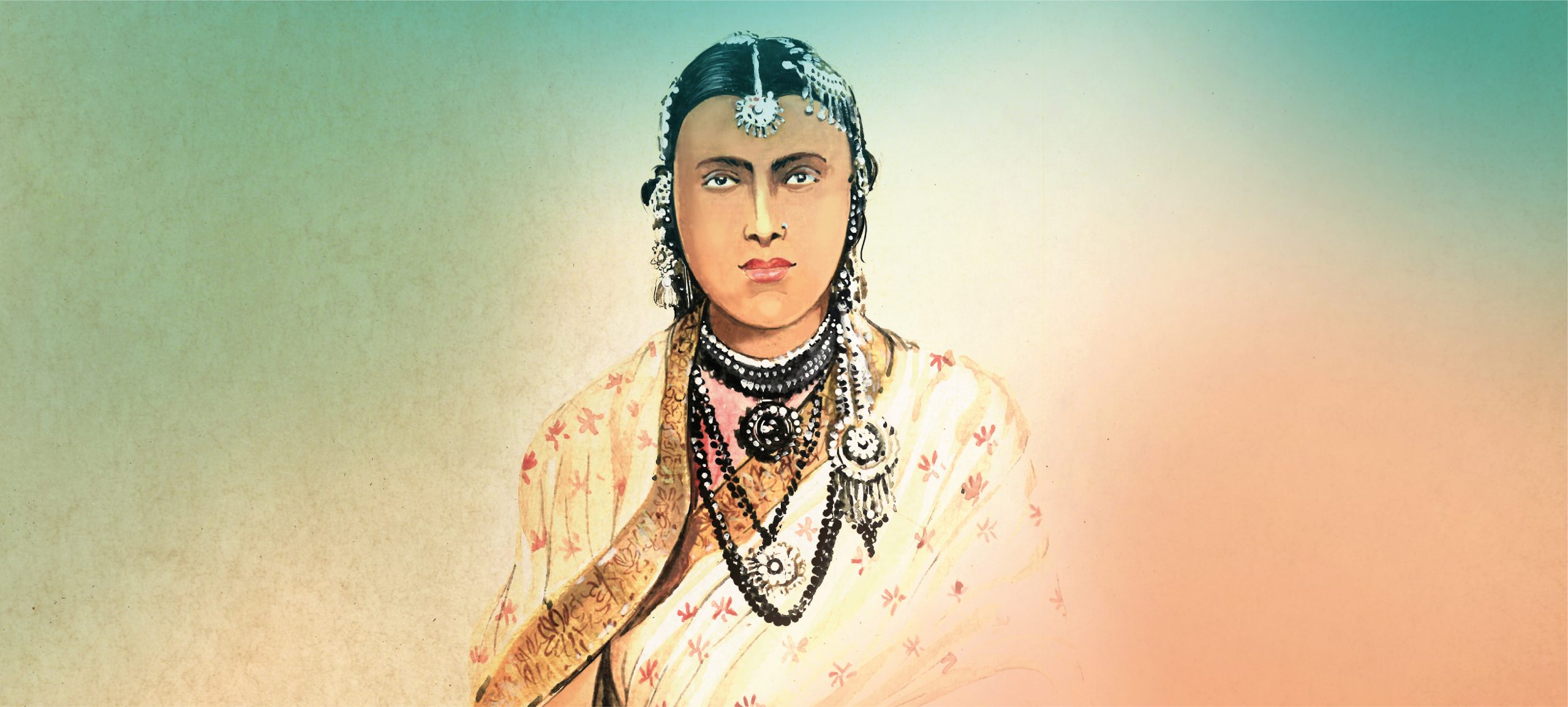
Based on the real-life story of Hindustani singer Janki Bai Ilahabadi (1880-1934), Requiem in Raga Janki by Neelum Saran Gaur is the beautifully rendered tale of one of India’s unknown gems.
Janki Bai Ilahabadi enthralled listeners wherever she performed, and counted as her fans maharajas and maharanis, poets and judges, nawabs and government officials-everyone. She was Janki ‘Chhappan Chhuri’, Janki of the fifty-six knives-attacked in her youth, she surviveed miraculously. Brought up in a nautch house, she rose to become the queen of Allahabad, her voice taking her from penury to palaces and royal durbars.
Here is an excerpt for her incredible story.
Her name lingers in certain locations still—Bai ka Bagh, Liddle Road, Rasoolabad. There is a godown on the Jawaharlal Nehru Road that is used to store Magh Mela tents and other equipment. There is a large field at the Police Lines. And a crumbling monument in the Kaladanda cemetery called Chhappan Chhuri ki Mazaar. I will tell you what I know of her and also what I guess and imagine.
Chhappan Chhuri was Janki’s nickname—she of the fifty-six knife gashes. I don’t think that that figure, fifty-six, is to be taken literally. She herself wrote somewhere that the number of stabs far exceeded the proverbial fifty-six which was a mere metaphor, an attractive alliteration endorsed by confusion and inaccurate reportage. With time it assumed other cloaks of innuendo so that ‘Chhappan Chhuri’ suggests someone armed with many weapons of assault, a woman of lethal witchery, of potentially heart-piercing beauty—such the devilry of words. But really she was none of these. She was just a woman who’d survived a murderous attack and who carried on her body dozens of scars which would become her signature of identity, conjoined to her name, Janki Bai.
There are three different accounts of the stabbings and no one knows which the authentic one was, and Janki’s own account is versions. In one account a crazed fan, spurned, worked his rage on her. But that does seem unlikely. She was barely eight, according to this account, when it is supposed to have happened and her protective mother could not have turned away a besotted lover from her mehfil simply because she hadn’t started entertaining audiences that way. That’s just one of those romantic stories that attach themselves to people as image enhancers for posterity. It seems that Janki herself initiated this account in the introduction to her diwan of verses, little realizing the transparent inconsistency of it. I can understand her reasons, though. She was a marked woman, quite literally, her skin torn in crumpled gullies of stitched together flesh, lines which the decades had failed to erase. That was the very first thing people saw, the disfigurement. It followed her everywhere. I can’t say if she ever really accepted it. It’s possible that it had sunk into the grain but it did not surface in her voice as any obvious ache. Nothing so trite. Rather, there was the powerful swell and soar of overcoming. But for purposes of history some subterfuge was in order, especially in times of circumspect and censored telling. And especially in situations of family shame. What is stated as an authentic truth is not so much a deliberate lie but a carefully composed face-saving fiction to answer the disquieting personal questions that are bound to crop up. Like all the plasters of lentil paste, soaked and buried in earthen pots, the unguents of sandalwood and turmeric and flour, the masks of clayof-Multan and honey and lime, the story doesn’t quite camouflage or convince.
But desperate efforts to conceal what has clearly remained unhealed must be respected. There was a second version in circulation, that she was attacked by a rival singer whom she had outsung at a durbar soirée organized by the maharani of Benaras.
There is even a name to this shadowy assailant—Raghunandan Dubey. She was eight years old, a singing prodigy, and she defeated a much older and far more established singer, and consequently she was the victim of a jealous attack. She did not die but underwent treatment generously paid for by the maharani, who took an interest in her. And when she recovered, her mother, afraid to stay on in Benaras with all its vicious intrigues and rivalries, brought her to Allahabad and they made a life for themselves quite different from the earlier one.
Let me first recount the concocted history, the version invented by Janki as preferable to what did happen. Let us place it all as Janki would want us to, the music chamber, the crowd of connoisseurs, the shy loveliness of the little songstress, who’d trained under Koidal Maharaj of Benaras himself, rendering ‘Jamuna tat Shyam khelein Hori’, and the man who came as just another one in the crowd, accepted the paan, acknowledged the itr and the proffered wine and lolled back on the bolster and listened intently. He wasn’t old and he wasn’t young. They noticed him the very first time when he produced two banknotes from his achkan pocket and beckoned to Janki. She had only just finished a song. Obligingly she slipped up to him, smiled and sank to her knees in a graceful swirl of silk and tinsel and a cascade of tinkling anklet chimes. He circled the notes around her head and tossed them into the ornate silver dish that lay alongside his bolster. They were all taken aback at the amount though they did not show it. Janki raised her jewelled fingertips to her brow in a salaam, a shy flush playing on her young face.

Prison Days – An Excerpt
AGYEYA (1911–87) was the pen name of S.H. Vatsyayan, one of the foremost figures of Hindi literature who was instrumental in pioneering modern trends in the realm of poetry, fiction, criticism and journalism. He was jailed as a revolutionary by the British authorities in the early 1930s – an experience that indelibly shaped his literary output.
Written between 1933 and 1938, Prison Days and Other Poems astutely captures the mood before Indian independence, when freedom was still merely a dream. The verses in Prison Days vividly conjure the horror and tedium of imprisonment. But Agyeya’s vision never descends into bleakness. Even quarantined, he is constantly aware of the pulse of life radiating outside the prison walls.
Here is an excerpt from the foreword of Prison Days and Other Poems, by Jawaharlal Nehru.
——————————————————————————————————————-
For many months I have had the manuscript of these poems with me, a constant reminder to me of my promise to write a few lines as a foreword. And yet I have found it strangely difficult to write this foreword, although I have done a great deal of writing on all manner of subjects during this period. I am no judge or critic of poetry and so I hesitated, but I love poetry and some of these little poems have appealed to me greatly. They have stuck in my mind and brought back to me memories of prison days and that strange and haunted world where men, whom society had branded as criminals and cast out of its pale, loved their narrow circumscribed lives. There were men there who had been involved in a killing, men known as dacoits and thieves, but all of us were bound together in that sorrow-laden world of prison, between us there existed a kinship of spirit. In the lonely chambers which were our cells, we walked up and down, five measured paces this way, and five measured paces back, and communed with sorrow. We found friendship and companionship and refuge in thought and on the magic carpet of fantasy we fled away from our surroundings. We lived double lives—the life of the prison, ordered and circumscribed, bolted and barred, and the free life of the spirit, with its dreams and visions, hopes and desires.
Something of that dreaming comes out in these poems, something of that yearning when the arms stretched out in search of what was not and clutched at empty space. Something also of the peace and contentment that we managed to extract even in our loneliness in that house of sorrow. There was always a tomorrow to hope for, a tomorrow which might bring deliverance.
And so I commend these poems and perhaps they might move others, as they have moved me.

You’re never too young to laugh: Benefits of Laughter Yoga for Children

Many people believe that when a child is born, he/she mirrors the natural human state before the realities of the world modify their behaviour and state of mind. If this were true, then humans would always be naturally joyful and healthy. But this is not the case. As we grow up, our ability to laugh and play decreases.
Earlier, children would spend their childhood playing and developing emotional skills, which we call emotional intelligence that resulted in laughter and happiness.
Sadly, children today are faced with several pressures. They are faced with many stressors and have forgotten how to laugh and play. Physical activity is restricted, new strains are imposed, adult behaviour is demanded at an early age and group play and child-to-child interaction has been replaced with electronic games and remote communication devices. What is needed is a system that is integrated into educational institutions, which helps them cope with stress and find time for play and laughter.
In his book, Laughter Yoga, Dr Madan Kataria talks about the importance of laughter yoga for children and it’s benefits. Let’s read them here.
- Developing Emotional Intelligence

- Improving Academic Performance

- Boosting Immune System
- Building Stamina
- Developing Confidence
- Enhancing Creativity


