




Shah-Jahan – ‘King of the World’ – ruled the Mughal Empire from 1628 to 1658. His is a complex and conflicted tale of romance and violence, of marital fidelity and fratricidal betrayal, of exquisite artistry and ugly intolerance. For the Mughal court was a world where brutally violent politics, internecine conflict, pedantic quadruplicate bureaucracy and high art all coexisted under the same royal roof. Before his usurpation by his own son, Shah-Jahan reigned for thirty-two years as an enlightened despot: a man seen variously as a virtuous supporter of Sharia law and a monster of moral depravity. Between these extremes lies the truth of the man.
In his book Shah Jahan: The Rise and Fall of The Mughal Emperor Fergus Nicoll has reconstructed this intriguing tale from contemporary biographies, edicts and correspondence, putting together an original portrait that challenges many established legends to bring the man and the emperor to life.
Here are some things you didn’t know about the Mughal emperor.
______________________________________________________________________


————————————————————————————————————————————————————-
Category: Uncategorized
Mrs Whatsit, Mrs Who & Mrs Which

Madeleine L’Engle lived in New York and wrote over 60 books for children, including A Wrinkle in Time, the first in her Time Quintet series and winner of the highly prestigious Newbury Medal. She died in 2007, aged 88. A Wrinkle in Time, is a classic sci-fi adventure where Charles Wallace Murry goes searching through a ‘wrinkle in time’ for his lost father, he finds himself on an evil planet where all life is enslaved by a huge pulsating brain known as ‘It’. How Charles, his sister Meg and friend Calvin find and free his father makes this a very special and exciting mixture of fantasy and science fiction, which all the way through is dominated by the funny and mysterious trio of guardian angels known as Mrs Whatsit, Mrs Who and Mrs Which.
Let’s get to know the quirky Mrs Whatsit, Mrs Who and Mrs Which a tad bit better.
______________________________________________________________________


______________________________________________________________________

The Story of TTK Prestige and its journey to becoming one of India’s Most Valuable Brands

While several companies have kneeled over when faced with adversities, TTK Prestige has reinvented itself and rose to greater heights. The turnaround story of the TTK Group is one of India’s greatest success stories. Here is T.T. Jagannathan’s journey as he turned TTK Prestige into a billion dollar company, from Sandhya Medonca’s book , Disrupt and Conquer: How TTK Prestige Became a Billion-Dollar Company.


Little Things – An Exclusive Excerpt
“You don’t need big things to happen. A little love, a little togetherness and a little happiness are all you need!”
Whether it is in dealing with a bad day at work, trying out a new restaurant of experiencing FOMO (Fear of Missing Out) on a weekend, Dhruv and Kavya are there for each other. Their lives are a series of simple yet charming incidents that makes for a heart-warming read.
Adapted from Dice Media’s immensely popular web series, Little Things is both delightful and entertaining book that offers a peek into the life of a young couple who knows how to find meaning in the ‘little things’.
Here is an exclusive excerpt from the book which is available across all bookstores next week.
———————-
‘You know, you shouldn’t wear kajal on Sundays,’ Dhruv told Kavya as they made their way to the gaming arcade at the mall.
‘The way you don’t shower on Sundays?’ Kavya pinched her nose. She had bathed, changed and even put on some make-up. Dhruv, on the other hand, looked as if he had just got out of bed.
‘Exactly! At least once a week we should know what we really look like without makeup and fancy clothes. I think it’s quite intense. It’s very naked, no? Being exactly who you are?’
Kavya refused to take the bait. She had lost interest already. Dhruv would keep getting into these long-winded, intense discussions about things that seemed inconsequential to her. Fortunately, she didn’t have to keep listening any more. They had reached the mall.
Dhruv stepped inside while Kavya got her bag checked at the security counter. Almost immediately, Dhruv was approached by a middle-aged man dressed formally, the mall’s security ID around his neck. As Kavya caught up, the man began to question Dhruv.
‘Excuse me, Sir. If you don’t mind me asking, where are you going?’
‘To play games.’
Kavya corrected him. ‘The arcade, Dhruv, it’s called an arcade.’ Dhruv wanted to tease Kavya about how sophisticated she pretended to be whenever she went out when he was interrupted.
‘You can’t go in, Sir,’ the man declared.
Annoyed, Dhruv asked, ‘Why? What’s the scene? Who the hell are you?’
‘Sir, I’m the manager of this mall. I’m sorry but I can’t let you go upstairs. You see, there’s a child’s birthday party going on in the arcade. And you have “In Cock We Trust” written on
your T-shirt.’
Dhruv glanced at his clothes. He was wearing his favourite Sriracha sauce T-shirt—a hot sauce and a piece of clothing he held very dear. The logo of this sauce was a rooster, which is why the caption ‘In Cock We Trust’.
‘Yeah, so?’ Dhruv didn’t get the point.
‘Sir, someone might file a complaint. It could become an issue. Please try and understand.’ Worry was evident on the manager’s face and in his voice.
‘This is my favourite chilli sauce brand’s T-shirt.’
‘Sriracha is the name of a sauce, Sir,’ Kavya said.
But their explanations and arguments were to no avail.
‘Ma’am, that doesn’t matter. If even one person complains, it can become an issue. Please try and understand. Plus, today is my first day at work. Please don’t put my job at risk. Please.’
‘Don’t talk rubbish, man! We want to play a few games. Just let us in.’ Dhruv was losing patience.
However, the manager remained adamant. ‘Sir, please try and understand. Someone could file a complaint. This could put my job at risk.’ He was almost blocking their way by now.
Seeing the man’s earnestness, Kavya gave in. She caught Dhruv’s eye and nudged him along, signalling that it was best they left. As a final act of defiance, Dhruv shouted, ‘How can you do this, yaar? This is unacceptable!’ He then turned to follow Kavya, who was already on her way out.
As Kavya and Dhruv left, they heard the manager calling out, ‘Thank you so much, Sir! Please come again tomorrow! I’m sorry!’
Dhruv was furious about what had just happened. ‘How can he throw us out like that?’
‘Come on, it’s not entirely his fault. You should have at least taken a shower, or changed your T-shirt.’
‘But today is a Sunday! And I don’t bathe on Sundays, you know that!’ Dhruv threw up his hands in exasperation.
It wasn’t that Dhruv looked shabby, but Kavya understood the manager’s point too. She asked, ‘So, what do you want to do now?’
‘I don’t know.’
Then, with a straight, serious face, he asked, ‘Do you just want to go home and have sex?’
Kavya burst out laughing. ‘At least don’t look this bored when you ask something like
this!’
Dhruv smirked. Then feeling disheartened again he asked, ‘Then what do you want to do?’
Kavya pondered for a bit before turning to him with an impish smile. ‘Do you want to go to a salon with me?’
She knew the answer would be no, but she took her shot anyway.
‘What? Why would I want to do that?’
‘Because then I can get a hair spa. And then when you play with my hair, it’ll be more fun!’
‘Yeah, right! When was the last time I did that? Have you seen your hair? If I get my hand anywhere near those wild curls, it’ll get lost.’
‘But you used to do that, and I miss it!’
Dhruv seemed surprised.
‘But then what about my match?’
‘Can’t you watch it on your mobile phone? Please!’
Seeing Dhruv hesitate, Kavya declared, ‘Okay, I’ve decided. We’re going to the salon. You can watch the match on your phone.’
‘No, yaar, it’s not the same thing! It isn’t fun watching it on the mobile phone. See, Kavvu, there are fifty-two Sundays in a year. The chances of Liverpool playing—’
‘—I know, I know. The chances of Liverpool playing on a Sunday are a mere 8.8 per cent.’
‘Yeah . . .’
‘But it’s a Sunday and I really want to do something!
By now, Dhruv wore an expression that Kavya knew very well. It was the face he made when he was almost convinced but was hanging on to the last straw of resistance. With puppydog eyes, Kavya squealed, ‘Please!’
She knew Dhruv couldn’t say no to that. As his shoulders slumped in a gesture of surrender, Kavya smiled triumphantly. She took his hand and they started walking towards the salon.
This girl takes too much advantage of her cuteness, thought Dhruv as he dragged his feet towards the salon.

Get to know em: Meg & Charles from A Wrinkle in Time
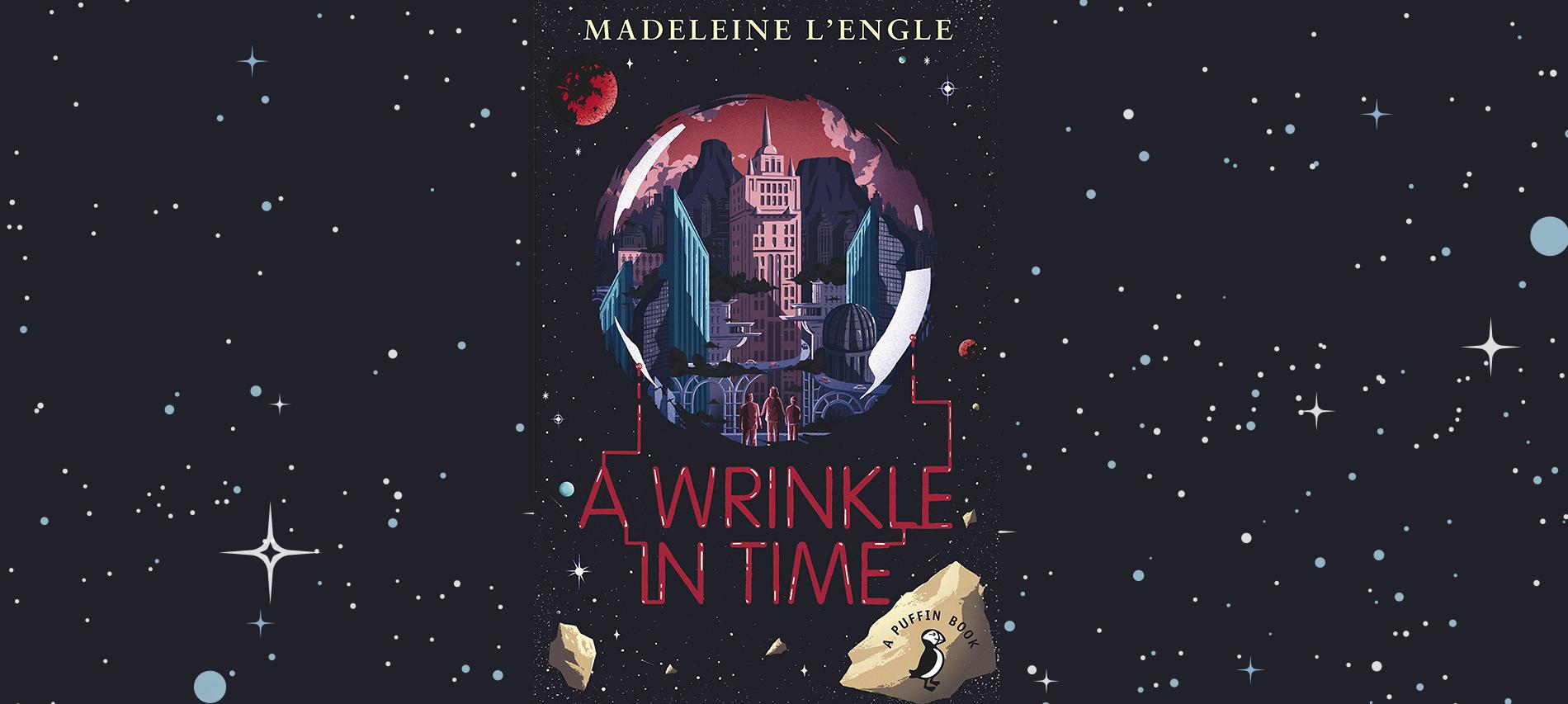
Madeleine L’Engle (1918–2007) was born in New York City and attended Smith College. She wrote more than 60 books, the most famous of which is A Wrinkle In Time(1962), winner of the Newbery Award in 1963. A Wrinkle in Time, is the story of the adventures in space and time of Meg, Charles Wallace, and Calvin O’Keefe (athlete, student, and one of the most popular boys in high school). They are in search of Meg’s father, a scientist who disappeared while engaged in secret work for the government on the tesseract problem. This book is soon to be a movie from Disney, directed by Ava DuVernay, starring Storm Reid, Oprah Winfrey, Reese Witherspoon and Mindy Kaling.
In this blog, we get to know the chief protagonists: Meg and Charles.


Things You Didn’t Know About K.M. Munshi

K.M. Munshi, the author of The Lord and Master of Gujarat, was a freedom fighter, politician, lawyer and the founder of Bharatiya Vidya Bhavan. He wrote numerous novels, dramas and non-fiction works in Gujarati and several works in English.
He joined the Swaraj party briefly but returned to Indian National Congress at the time of the launch of Salt Satyagraha at Gandhi’s behest.
Here are seven more things you didn’t know about him.


7 Things you Didn’t know about Prestige’s Pressure Cooker

Did you know that India makes 15 million pressure cookers each year, and TTK Prestige accounts for a staggering 5 million of them? But achieving this feat for the TTK group wasn’t easy. The success of prestige pressure cooker follows an extraordinary journey where Prestige fought off bankruptcy and rose to become a highly profitable entity. The book Disrupt and Conquer: How TTK Prestige Became A Billion Dollar Company reveals how TTK Prestige set about turning its fortunes around in stunning comebacks, time and again.
Here are 7 things that you should know about the all-time staple of the Indian kitchen – The Prestige Cooker.


A Walk through Hasan’s World in A Day in the Life
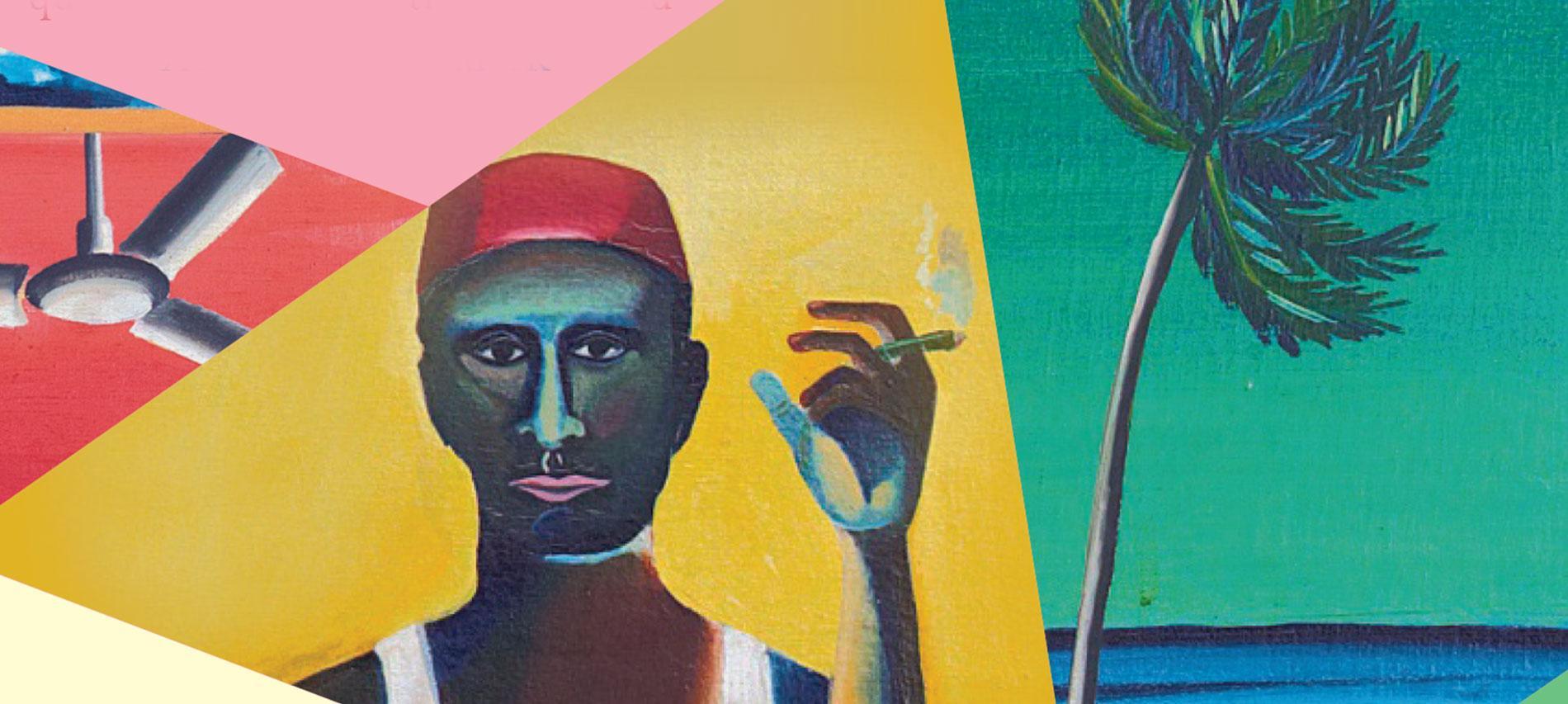
Anjum Hasan is the author of three novels-The Cosmopolitans (shortlisted for the Crossword Book Award), Neti Neti (shortlisted for the Hindu Best Fiction Award) and Lunatic in My Head (shortlisted for the Crossword Book Award)-as well as a book of short stories. Her latest, A Day in the Life, has quixotic nonconformists in small towns and young newly-weds trying to keep up with the times; a forlorn retiree helpless in the face of contemporary anger and a middle-class woman’s bond with her maid. With fourteen well-crafted stories, Hasan gives us a sense of the daily life of a wide cast of characters.
Let’s walk through some of her stories.


Thin Dividing Line by Paranjoy Guja Thakurta & Shinzani Jain – An Excerpt

The book, Thin Dividing Line: India, Mauritius and Global Illicit financial flows talks about scandals surrounding the IPL, international companies that came under the scanner for tax evasion, black money, havala and an international criminal industry employing bankers, lawyers and corrupt bureaucrats who run an economy parallel to the world economy.
Let’s read an excerpt from the book here:
—————————————————————————————————————————————————–
The use of tax havens to not just avoid payment of taxes but evade them as well has attracted considerable attention across the world and in India. Governments levy taxes for a variety of purposes which include providing a range of services, goods and infrastructural facilities to their peoples. Tax havens, also known as low-tax or no-tax jurisdictions, enable wealthy individuals and corporate entities controlled by them to not pay taxes, legally and illegally. There is a thin dividing line between tax avoidance (often described as ‘good’ tax planning by accountants, analysts and financial consultants) and tax evasion (including money laundering and moving funds across multiple jurisdictions at high velocity, often described as round-tripping and treaty shopping). In fact, the dividing line is so thin as to be virtually non-existent.
In recent times, the governments of many developed and developing countries have been seeking to discourage the use of tax havens. One of the most talked-about such moves is the Base Erosion and Profit Shifting (BEPS) initiative of the Organization for Economic Cooperation and Development (OECD). The
OECD is a grouping of some of the richest countries in the world. The countries that had at one time actively encouraged, or even turned a blind eye towards the use of tax havens to avoid and evade payment of taxes, have today veered round to the view that such jurisdictions not only deprive governments of revenues, but also connive in a host of illicit activities. Tax havens have been used by the rich and the powerful to benefit themselves at the expense of the poor and the underprivileged, thereby widening inequalities within countries and on occasion, across nation states as well.
This book looks at the India-Mauritius Double-Taxation Avoidance Agreement (DTAA) in a global context of growing illicit financial flows. As a case study, the India-Mauritius agreement is extremely important. Roughly 40 per cent of the total inflows of foreign money into India (in the form of foreign direct investments, as well as investments in stocks, shares and other financial instruments) have been routed through this small clutch of islands in the Indian Ocean since the early 1990s. But why has Mauritius been favoured by foreign investors over more than ninety other tax havens to route their funds to India?
Two-thirds of the population of Mauritius is people of Indian origin. The country is strategically located as Mauritius is not only the easternmost point of the continent of Africa, but the westernmost point of Asia as well. In May 2016, the governments of India and Mauritius revised the tax avoidance agreement that had been in force since 1984 so as to minimize its misuse for tax evasion and money laundering. Similar amendments have been made in India’s treaties, with Cyprus and Singapore being contemplated.
The Indian government has also sought to discourage the use of overseas derivative instruments including what are called participatory notes (P-Notes) that have been used to conceal identities of those investing in the country’s financial markets. The use of P-Notes has enabled less-than-honest ‘beneficial owners’ of companies to work outside the ambit of the regulatory authorities. These steps are part of a larger effort by the government to curb the use of black money in the economy. Even as these moves are to be welcomed, they clearly constitute a case of ‘better late than never’. For decades, the so-called Mauritius Route was consciously and deliberately kept open to assist a host of dubious businesspersons, their political mentors as well as their well-wishers in the bureaucracy, and collaborators across the globe. Everyone knew exactly what was going on, but chose to look the other way.
The Mauritius Route is an integral part of the infamous nexus between business and politics in India that has fuelled the country’s political economy, and contributed enormously to furthering crony capitalism in the world’s largest democracy.
—————————————————————————————————————————————————–

Quotes from Kalidasa’s Ritusamharam That Will Make You Fall in Love with All Seasons
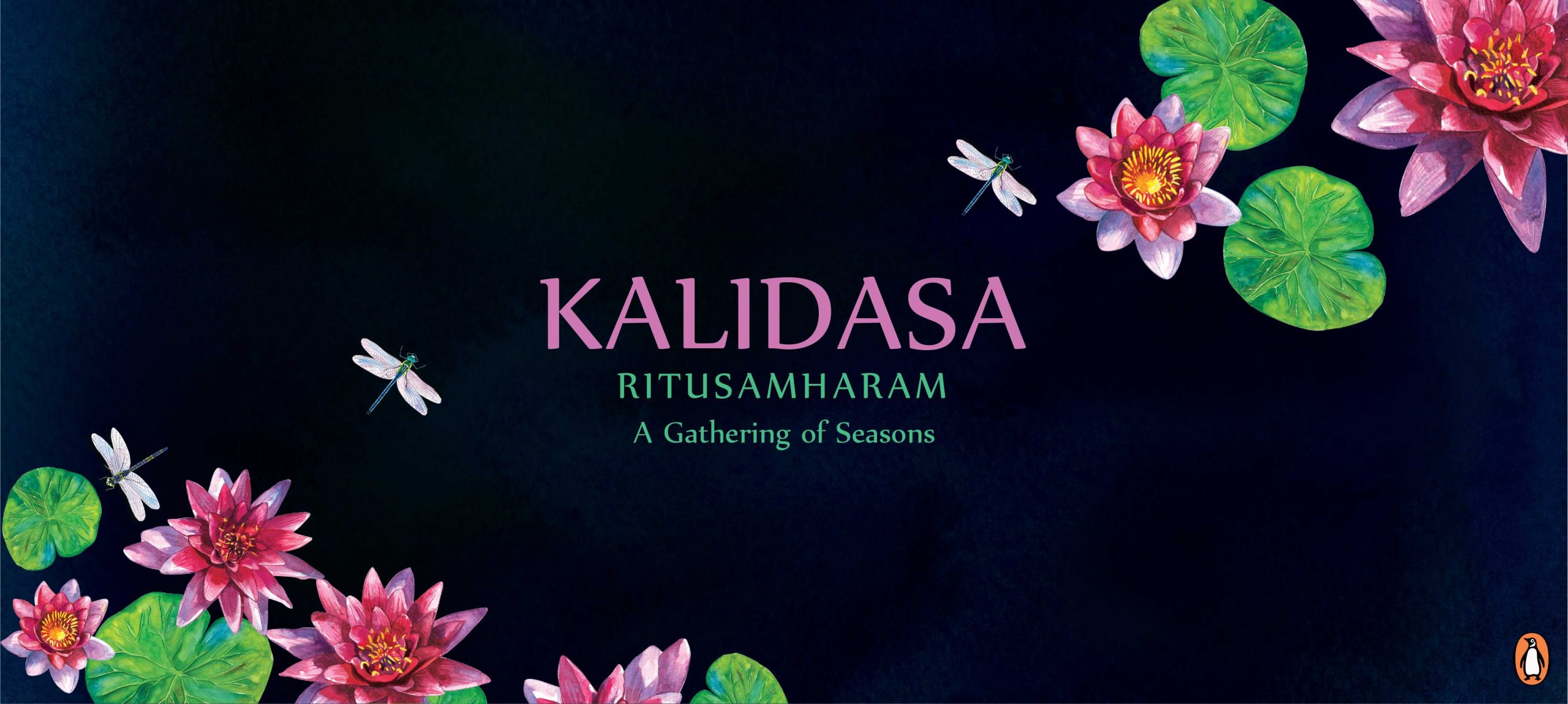
Perhaps the most lively and exuberant of Kalidasa’s extant works, Ritusamharan is a glorious ode to nature’s bounty and the enduring emotional response it evokes in mankind as a whole. It is perhaps the simplest and lightest of the great poet’s seven extant works, which include two each of epic and lyrical poetry, and three dramatic plays.
Ritusamharan is a collection of subhashita, or ‘well said’ poetic epigrams about the different seasons according to which ancient Indians divided the whole year, with a supple and spirited translation by A.N.D. Haksar.
Here are six poems that are sure to make you fall in love with all seasons.


