



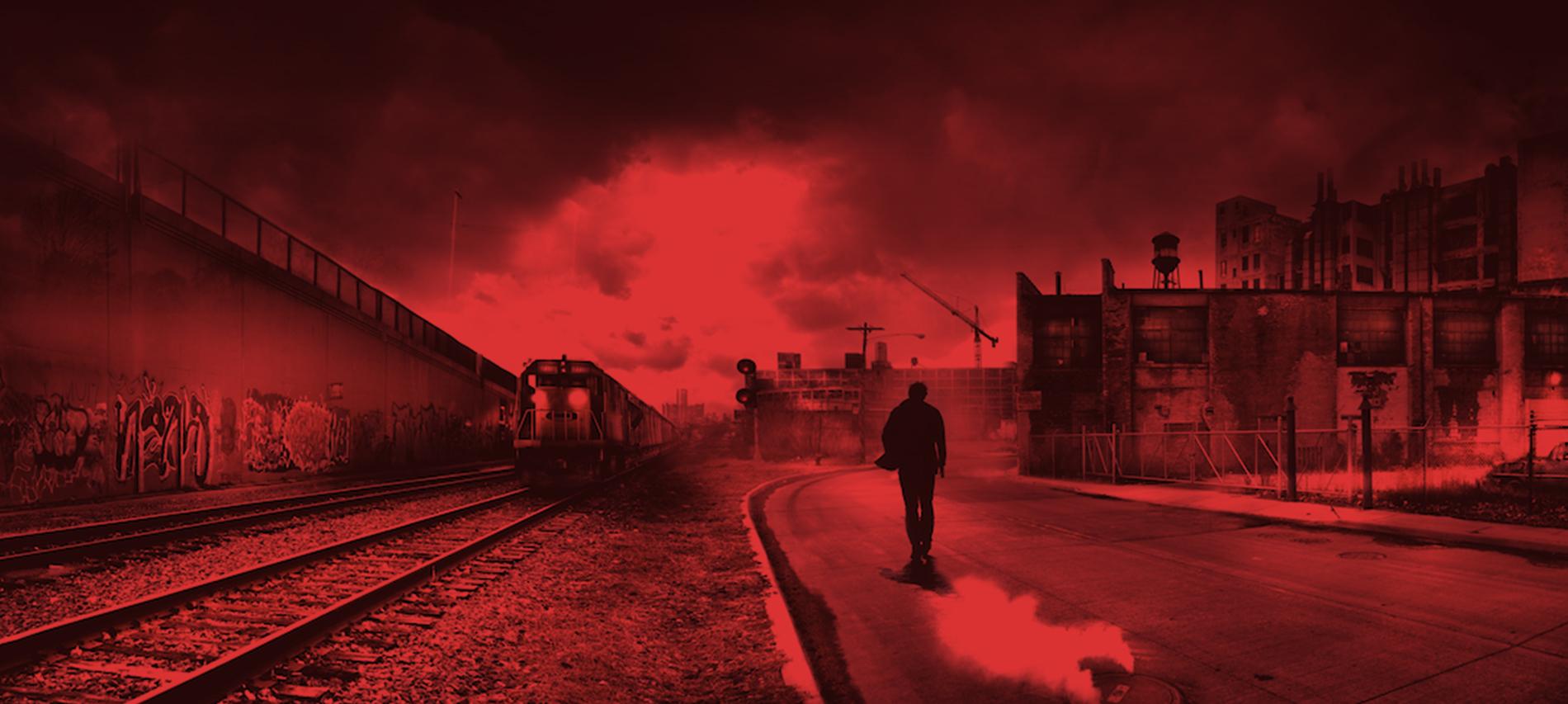
When a drug bust turns into a bloodbath, it’s up to inspector Macbeth and his team to clean up the mess. He’s rewarded for his success. Power. Money. Respect. They’re all within reach. Plagued by hallucinations and paranoia, Macbeth starts to unravel. He’s convinced he won’t get what is rightfully his.
Here is an excerpt from Jo Nesbo’s new thriller, Macbeth
—————————————————————————————————————————————————–
The man hadn’t shown himself for months, but only one person owned that helmet and the red Indian Chief motorbike. Rumour had it the bike was one of fifty the New York Police Department had manufactured in total secrecy in 1955. The steel of the curved scabbard attached to its side shone.
Sweno.
Some claimed he was dead, others that he had fled the country, that he had changed his identity, cut off his blond plaits and was sitting on a terrazza in Argentina enjoying his old age and pencil-thin cigarillos.
But here he was. The leader of the gang and the cop-killer who, along with his sergeant, had started up the Norse Riders some time after the Second World War. They had picked rootless young men, most of them from dilapidated factory-worker houses along the sewage-fouled river, and trained them, disciplined them, brainwashed them until they were an army of fearless soldiers Sweno could use for his own purposes. To gain control of the town, to monopolise the growing dope market. And for a while it had looked as if Sweno would succeed, certainly Kenneth and police HQ hadn’t stopped him; rather the opposite, Sweno had bought in all the help he needed. It was the competition. Hecate’s home-made dope, brew, was much better, cheaper and always readily available on the market. But if the anonymous tip-off Duff had received was right, this consignment was big enough to solve the Norse Riders’ supply problems for some time. Duff had hoped, but not quite believed, what he read in the brief typewritten lines addressed to him was true. It was simply too much of a gift horse. The sort of gift that – if handled correctly – could send the head of the Narco Unit further up the ladder. Chief Commissioner Duncan still hadn’t filled all the important positions at police HQ with his own people. There was, for example, the Gang Unit, where Kenneth’s old rogue Inspector Cawdor had managed to hang on to his seat as they still had no concrete evidence of corruption, but that could only be a question of time. And Duff was one of Duncan’s men. When there were signs that Duncan might be appointed chief commissioner Duff had rung him in Capitol and clearly, if somewhat pompously, stated that if the council didn’t make Duncan the new commissioner, and chose one of Kenneth’s henchmen instead, Duff would resign. It was not beyond the bounds of possibility that Duncan had suspected a personal motive behind this unconditional declaration of loyalty, but so what? Duff had a genuine desire to support Duncan’s plan for an honest police force that primarily served the people, he really did. But he also wanted an office at HQ as close to heaven as possible. Who wouldn’t? And he wanted to cut off the head of the man out there.
Sweno.
He was the means and the end.
Duff looked at his watch. The time tallied with what was in the letter, to the minute. He rested the tips of his fingers on the inside of his wrist. To feel his pulse. He was no longer hoping, he was about to become a believer.
‘Are there many of them, Duff?’ a voice whispered.
‘More than enough for great honour, Seyton. And one of them’s so big, when he falls, it’ll be heard all over the country.’
Duff cleaned the condensation off the window. Ten nervous, sweaty police officers in a small room. Men who didn’t usually get this type of assignment. As head of the Narco Unit it was Duff alone who had taken the decision not to show the letter to other officers; he was using only men from his unit for this raid. The tradition of corruption and leaks was too long for him to risk it. At least that is what he would tell Duncan if asked. But there wouldn’t be much cavilling. Not if they could seize the drugs and catch thirteen Norse Riders red-handed.
Thirteen, yes. Not fourteen. One of them would be left lying on the battlefield. If the chance came along.
—————————————————————————————————————————————————-

Category: Uncategorized
Rajesh Khanna: Enter into the Life of India’s First Superstar
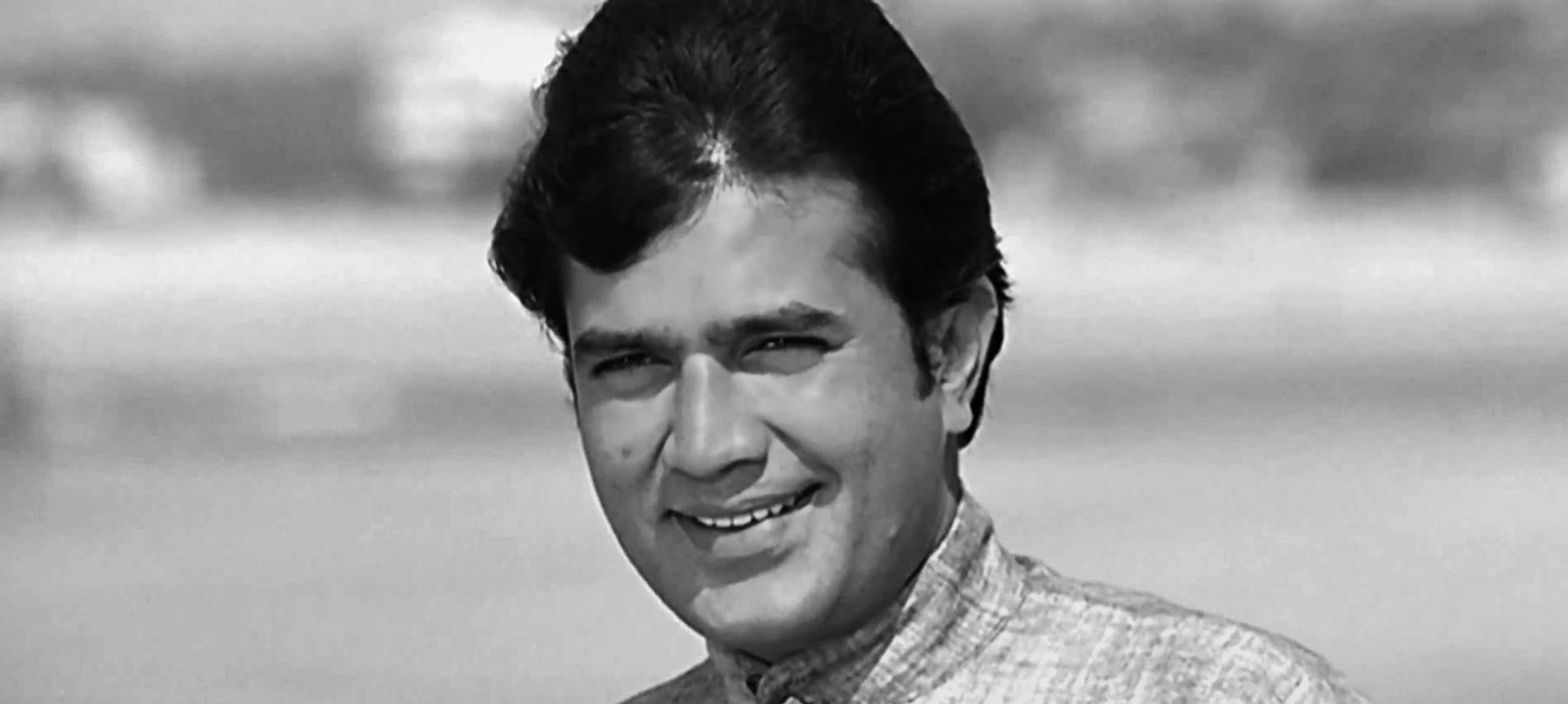
In the 1970s, Rajesh Khanna achieved the kind of fame that no film star had ever experienced before-or has since. The actor is hailed as India’s first superstar after 15 consecutive solo superhits between 1969 and 1972.
Rajesh Khanna: The Untold Story of India’s First Superstar is a riveting biography by award winning journalist Yasser Usman in which he examines Rajesh Khanna’s dramatic, colourful life in its entirety. What emerges is a tantalizingly written, meticulously researched chronicle of a fascinating and mercurial man-one who was both loved and feared by those closest to him. It is a story that encapsulates the glittering, seductive, cut-throat world of Bollywood at its best and its worst.
In it he includes little-known facts about his childhood – back when he was Jatin Khanna and years before he became the superstar Rajesh Khanna. Here are five things you should know about little Jatin Khanna.


—————————————————————————————————————————————————

7 Quotes That Show Different Constraints Shashi Deshpande’s Protagonists Had To Overcome
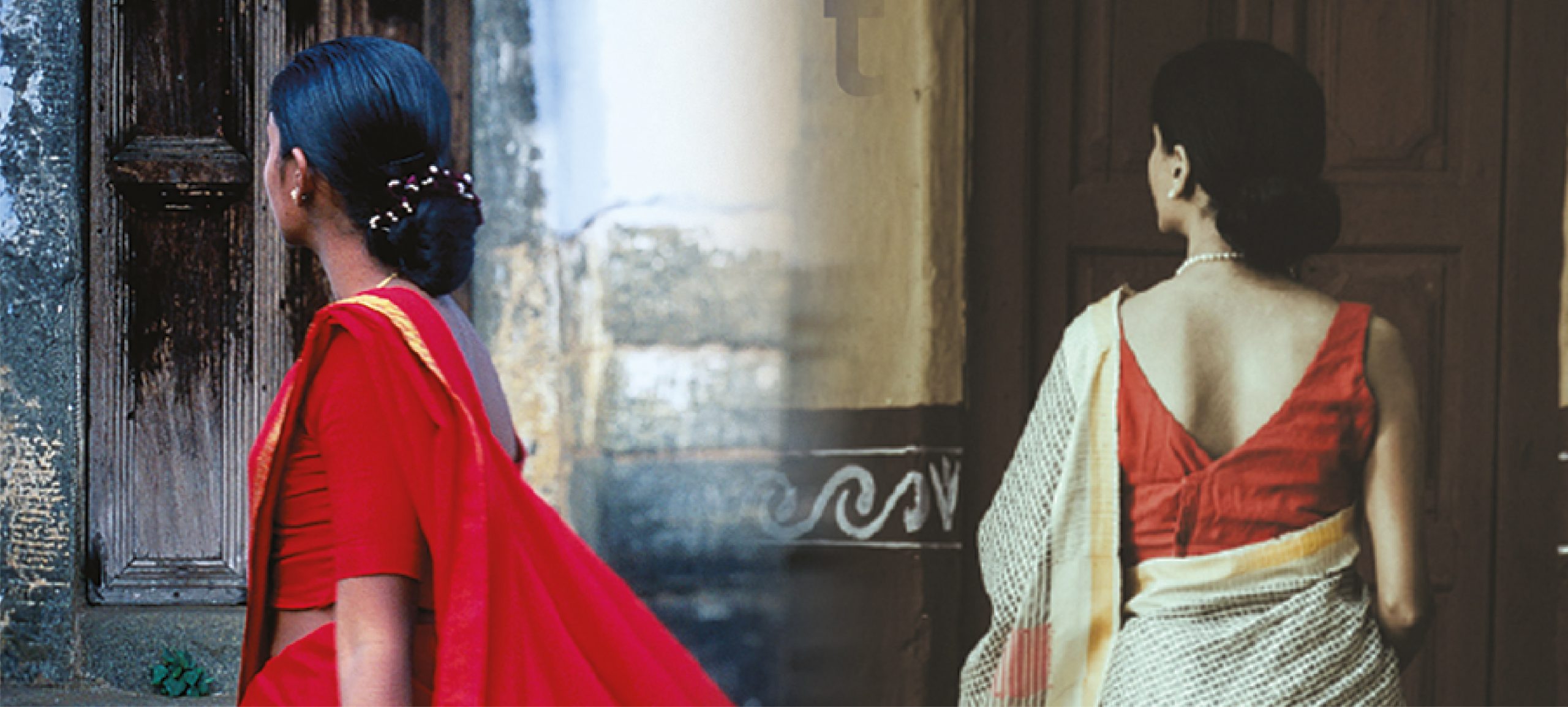
Shashi Deshpande is the author of eleven novels, two novellas, and four books for children. Her short stories have gone into a number of collections and various anthologies, and her essays have been collected in a book, Writing from the Margin. Deshpande received the Sahitya Akademi Award for her novel That Long Silence.
Here are 7 quotes from Deshpande’s books- That Long Silence and The Dark Holds No Terrors that highlight the different struggles her protagonists experience:


Know the Creator of the Tintin series, Hergé

Hergé, most popularly known as the creator of the Tintin series is regarded as one of the most important and influential comic creators in history. Tintin’s 23 album titles have been translated into every language, and is one of the most successful European comic magazines of all time. Other series by him are Quick et Flupke and Jo, Zette et Jocko‘.
The Tintin series first appeared in French on 10 January 1929 in Le Petit Vingtième (The Little Twentieth), a youth supplement to the Belgian newspaper Le Vingtième Siècle (The Twentieth Century). Soon the series saw themselves as serialized strips published in Belgium’s leading newspaper and eventually spun into a successful Tintin magazine.
Here are six facts about the illustrator of this comic, Hergé.
__________________________________________________________________________


__________________________________________________________________________

5 Reasons Why You Must Read Jo Nesbo’s Macbeth

“He’s the best cop they’ve got. He’s also an ex-drug addict with a troubled past.”
Jo Nesbo is one of the world’s leading crime writers. His new book, Macbeth is inspired by Shakespeare’s original, which Nesbo sees as ‘a thriller about the struggle for power, set both in a gloomy, stormy, noir-like setting and in a dark, paranoid human mind.’
In his new thriller, a drug bust turns into a bloodbath and it’s up to Inspector Macbeth and his team to clean up the mess. He’s rewarded for his success – Power, Money and Respect are all within his reach. But a man like him won’t get to the top.
You’ll have to read it to find out why! In the meantime, here are 5 more reasons to pick up this book.
- The story includes a police unit with the new chief commissioner- Duncan, determined to fight against the corrupt system that has ruled the town for the past twenty-five years…

- In a town where two drug lords – Sweno and Hecate are fighting for Monopoly.
- We meet Inspector Duff, head of the Narco Unit, whose goal is to reach the top…
- And Inspector Macbeth, who is good at what he does but his social standing won’t allow him to get a higher management post. As Inspector Lennox, leader of the Anti-Corruption Unit tells Duncan,
- The story is fast-paced and gripping and is action packed with enough car chases and crossfire.——————————————————————————————————————————————-


 ——————————————————————————————————————————————-
The Hate U Give: 5 Things You didn’t Know About Starr

“What’s the point of having a voice if you’re going to be silent?”
Sixteen-year-old Starr Carter moves between two worlds: the poor neighborhood where she lives and the fancy suburban prep school she attends. The uneasy balance between these worlds is shattered when Starr witnesses the fatal shooting of her childhood best friend Khalil at the hands of a police officer. Khalil was unarmed. But what Starr does—or does not—say could upend her community. It could also endanger her life.
Here are 5 things you didn’t know about Starr, from Angie Thomas’s book The Hate U Give:


Things you didn’t know about Ranjit Hoskote

Ranjit Hoskote, one of the best contemporary poets popular for his use of finely wrought, luminous and sensuous metaphors is also an art theorist, independent curator and was previously an assistant editor with The Hindu. He has been an independent writer and curator for 11 years. He has published five collections of poetry. His latest collection, Jonahwhale, is a set of brilliant annotations on the giant landmass of history, captured in three movements.
Here are 6 things you didn’t know about the poet.
————————————-


Aren’t these fascinating?

What’s In Store for Our Young Readers this Summer?

Hello, we’d like to introduce you to some new people and take you to some exciting places! First we meet the little girl with an uncanny sense of her own destiny who grew up to be the brave queen of Jhansi. Another little girl named Rahi amuses us with her story as she learns to deal with people who refuse to help her with her troubles i.e. needing to pee.
We then embark upon a vivid journey to learn about the origins and evolution of art in India, and another to explore the different states in India with our dear friends Mishki, Pushka and Daadu Dolma.
Travel back in time with us to meet interesting people like the Mughal princess Jahanara Begum and Raja Ram Mohan Roy and join Aditya and Anjali in a poignant and moving story of bereavement and healing.
Puffin brings the following exciting books for our young readers. Which one will you grab first?
————————————


6 Things you didn’t know about Andaleeb Wajid

Andaleeb Wajid is a Bangalore based writer and has published fifteen novels, of which three are e-books. She is the author of My Brother’s Wedding, The Crunch Factor, More than Just Biryani, The Tamanna Trilogy, Asmara’s Summer and When She Went Away.
Her most recent book, Twenty-nine going on Thirty is about four friends who are brought together by family drama, boy trouble, and of course, their fast approaching thirtieth birthdays.
Listed below are five things you didn’t know about Andaleeb Wajid.
—————————————–


It’s Time to Leaf Through Our April BookShelf

April 14th celebrated as Ambedkar Jayanti – an annual festival which commemorates the memory of the national leader, Dr. B.R. Ambedkar who was a champion for Dalit rights and an icon for the downtrodden.
Here is a collection of books that highlight Caste and its injustices that formulated many of the past & present deep-rooted fissures in the country.
——————————-
Ambedkar: Towards an Enlightened India by Gail Omvedt  In this concise biography, Gail Omvedt, presents Ambedkar’s struggle to be educated in order to overcome the stigma of untouchability. The biography puts the man and his times in context by exploring Ambedkar as —a scholar, lawyer, an economist, religious leader and an intellectual. The book aims to explain to a new generation of readers how Ambedkar became a national leader and an icon of the dispossessed.
Interrogating Caste : Understanding Hierarchy and Difference in Indian society by Dipankar Gupta
 The caste system has conventionally been perceived by scholars as a hierarchy based on the opposition of purity and pollution. Challenging this position, leading sociologist Dipankar Gupta argues that any notion of a fixed hierarchy is arbitrary. It is, in fact, the mechanics of power—economic and political, that set the ground rules for caste behaviour. Provocative and finely argued, Interrogating Caste is a remarkable work that provides fresh insight into caste as a social, political and economic reality.
Unseen: The Truth about India’s Manual Scavengers by Reenu Talwar, Vandana Singh
 In many parts of the country, the inhuman practice of manual scavenging continues to thrive in spite of a law banning it. Moreover, the people forced to carry out this degrading work remain invisible to the rest of us, pushed to the margins of society without any recourse to help or hope. Award-winning journalist Bhasha Singh turns the spotlight on this ignored community. In Unseen, based on over a decade of research, she unveils the horrific plight of manual scavengers across eleven states in the country.
Caste: Its 20th Century Avatar by MN Srinivas
 As India attempts to modernize and arrive into the twenty-first century, the issue of caste takes an overwhelming importance. The essays in this volume, each authored by an expert on the subject, include a stimulating assessment of the role of women in perpetuating caste; incisive analyses of the relationship between caste and the economy and between caste and Hinduism and other related topics.
Coolie and Untouchable by Mulk Raj Anand

 Coolie portrays the picaresque adventures of Munoo, a young boy forced to leave his village to fend for himself and discover the world. His journey takes him far from home to cities like Bombay and Shimla, sweating as servant, factory-worker and rickshaw driver. It is a fight for survival that illuminates, with raw immediacy, the grim fate of the masses in pre-Partition India.
In Untouchable, Bakha is a young man, proud and even attractive, yet nonetheless he is an outcast in India’s caste system: an Untouchable. This novel describes a day in the life of Bakha, sweeper and toilet-cleaner, as he searches for a meaning to the tragic existence he has been born into – and comes to an unexpected conclusion.
Mulk Raj Anand is among the twentieth century’s finest Indian novelists writing in English.
The Taming of Women by P. Sivakami

As Anandhayi gives birth to her fifth child downstairs, upstairs her husband Periyannan sleeps with a woman he has summoned to spend the night with him. Women of many generations live in that house at the end of the road and the tyrannical and charismatic Periyannan is always trying to bring them under his control. Voracious in his appetite, power and sex, Periyannan is a domineering antagonist to the tender but tenacious Anandhayi. The book is guaranteed to leave the reader simultaneously amused and devastated.
Dalit Millionaires: 15 Inspiring Stories by Milind Khandekar Reenu Talwar, Vandana Singh

The book documents the lives of fifteen people who never imagined affording one meal a day, they never dreamed of feeling the leather seats in a car and today all of them stand as sole owners of a fortune that will last for the next five generations. Milind Khandekar is determined to inspire people to pursue their way to riches. According to Khandekar, you don’t need ancestral properties, famous forefathers, family heirlooms or to be an heir to a million dollar worth fortune to be successful. All you need to do is dream to make it big.
Defying the Odds : The Rise of Dalit Entrepreneurs by Devesh Kapur, D. Shyam Babu & Chandra Bhan Prasad
 Defying the Odds profiles the phenomenal rise of twenty Dalit entrepreneurs, the few who through a combination of grit, ambition, hustle—and some luck—have managed to break through social, economic and practical barriers. These inspiring stories capture the difficult circumstances Dalits found themselves in as well as their extraordinary steadfastness, while also bringing light to the possibilities of entrepreneurship as a tool of social empowerment.
Behenji (on Mayawati) by Ajoy Bose
 Mayawati has changed the face of politics in India as a woman belonging to the most crushed community known to mankind, built her way through the heat and dust of elections to rule two hundred million people. Not only has she been the Chief Minister four times, but she has done so by overturning the established electoral traditions of a state that virtually invented modern Indian politics. With her in-your-face political style, unabashed display of accumulated wealth, she is, perhaps, the most enigmatic Indian politician for decades.
Kanshiram: Leader of Dalits by Badri Narayan

Venerated as a dalit icon, Kanshiram is regarded as being next to Ambedkar today. This book illuminates Kanshiram’s journey, from his early years in rural Punjab to his launching BAMCEF, an umbrella organization uniting backward castes, scheduled tribes, dalits and minorities, and eventually the Bahujan Samaj Party in 1984. Narayan highlights the turn Kanshiram gave to Ambedkar s ideas. Unlike Ambedkar, who sought its annihilation, Kanshiram saw caste as a basis for forging a dalit identity and a source of political empowerment. Authoritative and insightful, this is a rare portrait of the man who changed the face of dalit society and, indeed, of Indian politics.
Nitish Kumar and the Rise of Bihar by Arun Sinha

The conventional wisdom in Bihar‘s political circles was that development did not win votes. Nitish Kumar challenged that assumption and changed the face of the state. Veteran journalist Arun Sinha tells the story of Nitish Kumar’s rise against the larger canvas of social and political upheaval in Bihar, exploring the emergent desire for equality that drove progressive movements from late 1960s onwards and brought about a regime change by the 1990s. After an initial association with Lalu Prasad Yadav, Nitish Kumar rejected identity politics, recognizing that Bihar had to transcend caste if it was to grow.
Savaging the Civilized by Ram Guha
 Verrier Elwin (1902-1964) was unquestionably the most influential non-official Englishman to live and work in twentieth-century India. Savaging the Civilized is both biography and history, an exploration through Elwin’s life of some of the great debates of the twentieth century: the future of development, cultural assimilation versus cultural difference, the political practice of postcolonial as opposed to colonial governments, and the moral practice of writers and intellectuals.
So, which book has made it to your reading list?
