




Tamal Bandyopadhyay is one of the most respected business journalists in India. He has had a ringside view of the major changes that came through in the Indian finance and banking sector in the last two decades. In his book ‘From Lehman to Demonetization’ he tells the epic story of banking in India in the last decade. The book features essays and interviews with stalwarts from the sector like Raghuram Rajan, Arundhati Bhattacharya, and many others.
Here is an excerpt from the book.
On the day US investment bank Lehman Brothers Holdings Inc. filed for bankruptcy, the chief executive officers of six large commercial banks assembled at a south Mumbai hotel to debate a topic close to every foreign banker’s heart: ‘Should India open up the financial sector?’ Y.V. Reddy, former RBI governor, widely known for his views against the opening up of the sector, had retired just ten days before the collapse.
His successor, D. Subbarao, former finance secretary, was to be the chief guest at the conference but he excused himself because he could not have expressed his views on the subject in his new role as RBI governor. Owing to the newsflash that morning, the mood at the conference was sombre and even the traditionally aggressive foreign bankers, who always blame the Indian banking regulator for keeping the doors closed, were restrained in their arguments. The beer tasted flat that evening, the food stale, and a few panellists, including ICICI Bank Ltd’s then managing director and CEO, K.V. Kamath, did not wait for the dinner and left immediately after the discussion was over.
The exposure of ICICI Bank, India’s largest private-sector lender, to Lehman Brothers was $83 million, less than 0.1 per cent of its consolidated balance sheet, but investors rushed to sell the bank’s stock and pulled it down by 15 per cent in the next few days as panic gripped the market. A few other banks, including State Bank of India (SBI) and Punjab National Bank, two large public-sector banks, had a small exposure to Lehman Brothers in various forms.
At a meeting with the executives of Lehman Brothers’ Indian arm and local banks, V. Leeladhar, then deputy governor of RBI, told the US investment bank to close all transactions with Indian banks within twenty-four hours. Lehman Brothers did so in forty-eight hours. It was running a non-banking financial company in India, but its entire capital was invested in government bonds and bank deposits; so the money was safe. Its broking arm, Lehman Brothers Securities Pvt. Ltd, housed in Ceejay House—hemmed in between the Arabian Sea and the glass-walled Atria shopping mall on Annie Besant Road in midtown Mumbai, the most expensive office space in the city—was taken over by Japan’s Nomura Holdings Inc. In October, Nomura also took over Lehman Brothers’ back office operations, which employed 2200 people, in Powai, a western suburb of Mumbai.
The panic did not last long. The global financial system had plunged into an unprecedented liquidity crunch after the Lehman collapse but India shrugged it off relatively easily. The GDP growth dropped to 3.5 per cent in the March 2009 quarter, but in the very next quarter, it rose to 5.9 per cent and by the September 2009 quarter, it bounced back to 9.3 per cent.
We all celebrated how resilient the Indian banking system was. A cautious and conservative regulator ring-fenced the Indian banks by not allowing them to take excessive risk.
However, we celebrated too early. The monetary policy and fiscal stimulus that followed after the collapse to ward off its impact led to a V-shaped recovery at that point, but it didn’t last long; seeds were sown for high inflation and bad assets. It took years to bottle the inflation genie but we are far from sorting out the problem of bad assets.
The first rate cut was announced on 20 October 2008, more than a month after the Lehman collapse and in the next six months, the policy rate was brought down from 9 per cent to 3.25 per cent (lower than the savings bank rate which was an administered rate then); the cash reserve ratio or the portion of deposits that banks keep with the RBI from 9 per cent to 5 per cent; and the floor for banks’ government bond holding from 25 to 24 per cent. Collectively, the cut in the reserve requirement and the opening of new refinance windows pumped Rs 5.6 trillion into the Indian financial system.

Category: Uncategorized
Why Science & Religion may not be Adversaries
By Dr Vineet Aggarwal
When young Jagdish aka J. C. Bose, a brilliant Indian scientist extended his hand to pluck a flower, his mother admonished, him, ‘Plants were not to be disturbed at night! It’s time for them to sleep.’
As a kid, when I heard similar warnings from my grandmother, I used to laugh them away calling her superstitious. Born in pre-independence India, my grandmother was barely educated, what would she know about plants or the science associated with them? It wasn’t until I took up botany years later and learnt the concept of Nyctinasty (in lay terms, the response of plants to changes in light intensity), that I realized how deeply based on science this suggestion actually was.
The innocuous statement said to a young J. C. Bose, helped change our understanding of the plant kingdom for all time to come for it made him show the world that plants could feel pain as well as understand affection. This realization made me wonder what could happen if we look at other such myths and so called superstitious religious beliefs in the light of science. There is so much information available at the click of a button that it is almost criminal to not to explore the world around us and get to know more about it.
When I tell someone I am a doctor, most people automatically assume I would have nothing to do with religion. The perception that people into science are not into religion and vice-a-versa is quite prevalent and I know it is not without reason. These two disciplines have always been at logger heads with each other. Galileo, who quite to the chagrin of the notions of established religion, used the telescope to declare that the Sun did not after all revolve around the earth, had to kneel to the clergy and accept that his theory was false.
Charles Darwin, who first came out with the Theory of Evolution faced considerable criticism. In spite of a huge body of evidence to support his claims, most religious clerics and even many men of science refused to accept the theory in his lifetime. Even today, leaders of various religious communities keep giving diktats to their followers on what is or isn’t acceptable. Similarly, we find a lot of people educated in the modern system of schooling rubbishing religious beliefs as primitive mumbo jumbo. Of course a lot of religion is ritual but that doesn’t mean all of it is to be considered unscientific. At the same time, religious leaders should open their minds and consider that science is not against religion as much as it is against blind superstition.
So are Science and Religion destined to remain at loggerheads with each other? Maybe not if we keep an open mind towards the possibility that their amalgamation provides. Today, I am a blogger and an author precisely because I decided to explore the connection between them and share it with those kindred souls who might have the same interests as me.
My blog, Decode Hindu Mythology, has articles delving into various myths taken from comparative world mythologies. Each article utilizes at least one stream of science to analyze it in a better way for the modern audience. It could be archaeology, genetics, astronomy, linguistics, oceanography or any other branch of science that is relevant for that particular topic and I am glad to observe a healthy response from readers all over the globe.
To give an example of what I have been rambling about, the three big religions of the world – Christianity, Islam and Hinduism – talk about the ‘Great Deluge’ that drowned everything and life could continue only when God intervened and selected one virtuous man to begin life anew after the waters receded. According to the Abrahamic religions, the only survivor of this global flood was Noah who survived by creating an Ark as commanded by God’s angels while in Hindu beliefs, this task was undertaken by Vaivasvat Manu with help from Lord Vishnu’s Matsya, amphibian Avatar.
When I researched more I found that such flood-myths were not restricted to these three religions, and could be found in mythologies from Philippines to Babylon to Egypt to Nigeria and Mexico! I wondered if the presence of these myths in widely separated geographies indicated that a large part of the globe had really gone underwater at some time in history and while finding the answer to a question posed by religion, it was science that came to the rescue.
In the glacial period all water was withdrawn from the oceans and got stored as ice that covers the land in thick sheets of ice. When the meltdown begins, all water was released back into the oceans, inundating what used to be habitable land and wiping out signs of all civilization. The stories of Noah and Vaivasvat Manu then may just be the stories of the survivors of that global flood that affected almost all coastal civilizations. Not too much difference between the beliefs of science and religion then?
This is not the only example; a similar congruity can be found in descriptions of the Sun-god (Apollo to the Romans, Ra for the Egyptians and Surya in Hinduism) traveling across the skies. Hindu sages describe that the Sun-god’s chariot has one central wheel with twelve spokes and is drawn by seven horses. Sounds like a fairytale till you pause to think about the extremely specific numbers. Could it be possible that the central wheel with twelve spokes was actually a metaphor for the Solar year, divided into twelve months? Would it be too far-fetched if I equated the seven horses yoked to this fantastic chariot with the seven colors that comprised the sunlight?
There are many such interesting nuggets you find once you start exploring the scriptures. Today, as I explore new ideas for writing such posts as well as books on lesser known characters from India’s scriptures, I try and weave into the plots a sense of scientific endeavor. The protagonists of my books – Vishwamitra, Parshu-Raam and Bharat – do not confine themselves to use of mystical spells and paranormal activity but also utilize science and technology to achieve their wondrous feats.
My research for the blog as well as the books has also led me to the conclusion that it may never be possible to draw a neat segregating line between science and religion. If instead of seeing the two as competitors, we accept that they may actually be complimentary to each other, it opens up a wide vista of knowledge that can help both disciplines learn from each other. After all, isn’t that the common goal of both religion and science – the enlightenment of human mind?
I conclude with the belief that it is high time we let science and religion co-exist once again just as they have done since the beginning of mankind. Only then we can ensure a brighter and more holistic future for humanity.
About the Author
After dabbing with his family profession, Dr Vineet Aggarwal undertook writing. Not only is he a bestselling author, he also runs a blog called ‘Decode Hindu Mythology’ which has a dedicated readership. Dr Aggarwal is also working with an Indian pharmaceutical MNC.

How Assam Happened—An Excerpt from ‘The Last Battle of Saraighat’

In ‘The Last Battle of Saraighat’, political campaigners for the BJP in the North-East, Rajat Sethi and Shubhrastha take you behind the scenes of the BJP’s landslide victory in the 2016 Assam legislative assembly elections. In the book, they provide details of the election strategies and explain the rise of the party in the North-East.
Here’s an excerpt chronicling the win of BJP in Assam.
Assam celebrates three different Bihu festivals, each one of which coincides with a distinct phase in the farming calendar. Kati Bihu, the first in the series, is observed in October and is marked by solemn prayers to save the paddy crop from insects and evil sights. Bhogali or Magh Bihu is all about food and is celebrated in January at the end of paddy harvesting period when the granaries are full. The last Bihu in the calendar is called Rongali Bihu or Bohag Bihu, which marks the beginning of the Assamese New Year when the field is prepared for the next season of paddy cultivation. It is the most widely celebrated and colourful festival in Assam.
Every five years, the Assamese farming calendar closely coincides with the campaign calendars of political parties. The body politic of Assam is promised new dreams every time. This interesting tradition was captured in a 1992 song by Bhupen Hazarika on Bihu. Sung to the tune of a lullaby, it makes a plea to Bihu: Please do come once a year and wake up mother Assam, and even in these dangerous times, please O Bihu, come and give the Assamese body and mind its ritual bath.
Bihu is indeed a ‘national birthday—the day of renewal when the Assamese polity takes stock of its past and future’.
In the Bihu of 2016, the electoral curtains were to drop and a new polity was to emerge.
Armouring for the Battle
By the end of December 2015, BJP had almost all the right ingredients in place to project itself as the sole and credible political challenger to the incumbent Congress government in the ensuing assembly elections scheduled for April 2016. Anti-incumbency against the Tarun Gogoi–led Congress government was quickly building up. The BJP now appeared stronger as an Opposition in Assam. It had a face. It had the narrative. The party also had the required momentum to oust the incumbent.
But a deep emotional connect with the people of Assam was amiss. BJP had so far been only a marginal political player in the state and electorate were still finding it hard to relate with the party as its political choice.
On the other hand, the Congress had a well-oiled foundation and a veteran leader in Gogoi, who had led the state peacefully for fifteen long years. Assam has traditionally been a strong Congress bastion. Out of the nearly seven decades of independent India, the Congress was in power in Assam for nearly six decades. Winning Assam would have meant that the Congress was able to hold on to its turfs after its decimation in the 2014 Lok Sabha elections. Losing Assam would have implied a nosedive for the party nationally.
With the political ground that the BJP had covered over the past two years, it could not afford to lose the Assam battle. The next four months of electioneering were critical to tilt the balance in its favour. After the humiliating defeat in Delhi and Bihar, Assam was a test of the BJP’s confidence. It would also signify if there was a sense of trust for the party among the masses and if the Modi wave still reigned high in urban as well as far-flung rural centres of India. For the BJP, it meant finding a foothold in North-east India and marking its presence in a sensitive borderland. For the central government under Modi, Assam, if claimed, would have become a pivot for the Act East Policy. So, for all reasons—political and developmental—Assam was a catch!

Let’s Revisit the Golden Temple with Amma and Her Boys!
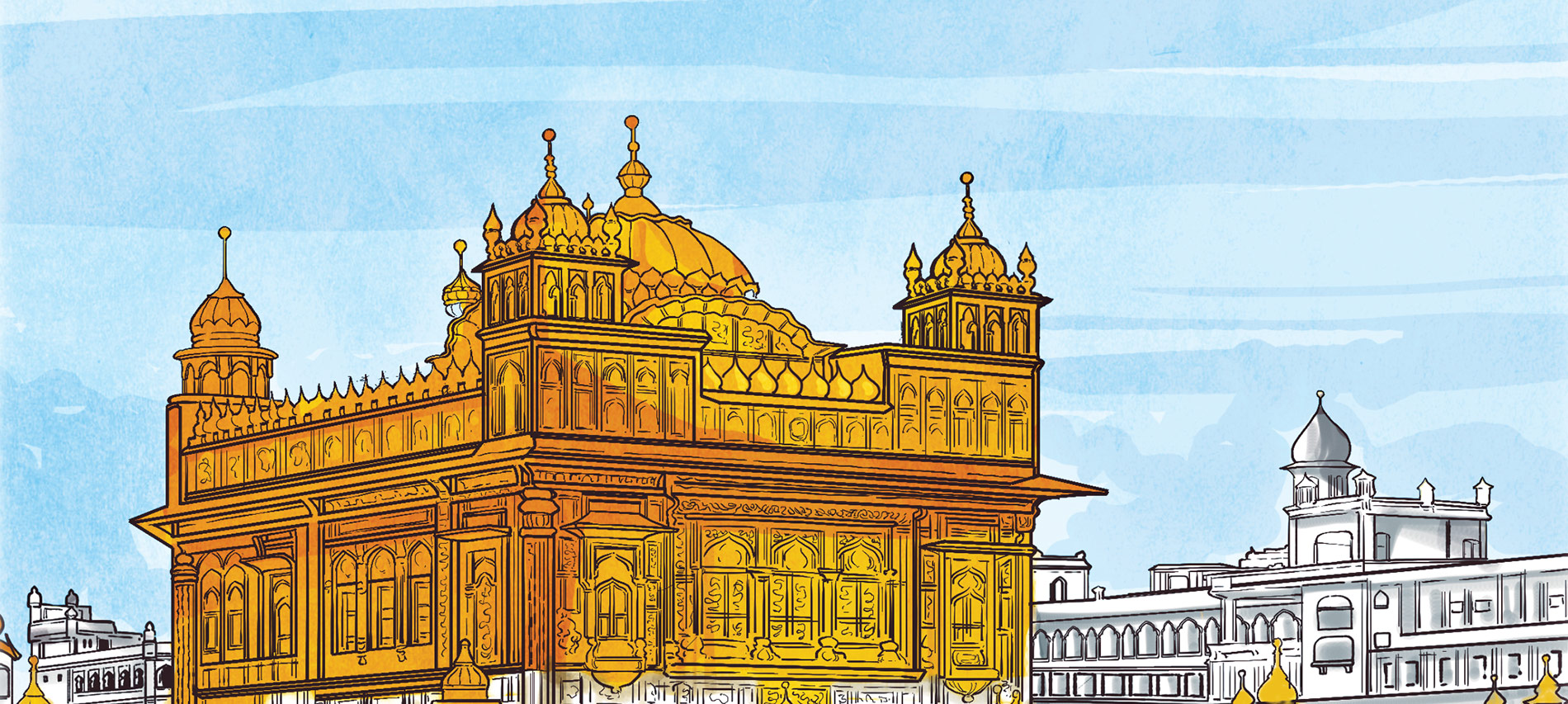
Remember when Bhakti Mathur and her boys took you and your little one on an enchanting journey to Amritsar’s Golden Temple? The beautiful architecture of one of the holiest places for Sikhs, the delectable langar served after prayers, a dip in the holy sarovar — Amma and her boys take you through an experience that stays with you forever.
Let’s take you through the Golden Temple once again through the pages of Amma, Take Me to the Golden Temple.
The rich history of the Golden Temple that stands tall for decades

The yummy taste of the karah prasad!

The peace and calm of the glorious inner sanctum

Taking a dip in the holy water facing Harmandir Sahib

The exquisite, golden palanquin carrying the Guru Granth Sahib

The history of the Golden Temple comes alive with the stunning illustrations in Bhakti Mathur’s Amma, Take Me to the Golden Temple.
Now get ready to join Amma and her boys on an exciting trip to the famous Tirupati! Pre-order your copy today!

Meet Rishi Mathur—An Excerpt from ‘Love Curry’

Pankaj Dubey is the bestselling author of —’What A Loser!’, ‘Ishqiyapa—To Hell with Love’. His latest book ‘Love Curry’ is about three flat mates in London who fall in love with the same girl. This make them arch-rivals but when things take a turn, they don’t find anyone else but eachother to turn to.
Here’s an excerpt from the book which introduces you to one of the flat mates.
He came from Agra—the city of the Taj Mahal, a monument that stood for a timeless love. A monument that simply kept standing when his love had wandered off. No wonder he had left the city and its Mahal. Choosing England instead with all its apparent coldness. He wanted to be away from all that had always been with him. No one knew him here or cared to. But there was a comfort in this anonymity. It was only months after he shifted to house number 104, George Street, that some of his neighbours began to recognize him, or what little they saw of him. For he would leave in the morning and return only after it got dark. He could have been the night watchman for all they knew. No words he exchanged with anyone. No twitch of a smile to a face that looked familiar. His socializing was restricted to giving someone way if they were in a rush.
His name was Rishi Mathur, the guy whose door was locked. The occupant of the third room in house number 104. A house that was almost a subcontinent, harbouring as it did three South Asian boys, flying the flags of India, Pakistan and Bangladesh. Besides the Indian—Rishi—docking in the house were Shehzad from Dhaka and Ali from Lahore.
Rishi in Agra had been quite a talkative fellow. This was a different version. No, the Queen wasn’t to blame for this sudden, sullen silence. At the heart of the matter was a breakup. One he was finding difficult to chew. So he went quiet and fled to England. He had seen people go to London to study or to get rich. But he came to recover. People arrived here with big dreams. He landed with promises—three promises that he’d made to himself. Three promises that were perhaps the opposite of what any other immigrant from India would have made
The first was to stay away from girls—especially the beautiful ones. He could not trust them now.
The second vow was to never return home. He would do all it took to make this island nation his new home. There was nothing waiting for him in India—and absolutely no one that mattered to his broken heart.
Thirdly, he would lie low. No soaring aspirations for him. No growth, no riches. He would not be the next British-Indian industrialist or Indian lord in Parliament. All he would be was a nobody.
It was easy to do the third thing. He simply didn’t need to do much. The limelight ignored him automatically. High denomination pounds stayed away. The few notes he earned kept hopping in and out of his wallet. The heartbroken hero strived for no comeback as a happy success story. All he wanted and got was a corner seat in life.
No one knew what Rishi did, not even his two housemates. Shehzad from Dhaka and Ali from Lahore lived in the same house with him, but in blissful ignorance. Each one had a story of his own that each wished to keep to himself. Though they shared a subcontinent and now a house, the three were reluctant to overlook the fact that they came from three different countries. This fourth country that they came to live in however threw them together in more ways than one. For starters, they got branded ‘Bloody Pakis’ the second they set foot here!
In their three-bedroom house, the room in the middle went to Rishi. Shehzad occupied the one to his left. The Bangladeshi was almost twenty-three, but still had a somewhat wild streak, which was announced by the sheer number of tattoos covering his five-foot-eight-inch frame. No, he didn’t need them to enhance his looks—he had plenty of those already. His angular face and curly fringe were a photographer’s dream. The decoupage tattoos advertised the person he was—a question mark. No one knew what he would say or do next, not even Shehzad. Only one thing was reasonably clear— rehab would figure somewhere in his future! For, the fellow smoked up relentlessly.
What made him so unpredictable was an even bigger mystery. No one knew the painful backstory. It featured a father who was an airline pilot in his home country. But that was before he lost one of his limbs in a ground accident. The tragedy, however, didn’t end there. His mother eloped soon after, forsaking his father for another pilot who was a friend of the family. The six-year-old boy was left behind with a handicapped father, a pit of a future and so many wagging tongues.

Author Akash Verma on writing "Urban Thrillers"

By Akash Verma
My idea of writing an urban thriller is creating a story that is believable, riveting and strongly impassioned. I have read some nerve wracking murder mysteries, stories about outstanding secret agents, adventure thrillers from across the world; yet to be absolutely honest, it is tough to recreate one such story. My writing can’t be simply borrowed from other books of a similar genre. It needs to be personal, influenced by stories I have lived, seen or heard. This personal touch triggers what I would call a unique idea, which if compelling enough, becomes my next big story.
After the unique idea comes the task of looking out for characters. In my recent book You Never Know, developing Sid’s character wasn’t the plan and it happened gradually. I fleshed him by visualising someone I knew from before. This book otherwise had only two voices earlier, Dhruv and Anuradha, but by adding the third voice, I thought the narrative became much stronger. Drawing from such insights, here are the six definite formulas that work when I am writing an urban thriller:
Be to the point – No lengthy descriptions or history of characters or explaining why someone did what they did. I expect the story and characters to evolve on its own and the readers to deduce the hidden nuances themselves. Having written love stories earlier, thriller is a different ball game altogether. A writer gets abundant time in building the characters in love stories through its various sub-plots; encountering love – falling in love – being in love – a happy love story/a tragedy. A thriller doesn’t allow you that luxury. If not cautious, your verbose narrative can soon take away the promise of a crackling whodunit and leave the reader disappointed. So I keep a strong leash and never let the story wander.
People are never all black or all white – The reason why I choose my characters to be grey is because that’s who we all are if we choose to look deep within. My characters defy normal sensibilities, change colours like a chameleon or do things that can never be expected of them. It is a daring task to create such characters, but then as a writer you need to start walking the road of fearlessness. The farther you walk, the better your writing becomes. You might end up creating disturbing characters, that might intimidate some of your readers and draw flak, but in the long run it’s a small price to pay.
Story always comes first – This is definitely a mantra I swear by. Thrills, chills, all your twists and turns, and the right amount of suspense; all these add up to make a story better but these can never be more important than the storyline. So before I begin writing, I place the storyline firmly in my head or rather jot it down in the form of chapters somewhere. It’s never a descriptive version but just how the plot would unfold bit by bit. The twists are added later as I progress further. I may make changes in the sequence of chapters, and tweak them a bit but the basic storyline always remains the same.
Keeping the narration simple and lucid – I admit of not having a gargantuan vocabulary and I believe most of my readers don’t have it either. So I stick to my limitations with no desire to floor my readers with heavy handed words but rather with my story-telling skills. The usage of too many words as frills is a big NO! I would rather say ‘She looked at him angrily’ than ‘She looked at him as if a raging fire burnt inside her.’ I have seen the latter working for many authors fabulously, but this just isn’t my style. To me, if a writer can tell a great story in simple words it is by no means a lesser achievement.
Editing a book is as important as writing it – I have started believing this to be a gospel truth over the years. For me a really kick-ass book can turn out to be average if not edited well while an average book can become good with some solid editing. I prefer reading my entire manuscript multiple times, editing, and re-editing before sending it to a professional editor. It’s only after so many checks, that I send my work to a publisher. For all first-time authors this should be a golden rule. To write a good thriller, you need a sharpened pair of scissors that you should hold first, ready to chop off dispassionately all those words, lines, paragraphs and pages that you think shouldn’t be there. Just trade places with your reader and it will be so much easier. Trust me, it’s the best thing you will do to your book.
The first and the last chapters should do the magic – Though there isn’t a set formula to it, but getting the reader hooked from the first chapter works better than doing it later. If you can grab his/her attention right from the start lesser chances that he or she will leave it midway. The climax on the other hand can be fashioned in multiple ways, either it can be sudden and nerve wracking or it unfolds calmly, but the ending should be nothing less than fantastic. It should leave the reader thinking about the book long after they have read it. If you are able to gather this response from your reader then as a writer you have done an excellent job.
About the Author
Akash Verma is the bestselling author of four books. Apart from being a writer, he is the co-founder of two start-ups in the fashion and food sectors. Prior to being a writer, he has tackled various roles in the corporate sector. Akash’s latest novel, You Never Know: Sometimes Love Can Drag You Through Hell…, is a romance thriller which will keep you hooked till the last page.
Things You Didn’t Know About the Bestselling Author John Green

John Green is one of the internationally acclaimed writers of YA Books. In his glorious career, he has won accolades like the Printz Medal, a Printz Honor, and the Edgar Award. He has twice been a finalist for the LA Times Book Prize and was selected by TIME magazine as one of the 100 Most Influential People in the World.
Here are a few things you should know about the star of the YA Books.


How many of these did you know?
‘Do you think Prince Tangine likes playing Goblin Tag?’: ‘Amelia Fang and the Barbaric Ball’ — An Excerpt
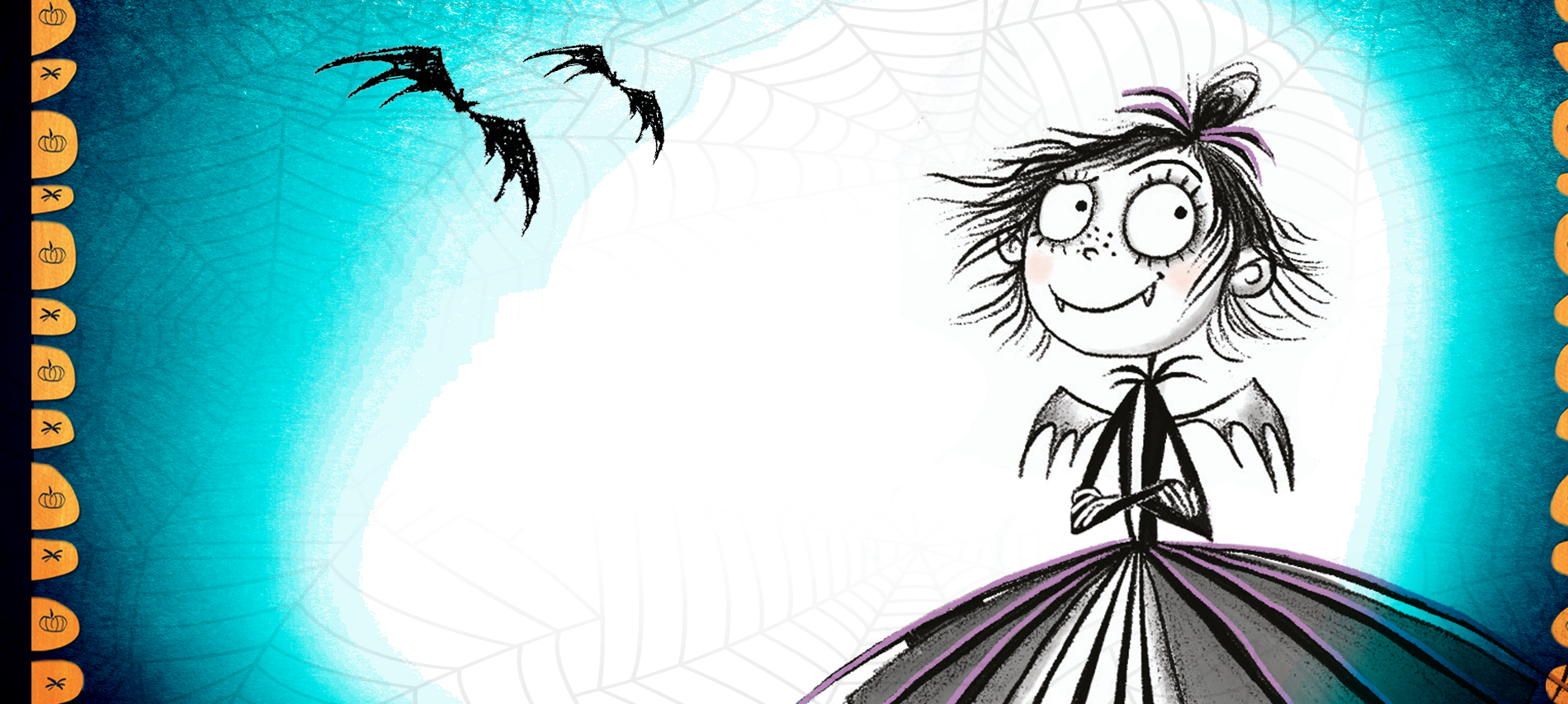
When your well-known world of unicorns and rainbows turns upside down, what do you get? The deliciously spooky world of Laura Ellen Anderson’s ‘Amelia Fang and the Barbaric Ball’!
Little Amelia Fang is a vampire (don’t worry, she won’t bite you!) who has Squashy the pumpkin for her pet! And things are about to turn murkier when the spoilt Prince of Nocturnia, the town where Amelia lives, attends the ball!
Want to find out what happens next? Read on!
“THE KING’S COMING TO THE BALL?” yelled Florence, Amelia’s best friend. This was normal speaking volume for Florence, who was six-feet tall, huge and hairy from head to toe. Everything about her was BIG. Even her voice was big. But so was her heart. Which was also very hairy.
Amelia, Squashy and Florence Spudwick were sitting under the Petrified-Tree-That-Looked-Like-A-Unicorn, where they met every night before school. “THAT’S WELL EXCITING!” bellowed Florence, gobbling down a bowl of Unlucky Arms cereal. “And he’s bringing the Prince!” Amelia said excitedly. “I’ll finally have someone my own AGE to hang out with at the ball! Although I still wish you and Grimaldi could come.”
“S’ALL RIGHT” said Florence, putting a hairy arm around Amelia’s shoulders. “I’D SHOW EVERYONE UP WIV MY STUNNING LOOKS!” She grinned, revealing a mouthful of spiky teeth pointing in every direction. The two friends burst out laughing. Squashy bounced up and down, blowing raspberries with his tongue, before nuzzling into Amelia’s tubby for a belly rub.
“Hi, guuuuys!” came a high voice from across the graveyard. It was Grimaldi Reaperton, Amelia’s other best friend. Grimaldi was small and cute, and Death was his middle name. No, really, it was. He dealt with the deaths of small creatures, like squished toads, but when he was older he would take over from his grimpapa and deal with bigger, messier beings.
“Grimaldi!” said Amelia excitedly. “I have BIG news!” “Is it about The Great Gothic Gravestone Carve Off?” said Grimaldi. “Because I really thought that William W—” “Whoa, whoa, whoa! Don’t tell me. I haven’t seen the final episode yet…” said Amelia, covering her ears.
“So what’s the news?” said Grimaldi. “THE KING’S COMING TO THE BALL…” Florence blurted out. “Wow! Nobody’s seen him in years,” said Grimaldi. “I was worried he’d died…Grimpapa keeps checking his diePhone in case he missed him. Happens sometimes.”
Suddenly, the Catacomb Academy welcome bones rattled, announcing the beginning of school. “But that’s not all,” said Amelia quickly. “Prince Tangine is coming too!”
“Maybe you’ll actually have FUN this year!” Grimaldi smiled. “I hope so,” said Amelia. “Do you think Prince Tangine likes playing Goblin Tag?”
Excerpted from Amelia Fang and the Barbaric Ball authored by Laura Ellen Anderson, published by Egmont UK Limited 2017. MRP: INR. 350 Copyright © 2017 Laura Ellen Anderson. All Rights Reserved.

A Kingdom Destroyed Over a Magical Stepwell: ‘The Magic of the Lost Temple’ — An Excerpt
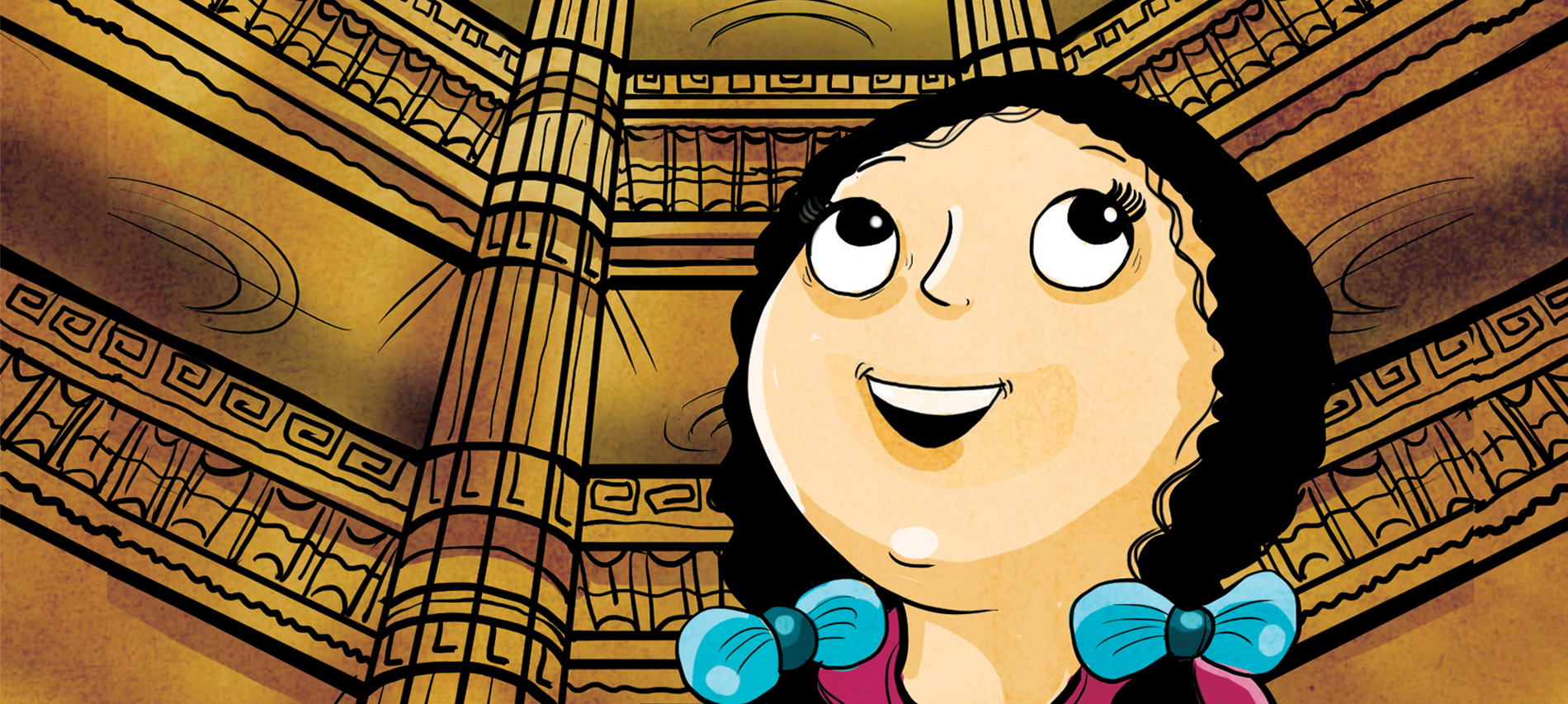
Whether it’s the concrete jungles in cities or the fresh, clean air in villages, a world of fantasy opens up if we look for one. Sudha Murty’s magical collection of stories, where little Nooni from the city goes exploring the village where her grandparents stay, opens up a pandora’s box of wonderful memories of our childhoods!
Read this excerpt of a story from ‘The Magic of the Lost Temple’, about a king, women from the moon, a stepwell and the unfortunate downfall of his kingdom.
‘Ajji, tell me a story,’ Nooni insisted once the lights were off.
‘Nooni, aren’t you tired? I’ll tell you a story tomorrow.’
‘No, Ajji, I want to hear a story now. Ever since I have come to the village, you haven’t told me even one story,’ Nooni persisted.
Ajji got up and pulled the curtains aside. It was a full moon night and the moonlight came through the window into the room. ‘It’s as if a magic lamp has been switched on,’ thought Nooni.
‘I don’t see such bright moonlight in the city or in our house, Ajji. How has the moon lit the entire bedroom?’
‘You live in an apartment. Your bedroom faces another apartment complex and all the streetlights are on in the night. Then how will you see the effect of natural light in the city? Here, we have very few streetlights and there aren’t any highrise buildings. My room faces the garden where there’s open space and windows for the light to come in easily.’
‘Ah, now I understand, Ajji! Tell me a nice story about the moonlight then. I know you have a story for every occasion,’ grinned Nooni. Ajji smiled and said, ‘Of course. What I’m about to tell you happened a thousand years ago in this very village.
‘Long, long ago, there lived a handsome king named Somanayaka. He was brave, kind, courageous and very generous. His kingdom lay in the delta between the rivers Varada and Tungabhadra. There was a thick forest around the area and many wild animals lived there. Sometimes, they would enter villages and scare the people, destroy the crops and eat the cattle. After a number of such complaints and no improvement in the situation, the king decided to hunt these wild beasts himself. Two days later, he went hunting on his horse with his soldiers by his side. Soon, he had left his soldiers far behind and lost his way.
‘The day passed and turned into late evening. The king’s horse became tired and Somanayaka
tied him to a tree and went in search of food. He collected some fruits, ate them and brought some grass back for his horse. Suddenly, he felt very sleepy. It was a full moon night and the breeze was cool and pleasant. Somanayaka noticed a flat rock behind some bushes and decided to rest. Within minutes, he was asleep. Suddenly, he was awakened by the sound of girls chatting. He opened his eyes and glanced at the sky. To his surprise, there was a ladder coming down from the moon which joined some stairs that went all the way from the moon to the Earth. A group of beautiful women were coming down the steps. They all wore white saris and pearl ornaments and carried golden pots at their waists. He squatted near the bushes and counted them—they were seven in all. He wondered what they would do next.
‘As soon as they reached the Earth, the oldest woman touched the ground with a stick and he saw the ground give way and open up. All of them slowly disappeared inside the ground. Somanayaka was not scared but he was desperate to know where they had gone. Carefully, he came out of the bushes and peeped. Then he felt a little bolder and walked towards the big hole in the ground. He was surprised to find himself looking into an enchanting stepwell!’
‘Ajji, what is a stepwell?’ Nooni asked.
‘It is a well that has steps inside so that it is easy to get to the bottom. There are many stepwells in our country. In fact, some of them are very famous. Remember that picture of the well you sent me from your trip last year to Abhaneri near Jaipur?’
‘Oh, that’s true. There was a huge well there with almost three thousand steps. Are you talking about something similar?’
‘Yes, I haven’t seen Abhaneri myself and the one that Somanayaka saw was a small stepwell. It had only twenty-one steps. But there were seven small exquisitely carved Shiva temples inside the well. Somanayaka looked down and observed the stunning carvings and pillars and the beautiful angelic women. He enjoyed seeing them play hideand-seek for some time. Then they filled their pots with water, poured it on an idol of Lord Shiva and performed a puja. The whole process took several hours. By then, the sky started getting lighter as it was daybreak and the moon started fading. Somanayaka hid behind the bushes again. Soon, the women climbed the steps and went back to the moon. The steps disappeared and the ground closed up.
‘Somanayaka sat in the bushes for a long time. Suddenly, he felt confused. Had it been real or had it all been a figment of his imagination? Did he really see the ground open up and a well underneath? He stood up and came out of the bushes. He searched everywhere for a sign of the well but with no luck. There was not a single remnant of the incident he thought he saw. “I must have been so tired that I slept off . . . and had such an elaborate dream that I thought that it was real,” he said to himself. He turned and started walking back to his horse. Suddenly he saw something sparkling on the ground—it was a broken pearl necklace. Somanayaka collected all the pearls and realized that it hadn’t been a dream after all.
‘He tried to recall if he had ever heard about a stepwell in his kingdom but nothing came to mind. By then one of his followers had traced him and come to his rescue. But Somanayaka told him, “Go back and inform everybody that I am safe. I will stay here for a few days. Give me your food ration before you leave. I know the route and I will come back on my own.”
‘The next day, he waited near the bushes again, but nothing happened. He waited for one more day and still, the women did not appear. After another uneventful day, he thought of other possibilities, “Maybe these beautiful maidens come only on full moon days.”
‘Keeping that in mind, he got on his horse and went back to the capital. He met the royal astrologer and found out the date of the next full moon night.
‘When the night came, he waited behind the bushes and this time, he was not surprised when the ladder came down from the moon. He knew the whole process by now and looked forward to the puja of Lord Shiva. Somanayaka was an ardent devotee of Lord Shiva. After the puja, he decided to take a chance and meet the maidens. Boldly, he came forward and stood near the stepwell. “Beautiful maidens, please don’t be alarmed. Here’s my pranaam to all of you.” He folded his hands together and continued, “You have chosen our land for your worship of Lord Shiva and I am really grateful to you. I have noticed that when you go back, the ground closes on its own. May I earnestly request you not to make the well disappear? Please keep it open so that everyone can worship Lord Shiva in this beautiful ambience.”
‘The women looked up at him in fright. It was a rude shock for them to see Somanayaka there and they gathered closely together. Then the eldest maiden took the lead and said, “Who are you? Why have you been observing us without our knowledge? This stepwell was built by a great architect of the celestial heavens. It can’t be used by the selfish people of Earth.”
‘Somanayaka bowed his head and said, “My sisters, I am Somanayaka, the ruler of this land. I know that this holy stepwell couldn’t have been made by human beings. But Lord Shiva is fond of all his devotees, isn’t he? Please grant me my wish. If you have any conditions, please tell me and I will fulfill them.”
‘The maidens spoke to each other in hushed whispers. Then the eldest one said, “We are impressed by your humility and your prayer. The water here tastes like nectar. That is Earth’s specialty. Even though we live in the celestial world, the water there isn’t as tasty as what we get here. So, we come every full moon night not to take a bath or spoil the well but to just drink and enjoy ourselves.
As long as you promise me that you will not dirty the premises and that this water will be used only for drinking, we will leave it as it is. People of your land can come and worship and take the water but before entering the stepwell they must take a bath and wash their feet. If your people do not follow the rules, the well will disappear along with your kingdom. Think about it. It is a big price to pay. Are you ready to take the risk of losing your kingdom?”
‘Somanayaka thought for a minute and said confidently, “A source of water is a source of life. I will ensure that all your conditions are taken care of.”
‘The maiden continued, “We have one more condition. On full moon nights, the temple must remain closed so that we can continue our visits here. Nobody must be allowed inside to observe us or talk to us. We want our privacy to be protected.”
‘Somanayaka agreed. He stepped forward and gave back the necklace to the maiden. He said gently, “I think this belongs to one of you.”
‘The women were very happy with his honesty. They drank the water, climbed the steps and vanished. The stepwell remained where it was.
‘Somanayaka went to the nearest water body to have a bath and then he entered the stepwell for the first time. It was much more beautiful from up close. When he reached the bottom, he cupped his hands and drank a sip of water. It was very tasty. He felt that it was better than nectar, which he had never drunk before anyway.
‘The next day, he came back to the kingdom and proclaimed, “There exists a beautiful stepwell of Lord Shiva in our kingdom. People who would like to go there and perform puja can do so but on one condition—they have to bathe and cleanse themselves before entering the stepwell. The water there will be used for no other purpose except for drinking. Everyone can carry away one pot of water and no more. These rules are to be strictly followed and there will be no exceptions. The temple will remain closed on full moon nights and nobody will be allowed inside.”
‘Somanayaka wanted to make his people comfortable so he ensured that there was another water body for them near the stepwell. There, people could bathe, change their clothes and then enter the stepwell. The news spread like wildfire. People came from all over the kingdom to see the architectural masterpiece and pay their respects to Lord Shiva. The well remained open on all days except on full moon nights.
‘Days passed and word spread. People started coming from far and wide and from different lands. A small tourist spot was set up near the stepwell and named Somanahalli.
‘Despite the increase in the number of visitors, the well was kept clean and guards monitored the premises around the clock.
‘After some years, Somanayaka married a lovely lady—Queen Ratnavati. She was beautiful and courageous but headstrong. Somanayaka told her about the way the well had been discovered and how the celestial maidens had agreed to his request. Ratnavati wanted to know whether the maidens were more beautiful than her or not but she knew that she would never get a chance to meet them because they came only on full moon nights when no one was allowed inside the temple.
‘One day, the king had to go to an important event in the neighbouring kingdom. Ratnavati told her husband, “I am not feeling very well. I think that I will stay back in the palace.”
‘The naive king believed her and departed for the event. As soon as he left, Ratnavati called for her chariot and headed towards the stepwell. She thought to herself, “I am the queen of this land. Every inch of it belongs to me. So what if the well is a gift of the maidens? The well exists on my land and I am the legal owner. My husband doesn’t want to take a risk and obeys those maidens’ words without question. I want to show him that nothing will happen if we break their rules.”
‘When the charioteers reached Somanahalli, the officers stopped her and requested, “O Queen. Please don’t visit the temple today. It is a full moon night and as per the government rules, no one is allowed to go inside. Why don’t you stay in the guest house tonight? You can visit the well tomorrow.”
‘Ratnavati did not listen to them. “How dare you stop me? I am the queen. Everything is under my control.” ‘Without another word, she barged into the stepwell. Since it was a full moon night, the entire complex was shining like silver. The water was shimmering and looked irresistible. She went into the water to bathe. Suddenly, she heard a noise. When she turned, she saw seven women standing on the steps. Though her heart told her that they were more beautiful than her, her ego did not allow her to accept the truth. When the maidens saw Queen Ratnavati in the water, they became upset. “Who are you? How dare you come here today? Has King Somanayaka forgotten our conditions?”
‘Arrogantly, Ratnavati replied, “I am his queen. This land belongs to us and I make the rules—you can come the day I want you to visit. You can’t tell me when I can and can’t come here. The water here is the way it is because of the Earth and not because of anything you did.”
‘“Who are you to talk to us like this? You have not only disobeyed our rules but you have also dirtied the water. Once someone has bathed in this water, no one can drink it again.”
‘The women turned to leave. While going up the steps back to the moon, the eldest maiden said, “Rani Ratnavati, you are going to regret this.”
‘They climbed the ladder and vanished. Queen Ratnavati tried to get out of the water to go behind them and talk to them but all her efforts were in vain.
‘Suddenly, there was thunder and lightning, followed by a huge gust of wind and rain. Ratnavati quickly climbed up the steps of the well. The earth quaked and within a few seconds, the well closed.
‘The queen was scared. She had been warned of the consequences—she was going to lose her kingdom! She cried to herself and said, “I should not have done this. I have polluted the water and disobeyed my husband. I have destroyed my kingdom because of my arrogance.”
‘Somanayaka never came back from his travel and Ratnavati went mad crying in the streets. After a few days, nobody heard from her again. The kingdom was eventually abandoned. It was sad that the queen, who should have been the protector of her kingdom, had destroyed a precious water source, disobeyed royal orders, broke a promise and caused such a catastrophe.
‘People say that our village, Somanahalli, is near the location of the stepwell. This story has been passed down from generation to generation but no one has actually seen the well.’
Ajji finished the story. Nooni looked at the moon with sleepy eyes, waiting for the maidens to appear.
More such enchanting stories await you and your little one with Sudha Murty’s ‘The Magic of the Lost Temple’.
And don’t forget to pre-order our favourite storyteller’s newest collection of magical stories!

6 Things You Didn’t Know About The Bangalore Underbelly
Jyoti Shelar explores the story of local goons turned powerful dons of India’s Garden City in her newly released The Bhais of Bengaluru. From Muthappa Rai to Agni Shreedar, Shelar researches the history of the influential figures of Bengaluru’s underbelly.
Here are a few things you might not have known about the dark underworld of Bengaluru:


Did you know all of these?
