Publish with Us

Follow Penguin

Follow Penguinsters

Follow Penguin Swadesh

9 Things That Will Make You Pick John Green’s ‘Turtles All The Way Down’

John Green is the bestselling author of several literary marvels. He is no stranger to the Young Adult genre and his works have been immortalized on the big screen as well. For his works, he has won laurels such as the Printz Medal and the Edgar Award. He has also been also selected by TIME magazine as one of the 100 Most Influential People in the World.
He is back with his fifth solo novel, Turtles All The Way Down’.
Here are ten things about the book you should know.


Don’t wait any more and pick up the book right now!

The Story of Mahatma Gandhi And Where It All Began: ‘Junior Lives: Mahatma Gandhi’ — An Excerpt

Mahatma Gandhi, lovingly called Gandhiji and the Father of the Nation, has been remembered by the entire world for his honest, non-violent methods of leading a nation to independence.
In Sonia Mehta’s ‘Junior Lives: Mahatma Gandhi’, the author explores the life of Gandhiji from his childhood and shows us how he became the leader that he is today.
Here’s a short excerpt from the book.
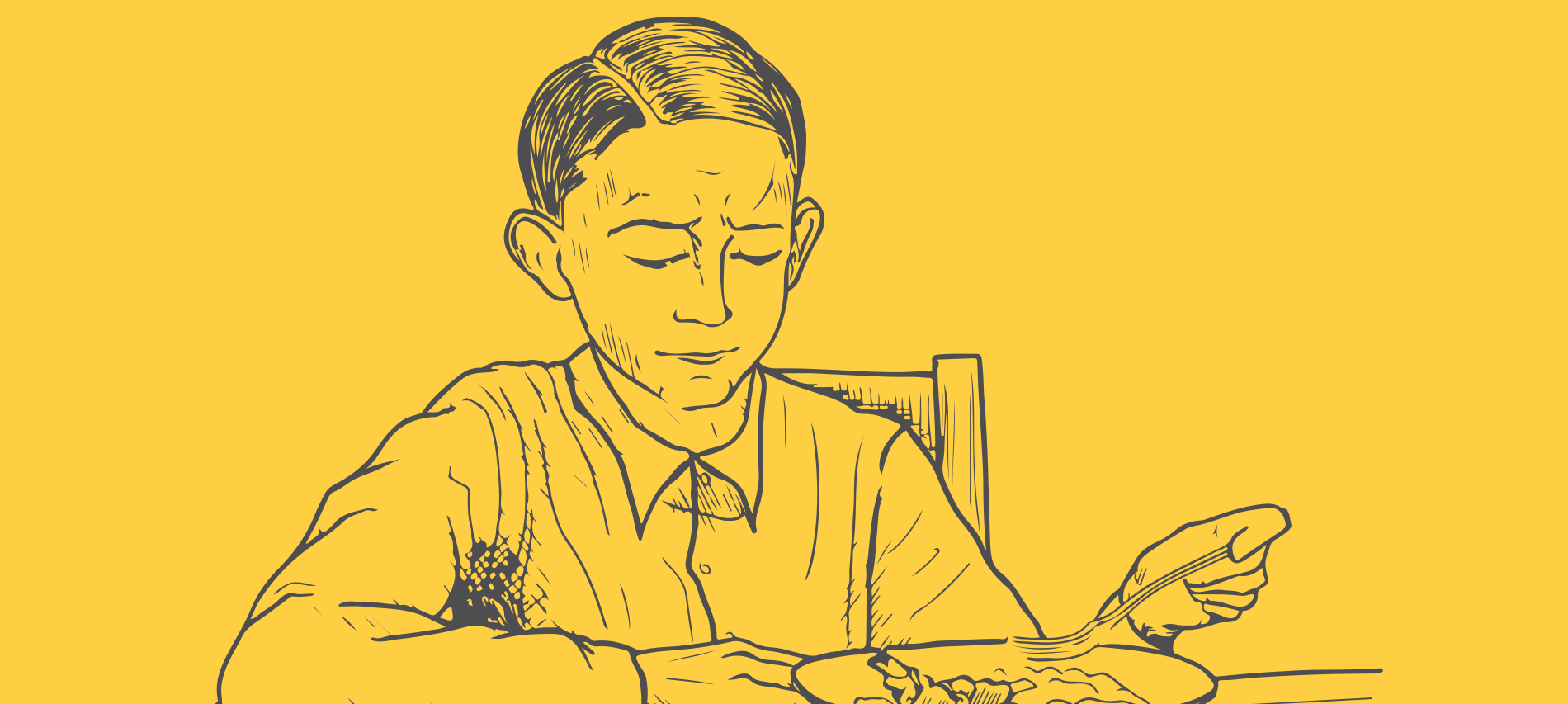
The thirteen-year-old lad was impatient.  He wanted to get back to his friends, who were having a great time playing outdoors. But here he was—stuck indoors, made to dress up in clothes that were icky and uncomfortable.
‘Can I go now?’ he asked his mother, trying to shrug off the elaborate outfit she was trying to get him to wear.
‘No, Mohan,’ she replied. ‘You can’t go play with your friends today. It’s your wedding day.’
That young boy was Mohandas Karamchand Gandhi. At thirteen years of age, he was about to get married to a girl who was just a little older than he was. His family would never have believed it then, but this boy was to grow up to become one of the world’s greatest leaders, who would lead India to freedom. He showed people a nonviolent way of life. Millions of people adored him and gave him titles like Father of the Nation, Bapu (meaning father) and Mahatma (meaning great soul). What an incredible achievement for such an ordinary boy, born to such ordinary parents!
A Happy Family
Young Mohan (for that was what his family called him) was born to Karamchand and Putlibai on 2 October 1869. Theirs was a large, happy family. Mohan had a sister and two brothers—all older than him, so you can imagine how much he was loved and petted. The family was quite wealthy and lived in a big, three-storeyed house in the Indian port-city of Porbandar, in what is now Gujarat. Karamchand was an educated man. The ruler of Rajkot admired him and made him the diwan of Porbandar. As diwan, he managed the business of the state. People respected Karamchand a lot and came to him for advice.
When Mohan was a young boy, he was very shy. He would spend all his time with his books.  This made him very thoughtful. However, he didn’t love studies; in fact, he found maths rather hard. But he was a good student overall, and his teachers thought well of him. One day, Mohan got his father’s permission to see a play about a king named Raja Harishchandra. The special thing about this king was that he never lied, no matter what happened to him. Mohan was so impressed by this play that he swore to never tell a lie in his life.
Always, Always Truthful
One morning, Mohan’s class was given a spelling test. Mohan knew all the spellings, except that of ‘kettle’. The English teacher, keen to prove that he was a good teacher, wanted all his students to know every spelling so that he could impress his superiors. When he saw that Mohan was unsure, he prodded him to peep at his neighbour’s slate and see the spelling.
‘But that would be cheating,’ an aghast Mohan thought. He refused to look at his neighbour’s slate, and eventually was the only boy in class who did not get all his spellings right. But that didn’t bother him. He was more bothered that his teacher had told him to cheat.
One of the only times Mohan lied was when he was in his early teens. He stole some gold from his brother and sold it. But it wasn’t for himself. He gave the money to his other brother to help him get out of debt. He couldn’t sleep that night. He tossed and turned, feeling awful. Finally, he confessed to his father. He was ready for any punishment. But instead of getting upset, Mohan’s father wept. He was hurt that his son had lied,  but happy he had confessed.
Mahatma Gandhi’s fascinating life goes way beyond the years documented in the pages of history. Get to know Mohandas Karamchand Gandhi before he became GandhiJi with Sonia Mehta’s ‘Junior Lives: Mahatma Gandhi’!

6 facts About Salman Rushdie You Probably Didn’t Know

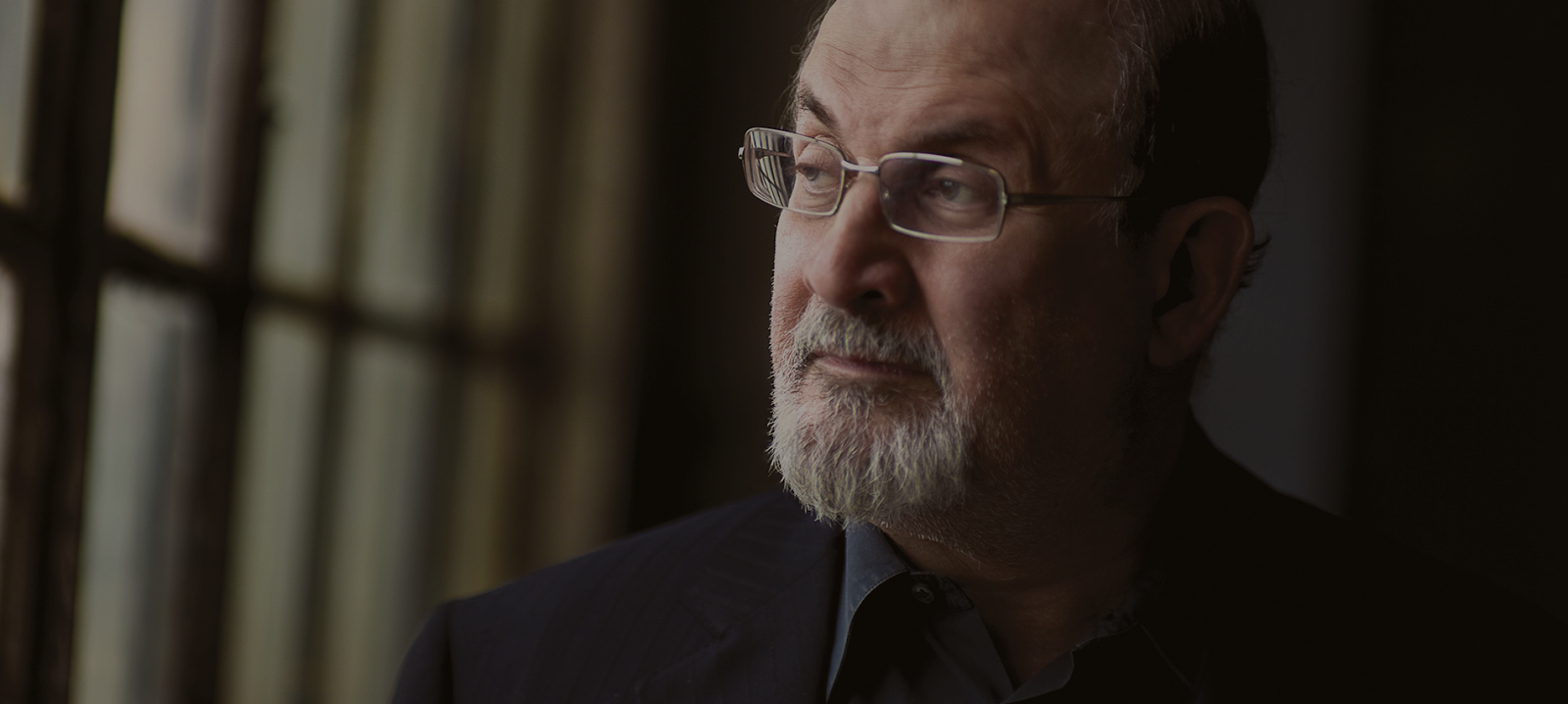
Sir Salman Rushdie is no stranger to literary excellence. Author of 12 bestselling books such as Midnight’s Children and Shame, he won the Booker Prize in 1981 and the Best of the Booker Prize in 2008.
Rushdie is back with Quichotte, a tour-de-force that is both an homage to an immortal work of literature and a modern masterpiece about the quest for love and family.
Here are 6 facts you might not have known about this magnificent author.
Early Beginnings!

Language is no barrier when it comes to Rushdie’s books.

Rushdie is a playwright too.

Master of all trades!

Wow!

Professor Rushdie has a ring to it, doesn’t it?

Did Terminator inspire Rushdie?


Are you excited about Rushdie’s latest venture, Quichotte?

5 anecdotes from Kalam’s autobiography ‘The Life Tree’

Dr.APJ Abdul Kalam’s vivacity and creative energy traverses its way through in his autobiography, The Life Tree. The poems in the autobiography capture the essence of nature, human relationships and love for the country.
On the occasion of his birthday, here are a few moments from his life, immortalized in poems.
The picturesque view that Dr.Kalam and his friend, Vidyasagar witnessed is expressed in the lines below.

APJ Abdul Kalam, in the poem below, reflects on his childhood and the meaning of communalism

Dr Kalam was overjoyed receiving the Padma Vibushan in 1990. The lines below capture the emotion he felt upon receiving it.

The late President was distressed on hearing about Mother Teresa’s illness. The poem below captures his anguish.

Dr Kalam’s father said – “Never receive a gift; a gift is always accompanied by some purpose”. At 70, he recollects a lesson from the past.

Aren’t these lines magnificent just like him?

‘A Checklist For God’s Own Office’, An Excerpt

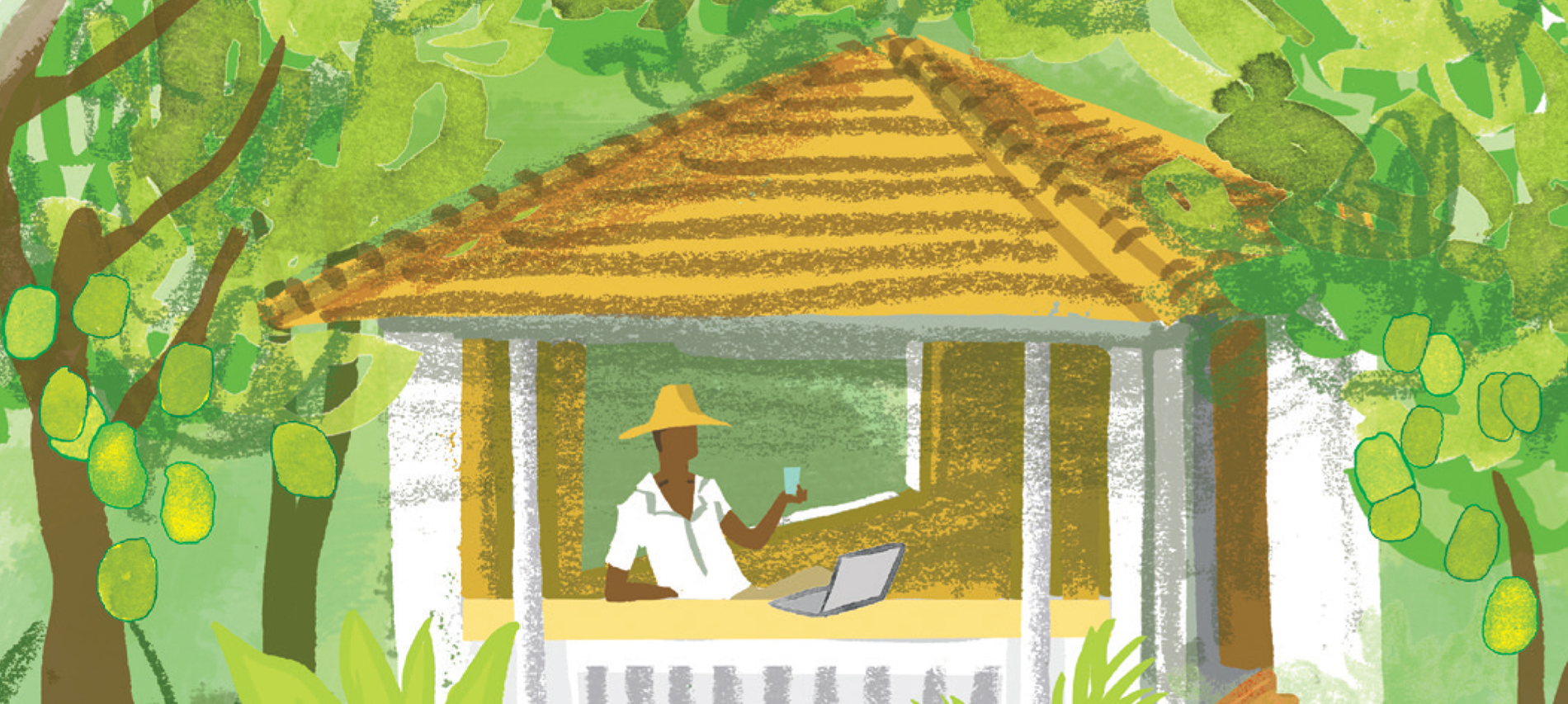
What happens when a vacation turns into a business opportunity? James Joseph, an NRI professional decided to take a family vacation in Aluva, Kerala where he stumbled upon a business opportunity in the form of jackfruits. Today, he is the founder of a successful entrepreneurial venture called Jackfruit365, an initiative to create an organized market for nutrient-rich jackfruits in India.
His book, God’s Own Office is a part-memoir, part how-to on how to integrate with the local community and set up a home office alongside nurturing your entrepreneurial ambitions.
On October 14, 2017, James is going to share his wisdom in a TedX Talk on how to set up God’s own office. He’s also going to dedicate the book to the late President APJ Abdul Kalam.
Here’s an excerpt from the book God’s Own Office, it’s a checklist of what you need to have to set up your own home office in a remote part of the country.
A Checklist For God’s Own Office
1.Do you have an unwavering conviction to return home?
2. Do you have a constant focus to return home? Does that keep you awake?
3. Have you earned the right to return? Can you pass the Mohammed versus Mountain test?
4. Can you still uproot your family? Can you still pass the inchworm test?
5. Do you have the right location for God’s Own Office?
a. Easy travel connectivity to your base office
b. Reliable digital connectivity
c. Constant source of positive energy to work alone
6. Can you arrange enough backup to avoid disruptions?
a. Power
b. Broadband
7. Do you or your employer have the right technology for remote working?
a. Digital presence information
b. Instant messenger
c. Online audio/video conferencing
d. Desktop sharing
e. Remote access to corporate network
f. Cloud services to store and share data
8. Can you make your home office sound proof?
9. Do you have the discipline?
a. Work without supervision
b. Handle interruptions by family and guests
10. Can you still stay on top of the mind of your colleagues and management?
11. Can you be a local ambassador for your employer?
12. Do you have options to adopt start-ups near your home town?
13. Can you ensure the safety of your family when you are away from home?
14. Can you allocate sufficient time to help your children remain globally competent in a small town?
15. Can you help your children integrate well in a regular school?
16. Are you willing to help people around you?
17. Are you happy to reconnect with extended family back home?
18. Can you find enough activities to recharge yourself in a sleepy village?
a. Adopt a farm
b. Participate in cultural activities
19. Do you have the resilience to stomach the dark sides of a small town?
a. Avoidable deaths around you
b. Bureaucracy
c. Need for extra humility, patience and tolerance
20. Will the economics of God’s Own Office work for you?

How To Transform Society Dr APJ Abdul Kalam Way: ‘Mission India’ — An Excerpt

Dr.APJ Abdul Kalam’s benevolence and goodwill towards society is no news to us. The late President of India was a beautiful boon that mankind witnessed.  His ‘Mission India : A Vision for Indian Youth’ addresses the youth in their endeavour to contribute to the nation’s progress. The book also plays an important role in that it tells every individual and organisation how they can shape and transform the nation by 2020.
Read the excerpt below to remember this amazing soul!
If you think about the development of human civilization, you will find that the pace of social and economic growth has been closely related to the proficiency with which people have been able to use the materials and chemicals in the world around them. In the beginning, this was through keen observation and trial and error. Thousands of years ago, men and women discovered, perhaps by accident, that they could hunt more easily if they sharpened rocks into weapons. They discovered that certain herbs helped to heal wounds. Once they discovered these properties of the materials around them, they remembered these and started using them. Their knowledge of these few things was slowly extended to others. As more and more knowledge was accumulated, human civilization as we know it today developed. Think about all the things you take for granted, as a normal part of life. Do you know it was only about two hundred
years ago that man started using coal and oil as energy sources to run machinery? The railways were invented. As a result, man could transport raw materials from far away to create new products and also sell them in distant places. It thus became very easy for goods to be transported, made easier still by the advent of the automobile and the aeroplane. Today, you can talk to people across the world from wherever you are—home, office, on a bus. But mobile phones were commercially available only from 1987. The first mobiles were available in India from 1994–95—and there were over 10 million users by 2002! Even something which seems as simple as a matchbox was only invented in the late nineteenth century—less than 120 years ago. Imagine how difficult it was to light a fire before that! Some ten years ago, the Internet became widely used. A vast world of information became available on the computer at the click of a mouse. As a result, knowledge flows so much easier. Sitting at your desk in India, you can find out about events and technologies all over the world. When I was writing this book, it was so much quicker for me to check the facts.
Ten years ago, it would have taken me ten times as long to write it, as I would have to go to many libraries and talk to many different people to get the same amount of information. The creation of so much technology is dependent on the creation of the advanced materials which are used to create computers, fibre optic cables, scanners and printers. Just imagine then, how different the world can be a hundred years from now! At the present rate of growth, in twenty years we can have trains that will travel from Delhi to Mumbai in a few hours—there is talk already of trains that can move as fast as planes using electromagnetic technology, robots in every home that can do the housework, and computers that will write down your homework as you talk! In this exciting world of rapid change, you have many wonderful opportunities to change the world and change India, if you can think out of the box and work with technology!

There are so many new materials available nowadays which our grandparents did not have access to. Our houses are full of modern materials: stainless steel, fibre glass, plastics, musical
and audio-visual materials. In the world outside, there are so many new materials as well: lightweight, high-performance alloys help us build aircraft, satellites, launch vehicles and
missiles and various kinds of plastics. Think of all the things in your daily life which are made of plastic—and imagine a world without them. The better use a country can make of its materials and chemicals, the more prosperous it will be. These new materials can also help in making life easier in ways that were not thought of when they were being invented. The DRDO has developed at least fifteen promising life science spin-off technologies from what were originally defence projects, some of them missile programmes.
You must have heard of Agni, India’s indigenously produced intermediate-range ballistic missile, first test-fired in May 1989. For Agni, we at the Defence Research and Development Organization (DRDO) developed a new, very light material called carbon-carbon. One day, an orthopaedic surgeon from the Nizam Institute of Medical Sciences in Hyderabad visited my laboratory. He lifted the material and found it so light that he took me to his hospital and showed me his patients—little girls and boys who had polio or other problems, as a result of which their legs could not function properly. The doctors helped them to walk in the only way they could—by fitting heavy metallic callipers on their legs. Each calliper weighed over 3 kg, and so the children walked with great difficulty, dragging their feet around. The doctor who had taken me there said to me, ‘Please remove the pain of my patients.’ In three weeks, we made these Floor Reaction Orthosis 300-gram callipers and took them to the orthopaedic centre. The children could not believe their eyes! From dragging around a 3-kg load on their legs, they could now move around freely with these 300-gram callipers. They began running around! Their parents had tears in their eyes. An ex-serviceman from a middle-class family in Karnataka wrote to us, after reading about how we had assisted polio-affected children. He inquired if something could be done for his twelve-year-old daughter who was suffering from residual polio of the leg and was forced to drag herself with a 4.5-kg calliper made out of wood, leather and metallic strips. Our scientists invited the father and daughter to our laboratory in Hyderabad, and together with the orthopaedic doctors at the Nizam’s Institute of Medical Sciences, designed a Knee Ankle Foot Orthosis weighing merely 400 grams. The girl’s walking almost returned to normal using this. The parents wrote to us a couple of months later that the girl had learned cycling and started going to school on her own.
Dr.Kalam contributed immensely to development of the nation. Purchase your copy to read more on the man and his extraordinary talent and achievement in the field of science, education, society and so on.

There’s a New Boy In Nicky and Noni’s Class! Do They Become Friends? — ‘Being a Good Friend Is Cool’: An Excerpt

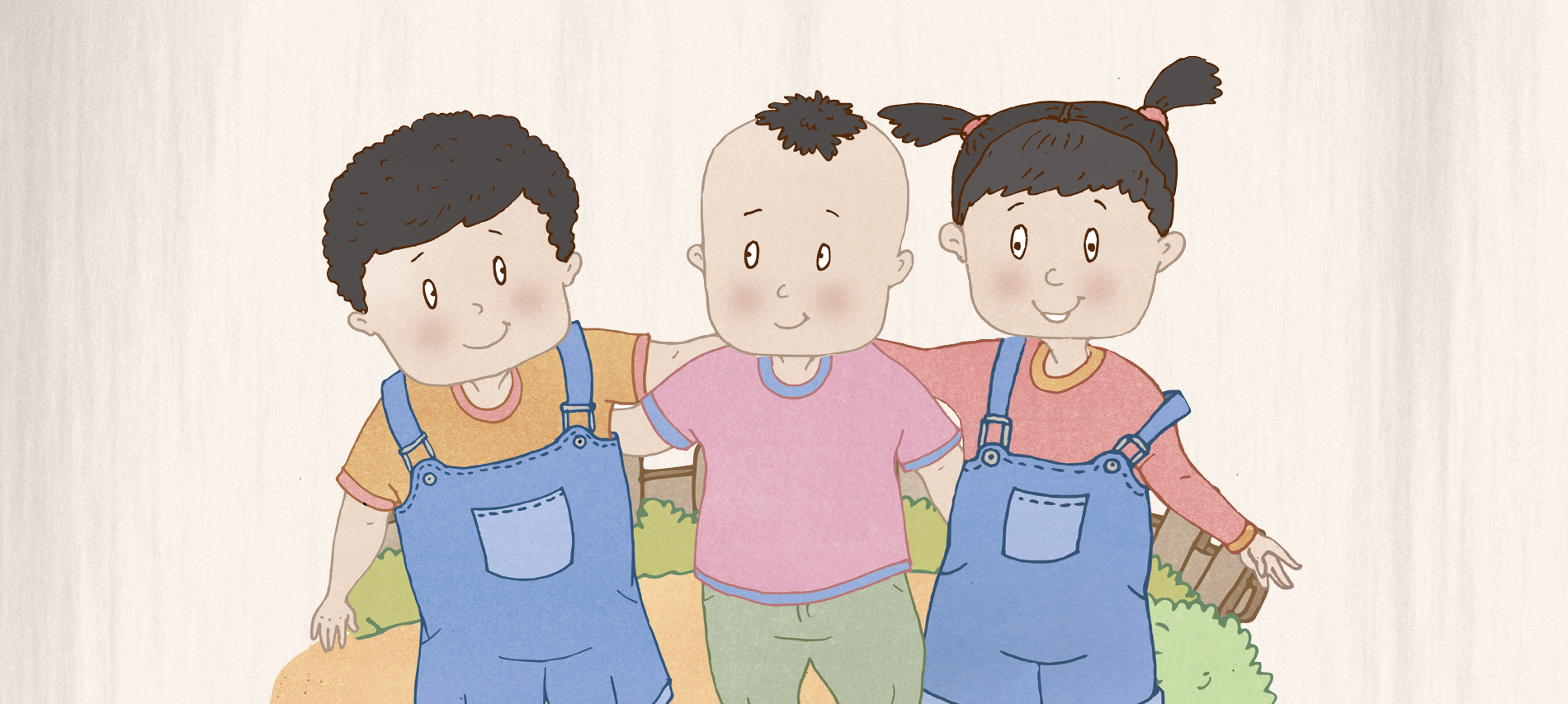
In Sonia Mehta’s Being a Good Friend Is Cool from her new series of books — My Book of Values, the author talks about the cool value of being a good friend.
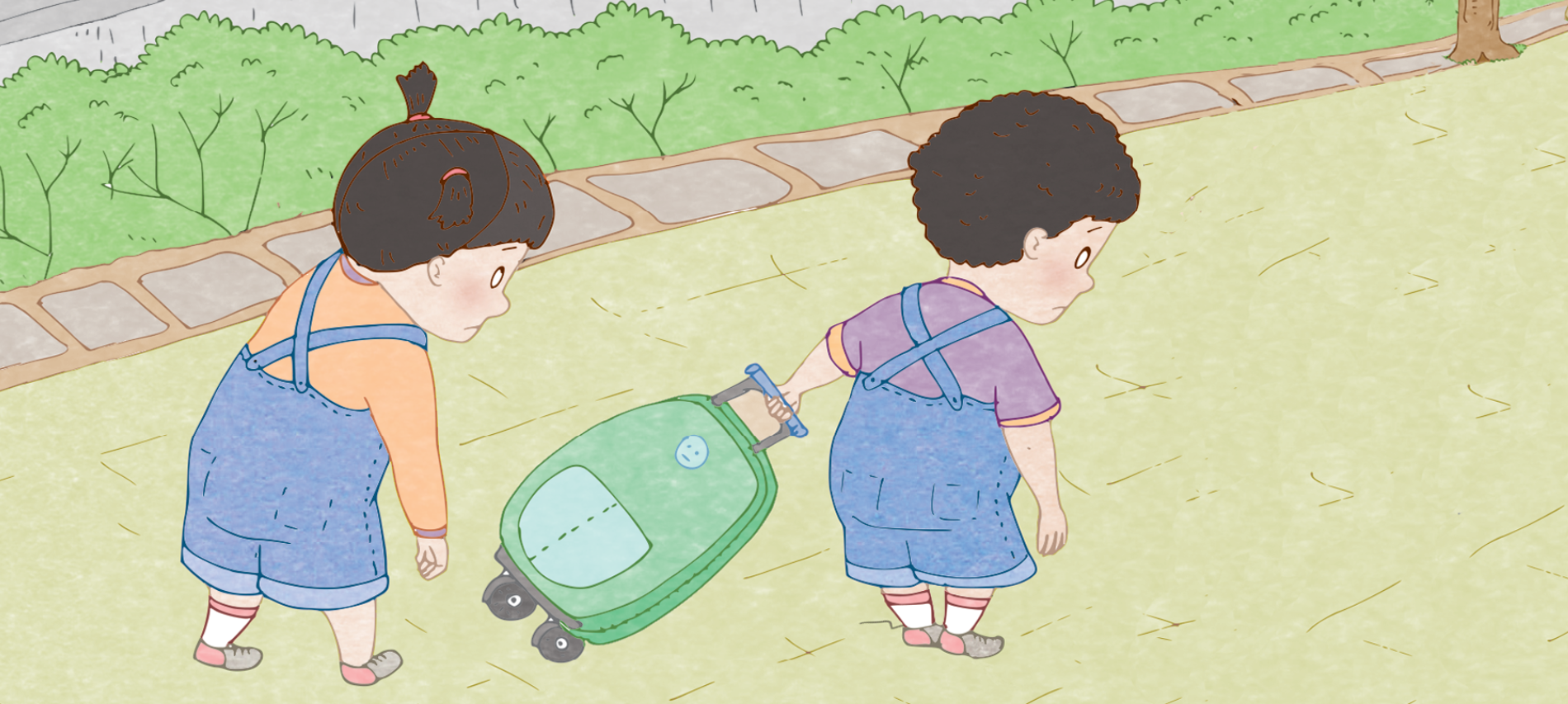
Nicky and Noni have a new boy in class, but Nicky seems to be doing something wrong. What is it? Let’s find out!


What do Nicky and Noni do next? Do they become friends with Jojo? Grab a copy of Being a Good Friend is Cool to find out!

“We are never alone, are we?” An Excerpt from Shinie Antony’s ‘Boo’

Have you ever felt someone was watching you, even though you are all alone? Shinie Antony’s ‘Boo’ is a collection of thirteen well-crafted paranormal tales, each uniquely haunting in its own way. The stories penned by Shashi Deshpande, K.R. Meera, Jerry Pinto, Durjoy Datta, and many other illustrious names are sure to send a chill down your spine.
Here’s an excerpt of the introduction of the book.
The unknown has always beckoned. Infinite, cobwebby, black as the night, silent as the grave, what we cannot see hear touch. What, furthermore, is perhaps not alive.
My own experiences of the uncanny stay mine; fear takes me where it will. There were whispers without words and things I almost saw. And unlike what I always thought, squeamish as I am and lily-livered, these semi-happenings did not creep me out. Sometimes I saw them as other-worldly warnings, sometimes they were not meant to be seen and my eye had somehow breached a divide, sometimes my mouth formed words I did not mean to say . . .
The paranormal has many subgenres, but of these it was not the occult, poltergeists or screams of the possessed that brought me to these stories, but the psychological thrill. The mind is where it all begins. The mind is where it lives. This feeling that there’s something out there—and it is on to us. It knows that we know. And we must forever pretend we don’t know, not catch its eye—even when it is looking straight at us.
The gothic charm of K.R. Meera’s story, the sweet smell of onions in Kanishk Tharoor’s tale, the burden of hindsight in Shashi Deshpande’s mythofiction, the menacing narrator in Jerry Pinto’s story—they all bring in the supernatural slyly, stylishly. Durjoy Datta, Jahnavi Barua, Manabendra Bandyopadhyay, Kiran Manral and Jaishree Misra give us the old-fashioned traditional ghost story, the one where the banshee sighs or screams. While Ipsita Roy Chakraverti decodes a message from the beyond, Madhavi S. Mahadevan and Usha K.R. take us to places where the backstory is everything.
We wouldn’t be here—you reading this, me writing this—if we didn’t know. Despite science, reason and a raised eyebrow. Deep in our bones, when all falls silent, there is a knowing that precedes births and lingers after deaths. It lifts the hair at the nape of our neck; it stares at us, infatuated, from behind stairs; prescient, it invades our very rocking chair, replacing peace and calm with a restless zigzag; it rotates its head 360 degrees when we aren’t looking.
It doesn’t dispel though we move on, go our ways, live lives, love and let go. What is it that shifts just beyond our vision? Who listens when we talk in our heads? When does dark get just that little bit darker? Why that word on the billboard—the same word we just finished thinking about? And then bumping into the very person we thought of after a hundred years only that morning . . .
What do we know about ourselves besides incidents and milestones and birthdays and heartbreaks, what do we know of that which cannot be known? It is there in a photograph or painting you see—the feeling that you’ve been there before, seen that face somewhere. We are here but we are elsewhere too.
A haunting. Begins as a catch in the side, a stiff neck, a hunch, a bad feeling, pins and needles, an eye twitch, sleep talk, a leg gone numb, vertigo, spasms, heart that trebles its beat, a smell, a chill, a spell, a tingle, dreaming the same dream, a sudden vision of what’s to come, waking at 3.33 a.m., a song no one else can hear, the sound of breathing when we hold our breath . . .
We are never alone, are we?

Retaking A Tour Down Memory Lane With ‘The Guide’ — An Excerpt

The Guide, written by R K Narayan in 1958, celebrates the myriad mysteries and bizarre charms of India, as seen through the experiences of a small-town tour guide, Raju from Malgudi. The novel went on to be adapted on the silver screen and has been immortalised by Dev Anand and Waheeda Rehman, playing the protagonists Raju and Rosie respectively.
On R K Narayan’s 111th birth anniversary, here’s revisiting this timeless story that captures the crazy and magical spirit of India through its themes of love, loss, betrayal and the search for God.
Here’s an exclusive excerpt from the book.
RAJU WELCOMED THE intrusion—something to relieve the loneliness of the place. The man stood gazing reverentially on his face. Raju felt amused and embarrassed. ‘Sit down if you like,’ Raju said, to break the spell. The other accepted the suggestion with a grateful nod and went down the river steps to wash his feet and face, came up wiping himself dry with the end of a chequered yellow towel on his shoulder, and took his seat two steps below the granite slab on which Raju was sitting cross-legged as if it were a throne, beside an ancient shrine. The branches of the trees canopying the river course rustled and trembled with the agitation of birds and monkeys settling down for the night. Upstream beyond the hills the sun was setting. Raju waited for the other to say something. But he was too polite to open a conversation.
Raju asked, ‘Where are you from?’ dreading lest the other should turn round and ask the same question. The man replied, ‘I’m from Mangal.’
‘Where is Mangal?’
The other waved his arm, indicating a direction across the river, beyond the high steep bank. ‘Not far from here,’ he added. The man volunteered further information about himself. ‘My daughter lives nearby. I had gone to visit her; I am now on my way home. I left her after food. She insisted that I should stay on to dinner, but I refused. It’d have meant walking home at nearly midnight. I’m not afraid of anything, but why should we walk when we ought to be sleeping in bed?’
‘You are very sensible,’ Raju said.
They listened for a while to the chatter of monkeys, and the man added as an afterthought, ‘My daughter’s married to my own sister’s son, and so there is no problem. I often visit my sister and also my daughter; and so no one minds it.’
‘Why should anyone mind in any case if you visit a daughter?’ ‘It’s not considered proper form to pay too many visits to a son in-law,’ explained the villager.
Raju liked this rambling talk. He had been all alone in this place for over a day. It was good to hear the human voice again. After this the villager resumed the study of his face with intense respect. And Raju stroked his chin thoughtfully to make sure that an apostolic beard had not suddenly grown there. It was still smooth. He had had his last shave only two days before and paid for it with the hard-earned coins of his jail life.
Loquacious as usual and with the sharp blade scraping the soap, the barber had asked, ‘Coming out, I suppose?’ Raju rolled his eyes and remained silent. He felt irritated at the question, but did not like to show it with the fellow holding the knife. ‘Just coming out?’ repeated the barber obstinately.
Raju felt it would be no use being angry with such a man. Here he was in the presence of experience. He asked, ‘How do you know?’ ‘I have spent twenty years shaving people here. Didn’t you observe that this was the first shop as you left the jail gate? Half the trick is to have your business in the right place. But that raises other people’s jealousies!’ he said, waving off an army of jealous barbers. ‘Don’t you attend to the inmates?’ ‘Not until they come out. It is my brother’s son who is on duty there. I don’t want to compete with him and I don’t want to enter the jail gates every day.’

image2 (3)

What Do Nicky and Noni Do When They Visit Their Grandparents?: ‘It’s Cool to Respect Others’ — An Excerpt

In Sonia Mehta’s It’s Cool to Respect Others from her new series of books — My Book of Values, the author reminds us as to why having some values in life is totally cool!
Nicky and Noni do not seem to be too enthusiastic about visiting their grandparents. Why? What uncool things do they do which no one approves of? Let’s find out!
4 (1).png
5 (5).png
6 (3).png
7 (2).png
Do Nicky and Noni realise their mistake? Find out with It’s Cool to Respect Others!
Respecting-Others-is-Cool---Blog-Footer (1).png

error: Content is protected !!