



Margaret Noble, called Margot by her family and friends, came to India in 1898 inspired by Swami Vivekananda. She took the vows of celibacy and devoted the rest of her life to the cause of India. During her stay in India, she impressed many famous national figures and even influenced the ending of Rabindranath Tagore’s novel Gora.
Reba Som in her compelling biography of Sister Nivedita traces the development of Margaret from an Irishwoman into Sister Nivedita and finally into ‘Lok Mata’ or ‘People’s Mother’—a title bestowed on her by Tagore.
Here are five things you probably didn’t know about Sister Nivedita.
She lived up to her given name and devoted herself fully to the cause of India.

She wrote over 800 letters to her friends.

After her death, Josephine MacLeod decided to share Nivedita’s personal papers and letters with Lizelle Reymond for a definitive biography of Sister Nivedita in French, which was translated into English as The Dedicated: A Biography of Nivedita (1953).

She took him under her wing, reassured him in moments of despair, invited financial assistance for his work and constantly edited and helped in the writing of his manuscripts.

She wished to learn the culture of faraway India so she could contribute towards the education of women in the light of their own civilizational values.

Do you know more such facts about Sister Nivedita? Share with us.

Category: Uncategorized
The Story of India’s Very First Actor-Politician: An Excerpt

Marudur Gopalan Ramachandran, or MGR – founder of the AIADMK, three-time chief minister, and Bharat Ratna recipient – dominated Tamil Nadu’s stratosphere for four decades. In MGR: A Life – a richly detailed biography of the man often called vathiyar or teacher – R. Kannan traces MGR’s life from his early poverty-ridden years to his rise as a matinee idol, before becoming a politician of repute.
Here’s an excerpt from the book.
“I am overcome with shock and melancholy on hearing that my dear friend Dr MGR has passed away. Our friendship blossomed in 1945 with Jupiter Pictures’ Rajakumari, directed by A.S.A. Samy, in which he starred as the hero and I was the scriptwriter.
The memories of us staying in Coimbatore in the same house, exchanging views on politics and society, working together in the film world—our friendship maturing to the point of us serving in the same movement—cannot be forgotten and will forever remain green. Our comradeship in the film world would grow strong through our association in several films such as Abhimanyu, Marudhanaatu Ilavarasi, Mandhirikumari, Naam, Malaikallan, Kanchi Thalaivan, Engal Thangam, Pudhumaipithan and Arasilangkumari.
With that same sense of friendship, we were inseparable and as one in politics, up to 1972. We remained extremely friendly even in the aftermath of the changed political circumstances and through our differences.
[MGR] reigned as the unparalleled hero of Tamilagam’s (Tamil Nadu) film world. He created a new era in the film arena. Few had made the film world theirs as he did and conquered it the way he did. He has the honour of making his party, the ADMK he founded in 1972, rise to power in a short span of time. There is none who would not praise his resolute will to serve tirelessly—even through his two–three years of illness—during the ten years he served as chief minister. By his ceaseless hard work and not giving up, he shone, winning people’s affection.”
This is how Muthuvel Karunanidhi, popularly called Kalaignar, once MGR’s leader, and later bête noire and political antagonist, reacted to the death of Tamil Nadu’s chief minister Marudur Gopalan Ramachandran, or MGR.
J. Jayalalithaa, MGR’s protégé and political heir, said she wished to commit ‘sati’ now that MGR who ‘was everything to [her]’ was no more.
The matinee idol’s fans had always considered their puratchi thalaivar, and the founder of the All-India Anna Dravida Munnetra Kazhagam, as immortal both on screen and in real life. They could not even stand their hero being killed in movies, to the point where an otherwise promising film like Pasam (Affection, 1962) died at the box office.
However, on the morning of 24 December 1987, his devoted fans woke up to a harsh reality when their leader succumbed to a cardiac arrest—like any other mortal. Overcome by grief, thirty-one people committed suicide. For three years, MGR had been living on a transplanted kidney and with a speech impairment. Yet, his fans’ belief in his immortality is explicable. Twice, their god had cheated death: On 12 January 1969, screen villain Madras Rajagopal Radhakrishnan, aka M.R. Radha, shot MGR and then himself, and the second occasion, when MGR’s vitals failed on 5 October 1984. Even a few minutes delay would have been fatal, and yet he survived.
Fans were rapturous when in September 1967, in the aftermath of his brush with death, their hero was fittingly welcomed by heroine Jayalalithaa in Kavalkaran (Guard, 1967) when she sang, ‘Ninaithaen vandhaai, Nooru vayadhu (I thought of you and you showed up; you will live a hundred years)’—indicating the popular belief in MGR’s longevity. In 1970, MGR himself triumphantly sang, ‘Naan sethu pozhachavanda, Emaney paathu sirichavanda (I died and came back alive; I have mocked the god of death).’ The movie, Engal Thangam (Our Gold, 1970), featuring this song, was produced by Kalaignar’s nephew Murasoli Maran and featured Jayalalithaa opposite MGR.
In 1972, he broke away from his parent party, the Dravida Munnetra Kazhagam (DMK), accusing its leader and then chief minister, Kalaignar, of corruption. Named after his late mentor and the DMK’s founder, Conjeevaram Natarajan Annadurai (Anna), MGR’s AIADMK created history when it captured power in Tamil Nadu in 1977, only five years after its founding. To his followers, his rise meant that the meek had inherited the earth. Their leader’s success was theirs.
No actor or individual had ever possessed such a sway over Tamils in recent memory. In October 1984, as MGR, by then chief minister for a second time, fought for his life, twenty-two of his fans immolated themselves, unable to bear their hero’s suffering. Twenty more had unsuccessfully attempted suicide, only to escape with burn injuries. On 5 November 1984, an air ambulance flew MGR to Downstate Medical Centre, Brooklyn, New York.
MGR returned to Madras to a hero’s welcome on 4 February 1985. During all this time, not a day passed without radio and television stations airing the memorable song from Oli Vilakku (The Lit Lamp, 1968), his hundredth film.
Get R. Kannan’s riveting biography of MGR here!

10 Things You Didn’t Know About Vikram Bhatt
Vikram Bhatt is a reputed filmmaker and considered one of the pioneers of the Hindi film industry. Hailing from a family of cinema stalwarts, his father Pravin Bhatt is the acclaimed director of photography of more than a hundred films in a career spanning more than fifty years. In a career span of more than 25 years, Vikram has directed more than 35 films and written screenplays for more than 15 films. Currently, he heads Loneranger Productions Pvt. Ltd—a company that specializes in film, television and now also the Web.
Here are 10 things you did not know about the author of A Handful of Sunshine.


How many of these facts did you know about Vikram Bhatt?

6 Things You Probably Didn’t Know About Pakistan
Meena Menon was The Hindu’s correspondent in Islamabad September 2013 to May 2014. During her time in the neighbouring country, despite the restrictions placed on her movements, Menon managed to write on a range of subjects covering swathes of life in Pakistan. Her book, Reporting Pakistan is a nuanced and wide-ranging account of a difficult yet exciting assignment which uncovers some of the hidden yet marvelous facets of the fabled “enemy”.
Here are six things you probably didn’t know about Pakistan:
Contrary to popular opinion, people in Pakistan are very welcoming of Indians

The salesman, according to Menon, was very solicitous and promised to record any film she wanted which he didn’t have on his list.
After her deployment, one of the first assignments undertaken by Meena Menon was interviewing a journalist named Ali Chishti. Chishti, a journalist with Friday Times, was forced to leave his home in Karachi.

Chishti was kidnapped and tormented for his writings on national and security issues along with the Muttahida Qaumi Movement (MQM).
Although majority of the population in Pakistan is Muslim, there are many other communities that live in the country, making it an extremely diverse society. During her time, Menon spoke to the members of the persecuted Ahmadi community. Constitutionally, the Ahmadis or Ahmadiyya or Qadianis had no right to be called Muslims. They could do nothing other Muslims could. They were heretics, according to the law, and could pray only in ‘a place of worship’ which could not be called a mosque.

In the same interview, X added, religious persecution started with the Ahmadis and when that was successful, with the government doing all it could to declare them non-Muslims, other communities were targeted, like the Hindus, Christians and Sikhs.
Rimsha Masih, a mentally challenged teenager, was accused of burning pages of Quran.

Though she was acquitted in November 2012 of all charges after it was found that the cleric who filed the case against her had planted evidence, the residents of her former neighbourhood were terrorized and forced to leave. That isolated tent camp in many ways, according to Menon spoke of hate and discrimination.
Mohammad Ali Asghar, a resident of Edinburgh, was accused of printing visiting cards in the name of Prophet Mohammad.

Menon however, found out that the real story was different. Asghar, who came to Rawalpindi in 2010, was shocked to find one of the two properties he owned there occupied by a notorious land grabber. He filed a complaint against him before leaving for the Haj pilgrimage, but it was Asghar who was arrested on his return. Predictably, all the evidence, including the letters, was handed over to the police by the complainant, who had many anti-corruption cases against him.
A gardener in Islamabad is the VIP of the city

Meena Menon, while staying in Islamabad, also observed that her neighbours obsessively cut and pruned their hedges to resemble flowers or animals—topiary.
Tell us which side of Pakistan astonished you the most?

The Ups and Downs of Narendra Modi’s Governance
Uday Mahurkar in his latest book Marching with a Billion takes stock of Narendra Modi’s three years in power. Focusing on key areas of governance like infrastructure, foreign affairs, finance, digital technology, etc. Mahurkar showcases the work of the present government and the monumental changes the prime minister has brought about.
Here are ten highlights of Narendra Modi’s tenure:
Nearly 27 crore poor people opened their bank accounts under Narendra Modi’s Pradhan Mantri Jan-Dhan Yojana.

Uday Mahurkar points out that India has emerged as the number one global destination for FDI because of these two factors.

There have been disputes going on between investors and shipping ministry on account of the retrospective regulations slapped by the A.B. Vajpayee government fifteen years ago.

Uday Mahurkar notes that the relationship Modi is forging with the US, cutting across that country’s web of diplomatic calculations, is also new in the history of India’s diplomacy. The way Modi capitalized on India’s strength during his June 2016 US visit, which took the US Congress by storm and instilled the fear of isolation in the heart of Pakistan, and even China, left the world powers impressed.

Modi’s government is probably the first since Independence that has made a real attempt to involve the people in the process and, that too, quite successfully.

Modi, who has always been ahead of his times in adopting the latest technology, told the officials that he wanted to link people to digital technology like nowhere else in the world.

One big criticism of the government on reforms is what many people call its failure to disinvest big PSUs like Air India, SAIL and CIL. There is a view that taxation and banking reforms could have been faster. Mahurkar quotes a senior BJP leader with sound knowledge of the Indian economy who says: ‘What was needed was a transformational approach on reforms, but many steps indicate the government’s approach has been selectively incremental.’

Mahurkar observes that Modi’s China diplomacy signals a great change in India’s attitude towards that nation—from a defensive posture maintained over several decades to that of equal, controlled aggression. Modi gave another sign of India’s new stance soon after the G20 summit in the way he chose to react to the China–Philippines dispute in the South China Sea at the summit of the Association of Southeast Asian Nations at Laos.

According to Uday Mahurkar, the prime minister believes that the country has to overcome the urban–rural digital divide if it is to move forward.

Uday Mahurkar points out that there have been projects under Nitin Gadkari, Minister of Road Transport and Highways of India in Modi government, which have not taken-off yet.

Tell us what you think of Narendra Modi’s governance in the past three years.

Demystifying Faiz Ahmed Faiz- 6 Things You Didn’t Know About the Poet

Faiz Ahmed Faiz is one of the greatest Urdu poets of the twentieth century. He is loved and remembered for his revolutionary verses, his delicate subtlety, and his soulful poems of love.
The Colours of My Heart, translated by Baran Farooqi, celebrates some of Faiz’s greatest works. It also includes an illuminating introduction to Faiz’s enchanting life and legacy.
Here are 6 little known things about the poet who continues to inspire us:
He studied philosophy and English literature in Lahore and finished an M.A. in Arabic.

Naqsh-e-Fariyaadi (The supplicant’s portrait), his first collection of poems, was published in 1941. All his collections are small, and even they contain some unfinished poems.

He was even deprived of writing material during the period of his imprisonment. His poems were smuggled out of prison or sent out with his letters and circulated widely.

The poem expresses disappointment on two levels: The Partition and the carnage that accompanied it.

Faiz was also active in the trade union movement. In 1951, he also became the vice president of the Trade Union Congress, the labour wing of the Communist Party of Pakistan.

Faiz marked this recognition as a humbling experience.

So, which is your favourite Faiz poem?

Five significant contributions of Islam’s advent in India
The relationship between Hindu and Islamic traditions has existed in the subcontinent since the Persians set foot in Asia. The relationship has seen a lot turns and turmoil ever since. In the light of recent political climate, the alliance has become more relevant.
Historian Raziuddin Aquil, in his book The Muslim Question: Understanding Islam and Indian History has given a poignant and detailed account of the evolution of Islam from its prime to its transformation in India due to colonialism.
Here are five instances which capture the legacy of Islam in India.
India’s integration of Islam also opened a transfer of fresh political ideas which had evolved over the centuries in Iran and Greece. In many ways, this was a re-emergence of political ideas in a new garb.

There was also an emergence of ‘syncretic’ traditions in different regions which did not conform to any particular religion.

Although the main undertaking of Sufi traditions was to restrict any deviations from the Muslim rule, their belief in unity within multiplicity contributed to religious synthesis and cultural amalgamation.

Jalal-ud-Din Muhammad Akbar due to his inclusive religious and administrative policies is regarded as one of the greatest rulers of India.

Under Akbar’s rule, man’s reason (aql), not tradition (naql), was acknowledged as the only basis of religion.

Read more about Islam’s journey in Raziuddin Aquil, in his book The Muslim Question: Understanding Islam and Indian History. Get your copy here.
5 Ways to Overcome Writer’s Block

If you’re a writer, you must have experienced the treacherous phenomenon called the ‘writer’s block’. It is the phase when you feel stuck and drinking any amount of coffee cannot get you to finish that one page.
Michael Burns, author of Hack Into your Creativity, gives us some brilliant writing tips and prompts for every type of writer to help them out of the ‘block’.
Here are five easy and exciting ways you can overcome writer’s block:
Writing Prompts

What Happens Next?

Character Building

Genres

Everyday Magic

Tell us which tip did you find the most helpful.

When a Bomb Rocked the Wafi Mall in Dubai — An Excerpt from 'In the Name of God'
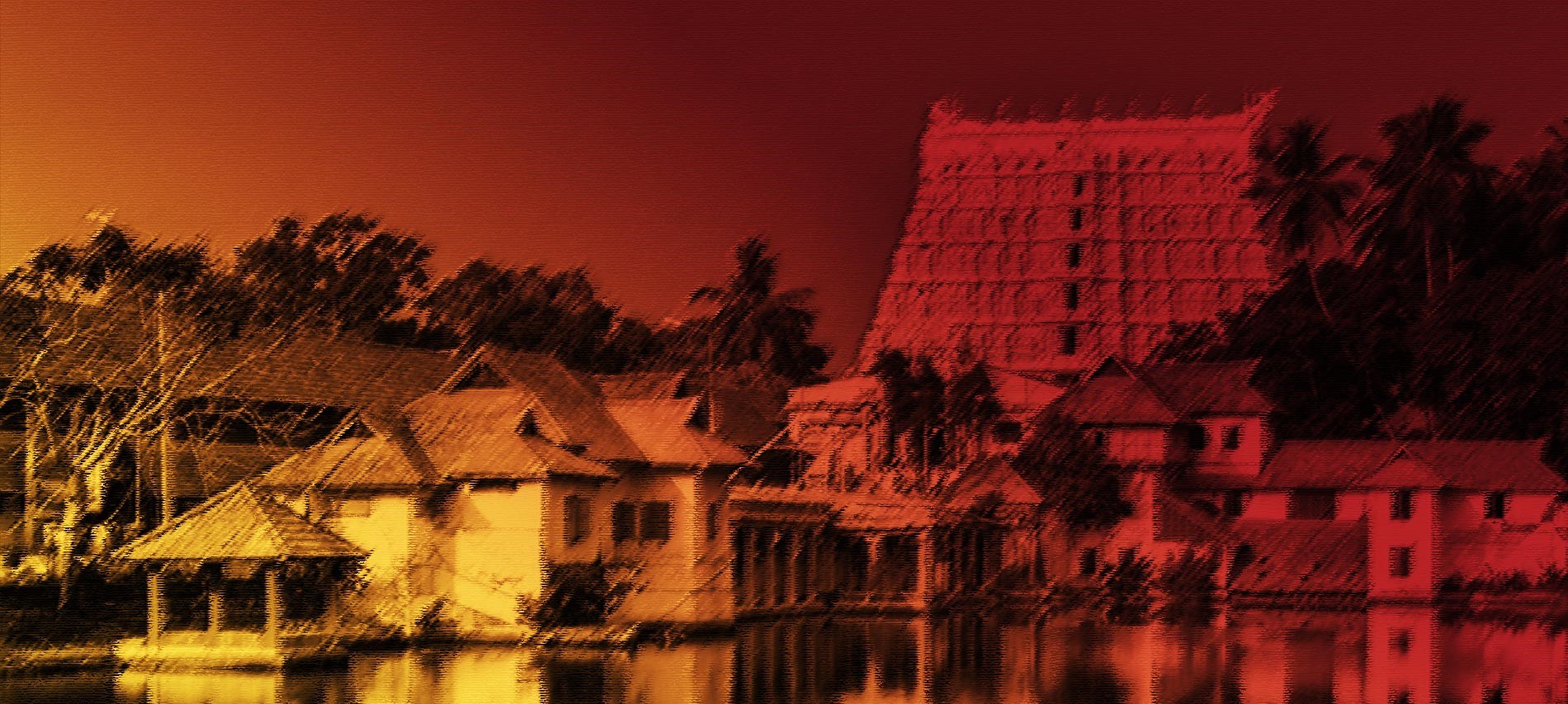
What happens when you have to choose between faith and logic? Temples are places of worship, oceans of tranquility, or so everyone thinks, till a series of murders threatens to destroy the carefully cultivated reputation of the royal family of Thiruvanathapuram.
In Ravi Subramanian’s latest novel, we follow Kabir Khan, Additional Director, CBI, as he breezes through a complex maze of fact and fiction, faith and deceit, religion and commerce to unravel the mystery and unmask the killers with only minutes left at his disposal. Slick, riveting and fast paced, In the Name of God is a truly gripping novel.
Here’s an exclusive excerpt from the book.
It was a deafening sound. The kind that is heard when metal crashes into glass, bringing the whole thing down. The ground shook. It almost felt like an earthquake.
Visitors at Wafi Mall, the largest and possibly most exquisitely designed luxury mall in the area, stood astounded. No one could fathom what was going on.
Gate 1 of the mall was to the right of the central courtyard and a few minutes away from the main parking lot. The ground floor, accessible from Gate 1, was home to a variety of luxury gold and jewellery and accessory brands—Chopard, Cartier, Damas, Rolex, Omega, Breitling and a few local biggies were within shouting distance from the gate.
Moments later another piece of glass came crashing down amid the perceptible sound of cars rumbling close by.
At precisely forty-eight minutes past noon—no one knew the significance of the time, if there was one—two Audi A6s, one black and one white, had driven up to Gate 1. It was not uncommon for cars to drive up to the mall entrance. It was some distance from the main parking and the mall clientele, the rich and famous of Dubai, were not used to walking with their shopping bags. Ordinarily, the cars stopped on the carriageway built for them, waited for a couple of minutes, picked up their masters and drove out. But at 12.48 that day, the two Audis did not stop at the main gate. However, that was only half as strange as the manner in which they drove up to the gate: The black Audi was furiously approaching in reverse, followed closely by the white one, their bonnets almost kissing each other.
By the time the lone security guard at the gate could react, the black Audi had already crashed through the glass-and-metal door with a deafening noise. It drove further into the mall, right up to the main lobby on the ground floor, and screeched to a halt, the white car following suit. It almost seemed as if the black Audi was the pilot car, clearing the way for the second car. But why was it being driven in reverse? No one knew. No one cared. All that anyone in the mall was worried about was saving his or her own life. What ensued was mass panic as scared shoppers started running helter-skelter.
Amidst the confusion, four masked men, all dressed in black, got out of the cars, while the drivers stayed back, keeping the engines running. Armed with Kalashnikovs, they fired indiscriminately in the air, sending the already panic-stricken crowd into a state of hysteria. Everyone assumed it was a terrorist attack. At the time, that’s what it seemed like. Nervously vigilant, the four men strode towards the aisle to the right of the entrance. It was narrow, short and housed only three shops: Cartier, D’Damas and Ajmal Jewellers. At any given point in time, the cumulative stock in all the three stores put together was worth over a hundred million dollars.
The leader of the group stopped in front of Ajmal Jewellers and gestured to the other three to take up their positions. It took just one bullet to neutralize the shop attendant who was furiously rolling down the safety grille. The men entered the store. Once they were in, they were cut off from the rest of the mall.
All anyone could hear was the sound of shattering glass and indiscriminate gunfire. In three minutes the men came out of the store and ran back to the two Audis. Each of them had a bag in one hand— clearly booty from Ajmal Jewellers. But as they were rushing, the last of the four tripped and fell. The bag slipped out of his hands and rolled ahead. The contents of the bag—jewellery and gemstones—spilled out on to the marble floor. ‘Damn!’ the leader swore. ‘Quick! Three more minutes and the cops will be here. We need to go!’ The fall had delayed them by forty-five seconds. They had to leave, else they would be sitting ducks for the Dubai Police. He continued towards the Audi even as his fallen team member recovered, and tried to gather the loot on the floor and put it back into the bag. He quickly got into the second Audi though he had not managed to collect everything that had fallen out of the bag.
Immediately the engines roared to life. The cars vroomed and this time, the white Audi reversed out of the shattered mall entrance followed closely by the black one. In no time, they had disappeared from sight.
The moment the cars left the mall, people rushed towards the jewellery showroom, a few stopping on the way to pick up the pieces of jewellery and curios that had fallen out of the robber’s bag.
Ajmal Jewellers was in shambles. Glass from broken windows and display units was strewn all over. There was blood everywhere. Seven people had been shot—six store staff and a sole shopper.
All of them were dead.
This is an excerpt from Ravi Subramanian’s ‘In the Name of God’.

Demystifying the Revolt that Ignited India’s Freedom Struggle: 6 Important Points from the 1857 Petition
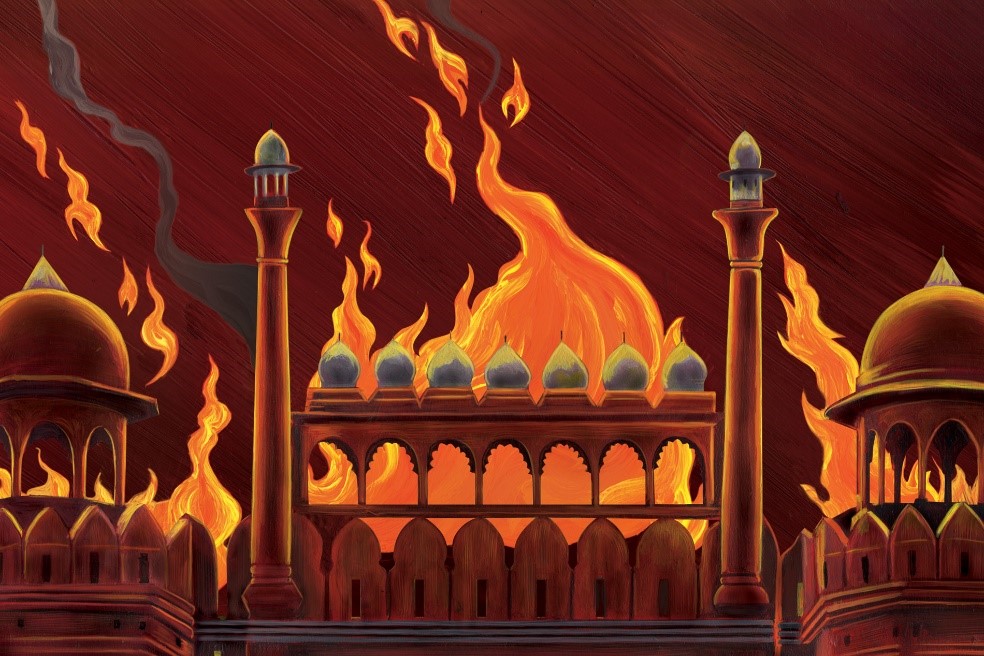
Zahir Dehlvi, an accomplished poet and young official in the court of Bahadur Shah Zafar, lived through the cataclysmic 1857 revolt that changed the course of history, marking the end of Mughal dominion and the instatement of the British Raj. Dehlvi’s memoir, written on his deathbed, chronicles the fading glory of the Mughal court and most importantly, pivots on the violent siege of Shahjahanabad.
Translated into English for the first time, Dehlvi’s memoir is intensely vivid and moving. Here are six defining moments from the petition made to the then Mughal Emperor by rebellious soldiers that demystify the great revolt.
Rebellious soldiers arrive in Delhi to petition Bahadur Shah Zafar

When cartridges misfired

The ‘meat’ of the matter

Shooting religious sensibilities

When an army was treated like outlaws

Meerut, the epicentre of the revolt

Get Zahir Dehlvi’s riveting account of the Revolt of 1857 here!
