Publish with Us

Follow Penguin

Follow Penguinsters

Follow Penguin Swadesh

India, War and the Armed Forces: Books to read


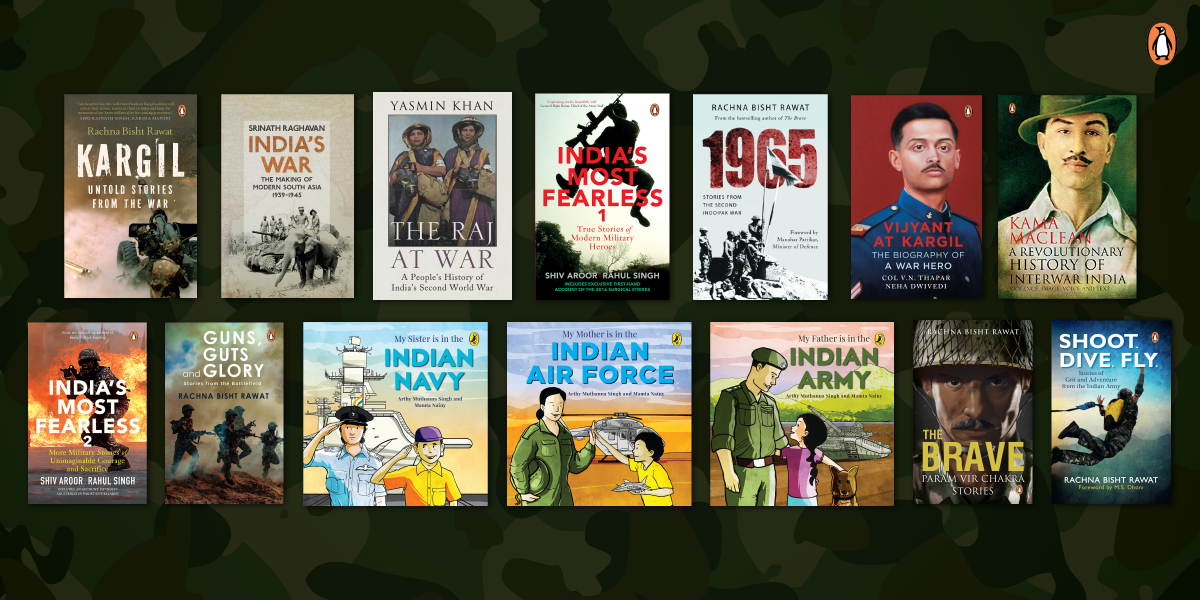
Our soldiers’ heroism and valour is perhaps not talked about enough. As the country celebrates Army Day, here are books by various authors on the history of India at war, accounts of fighting and stories from the border. Learn more about the impact of war: personally and politically.

Also included are some titles to introduce the special forces to your children: they talk about life in the Indian Army, Indian Air Force and Indian Navy.

The Raj at War
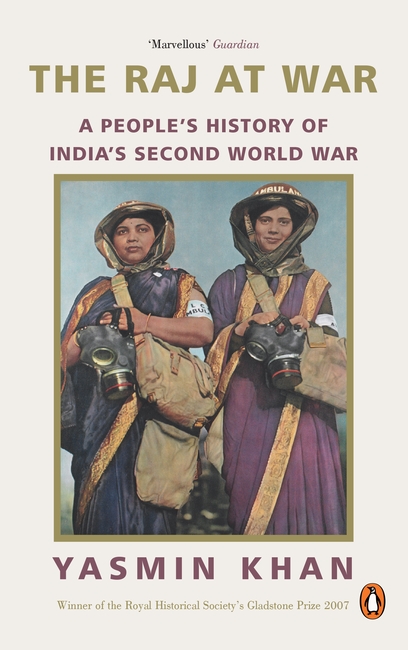
At the heart of The Raj at Warare the many lives and voices of ordinary Indian people. Yasmin Khan presents the hidden and sometimes overlooked history of India at war, and shows how mobilisation for the war introduced seismic processes of economic, cultural and social change―decisively shaping the international war effort, the unravelling of the empire and India’s own political and economic trajectory.


*

A Revolutionary History of Interwar India
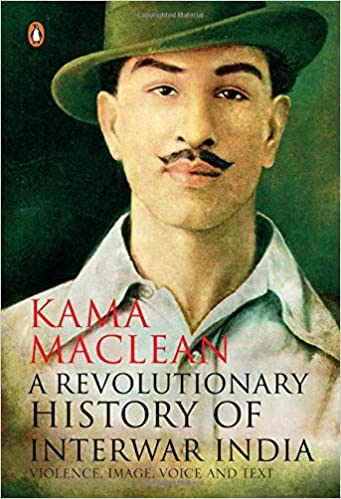
Focusing on the Hindustan Socialist Republican Army (HSRA), A Revolutionary History… delivers a fresh perspective on the ambitions, ideologies and practices of this influential organization formed by Chandrashekhar Azad and Bhagat Singh and inspired by transnational anti-imperial dissent. It is a new interpretation of the activities and political impact of the north Indian revolutionaries who advocated the use of political violence against the British.

*

India’s War
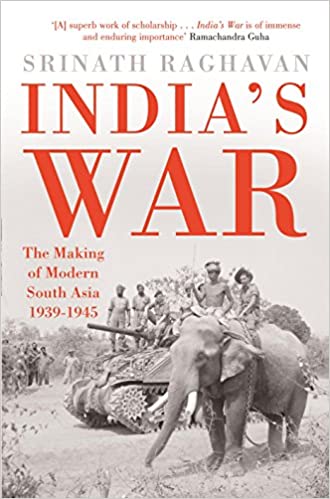
Between 1939 and 1945 India changed to an extraordinary extent. Millions of Indians suddenly found themselves as soldiers, fighting in Europe and North Africa but also – something simply never imagined – against a Japanese army threatening to invade eastern India. Many more were pulled into the vortex of wartime mobilization.

Srinath Raghavan’s compelling and original book gives both a surprising new account of the fighting and of life on the home front.

*

SHOOT, DIVE, FLY
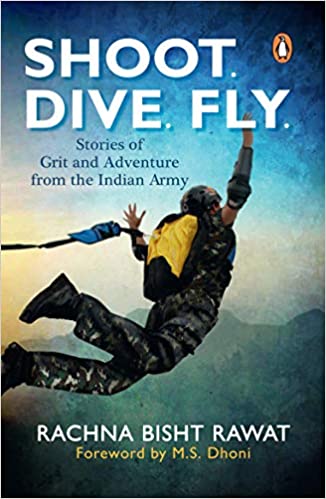
Learn all about an exceptional way of life SHOOT, DIVE, FLY aims to introduce teenagers to the armed forces and tell them about the perils-the rigours and the challenges-and perks-the thrill and the adventure-of a career in uniform. Ballroom dancing, flying fighter planes, detonating bombs, skinning and eating snakes in times of dire need, and everything else in between-there’s nothing our officers can’t do!. Read twenty-one nail-biting stories of daring. Hear from some amazing men and women about what the forces have taught them-and decide if the olivegreen uniform is what you want to wear too.

*

Vijyant at Kargil
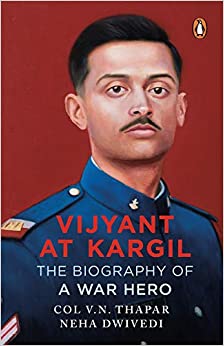
This was the last letter Captain Vijyant Thapar wrote to his family. He was twenty-two when he was martyred in the Kargil War, having fought bravely in the crucial battles of Tololing and Knoll. A fourth-generation army officer, Vijyant dreamt of serving his country even as a young boy. In this first-ever biography, we learn about his journey to join the Indian Military Academy and the experiences that shaped him into a fine officer.

*

Kargil
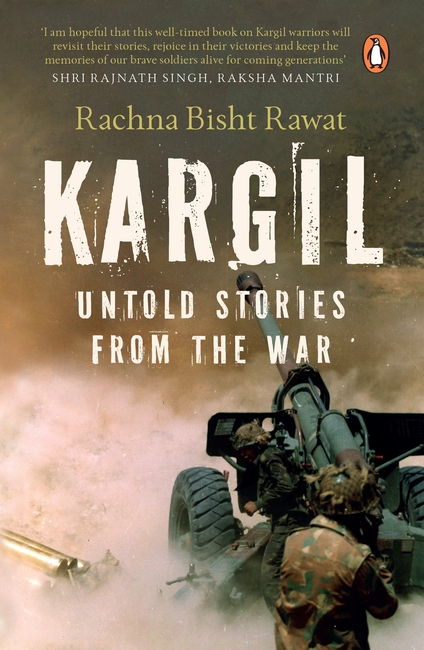
Kargil takes you into the treacherous mountains where some of Indian Army’s bloodiest battles were fought. Interviewing war survivors and martyrs’ families, Rachna Bisht Rawat tells stories of extraordinary human courage, of not just men in uniform but also those who loved them the most. With its gritty stories of incomparable bravery, Kargil is a tribute to the 527 young braves who gave up their lives for us-and the many who were ready to do it too.

*

Guns, Guts and Glory
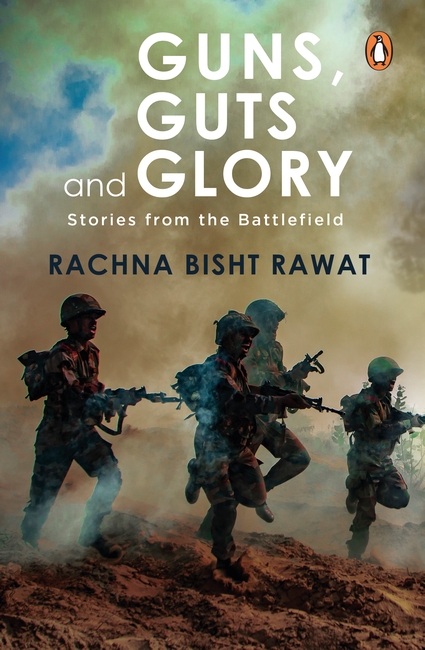
The perfect boxset to gift: this has three titles. 1965: Stories from the Second Indo-Pakistan War, Shoot, Dive, Fly: Stories of Grit and Adventure from the Indian Army and The Brave: Param Vir Chakra Stories that share stories from the war

*

India’s Most Fearless I &II
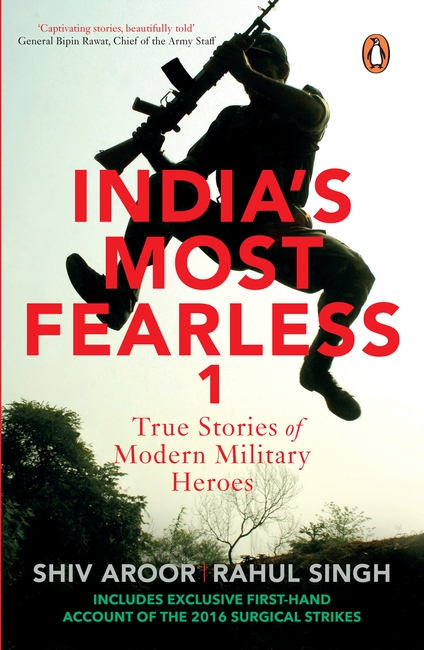
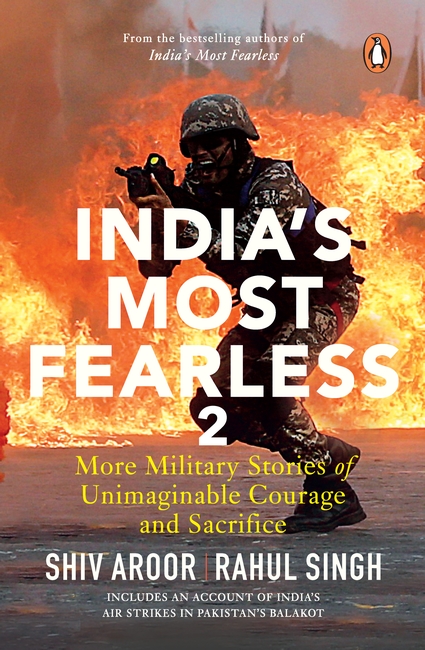
India’s Most Fearless covers fourteen true stories of extraordinary courage and fearlessness, providing a glimpse into the kind of heroism our soldiers display in unthinkably hostile conditions and under grave provocation. The highly anticipated sequel to India’s Most Fearless brings you fourteen more stories of astonishing fearlessness, and gets you closer than ever before to the personal bravery that Indian military men display in the line of duty.

*

1965
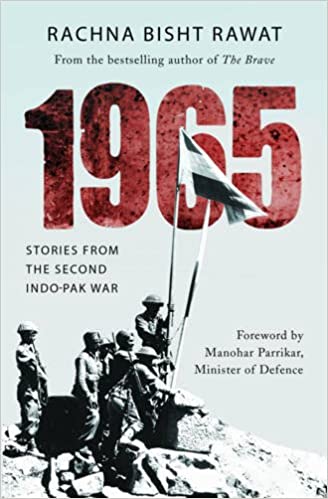
On 1 September 1965, Pakistan invaded Chamb district in Jammu and Kashmir, triggering a series of tank battles, operations and counter-operations. It was only the bravery and well-executed strategic decisions of the soldiers of the Indian Army that countered the very real threat of losing Kashmir to Pakistan. Recounting the battles fought by five different regiments, the narrative reconstructs the events of the 1965 Indo-Pakistan war, outlining details never revealed before, and remembers its unsung heroes.

*

The Brave 
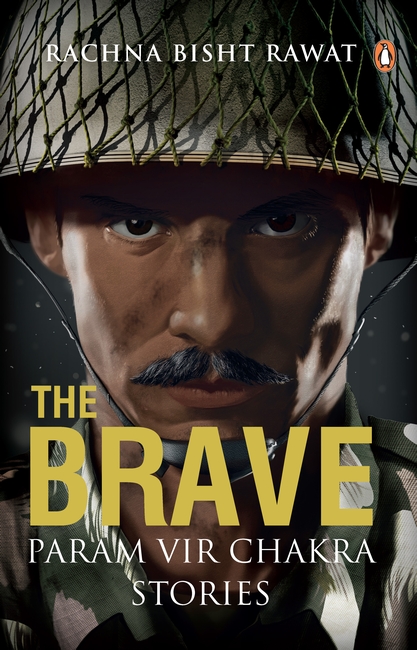
Twenty-one riveting stories about how India’s highest military honor was won. Rachna Bisht Rawat takes us to the heart of war, chronicling the tales of twenty-one of India’s bravest soldiers. Talking to parents, siblings, children and comrades-in-arms to paint the most vivid character-portraits of these men and their conduct in battle and getting unprecedented access to the Indian Army, Rawat has written the ultimate book on the Param Vir Chakra.


BOOKS FOR CHILDREN:

My Mother is in the Indian Air Force  
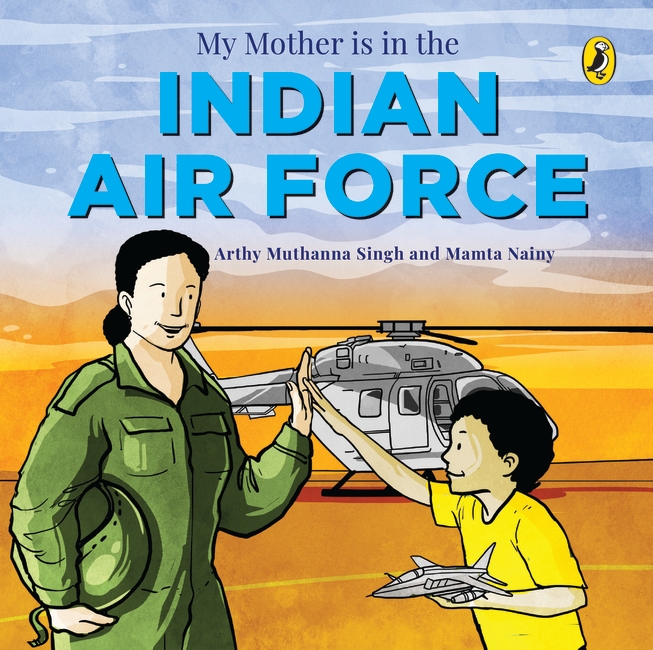
Rohan thinks his mom is a bit like a a superhero-she flies in to save the day, she loops and swoops between the clouds, she even jumps off planes wearing parachutes! But her job demands that she keep moving from place to place, and Rohan doesn’t want to move again. Not this time. Can he find a way to stay?

Read on to find out about the people and their families whose big and small acts of heroism make the Indian air force formidable!

*

My Father is in the Indian Army
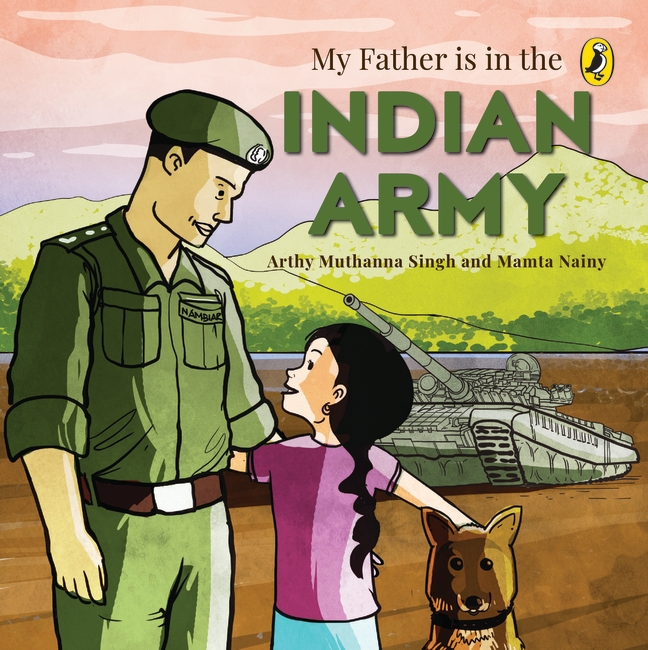
Beena’s dad is in the Indian army, which means that when duty calls, he’s got to get going at once. Beena knows her dad’s job is important, but her birthday is coming up. She really, really wants her dad to be at home to celebrate with her. Will he be able to make it back in time?

Read on to find out about the people and their families whose big and small acts of heroism make the Indian army inspiring!

*

My Sister is in the Indian Navy
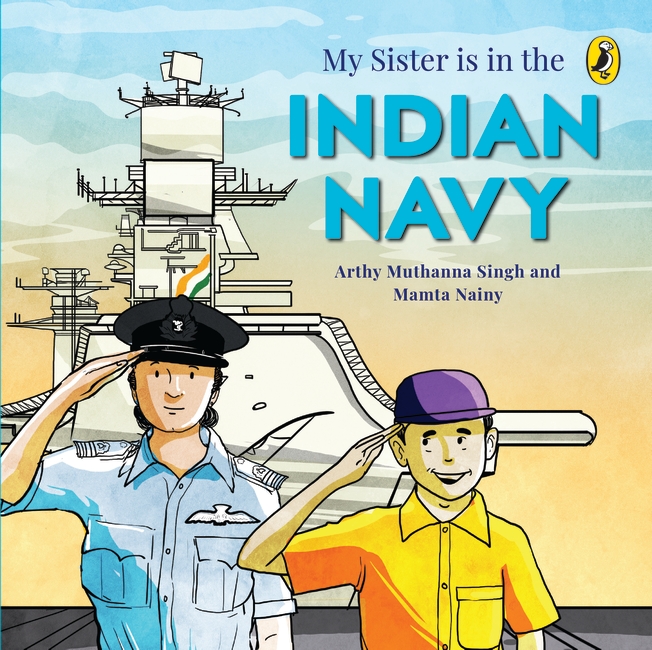
Nikky’s sister is in the navy. When her ship is in port, she and Nikky get to do lots of fun things together. Nikky would like to spend more time with his sister, and he doesn’t want her to leave, but he knows that, eventually, her sailing orders will arrive…

Read on to find out about the people and their families whose big and small acts of heroism make the Indian navy exemplary!
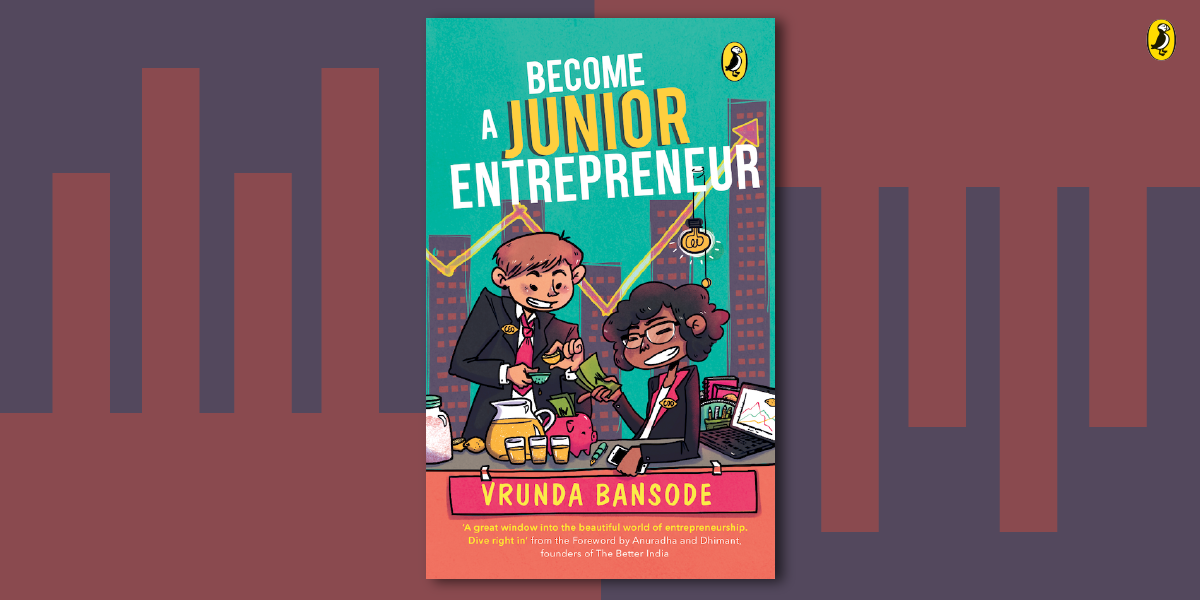
How to convert an idea into a venture; Become A Junior Entrepreneur

Entrepreneurs are bringing education online, connecting families at the touch of a button and revolutionizing the shopping experience-in short, they’re changing the way we live.

Following the success of Become a Junior Inventor, Vrunda Bansode gives every kid a hands-on crash course in entrepreneurship in her new book, Become a Junior Entrepreneur. Here is a checklist on how you can convert an idea into a venture, from the book.


Think of all the things that you can build on to develop your business as an entrepreneur and note them down. Right now, do not think of constraints. Just think of all that you would like to do. Innovate. Invent. Dream big! Now comes the reality check. Let us think of what you can actually work towards and have a good chance of succeeding at. How does one figure that out? Try to answer these questions for each of the businesses you have listed:

  • Do I myself have the skill of making this product or delivering this service?

(Hint: If you want to start a baking business but do not know how to bake, the answer would be No. If you want to start a web design service and are good at using design softwares yourself, your answer is Yes.)

  • Do I know who might be the customers for my business and can I reach them easily?

(Hint: If you are developing a book-trading app and know that many of your friends will use the service, your answer is Yes. But let’s say you are considering starting a garden clean-up service and don’t have any houses with gardens around you, the answer is No.)

  • Do many people need this product or service?

(Hint: Everybody needs and buys toothbrushes regularly, so the market is large. But not everyone needs dental braces, so the market is much smaller.)

  • Roughly how much money is needed to start this business and will I be able to get it through my savings, allowances and borrowings from family and friends?
  • Can I start working towards this right away – at least within a few months?

For any idea that you end up with more No-s than Yes-es, mark it as a passion to be pursued later. Where your Yes-es are more than the No-s, get going! If you have a Yes for all five questions, that’s a great place to start. But if you had to scrap all of your ideas, don’t be hassled. Just start again or see if you can modify an idea you like even a little until you get all five Yes-es.

Another great way to start is to team up with your friends. You will have more helping hands and great ideas on board, and there’s nothing wrong with having a little bit of fun on the side. Many great start-ups started with a team of founders rather than a single founder.

If it is not just you, but you and a group of friends who want to start a business together, then do the above as a group exercise. The group together will then have the skill of ideation, knowledge, access to prospective customers and the ability to get the money or seed capital—as it is called in the business world—to start your new business.

From sifting through ideas to running a business, Become a Junior Entrepreneur accompanies the reader through every stage of turning a nascent dream into a commercially viable start-up.


The genesis of Night of the Restless Spirits

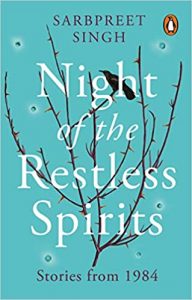
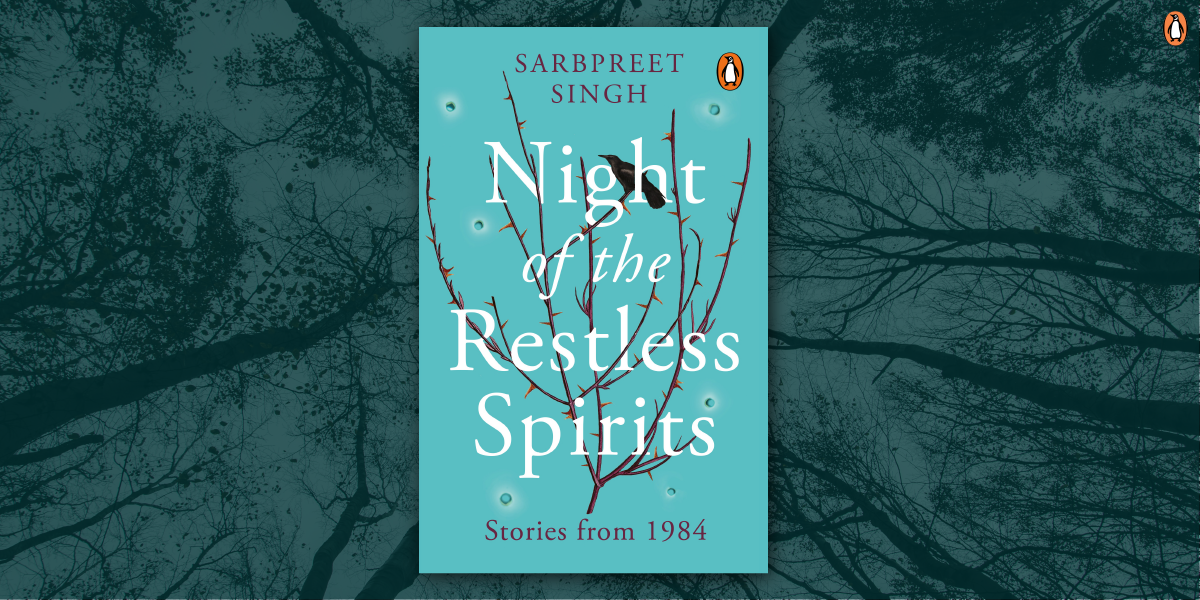
Night of the Restless Spirits is a collection of heart-rending short stories that attempt to capture the 1984 massacre in all its complexity and contradictions. Sarbpreet Singh’s stories take the reader on a journey fraught with love and tinged with tragedy, frayed relationships, the breaking down of humanity and resilience in the face of absolute despair, blurring the lines between the personal and political.
In this insightful account below, author Sarbpreet Singh shares how the 1984 massacre impacted his life and how this collection of stories came to be.

In the fall of 1987, I left India for the US. As a young Sikh who had grown up in Sikkim — a state which borders Nepal, Tibet, Bhutan and Bengal, my connection with all things Sikh was tenuous at best. When the story of Prime Minister Indira Gandhi’s assassination broke, I was in my final year at the Birla Institute of Technology and Science (BITS), in Pilani, Rajasthan, which was only a few hours away from Delhi but was far removed from the horrific events that unfolded there. We did have a few moments of alarm. The campus was invaded by ruffians under the command of local Congress leaders; Sikh students mostly went into hiding in their friends’ rooms for a day or so, as did I. There were a few violent incidents which were soon forgotten.

News of the ‘riot’ in Delhi did trickle through, but I don’t remember being particularly upset. I did look like a Sikh and was one, nominally, but to my everlasting shame, I didn’t think of the poor residents of the shantytowns of Delhi who had been butchered as ‘my’ people, particularly. Besides, like most non-Sikhs in the country and many, many Sikhs, particularly outside of The Punjab, I had a sneaking suspicion that we had ‘asked for it’. In those days, before the Internet, the press in India was tightly controlled; sometimes overtly and often voluntarily in slavish allegiance to the ‘National Interest’; every Sikh in India therefore, had the country’s collective finger pointed at him. The cycle of violence in The Punjab, which was fueled much more by cynical political agendas of every stripe, rather than a centralized Sikh insurgent movement, labelled each and every Sikh a villain and a terrorist. I know this because I experienced this first hand and carried the burden around for several years after I left Pilani and went to work in Bombay and Pune. The shouted insults. The suspicious looks. The muttered epithets. The incessant headlines that screamed out the collective guilt of the Sikhs relentlessly. Small wonder then that as a Sikh, I was bereft of self-esteem as well as compassion for the victims of 1984.

The pogrom was squarely cast as a spontaneous outburst in response to Mrs. Gandhi’s assassination and in classic Goebbelsian fashion it quickly metamorphosed into a ‘riot’. The focus rapidly shifted from the murdered, the orphaned and the violated, to the ‘evil’ Sikhs who openly rejoiced at the brutal killing of the nation’s leader. Any twinges of conscience or compassion that might have existed were supplanted by righteous indignation. The propaganda victory was decisive. Away from the Newspeak of the Indian government, I started discovering little bits and pieces that helped me, for the first time, form my own opinion about what had happened to the Sikhs of Delhi — and, of course, those targeted in scores of cities, town and villages across the country.

Somewhat to my surprise, my university library in New York yielded a treasure house of articles written from an independent perspective, almost completely by non-Sikhs. When I had visited Delhi in December of 1984, I had heard whispers about the ‘The Black Book’ within Sikh circles, which purported to tell the true story of what happened in the wake of Mrs. Gandhi’s assassination. ‘The Black Book’ was a booklet titled Who Are The Guilty, a report on the pogrom put together by two Indian civil rights organizations, The People’s Union for Civil Liberties (PUCL), led by Mr. Rajni Kothari and The People’s Union for Democratic Rights. In great detail, it documented what had happened in the neighborhoods of Delhi, based on eyewitness accounts. It fearlessly named names. High ranking Congress politicians and ministers; local Congress functionaries; local troublemakers and toughs, who seized upon an unprecedented opportunity to rape and pillage, and ordinary citizens who inexplicably turned against Sikh neighbors, by whose side they had lived amicably for years. The booklet was promptly banned by the Congress government and was unavailable in Delhi. Three years later, in the US, I was able to get my hands on a copy.

Front cover of Night of the Restless Spirits
Night of the Restless Spirits || Sarbpreet Singh


Another piece of writing which I discovered was the fearless reporting by Ms. Madhu Kishwar in Manushi. A word about Manushi: it was termed a ‘women’s magazine’ and had a small readership, but in reality was a rare independent and progressive voice in the India of the mid-eighties. Ms. Kishwar’s article detailed the pogrom as starkly and honestly as the PUCL report. The dark mutterings I had heard in Delhi were true! All of it had indeed happened. The capital of the ‘largest democracy in the world’ had indeed turned into a killing field where innocent Sikhs had been butchered with impunity by the very forces that were sworn to keep the peace in the land.

The third piece that had a profound impact on me was a paper by Dr. Veena Das, an anthropologist, published in the journal Dædalus. Based on interviews and field research in some of the poorest and hardest hit neighborhoods of Delhi, Dr. Das told the stories of several children who had been targets of violence during the pogrom. One of the most poignant stories in her paper was about a deaf mute boy called Avtar, whose father had been hanged by a lynching mob during the pogrom. Unable to articulate his pain in any other way, the child could only mime his father’s gruesome end.

The writings of these fearless and principled men and women helped me shed my share of the collective guilt that many young Sikhs of my generation carried around after the events of 1984. It created in my heart empathy for the victims, the children in particular, and tremendous respect for the few courageous ones who stood up for the victims, often at great risk to themselves and their families.


This was the genesis of  Night of the Restless Spirits.


—Sarbpreet Singh, author of Night of the Restless Spirits

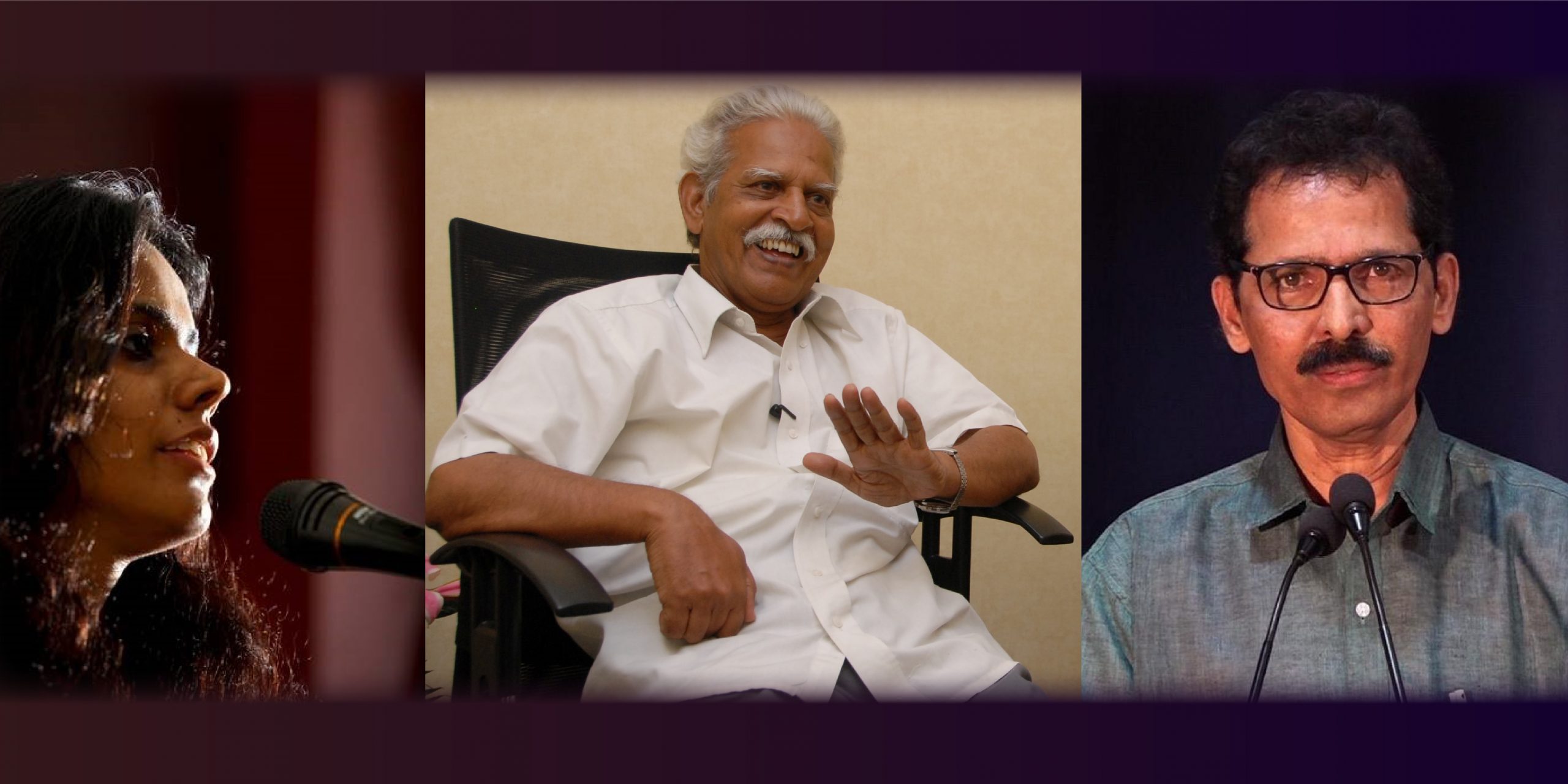
We are going to publish a book of poems by revolutionary poet Varavara Rao

We have acquired to publish a collection of poetry by Indian activist, poet, teacher and writer Varavara Rao. Titled Varavara Rao: India’s Revolutionary Poet, this book is being edited by N. Venugopal and Meena Kandasamy. It will be published under Penguin’s Vintage imprint and released in 2021.

Varavara Rao is one of India’s foremost revolutionary poets, and this book will be a commemoration of his immense talent and passion for poetry. His body of work is recognized as one of the strongest documents and critiques of Indian history since independence, and this collection of poems, translated into English, will be a record of his political beliefs and his assertion of the primacy of people’s rights. Rao is currently incarcerated in the Bhima Koregaon case. About two-thirds of the poems featured here were picked by the poet himself before his arrest.

Commenting on the book, N. Venugopal, who is one of the editors and the nephew of the poet, says, ‘This is like fulfilment of a long-cherished dream, as making Varavara Rao’s work accessible to English readers has been my dream for decade. As a person who has closely watched the making of his poems, as one of the first readers in manuscript form, I believe his poetry is an expression of his complete personality that blended social history, alternative people’s politics, people’s right to self-determination and unceasing urge for freedom. I am overwhelmed at this volume in English, and I thank Penguin Random House India, and particularly editor Elizabeth Kuruvilla, for taking up this wonderful project.’

Varavara Rao: India’s Revolutionary Poet is a book of firsts—this is the first time an authentic, representative collection of Rao’s poems is coming out in a single volume and the first time for some of Rao’s poems to be translated into English, exclusively for this edition. Editors N. Venugopal and Meena Kandasamy are working through various translations of the poems done over the course of six decades.

Meena Kandasamy says, ‘I am fascinated and incredibly excited to be taking on this enormous task of co-editing an anthology of writings by Varavara Rao. I remember looking at his name as a teenager in the newspapers of the day—a fierce and uncompromising poet. In my imagination, he was an icon, the very image of a rebel poet. Never did I imagine that I would one day have this rare honour of working so closely with his words, especially alongside my generous and brilliant co-editor, Venugopal. I am delighted that Penguin Random House India has decided to publish this anthology of his poetry, pooling his lifetime’s work into a comprehensive selection.’

Varavara Rao is a teacher, journalist, translator, public speaker, revolutionary writer, organization builder and has been a steadfast supporter of Naxalbari politics for five decades. But more than anything else, he is a revolutionary poet. He is the author of thirteen collections of poetry and sixteen books of prose (including seven books of literary criticism), all in Telugu. A collection of his letters from prison, Captive Imagination, was published by Penguin.

Elizabeth Kuruvilla, executive editor, Ebury Publishing & Vintage Publishing, Penguin Random House India, who commissioned the book, says, ‘The image of Varavara Rao, smiling and fist raised, as he was taken into custody is imprinted on our minds. He exuded an aura of optimism, fortitude and strength. Who is Varavara Rao? What does he stand for? Where better to turn for answers than to his own words, the poems that convey with such extraordinary power his emotions, his thoughts and purpose. Editors Meena Kandasamy and N. Venugopal are giving life and shape to this attempt to bring Varavara Rao and his work to readers in English. This is a collection that promises to stir emotions.’

Commenting on the publication of such a unique collection, Milee Ashwarya, publisher, Ebury Publishing & Vintage Publishing, Penguin Random House India, says, ‘Varavara Rao has been a symbol of gentle and graceful defiance. His fiery words and innate strength give hope to others to stay strong and follow what they believe in amidst challenging times. I am delighted that Varavara Rao’s poems will be available in English for a wider audience, and I congratulate the editors Meena Kandasamy and N. Venugopal to have made it possible. Thank you for choosing Penguin Random House India as the home for this exquisite collection.’

About the editors

N. Venugopal has been a poet, literary critic, journalist, public speaker and translator for the last four decades with about twenty-five books in Telugu and as many in translation from English to Telugu to his credit. He was in mainstream journalism for more than twenty years and has been running his own little magazine, Veekshanam, a monthly journal of political economy and society, for the last sixteen years.

Meena Kandasamy is a poet, translator and novelist who divides her time between London and Tamil Nadu. She’s published two collections of poetry, Touch and Ms Militancy, and three novels, The Gypsy Goddess, When I Hit You, and Exquisite Cadavers. She’s worked on poetry translations of Tamil feminist poets for Titled Axis (UK), female guerrilla poets for Guernica (US) and Tamil Dalit poets for Muse India.

Insights into elephant conservation in India

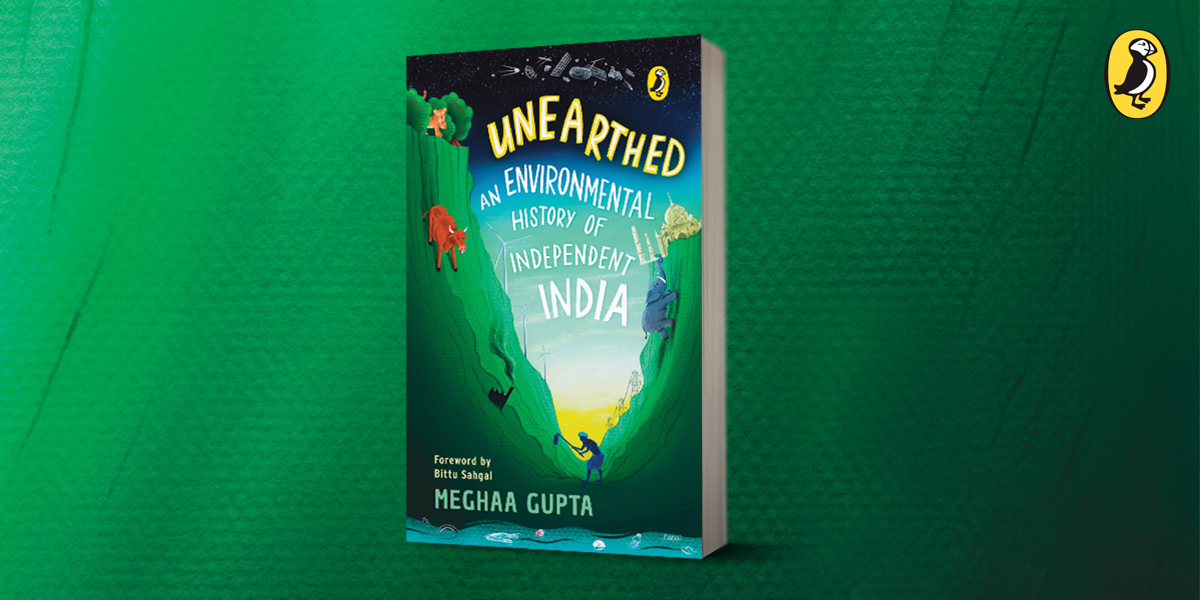
From the Green Revolution to the National Action Plan on Climate Change, Unearthed: An Environmental History of Independent India chronicles the country’s historical movements and significant green missions since 1947. Interspersed with lots of trivia, tales of eco-heroes and humorous cartoons, this easy-to-read account uncovers the story of a past with the hope that we will rewrite India’s future.

Read below an excerpt from the book:


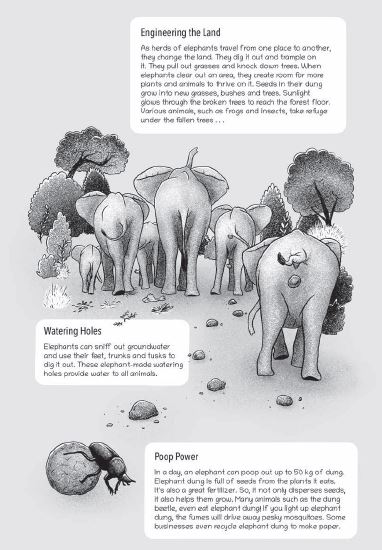
Elephants are the world’s largest land animals and they need a large area to live freely—not just a forest, but entire landscapes or ranges with paths they can use to walk from one place to another in search of food and water. After all, their needs are also big. An adult Asian elephant can eat more than 100 kilograms of food and drink more than 100 litres of water in a day. Just one forest is not enough to meet these needs. That’s why they walk hundreds of kilometres every year, allowing forests along their way to regenerate in time for them to return several months later. In the first few decades after Independence, India was on a development drive. Land was cleared to grow crops, natural forests were replaced by plantations or mined to support industry, rivers were dammed, roads were built, factories, power transmission lines and railway lines were set up in more places and the human population began to explode. No one really thought about leaving room for elephants. As their habitats were lost to development, cases of human-elephant conflict began to rise. Among the most common forms of this conflict was crop-raiding. Hungry elephants found an easy supply of food in farmlands. So, they ransacked crops worth a lot of money and sometimes ended up injuring and killing villagers. In retaliation, angry villagers slaughtered elephants by poisoning or electrocuting them.

States found themselves struggling endlessly with this mammoth problem. Finally, in 1989, the central government set up a task force to look into the details of the problems being reported by different states. Among other things, the task force found that elephants had disappeared from many places in which they were once found. It also noted that the wildlife reserves set aside during Project Tiger  in 1973 were woefully inadequate for elephants. Conserving elephants meant that India needed to think big. In 1992, the government launched Project Elephant to save its gentle giants.

Saving Elephant Habitats

The task force had identified landscapes inhabited by elephants across India. These included the forest habitats of elephants, as well as corridors or routes they used to walk from one forest to another in search of food and water. One of the first strategies of Project Elephant was to set aside forests in different landscapes as elephant reserves, fortified with plant varieties that could serve as food. It also sought to secure the corridors connecting these reserves to each other. The idea was to limit the need for elephants to venture into surrounding human habitats for food and water. In 2001, Singhbhum in Jharkhand was officially declared the first elephant reserve of India. Sprawling over thousands of square kilometres across three south-eastern districts of the state, the reserve was part of an elephant range that also included other reserves in West Bengal, Odisha and Chhattisgarh. Today, elephant reserves cover more than 65,000 square kilometres of forest land spread across eleven elephant ranges in different states in north-western, north-eastern, central and southern India. Meanwhile, more than 100 elephant corridors have been identified throughout the country with the help of the Wildlife Trust of India (WTI). Unfortunately, less than 30% of elephant reserves and corridors fall within legally protected areas of India. This has made it easy for land in elephant ranges to be diverted for everything from mining and agriculture to building tourist resorts and constructing roads. More than 60% of elephant corridors have a national or state highway passing through them while about twenty of them have railway lines. Hundreds of elephants have been killed in train accidents over the years. One of the worst accidents took place in 2013, when a passenger train passing through the Chapramari Forest in northern West Bengal failed to apply brakes on time and rammed into a herd of elephants that were foraging near and on the tracks. Five adult elephants and two calves were killed while ten elephants were injured. Various measures have been tried to prevent train accidents. These include reducing train speeds in elephant corridors and activating early warning systems. For example, in Tamil Nadu, sensors mounted on poles along the railway track monitor elephant movement. If an elephant sets off a sensor, a text message is sent to the railway staff and the animals are chased away. Railways have also experimented with some creative solutions such as devices that produce the buzzing sound of honeybees to keep elephants at bay. Long-term solutions include building overpasses or underpasses as safe crossing points for elephants, raising the railway track, or removing tracks from accident-prone areas.

A shrinking range, intersected by an ever-growing number of human settlements, farmlands, plantations, roads and railway lines, remains the biggest threat for elephants and a major reason behind human-elephant conflicts.


Get your copy of Unearthed: The Environmental History of Independent India here

Sadguru Patil and Mayabhushan Nagvenkar answer questions on the life of Manohar Parrikar and the process of writing a biography

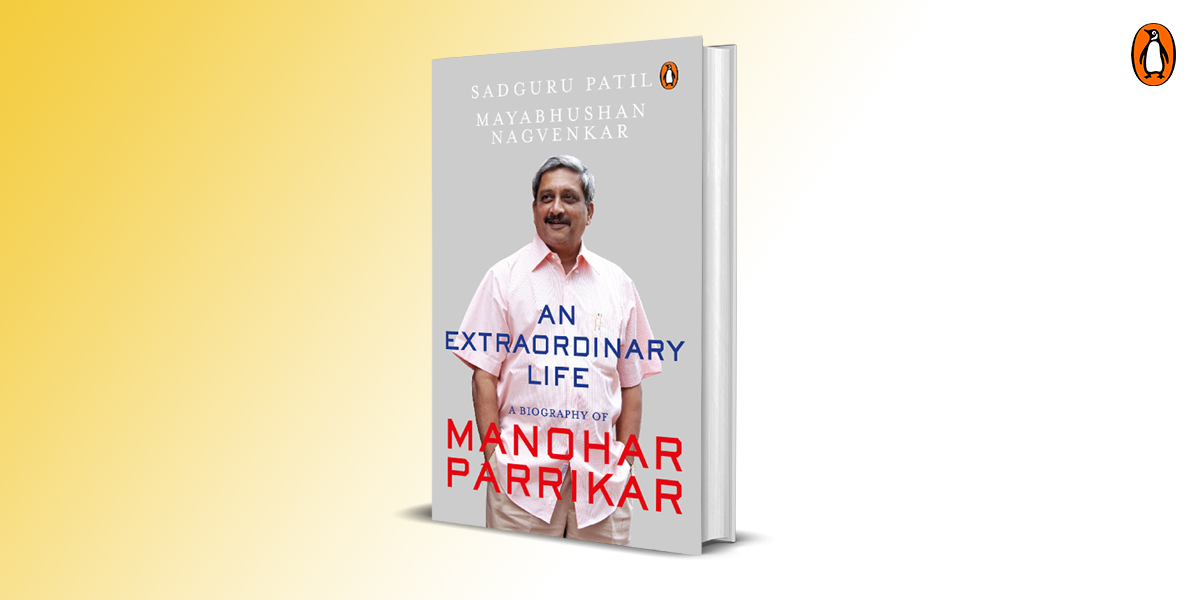
Over the last two decades, the exploits of one man, an IIT-Bombay alumnus, changed the way mainstream India looked at Goa and the political goings-on in the country’s smallest state. An Extraordinary Life traces the life and times of Manohar Parrikar through the informed voices of his relatives, friends, foes, bureaucrats and IIT contemporaries. The daily battles of a gifted individual are brought to the fore as he encounters love and vices. But more importantly, it showcases his rise in politics from the son of a grocery store owner in a nondescript town, a sanghachalak in Mapusa town, an Opposition MLA and leader, to a chief minister (on multiple occasions) and, finally, to a defence minister.

Read below an interview with the authors:


Writing a biography needs an author to write without bias. How difficult is that and how did you make sure of it?
The battle with bias is a constant one. A biography is less about relaying everything about a person’s life. It involves a process of curating a selection of events, personality traits and portrayal of relationships, so as to convey an account of one’s life, which is as accurate as it can get. The key is of course getting the selection right. It’s like a well curated menu, which has the right balance of hors d’oeuvres, main courses and desserts. You simply can’t make do with desserts alone. 


Could you share a moment while writing this book which made you pause in awe of Manohar Parrikar’s life?
The account in the book narrated by a Rashtriya Swayamsevak Sangh functionary Ratnakar Lele. He talks about a young Parrikar drawing water from a well when everyone else was asleep, using a coir-rope tackle and a pitcher for four hours from 11 pm to 3 am, because an electric water pump malfunctioned at an RSS camp attended by hundreds of swayamsevaks.  After he was told about Parrikar’s feat, Lele even checked the calluses on his swayamsevak’s palms to verify the story. 


To make sure you cover all angles while writing biography involves extensive research; could you share with us the research process?
Manohar Parrikar as a subject wasn’t a new one for us. As journalists we had covered developments involving him and the BJP extensively for our respective media publications. There was a blind spot though; his family. We laid a lot of emphasis to weave his family, including all his siblings and children, into the biography’s narrative. Their stories helped add fresh facets of his personality and familial relationships which were rarely discussed before, to the manuscript. 
The discipline of research involved meeting up with Sadguru and drawing up multiple questionnaires for resource persons we had identified. The questionnaires would be constantly updated ahead of second, third visits. Sadguru did a bulk of the information-gathering for the biography. Every time we met, we would discuss the day’s draft which needed to be written which was my responsibility. This research was complimented with both short and long deadlines to complete the daily quota of writing and for finalising individual chapters and eventually the manuscript. 


Do you have any advice for writers wanting to delve into the biography genre?
If you are diligent enough, the obvious won’t be missed. But one still has to look for the scattered pearls. And sometimes, you need to know which oyster to shuck open to get to that missing pearl. 


The life of a politician involves tremendous sacrifice; which one incident from Manohar Parrikar’s life did you think made him rethink how to balance work and personal life?
Just to set the context right, the word ‘sacrifice’ tends to read with a positive overtone. Something about it does not seem to be in harmony with the word ‘politics’, the way we see it in India in general. As far as Parrikar’s life goes, there appeared to be an imbalance between his family life and his political mission. The latter seems to have overwhelmed his time, leaving little for the former. But there is one incident, where Parrikar, who was rarely known to indulge own sons when they were young, made time during an official trip as Defence Minister to China, to buy a toy excavator and a truck from a shopping mall, for his grandson Dhruv. 


Do you think there should be more representation of youth in positions of power?
For the sheer need to break the status quo of stagnant political thought, yes. 


 You’ve covered politics extensively over the past years; any suggestions for people of this generation who wish to join politics?
If you are looking for tips from writers vis a vis joining politics, then maybe you don’t have it in you to make it there. If you feel you are cut out for it, just take the plunge. You will either learn to swim or be cast ashore by the tide. 


Get your copy of An Extraordinary Life here

An Introduction to Pashtoon Society

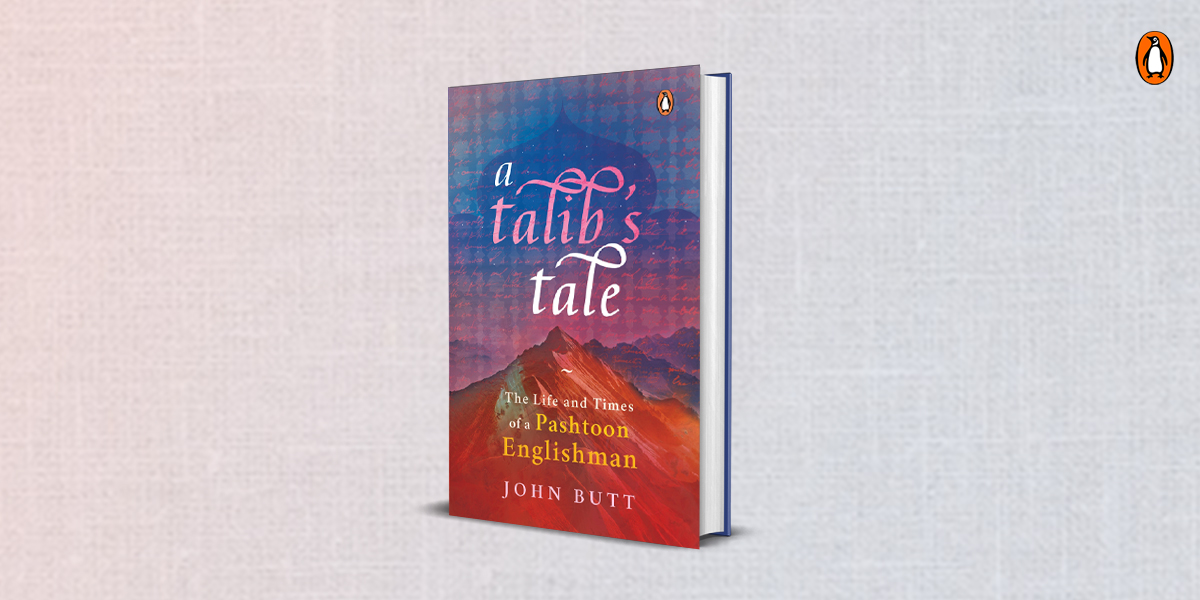
John Butt came to Swat in 1970 as a young man in search of an education he couldn’t get from his birthplace in England. He travels around the region, first only with friends from his home country, but as he befriends the locals and starts to learn about their culture and life, he soon finds his heart turning irrevocably Pashtoon.

He wrote about his experience in his book, A Talib’s Tale. What did he learn about the society while living in Swat?

Read on to find out:

Women are linked to honour

The most important thing for a Pashtoon is his honour. And that honour is inextricably tied to her honour: the honour of Pashtoon womenfolk.

Hippies are liked by some, disliked by some

The government disliked hippies, especially impoverished vagrants like myself. The population at large loved them, since they adopted their lifestyle…stayed in their hotels, even though they did not have much money to spend.

Rumours are pretty credible in Pashtoon society

In Pashtoon society, rumour has more credibility than confirmed truth.

The fall of Amanullah Khan in 1929 was a watershed moment

 Ever since then[the fall], the harmony between the forces of Pashtoonwali and Islam has been upset; the balance between progressive and conservative forces of Pashtoon society battered.

The progressive had no time for jihad

The progressive, nationalist, secular Pashtoon forces had no time for jihad. In fact, they were sympathetic to the socialist government in Afghanistan and even had a soft spot for their Soviet backers, against whom jihad was being conducted.

Women were able to take more risks in society

Women are able to act with a lot more impunity than men in Pashtoon society.

There’s a need to heal the rift between the different sections

If there is one lesson I have learnt from the lifetime I have spent amongst the Pashtoons, it is that the key to Pashtoons living at peace with themselves is to heal this rift between progressives and conservatives—the secular and religious elements of Pashtoon society—that bedevils their public life.


A Talib’s Tale –The Life and Times of a Pashtoon Englishman is available now (also as an e-book)!

The Yogini- An Excerpt

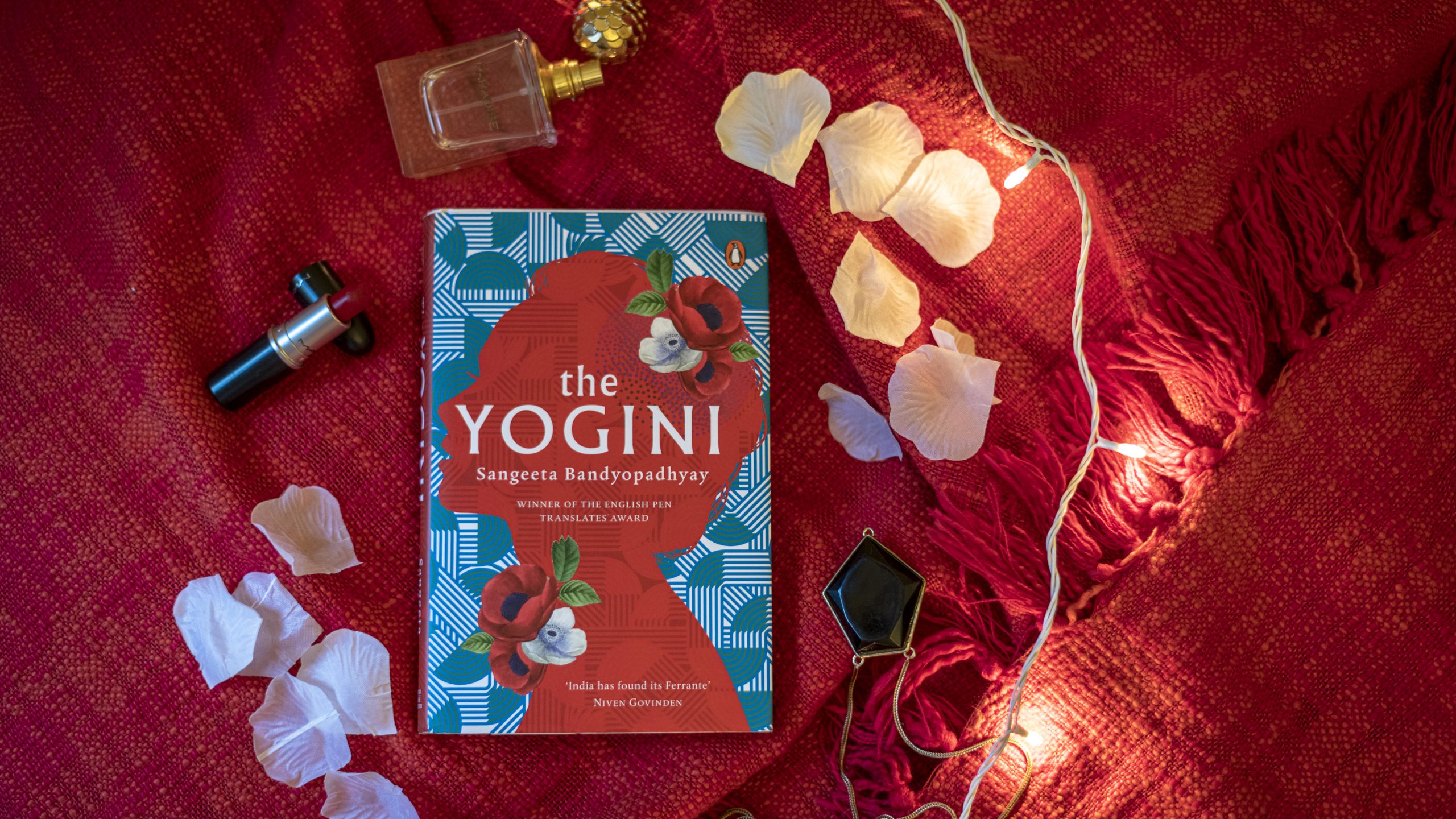
With her days split between a passionate marriage and a high-octane television studio job, Homi is a thoroughly modern young woman-until one day she is approached by a yogi on the street. This mysterious figure begins to follow her everywhere, visible only to Homi, who finds him both frightening and inexplicably arousing.

Read an excerpt from The Yogini below:


It was late into the inflated night when she returned to her senses for the first time. She found herself standing by the door of a train compartment, holding the handles and swaying with the train as it hurtled along. Her body lurched alarmingly from side to side. She was leaning forward perilously. She would fall out of the train at any moment.


Was it time, then? she wondered. Was this how she and her fate were to be separated? Was this, finally,what fate had written for her?


The tracks seemed to howl fiercely at her when she looked down. Sparks flew from the friction of steel against steel. All she had to do was loosen her hold for everything to end.


Rattling a thousand chains, her soul cried out, Freedom! Freedom!


And she decided to jump. But then someone gripped her elbow. She didn’t turn around. There was no need to, for she knew who it was. She could see the hand clamped on her arm – the wrist encircled by rosary beads. A copper band, an iron chain, a red thread, chunky amulets. He scavenged for all sorts of things to slip around his wrist. Mounds of grime were gathered beneath his long nails. She raised her eyes to look – not behind her, but ahead. There was no beginning, no end, only a train passing through an endless expanse. No artificial lights shone now – the world beyond was lit generously by the moon, its beams crystallised in pools of water in the fields, the light magnified a million times by the reflections. The train raced through a silvery kingdom. Her heart was disproportionately heavy – but she no longer had cause to be sad or angry.


An icy current whispered in her ear, ‘Homi! Homi! Empress?’


‘Come closer, Empress.’


How much closer, man with the matted locks? Haven’t I already given you the right to claim me? So many thoughts flow through my head, but not one of them will lead to anything tangible. Not one will leave a physical imprint on the planet. Such notions, only some of which I embrace. I let go of the rest, to ensure that you have no power over me – neither over the causes of things happening to me, nor over their effects. Not even over the merging of cause and effect, because both are mechanical in my life, just as you are, an automaton. This is my final observation about existence. There is no such thing as free will here. No fundamental independence. I have long accepted that I have a natural fate in this world, a human being’s fate. I am no one, fate is everything. You are everything. This way, I can be closer to you too, can’t I?

These thoughts ran through her head, but she wished, too, to escape, to be free. A strange force took hold of her. She jerked her arm out of his grasp, and, the very next moment, whirled around to strike at the figure with the matted locks. With all her strength she lashed out at him, hoping that the impact would throw him off the train.


Following the inexorable pull of tradition, the mystic forces that run beneath the shallow surface of our modern existence like red earth beneath the pavements, The Yogini is AVAILABLE NOW!


The Science of Ahimsa- An Excerpt from ‘The Power of Nonviolent Resistance’

‘Where there is love there is life.’ – Gandhi

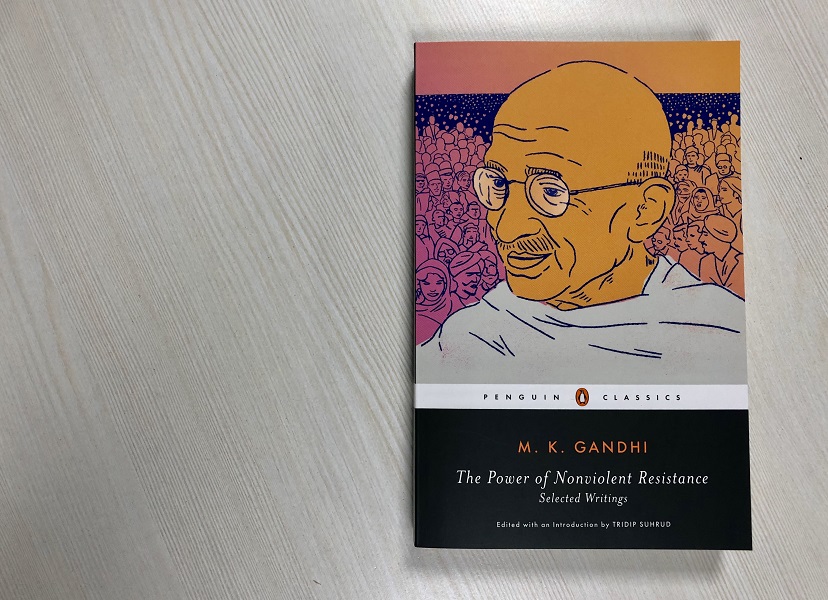
With the new year round the corner, take the time to read The Power of Nonviolent Resistance: Selected Writings , a specially curated collection of Gandhi’s writings on nonviolent resistance and activism.

Read an excerpt from the book below:

Toward the end of his life, Gandhi was asked by a friend to resume writing his autobiography and write a “treatise on the science of ahimsa.” What the friend wanted were accounts of Gandhi’s striving for truth and his quest for nonviolence, and since these were the two most significant forces that moved Gandhi, the friend wanted Gandhi’s exposition on the practice of truth and love and his philosophical understanding of both. Gandhi was not averse to writing about himself or his quest. He had written—moved by what he called Antaryami, the dweller within, his autobiography, An Autobiography or the Story of My Experiments with Truth. Even in February 1946 when this exchange occurred he was not philosophically opposed to writing about the self. However, he left the possibility of the actual act of writing to the will of God.

On the request for the treatise on the “science of ahimsa” he was categorical in his refusal. His unwillingness stemmed from two different grounds: one of inability and the other of impossibility.

He argued that as a person whose domain of work was action, it was beyond his powers to do so. “To write a treatise on the science of ahimsa is beyond my powers. I am not built for academic writings. Action is my domain, and what I understand, according to my lights, to be my duty, and what comes my way, I do. All my action is actuated by the spirit of service.” He suggested that anyone who had the capacity to systematize ahimsa into a science should do so, but added a proviso “if it lends itself to such treatment.” Gandhi went on to argue that a cohesive account of even his own striving for nonviolence, his numerous experiments with ahimsa both within the realms of the spiritual and the political, the personal and the collective, could be attempted only after his death, as anything done before that would be necessarily incomplete. Gandhi was prescient. He was to conduct the most vital and most moving experiment with ahimsa after this and he was to experience the deepest doubts about both the nature of nonviolence and its efficacy after this. With the violence in large parts of the Indian subcontinent from 1946 onward, Gandhi began to think deeply about the commitment of people and political parties to collective nonviolence. In December 1946 Gandhi made the riot-ravaged village of Sreerampore his home and then began a barefoot march through the villages of East Bengal.

This was not the impossibility that he alluded to. He believed that just as it was impossible for a human being to get a full grasp of truth (and of truth as God), it was equally impossible for humans to get a vision of ahimsa that was complete. He said: “If at all, it could only be written after my death. And even so let me give the warning that it would fail to give a complete exposition of ahimsa. No man has been able to describe God fully. The same hold true of ahimsa.”

Gandhi believed that just as it was given to him only to strive to have a glimpse of truth, he could only endeavor to soak his being in ahimsa and translate it in action.


The Power of Nonviolent Resistance: Selected Writings by Gandhi  gives context to the time of Gandhi’s writings while placing them firmly into the present-day political climate, inspiring a new generation of activists to follow the civil rights hero’s teachings and practices. The book is available now!

Meet Munir Khan and Mohini Singh from ‘A Delhi Obsession’

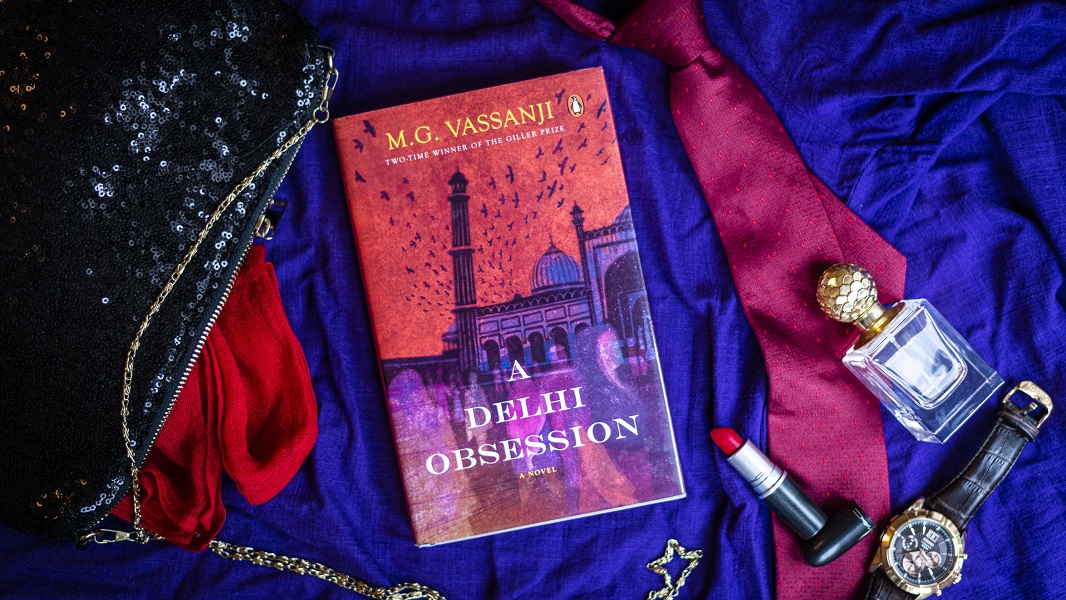
Two-time Giller Prize winner M.G. Vassanji returns with a powerful new novel, A Delhi Obsession about grief and second chances, tradition and rebellion, set in vibrant present-day Delhi.

Munir Khan, a recent widower from Toronto, meets the charming and witty Mohini Singh, a married liberal newspaper columnist, and what follows is a passionate love affair–uncontrollable yet impossible.

Read on to meet these two characters.


Munir Khan

Munir Khan was a puzzle. Such a floater. Without an anchor. But likeable… perhaps because of that?

Munir is a westernized agnostic of Muslim origin. He was born in Kenya and now, lives in Toronto. But he actually is an Indian (in a sort of way) who in reality, is ignorant about India. He lost his wife of many years in a car accident. A ‘mediocre’ writer by profession who had seen literary fame, he also has a daughter named Razia. He believes in a simple philosophy of living, in right and in wrong and respects all faiths. He likes history and enjoys finding out about the past. On a whim, to restore his family connections, he decides to visit India where he ends up meeting Mohini.

~

Mohini Singh

Smart, witty and liberal, that was her style.

Mohini is a modern Hindu woman. Utterly attractive and charming, she’s traditional and religious, but also a provocative newspaper columnist. She writes a weekly column for the daily paper the Express Times and teaches a course in English at a college twice a week. Her family were refugees from Sargodha, which became a part of Pakistan after the Partition. She had married early and has two daughters. She believes in prayer and turns to God for guidance. She usually look stunning in a saree and has a twinkle in her eye.

~

These two are from different worlds. To know more about them and their story, grab your copy of A Delhi Obsession today.

error: Content is protected !!