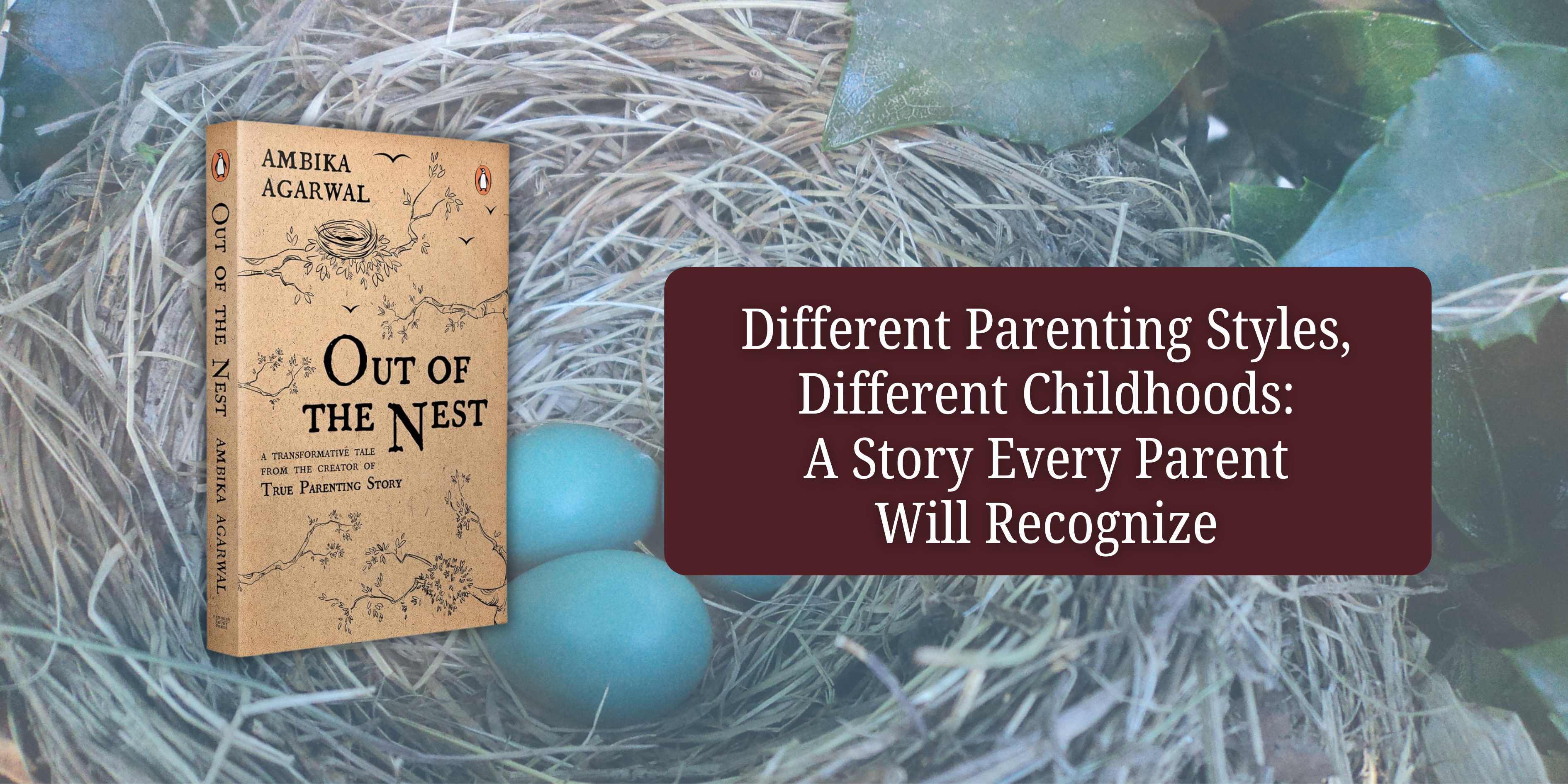
Through the story of Momo and Coco, Ambika Agarwal in Out of the Nest turns modern parenting into an emotionally rich and surprisingly reflective story about control, trust and emotional safety.
***
High Above the Jungle
High up in the trees, far above the jungle floor, there was a wide branch. And on that branch sat two nests.
They sat near each other, but each had its own space. They shared the same sky, the same tree, the same branch. But inside, they felt worlds apart.
In Nest A, everything was quiet. Still. Careful.
This was the home of Momo, a small bird with soft feathers and thoughtful eyes. Momo didn’t talk much. He watched. He listened. He thought deeply, even when no one asked him to.
His parents, Paul and Piku, had built this nest with great care. Every twig had been picked for strength. Every wall was high. The floor was woven tight and smooth, pressed down to avoid cracks. It didn’t wobble. It didn’t shift.
It was made to be safe. And safe meant strong. Strong meant precise.
Paul believed in safety. He believed in order.
Each morning, he stood at the edge of the nest like a soldier, tall and still, eyes scanning the sky. Not because he feared the sky . . . but because he feared what could happen if he stopped watching, he felt it was his job to watch, to protect.
His feathers were always tidy. His eyes didn’t miss a thing. He didn’t smile much. He wasn’t cold. Just serious.
Because to Paul, love meant keeping your family safe.
And keeping them safe meant being in control. Inside the nest, Piku moved with a quiet rush. She didn’t raise her voice. She didn’t bark orders. But she never stopped moving.
She smoothed corners again and again, even when they were already neat. She rearranged berries in small piles, only to move them back. Her wings fluttered often, small and unsure, like whispers. She cleaned. She adjusted. She checked. Then started over. And over again.
She wasn’t angry.
She wasn’t loud.
She was afraid of getting it wrong.
And the only way she knew how to love was by fixing things. Fixing made her feel needed. And being needed made her feel calm.
In the middle of the nest, Momo lay quietly, curled into himself. He was already awake. But he didn’t move.
He didn’t stretch his wings like some young birds do at sunrise. He just stayed still.
Not because he was lazy. Not because he was sleepy. But because he was waiting.
In Nest A, the day never began from inside you.
It always began when someone else said, ‘Start.’
Across the same branch, another sound floated in the air—carefree, bright, full of laughter.
Nest B was awake too.
This was the home of Coco, a small bird with bright eyes and restless wings. Coco moved before he thought, but he was deeply kind and empathetic, always noticing how things felt for himself and for others. He laughed easily and sensed when others didn’t. He explored the world with his whole body and an open heart, as if every moment was an invitation, not just to play, but to understand and connect.
His parents, Ray and Raina, had built their nest differently.
Ray believed in trust. Not control.
Each morning, he watched Coco with an easy smile.
To Ray, love meant letting him stumble. Letting him learn where his own wings could take him.
Raina believed in listening. Not just to words, but to pauses, to shifts, to the quiet between moments.
The way she knew how to love was by noticing. Noticing helped Coco feel understood. And when Coco felt understood, Raina felt calm.
It showed in the way their mornings unfolded. Coco was spinning in circles, laughing loudly, his wings flapping out of rhythm. His movements were not graceful. But they were full of joy. He looked like a little puff of wind, tumbling without a care.
‘One more spin before breakfast!’ called Ray, his father, laughing with him.
‘Easy now, feel your balance, little feather!’ added Raina, his mother, with a voice like a song.
But she didn’t rush to stop him. She didn’t grip his wing. Her words were soft, like a gentle cushion instead of a wall.
There was no hurry in Nest B.
No sharp orders.
Just warmth, and space, and time to be yourself.
Their nest wasn’t perfectly shaped. The twigs poked out a little. The edges weren’t even. But it felt like a place where things could grow.
Something across the branch caught Momo’s eye.
Momo turned his head, just a little, peeking through a small space in the wall of his nest.
He saw Coco spinning.
He saw Raina smiling.
He had seen this many times before.
And as always, a small flutter rose in his chest, light and strange, almost like a wing wanting to stretch. He didn’t know the word for it. But he felt it, often.
And as always, he tucked the feeling back inside and looked away.
‘Momo,’ Paul called, his voice steady. ‘Time to get up.’
Momo sat up quickly. His feathers were messy from sleep. He tried to fix them with one wing. But Paul reached over first, brushing them down.
‘Posture,’ he said. ‘Discipline starts with the body.’
Momo nodded. He didn’t ask why. He never did. He just followed. Because in Nest A, getting it wrong meant repeating the drill.
And getting it right meant peace.
Outside, both nests still looked the same. Two shapes on the same branch. Two homes under the same sky.
Inside, two different mornings had begun.
And mornings don’t always tell the whole story.
***
Get a copy from Amazon or wherever books are sold!