Publish with Us

Follow Penguin

Follow Penguinsters

Follow Penguin Swadesh

Death: The Most Fundamental Question – An Excerpt From ‘Death’

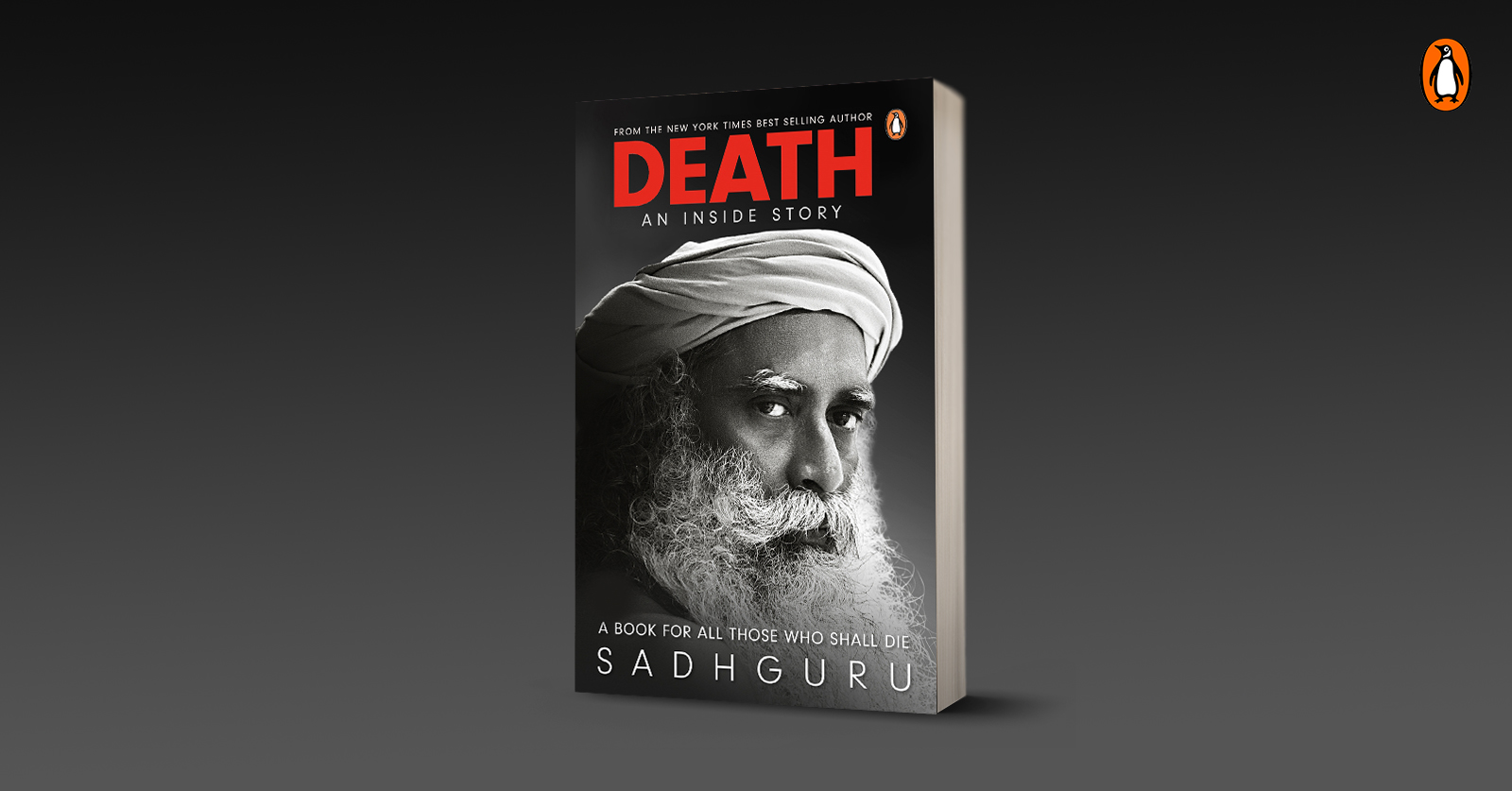
Death is a taboo in most societies in the world. But what if we have got this completely wrong? What if death was not the catastrophe it is made out to be but an essential aspect of life, rife with spiritual possibilities for transcendence? For the first time, someone is saying just that.

In this unique treatise-like exposition, Sadhguru dwells extensively upon his inner experience as he expounds on the more profound aspects of death that are rarely spoken about. From a practical standpoint, he elaborates on what preparations one can make for one’s death, how best we can assist someone who is dying and how we can continue to support their journey even after death.

Whether a believer or not, a devotee or an agnostic, an accomplished seeker or a simpleton, this is truly a book for all those who shall die!

Here’s an excerpt from the book:

Death is a very fundamental question. Actually, death is closer to us than the statistics we read about it. Each moment, death is happening in us at the organ and cellular levels. This is how, with just one look at your insides, your doctor knows how old you are. In fact, death began in us even before we were born. Only if you are ignorant and unaware does it seem like death will come to you someday later. If you are aware, you will see both life and death are happening every moment. If you as much as breathe a little more consciously, you will notice that with every inhalation there is life, with every exhalation there is death. Upon birth, the first thing that a child does is to inhale, to take in a gasp of air. And the last thing that you will do in your life is an exhalation. You exhale now, and if you do not take the next inhalation, you will be dead. If you do not get this, just do an exhalation, hold your nose and do not do the next inhalation. Within a few moments, every cell in your body will start screaming for life. Life and death are happening all the time. They exist together, inseparably, in the same breath. This relationship goes even beyond the breath. Breath is only a supporting actor; the real process is of the life energy, or prana, that controls physical existence. With certain mastery over prana, one can exist beyond breath for substantial amounts of time. Breath is a bit more immediate in its requirement, but in the same category as food and water.

Death is such a fundamental aspect, because if one small thing happens, you can be gone tomorrow morning. Why tomorrow morning—one small thing now and you could be off the next moment. If you were like any other creature, maybe you would be unable to think about all this, but once one is endowed with human intelligence, how can you just ignore such a significant aspect of your life? How can you avoid it and live on as if you are going to be here forever? How is it that after living here for millions of years of life, human beings still don’t know a damn thing about death? Well, they know nothing about life either. We know all the trappings about life, but what do you know about life as such?

Fundamentally, this situation has come about because you have lost perspective as to who you are in this Universe. If this solar system, in which we are, evaporates tomorrow morning, no one will even notice it in this Cosmos. It is that small, just a speck. In this speck of a solar system, Planet Earth is a micro speck. In that micro speck, the city you live in is a super-micro speck. In that, you are a big man. This is a serious problem. When you have completely lost perspective as to who you are, how do you think you will grasp anything about the nature of life or death?


Want to read more? Death is available now!
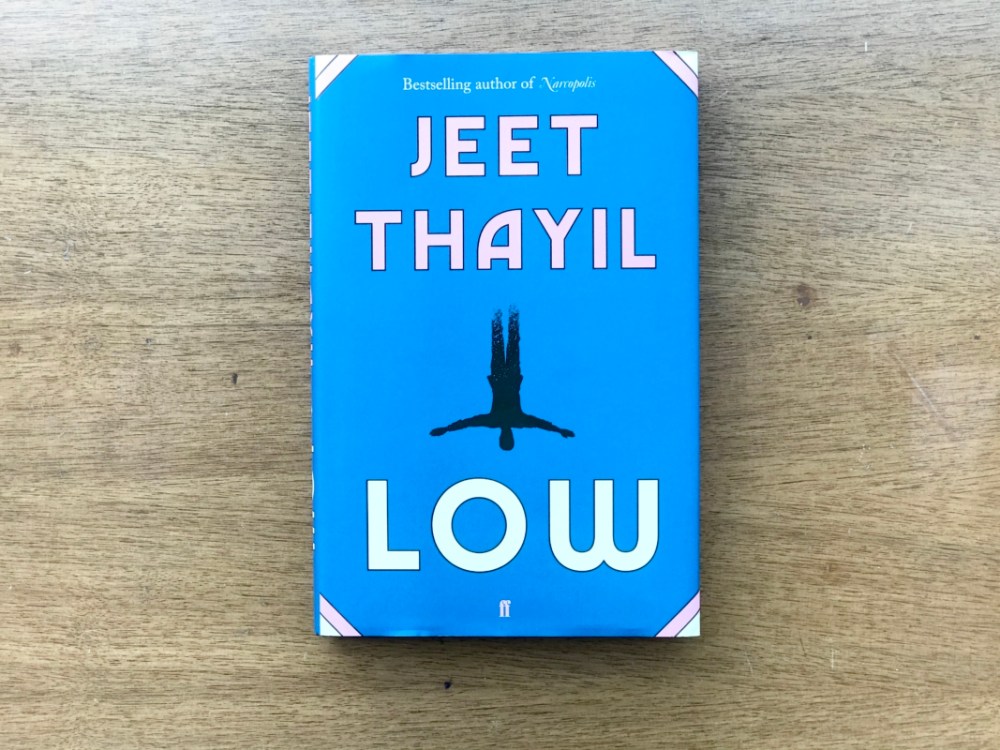
Will Ullis be Alright?- An Excerpt from ‘Low’

Following the death of his wife, Dominic Ullis escapes to Bombay in search of oblivion and a dangerous new drug, Meow Meow. So begins a glorious weekend of misadventure as he tours the teeming, kaleidoscopic city from its sleek eyries of high-capital to the piss-stained streets, encountering a cast with their own stories to tell, but none of whom Ullis – his faculties ever distorted – is quite sure he can trust. Heady, heartbroken and heartfelt, Low is a blazing joyride through the darklands of grief towards obliteration – and, perhaps, epiphany.

Read an excerpt from the book below:

The mysterious quality of in-flight air. The low whine of tinnitus, a charged anxious ringing that kept adjusting its volume. The sense of something about to happen, something decisive. Then the lights dimmed as the aircraft dropped through the clouds and prepared to land. It taxied and turned, taxied and stopped.

Payal sprang up again, grabbed her wheeled case from the overhead bin, and went to the front exit, resplendent in her sari. Ullis stayed where he was until the other passengers had left. Then he put half an Ambien under his tongue and took the white plastic box from the overhead bin and floated towards the lovely slum city.

He’d left Delhi on a whim, carrying only the box from the crematorium. If not for the box what would he do with his hands? He would wring them. Repeatedly. Aki was dead and he didn’t know what to do from one moment to the next. The vast abstraction of time reduced to this: stupefaction with the hands. For now it was okay. For now his hands were cradling the box that contained her ashes.

The events of the week had passed through him without resistance from the moment he came home to find Aki dead in the study.

He’d panicked and called her mother. Then he drove to her house, breathless and shouting in the suffocating car. Aki’s mother had come back with him to the apartment in Defence Colony and they’d taken his wife’s body to the hospital. A quartet of stone-faced orderlies had moved her from the emergency room to the morgue. All night the panic sat like a heavy bear on his chest. The bear stayed for many days and nights, until it gave way to exhaustion and blessed amnesia. His mind disengaged from his surroundings. He felt separated from his body, but only partially, as if he’d been insufficiently anaesthetised.

Later, the only thing he remembered clearly was the crematorium, the priests in their white dhotis and saffron forehead smears, their oily faces peering at him from clouds of smoke, the cold young eyes devoid of all earthly emotion except boredom. He’d been shaken by their indifference and dazed by all that was expected of him.

Her mother had dressed Aki in a spectacularly inappropriate multi-coloured silk sari, and she’d made Ullis don a black suit and white shirt. He’d added a pair of chocolate loafers for urgent private reasons and foregone a tie as a concession to the April heat. This was how husband and dead wife had arrived at the crematorium: dressed for a wedding, in clothes neither had worn in their life together.

The suit and sari had been unnecessary. There were no mourners, no witnesses other than a handful of crematorium employees and Ullis and his dry-eyed mother-in-law. She had organised the cremation in such haste that there had been no time to call those who had known Aki and loved her. There was no time for anything other than the observance of rituals, each more pointless than the next.

The bored priests had mouthed their inane mantras. They had sifted uncooked rice and read from ancient leather-bound tomes and stared with their oily eyes. They rang tiny brass bells in a sequence to which only they were privy. (The bells are an omen, and they ring more than once in this story.) When they demanded of him some minor role in the general pagan tumult, he had obliged with the acquiescence required of the husband of the bride. After all, this was what she had been made to resemble, a young bride in silks and flowers. Except that the marigolds were uniformly wilted. Were they leftovers from a previous funeral?

When the priests told him to push the button that would slide her into the electric furnace, he had worried that the absurd sari would burst into flame.

He’d taken a last look at her slight figure dwarfed by piles of flowers and sundry low-priced objects, her face obscured by the sari’s pallu, artfully obscured so no viewer would remark at the blood vessels that had burst on her cheeks and forehead and neck like scarlet-brown buds that would never bloom. “Kar do,” the priest had said. Obediently Ullis slid her in, and some time later his mother-in-law divided his wife’s ashes into two boxes: “One for you and one for me.”

From the crematorium, clutching the box and dressed in his mourning suit, he walked into the dust of an enclosed courtyard surrounded by dead trees and broken concrete columns. From there he walked into the dust of the street.

“Dominic,” his mother-in-law had said. “You will be all right.”

“No,” he said. Was she now his former mother-in-law?

“Of course you will,” she said. “You’ll be just fine.”

“Okay.”

“Shall I ask Jeevan to drop you home?”

“No thank you,” he said. “I’ll take a taxi.”

“Arré, why? I have car and driver. He can drop.”

“I’ll take a cab. But thanks.”

As soon as he took a seat in the back of the battered white Honda that smelled of garam masala and hand sanitiser, Ullis decided not to return to the empty apartment in Defence Colony where each room reminded him of his dead wife and his abject failure as a husband and a man.

What was the point of going home? It was the last place he wished to go. No, he could do better. He’d travel to a city by the sea. After all, was he not carrying his wife’s ashes and did they not need to be immersed?

“Can you take me to the airport?”

The driver was young and easily shocked. He seemed unreasonably upset by the change of plans.

“Sir, I cannot,” he said.

“But why not?”

“First, you must change destination on phone.”

Ullis opened the app. He deleted “Defence Colony” from the drop location and typed in ‘Delhi Indira Gandhi International Airport’.

In half an hour he was at a reservation desk where he bought himself a ticket to the city he knew best, where oblivion was purchased cheaply and without consequence.


Low is a blazing joyride through the darklands of grief towards obliteration – and, perhaps, epiphany. The book is available now!

A Coherent View of the Macrocosm of Pakistan

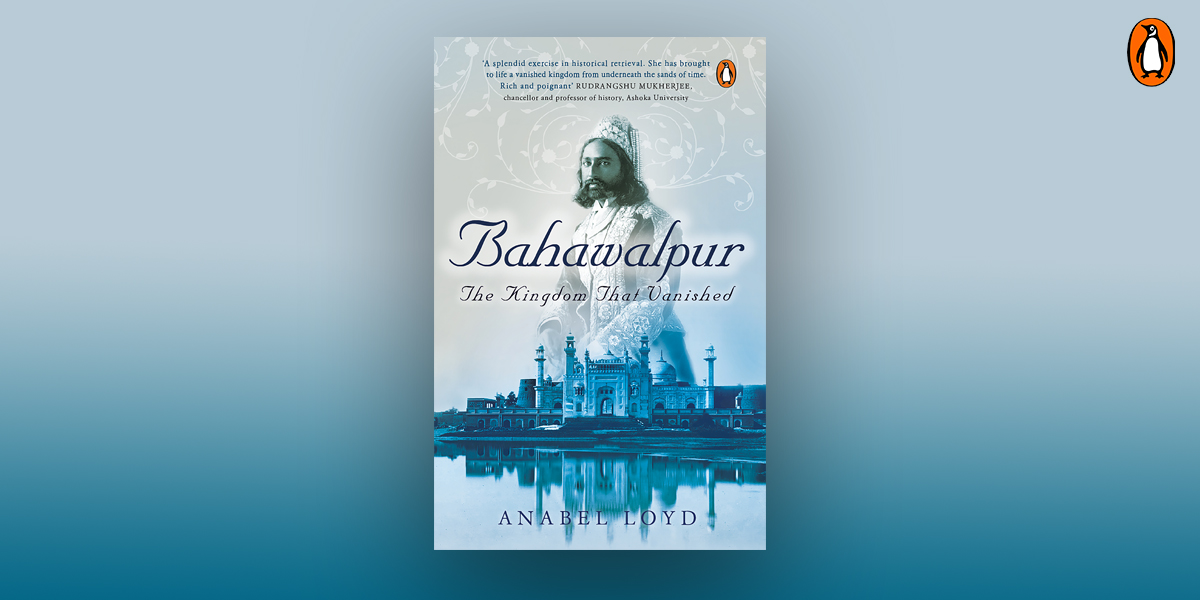
In the seventy or so years since Independence, much less has been written about the Princely States which acceded to Pakistan than those that remained in India. The name of the once great State of Bahawalpur is no longer remembered among its well-mapped peers over the border in Rajasthan.

Bahawalpur is a series of conversations between the author, Anabel Loyd and Salahuddin Abbasi, amir of Bahawalpur and the son of the erstwhile Nawab of Bahawalpur. The latter reminisces about his family and sheds light on Bahawalpur’s princes through old records, letters etc.

The book begins with a quote from Shakespeare’s infamous play, The Tempest, ‘What’s past is prologue’. This means that the past is a preface to the future – we cannot forget the lessons of history. As Salahuddin Abbasi takes you back, you can’t help but draw parallels between the long forgotten princely state of Bahawalpur of the past and the Pakistan of the present.

Jinnah’s aspirations for nationality and not communality- buried 

Jinnah’s vision of a country had been buried, over time- not only under the flow of patronage and corruption but also under the illusion and imperative, the ‘mirage’, of the Islamic state.  

The sheer one-upmanship of the everyday, increasingly archaic, public practice of religion in Pakistan hinders the running of a contemporary progressive state and argues an almost impossible case for reinstatement of Jinnah’s aspirations for nationality rather than communality. 

While the state promises Jannat to the poor, the young do dream of a better existence

Pakistan is more than ever girt with the restraints of caste, creed and class, but young people continue to dream of something better and of levelling the ground. Those living in extreme poverty may be easily seduced or coerced by the promises of extreme Islam: a glorious life to come after death providing some sort of solace or reward for the lack of any uplift through education or public services during the only earthly existence available to them.

The partition may have given us hindsight…

Pakistan looks backwards for religious authenticity, to a dream of national identity and unity never fulfilled after Partition which tore the country from its past.


But Pakistan no longer looks back far enough to its extraordinary history as part of a greater whole. That pas was cast into the deep chasm of Partition.

…But what about foresight?

Nowadays the country often appears neither to look back nor forwards beyond the trappings of new infrastructure in transport systems, shopping malls and increased urbanization. Such changes leave the poor exactly where they have always been, with nothing, and, regardless of the blandishments of government, does little to encourage outsiders to come in.

The wealthy get enmeshed in the threads of corruption and nepotism while trying to rise above it

Education abroad seems to have become a standard for those who have inherited status or have gained vast new wealth. Not all are lured for long by migration for the sake of further fortune. Those who return are entrepreneurial, creative and determined to find ways to circumvent or rise above endemic corruption in order to move forward. However, they may already be enmeshed in the threads of nepotism and corruption by virtue of the endless unbreakable network of familial connections at the top of Pakistani politics and society.


Anyone with a penchant for history and politics would definitely consider Bahawalpur an insightful read. Read it and tell us what you think?

From Vidya Balan to Sachin Tendulkar: Leaping Across Borders and Beliefs

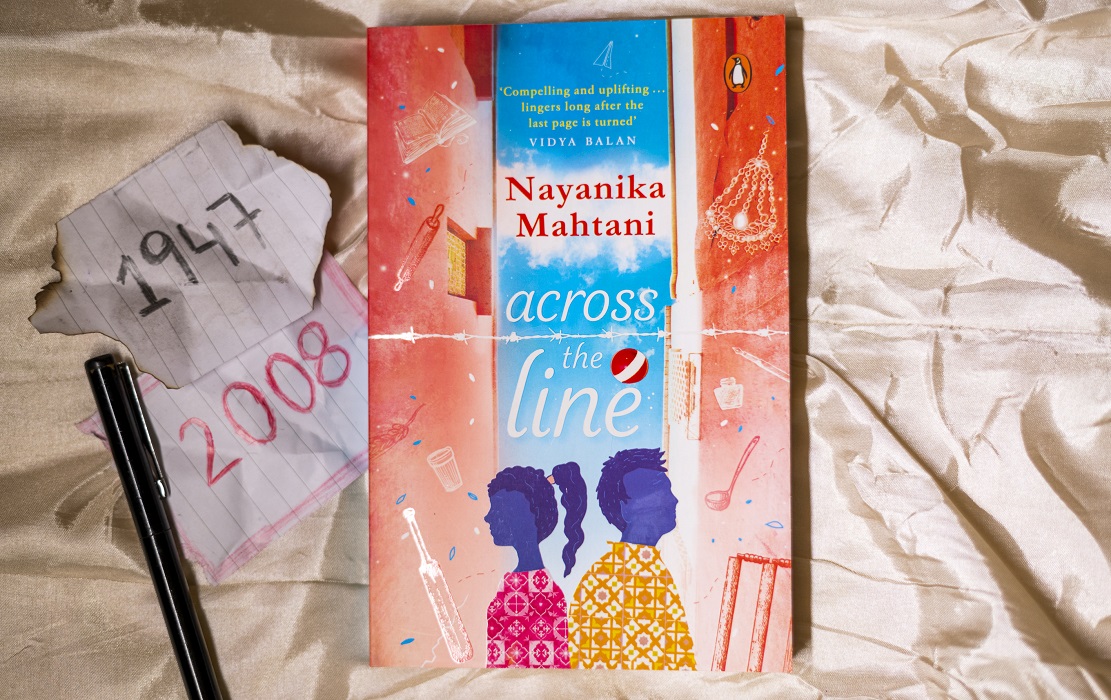
Jai is fourteen and dreams of owning a café in Delhi. Inaya is fifteen and dreams of playing cricket for Pakistan.

In Across the Line, Jai and Inaya’s unlikely worlds collide, and an equally unlikely story unfolds. A story that started with the drawing of a line. And a story that transcends borders, beliefs, and timelines.

We are having a look at some of our favourite people, who have taken this journey penned down by Nayanika Mahtani:

Vidya Balan: “A compelling and uplifting story…”

One of India’s favourite actresses, Vidya Balan has lauded the story for its earnestness and emotive power.

*

Sachin Tendulkar: “…what unites us bigger than what divides us.”

We were delighted to hear that our favourite cricketer lauded the story too!

*

Asif Farrukhi: “…this book lights a candle of hope and peace.”

We are also extremely happy to see some love coming across the border!

*

Asma Said Khan: “A much needed book at a time when hatred of the ‘other’ has become endemic…”

Some more love from even farther beyond!

*

Sharmeen Obaid-Chinoy: “…a tribute to all the unsung heroes who have fought silent battles even after the Partition.”


Across the Line is about the Partition and the human impact of borders that still lingers amongst us today. It makes for a must-read story in today’s times with its message of unity and love across borders and beliefs.


How can Nepal Become an ‘Asian Tiger’?

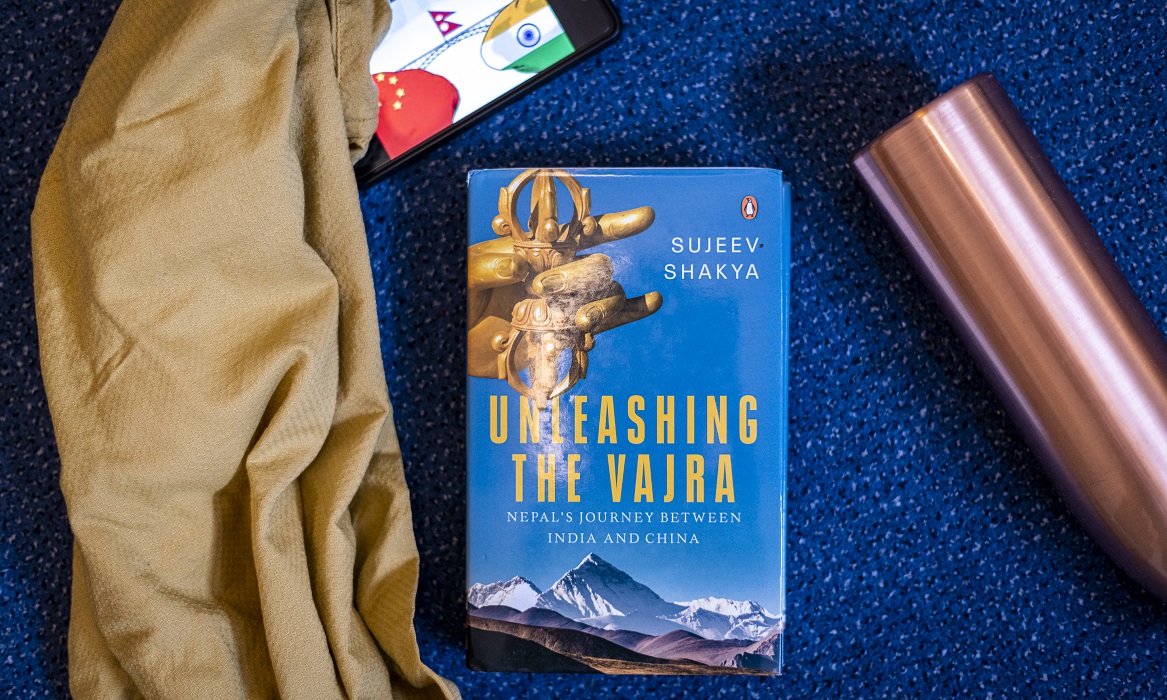
By 2040, it is projected that China will be the largest economy in the world, followed by India. The two put together will have nearly a third of the world’s population and GDP. Now, there exists an opportunity for Nepal to unleash its potential and return to the time when it had the advantage of being in between two prospering neighbours. In ‘Unleashing the Vajra’, author Sujeev Shukya tries to understand the past in order to learn how to get the future right—Nepal now has just two decades to relive its glorious past.

The listicle below brings to the forefront a few quick facts to show that Nepal has the potential to regain its past glory and make a mark.

Strategic Location 

By 2050, it is estimated that, the Shanghai–Mumbai axis will continue to dominate the agenda of future markets, economic development and global economic thought leadership. Nepal falls right in the middle of all this.

Population Boon 

Nepal is geographically small, but Nepalis tend to forget that they are also the forty-eighth most populated country in the world with a population that is nearly one and a half times that of Australia, and only a few millions less than that of Canada.

Tourism

An annual tourist volume of more than 30 million Chinese travelling to the Tibet Autonomous Region every year can also be a potential lucrative market for Nepal.

Vision 

Nepal needs to look at how it will deliver the same vision of prosperity to its people by 2050 with equal emphasis on capital, asset utilization, parameters of human development, and of course, happiness.

Economy and Growth

For Nepal to graduate to a middle-income country by 2030, when the country’s population will be around 36 million, it needs to be a $100 billion economy with a per capita income of $2500. This would require an investment of about $7–8 billion each year.

New Model 

Nepal is the prospective bridge between India and China, two countries that will be controlling 35 percent of global GDP in 2050. This is the time for Nepal to emerge with a new economic growth model rather than being a yam between two boulders.


Sujeev Shakya argues that it is imperative to understand history and learn from it to shape events for a better future. Unleashing the Vajra outlines the factors that will determine Nepal’s destiny in the years to come.

“Happy, Happy You Make Me!” – Meet Alicia’s Dearest George!

There’s a reason they say February is the month of love. Thanks to Alicia Souza, and her (PDA-aversive) husband, George, we have had the corniest and loveliest and mushiest February so far (who could have thought we had it in us?).

Our favourite illustrator is admitting her love in artistic style! Amidst all the cuddles and kisses and the banter of married life, our biggest takeaway from her latest book Dearest George is how much these two lovebirds mean to each other.

Call it a post-valentine’s hangover, but we decided to revisit what George means to Alicia!

He is family. Period.

We have said this before and we will say it again – this is our favourite family portrait!

*

Admit it, Alicia – You Love the (Closeted) Romantic!

We know the whole point of penning down this book was to prove to the world that George is, after all, as mushy as all of us.

*

Heart of Gold AND a Nice Beard – What’s not to Love?

We totally feel the shared love for food, to be honest.

*

The Momo Cuddles.

Isn’t companionship about those special lazy mornings, after all?

*

He is Versatile.

George is a complete package, we have to say. #HusbandGoals, much?

*

The Perfect Cure for Bad Days.

Nothing compares to the person that can make you smile on bad days – we know how difficult that is!

*
He Makes her HAPPY. 

Do we need to say more?


George makes Alicia happy – and us too, because this book wouldn’t exist without him!

February is incomplete without celebrating love, and with this post, we are also thanking George for bringing so much love into Alicia’s life and ours!

When Destiny Rolls Her Dice and Flips Fortunes

When the Kingdom of Aum falls under the spell of corrupt forces, all its past glory turns to dust and the land, once lush and fertile, becomes a barren wasteland. It falls upon Saahas, the courageous young General and heir to the throne, to fight the darkness that had shrouded his beloved Aum. But victory eludes Saahas as the play of destiny takes him on a journey both arduous and treacherous.  General Saahas becomes a hunted man and Aum plunges into chaos, submitting meekly to the tyranny of the self-appointed Raja Shunen and the wily Queen Manmaani.

What was this web that Saahas had become entangled in?

Submerged under wave upon wave of dilemmas, Saahas is bewildered by the power of the Saade Saati–the dreaded seven and a half years- yet is determined to find his way towards his destiny.

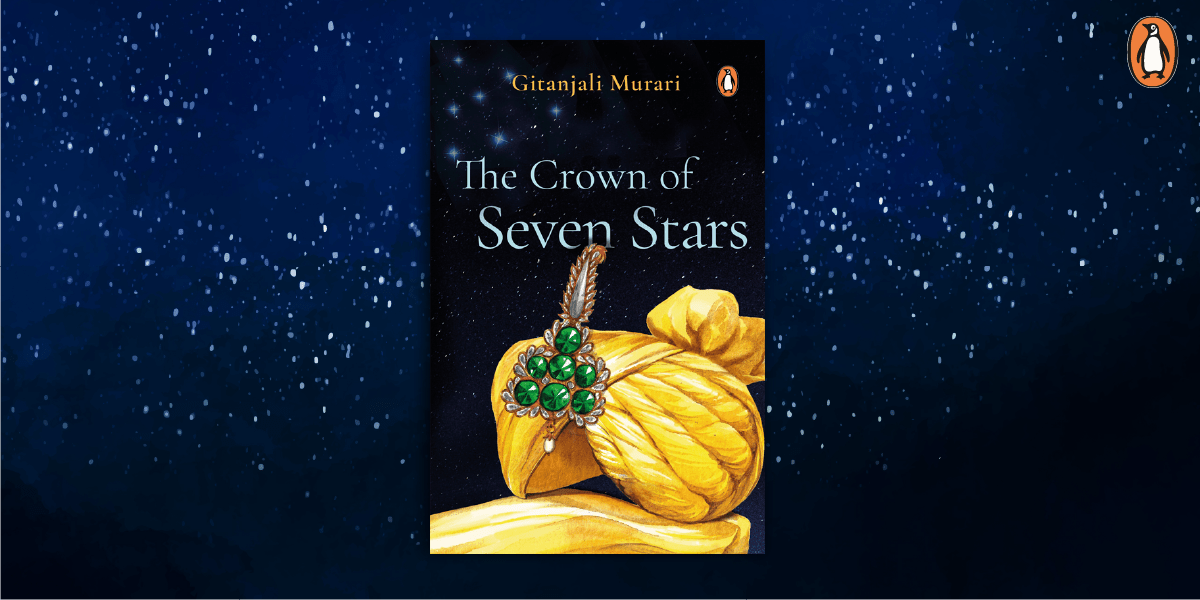
Gitanjali Murari’s The Crown of the Seven Stars begins with a letter from Destiny which hints at a revelation- ‘And I promise you an enthralling story of one man who dared to fight me, catching me quite unawares, so revealing the truth about these accursed seven and a half years.’

Read on to find out what the period of Saade Saati brings –

The fear of failure

Saade Saati, the dreaded seven and a half years that befall each person at least once in their lifetime, brings with it crushing failure-

‘You fear it, for it results in nothing but failure; failure that eats you from the inside, corroding you, until you wish you were dead. And when you emerge on the other side of it, you weep, not with relief, but because you are quite broken.’

*

There is light at the end of the tunnel

Saade Saati may make the sufferer feel helpless and fearful but it is a finite period which does come to an end and the wheels of fortune turn again. The astrologer Arigotra leaves Saahas with hope for the future but also a reminder of the futility of his battle against Saade Saati –

‘Eight months of it have already passed. Less than seven years remain. Go away, my lord, and only return when the time turns auspicious.’ The dying man’s words smote Saahas with the finality of a hammer. They laid bare his helplessness, making him acutely conscious that the hopes he had cherished on his journey back to Aham were laughably puerile.’

*

The right attitude is key to getting past this play of destiny

Acceptance and patience may help sufferers find value even in a bleak situation. The old priest of Yadoba offers some perspective to Saahas who is consumed with the idea that the period of Saade Saati is ‘fruitless’-

‘But if the soldier were to take a deep breath, calm down and contain his vital energy instead of wasting it by running from pillar to post, he will realize that the Saade Saati, far from being a curse, is a boon. It is the gods telling us to stop and reflect, to know ourselves, learn a new trade perhaps, spend time with the family, study the scriptures. Anything—read, play, evolve.’

*

The learning is in the experience, not in despair

Whatever destiny may have in store for you, the period of Saade Saati can be a learning experience. As Destiny reveals the motive behind this game, a ray of sunshine pierces through clouds of bewilderment-

 ‘You see, I had always planned for Saahas to be king. The Saade Saati, the trials, the tribulations, I had gone to so much trouble to create obstacles for him. Just so he would become the king Aum deserved.’


With destiny rolling her dice at every turn, will Saahas emerge wise and fearless from the maze of the Saade Saati? Would the throne find its rightful heir?

Read Gitanjali Murari’s The Crown of the Seven Stars to find out!

Life, Loss and the Little Moments In-between: Stories for February

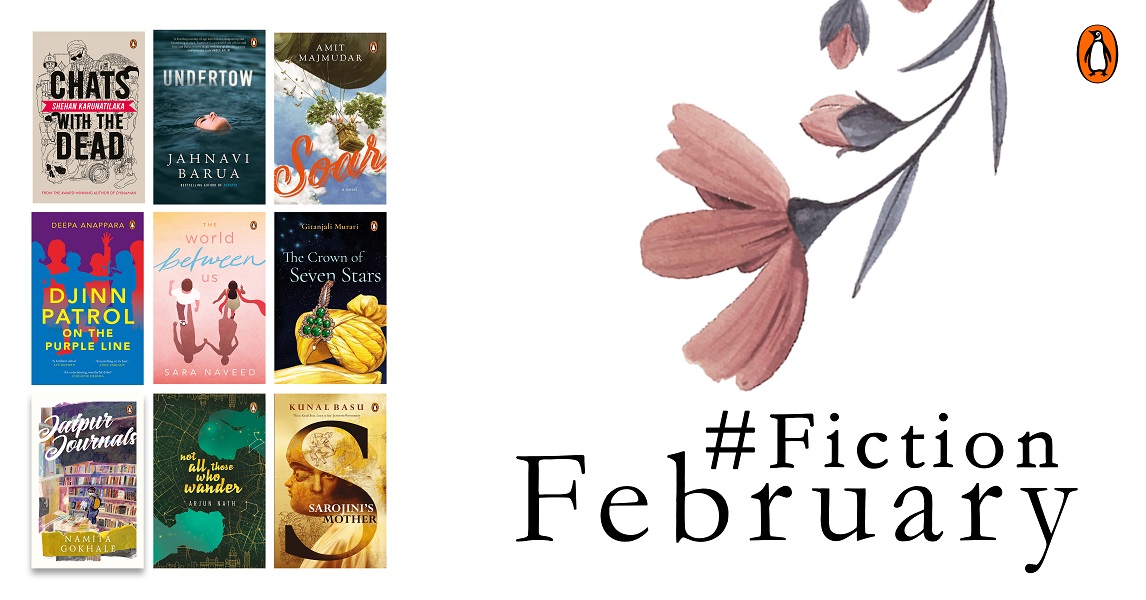
From love and loss, to survival and trauma – fiction brings out the human condition like no other space in literature. We love snuggling up with a good fictional story; there are so many characters to meet. And we especially love how a good story can take us through such an incredible range of emotions. There is nothing like screaming at your book because a character won’t stop being stupid, or jumping on our bed (you did not hear this from us) when those two people you had been rooting for over 300 pages finally get together.

This February, we decided to take our reading passions a notch higher by celebrating the very singular experience reading fiction can give you. Our shelves this month is filled with as wide a range as the emotions these stories elicit. And we are giving you glimpses into just some of these worlds that we are stepping into.

It is time for #FictionFebruary, and we are (re)looking at some of the most poignant moments from our February stories that stayed with us long after we had turned the last page.

War, Memory, and Victimization

Chats with the Dead delve deep into the complexities and nuances of war and victimization. From all the voices from the afterlife we get to hear, this one really got us to stop for a moment.

 ‘If suicide bombers knew they end up in the same waiting room with all their victims, […] They may think twice.’

*

Writing the Rainbow

Alongside the rich cast of characters we get to meet in her worlds, Namita Gokhale has also given us some inspiring female characters who make us think on what it means to be a woman today. Her latest, Jaipur Journals, is no different, where we meet Zoya Mankotia, a celebrated writer making waves with her latest novel. In a panel, she speaks about the safety and freedom in writing that allows us to be who we are:

‘We can be who we are, write as we like. Sexuality, as a narrative, is a freeflowing river.’

*

Strength in Times of Trouble


Djinn Patrol is a powerful story of human warmth, resilience, and bravery that can emerge in times of trouble. We were hooked from the first page itself, with these lines:

‘When Mental was alive, he was a boss-man with eighteen or twenty children working for him, and he almost never raised his hand against any of them. Every week he gave them 5Stars to split between themselves, or packs of Gems, and he made them invisible to the police and the evangelist-types who wanted to salvage them from the streets, and the men who watched them with hungry eyes as the children hurtled down railway tracks, gathering up plastic water bottles before a train could ram into them.’

*

On Grieving the Right Thing  

Sarojini’s Mother gives us a complex portrait of motherhood that goes well beyond just a biological concept. Sarojini confides in her friend Chiru about an abortion she went through because she was not ready to be a mother; and the confusing weight of grief that came with it:

‘Being right doesn’t take away the sadness, does it? I knew I’d lost again. I’d done to my baby what my mother had done to me. I’d kept the circle going. No matter how much I tried, I couldn’t stop myself from grieving. That’s when I knew I had to come to Calcutta.’

*

On Fighting the Sadness

We all try to deal with the weight of sadness in our day-to-day life. Seventeen-year-old Gehna’s words from Not All Those Who Wander on her simple but effective ways to fight her depression have definitely become our new strategy:

‘Wiser now, Gehna was no longer sure that she had any say in the comings and goings of the sadness, but she still held hope of ducking it. She had drawn strict boundaries, drip-feeding herself the pop songs about heartbreak and the tragic movies she loved, never exceeding a ratio of one part sad to nine parts happy.’

*

Too Much of A Good Thing

In Soar, we loved the friendship between soldiers Bholanath and Khudabaksh during World War I. It hit us hard when they realized and discovered the power and potential of greed in a dream-nightmare sequence:

‘Invited guests waited patiently as the pair added item after item to their infinite plate. This went on for hours in the dream—the soldiers smelling the food, acquiring the food, but never enjoying it. Eventually they realized that the abundance would never end, that abundance only enlarged appetite. So the dream revealed itself as a nightmare; and, at the same instant, they sat up.’

*

Moving On is Hard 

Love and loss are very complicated things, and one of the hardest to move on from. We felt Amal’s pain in The World Between Us as she struggled to move on from her husband, Haider and her love for him. Reaching the point where she took the decision to move on made for one of the most powerful moments in her story: 

‘It was true that I was still very much in love with Haider and his memories, but I was also beginning to realize that it was high time I moved on.

Life was so much more than a lifetime spent mourning and brooding on past memories.’

*

Unspoken Love 

Family and home are two other things that can be beautiful and complicated all at once. One of the most powerful strands in Undertow is the simmering yet unspoken love between Loya and her estranged grandfather, Torun. Torun and his wife had thrown out Loya’s mother for marrying outside of her community. Twenty-five-year-old Loya returns to Torun and ends up reconnecting with him. This particular moment between the two of them carried exceptional emotional weight for us:

‘The girl then rose from her seat and came across to him.

She squatted and put her long arms across his shoulders. ‘I love you, I think, Koka.’

He watched her make her way back to her bedroom and drained the last of the amber liquid into his glass. He swallowed the last words, lest they escaped him.’

*

On Battles and Bravery

The Crown of the Seven Stars give us a powerful character in the form of Saahas (which means “bravery” in English) as he refuses to submit to oppression and tyranny that has taken over his Kingdom. The lines below are some of the many that translate internal battles into very external fights.

‘A blade whirling in each hand, Saahas roared like a summer storm and Zankroor came at him, braids tangling around his head like a white cobweb. Striking hard with his curved axe, he broke Saahas’s iron blade in half, the impact jolting Saahas to the ground. Zankroor swung the axe again, squealing in glee, and Saahas lunged, stabbing the broken blade into his adversary’s thigh, just above the knee, his other arm moving with lightning speed. Zankroor grunted. His axe whistled downwards, eager to meet Saahas’s neck. ‘


These lines and these characters brought us just a little bit closer to ourselves, and to life in general. Emotions and desires are never easy to figure out, but stories like these definitely help a little.

Which one of these are you going to pick up this month? Do share with us in the comments below!

When fundamental rights became a roadblock for Nehru’s Congress

The year was 1950. A feeling of euphoria was palpable as, after three years of deliberation, the Constitution of a newly independent India had come into effect. The Nehru-led Congress was ready to hit the ground running till their grand plans came to a screeching halt in the face of an expansively liberal Constitution that stood in the way of nearly every major socio-economic plan in the Congress party’s manifesto. With a judiciary vigorously upholding civil liberties and a press fiercely resisting his attempt to control public discourse, Prime Minister Jawaharlal Nehru created the constitutional architecture for repression and coercion in the form of the First Amendment to the Constitution.

‘Four months after the Constitution’s inauguration, it was becoming increasingly clear that the champions of personal freedom had feet of clay, that beneath the surface of an ostensibly democratic leadership lurked deeply authoritarian instincts.’  writes Tripurdaman Singh as he revisits the Sixteen Stormy Days in 1951 when fundamental rights—the heart and soul of the Constitution- become lacunae in the same Constitution.

Read on to find out how fundamental rights caused grave difficulties for the government in power-


                             The right to fight indefinite detention

On 6 February 1950, 28 detainees filed a petition before the Bombay High Court challenging the validity of the Bombay Public Safety Measures Act on the basis of the new Constitution which, under Article 22, made indefinite and open-ended preventive detention, without an advisory board to approve detentions beyond a period of three months, unconstitutional. The unprepared government took the first hit.

‘The detainees were no longer subjects seeking the government’s leniency and clemency; they were free, rights-bearing citizens, newly empowered by the Constitution written in their name, with the ability to knock on the doors of the highest court of the land to demand the liberties guaranteed to them.’  

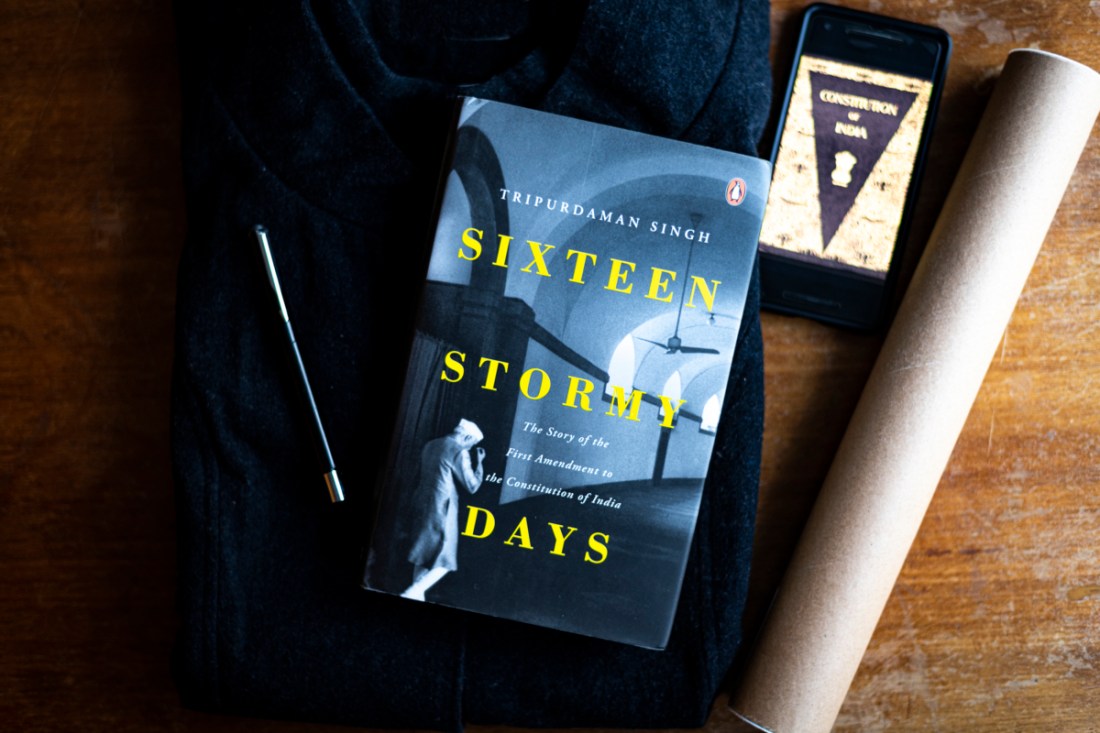
Front cover of Sixteen Stormy Days
Sixteen Stormy Days || Tripurdaman Singh
                               The furore over right to free speech

Barely three days after the twenty-eight communist detainees were freed by Bombay High Court another battle for Constitutional rights erupted in the Madras province when over 200 communist prisoners, demanding the status of political detainees rather than common criminals, went on strike. The violence that followed accelerated the downward spiral of the government and led to more strikes by other prisoners.

‘The enraged policemen retaliated by locking the 200-odd offenders in a hall with no means of escape and opening fire on them, killing twenty-two people in cold blood and injuring 107 others in a gruesome demonstration of the new republic’s lack of respect for the life and liberty of its citizens.’   

                                The blurred promise of land reform

Land reform had been a major part Congress agenda and Zamindari abolition and land redistribution promised to herald a new phase of equality for a new India. However, even before the constitution came into effect a legal battle began to erode the promise made by Congress. Suits filed by pre-eminent zamindars led the courts to examine the constitutional validity of the entire Management of Estates and Tenures Act.

‘Observing that the drastic and far-reaching restrictions placed on the power of the proprietors to deal with their property with no corresponding compensation left them practically without any rights over their own property, the court held the law to be void ab initio—both before and after the creation of the Constitution.

 The decision came as a bombshell, leaving the Bihar government and its Congress leaders shocked and rattled. The judgment reiterated the judiciary’s commitment to fundamental rights…’

                      The first legal challenge to the idea of reservation

Petitions filed against the discriminatory practice of reservation led courts to examine the issue of admissions being strictly regulated according to set communal proportions, instead of merit, which infringed upon fundamental rights. The violation of both Article 15 (1) of the Constitution of India, which protects citizens from discrimination on grounds of religion, race, caste, sex, place of birth and Article 29 (2) formed the basis of the case. Noted lawyer Alladi Krishnaswamy Aiyyar laid bare the glaring issues in the ‘Communal Government Order’ in court-

‘Aiyyar argued that the right granted by Article 29 (2) of the Constitution, which in unequivocal terms prevented any discrimination in the matter of admissions to state or state-aided institutions, was an individual right personally granted to each citizen. It could not be sidestepped by granting restricted community-based opportunities, it was not a right granted to people as members of a particular caste or religion.’

The essential foundations of the Constitution, which Sardar Patel called its ‘idealistic exuberance’, had now become a real, multifold problem for Nehru who, irked by constitutional restraints obstructing his political goals, eventually wrote to his chief ministers-

‘Recent judgments of some High Courts have made us think about our Constitution. Is it adequate in its present form to meet the situation we have to face? We must accept fully the judgments of our superior courts, but if they find that there is a lacuna in the Constitution, then we have to remedy that.’  

Thus began the story of the First Amendment to the Constitution.


Is Secularism a Colonial Concept?

How did India aspire to become a secular country? Given our colonial past, we derive many of our laws and institutions from England. We have a parliamentary democracy with a Westminster model of government. Our courts routinely use catchphrases like ‘rule of law’ or ‘natural justice’, which have their roots in London.

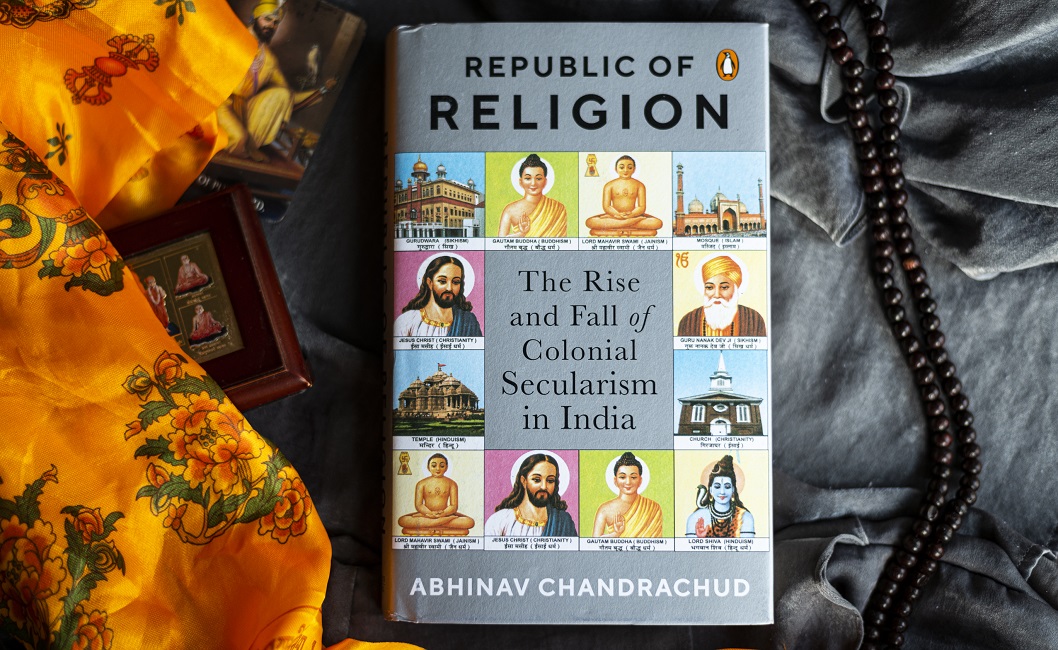
In Republic of Religion, eminent scholar Abhinav Chandrachud presents well-researched reasons to argue that the secular structure of the colonial state in India was imposed by a colonial power.

Find an excerpt from his narrative that sets up this argument while exploring the nuances of secularism as a concept.


Though scholars disagree on the meaning of secularism, broadly speaking, two factors go into making a secular state: no religion should be established by law as the official state religion and all citizens should have the freedom to practise their own religious beliefs.7 Unlike the US, England has an established religion. If India derives so many of her laws and institutions from England, how is it that there is no established religion in India?

In the coming pages, we will see that secularism was artificially imposed by the British colonial government in India even though it did not fully exist in England. The law in England assumed only Christianity to be the one true religion, and Indian religions like Hinduism and Islam were considered to be ‘heathen’. Therefore, though England had an established religion—Christianity through the Church of England—it could not declare an Indian religion, like Hinduism or Islam, as the official religion of India. It could not force Christianity on India probably due to the fact that this would have made the colony ungovernable.8 Instead, it decided to separate religion and the state in India. Though government officials in England were entangled with the administration of churches there, colonial officials felt uncomfortable associating with ‘false’ Indian houses of worship like temples and mosques and therefore assigned them to the administration of Indian trustees.

British officials adopted a policy of secularism in India—in contrast to England—which will be referred to here as ‘colonial secularism’. Though ‘secularism’ is itself a relatively new9 word and one of imprecision,10 broadly speaking, colonial secularism in British India meant that the government did three things. Firstly, the colonial state would not endorse or get itself entangled in the administration of any local religions. So it disentangled itself from the management of temples—a function which was historically performed by Indian rulers—and handed temple administration over to trustees. This was despite the fact that a parallel nineteenthcentury campaign to disestablish the Church of England failed in the metropole.11 Further, before taking up office, public officials in India were made to solemnly swear or affirm their oaths, though they might have had no conscientious objection to swearing in the name of God, Vishnu or Allah. In other words, any mention of the word ‘God’ was removed from the oaths administered to public officials in India—an accommodation which was only available to Quakers and some others in England. Secondly, the colonial state provided heightened protection to religious minorities, often feeding into a sense of paranoia that they would be left helpless without its imperial

intervention. So the personal laws of different religious groups were, in theory,12 left alone,13 though England did not have a separate set of ‘personal’ laws for its religious minorities like Catholics and Jews. Adopting the old Roman strategy of retaining the laws of conquered territories in order to make them more easily governable, colonial officials decided against adopting a uniform civil code in family law matters. Cow slaughter, though reviled by much of India’s majority Hindu populace, was permitted to be carried out by Muslims during the festival of Bakr Id and Hindus who objected to it were considered ‘hypersensitive’. Seats on legislative bodies were filled by voters on the basis of separate electorates. Thirdly, the government tacitly, though nervously, encouraged Christian missionaries to preach Christianity and obtain converts though a Hindu or Muslim preacher who might have tried to do the same in England would have put himself at risk for criminal prosecution.


Secularism is one of the most celebrated ideals of a diverse India. Republic of Religion is a unique narrative presenting a never-before explored perspective and colonial ties that can potentially lie behind this term.


error: Content is protected !!