Publish with Us

Follow Penguin

Follow Penguinsters

Follow Penguin Swadesh

Did you know these facts about Guru Nanak?

The continuing reality of the First Sikh hinges on his historical memory, and though memories return to the past, they are vital to the making of the future. The Sikh community continues to be shaped and strengthened by Guru Nanak’s memories.

We are celebrating some of them by revisiting these facts from his life that you may not have known:

His mother, Tripta, was a pious woman, and his father, Kalyan Chand, worked as an accountant for the local Muslim landlord.

~

He was married to Sulakhni, and they had two sons, Sri Chand (b. 1494) and Lakhmi Das (b. 1497).

~

In his own lifetime, he appointed a successor, who was followed by eight more, culminating with the Tenth Guru, Gobind Singh (1666–1708)

~

The First Sikh’s compositions reveal his familiarity with the idioms and practices of Hindus, Muslims, Buddhists, Yogis and Naths; importantly, they also relay his intention to reach out to a wide audience and relate closely with his diverse contemporaries.

~

His parents named him after their older daughter, Nanaki. When he grew up he went to live with his sister, Nanaki, and her husband, Jairam, in Sultanpur Lodi, to work for a Muslim employer.

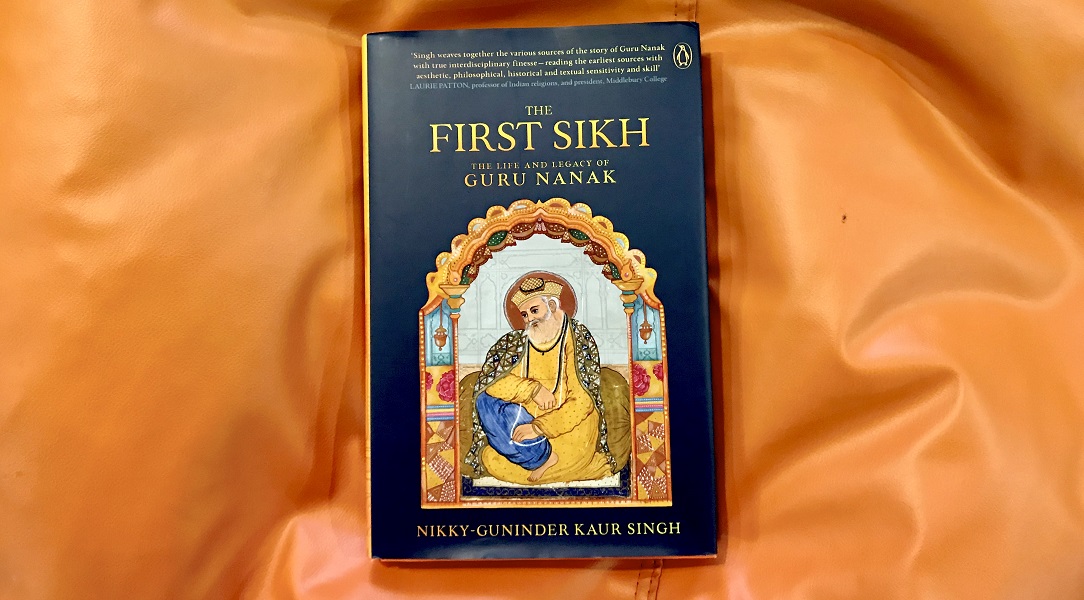
Front Cover of The First Sikh
The First Sikh || Nikky Guninder Kaur Singh

In The First Sikh, Nikky-Guninder Kaur Singh weaves together the various sources of the story of Guru Nanak with true interdisciplinary finesse—reading the earliest sources with aesthetic, philosophical, historical and textual sensitivity and skill. But important as this work is to the history of Indian spiritual traditions, do not mistake The First Sikh for a mere historical reassessment.

Perks of Being a Daydreamer!

Have you ever found yourself in worlds far away from the one in which you live? Well then, you and Daydreamer Dev have a lot in common.

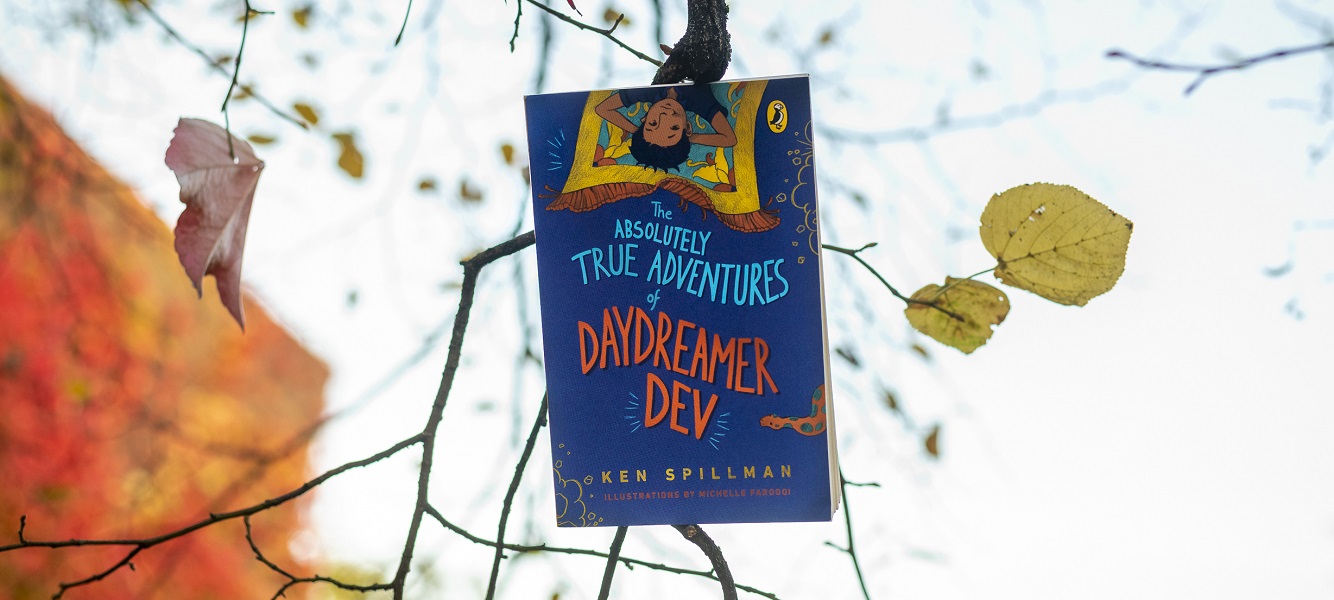
The Absolutely True Adventures of Daydreamer Dev by Ken Spillman chronicles three of Dev’s fantastic adventures thought up by his colourful imagination. Dev’s flights of fancy land him in challenging environments all over the globe in iconic locations which challenge his skills and teach him about the vast world that awaits.

So you see, daydreaming can teach us a great many things about life! Here are some reasons why being a day dreamer is the best:


Anything is possible

In day dreams you are the writer of your story – anything is possible, no mountain is too high, no river too wide, no obstacle too big for you to face! Dev travels to the highest peak, the densest forest and the sandiest land in the world with no hesitation, and so can you – in day dreams or in your real life!

*

It keeps the imagination alive

Dev’s day dreams of places and people he hasn’t ever seen keeps his colourful imagination in practice. It is only through imagination that some of the greatest discoveries of our world have come about! Day dreams keep the imagination and dreams alive so that one day we can turn these dreams to reality!

*

Teaches you about the world

Like Dev’s fantasies about the faraway places, day dreams allow us to imagine different places, people and cultures that exist beyond our own worlds! The world is large and diverse and daydreams allow us to enter worlds we dream to be in.

*

You are never bored

When you daydream, no task is too boring and no afternoon too long – whether you’re sitting on a Kwality Carpet like Dev or spending a lazy afternoon in a park, you won’t be bored for long with your imagination there to help you!

There’s no time for moaning and groaning about being bored when all you have to do is imagine a great new adventure for yourself – just like Dev!

*

Daydreams give you hope and goals

The best part of daydreams is that they give you hope to make those dreams come true! They allow you to set goals for yourself, to imagine a world where you have achieved them, so you can achieve them in your own life!

Dev daydreams about winning a medal at the Olympics, swimming across oceans, flying solo around the world and maybe even crossing the Sahara. And one day he might do all these things in real life too!


So, the next time you hear parents or teachers complaining about your daydreaming ways, remind them that a world without day dreams would be far less exciting!

You can catch up with Dev in Ken Spillman’s The Absolutely True Adventures of Daydreamer Dev to join him in more fantastical adventures around the world.

Meet the Winged Angels And Beaked Devils from Stork-pur!

On a tranquil moonlit night, the echoing silence of Rose Garden is broken only by the cooing voices of a pair of doves and the chatter of a white-headed squirrel. The shrill, talkative Lovey and the gentler, melodic Dovey are telling Shikar all about the daring escapade that brought the beloved squirrel into their lives. They speak of days of rip-roaring adventures when the doves, as scout birds on a mission, wreaked havoc with the plans of the villainous master of the ill-famed bird commune named Stork-pur.

Shikar listens breathlessly, hanging on to every word of the electrifying tale. As the saying went, ‘If it is a good story you want, it is to the Rose Garden you must fly.’!

Who were these spirited and compassionate birds that fought evil with courage and saved a baby squirrel from a horrid end?

Read on to meet the magnificent Rose Garden birds and their devilish foes – 

Kabul

In the bird world, skybirds like Kabul are the police who maintain law and order amongst birds. Kabul’s maternal instincts override her usually rational and sagacious approach when she sees the adorable little Shikar in mortal danger. Throwing caution to the wind, Kabul swoops in to protect Shikar-

 ‘She announced her presence with a battle screech. There was a blur of wings and we saw a bird hurl itself into the midst of the squirrels. The squirrels scattered, but they regrouped, as Kabul turned and faced them again. The squirrels chattered loudly. They huddled together, ready to take on the furious bird.’

Lovey and Dovey

Doves Lovey and Dovey were known to be utterly identical in their appearance, opinions and instincts. Determined to do justice to the mission entrusted to them, the like-minded doves prepare themselves to take on all danger-

‘Dovey glanced at me. ‘We’re not turning back, are we?’

I laughed. ‘Not a chance. Not even if the skies come crashing down on us. We are scouts. You remember what they taught us? The very first thing?’

 I turned to look at Dovey. He stared right back at me.

We both recited together: ‘You don’t need to be a hero to be a scout. But you sure need to be brave.’

Mike

Shrewd and nimble, Mike the shrike manages to take advantage of the only moment when Kabul lets her guard down in her super secret conversation with the doves. Armed with damaging information, Mike sets off to create trouble for the birds-

‘It has to be Mike. The shrike saw us with Kabul. It’s Mike who has passed on the information that we are scouts.’

I nodded. ‘Yes, it is Mike. I don’t see how the stork could possibly know otherwise. Mike is somehow involved—not just with this, but with Kabul’s disappearance too.’

Chorus

The only bird who could charm the master with the magic of his melodious songs, Chorus- The whistling thrush- enjoyed the special privilege of unrestricted access to the prison caves in Stork-pur. Creating illusions with his songs, Chorus offered moments of relief and joy to those trapped within the ugly reality of Stork-pur-

‘Chorus too had a job, he said. He was the commune singer. His job was to cheer the workers. No matter their rank, he would sing to them when they were down. Any bird at Stork-pur could ask him for a song. Even prisoners like us. He had sung for Kabul and would sing for us too if we desired so.’

The Master of Stork-pur

The evil creator of Stork-pur was the king bird who aspired to become the undisputed ruler of all birds.. With a halo of villainy surrounding his very presence, the master’s long, coiled black neck and cold, beady eyes could strike terror in the heart of the mightiest birds-

‘Yet, there was something about this stork. It wasn’t his ghastly looks that you noticed when you first saw him. What struck you instead was his bearing. There was this imperious emperor like air about him. It showed in the way the stork held his neck, in the casual swagger of his walk, and in the disdainful manner he brushed past the crouching ospreys.’


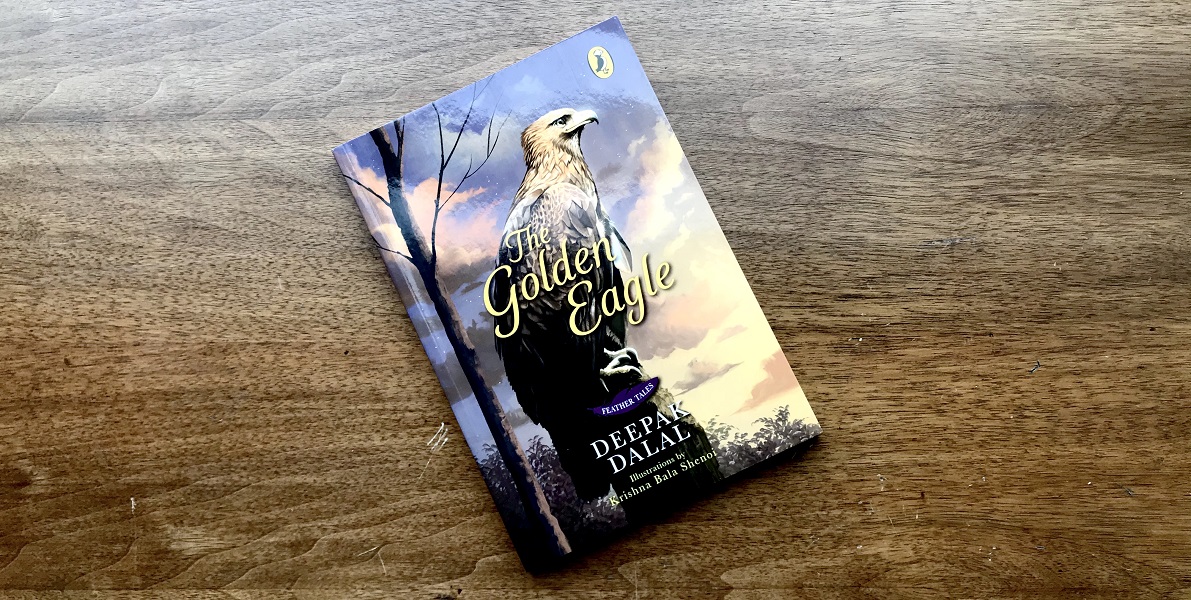
 With an injured Kabul in captivity and enemy birds hot on the heels of the exhausted doves, would Regal- The Golden Eagle- emerge from the shadow of legend and rumour to vanquish evil and restore peace and happiness to the bird world?

Step into the world of Stork-pur to find out!

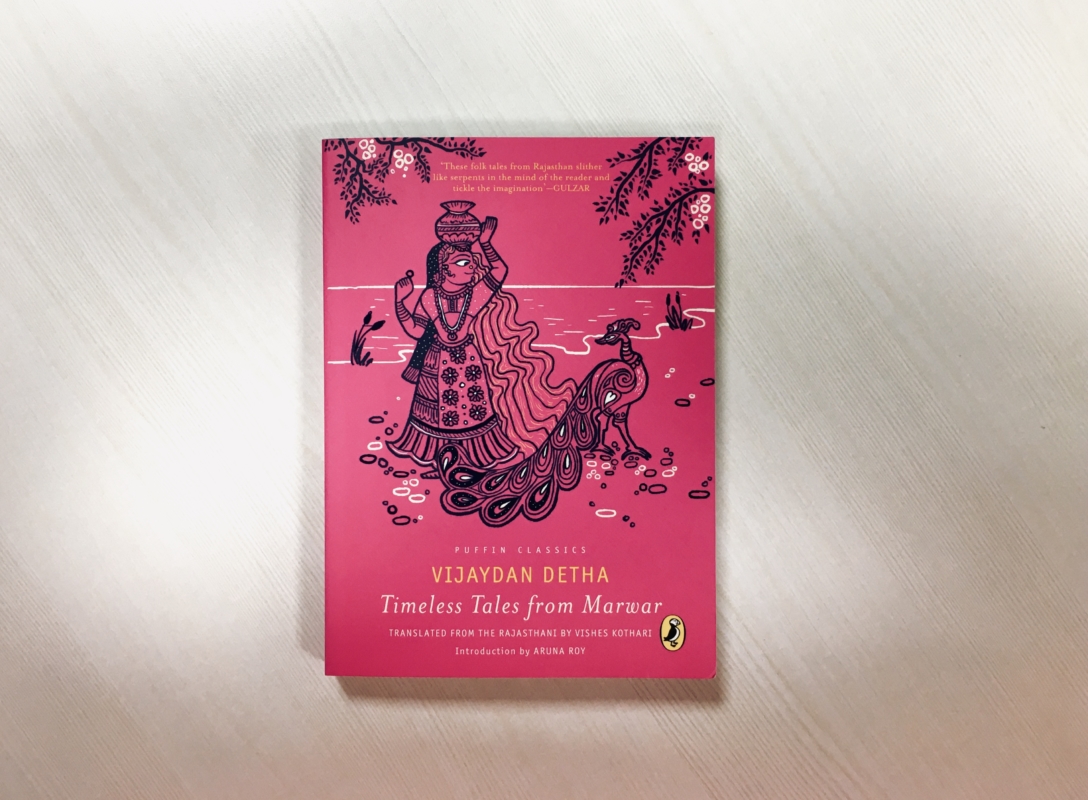
Love is Friendship – An Excerpt from ‘Timeless Tales from Marwar’

Indian folklore is a special gem in the crown of India’s history. Storytelling is an age old tradition, and Indian authors from all over the country have contributed heavily to their cultures through the writing and narrating of stories.

Known as the ‘Shakespeare of Rajasthan’, Vijayan Detha is one of India’s most renowned storytellers. In Timeless Tales from Marwar, Vishes Kothari translates his works for the wider enjoyment of Detha’s magical narrative style.

Read an excerpt of one of his stories titled ‘The Leaf and the Pebble’ below:

‘Because I was so completely unsuccessful with love, I

became very talented at writing love stories. Perhaps,

had I been successful, I would not have been so.’

—Bijji


Below a tree lay a pebble. All alone. Whom to talk to? Who to speak to? Lying there alone, he got suffocated. As fate would have it, one day, a leaf came there, flying from a distance. All of a sudden, the pebble found a chance to talk to someone. He was delighted. He accorded great honour and respect to the leaf who had come to his home.

One day, the pebble told the leaf, ‘My dear friend, please don’t go anywhere and leave me alone. I cannot even live a second without you now.’

‘Leave a friend like you and go?’ replied the leaf. ‘I’m not that big a fool! But if strong winds blow, how will I stay in one place? I will have to fly with the winds.’

The pebble thought hard and finally came up with a solution. ‘Don’t you worry about this! I won’t let you fly away even if the father of all storms passes through here. As soon as the winds blow, I will sit on you. Even if gusts of winds blow, I won’t let you be blown away with it. But friend,’ continued the pebble, ‘in front of the rain I am powerless . . . If it pours, I’ll melt.’

It was the leaf now who thought of a solution. ‘Don’t you worry about this! As soon as it rains, I will cover you. Even the father of rains won’t be able to melt you.’ And so, both friends thought of schemes to save each other. Many a storm blew, but the pebble did not let the leaf get blown away.

Many a time it rained, but the leaf did not let the stone melt.

But as fate would have it, one day, the storm and the rain came together. All the schemes that the two friends had devised to save each other proved futile. The pebble said, ‘I’ll save you.’ And the leaf said, ‘I’ll save you.’

Finally, the pebble spoke up again. ‘Silly, how can you save me? You’ll be blown away with the first gust of wind! And I’ll melt anyway. Now, let’s not bother with senseless quarrel. Let me sit on you.’

And so, the leaf had to let the pebble sit on it despite its wish. The pebble positioned itself properly on the leaf. The clouds began to thunder. Lightning began to flash. Large drops of rain began to fall. Gusts of wind began to blow. The pebble began to melt. Went on melting. Till he melted completely, he continued to protect his friend. As soon as the pebble melted completely, a gust of wind came and blew the leaf away.

Tears streaming from his eyes, the leaf bid farewell to his friend with a heavy heart.


Vijayan Detha’s stories are full of heart, soul and magic. They explore some of the most popular fables from one of India’s richest cultures. You can read more stories in his inimitable narrative style in Timeless Tales from Marwar.

Troubled Neighbours: India, China and His Holiness the Dalai Lama

In 1959, the Dalai Lama escaped from Tibet into India, where he was granted refuge. Few know about the carefully calibrated operation to escort him safely from the Indian border.

Political officer Har Mander Singh successfully managed this operation, and kept diary entries of his time. His niece, Rani Singh, brings to the fore the story that forever changed relations between India, China and Tibet in An Officer and His Holiness.

India’s relationship with its neighbour China was quite troubled back in the 1950s. The excerpt below, taken from Rani Singh’s book, presents a glimpse into how this troubled backdrop became a precursor to His Holiness the Dalai Lama’s escape and refuge into India.


The key reason for the disagreement between India and China was that contrary to India’s perception of matters, the Chinese saw themselves as leaders of the new world order. They therefore expected— indeed demanded—the prestige, respect and servitude that went along with it.

When China overran Tibet, partly as a way of securing its western flank, India did not react. Instead, elephant-like Delhi sat and waited patiently for the aggression to abate.

It did not. Instead, it grew in intensity.

During the 1950s, Chinese premier Zhou Enlai had been on two ‘goodwill’ visits to India. But Zhou Enlai’s polite gestures at diplomatic meetings had not stopped him from laying claim to India’s vulnerable northern flanks outside of these discussions: Ladakh and territories in the NEFA, now known as Arunachal Pradesh. Moreover, China was eyeing Barahoti in Uttar Pradesh, just south of Tibet. Indian troops were based there, and when Chinese soldiers tried to cross the southern border into India, the elephant finally protested. But the dragon did not blink.

In the late 1950s, China denounced the McMahon Line, challenging its international validity. At the end of that year, Zhou Enlai visited Nehru in India with soothing words, assuring him that the border issue with Tibet would be resolved peacefully. In that same meeting, China also recognized the Indian boundary with Burma.

By that time, Chinese soldiers were actually in Barahoti and had marched ten miles into Indian territory. The latter had taken too passive a role and now sat helpless as the dragon advanced, fired up. The following year, talks took place between the two countries. China was persuaded to withdraw its military but left its civilians in the territory.

In January 1959, Zhou Enlai formally claimed Ladakh and NEFA for his country, giving orders for his command to be reflected in Chinese maps.

Just four years earlier, India had formally handed over control of communication services in Tibet to China. When the Tibetan Buddhist leader, the Dalai Lama, asked Nehru for refuge in India because of increasing Chinese pressure on him and the Tibetan people, Nehru who was balanced precariously on a political tightrope, chose to side with Peking and refused the request.

By March 1959, the eyes of the world were on the highly charged power plays. Following a crackdown on the Tibetan capital of Lhasa by the People’s Liberation Army (PLA), the Dalai Lama managed to escape possible capture and containment. He again sought refuge in India.


An Officer and His Holiness presents extracts from  Har Mander Singh’s diary entries, detailing some escape plans for the Dalai Lama. Full of never-seen-before pictures and account of this operation, the book also presents a relevant and comprehensive overview of socio-political relations between China, India and Tibet today.

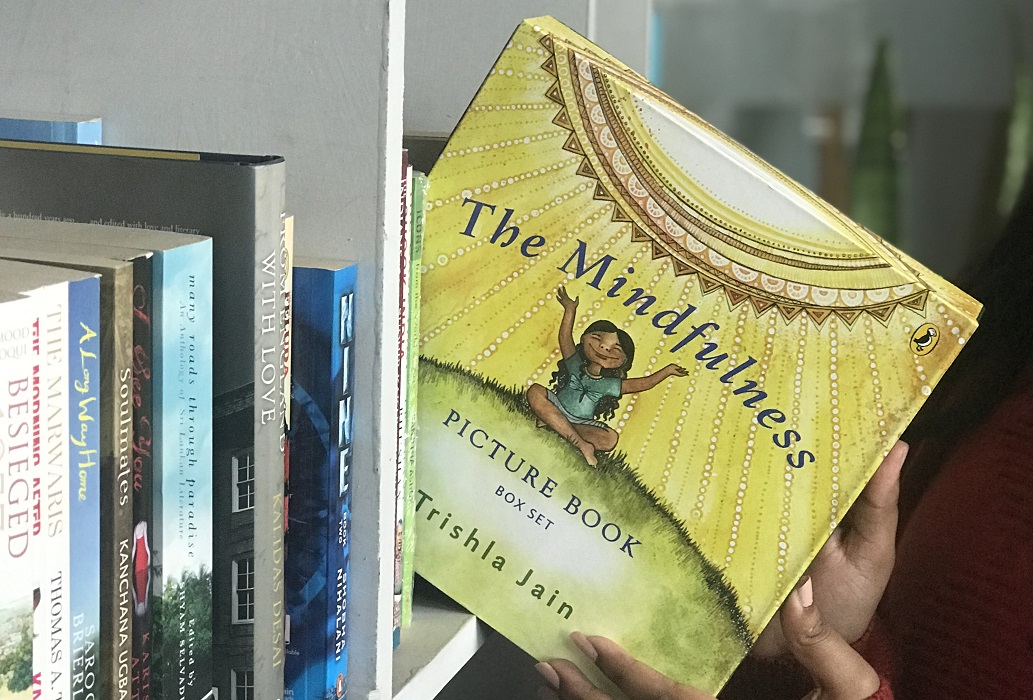
Gift your child some mindfulness!

Whether you’re an adult in a hectic work environment, or a child, mindfulness positively impacts the lives of all who practice it! Recent studies on mindfulness claim that incorporating this spiritual technique into your young ones’ life at an early stage will lead to great benefits later in their life.

The Mindfulness Picture Book (Box Set) || Trishla Jain

Trishla Jain’s The Mindfulness Picture Box Set  brings to life a beautiful conversation on living purposefully through four picture books, perfect for introducing modern spirituality to your young ones!

Here is why you should read the book and impart mindfulness in your and your children’s lives:

Helps you understand prayer and purpose

Sunrise, Moonrise introduces the different ways in which people all over our Earth pray and the positive purpose of prayer – a great way for children to become acquainted with the different cultures of the world and understand the art of prayer themselves!

Introduces spiritual techniques

In Om the Gnome and the Chanting Comb, readers are introduced to the age old practice of chanting ‘Om’ and meditating – a fun story on the benefits of meditation to feel lighter and freer within ourselves!

Reinforces self-importance and confidence

In Listen to the Whispers you are reminded that you are part of a vast universe of wonder and that universe is a part of you. It reminds us to never doubt our own importance in the world – as Trishla writes ‘You are so much more than you think you are’.

Reminds us to be thankful and grateful

In Tankful of Thankful, Baby Train’s journey around the world introduces the word ‘thank you’ in different languages – reminding us to give thanks for the small and big things! It introduces a beautiful conversation about living gratefully to your children!


The Mindfulness Picture Boxset explores the best of modern spirituality through beautiful illustrations and words to introduce mindfulness to the next generation. We think the boxset would make for a great bedside companion, don’t you?

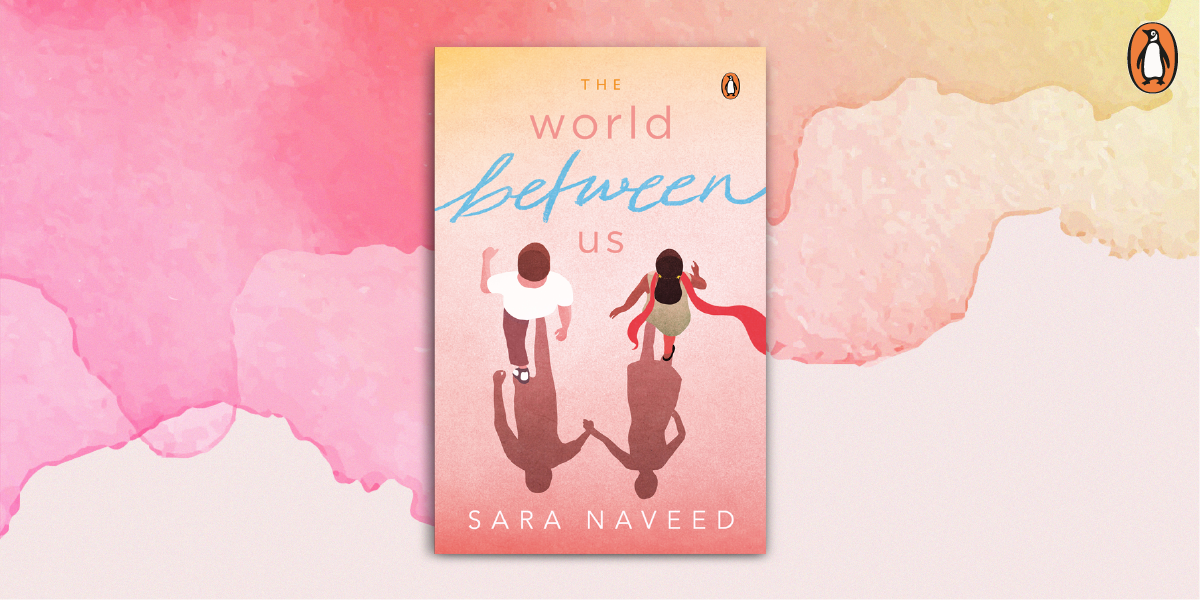
Does Amal Love Qais?- An Excerpt from ‘The World Between Us’

When Amal finds out that her disastrous Tinder match is now going to be her boss, she can’t be more annoyed. Qais Ahmed is everything she never wants to be: narcissistic, manipulative and arrogant.
However, despite her relentless efforts, she is unable to resist his charm and wit and is drawn to him once she gets to know the real him.
She soon discovers that he isn’t just a part of her professional life but has a deep connection to a past she is trying to forget.
Will this disturbing secret tear them apart or bind them together forever?

Read an excerpt from The World Between Us below:

‘Looking for me?’ I asked from behind her.
She spun around and looked at me. ‘Qais!’
‘Hi,’ I said, smiling at her.
She quickly came up to me. ‘Where were you yesterday? Why didn’t you come to work? Do you know how worried I was?’ I was silent all through her grand inquisition and just stood looking at her, admiring her.
‘You went home that day without a word to me and then yesterday you didn’t show up at all. You could have at least informed me. You got me so worried, you’ve no idea!’ I could hear the panic in her voice. ‘Qais . . . are you even listening to me? Tell me, what happened to you yesterday? Were you all right? Is everything okay?’
When I remained silent, she asked again, ‘Qais, what’s wrong? Talk to me!’
Gathering myself, I reached for her hands, my eyes downcast. ‘Were you really worried about me?’ I asked, my voice low.
‘Of course, I was!’ she exclaimed in a low voice to match mine.
‘Why?’ I asked, looking into her eyes.
‘What?’ she whispered, frowning.
‘Why were you worried about me, Amal?’ I asked, tightening my grip on her hands and drawing her closer.
‘Qais . . .’ she whispered breathlessly as the space between us reduced.
‘Would you get worried if something were to happen to me?’ I asked, looking deep into her eyes. She looked back at me but stayed silent. ‘Would you miss me if I died?’
‘Qais!’ She put her finger on my lip. ‘Please don’t say that.’ Her eyes welled.
‘Tell me, would you care if I died?’ I continued.
‘Please . . . stop saying that,’ she said as a tear rolled down her cheek, her finger trembling over my lips.
Taking advantage of her emotional vulnerability, I kissed her finger. She gasped and looked at me wide-eyed.
‘Qais . . .’ she whispered, shocked, taking a step back.
‘I know you care . . . I know you do . . .’ I said, reaching for her hand.
She withdrew her hand from mine and wiped her cheek. ‘What . . . what are you saying?’ she sniffed,
turning away.
‘Just answer my question. Do you care for me?’
‘Of course, I do. So what?’ she asked, turning back to look at me.
I smiled. ‘That means only one thing, Amal. You’re in love with me.’


Is Amal in love with Qais? Read The World Between Us to find out!

Happy Valentines Day from Your First Love, Books!

This Valentine’s Day, love thy neighbour, love thy friend, love this world, because love knows no end.

The day to celebrate love is here, and what better way than to combine your love for books and reading with lines of love from the best writers on the subject?

Here, we bring to you some of the best-loved quotes from some of our best-loved authors. Featuring quotes from new releases – such as The World Between Us by Sara Naveed, Calligraphies of Love by Hassan Massoudy, Dearest George by Alicia Souza, With Love as well as The Little Book of Everything by Ruskin Bond – as well as older books, we’re sure you’ll feel the magic of the day.

The World Between Us by Sara Naveed

‘I was madly, passionately and irrevocably in love with her, and I was ready to do anything to stay close to her.’

Calligraphies of Love by Hassan Massoudy

‘Love gives naught but itself and takes naught but from itself.
Love possesses not nor would
it be possessed;

For love is sufficient unto love.’

Kahlil Gibran (1883–1931) 

Dearest George by Alicia Souza

With Love: A Collection of Letters by Terribly Tiny Tales

‘You sent me a rose for every year we had been together, then asked me to marry you again. It’s annoying how you always one-up me every Valentine’s.’ – To Whoever Reads This by Shruti

The Little Book of Everything by Ruskin Bond

‘No words heal better than the silent company of a friend.’

Love Like That and Other Stories

‘That kiss changed everything for me; it brought about some sort of a chemical, biological change, and I knew I could never be the same person again. The gentle winter breeze changed me, making me forget the girl that I had been, and the kinship that I felt for Rahul, borne out of a constant companionship, had transformed in a matter of mere seconds into love.’ – Thirty Days to Live by Ira Trivedi

Can Love Happen Twice by Ravinder Singh

‘Love, like life, is so insecure. It moves in our lives and occupies its sweet space in our hearts so easily. But it never guarantees that it will stay there forever. Probably that’s why it is so precious.’

I Too Had a Love Story by Ravinder Singh

‘On my computer screen

Gazing at her picture

I found myself falling with the rising heights

Falling in Love with her

Couldn’t resist saying—I love you

The madness added

When the picture said it too’

Love Among the Bookshelves by Ruskin Bond

‘I hereby confess that I am in love with books, and bookshelves are good places to keep them, if not hide them.’

World’s Best Boyfriend by Durjoy Datta

‘That’s the cliché about love. You don’t choose it. It chooses you.’

The Boy Who Loved by Durjoy Datta

‘Unlike then, now we know time’s running out so we don’t hold back on words. We tell each other we love each other more freely, without feeling shy, we hold each other’s hand more tightly, we clutch each other with more authority, exercise more control over each other.’

The Boy with a Broken Heart by Durjoy Datta

‘”You have what no one else did in the family,” I heard Manish Chachu say. “You had the courage to love and be with the person you loved. We are all cowards but not you.”‘

Will You Still Love Me by Ravinder Singh

‘Love will happen again. You have to be open to it. In our times, love followed arranged marriages.’

Love Will Find a Way by Anurag Garg

‘There was confidence in her voice. “I love appreciation. It helps me connect to the source of a person, sometimes even their heart. Like they say, beauty lies in the eyes of the beholder, so I love to connect with the beholder’s eyes, not the beauty—the source rather than the observation.”‘

The Girl Who Knew Too Much by Vikrant Khanna

I always thought love was a game. You got to win it. But love is not a game. Love is sacrifice. Love is letting go. And above all, love is dreaming the impossible, like bringing back a dead man.’

Ninety-Seven Poems

And that’s when I learnt that we have types of love.

There’s an
I love pink, I love dogs, I love fries type of love.

An I love books, I love coffee,
I love smiles type of love.

There’s an ‘I love this song’ type of love.
There’s an ‘I’d really love to kill you’ type of love.

And then . . . there’s the different type of love.’

-a different type of love by Jenai Dalal

Half-torn Hearts by Novoneel Chakraborty

‘Rare men give the rarest kind of pain and the rarest kind of pleasure. When you love a rare man like that you are proud to be a woman in a way that is also rare.’

Wish I Could Tell You by Durjoy Datta

‘Karishma said, “I really loved him at one point. I really, really loved him. Sometimes when I look back and think how devoted I was to him, I feel surprised. We are capable of so much more love when we are younger.“‘

She Friend-Zoned My Love by Sudeep Nagarkar

‘Sometimes we expect a lot from others because we are willing to do that much for them.’

The Secrets We Kept by Sudeep Nagarkar

‘Love can make a person do things he would never have contemplated doing before. A boy who couldn’t write an essay for an English examination was writing an apology letter to woo his beloved.’

Love Knows no LOC by Arpit Vageria

‘You showed me that there’s beauty even in the darkness as long as there’s someone who truly loves me. I’m glad to have you in my life. Mere words cannot express how much I love you.’

Something I Never Told You by Shravya Bhinder

‘All I can say to you is that just because of something which happened in the past, do not stop believing in love, do not stop looking for love, do not stop loving . . .’

House of Stars by Keya Ghosh

‘My father keeps telling me that I am too young to even understand what love is. I keep telling him that Romeo was sixteen and Juliet was fourteen. I think grown- ups forget what they were like at our age. They don’t remember that they knew love.’

In My Heart by Nandana Dev Sen

‘“After I came out of your hearts,
did your hearts become small again?”

“No,” said Papa. “When you come out of someone’s heart, a part of you always stays in it, making it even bigger.”‘

Across the Line by Nayanika Mahtani

‘A dull ache throbbed in her heart. A yearning for something that should have been hers to hold and love but which she now knew was not to be. All she felt was an emptiness. A clawing, hollow emptiness. And then, everything went dark.’


Which one will you be picking up this Valentines Day?

Heartbreak, Sadness and Vampires

Love isn’t easy like Sunday morning. Seventeen-year-old Gehna Rai has normal friends, goes to normal school and belongs to a normally dysfunctional family. Everything about her is normal – except for the fact that she is also going to be a mom.

Erma is a nerdy high-school drop-out and dreams of becoming a poker pro. He also takes care of his dad, who has Parkinson’s disease.

Meet our latest favourite millennials in the excerpt below!


Gehna Rai was a girl who flirted with sadness.

She was tempted by it the way a person with vertigo sometimes feels drawn to the edge. It free-floated around the periphery of her days and she was aware of it following her always. When she was younger, and didn’t fully understand its nature, she would turn to meet it and it would squeeze her heart, seeping into her bones like a cold fog. In those days Gehna was optimistic: she believed that the sadness was a mood and, therefore, that certain distractions—like listening to music or going for a swim—could make it go away.

Wiser now, Gehna was no longer sure that she had any say in the comings and goings of the sadness, but she still held hope of ducking it. She had drawn strict boundaries, drip-feeding herself the pop songs about heartbreak and the tragic movies she loved, never exceeding a ratio of one part sad to nine parts happy. She stopped watching historical docudramas on the Holocaust and got Eram to screen her books before she agreed to read them.

‘I don’t get it,’ he had said the first time she asked him, shuffling through the pile of new books on her desk. Gehna was sitting on a floor cushion as far as she could from the books while still being in the same room. ‘You want me to tell you what happens in the stories?’

‘No. I want you to tell me what doesn’t happen.’ Eram steepled his fingers and nodded intelligently. ‘Right. It all becomes clear to me now. You’re saying, read the books and tell you what doesn’t happen in them.’ He lifted, with his thumb and forefinger, a book from the pile. ‘Now, this, for instance. Ian McEwan’s Atonement. I haven’t read it but I can tell you—just judging from the cover, mind you, and the fact that it was shortlisted for the Booker Prize in 2001—that vampires don’t happen in it. No vampires at all. Or exploding sheep. It doesn’t enlighten us on the dark and bloody past of shipping insurance. Also, it only touches on the oral sex techniques of the natives of Bora Bora but doesn’t really—

‘Stoppit,’ Gehna cut off his riff. ‘Like, children dying. Or nice people. If any children or nice people die in a book, I don’t want to read it. You know what I mean.’


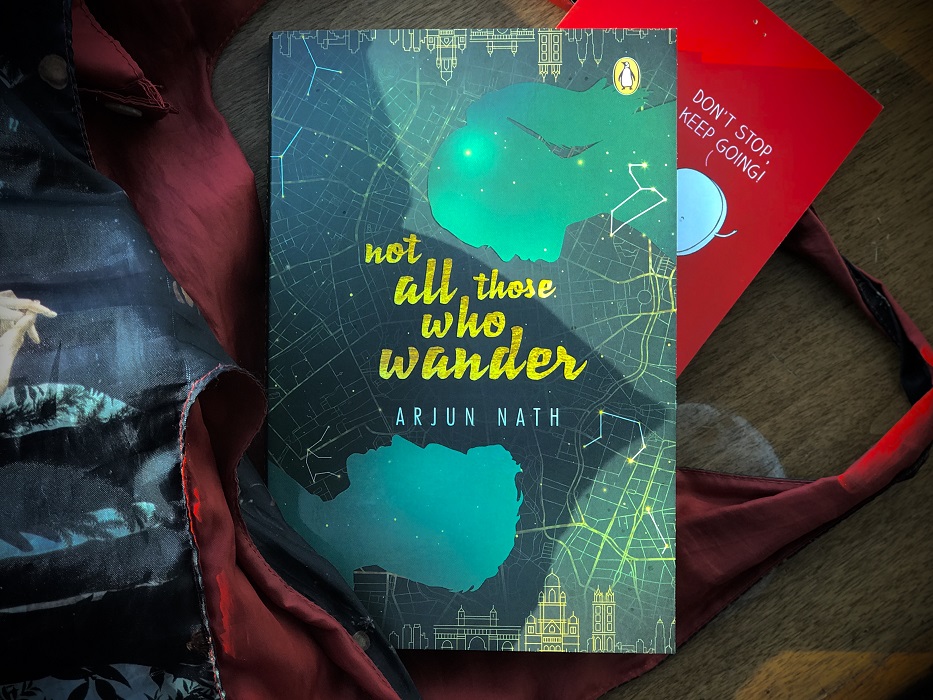
Amidst the quirkiness, author Arjun Nath gives us some very heartfelt moments like these to remember.

Caught between a sincere friendship and something more, Eram and Gehna give us a story that is #litAF!

Words Do Matter- A History of the Preamble from Conception to Completion

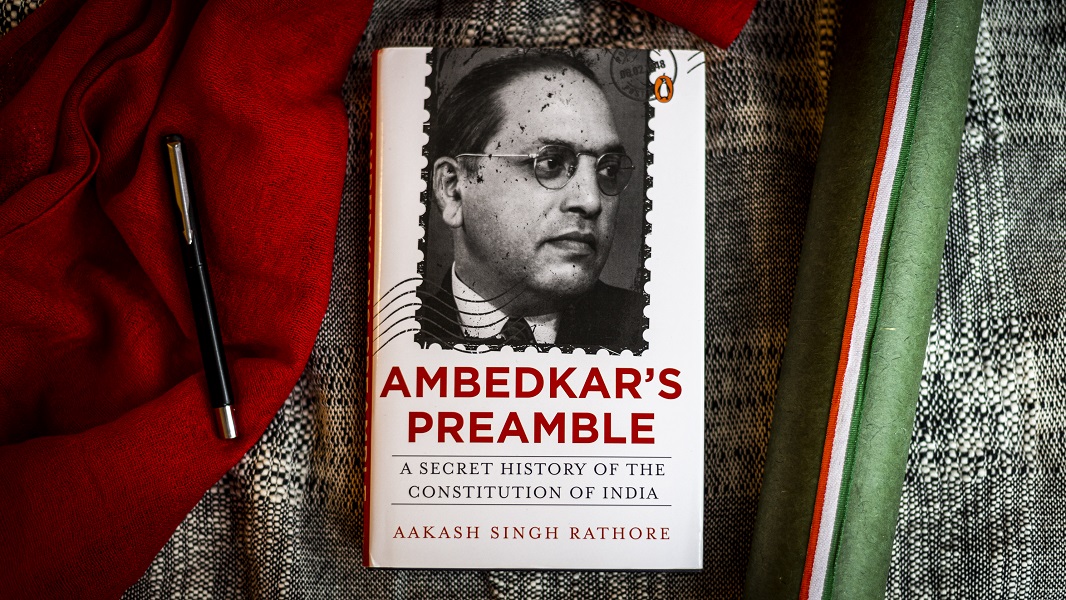
Universally regarded as the chief architect of the Constitution, Dr B.R. Ambedkar’s specific role as chairman of the Drafting Committee and his undeniable authorship of the Preamble became blurred in the haze of conflicting theories about how the Preamble came into being. Formally adopted on 26 January 1950, the Constitution of India has been a subject of interest to many but in Ambedkar’s Preamble, Aakash Singh Rathore establishes the presence of Dr. Ambedkar’s thoughts and beliefs in the intellectual origins of the Preamble and its most central concepts.

Rathore writes ‘Stated succinctly, the Preamble trumpets our collective aspirations as a republic; indeed, it articulates the principles that precondition the possibility for our unity as a nation.’

Read on for a peek into the history of how the Preamble acquired its meaning –


                   When securing justice implied removal of injustice

Throughout the writings and speeches of Dr. Ambedkar there has been an emphasis on the urgent implementation of policies to instate social justice even more than economic and political justice. When the Preamble was in its nascent stages, many voices raised the need to flesh out the justice clause and debated the inclusion of Nehru’s tripartite formulation of ‘Justice- social, economic and political’, which finally appeared in the Preamble as it was. However, there were no amendments suggested by Dr. Ambedkar to the justice clause even though there was an important underlying difference in his understanding of the concept-


‘In an effort to frame the Objectives Resolution, Dr Ambedkar had put forth his own ‘Proposed Preamble’, which although following Nehru in the tripartite division of social, economic and political, gave substantive meaning to the term ‘justice’ by speaking of the removal of inequalities. That is, where Nehru’s text spoke of securing justice, social, economic and political, Dr Ambedkar’s text interpreted ‘securing justice’ to mean removing social, political and economic inequalities.’


       When political liberties nudged social freedoms out of the Preamble

While debates swirled around the subject of freedom and liberty, there was a battle for terms to occupy place of pride in the Preamble. Positive freedoms such as thought, expression, belief, faith, worship which featured on Nehru’s list were pitched against other terms of value on Dr. Ambedkar’s list such as speech, religion and the freedom from want and fear. The final list that made its way into the Preamble established the distinction between fundamental rights and Directive Principles of State Policy.


The main components of economic justice, and many of social justice, were relegated to the Directive Principles as they were considered too controversial for inclusion into other binding sections of the Constitution. Similarly, the more robust, labour related freedoms were dropped from their privileged place in the Preamble. Thankfully, however, most of the terms found a place within the body of the Constitution itself, with some eventually being included as fundamental rights.’


                          When the inequality clause was flipped over

The rather concise equality clause remains unchanged from the way it was drafted and added to the Preamble. However, the clause ‘EQUALITY of status and of opportunity…’ is the briefer version of what was proposed in Nehru’s Objectives Resolution. Another turn in the history of this clause was that Dr. Ambedkar had, in fact, proposed an ‘inequality’ clause!


‘It may come as some surprise, however, that in Dr Ambedkar’s ‘Proposed Preamble’ from States and Minorities (March 1947), there was not really an ‘equality’ clause at all, at least not a positive one. Instead, there was an ‘inequality’ clause:

(iii) To remove social, political and economic inequality by providing better opportunities to the submerged classes.’


When the term ‘fraternity’ brought Gandhian ideas into the constitutional draft

One of the main pillars on which our Preamble stands upright is the ‘fraternity clause’. However, this clause did not feature in any of the preliminary drafts to the Preamble and Constitution of India. Added by Dr. Ambedkar, this clause went on to become the only universally applauded clause in the Constituent Assembly for its inclusion of an aspect of morality amongst mostly legal and constitutional principles.


‘On 6 February 1948, the clause first read: Fraternity, assuring the dignity of every individual without distinction of caste or creed.

This is purely the Ambedkarian formulation of fraternity, quite in line with the history of Dr Ambedkar’s articulation of the concept in his own writings, dating back to the 1930s… It drew upon fraternity as a resource for upholding individual dignity, which remains perpetually degraded due to the distinctions of caste.’


The terms ‘JUSTICE, LIBERTY, EQUALITY, FRATERNITY, Dignity and Nation’ contain layers of meaning and form the basis of the progressive and liberal values espoused by the Preamble.

‘It is these six words that allow us to hack into the DNA of Dr Ambedkar’s preamble, gaining access to many of its secrets.’  establishes Rathore as he takes us back into the intense debates and discussions within the Constituent Assembly and the Drafting Committee that decided the final inclusions in the Preamble.

To know more about the journey of the soul of India’s Constitution, read Ambedkar’s Preamble!


error: Content is protected !!