Publish with Us

Follow Penguin

Follow Penguinsters

Follow Penguin Swadesh

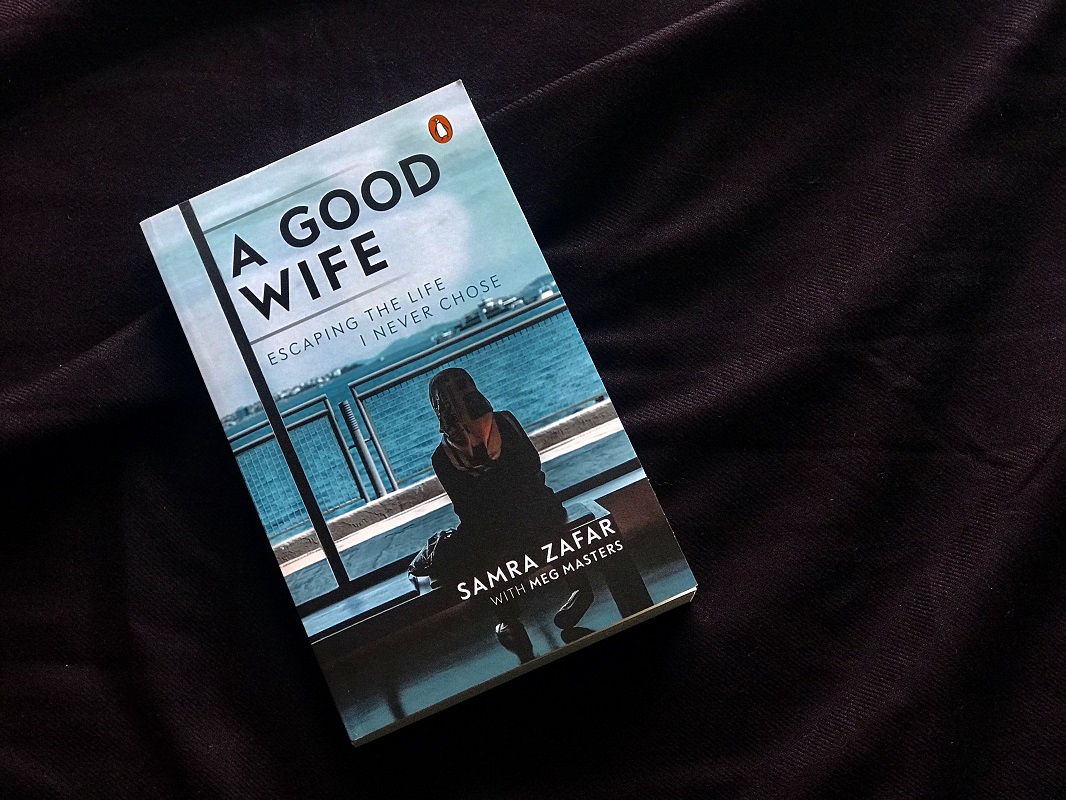
Escaping the Life I Never Chose- An Excerpt from ‘A Good Wife’

At fifteen, Samra Zafar had big dreams for herself. Then with almost no warning, those dreams were pulled away from her when she was suddenly married to a stranger at seventeen and had to leave behind her family in Pakistan to move to Canada.

In the years that followed she suffered her husband’s emotional and physical abuse that left her feeling isolated, humiliated and assaulted. Desperate to get out, she hatched an escape plan for herself and her two daughters.

A Good Wife tells her inspiring story.

Read an excerpt from the book below:

I wake to the crackling of bird calls outside my bedroom window, the anemic light of a Canadian spring morning seeping through the curtains. I lie very still, listening. The house is quiet. My in-laws are in the bedroom down the hall. My husband sleeps ten feet below me, in the den. My infant daughter slumbers peacefully beside me. At first, I’m surprised to see her. Why didn’t I put her in her crib in the room next door last night? Why is she still here with me? And then I remember. I rub a painful spot on my upper chest. My heart aches almost every morning, but today my ribs are sore as well.

As my drowsiness falls away, another feeling works its way through my body. A frayed, rippling tension, a growing brittleness: anticipation and fear. At any moment, the cold brick house will come alive, and I will be thrown together with the rest of the inhabitants. If all goes well, Ahmed will take his lunch and walk wordlessly out the front door, and I will start on a long, dull day, locked here in the house with his mother and my daughter. The hours will creep by, broken only by chores, television, empty chat.

But perhaps it won’t be dull. Yesterday was not dull. Or at least it didn’t end that way. And I have come to understand that in this new world of mine, anything other than grey monotony is scary. Anything else is dangerous.

My daughter shifts. I can hear my mother-in-law’s slippers as she begins to pad about her room. It is time for me to go in to say salaam. It is time for me to head downstairs with the baby. It is time for me to make my husband’s lunch. It is time for me to start my dreary routine.

As I rise, I realize that I am saying a little prayer. I am praying for luck. I am praying for another dull day.


Intrigued about what happens next? You will have to read  A Good Wife  to find out!

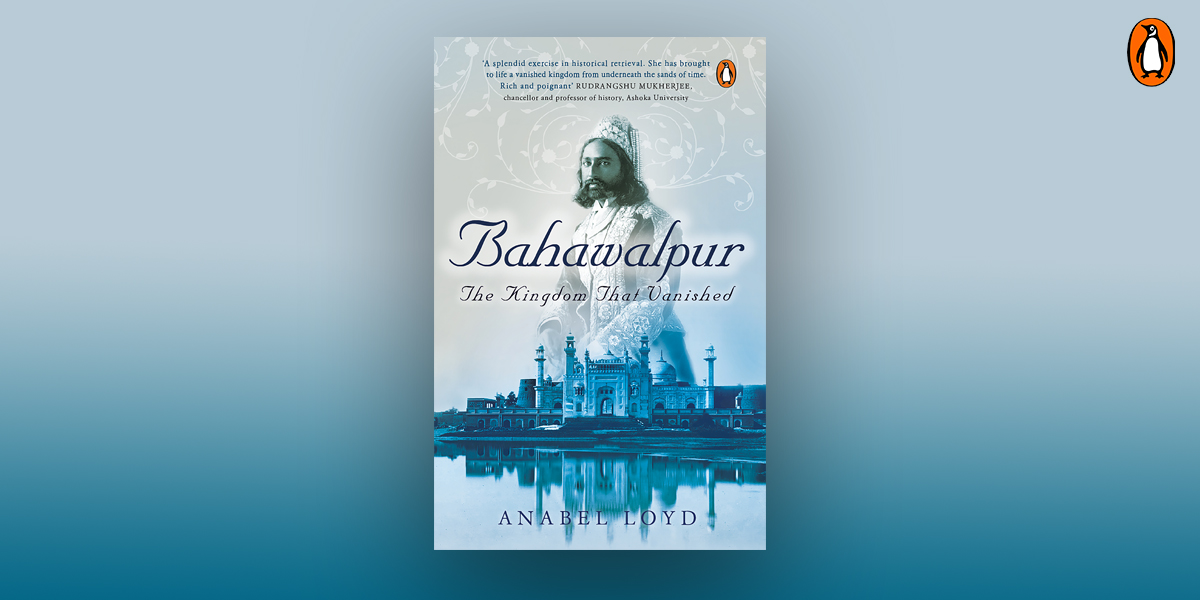
The Generous Nawab- An Excerpt from ‘Bahawalpur’

In the seventy or so years since Independence, much less has been written about the Princely States which acceded to Pakistan than those that remained in India. The name of the once great State of Bahawalpur is no longer remembered among its well-mapped peers over the border in Rajasthan.

Bahwalpur by Anabel Loyd is a record of the conversations between the author and Salahuddin Abbasi who reminisces about his family and sheds light to stories of Bahawalpur’s princes from old records, letters, and the accounts of British travellers and civil servants. The following is an intriguing excerpt from the book:

Nawab Bahawal Khan had ruled for long enough to see his enemies fail, fall or die off. He had avoided confrontation with Ranjit Singh through judicious advice to the Sikh leader during his siege of Multan, being rewarded with gifts of an elephant and a shawl, added to several instalments of ‘friendly messages’.


Bahawal Khan’s most inveterate enemy, the makhdoom of Uch, died and was succeeded by his son, Makhdoom Shams ud-din and his brother who was recognized by the nawab when he rode to Uch in person to perform the ceremony of placing the ‘Turban of Recognition’ on his head. In 1808, Mountstuart Elphinstone came to Bahawalpur en route to Kabul on the exploratory journey he described  in An Account of The Kingdom of Caubul and Its Dependencies in Persia, Tartary and India.

The Treaty of Tilsit in 1807 between Napoleon and Tsar Alexander I had raised, for the first time, the fear of overland invasion of India by Russia in alliance with the French bogeyman, and the governor general, Lord Minto, sent Elphinstone to Afghanistan, with other envoys to Persia and to Ranjit Singh, to gain promises of cooperation in the event of French incursions.

It is unsurprising that Elphinstone was impressed by Bahawal Khan. He must have been impressive to have successfully maneuvered a path through the hurdles, both of the tribal enmities of his times and greater invading powers. Before ‘we enter on the narrative of the passage of an embassy from the British Government’, it is too irresistible not to digress to Shahamet Ali’s rose-tinted description of England, where the roads of London are ‘paved with stones of various colours’, the town always kept in ‘clean order’ while the suburbs ‘are said to be covered with delightful gardens and noble buildings’ and ‘it is a fixed rule with every citizen, rich or poor, to whitewash his dwelling once a year’. That cloudless image might have surprised those breathing in the Great Stink and living through the cholera pandemic of the time.

Elphinstone described Bahawal Khan when he first met him on 1 December 1808 as a ‘plain, open, pleasant man, about forty-five or fifty years of age, he had on white tunic, with small gold buttons, over which was a white mantle of a very rich and beautiful gold brocade and over it a loongee. About six of his attendants sat; the rest stood round and were all well dressed and respectable’. The following day, ‘the Khan received us in a handsome room with attic windows and ‘conversed freely on all subjects’. He ‘praised the King of Caubul’ but had never seen him and ‘please God he never would’. He was a ‘desert dweller and feared the snows of Caubul’. Instead, ‘he could live in his desert, hunt his deer, and he had no desire to follow courts’. The nawab then demonstrated the skills of his people with a ‘curious clock’ made in Bahawalpur and gave Elphinstone parting gifts of greyhounds, two horses, ‘one with gold and one with enameled trappings’ and a very beautiful matchlock ‘with a powder flask in the English fashion’.

Elphinstone added, the nawab ‘has been liberal and kind to us without over-civility or ceremony’, with ‘an appearance of sincerity in everything he said’ and had shown ‘a spirit of kindness and hospitality which could not be surpassed’. Elphinstone was astonished that, unlike other princes he had encountered, they did not have to ‘struggle against the rapacity of the Nawab’, who, on the contrary, ‘would take nothing without negotiation’ and was himself almost embarrassingly generous in his gifts, sending a profusion of sweetmeats, flour, nuts and raisins, ‘a vast number of baskets of oranges’ and, most difficult to accept, five bags of rupees to be divided amongst the servants. 

It appears the ambassador and the nawab were pleased with each other—certainly this meeting and the first treaty of friendship between Bahawalpur and the British was the start of a remarkably close friendship.


Anyone with a penchant for history and politics would definitely consider the book, Bahawalpur an insightful read, shedding light on the troubled history of Pakistan which has clouded a clear picture of it and shrouded its component parts. Give it a read tell us what you think!


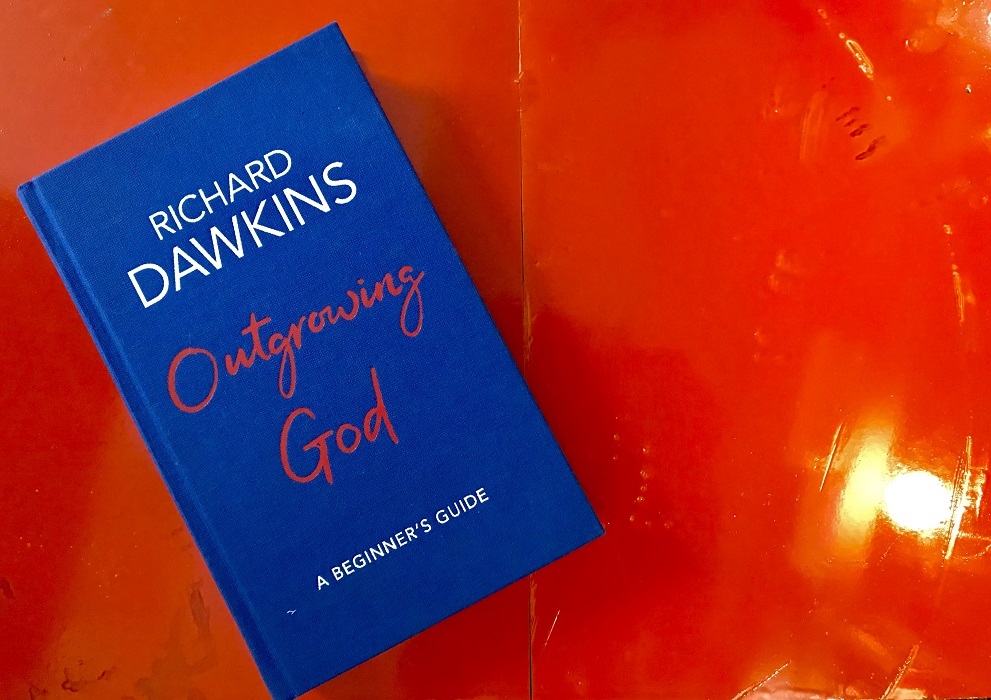
So Many Gods! Richard Dawkins’ Quest into Faith and Spirituality

Author Richard Dawkins was fifteen when he stopped believing in God. Deeply impressed by the beauty and complexity of living things, he felt certain they must have had a designer. Learning about evolution changed his mind.

In Outgrowing God, Dawkins, as a bestselling science communicator, gives young and old readers the same opportunity to rethink the big questions.

Find an excerpt from the book below, where he introduces the historic and current frameworks of god and religion within which we need to rethink questions of faith, religion, and spirituality.


Do you believe in God?

Which god?

Thousands of gods have been worshipped throughout the world, throughout history. Polytheists believe in lots of gods all at the same time (theos is Greek for ‘god’ and poly is Greek for ‘many’). Wotan (or Odin) was the chief god of the Vikings. Other Viking gods were Baldr (god of beauty), Thor (the thunder god with his mighty hammer) and his daughter Throd. There were goddesses like Snotra (goddess of wisdom), Frigg (goddess of motherhood) and Ran (goddess of the sea).

The ancient Greeks and Romans were also polytheistic. Their gods, like the Viking ones, were very human-like, with powerful human lusts and emotions. The twelve Greek gods and goddesses are often paired with Roman equivalents who were thought to do the same jobs, such as Zeus (Roman Jupiter), king of the gods, with his thuderbolts; Hera, his wife (Juno); Poseidon (Neptune), god of the sea; Aphrodite (Venus), goddess of love; Hermes (Mercury), messenger of the gods, who flew on winged sandals; Dionysos (Bacchus), god of wine. Of the major religions that survive today, Hinduism is also polytheistic, with thousands of gods.

Countless Greeks and Romans thought their gods were real – prayed to them, sacrificed animals to them, thanked them for good fortune and blamed them when things went wrong. How do we know those ancient people weren’t right? Why does nobody believe in Zeus any more? We can’t know for sure, but most of us are confident enough to say we are ‘atheists’ with respect to those old gods (a ‘theist’ is somebody who believes in god(s) and an ‘atheist’ – a-theist, the ‘a’ meaning ‘not’ – is someone who doesn’t). Romans at one time said the early Christians were atheists because they didn’t believe in Jupiter or Neptune or any of that crowd. Nowadays we use the word for people who don’t believe in any gods at all.


Outgrowing God asks pertinent and highly relevant questions on life and human connection. Concise and provocative, it is a crucial guide to thinking for yourself.

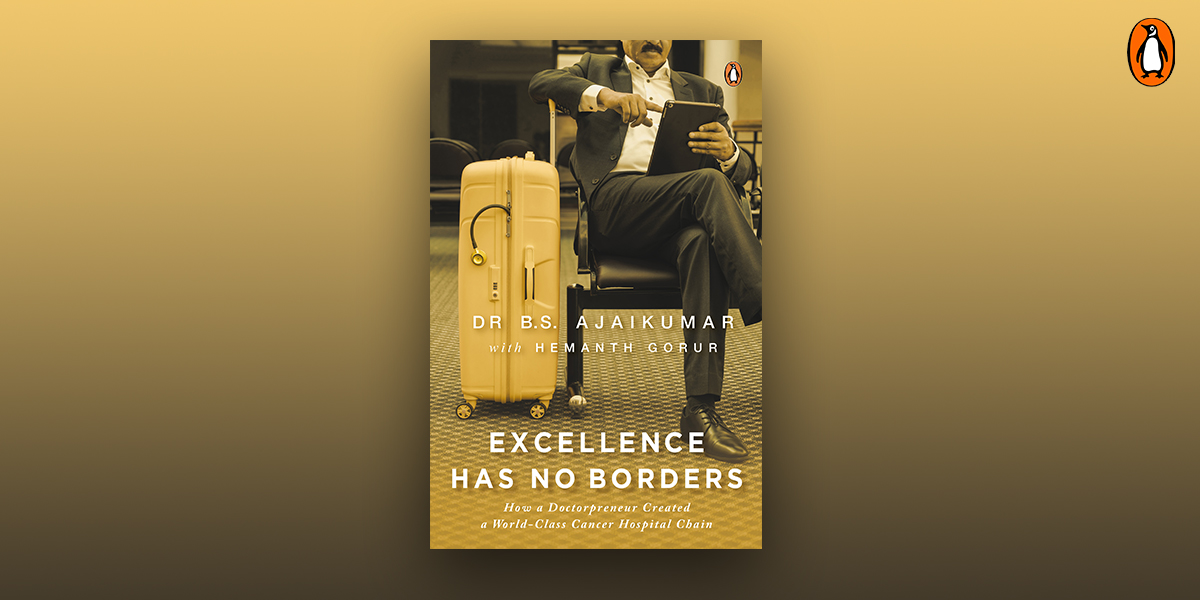
Standing By One’s Principles- An Excerpt from ‘Excellence Has No Borders’

Have you ever hit a point so low where hope was your only option? Dr B.S. Ajaikumar did too. He lost twenty million dollars and he almost lost his son. He hit a point where he stopped feeling that life was worth living but what brought him back was his zeal to never give up. His innate tendency to test the limits of his mental endurance. His tenacity for his principles. His family. Himself.

Meet Dr. Ajai Kumar in Excellence Has No Borders

—-

As a young adult, I was not immune to these social upheavals. With my tendency to stand up for the underdog, my internal volcano seemed to bubble up at the slightest hint of injustice. At St John’s, I was known to be an unapologetic leftist who stood for values. I was just over sixteen years old, the youngest in my class. I do understand that sixteen years was very young to get into medical college. Fortunately, I was able to get several double promotions in my primary and middle school due to new educational rules. I used to sit in the second bench and was very nervous, since it was my first year at university. All the other students in my class were adults, street-smart and hostel boarders.


One incident that transpired among the hallowed portals of St John’s changed things considerably. The physics teacher had a bit of an accent and used to pronounce ‘cc’ (cubic centimetres) as ‘sheeshee’. One day, unable to control myself, I ended up covering my mouth and laughing. Face contorted with anger, the lecturer strode up to me.


‘Take your books and get out!’


I sat there in silence, without moving.


‘I said take your books and get out,’ he repeated.


Finally I found my voice. ‘I’ve done nothing wrong. When I’m not guilty, I won’t go out.’


Anger turning to mortification, the lecturer blurted, ‘I will report you to the Father, who is the head of the department of physics!’


‘Please do.’ I felt strangely calm.


I was reported to the head of the department and summoned by the Father. This was a matter of principle for me. I was ready to stand up for it. 


I told the principal, ‘Father, I will not leave the classroom when I’ve done nothing wrong.’


I was able to hold my ground, and no action was taken against me. My older classmates began to treat me with respect after this incident. It crystallized for me the importance of standing like a rock by one’s principles. Coupled with my internal volcano of tenacity and my hunger for challenges, this gave my emerging personality multiple dimensions. I would no longer stand with my head bowed when injustice slapped me in the face. I would not take indignities lying down. I would not shy away from taking someone on when they threw down the gauntlet to me. In the coming years, it would be one or more of this triad of personality traits that would come to the fore when it came to life decisions or whenever I found myself at a crossroads.


Dr. Ajaikumar has always stood for what he believes in and has had a tactful, problem solving approach to every hurdle that has stood between him and his goals. His book reflects the strength he’s had to gather to face every hurdle that has been thrown at him.

Read more about him and his experiences in his book, Excellence Has No Borders.

Cozy Up With these Books this January!

We are all loving the winter, because it makes for perfect weather to snuggle up with a nice, hot mug of tea (or any hot beverage of your choice) and – of course – a book.  No picture of cozy days is complete without books!

If you feel the same way, we have some great book recommendations lined up for you to add to your weekends:


Dearest George


Get ready for the corniest book of the month!

Author Alicia Souza admits she is in love. And she is admitting it in (literary and artistic) style!

Full of real, day-to-day snippets of love, kisses, and marriage – Dearest George captures Alicia’s married life with her husband George. Although, one of the most important agendas was to document on print that George totally made the first move!

*

7 Dream Jobs and How to Find Them

Is  finding a job that makes you happy on your resolutions list?

TedX speaker Chandan Deshmukh takes you on a journey through goals, opportunities, challenges and turning points of any career.

Learn about human personalities and how they’re suited for certain jobs; how to turn your ‘side hustle’ into opportune ventures and, most of all, how to find a job in which you’ll be happy. This book is a must-read for your weekly dose of motivation!

*

6 Secrets Smart Students Don’t Tell You


How do smart students succeed?

Do they have any tricks up their sleeves?

Chandan Deshmukh’s 6 Secrets Smart Students Don’t Tell You gives you everything it promises in the title – an achievable and accessible answer to all these questions!

Full of real-life anecdotes, tips, advice and extensive research from smart students – this is a funny but highly informative – not to mention, crucial – read for students and parents alike.

*

Republic of Religion

Thanks to our colonial past, we derive many of our laws and institutions from England. How did India aspire to become a secular country?

Thought-provoking and impeccably argued, Republic of Religion reasons that the secular structure of the colonial state in India was imposed by a colonial power.  This one will get you thinking about the country, nation-building, and our history through new perspectives and insights.

*

Fateful Triangle

How did China shape US-India Relations during the Cold War?

A key question today is whether India and the United States should develop closer ties as a way of countering China’s desire to be the dominant power in the broader Asian region. In Fateful Triangle, Tanvi Madan argues that history shows that such a partnership is neither inevitable nor impossible.

Madan gives us a nuanced, engaging historical context to explore the past and potential interactions between the three countries, and in turn, India’s position within the Asian region.

*

Made in India

What makes Milind Soman tick?

There’s more to Milind Soman than meets the eye (although, as his legions of female fans will agree, what meets the eye is pretty delish).

On the twenty-fifth anniversary of ‘Made in India’ –  the breakout pop music video of the 1990s that captured the zeitgeist of post-liberalization India and made him the nation’s darling across genders and generations – Milind talks about his fascinating life-controversies, relationships, the breaking of vicious habits like smoking, alcohol, rage, and more-in a freewheeling, bare-all memoir.

*


Ambedkar’s Preamble

What role did Ambedkar really play in drafting our Constitution?

Although Dr Ambedkar is universally regarded as the chief architect of the Constitution, the specifics of his role as chairman of the Drafting Committee are not widely discussed.

Ambedkar’s Preamble establishes how and why the Preamble to the Constitution of India is essentially an Ambedkarite preamble. It is clear that its central concepts come from Ambedkar’s writings and speeches. In doing so, it spotlights fundamental facts about modern Indian history – which makes this a highly relevant read today.

*

The Minority Conundrum

What does it mean to be a minority in majoritarian times?

Following from the highly relevant Vision for a Nation last month, The Minority Conundrum gives us the second volume in the series titled Rethinking India – which goes further into exploring what the idea of a ‘nation’ means for India today.

Edited by Tanweer Fazal, this volume identifies vulnerabilities that hinder the quest for the realization of substantive citizenship by minority groups. The essays explore educational attainments; employment prospects; possibilities of equal opportunity; violence of the state and vigilante groups; and emerging questions of citizenship and employment. This one is another powerfully relevant read for today’s times.

*

Sarojini’s Mother

Will Science be enough to settle the puzzle of motherhood for Sarojini?

Sarojini-Saz-Campbell comes to India to search for her biological mother. Adopted and taken to England at an early age, she has a degree from Cambridge and a mathematician’s brain adept in solving puzzles.

Handicapped by a missing shoebox that held her birth papers and the death of her English mother, she has a few leads to carry out her mission and scant knowledge of Calcutta, her birthplace. And there are two equally likely candidates.

*

Bahawalpur

What is Bahawalpur?

In the seventy or so years since Independence, much less has been written about the Princely States which acceded to Pakistan than those that remained in India. The name of the once great State of Bahawalpur is no longer remembered.

This book is based on conversations with Salahuddin Abbasi, grandson of the last ruler of Bahawalpur and born a year before Partition. His memories reveal a lifetime of first-hand experience of the political life of Pakistan.

Author Anabel Loyd uses the stories of Bahawalpur to present a clearer picture of the macrocosm of Pakistan and its rich history.

*

Chats with the Dead

Who is Malinda Albert Kabalana? How did he die?

Renegade war photographer Maali Almeida has to solve his own murder. Does that sound fun? It’s not as though anyone alive actually seems to miss him. On top of that, there are all those goddamn memories of war, constantly interrupted by the overly chatty dead folks breezing through the afterlife.

He’s so busy solving his ethical dilemmas that there’s barely any time to solve his own murder.

Bestselling author of Chinaman, Shehan Karunatilaka brings to you a story of life and death – with a brilliant twist!

*

Kohra Ghana Hai

A read that is both pressing and relevant for our times, Kohra Ghana Hai presents us a powerful collection of poems by Naveen Chourey on mob lynching, Kashmir and on our soldiers.

It is infused with Naveen’s youthful energy and a hopeful vision for the future of our country. Highly readable and accessible, his poetry will definitely leave you thinking.

*

Pataakha

Will they ever learn to live with or without each other?

Based on Charan Singh Pathik’s eponymous story, Pataakha is a translation which includes both the original novella and the screenplay that film-maker Vishal Bhardwaj developed for his 2018 movie. Not only does the book get you to meet sisters Badki and Chhutki again on the page – it also makes for a unique glimpse into the art of adapting a literary work into film.

*

Happy for No Reason

Have we cracked true happiness yet?

In this deeply honest and personal memoir, Mandira Bedi presents to us the regular can’t-get-out-of-bed girl behind the fitness icon –  who is still trying to crack what ‘true happiness’ means. She hasn’t cracked it yet, but tells us in this memoir that she is headed in the right direction by learning to find peace in everything.

Being happy for no reason is both important and achievable. This book is about that.

*

Jaipur Journals

Namita Gokhale pens a part-love letter and part-satire against the rich backdrop of Jaipur Literature Festival.

From a lonely woman who does not want to publish her completed semi-fictional novel to a burglar who is passionate about poetry; from a child prodigy to an author who receives a threatening anonymous letter; the world of Jaipur Journals is filled with a diverse cast of characters that are as vibrant as the Festival itself!

The novel is an ode to the millions of aspiring writers who wander the earth with unsubmitted manuscripts in their bags.

*

Going Public

As chief of the Securities and Exchange Board of India (SEBI), Upendra Kumar Sinha guided the regulatory body through some of its most crucial years. Successive governments appointed him on this crucial post, making him one of the longest-serving heads of the organization. Under his leadership, SEBI successfully fought a long legal battle with Sahara, and led the crackdown on institutions like PACL, Rose Valley, Saradha and the MPS groups which conducted unauthorized deposit collections.

Going Public: My Time at SEBI is a historic and inspiring memoir about Sinha’s journey through India’s changing financial landscape.

*

Excellence Has No Borders

As a fledgling doctor, what would you choose: practising medicine in rural India or going abroad in search of financial security?

In an inspiring personal narrative of his entrepreneurial journey, CEO of HealthCare Global (HCG), Dr. B.S. Ajaikumar details how he has made cancer treatment accessible to all and created a chain of world-class cancer hospitals across India.

Full of insurmountable challenges, survival and powerful life-lessons, this one is a must for anyone looking for inspiration!

*

Trending in Love

What really is ‘Happily Ever After’?

Sanam is a carefree, but headstrong young girl. A spat with a politician’s son pushes her to take up the challenge of becoming an IAS. At the same time, a small-town boy, Aamir, is nudged into studying for the civil services too. Both become rank holders.

They meet at the IAS Training Academy, Mussoorie. They fall in love and all hell breaks loose. Their religious differences come to the fore, things take a dangerous turn and there is an explosion on social media.

A heady mix of dreams and desire, this is a story of undying love in the face of our society’s most dangerous beliefs.

*

From Oberoi to Oyo

How did the Taj, the Oberoi and the ITC hotels come to dominate the Indian hotel landscape? And what are the challenges thrown by the foreign chains, OYO, the online travel agents and the young start-ups?

Based on Chitra Narayan’s  years of observation of the industry and interactions with key stakeholders, this book takes you through the tumultuous history and evolution of the Indian hotel industry. It is packed with exciting profiles, insights, and strategies; and how the future of the hotel industry could look like.

*

Sixteen Stormy Days

Sixteen Stormy Days narrates the riveting story of the First Amendment to the Constitution of India. It talks about one of the pivotal events in Indian political and constitutional history, and its first great battle of ideas.

Passed in June 1951 in the face of tremendous opposition within and outside Parliament, the subject of some of independent India’s fiercest parliamentary debates, the First Amendment drastically curbed freedom of speech; enabled caste-based reservation; circumscribed the right to property and validated abolition of the zamindari system; and fashioned a special schedule of unconstitutional laws immune to judicial challenge.

Drawing on parliamentary debates, press reports, judicial pronouncements, official correspondence and existing scholarship, the book challenges conventional wisdom on iconic figures such as Jawaharlal Nehru, B.R. Ambedkar, Rajendra Prasad, Sardar Patel and Shyama Prasad Mookerji, and lays bare the vast gulf between the liberal promise of India’s Constitution and the authoritarian impulses of her first government.

*

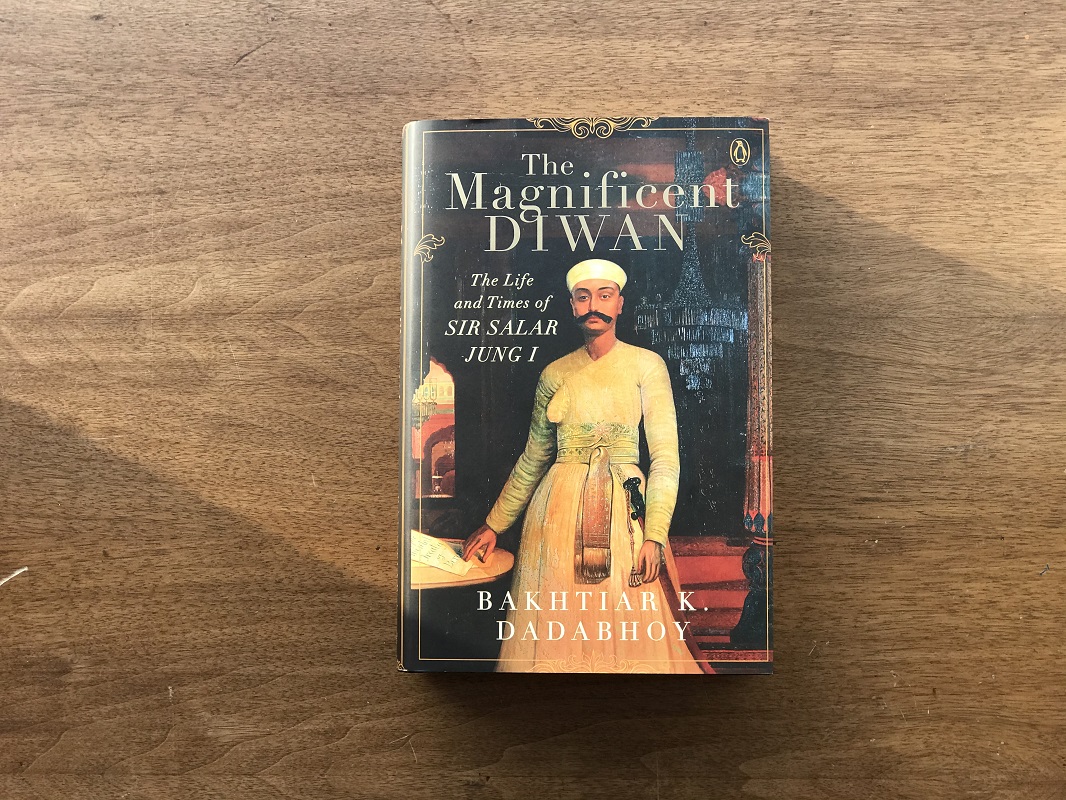
The Magnificent Diwan

The Magnificent Diwan is the definitive biography of arguably India’s most influential and powerful statesman of the nineteenth century; one decisively shaped Hyderabad’s political and economic history for nearly three decades.

It was Salar Jung who, by his reforms of the medieval oligarchy that was Hyderabad, ushered the state into the modern era.

The book is not is not merely a chronicle of his life but also a history of Hyderabad-both social and governmental-and gives the reader an encompassing view of the man who has been called the founder of modern Hyderabad.


Which one(s) will you be picking up? Let us know in the comments below!

 

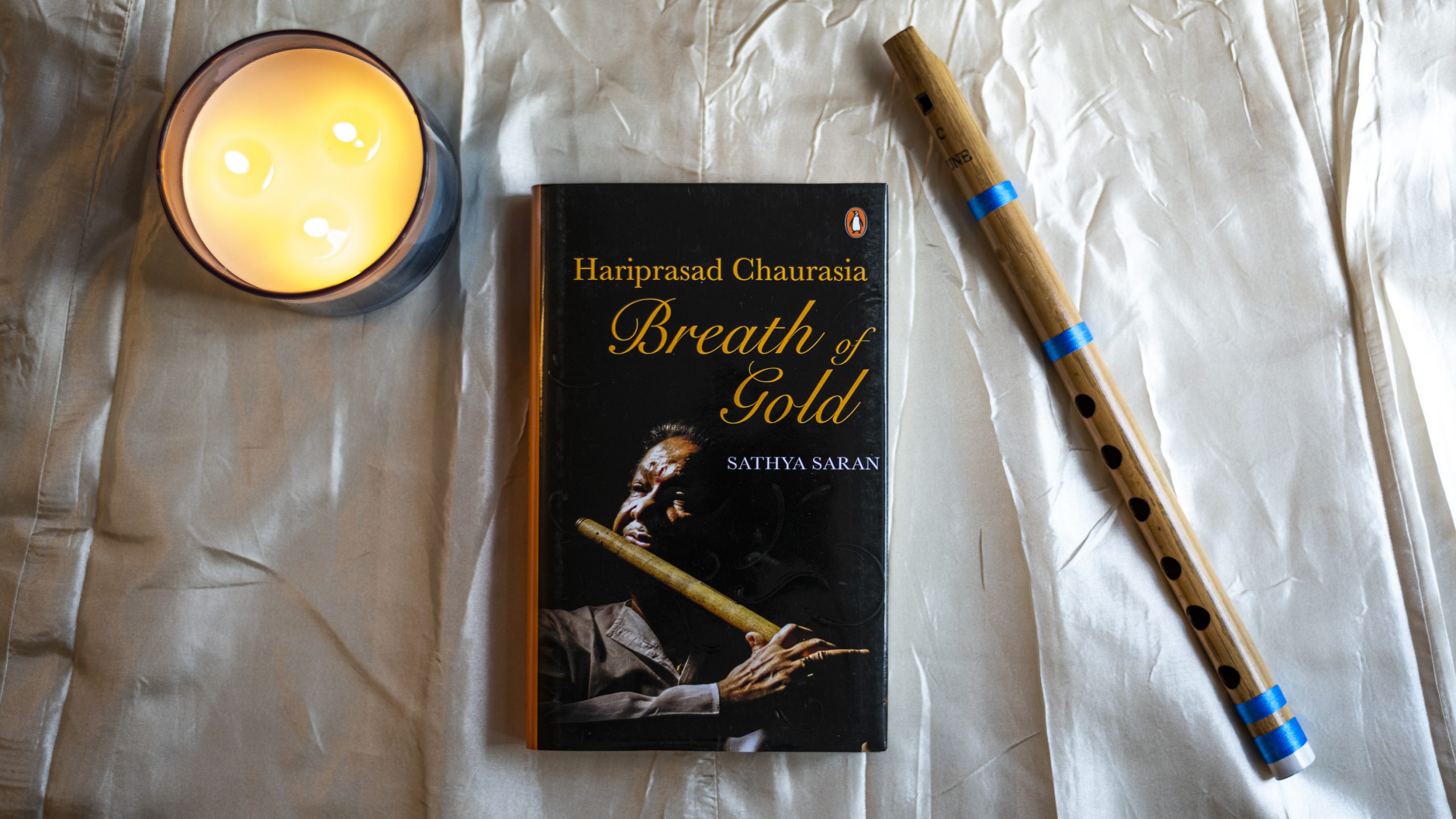
Story of the Much-Loved Flautist: Hariprasad Chaurasia

As it listens to the sounds you create

The entire world stands in awe

Forgetting themselves each one asks

Is this the scent of flowers, or a flute that plays? 

In the age of record stores, it was rare to go into a record shop and not see a recording of Pandit Hariprasad Chaurasia, the master of the bansuri or bamboo flute. One of India’s most popular artistes, he is in Mumbai today, Paris tomorrow and San Francisco the day after.His mesmerizing flute can be heard in many of Hindi cinema’s most popular songs, in a composition by the former Beatle George Harrison, as well as in recordings with renowned musicians from across the world. Sathya Saran’s Breath of Gold will inspire and introduce everyone to the story of this amazing artist.

Not convinced? Read on to know more about Hariprasad Chaurasia:


By combining tradition with innovation, Pandit Chaurasia expanded the scope of expressiveness of the bansuri and was, thus, awarded a plethora of awards, including the Padma Vibhushan. (Source: India Today)

*

If it were up to his father, he would have been a wrestler.Yet, he broke away from the life that was chosen for him and wrote his own destiny.

*

In his early teens, Pandit Chaurasia took lessons in Hindustani classical music from noted Benares vocalist Raja Ram. After hearing one of his performances, Bholanath, a well-known flutist, made Chaurasia his disciple and made him go through eight years of rigorous training. (Source: Britannica)

*

Pandit Chaurasia also studied with Shrimati Annapurna Devi, daughter of Ustaad Allauddin Khan. In Bombay, he also got the additional exposure of performing in one of India’s cultural centers. Through years of experimentation and dedicated practice, Pandit Chaurasia brought global recognition to the bansuri. (Source: IAAC)

*

Hariprasad Chaurasia has also been a guru to innumerable students in his Mumbai and Bhubaneswar gurukuls, and at the World Music Department, Rotterdam Music Conservatory, the Netherlands, where he is artistic director.

*

Hari- ji, as he is fondly called, never gives up, and nothing can keep him from his music. Not the trembling of his hand, not a sudden shortness of breath. He overcomes it all with the strength of his will and his ability to laugh off every hurdle age places in his path.


 If you want to know more about this musical genius check out Breath of Gold.

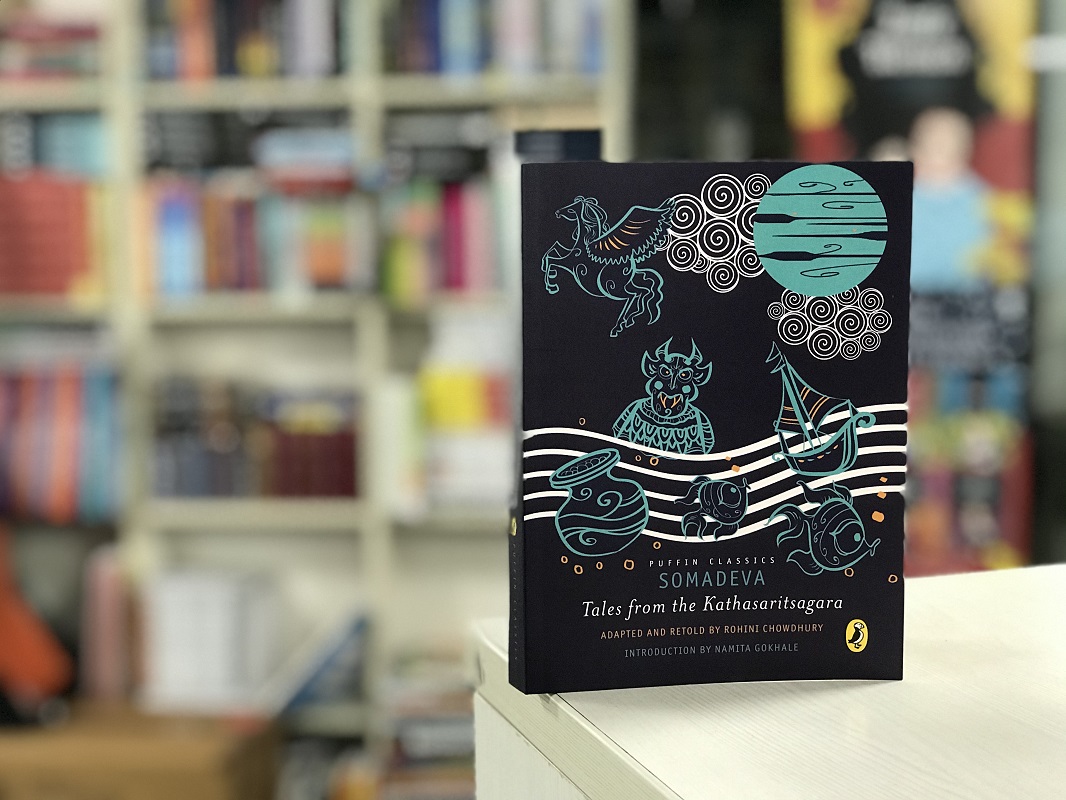
Why You Should Read ‘Tales from the Kathasaritsagara’

Do you know the story of Phalabhuti, who narrowly escaped a grisly fate?

Or of the kind-hearted Jimutavahana, who was willing to give his life to save a snake from death?

These are just some of the many tales that make up Somadeva’s Tales from the Kathasaritsagara, a classic work of Sanskrit literature that is full of memorable characters. Adapted and wonderfully retold by Rohini Chowdhury, this is a timeless classic that will entertain and enchant readers everywhere.

Not convinced yet? Rohini Chowdhury pens down why this book is special to her below:


For as long as I can remember, the Kathasaritsagara has been a source of joy and wonder for me. Full of clever women and brave men, its stories have never failed to delight and divert. Its title, which means ‘the ocean of the rivers of story’, immediately brings to mind the image of innumerable rivers of story and their tributary tales flowing into a vast ocean, which at last becomes filled with stories of every kind imaginable. Its title is no exaggeration, for this great work contains within it more than 350 tales told across eighteen books in some twenty thousand stanzas.  It is, for its size, the oldest extant collection of stories in the world and is almost twice as long as Homer’s Iliad and Odyssey combined.

It was composed around 1070 CE by a Kashmiri Shaivite Brahmin called Somadeva. In a short poem at the end of his work, Somadeva states that he was the court poet of King Anantadeva of Kashmir, and that he composed his Kathasaritsagara for the amusement of Queen Suryavati, wife of King Anantadeva, to distract her mind from its usual occupation of ‘worshipping Shiva and acquiring learning from the great books.’ The Rajatarangini, a chronicle of the kings of Kashmir written by the historian Kalhana in 1149 CE, tells us that the reign of King Anantadeva was one of political unrest, court intrigues, and bloodshed. In 1063, King Anantadeva surrendered his throne to his eldest son Kalasha, but recovered it a few years later. In 1077, the king once again gave up his throne, but this time Kalasha openly attacked his father and took all his wealth. In 1081, the king killed himself in despair, and Suryavati threw herself onto his funeral pyre and perished. It is likely that it was sometime between Anantadeva’s first and second giving up of his throne that Somadeva composed his Kathasaritsagara, possibly around 1070.  The Rajatarangini, by independently corroborating the reign of Anantadeva, supports the existence of Somadeva as a real, historical person, and helps us determine with some certainty the time when he composed his great work.

Indian texts were rarely the product of a single individual’s imagination, but were usually put together using stories from various sources and told by different storytellers. Somadeva, too, did not invent the stories that make up the Kathasaritsagara – many of its tales are also contained in much older works, such as the Buddhist Jatakas, the Panchatantra, the Ramayana, the Mahabharata, and the Puranas and had probably been in existence for centuries, preserved and transmitted orally long before they were ever written down or became a part of Somadeva’s text. Somadeva himself tells us that the Kathasaritsagara is drawn from a much older, and greater, collection of tales called the Brihatkatha, or Great Tale. This greater collection of tales, says Somadeva, is now lost.

Somadeva’s genius lies in the manner in which he has threaded the separate, often unrelated, stories together within the main story, to create a work that engrosses and enchants from the very beginning. Some of the stories take us by surprise, such as that of the clever man who made himself a fortune from a dead mouse. Others, such as the story of the talking bear who refused to betray a friend, make us stop and reflect – on deceit, trickery, and honour. But mainly, the stories entertain and divert. The world of Somadeva’s Kathasaritsagara is rich and vibrant, full of kings, thieves, conmen, merchants, and courtesans. There is war and romance, intrigue and heroism, wit and, sometimes, even wisdom. Like Vishnusharma’s Panchatantra, the Kathasaritsagara is concerned with life and living, but unlike the fables of the Panchatantra, the stories of the Kathasaritsagara teach no moral lessons. Nor are the tales bound by any dominant theme, religion or point of view, but ramble without plan or any purpose except entertainment through their magical world. This makes the work unique in Sanskrit literature.

The Kathasaritsagara has been translated and retold several times since it was written. One of its earliest translations was commissioned by the Mughal emperor Akbar, who came to know of the Kathasaritsagara on a visit to Srinagar after his conquest of Kashmir in 1589 and shortly afterwards ordered it to be translated into Persian. This translation was also lavishly illustrated. Unfortunately, most of the original manuscript was lost and today only nineteen illustrations survive from this translation, scattered in museums and private collections around the world.

The Kathasaritsagar remains unparalleled in its appeal and the undiminished popularity of its tales over the centuries. Its stories are found all over the world – in the more or less contemporary Arabian Nights, in Celtic folklore, and in collections such as the fairy tales of the Brothers Grimm. Its influence can be seen in later works such as Chaucer’s The Canterbury Tales (1387 CE) and Boccaccio’s Decameron (1353 CE).  In continuing to inspire modern writers such as Salman Rushdie with his novel, Haroun and the Sea of Stories, it remains one of the most influential and best-known non-religious works of Sanskrit literature.

When Puffin’s Sohini Mitra asked me whether I would be interested in retelling, in abridged form, Somadeva’s great work for the Puffin Classics series, I was overjoyed, for I could not imagine a more delightful task. I have based my retelling of the Kathasaritsagara mainly on C.H. Tawney’s English translation published in 1880 by the Asiatic Society of Bengal. For the purposes of this abridged retelling, I have chosen the stories so that they represent, as far as possible, the extent, scope and structure of the whole of the original.  Perhaps my favourite story in this selection is that of the carpenter-king, Rajyadhara, and his robot subjects. Though written almost a thousand years ago, it can hold its own against any modern sci-fi tale. Another favourite of mine is the action-packed story of Shringabhuja and Rupashikha, variations of which are found in Norwegian, Sicilian, and Scottish folklore. And there is of course the Vetalapanchaviṃshatik, the twenty-five tales of the Vetala and King Trivikramasena familiar to almost every child in India. Of these riddles, I have included only a few of the most interesting.

By the time Somadeva wrote his Kathasaritsagara, Buddhism had all but disappeared from the Indian subcontinent. In Kashmir, Shaivism was becoming increasingly important, but unlike most of the rest of India, Buddhism still had a significant presence there. Somadeva thus lived and wrote in a climate where multiple religions and philosophies co-existed peacefully. Somadeva dedicates his work to Shiva, but also includes within it, stories about Buddhism and the Buddha, indicating the place that Buddhism occupied in the social and cultural landscape of Kashmir at the time. The story of Ratnadatta and how he learns the meaning of the Buddha’s teachings is a particularly powerful little story, and which I felt deserved a place in this selection.

Given its importance and the universal appeal of its stories,  Tales from the Kathasaritsagara is, in my opinion, the perfect introduction to the wonders of Sanskrit literature for young readers.

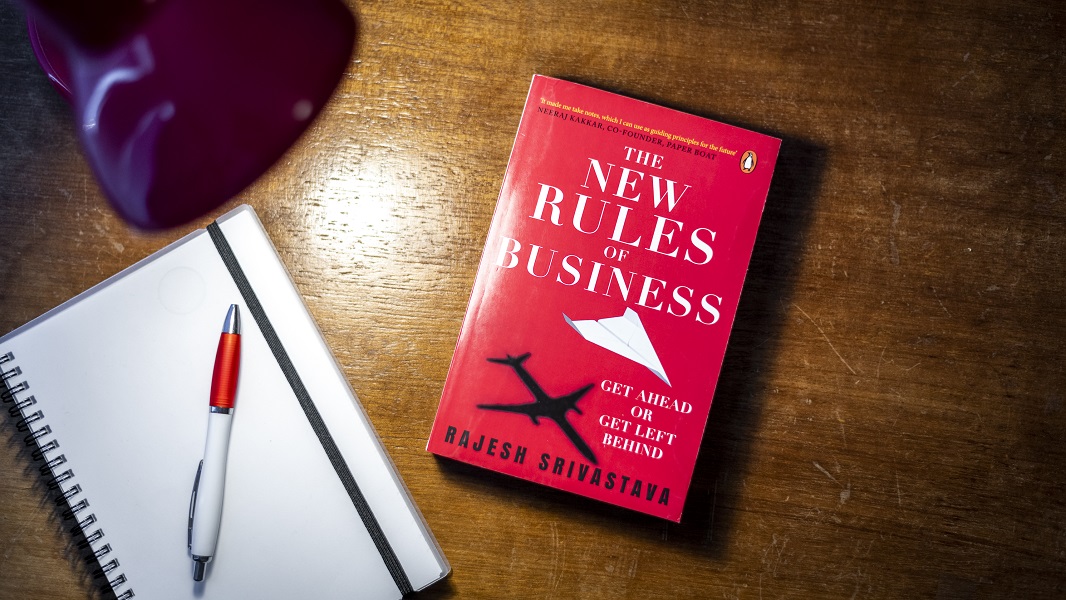
Why You Need to Read About the New Rules of Business

As the business-world becomes increasingly dynamic, innovative, and experimental – the benchmarks for brand-building are changing. Playing by a set rulebook is no longer enough. There are new (and higher) expectations now, and with them come new rules of doing business.

From learning to prioritize employees’ well-being to investing in products that can do their own marketing – the market today has gradually dismantled the old rules and installed new ones in their place.

Author Rajesh Srivastava has brought together over three decades of his corporate and academic experience and the result is his debut book, The New Rules of Business, to present compelling anecdotes and insights about new age companies like Netflix, Amazon, and Uber to explore how and why they have made it big in the market.

In an age of entrepreneurship, this book is a must-read for people across careers and professions. We list down some of the reasons that make this such a relevant read today.

To Keep Up with New Age Companies

New age companies, Uber and Ola, Netflix, Amazon Prime and Hot Star, Amazon and Flipkart are dismantling the old rules of business and installing new rules in their place.
It is the age of innovative entrepreneurship, and to be able to take any step forward in the business-world, it is imperative to keep up with the names disrupting and revolutionizing the industries today.

This book presents compellingly-written anecdotes and case-based insights, which makes it highly accessible and readable even for layreaders.

*

To Identify Irrelevant ‘Old’ Rules

What triggered the collapse of Nokia? Not a competitor from the handset industry. It was iPhone introduced by Apple, which was from a different industry.

The market is no longer following the ‘old’ rules, as seen in the case of Nokia. New age competitors are indirect, invisible & from cross industry.

If you continue to operate your business using ‘old’ rules, then it would be equivalent to using rotatory phones in an era of smart phones, you run the risk of a Nokia-like fate.

*

To Arm Yourself with Newly Minted Rules to Take on the World!

In our careers – entrepreneurial or otherwise – we are constantly faced with business challenges. Most of us search for the answers in the areas ‘lit’ by our current level of knowledge.

But more often than not, the solution may very well lie outside of it.

This book will introduce you to the newly minted rules of business. Armed with them, you can feel inspired and confident to take on business challenges and come up with trumps and out-of-the-box solutions.

*

The Rules are Relevant for All – Veterans and Beginners

All the points above make it evident that new and upcoming entrepreneurs can benefit a lot by making themselves aware of new rules and challenges of the market today. But, what about veterans and experienced businesspeople? What new tools, techniques and frameworks can this book teach me?

This book is a must-read for veterans and beginners alike – simply because the rules of business have well and truly changed. And even though the challenges might be by and large the same, the solutions for satisfactorily resolving them have changed.

This book will introduce you to new thoughts, ideas, tools, techniques, and frameworks which will help you come up with impactful answers to business challenges.


Creativity, knowledge, and out-of-the-box thinking have become crucial factors for potential and prospective customers today. Just being a brand is not enough, you have to be a ‘cool’ brand to make customers truly happy. The New Rules of Business presents relevant insights into all these facets.

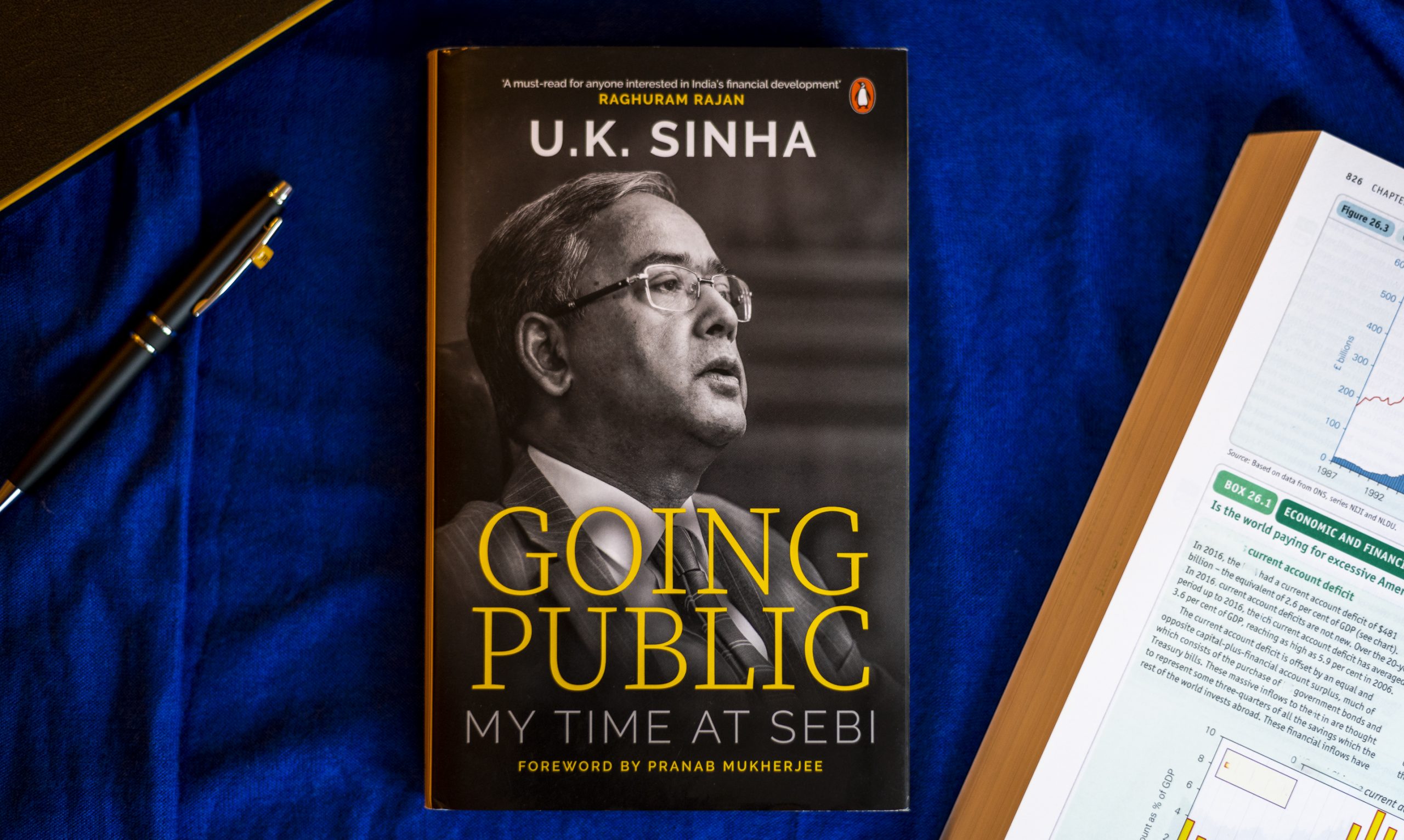
Deemed Public Issue or Doomed Investment? An Extract From ‘Going Public’

Upendra Kumar Sinha has contributed significantly to shaping India’s capital markets. He has been the guiding force behind reforms to protect the rights of investors and make stock exchanges more secure. Under his leadership, SEBI successfully fought a long legal battle with Sahara, and led the crackdown on other institutions which conducted unauthorized deposit collections.

Reiterating the importance of joint efforts of the government and regulatory bodies, Sinha in Going Public writes, ‘When there is a crisis or the financial stability is at stake, the government and the regulators have to mutually reinforce each other.’

Read on for a glimpse of how companies lure investors-

In spite of clear legal provisions, many companies have deliberately resorted to raising funds from hundreds of thousands of members of the public by taking recourse to the private placement route even though it was restricted for issue made to less than fifty subscribers. The maximum number of subscribers in a private placement has now been enhanced to 200 under the Companies Act, 2013. The main intention of companies that violate this rule has been to mislead investors and avoid stricter public scrutiny. Subscribers are denied full information about the true financial condition of the company and its actual business. They are not aware how much money is being raised, how many subscribers there are, the duration of the issue, or the corporate purpose for it. In addition, there is often a strong push from agents and salesmen. Investors are often duped into making these investments without any idea about the risk factors, or the remedy or guarantee available to them in case of refund or redemption.

In most cases, the preferred instrument is debt instead of equity. Generally, debentures or bonds (both terms are used interchangeably) are issued as these contain provisions of an assured rate of interest. People find these assurances very attractive. The rates of interest offered are very high so that these debentures can be easily sold. Several complications can be built into these instruments. A debenture can be convertible into equity, either partially or fully. The conversion into equity shares can take place at the option of the investor, compulsorily after a period or be linked to an event in future, such as the share prices of the company crossing a certain band. But, instead of highlighting these complications, agents push the instrument on the strength of the high rate of interest being offered.

Although many companies have taken recourse to it, the Sahara case is the biggest example in the country of a deemed public issuance. The surprising fact, however, is that neither SEBI nor any other government agency such as the RBI or MCA raised any red flag about such a large amount of money being raised from the public in utter violation of the law. Had Sahara Prime City Ltd (a group company) not decided to list on the stock exchange and thereby be forced to make disclosures to SEBI regarding its group entities such as Sahara India Real Estate Corporation Ltd (SIRECL) and Sahara Housing Investment Corporation Ltd (SHICL), the matter would never have come to light. It is also significant that the process of issuing these optionally fully convertible debentures (OFCDs) started around the same time as the RBI placed severe restrictions on the working of Sahara India Financial Corporation Ltd (SIFCL), a non-banking finance company of the group. SIFCL had been asked by the RBI not to raise any fresh deposits from the public and to close all existing deposits and reduce its public liability to nil in a given time frame. It is no coincidence that around the same time, these new instruments were issued by two companies of the Sahara group.

According to their own admission, the net amount raised by the two companies was more than Rs 24,000 crore from more than three crore investors.


Upendra Kumar Sinha is known to have been the longest-serving chief of SEBI. He also served as the chairman and managing director of UTI Mutual Fund and was head of the Capital Markets division in the Ministry of Finance. In his candid and historically important memoir Going Public, Sinha reminisces on his journey through India’s changing financial landscape.

To know more, read Going Public!

A Diwan with Foresight- An Excerpt from ‘The Magnificent Diwan’

The Magnificent Diwan by Bakhtiar K. Dadabhoy waxes eloquent about Hyderabad’s truly magnificent Diwan, Sir Salar Jung I. A Diwan with a foresight who was one of the firsts to establish an organized system of government in Hyderabad, Jung restored its prosperity and developed its resources to such an extent that the nizam’s dominions were as orderly as any other part of India. 

Reintroduced to a generation that doesn’t have an inkling about him, Dadabhoy in the introduction of the book writes –

To understand Salar Jung, we must understand that his most dominant sentiment was devotion to the nizam. He did not hesitate to oppose the nobles of the court, and to reform every department of the disorganized administration, because he realized that the strength of the ruler lay in the firmness of the administration. His loyal attitude during the Mutiny was but a part of this well-considered policy. Throughout his career, the mainspring of his policy was the interest of his master, the nizam. His loyalty to the British, notwithstanding his childhood influences, sprang from a deliberate conviction that the maintenance of British authority was the best pledge of safety to the dynasty he served so faithfully. At the risk of his own popularity, and often at the risk of his own life, he refused to align with fanatics. For the nizam’s sake, he bore the humiliation he received from the British which resulted from his persistence on the restoration of Berar. He bore with meekness the frequent indignities to which he was exposed in the palace, and waged a constant and unequal battle against fanatics and other malcontents. Till Afzal-ud-Daula’s death, Salar Jung had never left Hyderabad, a fact which makes his administrative reforms still more remarkable, since they were accomplished in spite of the opposition of a capricious nizam, and hostile nobility. His strong individuality, firmness and caution gave him an ascendancy in Hyderabad which no previous diwan had attained.

The difficulties he faced, unusually trying and complicated in themselves, were compounded by the fact that he was never able to rely on the support of the court because he was identified with a policy of reform which threatened vested interests. Imbued with a liberal education and outlook thanks to the English influence in his formative years, Salar Jung honestly believed in the superiority of British administration. He adopted the fundamentals of British principles of administration in his reforms which covered almost every sphere of activity: land revenue, police, judiciary, administration and education. Sir Richard Temple, who was resident in 1867, believed that Salar Jung, as a man of business and in matters of finance, had no rival among Indian ministers. European influences had greatly moulded his thinking, and Temple recognized that he was a great imitator. Whatever improvement the British government introduced, he would sooner or later adopt, to good effect.

It is no surprise that British influence preponderated, since apart from his own predilections, he was encouraged and advised by successive residents who wanted to foster good government, not only in Britain’s own interest, but for a principle as well. Carrying ‘civilization’ to India was both an imperial necessity and a mission of pride in the nineteenth century.


To read more about Sir Salar Jung I’s reign, check out his biography, The Magnificent Diwan. We’d love to know what you think!

error: Content is protected !!