Publish with Us

Follow Penguin

Follow Penguinsters

Follow Penguin Swadesh

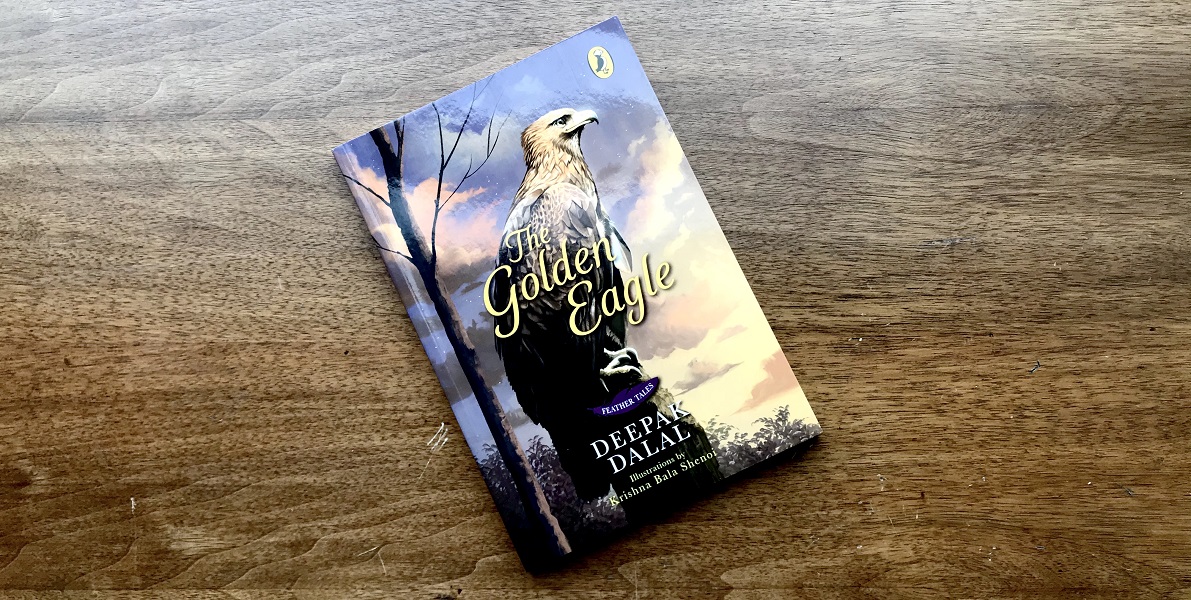
A Squirrel Unlike Any: Meet Shikar from The Golden Eagle

Perched atop a Jacaranda tree in an unusually quiet Rose Garden, two doves gaze adoringly at a squirrel as he swishes his tail and settles in with them for a night of stories from a long buried past. The brown squirrel, whose odd white head shines silver in the star-lit night, has questions that no one has answered. But tonight, he seeks his piece of history from his friends.

But wait, that can’t be! How can birds be friends with squirrels?

When the squirrel is as enchanting as Shikar and the birds as compassionate as the doves, a lot can happen! This white-headed squirrel from The Golden Eagle is deeply loved by Kabul, his bird-mother and Lovey and Dovey, his dove-aunty and dove-uncle.

Do you know what makes Shikar the most unusual squirrel? Read on to find out:


Shikar can melt hearts at first sight

The usually rational and level-headed skybird, Kabul, experiences a flutter in her heart when she sets eyes on infant Shikar:

‘The baby’s head was white. The squirrel was tiny, smaller than even a sunbird. Kabul sat there spellbound. Chorus went on singing. By the time Chorus ran out of breath, Kabul was convinced that the squirrel was the most adorable creature she had ever seen.’

~

Shikar is a squirrel among birds

Raised as one of their own, Shikar feels loved and protected by the birds but in his heart he knows his being among birds is out of the ordinary:

‘Shikar was aware that he was special. After all, he was the only squirrel in the whole wide world who could speak the bird language.’

~

Shikar yearns for adventure

Being a squirrel, Shikar feels left out of the excitement that birds enjoy when they take flight to faraway places:

‘I don’t have wings. I can’t fly to distant lands. I don’t have great stories to tell. It’s birds who lead exciting lives, flying everywhere and having adventures.’

~

Shikar is the outsider with a mysterious past

Dumbfounded at what he thinks are nasty rumours, Shikar struggles to cope with the rejection that causes him so much pain-

I’m the bird-squirrel, the ghastly creature that young squirrels are taught to fear. Squirrel mothers make up stories about me. I’m the pale-faced demon who will kidnap them if they don’t behave. There’s this one story so popular that every squirrel in the Gardens knows it. It’s about how I can summon eagles whenever I want. Eagles bigger than anyone has ever seen. Evil, golden ones.’

~

Shikar is spunky

The vulnerable baby squirrel has to become a brave little fighter when left alone to defend himself in an unfair battle with a gang of mean adult squirrels –

‘We couldn’t help marvelling at the little squirrel’s bravery. We watched him scamper up the tree and wage battle with the big squirrels once more. It was an unequal tussle and it wasn’t long before the squirrel fell again. Undaunted, the baby clambered back up.’

~

Shikar is unique

Sensing Shikar’s unhappiness at Kabul’s refusal to talk about the past, the doves decide to lay bare all that was withheld from the little squirrel-

The squirrels should have looked after you, but they rejected you, pushing you away every time you went to them. Their attitude was not entirely unexpected—same as the behaviour of the squirrels of the Rose Garden. Your head is white, Shikar. Squirrel heads are brown. They turned you away because you are different.


Listening to the story of how it all came to be, Shikar realises he is a lucky little squirrel. In a world where danger lurks in every corner, he has friends who look out for him. His little head buzzing with stories of adventures the doves spoke of, Shikar can hardly believe all that had happened at Stork-pur and Flamingo Lake!

The Dawn of Wonder: Life Enhancing Experiences from ‘Dawn: The Warrior Princess of Kashmir’

It is A. D. 3000. Dawn faces great peril. To fight a primeval enemy that is greater than all of humanity, a young Dawn needs the ultimate weapon sheathed inside the lost but timeless Niti folktales of Kashmir. Kernels of wisdom nestle deep inside these mysterious Niti tales and must be teased out by her and her band of outlaws. In search of Niti technology, Dawn  sets off on a tumultuous quest into the unknown in Time and Space. Facing long odds, she has to have the courage of Mahasahasa, the Great Audacity.Dawn is guided by the Elephant-headed Yuva who shares the secrets of Niti. He begins by stating, ‘Imagination gives birth to stories of what humans are and can be. Stories have a unique property—they travel from human to human, and so, they become known as folk stories. These folk stories create a social collective that binds humans and makes them act collaboratively with each other.’

This magical, mystical yet scientific collection of the ultimate traveller tales draws upon Niti, meaning the wise conduct of life,.. As you travel alongside Dawn you will expand, unlock your powers and equip yourself to face any life challenge.Read on for seven counter intuitive yet universal life experience learnings from Rakesh Kaul’s epic Dawn: The Warrior Princess of Kashmir. 


The Dream Weaver said, ‘To be good is to give back as much as you receive.

‘The yogi was taught, from time to time, to balance his consuming desires by alternating them with periods of abstinence and giving. You see, my children, yoga purified humanity. It is this continuous exchange, this balance of these two contradictory experiences—of receiving and giving in equal measures—that brings out the highest good in a person.’

*

The Master Thief said: ‘To be addicted is to concede your volition.’

‘At this table, we find ourselves naked and equal in only one respect. We are both slaves of an addiction, no different than Yudhisthira, to an identical craving that grips our mind. It mercilessly binds us and drives us relentlessly.’

*

Dawn said: ‘To be human is to be free.

‘Health is the unrestricted movement of the body, mind and heart. This movement is powered by the bioplasmic Life Breath. The property of our Life Breath is freedom. It is this freedom that leads to creativity and joy.’

*

Vidya, Dawn’s mother said: ‘To know the universe one must know the self.’

‘The entire Universe exists inside the Self, no different than a tree that exists inside the seed. But to know the Self, any division between the Self and the Universe must fall and become one.’

*

The Mynah Bird said to Dawn: ‘To achieve self-actualization one must accept the fact of death.’

‘The self-realized people know that they are one with Maha and are part of the endless cycle of creation and rebirth of life,’ said Kira, looking at the moon that glowed in the black-ink sky. ‘Death holds no fear.’

*

The Lama Warrior said: ‘To fight injustice man must join forces.’

‘Slaves are forced to place their trust in their master’s rules. This Niti story tells us that free humans place their trust in each other.’ He opened his eyes and looked squarely at me. ‘And that is how we will get justice and victory.’

*

Guru Patanjali said: ‘To focus on goals one must learn to control the mind.’

‘The senses want to rest in peace. They want neither more of what you like or less of what you dislike. It is desire that is ruined by impure Life Breath that arises in humans like Arman, which creates one’s own slavery. And it is only the purification of yoga that gives you the freedom to reach that equilibrium.’


Rakesh Kaul writes: ‘The Niti story befittingly delivers an expansion that miraculously offers joy even in suffering. Each reader will experience a different story based on their own emotional resonance as our tale twists and turns across Time and Space and through different ages and eras. Irrespectively, it will entertain, educate, empower and enable as all folk stories have done since the dawn of time.’

The author of the revolutionary bestseller The Last Queen of Kashmir creates another pioneering, literary triumph in a sci-fi saga rooted in a culture that reveals eternal truths as it traverses the terrains of the Kashmir Valley.

To experience more the wonder of timeless stories and eternal lessons, read Dawn: The Warrior Princess of Kashmir!


Romance, Revolution, and Reclamation: Chandni Chowk through Chhotu’s Eyes

The year is 1947. Alongside the impending departure of the British, Partition also looms large. It is here that we meet Chhotu, a student-cum-cook specializing in paranthas in the famed gullies of Chandni Chowk. The area is a crucial setting for our hero’s coming-of-age story.

A visually engaging graphic novel by Varud Gupta and Ayushi Rastogi, Chhotu invites you to explore the lanes of Chandni Chowk like never before.

We give you a glimpse of your favourite gully in Delhi through Chhotu’s eyes.


Welcome to ‘‘Bapu’s Paranthas’! 

Tucked within the famous ‘gali paranthe wali’ of 1947, Bapu’s Paranthas (since 1938) has the most famous aloo ka paranthas, thanks to Chhotu’s culinary talent.

As Bapu puts it: ‘There’s nothing like a parantha to soothe your soul.’

Step into the Back Lanes for Extra Aloo

In a strange turn of events one day, all of Chandni Chowk runs out of potatoes; neither the local vendors nor any of the wholesale sellers seem to have any. Chhotu then finds his way into the back lanes, where Chumpak and Chameli are the only people who have aloo and have set up a gol gappa stall running a special offer with extra helping of potatoes.

The reader realizes soon that the two have something shady going on with the aloos, which Chhotu gets a sniff of.

Chhotu’s Favourite Place 

Our hero is smitten by the new girl in his class, Heer. As he (finally) works up the nerve to strike a conversation with her – by impressing her with his aloo paranthas, of course – he begins showing her around Chandni Chowk.

Chhotu eventually takes her to his favourite spot in Chandni Chowk – the cinema!

As it often does, the cinema becomes a spot for budding romance and conversation between Chhotu and Heer. As Lionel and Hathi plays on the screen, the two talk about their feelings, anxieties, and deepest fears – becoming closer in the process.

No Longer Home: ‘Chandni Chowk isn’t the place it used to be’ 

As India finally wakes up to its freedom (and Partition), Chhotu and his friends reflect on how things are and will be changing in their country.

Chandni Chowk is home for Chhotu, his best friend Pandey, and Heer. Their anxieties reflect a larger de-stability of the country during the time of the Partition.

Site of Revolution: The Teetar Gang of Chandni Chowk 

When Chhotu is thrown into jail on false charges of theft of potatoes, he befriends his cellmate Bandhu. Bandhu. Bandhu is part of a revolutionary gang called the Teetar Gang, who express dissent over the cost of freedom and fight against the communal divides taking over newly-independent India in the wake of Partition.

Hidden behind door number 1992, Kinari Bazaar in Chandni Chowk, the Chhotu joins the gang in an effort to make his home safe again.


‘No matter how hard it seems, you have to stand back up, we have to keep trying, not for yourself, but for others, for chandni chowk, and for India’, his best friend Pandey tells him.

In Chhotu, Chandni Chowk becomes a site of all the sentiments that defined the Partition period; loss of home, revolution, dissent, and reclamation.

On the Run: 10 Interesting Things about Pablo Escobar from ‘Mrs. Escobar’

The story of Pablo Escobar, one of the wealthiest, most powerful and violent criminals of all time, has fascinated the world. Yet the one person closest to him has never spoken out – until now. Maria Victoria Henao met Pablo when she was 13, eloped with him at 15, and despite his numerous infidelities and violence, stayed by his side for the following 16 years until his death. At the same time, she urged him to make peace with his enemies and managed to negotiate her and her children’s freedom after Pablo’s demise.

Moulded by Pablo Escobar to be his obedient wife and a loving mother to his children, Victoria Eugenia Henao is often seen as a continuation of her husband’s evil. In Mrs. Escobar, she leads us into her world and reveals the real man behind the notorious drug lord’s legend.


Born to Dona Hermilda Gaviria, a school teacher, and Abel, a farmer, Pablo Emilio Escobar Gaviria was the youngest of seven children. In contrast to his humble beginnings, Pablo Escobar’s aspirations became evident early in life when in 1974, he was arrested for driving a stolen Renault 4.

*

Pablo’s involvement in trafficking narcotics first came to light when he was arrested in 1976 for possession of 26 kilos of coca-paste.

*

The decade after 1978 marked Escobar’s meteoric economic rise. The young man once arrested for driving a stolen car now had the financial power to venture into the world of automobile racing. Pablo Escobar participated in the Renault Cup series of 1979 and 1980.

*

Pablo Escobar’s estate Hacienda Napoles, was named in honour of American gangster Al Capone, whose parents had been from Naples. Pablo admired Capone and was often seen reading books or articles about him.

*

The most fascinating part of Pablo Escobar’s estate was the zoo which was a testimony of his love for the beauty of exotic animals. Pablo spent US $ 2 million in cash to buy giraffes, kangaroos and elephants ,among other animals, for the zoo in Napoles which he opened for families to visit without any fee so they could enjoy the spectacle of nature in the heart of Colombia.

*

Escobar gained popularity with his social programmes designed to improve lives of the poverty stricken in impoverished areas of Medellin, Envigado and other towns of Aburra valley. He encouraged sports by building dozens of football fields, led tree planting drives and mingled with people as one of their own.

*

In April 1983, a national media outlet labelled a delighted Pablo ‘An Antioquian Robin Hood’ for his work such as his project Medellin without Slums- which offered homes to families living in impoverished areas.

*

During his short-lived political career which began in 1982, Pablo Escobar, as a representative with parliamentary immunity, waged a war against the extradition of Colombian citizens to the United States.

*

His political aspirations were squashed in October 1983, when the House of Representatives, by majority vote, lifted Pablo Escobar’s parliamentary immunity on suspicions of his involvement in drug trafficking and other crimes.

*

The unrelenting hunt for Pablo Escobar, the once indomitable head of the Medellin Cartel, came to an end on 2 December 1993 when he was killed on the roof of his hiding place in Medellin.


In stark contrast to his formidable image as a drug lord, Mrs. Escobar creates a portrait of a man who shares moments of raw emotion with his loved ones even as he fights to bolster his crumbling empire of crime.

How to be Ordinary- A Handbook for the Savvy Survivor

Are you the shallow, insular self contained wallflower that Naomi Dutta waxes eloquent about in her book, of how-to’s and whatnot, How to be a Likeable Bigot? Jokes aside, Dutta’s book very smoothly sails through a myriad of scenarios that should either have you in splits or, leave you feeling offended.

Either way, if you’re on a quest to achieve the ordinary, blend in and be largely forgettable, you may find the following excerpts almost relatable!


  • Put it on email


Please note that this is the only time you will show initiative, but for a larger cause: initiative to bring about inertia. It isn’t rocket science, but it could be physics. Every action has an equal and opposite reaction. By proactively setting off an email chain, you are bringing about inactivity. It looks like a lot of activity but its marginal productivity is zero. They have a term for this in high school economics: disguised unemployment. 


  • The Art of managing WhatsApp groups at work


Send messages at unearthly hours. Make sure to send messages to the group at odd hours to appear ever alert and wakeful. The messages don’t have to be of any import, but will shame the rest of the group as they try to sleep, eat or do anything apart from Top Priority 101. 


  • You are a mass of inertia, but your career will always be on a steady ascendant


Our key objective to stay in one organization for as long as possible – stay the course, survive management changes, blend in, be seen as a company loyalist and inveigle yourself into some mid-senior managerial post. That is ideal. You are the person who throws the rule book at new employees and resists all change by saying that it is against the brand values of the company. 


  • Words that should definitely find their way into your resume:


Ideas curator/ aggregator: You have never actually had an original idea in your life but are really good at filching ideas. Which means that you have the elusive ability to detect a good idea and then pass it off as your own. You were made for senior management. Go ahead and describe yourself as an ideas curator.


Digital Evangelist: You can use ‘evangelist’ on its own as well, but attaching digital to anything automatically makes it sound modern and cutting-edge. An evangelist is a passionate advocate for something, so if you are the most passionate setter-up of work WhatsApp groups, you are a digital evangelist. 


  • No productive person values their lunch hour 


This could be potentially the biggest sacrifice this book entails. Do not tell people on social media what you eat everyday – no daily lunch hour updates. A truly productive person is one who strategically schedules meetings that eat into lunch hour or one who proposes a working lunch. If you have the time to post photos online of your lunch, you have the time to eat lunch, which can only mean that you are shirking something that could potentially alter the course of humanity – such as working on an Excel sheet with details of how many cups of coffee team members have in a day and correlating it to performance.  


  • How not to look idle on social media


Be Well- Referenced: You don’t need to be well-read. The key is to be well-referenced. Post links to articles on a wide variety of topics, preferably from international publications on things that are of little or peripheral interest to the catchment. Like Brazil going right wing or the repercussions of Brexit on Lebanese eateries in London. Do not add your agreements or disagreements with any of these posts. Merely say, ‘interesting perspective’ or ‘an off-centre take on something that has been preoccupying me for a bit’ or ‘this does raise some interesting points’. 


  • Active participation has nothing to do with the intensity of involvement


Treat Social Media like a spectator sport. Part of the reason why we love being on social media is because there is always a high probability of a fight going on somewhere. Divergent opinions clash, people get snarky and all of this can get the adrenaline going. But here’s the thing: you don’t need to be an active participant because: i.) that gives you visibility which we don’t want; and ii.) it is finally work, which we absolutely don’t want. 


  • Instagram is a great platform to give you the fame of non-achievement


Photograph everything. Invest in a good camera phone and shoot everything. If you are a woman, most of your followers will be quite happy if you post a ‘Good Morning’ selfie everyday. But don’t do this as a vanity exercise. Be sure to write a few words of inspiration…

You don’t have to be penning your own motivational quotes. Luckily for us, Rumi, Gibran and many other great writers, have left us a handy bank of quotes that can be used for anything. 


We both know that this has the potential to become long winded but we’d love for you to check out the outrageously witty satire How To Be A Likeable Bigot by Naomi Dutta and tell us what you thought of it!


On Building a Secular Democracy: Excerpt from ‘Vision for a Nation’

What is the nation? What is the idea of India? And whose India is it?

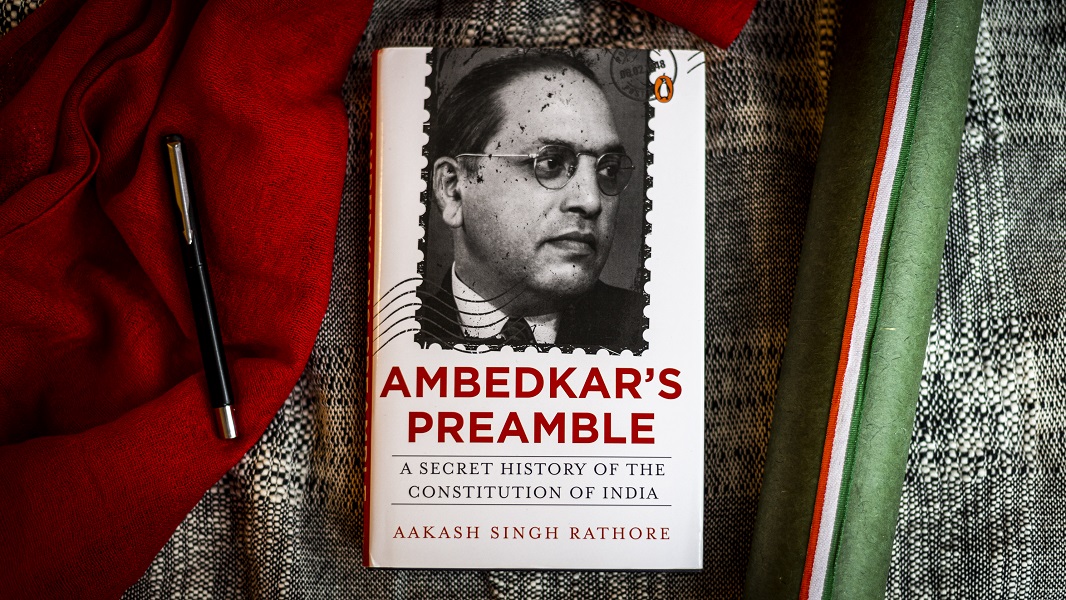
These are highly relevant and pressing questions for our country today. The first in a fourteen-volume series titled Rethinking India, Vision for a Nation: Paths and Perspectives, edited by Aakash Singh Rathore and Ashish Nandy, aims  to champion a plural, inclusive and prosperous India that is committed to unity and individual dignity.

Here is an insightful excerpt from ‘Secularism: Central to a Democratic Nation’, contributed by Neera Chandhoke, a former professor of Political Science at the University of Delhi:

**

The results of the 2019 general elections in India confirmed the lurking fear that has hovered like a dark cloud over our political horizon since 2014. India is a multireligious country, but we now see the consolidation of the Hindu vote across caste and across class. This consolidation has brought the religious right back into power with an improved majority. Election rhetoric had ridiculed political leaders who stood from minority-dominated constituencies; appealed to a narrow, religion-based nationalism; evoked fear that Pakistan threatened the body politic; and raised aloft the banner of national security over other concerns. None of the planks that garnered rich dividends had anything to do with what are often called ‘real facts’, but fiery rhetoric won over mundane issues of a declining economy and increasing unemployment. A victorious prime minister told his national constituency: ‘Secularism was a tax that used to be paid till today. Fake secularism and its leaders who were calling for the secular forces to unite have been exposed.’ Exposed, one may ask, as what? As Indians committed to the dignity of all and discrimination against none? Or as citizens who want passionately to defend the plural character of Indian society?

The prime minister is not politically naive; he surely knows that political commitments that run against ruling ideologies do not fade into the twilight with the coming into power of a new government. These commitments might not be palatable to the new ruling class, but they continue to inhabit democratic imaginations, continue to act as signposts to a road that leads to a good life for all, and continue to act as a watchdog of ruling dispensations. Criticism of the government and its policies lies at the heart of democratic society, at the heart of the political project to hold elected power elites accountable for their acts of omission and commission.

In any case, democracy is not reducible to election results. Elections are one—albeit significant and decisive—moment of democracy. Democracy establishes and maintains a conversation between the citizens and their representatives. Elections decide who these representatives will be. The process of holding these representatives accountable does not cease with the results of an election. It holds good, no matter who holds power, or with what majority. For that reason, it is democracy, not just elections, of which we should speak, and it is the democratic spirit which we should, and will, uphold.

**

Vision for a Nation provides a positive counter-narrative to reclaim the centrality of a progressive, deeply plural and forward-looking India.

New Books To Add to Your Christmas Wishlist

Christmas is right around the corner and we’re all scrambling to find some good reads before the year ends! Take a look at some of our recommendations for December below:

How to Be a Likeable Bigot

In this collection of satirical essays in her deft, inimitable style, Naomi Datta tells you how to survive various situations-from how to befriend tiger moms to how not to get a pink slip- simply by being ‘ordinary’.

How to be a Likeable Bigot celebrates conformity and tells you how to be perfectly regular, to blend in and be largely forgettable.

New Rules of Business 

How did Apple teach its employees to become sales consultants?
How did Tanishq pivot to unlock growth?

Businesses are reinventing themselves and how they deal with employees, customers and other stakeholders. The New Rules of Business unfolds the mysteries of these new ways of doing business which most companies try to keep as secret. Compellingly written with several anecdotes, this is a gripping book full of incredible insights.

In Service of the Republic

This authoritative book is like nothing you have read before on the state of public policy in India.

In Service of the Republic is a meticulously researched work that stands at the intersection of economics, political philosophy and public administration. This highly readable book lays out the art and the science of the policy making that we need, from the high ideas to the gritty practicalities that go into building the Republic.

I’ve Never Been (Un)Happier

Alia Bhatt’s older sister, screenwriter and fame-child, Shaheen Bhatt, now invites you into her head.

Shaheen was diagnosed with depression at eighteen, after five years of already living with it. In this emotionally arresting memoir, she reveals both the daily experiences and big picture of one of the most debilitating and critically misinterpreted mental illnesses in the twenty-first century.

Commentaries on Living


Challenge the limits of ordinary thought with J. Krishnamurti’s Commentaries On Living series, a three-volume series, which records J Krishnamurti’s meetings with individual seekers of truth from all walks of life.

The series invites readers to take a ‘voyage on an unchartered sea’ with Krishnamurti in his exploration of the conditioning of the mind and its freedom.


The Power of Opportunity: Your Roadmap to Success

They all started with nothing, and leveraged the power of opportunity to achieve success.

And now so can you.

In this book, Richard Rothman shows you why opportunity is the most important and indispensable element necessary to achieve business and career success.

So All is Peace

When twin sisters Layla and Tanya are found starving in their upmarket apartment, there is frenzy in the media. How often does one find two striking, twenty-something women, one half-dead, the other not speaking, living in a state of disrepair and chaos, for no apparent reason?

A richly atmospheric, deeply claustrophobic story with a stunning denouement, of two women confronting the everyday realities of their city and country, So All is Peace provides an unflinching insight into love, lust, fear, grief, and the decisions we make, through a cast of sharply drawn characters brought together by an unspoken wrong.

Uparwali Chai

The ultimate teatime cookbook, with an Indian twist!

From Saffron and Chocolate Macarons to Apricot and Jaggery Upside Down Cake to a Rooh Afza Layer Cake, Uparwali Chai is an original mix of classic and contemporary desserts and savouries, reinvented and infused throughout with an utterly Indian flavour. A beautifully curated set of recipes full of nostalgic flavours and stories, this is a book every home cook will be referring to for generations to come.

Vision For A Nation

What is the nation? What is the idea of India? Whose India is it, anyway?

This inaugural volume in the series titled Rethinking India aims to kickstart a national dialogue on the key questions of our times.

The essays in the book are meaningful to anyone with an interest in contemporary Indian politics, South Asian studies, modern Indian history, law, sociology, media and journalism.


1971

Navigating the widely varied terrain that is 1971 across Pakistan, Bangladesh and India, Anam Zakaria sifts through three distinct state narratives, and studies the institutionalization of the memory of the year and its events.

Using intergenerational interviews, textbook analyses, visits to schools and travels to museums and sites commemorating 1971, Zakaria explores the ways in which 1971 is remembered and forgotten across countries, generations and communities.

A Good Wife

At fifteen, Samra Zafar had big dreams for herself. Then with almost no warning, those dreams were pulled away from her when she was suddenly married to a stranger at seventeen and had to leave behind her family in Pakistan to move to Canada.

In the years that followed she suffered her husband’s emotional and physical abuse that left her feeling isolated, humiliated and assaulted. Desperate to get out, she hatched an escape plan for herself and her two daughters.

A Good Wife tells her inspiring story.

Breath of Gold

Fights, action, music, romance, secret trysts-renowned classical musician Pandit Hariprasad Chaurasia’s life reads almost like a film script. Wrestler in the morning, student during the daytime and flute player in secret, he lived more than a double life through his early years, till he broke away from his father’s watchful eye to join All India Radio as a flautist.

Hariprasad Chaurasia and his Breath of Gold will inspire and amaze everyone who reads the life story of this much-loved flautist.

A Chequered Brilliance 

A portrait of Krishna Menon, one of the most controversial figures in India’s recent history.

Menon continues to command our attention not just because he was Jawaharlal Nehru’s confidant and soulmate but also for many of his own political and literary accomplishments.

Meticulously researched, this book reveals all his capabilities and contradictions.

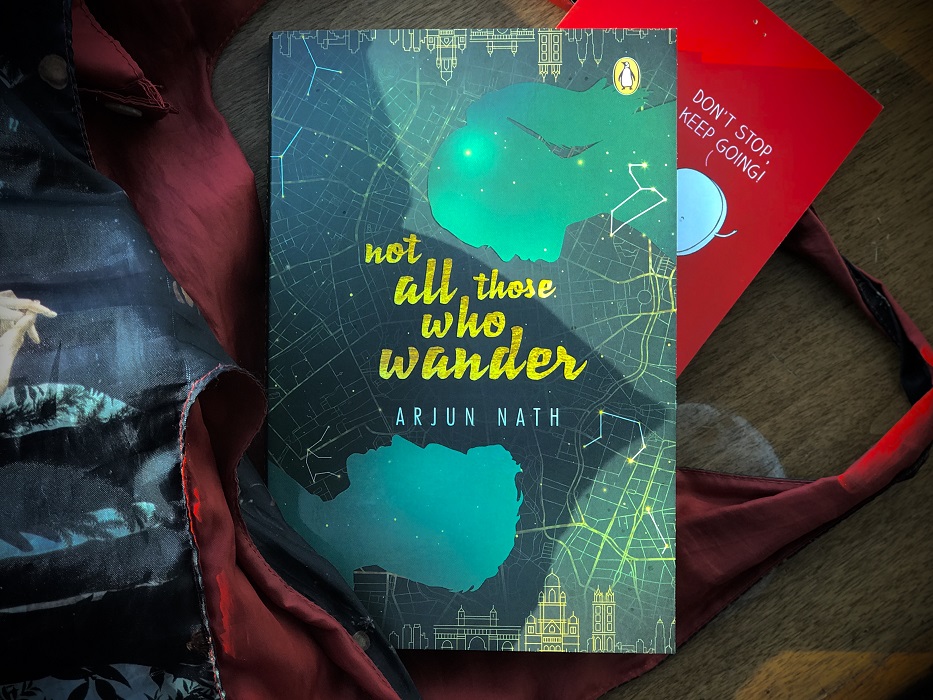
Chhotu

The year is 1947. The British are slowly marking their departure from the country. And while Partition looms large over India, Chhotu, a student-cum-paranthe-cook in the dusty gullies of Chandni Chowk, has other things on his mind-like feeling the first flushes of love of his crush, Heer, the new girl at school.

Set against the backdrop of Partition and the horrors that followed, Chhotu is a heartwarming coming-of-age graphic novel set against the backdrop of India’s Partition.

Mapping The Great Game

Ever wondered if there’s a story behind maps? When was the first definitive image of the subcontinent created and by whom? Would you believe that there’s a correlation between espionage and cartography?

Find out the answer to these and more in Mapping The Great Game

The Ramcharitmanas (Vol 1, 2 and 3)

The most popular retelling of the legend of Ram is now fully translated!

Rohini Chowdhury’s exquisite translation brings Tulsidas’s magnum opus vividly to life, and her detailed introduction sheds crucial light on the poet and his work, placing them both in the wider context of Hindi literature.

Roses Are Blood Red

A gripping coming-of-age thriller!

Aarisha Shergill’s life is about to get ripped apart because she should have known some things should be left alone.

Novoneel Chakraborty is back with Roses Are Blood Red, a chilling story of love, deception and passion.

Sridevi

Hailed as the first pan-Indian female superstar in an era which literally offered actresses crumbs, Sridevi tamed Hindi cinema like no other.

Charting five decades of her larger-than-life magic, Sridevi: The Eternal Screen Goddess celebrates both the phenomenon and the person Sridevi was. This is her journey from child star to one of our greatest movie luminaries who forever changed the narrative of Indian cinema.

Unleashing the Vajra

A must-read for anyone who wants to understand Nepal’s position in the global economy.

 Nepal’s great advantage is its location between India and China, particularly now as these two Asian giants are set to be the world’s leading economies in 2050.

Sujeev Shakya argues that it is imperative to understand history and learn from it to shape events for a better future. Unleashing the Vajra outlines the factors that will determine Nepal’s destiny in the years to come.


Krishna Udayasankar on Her Writing & Advice to New Authors

Krishna Udayasankar is the author of the bestselling Aryavarta Chronicles (Govinda, Kaurava, Kurukshetra) based on the Mahabharata.

She has also written a book based on the founding legend of the island of Singapore titled 3 and the fantastical Immortal.

Read to know more about the prolific author and her writing process:


  • What inspires you to start writing?

My ideas usually come to me as a scene, an interaction between characters. Most of the time, there’s dialogue involved, and they’re talking about something that connects with me – an issue that bothers me, something that makes me feel very sad or something that makes me extremely glad and excited. It’s almost like these amazing characters turn up at my doorstep and ask me to join them on a quest, and then nothing is the same again. Writing is truly an epic adventure!


  • Were any of your characters inspired by people in your life?


Characters ARE people in my life – in their own right. But no; rarely are characters inspired by people in my life. Of course, when it comes to little details – particularly behaviors and gestures or ways of speaking, I sometimes look to things I see or notice – especially in strangers – to add colour to a character.


The exception to the above, however, are the lions in Beast. A lot of their attitude and behavior – from their moods and sulking to their playing and their fights – have been modeled on my canine-fur children, Boozo, Zana and Maya. Actually, now that I think of it, they do inspire my characters – the human ones – too, across all my books: All that is good in characters – their love, loyalty, resilience, etc – comes from the Huskyteers.


  • What is it about writing that you like the most and why?


To live a thousand lives, to meet beings from across time and space, to do things that I’ve never had the chance to do – writing is like having imaginary friends and living in imaginary worlds and still being (more or less) socially-acceptable. But I also love the craft of writing; the putting words together to paint pictures, I love being able to work with language and communicate. Last but not least, I love how, over the years, writing has led me to connect with thousands of readers – many of whom become friends. What’s there not to love?


  • Who is your favourite author?


Isaac Asimov, Rudyard Kipling, Bill Watterson, Kalki Krishnamurthy and many, many more. Why? Because they brought alternate universe to life.


  • What advice do you give to new authors?


I’ve realized that the “advice” I give changes over time – usually because, as the saying goes, we teach best what we need to learn. Right now, the advice I need to give and hear both is to remember why you began writing. We start with dreams, with stars in our eyes and visions of changing the world through our words, but time takes its toll on us all, regardless of how much we have written or published. The process can feel frustrating, the outcomes pointless. At those moments, more than ever, it is important to remind yourself of why you began writing in the first place.


  • Where do you see yourself in 5 years?


I don’t. I’m not good at long-term planning or even projecting! Besides, five years ago, I hadn’t thought I would be where I am today. Indeed, for many years in my life, I’d given up on my childhood dream of being a writer. That I am here today putting down this answer in words is completely unexpected. So, five years hence – only time shall tell.


Check out the fantastic backlist of Krishna Udayasankar featuring titles like GovindaKauravaKurukshetraand Immortal.

Eggnog with Alicia: A Conversation on the Festive Season, Family Time and her Upcoming Book

What’s your favorite thing about Christmas?

Oh that’s a hard one! What’s NOT my favourite thing about Christmas!

I think probably the fact that the house looks AND smells different from the rest of the year. That’s something that I appreciate every single day of December.

How big are you on decorating for Christmas? Is a Christmas tree part of it?

I’m more on the obsessed side. I plan my date in November mostly because I have to have it on a weekend when my husband and I are both in town, which towards the end of the year can be a bit strategic. He does the lights in the house and also the taking down of things which he calls ‘excessive’. I, on the other hand, feel like it’s not decorated till even the sand in the plant pots are red.

Decorating the tree is a biggie! I’ve been collecting ornaments on every trip of mine (especially abroad because in the west they have all-year Christmas shops, which are like mini heavens). Also I have little rituals like making an ornament every year.

What would you want Santa to bring you this year?

Can I say ‘Peace on Earth’ without sounding Christmas-y cliche?

Also, a great metabolism forever won’t hurt 😛

You have your book coming out very soon, would you like to give your readers a sneak peek into what it’ll be about?

It’s basically about the quirks of living with your significant(ly messy) other. The joys, the annoyance and general happy life of being in everyday love.

**

“And then, when I was five years old life changed in an instant, dramatically and forever.” An excerpt from ‘I’ve Never Been (Un)Happier’

Despite all this time spent in close proximity to the film-making process and the odd ‘film-child’ (heh) friend I had, I was shielded from the Bollywood world. The fuzzy memories I have of early childhood are all happy ones. I began my education at a small Montessori school not far from home, and once my mother and I made it through a harrowing first week involving a lot of tears, broken promises and her having to sit around directly in Baby Shaheen’s eyeline for hours at a time—it was smooth-sailing. Well, for the most part. There was one hysterical temper-tantrum (tiny balled up fists being beaten on the ground, screaming, sobbing, hiccups, the works) thrown in the aisles of a busy supermarket because I was denied a box of crackers, but my mother assures me that that was a one off and not a regular occurrence or some sort of dramatic foreshadowing of things to come.

And then, when I was five years old life changed in an instant, dramatically and forever. So far, I’d spent my entire life with the undivided, uncontested attention of my mother and those around me, but suddenly there was a tiny new person to share my world with. My sister Alia came into the world during the turbulent 1993 Bombay riots and from the first second I saw her pink, mousey face, life was never the same.

I had desperately wanted a little sister and I was giddy with excitement when Alia was born. She was my pride and joy. Every spare second I had was spent watching over her and playing with her—I soon became so possessive of her that I refused to let anyone else touch her.

Still, adjusting to life with a new sibling is challenging for any young child. As a five-year-old I thrived on being the centre of attention—a stark contrast to the shy and reclusive adult I am now—but the attention that once came solely my way was slowly redirected towards Alia. She was disturbingly cute as a child, and even then she had an effortless knack of drawing people to her. Always the natural performer, most evenings at home involved a spirited performance by Alia to her favourite song of the week, irrespective of whether anyone was watching or not.

My own powers of magnetism, on the other hand, relied more on a carefully crafted combination of jumping, violent arm-waving and incessant demands for people to witness my majesty than effortless charm—and I disliked having to vie for the spotlight.

**


error: Content is protected !!