Publish with Us

Follow Penguin

Follow Penguinsters

Follow Penguin Swadesh

Must-Read New Releases to End the Year Right


As December wraps up the year, it’s time to lose yourself in stories that feel like a warm hug or a thrilling escape. End the year on a high note—one page at a time! Check out our picks—you might find your next favourite!

Front Cover Gods, Guns and Missionaries
Gods, Guns and Missionaries || Manu S. Pillai


In Gods, Guns and Missionaries, Manu S. Pillai takes us through remarkable dynamics. With an arresting cast of characters—maharajahs, poets, gun-wielding revolutionaries, politicians, polemicists, philosophers and clergymen—this book is ambitious in its scope and provocative in its position. Lucid and exhaustive, it is, at once, a political history, a review of Hindu culture and a study of the social forces that prepared the ground for Hindu nationalism. Turning away from simplistic ideas on religious evolution and European imperialism, the past as it appears here is more complicated—and infinitely richer—than popular narratives allow.

Front Cover Parde ke Peechhey
Parde ke Peechhey || Ila Arun


Ila Arun burst into public view with the controversial song from Khal Nayak (1993), Choli Ke Peechhey. But several years before that, she was already well known for her contribution to Rajasthani folk music. A writer herself, with several original plays and many adaptations to her credit, this is her first book, an autobiography. Told in her inimitable style, with sincerity and a touch of humour, this is Ila at her candid best, sharing a glimpse into her life and experience onstage and backstage, parde ke peechhey.


Front Cover The Notbook of Kabir
The Notbook of Kabir || Anand


Kabir is the most alive of all dead poets. He is a fabric without stitches. No centres, no edges. Anand threads his way in. Over the years, as a publisher and editor, Anand immerses himself in the works of Babasaheb Ambedkar and other anticaste thinkers. The Notbook of Kabir is the result of this pursuit with no end in sight. This is the story of how Anand loses himself trying to find Kabir.

Front Cover Caged
Caged || Gulzar, Sathya Saran


Intimate, subtle and deeply personal, Caged … Memories Have Names is probably Gulzar Saab’s first autobiography in verse. Gulzar Saab ruminates and writes in rainbow colours. From Rumi to Pablo Neruda and Jibananda Das, among others, have coloured him in myriad of hues. With this he has painted the portraits of Birju Maharaj, Mehdi Hasan, Pancham, Asha Bhosle in words. Their palpable presence, thoughts and words are etched in Gulzar Saab’s existence.


Front Cover The Land of Lost Gods
The Land of Lost Gods || Ahmet Ümit


As Yildiz Karasum, a Turkish detective, and her mysterious assistant, Tobias Becker, investigates the suspicious murders, they uncover secrets that could destroy the city that stubbornly clings on to its diversity without forgetting its past. And just as they seem to grasp the core of the missing and imperfect pieces of the puzzle, a new name is revealed… And a truth, that is beyond the reach of any mortal justice. Because when the Gods demand a sacrifice, there is always one to be chosen….

Front Cover Aghori: An Untold Story
Aghori: An Untold Story || Mayur Kalbag


Subbu embarks on the most unique journey of his life, filled with indelible experiences. Aghori 1: An Untold Story is not just a tale, but an opportunity for readers to undergo an exuberant expedition that incorporates different and diverse activities that are spiritual, intriguing, ethereal and, at times, frightening.

Front Cover Aghori 2: The Untold Story Continues
Aghori 2: The Untold Story Continues || Mayur Kalbag


Subbu returns from the Himalayas, having spent many remarkable days with the Aghori sadhus. Three powerful mantras have been successfully embedded in him, and must now be extracted and transferred to Subbu’s revered guru. The sequel to the bestselling Aghori 1: The Untold Story is filled with spiritually invigorating adventures that readers will love.


Front Cover Nehru’s India: Past, Present & Future
Nehru’s India: Past, Present & Future || Aditya Mukherjee


With its focus on Nehru’s understanding of history and of India’s cultural past, the book opens a window to his deep understanding of communalism and commitment to secularism. Six decades after his demise, do Nehru’s principles which reflected the values of India’s independence movement still hold water? Candid, argumentative and thought-provoking, Nehru’s India is a brilliant work on the man who made sincere efforts to discover, champion and defend the idea of India.

Front Cover The Slaying Sword
The Slaying Sword || Kalki


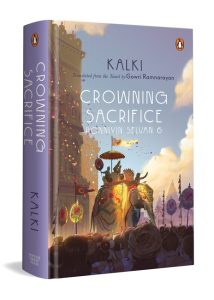
Can Princess Kundavai fight her way through the web of political intrigue and deceit in which she is trapped? Will valiant Vandiyatevan continue to surmount the colossal challenges fate throws at him? Kalki paints a study in contrasts in The Slaying Sword, the third in the Ponniyin Selvan series, and Gowri Ramnarayan translates his world of conflicts with empathy and adroitness.

Front Cover The Jewelled Crown
The Jewelled Crown || Kaliki


In the fourth part of the sprawling Ponniyin Selvan series, we learn more about the intricate complexities and histories propelling our characters towards their ultimate destiny. What will happen in Kadambur?  The mute Mandakini Devi has been forcibly taken to Tanjavur, and Poonkuzhali rushes there to help her aunt. What will happen when the betrayed Mandakini meets the royal family?


Front Cover Play to Potential
Play to Potential || Deepak Jayaraman


Play to Potential offers a refreshing exploration of human potential, emphasizing discovery through play rather than work. Deepak Jayaraman weaves insights from his eponymous podcast, his coaching work and his lived experience to share a powerful yet simple framework that can act as a guide to navigate the pulls and pressures of life. This book is a guide to living a fulfilled life, integrating family, aspirations, value creation, and deep relationships.

Front Cover The Start-Up Code
The Start-Up Code || Mukesh Bansal


The Start-Up Code is more than just a guide—it’s your road map to transforming bold ideas into enduring success. Whether you’re a fledgling entrepreneur or a corporate leader aiming to ignite innovation within your organization, Bansal’s practical frameworks and proven strategies will empower you to dramatically improve your odds of success.

Front Cover Why the Heck Not?
Why the Heck Not? || K P Singh, Aparna Jain


Through captivating anecdotes and insights, Why The Heck Not delves into Padma Bhushan awardee KP’s interactions with industry leaders, policymakers, farmers and communities. Learn how he navigated challenges, fostered collaborations, and revolutionised the Indian real estate landscape. A must-read for entrepreneurs, business enthusiasts, and anyone seeking inspiration.

Front Cover The Power of Decision Making
The Power of Decision Making || Manoj Tripathi


The Power of Decision-Making is a collection of powerful learnings that will change the way you think about making choices. It will help you make decisions for the better to achieve lasting success in different walks of life. Conceived as a self-help guide, the book includes stories and quotes from some of the most successful people, whose decisions have changed their lives for the better.

Front Cover The Content Creator Handbook
The Content Creator Handbook || Varun Mayya, Achina Sirohi Mayya


Every day, millions of videos are uploaded, but only a handful break through to the mainstream. What separates viral content from forgotten content? It’s not luck. It’s not talent—it’s strategy. In this no-nonsense guide, Varun and Achina Mayya—creators of multiple successful YouTube channels and online businesses—reveal the strategies, tactics and insider knowledge that have helped them master the art and science of content creation.

Front Cover How to Suffer Well
How to Suffer Well || Peter Hollins


Life is tough, so you better get a helmet. You’ll run into pain, anguish, and obstacles. But who says that they need to affect you? How to Suffer Well is a literal guidebook to learn how to defeat the voices in your head that tell you to give up. Instead, they’ll be replaced with voices that tell you it’ll be okay, this will pass, and life can be happy despite the suffering; only if you know how to suffer well.

Front Cover The Science of Attraction
The Science of Attraction || Patrick King


Like all human interaction, even love is primarily guided by our hormones, and there is a definitive science to attraction. This book is your field manual to understand the instinctual, and evolutionary triggers of attraction. The Science of Attraction is an in-depth look at human attraction and what draws people together. Diagnosing and recommending highly actionable steps to take your dating life to the next level. No tricks, no manipulation; only getting inside the human psyche.


***


Career Stuck? How to Know When It’s Time to Take the Leap

Take charge of your career with HeadStart: Unlock the Secrets to Career Success. This guide is the ultimate toolkit for thriving in today’s competitive job market, packed with expert strategies and real-world insights from Vivek Gambhir and Sunder Ramachandran.

Read the excerpt below.

Front Cover Headstart
Headstart || Vivek Gambhir, Sunder Ramachandran


The Power of Knowing When to Quit


Ever feel trapped in a job or situation that’s just not working out? Knowing when to walk away is a powerful skill. Society has typically viewed quitting as a sign of defeat. Phrases like ‘winners never quit, and quitters never win’ get embedded in our minds in the early years, but sometimes quitting is the smartest move you can make.


We idolize athletes who push through serious injuries, even though they are risking their future. Despite the virtues of sticking with something, sometimes stepping away is the real hero move. Stepping away from something that isn’t working allows us to find something better. It frees up our time and resources and enables us to move in a more fulfilling direction.


Let’s talk about goals for a second. You set them at the start of your journey, right? But here’s the thing—they’re not set in stone. They don’t factor in the knowledge and experiences we gain along the way or new information that may arise. Life throws curveballs, and sometimes, those goals just don’t fit any more. Quitting isn’t giving up—it’s making room for something better.


So why do we stay in unfavourable situations? Firstly, unhappiness can make us feel stuck. Additionally, we often worry about how quitting might affect our reputation. But here’s the thing: remaining stuck is far riskier than taking a leap. Cognitive biases also play a sneaky role. Ever heard of the status quo bias? It’s why we stick with the devil we know, even when there’s a better option. Then there’s the sunk-cost fallacy—it’s like continuing to invest time, effort and money into a failing project, hoping it will turn around. And let’s not forget the endowment effect, where we cling to the familiar, even when it’s holding us back.


Here’s the bottom line: Quitting isn’t about giving up—it’s about moving forward. It’s about knowing when to bid farewell to the old and embrace the new. So, if something’s not working, don’t hesitate to shake things up. After all, life’s too short to remain mired in the mud.


These are some dilemmas that we’ve seen younger professionals
struggle with:
• My role is at a dead end.
• I find no fulfilment in my current job.
• Do I need to be bolder in choices and take more risks?
If any of these rings a bell, you’re probably dissatisfied with your
current job and considering a change.


Pro Tip from Vivek: Signs for Career Change
Vivek advises young professionals to focus on three key factors that make work fulfilling: challenge, learning and engagement. If two of these aspects are lacking for six months, it might be time to consider a change.


The three-day rule: Do you feel excited about your work for at least three days a week? If you lack engagement, you won’t be able to grow, learn, develop or add value to your role. Although work may have less engaging phases, if they persist for over six months, they can impact your productivity, mood and overall engagement.


The resume test: Can you consistently update your resume every six months with new and valuable skills and projects? If you’re not feeling challenged or able to develop your skills in your current role, it’s not doing you any good. Eventually, you just go on autopilot and don’t go anywhere.


You are checked out: Do you find yourself zoning out? Are your thoughts drifting away from work? Are you more interested in what else is out there instead of doing your job?


Your 2×2 Push and Pull Matrix


Questions to ask before resigning
Before you send that resignation email, consider the Push and Pull Matrix. It’s a valuable tool for deciding whether to stay
in your current role or move on to new opportunities. Career transitions are often influenced by a combination of push and pull factors which encompass a diverse range of motivations that prompt individuals to leave their current role and pursue new opportunities.


We have observed that young professionals are motivated to leave a role due to push factors like stress, a bad boss, lack of feedback or opportunities. There could also be pull factors that include an interesting role in a new industry, a role with more seniority or a broader remit and increased remuneration. These push and pull factors often interact in complex ways,
and there’s always a little bit of both during transitions. This means that you have to carefully consider both the risks and rewards associated with such a change.


Before putting in your papers, we recommend that you ask yourself the following questions to ensure you are making the right decision.


***


Get your copy of Headstart by Vivek Gambhir and Sunder Ramachandran on Amazon or wherever books are sold.

Gulzar’s Poetic Portraits of Legends and Moments

Caged… Memories Have Names, Gulzar Saab’s poetic autobiography whispers stories of love, loss, and longing! With verses that blend the hues of Rumi, Pablo Neruda, and Jibananda Das, the book paints vivid portraits of cherished figures like Birju Maharaj and Pancham, while weaving silken threads of unspoken emotions for his Abbu and Ma. We’ve handpicked some translations from Gulzar Saab’s reflections, a treasure of timeless beauty.

Front Cover Caged
Caged || Gulzar, Sathya Saran


Tagore

With a mould of gurtied on his head, a rustic
Was crossing a vast maidan, both long and wide
Hearing the fragrance of the gur,
A canopy of bees hummed over his head
The sun rose higher and in the growing heat
The gur started to melt.
The simple villager was now astonished,
Drops of gur were running down his face
And he was licking them with his tongue.
I’m a simple villager,
Who has placed the sweet gur of Tagore’s poems
On my head?


Ghalib

‘Is there a man who does not know of Ghalib
A good poet he surely is, but infamous . . . ’
Ghalib describes himself thus.
Such mischief is not seen or heard in any other poet. And
then there was his devilsh ego!
‘Baageecha-e-atphal hai duniya mere aagey
Hota hai shab-va-roz tamasha mere aagey’
The world, a child’s playground, it seems to me
Endlessly, the play of life is enacted before me.
Please believe me when I say I have read the poets of India in every
language; both in the original and in translation. But I have not
found a poet of this temperament in any language besides Urdu.
Ghalib is a synonym for the Urdu language.
Now listen to his desire to vanish without a trace:


Museum Galli Quasim

Entering Galli Quasim
I have stopped at your mansion, Mirza Nausha
Let me call out to you,
First let Umrau go behind the curtains into purdah
Before I step inside.
Cooking vessels, the jug and tray are all removed
The rain used to fall for two hours
The roof would rain for four.
The same seive-like roof is now being repaired . . .
That it took more than a hundred years for this,
Saddens me.
In fact, the smudges of the coal dump in your house had to be erased,
And meanwhile,
Many governments changed, before your house could be reached.
Where you would sit with Kallan on the upper floor, do you
remember?
You would paste the sides of envelopes with gum,
On the boats of your letters Urdu would flow,
Flawless Urdu prose started lapping at untrodden shores . . .
Now a computer will take over the space.
A million letters will be dispatched from there.
They will not be as beautiful as those in your handwriting,


Baba

When the lamp burns out
A slight smoke rises
When the diminished sun sets
Long after sunset
The sky of steel glows with its light
When leaves break away
They float for a distance.
Why then, while you were leaving
Did you not turn and look back even once?
Just held your breath and
Wrapped in soil, you went to sleep.


Pablo . . .!

Often I feel there is truth in what Pablo says,
‘A poem is a bounced cheque.’
The one I wrote it for
Read it, inclined her head slightly and said,
‘It’s good,’ and returned it.
Sometimes, it’s written,
‘Present the cheque again!’
When published in my book, I presented it again.
This time, slightly biting her lip, she smiled, but . . .
By then, we were both in the second half of our lives.


***


Get your copy of Caged by Gulzar on Amazon or wherever books are sold.

Meet the Brave Pioneers Who Built the Indian Air Force from Scratch!

What lies beyond the headlines of air combat, rescue missions, and daring operations? Air Warriors takes you into the heart of the Indian Air Force, weaving together stories of courage, sacrifice, and camaraderie that have remained largely unknown.

Read the excerpt to know more.

Front Cover Air Warriors
Air Warriors || Arijit Ghosh


As he so often liked to do, nineteen-year-old Lieutenant Indra Lal Roy climbed into the wooden cockpit of his beloved square-nosed, single-seat SE 5a biplane (tail No. B180), and took off alone. It was early one July morning in 1918 with World War I still raging, as he flew over the battle-scarred trenches of France. The nose-mounted machine gun could fire through the propeller and there was a spare drum of ammunition mounted inside his cockpit. Soaring over the German-occupied French town of Carvin with the morning air smooth and still, this was his favourite time to fly. And hunt . . .


Fondly called ‘Laddie’ by his Squadron mates of 40 Squadron ‘A’ Flight, his boyish good looks belied his enviable reputation as an ace fighter pilot who had shot down ten enemy aircraft (two shared). Five of these were destroyed (one shared), and five ‘down out of control’ (one shared), in a little over 170 hours of flying time, in the space of just thirteen days.


Like many Air Aces of World War I, he loved to hunt alone, savouring the freedom of those solo forays in the war-torn skies over enemy lines that allowed for exceptional acts of individual bravery and courage. He trusted and leveraged to maximum effect his combat skills in dogfights with multiple German aircraft, including the mainstream Pfalz D.III and Fokker D.VII fighters that made up the backbone of their Air Force. Twice, he had shot down two enemy aircraft in a single combat sortie, and three on the same day once. As his score mounted and his reputation spread, he was feared and respected alike by his opponents.


This was his second tour of duty in France with the RFC, the Royal Flying Corps, that subsequently became the RAF, the Royal Air Force.


After his commissioning as a Second Lieutenant on 5 July 1917, he had been shot down and badly injured in December on his very first operational sortie with 56 Squadron, also equipped with SE 5a. So bad were his injuries that he had been given up for dead and put in a French mortuary, where he woke up subsequently and managed to get out by banging loudly on the door. The terrified morgue staff called him the ‘Boy from the Dead’.


He spent the next six months recuperating in a hospital during which time he made some beautiful sketches of military aircraft, some of which survive to this day, more than a 100 years later.


He returned to active duty in a ground job as an Equipment Officer. Lesser mortals would have been happy with that, but the fire of adventure and wartime fighter flying still burnt brightly in the nineteen-year-old, and he volunteered for, and soon cleared his medical exam for rejoining operational flying duties with in June 1918. Laddie was soon back where he belonged, in the cockpit of his favourite S.E.5a fighter. And the rest, as they say, is history.


It seemed as if he were a man in a hurry to make up for lost time, as he shot down one enemy aircraft after other, starting with a Hannover C on 6 July. This was followed by three victories in the space of four hours on 8 July (two Hannover Cs and a Fokker D.VII); two on 13 July (a Hannover C and a Pfalz D.III); two on 15 July (two Fokker D.VIIs); and one on 18 July (a DFW C.V). His tenth and final victory came on l9 July when he shot down a Hannover C over Cagnicourt.


On 22 July 1918, a 106 years ago, Laddie Roy had taken off in search of his eleventh victim. Still little more than a young boy, one month shy of his twentieth birthday, he had been attending St Paul’s school in Kensington, London, just a year ago. Now he was firmly established as one of the top allied air aces of the Great War, the War that was supposed to end all wars.


Everyone knows how hollow that claim turned out to be.


That fateful day, on 22 July 1918, as he patrolled the skies, alone in his S.E 5a fighter, high over enemy lines, did he at some point, have a premonition, a sense of foreboding like the Irish Airman in the famous W.B. Yeats war poem, and like him, feel, ‘I know I shall meet my fate/ Somewhere among the clouds above /A lonely impulse of delight/ Drove to this tumult in the clouds’, as he ran into a bunch of Fokker D VIIs of Jasta 29 (or 29 Fighter Squadron), of the Imperial German Air Service, as the Luftwaffe was called then.


***


Get your copy of Air Warriors by Arijit Ghosh on Amazon or wherever books are sold.
The Secret Behind India’s Mega Growth – Uncovered in Behold the Leviathan!

In Behold the Leviathan: The Unusual Rise of Modern India, Saurabh Mukherjea and Nandita Rajhansa provide a gripping picture of how 1.5 billion Indians are combining to spectacular effect to create a range of social and economic outcomes which have no precedent in any emerging economy.

Read the excerpt to find out more.

Front Cover Behold The Leviathan
Behold The Leviathan || Saurabh Mukherjea, Nandita Rajhansa


“India Today News Desk
Maharajganj, UPDATED: Jul 10, 2024 17:13 IST
Edited By: Vadapalli Nithin Kumar (With inputs from Amitesh Tripathi)


Around 11 married women have gone missing from different villages in Uttar Pradesh’s Maharajganj district after receiving the first instalment of the PM Awas Gramin Yojana. One of them has allegedly eloped with her lover.


The government scheme provides financial assistance to poor and middle-class families in building a permanent home. The issue came to light after a man, Sanjay, reported that his wife, Suniya, was missing after she received the first tranche of Rs 40,000 of the scheme.


Preliminary investigation by the Block Development Officer revealed that Suniya had eloped with an unknown person, taking the Rs 40,000 installment recently released by the government…


Subsequently, 10 other similar cases came to light, where husbands reported their wives to be missing.


Suniya’s father-in-law requested the government to transfer the remaining two instalments to his son Sanjay’s account.


“The money was sent to our daughter-in-law’s account, and we later found out she had run away with a boy. We demand the government send the money to my son’s account,” he said…


However, this is not the first such incident. Previously, four women from Barabanki district ran away with their lovers on receiving Rs 50,000 as part of the scheme.” 


The rise of an entrepreneur from Jail Road Market, Delhi


Nestled in the crowded bazaar of Jail Road Market in New Delhi is a tiny shop selling colourful kurtas and pants for women, a common business in this neighborhood and in hundreds of similar markets across northern India. However, the owner of this shop and her story are anything but common. The owner is Jasmeen Kaur, creator of the now famous words ‘So beautiful, so elegant, just looking like a wow!’


Kaur shot to fame with this catchy phrase when Bollywood star Deepika Padukone recited it on social media and made
it famous. The rise of Instagram and social media, as well as their accessibility to millions of Indians, ensured that the phrase ‘looking like a wow’ became ‘viral’ and made Kaur a celebrity, potentially creating a pan-India—as opposed to local—market for her wares. She signifies the rise of a new India; an India where polished English and high-profile university degrees and MBAs are no longer a prerequisite for success.


Today India has millions of successful women entrepreneurs like Kaur. In fact, According to Bain and Co, there are approximately 15.7 million women-run enterprises in India, constituting 22 percent of the overall entrepreneurial landscape, a figure that has the potential to rise to 30 million with further support and encouragement.  For example, 500 km from Mumbai, in the buzzing industrial town of Dewas in Madhya Pradesh (with a population of approximately 2 mn),84 a mother earns a livelihood by making and selling papads on Meesho, an online marketplace for consumer goods, especially popular in tier-3 and tier-4 cities. The profits she generates from selling this humble Indian snack enables her to not only pay for her daily expenses but also for her son’s tuitions, thus making her financially independent of the men in her family.


Rather than being exceptions, such stories are the norm today in India. Women throughout the country are successfully launching their own businesses. According to Periodic Labour Force Survey (PLFS) data, women’s share in self-employment has been steadily rising in India, especially in rural areas, whereas men’s share in self-employment has been falling.


While the self-employed category is vast and includes unpaid labour too, if we go one level deeper and see the stratification within the self-employed, the rise of women entrepreneurs (rather than ‘woman unpaid’ labour) is evident. In the exhibit below, for women, the share of “self-employment by own account” (i.e. running an enterprise of one’s own) and “self-employment as an employer” (i.e. running a business in which the owner is an employee and, in addition, employs others) has increased between 2017-18 (when PLFS started) and 2022-23. It is notable, that the same trends are not visible for male workers. Even more remarkably, the share of women performing unpaid labour has gone down during this time period.


So, what is going on here? What are the drivers of the rapid rise in entrepreneurship among Indian women? We believe there are several forces at work here, including rising education levels among women, greater access to financing for women and greater female political participation.


***


Get your copy of Behold the Leviathan by Saurabh Mukherjea, Nandita Rajhansa on Amazon or wherever books are sold.
Ambedkar’s Legacy: A Deep Dive into His Life and Impact

In Iconoclast, Dr Anand Teltumbde, a distinguished public intellectual and leading authority on the Dalit movement, presents a groundbreaking biography of Dr B.R. Ambedkar.

Read the excerpt to know more.

Front Cover Iconoclast
Iconoclast || Anand Teltumbde


Ambedkar did not have any use of temple entry. He was convinced that if the untouchables made progress in the economic, educational and political fields, temple entry would follow automatically. On 12 February 1933, Ambedkar issued a famous statement on the temple entry Bills. In the statement, Ambedkar observed, ‘[T]he surest way for their [Untouchables’] salvation lies in higher education. higher employment and better ways of earning a living. Once they become well placed in their social life, they would become respectable; and Once they become respectable the religious outlook of the orthodox towards them is sure to undergo a change and even if this does not happen it can do no injury to their material interest.’50 He further said, ‘What is required is to purge it [Hinduism] of the doctrine of Chaturvarnya. This is the root cause of all inequality and is also the parent of the caste system and untouchability which are merely other forms of inequality. Unless it is done, the Depressed Classes will reject not only the temple entry but also the Hindu faith. For to accept the temple entry and be content with it, is to compromise with evil, and to barter away the sacredness of human personality that dwells in them.’ In response, Gandhi simply said that he was unable to agree with the statement.


Kamptee Congress


The political movement for Independence from British imperialism had picked up momentum during 1928–30. However, the Congress that led the movement was not prepared to concede the demands of the Untouchables for religious and social freedom.


In order to explain the developments, he organized the All India Depressed Classes Congress at Kamptee from 8 to 9 August 1930. It was widely attended by representatives of the Untouchables from different provinces of British India. He delivered a pre-printed thirty-four-page-long presidential address.52 It exhaustively dealt with issues faced by the Depressed Classes under eight sub-heads: 1) the problem of self-government in India; 2) conditions of the problem; 3) safeguards for the Depressed Classes; 4) depressed Classes and the Simon Commission; 5) Depressed classes and Swaraj; 6) Depressed Classes and Civil Disobedience; 7) Organization of the Depressed Classes; and 8) Uplift of the Depressed Classes. He posed the question—whether India could become a united self-governing community and answered it himself affirmatively. Giving examples of many countries in Europe that came into being after the close of the First World War—such as Latvia, Rumania, Lithuania, Yugoslavia, Estonia, Hungary, Czechoslovakia, etc.—each one of which had multidimensional heterogeneity of population, not unlike India, he averred, ‘. . . if the ideal is that India should be a united nation, I venture to say, self- government would be the most potent instrument for the realization of this ideal.’ He, however, cautioned that ‘if India did not recognize the hard facts of Indian society, the strings of political power will be in the hands of the ambitious members of the upper strata of Indian society drawn from the high-placed, well-educated and opulent castes, i.e., in the hands of aristocracy of wealth, education and social standing’. In this determinism, there would be no place for merit or ability as what counted was kinship. Its effect, he forewarned, was bound to put members of the smaller communities at a formidable disadvantage and might indeed shut them out from political power forever. It would be most pernicious to the Depressed Classes. Internalization of such an order of ‘the ascending scale of reverence and a descending scale of contempt’, will have a disastrous impact on their struggle for political power.


Ambedkar exhorted the Untouchables to prevent it by all means, consistent with their aim. Referring to the movement for Independence spearheaded by the Congress, he argued that the Depressed Classes should not be content with the ‘mere change of masters’. Referring to the ethos of the Independence movement that ‘no country is good enough to rule over another, he stressed that the proposition extends to say that no class is good enough to rule over another’. He explained his apprehension that the aristocracy could not be trusted with political power as ‘the root notions of democracy on the operation of which alone self-governing India can be safe for the masses, run counter to all the ideas which for thousands of years have formed and do form even today the common stock of their beliefs’. He castigated the aristocracy in India for its insensitivity towards fifty to sixty million Untouchables, who endured the curse and calamity unknown in any part of the world, and a similar population of aboriginals and hill tribes who are left to roam about in a nomadic and barbarous state. He therefore emphasized the scheme for the protection of minorities to be instituted in the Constitution as was done by most countries that were born after the First World War.


***


Get your copy of Iconoclast by Anand Teltumbde on Amazon or wherever books are sold.

Is Modern India Upholding Gandhi’s Vision for the Nation?

What happens when a bureaucrat’s untold story, a tragic chapter of India’s history, and the timeless teachings of Gandhi converge into one compelling narrative?

Read the excerpt of Thank You Gandhi to know more.

Front Cover Thank You Gandhi
Thank You Gandhi || Krishna Kumar


The parliamentary model rests on deference to the majority view. It is a crude notion, and that is why Gandhi disapproved of it. The idea that a numerical majority can decide things did not match his favourite totem—truth, a strange, elusive, almost funny word. It’s funny because it takes so many forms, the way a magician conjures colours in the sky. Early at school one learns to call it ‘the’ truth—as if there is just one truth whereas lies are always many. I didn’t know before entering college that when truth is under dispute, it is a lawyer’s job to establish it. As a young boy, I was attracted to law because I had read that Gandhi and Nehru were lawyers before they became political leaders. It must be a great profession, I thought, but K.’s father, who was an eminent lawyer in our district, dissuaded me from studying law. You may work hard as a lawyer, he said, but you can’t win a case if the judge has received a bribe. I was quite shocked when I first heard this, but later on when I joined the civil services, I understood why K.’s father had warned me against studying law. Soon after joining the civil services, I learnt how truth-hiding became, at times, as important as truth-seeking. As a small boy, I had seen the dead body of a dacoit, stretched out in the hockey ground of my home town. My elder sister had whispered in my ear: ‘The minister wouldn’t know . . . It’s a farmer.’ Her whisper made no sense for years; then, one day the meaning dawned on me, that liberties can be taken with the truth to impress a VIP.


‘Truth’ has proved to be the trickiest of all the values that Gandhi espoused for his enemies to dent or erase, but its meaning has been shifting all along. When young people today are told that Gandhi died for truth, they are puzzled. If they hear that a film is based on a true story, it is assumed that the story is real. When they watch something strange on the screen of their smartphone or television, how often do they stop to ask if it is real, I wonder. And who would they ask? They know that it might be fake, but how can anyone be sure of that? True or fake, it hardly matters so long as it is amusing. That is more important now than truth.


Gandhi’s idea of truth was probably different. People rarely consider it necessary to explain it, but one of my primary school teachers did. He said, ‘It meant the right way—one can call it goodness.’ That left a lot of scope for confusion, I thought, much later. If truth is goodness, can a newspaper story be true or otherwise? An account of what is going on may be real or fiction. Perhaps my primary teacher and Gandhi meant that a story is true when the object of describing something has the potential to do some good. It helps to think like that, but it doesn’t calm my present rage. My despair sits deep within me. My mind wanders. The Congress is paying for its various sins, but its vanquishers have exceeded all previous records of propagating falsehood. The ‘facts’ they flaunt about their achievements last a few weeks, mostly a few days before a lost soul challenges them. The figures given out for marking India’s economic growth and prospects were dummies. The real figures had to wait for the long election spring and summer to pass. Slogans and promises don’t sit well with truth, but the vast voting public didn’t seem to mind.


I am surrounded by these falsehoods—and I am not a part of the so-called social media where fakery roams free. Day in and day out, I endure the untruth. It serves as a cover for hate—the real agenda of the new regime. What the British learnt to practice bit by bit—how to dig trenches between communities—has swollen into the theatre of the grotesque. It is beamed every evening to every region of the waiting nation. It numbs and terrifies as you watch. Hating its actors and directors restores my sanity for a moment, but I can still hear myself talking as if I am deranged, to Gandhi.


‘Is it all right to hate some people? Will you let me hate the men in power now?’


‘So, you hate them . . . do you?’


‘Yes, but I feel you will not be pleased . . . You never hated anyone it seems. Is that true?’


‘I tried not to.’


‘I also try but I don’t succeed.’


‘You must ask yourself why you don’t.’


***


Get your copy of Thank You Gandhi by Krishna Kumar on Amazon or wherever books are sold.
Secrets and Betrayal – Ponniyin Selvan Continues

Ponniyin Selvan continues its epic tale of ambition and betrayal, beautifully translated by Gowri Ramnarayan. Don’t miss the exclusive excerpt!

Front Cover The Cyclone: Ponniyin Selvan 2
The Cyclone: Ponniyin Selvan 2 || Kalki, Gowri Ramnarayan


It is the twilight hour at Kodikkarai. Peace reigns on land and sea. Fishing boats and catamarans are returning to the shore. The seabirds are flying home after ranging over the coastal waters in search of prey.


The beach is carpeted with white sand. Beyond the sandy stretch, the wilderness spreads thick and far. No branch moves on the trees, no leaf stirs. Silence prevails everywhere. The reddening sun hastens to sink on the horizon, while still lighting up the few clouds trying to hide his crimson rays.


A small boat floats on the waters close to the shore. Little waves rock the boat like an infant’s cradle.


A young girl is seated on the boat. As soon as we set eyes on her, we are reminded of Sendan Amudan’s description of his uncle’s daughter. Yes, she has to be Poonkuzhali—the girl with the flower in her hair. True to her name, a single screw pine petal is tucked into her long black tresses cascading over her strong, chiselled shoulders. She wears a necklace of shells and conches that had been washed ashore. These adornments gain in beauty because she is wearing them.


Leaning lithely on the boat, Poonkuzhali begins to sing. Does the sea lull its waves to hear her song? Do the gusting breezes waft in slow motion to catch those strains? The trees in the distant woods cease rustling, while the earth and sky remain unmoving. Entranced by her song, the sun halts on the horizon unwilling to sink into the sea. Let us listen to the song as it comes floating on the breeze.


When the restless ocean lies tranquil,
why do inner tides seethe and churn?
When the earth is buried in slumber,
why does a cussed heart heave and burn?


See, how birds of the wilderness
now wing their way to their nests.
See, how the hunters and tribesmen
turn homeward for a night of rest.


They lie plunged in an ancient silence,
both land and sky in a swoon.
Why then is a doe-eyed woman’s heart
seized by a nameless typhoon?


The sea is swathed in stillness
and the breezes blow, tender and balmy.

Why then is a woman’s heart battered,
by these night gales, swirling and stormy?


When the restless ocean lies tranquil,
why do inner tides seethe and churn?
When the earth is buried in slumber,
why does a cussed heart heave and burn?


The grief in her heart remains unknown. The pain in her voice remains untold. Was the song shaped with tears? Why should her melody overwhelm us? Why does it break our hearts? Poonkuzhali ceases singing. She plies the oars until the boat reaches the shore. She skips out, drags her boat towards the catamarans heaped together on the beach and props her boat against them.


There! The fire has been lit on top of the lighthouse. The flames will keep burning all night to warn the ships to keep off the coast. The waters are extremely shallow all along the Kodikkarai shore. Only small boats and catamarans can land there. Large ships would be mired in the sands. And if they approached at a high speed, they could run aground and be splintered. The Kodikkarai lighthouse renders a great service to seamen.


In the middle of the woods on the other side, a temple spire rises above trees squat and thick. The god Kuzhagar is enshrined under it. Two hundred years before our story begins, the poet Sundarar had visited Kodikkarai, worshipped the god who dwelt in the lonely woods and sang in distress, ‘Alas! Lord! Why do you dwell in the middle of these mangrove woods, alone, with no one for company? When there are scores of sacred towns, thronged by crowds of pilgrims singing your praises, why have you chosen to remain in this dreadful forest, in utter solitude?’


In the wild, beside the sea
Where biting winds do sharply blow
My sinful eyes are forced to see
You standing still in solitude
Forlorn—
With none to bear you company
My Lord!


What’s the harm if you should dwell
In bustling towns with devotees,
Whose chants and songs and praises swell
In joyful bursts of jubilance?
But you—
Still linger in this thorny dell
Dear Lord!


The grief in her heart remains unknown. The pain in her voice remains untold. Was the song shaped with tears? Why should her melody overwhelm us? Why does it break our hearts?


Poonkuzhali ceases singing. She plies the oars until the boat reaches the shore. She skips out, drags her boat towards the catamarans heaped together on the beach and props her boat against them.


***


Get your copy of The Cyclone: Ponniyin Selvan 2 by Kalki on Amazon or wherever books are sold.

The Epic Saga You Can’t Miss – Ponniyin Selvan Is More Than Just a Film!​

As Sundara Chozha, emperor of the Chozha kingdom, lies unwell, powerful minister Periya Pazhuvettaraiyar plots to deny Crown Prince Aditta Karikalan the throne. Aditta sends his friend Vandiyatevan to warn the emperor and his sister Kundavai Devi. Will Vandiyatevan outsmart the conspirators, and can Kundavai protect her family? Start with Fresh Floods — don’t miss the exclusive excerpt!

Front Cover First Flood: Ponniyin Selvan 1
First Flood: Ponniyin Selvan 1 || Kalki, Gowri Ramnarayan


At times, a trifling incident sets off events of great significance. Such an incident occurred in Vandiyatevan’s life at that very moment.


Vandiyatevan had been standing by the street and watching Pazhuvettaraiyar’s retinue go by. The last few troopers happened to catch sight of his horse, standing at a little distance.


One of them exclaimed, ‘Dei! Look at that horse!’ A jester among them quipped, ‘First of all, make sure whether it is a horse or a donkey.’


‘We will,’ said another as he approached the horse and tried to mount it. Recognizing that the man was not his master, the intelligent animal bucked and shied, refusing to allow the stranger to get on its back.


‘Cranky beast! He will allow only a member of an ancient royal clan to mount him! In that case, Tanjavur Mutharaiyan will have to return to ride this horse!’ This wisecrack drew much laughter as the Mutharaiyan clan had been extinct for well over a century. The Chozha flag with its tiger emblem flew over Tanjavur now.


Another gagster interposed, ‘Tandavaraya! Make sure that he’s a real horse and not the dummy horse from the temple festival!’


‘Let me check it out,’ Tandavarayan retorted as he twisted the animal’s tail. The horse kicked its hind legs and galloped away.


‘He is running! A real horse after all!’ The men’s cries incited the horse to run faster through the crowd of pilgrims gathered for the temple festival. A stampede ensued as people tried to save themselves from being trampled under the horse’s hoofs. But a few people did get hurt as the animal ran amok in a wild frenzy.


All this happened in a twinkling. From the look on his face, Azhvarkadiyan guessed that the horse belonged to Vandiyatevan.


‘Tambi! See what the Pazhuvur louts have done! Why don’t you show them the bravado you showed me?
Vandiyatevan was roused to fury but managed to keep it under control. The Pazhuvur men were large in number. It would be folly to attack them. Nor did they wait to engage with him. They moved on, guffawing over the runaway horse.


Vandiyatevan followed the horse in the direction it had taken. He knew that it would come to a halt after a short sprint. But the thought impressed itself firmly on his mind that, one day, he should teach a sharp lesson to the arrogant men of Pazhuvettaraiyar’s company.


He found the horse standing sadly all by himself in a deserted tamarind grove. The animal neighed at him in reproach. ‘Why did you abandon me to face this trouble?’


Vandiyatevan led it back to the road with a comforting pat. Several voices upbraided him, ‘Why did you bring this wild horse into the crowd? It kicked so many people to the ground!’ Others tried to mollify the accusers by saying, ‘What can this young man do, or the horse for that matter, when the mishap was caused by the Pazhuvur men?’


Azhvarkadiyan was still waiting on the street. Vandiyatevan scowled in exasperation, thinking, ‘What a pain! Why won’t he leave me alone?’


‘Where are you going?’ Azhvarkadiyan asked.


‘I? Well, I go west, take a turn to the south, go around to the east, then move along to the southwest.’


‘All I want to know is, where are you spending the night?’ ‘Why do you want to know?’


‘I have something to do in Sambuvaraiyar’s mansion at Kadambur, in case you are planning to stay there.’


‘Are you a magician? How do you know I am going to the Kadambur palace?’


‘You don’t need magic to know that! Guests from many different places are bound for Kadambur today. Why, Pazhuvettaraiyar and his retinue are going there.’


‘Is that so?’ Vandiyatevan exclaimed in surprise.


‘Didn’t you know? The elephant, palanquin and other gifts of honour have been dispatched from the Kadambur palace to welcome Pazhuvettaraiyar.’


Vandiyatevan fell into a reverie. To lodge anywhere with Pazhuvettaraiyar as a fellow guest was by no means an everyday occurrence. He might even find a chance to get acquainted with the great warrior. However, he could not get over his bitterness in his encounter with the Pazhuvur troopers.


‘Tambi! Will you do me a favour?’ Azhvarkadiyan pleaded.


‘What can I do for you? I am new to these parts.’


‘I am not asking for anything you cannot do. Take me with you to the Kadambur palace today.’


‘Why? Is some Saiva to be found there with whom you can argue about whether Siva or Vishnu is the greater god?’


‘No. Don’t think I am interested only in wrangling. A grand dinner will be served at the Kadambur palace tonight. Various entertainments will be showcased after dinner. I want to see the kuravai koothu12 performance!’


***


Get your copy of First Flood Ponniyin Selvan 1 by Kalki  on Amazon or wherever books are sold.

Listen to the Legacy of Tata – A Walk Down Memory Lane

There’s nothing like the joy of immersing ourselves in a good story especially when we can listen to it on-the-go or in the comfort of our homes. This carefully curated selection of audiobooks offers a rich selection of tales that transport us to new worlds, deepen our understanding, and fill our days with inspiration and excitement. Plug in, sit back, and let these stories keep you company as we remember the Tatas and their contribution to the nation.


Audiobook Cover Tatalog
Tatalog || Harish Bhat


Tatalog presents eight riveting and hitherto untold stories about the strategic and operational challenges that Tata companies have faced over the past two decades and the forward thinking and determination that have raised the brand to new heights. From Tata Indica, the first completely Indian car; to the jewelry brand Tanishq; and Tata Finance, which survived several tribulations, Tatalog, written by a Tata insider, reveals the DNA of every Tata enterprise – a combination of being pioneering, purposive, principled, and “not perfect”.

Audiobook Cover Beyond the Last Blue Mountain
Beyond the Last Blue Mountain || R M Lala


“His vision made giants out of men and organizations.” A pioneer, an adventurer, a great industrialist and a caring, courageous human being…the story of J.R.D. Tata is fascinating. His biography is the tale of determination, integrity and prodigious intelligence.

Audiobook Cover The Story of Tata 1868 to 2021
The Story of Tata 1868 to 2021 || Peter Casey


One day, the headlines boldly declared that the chairman of the board of Tata Sons, Cyrus Mistry, had been fired. What went wrong? In this exclusive and authorized book, insiders of the Tata businesses open up to Peter Casey for the first time to tell the story. From its humble beginnings as a mercantile company to its growth as a successful yet philanthropic organization to its recent brush with Mistry, this is a book that every business-minded individual must hear.

Audiobook Cover The Learning Factory
The Learning Factory || Arun Maira


Founded in 1868 by Jamshetji Tata, the Tata Group symbolizes the great Indian story of hope, growth and phenomenal success.The group played the role of a nation builder in post- independent India. In The Learning Factory, Arun Maira narrates people-centric episodes that bring alive the values of the Tata Group, standards that combine the high-velocity practices as well as the old-fashioned principles that make the Tata Group the giant it is today.

Audiobook Cover The Tata Group
The Tata Group || Shashank Shah


With over 100 companies offering products and services across 150 countries, 700,000 employees contributing a revenue of US $100 billion, the Tata Group is India’s largest and most globalized business conglomerate. A deepdive into the Tata universe, The Tata Group brings forth hitherto lesser-known facts and insights. It also brings you face-to-face with the most intriguing business decisions and their makers. How did Tata Motors turn around Jaguar Land Rover when Ford failed to do so? Why wasn’t TCS listed during the IT boom? Why wasn’t Tata Steel’s Corus acquisition successful?

Audiobook Cover #Tata Stories
#Tata Stories || Harish Bhat


The Tatas have a legacy of nation-building over 150 years. Dancing across this long arc of time are thousands of beautiful, astonishing stories, many of which can inspire and provoke us, even move us to meaningful action in our own lives.#TataStories is a collection of little-known tales of individuals, events, and places from the Tata Group that have shaped the India we live in today.

Audiobook Cover Jamsetji Tata
Jamsetji Tata || Harish Bhat, R. Gopalakrishnan


Jamsetji Tata pioneered modern Indian industry. He has been a key catalyst in the economic growth and development of the country. In this carefully researched account, R. Gopalakrishnan and Harish Bhat provide insights into the entrepreneurial principles of Jamsetji that helped created such a successful and enduring enterprise. Interwoven with engaging real-life stories and interesting anecdotes that went into the making of India’s popular brands such as Tata Tea, Tata Motors, Titan and Tanishq, this unique account brings alive the vision of Jamsetji Tata and what we can learn from it.


error: Content is protected !!