Publish with Us

Follow Penguin

Follow Penguinsters

Follow Penguin Swadesh

Who is an Indian and Whose India Is It? Shashi Tharoor’s Quest into the Idea of a Nation

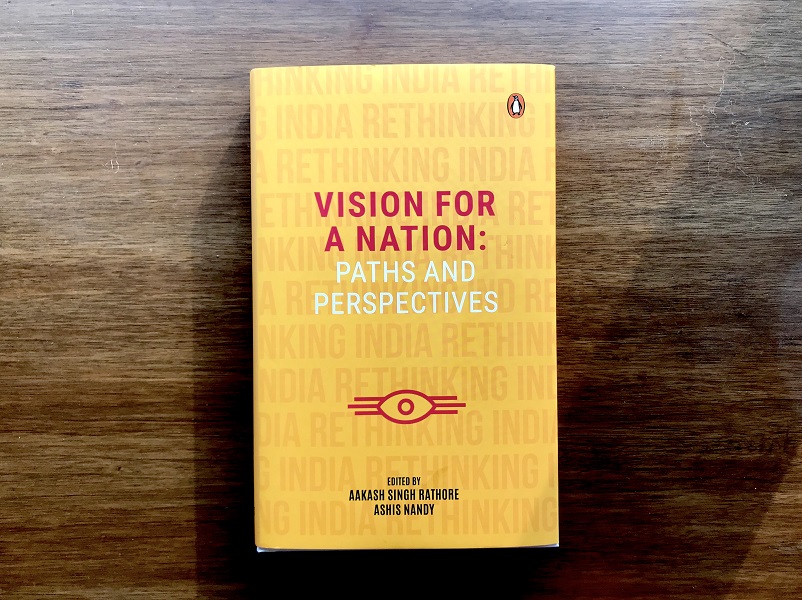
Inundated with a barrage of politically charged agendas, citizens of the world no longer have the luxury of being ignorant aboutin the dynamics of the state. In a nation as diverse and fluid as India, one’s very identity gets threatened by the discourse on nationalism.. Taking us right into the crux of the issues that affect each one of us are the intelligentsia of this vibrant nation, who have come together in Vision for a Nation: Paths and Perspectives to champion a plural, inclusive, just, equitable and prosperous India.

To put in perspective the sheer range and depth of this discussion, Shashi Tharoor writes: ‘Just thinking about India makes clear the immensity of the challenge of defining what the idea of India means. How can one approach this land of snow peaks and tropical jungles, with twenty three major languages and 22,000 distinct ‘dialects’…, inhabited in the second decade of the twenty-first century by more than a billion individuals of every ethnic extraction known to humanity?’


Read on to get a glimpse of the five Visions of India presented by Shashi Tharoor in his essay ‘A Land of Belonging’:


The Plurality of India

The pulsating energy that abounds in every corner of this vast land is the result of a unique convergence of diverse communities that are united in the fact of their nationality yet distinct in their culture. Tharoor points out the anomaly of looking at India in the singular-

There are, as the hackneyed phrase goes, many Indias. Everything exists in countless variants. There is no single standard, no fixed stereotype, no one way. This pluralism is acknowledged in the way India arranges its own affairs: all groups, faiths, tastes and ideologies survive and contend for their place in the sun.’

*

The Unity of India

Symbolic of the heritage of this great civilisation are the epics that demonstrate the impulse of unity, woven into the fabric of India despite the many episodes in Indian history of fractures that render this belief suspect:  

The epics have acted as strong, yet sophisticated, threads of Indian culture that have woven together tribes, languages and peoples across the subcontinent, uniting them in their celebration of the same larger-than-life heroes and heroines whose stories were told in dozens of translations and variations, but always in the same spirit and meaning.’

*

The Duality of India

The preamble of the Constitution encapsulates the vision of India’s founding fathers who believed in a glorious future where the Indian Republic would stand strong on the pillars of justice, liberty, equality and fraternity. And yet, the dichotomy of modern India is evident:

‘Caste, which Nehru and his ilk abhorred and believed would disappear from the social matrix of modern India, has not merely survived and thrived, but has become an instrument for highly effective political mobilization.’

*

The Complexity of India

With pluralism and diversity being the foundation of this nation, India is unique in that the only commonality in its inhabitants is the awareness of their many differences. The identity of an Indian cannot be contained within descriptions of language, ethnicity, religion or geography-

‘It is the idea of an ever-ever land—emerging from an ancient civilization, united by a shared history, sustained by pluralist democracy. India’s democracy imposes no narrow conformities on its citizens.

*

The Secularism of India

The notion of majority and minority in a nation that celebrates diversity can create a dangerous discourse which has the potential to incite violence in the name of religious identifications. Reiterating the essence of Indian Secularism, Tharoor writes:

Western dictionaries defined secularism as the absence of religion, but Indian secularism meant a profusion of religions; the state engaged with all of them but privileged none.’


At a time in history when the world is rife with conflict, India’s foremost intellectuals, academics, activists, technocrats, professionals and policymakers open a discourse on nation and identity. First in a fourteen-volume series titled Rethinking India, Vision for a Nation initiates a discussion on some key issues of our time.

To delve deeper into a subject that is both relevant and challenging, read Vision for a Nation.
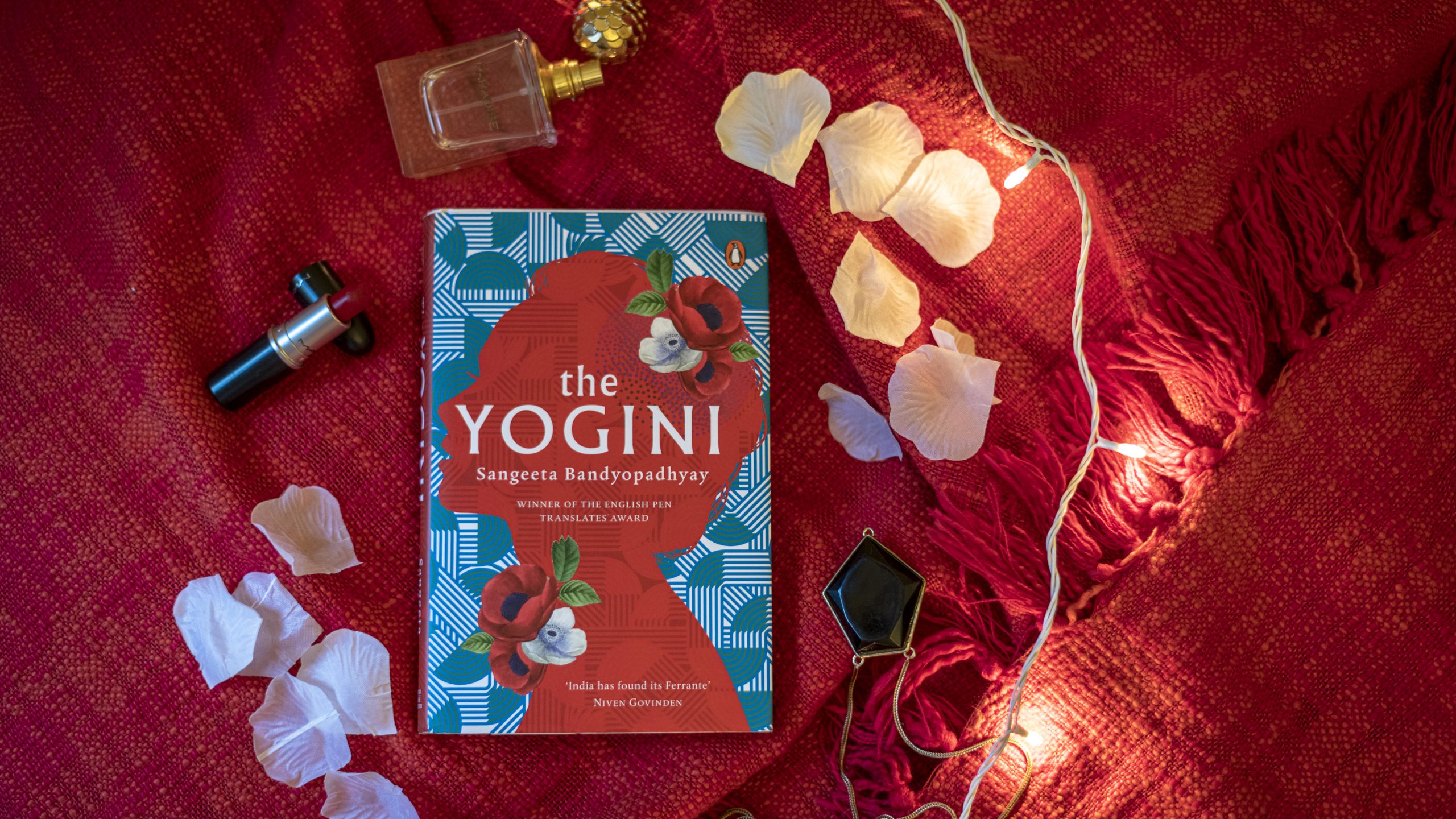
The Yogini- An Excerpt

With her days split between a passionate marriage and a high-octane television studio job, Homi is a thoroughly modern young woman-until one day she is approached by a yogi on the street. This mysterious figure begins to follow her everywhere, visible only to Homi, who finds him both frightening and inexplicably arousing.

Read an excerpt from The Yogini below:


It was late into the inflated night when she returned to her senses for the first time. She found herself standing by the door of a train compartment, holding the handles and swaying with the train as it hurtled along. Her body lurched alarmingly from side to side. She was leaning forward perilously. She would fall out of the train at any moment.


Was it time, then? she wondered. Was this how she and her fate were to be separated? Was this, finally,what fate had written for her?


The tracks seemed to howl fiercely at her when she looked down. Sparks flew from the friction of steel against steel. All she had to do was loosen her hold for everything to end.


Rattling a thousand chains, her soul cried out, Freedom! Freedom!


And she decided to jump. But then someone gripped her elbow. She didn’t turn around. There was no need to, for she knew who it was. She could see the hand clamped on her arm – the wrist encircled by rosary beads. A copper band, an iron chain, a red thread, chunky amulets. He scavenged for all sorts of things to slip around his wrist. Mounds of grime were gathered beneath his long nails. She raised her eyes to look – not behind her, but ahead. There was no beginning, no end, only a train passing through an endless expanse. No artificial lights shone now – the world beyond was lit generously by the moon, its beams crystallised in pools of water in the fields, the light magnified a million times by the reflections. The train raced through a silvery kingdom. Her heart was disproportionately heavy – but she no longer had cause to be sad or angry.


An icy current whispered in her ear, ‘Homi! Homi! Empress?’


‘Come closer, Empress.’


How much closer, man with the matted locks? Haven’t I already given you the right to claim me? So many thoughts flow through my head, but not one of them will lead to anything tangible. Not one will leave a physical imprint on the planet. Such notions, only some of which I embrace. I let go of the rest, to ensure that you have no power over me – neither over the causes of things happening to me, nor over their effects. Not even over the merging of cause and effect, because both are mechanical in my life, just as you are, an automaton. This is my final observation about existence. There is no such thing as free will here. No fundamental independence. I have long accepted that I have a natural fate in this world, a human being’s fate. I am no one, fate is everything. You are everything. This way, I can be closer to you too, can’t I?

These thoughts ran through her head, but she wished, too, to escape, to be free. A strange force took hold of her. She jerked her arm out of his grasp, and, the very next moment, whirled around to strike at the figure with the matted locks. With all her strength she lashed out at him, hoping that the impact would throw him off the train.


Following the inexorable pull of tradition, the mystic forces that run beneath the shallow surface of our modern existence like red earth beneath the pavements, The Yogini is AVAILABLE NOW!


5 Indian Ingredients You Can Use in Baking


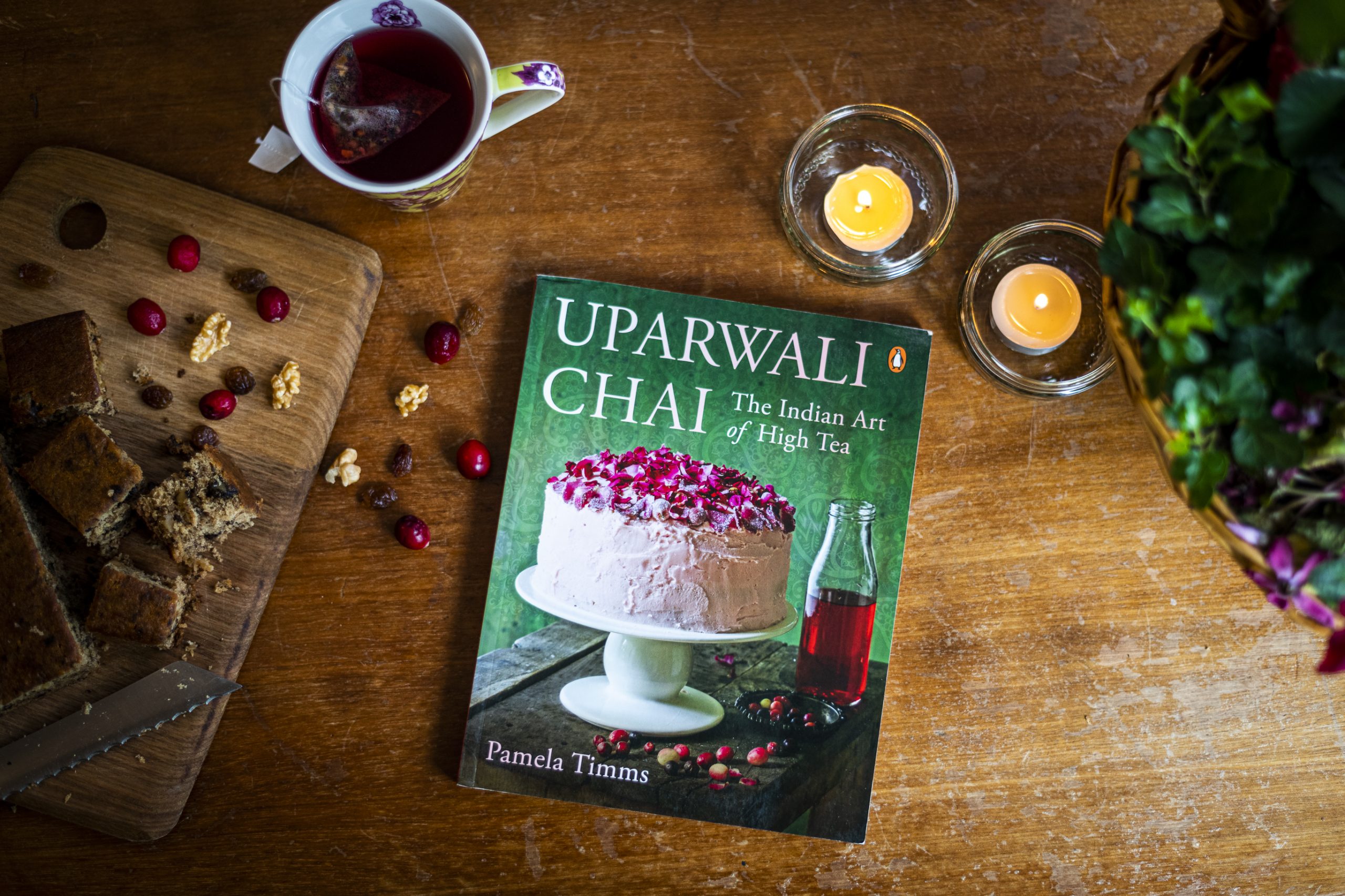
Uparwali Chai is a beautifully curated set of recipes full of nostalgic flavours and stories, this is a book every home cook will be referring to for generations to come.

Baking ingredients are now widely available in major cities but for most of these recipes, local markets and kirana shops will provide everything you need. Here we list down 5 such Indian ingredients and how they can be used in baking:

Yoghurt

It is mostly used as a mixing and a holding agent. It is used to make muffins and cakes in addition to other desserts. Pamela Timms uses it to make Lemon and Cardamom Yoghurt Cake, Refrigerator Bran Muffins and even a Labneh Cheesecake using hung yoghurt!

Saffron

This adds an aroma, flavour and colour  to any food item it is added to. Just a pinch is enough to turn a simple dish into an exotic one! Use it to make Daulat ki Chaat, Saffron and Chocolate Macaroons and many delicious desserts. (All these recipes can be found in the book!)


Mawa

Mawa or khoya is a milk-based ingredient and is often used in cakes, muffins or even biscuits. Delight your family and friends this festive season with Mawa Madeleines.


Mango

The king of fruits! It is not only eaten in abundance in India during the summer but it is also used as an ingredient in many desserts and baked items,  You can make a Mango and Old Monk Trifle if you’d like your dessert to have a kick! Or try out Pamela’s Mango and Gondhoraj Lime No-Bake Cheesecake.


Salted Butter (Amul)

When it comes to using butter, Indian baking mostly makes use of salted butter which is very readily available at every neighborhood grocery store. Add a slight savoury touch to your tea with the Banana Loaf Cake with Chai-spiced Icing or try something new like Mango and Marmalade Flapjacks.


Is your mouth watering already? Use these ingredients to make some of these delightful items and more with Uparwali Chai.


The Science of Ahimsa- An Excerpt from ‘The Power of Nonviolent Resistance’

‘Where there is love there is life.’ – Gandhi

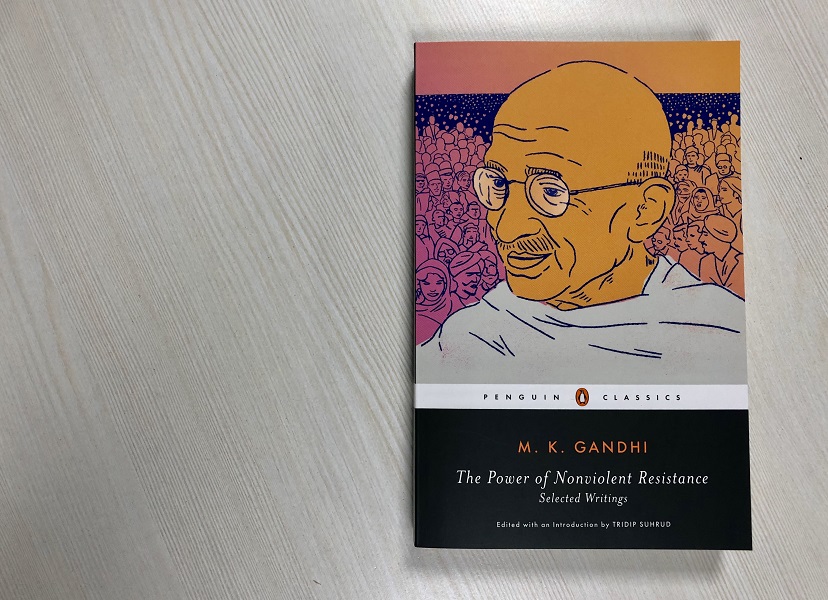
With the new year round the corner, take the time to read The Power of Nonviolent Resistance: Selected Writings , a specially curated collection of Gandhi’s writings on nonviolent resistance and activism.

Read an excerpt from the book below:

Toward the end of his life, Gandhi was asked by a friend to resume writing his autobiography and write a “treatise on the science of ahimsa.” What the friend wanted were accounts of Gandhi’s striving for truth and his quest for nonviolence, and since these were the two most significant forces that moved Gandhi, the friend wanted Gandhi’s exposition on the practice of truth and love and his philosophical understanding of both. Gandhi was not averse to writing about himself or his quest. He had written—moved by what he called Antaryami, the dweller within, his autobiography, An Autobiography or the Story of My Experiments with Truth. Even in February 1946 when this exchange occurred he was not philosophically opposed to writing about the self. However, he left the possibility of the actual act of writing to the will of God.

On the request for the treatise on the “science of ahimsa” he was categorical in his refusal. His unwillingness stemmed from two different grounds: one of inability and the other of impossibility.

He argued that as a person whose domain of work was action, it was beyond his powers to do so. “To write a treatise on the science of ahimsa is beyond my powers. I am not built for academic writings. Action is my domain, and what I understand, according to my lights, to be my duty, and what comes my way, I do. All my action is actuated by the spirit of service.” He suggested that anyone who had the capacity to systematize ahimsa into a science should do so, but added a proviso “if it lends itself to such treatment.” Gandhi went on to argue that a cohesive account of even his own striving for nonviolence, his numerous experiments with ahimsa both within the realms of the spiritual and the political, the personal and the collective, could be attempted only after his death, as anything done before that would be necessarily incomplete. Gandhi was prescient. He was to conduct the most vital and most moving experiment with ahimsa after this and he was to experience the deepest doubts about both the nature of nonviolence and its efficacy after this. With the violence in large parts of the Indian subcontinent from 1946 onward, Gandhi began to think deeply about the commitment of people and political parties to collective nonviolence. In December 1946 Gandhi made the riot-ravaged village of Sreerampore his home and then began a barefoot march through the villages of East Bengal.

This was not the impossibility that he alluded to. He believed that just as it was impossible for a human being to get a full grasp of truth (and of truth as God), it was equally impossible for humans to get a vision of ahimsa that was complete. He said: “If at all, it could only be written after my death. And even so let me give the warning that it would fail to give a complete exposition of ahimsa. No man has been able to describe God fully. The same hold true of ahimsa.”

Gandhi believed that just as it was given to him only to strive to have a glimpse of truth, he could only endeavor to soak his being in ahimsa and translate it in action.


The Power of Nonviolent Resistance: Selected Writings by Gandhi  gives context to the time of Gandhi’s writings while placing them firmly into the present-day political climate, inspiring a new generation of activists to follow the civil rights hero’s teachings and practices. The book is available now!

“The trouble with discount websites is, you can’t see the people snatching bargains away from you.”- An excerpt from ‘Christmas Shopaholic’

Don’t panic. Don’t panic. I’ve got 5 minutes 52 seconds before my basket expires. That’s loads of time! All I have to do is quickly find one more item to bump up my total to £75 so I’ll get free delivery.

Come on, Becky. You can find something.

I’m scrolling down the BargainFamily site on my computer screen, feeling like a NASA operative keeping cool under unspeakable pressure. The onscreen timer is in my peripheral vision, ticking down steadily beneath a heading that reads, Your Basket Will Expire Soon!

But you can’t give in to timer- fear when you’re shopping on discount sites. You have to be strong. Like tungsten. Shopping has really changed for me over the years. Or maybe I’ve changed.

The days when I was a single girl, living in Fulham with Suze and going round the shops every day, seem ages ago now. Yes, I used to spend too much. I’ll freely admit it. I’ve made mistakes. Like Frank Sinatra, I did it my way.

(Except ‘my way’ involved stuffing Visa bills under the bed, which I bet Frank never did.)

But I’ve learned some important lessons, which have genuinely changed the way I go about things. Like, for example:

1. I don’t use carrier bags any more. They used to be my biggest joy in life. Oh my God, the feel of a new carrier bag . . . the rope handles . . . the rustle of tissue paper . . .(I still sometimes go and swoon over my old collection at the back of the wardrobe.)

But now I use a Bag for Life instead. Because of the planet and everything.

2. I’m totally into ethical shopping. It’s like a win–win!

You get cool stuff and you’re being virtuous.

3. I don’t even spend money any more. I save money.

So obviously that’s not exactly, actually, literally true. But the point is, I’m always looking for a good deal. I see it as my responsibility as a parent to procure all the items that my family needs at the most cost-effective prices possible. Which is why BargainFamily is the perfect place for me to shop.

It’s all reduced! Designer labels and everything! The only thing is, you have to be a fast shopper, or else your basket expires and you have to start again.

I’m on £62.97 already, so all I need is another item around 12 quid. Come on, quick, there must be something I need. I click on an orange cardigan, £13.99, RRP £45, but when I zoom in I see a horrible lacy border.

White shirt?

No, I bought a white shirt last week. (One hundred per cent linen, £29.99, RRP £99.99. I must remember to wear that, actually.)

I click on my basket to double-check on what I’ve already got, and a pop-up window bursts forth, announcing You’ve

Saved £284 Today, Becky!

I feel a flash of pride as I survey my items. I’ve saved a whole £284! I’ve got an adorable bunny rabbit dressing gown for Minnie and a fantastic DKNY jacket, down from £299 to £39.99 in clearance, and a huge rubber ring shaped like a flamingo, which we can use next time we go on holiday.

And OK, yes. I could theoretically check out now and pay £5.95 for delivery. But that’s not prudent. I’m not a former financial journalist for nothing, I know these things. It’s far more economically sound to find yourself something else that you need, and get the free delivery.

Come on, there must be something. Tights? Everyone needs tights. Oh, but I’m always bumping up orders with tights. I have so many black opaques, they’ll last me till I’m 105. And those tartan patterned ones I clicked on last week were a big mistake.

I click on ‘Homewares’ and scroll down the items quickly. Silver antelope sculpture, was £79.99, now £12.99? Hmm, not sure. Scented candle? Oh God. No. I can’t buy another one.

Our whole house is like one big scented candle. In fact, Luke said the other day, ‘Becky, is there any chance of buying a candle called “Fresh Air”?’

I’m just squinting at a bread bin shaped like Big Ben when a pop-up appears in front of my eyes – Your Time Is Running Out, Becky! – and my heart jumps in fright.

I wish they wouldn’t do that. I know my time is running out. ‘I know!’ I hear myself saying out loud. ‘Don’t stress me out!’

Just to reassure myself, I click back on my basket again and my heart stops. The flamingo ring is sold out!

Sold out!

Noooo! I was too slow! Argh. The trouble with discount websites is, you can’t see the people snatching bargains away from you. Now my heart really is thumping. I’m not losing my jacket, or Minnie’s dressing gown. I need to fill this basket and check out, pronto.

Meet Munir Khan and Mohini Singh from ‘A Delhi Obsession’

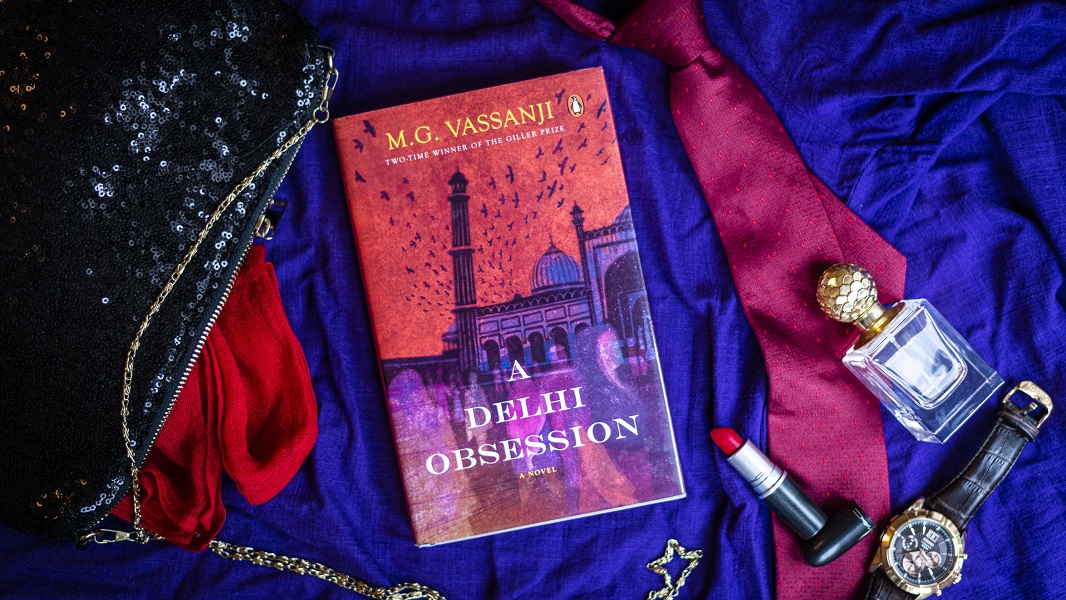
Two-time Giller Prize winner M.G. Vassanji returns with a powerful new novel, A Delhi Obsession about grief and second chances, tradition and rebellion, set in vibrant present-day Delhi.

Munir Khan, a recent widower from Toronto, meets the charming and witty Mohini Singh, a married liberal newspaper columnist, and what follows is a passionate love affair–uncontrollable yet impossible.

Read on to meet these two characters.


Munir Khan

Munir Khan was a puzzle. Such a floater. Without an anchor. But likeable… perhaps because of that?

Munir is a westernized agnostic of Muslim origin. He was born in Kenya and now, lives in Toronto. But he actually is an Indian (in a sort of way) who in reality, is ignorant about India. He lost his wife of many years in a car accident. A ‘mediocre’ writer by profession who had seen literary fame, he also has a daughter named Razia. He believes in a simple philosophy of living, in right and in wrong and respects all faiths. He likes history and enjoys finding out about the past. On a whim, to restore his family connections, he decides to visit India where he ends up meeting Mohini.

~

Mohini Singh

Smart, witty and liberal, that was her style.

Mohini is a modern Hindu woman. Utterly attractive and charming, she’s traditional and religious, but also a provocative newspaper columnist. She writes a weekly column for the daily paper the Express Times and teaches a course in English at a college twice a week. Her family were refugees from Sargodha, which became a part of Pakistan after the Partition. She had married early and has two daughters. She believes in prayer and turns to God for guidance. She usually look stunning in a saree and has a twinkle in her eye.

~

These two are from different worlds. To know more about them and their story, grab your copy of A Delhi Obsession today.

6 Very Delhi Things You Find in ‘A Delhi Obsession’

Set in contemporary times and effectively M.G. Vassanji’s most urgent novel yet, A Delhi Obsession follows the inexplicable attraction between recent widower Munir Khan and Mohini Singh, a married liberal newspaper columnist. Delhi’s streets, monuments and ruins become the setting of their passionate affair.

With the sights serving as an essential part of Vassanji’s storytelling, we list 6 very Delhi things you can expect to find in the book:


“[Munir and Mohini] had gone to see the fortress city of Tughlaqabad. Bahadur dropped her off at DRC. Mohini watched him drive off, out of sight, then she and Munir called for a taxi, which they hired for the day. Tughlaqabad was the most isolated and private it could get, but it was far from romantic. It was forbidding, haunted by its history.”

~

“At Siri the place was flooded with lights. Dust, cars hooting, the crowds. The bheed. The night air was thick and moist, a full moon was out. And hundreds of devoted fans filling the seats. The Mishra brothers began with a lovely thumri, a single-line love song to Krishna, repeated over and over in variations. Kya karun sajani, aaye na baalam . . . What to do, beloved, he doesn’t come . . . Then a couple of khayals. A bhajan by Meera. Paga ghungaru bandh . . . She wished he were there to share the music, for her to explain it to him.”

~

“A Narrative of the Last Days of Delhi

One terrible day bled into another following the death of our Sultan Alauddin by poison, and the three princes’ gory murders in Gwalior Fort. There was no end in sight to the naib’s evil machinations; now a Hindu was installed Sultan of Delhi and the descendants of maharajas strutted about its streets, energized by their polished new idols and charms. The future of Hindustan lay exposed and our own lives hung in the balance from day to day.

Such dark thoughts had returned to play upon my mind as I walked home one evening from a visit to my master Nizamuddin . . .”

~

“This time [Munir and Mohini] met at Khan Market. They did a casual round of the shops first. He bought a notebook, for which she paid, and he picked up the reading glasses he had ordered. Alphonso mangoes were just in season, displayed in fragrant heaps, and she bought a couple for him to eat that evening.”

~

“[Munir] visited by taxi the Qutub Minar, a lean and elegant tower of red sandstone in the south of the city, from where the first Turkish sultans had ruled, having defeated the local Rajput kings in the tenth century; and the Purana Qila, which was the site of the earliest city of Delhi, called Indraprastha, from the time of the epic Mahabharata.”

~

“Karim’s was one of a cluster of eating places nearby that all offered the same cuisine, kebabs and biryani occupying pride of place, releasing enticing aromas into the street. Of them, Karim’s had the distinction of having its entrance leading inside through a passageway to a counter.”


Written with trademark sensitivity and a sharp, affecting vision, A Delhi Obsession cuts close to the bone, and compels you to confront your profoundest dilemmas.


The Importance of Teaching your Child to be Grateful

Running out of bedtime stories to read to your kids?

Then worry not! Because Trishla Jain is here to save the night.

Research shows that narrating bedtime stories can be instrumental in building a child’s personality. These stories can help your kids understand important things in life and that too in an easy and consumable way.
Then why not use this bed time practice to teach your kids good values that will guide them throughout their lives? Why not use this practice to teach your kids how to say Merci, Arigato, Dhanyawaad so that they learn how to count their blessings and find reasons to be thankful?

Tankful of Thankful by Trishla Jain toots the magic of thanking each other in different languages-for the small things, for the grand things, for all things.

With adorable illustrations and verses, your young ones will start a beautiful conversation about living gratefully with you today!


Excerpt from book below:


Read Tankful of Thankful out loud to your children tonight!

Cuddle Up with These Books this Winter

This winter, set some time aside to read with your child. Feel Sai Baba’s all-pervasive presence, blessings and grace  and discover the wonders of wildlife in India. Take the time to solve puzzles that delve into the history, culture, food, festivals, wildlife and monuments of India as well!

Here is a list of all the books you can cuddle up with, this month:

Discover India: Wildlife of India

Mishki and Pushka can’t wait to get going. Daadu Dolma is taking them on a safari to see some of India’s famed wildlife.They’re about see rare animals like the Gangetic dolphin, meet endangered species like the Bengal tigers and one-horned rhinoceros!

With so many mountains, forests, water bodies, swamps and deserts, it’s no surprise that India has such amazing wildlife. So get set to join your favourite happy campers and their good old friend, Daadu Dolma and learn all about India’s incredible wildlife.

Discover India: India Activity Book

Mishki and Pushka have learned a lot about India. And now they’re ready to solve the puzzles, riddles and activities that Daadu Dolma has created specially for them.

Join them and take on the challenge of completing these activities on India’s history, its kings and queens, its festivals and monuments, its art and culture. There’s sure to be lots of fun along the way!

Amma, Take me to Shirdi

Join Amma and her boys as they travel to Shirdi, home to one of India’s most celebrated saints-Sai Baba. Hear the story of one of the most loved and revered mystics. Walk around the neem tree that gave him shelter. Relish a few moments in Dwarka Mai, the dilapidated mosque that became his home. Visit Dhuni Mai, the ever-burning fire Sai Baba had lit, and receive his blessings. Hear stories of the countless miracles he performed as you pay respects at the Shri Samadhi Temple, where he rests.

The Golden Eagle (Feather Tales)

Darkless

The Mindfulness Picture (Box Set)

Start a beautiful conversation on living purposefully with your young ones through four picture books that bring to life modern spirituality through simple words. While Tankful of Thankful will teach your child to understand the power of gratitude, Listen to the Whispers will let them reach for the stars with confidence and feel at one with the universe. Use Om the Gnome and the Chanting Comb to make them feel light and free and use Sunrise, Moonrise to understand the purpose of praying.

Puffin Classic: Tales from the Kathasaritsagara

Do you know the story of Phalabhuti, who narrowly escaped a grisly fate? Or of the kind-hearted Jimutavahana, who gave his life to save a snake from death? Or of young Shringabhuja, who married a rakshasa s daughter? These are just some of the many stories that make up Somadeva’s Kathasaritasagara. Abridged and wonderfully retold by Rohini Chowdhury, this is a great introduction for young readers to a fascinating work of classical Indian literature.

The Impact of the Panama Papers in India

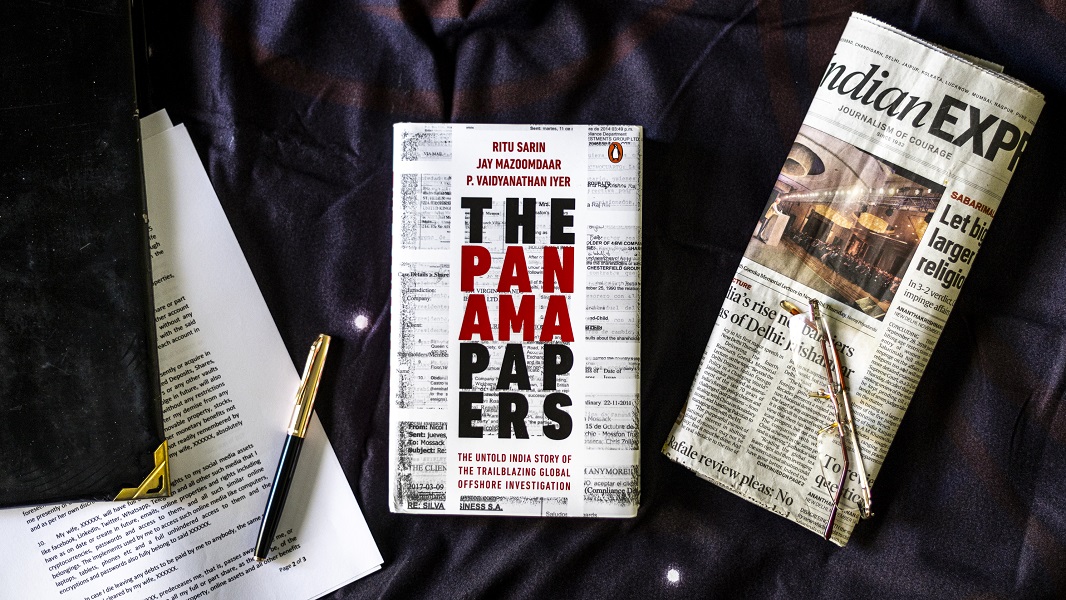
The Panama Papers leak, which involved the leak of more than 11.5 million financial and legal records of ‘global’ law firm Mossack Fonseca based in Panama City, exposed corruption and tax evasion by politicians, celebrities and the elite who had stashed away wealth in secretive tax havens.

The leak not only shook the world but also made a case for a more equal society in an age of a widening rich–poor divide. The response from readers of the case and the government to the expose was overwhelming, and the agencies swung into action immediately.

Read on to know more about the untold India story of the trailblazing investigation.

The mother of all collaborations

The Panama Papers investigation was code-named ‘Project Prometheus’ after the character from Greek mythology who stole fire from the gods and gave it to human beings. Perhaps it was named so with the expectation that a huge fire would be kindled.

Prometheus would be the largest-ever leak in journalism history with 2.6 terabytes of data; the dump came from an anonymous source to reporters of Süddeutsche Zeitung, the secondlargest German daily; the leaked data was from a Panamanian law firm named Mossack Fonseca; there were many heads of state and corporate leaders in the leaked data that spanned four decades and was ‘live’ till early 2015.


Following the leads to discoveries and dead ends

Even as Ritu, Jay and Vaidy began digging into the India files, what actually helped them navigate the intriguing world of offshore business was access to the millions of files that were not necessarily related to India. Reading the internal mails revealed the level of compliance, rather the lack of it, observed by giant incorporators like Mossack Fonseca, the veils of secrecy they built and their eagerness to find a way out to cater to every demand put forth by a client, all for a fee.

Having accessed the leaked data, the three reporters had embarked on the search in the spirit of ‘feeling lucky’ and entered, wishfully, names from a list of public figures in business and politics. To their surprise, some of these searches immediately returned positive. Soon enough, though, dawned the first of many sobering realizations. It turned out that most of these hits were inconsequential.

Quite early in the deep dive, the reporters realized that the ICIJ’s secure servers were struggling to cope with the traffic generated by hundreds of diligent reporters logging in from all corners of the world. While the consortium had invested a lot of resources, the global collaboration was the first of its kind and in no way could one have anticipated the load till it became apparent.

To physically verify hundreds of addresses, the three reporters needed to utilize the reach of the formidable state network of the Indian Express. They broke down the address list state-wise. Typically, the client concentration was high in and around the metros and state capitals. Both Mumbai and Delhi checklists, for example, had over sixty addresses each. But there was enough fieldwork also to be done in the hinterland. Unfortunately, many addresses with only a name against a village or a PO (post office) returned nothing. Not surprisingly, most Indian villages have multiple individuals who respond to the same name, and it was impossible to pin down a client in the absence of additional details such as father’s name and so on.


The aftermath of the leak

The flutter was also evident among celebrity company owners who had figured in the list of 500-odd Indians named and also therefore in the India coverage. There were those who immediately wanted to wash their hands of the Mossack firms, others who rejigged their holdings and, surprisingly, even company owners who dug in their heels and increased their holdings despite their confidential offshore secrets having been outed.

The only persons to deny outright evidence of their offshore involvement found in the Panama Papers documents were Amitabh Bachchan and his daughter-in-law, Aishwarya Rai. While Rai’s media adviser tried to dismiss Ritu’s request for comments, Bachchan did not even bother to respond to repeated queries.

One measure of the impact of the Panama Papers was the excitement the investigation generated in the conference and seminar circuit. The ICIJ staffers as well as project members became sought-after speakers at events hosted across the world and this was true for the Indian team too. The model of collaborative journalism exhibited by the Panama Papers team and what the story meant for the future of journalism sans borders was the favourite topic of plenary sessions at several journalism talk shops.

The promptness with which the Indian government reacted resulted in the country joining others in formulating a global taxation response to the Panama Papers. It was a good signal and statement of intent that on 13 April—just a week after the exposé—when tax administrators from around thirty countries held a brainstorming meeting in Paris on the impact of the Panama Papers, a director-level officer from India’s CBDT was in attendance.


A month after the Panama Papers hit the stands and sent the global who’s who scrambling for cover, John Doe, the unnamed source of the leak, sent a stirring note to Süddeutsche Zeitung, the German newspaper. The short essay underlined why it is, now, time for real action and how that starts with asking questions.

Read The Panama Papers to know more about the untold Indian side of the story!

error: Content is protected !!