Publish with Us

Follow Penguin

Follow Penguinsters

Follow Penguin Swadesh

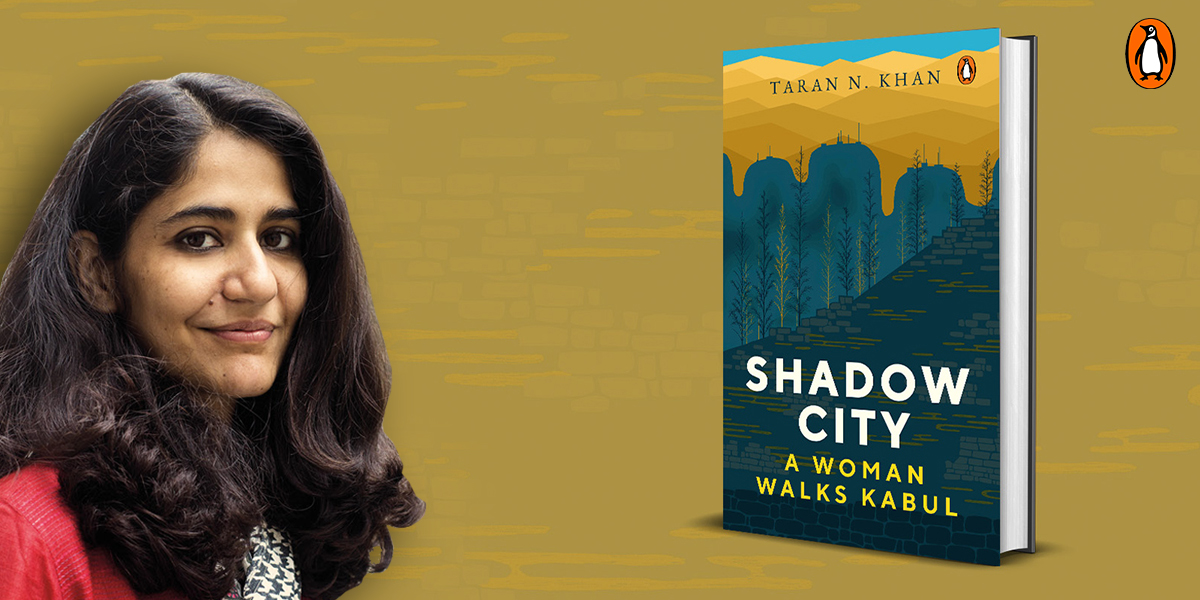
An Indian woman in Afghanistan

Afghanistan has been under siege for decades and while ‘it is easy to forget that Kabul existed 3000 years ago’, Taran N. Khan renders a vivid account of her travel tales through Kabul in her latest book – Shadow City.

Travel with her through Kabul:

Taran’s first encounter in the land of Pashtuns reminds her that she isn’t far from home

She recollects the time when an immigration officer exclaimed,

‘”Khan?” … “Yes,” I replied, eager to tell my story. “My ancestors were from here.” “Then what are you doing there?” he demanded in good Urdu, amused by my excitement. He stamped the page with a flourish. “Welcome back.”‘


While walking through the city, she uncovers the wonders of Kabul

‘from the Shahr-e-Kohna, or the old city, to the Shahr-e-Nau, or new suburbs’. Step by step she drifts through narrow lanes, relaying historical records, spotting European influences on architecture, capturing the cryptic similarities between the city she was born in – Aligarh, and the city believed to be connected by ‘a bridge (pul) made of straw (kah)’ – Kabul.


Taran comes out of her comfort zone

Shadow City highlights the conservative Muslim culture Taran witnessed while growing up in Aligarh. Being constantly confined to her room, she developed an interest in reading books. She remarks that,

‘… the world outside my door was as distant as a faraway continent. I ventured into it like a tourist. … Books were thus my private continent, providing both excitement and safety.’ But on one of her visits when she forgets to pack her books, she soon manages to find a way to read the city of Kabul, venturing through the lanes to find hidden charms like the ‘bookshop (that) has remained open through each of Kabul’s shifting eras: Communist, Mujahideen, Taliban, ISAF.’ 


Taran feels nostalgic whenever she visits Kabul

Each of her visits reminded her of the stories illustrated by Baba, who was well versed in Persian, uncovering myths like –

‘… He knew that the celebrated Sufi poet Jalaluddin Rumi had been born in Balkh, in northern Afghanistan, rather than Turkey, as I had assumed (which was why in Kabul I often heard him referred to as Maulana Jalauddin Balkhi).’ 


She finds similarities between the culture in Kabul and Aligarh

She delves deeper into the interiors of the city and finds herself getting nostalgic at the sight of finding ‘a functioning cinema in Kabul.’ Watching a film meant evading the confines of a house that women were mostly restricted to in Aligarh. It symbolized freedom and modernity for Taran, even if it meant scurrying out at night with other girls and aunts. She recalls that in Kabul, as in Aligarh,

‘The cinema was so exclusive, … that people were not allowed to enter in traditional Afghan clothes. … From these stories, I learned that in Kabul, like in Aligarh, cinema was an escape. It was also a place of aspiration, a window to a world that was still far away, still full of wonders.’

Taran realizes the nuances of love 

We have seen many a movies relaying emotion of ‘arranged love’. The ties of matrimony are arranged in a distinctly similar manner in most of the South Asian region. As Taran listened to Saleem’s love tales, she wondered that,

‘The fact that the couple had never spoken to each other, the intense scrutiny to nuanced signs— we were accustomed to this. That was how love played out, in Kabul as in Aligarh.’

Taran’s fascinating exploration will inspire you to visit Kabul

As Taran embarks on the journey to explore the fascinating city, nervously repeating

‘”Red stones mean danger,” … “White stones mean safety”’, she paints a beguiling picture of the city that demands a visit.


Discover Kabul through author’s layered lens in her latest book Shadow City.
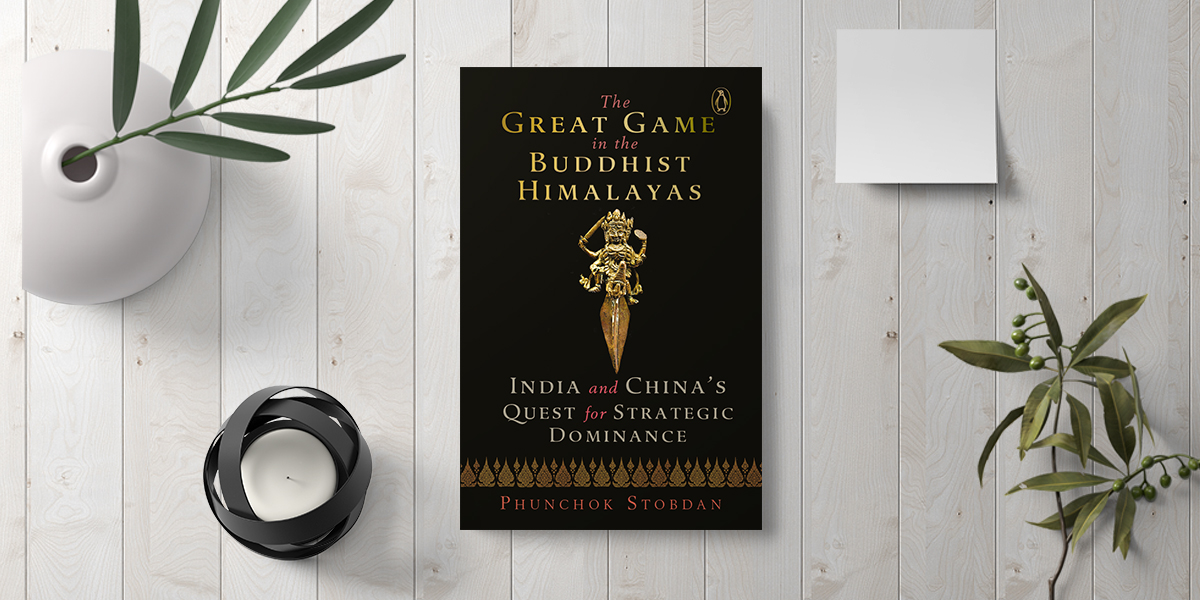
Phunchok Stobdan Answers Our Burning Questions

The Great Game in the Buddhist Himalayas by Phunchok Stobdan is an attempt to provide several unknown insights into the India-China, India-Tibet and China-Tibet relationships. The book tries to take into consideration the overriding power of the conflicting cultural interests that are linked to the geopolitical interests of both China and India. At the same time, the book suggests how Buddhism could become a potential source for recultivating awareness towards an India–China congruity in the current context.

In the interview below, Phunchok Stobdan talks about his book and more!

  1. What inspired you to write the book? 


Over the years, I have been receiving many compliments for my writings – essentially short commentaries, opinion pieces that I have been contributing to several media outlets and academic journals. The positive comments received from the readers motivated me further to elaborate my views on the subject, for the average reader knows little about the geopolitical complexity of the Himalayas.

There was certainly some fear that initially held me back from touching on the subject, but it my editor, Ms. Swati Chopra, Senior Commissioning Editor of Penguin India, who motivated me to undertake this project. I agreed with her because I had nothing to lose. I am very grateful to her.


  1. Were there any challenges? 


As always, writing on a sensitive subject like the Himalayas and Tibet is challenging not because the issues are at times shrouded in mystery as they are also mostly metaphysical in nature but because of the inbuilt political narrative that had been set for decades and embedded into the national discourse. Putting forward a contrary viewpoint and disturbing the status quo was challenging.


  1. Anything you would like our readers to know that would complement their experience while reading the book?


While I do not discount the importance of moral values and principle in the conduct of international politics, but the nature of world affairs have become more transactional especially after the end of the Cold War. India, for a very long time, has been playing a very opaque and open-ended game which has not endured well as it should have.  India’s strategic outlook towards the Himalayan region had been defined a long time go and continued to remain in practice despite the cost. On the other hand, the game pursued by India’s adversaries has been constantly changing. It is time to review our policies towards the Himalayas such as the one the country has with regards to Jammu & Kashmir. A robust policy like the one adopted for Ladakh by granting it a Union Territory status would alter the game in India’s favour.

  1. What are five reasons to read your book?

The Himalayas are no longer mystic and can’t be romanticized. Today, the Himalayas is a contested area – a theatre of competition by proxy among major powers.

This book important to understand:

a) The geo-cultural landscape of Buddhist Himalayas, its profile and the competing narratives that are being built over the years;

b) The dynamic interplay between the Tibetans vis-à-vis Himalayan Buddhist world, similarities and differences;

c) How the ‘Tibet issue’ and the discourse surrounding it has gradually overshadowed the Himalayan dynamics that has vilely blurt the Indian frontier outlook;

d) How the Chinese would eventually succeed in leveraging the critical issues of Himalayan Buddhism to meet its own geopolitical goals;

e) How India’s interests in the Buddhist Himalayas are rapidly getting compromised as compared to the Himalayan game played more perceptively by British India;

f) The Buddhist Himalayas are not a monolith region as generally perceived by people as there are inbuilt complexities and fault lines;

Finally to highlight how India has seemingly failed to grasp the dynamic interplay between sectarian affiliation and power politics — between the Tibetan plateau and the political landscape in the Indian Himalayas.

It is a case of missing the woods for the trees; clearly, understanding Himalayan complexity in India requires much more than bureaucratic bean-counting.


  1. Any particular sources you used to research into the India-China relationship?


The book is based on the official sources and vernacular media reporting. Some of the points identified are based on my experiences in the field; as a result of personal interaction with informed circles, participation in numerous conferences, seminars and discussions. Impressions gathered during my prolonged stay in Inner and Central Asia including personal visits to the Himalayan region (Sikkim, Bhutan, Himachal Pradesh, Arunachal Pradesh, West Bengal, Jammu & Kashmir and West Bengal) were used while writing this book. Being a native of the Himalayan region has definitely helped in writing this book.


  1. Do you think there will be any winners in this ‘great game’? Why? Why not?


Unless India evolves clarity of thoughts and objectivity, the Himalayan game is likely to remain in obscurity – largely driven by invisible actors without any tangible benefits for India. The real winner in the game should be safeguarding the interests of 1.3 billion people of India.


To know more about this Great Game, grab your copy of The Great Game in the Buddhist Himalayas today!

Beat Exam Blues with the Modi Mantra!

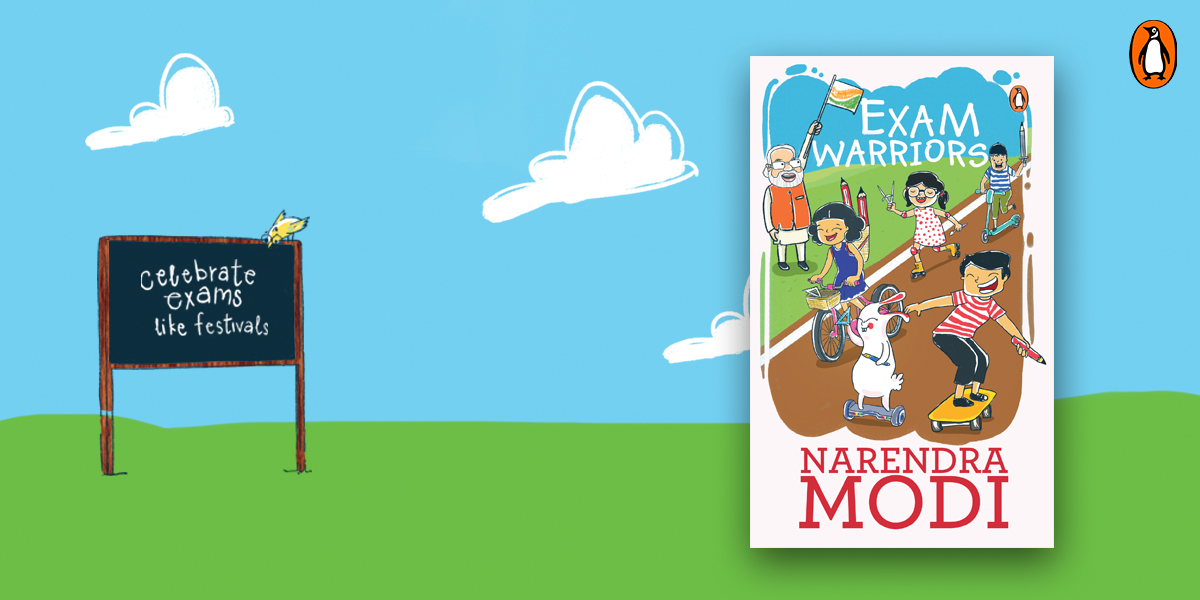
Exam Warriors by Narendra Modi is an inspiring book for the youth. Written in a fun and interactive style, with illustrations, activities and yoga exercises, this book will be a friend not only in acing exams but also in facing life.
Non-preachy, practical and thought-provoking, Exam Warriors is a handy guide for students in India and across the world.

On ways to beat exam stress, Mr. Modi writes, “You may not give your best when you’re under stress because your knowledge takes a back seat and pressure drives you. Do you want to be controlled by unnecessary pressure or would you rather control the pressure?”

Read on for 7 Modi mantras to triumph over exam stress-

Mantra 1: Prepare, appear and do not fear failure.

‘Exams are just one of the many important events in life, not the only one. Can one exam be the sole factor in determining one’s excellence and true potential? Certainly not.’

 Mantra 2: Always remember: relax to recall.

 ‘Prepare for exams with a smile, carry the same smile all the way into the exam hall, and out of it. Even if you do not feel like it, SMILE.’

Mantra 3: Pay no attention to tension.

  ‘It is natural to be mildly concerned before exams. However, worrying all the time will not help. Being in perpetual tension cannot be in fashion. Trying to appear serious may win you sympathy but not success.’

Mantra 4: Live Here and Now

‘The most important time is NOW, so make the most of it. It is not that the past or the future is unimportant. Learn from the past and plan for the future, but work in the present.’

Mantra 5: Use technology to become smart and to unwind smartly.

‘Many people will tell you to completely stop watching television, or be off the Internet during exams. I would never suggest such a drastic measure. These aspects of technology bring a refreshing element to your otherwise fixed routine of books.’

Mantra 6: Trust yourself!

‘During exam time, the possibility of rumours and misinformation reaching you can be high. Do not fall prey to them. Rumours are negative, almost never true and will not affect you if you are well prepared.’

Mantra 7- Yoga strengthens the brain and the nervous system.

‘Better concentration brings about greater efficiency in learning, which in turn enhances recall power. The overall impact is that memory, concentration and confidence are boosted.’


Putting things in perspective Shri Narendra Modi writes, ‘The aim of learning is to gain knowledge. When knowledge is pursued, marks will automatically follow (as a by-product). Focusing simply on marks not only builds undue pressure but also limits what you absorb.’

As Prime Minister, Modi has presided over transformative economic and social sector reforms, which have given a strong boost to India’s development journey.
The education sector has been particularly close to Modi’s heart. He is an inspirational leader for the youth.

Read the Exam Warriors to fight the fear of exams with Modi’s mantras!

The Maoists and Nepal: Excerpt from ‘The Nepal Nexus’

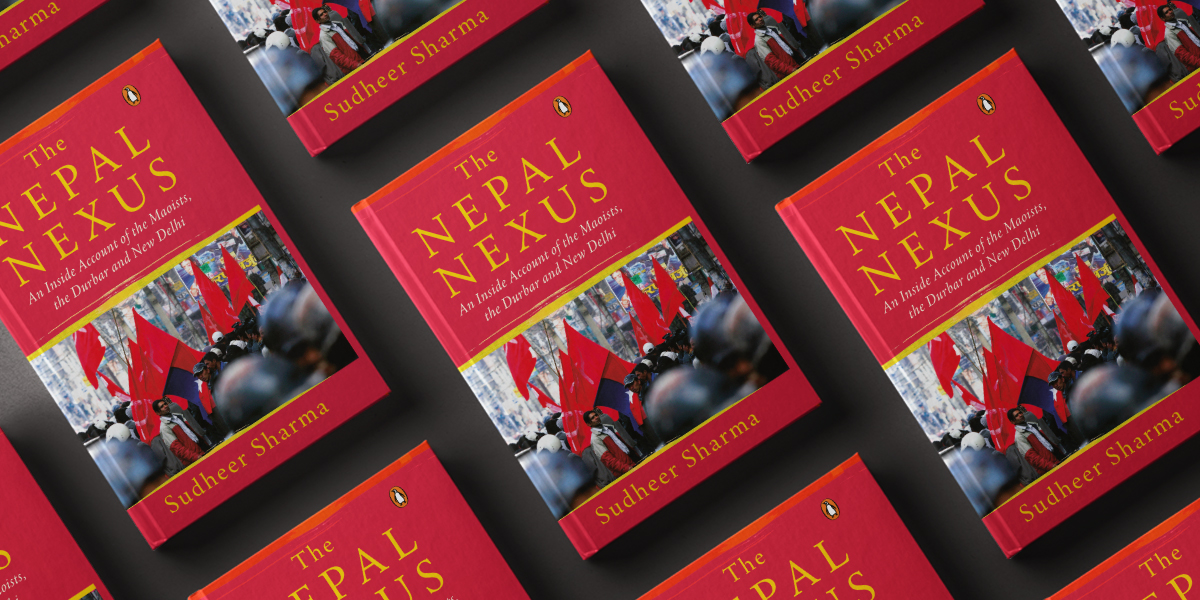
The Maoist revolt, despite its ultimate failure, played a decisive role in the socio-political transformation of Nepal. In The Nepal Nexus, author Sudheer Sharma attempts to present a nuanced understanding of the poverty, oppression and unemployment that drove the revolt.

He further assesses the relationship between the Maoists, the monarchy (Durbar), and the Indian establishment (Delhi) to understand the trajectory of the revolt.

Here is an excerpt that introduces the strand of the book:


The previous decade (1996–2006) had witnessed major upheavals in the Nepali body politic. The subsequent decade was usurped by the uncertainties of protracted political transition. This book covers both periods. It is focused on the origin and expansion of Maoist revolt, but is not a history that covers all the aspects of the Maoist movement. It merely places them at the centre and analyses their chaotic relations with the monarchy (termed ‘Durbar’ in this book) and the Indian establishment (called ‘Delhi’). In other words, this book is an account of a three-way interplay between Delhi, the Durbar and the Maoists which has had a profound impact on the present.

In the two and a half centuries since the establishment of the modern Nepali state, the ten-year people’s war posed its greatest internal challenge. Thousands of people took part in that armed movement risking their lives in pursuit of the dream of communist revolution. It was during this people’s war that the country could take great strides towards a progressive social agenda, such as the republic, a Constituent Assembly, social awareness of inequality, and inclusion. The Maoist revolt played a decisive role in the socio-political transformation of this feudal unitary Hindu state.

Certainly, that revolt was born in the hills of Nepal, and not in Delhi or the Durbar. But to fulfil their own interests the latter two played indirect roles in its expansion. Initially, the Durbar took a soft approach towards Maoists in the belief that it would lead to the failure of the parliamentary system restored in the early 1990s and pave the way for the return of an assertive monarchy. Therefore, the Durbar did not allow the army, which had remained under its control, to venture out of their barracks for the first six years of the insurgency. The lack of support from the army meant that the police was forced to confront the guerrillas alone and, in the end, was decisively defeated by the latter.

How did the conflict between the government and the Durbar flare up when the latter did not allow the army to be deployed against the Maoists? How did the rebels take advantage of such fissures within the state? How did they establish relations with the Durbar? How and why did the king’s brother have a secret dialogue with the Maoists? How did the palace massacre push Nepal’s politics towards a new phase? This book attempts to examine these questions.


Get an inside look into a highly turbulent time in the geopolitics of Nepal.

Know the Authors: Vijay Kelkar and Ajay Shah

Professional economists and former civil servants, Vijay Kelkar and Ajay Shah have spent twenty years of their lives thinking about and attempting to work on these questions:

Why did the reforms introduced from 1977 onwards deliver success during 1991–2011, but falter thereafter?

Where did Indians falter?

How can this course be changed?

How can Indians get rich before they grow old?

And one question above all else: What do Indians need to do to make their tryst with destiny?

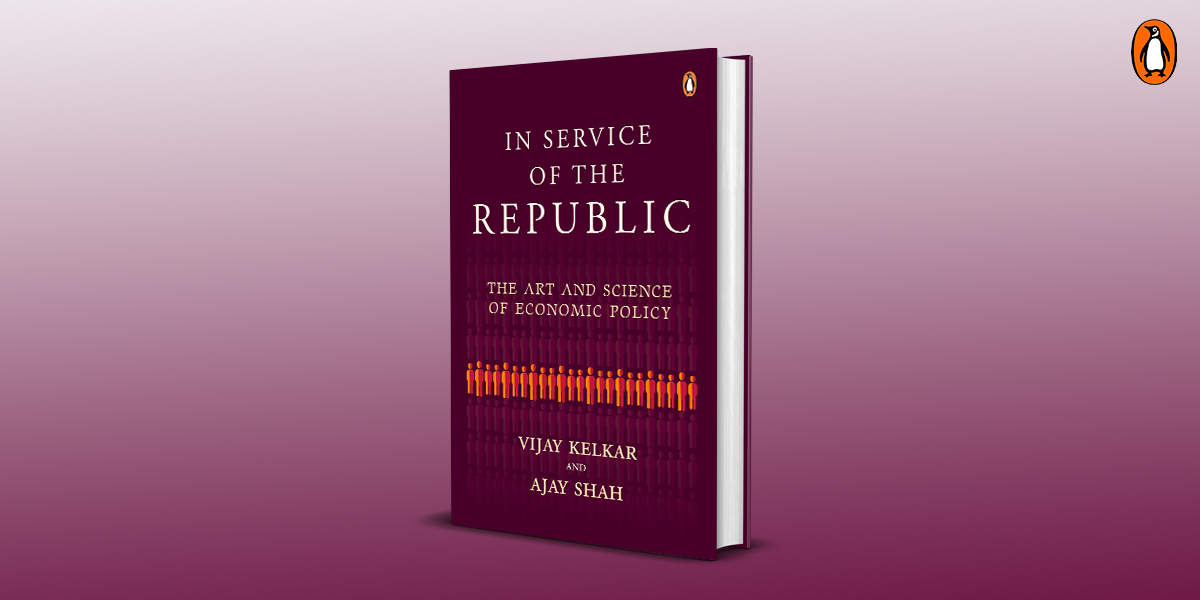
The result of their attempt is In Service of the Republic, a meticulously researched work that stands at the intersection of economics, political philosophy and public administration.

Read on to get to know these economists and authors better!

Vijay Kelkar

Dr. Vijay Kelkar is one of India’s most eminent economists and technocrats, and a renowned public policy thought-leader.

He served the Government of India in senior positions: as petroleum secretary, finance secretary and chairman of the Thirteenth Finance Commission of India. He also served as director of the United Nations Conference on Trade and Development (UNCTAD) and as executive director of the International Monetary Fund.

In 2011, the President of India conferred the Padma Vibhushan upon him, the second-highest civilian award for distinguished and exceptional service to the Nation.

Dr. Kelkar is also Chairperson for a committee constituted by the Government of India on Revisiting and Revitalizing the PPP model of Infrastructure Development; and Chairman for a committee constituted by the Government of India to prepare a roadmap for enhancing the domestic production of oil and gas, with sustainable reduction in import dependency by 2030. (Source: NIPFP)

He holds a BS from the University of Pune, MS from the University of Minnesota and PhD from the University of California, Berkeley. He has taught at the Administrative Staff College of India, Hyderabad; Center for Economic Development and Administration, Kathmandu; South Asia Institute, Heidelberg University; and University of California, Berkeley. (Source: IIHS)

Ajay Shah

Ajay Shah has worked at the Centre for Monitoring Indian Economy, the Indira Gandhi Institute for Development Research and the Ministry of Finance. He is currently, a professor at the National Institute of Public Finance and Policy (NIPFP).

His research interests include policy issues on Indian economic growth, open economy macroeconomics, public finance, financial economics and pensions. In the past decade, he was extensively involved in the policy process in the reforms of the equity market and the New Pension System. (Source: NIPFP)

He has a BTech in Aeronautical Engineering from IIT, Bombay, and a PhD in economics from the University of Southern California, Los Angeles.

Ajay thinks that his brain has two parts that he nurtures. The part that lives in Mathematics and Computer Science makes him a child of the world of science and reason. The other wing lives in the world of politics and thinks of the state, public policy, and ways to fix the world. (Source: YourStory)


Put together, these two have spent sixty years in the field and hope that this book will trigger many crucial and relevant conversations.

‘Step Out of the Car!’: Excerpt from Talking to Strangers

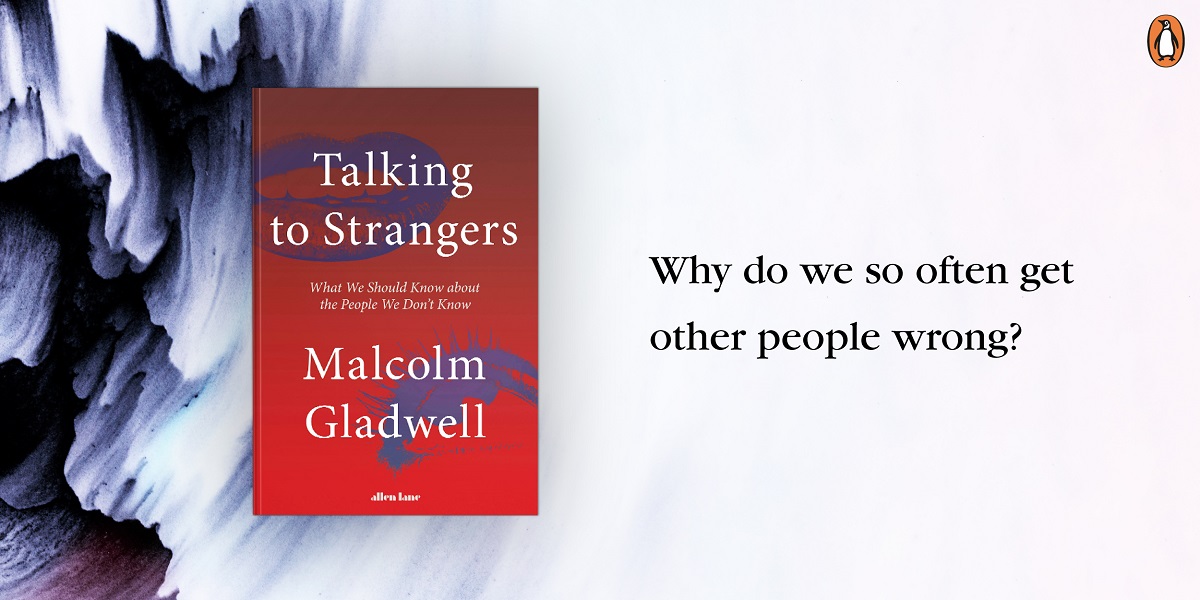
Talking to Strangers is a veritable psychological and intellectual adventure, told through a mix of history and anecdotes, where author Malcolm Gladwell asks pertinent questions about how we make sense of interact with people we don’t know.

Here’s a peek into one of the stories from the book.


“Step out of the car!”

Bland: I’m in my car, why do I have to put out my cigarette?

Encinia: Well, you can step on out now.

Bland:  I don’t have to step out of my car.

Encinia: Step out of the car.

Bland: Why am I…

Encinia: Step out of the car!

Bland: No, you don’t have the right. No, you don’t have the right.

Encinia: Step out of the car.

Bland: You do not have the right. You do not have the right to do this.

Encinia: I do have the right, now step out or I will remove you.

Bland: I refuse to talk to you other than to identify myself. [crosstalk] I am getting removed for a failure to signal?

Encinia: Step out or I will remove you. I’m giving you a lawful order. Get out of the car now or I’m going to remove you.

Bland: And I’m calling my lawyer.

Bland and Encinia continue on for an uncomfortably long time. Emotions escalate.

Encinia: I’m going to yank you out of here. [Reaches inside car.]

Bland: OK, you’re going to yank me out of my car? OK, all right..

Encinia: [calling in backup] 2547.

Bland: Let’s do this.

Encinia: Yeah, we’re going to. [Grabs for Bland]

Bland: Don’t touch me!

Encinia: Get out of the car!

Bland: Don’t touch me. Don’t touch me! I’m not under arrest – you don’t have the right to take me out of the car.

Encinia: You are under arrest!

Bland: I’m under arrest? For what? For what? For what?

Encinia: [To dispatch] 2547 County FM 1098. [inaudible] Send me another unit. [To Bland] Get out of the car! Get out of the car now!

Bland: Why am I being apprehended? You’re trying to give me a ticket for failure…

Encinia: I said get out of the car!

Bland: Why am I being apprehended? You just opened my –

Encinia: I’m giving you a lawful order. I’m going to drag you out of here.

Bland: So you are threatening to drag me out of my own car?

Encinia: Get out of the car!

Bland: And then you’re going to [crosstalk] me?

Encinia: I will light you up! Get out! Now! [Draws stun gun and points it at Bland.]

Bland: Wow. Wow. [Bland exits car.]

Encinia: Get out. Now. Get out of the car!

Bland: For a failure to signal? You’re doing all of this for a failure to signal?

Bland was arrested and jailed. Three days later, she committed suicide in her cell.


Talking to Strangers: What We Should Know about the People We Don’t Know is a sinister but enlightening narrative of the mind and fundamental questions about the dark side of human nature.

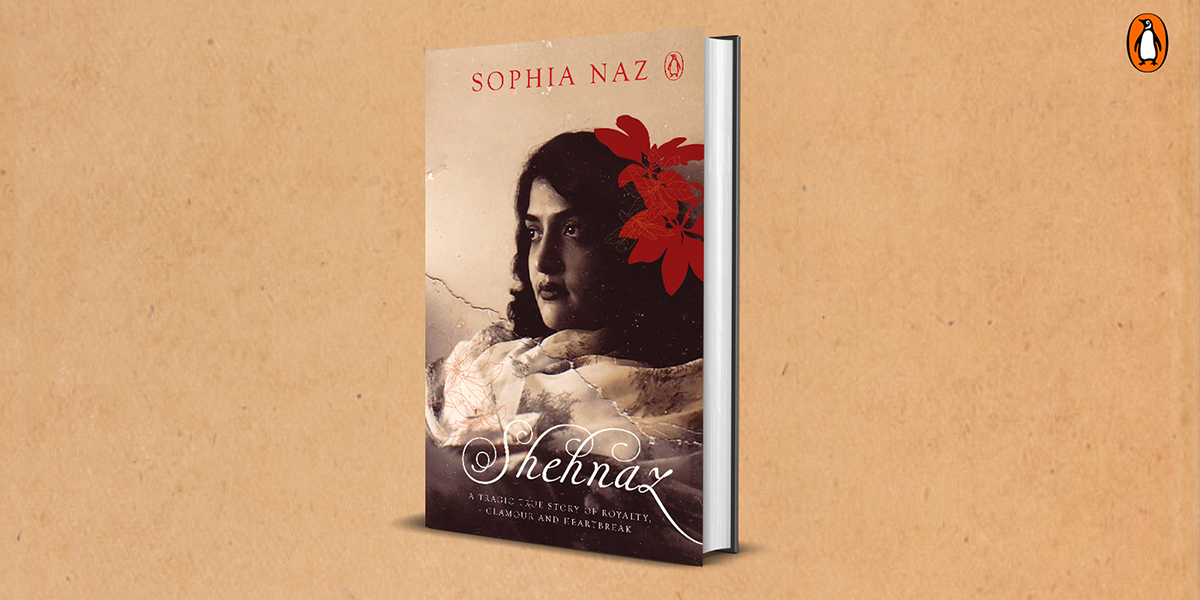
Who was Shehnaz?

Shehnaz was a beautiful, erudite woman from the royal family of Bhopal. She was almost cast to play Anarkali in K. Asif’s Mughal-e-Azam!

Her daughter Sophia Naz tells her story as she heard it from her. As a child, the author accompanied her mother every year to Mumbai, where she would try to find some trace of her children in vain. When Shehnaz passed away, it was with her older daughter’s name on her lips.

With a life full of royalty, glamour, heartbreak and survival – we take a deeper look at Shehnaz’s story in a glimpse from the book:

At a very tender age, Fatima stood in front of a stunned gathering and proclaimed that from then on she would be known by the name of Shehnaz-Pride of Kings. As she started to grow older, her penchant for pranks and pocketing delicious treats had not disappeared completely, however, they had been largely supplanted by a burning curiosity about beyond the boundaries of Nawab Manzil and Bara Mahal.

A few months into her lessons, Maulvi Asghar realized that Shehnaz had an aptitude for Urdu poetry well beyond her years. He began by teaching her poetry written for children by the likes of Ismail Merathi, then quickly progressed to the famous riddle verses of Amir Khusro and the mystical couplets of Kabir followed by the classical poets Ghalib, Mir Taqi Mir, Daagh Dehlavi, Sauda, Jurat, Insha and Zauq. Finally, in a nod to an unusual phenomenon that was unique to the literary culture of Bhopal, he taught Shehnaz verses written by Shehzad Masih, the Bourbon who wrote under the nom de plume Fitrat, as well as the poet of Portuguese origin known as Hakim Ilyas Da Silva.

Despite being thrust into an environment that was a stark contrast to the indolent and bucolic neighbourhood of Shahjahanabad in Bhopal where she had grown up, Shehnaz excelled in her studies at the convent, so much so that despite joining the school late and being quite a bit older than her fellow pupils, she quickly earned her promotions and within two years was promoted to a class appropriate for her age.

From the very first moment that they were torn away from their mother, Shehnaz’s children were led to believe that she had abandoned them. In addition to the torture of separation that she was forced to undergo, her children were brainwashed to repudiate their mother completely.

Shehnaz’s heart had been broken in her youth. In the last two decades of her life, this heartbreak took on a literal meaning as she began to suffer a series of heart attacks that grew ever more serious in nature.

On 5 October 2012, before she could complete her eighty-first year, Shehnaz suffered a massive heart attack from which she never recovered. None of her children were with her at the time of her death.


Sophia Naz’s Shehnaz is a story of a life that is worth knowing and understanding. Meet Shehnaz now.

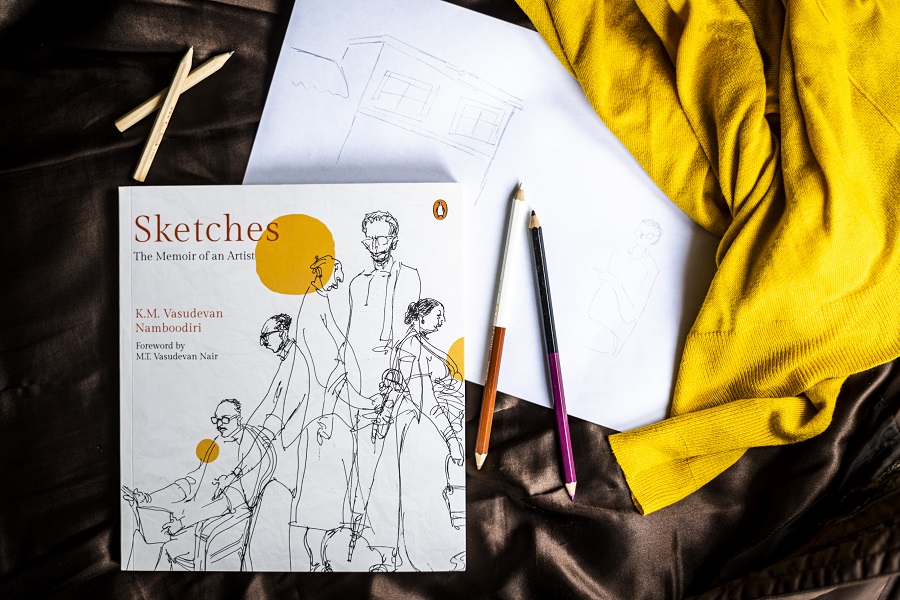
5 Heartwarming Instances from Artist Namboodiri’s Life

Black, white, lines, colours: Namboodiri has mastery over all of them. He can create sculptures in stone, wood and cement. He is the proprietor of multifaceted accomplishments. This work proves to us that he has the power to transform words that —devoid of pomp or adornment—into beautiful writing.

This piece lists 5 heartwarming instances from the artist’s life.

Attu was an extremely intelligent man…..However, he was always interested in helping people. It was he who took me to Veembur to study Sanskrit.”

~

In the days when I used to visit Varikkasserry, I used to make figures out of clay—but not to show them to anyone, I never did. One day, Poonthottam Namboodiri, the artist, found out about them and congratulated me: ‘Your efforts aren’t bad at all!’”

~

Whenever he visited Varikkasserry, he would speak to me about what he was doing and I would listen attentively. A year went by in this way. One day, Kavu Namboodiri said to me: ‘Come with me to Madras, you can stay with me.’….. The next I knew, I had a letter from him. ‘You have to come here, Karuvadu.’ It was a turning point in my life.”

~

I used to call K.C.S. ‘Master’. I began to meet him quite often….One day, Master said to me: ‘Vassevan, attend the painting class as well.’ And so a rare opportunity came my way: to be able to paint with the fi nal-year students in the advanced course in painting.”

~

Time went by and one day, I heard a piece of news that saddened me deeply. That Master had a cancer of the stomach. …When we arrived at the hospital, Master, his wife and his son were just coming out after he had been examined.‘So, Vassevan?’ he asked….I had nothing to say. My face fell, I knew I was going to break down. I had to accept the situation. Master patted my shoulder and said, ‘It doesn’t matter. It had to happen sometime, Vassevan.’ I cannot think of anyone who faced death so fearlessly.”


In Sketches, Namboodiri has sketched certain people and events that linger in his memory. They are not in chronological order. Nor is this an autobiography that follows a given arrangement. These are glimpses that touched an artist’s heart and because of this, its composition is unique.

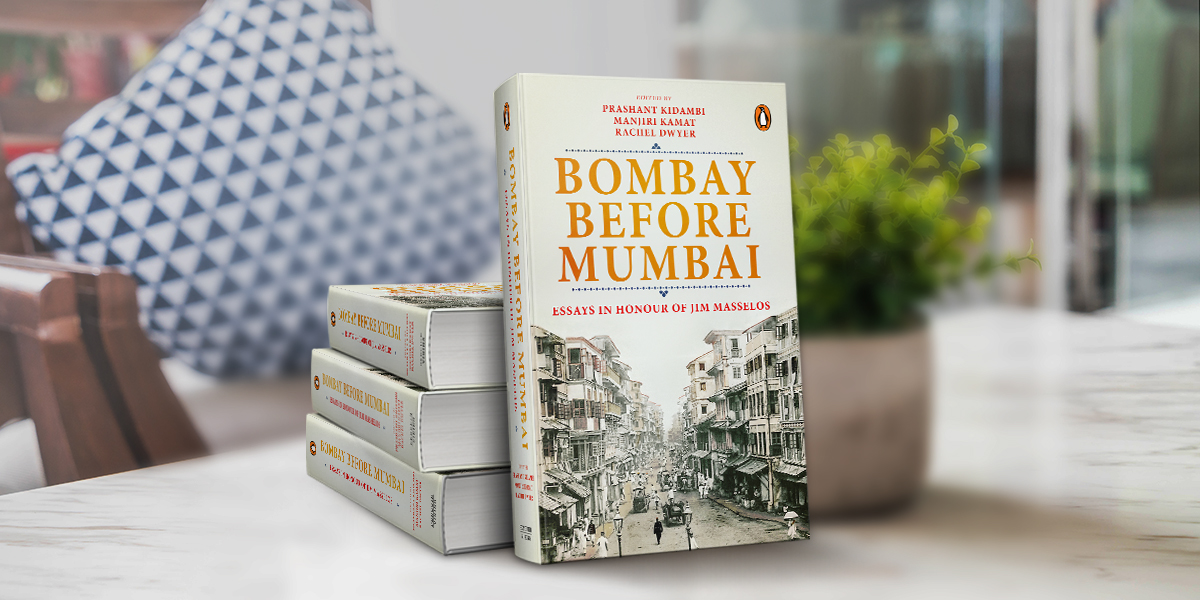
What the British Taught Us About ‘Charity’- An Excerpt from ‘Bombay Before Mumbai’

‘City of Gold’, ‘Urbs Prima in Indis’, ‘Maximum City’: no Indian metropolis has captivated the public imagination quite like Mumbai. Bombay Before Mumbai, featuring new essays by its finest historians, presents a rich sample of Bombay’s palimpsestic pasts.


Here’s an excerpt from Preeti Chopra’s essay from the book:


The British colonial regime brought to Bombay the English term and ideal of ‘charity’, complete with religious, institutional and social connotations. Following the literary scholar and novelist Raymond Williams’s untangling of the word, ‘a charity as an institution’ was established in the seventeenth century, replacing the older meaning of the notion as ‘Christian love between man and God, and between men and their neighbours’. From the eighteenth century onwards, the institutionalization of charity resulted in a sense of revulsion to the term itself that came from ‘feelings of wounded self-respect and dignity, which belong, historically, to the interaction of charity and class-feelings, on both sides of the act’. This later led to the ‘specialization of charity to the deserving poor’ (a reward for approved social conduct) and to upholding the bourgeois political economy so that charity did not interfere with the need to toil for wage-labour.


British notions of charity and philanthropy intersected with, and influenced, Indian forms of gift giving. Douglas Haynes has underscored ‘the importance of gift giving in Indian ethical traditions’. Native businessmen in western India actively participated in this arena, which included the construction of wells, rest houses, support of festivals and Sanskrit learning or other arenas that were valued by their community. These were religious acts in the service of deities, through which the devotees hoped to earn merit. But gifting activities were also tied to the world of business. Writing of the merchants of Surat, Haynes emphasises the importance of a abru u (reputation), which required careful nurturing and maintenance, adherence to community norms and support of community religious and social life. A Abru u also denoted ‘economic “credit”’. It was essential for businessmen to establish a reputation of reliability in order to participate in vast commercial networks that were based on trust rather than enforceable legal contracts and modern financial institutions. Gifting was also used to exert political influence over rulers who came from outside the city and distinguished themselves from the culture and norms of the merchants. Here, the gifts made by merchants accorded to the norms of the rulers. According to Haynes, under British rule in the nineteenth century, this form of gift shifted ‘from tribute to philanthropy’, as merchants started to contribute towards secular institutions such as schools, colleges, or hospitals. Gifting for secular philanthropic works of ‘humanitarian service’, Haynes argues, diffused ‘an entirely novel ethic from Victorian England among the commercial communities of India’. Thus, even as merchants continued to uphold their reputations by gifting practices that maintained community religious norms and social life, they adjusted other practices to the norms of the ruling group. Building on and moving beyond Haynes, I underscore in this chapter how native elites also donated to charities that supported the European poor and, occasionally, Christian religious institutions primarily geared towards Europeans.


In the nineteenth century, colonial legal interventions transformed native practices of charitable gifting by making them transparent and bringing them under government control. As Ritu Birla shows, the Charitable Endowments Act of 1890 and the Charitable and Religious Trusts Act of 1920 introduced the criteria of ‘general public utility’ for determining charitable purpose. Yet, religious institutions were excluded from the category of charitable trusts until the Act of 1920 ‘established that religious trusts deemed of public import would also be eligible for classification as charitable trusts, and thus be classified as tax exempt’. An example of a religious trust of public import were dharamshalas, or travellers’ rest houses, which offered free room and board Primarily used by merchants, they were open to religious mendicants and those of ‘pure caste status’. Yet, in most cases, entry was denied to those of lower castes and untouchables.


From the 1890s onwards, as courts increasingly began to consider cases involving the ‘public nature of indigenous endowments … the question of public benefit came to rest less on equal access to all potential beneficiaries and became instead one of serving more than just the family or trustees.’ In the 1890s, the British saw dharamshalas as ‘valid religious but not public charitable trusts’. By 1908, however, they clearly considered them as institutions of public benefit. The 1920 statute allowed the Government of India to give local government and courts greater regulatory controls over public religious and charitable trusts, at the same time as it forced trusts to publicise their finances and accounts.


Thus, to summarise, in colonial India, charity retained a religious basis, serving specific communities, and excluding others. It remained distinguished from philanthropy, which had secular humanitarian goals, and served the public at large. While the institutionalisation of charity in Britain encouraged popular feelings of social revulsion and channeled aid towards the deserving poor, nothing suggests that all Indian communities felt the same way, at least in the nineteenth and early twentieth centuries.


Bombay Before Mumbai is a fitting tribute to Masselos’ enduring contribution to South Asian urban history.The book is available now!


Dear reader: A letter from Jojo Moyes

Bestselling author Jojo Moyes’ new book The Giver of Stars is a mesmerising tale of female friendship, romance, and the wonder of books and reading, inspired by a remarkable true story.

Here’s a special letter from the author in which she gives insight into the inspiration behind her novel:


Dear Reader,


Fifteen months ago I read an article in the Smithsonian magazine about the Horseback Librarians of Kentucky — a group of young women employed by the US Government’s WPA scheme to go into the mountains after the Great Depression and take books and magazines to families who might not otherwise read a word.


Enduring harsh conditions and braving all kinds of dangers — snakes, dangerous mountains, moonshiners and criminals — they would saddle up and ride hundreds of miles a week to read to the sick, teach children, encourage the spread of facts in a time where religion and snake oil salesmen were able to battle for people’s minds. They often faced fierce resistance, both for their sex and from families who were suspicious of any reading materials other than The Bible, but worked together in a system that lasted seven years across several states, bringing everything from recipes to comic books biological texts to these remote families. Many of them became beloved to the people they served.


The photographic images of these young women were extraordinary, and their relevance to today hit me hard. I travelled to this remote area of East Kentucky on two separate research trips, rode the trails that the librarians would have ridden and stayed a week in a remote log cabin so that I could experience nature as they would have done (I got told off for moving a snake with a stick). I fell in love with the landscape and the storytelling people who inhabit it.


The Giver of Stars is the result — a story of five such women from very different backgrounds, brought together in a tiny community in the mountains of Kentucky. The story is fictional, but I have rested it on a skeleton of facts. I can honestly say I have never loved writing a book more, or been more inspired by my subject matter. I really hope everyone else enjoys it as much as I have.


Jojo Moyes


Intrigued? The Giver of Stars is available now.

error: Content is protected !!