Publish with Us

Follow Penguin

Follow Penguinsters

Follow Penguin Swadesh

Even True Love Has a Dangerous Side- The Prologue from Novoneel Chakraborty’s New Book

‘I’ll gift you a love story that every girl desires, but few get to live.’

He’d told me once. And boy, did he stick to his words! Vanav Thakur is the perfect boyfriend that any girl can have. Sometimes, I wonder if I really deserve him.

I’m Aarisha Shergill and my life is about to get ripped apart because I should have known some things should be left alone.

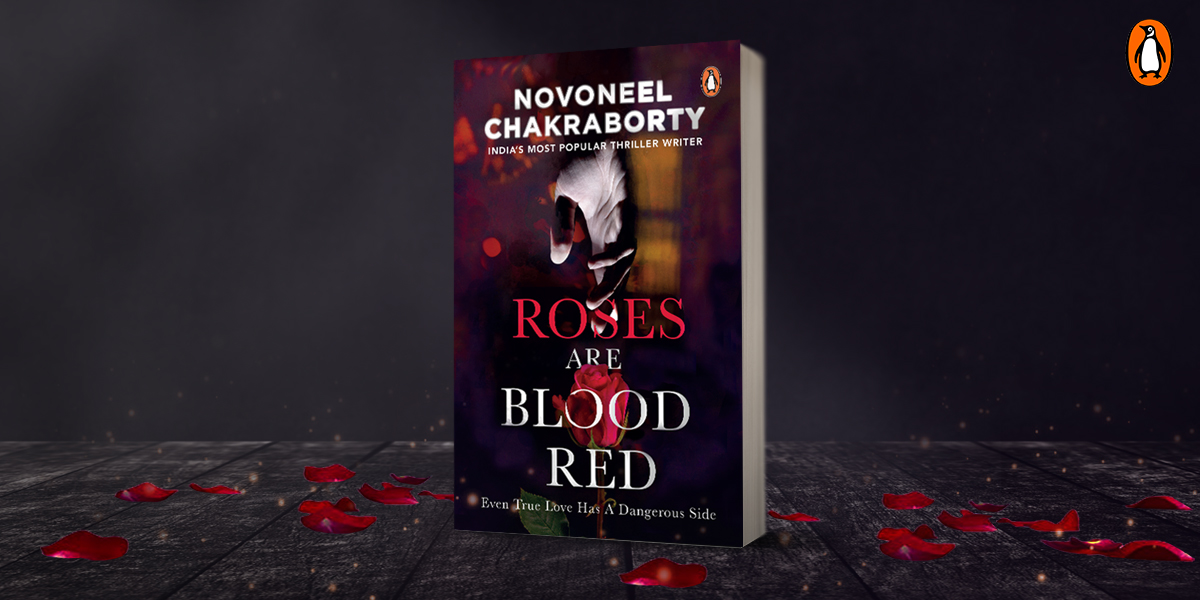
Bestselling author Novoneel Chakraborty is back with Roses Are Blood Red. Read the prologue from the book below:

TOSH, HIMACHAL PRADESH Sometime Ago

It was an important day for her. Very important. He was coming down to meet her after . . . in fact, she had been counting: three months, fifteen days, eleven hours and—as she left her house—exactly nine minutes. She had told her parents that she would stay with her bestie from college— Pragya—that night. Pragya, obviously, had no idea about her subterfuge.

He had selected the venue for their clandestine meet. It was only two blocks from her house to the small tea shop that would have closed for the day by then.

Despite the several layers she had on, Aarisha’s teeth chattered as she cycled towards the tea shop. The shiver was partially due to the unseasonal cold wave that had gripped the Himalayan town; she trembled more in anticipation of the impending rendezvous. Should I launch into his arms as soon as we meet? Or should I stand back and simply admire him for a bit? With an avalanche of thoughts crashing through her mind, she finally reached the location for their tryst. She stopped nineteen-to-the-dozen. Only the rarest find their harmony in silence. They were rare, she knew.

She cupped his jaw in her long-fingered hands and caressed his three-day-old stubble with her thumbs. He stretched out an arm to flick the switch on the car stereo. Ariana Grande’s husky voice softly permeated the interior of the car with one of her favourite tracks: ‘God is a Woman’. Aarisha leaned in, but before their lips could touch, he gripped her waist and stopped her descent.

‘Not so quick, Ranisa,’ he whispered.

She loved it when he called her by that name. ‘Ranisa’ meant queen—his queen.

If there was one thing she absolutely loved and couldn’t quite define, it was his enormous respect for her. It was so deep-seated that she often wondered whether she deserved to be placed on such a high pedestal.

‘You always say this,’ she whispered petulantly. ‘Don’t you want to kiss me?’

He stared at her beauty, her dark hair cascading like a cloud around her shoulders. Her eyes didn’t reflect pain, they carried a complaint.

‘D’you honestly believe that I don’t want to kiss you?’ he asked.

‘Then why don’t you?’ she sulked. ‘Also,’ she dismounted from him and scrambled back into her seat, ‘I hate it when you leave me and go away.’ He sensed the flood of tears about to burst through the dam at any moment.

‘Why?’ he asked softly.‘I feel insecure about you, about us,’ Aarisha choked.

An ironical smile touched his face. ‘You know this thing we call love, it’s like a dense forest. As you enter, you hear the growl of several wild beasts. At times, you may even encounter them. Insecurity is the most ferocious beast in this jungle. Whether to fall victim to it or vanquish it to continue one’s quest to unearth the greatest treasure ever, which is also hidden in this very forest, is the lover’s call. I’ve taken mine. What’s your call, Ranisa?’

She stared at him, amazed at the total conviction in his eyes. How could someone’s eyes always reflect such confidence? It was the kind of assurance one developed after scrutinizing life so closely that its tricks became only too predictable. She leaned over and kissed his closed eyelids.

‘I’ll fight. I promise I’ll fight all the beasts that come our way,’ she whispered.

There was a faint smile on his face as he said, ‘Don’t worry about the distance between us.’ He raised her downcast face and kissed her forehead, ‘The body is only what is. The soul is what is, what was and what will be. The scope of all the urges stemming from the body is a mere molecule compared to the intense longing that arises from the soul. And for the soul, distance is an alien concept. Distance only restricts the body.’

‘But the body is also important in its own way, isn’t it?’

‘As much as a house of bricks and mortar, because it houses the vulnerable and the fragile within. But we all know that the shelter is temporary and, as all temporary things, too transient to worry about.’

‘What’s permanent then?’ Aarisha asked.

He placed his right hand flat against her left hand, palm to palm, their fingertips splayed until they found the gaps through which the fingers slipped, and the hands clasped each other.

‘This,’ he said, tightening the clasp, ‘this is permanent.’

I wish I could tell you the number of wars I’ve fought to make this permanent, he thought.

‘D’you know, there are times in your absence when I get the feeling that I hardly know you at all. Is that good?’ she asked, resting her head on his shoulder.

‘You’ll know. You’ll know very soon. It’s just a matter of one more year.’

‘One more year?’ she asked, frowning.

‘Yes. In one more year I’ll gift you a love story that every girl desires, but few, if any, get to live,’ he whispered.

‘What do you mean?’ she drew back to look at his face. There was no response. She raised her head—and suddenly she felt a tug on her hair.

‘Ouch!’ she yelled. Before she realized what was happening, she felt a punch on her face that broke her nose and lacerated her lips. The second punch that buried itself in her gut almost made her throw up. Aarisha fell unconscious, her face a bloodied mess. Three more punches followed: one to her jaw, another landed in her ribs and the third, in the stomach again. He shoved her away from him with force. The side of her head slammed against the window. He yanked down her jeans, slipped them off her legs and tossed them out of the window. He tugged her panties down to her knees and from his pocket he extracted a vial of semen. He smeared

some of the semen on her panties, on her dress and emptied the rest on her bare abdomen. He made sure nobody would ever track down whose semen it was. For a doctor, it wasn’t even a task. He dressed her back in a hasty manner.

As soon as he was done, he used his cell phone to call the local police station. Emotionlessly, he relayed the information, ‘A girl has been raped and abandoned on the road.’ He gave them the approximate location before hanging up. He glanced at Aarisha’s unconscious battered face and muttered, ‘The first thing you should know about me is: I…Don’t…Let…Go…’

He turned on the ignition, opened the passenger side door and pushed the girl’s insensate body out. He put the car into gear, gunned the engine and sped away into the night. After half an hour of driving, he stopped. He alighted from the car and stood at the edge of the abyss, gazing into the darkness. He dialled the police again. They informed him that the girl had been rescued and countered with their own questions about his identity. In reply, he flung the phone into the abyss as far as it would go. He looked up at the night sky— at the constellations of stars—they had mocked him enough. They thought she would never be his. And now, he would win her from everything—and everyone.

He extended both his middle fingers skywards and bellowed a bloodcurdling war-cry against destiny.

Vanav Thakur was no ordinary man. He was soul-deep in love with a girl. And he was a man with a plan.


Curious to know what happens next?  Mysteriously thrilling in its essence, Novoneel Chakraborty’s Roses Are Blood Red is a haunting story of a passionate and eternal love.
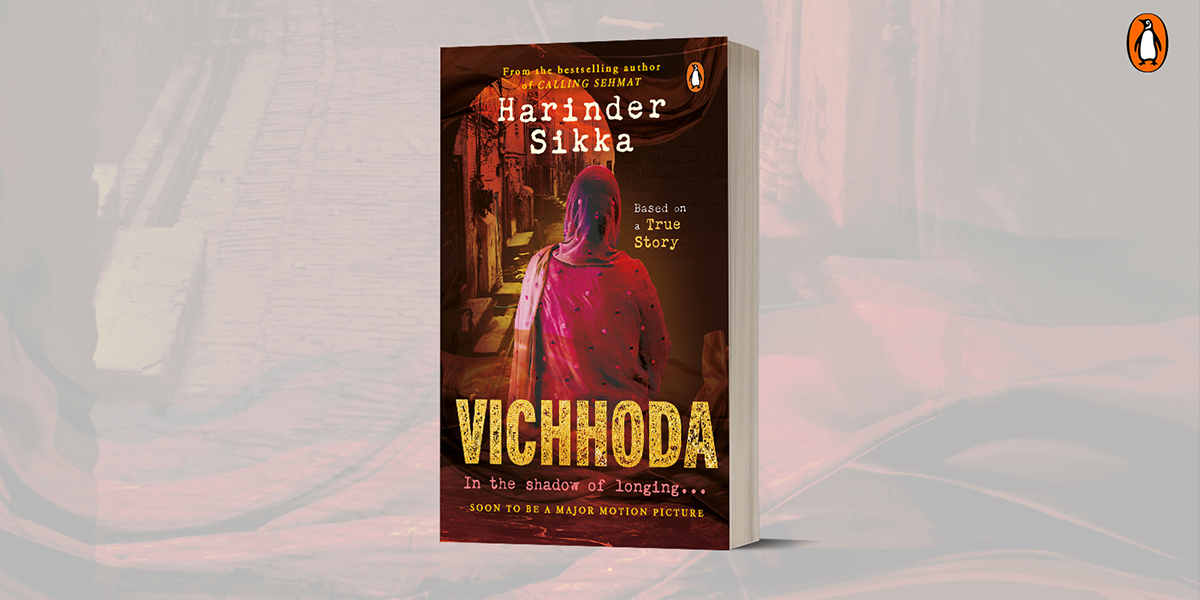
 

An Exclusive Excerpt from Harinder Sikka’s Newest Book!

Bestselling author of Calling Sehmat, Harinder Sikka is back! His new book Vichhoda, narrates the experiences of another powerful woman, Bibi Amrit Kaur.

Bibi’s life is torn apart in the 1947 riots. She’s now living in a different country with a different identity, a fate she eventually accepts gracefully. She gets married and has two children. Life, however, has something else in store for her. It breaks her and her children apart. And this time the pain is unbearable.

Read an excerpt from the book below:


In the meantime, Bibi reached home to find a large group of women assembled in front of her home. They were surprised to see her without her burqa. As the tonga stopped, she stepped down, and, without saying a word to the women, rushed into her home and bolted the door from inside. But like jungle fire, stories about her act of bravery reached every ear in no time. It generated praise and fear in equal measure. Even though Sakhiullah was respected by the villagers, most women feared police retaliation. They were all aware of the brutality with which cops often operated, especially in rural areas where they were treated like demigods. When Sakhiullah arrived that evening, he was shocked to learn about the turn of events. He rushed to the army camp situated near his house and narrated the story to the deputy camp commander, a young army captain named Ishtiaq, who was also his first cousin. ‘I need urgent help, Ishtiaq. We have no time to waste. It won’t be long before the police come banging at our doors. And that could mean serious trouble; not only for Bibi, but for the entire family!’


The young captain nodded and called his most senior and experienced jawan at the camp, Subedar Major Mushtaq Khan, for advice. A deep furrow appeared between his brows as Sakhiullah related the story. He mused for a moment and then said, ‘Sir, the camp commandant will have to intervene immediately as this is a case of attack on a serving police officer. But he’s in Islamabad for the entire week. I know the SHO well. He’s politically connected, highly corrupt and most brutal. If he survives, he will take revenge in every possible manner. But even if he doesn’t, his colleagues won’t spare your family. I suggest that you move out with your family immediately. Also, Bibi will have to be sent to India right away if we are to save her.’


Captain Ishtiaq looked at Sakhiullah and said, ‘Bhaijaan, if what Mushtaq Sahib is saying is right, then we don’t have much time. Please decide. I don’t even have the authority to do what we are planning, but I shall not spare any effort.’ A helpless and confused Sakhiullah nodded in affirmation and the subedar swung into action.


An hour later, two military jeeps arrived at Sakhiullah’s residence. Four army jawans in battle rig and armed with rifles stepped out, followed by a subedar and a young lieutenant. The lieutenant took Bibi into custody while Sakhiullah watched from a distance as a mute spectator. The military officer whispered in her ear that her life and that of her entire family was in danger. He explained to her that the arrest was being made only to evade a counter-attack as the police would not interfere with the military forces.


The first jeep left, taking Bibi to an unknown destination. Shortly, Sakhiullah too departed under escort. He was accompanied by his two minor sons and his cousin, Captain Ishtiaq. After travelling for about twenty kilometres, the first vehicle turned left from the narrow highway towards the Indian border while the second one turned right towards the main city. Bibi instinctively realized the plan. She cried and begged for an opportunity to meet her husband and children one last time. But her wails fell on deaf ears. Despite being aware of Sakhiullah’s clout, the young army lieutenant displayed no mercy. He could not have; he was under strict instructions. The jeep reached the border half an hour later. The officer stepped down and went across the border, exchanged pleasantries with his counterpart from India and swiftly handed Bibi over to the Indian armed forces.


What happens to Bibi next? Order your copy of Vichhoda to find out!

4 Things that Distinguish “Dharma” from “Religion”

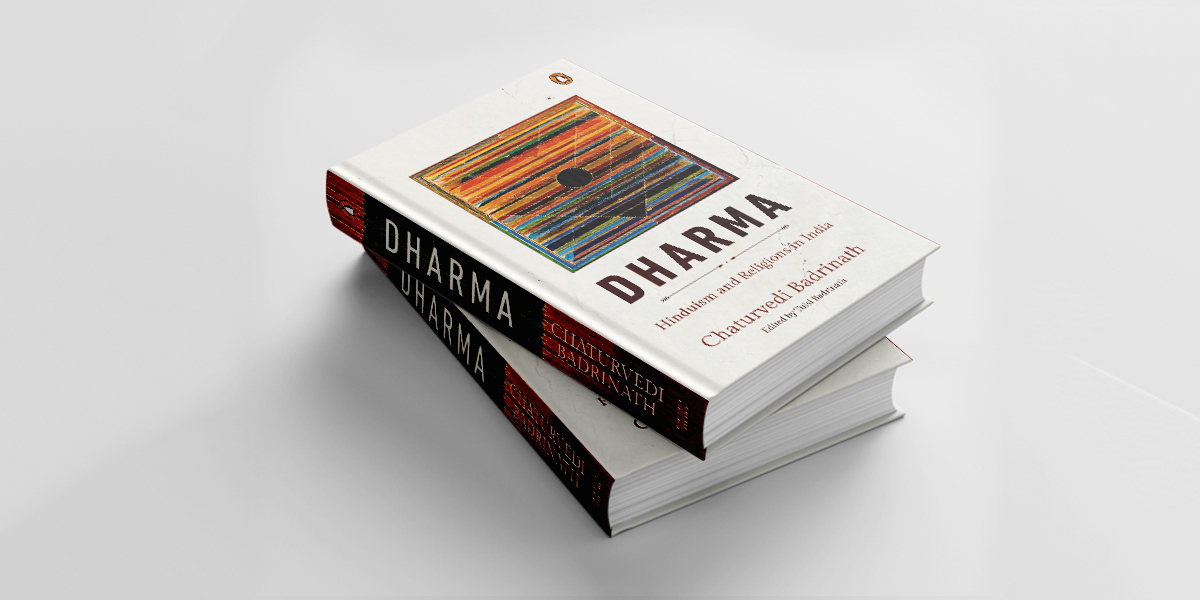
Chaturvedi Badrinath’s Dharma, edited by his daughter Tulsi Badrinath, is a comprehensive study on the concept of dharma. In this book, Badrinath actively dwells on the questions of Indian civilization, components of dharma and the contentious origin of the words ‘Hindu’ and ‘Hinduism’. Central to the perception of what substantiates dharma is the differentiation between ‘dharma’ and ‘religion’. The author iterates the error in the identification of the two terms that has come about over a span of time and emphasises that the two concepts have no point of intersection.

Here are a few pointers that illuminate how the question of religion is entirely different from that of dharma, in order to give you a head start into the book:


The author defines religion as a central belief system, where God is understood to be the creator of the universe and where there are scriptures and commandments illuminating the teachings of God. Dharma on the other hand, is unique in its understanding. It is the Indian understanding of Man and the way of the civilization that existed around him.

~

The terms ‘religion’ and ‘dharma’ are untranslatable as they both belong to different cultures. The concept of religion came with the Catholic missionaries of the sixteenth century whose minds were ingrained with the understanding that religion is a unified system of beliefs of a community. However, dharma carries with it, a comparatively freer flowing concept which is central to the Indian thought of exploring the identity of Man. The concept of a ‘Hindu’ religion and ‘Hinduism’ itself is a false one constructed by the western thought in an attempt to quantify the Indian way of life.

~

In the Atharva Veda, dharma is described as the “oldest customary order”. Unlike the concept of religion, dharma does not relate to a divine revelation or faith, it concerns itself with the questions of human life and the reality possessing it.

~

The concept of transcendence is quite central to the understanding of dharma as opposed to the understanding of religion. Following this principle, it is derived that dharma does not encourage the binaries of good and evil, natural and unnatural or even human or inhuman, as in the case of religion. All the binaries are transcended into the realisation that these are merely just experiences in the wholesome comprehension of human life.


Thought provoking, perceptive and challenging many long-held notions, Dharma is a must-read for anyone who is interested in India, the interaction of different religions over centuries in this land, and the underlying unity of all life.

How Do You Say That Again? Sy-ky-uh-tree! A Timeline of Mental Health from ‘ From Leeches to Slug Glue’

Although mental illness has been around just as long as humans, it has been understood very differently through the ages. The stigma attached to mental illness left people to suffer through half-baked theories and unscientific treatments. In an uphill climb from the darkness it was kept shrouded in to the 20th century when mental health is a cause championed by media and celebrities, the world has come a long way. How did we claw our way out of the sludge of misplaced beliefs and superstitions?

In From Leeches to Slug Glue, Roopa Rai investigates how the perception of mental conditions, especially psychosis and depression, changed through the years to finally take its place as a valid medical concern in the 20th century.


 2nd Century BC

The first description of mental illness occurred in Charaka Samhita, a seminal work in Ayurveda in the second century CE, which emphasised an inextricable connection between body, mind and spirit and consequently, deemed it necessary to treat the body in order to heal the mind. A change in diet and lifestyle was prescribed to include good sleep patterns, less mental stimulation and reduced stress. It was in 3rd century BCE that the first hospitals for the mentally ill came into existence in India.

3rd– 4th Century BC

The Greek Hippocrates suggested that the proportion of four humours, or vital bodily fluids —yellow bile, blood, black bile and phlegm—was responsible for  people being choleric (ambitious and irritable), sanguine (charismatic and optimistic), melancholic (introverted and perceptive) or phlegmatic (relaxed and peaceful). Any imbalance in these fluids could affect the temperament of the person, hence indicating mental illness.

9th- 10th Century

Islamic psychology prescribed ’ilaj al-nafs’ (‘the treatment of the soul’) to the mentally ill. Baths, music and occupational therapy (sewing, farming, cooking) were the prescribed treatments. Ninth century Persian physician and philosopher Muhammad ibn Zakariya al-Razi, chief of the Baghdad bimaristan (hospital) and the tenth-century Avicenna provided descriptions and treatments for conditions like insomnia, mania and depression.

1246

London’s Bethlem Royal Hospital (founded in 1246) reigned as the oldest asylum for the mentally ill with its approach to mental illness evident in its monstrous viewing gallery where, for a fee, the public could stare and jeer at the inmates, who were usually chained or restrained in some way.

18th Century

A wave of intellectualism in the latter half of 17th century changed the way Europe looked at mental illness. Even though the idea of ‘moral treatment’ of the mentally ill received severe opposition, the work of English physician William Battie changed the way mental conditions were perceived. Appointed the chief physician at St Luke’s Hospital for Lunatics (established in 1751) in London, Battie took on the cause of the insane.

1758

In 1758, the world was introduced to William Battie’s Treatise on Madness, the first modern text on mental illness. In a scathing attack on Bethlem’s methods and its viewing gallery, Battie made a case for the humane treatment of the mentally ill with emphasis on cleanliness, good food, fresh air and enough distractions for the inmates along with access to friends and family.

1796

The untimely death of a young widow suffering from ‘melancholy’ in an asylum led to the establishment of The York Retreat (in 1796) by philanthropist William Tuke and his son Henry. Founded on a compassionate, non-profit approach, it countered the idea of imprisonment of the mentally ill and instead, encouraged its patients to walk freely around the gardens and take up jobs like sewing, knitting and farm labour. Physical punishments, chaining and handcuffing were completely banned!

In 1813, William Tuke’s grandson Samuel Tuke wrote the famous Description of the Retreat near York, and with this, physicians across the world began to adopt William Tuke’s methods to restore self-esteem and self-control in the mentally ill.

1793

Haunted by a personal tragedy, Frenchman Philippe Pinel was determined to study madness and its treatments. In 1793, Pinel began his research on 200 of the 4000 inmates locked up at the Bicêtre Hospital in Paris. The detailed insights and empathy of Jean-Baptiste Pussin, the superintendent of the mental ward inspired Pinel to begin expounding the theory that conversing at length with patients could bring them out of their delusions whereas adopting a cheerful manner in everyday activities could relieve their melancholy.

For facilitating this leap and bringing the mentally ill out of the shadowy margins of society, Philippe Pinel was credited with being the glorious ‘unchainer’ of the insane’ and the founding father of the discipline called psychiatry.

1845

The Lunacy Act passed by Britain in changed the status of the mentally ill to ‘patients’, taking them from prisons to hospitals!


Fascinated with how science and medicine evolved over time? Read Roopa Pai’s From Leeches to Slug Glue to know more!

All the Tumble and Bumble in Trotter-land!

In the eighteenth century, Justin Aloysius Trotter, or the Great Trotter, tumbles earthward to his death while surveying his vast lands and admiring his wealth from a hot air balloon. Two centuries later, the Seventh Trotter, Eugene Aloysius, narrates the epic story of a family at the fraying ends of its past glory.

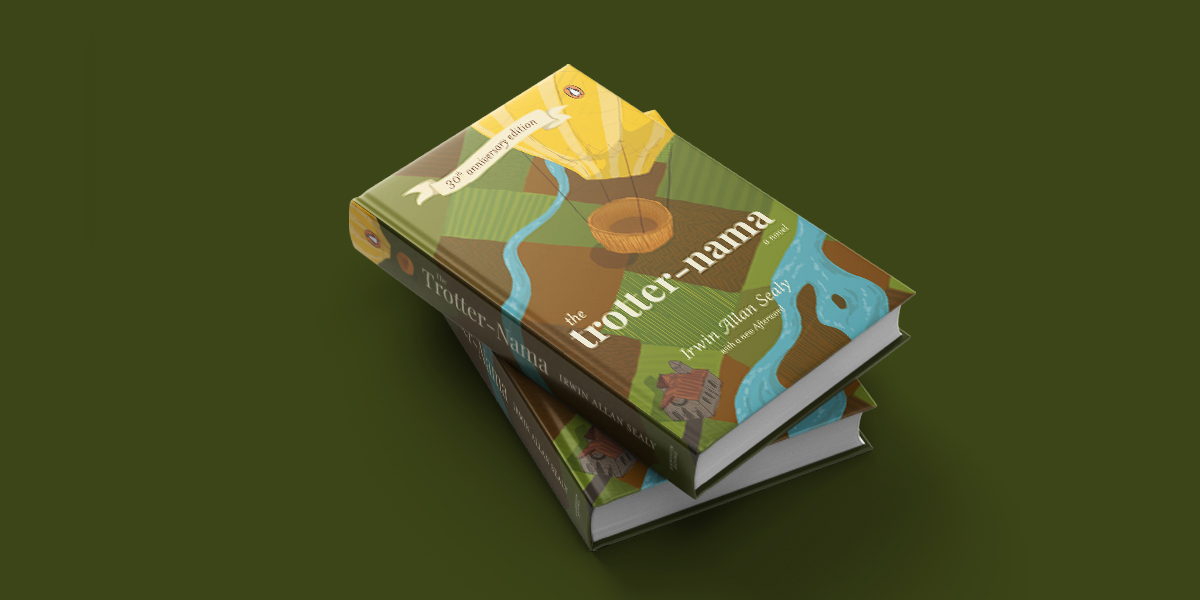
The Trotter-Nama, Allan Sealy’s comedy of manners about Britain and India’s motley offspring is presented on an extravagant canvas where the chronicle of the Trotter family is generously scattered with unabashedly entertaining moments.

Here are 6 delightful instances from this mesmerizing narrative-

  1. The buoyant Salamandre carrying the ageing Trotter is buffeted by the strong winds of his hubris. As he proudly surveys his demesne and indulges in a feverish ecstasy of imagined power, Mr. Great Trotter loses his balance and is launched into an anti-climactic tumble. On his way down, Trotter yearns for roasted meat and dessert-

‘Justin was hungry. Might the Salamandre have sent down the tandoori partridge? He looked about him: it had not. The bird was wasted, his lunch floating away. But it was not a tandoori partridge he craved, nor was it the curried doves. It was nothing savoury; rather, a taste he had almost forgotten thanks to a hasty vow….’

  1. From the gossamer hammock of riches and power, the Great Trotter billows down into the dense, corrugated waste of his neighbourhood. The final resting place of the doyen, the gutter, is described by the frenzied narrator in a hyperbolic verbal diarrhoea –


‘…of cretins, the discharge of pimps, the lavings of lepers, the spewings of drunkards, …the moultings of reptiles, the crackling of corpses—


Narrator, do you hear me? Your eyes are rolling!


— the bedding of incontinents, the bile of oil painters, the gall of historians, the swaddling of infants,…the betel-juice of bicyclists, the chewing-gum of motorcyclists….’

  1. Expertly crafting a fresh batch of jalebis- a wildly popular sweetmeat- Mansoor Halvai expresses comical disbelief at a refusal of his precious offering. His exaltation of the silver leaf covered, syrup coated crisp coils of deliciousness is as amusing as his absurd attempts at enticing Yakub – 


‘He handed the jalebis to Yakub on a leaf, and laughed out loud as he did. ‘Sorry, Yakub! I misheard you. For a moment I thought you said no!’ His eyes bulged. ‘You did? Yakub, bhai, what are you saying! Surely you mean yes, yes? No? Yakub, reconsider, I beg you—the offer is free, no strings attached. Shun this foolery. Look, here’s gold beneath the silver—see the precious liquid running in these veins? You’re not well, that’s it; the sun’s gone to your head.’

  1. The crippled artist Marazzi pricks the grandiose bubble that the Great Trotter floats on by painting Sans Souci is all its flawed and skewed incompleteness. The ruins of the ambitious project are no deterrent to either Monsieur Trotter’s flamboyance or Marazzi’s reproof-


‘Do you know,’ he offered, his good humour returning, ‘I mean to call my seat Sans Souci.’

Marazzi’s eyes disappeared in a smile. ‘Monsieur Trotter is doubtless aware that every house built in Europe since the peace is called Sans Souci. There are six in my district alone.’

  1. E Trotter hoodwinks airlines to manipulate their determination to appease their customer and gets himself a fun, relaxing experience out of all the chaos he single-handedly generates-

‘The last call for Mr E. Trotter. You sit out ten minutes. Will Mr E. Trotter please report immediately to Gate 6. Stay put for another ten. Mr E. Trotter, you are wanted immediately at Gate 6. Then you count, slowly, to a hundred, and rush out. And after a little storm and stress they slap a First Class boarding pass into your hands because the stand-by crowd have filled up Economy. Then a whole bus, all to yourself, racing past the hangars…..’


  1. Sunya, a poulterer, indulges in rhapsodic rapture at his choice of profession and places the fruit of his labour, the humble egg, in a halo of purity bolstered on the authority of scriptures and old codes-

‘No, an egg is a noble thing. Consider its shape: there is the sunya, the zero from which all things spring, to which all things tend. Consider its colour: there is the whiteness of the sun, of cows, of milk, of pure ghi, of goddesses, of all good things. An egg is blameless. An egg is smooth, hairless and un-begotten. It is firm, it is fragile, it is flawless, it is just fine.’        


Allan Sealy, winner of the Sahitya Akademi Award, the Commonwealth Writer’s Prize and the Padma Shri, proves once again his ability to elevate the mundane, add sparkle to the dreary and to create unforgettable characters out of his wickedly masterful humour.

For more of his magic, read The Trotter-Nama!

Meet the Trotters from Irvin Sealy’s ‘The Trotter-Nama’

“The nama is a medieval court history, a chronicle. My nama would chronicle a colonial encounter, the overlap of Europe and India, across seven generations of the Trotter family. The Trotters would embody that history, the history of the Anglo Indians, down to Independence and after.” writes Irwin Sealy about his dazzling epic.

The Trotter-Nama meanders around Sans Souci, the Trotter estate near Lucknow, and teems with multi-faceted characters that are looped into the orbit of  the Trotter family as they struggle to hold on to their shifting identities.

Here are 5 unforgettable characters from The Trotter-Nama

  1. The Great Trotter

Justin Aloysius Trotter- the octogenarian with a brown and a blue eye- lords over Sans Souci from the west tower with wives stashed away in the other three towers that form the silhouette of his estate. The Great Trotter straddles two worlds- his wig draws attention to his western roots while his choice of clothes makes him a part of the landscape of Lucknow. Perched above his beloved estate in his prized balloon Salamandre, Justin Trotter gives wings to his ambition-

‘But now—here—in the air above Nakhlau what swept over him was the original lust, that suzerain impulse which once shook to his vitals a younger man. Take this city, then all Tirnab, and who was to say what else might follow? Install the Nawab in some petty principality. Drive the British down….’


  1. Eugene Trotter

Writer by profession and narrator of the Nama, Eugene Trotter- the 7th of the line- is ubiquitous in the numerous asides and interpolations that fill the nooks and crannies of this chronicle. His gaze encompasses the length and breadth of this vast saga as he navigates between space and time and offers a glimpse of the world outside Sans Souci through the slips-

‘The Late Mr Trotter,’ my favourite dentist used to call me. His daughter was less charitable. ‘Lenten Trotter’ was her choice, and when I asked her why, she said: Well, corpu-lent, flatu-lent, indo-lent. She thought the indolent was especially apt even though I said: I’m half Anglo, you know. So. The Late Mr Trotter, Seventh Trotter, pleased to meet you.’


  1. Yakub Khan

The hazel-eyed baker and balloon master flits around the Great Trotter minding the ladder that he stealthily aims to climb. His unchecked advancement and increasing authority indicate the ambition that he nurtures and shapes as vigilantly as his wick-moustache that he trims twice a day. Sunya, the poulterer, observes-


‘…the young Yakub, the apprenticed baker of fifteen years ago. What was the Muslim up to now? He had watched the wiry youth advance from post to post, improve the ovens, outclass the chief baker, perfect past recipes, introduce new ones, oust the chef, trespass on the cooks’ duties, encroach on the bearers’, perfect a new and sensational bread, create offices where none existed before, appoint cronies… and fill every void with his mercurial presence.’

  1. Jarman Begam

Justin Trotter’s consort, ensconced in the south tower, aches for her fatherland Germany as she watches her husband- whom she affectionately calls Trot- take his final and fatal flight in the Salamandre. Unaware of the admiring glances directed at her, she harbours a passion for the barber Fonseca who claims loyalty to the Great Trotter.

‘It was not her own face, though she stood directly before the glass: through a forest of red she made out the face of Fonseca himself. The face hovered just beneath the surface of the glass, caught in a kind of vapour, the dyed black curls crowned with a gold wig; in place of the habitual ironic mask was a look of earnest entreaty. Before she knew what she was doing, Elise bent and kissed the glass once, twice, then repeatedly, without restraint.’


  1. Munshi Nishan Chand

Librarian of Sans Souci and master of fourteen languages, Munshi Nishan Chand sits meditating on the injustice of the glory of the decimal, owed to Indian scholars, having been bestowed upon the Arabs. His soul burns at the ravages his beloved nation has had to suffer at the hand of invaders. The rage at  being reduced from esteemed writer to an administrator propels him toward his mission –

‘At every step recall your mission. Study the circumcised foreigner, barbarian though he be; learn his roughcast languages, school yourself in his childish arts, trace out his tactics, duplicate his strategy, mirror his guile, best his success…Then overwhelm him, and with him his house. And after he is gone, restore once more the bright ancestral home, sweep clean the hearth, rekindle the pure flame. Avenge the violate zero.’


About trotter-nama Irvin Sealy observes, ‘Today I realize it’s a book of hyperlinks, only the term had not yet been invented.’ The characters he creates become the links that are threaded through the narrative to bolster the weighty epic.

There are more trotters sauntering inside the pages of The Trotter-Nama waiting to tell their story. Get your copy to meet them!

A Guide To the Use of Colours and Their Symbolism- An Excerpt from ‘The Hidden Rainbow’

Kelly Dorji takes you on a spiritual journey through Buddhist symbolism to help find your inner peace. In our busy lives, The Hidden Rainbow is the perfect oasis.

Read an excerpt from the book below:


A GUIDE TO THE USE OF COLOURS AND THEIR SYMBOLISM IN BUDDHISM:

The main colours used in Buddhist art are blue, black, white,

red, green and yellow. With black as the exception, the other

five colours are representative of a specific Buddha in the

depiction of the five Wisdom Buddhas of the Vajrayana or

Tantric Tradition of Buddhism.


The colour B L U E is used to represent the Healing Buddha,

signifying calm, purity and healing.


W H I T E signifies purity and is the colour of knowledge

and longevity. The primordial Buddha ‘Vairocana’ is depicted

in white.


The Buddha Amitabha is shown in R E D, which symbolizes

life and holiness.


The Amoghasiddhi Buddha in G R E E N signifies

accomplishment and the elimination of envy.


Y E L L OW is the colour chosen to depict Ratnasambhava,

who is a symbol of balance and humility.


Through meditation, these colours may contribute to the

restorative process of the human condition by transforming human

delusions to original qualities as follows:

– Meditating on the colour blue can pacify aggression.

– White can transform ignorance into wisdom.

– Red turns attachment into selflessness and realization.

– Concentrating on green can eliminate jealousy.

– Meditation on the colour yellow can enrich the sense of self and

eliminate pride.


Keep calm and find your inner peace with The Hidden Rainbow.

Can Love Battle the Forces of the World?

Isha is a girl who loves animals. Away from the confines of her city life, she finds her calling in the Indian countryside when she discovers a sacred grove where a young Bengal tiger has taken refuge from the certain death warranted upon its discovery by the local villagers.

Isha’s arduous journey across the changing landscape of modernizing India begins as her crusade to save the tiger but becomes a gripping story that brings us face to face with man’s unfathomable cruelty towards nature. However, the power of love that fuels a young girl’s determination to give the majestic animal its rightful chance to survive is a force that the world must reckon with.

Here are 5 things The Girl and the Tiger  teaches us about determination and love:

Compassion is a source of strength

The irrepressible urge to help a creature in distress makes Isha defy all odds-

‘A curious paw touched her face. The little tiger’s eyes were full of trust and wonder. No, she would not abandon her post. She could not. “What do we do?” Isha jumped, realizing Pankaj had been standing in the doorway the whole time. She looked up at him, her eyes burning with wild defiant light.’

Love is a journey in self-discovery

In fighting for Kala’s survival, Isha discovers a side to her personality that had remained dormant in her uninspiring city life-

‘Strangely, it was the silence, self-reliance, and agency that she found shocking—not the tiger. To Isha, the wide-eyed cub Kala was no different than the butterflies she rescued—a wild, hunted thing that would perish by flesh or by soul if she did not act.’

A mission helps conquer fears

Fighting the fear that threatens to engulf her in despair, Isha digs deep into her self-belief to achieve what she set out for-

‘Although fear followed her at a distance, she wrapped herself in pages, in stories of journeys. She would become the hero of her own story; she would guard the tiger and find the jungle. She was certain of it.’

An iron will can weaken the strongest opposition

Isha’s firm resolve to fight for the tiger’s right to its place in the jungle strikes a resounding blow at the men who came armed to corner the animal-

‘Isha stood bent and panting, eyes wild as she roared, “If not here then WHERE ELSE CAN SHE LIVE?” Her voice hit such a shrill register that the sound trembled and cracked and it rattled their eardrums. Every man in the field froze.’

Determination helps you surmount all obstacles

Isha’s unwavering commitment towards Kala makes it possible for her to stay afloat even as uncertainty and sheer exhaustion pull her down-

‘But she had also returned. The fact was that no matter how terribly she struggled or how many times she faltered, she continued forward. Forward on a path no one else would dare step.’


Will Isha’s deep and urgent love for Kala be the beacon that will guide them to the last wilderness where the tiger can truly be one with nature? Read The Girl and the Tiger to find out!

5 Romantic Moments from ‘A Delhi Obsession’

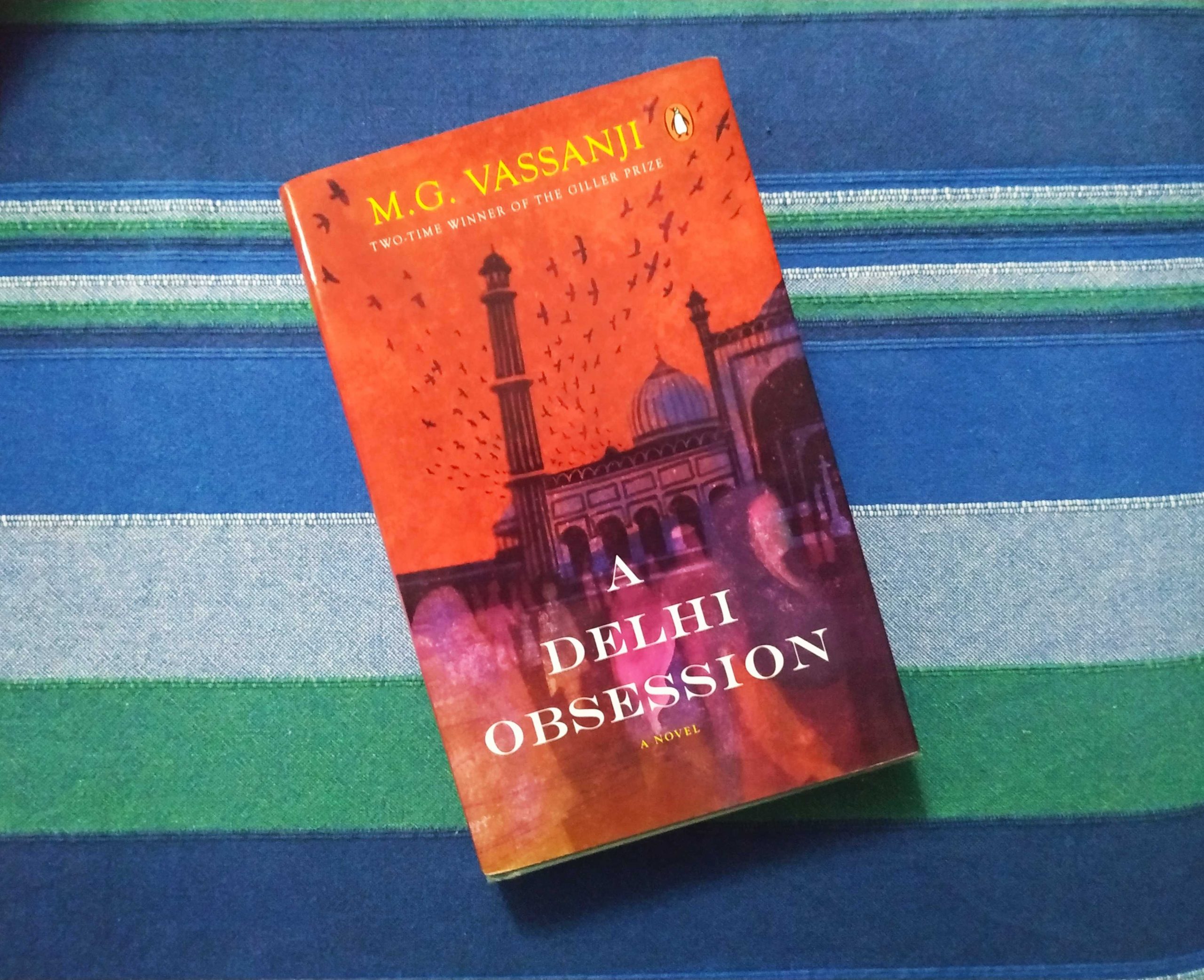
Munir Khan, a recent widower from Toronto, meets the charming and witty Mohini Singh, a married liberal newspaper columnist, in the bar of the high-brow Delhi Recreational Club. An enigma surrounds the Kenya-born, westernized and agnostic Munir, and an inexplicable attraction takes root. Delhi’s streets, monuments and ruins become the setting of their passionate affair.

A terror attack shakes the city just as Jetha Lal and his acolytes, self-proclaimed protectors of cows and Hindu women, raise decibel levels at the Club. Meanwhile, Mohini’s parents’ wounded memory of the Partition and a family trip to Shirdi only serve to exacerbate her anxieties and deep sense of guilt. And even as Jetha Lal’s menacing shadow looms over them, Munir and Mohini cannot let each other go. At what cost their passion?

Set in contemporary times, A Delhi Obsession  unravels an unexpected yet prophetic story of passion, love and faith, amidst the placid environment of an elite Delhi club. Cutting close to the bone, this searing novel will compel you to confront your profoundest dilemmas.

Here are some heart-melting instances from the book!


Munir was standing at the door, casting his eyes about for a place to sit. Without thinking, she waved him over. When he thanked her once more for taking him to the old city, she offered to show him some more of Delhi. Perhaps one or two of her favourite spots.”

~

They sat side by side on his bed, he playing with her fingers, bending them gently, as he liked to do, putting his own strong fingers through hers. He felt warm to her touch. It was a moment of utmost intimacy. He ran a finger down her bare spine, until she gave a shiver and protested, ‘Stop, there.’”

~

Munir escorted her to the driveway. As they shook hands, she let his hand linger onhers, for an extra moment, they stared at each other in silence, and he said, ‘Till next time, then. I’ll write.’”

~

In the vacuum that was absence, there had emerged a longing to hear again that voice, observe that chirpiness, and the tenderness behind it, see that face that was his last sight of her, the large eyes trying to say something, engulfing him, the feel of her hand, her delicate fingers in his, ever so light. Not passion, but something adult, laced with the bitter knowledge of futility, pain.”

~

He felt a pull. Should he call her. But it would be well past midnight there. And there was the husband. It was time to nip it in the bud, this fantasy, this impossibility. It could only cause pain.And yet how could he forget her, the promise they had made. Shall I write to you? Of course you can! Don’t act the Mr Darcy! He had written her a longish email letter, compromising, juvenile, bathetic. And she had replied. I miss you. I think of you all the time. Who had written that? Both of them, probably. After that, a few texts, one hurried phone call.”


Written with trademark sensitivity and a sharp, affecting vision, A Delhi Obsession is M.G. Vassanji’s most urgent novel yet.

The Animal-Whisperers: Explore the Love between Humans and the Nature in ‘The Girl and the Tiger’

‘The story of The Girl and the Tiger is less my own creation and more a collection of moments, truths, and legends I found over the years in the Indian jungle. It is a necklace of a book, a series of seeds and teeth, stones and bones, gathered like beads from the forest floor; I only added the string. It is the result of following elephants, searching for tigers, sitting late into the night around campfires, and becoming acquainted with the tribes of the forest, both human and animal.’, writes Paul Rosolie- a naturalist and award-winning wildlife filmmaker. 

As an author, Paul’s mission is to explore the relationship between humans and nature, wild animals, and our vanishing wild places.

Here are 6 heart-warming instances that speak volumes about the primeval bond that man has with nature-

1. The young orphan Thimma sleepily embraces  the gentle giant , his only family, in a moment where man and nature sway in rhythm with the awakening world –

‘Thimma stood in the nest bed, stretched, and slid down a vine onto the elephant’s back. Straddled on the great neck, he leaned forward to kiss the domed head and rub it roughly with his flat palm. The elephant rumbled and started down the path with the chain-clink of great strides. Rubbing the sleep from his eyes, the boy spoke gentle directions as they went so that Hathi knew when there was a branch or turn.’

2. Kneeling beside the defeated tigress,Isha keens in sorrow as she offers her gratitude to the animal who made the ultimate sacrifice to defend her –

‘She knelt beside the tiger. Her hand moved tenderly on the orange-and-black fur. She stroked the tiger’s ear, her eyes moving in awe and sorrow over the impossibly large body, paws the size of dinner plates, the great sleeping eyes. With her forehead against the warm fur of the tiger’s cheek, she whispered, “Thank you”.’

3. A vein of emotion throbs in man and beast alike when the transformative power of maternal love makes a young girl reach out to comfort a helpless cub-

‘Girl and tiger scrutinized each other. Isha continued to speak to it gently as she extended a hand. The little tiger leaned forward to sniff and tilt its head at the sound of her voice. Isha’s hair still bore the scent of the tigress from the night before, and as the little cub breathed the smell of its mother for the last time, it shivered and drew in close. Ever so slowly, Isha put her hand on the tiger’s head. The tiger trembled as Isha stroked its oversized ears, and then pulled it into her arms. “Don’t worry,” she whispered. “I won’t leave you. I won’t leave you”.’

4. Kala’s playfulness and Isha’s motherly devotion forms a bond between man and predator that defies all reason and challenges accepted notions of love-

‘By now though, Isha was developing a routine. Once the milk bottle was full, she wrapped her arms in the blanket and fit the makeshift nipple into the tiger’s mouth. Kala wrapped her large paws around Isha’s slender arms and sucked on the repurposed cola bottle and cloth nipple.’

5. Embracing the creatures of the land as her own, Sudha- Matriarch of the Budakattu tribe, sits feeding the young in her care. In her own way, she gives back to nature a little of what she receives-

‘Her eyes moved to Sudha, who sat in the flickering shadow against the cracked wall of her house, her own child nursing at one breast, a young wolf nursing on the other. Isha grinned in the firelight, and Sudha could no longer restrain from grinning back.’

6. In a world where animals were another dimension of the human family, the genial coexistence of man and beast reflected a balance in nature-

‘Thimma’s mother told him that Hathi loved him very much and was the source of all the good things their family had, that the elephant was excited for his sibling. In the final month they held a pooja—an auspicious ceremony of choice where flowers and stones were placed on either side of the pregnant woman, and the elephant predicted, based on his choice of item, the sex of the child. Hathi confirmed the child would be a daughter.’


In his challenging mission to protect wildlife habitat in critical areas of The Amazon and India, Paul Rosolie has observed man and nature at close quarters. In The Girl and the Tiger he gives us poignant moments of raw emotion born out of the beauty and brutality of the natural world.

To feel the pulsating beat of the wild, read The Girl and the Tiger!

error: Content is protected !!