Publish with Us

Follow Penguin

Follow Penguinsters

Follow Penguin Swadesh

Fun, Food and Fitness- 6 Reasons Why you Should Read ‘N for Nourish’

Do you know why eating right is so important? Because it’s food that makes your kids zip through classes, tear across the football field or win that game of chess. The right diet influences your mood, your thoughts and even your child’s ability to have fun.

With the aid of innovative models and striking visuals, N For Nourish will help you and your child understand the components of a healthy diet, what makes the five fingers of nutrition (and how they turn into a power-packed punch) and the importance of sleep, water and exercise in your day-to-day life. Not only does this contain the ABCs of nutrition but also a series of amazing facts about how food can change your life.

Here are 6 ways this book will help children take charge of their health and wellbeing.


A – Aim to achieve

Food is instrumental in achieving success in all aspects of life- whether it is excelling at academics, building stamina for sport or accomplishing any other goal your child aspires to.

‘Food is the foundation of your future. If you eat right, you are more likely to score better, run faster, jump higher and be happier.’

B- Bring out the best in you

The 5 components we need for a balanced diet are carbohydrates, proteins, fats, vitamins and minerals. These, when consumed in the right proportion, give us the fuel we need for our bodies to grow and function at an optimal rate.

‘To be the best you can be, you need both macronutrients and micronutrients every single day. But how do you know how much you need of each nutrient? Well, to solve that problem, [Pooja Makhija] has come up with a concept she likes to call the Five Fingers of Nutrition, because it is an easy way for you to remember all the five nutrients in food.’

C- Combine fitness with fun

Pooja Makhija employs an engaging technique to ensure that her young readers not only understand nutrition but also practice healthy eating in their daily lives. N for Nourish is dotted with activities where readers need to identify nutritious foods and discuss concepts with their parents. These activities are labelled with icons that run throughout the book.

N for Nourish is packed with games, worksheets, quizzes and more, which you can spot with the help of icons. Every activity has been designed to deepen your understanding of what you’ve read or to just help you have fun with the serious topic of nutrition.’

D- Develop a relationship between your body and mind.

In our increasingly digitalised environment, both adults and children are continually glued to gadgets. In this comprehensive guide to good health, Pooja draws attention to the importance of physical activity and its effect on mental health.

‘Did you know that exercise changes your brain? And here’s how: When you exercise, the brain switches its attention from the part that is always worrying about your problems to the part that is involved in things like co-ordination and focus. This means that exercising changes the way you think and makes you more focused. This is better for your concentration levels and therefore, performance in school.’

E- Embrace how food and body work together

A balanced diet empowers the human body by building a defence mechanism against diseases. Pooja labels protein as the ‘silent warrior’ that helps build immunity, repair damages and enables the body to heal itself.

‘The right foods influence your brain, your body and your ability to take part in your own life. They affect your moods, your outlook, your thoughts. And your ability to have fun.’

F – Focus on mindful eating

Food isn’t just fuel for the body. Eating can be one of the most gratifying sensory experiences for human beings as the various tastes and textures can delight our palate. To experience the joy of eating, Pooja recommends taking a break from technology to focus on food and conversation.

‘By junking your tablet or TV, you learn to eat with thought, chew what you are eating, taste the flavours, eat according to your stomach size and not merely sync your meal with the length of the show.’


N for Nourish will make you and your little champions look at yourselves and what you eat in an absolutely new light!

#WhyNehruMatters: Remembering the first Prime Ministers with his words

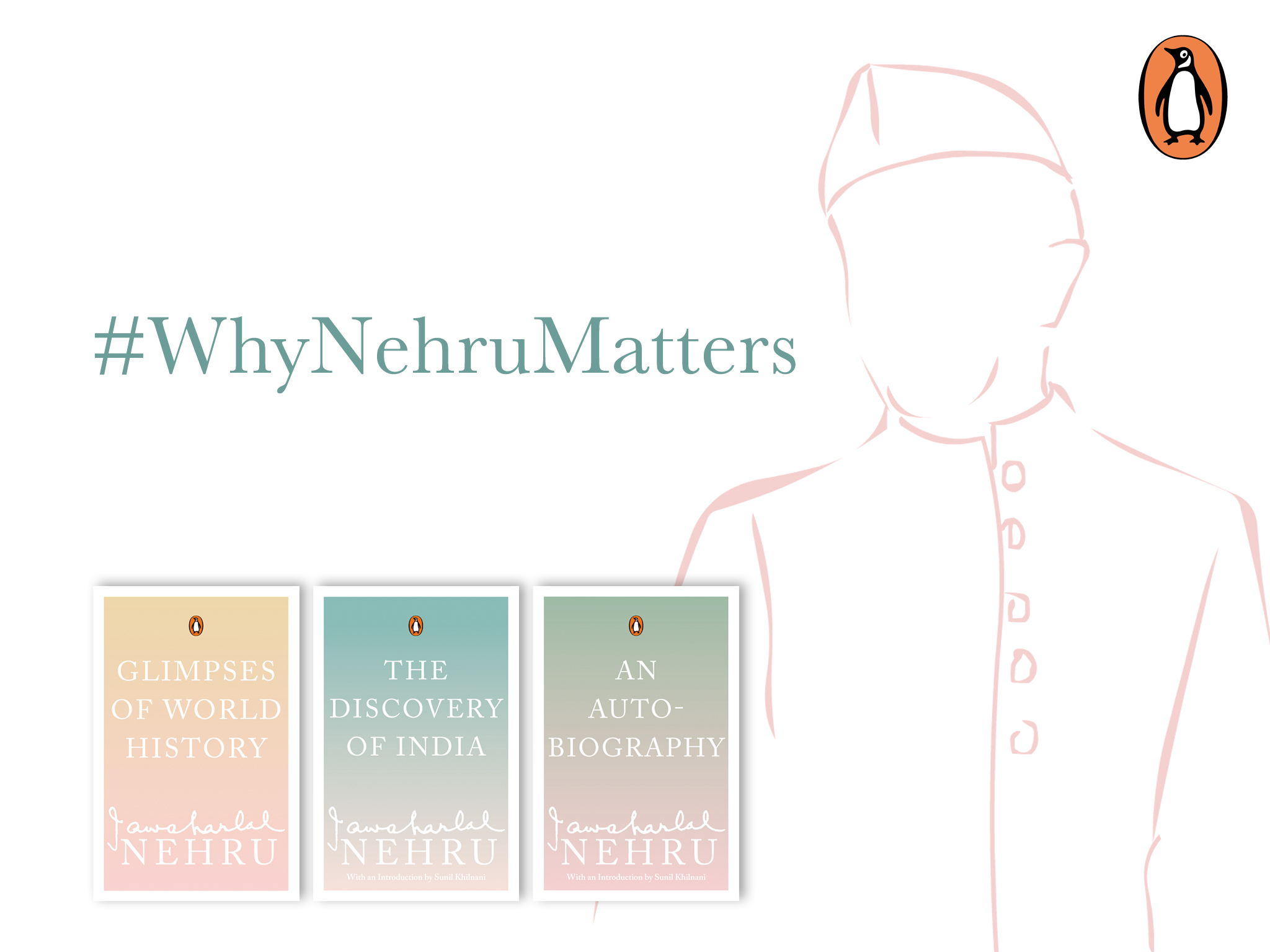
The first Prime Minister of independent India, Pandit Jawaharlal Nehru was born on November 14, 1889 in Allahabad. He is remembered for being a frontline freedom fighter in India’s struggle for Independence, and a central figure in Indian politics after independence. Along with this, Jawaharlal Nehru leaves behind a legacy of being one of India’s most prolific writers.

In his biography of Nehru, Shashi Tharoor describes him as an ‘aristocrat, socialist, anti-imperialist, foremost disciple of Gandhi, diehard secularist and India’s first prime minister, who sought to educate the Indian masses in democracy by his own personal example’.  These are amongst the many reasons why Nehru matters to India and the world even today.

Today on his 130th birth anniversary, we remember him with words and thoughts from his various books:

‘For only they can sense life who stand often on the verge of it, only they whose lives are not governed by the fear of death.’

― Jawaharlal Nehru, Discovery of India

*

‘Nothing in the world that is alive remains unchanging. All Nature changes from day to day and minute to minute, only the dead stop growing and are quiescent.’

―Jawaharlal Nehru, Glimpses of World History

*

‘Experience of public life showed me that popularity was often the handmaiden of undesirable persons; it was certainly not an invariable sign of virtue or intelligence.’

―Jawaharlal Nehru, An Autobiography

*

‘There is no permanent stability or security or changelessness; if there were life itself would cease…Life is a principle of growth, not of standing still, a continuous becoming, which does not permit static conditions.’

― Jawaharlal Nehru, Discovery of India

*

“Real failure was a desertion of principle, a denial of our right, and an ignoble submission to wrong. Self-made wounds always took longer to heal than those caused by an adversary.”

―Jawaharlal Nehru, An Autobiography

*

“Ignorance is always afraid of change. It fears the unknown and sticks to its rut, however miserable it may be there. In its blindness it stumbles on anyhow. But with right reading comes a measure of knowledge, and the eyes are partly opened.”

―Jawaharlal Nehru, Glimpses of World History

*

‘External events and their consequences affect us powerfully, and yet the greatest shocks come to our minds through inner fears and conflicts. While we advance on the external plane, as we must if we are to survive, we have also to win peace with ourselves.’

― Jawaharlal Nehru, Discovery of India

*

‘Remember always that there is not so very much difference between various people as we seem to imagine. Maps and atlases show us countries in different colours. Undoubtedly people do differ from one another, but they resemble each other also a great deal, and it is well to keep this in mind and not be misled by the colours on the map or by national boundaries.’

―Jawaharlal Nehru, Glimpses of World History

*

“I have always thought that the best way to find out what is right and what is not right, what should be done and what should not be done, is not by giving a sermon, but by talking and discussing, and out of discussion sometimes a little bit of the truth comes out.”

―Jawaharlal Nehru, Glimpses of World History

Read more of Nehru’s work here

Eight Things you Will Relate to if you Loved Books as a Child

Do you ever feel nostalgic about the books that were a part of your childhood? Do you remember the first book you read all by yourself?

This Children’s Day, get inspired to grow ‘young’ with this list of the best things that came with being fond of reading as a child!


Book Fairs, anyone?

Remember the joy you felt when there used to be any book related activity in school, especially book fairs? You could browse books around you for HOURS in your free time from the comfort of your school (so nobody had to drive you to the bookstore!)

Nostalgia around childhood classics

We all have amazing memories that are linked to certain books. Go down memory lane and introduce these childhood classics to your younger ones. That way you can form new memories with and for your child!

Read what you want to read

You didn’t need to read what others were reading or anything that didn’t interest you. If you loved romance, you read romance! If you loved literary fiction, you read it. Take a lesson from your younger self and don’t let anything stop you from reading what you love now, just like nothing used to stop you from reading what you wanted when you were a child!


Finding excuses to read anywhere and everywhere!

All of us got caught reading when we weren’t meant to – and we’ve got to admit – we’re a little proud of it! Nothing could stop us from reading! It’s time to be shameless and inculcate that reading habit again.

Packing was a nightmare

Between clothes and books, did you always choose books when going on a vacation?

 The smell of books…

Ebooks were not easily available so we were all addicted to the smell of books. (Some of us haven’t been cured of this addiction even now!)

Library period was the best period of ALL!

If you were one of the lucky ones to have a library period in school, you had a school sanctioned quiet time just to read, WHAT FUN!

You were proud of your book collection

Begging and borrowing to buy your books used to take up so much effort, but you were super proud of the end result!


If you can relate to all of these, you definitely read as a child!

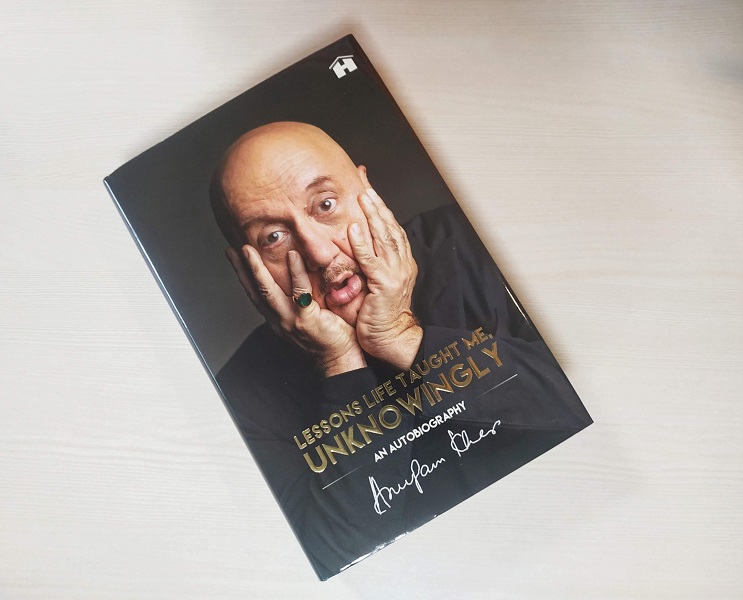
Lessons Life Taught Me, Unknowingly: 7 Inspiring Instances from Anupam Kher’s Life

In his autobiography Anupam Kher acknowledges the truths which set him on the path to success.

A good storyteller starts at the very beginning and Kher has an interesting story related to his birth that leads him to believe that his was not just a routine birth.

This listicle takes us, in Kher’s own words, through a few lessons that have been milestones in Kher’s life and which have made him feel that he is ‘destiny’s special child’!

  1. “My life lesson has always been there is no point in thinking of what could have been—for I lay great store by John Lennon’s quote.”

  2. In contrast to modern nuclear families, I grew up with an assortment of Khers of all ages, which gave me a head start in learning the lessons related to sharing, tolerance and respecting diverse viewpoints and ideas.”

  3. “I think living with grandparents is the most significant factor in the growth of any child. At least, it was for me and my brother.”

  4. “There is no reason why anyone should find it difficult to stay close to their roots and remain grounded even after they taste success.”

  5. “Whatever be the adversities one faces, if one approaches the situation with a humorous perspective, then one is spared the angst, the tension and the stress that are nowadays part and parcel of day-to-day life and living.”

  6. “My own experiences have taught me that tragedy and trauma teach you a lot and makes you aware of who you are if you don’t indulge in self-pity.”

  7. “……I should be prepared for ups and downs but not let anything drag me down.”

  8. “The choice you make can distinguish between the ordinary and the extraordinary.”

  9. “I have learnt that failure is the one thing you should not fear in life. Better to experience it, face it, live it and thereby conquer, it by overcoming it.”

  10. “If you are unable to fake an emotion, don’t fake it. If you are suffocated by loneliness, speak to someone; reach out to a loved one. You don’t need to fit in! You are not alone.”


Get ready to be even more inspired in Kher’s autobiography, Lessons Life Taught Me, Unknowingly.

Down the Memory Vine with Author Jane De Suza

Children’s Day is a part of every Indian kid’s childhood. Do you have any fond memories of it, from back in school?

As any child, I lived from one holiday to the next. For Children’s Day, the school put up a skit about Chacha Nehru, while we waited for our box of sweets with a particularly sticky pink barfi that I adored. Ever since, when I see a picture of Pundit Nehru, I think fondly of the pink barfi, which I’d convinced myself for years, he’d sent specially for us.


What kind of stories did you enjoy as a kid?

My favourite stories were those around animals. The Call of the Wild, The Black Stallion, Jago, Lassie, Black Beauty. Somewhere in those pages, a lifelong compassion was born. And this is what I wish adults today would understand. You don’t have to stuff a non-fiction book or a science manual into your child’s hands. All stories leave behind a footprint, they leave behind values that waft over a lifetime.


Did these stories influence the kind of stories you write? Or, do you draw from your own childhood adventures when writing?

I was a daydreaming tomboyish kid, who loved animals, books, outdoor sports like gilli-danda…I found myself in The William series by Richmal Crompton, in the antics of a rough, diplomatically incorrect school boy. I’ve always had a special place in my heart for the outsiders, the untamed children. These characters unerringly find their way to star in my books. From my first books for kids, the SuperZero series with its funny, brave, bumbling hero to the latest Flyaway Boy, a strong testimony to the imperfect among us. And I’m happy to see so many readers find their own echoes in this book.


Since Children’s Day is around the corner, what message would you like to give to your young readers?

Read the fun, wild books you want to. Books are like people. You hang out with those you love to spend time with. And when you get that buzz for reading – congratulations! You’d be making sure you have friends for life, for whenever you’re sad or exhausted or alone. In fact, if you love books, you’ll never be alone again.


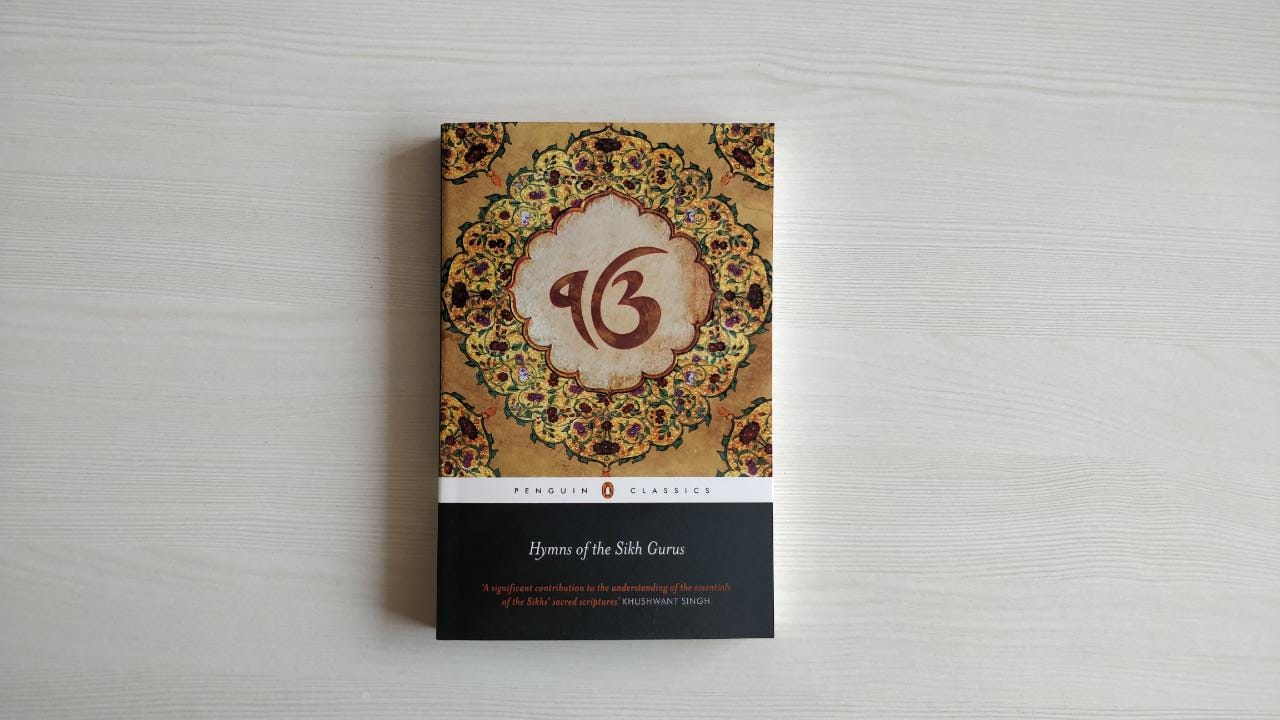
The Belief of Oneness in Sikhism, Savayye: An Excerpt from ‘Hymns of the Sikh Gurus’

The vision of Guru Nanak, the fifteenth-century founder of the Sikh faith, celebrated the oneness of the Divine that both dwells within and transcends the endless diversity of life. Guru Nanak’s immaculate vision inspired the rich and inclusive philosophy of Sikhism, which is reflected in this exquisite and highly acclaimed translation of poems,Hymns of the Sikh Gurus, from the religion’s most sacred texts: the Guru Granth Sahib, the principal sacred text of the Sikh religion, which consists of poems and hymns by Guru Nanak, his successors and Hindu and Islamic saints; and the Dasam Granth, a collection of devotional verses composed by the tenth Sikh Guru.

Read an excerpt from this book this Gurpurab:


MORNING AND INITIATION
Savayye

SAVAYYE means quatrains. The ten Savayye that have been included in the Sikhs’ morning prayers are from Guru Gobind Singh’s Dasam Granth (see p. 1). They underscore devotion as the essence of religion. They reject all forms of external worship and cast Guru Nanak’s message of internal love in beautiful undulating rhythm. These Savayye are also recited during the administration of amrita, the initiation ceremony of the Khalsa (the Sikh order).

There is One Being. Victory to the wonderful Guru.

The composition of the Tenth Guru.

My wonderful Guru, I recite the Savayye by Your grace.

I have seen hosts of purists and ascetics,
I have visited the homes of yogis and celibates.
Heroes and demons, practitioners of purity
and drinkers of ambrosia, hosts of saints
from countless religions, I have seen them all.
I have seen religions from all countries,
but I have yet to see followers of the Creator.
Without love for the Almighty,
without grace from the Almighty,
all practices are without a grain of worth.


Drunken elephants draped in gold,
first among giants in blazing colours,
Herds of horses, sprinting like gazelles,
swifter than the wind,
The people bow their heads to strong-armed rulers,
But what if they be such mighty owners;
at the last, they depart barefoot from the world.


Conquerors of the world march triumphant
to the beat of kettledrums.
Their herds of handsome elephants trumpet,
their royal steeds lustily neigh.

These rulers of past, future and present
can never be counted.
Without worshipping the supreme Sovereign,
all end in the house of death.

Pilgrimage, ablutions and charities, self-restraint
and countless rituals,
Study of Vedas, Puranas, Kateb and Qur’an,
of all scriptures from all times and places,
Ascetics subsisting on air, practising celibacy;
countless such have I seen and considered.
Without remembering the One, without love for the One,
all rulers and actions go to naught.


Inured and invincible warriors in shining armour,
determined to crush the enemy,
Proudly think, mountains may grow wings and fly away,
but never us.
They can shatter their enemy, they can wring their foe,
they can crush legions of drunken elephants,
But without the grace of the One,
they too must depart this world.


Countless heroes and doughty warriors
who stand fast against the blows of iron,
Who conquer lands and enemies,
who crush the pride of drunken elephants,
Who raze sturdy castles, who gain the world by words,
They are all beggars at the divine Portal,
the almighty Ruler is the only Giver.


Gods, demons, serpents, and ghosts contemplate
Your Name in all time—past, present, and future.

All creatures of land and sea,
You instantly create and destroy.
Their virtuous deeds are heartily celebrated,
their piles of misdeeds utterly eradicated.
The devout go happily in this world,
their enemies sink in shame.

Rulers of mortals and mighty elephants,
leaders of the three worlds,
Performers of endless rituals and charities,
winners of brides in countless swayamvara rites,
Like Brahma, Shiva, Vishnu and Sachi’s husband,
they all end at last in death.
They who touch the feet of the Transcendent One,
they alone are freed from the cycle of birth and death.


How futile to sit in contemplation,
like a stork with both eyes closed.
While trying to bathe in the seven seas,
we lose this world and the next.
How futile to sink in misdeeds,
we only waste away our life.
I tell the truth, do listen to me,
they alone who love, find the Beloved.


Some worship stones, some bear them on their heads;
some wear phalluses around their necks.
Some claim to see the One in the south;
some bow their heads to the west.
Some worship idols, some images of animals;
some run to worship the dead and their graves.
The entire world is lost in false ritual;
none knows the mystery of the Almighty One.


Poetry from these highly revered texts is heard daily and at rites of passage and celebration in Sikh homes and gurudwaras, carrying forward the Sikh belief in the oneness and equality of all humanity.Read Hymns of the Sikh Gurus to know more about these.

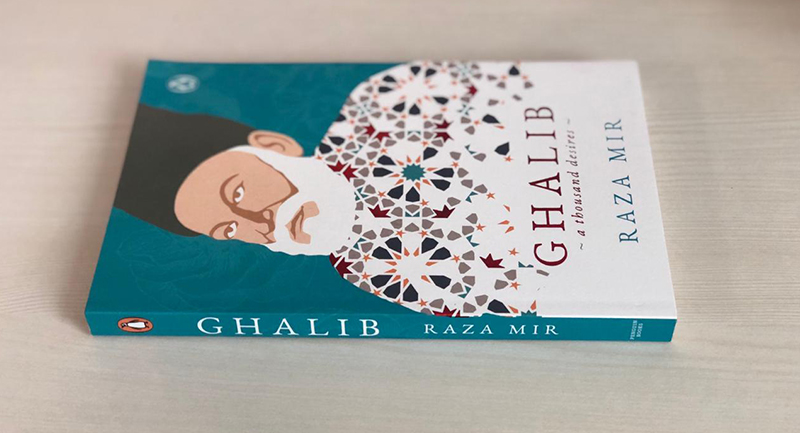
The Bard of Ballimaran- Mirza Ghalib

Emerging from the narrow lanes of Old Delhi, Mirza Ghalib’s couplets took wing on the hallowed reverence of millions of dreamers and became entrenched in public imagination. His words breathed fervour into many ardent professions of love and added depth to sombre musings on life.

Hidden behind the dazzling effulgence of his poetry was a man burnished by adversity. Reflecting the ironic duality that marked his life, Ghalib luxuriated in poetic verse and yet languished in material indigence.

‘Ghalib’s self-presentation was of one who lived a life of affluence and leisure, where he was respected as a thinker and honoured by the powerful. In reality, his poetic prowess was relatively unacknowledged in his own time, and his existence was marked by deep and constant financial insecurity exacerbated by the fact that he all too often backed the wrong horse in the context of a constantly shifting field of power.’ writes Raza Mir.

In Ghalib- A Thousand Desires, Raza Mir presents an illuminating account of Mirza Mohammad Asadullah Khan ‘Ghalib’s life and work. Read on for a glimpse-


    1. Born in 1797 in Agra to Mirza Abdullah Baig, Mirza Asadullah Khan belonged to a family of soldiers of Turkish ancestry. Losing his father in the early years of life left the young Khan and the Baig family in dire financial straits. Riling up contemporaries and benefactors with his sharp wit and cantankerous temper, the comfort of companionship and material rewards eluded Mirza for most of his life.


    1. At the young age of 9, Asadullah Khan began writing poetry in Persian with the pen name ‘Asad’ (lion). He later adopted the name ‘Ghalib’ (dominant) which went on to become synonymous with poetic genius. Lauded for his talent by the incomparable poet Mir, one of the few whom Ghalib admired, he went on to become the poet laureate of the court of Mughal emperor Bahadur Shah Zafar.


    1. Asadullah Khan- a young thirteen year old- married Umrao Begum who was eleven at the time. Setting course in an orbit of separation, the couple experienced the loss of their seven beloved children even as Ghalib gravitated towards the pinnacle of poetic fame. In Delhi, the couple shared their life with Umrao Begum’s family before moving into a house, gifted by Umrao’s cousin, in the charmingly chaotic Gali Qasim Jan of the Ballimaran neighbourhood.


    1. Divaan-e Ghalib, a collection of Ghalib’s poetry, was first published by Syed-ul Akhbar Press in Delhi and saw more re-prints than perhaps any other book of Urdu literature. He went on to write an account of the rebellion of 1857 in Ghalib’s Urdu letters are published in a book titled Ud-e Hindi (Indian Perfume)


  1. After his death in 1869, Altaf Husain Hali published Yaadgaar-e Ghalib (In the Memory of Ghalib), the first definitive biography of Mirza Ghalib. Such was the stature of the great poet that the Indian government issued a ‘Mirza Ghalib’ stamp in his honour while Ghalib’s grave was turned into a memorial and is still a place of reverence in the lanes of Ballimaran.

Mirza Ghalib, the most illustrious Urdu poet in English, continues to delight and inspire as the magic of his poetic genius lifts his words out of the yellowed pages of history to shine like a beam of luminous moonlight onto the harried hordes of our generation.

Read Raza Mir’s Ghalib: A Thousand Desires to capture the essence of Mirza Ghalib!

Your Daily Dose of Motivation: Get Inspired with Marie Forleo!

Inspired by a line uttered by her mother, Marie Forleo’s Everything is Figureoutable is all that it promises to be and more! It makes self help and motivation fun by inserting anecdotes, personal stories and humour in its pages.

We share with you some quick quotes and stories from the book to that continue to inspire us and hope they will give you your daily dose of motivation too!


Oprah’s Story

‘When Oprah Winfrey was sixteen, she saw Barbara Walters on television. She was so deeply moved and inspired that she said to herself, “Maybe I could do that.” Oprah went on to share, “There’s no other woman that deserves more in terms of opening the door for my career.” In that statement, Oprah is not talking about Barbara Walters “opening doors” by recommending her for broadcasting jobs. She’s talking about the fact that merely witnessing another woman on televeision cracked open a possibility within Oprah’s consciousness about what was possible for her. It’s hard to become what you don’t see.’

~

Judging Failures

‘[…]When I bombed [the] Missy Elliott audition years earlier, Nike Elite Dance Athletes didn’t exist yet. There’s no way I could have dreamed to reach that specific goal, because no one had done it before! It simply had not been created.

But my Missy failure spurred a necessary shift in my focus, pushing me to spend the next few years unknowingly training in the exact mix of hip-hop, dance and fitness that prepared me to win that Nike position when it appeared!

Don’t be so quick to judge your supposed failure. A flop might be a cosmic redirect, guiding you to a better, bigger purpose.”

~

On Opinions and Criticism

“Let’s say you love chocolate, but you have a friend who despises chocolate. Does that mean chocolate sucks? No. It means one person doesn’t like chocolate. Chocolate makers don’t lose sleep over that. They’re not campaigning to convert the haters. They focus all their attention on chocolate lovers.”

~

Be You.

“Consider all the things that have brought you value, joy, or growth throughout your lifetime. Every song that’s made your head bop. Every movie that’s made you laugh, cry, or expand your point of view. Every athlete or artist who’s inspired you to reach for more. Every invention that’s made your life easier. Every restaurant that’s served a dish that made you moan with delight. […]

Imagine if all those beautiful people never followed the call of their soul – never “figured out” their dreams and created and contributed and shared. I say this at the end of eve MarieTV episode and I’ll say it to you now:

The world needs that special gift that only you have.

~

Share the Shame

‘Most high achievers struggle with feeling like a fake, but never talk about it. It’s like a dirty little secret everyone’s afraid to admit. I’ll tell you right now – I still feel this way at times and I’ve been doing this work for almost two decades. Brene Brown says, “As a shame researcher, I know that the very best thing to do in the midst of a shame attack is totally counterintuitive. Practice courage and reach out!”

Bronte is on point. You know why? Because shame shrivels when you share it out loud.’


To make life a little more figureoutable, get your copy today!

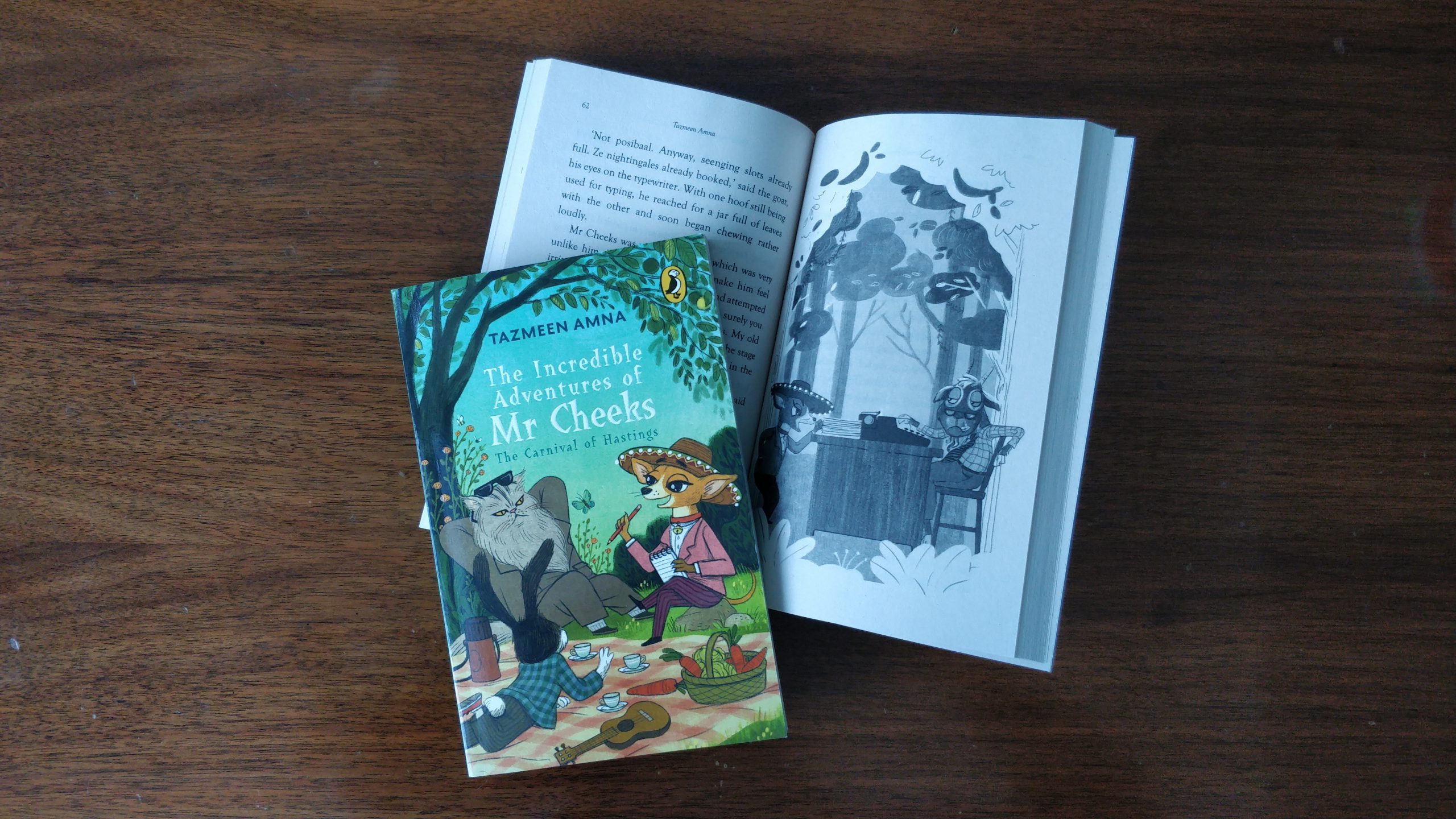
Lessons on Friendship and Courage from ‘The Incredible Adventures of Mr. Cheeks’

The Incredible Adventures of Mr. Cheeks by Tazmeen Amna, is an exciting journey of three friends seeking to break away from the set roles enforced by the village of Hastings on each of its residents. Mr. Cheeks, a fabulous tap-dancing Chihuahua; Mr. Grey, a tabby cat who loves painting; and Hopper, a rabbit who sings the most melodious songs; wish to portray their talents at the Annual Carnival of Hastings. However, the roles of each animal at the carnival is rigidly divided which poses a problem for the three friends.

The book maps the struggles which they face together highlighting their cherished friendship. Here we give you a few instances of friendship and courage shared by them:


  1. Despite their different appearances, Mr. Cheeks, a Chihuahua “dogue” and Mr. Grey, a big tabby cat; were great friends. Although they were dubbed as an unusual pair of friends, their friendship grew beyond their physical differences and they set an example for others.


“And this was unheard of! Even in Hastings! But the two made it work like a charm.”


  1. Since Hopper, the rabbit was anxious about not being able to fit into the new community of Hastings and about the skills that he possessed which were thought to be a little odd for a rabbit; Mr. Cheeks and Mr. Grey helped him get comfortable and welcomed him into their circle. They also encouraged him to be confident about his unique talent.


“Hopper smiled. Maybe there was room for a different rabbit in Hastings after all!”


  1. When Mr. Grey decided to put up and exhibition of his paintings, his comrades, Mr. Cheeks and Hopper volunteered to help and support him in this endeavour. The trio worked together to make the exhibition a success.


“The trio took a moment to admire their work. The sun shone bright upon them, as though expressing joy, making the colours of the garden seem more vibrant and the pictures more lifelike.”


  1. After coming back defeated from the Carnival Management Bureau of Hastings, Mr. Cheeks had lost all hopes of tap-dancing and his friend Hopper singing at the carnival. But Mr. Grey, seeing how sad his friend was, came up with a bright plan to help his friends showcase their talents!


“It is now my life’s mission to make sure you both get the opportunity you deserve”


  1. By going beyond their stereotypical roles of what a dog, cat and a rabbit ought to do; Mr. Grey, Mr. Cheeks and Hopper also inspired other animals of Hastings to follow their hearts and not be tied down by those constructs.


“Finally, change had arrived in Hastings.”


Follow this exciting journey in The Incredible Adventures of Mr Cheeks, where three friends face the challenge of following their heart -even when it isn’t the easiest thing to do.

An Excerpt from the Newest Jack Reacher Novel ‘Blue Moon’

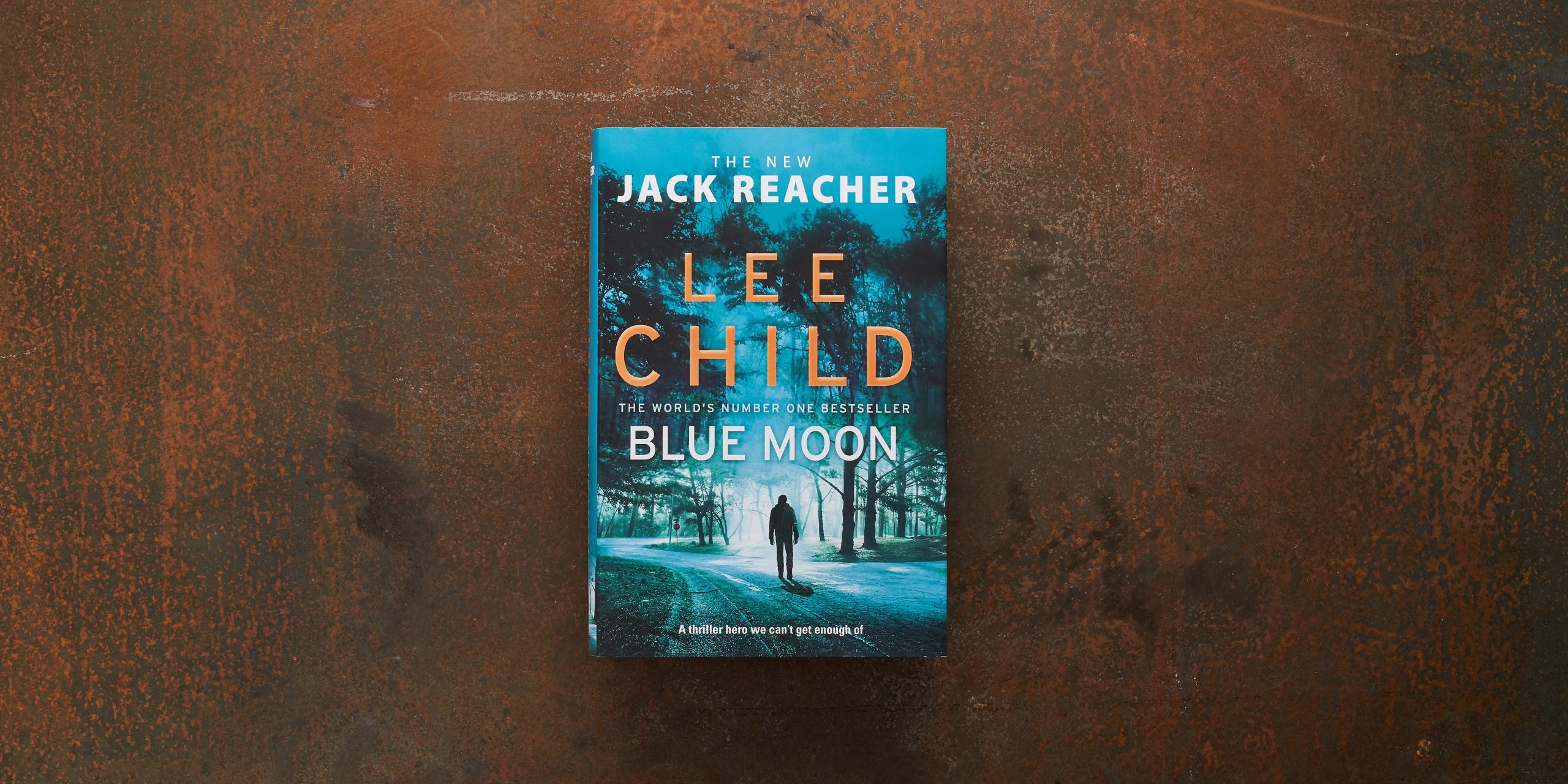
Lee Child’s Jack Reacher is back in Blue Moon!

Reacher is trained to notice things. He’s on a greyhound bus, watching an elderly man sleeping in his seat, with a fat envelope of cash hanging out of his pocket. Another passenger is watching too… Obviously hoping to get rich quick. As the mugger makes his move, Reacher steps in. The old man is grateful, yet he turns down Reacher’s offer to help him home. He’s vulnerable, scared, and clearly in big, big trouble. Will Reacher sit back and let things happen?

Read an excerpt from the book below:


The city looked small on a map of America.  It was just a tiny polite dot, near a red threadlike road that ran across an otherwise empty half inch of paper.  But up close and on the ground it had half a million people.  It covered more than a hundred square miles.  It had nearly a hundred and fifty thousand households.  It had more than two thousand acres of parkland.  It spent half a billion dollars a year, and raised almost as much through taxes and fees and charges.  It was big enough that the police department was twelve hundred strong.

And it was big enough that organized crime was split two separate ways.  The west of the city was run by Ukrainians.  The east was run by Albanians.  The demarcation line between them was gerrymandered as tight as a congressional district.  Nominally it followed Center Street, which ran north to south and divided the city in half, but it zigged and zagged and ducked in and out to include or exclude specific blocks and parts of specific neighborhoods, wherever it was felt historic precedents justified special circumstances.  Negotiations had been tense.  There had been minor turf wars.  There had been some unpleasantness.  But eventually an agreement had been reached.  The arrangement seemed to work.  Each side kept out of the other’s way.  For a long time there had been no significant contact between them.

Until one morning in May.  The Ukrainian boss parked in a garage on Center Street, and walked east into Albanian territory.  Alone.  He was fifty years old and built like a bronze statue of an old hero, tall, hard, and solid.  He called himself Gregory, which was as close as Americans could get to pronouncing his given name.  He was unarmed, and he was wearing tight pants and a tight T shirt to prove it.  Nothing in his pockets.  Nothing concealed.  He turned left and right, burrowing deep, heading for a backstreet block, where he knew the Albanians ran their businesses out of a suite of offices in back of a lumber yard.

He was followed all the way, from his first step across the line.  Calls were made ahead, so that when he arrived he was faced by six silent figures, all standing still in the half circle between the sidewalk and the lumber yard’s gate.  Like chess pieces in a defensive formation.  He stopped and held his arms out from his sides.  He turned around slowly, a full 360, his arms still held wide.  Tight pants, tight T shirt.  No lumps.  No bulges.  No knife.  No gun.  Unarmed, in front of six guys who undoubtedly weren’t.  But he wasn’t worried.  To attack him unprovoked was a step the Albanians wouldn’t take.  He knew that.  Courtesies had to be observed.  Manners were manners.

One of the six silent figures stepped up.  Partly a blocking maneuver, partly ready to listen.

Gregory said, “I need to speak with Dino.”

Dino was the Albanian boss.

The guy said, “Why?”

“I have information.”

“About what?”

“Something he needs to know.”

“I could give you a phone number.”

“This is a thing that needs to be said face to face.”

“Does it need to be said right now?”

“Yes, it does.”

The guy said nothing for a spell, and then he turned and ducked through a personnel door set low in a metal roll-up gate.  The other five guys formed up tighter, to replace his missing presence.  Gregory waited.  The five guys watched him, part wary, part fascinated.  It was a unique occasion.  Once in a lifetime.  Like seeing a unicorn.  The other side’s boss.  Right there.  Previous negotiations had been held on neutral ground, on a golf course way out of town, on the other side of the highway.

Gregory waited.  Five long minutes later the guy came back out through the personnel door.  He left it open.  He gestured.  Gregory walked forward and ducked and stepped inside.  He smelled fresh pine and heard the whine of a saw.

The guy said, “We need to search you for a wire.”

Gregory nodded and stripped off his T shirt.  His torso was thick and hard and matted with hair.  No wire.  The guy checked the seams in his T shirt and handed it back.  Gregory put it on and ran his fingers through his hair.

The guy said, “This way.”


Two rival criminal gangs are competing for control in Blue Moon. Will Jack Reacher be able to stop bad things from happening? Read to find out!

error: Content is protected !!