Publish with Us

Follow Penguin

Follow Penguinsters

Follow Penguin Swadesh

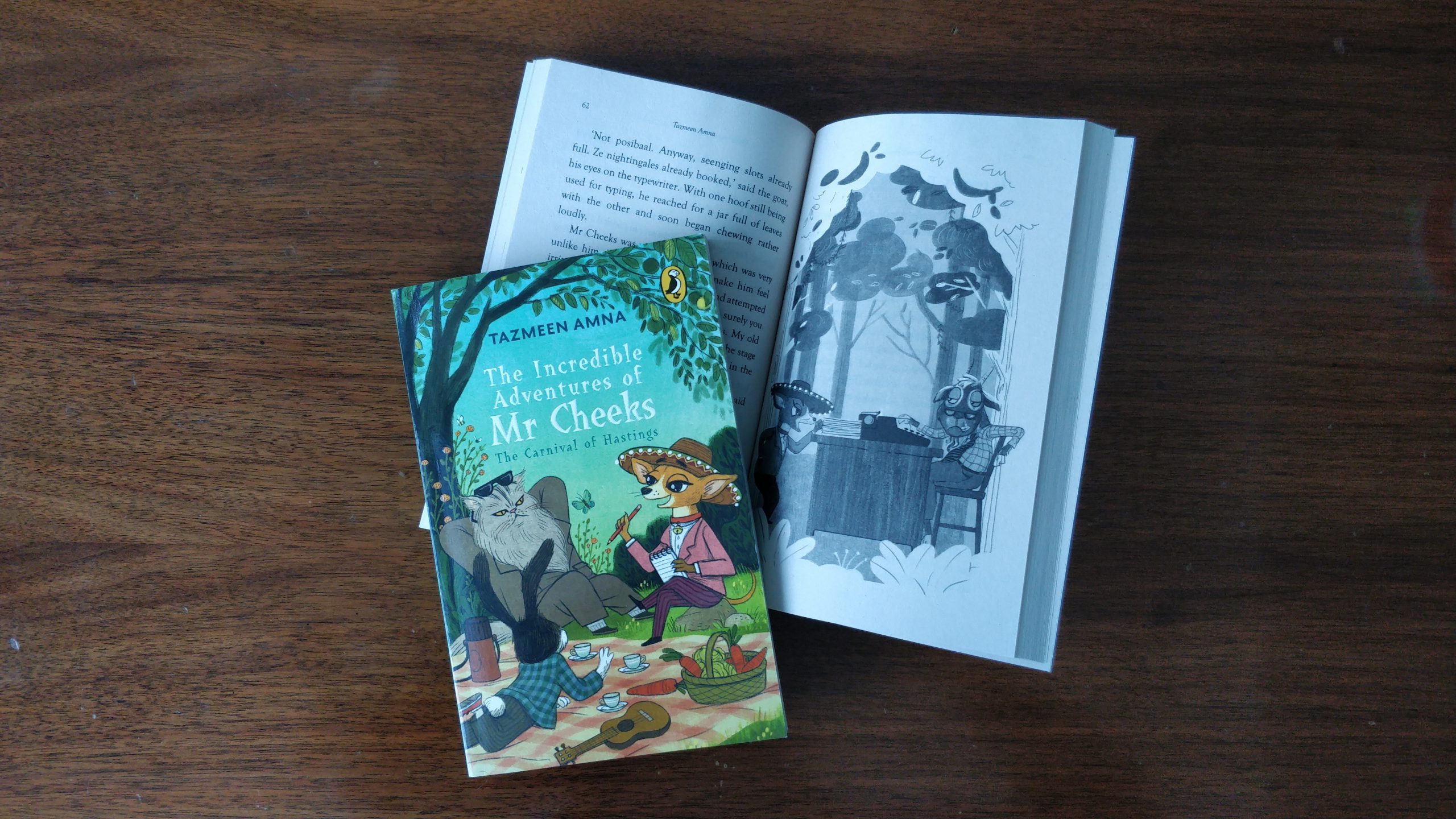
5 Reasons your Child Will Enjoy Reading ‘The Incredible Adventures of Mr. Cheeks’

The Annual Carnival is the most awaited event at Hastings. Mr. Cheeks, a dapper tap-dancing Chihuahua; Mr. Grey, a Persian cat with a flair to paint;  and Hopper, a nervous rabbit who loves to sing; could not be more excited to participate in the carnival. But soon they realise that in Hastings, everyone has been strictly categorised according to their type regarding their roles in the carnival.

The Incredible Adventures of Mr Cheeks by Tazmeen Amna, tells the journey of these three friends, fighting the odds together and realising some valuable lessons in the process. These lessons are sure to resonate with your little ones!

Here we list a few of these lessons:

  1. Cheeks and Mr. Grey, warmly welcome Hopper, who is new to the village of Hastings and  is quite anxious in the new atmosphere. Hopper immediately feels comfortable in the company of these two friends  due to their inclusive nature. Inclusivity is an important vein in the book that runs throughout the scope of the story.


  1. . Just like Hopper, who is new to Hastings, the book  showcases how easily one can adjust and become comfortable in a new environment despite their anxieties, if they approach new people with confidence and a pleasant attitude.


  1. The book also teaches an important lesson about not being judgemental especially about one’s looks. One should value one’s friends for their personality and the qualities that they possess. This point is reinforced by the beautiful bond that Mr. Cheeks. Mr. Grey and Hopper share.


  1. Despite Mr. Cheeks being a dog; Mr. Grey being a cat and Hopper, a rabbit; they all have varied interests that do not necessarily conform to the categories they belong to. Nevertheless, they courageously took all the obstacles in their stead and made a shining example of how one should always follow their heart.


  1. The book shows the wonder of friendship. , Mr. Cheeks, Mr. Grey and Hopper,  are willing to go the distance to help out their friends in their hour of need.

The Incredible Adventures of Mr Cheeks is a must read for your child as it will help them learn these lessons subtly!

Meet the Characters From Bibhutibhushan Bandopadhyay’s Classic ‘Pather Panchali’


Pather Panchali, is rich in rural turns of speech, local vocabulary, and references to the agrarian life of southern riverine Bengal.

In translating Pather Panchali, the translator Rimi has thus focused on preserving as much of this ‘music and suggestiveness’ of the original text as possible, to offer readers as authentic an experience as possible of immersing themselves in the original novel.

Here is a little peek into the different characters existing in the world of Pather Panchali:


Indir Thakrun

Now an elderly widow, she was the daughter of a particularly prestigious Brahmin Family. Indir had been married young to a brahmin from the eastern districts. Despite being married to him for several years before she was widowed, Indir had only vague memories of him—she couldn’t even remember his face properly. One of their rare unions, however, had produced a little girl. Indir named her Bishweshwori; she died a few months after her own wedding.


Horihor

He was Indir’s cousin who had been taken in by her family when his parents passed away and had left Contentment in search of better prospects. Horihor had abruptly returned to Contentment and brought with him a pretty young wife, a girl he had married during his years away. The young couple settled into the old house, and within a year had their first child—a little girl they called Durga.


Shorbojoya

Shorbojoya was Horihor’s wife. She disliked Indir knowing that the later had taken advantage of Horihor’s mother’s kindness and permanently attached herself to a family that could barely afford to support its own. Her dislike of the older woman began to manifest itself in sharp words, and before long, shouting matches became a daily staple of the Roy household. The smallest matter could trigger Shorbojoya’s quick temper, and the closer poverty bit to the bone of her family, the harsher she became with Indir.


Durga

She was the daughter of Horihor and Shorbojoya. She was the only thread that held the women together. Indir lavished all her love on this ‘Khuki’, this little girl born of her beloved Horihor. Khuki’s childish lisp, her wobbly first steps, her constant curiosity about the simplest things— everything flooded Indir’s shrivelled old body with maternal ecstasy. It infuriated Shorbojoya to see Durga fall for Indir’s pathetic act every single time, and become closer to her ‘aunt’ than she was to her own mother!

Opu

The baby of the family, loved and coddled by all, young Awpurbo—or Opu, for short—spends his childhood immersed in pranks and games with his sister, unaware of the winds of change that will upturn his family’s life forever. Opu and his coming-of-age journey eventually become the focus of this novel, the pivot around which this epic tale spins.


Pather Panchali chronicles the glorious discoveries along the path of everyday life—from spots for secret picnics and the true flavour of desserts to the pleasure of fulfilled dreams and life’s sobering lessons embedded in disappointed hopes.


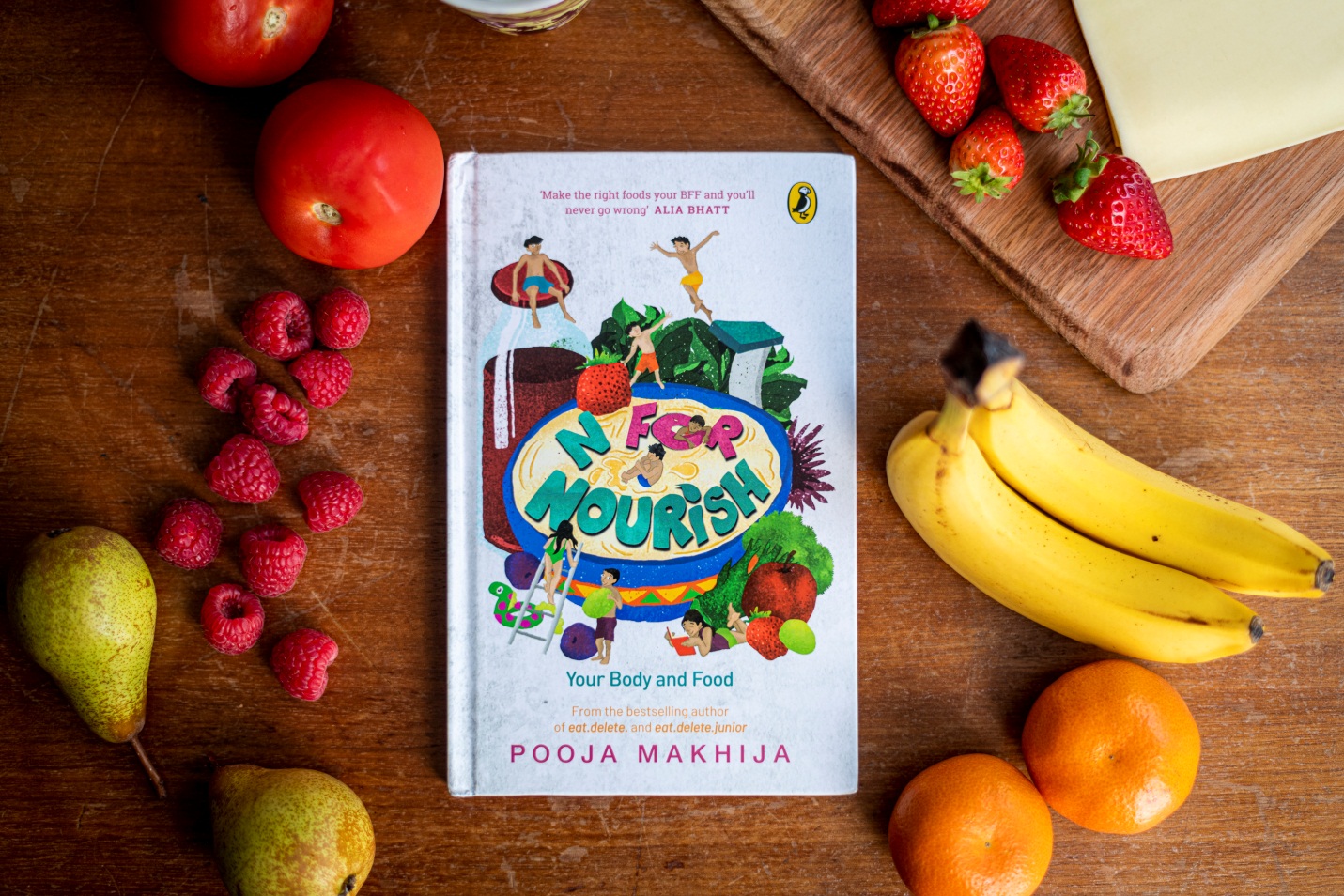
Pooja Makhija Wields the Power of the Plate

Celebrity nutritionist Pooja Makhija has, to date, transformed the bodies – and lives – of thousands of people by teaching them to believe in the power of food.

In N for Nourish Your Body and Food, she teaches children about the wonder and magic of food, and she finds that giving them the right tools at the right time helps them reap lifelong benefits. And even though she’s strict about her kids eating right, she is—by her own account— a fun person to live with.

‘N for Nourish is more than just a book. It is a journey to living your best life.’ writes Pooja.

Here are 8 things about this dynamic author’s life that you may not have known!


  1. Pooja studied the relationship between body and food while doing her B.Sc in Dietetics. She holds a Master’s degree in the field of Food Science and Nutrition.

  1. Her bestselling book on nutrition and weight loss, Eat Delete, released in 2012, has already been translated into Hindi, Bengali, Gujarati and Marathi.


  1. Pooja followed up the astounding success of her authorial debut Eat Delete : The Anti- Quick Fix Approach with Eat Delete Junior : Child Nutrition for Zero to Fifteen Years and Before You Give Up On You
  2. Pooja gained recognition on TV as the star of The Pooja Makhija Show on the Food Food channel.


  1. Pooja has consistently campaigned for healthy eating through her regular columns in the Times of India and DNA among other publications.


  1. Her new weight loss and health portal, www.nourishgenie.com, delivers customized meal plans straight to the subscriber’s inbox and includes clients from all over the world.


  1. Fit and famous Bollywood actors Shahid Kapoor, Deepika Padukone and Ranbir Kapoor are some of her celebrated clients.

  1. Pooja has two daughters, Ahaana and Amaira. She lives and works in Mumbai where she promotes health and wellbeing through her clinic, aptly named, Nourish. She is also working on raising awareness on nutrition by doing workshops all over the country in schools.

In her latest book N for Nourish, Pooja Makhija offers her young readers tools to shape their future as fit and healthy achievers. Her keen observations on how children succumb to the lure of unhealthy foods and what measures can they take to fortify their health makes this a must read for both parents and children.

‘Welcome to N for Nourish. This book is not just the ABC of nutrition but is also packed with OMG facts about how food can change your life. And it can.’

N for Nourish is India’s first children’s self help book on nutrition and is perfect for children ages 10+


Soak in the Festivities with your Favourite Storytellers!

Diwali is here! We know you have very happy and excited young ones around and so we’d love to recommend these timeless gifts from your favourite storytellers! From a scenic walk through our various places of worship to some more glimpses of Rama, there is a lot to choose from!

Take your pick:

The Serpent’s Revenge

How many names does Arjuna have? Why was Yama cursed? What lesson did a little mongoose teach Yudhisthira?

Award-winning author Sudha Murty reintroduces the fascinating world of India’s greatest epic through the extraordinary tales in this collection, each of which is sure to fill you with a sense of wonder and bewilderment.

~

The Upside Down King

Did you know there was a time when bears spoke, the moon laughed and babies were found inside fish? Did you know Ravana’s half-brother was the god of wealth? Have you ever seen a man with a thousand arms?

The tales in this collection surround the two most popular avatars of Lord Vishnu-Rama and Krishna-and their lineage. Bestselling author Sudha Murty takes you on an arresting tour, all the while telling you of the days when demons and gods walked alongside humans, animals could talk and gods granted the most glorious boons to common people.

~

Fun in Devlok Omnibus

Why is Indra an unhappy god? Why is the cow such a cool animal? Who is the demon of forgetfulness?

Master storyteller Devdutt Pattanaik answers these curious questions and reveals many more secrets of the world of gods and demons in this delightfully illustrated omnibus, featuring all six tales in the Fun in Devlok series. Jump right in. The gates of Devlok are open!

~

The Puffin Book of Hindu Gods and Goddesses

Whose weapon of choice is a sugar-cane bow and a flower arrow? Who lives on Mount Meru? Whose superpower is knowledge?

From silly arguments to epic battles, from nasty monsters to divine divas, The Puffin Book of Hindu Gods and Goddesses juggles a range of tales and characters from Hindu mythology with colourful, zany illustrations to boot.

~

The Puffin Ramayana

The popular classic in which good vanquishes evil, now in a pocket-friendly version!

The traditional ingredients are all there—drama and excitement, gods and princes, love and war, infinite stories within stories, monkeys who cross oceans and carry mountains, shape-changing demons and bizarre monsters—but described with freshness and vitality by Bulbul Sharma. This contemporary retelling, which answers questions and provides explanations, is the perfect first Ramayana for everyone!

~

Amma, Take Me to Tirupathi

Come, explore the places where we worship!

Follow Amma and the boys to know all about the world-famous temple of Tirupati Balaji. Told through interesting stories with captivating illustrations, this new series introduces readers to the history of different faiths and their associated monuments.

~

Two-Epics-In-One

The country’s favourite mythologist, Devdutt Pattanaik, empowers and entertains with a double bill of the Ramayana and the Mahabharata for a whole new generation of readers, in his easy, distinctive style.

This gorgeous flipbook, bringing together Pattanaik’s previously celebrated works, is both playful and informative! Flip the book and look at the epics in a brand new light.


We hope you enjoy these stories with your younger ones. Penguin wishes you a very happy Diwali!

Story of Warriors: Excerpt from ‘Two-Epics-In-One’

India’s favourite mythologist, Devdutt Pattanaik, is back! Get a double dose of his masterpieces in a gorgeous flipbook to get another perspective into Mahabharata and Ramayana.

Here’s an excerpt from one half of the book – The Boys Who Fought – depicting the Pandavas as they prepare for one of their many heroic battles:


The Fifth Fight, as Warriors

The Kauravas were delighted at having located the Pandavas before the thirteenth year was over.

Unfortunately, their joy was short-lived. Bhishma said that the Kauravas’ calculation was faulty by a year. They had not considered the extra month that needs to be added to a year every three years. So technically, the Pandavas had actually been in exile for more than thirteen years.

Drupada sent a messenger to the Kauravas on behalf of his sons-in-law, demanding that they keep their end of the bargain and return Pandava territory to the Pandavas. The Kauravas refused.

Then the Kauravas sent Sanjay, Dhritarashtra’s charioteer, to tell the Pandavas not to return from their exile for the sake of peace. The Pandavas refused.

Then Krishna went to Hastinapur to reach a compromise. ‘Don’t give them everything. Just five villages,’ said Krishna. The Kauravas refused. Instead they insulted the Pandavas for behaving like beggars.

It was clear that there would be no compromise nor peace. War had to be declared; sides had to be picked.


Two-Epics-In-One is the perfect gift for the young ones to celebrate the spirit of this festive season!

What Is It Like To Be A Woman Behind Bars? Jigna Vora Speaks

Journalist Jigna Vora’s book, Behind Bars in Byculla, is a highly personal and powerful story of her unjust incarceration and years spent behind bars. Here’s what she has to say about prison:


Jail is not a rehabilitation centre, it’s a recruitment centre.

In prison, life is ruled by rules. One is deprived of basic freedom for survival. It’s secondary whether you have committed a crime or not, or whether you are male or female. Once you are sent to prison, life changes in each and every aspect.

Being woman makes it a bit more difficult because of various issues like hygienic conditions etc.

During my days of covering crime, I had covered many cases wherein women were accused and sent to jail. I had many stories relating to jail. Little did I know that someday I would become the story others write about.

In jail, there is no privilege being a woman. Do you ever think of human rights violations in prison?  Why does no one think of that and raise them? Perhaps because it is assumed by society that once jailed, the person is a criminal.

Once out from jail, society’s perception of the person changes. When society refuses to accept the person, he/she gets into vicious circles of crime. The inmates are not judgmental, and maybe because of this, the person tries to connect them once outside and form their own groups, getting into bigger crimes.


Behind Bars in Byculla is a story of survival and the complex power dynamics that exist within the walls of a prison. Find out Jigna Vora’s story, in her own words.

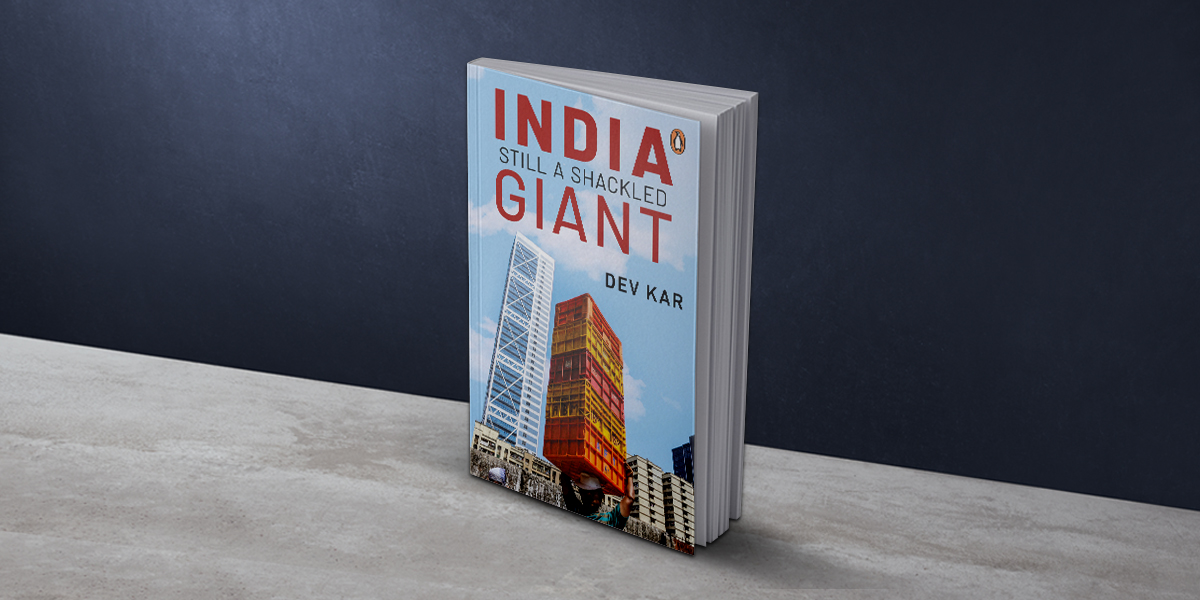
Growth and Governance: Excerpt from ‘India: Still a Shackled Giant’

India is one of the largest economies in the world today and it has been predicted that it would become the third largest economy by 2030. Yet, an average Indian is worse off than his counterpart in other developing nations like Algeria, Indonesia, Mongolia and Morocco. The tethers of corruption and fragility have prevented it from becoming an Asian Tiger.

Author Dev Kar, a former senior economist at the International Monetary Fund, delves into the nooks and crannies of the Indian economy in a closely researched narrative in an attempt to chart out a path forward.


While a number of books have been written on India’s governance, this is the first to assess specific weaknesses in relation to other countries in the world. Assessments of governance and fragility are necessarily subjective in nature. Nevertheless, readers will find a clear picture of the country’s state of democracy and how it has evolved under successive governments. The central message is that good governance is fundamentally important. As I describe, even strongly governed advanced countries have paid a steep price for relaxing institutional oversight and overlooking corruption. Surely, then the risks arising out of a failure to govern are much higher for India. Yet, in the pursuit of high rates of economic growth, economists often lose sight of the need for inclusivity and sustainability. Together, these determine the quality of life of citizens, regardless of whether they are rich or poor. Truly, even the rich cannot insulate themselves from the fallout of poor governance. After the book went to press, signs have emerged of a sharp slowdown in economic growth. Policy measures such as tax cuts, liberalizing business regulations, increasing government expenditures and lowering interest rates may indeed counter the slowdown and avoid a crash. However, if underlying weaknesses in governance remain unaddressed, the slowdown can again emerge to derail growth. Tagore once said that when designing a chariot, we need to think not only of how fast it can go but also consider the depth of the ditches lying across its path. Without good governance, growth tends to occur in spurts and fails to improve the lives of the vast majority. A large part of the problem is that policymakers often avoid asking a basic question—whose growth are we talking about? Does growth further enrich the rich or are the benefits shared equitably by all? There is no denying that economic growth, over the past two decades, have lifted millions out of poverty. Yet, India has one of the world’s most unequal distributions of income. A main reason is that even though India achieved impressive rates of growth, entrenched corruption led to bad investment choices. Meanwhile, poorly educated and unhealthy workers could not take advantage of economic growth no matter how high they were. Thus, the benefits of growth accrued mainly to the top income brackets. In time, rising income inequality can align with other factors to undermine the sustainability of economic growth. You would think politicians would boost investments in health and education to preempt these forces. Not necessarily. Because the return on such investments takes a long time to mature, they remain unattractive to politicians fixated on short-term electoral cycles. The book deals with a wide range of such issues explained in a manner that can be appreciated by the general public. For instance, how do dirty politics nurture poor governance, corruption impact economic growth, black money drive income inequality, and weak institutions breed more corruption? Sometimes issues are explained through the lens of current events and personal experience while in other instances, I cite developments in the United States and other countries to contrast differences in governance. It took me a year and a half to write the book. In the process, I discovered an India I was unaware of. Perhaps, these discoveries would also surprise readers. Under the glare of evidence, my criticisms of the status quo may seem harsh but ultimately it was an abiding love for India that led me to write the book.


India: Still a Shackled Giant is a critical roadmap to understand the strengths and weaknesses of our country’s economical structures. Get your copy today!


Who was Shah Abdul Latif Bhitai?

Travelling into the stark deserts of Kutch, I Saw Myself by Shabnam Virmani and Vipul Rikhi explores the contemporary presence of epic love legends of the region, such as Sohini-Mehar and Sasui-Punhu, brought to throbbing verse by the powerful eighteenth-century Sufi poet Shah Abdul Latif Bhitai. As the authors travel to villages to meet folk singers and lovers of Latif’s poetry, immersing in sessions that stretch into the night, they unearth a unique, thriving love-soaked ethos in which the call to oneness rings out like a defiant manifesto for our divisive times.

Retelling epics along with other tales and historical events that created the field of experience from which Shah Latif’s poems sprang, I Saw Myself brings into English a selection of his finest poems. A spell is cast, of story and song, of metaphor and meaning. The insights that emerge are subtle, even startling, radical at times, solace-giving at others, but always deeply meaningful.

Here’s what you should know about the famed poet!

Shah Abdul Latif lived from 1689 to 1752 CE, writing most of his poetry in the first half of the eighteenth century.

Soon after his birth, the Mughal empire in Delhi began to collapse and a Sindhi religious sect from Balochistan— the Kalhoras—gained ascendancy, ruling Sindh during much of Shah Latif’s later life, a time of relative political stability in Sindh

Latif is widely held to be the greatest poet of the Sindhi language. Most of his poetry was collected into a single work now referred to as Shah Jo Risalo.

Latif was born in a village called Hala Haveli in Sindh in a prominent Sayyad family (held to be descendants of Prophet Muhammad himself).


To read more about him, get your copy of I Saw Myself today!

The Encounter Specialists: An Excerpt from ‘The Class of 83’ 

At a time when Mumbai was plagued by underworld gangsters like Dawood Ibrahim, Iqbal Kaskar and Chhota Rajan, the batch of 1983 from the Police Training School (PTC) in Nashik-trained by the legendary Arvind Inamdar-produced a group of prominent encounter specialists who have been credited with bringing back the rule of law in the city.

Famed even within this batch, trigger-happy senior police inspector Pradeep Sharma understood that to save the city from the clutches of the underworld, he would need to dilute rival gangs. The Class of 83 delves deep into the most famous (or infamous) encounters conducted by Sharma and his batch mates. Pradeep Sharma was arrested by the same department he had served for two-and-a-half decades. He faced the ignominy of jail, clubbed in the same cell as the criminals he had arrested. However, he fought for his honour, was acquitted and reinstated into service.

Here is an excerpt from this one-of-a-kind story of a policeman’s triumphs, struggles and redemption-


‘I will get you this man, sir,’ Sharma said, even though he was not sure how he was going to do so.

‘Shabaash,’ Karkare said. ‘Keep it confidential, Pradeep. This is a matter of national security.’

Initially, Sharma’s search for Abdul Latif led him to many dead ends. The phone number turned out to be a prepaid number which had been issued without proper scrutiny of the address. These were early days for the mobile service providers in India. Document verification was not stringent. Sharma tapped his entire network of informants but gave them only the details they needed to know without revealing the context.

Sharma’s hunch was that Latif was in a Muslim dominated locality near a mosque. The possibilities of this theory were endless. In fact, every Muslim dominated locality would have a mosque nearby, similar to other religions and their places of worship. Yet, Sharma made one of his most trusted informers, Saleem, speak with many imams of mosques in the suburbs to find out if any suspicious person had turned up for offering namaz at their mosque recently. Saleem also got in touch with several real estate agents to see if any untoward person had rented out a flat in their locality. But unfortunately, no leads emerged from these efforts.

In 1998, Mumbai Police had come across a bizarre case of a bleeding man walking out of a toilet of a masjid in south Mumbai. It turned out that the man was trying to assemble explosives in the toilet, and it had detonated accidentally and injured him. The bleeding man abruptly left his device in the toilet and escaped on foot, while his white clothes were drenched with blood and he was bleeding all over his face and neck. Then Police commissioner R.H. Mendonca and Crime Chief R.S. Sharma had stepped into a Mumbai masjid for the first time to inspect the spot. However, the crime branch eventually found out that it was a Pakistani who had been staying in a Muslim locality in Nirmal Nagar in Santacruz for six months with a different name.

Sharma presumed that people who visited mosques frequently would notice a stranger and they would share this information with the police. But this time Sharma drew a blank. The only fall-back option now was the mobile number Karkare had given him. Back then there weren’t any sophisticated cellphone tapping capabilities, but Sharma had managed to procure a crude telephone tapping equipment from his sources in the department and set it up in the CIU office at Andheri. Over a listening period of two days, Sharma had figured out that Latif was in an area which had a mosque nearby because the azaan of morning prayer which could be heard distinctly in the background. The area also had a cowshed nearby because the mooing of cows and buffaloes was loud and clear. Sharma called a team of constables into his cabin.

‘How many mosques in Mumbai have a cowshed nearby?’ he asked.

His men were stunned by the question. They were unsure if Sharma was testing their knowledge as many Mumbaikars take immense pride in knowing trivial details about the city like the routes of the BEST buses, the famous delicacies of each area, renowned roadside shops located in the many by-lanes of Mumbai. The constables merely smiled and stared back at Sharma.

‘No one is allowed to go back home until I have this information,’ Sharma said, looking serious.

The constables rushed out of his room. In a few hours, they reported back to Sharma. There were five possible areas matching his description: Cheetah Camp in Mankhurd, Kurla Pipe Road, Amrut Nagar in Mumbra, Thane, and places in Jogeshwari and Goregaon.

Sharma had been continually discussing the case with Hemant Karkare, who was aghast to hear that the terrorists had bigger plans up their sleeves. Kandahar was being tracked by media across the globe. Already, India was being portrayed as a soft state which had been forced to the negotiating table by a rogue group of terrorists. Prime Minister Atal Bihari Vajpayee had climbed down from his aggressive posturing that the Indian government would not engage in any negotiations under the threat of the gun. Now, the government was seeking solace in the fact that the terrorists had apparently scaled down a lot of their demands. India’s image was being tarnished by the international media.

But the government was also concerned for the lives of the 190 civilians. The Indian national whom the hijackers had stabbed had bled to death. The innocent man was returning from his honeymoon trip with his newly wed wife. The pressure on the government was immense, and it was understandable that the lives of the citizens were being made a priority over other considerations. Indian agencies like RAW had also taken a severe beating that an incident like this had occurred in the first place. Meanwhile, Sharma briefed Karkare about the four locations he had zeroed in on. But launching a manhunt at these locations required sizeable manpower which could compromise the secrecy of Karkare’s mission.

‘We can’t take any more damage,’ Karkare told Sharma.

‘Sir, I am close to catching our man.’

‘Pradeep, only the result will count!’ Karkare said. ‘What is your next plan of action?’

‘I’m tapping my resources in the telecom operator to get a tower location on Latif’s number.’

‘Time is against us,’ Karkare replied. ‘Arrest Latif at all costs and soon.’


Hussain Zaidi takes us deep into the brutal world of the men in uniform who put their lives on the line to fight terror.

Read The Class of 83 to meet the men who made dreaded criminals fear death by encounter!

Meet the Characters from ‘Wish I Could Tell You’

Anusha is disillusioned and heartbroken, she finds herself struggling to work for WeDonate.com, a charity. On the opposing side is Ananth who finds no cause to be too small to support.

They can’t escape each other when their lives entangle in a way that moving together is the only solution.

Meet the complex characters from Durjoy Datta’s new book,Wish I Could Tell You:

Ananth Khatri:

A young twenty-three year old boy who is the only son of a set of religious, over-protective and sometimes possessive set of parents. Ananth is  sincere, loving and filled with endless empathy. At 5’10”, He is the tallest member of his family.

“My growing up has been hard on them. If they could, they would choose the three-year-old in a white frock over the twenty three- year-old they are struggling to get into a blazer.”

Anusha Sardana:

She is an only child living with her mother and aspires to be a writer someday. Her father’s death left a big hole in her and her mother’s lives and they have not been able to recuperate and move on since it happened seven years ago.

“At night, to celebrate, Mumma and I ordered Chinese. We put out a plate for Baba. The chowmein on his plate swam in soya sauce and chilli vinegar. Just like Baba used to like it.”

Saraansh Gupta:

He is a fresh out of movie-school graduate. His family is against him pursuing his education in this field and have stopped talking to him, cut a huge chunk of his finances and they are threatening to take away his car the driver. They want him to get into the family business of buttons.

“Saraansh orders a skinny latte and sits in the far corner of Starbucks. He’s nervous but pumped. This meeting is going to be his big break, he can feel it in his bones. He’s smiling thinking of the future…”

Rachita Somani:

She has been at WeDonate for three years. The job is leaving tell-tale signs on her face. The intricate crow’s feet at the corner of her eyes, the huge bags underneath, the despondent look on her face,  are unmissable.

“Rachita had come to WeDonate with idealistic notions about people’s niceness, about their philanthropic tendencies. Now she knew that people who donated money to medical campaigns did it for another dopamine hit.”


Find out more about these characters and follow their story in Durjoy Datta’s new book Wish I Could Tell You.

error: Content is protected !!