Publish with Us

Follow Penguin

Follow Penguinsters

Follow Penguin Swadesh

7 Things You Didn’t Know about Savarkar

As the intellectual fountainhead of the ideology of Hindutva, Vinayak Damodar Savarkar is undoubtedly one of the most contentious political thinkers and leaders of the twentieth century. Accounts of his eventful and stormy life have oscillated from eulogizing hagiographies to disparaging demonization. The truth, as always, lies somewhere in between and has unfortunately never been brought to light. Savarkar by Vikram Sampath aims to unpack his ideology, that stood as one of the strongest and most virulent opponents of Gandhi, his pacifist philosophy and the Indian National Congress.

Here are some unknown facts about Savarkar’s life from the book!

Savarkar started a dual organization—a front-end entity that organized ‘peaceful’ activities like festivals and melas, which could have a wider societal outreach and become the hunting ground for talented youth with a nationalistic drive and organizational skills. This organisation was called the ‘Mitra Mela’, or Group of Friends, as a front-end organization of the Rashtrabhakta Samuha.

Savarkar was against foreign goods and propagated the idea of Swadeshi. In 1905, he burnt all the foreign goods in a bonfire on Dussehra.

Despite being born in an orthodox and religious Chitpawan Brahmin community, Vinayak despised the caste system right from childhood. This has been illustrated in the kinships he developed with children from various castes and strata of society, and how he dined at their homes.

At a time when most members of his community forbade sea travel for fear of a loss of caste, Vinayak was among the few Brahmins who travelled to London for his education.

Savarkar had no qualms about going non-vegetarian as well, unlike most Brahmins of the time.

Savarkar penned essays on the abhorrent practice of the caste system and untouchability and how these sapped the nation of all vitality.

Savarkar supported cow protection but considered cow worship superstitious.

Savarkar was arrested in 1909 on charges of plotting an armed revolt against the Morle-Minto reforms. He tried to escape by diving in the water but was arrested as he reached the shore. On July 1911, Savarkar was sentenced to two life sentences i.e. 50 years in the cellular jail of Andamans, also called Kala Pani.

Get your copy of Savarkar today!

Tips on Impressing a VC from ‘The Moonshot Game’

In The Moonshot Game – a book dedicated tothe founders who have been, the founders who are, and the founders who will be’ – Rahul Chandra, the co-founder of Helion Ventures, gives us the behind-the-scenes story of a VC’s journey, right from the beginning of the second start-up revolution in India in 2006 until the end of the funding frenzy in 2016.

We have picked out some tips for you on how you can go about impressing a VC – straight from a VC’s mouth!


Keep the business model simple!

The best part of BookMyShow’s model was its simplicity. It was a low-margin business but the number of people who would eventually buy movie tickets on the Internet was projected to grow by many thousands in the future. The tough times that followed the founding years of BookMyShow were not just due to lack of money, but also competition. Eventually, BookMyShow won both battles. Many competitors perished. BookMyShow was more or less the last company standing, and like MakeMyTrip, it dominated the online movie ticketing market.

~

Timing plays a Massive Role- make sure it is correct for your business!

In another decade, a Graycell could have grown like WhatsApp, a JiGrahak like Paytm, but there is such a vast difference in outcome in seemingly similar concepts. The constant analysis of what makes some start-ups successful while some equally smart founders fail shows that timing has a massive role. This one factor is a huge determinant of success and is hardest to determine.

 ~

Have a Product Head

The product head was the bridge between the customer and the engineering team. The role required the product manager to translate between these two functions. This ensured that engineering built great features that made production adoption easy. This role had still not appeared in consumer Internet companies in India.

~

Keep the audience on the edge while giving a presentation

Vijay’s voice was high-pitched. Unlike pitches which ramble on to produce a soporific effect, Vijay’s incantations kept my brain on edge…. Vijay was speaking in a curious Hinglish. He punctuated every sentence with an ‘okay’. But damn, he had some energy. I could tell that sitting down was too passive for him. Given a chance, he would stand up and walk all over the room while explaining himself. His hands had a life of their own. As he moved them, the vision of Vijay Shekhar Sharma started getting painted in my head. He had me in goose bumps during the course of this first meeting.

~

Make it clear what help is needed from the VC

Like Deep Kalra, Saurabh also made it clear what help he needed from his VC firm. He wanted help with finding quality businesspeople to join his lean team of engineers. There were lots of partnerships to be done. This meant we were playing out our promise of being active investors.


Get your hands on the book today to get more insights into the secret world of a VC!

Puffin Picks for the Festival Season!

To add to the Diwali excitement, we have an explosive range of books for the young ones! Whether they want to meet Dev who daydreams just like them in class, or hop on an adventure with the delightful chihuahua Mr. Cheeks, this festive list has something for everyone!

Here is a list of all the colourful stories coming your way:


Two Epics in One by Devdutt Pattanaik


The country’s favourite mythologist, Devdutt Pattanaik, empowers and entertains with a double bill of the Ramayana and the Mahabharata for a whole new generation of readers, in his easy, distinctive style.

This gorgeous flipbook, bringing together Pattanaik’s previously celebrated works, is both playful and informative! Flip the book and look at the epics in a brand new light.

~


Crack the Code by Aditi Singhal and Sudhir Singhal

 Mathematics just became fun!

Whether you are 11 or 41, you’re going to love solving the 25 mysteries in this book that combine simple cryptology and arithmetic with some quick, out-of-the-box thinking. Use these innovative puzzle-based activities and stories to build problem-solving skills, remember maths concepts and practise mental maths in a way that’s effective and, most importantly – fun!

~


The Absolutely True Adventures of Daydreamer Dev by Ken Spillman

Sitting in class or watching clouds from the roof of Kwality Carpets, Dev’s flights of fancy land him in challenging environments all over the globe.

Follow Dev as he accompanies the ghost of a Sherpa woman on a quest to conquer Mount Everest. Ride with him as he traces the Amazon River, which proves much more difficult than going with the flow!

If your younger one is a daydreamer too, Dev will be the perfect companion!

~


The Daughter from a Wishing Tree by Sudha Murty


Did you know that the Trinity often turned to goddesses to defeat the asuras?

Did you know that the first clone in the world was created by a woman?

The women in Indian mythology might be fewer in number, but their stories of strength and mystery in the pages of ancient texts and epics are many. They slayed demons and protected their devotees fiercely.

From Parvati to Ashokasundari and from Bhamati to Mandodari, this collection features enchanting and fearless women who frequently led wars on behalf of the gods.  These empowering stories will inspire your young ones to be fearless!

~


My Values Collection (Boxset) by Sonia Mehta

Nicky and Noni are just like you. They’re funny, they’re crazy and they love to have fun. But sometimes, just sometimes, they can be very naughty indeed. That’s when they get into trouble. Along the way, they learn something important–that having good values helps them become good people. And that being good isn’t boring, but lots of fun.


Enjoy this collection of six Nicky-Noni books that show children how having values is so cool!

~


The Incredible Adventures of Mr. Cheeks by Tazmeen Amna

The Annual Carnival of Hastings is fast approaching and Mr Cheeks, a dapper tap-dancing chihuahua; Mr Grey, a grumpy Persian cat who paints; and Hopper, an anxious rabbit who sings, are super excited! All geared up to show their uniqueness, they set out to sign up for the talent shows. But little do they know that in Hastings, everyone has their set roles: only nightingales are allowed to sing and only peacocks can dance. But is that fair?

This exciting journey of three friends will inspire young readers to follow their heart!


For more posts like this one, follow Penguin India on Facebook!

6 Heartrending Instances from ‘First, They Erased Our Name’

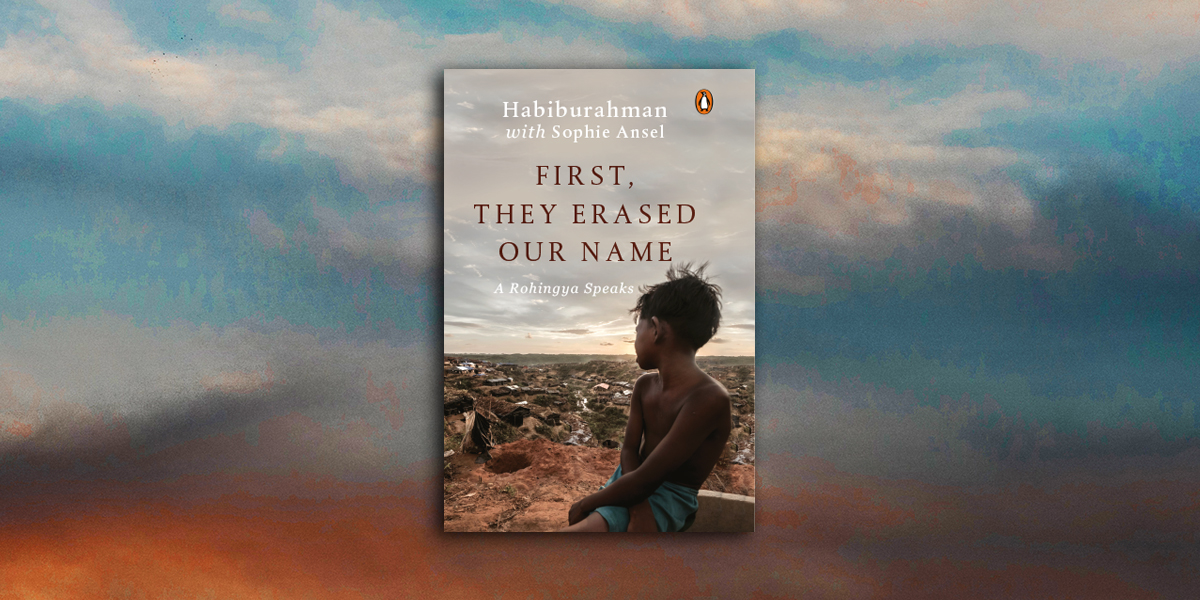
In First, They Erased Our Name, for the first time, a Rohingya speaks up to expose the truth behind this global humanitarian crisis. Through the eyes of a child, we learn about the historic persecution of the Rohingya people and witness the violence Habiburahman endured throughout his life until he escaped the country in 2000.


Here are some deeply moving moments from the author’s personal account:


“Once our people had left the country, it was difficult to return and reclaim what was rightfully ours. The authorities had robbed my family of everything, but my grandparents and my father had carefully conserved our title deeds. Arakan was the only possible place they could settle and find food and water, the only place they could hope to have a life.”

~

“Some Rohingya who lived in the smaller, more remote villages were warned about the Dragon King operations. My grandmother had just enough time to bundle up her most precious belongings, gather together her personal documents, and dig a deep hole under her hut in which to hide her life’s savings: gold jewellery that she could not take with her. She chased her livestock into the woods and took a boat upriver, as far away as possible from the Arakanese militia.”

“My Khumi friends call me ‘the Muslim’ to differentiate between me and the rest of the group, but it is always said in an affectionate, teasing way. However, the children from the Buddhist Bamar and Rakhine ethnic groups refuse to call me and my family anything other than kalars, said in a spiteful and aggressive tone. I hate it when they shout this name, as if they were spitting into our faces. I do my best to ignore them.”

“I suddenly hear Mum’s words: ‘At night, when it’s dark, think of the moon and the stars. They are the light of hope, our eternal guardians. Wherever you are and wherever I am, they will bring you the messages that I’ll send.’ To this day, I still don’t know why my mother went on that journey. Nor what happened when she arrived in the unknown place that I’ve only ever seen in my dreams.”

~

“I never knew my own grandfather, who used to live with my grandmother and father in nearby Arakan State, before our family were chased away by men from the dominant tribe, the Rakhines. Or maybe it was the Burmese soldiers. I can’t remember anymore. Whichever it was, my grandfather was arrested and tortured to death. Grandma often cries when she talks about him. The rest of the family went into hiding while they waited for the manhunt to end.”

“Football is my passion, but I am not allowed to enter school or village competitions because I am Muslim and black. Nonetheless, my teachers, who are from the minority Chin group, let me join in some of the training sessions like this one. During these sessions, nothing else matters. All I think of is the game, the strategy, and the adrenaline of winning. These moments united us through a shared language that ignored skin colour, religion, and origins: the universal language of sport.”

~

Habiburahman’s First, They Erased Our Name is an urgent, moving memoir about what it feels like to be repressed in one’s own country and a refugee in others. It gives voice to the voiceless.


Accused, Arrested, Acquitted: Jigna Vora’s Journey before Byculla

Renowned journalist Jyotirmoy Dey, fondly known as J, Dey, was murdered by members of the Chhota Rajan gang in 2011. A few months later, a fellow journalist and crime reporter Jigna Vora was arrested in connection with the murder. Seven years later, some of which were spent in prison, Jigna was acquitted of all charges.

Here are 10 things about the resilient author that you may not have known:


Jigna Vora studied Law from Ruparel College, Mumbai. She also did a one-year diploma course at Somaiya College, where Velly Thevar, her faculty and a well-known crime reporter working for the Times of India, sparked her interest in crime reporting.

~

At the behest of her parents, Jigna was forced to give up an internship with a reputed law firm to agree to a marriage with a man who, she was told, was an engineer and ran a printing press in Bharuch, Gujarat. She later discovered the claims to be false and this set the course for a tumultuous marriage that eventually ended on a bitter note.

~

In May 2004 Jigna moved back to her maternal home in Ghatkopar, Mumbai, where, as a single mother to a four year old son, she decided to pursue a career in media.

~

Jigna Vora joined the Free Press Journal (FPJ) in November 2005 and in her role as a court reporter her first assignment was to cover gangster Abu Salem’s case at the TADA court situated inside Arthur Road Jail.

~

After ten months in the Free Press Journal, Jigna Vora bagged a position with Mumbai Mirror as a court reporter, where her assigned beat was the sessions court at Kala Ghoda, Mumbai. Her interaction here with many accused and known criminals helped her step into the role of a crime reporter.

~

Jigna Vora covered her first underworld story in December 2005 when Sujata Nikhalje, dreaded gangster Chhota Rajan’s wife, was arrested for extortion threats against a builder under the Maharashtra Control of Organized Crime Act.

~

Jigna Vora worked for Mid-Day as a senior correspondent for the sessions court. Her big story about the controversial encounter specialist Pradeep Sharma sent shock waves across the country.

~

May 2008 marked another milestone in Jigna’s career when she joined Asian Age, which was the publication part of Deccan Chronicle, a revered brand of south India.

~

During her stint at Asian Age, Jigna covered the sensational story of Jaya Chheda, who had master-minded the murder of her ex-husband Suresh Bhagat – Mumbai’s matka king – in a bid to gain control over his thriving business.

~

Year 2011 changed the course of Jigna Vora’s life and brought her promising career as a journalist to a screeching halt. She was catapulted into a media storm when crime journalist J. Dey was shot and killed in Mumbai by the hitmen of underworld don Chhota Rajan.


Having survived the most challenging phase of her life, Jigna now practises healing, tarot card reading and astrology. She is currently researching for and writing web series and movies.

Her book, Behind Bars in Bycullais available now!

Test Your Knowledge of the Rank Structure of Our Amazing Armed Forces

If you have ever wondered what it’s like to be part of the armed forces, let the Our Amazing Armed Forces take you through this experience. From moving homes to making new friends, from deployment to reunion, from patriotism to tender family moments, these books go on to describe the daily lives of armed force officers and cadets.

Brimming with facts and impactful stories, read on to find out how an individual can rise through the ranks:


Indian Airforce

Is Air Chief Marshal senior to Air Vice Marshal? Zoom in to find out!

Indian Navy

Is Captain the boss of the Navy? This handy infographic will tell you

Indian Army

Major or General? Who is ranked higher? Zoom in to find out!


My Father Is In The Indian Army,  My Mother Is In The Indian Air Force and My Sister Is In The Indian Navy– Our Amazing Armed Forces series is available now!

Highlighting Ecological Problems through Rhyme, Action and Gentle Humour

The Indian subcontinent along with the rest of the world, faces the urgent threat of a dwindling wildlife population with 6,127 species deemed as critically endangered, as per an International Union for Conservation of Nature’s (IUCN)​ report. Benita Sen’s ​One Lonely Tiger​ perfectly captures this modern day threat of ecological extinction, via a children’s story that doubles as a wakeup call for audiences young and old alike. The story features a lonely tiger as its protagonist, whose attempts at finding someone to play with end in unforeseen consequences, bringing out Sen’s brilliant use of satire to invoke action.

The Bengal tiger, India’s national animal and the pride of the nation, is revered for its agility and majestic appearance.

The tiger is a symbol of majesty, grace, and strength. The Indian subcontinent, rich and diverse in its ecology, has always recognised the importance of flora and fauna, with carvings of animals like tigers and elephants being found in the remains of the Chola Empire and the Indus Valley Civilization. Elaborate sculptures, paintings, and modern day stamps, have featured these majestic creatures, arising from the belief that human beings and animals must coexist in harmony. However, colonization, and the period following it, played a significant role in the rapid decline of the ecology, with animals like tigers suffering a huge hit in population.

The colonizers believed in exploiting nature for the purpose of recreation and development, a trend that has somewhat stayed.

Trophy hunting of tigers as a leisure activity was popularized during the British Raj, an activity which was believed to represent man’s might over the fiercest of animals. The majestic tiger was seen as a symbol of prestige, with its head mounted on the wall considered as the ultimate symbol of pride. The introduction of western science and technology during Industrialization worsened the situation for the tiger and the general animal and plant population, with dozens of square feet of forest being cleared for factories. The advent of Industrialization acted as a catalyst to the already dwindling population of tigers, as the animals were already being hunted as big game.

Poaching and deforestation for developmental and agricultural purposes have significantly reduced the number of most animals, including the tiger.

Sen’s story focuses on the lonesome state of a seemingly enthusiastic tiger, who spends his time in search of friends to play with.

The tiger in Sen’s story chases his own shadow, the ‘strange black cat’, out of the desperate need for companionship. He attempts to make friends of animals like, the ‘frisky jackals’, and an elephant named Jumbo, but all in vain.
Sen’s children’s story serves the hard hitting truth of the increasingly lonely state of India’s national animal, the tiger, while commenting on the general state of degradation faced by wildlife. The tiger population of the country has come down from a whopping estimate of one lakh in 1900, to about 3000 in the present day. This dwindling wildlife population is testament to a history of irresponsible decisions made by human beings in the past years. Project Tiger (1973) salvaged the species from complete extinction. The programme increased the population by about 2,226 tigers in a little over three decades. The number of tigers as estimated in 2018 stands at 2967. Today, India is home to the largest population of tigers in the world.

Sen’s tiger showcases animals’ yearning for contact and a stable home free from human intrusion. The continuous exploitation of animal and plant species has led to many ‘lasts’ in the ecology.

The narrative addresses the issue of deforestation, and the loss of wildlife habitats due to human construction. It hints at what more animal corridors could help with: easy and safe passage from one forest to the next.

The narrator poses a very important question to readers in the beginning of the story.

At times, he got a little bored— Yaaawn—where could he go?

(​One Lonely Tiger,​ 2019, p. 7)

“..where could he go?” this troublesome question is raised to alert action, by highlighting the need to return the animals’ homes to them. Ecological degradation has reached an ultimate high with 130,000 square km of forest land being cleared every single day, according to a World Wildlife Fund for Nature report. Human demand is failing to keep up with supply, leading to the extensive exploitation of natural resources, subsequently making these very resources scarce.

Human intrusiveness is the root cause for environmental degradation, with forest land being cleared for construction, farming, and mining purposes.

He looks down where the forest was And lets out a long, sad sigh. ‘Where did my home go?’ he cries. ‘Where and why, oh why?’

(​One Lonely Tiger,​ 2019, p. 34)

Chased by lumberjacks, who would “…leave nothing to count, No grass or hedge or sedge.” the tiger hops off earth to Mars. The animal is shown leaving the planet where it was abused.

The tiger represents the state of most animals in the world, who are either in queue to become endangered or on the verge of becoming extinct, with the problem of loneliness not remaining limited to humans alone.

Continuous exploitation has forced several animals to live in isolation, devoid of interaction with their fellow species members, as a consequence of their homes being felled, and poaching. The story of George, a lonely tree snail, the last of his kind in the Hawaiian region, is a sad reminder of the cost of economic development. The snail was bred in captivity, and required a male mate found in the natural environment to procreate and regenerate the species. However, the absence of a mate lead to a sad ending for his species of snails.​ ​Other species of animals like the Black Rhinoceros, the Yangtze softshell turtle, and the Amur Leopard, among many others, are resigned to lonely lives as the last few of their kind remain.


The growing loneliness of wildlife species, and the dire condition of the ecology is a major concern for not only the present, but for future generations as well. Stories like ​One Lonely Tiger aim at raising awareness about pertinent environmental issues for younger generations to better understand the situation of the planet, with the hope that it will guide individuals towards more responsible courses of action.

But the story is not all desolate. There is lots of gentle humour as the animals interact. The illustrations by Sekhar Mukherjee match word with visual. The end result is a keepsake. The book ends on a strong note of hope as the human beings realise what they have done and get their act together.


All You Need to Know About Ruskin Bond’s Newest Book ‘Mukesh Starts A Zoo’

Most of us have grown up reading at least one of Ruskin Bond’s stories. He is iconic and his stories are delightful and easy to consume. So maybe it is time to introduce your little ones to the same imaginative world?

Read this short story from Ruskin Bond to your child and uncover how two little boys formed their own zoo:

There was no zoo in the small town where Mukesh lived. So, he decided to take matters in his own hand with the help of his friend Teju!

‘But you don’t have any birds or animals,’ said Dolly, his little sister.

‘I’ll find some,’ said Mukesh. 


A zoo where there was an assortment of house lizards, a ‘religious’ parrot, a rare black dog with yellow eyes, a white rabbit and Sitaram’s donkey aka ‘a wild ass from Kutch’!

A zoo where children were allowed in free, but grown-ups had to buy tickets at fifty paise each. 

A zoo that went awry!


Grab your copy of Mukesh Starts A Zoo to read your child a funny and illustrated story and find out what happens. It will make you feel nostalgic and your child feel happy!

7 Lesser Known Facts about India’s Role in the Cold War

India was proactive in the Cold War, even though India’s role has classically been defined as having been rather minimal.

In India and the Cold War, edited by Manu Bhagavan, contributors draw upon a wide array of new material, from recently opened archival sources to literature and film, and meld approaches from diplomatic history to development studies to explain the choices India made and to frame the decisions by its policymakers.

Read on to know some lesser known facts about India and the Cold War.


India was viewed as a potential but prickly strategic asset.

The 1950s proved challenging in other ways. While there were no doubt diplomats and politicians in both the United States and the Soviet Union who genuinely believed that India was an honest broker and were grateful to have an open channel to the opposing camp, others were more hard- nosed. They saw both India and Nehru as naïve, pompous, and overbearing. From this perspective, India was seen as a potential but prickly strategic asset, a geographically important, large state that was too reluctant to pick a side.

~

At the beginning of the Cold War, India had military expeditionary capabilities despite of not belonging to a superpower bloc.

At the end of World War II and the beginning of the Cold War, India was one of the few countries among the original fifty-one U.N. members that had the military expeditionary capability to conduct operations well beyond its borders and did not belong to a superpower bloc.

~

The period from India’s independence – 1947 to 1956 – laid the foundation for Indo-Soviet relations.

Indo Soviet ties did begin to open up especially in the context of the Moscow Economic Conference organized in April 1952, to which India sent one of the largest delegations present, comparable to those from France, Great Britain and China…The Soviet Union reciprocated soon after by sending a delegation to Bombay to the International Industrial Exhibition held in May 1952.

~

Indira Gandhi and the Cold War.

External pressure from Cold War U.S. economic statecraft thus contributed to exposing and deepening political cleavages within the previously Congress- dominated polity and within the Congress Party itself. This had several major political and policy outcomes. The tensions within the Congress Party came to a head after Gandhi moved to nationalize commercial banks in 1969.

~

India and Pakistan’s early contacts with the US were based on similar objectives.

Both countries were tempted into their positions in the Cold War by a combination of similar ingredients: colonial precedent, a hunger for funding and developmental infrastructure and a precarious question of how to justify this in the eyes of critical domestic audiences.

~

Hindu Nationalists and the Cold War.

Surprisingly little has been written about the diversity of Indian views on International Relations in the Cold War era (page 230)…. Hindu nationalists initially expressed a clear preference for the West. But over time this became a guarded preference because Hindu nationalists came to doubt U.S. willingness to countenance India’s rise and because they fretted about the consequences of materialism and Westernization.

~

India was at the forefront on initiating and establishing U.N. Peacekeeping.

During the Cold War, India (under Nehru) became an accidental rule shaper for U.N. Peacekeeping. This is not because it needed to but because it could. Nehru not only encouraged U.N. peacekeeping initiatives in the General Assembly but also supported efforts in the field.


During the Cold War, India’s achievements were significant, and its misfires were notable. To know more about them, grab your copy of the book today!

The Journey of Mahatma Gandhi: Facts from ‘Gandhi in 150 Anecdotes’

150 years ago, a man was born who gave all of us our most prized possessions – political freedom and social equality. These changed the history of India forever. With his round-rimmed glasses, white dhoti and walking stick, he is an enduring symbol of non-violence, freedom, peace and simplicity. He is the Father of the Nation, Mahatma Gandhi.

Here are 6 facts about Gandhiji that you may not have known from Arthy Muthanna Singh and Mamta Nainy’s Gandhi in 150 Anecdotes:


Observing Gandhiji’s compassion towards those in need and his empathetic response towards the suffering of his people, poet Rabindranath Tagore gave him the title ‘Mahatma’.

*

In his early years, Gandhiji was deeply moved by the mythological tale of King Harishchandra who sacrificed his kingdom and family to follow the path of truth. Inspired by this story, Gandhiji resolved to be unwaveringly truthful throughout his life.

*

According to the custom of the region at that time, Gandhiji was married at the young age of thirteen to a spirited young girl called Kasturba Makhanji, whom  he affectionately called ‘Ba’. However, as an adult, Gandhiji objected to the tradition of child marriage.

*

Despite being born into a strictly vegetarian Hindu family, young Mohandas surrendered to the temptation offered by a friend who encouraged consumption of meat as a source of strength required to win against the mighty British. Gandhiji enjoyed eating meat dishes but his guilt at the dishonourable act of cheating on his devout parents brought this episode to an end. His resolve to eat vegetarian food continued during his time in England where he depended on raw, unsavoury vegetables and bread for sustenance till he bought a cooker and learnt to cook his own food, especially his favourite carrot soup!

Gandhiji refrained from indulgence in food to focus on his spiritual goals. But there was one luscious fruit that Bapu had a special weakness for –  mangoes!

*

A fact about Gandhiji not known to many is that he was a great football enthusiast. During his time in South Africa, he formed two football clubs – both named the Passive Resisters – inspired by the political philosophy in the writings of Henry Thoreau and Leo Tolstoy.

*

German physicist and Nobel Prize-winning scientist, Albert Einstein, once expressed his admiration for Gandhiji in a letter. He wrote: ‘You have shown [that] it’s possible to succeed without violence, even with those who have not disregarded the method of violence. We may hope that your example will spread beyond the borders of your country and will help to establish an international authority, respected by all, which will take decisions and replace war conflicts. I hope that I will be able to meet you face to face some day.’


‘You can open any page in this book and go back to an exciting time in our country’s history, when one man made a life-changing difference to millions of lives,’ write Arthy Muthanna Singh and Mamta Nainy.

Peppered with fascinating trivia and rare insights into the life of a man who inspired not just a nation but the greatest minds in the world, Gandhi in 150 Anecdotes offers its young readers an opportunity to know more about their beloved Bapu.

error: Content is protected !!