Publish with Us

Follow Penguin

Follow Penguinsters

Follow Penguin Swadesh

(More) Reasons to Read ‘Poor Economics’

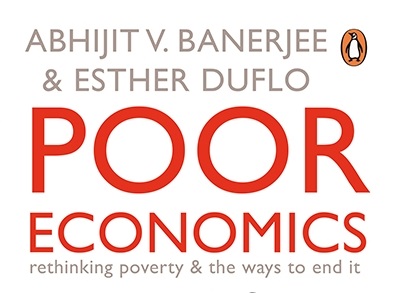
The authors of the highly acclaimed 2011 book, Poor Economics: A Radical Rethinking of the Way to Fight Global Poverty, now have another reason to celebrate! On 14th October 2019, authors Abhijit Banerjee and Esther Duflo were named as two of the three groundbreaking recipients for the 2019 Nobel Prize in Economics! Of course, that is as strong a reason as any, but we have a few more words to add to the many reasons you should read their book:


“Poor Economics stands out in the literature on development economics in that it stays away from the ‘big questions’ to investigate the incredibly multi-faceted and complex lives of the poor, and imagines the policies that could have a real impact.”

Arnaud Vaganay, The London School of Economics and Political Science

“Abhijit Banerjee and Esther Duflo want to reduce poverty. That goal is common—what distinguishes the work of these young economists, both at MIT, is their methods. They aim to inject scientific evidence into policy deliberation, and advance the debate with conclusions that can be widely agreed on while not being truisms.”

Prospect magazine

“A marvelously insightful book by two outstanding researchers on the real nature of poverty.”

Amartya Sen, Lamont University Professor and Professor of Economics and Philosophy at Harvard University and winner of the Nobel Prize for Economics

“With regard to institutions and governance, Poor Economics suggests that there is more to improved outcomes than the veneer of participation. The authors’ findings affirm over and over again that knowledge really can be a powerful tool for change.”

Democracy, A Journal of Ideas

“This book is a must-read for anyone who cares about world poverty. It has been years since I read a book that taught me so much. Poor Economics represents the best that economics has to offer.”

Steven D. Levitt, William B. Ogden Distinguished Service Professor of Economics at the University of Chicago and author of Freakonomics

“Abhijit Banerjee and Esther Duflo are allergic to grand generalizations about the secret of economic development. Instead they appeal to many local observations and experiments to explore how poor people in poor countries actually cope with their poverty: what they know, what they seem (or don’t seem) to want, what they expect of themselves and others, and how they make the choices that they can make. […] I was fascinated and convinced.”

Robert Solow, Institute Professor of Economics, Massachusetts Institute of Technology, and winner of the Nobel Prize for Economics

“Abhijit Banerjee and Esther Duflo have written an engrossing, deeply readable book, one that moves beyond simple analyses of poverty. It examines, in powerful detail, the challenges poor households face in escaping their condition. It takes on existing poverty mitigation efforts  and puts them to test using real, empirical data.”

Nandan Nilekani, Chairman of the Unique Identification Authority of India

“It is [the] exploration into understanding the poor, rather than rendering a formula to end poverty that makes it a compelling and important read.”

Elmira Bayrasli, Forbes

“Books that make grandiose claims for themselves often disappoint – but this truly is a “radical rethinking” about global poverty. […] The result is a remarkable work: incisive, scientific, compelling and very accessible, a must-read for advocates and opponents of international aid alike, for interested laymen and dedicated academics.”

Keyur Patel, Financial World

“Highly decorated economists Banerjee and Duflo (Economics/Massachusetts Institute of Technology) relay 15 years of research into a smart, engaging investigation of global poverty—and why we’re failing to eliminate it. Aiming to change the stigma that revolves around poverty, the authors explore not just how many find themselves in economic quicksand, but why.”

Kirkus Reviews


Poor Economics: Rethinking Poverty and The Ways to End It will offer you pathbreaking insights into the causes of global poverty and the ways in which we can alleviate it.

 

Interesting Facts About Krishna Udayasankar

Krishna Udayasankar is the author of the bestselling Aryavarta Chronicles (Govinda, Kaurava, Kurukshetra) based on the Mahabharata.

She has also written a book based on the founding legend of the island of Singapore titledand the fantastical Immortal.

Here are 6 things about prolific author based in Singapore that you may not have known:

She knew by the age of five that she wanted to grow up to be a writer (or an astronaut)

~

Her first book was supposed to be satirical poem based on the Mahabharata but after researching more on the topic she ended up writing The Aryavarta Chronicles

~

She did research to write a book on dogs but was unable to do so because the topic was too close to her heart. She ended up writing Beast, a book that focused on werelions instead.

~

Krishna Udayasankar is a Rajinikanth fan!

~

She lives in Singapore with her family, which includes three bookish canine children, Boozo, Zana, and Maya.

~

Krishna holds an undergraduate degree in law and a PhD in strategic management.

~

The writer is/was a lecturer at the Nanyang Business School at Nanyang Technological University.

~

She has co-authored two well-adopted textbooks: International Business: An Asian Perspective  and Global Business Today.

Check out the fantastic backlist of Krishna Udayasankar featuring titles like Govinda, Kaurava, Kurukshetra, 3 and Immortal.

Margaret Atwood on the Pressure of Writing a Sequel to The Handmaid’s Tale and More!

Margaret Atwood’s dystopian masterpiece, The Handmaid’s Tale, is a modern classic. Now she brings the iconic story to a dramatic conclusion in The Testaments.

Read to know about her writing process, what prompted her return to Gilead and more:


What prompted your return to Gilead?

There have been many requests for a sequel. As time moved on, instead of moving further away from Gilead we started moving towards it, especially in the United States. While I couldn’t continue with Offred’s narrative, I could continue with other characters.

How do these kind of regimes disappear? I was interested in exploring that and what it would be like for the second generation in Gilead – this is all they know, this is normal life to them, they’re not engaged in the violent part of the affair.

One of the narrators grows up in Gilead, one across the border in Canada and one was there for the founding. We see Gilead from within, from without and from the founding.

On Aunt Lydia

We’ve only seen Aunt Lydia from the outside in The Handmaid’s Tale. How do people complicit to these regimes get into it? What do they use that power for? What is their justification to themselves?

How much has your involvement in the TV series affected the way you wrote the book?

Bruce Miller and I talk on the phone and we have important conversations. I read the scripts and make notes. I don’t have any actual power to make changes, but some influence. We’re in accord most of the time. He’s now read the book and has so much more whiteboard space!

How does it feel to see your book being used again in protests?

That started in Texas where an all-male legislature was bringing in more laws about women’s bodies. The photos looked like shots from the TV series. It’s the perfect form of protest because it’s peaceful. It’s a very striking visual image, too.  It’s a question of things escaping from a book into the real world. None of this would be happening if countries weren’t putting people in charge of women’s bodies who aren’t those women.

Until the Cold War ended, the US presented itself as the liberal alternative. They weren’t showcasing their shadow side. But once that opponent was gone, everything could come out of the cupboard that has always been there, and out it has come.

How much pressure did you feel writing this book three decades later? 

There’s a danger of letting down the audience at every turn on every occasion. The audience will have different opinions. There’s a danger, but it’s a danger I’ve faced before.

Do you consider The Testaments dystopia?

A dystopia is an imagined society that we assume is worse than the one we live in. A utopia imagines a better world. The nineteenth century was an age of the utopia because it felt it was improving things and things would keep on getting better. That changed around the turn of the century. After WWI & WWII, utopias became hard to write. Is The Testaments a dystopian world? Let us hope so.

What do you make of the reaction at midnight last night? 

London loves a happening! It’s quite amazing how people came in the middle of the night to see the books revealed. It was lots of fun. People had a pretty grand time!

Are you overwhelmed by the launch? Do you consider yourself a literary rockstar?

Well I haven’t yet died of an opioid overdose… but there’s time! Am I overwhelmed by it? I’m very pleased and grateful to the readers and the teams of people across the world who’ve been putting it all together and protecting the manuscript.

When did you start writing the new book?

I sent a two-paragraph summary to my publishers in February 2017. I think they were terrified. I must have been far enough along with it then to tell them what I was doing. I was thinking about it in 2015 and started proper planning in 2016.

Would you go back to Gilead again?

I never say never to anything.

Do you think writing is an act of faith?

Writing is always an act of hope because it assumes a reader, no matter what the content.

What has it been like seeing the US moving closer to Gilead?

If you look at the legislative moves made in the US you can see they’re almost there. The message is that the state will own women’s bodies. You’re forcing women to deliver babies. Cheap labour, and that’s a pun.

The Testaments contributes to a conversation that’s already taking place. For a society that claims to value individual freedom, evidently they think this freedom doesn’t extend to women.

The Testaments seems a lot more optimistic than The Handmaid’s Tale, why is that?

The Handmaid’s Tale is optimistic. I didn’t kill off the central character and we have the symposium at the end which proves Gilead didn’t last.

It’s the same with The Testaments. It’s still clear that Gilead is over and it crumbled partly from within.


Margaret Atwood’s dystopian masterpiece The Testaments is available now!


Join the Festive Mood: A Message from Author Sonia Mehta for Your Young Ones!

Diwali is round the corner and we are sure your young ones are jumping with excitement! The festival season is full of cheer, lights and colour, and India has so many of them!

Celebrated children’s author, Sonia Mehta, is back with Festivals of India to introduce your young ones to all the festival cheer that India has to offer. With its diverse range of communities and cultures, our country has many, many reasons to celebrate all year long. Here is a message to your kids from author Sonia Mehta herself!


Hello Kids!

Here’s an incredible thing about India. Because India is a mix of so many cultures, there are literally hundreds of festivals that people celebrate. I thought it would be a great idea to get to know some of them.

Many festivals have stories and legends behind them. Sometimes, people forget the reason they are celebrating a festival in the first place. I’ve tried to share with you as many of the stories and legends behind the festivals as I could. It’s not possible to write about all of them – that would end up being a giant book – but this book contains some of the better-known and lesser-known ones!

Lots of love,

Sonia Aunty

Festivals of India is part of the Discover India series of books that contain lots of fun facts and engaging activities. Through these books, get the young ones to explore the history and stories that make India such a diverse and fascinating nation!

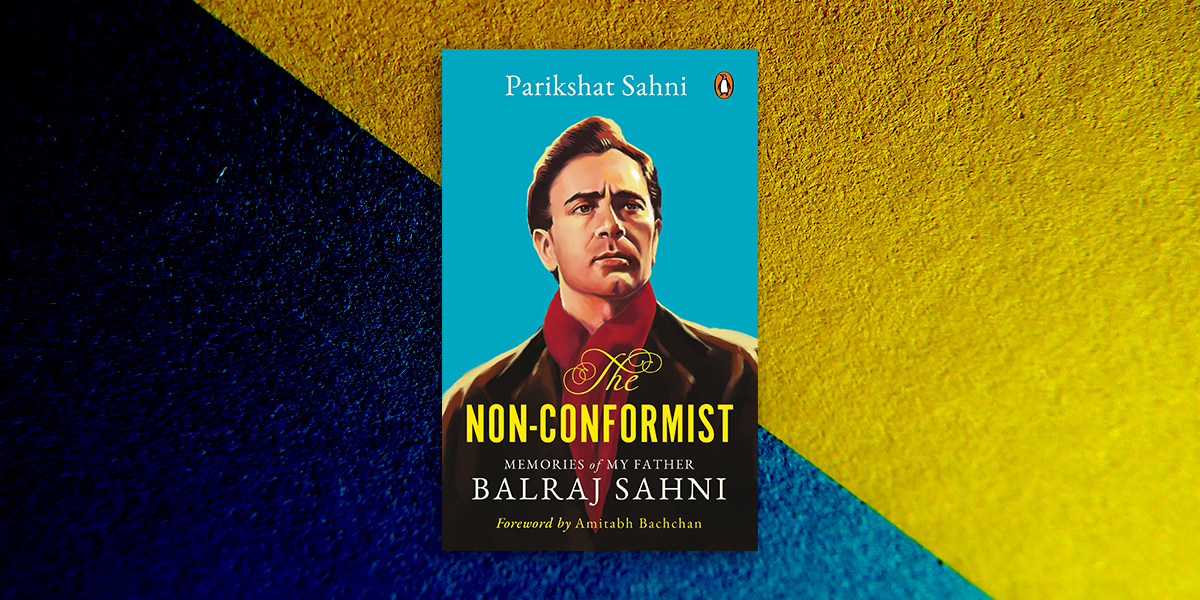
5 Unforgettable Moments from Balraj Sahni’s Life

A man, an actor, a husband, a friend, a parent, a patriot and a legend with a host of admirers like Amitabh Bachchan and Om Puri, Balraj Sahni led the golden era of Indian cinema.

He was known to be true to his principles, a non-conformist often remembered for his portrayals of the underprivileged. Read his story, written by his son Parikshat Sahni, and celebrate the life, times and impact of a simple man who inspired an entire generation of actors and continues to do so even today.

Here are some moments from Parikshat Sahni’s book that we found memorable:

(Balraj Sahni) had worked with Mahatma Gandhi for a year in Sevagram in 1938. The following year, he was called upon to leave Indian shores and take a ship to England, to broadcast programmes in Hindi for Indian soldiers fighting overseas. He didn’t hesitate for a minute. He was unlike anyone else in the family. Influenced by the Romantic poets, he was a swash-buckling adventurer always looking for and taking on dangerous new challenges. He was a non-conformist and not one to pursue traditional lines of work. 

~

(Balraj Sahni) craved for romance and adventure. He fell madly in love with his first cousin, Santosh Kashyap (Byron was in love with his half-sister) and a great romance developed between them till it was discovered by their elders. They were horrified and afraid it would sully their name in the Arya Samaj fold, particularly as my grandfather was the head of the samaj in Rawalpindi. The family was quick to quash this budding romance before it flourished. 

~

(At a fancy party, Balraj Sahni) piled his plate with a generous helping of rice and dal and half a tandoori chicken. He started eating the chicken with his hands. The woman, who had been witness to Dad’s rustic antics, could not help coming up to him once again with a plate of salad and some steamed vegetables, topped with a piece of chicken. Picking at her food daintily with her fork and depositing it carefully in her mouth, she asked, ‘Don’t you actors have to look after your figures?’ She pointed to the mound of rice, dal and tandoori chicken on Dad’s plate. I could see that by now Dad had had enough of this elderly woman and her persistent efforts to needle and belittle him. ‘No madam, not character actors like me. I like to eat well.’ 

~

How did Balraj Sahni become a Marxist? One of the reasons that he went to England, I think, was to take a closer look at the nation that ruled India. It was there that the Marxism bug bit him. He became an admirer of the Soviet state, not by reading the tomes of Lenin or Das Kapital, but by watching Soviet films, which were widely shown, as the British and Russians were allies then. As he mentions in his autobiography, it was a Russian film called Circus that converted him. 

~

During an occasion in Srinagar, Balraj Sahni was, among others, in the company of Mufti Saheb’s daughter, who later, like her father, became the chief minister of Kashmir. She was in her early twenties at the time. If I am not mistaken, she is not a very tall lady and Dad towered over her. She looked up at him adoringly, but he wanted to impress her and the others in the room by appearing even taller. So he balanced himself on a little wooden strip that separated one room from another (as was customary in the wooden houses in Kashmir in those days) and stayed perched.


Those who only saw him on the screen loved him for his realism and projection of his art; those who saw him on the stage loved him for his contribution to their cultural life; those who only read his books loved him for his literary prowess; those who knew him socially loved him for his gentlemanliness and affability; those who knew him politically loved him for the commitment and dedication he brought to whatever cause he espoused and those who knew him personally loved him for his honesty and simplicity. Read the book to get to know Balraj Sahni better!

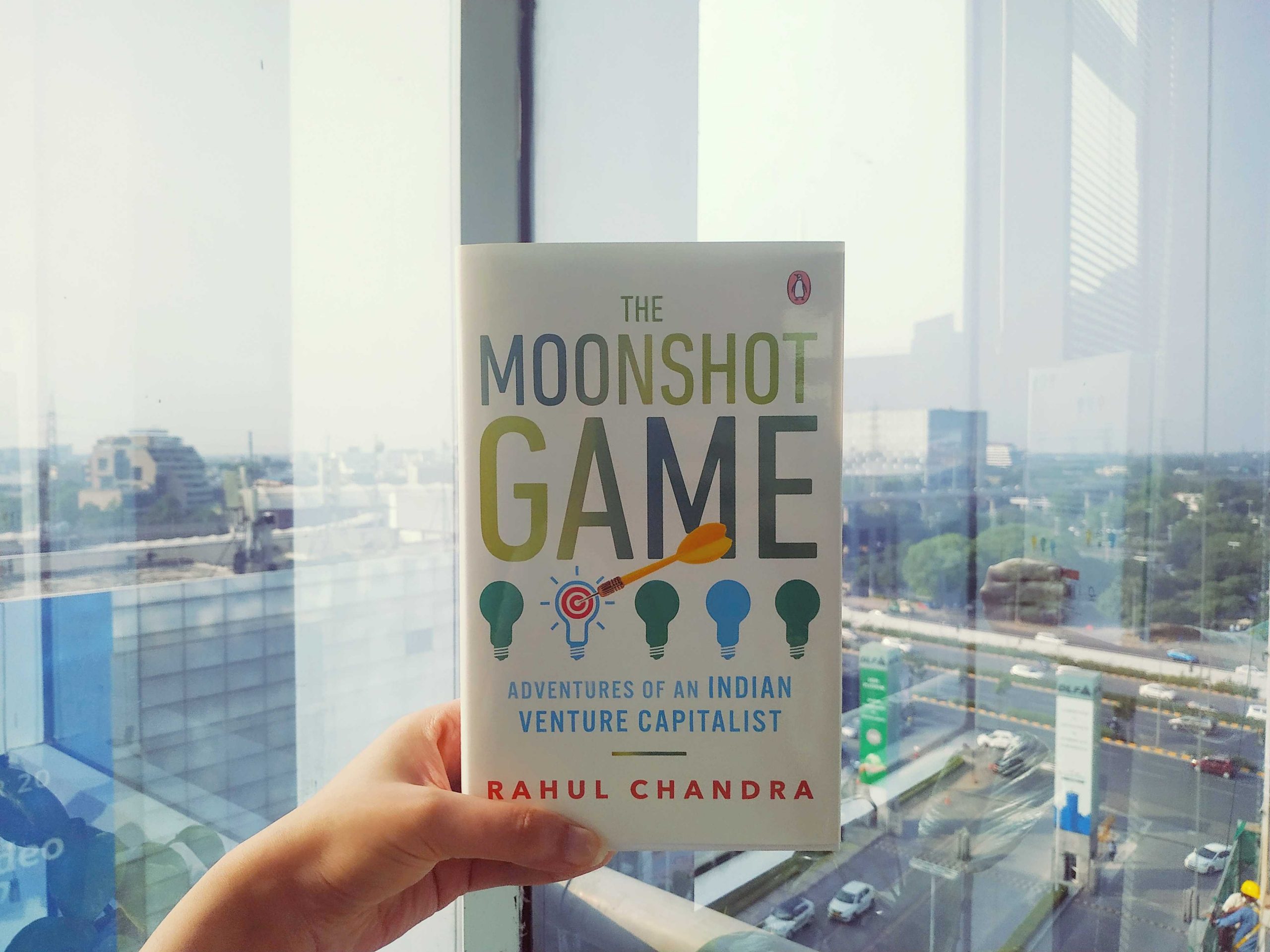
Glimpses into a VC’s Life: Interesting Anecdotes from ‘A Moonshot Game’

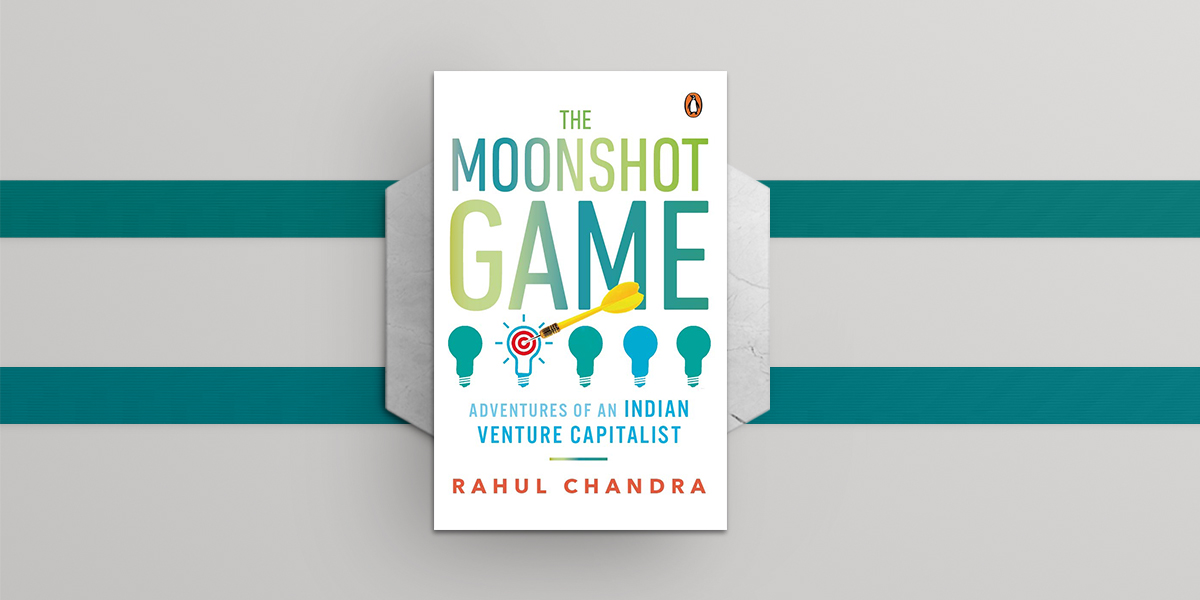
The Moonshot Game by Rahul Chandra, the co-founder of Helion Ventures, describes how global conditions, local consumers, founder ambition and good old greed shaped the start-up story in India. It is a candid memoir in which Rahul tells us about his journey of building one of India’s oldest Venture Capital firms. In a remarkably gripping account, he recounts his adventures in India’s hyper-funded start-up ecosystem.

Here are some anecdotes from the book that stayed with us:


Prior to EyeQ, we came across a childbirth clinic that was attempting to make childbirth a pleasant experience for the expectant mother. The team was a combination of an obstetrician and a businessperson from a real estate background. A single location of a childbirth clinic could generate Rs 2-3 crore and lowered the complexity bar for the number of locations. This made it very attractive. We decided to invest in this company and called a few VCs to co-invest with us. One of them liked the company so much that they decided to keep us out and funded the company entirely on their own. It was a strange experience, but we admired the VC firm for their single-mindedness. 

~

Founder salaries are Gandhian tools to keep the balance between founders and investors. They are Gandhian because it’s a moral position achieved through a personal sacrifice. How much is a founder’s salary worth? When everyone around the table knows the salary-earning potential of a founder who has chosen to take an income only for sustenance, the power of that moral stand helps maintain the balance in the board. As an investor, I have tremendous respect for founders who forego high salaries to put the company’s interests first. The cash is limited; it can be dissipated in high salaries or be used to build more equity value for everyone. I saw an example of this in Mr Ashok Soota, co-founder of IT services company Mindtree. After the dotcom collapse in a tough market, he decided to cut his salary in half. As a young VC working at Walden, I was awestruck by this act of leadership by Ashok. The board had to work hard to convince him to consider a cut that was not too deep! 

~

What should have been a simple first round of financing was a drama of epic proportions. Our lawyers presented the company with a first draft of the lengthy agreement called the Shareholders Agreement, the SHA for short. After UnitedLex went through the SHA, a frustrated cry of disbelief went up. They thought the SHA draft was a piece of shit. I got a call from the co-founder. You need to immediately fire your law firm, he said. The partner who is talking to us doesn’t know how to even draft. And don’t even mention the abilities of the associate in the law firm. I was yet to figure out that this sort of extreme views would be the opening lines of many other conversations that would follow. I am a good listener, but a good listener needs to dispel notions. I laid out my sympathies but ended the call with a fait accompli. The law firm would stay. We have got to live with our displeasures. 

~

On 5 July 2013, Apoorv Sharma of Venture Nursery sent me a mail connecting me to the founder of a company called Oravel that they had seed-funded. The founder, Ritesh, wrote me a nice short mail introducing himself…. His mail was an eye-catcher in which he precisely captured the key points of what they did, how they had been growing, their credentials and when they would like to raise their next round… Ritesh was nineteen years old at that time. I introduced Ritesh to my colleague who was covering travel. He had met Ritesh earlier but still did a perfunctory catch-up. The age factor was an oversized oddity. The ability of a nineteen-year-old to build a business was highly questionable. Oravel did not even make it to the priority list in our internal filter. Better known as OYO, Oravel would be running 12,000 hotels in 337 cities by 2019 and would be valued at $5 billion.

~

On 15 October 2010, I was hosting some close friends at home. We had known each other since eighth grade and it had been a fun evening. I had a barbeque going in the front lawn and I was in charge. There was nice wine to go with the food and the weather in Gurgaon was perfect to sit outdoors. My friends were sitting around the barbeque. Around 9.30 p.m., my BlackBerry started buzzing. I had been very careful about not burning the food on the barbeque, but this buzzing somehow compelled me to pull out my phone. I squinted to read in the dim outdoor light, and an email containing breaking news from Andhra Pradesh confirmed my worst fears. Now oblivious to the barbeque, the implications of what I was reading started to slowly sink in. The ongoing battle of words between the state administration and the ‘highflying’ microfinance companies had escalated to a full assault. The state had passed a promulgation that banned microfinance activity in the state. This promulgation would throw three of the largest microfinance companies under the bus. A total of Rs 7000 crore would go up in smoke. We all had burnt food that night.


Grab your copy of the book today to learn more about a VC’s constant journey of ups and downs and why no amount of failure can be an excuse to lose optimism in the power of entrepreneurship!

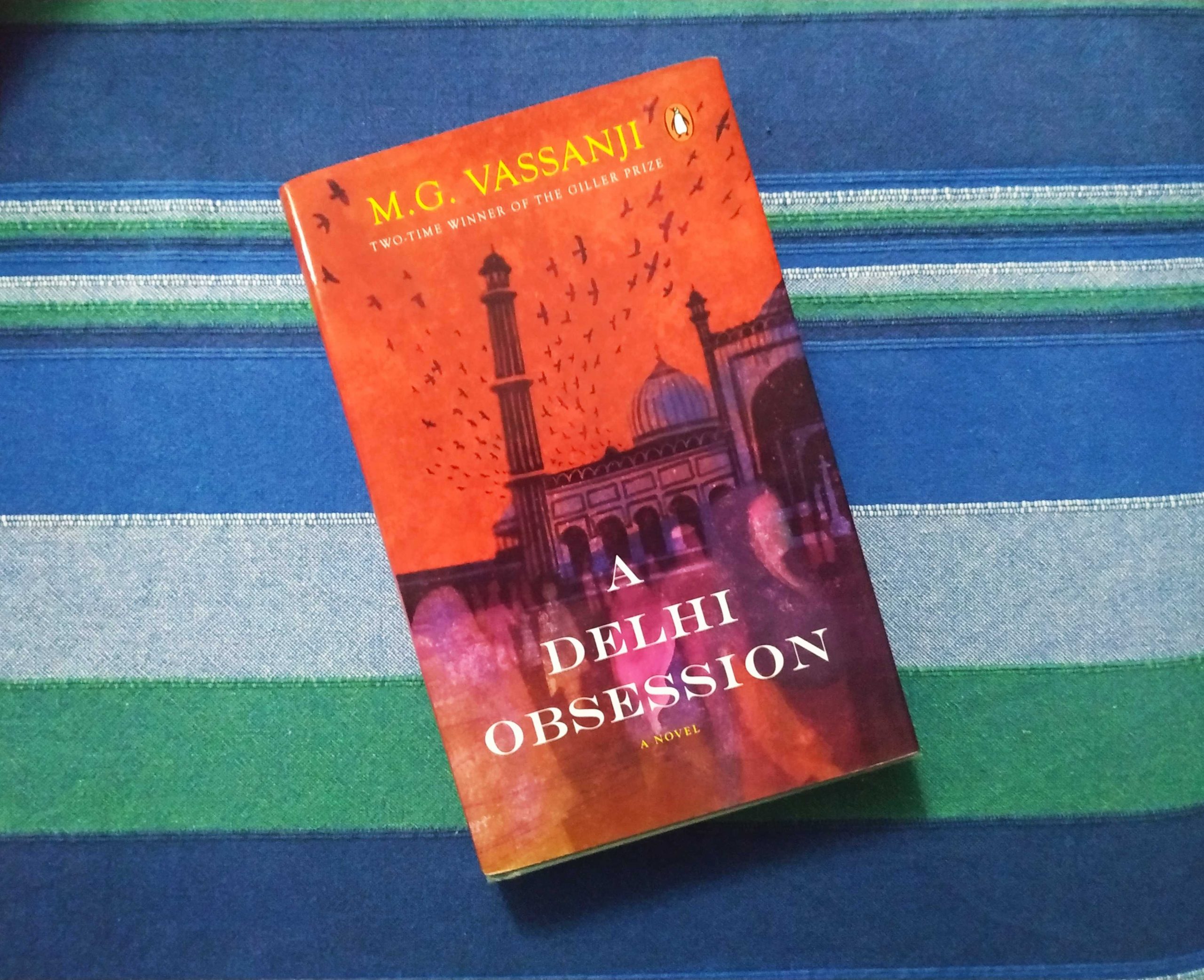
4 times you see the struggle between love and faith in M.G. Vassanji’s ‘A Delhi Obsession’

Munir Khan, a recent widower from Toronto, meets the charming and witty Mohini Singh, a married liberal newspaper columnist, in the bar of the high-brow Delhi Recreational Club. Will their passion survive the menacing shadows of terror attacks and the wounded memories of Partition?

Written with trademark sensitivity and a sharp, affecting vision, A Delhi Obsession is M.G. Vassanji’s most urgent novel yet. Set in contemporary times, it unravels an unexpected yet prophetic story of passion, love and faith.

Read on about 4 instances from the book that showcase the struggle between love and faith:

Now, whenever they argued, and it seemed they did so frequently, he was likely to come out with a mocking, ‘And I guess you find that Khan of yours perfect!’ Once he said, ‘Still pining for that Muslim! Don’t forget your parents escaped with their lives, from the other side, his side!’ This was not usually like him, he was deliberately provoking her with these cheap communal references, and she had replied sharply, ‘He’s not my Muslim!’

He had read that the term ‘Hindu’, derived from the name of the river Indus, originally referred to the natives of that area. That included those who had opted to follow Islam. Only later had it begun to acquire its rigid exclusivity. The population of Afghanistan, where his paternal ancestors came from, had been mainly Buddhist originally. His mother’s people came from Gujarat, where the current prime minister of India was from. What was Munir Khan, then? ‘Asian’ had been good enough in Nairobi. Now art moved him; music and literature. That was his worship, there lay his gods. He had been happily, willingly deracinated. Now, with a visit to Delhi, his grandfather’s city, he was saddled with this question: was he a Muslim? But did that—whatever it meant—matter? It seemed to matter very much in India. Everyone had a brand, and that indelible brand carried a violent history from the time of Barani that still mattered centuries later. Your people ruled us for seven centuries, as Mohini had said so casually. It was a troubling reminder.

‘We are different, Hindu and Muslim, like day and night . . . But whether Hindu or Muslim, you are a married woman with a home, Mohini!’

She had not promised to God. Only to a holy man. To be chaste and pure. And she believed sincerely that her love was pure. She wasn’t promiscuous. She was modest and generous, she had been attentive to her parents. She had not lied to Ravi . . . just kept things from him. Between them was the arrangement of marriage; respect and care, duty. Affection too, at times. But nothing like what she felt for Munir, and he for her. She and Munir were meant to be, and they had found each other.


Get your copy of A Delhi Obsession today!

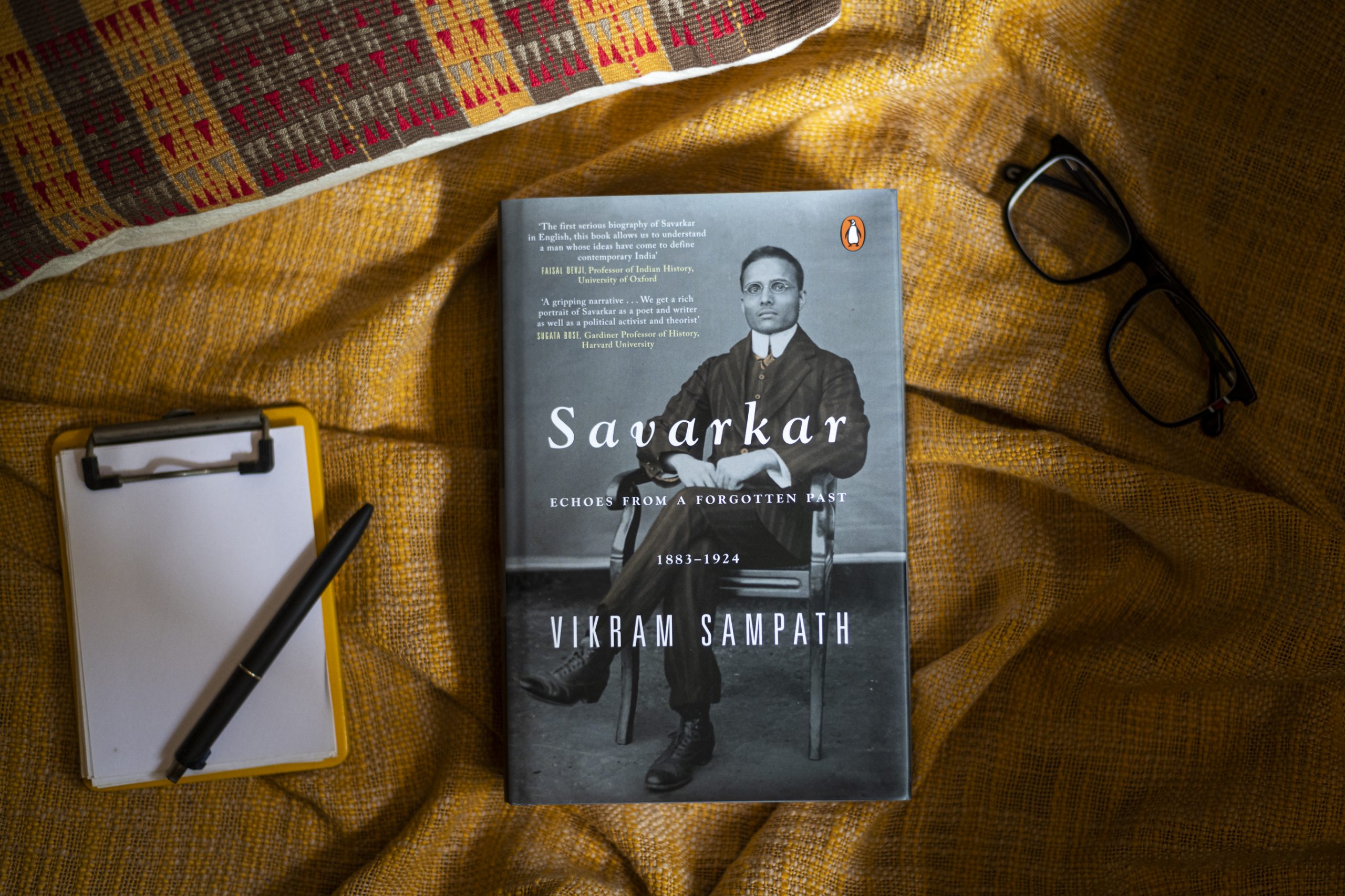
7 Things You Didn’t Know about Savarkar

As the intellectual fountainhead of the ideology of Hindutva, Vinayak Damodar Savarkar is undoubtedly one of the most contentious political thinkers and leaders of the twentieth century. Accounts of his eventful and stormy life have oscillated from eulogizing hagiographies to disparaging demonization. The truth, as always, lies somewhere in between and has unfortunately never been brought to light. Savarkar by Vikram Sampath aims to unpack his ideology, that stood as one of the strongest and most virulent opponents of Gandhi, his pacifist philosophy and the Indian National Congress.

Here are some unknown facts about Savarkar’s life from the book!

Savarkar started a dual organization—a front-end entity that organized ‘peaceful’ activities like festivals and melas, which could have a wider societal outreach and become the hunting ground for talented youth with a nationalistic drive and organizational skills. This organisation was called the ‘Mitra Mela’, or Group of Friends, as a front-end organization of the Rashtrabhakta Samuha.

Savarkar was against foreign goods and propagated the idea of Swadeshi. In 1905, he burnt all the foreign goods in a bonfire on Dussehra.

Despite being born in an orthodox and religious Chitpawan Brahmin community, Vinayak despised the caste system right from childhood. This has been illustrated in the kinships he developed with children from various castes and strata of society, and how he dined at their homes.

At a time when most members of his community forbade sea travel for fear of a loss of caste, Vinayak was among the few Brahmins who travelled to London for his education.

Savarkar had no qualms about going non-vegetarian as well, unlike most Brahmins of the time.

Savarkar penned essays on the abhorrent practice of the caste system and untouchability and how these sapped the nation of all vitality.

Savarkar supported cow protection but considered cow worship superstitious.

Savarkar was arrested in 1909 on charges of plotting an armed revolt against the Morle-Minto reforms. He tried to escape by diving in the water but was arrested as he reached the shore. On July 1911, Savarkar was sentenced to two life sentences i.e. 50 years in the cellular jail of Andamans, also called Kala Pani.

Get your copy of Savarkar today!

Tips on Impressing a VC from ‘The Moonshot Game’

In The Moonshot Game – a book dedicated tothe founders who have been, the founders who are, and the founders who will be’ – Rahul Chandra, the co-founder of Helion Ventures, gives us the behind-the-scenes story of a VC’s journey, right from the beginning of the second start-up revolution in India in 2006 until the end of the funding frenzy in 2016.

We have picked out some tips for you on how you can go about impressing a VC – straight from a VC’s mouth!


Keep the business model simple!

The best part of BookMyShow’s model was its simplicity. It was a low-margin business but the number of people who would eventually buy movie tickets on the Internet was projected to grow by many thousands in the future. The tough times that followed the founding years of BookMyShow were not just due to lack of money, but also competition. Eventually, BookMyShow won both battles. Many competitors perished. BookMyShow was more or less the last company standing, and like MakeMyTrip, it dominated the online movie ticketing market.

~

Timing plays a Massive Role- make sure it is correct for your business!

In another decade, a Graycell could have grown like WhatsApp, a JiGrahak like Paytm, but there is such a vast difference in outcome in seemingly similar concepts. The constant analysis of what makes some start-ups successful while some equally smart founders fail shows that timing has a massive role. This one factor is a huge determinant of success and is hardest to determine.

 ~

Have a Product Head

The product head was the bridge between the customer and the engineering team. The role required the product manager to translate between these two functions. This ensured that engineering built great features that made production adoption easy. This role had still not appeared in consumer Internet companies in India.

~

Keep the audience on the edge while giving a presentation

Vijay’s voice was high-pitched. Unlike pitches which ramble on to produce a soporific effect, Vijay’s incantations kept my brain on edge…. Vijay was speaking in a curious Hinglish. He punctuated every sentence with an ‘okay’. But damn, he had some energy. I could tell that sitting down was too passive for him. Given a chance, he would stand up and walk all over the room while explaining himself. His hands had a life of their own. As he moved them, the vision of Vijay Shekhar Sharma started getting painted in my head. He had me in goose bumps during the course of this first meeting.

~

Make it clear what help is needed from the VC

Like Deep Kalra, Saurabh also made it clear what help he needed from his VC firm. He wanted help with finding quality businesspeople to join his lean team of engineers. There were lots of partnerships to be done. This meant we were playing out our promise of being active investors.


Get your hands on the book today to get more insights into the secret world of a VC!

Puffin Picks for the Festival Season!

To add to the Diwali excitement, we have an explosive range of books for the young ones! Whether they want to meet Dev who daydreams just like them in class, or hop on an adventure with the delightful chihuahua Mr. Cheeks, this festive list has something for everyone!

Here is a list of all the colourful stories coming your way:


Two Epics in One by Devdutt Pattanaik


The country’s favourite mythologist, Devdutt Pattanaik, empowers and entertains with a double bill of the Ramayana and the Mahabharata for a whole new generation of readers, in his easy, distinctive style.

This gorgeous flipbook, bringing together Pattanaik’s previously celebrated works, is both playful and informative! Flip the book and look at the epics in a brand new light.

~


Crack the Code by Aditi Singhal and Sudhir Singhal

 Mathematics just became fun!

Whether you are 11 or 41, you’re going to love solving the 25 mysteries in this book that combine simple cryptology and arithmetic with some quick, out-of-the-box thinking. Use these innovative puzzle-based activities and stories to build problem-solving skills, remember maths concepts and practise mental maths in a way that’s effective and, most importantly – fun!

~


The Absolutely True Adventures of Daydreamer Dev by Ken Spillman

Sitting in class or watching clouds from the roof of Kwality Carpets, Dev’s flights of fancy land him in challenging environments all over the globe.

Follow Dev as he accompanies the ghost of a Sherpa woman on a quest to conquer Mount Everest. Ride with him as he traces the Amazon River, which proves much more difficult than going with the flow!

If your younger one is a daydreamer too, Dev will be the perfect companion!

~


The Daughter from a Wishing Tree by Sudha Murty


Did you know that the Trinity often turned to goddesses to defeat the asuras?

Did you know that the first clone in the world was created by a woman?

The women in Indian mythology might be fewer in number, but their stories of strength and mystery in the pages of ancient texts and epics are many. They slayed demons and protected their devotees fiercely.

From Parvati to Ashokasundari and from Bhamati to Mandodari, this collection features enchanting and fearless women who frequently led wars on behalf of the gods.  These empowering stories will inspire your young ones to be fearless!

~


My Values Collection (Boxset) by Sonia Mehta

Nicky and Noni are just like you. They’re funny, they’re crazy and they love to have fun. But sometimes, just sometimes, they can be very naughty indeed. That’s when they get into trouble. Along the way, they learn something important–that having good values helps them become good people. And that being good isn’t boring, but lots of fun.


Enjoy this collection of six Nicky-Noni books that show children how having values is so cool!

~


The Incredible Adventures of Mr. Cheeks by Tazmeen Amna

The Annual Carnival of Hastings is fast approaching and Mr Cheeks, a dapper tap-dancing chihuahua; Mr Grey, a grumpy Persian cat who paints; and Hopper, an anxious rabbit who sings, are super excited! All geared up to show their uniqueness, they set out to sign up for the talent shows. But little do they know that in Hastings, everyone has their set roles: only nightingales are allowed to sing and only peacocks can dance. But is that fair?

This exciting journey of three friends will inspire young readers to follow their heart!


For more posts like this one, follow Penguin India on Facebook!

error: Content is protected !!