Publish with Us

Follow Penguin

Follow Penguinsters

Follow Penguin Swadesh

5 LOL Moments From ‘Cow and Company’ That Teach Us a Lot

Cow and Company begins with the British Chewing Gum Company setting up shop in Bombay with the mission of introducing chewing gum in the colonies. They declare paan, which is in all mouths at all times, as their enemy. A cow is chosen as the mascot. It is up on all the posters. What begins as a search for a cow ends up in a catastrophe. With laugh-out-loud moments and ingenious use of language, Cow and Company uses satire to take stock of the state of the nation, religion and capital, then and now.

Here are 5 moments from the book that made us LOL:

1.     The time when the inhabitants of the Arctic debated about the killing of cows.

“ Cow protection is not new. It has been in existence since the Vedic period. Not just in India, even in the Arctic. When the last ice age hit earth and the inhabitants of the Arctic were famine struck, they debated extensively about the killing of cows. They tried to reinterpret the Vedas. ‘What if the cow is frozen?’ one hungry fellow argued. Swami Satyanand said, ‘No. Eat me instead.’ They prostrated themselves at his feet. Since then a ban on killing cows has existed in the Arctic.”

2.     When the prototype of the rifle was stolen from the Rig Veda

“If you mix cow fat and pig fat with gun powder, it doubles the power. A few months ago, they found that if you use ghee, the power triples. Point and shoot, point and shoot. The British are slowly learning our science now. Better late than never. I am told they stole the prototype of the rifle from the Rig Veda.”

3.     When the price of cow-urine started varying based on the grass fed to cows.

“ Elite Parsee families no longer sourced cow urine from Calcutta and Bombay. In these cities of vice, the cows too were non-discriminating; they ate and drank everything from leather chappals to alcohol. Then there were the Hindu puritans who worried that impure urine was driving down the price of pure urine…..Some of the older families joined forces to set up a labelling programme. There was a label in the market: Fed on Vrindavan Grass. This urine was three times the price of regular urine. Not all vendors could afford the greens of Vrindavan. They colluded in favour of a generic label: Raised in Open Farms.”

4.     The time when a cow psychologist presented cases for better mental health of cows.

“The psychologist had read that old cows become rejuvenated if they spend time with young calves. He instituted a programme in which, every Friday, calves from the neighbouring villages would visit the cow shelter. When the calves arrived and tried to play, the old ones would kick them away.”

5.     The time when the cow negotiated dowry.

“Then there was another cow, Champa, who took to dowry negotiations. One day she was casually grazing in the outskirts of the village. Members of the khap panchayat, on their way to a prospective bride’s house, happened to walk by. She followed them. …….When the bride’s family declared that they were broke and had nothing to give the groom, the cow rose and ambled into their farm and found a bull hidden behind the shed. The bride’s family was forced to concede their only draught animal. Since then, under one pretext or another, families of many grooms took her along. Her reputation preceded her. Some of the more rational-minded speculated that Champa had a coterie of informers.”


A brave and hilarious debut set in colonial India by Parashar Kulkarni, Cow and Company is sure to tickle your funny bone through its satirical take on ‘mother cow’ and the Indian phenomena of cow worship.

5 Tips from the ‘Four Sacred Secrets’ to Win At Life

You are only four steps away from living a beautiful life.

By the founders of the revolutionary O&O Academy The Four Sacred Secrets combines proven scientific approaches with ancient spiritual practices to take you on a journey that will open your mind to an extraordinary destiny.

Including ancient fables and modern stories that will speak intimately to your heart, this life-transforming book fuses the transcendental and the scientific, the mystical and the practical, to guide you to consciously create wealth, heal your heart, awaken yourself to love, and help you to make peace with your true self.

The Four Sacred Secrets will cast its spell on you from the first page and guide you to life in a beautiful state. Here are some quotes to give you an essence of this wonderful book.


1. ” In the great inner silence I realized the true nature of all the moments of suffering I had ever experienced. A realization radiated throughout the entirety of my being: the root cause of all suffering is obsessive self-centric thinking.”


2. “I realized with unequivocal clarity the prime reason for all human unhappiness: an obsessive engagement with me, me, me. Worry, anxiety, sadness, discontent, anger, and loneliness all arise when thought persistently revolves around oneself.”


3. “In a beautiful state, there is no compulsive rumination over the past or anxiety about the future. We experience inner simplicity and the brilliance of an uncluttered mind. We are connected to the present.


4.” The essence of a beautiful state is the absence of conflicting inner chatter, a greater presence to life, and a richer connection to the people around you. “


5. “…to find the true power of your consciousness, you have to go down a path. And the first step of this path requires you to take an important stand: that you have to say no to living in suffering – even if only for a day – and say yes to living in a beautiful inner state. “


The Four Sacred Secrets  will cast its spell on you from the first page and guide you to life in a beautiful state.

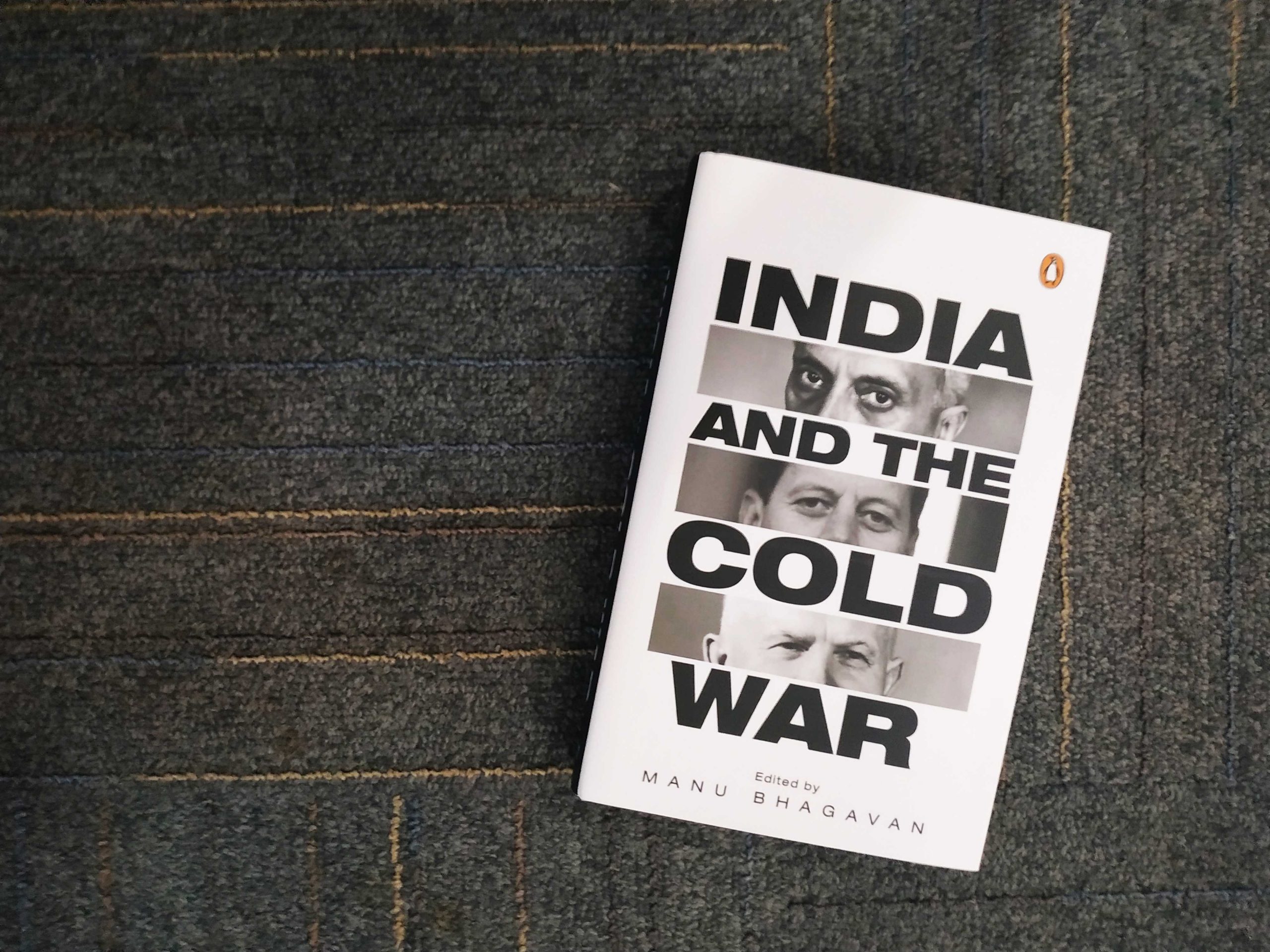
Cold War from the Indian Perspective – An Excerpt from ‘India and the Cold War’

The essays in  Manu Bhagavan’s India and The Cold War demonstrate how India became a powerful symbol of decolonization and an advocate of non-alignment, disarmament and global governance as it stood between the United States and the Soviet Union, actively fostering dialogue and attempting to forge friendships without entering into formal alliances.

Here’s an excerpt from the book!

—————————————————————————-

Writing just over ten years ago, Odd Arne Westad changed the way we think about the Cold War. While the conflict was certainly about the struggle between the two superpowers, he observed that it was truly global in scope. To actually understand the clash, we had to go beyond narrow understandings of the bilateral relationship and stop limiting our focus to sites of conventional warfare. By looking at Soviet and American interventionism in the Third World, as well as the reactions that such interventions generated, Westad established that the Cold War was a grand phenomenon with multiple actors shaping and reshaping international politics based on various domestic agendas and foreign policies. Asia, Africa, and Latin America were not peripheral to the main show but were each a key stage on which the drama unfolded.

India’s role in the Cold War has classically been defined as having been rather minimal, circumscribed by a policy of non-alignment and a basic insistence that Third World interests lay outside the two rival power blocs. No major battles were fought on the subcontinent, so the region was seen as marginal to the superpower standoff. To make matters worse, the moral high ground India claimed proved shaky. Its colorful denunciations of power politics took on the hue of posturing when its outlook soon came to be seen as having a pro- Soviet tilt. Such hypocrisy undermined India’s credibility in myriad ways, such that the country, despite its massive size, population, and strategic location, has remained little more than a footnote in Cold War history.

Over the past decade, synchronous with Westad’s breakthrough insights, this view has begun to change. Independent India, it turns out, was actually quite influential in the first two decades of its existence, which coincided with the emergent development of U.S.- Soviet bipolar hostilities.

The chapters in this book take advantage of newly accessible archival material and the latest research to offer a richer and more nuanced narrative of India’s role in the Cold War, with a special focus on this early period.

India’s significance stemmed in measure from its legendary founding figure, Mahatma Gandhi, who was assassinated in 1948. Gandhi was widely heralded as larger than life with a kind of saintly legitimacy, and the afterglow of his halo continued to shine on his country after his death. Additionally, India’s great stature in this early period was due to its dashing, debonair, and dazzling first prime minister, Jawaharlal Nehru. Nehru wore the mantle of Gandhi’s hand- picked successor with ease, shaping and recasting his mentor’s vision of nonviolent politics for international appeal and global impact.

From the earliest days of the Cold War, Nehru saw the collision of superpowers as an existential threat to all life, the ultimate culmination, in his view, of a teleology produced by nationalism that led to violence, to war, and finally to total destruction. A certain kind of nationalism for Nehru was fundamental and necessary in the historically specific context of imperialism, whereby European states vied with one another for spheres of influence, economic and military control, and supremacy. Anticolonial nationalism demanded liberty and the right to self- determination for colonized people. But for Nehru and many of his brethren, the nation- state was not the end game.

From the end of World War I, Nehru had been trying to reconcile his Fabian socialist outlook with an emergent subcontinental critique of nationalism, eventually settling on a protean understanding of internationalism as the best, and indeed only, way forward. In conversation, and sometimes in argument, with fellow Indian political intellectuals, especially Gandhi,

Nehru’s internationalism evolved from a broad cosmopolitanism, in which the best ideas of each people simply would be celebrated, to an embrace of world federation and, by the late forties, specifically federal world government.

What exactly such a federated government would look like was intentionally left vague, as Nehru believed that the details would have to evolve from everyone invested. Generally, though, he hoped for some kind of executive, legislative, and judicial structure that would sit atop national states, unifying them all.

Global union did not preempt or undermine the need for political responsiveness to local needs. Rather it sought to streamline the demands of individuals, groups, and nations with universal principles of human dignity.

This goal found a means of expression in the emergent discourse of human rights, which Nehru saw as a way to bind states and peoples to a code of proper action. India played a pivotal leadership role in developing a consensus around these new norms, and in crafting the instruments through which they would be popularized and made legal.

Human rights were premised on the idea that state sovereignty was not absolute, and that the international community could intervene in the domestic affairs of states if they did not live up to their obligations to their people, as their authority was fundamental and beyond that of any one state.

Of course, this did not mean that such rights were above controversy. Indeed, as the effort to codify human rights gained momentum in 1947 through the official sanction of the new United Nations, fissures between the “East” and the “West” soon became readily apparent. A major fault line emerged over what precisely constituted “human rights.” Western powers pushed for political and civil liberties while those from the “non- West” favored economic, social, and cultural rights. If the committee chaired by former U.S. first lady Eleanor Roosevelt started its work with much fanfare and hope, it quickly devolved into acrimony and contentious debate, lines generally drawn along those of the Cold War blocs. It was in this committee, and under such conditions, that India found its footing.


Sweeping in its scope yet nuanced in its analysis, this is the authoritative account of India and the Cold War.


Puffin Books for the Young Ones This Fall

We have a diverse list of books for your little ones this fall! You can send them on an adventure with Mukesh from Ruskin Bond’s newest book or help them discover the wonders of Indian festivals with Sonia Mehta’s Discover India series. They can also learn about nutrition, Gandhi and how to be thankful.

Here is the list of Puffin Reads to choose from:


From Leeches to Slug Glue 

Did you know:
that the world’s first eye surgeon, who lived 2500 years ago, came from India? Or that the standard textbook on medicine-for 600 years!-was written by a self-taught physician from Persia?

Discover dozens of ‘No way!’ nuggets like these in this fun, info-packed romp through 2500 years of human health and healing. And prepare to be gobsmacked, entertained and inspired by the stories behind some of the most significant medical breakthroughs in history, and the extraordinary men and women behind them.

Mukesh Starts a Zoo

When Mukesh decides to start a zoo with the help of his friend Teju, little does he know it’s no child’s play. He and his friends work hard at finding animals, and making them enclosures in their zoo. With a house lizard, a parrot that chants prayers, a dog with yellow eyes, and the washerman’s donkey as their star attractions, how could they possibly fail! But when visitors are escorted around the zoo, there is complete pandemonium, ensuing in some rather comical results. Does Mukesh succeed in his dream of becoming a star zookeeper?

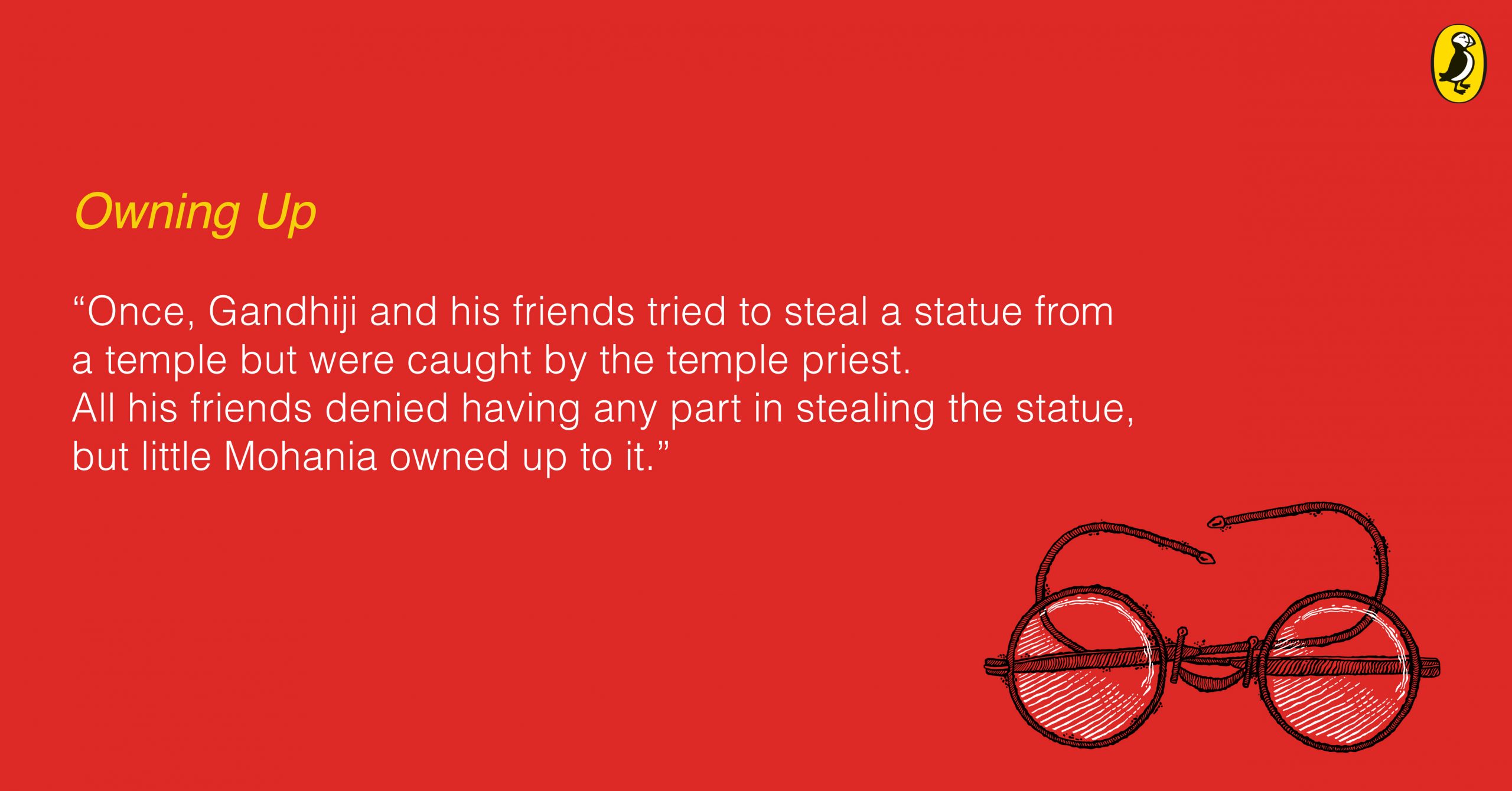
Gandhi in 150 Anecdotes

150 years ago, a man was born who gave all of us our most prized possession-political free and social equality, and changed the history of India forever. With his round-rimmed glasses, white dhoti and walking stick, he is an enduring symbol of non-violence, freedom, peace and simplicity. He is the Father of the Nation, Mahatma Gandhi. Bringing alive the story of one of the most revered leaders in modern history through 150 rare and inspiring incidents from his life–tracing his evolution from a shy boy to a courageous leader–this collectible edition is a tribute to the man who showed the world what calm, steady heroism looks like.

Tankful of Thankful

Tankful of Thankful toots the magic of thanking each other in different languages-for the small things, for the grand things, for all things. Read this picture book out loud to your children, and start a beautiful conversation about living gratefully.

Listen to the Whispers

This beautifully realized picture book on living mindfully offers answers to questions such as Who am I? and Why am I here?  With intricate illustrations and easy-to-follow text, take your young ones on a journey to unleash the potential hidden within and teach them to never stop reaching for the stars. As they run with the tigers and dance with the wolves in Listen to the Whispers, let them explore the majesty of the earth and recognize how magnificent they are!

Discover India: Festivals of India


India is a mix of many cultures and people, which means there are literally hundreds of reasons to celebrate! Have you ever wondered what Onam is all about? Why people eat hot cross buns at Easter? Are Pongal, Lohri and Sankranti all the same festival? Why do people fast during Ramzan? Get ready to find the answers to all of these questions and dive into the stories behind these festivals and many others.

N for Nourish

Do you know why eating right is so important? Because it’s food that makes you zip through classes, tear across the football field or win that game of chess. The right diet influences your mood, your thoughts and even your ability to have fun.

With the aid of innovative models and striking visuals, this book will help you understand the components of a healthy diet, what makes the five fingers of nutrition (and how they turn into a power-packed punch) and the importance of sleep, water and exercise in your day-to-day life. Not only does this contain the ABCs of nutrition but also a series of amazing facts about how food can change your life.

Are you Ready for ‘Kali’s Retribution’?

Taking the story forward from The Sage’s Secret , in the second part of The Kalki Chronicles, Anirudh moves to find the greatest weapon in the universe hidden in the fabled submerged palace of Dwarka. However, the Demon of Time, Kalarakshasa, yearns to possess it as well. In an ultimate showdown, the cloaked sorcerer faces the last avatar of Vishnu on the battlefield.

Will it be long before Kali, the Lord of Evil, takes up the reins of the mortal world? And will the darkness brought upon by the Kali yuga soon eclipse the earth?

Here is a piece from the author on why you should read Kali’s Retribution!


What happens next??!

Well, you would be curious to know what happens next – so that’s definitely reason #1. Kali’s Retribution picks up the right after the events of The Sage’s Secret (literally the next moment!) and takes the story further. A bit more of conversation between Krishna and his confidante… A scene from the battlefield of Kurukshetra… And, whom did Dweepa deliver the message (at the end of ‘The Sage’s Secret’) to??!!

New characters…

If you have read, and are in awe, of legendary characters of Indian mythology, and want to know what happened of them after last mentions in the epics, then this book gives you a glimpse of what they (could) have been up to. And of course, this book features them as characters as well, so there’s that!

P.S.: Yes, Parashuram is one of them!

Also, after The Sage’s Secret hit the shelves, I have been asked if there are any female characters, for all that people saw majorly were male characters – Dweepa, Anirudh, Krishna, Kalarakshasa, Kalanayaka… Since the inception of the trilogy in my mind, I already had a major female character in mind who was to appear in ‘Kali’s Retribution’. And by the time I was done with ‘The Sage’s Secret’, I had in mind another major female character. I will be introducing both these characters in this installment – they are bold, independent and feisty.

A bit more of Anirudh, please?

In the first installment of the Kalki Chronicles, The Sage’s Secret, much about Anirudh wasn’t revealed. And this was on purpose, since I intended to flesh him out in this book. We are nearing the heat of things, and his thoughts and matters would help draw a picture of his character.

Darkness

We are in the Kali Yug, the era of evil and darkness. Keeping apart the enemy on his heels, Anirudh also starts recognizing the darkness looming over the world. He observes the universe around, and he comes to term with his purpose. We see Anirudh grow aware slowly and realize his avatar’s objective.

Kalarakshasa

If you have been wondering/guessing who hides behind the crimson hood of the fear-inspiring and the ancient nemesis of Kalki, Kalarakshasa, then ‘Kali’s Retribution’ will reveal the identity of this immortal sorcerer. You will see more of his prowess, and a bit more of his past…

The Showdown

Yes, I am talking about the battle between the young avatar and the ancient and powerful nemesis, the red-robed Kalarakshasa. Were you waiting for this since the last page of The Sage’s Secret? If you were indeed, then you won’t be disappointed. The showdown sequence is one of my favourite moments in this book, since it unravels more plot points and explodes the universe (metaphorically speaking, or am I?) of the Kalki Chronicles much wider. (BTS Secret: The ‘battle’ chapters contain the revelation of Kalarakshasa’s true identity as well – so it was fun to write these sequences!)

Well, there are many more treats and surprises in the book, but I am not listing everything here. I want you to enjoy the journey of discovering them as you flip through the pages/chapters…

Until Book III of the Kalki Chronicles, happy reading!!!


Will it be long before Kali, the Lord of Evil, takes up the reins of the mortal world? And will the darkness brought upon by the Kali yuga soon eclipse the earth? Find out what happens in Kali’s Retribution

7 Reasons Why ‘Skill Builder: Science’ is the Series for you & your Child!

Dear Mom and Dad,

Introduce your little ones to the books in the Skill Builder-Science series so that they can learn scientific concepts in a way that doesn’t make science seem like a weighty subject!

Read on to know why this could be the perfect set of books for your child:

  • Created to hone not just subject skills but also twenty first century skills, such as investigation, observation and problem- solving skills – so your child excels not just at academics but also at life!

  • Each topic is available at four different levels of complexity – allows you to choose the level that best suits your child’s learning age and then, move up!

  • Learning made fun through activities such as art and craft, riddles and crosswords– will keep your child engaged and motivated!

  • Easy science experiments– provides the opportunity to explore new ideas!

  • Less text, more learning- to get a better understanding of the world!

  • Teaches important values– inform your child about traffic rules and environment conservation practices among other things!

  • Loads of pictures– will help your child associate between ‘just words’ and ‘reality’.


The Skill Builder: Science books are aimed at helping learners to become proficient in science. Want your child to be proficient in Math and English as well? Get the Skill Builder: Maths and Skill Builder: English (Coming Soon) series.

Everything You Wanted to Know About Bureaucracy- An Excerpt

Whatever its faults, the Indian bureaucracy cannot be accused of bias when it comes to confounding those who have to deal with it. Veteran insiders who return to it with their petitions after retirement are as clueless about how it functions as freshly minted supplicants. Outsiders have little knowledge of who is responsible for what and why, or how to navigate that critical proposal through the treacherous shoals of the secretariat.

In this humorous, practical book, T.R. Raghunandan deconstructs the structure of the bureaucracy, for the understanding of the common man and replaces the anxiety that people feel when they step into a government office with a healthy dollop of irreverence.

Here is an excerpt from the book!

————————————————————–
Overview or Lay of the Land

One of the first things that I did when I sat down to write this book was to google the meaning of the word ‘bureaucracy’. One needs some impetus to write a book and googling is the mental equivalent of leaning a scooter so that precious petrol flows into the carburettor. The Cambridge dictionary website—as good a place as any on the Internet to search for the meaning of words—defines bureaucracy as a system for controlling or managing a country, company or organization that is operated by a large number of officials employed to follow rules carefully. I would narrow down that meaning for the purposes of this book to the people who run the government, excluding the elected representatives. There is no disagreement with the ‘lots of people’ part of the definition. A wait at the Central Secretariat Metro Station in Delhi during rush hour will leave nobody in doubt that the Indian bureaucracy comprises lots and lots of people. Whatever its faults, the Indian bureaucracy cannot be accused of bias when it comes to confounding those who have to deal with it. Veteran insiders who return to it with their petitions after retirement are as clueless as freshly minted supplicants about how it functions.

While autobiographies of bureaucrats extract plenty of amusement from the mysterious ways of the bureaucracy,
such reminiscences have little practical value; readers gain no practical tips from them on how to coax government
officers to actually function. Outsiders in any case, have little knowledge of who is responsible for what and why, or how to navigate that critical proposal through the treacherous shoals of a secretariat or directorate. At the top of the bureaucracy heap is the fast-tracked elite civil servant, who belongs to a group of generalist and specialized services selected through competitive examinations. While no one of the several services that comprise this exclusive club is officially considered superior to the other, the Indian Administrative Service (IAS) is generally regarded as the most powerful and, therefore, the most desirable by aspirants. The aura of the IAS has remained intact over the years. Their tribal loyalties, handed from one generation to the other like a sacred fire, ensure preferential access to positions from where they not only construct policies for the country, but also develop rules, precedents and conventions that set them apart from the rest. Therefore, the IAS still remains the primary aspirational goal
of all those who take a shot at the competitive examination year after year.

Yet, like every elite and powerful group, the IAS vehemently denies the concentration of any power in it.
‘We have no powers, “saar”. We have to do whatever politicians ask us to do,’ they say, shaking their heads
ruefully. The most one can extract from them is a reflection that things are no longer like they were before, a refrain that has been heard so often over the past seventy years that it has no meaning whatsoever.


Read Everything You Ever Wanted to Know about Bureaucracy But Were Afraid to Ask to know more!

An Excerpt from ‘This Land Is Our Land’

There are few subjects in American life that prompt more discussion and controversy than immigration. But do we really understand it? In This Land Is Our Land, the renowned author Suketu Mehta attacks the issue head-on.

Read an excerpt from the book below:

One day in the 1980s, my maternal grandfather was sitting in a park in suburban London. An elderly British man came up to him and wagged a finger in his face. ‘Why are you here?’ the man demanded. ‘Why are you in my country?’

‘Because we are the creditors,’ responded my grandfather, who was born in India, worked all his life in colonial Kenya, and was now retired in London. ‘You took all our wealth, our diamonds. Now we have come to collect.’ We are here, my grandfather was saying, because you were there.

These days, a great many people in the rich countries complain loudly about migration from the poor ones. But as the migrants see it, the game was rigged: First, the rich countries colonized us and stole our treasure and prevented us from building our industries. After plundering us for centuries, they left, having drawn up maps in ways that ensured permanent strife between our communities. Then they brought us to their countries as ‘guest workers’ – as if they knew what the word ‘guest’ meant in our cultures – but discouraged us from bringing our families.

Having built up their economies with our raw materials and our labour, they asked us to go back and were surprised when we did not. They stole our minerals and corrupted our governments so that their corporations could continue stealing our resources; they fouled the air above us and the waters around us, making our farms barren, our oceans lifeless; and they were aghast when the poorest among us arrived at their borders, not to steal but to work, to clean their shit, and to fuck their men.

Still, they needed us. They needed us to fix their computers and heal their sick and teach their kids, so they took our best and brightest, those who had been educated at the greatest expense of the struggling states they came from, and seduced us again to work for them. Now, again they ask us not to come, desperate and starving though they have rendered us, because the richest among them need a scapegoat. This is how the game is rigged today.

My family has moved all over the earth, from India to Kenya to England to the United States and back again – and is still moving. One of my grandfathers left rural Gujarat for Calcutta in the salad days of the twentieth century; my other grandfather, living half a day’s bullock-cart ride away, left soon after for Nairobi. In Calcutta, my paternal grandfather joined his older brother in the jewellery business; in Nairobi, my maternal grandfather began his career, at sixteen, sweeping the floors of his uncle’s accounting office. Thus began my family’s journey from the village to the city. It was, I now realize, less than a hundred years ago.

I am now among the quarter of a billion people living in a country other than the one they were born in. I’m one of the lucky ones; in surveys, nearly three-quarters of a billion people want to live in a country other than the one they were born in, and will do so as soon as they see a chance. Why do we move? Why do we keep moving?


Impassioned, rigorous, and richly stocked with memorable stories and characters, This Land Is Our Land is a timely and necessary intervention, and a literary polemic of the highest order.

5 Famous Journals that became Books

‘I need a window to look at the world without; for only then can I look at the world within.’ writes Ruskin Bond in Words From My Window.

Delving into the past, this journal of his life experiences transforms into a stage on which events and people are brought together to comprehend the process of becoming.

Here are 5 Journals that can take you back in time:

 A Writer’s Diary by Virginia Woolf

A fascinating insight into the art and mind of Virginia Woolf, A Writer’s Diary was collected by her husband from the personal record she kept from 1918 till weeks before her death in 1941. Between these points of time unfolds the private world- the anguish, the triumph, the creative vision- of one of the great writers of our century.


 The Unabridged Journals of Sylvia Plath by Sylvia Plath

First published in 1982 in a heavily abridged version, this later uncensored edition offers a complete record of the diaries Plath kept during the last twelve years of her life. Roughly two-thirds of this material had never been released before and revealed the intensity of the poet’s personal and literary struggles. It provided fresh insight into both her frequent desperation and the bravery with which she battled her demons.

 Reborn: Journals and Notebooks, 1947-1963 by Susan Sontag

Reborn (1947-1963) traces the journey of an extraordinary fourteen- year- old Sontag to her adulthood when she takes her place in the fast-paced world of New York as a published writer. This journal records the act of self-invention of one of the most noteworthy thinker and writer of the twentieth century. Sontag writes, “In the journal I do not just express myself more openly than I could to any person; I create myself.”


The Diary of a Young Girl by Anne Frank

A significant work in world literature, Anne Frank’s diary is a powerful reminder of the horrors of war and an eloquent testament to the human spirit.

In an attempt to survive the Nazi occupation of Holland in 1942, Anne Frank and her family went into hiding and lived cloistered in the “Secret Annex” of an old office building. Cut off from the outside world, they faced hunger, boredom, the constant cruelties of living in confined quarters, and the ever-present threat of discovery and death. The diary, discovered in an attic in which the thirteen-year-old Jewish girl spent her last two years before her tragic death, is a record of her experiences during this period and offers a peek into the fragile world that the effervescent Anne inhabited.

Captain Scott’s Last Expedition by Robert Falcon Scott 


Scott’s letters and diary entries, written in his last days, give a heart-rending account of the bravery and perseverance of men who attempted his perilous mission. Captain Scott’s Last Expedition brings alive the dangers and beauties of the long, dark winter, and the brutal hardships of the trek to the South Pole. Hopelessly trapped in a tiny tent by a raging blizzard on the Great Ice Barrier, Scott wrote, ‘Had we lived, I should have had a tale to tell of the hardihood, endurance, and courage of my companions which would have stirred the heart of every Englishman.’


So what are you waiting for? Start writing a journal today with  Words From My Window!


Things You Didn’t Know About The Assam Accord

Lakhs of Indians will no longer be Indian citizens after 31st August 2019 and The Assam Accord will decide their fate.

What is the Assam Accord? Why is Assam the only Indian state to have an exclusive citizenship cut-off date? What steered the Rajiv Gandhi government to sign the Accord with All Assam Students Union and All Assam Gana Sangram Parishad on the midnight of August 14, 1985?

Assam– The Accord, The Discord by Sangeeta Barooah Pisharoty brings to light the moments that led to the MoU, giving a blow-by-blow account of what happened before and after the signing of the Accord.

The Assam Accord, signed in the early hours of August 15, 1985 at Prime Minister Rajiv Gandhi’s residence marked the end of a bloody era in Assam, albeit temporarily, which had seen the fall of four state governments, three spells of President’s Rule—all in a span of six years due to the massive support that the signatories of the Accord received in the state.

Here are some facts from the book:

    • The Accord led to the birth of two political parties in AssamThe Asom Gana Parishad (AGP) and its bête noire, the United Minority Front, Assam (UMFA). The Centre kept the details of the negotiations secret. Everyone heard about the Accord only at the Independence Day speech of Prime Minister Rajiv Gandhi from the ramparts of the Red Fort.


    • The National Register of Citizens (NRC) in Assam is being updated as per the Assam Accord, signed by the Centre in 1985 with All Assam Students Union(AASU) and All Assam Gana,Sangram Parishad to end an ‘anti-foreigner’ agitation. Unlike other parts of India, Assam has an exclusive citizenship cut-off date – March 24, 1971.


    • Many are not aware that the All Assam Students Union(AASU) flag was inspired by the flag of the Mukti Bahini that fought for creation of Bangladesh. Later, AASU’s flag became a symbol of resentment against the huge influx of refugees from East Pakistan due to Mukti Bahini’s face off with Pakistani army.


    • AASU demanded 1951 as the cut-off date for citizenship in Assam. All Assam Minority Students Union(AAMSU) and Citizens Rights Protection Committee(CRPC) wanted March 24, 1971, based on the Indira Gandhi-Mujibur Rahman treaty of 1972, as per which anyone who entered Assam (India) from East Pakistan till that date would be considered an Indian citizen. Several Assamese intellectuals joined hands with AAMSU, CRPC to root for the 1971 cut-off.


After the NRC update process is complete this August 31, what will be the fate of those left out of it? Is deportation of undocumented immigrants a practical solution? Is the government considering issuing work permits to them? Is granting constitutional protection based on a citizenship cut-off year a way out?

As the deadline for the final NRC list nears, Pisharoty hopes that Assam is still the home of Sankardev and Azan Fakir, of linguistic diversity and cultural assimilation — not a communal, divided land where politics is the only winner.

Assam – The Accord, the Discord delves into possible solutions that are on the table to sort out the festering problem. The book is available now.

error: Content is protected !!