Publish with Us

Follow Penguin

Follow Penguinsters

Follow Penguin Swadesh

Avoid Burnout with This Sample Routine – An Excerpt from ‘Burnout’

Do you feel like you never have enough time or energy to get things done?

Are you stressed and exhausted just thinking about work?

Are you getting to the point where you dread Monday mornings?

These are some of the telltale signs of burnout which, if not addressed, can wreck careers and relationships. In her book, Burnout, senior psychologist and business leader Anju Jain, PhD, finds out what makes some people tenacious and energetic while others suffer from fatigue and fall by the wayside. This book offers a framework and principles to ensure that you continue to have a hard-working and productive life without getting burned out.

Have a look at this sample routine from the book, that you can apply to your home and workplace!

——————————————————————————————————-

A Sample Daily Routine

Fully recognizing that there is no one size that fits all, I am still going to share a sample daily system that includes best practices from leaders who have proactively managed to stay away from burnout. Use this protocol as a template to draft your very own and commit to practising it consistently.

The morning routine
The morning makes a critical part of the day. To channel your energies effectively, start your day right by doing the following:

1. Get up at the same time. Get enough sleep and develop a pattern of waking up at the same time every day.

2. Exercise. A workout in the morning will keep you energized through the day. Whether it is cardio, yoga or a
brisk walk, pick one that you enjoy doing.

3. No screen time. Stay away from your phone until you are done with breakfast. Instead of getting pulled into other people’s lives on social media or emails, opt to look outside, absorb the quiet, or simply attend to your breath.

4. Sit down for breakfast. A healthy breakfast energizes you, improves your short-term memory, and helps you concentrate better. Allocate fifteen minutes to calmly sit down to eat.

5. Put a smile on your face as you leave for work. This simple act will put you in a positive frame of mind.
Getting your morning started off right is critical, but it’s only half the job done. Follow a disciplined routine at work as well.

The workplace routine

1. Write your to-do list. Then prioritize and assign a time duration for each of your tasks. You will have better control over your time and output.

2. Take breaks. Performance and well-being are at their best when you alternate activity with rest. Follow the 90:20 or
52:17 rule to get the best results. And when on a break, stretch, walk or do things that relax you.

3. Plan your meetings. Meetings can take up all your time if you don’t watch out. Attend the ones that are central to your work. Ask for the agenda and any prep material beforehand so you are effective and efficient.

4. Respond to your emails at fixed times. Respond to mails in batches at set times instead of attending to them the minute they hit your inbox.

5. Single task. Focus on your priorities one at a time so you are able to complete them versus keeping all of them in flight or as work in progress.

6. Say no. While showing initiative is a good thing, it comes with a cost. Carefully assess your workload and practise saying no to yourself and others.

7. Make time for lunch. It restores blood sugar and reenergizes you. Best to eat with colleagues than by yourself or in front of your screen.

8. Delegate. Leverage the power of many to free up your time. Give opportunities for others to contribute and
develop.

9. Show you care. Recognize and thank people. Show concern. Be approachable. Be humane.

The evening routine

1. Come home with a smile. It will put you in a positive frame of mind.

2. Keep the phone away. Its mere presence can cause distraction and brain drain. Let the mind rest after a long day at work.

3. Be present. Have conversations with the family or attend to home chores with full attention.

4. Eat dinner with the family. It is good for you and the family as it keeps the communication channels open.

5. Work after dinner if you must. Once the chores are done and kids are busy with their homework or off to bed,
conclude your work tasks.

6. Shut down all gadgets. Do so at least thirty minutes before hitting the bed.

7. Wind down. Read a book or practise five minutes of mindfulness.

8. Gratitude. End the night with writing three things you are grateful for. You will realize how blessed you are and that will have a calming effect on you.

9. Be consistent. Get to bed at a consistent time. The body becomes habituated and prepares to fall asleep at the same time.

The weekend routine

1. Follow the same weekday routine. Consistency keeps the cycle going.

2. Spend time with others. Make time for family, friends or the community. Remember to smile and laugh as you do
that.

3. Outsource. Free yourself from transactional chores so you have time for other value-added tasks.

4. Prepare for the week. Assess the contents of the fridge and do other necessary prep work to ensure a smooth week ahead.

Do a mental walk-through on what you are going to wear, eat and work on. This will give you a quick start with    minimum energy spent on decision-making during the week. Leverage this protocol to build your very own personal daily system.


Get your copy of Burnout today!

All you Need to Know about our Amazing Armed Forces

If you have ever wondered what it’s like to be part of the armed forces, let the Our Amazing Armed Forces take you through this experience. From moving homes to making new friends, from deployment to reunion, from patriotism to tender family moments, these books go on to describe the daily lives of armed force officers and cadets.

Brimming with facts and impactful stories, read on to find out about the people and their families whose acts of heroism, both big and small make the armed forces exemplary:

  1. The Our Amazing Armed Forces show you what it takes to be in the military, not just for those who wear the uniform but for their families as well.

  2. These books will make readers aware of the experiences of children who have a parent or a family member in the armed forces and the sacrifices they make for our security.

  3. They describe the functions and the roles of different fields of armed forces that allow the readers to understand the sacrifice and efforts that the forces put into keeping our country safe.

  4. These books will allow you to understand the ranks and positions within the forces and the descriptions of their roles in the forces.

  5. They also come with details for museums and memorials where you can visit and get a closer experience with the armed forces.

  6. The Our Amazing Armed Forces series describe the bases with detailed diagrams that will help you understand the daily functioning and environments of these forces.

  7. The armed forces have their own special language. These books also have little dictionaries of the terms that you might encounter within these forces.


    My Father Is In The Indian Army,  My Mother Is In The Indian Air Force and My Sister Is In The Indian Navy– Our Amazing Armed Forces series is available now!

8 Nifty Ways in which You Can Mind your Money!

Financial Affairs of the Common Man presents a collage of the various aspects of personal finance management that every individual should pay heed to. It introduces the concepts that you must understand to effectively plan your finances, and provides the tools and the knowledge needed to do so.

Read this book, written with the common man in mind using easy-to-understand language, to understand the power of compounding and the effects of inflation on investments. It’s time to familiarize yourself with mutual funds and SIPs, and to gain a deeper insight into the making of personal balance sheets and income tax provisions

Here are some pointers from the book to help you invest and save smartly!

Invest in property through REITs, if not directly.

Keep a small amount of liquid cash at hand.

Invest some funds in easy-to-liquidate assets including a bit of gold.

Invest in assets/schemes/properties that can give a regular stream of alternative income in addition to your primary source of earning.

Take out an insurance policy of an adequate sum (including term plans) to protect your loved ones.

Get adequate medical insurance and free yourself from the stress and financial trauma arising from unforeseen illnesses or mishaps.

Devote a certain portion of your time to managing your money.

Invest in income-generating assets. The assets you accumulate over time can be divided into two types: performing and non-performing assets, that is, those that generate an income and those that lie idle. Try and invest in assets that have the potential to generate income.

Get money-wise and grab your copy of Financial Affairs of the Common Man today!


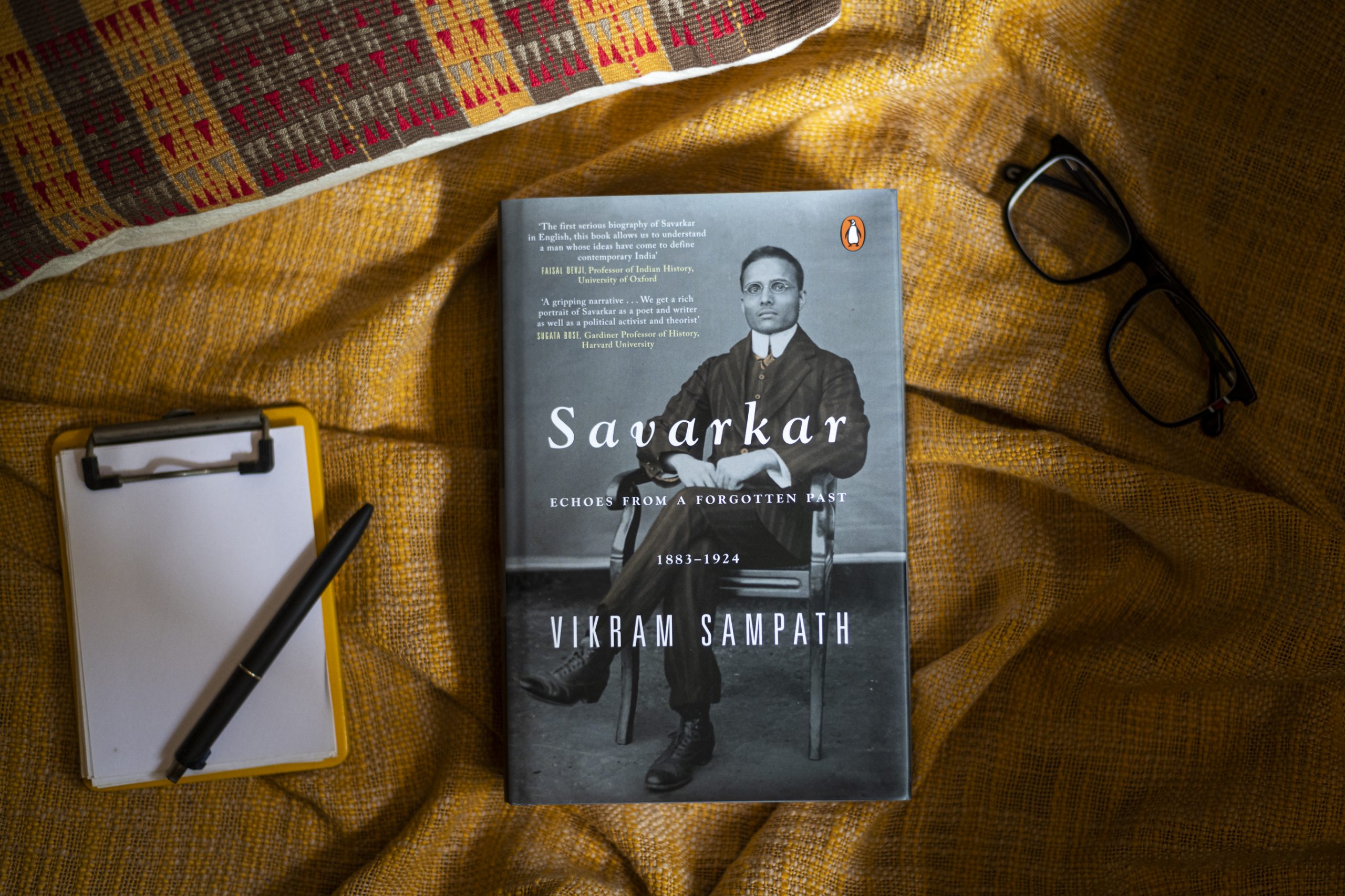
6 Reasons Why Savarkar is Relevant in the Modern Indian Polity

The subject of historian Vikram Sampath’s new book Savarkar: Echoes from a Forgotten Past, Vinayak Damodar Savarkar was a feted revolutionary who created an intellectual corpus of literature that inspired the revolutionary movement in India for decades. It was rare to find a combination of a poet’s heart and a revolutionary’s brain in a single man.

Here are six major ways Savarkar continues to influence Indian socio-political culture:

On the Caste System

“The liberation and unification of countries across the world, be it America or Europe has been possible only by unshackling these false divisions between peoples. Why can a similar approach not be achieved in our nation?”

Despite being born in an orthodox and religious Chitpawan Brahmin community, Vinayak despised the caste system right from childhood. From temples, streets, houses, jobs, village councils, to institutions of law and legislature, it has only injected a spectre of eternal conflict between two Hindus; weakened our unity and resolve to stand against any external threats.

On Cow Protection

“History is replete with examples of how our enemies and invaders have used this innocent sentiment of ours against us by using the cow as a shield even in wars. To save a few temples, a handful of Brahmins and some cows, we ended up sacrificing our entire country to foreign powers. Does this augur well for any nation?”

Our ancestors might have elevated the cow to a divine status to induce a sense of responsibility towards its protection. But we took that too literally. We should bear in mind that the cow is an object of utility for the human being and not vice versa. Doing do degrades the status of human beings. The object of worship should be greater than its worshipper.

On the Age of Machines

“But science and scientific temper rely on cold logic and reason. These are physical phenomena that can be experienced and repeated under controlled conditions. If water is boiled to a known temperature, it will turn to steam, irrespective of any God’s wishes or your failure to read the mantras or namaz! The scientific temper is the foundation and cornerstone of the machine age and modernization, which will lead to prosperity for India.”

Are machines a boon or a bane? Those berating machines as a bane must realize that each of our human senses is several times more potent than any machine can ever hope to be. The machine acts as a handmaiden of man. If he uses it for destructive purposes, it can cause mass destruction. However, the same machine if put to good use by a virtuous and intelligent human mind can work miracles. It is through science, modern thoughts and industrialization that we can ensure that every man and woman in India will have a job to do, food to eat, clothes to wear and a happy life to lead.

 On Cinema

“Films can even be used to educate our youth. We see life reflected very well on screen.”

There is no better example of the use of modern technology than the movies, and that is why I will never back any restrictions on them. The film industry to should believe that it would do everything possible for the progress of the entire nation. The youth should be inspired by the movies that focus on the positive side of things.

On Inter Caste Marriages

Vinayak postulated that the Hindus are not merely citizens of the Indian state because of the love they share for their motherland; it is because of the bonds of common blood. They are not only a rashtra, or nation, but also a jati (race). He finds absolutely nothing amiss therefore among intermarriages between people of various castes- “a stand much ahead of its times.”

On Hindutva

“Here a ‘Hindu’ did not mean someone who merely followed the religion; he was primarily a citizen- either in himself or through his forefathers who had revered this land as his motherland…. Thus, a nationalism led by cultural integration was another essential component of this ‘Hindu-ness’ that had run unbroken over millennia.”

Hindutva was not a word for Vinayak but an entire history of the land and its people. The related term- ‘Hinduism’- was ‘only a derivative, a fraction, a part of Hindutva’. Inability to understand this difference, he opined, had ‘given rise to much misunderstanding and mutual suspicion between some of those sister communities that have inherited this inestimable and common treasure of our Hindu civilization.’


Read this well researched biography to know more about Savarkar’s views and negotiate whether they hold a relevance in today’s world!


Looking Beyond The Labels and Just Being You – a Guide for Children and You!

As children, we understand instinctively that we are at our best when we are ourselves. However the world slowly places us in boxes with labels slapped on them, and we spend the rest of our lives living up to those suffocating and limiting categories.

Jane De Souza’s delightfully whimsical prose puts these things that children instinctively know into prose that actually speaks to them, in her new book, Flyaway Boy.

Here are some insightful lessons that can be learned from the Flyaway Boy!


We all live in little color-coded boxes of our own making that hinder us from interacting with ‘boxes’ that appear different!

“Everyone lived in boxes. They just didn’t know that. So the world was made up of billions of boxes, all avoiding each other. For how could a grey box go and stack up near a set of pink boxes? What would the pink boxes think? Would they close into themselves, pile up and form a wall? Or maybe they would open a fold and peep out?”

 ∼

 Sometimes when we slap a really big label on someone it stops us from discovering some incredible things about them!

“A bit about Zaira, (who may not come into the story at all) who lived next door and was working in an environmental architecture office, whose box was labelled ‘Pretty’ so no one else saw beyond that: that she was a tree climber or a guava eater, for example.”

 ∼

When we try and live based on what others think we out to be we limit our own progress.

“‘Pssst,’ whispered Kabir’s line. ‘I had the chance to be so much more. To be a telephone wire on which birds rated the juiciness of worms they’d just caught. A yellow line in the middle of a road going on and on forever. A string keeping a kite from getting lost. Maybe even a horizon. But now, I’m like every other one. A line.’”

 ∼

 Being upside-down simply means you are different, not ‘wrong’.

“So, Raz was right. The ulti-matum was upside down, Kabir thought. He was upside down. Nothing was right about him. His Ma and Pa tried so hard to make him right, but he was all wrong.”

 ∼

 It might be tempting to imitate others to try and fit in but it just doesn’t work!

“All went past and Kabir tried hard to be what he was not. He tried to fit in. He tried to talk with a loud American accent like Dhruv did, flattening his vowels like chapattis. ‘I cayn do that, you cayn’t.’ He tried to squint at the blackboard like Shayan with his thick glasses did. He tried to draw straight lines like Kalyani did.”

 ∼

Most of our fears arise from ‘labelling’ something or someone as ‘Not Familiar’.

“He was the one. The reason the child had gone. What else could it be? The rest of the law-abiding citizens in this town were all known. This man was not. His box said ‘Not Familiar’. We should be afraid of anything that’s not familiar, that’s not like us, shouldn’t we?”

 ∼

Sometimes we want the people we love to ‘be’ a certain way, but it’s more important to let them be who they are.

“I did the same to Kabir. I did not let him be what he was. I wanted him to be successful, street-smart. When he’s back, I will let him just be. He will be back, it will all be okay.’ She was talking to herself, and then she suddenly turned on Pa, ‘Why would you say he’s not okay?”

  ∼

We can’t let the labels that other people put on us stop us from exploring our own capacities!

“Then Kavni began to write out her clues again, in what turned out to be a poem. Which stunned her, because she definitely wasn’t the poetic type. Everybody said that Kabir was the creative one in the family, not her. Yet, in writing this poem, Kavni, to her own surprise, shook off this label from her box—the ‘Not Creative’ label was one she’d never wear again.”

  ∼

 …And when we finally look beyond all the labels, we can envision a brighter and better ‘Fewture’!

And amid the laughter, the other kids too began to see not only what was, but what could be.


Spirited and powerfully imaginative, Flyaway Boy is a story about embracing everything that makes you uniquely you.

5 Things ‘The First Aryan’ Brought Alive About Pre-Historic India.

The First Aryan, by Paramu Kurumathur is a one-of-its-kind murder mystery set during an age when Vedic gods were worshiped, religious sacrifices were performed regularly, commerce flourished and kings were guided by their loyal head priests.

Follow the trails of Kasyapa and Agastya, two priests in training, who have been have tasked with identifying a common thread between seemingly unconnected murders and along the way, discover interesting facts about pre- historic India!

Read on to know a few of these facts about the Vedic Period:

  • The Sarasvati River was the lifeline of the Aryan Civilization and it flowed because the god Indra released its waters after killing the demon Vr̥tra. The releasing of these waters was a turning point in the history of the Aryans as it helped establish their civilization.


  • On the first day of the year, which was also officially the first day of the winter season, a sacrifice session, called the Cows’ Walk, was organized. Under this session, oblations were offered to appease the gods so the year ahead may be auspicious.  The Aryans believed that if a sacrifice was done properly the gods have no option but to grant them what they asked for.


  • The Aryans and the Dasyus were once the same people. They split when there was a schism in their religious beliefs . Aryans were Indra worshippers while the Dasyus were Varuna worshippers.


  • The seven steps of marriage were very important and central to Aryan marriages for many generations: the first step was for strength, the second for vigour, the third for increase of wealth, the fourth for happiness, the fifth for children, the sixth for the seasons and the seventh for sealing the friendship.


  • For the Dasyus, the warriors, and not the priests, were the most powerful. For them, anyone who went to the temple could commune with the gods.

To discover more such facts and to know who the murderer was, grab your copy of The First Aryan today!


An Excerpt from ‘Kargil: Untold Stories From the War’

Why does a group of stranded paratroopers call for Bofors’ fire upon its own position? 
Why is an old man in Palampur fighting for justice for his dead soldier son? 

Interviewing war survivors and martyrs’ families, Rachna Bisht Rawat tells stories of extraordinary human courage, of not just men in uniform but also those who loved them the most.

Read an excerpt from the book below:


In May 1999, twenty-five-year-old tall, slim and soft-spoken Flying Officer Gunjan Saxena, posted at Udhampur with 132 Forward Area Control (FAC) Flight, gets orders to move to Srinagar.

The daughter of an Army officer, Gunjan is looking for action and happy to go to Srinagar. Before leaving she calls up her parents, Lt Col. (retd) A.K. Saxena and Mrs Saxena, who are settled at Lucknow, and tells them that she is being sent out of Udhampur on deployment and might not be able to call them for some time. Being an Army officer himself, Lt Col. Saxena is not unnecessarily perturbed by his daughter’s adventures. He wishes her well and puts the phone down.

At that time, the intrusions in Kargil have just started coming to light and no one has any inkling about the magnitude of the operation. When Gunjan moves to Srinagar she too believes India is facing a small incursion by the mujahedeen.

Four helicopters are positioned at Srinagar Air Field during May. Gunjan, who has been flying Cheetahs for a while, is one of the ten pilots based there. Initially, she causes quite a few raised eyebrows at the pilot briefings since she is the only female in a largely male bastion, but the officers soon get used to seeing her around and start treating her with casual bonhomie. Later, when the conflict escalates and the assignments are considered dangerous, she is asked by her detachment commander if she has any problems operating in the area. She says she doesn’t and continues to fly, refusing the option to move out of Srinagar and the danger zone.

Around that time, her parents realize that she is flying over the battleground and her life could be at risk, but being a hard-core Army family, they do not interfere with her course of duty. In the initial phase, the small but sturdy Cheetah helicopters that have an established record in high-altitude flying are sent on surveillance sorties. Gunjan is amongst the pilots who fly into the valley covering the Kargil–Tololing–Batalik area, surveying it from the air and reporting any activity they spot. Often they fly over mountainous terrain where Indian and Pakistani soldiers are firing at each other. Around this time, casualties start being reported. The helicopters now start ferrying wounded soldiers from the heights where a gruesome war is raging.

Gunjan too does her share of medical evacuations, often landing close to 13,000 feet on makeshift helipads, hastily cleared by soldiers at war.

Landing on the helipads, she waits for the injured soldiers to be carried into her chopper. Then, signalling a thumbs up to the battle-weary soldiers watching her machine—only a few of whom notice her gender—she quickly pulls the throttle and lifts off, manoeuvring the Cheetah towards Srinagar and safety. The pilots have to be very careful since they cannot risk their helicopters being shot down.

The Cheetah is adept at high altitude flying but it has no defences against the enemy. Pilots routinely carry assault rifles and pistols to face the eventuality of enemy encounter in case of a crash or capture. Since Kargil is under intermittent enemy shelling through the war months, once, when Gunjan is preparing to take off from the Kargil airfield, an enemy missile misses her helicopter and crashes behind it. Undeterred, she takes off and continues with her duties.

The Cheetahs carry out reconnaissance of enemy territory, bringing information about suspected enemy location for the artillery gunners and fighter pilots, besides dropping food, medicines and other supplies for troops battling the enemy in high-altitude terrain, and landing at great personal risk to pick up injured and dead comrades. They are a lifeline for the infantry soldiers who are risking their lives for their country.

Gunjan operates in the area spanning Kargil–Tololing– Batalik. She conducts around ten sorties over a period of twenty days after which the IAF withdraws its small helicopters, launching full-scale offensive support for the fighting troops, and she comes back to Udhampur. She has attained the glory of being the only woman involved in the Kargil War.


Kargil takes you into the treacherous mountains where some of Indian Army’s bloodiest battles were fought.

5 LOL Moments From ‘Cow and Company’ That Teach Us a Lot

Cow and Company begins with the British Chewing Gum Company setting up shop in Bombay with the mission of introducing chewing gum in the colonies. They declare paan, which is in all mouths at all times, as their enemy. A cow is chosen as the mascot. It is up on all the posters. What begins as a search for a cow ends up in a catastrophe. With laugh-out-loud moments and ingenious use of language, Cow and Company uses satire to take stock of the state of the nation, religion and capital, then and now.

Here are 5 moments from the book that made us LOL:

1.     The time when the inhabitants of the Arctic debated about the killing of cows.

“ Cow protection is not new. It has been in existence since the Vedic period. Not just in India, even in the Arctic. When the last ice age hit earth and the inhabitants of the Arctic were famine struck, they debated extensively about the killing of cows. They tried to reinterpret the Vedas. ‘What if the cow is frozen?’ one hungry fellow argued. Swami Satyanand said, ‘No. Eat me instead.’ They prostrated themselves at his feet. Since then a ban on killing cows has existed in the Arctic.”

2.     When the prototype of the rifle was stolen from the Rig Veda

“If you mix cow fat and pig fat with gun powder, it doubles the power. A few months ago, they found that if you use ghee, the power triples. Point and shoot, point and shoot. The British are slowly learning our science now. Better late than never. I am told they stole the prototype of the rifle from the Rig Veda.”

3.     When the price of cow-urine started varying based on the grass fed to cows.

“ Elite Parsee families no longer sourced cow urine from Calcutta and Bombay. In these cities of vice, the cows too were non-discriminating; they ate and drank everything from leather chappals to alcohol. Then there were the Hindu puritans who worried that impure urine was driving down the price of pure urine…..Some of the older families joined forces to set up a labelling programme. There was a label in the market: Fed on Vrindavan Grass. This urine was three times the price of regular urine. Not all vendors could afford the greens of Vrindavan. They colluded in favour of a generic label: Raised in Open Farms.”

4.     The time when a cow psychologist presented cases for better mental health of cows.

“The psychologist had read that old cows become rejuvenated if they spend time with young calves. He instituted a programme in which, every Friday, calves from the neighbouring villages would visit the cow shelter. When the calves arrived and tried to play, the old ones would kick them away.”

5.     The time when the cow negotiated dowry.

“Then there was another cow, Champa, who took to dowry negotiations. One day she was casually grazing in the outskirts of the village. Members of the khap panchayat, on their way to a prospective bride’s house, happened to walk by. She followed them. …….When the bride’s family declared that they were broke and had nothing to give the groom, the cow rose and ambled into their farm and found a bull hidden behind the shed. The bride’s family was forced to concede their only draught animal. Since then, under one pretext or another, families of many grooms took her along. Her reputation preceded her. Some of the more rational-minded speculated that Champa had a coterie of informers.”


A brave and hilarious debut set in colonial India by Parashar Kulkarni, Cow and Company is sure to tickle your funny bone through its satirical take on ‘mother cow’ and the Indian phenomena of cow worship.

5 Tips from the ‘Four Sacred Secrets’ to Win At Life

You are only four steps away from living a beautiful life.

By the founders of the revolutionary O&O Academy The Four Sacred Secrets combines proven scientific approaches with ancient spiritual practices to take you on a journey that will open your mind to an extraordinary destiny.

Including ancient fables and modern stories that will speak intimately to your heart, this life-transforming book fuses the transcendental and the scientific, the mystical and the practical, to guide you to consciously create wealth, heal your heart, awaken yourself to love, and help you to make peace with your true self.

The Four Sacred Secrets will cast its spell on you from the first page and guide you to life in a beautiful state. Here are some quotes to give you an essence of this wonderful book.


1. ” In the great inner silence I realized the true nature of all the moments of suffering I had ever experienced. A realization radiated throughout the entirety of my being: the root cause of all suffering is obsessive self-centric thinking.”


2. “I realized with unequivocal clarity the prime reason for all human unhappiness: an obsessive engagement with me, me, me. Worry, anxiety, sadness, discontent, anger, and loneliness all arise when thought persistently revolves around oneself.”


3. “In a beautiful state, there is no compulsive rumination over the past or anxiety about the future. We experience inner simplicity and the brilliance of an uncluttered mind. We are connected to the present.


4.” The essence of a beautiful state is the absence of conflicting inner chatter, a greater presence to life, and a richer connection to the people around you. “


5. “…to find the true power of your consciousness, you have to go down a path. And the first step of this path requires you to take an important stand: that you have to say no to living in suffering – even if only for a day – and say yes to living in a beautiful inner state. “


The Four Sacred Secrets  will cast its spell on you from the first page and guide you to life in a beautiful state.

Cold War from the Indian Perspective – An Excerpt from ‘India and the Cold War’

The essays in  Manu Bhagavan’s India and The Cold War demonstrate how India became a powerful symbol of decolonization and an advocate of non-alignment, disarmament and global governance as it stood between the United States and the Soviet Union, actively fostering dialogue and attempting to forge friendships without entering into formal alliances.

Here’s an excerpt from the book!

—————————————————————————-

Writing just over ten years ago, Odd Arne Westad changed the way we think about the Cold War. While the conflict was certainly about the struggle between the two superpowers, he observed that it was truly global in scope. To actually understand the clash, we had to go beyond narrow understandings of the bilateral relationship and stop limiting our focus to sites of conventional warfare. By looking at Soviet and American interventionism in the Third World, as well as the reactions that such interventions generated, Westad established that the Cold War was a grand phenomenon with multiple actors shaping and reshaping international politics based on various domestic agendas and foreign policies. Asia, Africa, and Latin America were not peripheral to the main show but were each a key stage on which the drama unfolded.

India’s role in the Cold War has classically been defined as having been rather minimal, circumscribed by a policy of non-alignment and a basic insistence that Third World interests lay outside the two rival power blocs. No major battles were fought on the subcontinent, so the region was seen as marginal to the superpower standoff. To make matters worse, the moral high ground India claimed proved shaky. Its colorful denunciations of power politics took on the hue of posturing when its outlook soon came to be seen as having a pro- Soviet tilt. Such hypocrisy undermined India’s credibility in myriad ways, such that the country, despite its massive size, population, and strategic location, has remained little more than a footnote in Cold War history.

Over the past decade, synchronous with Westad’s breakthrough insights, this view has begun to change. Independent India, it turns out, was actually quite influential in the first two decades of its existence, which coincided with the emergent development of U.S.- Soviet bipolar hostilities.

The chapters in this book take advantage of newly accessible archival material and the latest research to offer a richer and more nuanced narrative of India’s role in the Cold War, with a special focus on this early period.

India’s significance stemmed in measure from its legendary founding figure, Mahatma Gandhi, who was assassinated in 1948. Gandhi was widely heralded as larger than life with a kind of saintly legitimacy, and the afterglow of his halo continued to shine on his country after his death. Additionally, India’s great stature in this early period was due to its dashing, debonair, and dazzling first prime minister, Jawaharlal Nehru. Nehru wore the mantle of Gandhi’s hand- picked successor with ease, shaping and recasting his mentor’s vision of nonviolent politics for international appeal and global impact.

From the earliest days of the Cold War, Nehru saw the collision of superpowers as an existential threat to all life, the ultimate culmination, in his view, of a teleology produced by nationalism that led to violence, to war, and finally to total destruction. A certain kind of nationalism for Nehru was fundamental and necessary in the historically specific context of imperialism, whereby European states vied with one another for spheres of influence, economic and military control, and supremacy. Anticolonial nationalism demanded liberty and the right to self- determination for colonized people. But for Nehru and many of his brethren, the nation- state was not the end game.

From the end of World War I, Nehru had been trying to reconcile his Fabian socialist outlook with an emergent subcontinental critique of nationalism, eventually settling on a protean understanding of internationalism as the best, and indeed only, way forward. In conversation, and sometimes in argument, with fellow Indian political intellectuals, especially Gandhi,

Nehru’s internationalism evolved from a broad cosmopolitanism, in which the best ideas of each people simply would be celebrated, to an embrace of world federation and, by the late forties, specifically federal world government.

What exactly such a federated government would look like was intentionally left vague, as Nehru believed that the details would have to evolve from everyone invested. Generally, though, he hoped for some kind of executive, legislative, and judicial structure that would sit atop national states, unifying them all.

Global union did not preempt or undermine the need for political responsiveness to local needs. Rather it sought to streamline the demands of individuals, groups, and nations with universal principles of human dignity.

This goal found a means of expression in the emergent discourse of human rights, which Nehru saw as a way to bind states and peoples to a code of proper action. India played a pivotal leadership role in developing a consensus around these new norms, and in crafting the instruments through which they would be popularized and made legal.

Human rights were premised on the idea that state sovereignty was not absolute, and that the international community could intervene in the domestic affairs of states if they did not live up to their obligations to their people, as their authority was fundamental and beyond that of any one state.

Of course, this did not mean that such rights were above controversy. Indeed, as the effort to codify human rights gained momentum in 1947 through the official sanction of the new United Nations, fissures between the “East” and the “West” soon became readily apparent. A major fault line emerged over what precisely constituted “human rights.” Western powers pushed for political and civil liberties while those from the “non- West” favored economic, social, and cultural rights. If the committee chaired by former U.S. first lady Eleanor Roosevelt started its work with much fanfare and hope, it quickly devolved into acrimony and contentious debate, lines generally drawn along those of the Cold War blocs. It was in this committee, and under such conditions, that India found its footing.


Sweeping in its scope yet nuanced in its analysis, this is the authoritative account of India and the Cold War.


error: Content is protected !!