Publish with Us

Follow Penguin

Follow Penguinsters

Follow Penguin Swadesh

Learning How to Respond to Challenges as an Individual with Jared Diamond’s ‘Upheaval’

“Almost all readers of this book Upheaval have experienced or will experience an upheaval constituting a personal “crisis,” as I did in 1959. When you’re in the middle of it, you don’t pause to think about academic questions of defining “crisis”; you know that you’re in one. Later, when the crisis has passed and you have the leisure to reflect on it, you may define it in retrospect as a situation in which you found yourself facing an important challenge that felt insurmountable by your usual methods of coping and problem-solving.”

Crisis therapists have identified at least a dozen factors that make it more or less likely that an individual will succeed in resolving a personal crisis.


Acknowledgement that one is in crisis. Until someone admits, “Yes, I do have a problem” – and that admission may take a long time – there can’t be any progress towards resolving the problem.

Acceptance of personal responsibility. But it’s not enough just to acknowledge “I have a problem.” A second hurdle, after a person has acknowledged “I have a problem,” is for the person to assume responsibility for solving it.

Building a fence. Once a person has acknowledged a crisis and accepted responsibility for doing something to resolve it, they can focus on the step of “building a fence,” i.e., identifying and delineating the problem to be solved.

Help from others. Most of us who have successfully gotten through a crisis have discovered the value of material and emotional support from friends, as well as from institutionalized support groups such as those of cancer patients, alcoholics, or drug addicts.

Other people as models. Ideally, these models are friends or other people with whom you can talk, and from whom you can learn directly how they solved a problem similar to yours. But the model can also be someone whom you don’t know personally, and whose life and coping methods you have merely read or heard.

Ego strength. Ego strength means having a sense of yourself, having a sense of purpose, and accepting yourself for who you are, as a proud independent person not dependent on other people for approval or for your survival.

Honest self-appraisal. This is related to ego strength but deserves separate mention. While the importance of honestly in resolving a crisis may seem too obvious to require mention, in fact, the reasons why people often are not honest with themselves are legion.

Experience of previous crises. If you have already had the experience of coping successfully with some different crisis in the past, that gives you more confidence that you can solve the new crisis as well. The importance of previous experience is a main reason why crises tend to be so much more traumatic for adolescents and young adults than for older people. People who cannot tolerate uncertainty or failure, and who give up the search early, are less likely to arrive at a compatible new way of coping. An important element in overcoming a crisis through selective change involves the advantage of a flexible personality over a rigid, inflexible personality.

Core values. The next-to-last consideration, still related to ego strength, involves what are termed core values: i.e., the beliefs that one considers central to one’s identity, and that underlie one’s moral code and outlook on life, such as one’s religion and one’s commitment to one’s family.

Freedom from constraints. The remaining factor to mention is the freedom of choice that comes from being unconstrained by practical problems and responsibilities.


Get your copy of Upheaval today!

Quotes from ‘The Bride Test’ That Will Make You Believe In Love!

The Bride Test by Helen Hoang gives some of the most heart-wrenchingly beautiful prose,—from Khai, who claims to be unable to love, but is so obviously head over heels and from Esme who sets aside her own social insecurities to love unabashedly and whole-heartedly!

Read on for some of the most perfect quotes about the heady breathlessness of falling in love, the agonizing uncertainty of romantic insecurities and the ecstasy of being loved in return:


“A smile worked over her face, one of those mind-scrambling, breathtaking smiles that made her eyes greener. He’d caused that smile. The knowledge sent warmth melting through him, better than a big sweater fresh from the dryer.”

~

“And then somehow he stopped feeling absurd. It was just the two of them here, just the moon, just the ocean and the sand and the music and two hearts beating.”

~

“She was a real person, flawed. Oddly that made her more beautiful.”

~

“They’d done this countless times, but everything felt different tonight, surreal somehow. The air smelled sweeter even though the night-blooming jasmine had always grown here. How come he’d never heard the chirping of the crickets like this or noticed the stars as they blinked through the tree canopy?”

~

“She relaxed against the seat and watched him on and off for the rest of the drive, recognizing the emotion bursting in her heart. It had been creeping up on her, growing bigger every day, and there was no denying it.”

~

“There were an infinite number of reasons to exist on this earth, but that seemed the most important of them all—making Esme happy.”

~

“My heart works in a different way, but it’s yours. You’re my one.”


From the best-selling author of The Kiss Quotient, Helen Hoang, comes a romantic novel about love that crosses international borders and all boundaries of the heart…The Bride Test is available now!

6 Reasons Why Meditation Should Become a Part of Your Daily Routine

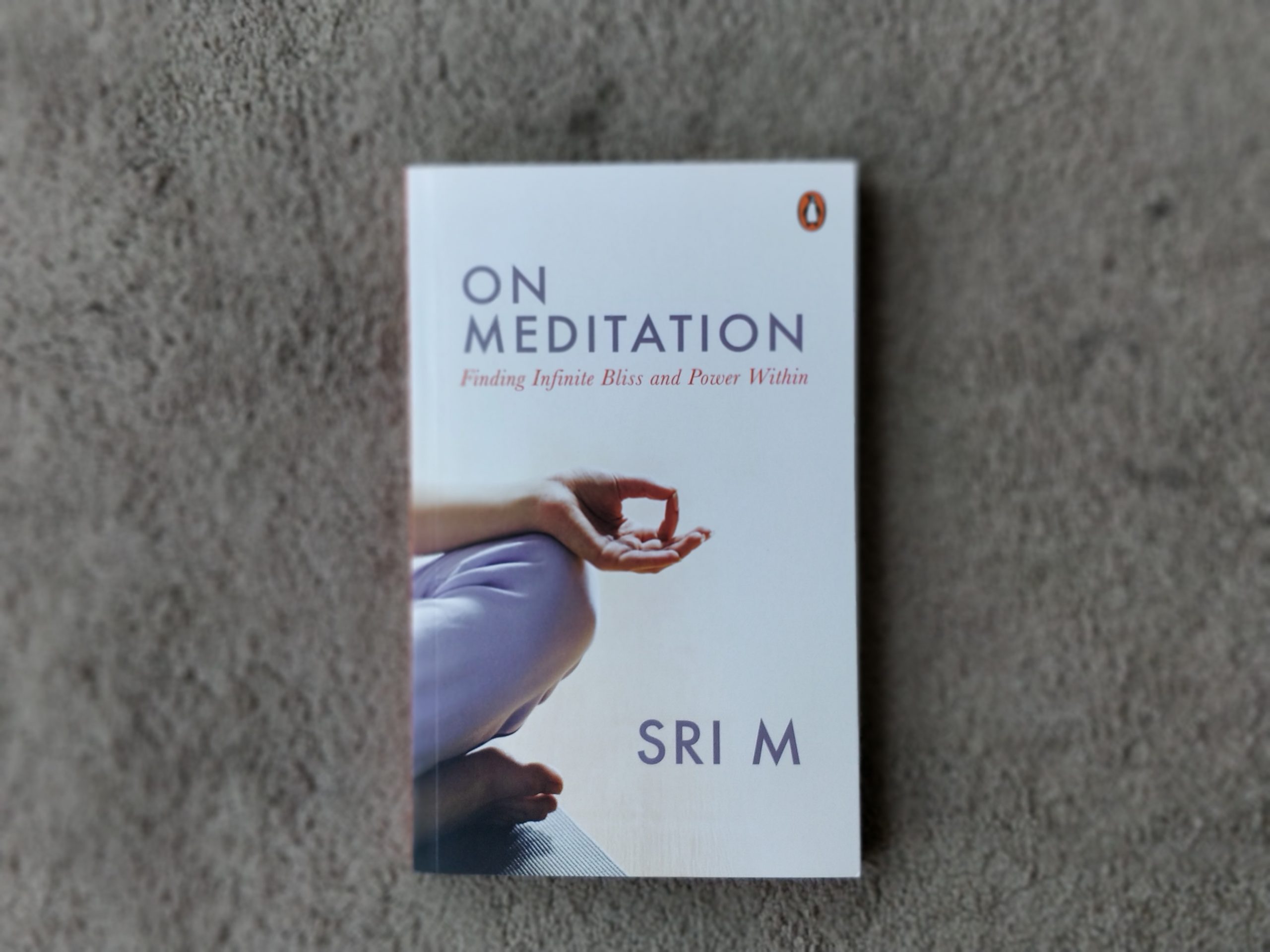
In today’s challenging and busy world, don’t you wish you knew how to quieten your mind and focus on yourself? In On Meditation, renowned spiritual leader, Sri M, answers all your questions on the practice and benefits of meditation. With his knowledge of all the various schools of practice and the ancient texts, he breaks down the complicated practice into a simple and easy method that any working man or woman, young or old, can practise in their everyday lives.

While we are all objectively aware of some of the benefits of meditation, Sri M’s scientific erudition and lucid explanations give us 6 reasons why meditation remains not only relevant, but essential in contemporary times.


1. Meditation, at its advanced stage can help one tap into the limbic system at and to overcome limiting thoughts to access multiple internal forms of energy at will.

“The second is a medical or biological explanation. In the brain, there is a section called the limbic system which is there to alert you and to make you react when there is a sudden threat to your life. So, when the limbic system is set into action, the man reacts. Specifically, there is a switch in the limbic system which suddenly pumps a large amount of adrenaline into his system. Now, that energy, which was accidentally triggered off in this case, can be tapped systematically and utilized for your life. First, it can be used to un-condition the mind and make it more expansive, and second, it can be utilized to gain access to infinite modes of energy.”


2.     Meditation in its ultimate form leads one to a bliss that is beyond the temporary happiness of material greed.

“There are practical ways of keeping your limiting thoughts in abeyance, at least for a while, and gradually increasing the time that you spend in an un-conditioned, blissful, super energy state. This is the practice or sadhana which is about how to zero in or go into the essence of this being. An essence which is not anywhere outside, but right inside us. An essence which is equally there for all beings, whether we have discovered it or not. An essence that can be touched through the practice of meditation.”


3.     While the removal of stress ought not be the only aim of meditation, meditation is the most effective and safest tool to cope with stress.

“When obstacles come, normally we face them, the obstacles are removed, and we move on. This is not only true in meditation, it is also true in everyday life. However, in this process, what happens when we don’t reach that goal? Stress is automatically generated. When somebody or something becomes an obstacle to you achieving the goal, there is stress and there is conflict.

Hence it can be useful to meditate in everyday life to deal with this stress.”


4.     Meditation is what gives one a sense of permanence and support in a an ever-changing world..

“Apart from that, there are serious people who look at the world and see how temporary things are. They begin to wonder, ‘Is there something beyond all this?’ Then they go to teachers, read books,read scriptures. They come across scriptures that say, ‘Yes, there is something beyond all this which is “permanent” .’ With the desire to find out, they start to meditate.”


5.      The pure focus of mediation can enable our physical well-being by guiding us to the right way to taking care of ourselves.

“You asked, ‘Can it be used for physical health?’ I can only say that if you are not well, if you want to give complete attention to that and diagnose what is wrong with you, if you look carefully ,then it becomes dharana on your health. Out of that, will come a cure for it. Meditation need not necessarily be the direct cure. From dharana will come the idea of how to take care and then move forward.”


6.     The internal mindfulness that comes with meditation accompanies the empathy and compassion that have become even more necessary in this chaotic world

“The other kind of mindfulness has to go side-by-side with internal mindfulness if we need to move forward spiritually. That mindfulness is to be mindful of the outside world, of what we speak,of what we do, of how we treat people. I can sit and talk about peace then go home and mistreat my wife, what does that mean? It means that I am not being mindful. When there is mindfulness inside, it is reflected in mindfulness outside. Or, rather, if you begin to develop mindfulness outside, you also develop mindfulness inside.”


In On Meditation, renowned spiritual leader, Sri M, answers all your questions on the practice and benefits of meditation. The book is available now!

The Rise of Right Wing Hindu Nationalism in India through the Years

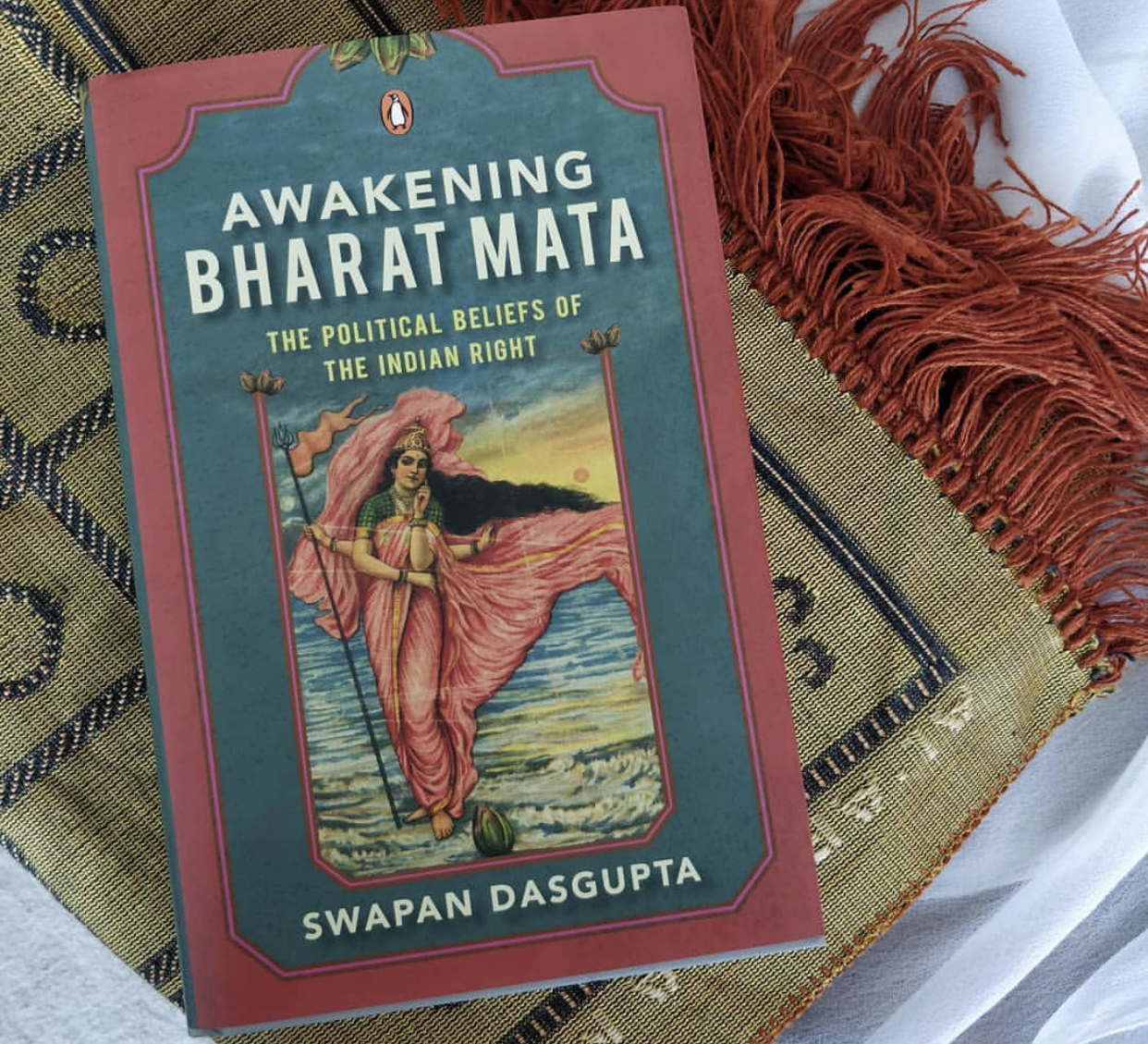
Through Awakening Bharat Mata, author Swapan Dasgupta does not aim to define Hindu nationalism in power, but as a social and political movement. He hopes it will encourage a more informed understanding of a phenomenon that will remain relevant in Indian life far beyond victories and defeats in elections.


  1. The dismissive distaste of all politics that encapsulated the Hindu ethos became more and more marked as the stranglehold of the Congress began to weaken after 1967.

  2. The cosmopolitan elite’s incomprehension of the impulses that motivated the social conservatives……became even more marked after the Ayodhya movement for a temple to be built at the birthplace of the Hindu god Ram acquired a mass dimension.

  3. During the Jayaprakash Narayan–led movement (1973–75) against Indira Gandhi’s government and the patchy struggle against the Emergency (1975–77), a host of non-Congress parties, including Lohia-ite socialists, Gandhians, free-market liberals, and even a section of the communist movement, were willing to rub shoulders with the ‘Hindu right’.

  4. After the collapse of the Janata Party government over the dual membership issue—the right of Janata Party members to be simultaneously associated with the RSS—the tendency to treat the Hindu right as political untouchables became quite pronounced.

  5. When the BJP was formed in 1980, it saw itself as a wholesome version of the Janata Party whose members also had the right to maintain their associations with the socio-cultural programmes of the RSS.

  6. In political terms, the Ayodhya movement and particularly L.K. Advani’s rath yatra in 1990 from the Somnath temple in Gujarat was a watershed. From being a relatively small and well-knit political party with a disproportionate urban presence, the BJP was catapulted into the status of a mass party.

  7. The 1991 general election, preceded by a spectacular mobilization in northern and western India, was Hindu nationalism—hitherto considered a relatively marginal phenomenon in Indian politics—coming of age.

  8. After 1991,. While the BJP invoked nationalism, its opponents called for the unity of ‘secular forces’. This binary became a defining feature of Indian politics after the BJP overtook the Congress in the Lok Sabha in the general election of 1996.

  9. It is astonishing that the sheer scale of the ‘Modi wave’ remained undetected till the morning of 16 May 2014.

Swapan Dasgupta’s Awakening Bharat Mata is a collection that attempts to showcase the phenomenon of Hindu nationalism in terms of how it perceives itself. AVAILABLE NOW

The Rise of Right Wing Nationalism in India through the Years

Through Awakening Bharat Mata author Swapan Dasgupta does not aim to define Hindu nationalism in power, but as a social and political movement. He hopes it will encourage a more informed understanding of a phenomenon that will remain relevant in Indian life far beyond victories and defeats in elections.


  1. The dismissive distaste of all politics that encapsulated the Hindu ethos became more and more marked as the stranglehold of the Congress began to weaken after 1967.


  1. The cosmopolitan elite’s incomprehension of the impulses that motivated the social conservatives……became even more marked after the Ayodhya movement for a temple to be built at the birthplace of the Hindu god Ram acquired a mass dimension.


  1. During the Jayaprakash Narayan–led movement (1973–75) against Indira Gandhi’s government and the patchy struggle against the Emergency (1975–77), a host of non-Congress parties, including Lohia-ite socialists, Gandhians, free-market liberals, and even a section of the communist movement, were willing to rub shoulders with the ‘Hindu right’.


  1. After the collapse of the Janata Party government over the dual membership issue—the right of Janata Party members to be simultaneously associated with the RSS—the tendency to treat the Hindu right as political untouchables became quite pronounced.


  1. When the BJP was formed in 1980, it saw itself as a wholesome version of the Janata Party whose members also had the right to maintain their associations with the socio-cultural programmes of the RSS.


  1. In political terms, the Ayodhya movement and particularly L.K. Advani’s rath yatra in 1990 from the Somnath temple in Gujarat was a watershed. From being a relatively small and well-knit political party with a disproportionate urban presence, the BJP was catapulted into the status of a mass party.


  1. The 1991 general election, preceded by a spectacular mobilization in northern and western India, was Hindu nationalism—hitherto considered a relatively marginal phenomenon in Indian politics—coming of age.


  1. After 1991,. While the BJP invoked nationalism, its opponents called for the unity of ‘secular forces’. This binary became a defining feature of Indian politics after the BJP overtook the Congress in the Lok Sabha in the general election of 1996.


  1. It is astonishing that the sheer scale of the ‘Modi wave’ remained undetected till the morning of 16 May 2014.

Swapan Dasgupta’s Awakening Bharat Mata is a collection that attempts to showcase the phenomenon of Hindu nationalism in terms of how it perceives itself. AVAILABLE NOW.

Seven Things That Make ‘The Bride Test’ Such a Unique Romance!

The Bride Test is the romance we all know we needed-with an incredibly representative diversity, an ambitious, generous heroine and a swoon-worthy hero!

Read on to find out more about what makes this romance so fabulously unique!


  1. It’s sensitive exploration of different aspects of the autism spectrum

Khai Diep, while wealthy, successful and driven is autistic. This has affected the way he processes emotions and has caused him to be completely convinced that he is simply incapable of loving. Add to this his antipathy towards light, gentle touch of any kind and his struggles with intimacy and you can see how difficult it’s going to be to convince Esme (and himself) that he really is in love!

“The impression of her touch remained on his skin, shimmery and unpleasant and he knew from experience the sensation wouldn’t fade for another day. Light touches did that and it was worse when people caught him surprise.”

2.  It opens up a discussion on the struggles of cultural assimilation among immigrants

The Bride Test provides a fascinating insight into a cross-generational, cross section of Vietnamese immigrants, who have set up established vibrant, close-knit societies and successful businesses after immense struggle.

“Her grandma hugged her briefly, an extraordinary display of affection since older generations didn’t generally  hug and Esme caught the smell of more fish sauce. Instead of venting out the room she breathed the smell deep into her lungs, Her origins didn’t define her but they were a part of her. She refused to be ashamed of them.”

3. It’s a clever play on the mail order bride trope

The ‘mail order bride trope’ is popular in the world of romance with the adventure inherent in travelling across the world to make a better life for oneself with a mysterious stranger! And The Bride Test offers an incredibly fun twist on this, this is present-day USA and the not the Wild West and the unsuspecting hero has no idea what his mother has set him up for!

” ‘I’m not getting married, and she’s not staying here, and you can’t do things like this.’ This was the twenty-first century for fuck’s sake. People didn’t run around purchasing wives for their sons anymore.”

4. It shows an inherent respect for ambitious women

In a world that is far too critical of women with ambitious, aspirational  women, Esme is a heroine to look upto. She is unabashed about the fact that she wants a better life for herself and her daughter and mother, and is willing to work for it despite all odds.

“She would fight for herself and she would fight for her loved ones. And she would fight for her loved ones. Because she mattered. The fire inside of her mattered. It could achieve and accomplish. People might look down on her but she was making her way with as much integrity as she could with limited options.”

5. It consciously follows a heroine who is not necessarily ‘Westernized’ and has different cultural and social norms.

My Ngoc Tran, known briefly as Esme,  has never been to college and cleans toilets for a living back in Vietnam to support her daughter as a single mother. Her English is not fluent and she feels the need to lie about her being an accountant to disguise what she feels are her ‘shortcomings’ in an Anglocentric and West-centric world. Her character comes as a refreshing departure in a world where a really ‘feisty’ heroine is supposed be ‘Westernized’ inspite of her ethnicity. Esme shows that you can be feisty, ambitious and have a strong work ethic even while coming struggling with the trappings of the Western world.

I asked myself why I’d automatically decided my heroine had to be ‘Westernized’. Why couldn’t she have an accent, have less education, and be culturally awkward- Authors Note

6. It has an amazingly colourful cast of supporting characters!

From Khai’s outspoken, interfering but loveable mother , Cô Nga, to his whacky but supportive brothers and his wide range of cousins and sundry aunts, to Esme’s friends at the literacy centre and her adorable daughter Jade, the supporting characters are protagonists in their own right!

” ‘These two kids.’ Cô Nga tried to sound stern, but she couldn’t keep a smile off her face. ‘Go home already. People will see you.’ She dug through her granddaddy-sized purse until she came up with a tissue and handed it to Esme. Then she dragged the aunts off.”

7. It’s a Cinderella story with a twist!

While everybody loves the gentle, romantic sweetness of a Cinderella story, with its pathos and happy ending and the idea of a gorgeous man just willing to share your troubles, we’d like the heroine to show some spine and willingness to fight her own battles too. And The Bride Test just does that. While Esme is initially placed in a dependent situation, she shows a determination to work her way out of that, to become financially independent-whether it’s by working as a waitress to pay her way or not marrying till she graduates college

“In this country of empowered people, justice and fairness opportunities were there for everyone. Marriage and birth couldn’t be the only ways to belong here. She didn’t believe that. There had to be something she could do to earn her place here, some way to prove herself.”


The Bride Test  is available now!

5 Unknown Facts about the Bad Man of B-town

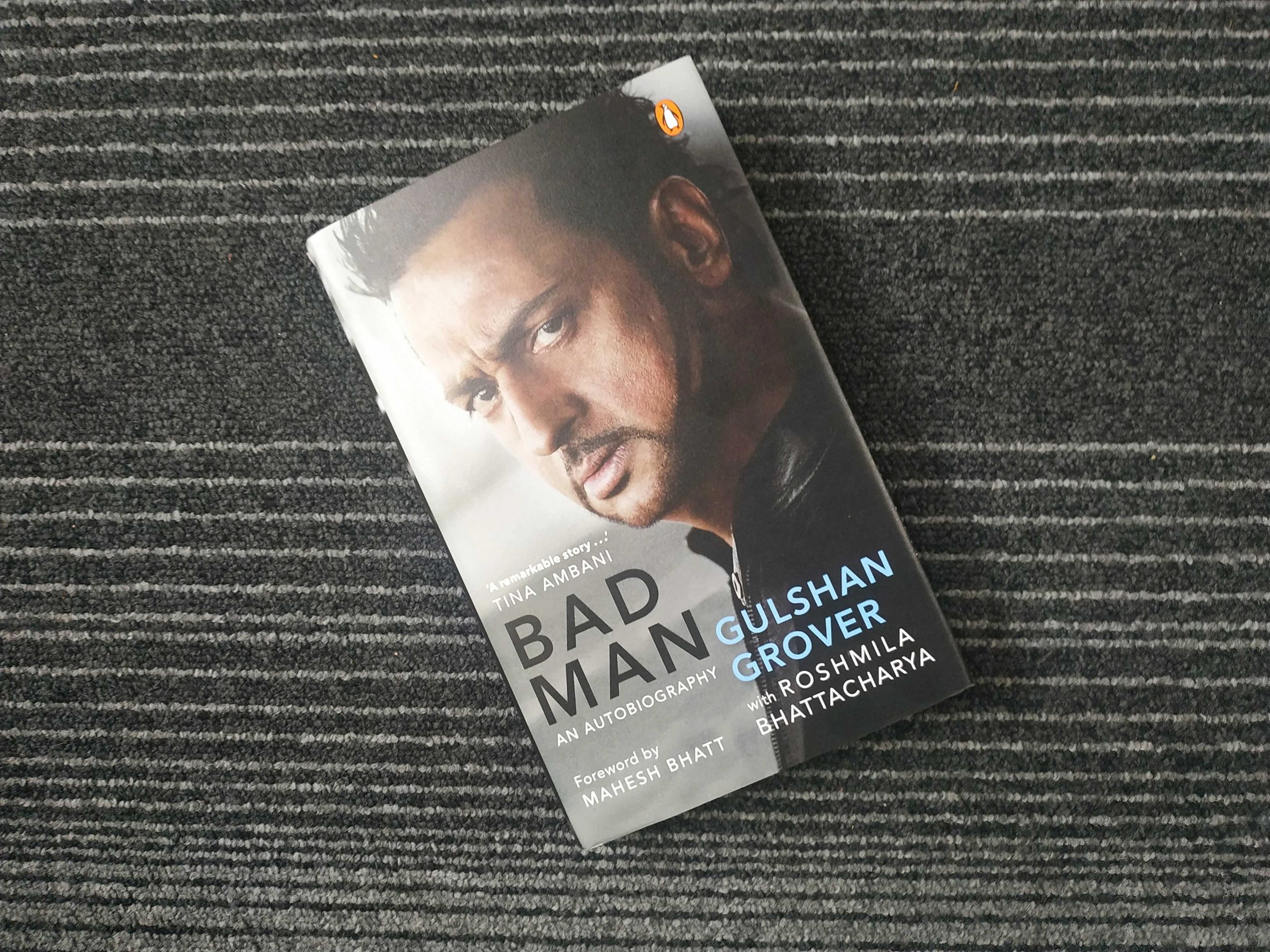
Gulshan Grover’s autobiography Bad Man, co-authored by Roshmila Bhattacharya traces the tale of the actor and his rise to fame. From a child living under humble conditions to being known as the ‘Bad Man’ in his career-defining role in Ram Lakhan, the book talks about how he braved through many troubles as a struggling actor and his subsequent success. He shares about why he made an intentional decision to play the role of villain amidst a time when every other struggling actor wanted to play the hero and many other experiences which made a popular villain.

Here are a few things about this ‘Bad Man’ that you might find interesting!

Gulshan Grover’s very first acting job was his role as one of the monkeys in the army of the Hindu god Hanuman, in a local production of Ramayana. He was only five years old.

Gulshan Grover is the first Indian actor to have ever acted in a Polish, Malaysian and an Iranian film.

When in the ninth standard, Gulshan Grover used to sell detergents and disinfectants door-to-door, in order to provide financial help to his family.


Gulshan Grover was a sincere and intelligent student at school, and due to this, he bagged an admission at the prestigious Shri Ram College of Commerce in the year 1971.

Gulshan Grover’s first attempt at trying his luck in the films industry was a disappointing endeavour and he decided to go back home after a brief stint of three months in Mumbai. However, he motivated himself to go back with a calculated strategy and succeeded in becoming the Bad Man of Bollywood.


Read more such interesting accounts about making of the superstar Gulshan Grover in Bad Man

Reasons to Read Thomas Taylor’s ‘Malamander’

Thomas Taylor creates a wonderful and mythical environment in his book Malamander. Herbert Lemon, the Lost-and-Founder at The Grand Nautilus Hotel, comes across a girl who is lost. In the true spirit of his title, he takes it upon himself to unravel the mystery behind Violet Parma’s missing parents. What seems to take a path down to the famous wreck of the battleship Leviathan, leads the two to discover that their disappearance might have something to do with the legendary sea-monster, the Malamander. The story of Malamander is a beautifully created mystery – dotted with secrets, stories and an unforgettable sea-side town.

Cover illustration © 2019 George Ermos

1. The Grand Nautilus Hotel has undiscovered secrets. There’s a lot happening inside its walls and a lot of mysteries to solve. It’ll guide you to the truth behind the town’s famous folklore – the Malamander.

The Grand Nautilus Hotel is a strange place. In high season, it’s full of summer guests – people in shorts and shades and sunburns who drift about looking at everything and noticing nothing. But it’s not like that in the winter. In the winter, people only stay here if they have a good reason. Or a bad one.

2. There’s a library you’ll want to see. It’s full of the secrets that the mermonkey carries with him. Find out which book he has in store for you. It can tell you a lot about your future or your past.

“The world’s one and only book dispensary,” Mrs Hanniver says, handing the card back. “A library will lend you the book you want, while a bookshop sells it for a price. In this place, however, it’s the book that chooses you.”

3. There’s seemingly nothing yet everything beyond the mist covering the  pier. 

Lady Kraken can see a lot with that cameraluna of hers, but seeing isn’t necessarily understanding.

4. The Malamander is a mythical creature that has become a big part of the town’s history. Nobody really knows much about it and nobody has really seen it. Or have they?

Something is in the mist, in the direction of the sea, too far to be clear. It’s a crouching figure, hunched low near the water, as if poised, waiting to spring. But there’s something funny about it, something odd about the length of its arms, something fish-like and spiny that stops this being a someone at all, and makes it more like a something.

5. Is there a part of you that wants something really desperately? Enough to take big risks in order to fulfil your wish? Then there might be something that the Malamander has that could make your wishes come true.

“And if you had such a thing in your possession, Violet Parma,” Eels continues. “If you could wish for your heart’s desire, I wonder what you would choose.”


Malamander by Thomas Taylor, published by Walker Books Ltd is available now.

The Events Leading to the Emergency of 1975: An Excerpt from ‘The Rise of Goliath’

What can best illustrate India’s journey in the last seven decades? Disruptions.

Almost every decade of India’s history since Independence has been marked by major disruptions.

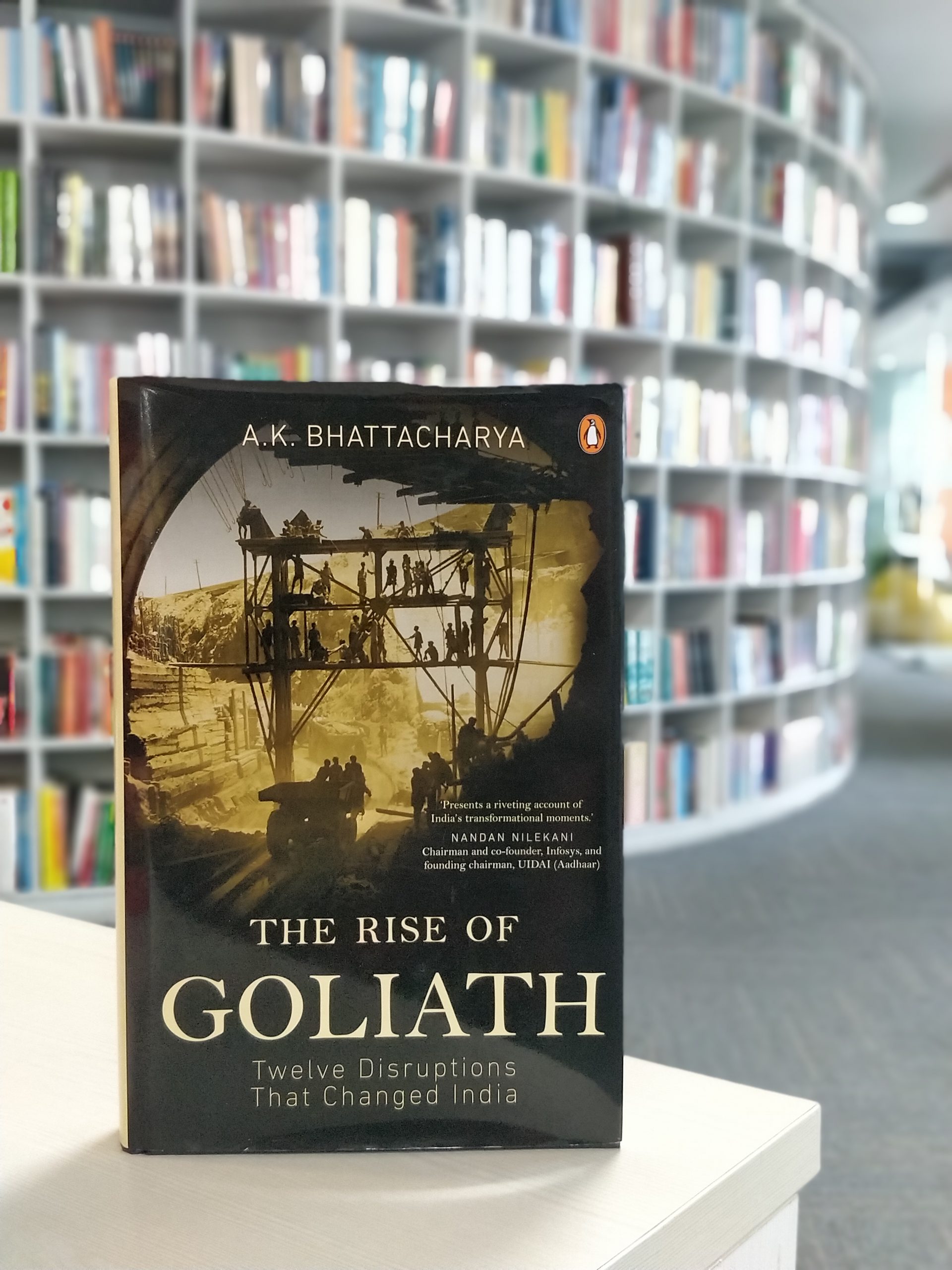
The Rise of Goliath is the story of twelve disruptions that changed India. The book also provides a peek into the kind of disruptions India could face in the coming years.

Intrigued? Read an excerpt from the book below:

For three separate reasons, not entirely unconnected with each other, 12 June 1975 was an important day for Prime Minister Indira Gandhi. Early in the morning, she received the news that D.P. Dhar, her adviser and trusted lieutenant for years, had died of a massive heart attack. Dhar at that time was India’s ambassador to the Soviet Union. He had just been sent to Moscow for his second stint after he served the Gandhi government in different capacities including as a minister. He played a key role in India’s war with Pakistan that led to the secession of East Pakistan, which eventually led to the creation of Bangladesh. He also played a crucial role in the formulation of India’s friendship treaties with both Bangladesh and the Soviet Union.


By the evening, the same day, news about a Congress debacle began trickling in from Gujarat, where the Assembly elections had been held earlier and the results were due that day. The Janata Morcha, a coalition of political parties, led by Jayaprakash Narayan, an Opposition leader, and Morarji Desai, who was then the leader of the Congress (O), was ahead of the Indira Gandhi-led Congress. A defeat for her party in the state looked certain and that would be a big setback not only for the party but also for Indira Gandhi personally, as she had led the entire Congress campaign in the Gujarat Assembly elections.


Between these two developments—one in the morning and other in the evening, another piece of news had broken around 10 a.m. The Allahabad High Court passed an order that unseated Indira Gandhi as a member of Parliament. The high court judge, Justice Jagmohan Lal Sinha, held her guilty of having used the services of a government servant and securing the help of some Uttar Pradesh government officers for campaigns during her Lok Sabha elections in 1971.


Even as Gandhi was scanning Justice Sinha’s judgment that day, she could not have missed the deep irony behind the direct or indirect involvement of his close adviser for many years in developments that led to her conviction. Parmeshwar Narayan Haksar was a diplomat who worked with Gandhi for almost six years—first as secretary, then as her principal secretary, and then was hired by her to be the deputy chairman of the Planning Commission for almost two years. On 13 January 1971, Yashpal Kapoor met Haksar, who was then her principal secretary, with a request that he be relieved immediately so that he could work for Gandhi’s election campaign. Haksar apparently accepted the resignation orally and Kapoor began campaigning for Gandhi, even though the official order accepting his resignation was issued only on 25 January 1971.

However, this version was contested by others, who believed that the resignation letter was backdated and there was a technical violation in the election code that a government servant cannot work for the election campaign of a candidate. Her joint secretary in the prime minister’s secretariat then, Bishan Narain Tandon, wrote in his diary:


The truth is that Kapoor had submitted his resignation only on

25 January but he had backdated it to 13 January. Action was taken on it

on the 25th. The official noting makes it clear that there was nothing to

suggest that its acceptance had been mooted before the 25th. The noting

is followed by the signatures of two officials and then by Haksar’s. He

accepted the noting and if the resignation had been accepted on the 13–

14th, he would have written so on the file. But he wrote no such thing

and signed the file. Later Seshan (private secretary to Gandhi) conveyed

the PM’s approval. In the light of these notings and signatures, there

can be no doubt left in anyone’s mind that Kapoor’s resignation had not

been accepted before the 25th.

Justice Sinha of the Allahabad High Court also believed that Gandhi was guilty of having obtained the services of a government servant for her election campaign work and cited that as one of the reasons for declaring her election in 1971 void. Haksar was also summoned by Justice Sinha and his answers in the court on 12 February 1975 could not change the judge’s view on the matter. Jairam Ramesh cites this instance in his book Intertwined Lives: P.N. Haksar and Indira Gandhi and also notes a deeper irony behind the development. It was Haksar again who in February 1972 had advised Gandhi to clear the appointment of Justice Sinha as a permanent judge in Allahabad High Court. Three years later, the same judge would deliver a verdict that would nullify Gandhi’s elections.

Four elements in the Allahabad High Court judgment stood out starkly: One, the election of Indira Gandhi had been declared void. Two, Gandhi was disqualified from seeking re-election for a period of six years. Three, the high court order did not take immediate effect and had been stayed for twenty days. This was because immediately after the high court judgment, Gandhi’s counsel had sought time for appeal and a twenty-day grace period was granted before the order could take effect so that she could file an appeal. Four, on the expiry of the twenty-day period or as soon as an appeal against the high court order was filed in the Supreme Court and admitted, the order on declaring Gandhi’s election void would cease to be effective. Technically, therefore, Gandhi could have simply gone in for an appeal and stayed on as the prime minister and hoped that the apex court would rule in her favour, which is what broadly happened later. But not before Gandhi took the pre-emptive and unprecedented action of declaring an internal emergency in the country on the night of 25 June 1975.


What other disruptions took place in India? Find out in The Rise of Goliath 

Make Learning Fun with these Invigorating Reads for your Little One!

We’re back in school, and this month, we’ve got titles that will make learning fun for your child! With books on the women scientists in India, the heroes of the Uprising of 1857 and on science, it’s time to make boring subjects fun!

Take a look at these new books that will be coming soon!


 31 Fantastic Adventures in Science: Women Scientists in India

We don’t see them on TV, in textbooks or in newspapers, and most of us can’t name a single one. But there are thousands of women scientists in India, who perform experiments in laboratories, peer through powerful telescopes and camp out in harsh and extreme conditions.

Find out what drew them to science, read about how they deal with the difficulties and pressures of their work, and learn how they push the boundaries of human knowledge further and further every day.


Rattu and Poorie’s Adventures in History

Rattu and Poorie’s Adventures in History

Rattu is in a bad, mad mood. Her bossy older sister, Poorie, has taken her toys and gone off to play without her. She wishes she had a soldier to protect her and take her side. No sooner does she make the wish than the ground begins to shake-and suddenly, there’s not one, but two soldiers in the room!

So begin Rattu and Poorie’s grand adventures in the Uprising of 1857, and their encounters with its heroes: from Rani Lakshmi bai of Jhansi and Nana Sahib of Kanpur to the last Mughal Emperor, Bahadur Shah Zafar.


Skill Builder Series

The Skill Builder series aims to foster in children the numerical, logical, thinking and language skills that are essential for success in the twenty-first century. The books are broadly aligned to school curricula and are available at four different levels of complexity, so you can choose the one that best suits your child’s learning stage.

The Skill Builder: Science books are aimed at helping learners to become proficient in science. Through fun activities and challenging scenarios, learners will acquire investigative, research, observation, experimentation and analytical skills and learn to apply them to wide range of everyday contexts.

error: Content is protected !!