Publish with Us

Follow Penguin

Follow Penguinsters

Follow Penguin Swadesh

The most fascinating aspects of meditation, explained

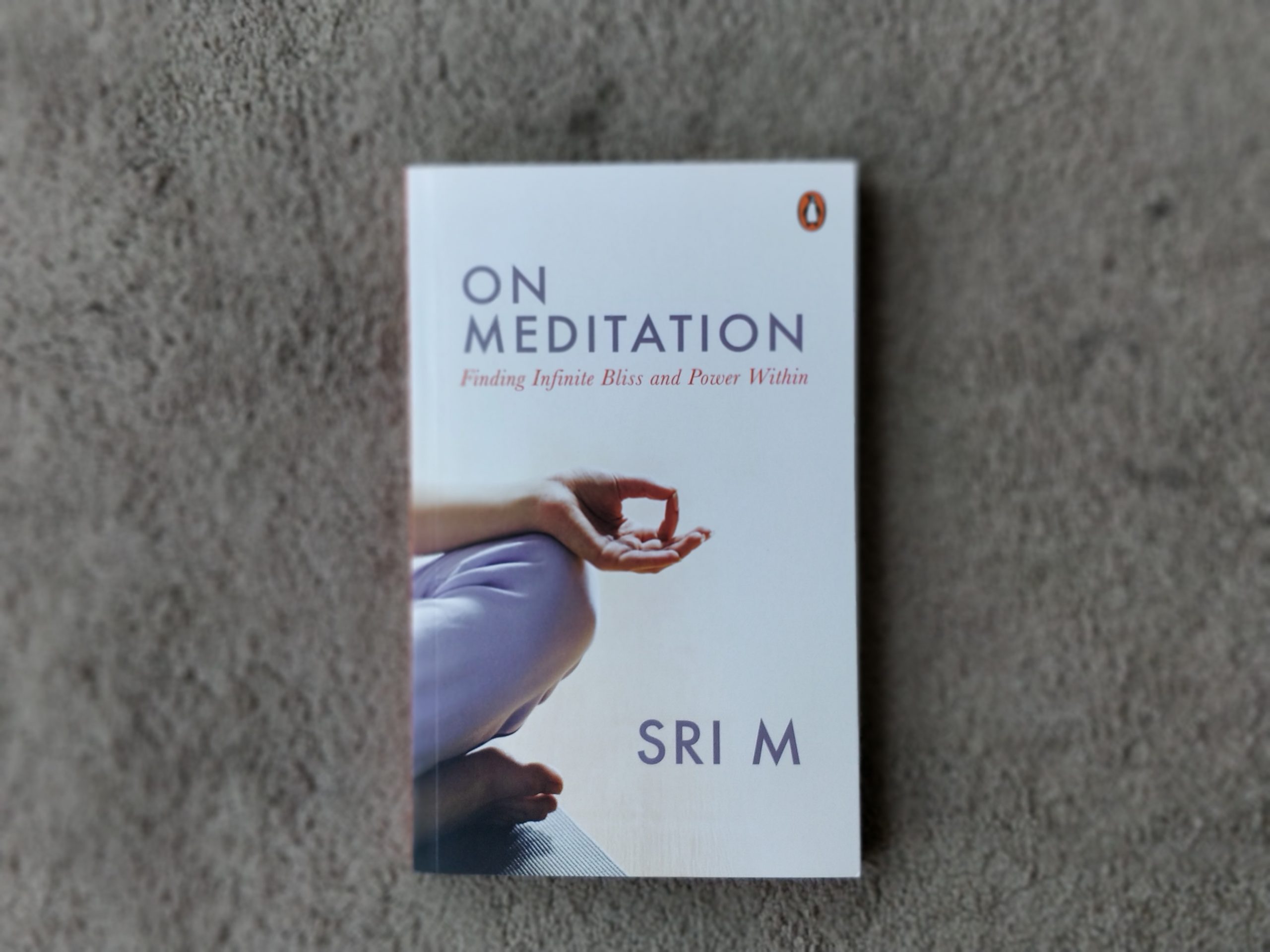
In today’s challenging and busy world, don’t you wish you knew how to quieten your mind and focus on yourself? In On Meditation, renowned spiritual leader, Sri M, answers all your questions on the practice and benefits of meditation, presenting it as a simple and easy method that we can all practice in our daily lives.

In his quintessentially soothing, ‘meditative’ prose, Sri M takes concepts that most of us would find intimidatingly esoteric and explains them in detail, from definition to technique, while bringing to light some of the most fascinating aspects of meditation-from spiritual bliss or swabhava to the inner music of being-anahatshabd.


The path to reach the goal of meditation is in three parts and detailed in Patanjali’s Yoga Sutra.

‘Dharana means the capability or the capacity or the practice by which one can put one’s mind exclusively in one stream of thought. When that matures and becomes a continuous process, then that dharana becomes dhyana. When that dhyana can be sustained for a continuous period, then one can experience and understand what samadhi is. When we can do this for a length of time with absolutely no distractions, then we enter into a state where we forget that we are even meditating. There is only that state. That is called meditation.’


Meditation allows one to tap into the limbic system which provides the adrenaline rush to react in emergencies, but in a systematic manner, with the possibility of utilizing infinite modes of energy

‘If thoughts such as ‘I am this body’, ‘I am a man’, ‘I’m a woman’, ‘I’m a child’, or ‘I am an old person’, can be un-conditioned, or at least set to rest for a while, then it’s possible to access that source of all energy that is within us. Fortunately, this happens to be a blissful energy and not a painful energy.’


Enlightenment is one of those mysterious terms that one rarely understands completely. Sri M explains it as the ultimate use of meditation.

‘Enlightenment is enlightenment only when it’s there, even in the midst of getting into a bus. It is always there. Therefore, since you have found peace and satisfaction, you really don’t want anything more. But it’s not as if you have become stagnant. In every minute of every second, it’s renewed. That probably should be the ultimate use of meditation.’
On Meditation || Sri M


Sri M explains the technique of yogic breath and distinguishes it from ‘surface breathing’.

‘The yogic breath is not surface breathing where you screw up your nose. No. The yogic breath is deeper. In yogic terminology, this breathing technique is called ujjayi, where you’re not breathing as much through your nose, but breathing through your throat. How? I open my mouth and breathe; however, instead of inhaling with my mouth open, I do the same process with my throat, but where my mouth is closed. The air is flowing through the nostrils, but it’s going in in a much deeper manner, touching the throat centre.’


 The ‘third eye’ has many spiritual and mythical connotations for us, but was it and why is it emphasized n the practice of meditation?

‘When we say ‘third eye’, we’re not referring to a physical fact, we are referencing an inner opening, an activation in a certain area of the brain, which is physically connected to the ajna chakra, also known as bhrumadhya—between the brows. From my understanding, meditating on the third eye can never be a distraction because it can always lead you deeper and deeper and deeper if you do it properly.’


As one goes deeper and deeper in one’s awareness of the breath, it slows to almost the point of cessation, at which point one begins to hear the inner movement of the prana, the anahatshabd.

‘It doesn’t cease completely, because the body has to be maintained, but it becomes very slow, and then you begin to hear sounds which in yogic terminology are called anahatshabd. This means ‘sound which comes without striking two things together’. ‘Ana-hat’ means ‘without hitting’ or ‘without striking’. One way we can conceive of clapping with one hand is to imagine the inner sound which comes, not from two physical objects hitting each other, but from the inner movement of molecules, the inner movement of prana.’


When one finally ‘sits down’ to meditation, there are certain positions that are best suited to the practice.

‘When I say comfortable position it means that different positions are comfortable for different people. I prefer sitting cross-legged, sukhhasana. There are many other postures in the yogic system as well. You can sit in siddhasana. If you change it a bit it becomes svastikasana. There is vajrasana, which involves putting your legs back. Another meditative posture is veerasana. There is gorakshasan. Then there is the classical ‘Buddha pose’ known as padmasana, or lotus posture.’


Sri M expounds the ideal of spiritual bliss, the most natural state of being.

‘Stillness itself is bliss. We don’t become anything. This means, it is not subtracted by any activity nor can any activity add to it. It is in its natural state. It’s swabhava and this is the original swabhava— true identity.’


In On Meditation, renowned spiritual leader, Sri M, answers all your questions on the practice and benefits of meditation. The book is available now!
Relearning the Relevance of Holy Texts in an Increasingly Secular World

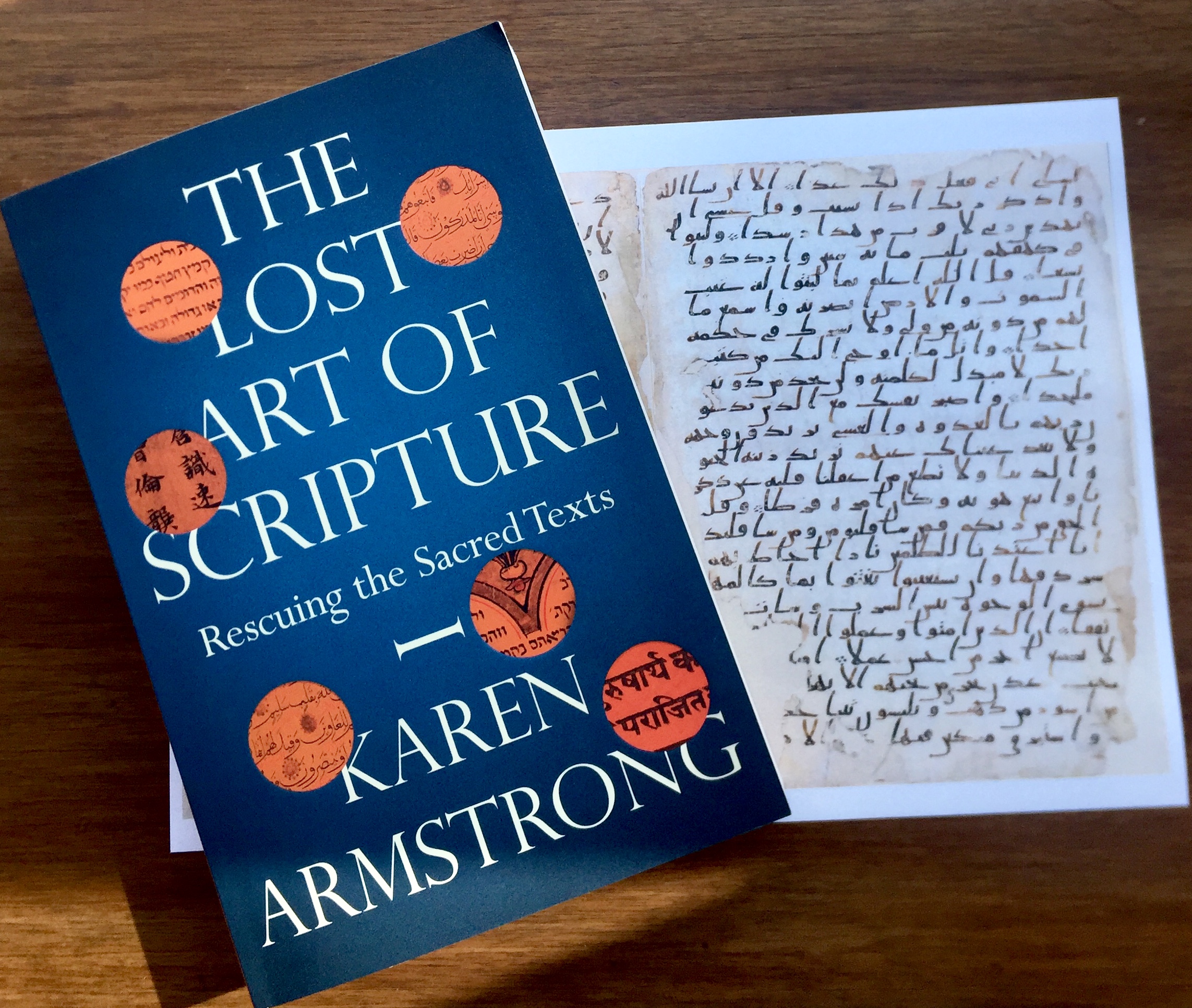
The sacred texts have been coopted by fundamentalists, who insist that they must be taken literally, and by others who interpret Scripture to bolster their own prejudices. These texts are seen to prescribe ethical norms and codes of behaviour that are divinely ordained: they are believed to contain eternal truths. But as Karen Armstrong shows in this chronicle of the development and significance of major religions, such a narrow, peculiar reading of Scripture is a relatively recent, modern phenomenon.

Karen Armstrong is one of the world’s leading commentators on religious affairs. She has published dozens of bestselling books such as A History of God, The Case of God and many more.

Here we present to you how the narrow reading of scriptures is a relatively recent phenomenon.


Truth is not straightforward

40000 years ago, the first interaction between humans and religion took place. The Lion Man was formed, which was discovered in Stadel Caves in Southern Germany before the eclipse of the Second World War. Lion Man was interpreted by Jean-Paul Sartre as the human ‘ability to think of what is not’. Thus, the world we have formed around us, in it true essence, is just an amalgamation of our imagination and perception. This gives birth to a string of interpretations, which at times can be illusive. This, in the author’s words means, “… the ‘objective truths’ we rely on our inherently illusive.” Therefore, the reality we live in, is the one that we have constructed. We choose to believe it.

The false interpretation of scriptures is destructive

From the Quran to the Torah, to the Guru Granth Sahib, people are reading scriptures in a very literal manner so that it conforms to their world view.  In doing so, they lose out on the true spiritual value behind these holy texts. According to Armstrong, “Jihadis cite passages from the Quran to support their acts of criminal terrorism.” It is the narrow and constrictive interpretation of the Quran that is driving them to kill innocent people. The same way, “Religious Zionists quote ‘proof texts’ to assert their claim to the holy land and justify their enmity towards Palestine.”

The interpretation of scriptures is changing with time to suit the societal values

The text of Quran needs to interact with the ever-changing history for new interpretations to be formed. These interpretations are necessary to, “change earthly reality”.  Thus, this is where narrow reading of scriptures can come to play. The texts can be interpreted in innovative and creative ways to gel with the existing social structure. However, this new interpretation should invoke deep compassion and mercy among Muslims, so that every time they recite the Quran, its sacred power is bestowed upon them.

Scriptures can give birth to deeper insights

Texts from scriptures should not be used to conform to our existing world views. However, they should be used to make us question the fundamentals of reality. The existing traditions need to be pushed for newer ones to descend. According to Armstrong,” Nanak was even ready to abandon conventional scripture…”. While reading scriptures narrowly, a person has to listen to his inner spirit, to understand and build upon its new meaning.

Amalgamating the texts of scriptures in today’s world

The Reconstruction Movement was started by Gary North, a Texas businessman, in 1980s. In this movement, he implemented every single law of the Bible, including banning homosexuality, introducing slavery and stoning children. Similarly, the Wahhabi Ideology of Saudi Arabia, condemned the persecution of Shia and Sunni Muslims because they were born after the lifetime of the Prophet. These examples given by Armstrong show that when scriptures are interpreted to narrowly, the true learning behind them is lost..

Scriptures have always been unclear

According to the author, “…. the modern era scripture was regarded as an ‘indication’ that could only point to the ineffable.” One reason why scriptures are read narrowly is because they are trying to explain the unexplainable, which lie beyond the realm of human language. Thus, by looking at them objectively, we try to rationalize and quantify these learning into words we understand.


Get your copy of The Lost Art of Scripture today!

5 lessons on Forming your Startup from ‘Secrets of Sand Hill Road’

Starting a company comes with no shortage of poetic adjectives. Great founders are innovative, brave, inspiring, and visionary. Their ideas are groundbreaking and world-changing. But it’s critical to the health of your future company to understand how to set up your business.

Here are 5 lessons on forming your startup from Secrets of Sand Hill Road:


What Form Should Your Company Take? Spoiler: C Corp

“A C corp is just a simpler mechanism through which to provide broad equity ownership to a startup’s employees. And a C corp does not have any limits on the number of shareholders that can be part of the organization; thus, as a startup hopefully grows, later employees can also benefit from potential equity ownership.”

Carving Up the Ownership Pie

“Most companies have more than one founder. And when you start a company, it’s you d your cofounder against the world. As with most things in life, a little planning between founders can go a long way toward ensuring that a breakup doesn’t crater your dreams of world domination.”

Founder Stock Vesting

“The basic purpose of founder equity is to create long-term incentives. The rationale for vesting is to tie the founder to some defined term of employment before she can exit the firm and take 100 per cent of her equity with her.”

Transfer Restrictions

“A blanket transfer restriction means that shareholders cannot sell without some form of company consent – often the board’s consent is required to do so. Transfer restrictions are designed to be permanent, but, as with most governance provisions in private companies, they can be removed by the company with a majority board vote and shareholder vote.”

Intellectual Property

“Intellectual property is the lifeblood of most startup companies, so we need to protect it carefully…we need to make sure there is no entanglement of the intellectual property with the previous employer and that the startup owns all the inventions.”


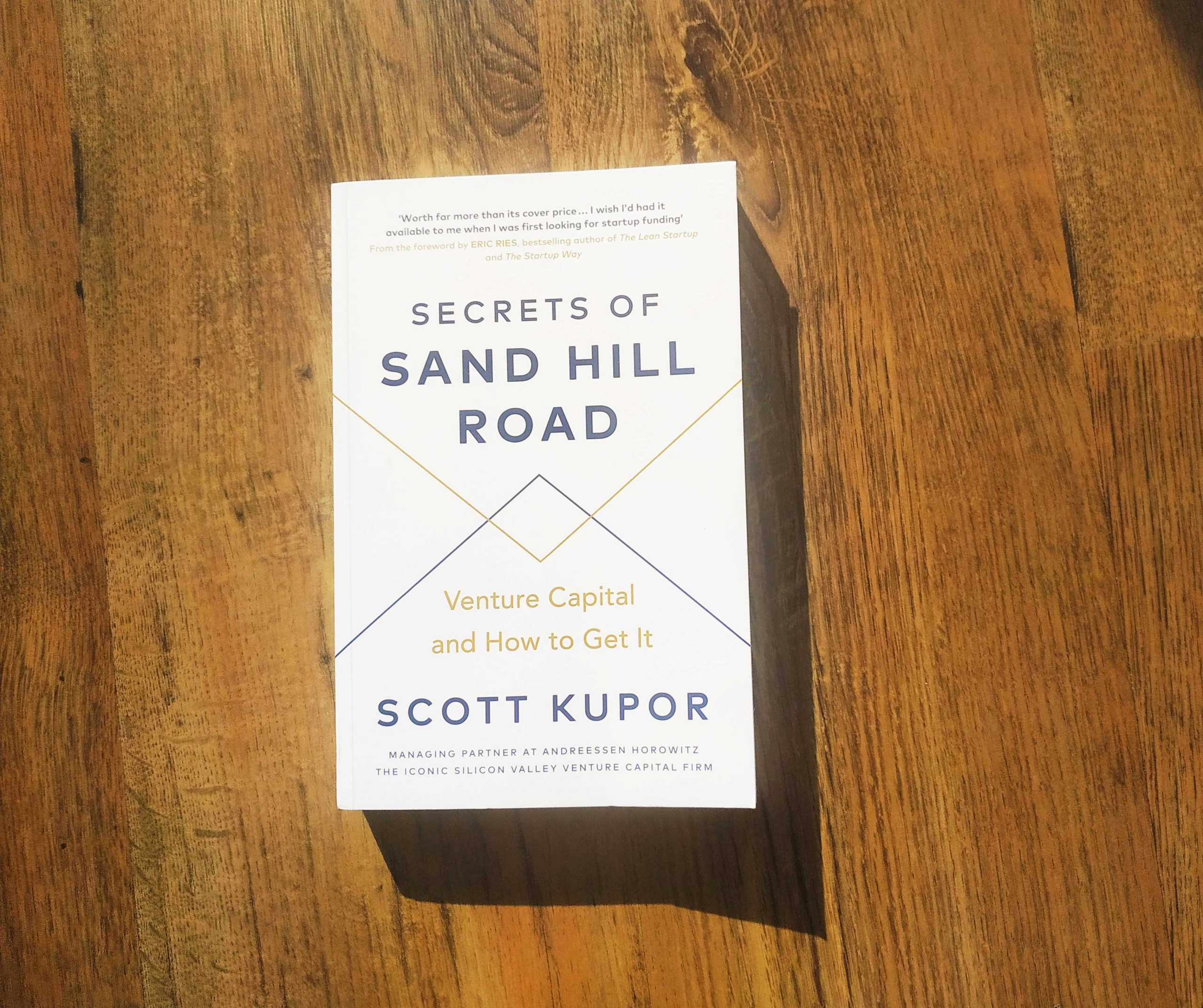
Filled with Kupor’s firsthand experiences, insider advice, and practical takeaways, Secrets of Sand Hill Road is the guide you need to turn your startup into the next unicorn.

How Manmohan Singh Changed The Indian Economy- For The Better!

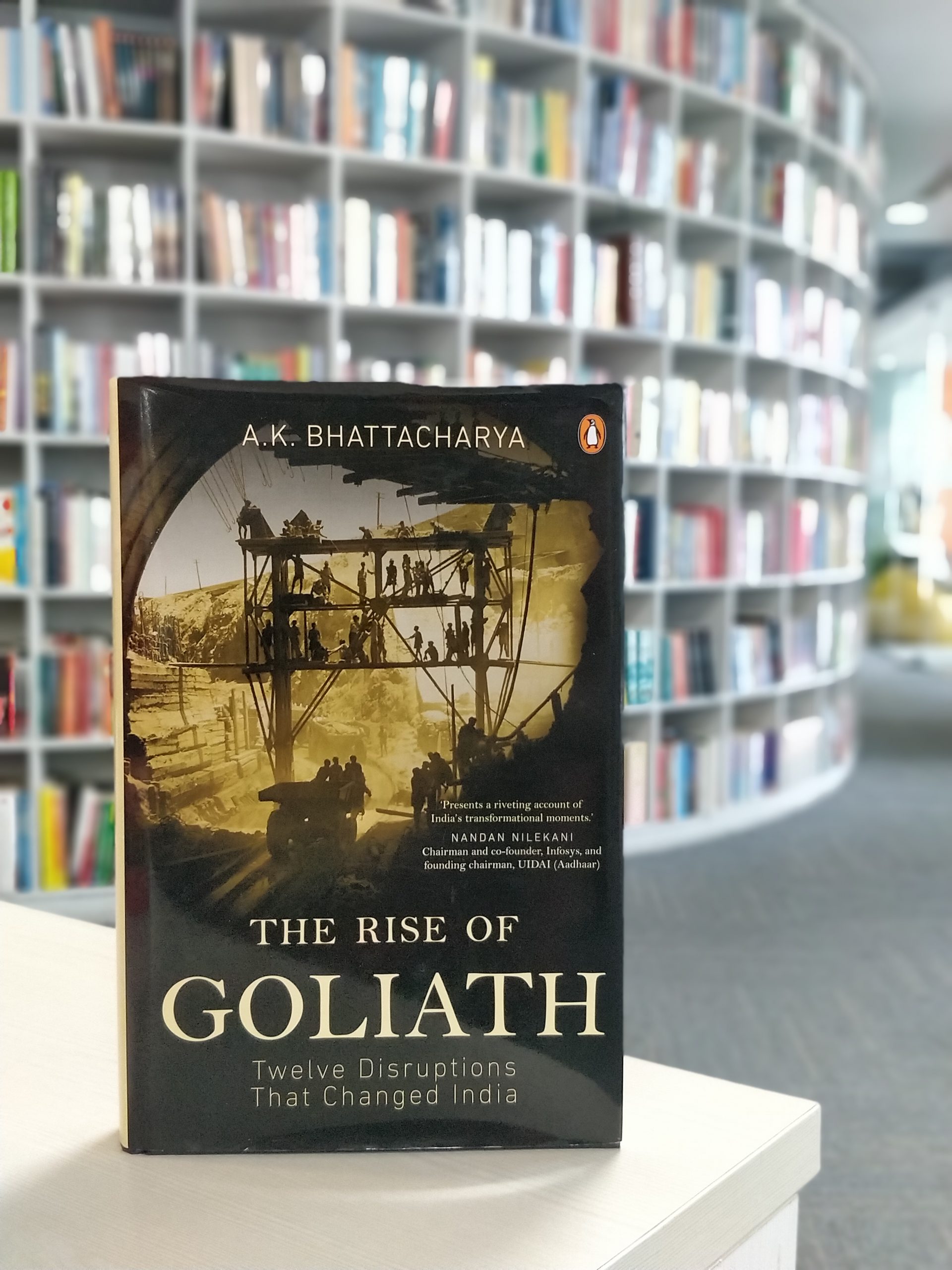
On 2 July 1991, a minority government led by Prime Minister P.V. Narasimha Rao, assisted by Finance Minister Manmohan Singh, who had just made his ministerial debut and was yet to become a member of Parliament, took one of the boldest steps any government could take. Just ten days had passed by after the Rao government had been sworn in, but its finance minister in consultation with the RBI allowed the Indian rupee— long considered a symbol of India’s economic pride—to depreciate by 9.5 per cent. That took the value of the Indian rupee per dollar down from Rs 21 to Rs 23 in one stroke.

A series of bold measures followed in 1991 to bail the Indian economy out of its worst balance-of-payments crisis and introduce reforms in industrial, trade and fiscal policies. The Rise of Goliath by A.K. Bhattacharya explores how these new policies unleashed in a short span of about two months had a long-lasting positive impact on India’s politics and economic management:

  1. The asset limit for companies governed by the MRTP Act was scrapped in one stroke. This meant virtually unlimited freedom for Indian industries to grow without worrying about breaching the ceiling on their assets, initially set at Rs 20 crore in 1969. It had been relaxed twice in the past—to Rs 50 crore in 1980 and to Rs 100 crore in 1985, but now it was scrapped.

  2. Giving a big boost to the private sector’s freedom to operate in new areas, Singh allowed private enterprises to enter as many as ten new areas, which till then were reserved exclusively for the public sector.

  3. Automatic approval for foreign equity participation up to 51 per cent in thirty-four selected industries was permitted and companies entering into foreign technology agreements were freed from the requirement of obtaining the government’s permission.

  4. Singh also scrapped the clause that allowed conversion of loans into equity for new projects.

  5. Singh also allowed the process of state-owned enterprises to shed their stake in the market with the twin intention of raising revenues for the government through the sale of stakes in the PSUs and consequently subjecting these enterprises to greater market discipline.


The Rise of Goliath by A.K. Bhattacharya provides a fresh perspective on many more such disruptive events that shaped India.

Eight Radical Ideas to Adapt and Thrive in the Digital Age

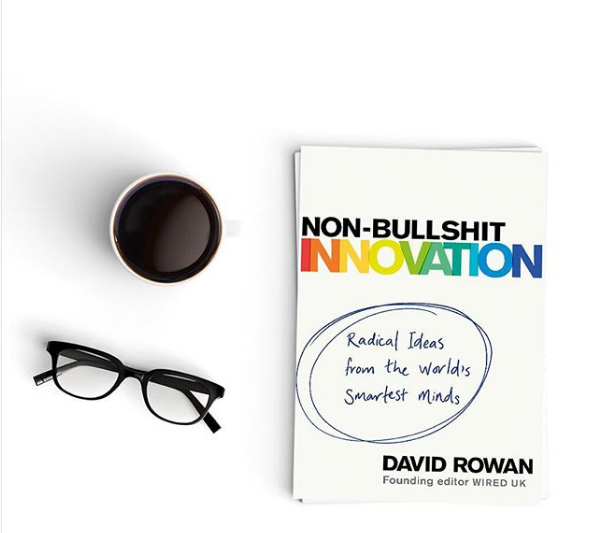
David Rowan, author of Non-Bullshit Innovation, travels the globe in search of the most exciting and pioneering startups building the future.

He’s got to know the founders of WhatsApp, LinkedIn, Google, Spotify, Xiaomi, Didi, Nest, Twitter and countless other ambitious entrepreneurs disrupting businesses in almost every sector. And yet too often the companies they’re disrupting don’t get it. They think they can innovate through jargon: with talk of change agents and co-creation gurus, ideas portals and webinars, make-a-thons and hackfests, paradigm shifts and pilgrimages to Silicon Valley. But during this quest he’s also discovered some genuinely exciting and transformative approaches to innovation, both in start-ups and in established corporations that have re-invented themselves as radically as any start-up to stay relevant in a changing world.

Read to know about eight of the most transformative approaches to innovating in ‘disruptive’ startups and use these radical ideas to adapt and thrive in the digital age!


  1. Embrace unmet needs—move ahead of your rivals by identifying and fulfilling customers’ needs to create or sustain relevance.

“True innovators scent opportunity when emerging technologies or changing economic circumstances generate new customer needs that the market has yet to meet. Moore’s law slashed the cost of digital storage, just as the exponential growth in smartphones allowed universal cross-device messaging, yet it took breakout startups such as Dropbox, Spotify and Whatsapp to understand that the true unmet consumer need was simplicity of use and reliability. Incumbent businesses can similarly build a protective moat around themselves by moving more quickly than rivals in identifying and fulfilling evolving needs.”


  1. Empower your team to create an innovation-centric, healthy and creative working culture that relies on trust and sustains self-motivated employees.

“The best talents seek workplaces which offer the opportunity to do the best work and to grow in the process. Daniel Pink’s 2009 book Drive, which evaluated the behavioural studies of employee motivation concluded, that salary and status are less effective motivators than autonomy(the freedom to work in self-directed ways), mastery (the opportunity to improve skills) and purpose (the wish to be part of something meaningful).”


  1. Turn products into services and launch profitable and sustainable new business lines that respond to customers changing needs.


“Design experiences, services and systems that will enhance customers’ trust in you. Prototype new products and services, using agile and experimental working methods.  Study agile development methods and measure customers’ responses to early iterations before investing more. Study how emerging technologies such as artificial intelligence or blockchain could enable new revenue models.”


  1. Enable ‘moonshots’-like Googles’ Astro Teller- to create a space where high-risk long term projects can be quickly developed and evaluated for efficiency.

“His[Astro Teller] job is to foster a culture that allows anyone to suggest a project, no matter how off the wall and that evaluates these ideas in unbiased ways in order to turn the  best efficiently into commercial applications. He doesn’t want to be the filter, it’s far more scientific to rely on dispassionate methodologies to assess proposals and then throw them into the waste  bin for the right reasons. That means encouraging staff to propose audacious missions and get passionately behind them, but also to be cool-headed enough to know when to quit.”


  1. Incubate tomorrow’s business by partnering with exciting new startups –reengineering your organization around collaboration rather than attempting to build internal capabilities.

“It’s always tough for an established, management layered organization to move with the agility and risk appetite of an early-stage technology startup. So partnering with startups can be an effective way to adapt the core business to embrace fresh thinking and new commercial models.  As we’ve seen, approaches to startups can include funding, co-locating, acquiring, partnering with or even building them.”


  1. Mine the data! For years we’ve been hearing about the exponential growth of big data, even traditional businesses can effectively launch new data -led business lines.

“Creative uses of data analytics are enabling all sorts of new commercial opportunities. A business that can access a reliable data stream and process it to enable better decision-making can generate remarkable new value. Take data from satellites, access to which is falling in price as venture-funded startups build constellations of nano-satellites scanning the Earth in real time.”


  1. Reframe your value-remain relevant by reevaluating how your core strength can extend to new sectors-like Qantas that has extended its loyalty programme to diverse fields like insurance and credit cards.

“Understand what your customers want: ask them, test them, use ethnography, but always begin with their needs. Define your unfair advantage. It may be trust or a particular expertise. What could there be along your company’s entire value chain that could be exploited in new ways that benefit customers. How can you build new business lines that profit from these moats?”


  1. Leverage and master emerging technology and experiment with its potential to refine business models, customer offerings and strategies.

“Exponential technologies, from artificial intelligence to quantum computing to autonomous transport, are clearly going to overturn a bunch of today’s business models and create new winners. Yet, that’s not going to happen according  to predictable timescales or when you feel ready to exploit them. An early mover can secure intellectual property protection on specific-use cases for emerging technologies.


In Non- Bullshit Innovation  , Rowan gives readers looking to apply these approaches immediately in their own businesses some practical takeaways. This book is available now!


DIY Hacks to a Radiant You from ‘Roots to Radiance’!

Do you often find yourself wishing for easy and accessible ways to a better skin, hair, teeth, nails, etc.? Roots to Radiance by Nikita Upadhyay, addresses just about all your beauty problems, with various ways to attain the best version of yourself. The book consists of 500+ tips and tricks that will help you stay in your ‘A game’. These easy-to-make solutions and DIY hacks taken from traditional Indian wisdom will help you enhance your daily beauty routine!

Here we have a few DIY tips, that can assist you in attaining those beauty goals:

A natural scrub that can be used for your face, neck and body.

1⁄4 cup rose water

2 teaspoons coconut oil

1 tablespoon white sugar

Sugar is fabulous for scrubbing and for your face and scalp too.

Mix rose water, coconut oil and sugar and exfoliate your face using circular, upward motions (as explained earlier), twice or thrice a week.

An easy way to get those lush eyebrows!

Soak fenugreek seeds in water overnight and grind them the next morning.

Mix raw milk to the paste and apply on your brows with a cotton earbud to up your brow game!

Combat loose and sagging skin with this trick

Water

Potassium alum (fitkari)

Let me back this up with the most street-smart technique that’s spotted in the tents of local barbers in our country. They keep blocks of fitkari with them and use it as an aftershave balm. Reason being, it’s antiseptic, it shrinks open pores and also helps repair loose skin.

  • Just add 2 blocks of potassium alum to a bucketful of water and let it dissolve.
  • Bathe in that water to tighten your skin.
  • You can also use half a cup for one cup of water and dissolve it to apply to the areas that have 
stretch marks, as a skin-tightening mask.

Make your own cleansing milk!


Most make-up removers will require you to wash your face after using them. This DIY cleansing milk won’t. Mix raw milk, lemon juice, rose water and a few drops of almond oil together and take a cotton pad to remove your make-up with it. This is the only hydrant you need after wearing cosmetics on your face all day.


Get your copy of Roots to Radiance for 500+ easy-to-make solutions drawn from traditional Indian wisdom.


6 Things you Didn’t Know about Caste and Can Learn from Suraj Yengde’s Book

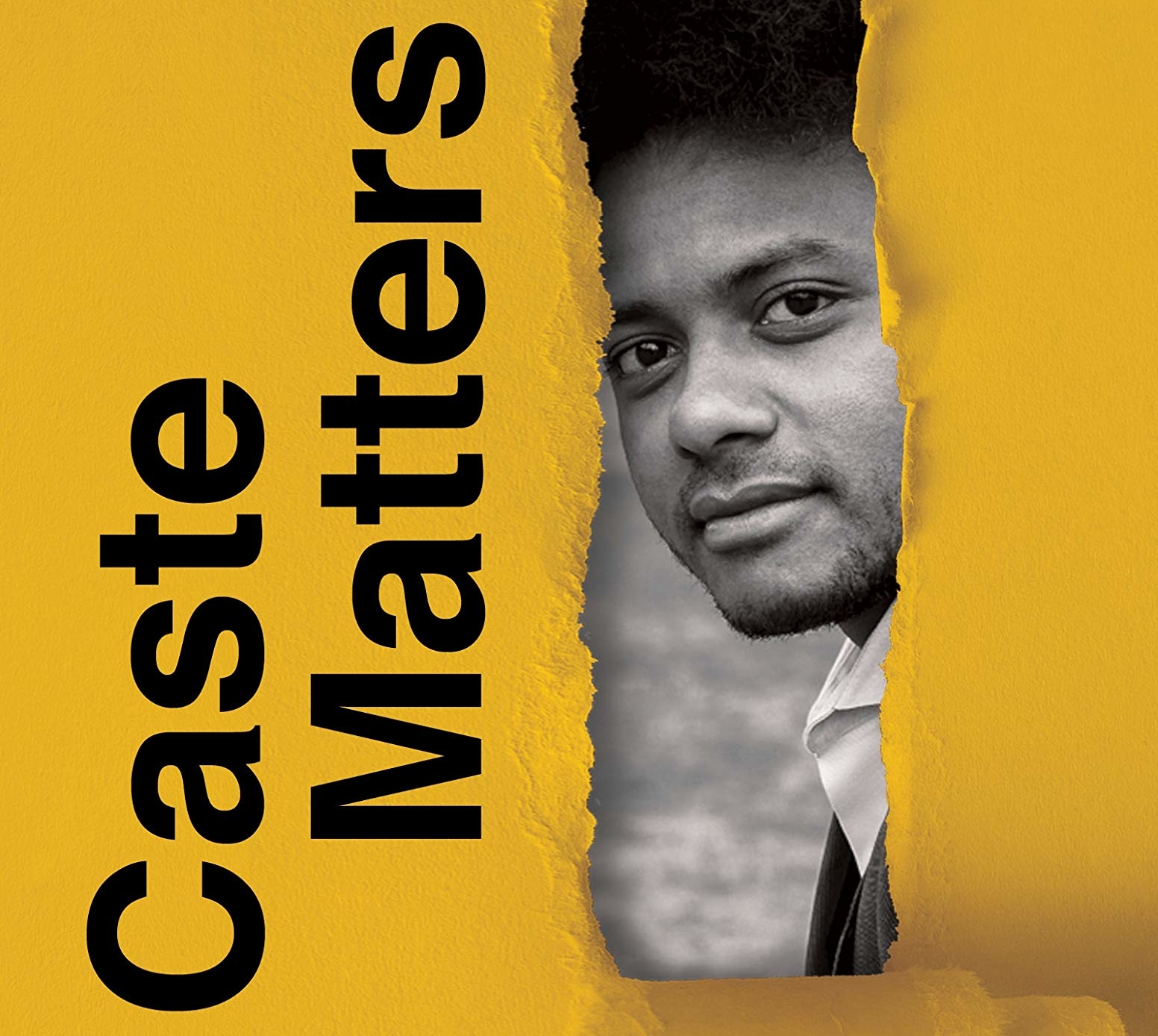
Caste Matters, an explosive book by Suraj Yengde, a first-generation Dalit scholar educated across continents, challenges deep-seated beliefs about caste. He describes his gut-wrenching experiences of growing up in a Dalit basti, the multiple humiliations suffered by Dalits on a daily basis, and their incredible resilience enabled by love and humour. As he brings to light the immovable glass ceiling that exists for Dalits even in politics, bureaucracy and judiciary, Yengde provides an unflinchingly honest account of divisions within the Dalit community itself-from their internal caste divisions to the conduct of elite Dalits and their tokenized forms of modern-day untouchability—all operating under the inescapable influences of Brahminical doctrines.

This path-breaking book reveals how caste crushes human creativity and is disturbingly similar to other forms of oppression, such as race, class and gender.

Here are six realities about caste from the book.

Caste is understood through various prisms, thus making it the most misunderstood topic of dialogue on/in India. However, what remain undiscussed, and therefore invisible, are the multiple forms in which caste maintains its sanctity and pushes its agenda through every aspect of human life in India. Caste plays an important role in every facet and over an unthinkably large domain of public and private life.

 Caste as a social construct is a deceptive substance, known for its elemental capacity to digress from its primary motive of existence that governs this oldest system of human oppression, subjugation and degradation. Originated in the Hindu social order, it has infiltrated all faiths on the Indian subcontinent.

 The people enjoying the benefits of their caste always direct the attention of suffering people towards the state, thus diverting from the real reason for their troubles, which is the existence of the caste system. For instance, issues surrounding communalism take precedence over anything else that has to do with the state. The case of the Babri Masjid demolition in Ayodhya in 1992 became a diversion from the issue of reservation for OBCs brought forth by the V.P. Singh government on the recommendations of the Mandal Commission report in 1990.

 Every major enterprise in India functions under the strict dictums of Brahmins and other dominant castes. The Indian Space Research Organization (ISRO), which is responsible for space-related projects, has launched missions to the moon and Mars. However, the take-off is always officiated by a Brahmin performing prayers.

 Caste in India is an absolute sanction—of the dominant class over the dominated. Its strict division into five categorical instances organized in horizontal capacities is an archetype of legitimized apartheid. Caste in India is observed according to one’s location in one of these five categories. The conversation on caste is navigated by the respective person’s investment in the system.

Untouchability remains a lifeline of India’s present. As recently as 2015, more than 50 per cent of households in the country admitted to practising or witnessing untouchability in urban capitals such as Delhi. India-wide, 30 per cent of Indians have no hesitation in imposing the worst form of human oppression—untouchability—upon fellow humans. In Tamil Nadu, a study over four years (2014–18) revealed that over 640 villages in twenty districts surveyed practise untouchability.

At once a reflection on inequality and a call to arms, Caste Matters argues that until Dalits lay claim to power and Brahmins join hands against Brahminism to effect real transformation, caste will continue to matter.


Learning How to Respond to Challenges as an Individual with Jared Diamond’s ‘Upheaval’

“Almost all readers of this book Upheaval have experienced or will experience an upheaval constituting a personal “crisis,” as I did in 1959. When you’re in the middle of it, you don’t pause to think about academic questions of defining “crisis”; you know that you’re in one. Later, when the crisis has passed and you have the leisure to reflect on it, you may define it in retrospect as a situation in which you found yourself facing an important challenge that felt insurmountable by your usual methods of coping and problem-solving.”

Crisis therapists have identified at least a dozen factors that make it more or less likely that an individual will succeed in resolving a personal crisis.


Acknowledgement that one is in crisis. Until someone admits, “Yes, I do have a problem” – and that admission may take a long time – there can’t be any progress towards resolving the problem.

Acceptance of personal responsibility. But it’s not enough just to acknowledge “I have a problem.” A second hurdle, after a person has acknowledged “I have a problem,” is for the person to assume responsibility for solving it.

Building a fence. Once a person has acknowledged a crisis and accepted responsibility for doing something to resolve it, they can focus on the step of “building a fence,” i.e., identifying and delineating the problem to be solved.

Help from others. Most of us who have successfully gotten through a crisis have discovered the value of material and emotional support from friends, as well as from institutionalized support groups such as those of cancer patients, alcoholics, or drug addicts.

Other people as models. Ideally, these models are friends or other people with whom you can talk, and from whom you can learn directly how they solved a problem similar to yours. But the model can also be someone whom you don’t know personally, and whose life and coping methods you have merely read or heard.

Ego strength. Ego strength means having a sense of yourself, having a sense of purpose, and accepting yourself for who you are, as a proud independent person not dependent on other people for approval or for your survival.

Honest self-appraisal. This is related to ego strength but deserves separate mention. While the importance of honestly in resolving a crisis may seem too obvious to require mention, in fact, the reasons why people often are not honest with themselves are legion.

Experience of previous crises. If you have already had the experience of coping successfully with some different crisis in the past, that gives you more confidence that you can solve the new crisis as well. The importance of previous experience is a main reason why crises tend to be so much more traumatic for adolescents and young adults than for older people. People who cannot tolerate uncertainty or failure, and who give up the search early, are less likely to arrive at a compatible new way of coping. An important element in overcoming a crisis through selective change involves the advantage of a flexible personality over a rigid, inflexible personality.

Core values. The next-to-last consideration, still related to ego strength, involves what are termed core values: i.e., the beliefs that one considers central to one’s identity, and that underlie one’s moral code and outlook on life, such as one’s religion and one’s commitment to one’s family.

Freedom from constraints. The remaining factor to mention is the freedom of choice that comes from being unconstrained by practical problems and responsibilities.


Get your copy of Upheaval today!

Quotes from ‘The Bride Test’ That Will Make You Believe In Love!

The Bride Test by Helen Hoang gives some of the most heart-wrenchingly beautiful prose,—from Khai, who claims to be unable to love, but is so obviously head over heels and from Esme who sets aside her own social insecurities to love unabashedly and whole-heartedly!

Read on for some of the most perfect quotes about the heady breathlessness of falling in love, the agonizing uncertainty of romantic insecurities and the ecstasy of being loved in return:


“A smile worked over her face, one of those mind-scrambling, breathtaking smiles that made her eyes greener. He’d caused that smile. The knowledge sent warmth melting through him, better than a big sweater fresh from the dryer.”

~

“And then somehow he stopped feeling absurd. It was just the two of them here, just the moon, just the ocean and the sand and the music and two hearts beating.”

~

“She was a real person, flawed. Oddly that made her more beautiful.”

~

“They’d done this countless times, but everything felt different tonight, surreal somehow. The air smelled sweeter even though the night-blooming jasmine had always grown here. How come he’d never heard the chirping of the crickets like this or noticed the stars as they blinked through the tree canopy?”

~

“She relaxed against the seat and watched him on and off for the rest of the drive, recognizing the emotion bursting in her heart. It had been creeping up on her, growing bigger every day, and there was no denying it.”

~

“There were an infinite number of reasons to exist on this earth, but that seemed the most important of them all—making Esme happy.”

~

“My heart works in a different way, but it’s yours. You’re my one.”


From the best-selling author of The Kiss Quotient, Helen Hoang, comes a romantic novel about love that crosses international borders and all boundaries of the heart…The Bride Test is available now!

error: Content is protected !!