Publish with Us

Follow Penguin

Follow Penguinsters

Follow Penguin Swadesh

Know All about AI in ‘A Human’s Guide to Machine Intelligence’

Kartik Hosanagar’s  A Human’s Guide to Machine Intelligence is a phenomenal book that notes how algorithms and artificial intelligence are shaping our lives, and what can one do to stay in control. As they are embedded in every popular tech platform and every web enabled device, these algorithms and artificial intelligence carry out a plethora of functions for us, from choosing what products we buy to how we find a job.

Kartik Hosanangar through his book tries to explain how and why we need to arm ourselves with a better, deeper and a more nuanced understanding of the phenomenon of algorithmic thinking. He examines various episodes of such algorithms going rogue and why one needs to be more cautious while using such technology.


Here are some facts about AI from the book!

Match.com, one of the most popular dating website in the United States was launched in 1995 and aimed at finding the perfect partner for people. However, in 2011, a Financial Times reporter exposed that although the company’s algorithm asked people to list the characteristics they would want in an ideal partner, these lists were ignored. Rather, the people that the website urged the users to reach out to, was based on the profiles the users had visited previously.

“The conventional narrative is that algorithms will make faster and better decisions for all of us, leaving us with more time for family and leisure. But the reality isn’t so simple.”


The feature of autocomplete on Google, which was first introduced by Kevin Gibbs, is something that we now take for granted. There have been many instances where this feature has proved to reiterate the prejudices that are assumed regarding certain subjects.

“But it’s far more disturbing to ask if Google might have unintentionally led impressionable people who did not initially seek this information to webpages filled with biased and prejudiced commentaries, effectively delivering new audiences directly to hate-mongering sites.”


The algorithms used by Netflix, Amazon, and other online firms through collaborative filtering produce a biased range of shows or products that are popular, rather than promoting obscure and niche items. This is primarily because the algorithms of these online firms tend to recommend things based on what others are consuming.

“We developed simulations of several commonly used recommendation algorithms to test the theory, and they indeed demonstrated that these algorithms can create a rich-get-richer effect for popular items.”


Following the introduction of Google’s famously talked about ranking algorithm, which was made public in the year 1999, it resulted in various website owners creating “shadow” websites which would link back the users to their primary domain. Similarly, in the present age, Instagram and Twitter are working hard to minimise the presence of bot and spam accounts that are made to like and repost other accounts, thereby boosting the spammers’ rank on the platforms’ ranking algorithm.

 ∼

“And manipulability will only become an increasing concern as algorithms come to be used in other domains with more serious consequences. Suppose a fraudster knew exactly what rules credit card companies used to flag suspicious activity, or a terrorist knew exactly what TSA screening systems were looking for in their image-processing algorithms. With that knowledge, it would become easy to avoid detection.


Various social media websites such as Facebook, Twitter and also search engines such as Google have become a great source of information and news for people over a period of time. However, concerns over the use of personalization algorithms have come to grab the attention of many, as the algorithms of such tech companies access information about our preferences over time, creating a “filter bubble” which only shows things that relate to our preferences. This results in the barring of alternate perspectives.

“As we engineer our algorithmic systems, the algorithms themselves certainly deserve a high degree of scrutiny.”


A Human’s Guide to Machine Intelligence is an entertaining and provocative look at one of the most important developments of our time and is a practical user’s guide to this first wave of practical artificial intelligence.




Eight Reasons Why Every Parent Needs to Read Flyaway Boy

Spirited and powerfully imaginative, Flyaway Boy is a story about embracing everything that makes you uniquely you.

Kabir doesn’t fit in. Not in the wintry hill town, he lives in, and not in his school, where the lines are always straight. Backed into a corner with no way out, Kabir vanishes.

With every adult’s nightmare now coming true, finding this flyaway boy will mean understanding who he really is. Or is it too late?

With her imaginative, lilting prose, that seamlessly follows the contours of a child’s imagination. Jane D’Suza gently but powerfully peels back the layers and reminds us what it is to navigate problems from a child’s level. Every parent needs to read this, as to truly help and guide our children, we need to alter our own labels and expectations rather than altering their personalities to suit us. Sometimes, the best form of nurturing is to let children be who they really are!

Here are eight reasons why you must pick up this book!


It offers a whimsical yet poignant exploration into a child’s imagination

“Then, during one push, some egg curry slopped over and fell on the table cloth. It made a shape like a bull with his horns lowered. ‘Pshooooo!’ said the bull, kicking up dust, and charging at the offending bitter gourd which was the root of all evil. Kabir ‘accidentally’ slopped some more curry spots around his plate . . . and some more . . .

AND THEN THE DRAMA BEGAN!”

It reminds us that children don’t always follow our expectations, and that’s alright!

“But then Kabir always does things that aren’t expected. He should stick to the rules. His curly hair should stick to his head. His white socks should stick to his skinny legs. His ‘shoulds’ should stick to what ‘shoulds’ should do.”

It takes a fascinating look at the trajectory of childrens’ thoughts and the fact that they don’t always move in an ‘acceptably’ linear pattern.

“But this line zoomed across them all and across the corner, almost knocking down someone. And that someone was Principal De. ‘Kabir!’ Kabir looked up and saw the maths teacher looking quite annoyed. ‘Have you drawn your line?’ ‘Yes. Oh no.’ Kabir looked at the blank page in front of him. ‘It ran away.”

It suggests that a slower academic performance needs to approached with empathy and understanding rather than being dismissed  as  ‘laziness’ or ‘foolishness’

“‘F!’ She pointed out his mark. ‘In fact, if I could grade it any lower, I would give you a . . . a . . . G . . . lower than F. The school should allow Gs for children who are obviously not even interested in studying. What a Great waste of the money your parents are paying for you, and what a Great waste of my time and what a Great waste of any Godgiven intelligence you have.’ Kabir kept focusing on the way she grated out the Gs while she spoke. So very interesting.”

Labelling people is tempting and convenient for us, but can be incredibly limiting and suffocating for children to conform to.

“Kabir’s sister Kavni lived in a neat little box which announced, through its flawlessly printed labels, ‘Class Topper’, ‘Perfect’ and ‘Hope of the Family’. Kavni used to be fun, but now she was a tenth grader and disappeared into her box to study all the time. No-fun no-more!”

It reminds us that we need to stop comparing and pitting children against each other. This affects not only on the child being compared, but also on the ‘paragons of perfection’ who are held up as examples!

“Chinmoy slammed his fist on the table. ‘Don’t you people get it? It’s not fair! His face was now red and he was close to tears. ‘I do everything right, I get the highest marks and yet, Kabir has only got to do something wild and everyone surrounds him.”

 Amidst all of the discipline, perhaps we ought to remember to praise a little more. A little gesture of acceptance and comradeship can change a bad day

“Josh’s hand—on his shoulder! Trumpets blared and drums rolled. Kabir puffed his chest out. He began to smile. He was walking on a cloud. Higher and higher. And higher. Right up there in the sky near the yellow smiley sun, from where he could look down at the school ground and all the children down there were just dots.”

 ∼

 Its essential message is to accept children’s’ differences as an acknowledgement of they really are

“Why can’t you be more . . . . . . quiet? . . . disciplined? . . . normal? . . . studious? All the ‘Why can’t you be more’s’ actually meant ‘Why can’t you be less like you?”


Get your copy of Flyaway Boy today!

Meet Zoya and Kabeer, the Starry Couple from ‘Love Knows No LoC’!

In Arpit Vageria’s debut book, Love Knows No LOC, passion, stardom and international borders are about to collide in a spectacular fashion!

Zoya, a twenty-five-year-old Pakistani pop star, meets emerging Indian cricketer Kabeer while he is on tour in the country to play a match to promote Indo-Pak friendship. One thing leads to another and soon Kabeer and Zoya are inseparable. As their love for each other grows stronger, Zoya leaves Pakistan to be with Kabeer, only to return a few months later following a misunderstanding. In Pakistan, Zoya is gloomy and sulking, rethinking her connection with Kabeer. In India, a confused Kabeer is still hopeful of meeting Zoya.

As their relationship is put to the test in the wake of mounting tensions between the two countries, they both stumble across a long-buried truth that will forever change the course of their lives.

Here are the characters from the book!

Kabeer

‘Considering his loathing for the country, its principles and politics, it was ironic that Kabeer’s international debut was in Pakistan’. However when this debut brings the Indian team’s newest young all-rounder face-to-face with the stunning Zoya Malik, he there ensues a love story that seems to have been written in the stars, but jeopardises their careers, their families and everything they hold dear, including their notions of what constitutes national pride. Can Kabeer overcome his temper, his explosive reactions to being needled about his love and his ideas about the divisions between nations, to come to love the best and accept the worst of his relationship?


“The news of his scuffle with the reporter spread like wildfire and Kabeer was suddenly daubed with the dubious distinction of being the prime target of the Indian media. A public outcry was raised against his treachery for dating a Pakistani. Some senior cricket experts even took to a newsroom debate, advising him to stay grounded and not let fame and success go to his head. Despite the prevailing chaos around him, Kabeer felt calm and at peace.”

Zoya Malik

On the face of it Zoya Malik has everything going for her-she’s a golden-voiced beauty with an impressive musical pedigree, as the granddaughter of the maestro Amaan Ali Malik, and daughter of a powerful politician. However behind the façade of her perfect life, she must deal with the weight of the past and a controlling father who abused her mother, conniving uncle and the loss of the people she holds dear amidst the furore that erupts when her desire to see harmony between the neighbouring nations and her relationship with an Indian cricketers seems to brings out the worst in the media and the people around her.


Zoya paused for a bit, ‘It’s about amicable relations between the two nations.’ The interviewer didn’t bother to disguise his scepticism, but Zoya rallied and continued, ‘I feel that performing in India could go some way to bridge the ever-widening gulf between Pakistan and India. Music is an art that unites people, regardless of nationality, and I would like my art to be an ambassador for peaceful co-existence.’

 ∼

Arko

Kabeer’s teammate from Team India A, he plays for Mumbai Riders in the T20 tournaments. His straightforward intelligence and unforced humour is the base of a friendship between him and Kabeer and his quiet support and relaxed advice helps Kabeer through difficult times.


“Arko was an opener from Bengal, famous for his summary responses to fast bowlers. He revered Sourav Ganguly like a God, and one of his most well-talked-about eccentricities was his never-ending recitation of the ‘Ganguly Chalisa’. Although he had met him only once, he informed every person whom he met about it and every time with a new twist—like a director taking shots from every possible angle to get the best result.”

Ghulam

A young shop assistant in Lahore, he is one of the first people that Kabeer feels a connection with, in Pakistan, and makes Kabeer feel at home in what he considers an alien land.


“Ghulam picked up a couple of T-shirts, one of Tendulkar and another of Afridi.  ‘Take these as a small gift from a Pakistani,’ he said. He wrapped them up and put them into a paper bag. ‘We’ll come to watch the match tomorrow and for the first time in my life, I’ll cheer for an Indian in Pakistan.”

Amaan Ali Malik/Naanu

Amaan Ali Malik, the maestro loved India unconditionally even after the Partition. He is also Zoya’s beloved grandfather who brought her up after rescuing her mother from her abusive husband.


“Just close your eyes, Naanu, and imagine walking with me on the beach where you taught me how to take my first steps. It was such a beautiful day when you held me in your arms. But do you know what moved me the most? It was your belief in me whenever I fell and failed in certain portions of this chapter called ‘life’. You were brave and courageous.”

Yashwant

Kabeer’s grandfather, his feelings towards the country of his birth, Pakistan are rather complicated after the difficult wrench of Partition.

 “Then why doesn’t he listen to me! It’s a dangerous state and the people there are even more treacherous.’  ‘You too were born in Pakistan, Papa.’ ‘It was India back then. Pakistan is this new and strange country that sponsors terrorism, hate and deaths.”

Vishal Sharma

A particularly vicious reporter who seems out to present both Kabeer and Zoya in the worst possible light.


“Vishal Sharma was the journalist standing in front of the crowd, waving a placard with a #shameonkabeer poster. He rapidly spoke into the camera, pillorying Kabeer and inciting the crowd. Kabeer thought he looked familiar and then he remembered. This was the same reporter who had questioned Zoya’s priorities and suggested that her avarice trumped her affection for her grandfather.”

Danish

Zoya’s father, he is a prominent Pakistani politician. Having abused her mother through their unhappy marriage, his attitude towards Zoya is somewhat inscrutable.


“Danish sighed and raised his hands in a gesture that said, God, give me strength. ‘You know, for more than a decade now I’ve wondered what would happen if I admitted to you that I was wrong to treat your mother the way I did. But I was always there, supporting you from behind the scenes—when your visa needed to get cleared, when your Mamu jaan tried taking advantage of your situation, and whenever you needed any kind of help.”


Read Love Knows No LoC for a cross-border romance like no other!


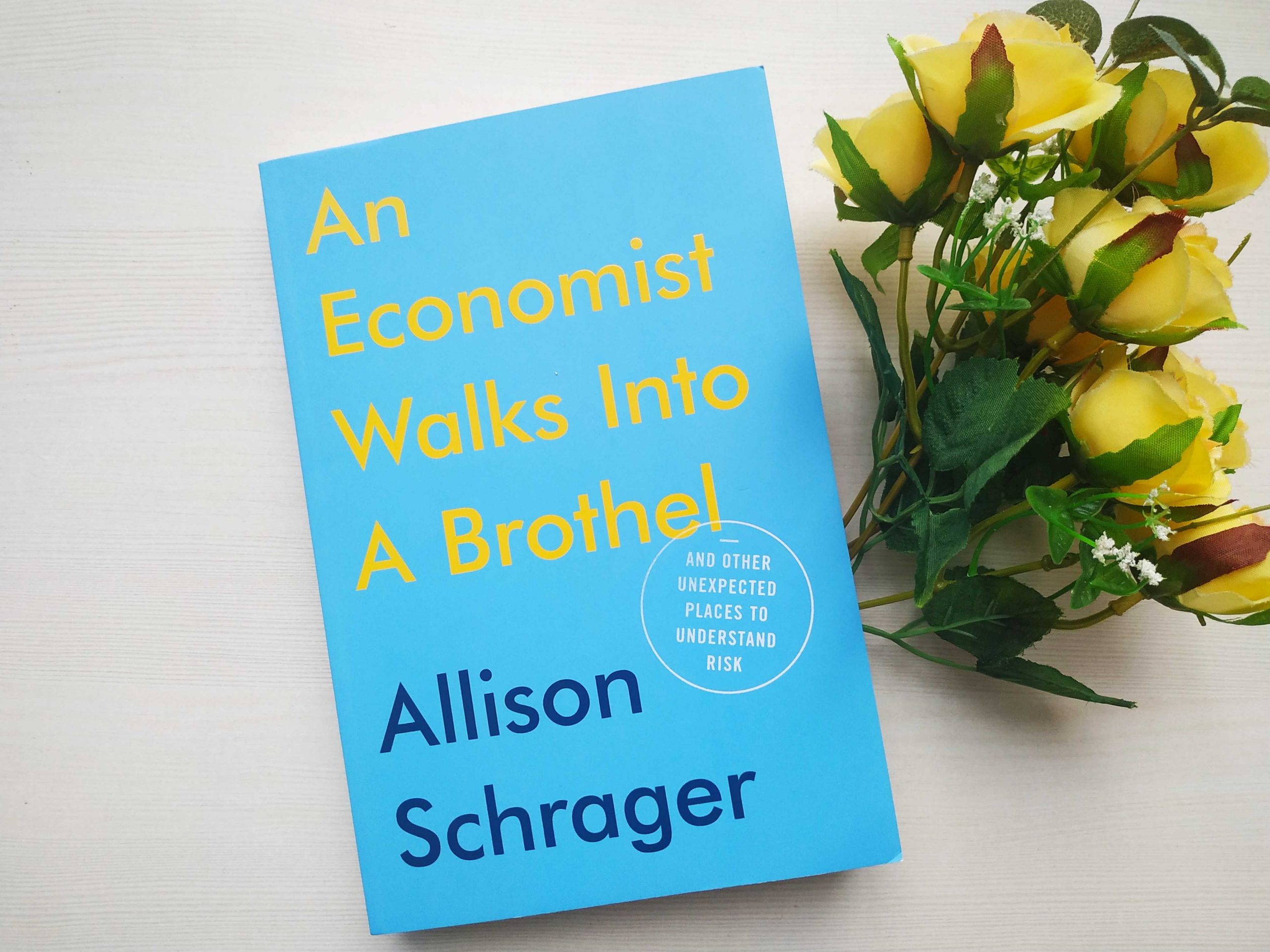
Master these Five Rules of Risk and Transform your Life!

Allison Schrager is an economist and award-winning journalist who has spent her career examining how people manage risk in their lives and careers. Stepping away from the stock market and other financial institutions, Schrager shares the real life (an often unusual) places she learned about risk;

Whether we realize it or not, we all take risks large and small every day. What most of us don’t know is how to measure those risks and maximize the chances of getting what we want out of life.

In An Economist Walks into a Brothel, Schrager equips readers with five principles for dealing with risk, principles used by some of the world’s most interesting risk takers.

Here are five essential rules from the book, to follow when undertaking any sort of major risk!


Rule 1- No Risk No Reward


‘Risking loss is the price we pay for the chances of getting more. But there are ways to maximize your chance of success. The biggest mistake people make when they take a risk is not having a well-defined goal. It may seem counterintuitive but the best way to define a risky reward is to start by defining the opposite of risk, whatever is risk free.’


Incredible Risk Taker

Kat Cole, COO of Focus Brands who own Cinnabon and Auntie Anne’s made a name for herself by popularising the Minibon and driving up sales exponentially. As sales of the full-sized cinnamon roll dropped owing to increasingly health-conscious consumers, the executive team became too focused on launching an-artificially sweetened option that just wasn’t yummy enough! Kat succeeded as she identified the goal clearly— ‘increase sales in a changing market’ rather than fixate on a low-calorie option and hit upon the lowest-risk option by expanding the small-size roll in all franchises!

Rule 2- I am irrational and I know it


‘We want to think we are rational beings. And for the most part we are. But perhaps the most obvious place to witness our irrationality at work is when we make a risky decision. Our feelings about loss vs, gains can lead us to make decisions economists think are irrational. By knowing yourself, how to gauge risk, and your natural response to potentially losing , you can make better risky decisions.’

Incredible Risk Taker

Professional poker champion, Phil Hellmuth has ADHD and is highly emotional, generally not helpful qualities for a poker player. However he is considered one of the world’s best players, has won a record number of World Series of Poker gold bracelets and is worth $20 million. Hellmuth realized early on he had to overcome his own behavioural quirks, ‘I guess what it all meant was that I needed to have the discipline of a monk if I was to succeed in poker. I need to exercise patience relentlessly and to allow no negative emotions to affect my mood.’

Rule 3-Get the biggest bang for your risk buck


‘Risk is the price we pay to get more, and just like anything else in life, there is no need to pay more for something than you have to. Financial economists consider unnecessary risk inefficient. They argue you can achieve more efficiency through diversification. The result is the same, or greater, reward for less risk—a bargain indeed in risk terms.’

Incredible Risk Taker

Harry Markowitz, an economics doctoral student set off a revolution in financial thinking, shifting the focus from return to risk in the financial market. He discovered that people often end up taking unnecessary risk when we try to pick only winners.. Markowitz argued that diversification—owning lots of stocks of different risk characteristics that offset each other was how investors could create efficient portfolios.

Rule 4-Be the master of your domain


‘Risk management is how we can stack the odds in our favour. We can do this in two different ways-hedging and insurance. When we hedge we give up some of our potential gains in exchange for reducing the chance of loss; in statistical terms it cuts off the upper and lower tails of risk. With insurance, we pay someone else a fixed amount to take on our downside and we still keep the upside.’

Incredible Risk Taker

David Bowie is both a brilliant musician and a risk tactician.  In his 50s, advised by David Pullman he made a deal with EMI to re-release his catalog, between 1969 and 1990 valued at $100 million, and was guaranteed more than 24 per cent of the royalties on wholesale sales in the US.

They then securitized these royalties through the Bowie Bond! Prudential paid $55 million for 7.9 per cent payment on their principal for fifteen years. These interest payments were financed from the income generated by Bowie’s pre-1990 albums. This was a hedge because Bowie took $55 million to forgo his payments for fifteen years, but successfully managed his risk in a changing music industry.

Rule 5-Uncertainty Happens


‘We might make calculated choices based on data based probability measures, it’s the best we can do 90 percent of the time. But how do we deal with the other 10 other cent or the Knightian uncertainty, which is the risk we can’t predict. But it is possible to plan for the unplannable. It often comes down to managing the risk you can imagine and retaining just the right amount of flexibility for the unexpected.’

Incredible Risk Taker

Captain H.R. Mc Master, who led the Eagle Troop in the decisive battle of 73 Easting in the 1991 Gulf War says that centralizing command shows an overconfidence in certainty. Preparing for uncertainty needs extensive training and practice so that soldiers have the confidence to make decisions on the fly and think creatively in stressful situations.  This kind of flexibility may come at a cost but is the most effective way of dealing with uncertainty.


Read An Economist Walks Into a Brothel to understand the principle of risk-taking in everyday life!

Kartik Hosanagar on Aadhar and the AI Conundrum

Algorithms and the artificial intelligence that underlies them make a staggering number of everyday choices for us. In his book, A Human’s Guide to Machine Intelligence, Kartik Hosanagar draws on his own experiences designing algorithms professionally, as well as on examples from history, computer science, and psychology, to explore how algorithms work and why they occasionally go rogue, what drives our trust in them, and the many ramifications of algorithmic decision making.

He examines episodes like the fatal accidents of self-driving cars; Microsoft’s chatbot Tay, which was designed to converse on social media like a teenage girl, but instead turned sexist and racist; and even our own common, and often frustrating, experiences on services like Netflix and Amazon.

Here’s the author’s perspective on the application of AI for Aadhaar verification:


Artificial Intelligence (AI) is ushering in innovations around the world and India is no exception. Fashion retailer Myntra has rolled out AI-generated apparel designs as part of its Moda Rapido and Here and Now brands. Gurgaon-based GreyOrange Robotics is deploying robots to manage and automate warehouses. Companies like Flipkart are trying to roll out voice integration into its shopping experience. Modern AI thrives on data, and the grand-daddy of all relevant datasets in India might well be Aadhar, the world’s largest biometric identification system with 1.2 billion records about citizens.

AI has many applications of such data, including detecting bureaucratic corruption in the way government funds are disbursed to citizens as well as identifying tax fraud by citizens themselves. Fintech startups are exploring how to use data from Aadhar and the broader India Stack to make credit approval decisions and enable financial inclusion of individual citizens as well as SMEs.

While there are several potential benefits, there are undoubtedly many challenges with an initiative like Aadhar. The most obvious one relates to data security and privacy of citizens especially when the scope of Aadhar has expanded well beyond the original objective of plugging leaks in welfare schemes and now includes many more aspects of citizen’s social and financial lives. Aadhar has therefore been the subject of several rulings by the Supreme Court of India and the many nuances of this debate have previously been discussed in this outlet. But there will also be a new kind of challenge as we mine data and make more decisions using modern AI. It will be tempting to apply AI to many new areas including tax compliance, real estate, credit approvals, and more.

In the U.S., there have been documented instances of AI bias. One well-known example was the use of algorithms to compute risk scores for defendants in the criminal justice system. These scores are used to guide judges and parole officers in making sentencing and parole decisions respectively. An analysis in 2016 showed that the algorithms had a race bias, i.e. they were more likely to falsely predict future criminality in black defendants than white defendants. Similarly, there have been examples of gender biases in resume-screening algorithms and race biases in loan approval algorithms. There will be similar concerns in India, perhaps heightened by lax regulatory oversight by governments and poor compliance by firms. As AI systems make decisions about which loan applications to approve, will they be susceptible to humans’ gender, religious, and caste biases? Will algorithms used to catch criminal behaviour also share these prejudices? Might resume-screening algorithms also have preferred castes and communities like some human interviewers?

Given the many challenges posed by algorithmic decisions based on large-scale data about citizens, I do believe that India needs clear regulations on data privacy and automated decisions that corporations and governments can make based on such data. In the EU, GDPR gives consumers the right to access data that companies store about them, correct or delete such data, and even limit its use for automated decisions. It bans decisions based solely on the use of “sensitive data,” including data regarding race, politics, religion, gender, health, and more. It also includes a right to explanation with fully automated decisions. Essentially, it mandates that users be able to demand explanations behind the algorithmic decisions made for or about them, such as automated credit approval decisions. Many proposals for privacy protection in the U.S. use GDPR as a template; the California Consumer Privacy Act (CCPA), for example, is often referred to as GDPR-Lite.

As the Aadhar effort has succeeded in creating a large biometric identification programme, we will soon enter a new phase when companies and governments try to build a layer of intelligence on top of the data to drive automated decisions. It is time to create some checks and balances. In my book A Human’s Guide to Machine Intelligence, I have proposed an algorithmic bill of rights to protect citizens when algorithms are used to make socially consequential decisions. The purpose of these rights is to offer consumer protection at a time when computer algorithms make so many decisions for or about us. The key pillars behind this bill of rights are transparency, control, audits, and education. Transparency is about clarity in terms of inputs (what does the algorithm know about us), performance (how well does the algorithm work), and outputs (what kinds of decisions does it make). Another important pillar is user control. Algorithm designers should grant users a means to have some degree of control over how an algorithm makes decisions for them. It can be as simple as Facebook giving its users the power to flag a news post as potentially false; it can be as dramatic and significant as letting a passenger intervene when he is not satisfied with the choices a driverless car appears to be making. I have also proposed that companies have an audit process in place that evaluates algorithms beyond their technical merits and also considers socially important factors such as the fairness of automated decisions. Lastly, we need more informed and engaged citizens and consumers of automated decision-making systems. Only by assuming this responsibility can citizens make full use of the other rights I just outlined.

Together, this algorithmic bill of rights will help ensure that we can harness the efficiency and consistency of automated decisions without worrying about them violating social norms and ethics.


Kartik Hosanagar is the John C. Hower Professor at The Wharton School of The University of Pennsylvania where he studies technology and the digital economy. He is the author of A Human’s Guide to Machine Intelligence.


5 Things You can do to Heal from Stress and Prevent it

99 Not Out! by Sujata Kelkar Shetty PhD., is a beautifully researched guide to a happy and healthy existence. The book shares several principles that govern the health of our mind, body and spirit in an easily understandable yet interesting manner. 99 Not Out! shares how the readers can strengthen their mind, body and spirit so that they live the best version of their lives. Sujata Kelkar Shetty also explains exactly how long-term stress harms the mind body and spirit and what we can do to heal from its onslaught and prevent it in the first place.

The book shares behavioural practices from western medicine and Ayurveda that can slow down the ageing process while preventing illness, making it a truly wholesome read.

These five tips on how you can heal from stress and prevent it in the first place:


Your mindset matters

Cultivate a growth mindset instead of a fixed mindset. A growth mindset is one where you believe that you can learn from your mistakes and grow to become a better version of yourself in any field that you choose to. Because a growth mindset keeps the focus on process rather than product and because the mindset means internalizing the belief that you can improve and get better there is little stress. A fixed mindset on the other hand, because it means believing that our capabilities are fixed and unchangeable can cause a great deal of stress whenever the person is tested in anyway because you believe that you can’t learn from your mistakes. A fixed mindset puts a lot of pressure on us. On the other hand if we cultivate a growth mindset we are empowered to make changes in our life whether at work, at play and in our health behaviours so that we do what is best for us without getting stressed about it.


Become self-compassionate

Self-compassion includes the following three abilities, first being as kind to oneself as we would to our best friend. The second is cultivating mindfulness so that we are aware of what is going in and around us. And the third is knowing that we are all part of a universal human condition and we all have our triumphs and our tragedies. Cultivating self-compassion allows us to have calmer state of mind in the face of life events. Thus helping to reduce a our day-to-day anxiety level as well.


Laugh more

Laughter decreases the level salivary cortisol, a physiological and measurable marker of stress experienced in our bodies. Stress also impacts the memory, and cause memory loss in many cases. Therefore, it has been proved that laughter improves one’s memory. And laughter increases the level of endorphins in our blood stream making us feel better about everything. Laughter is indeed the best medicine!


Cultivate altruism

Being altruistic or helping others without expecting anything in return helps us forget our troubles and reduces our stress. It strengthens our mental and physical health thereby shielding us from the debilitating effects of stress in our lives. When we help others and project kindness towards them, it heightens our engagement with other people and makes us more social which is stress relieving too.


Be more positive

Cultivating positive emotions like joy and kindness helps us handle stressful life events better. When our mood lifts we no longer have a tunnel vision, our perspective broadens and we are able to see that there are choices in our life, we are not as disempowered as we think we are. We brood less on what is wrong and become more focused on what is possible.


Get your copy of 99 Not Out – Your Guide to a long and healthy life!

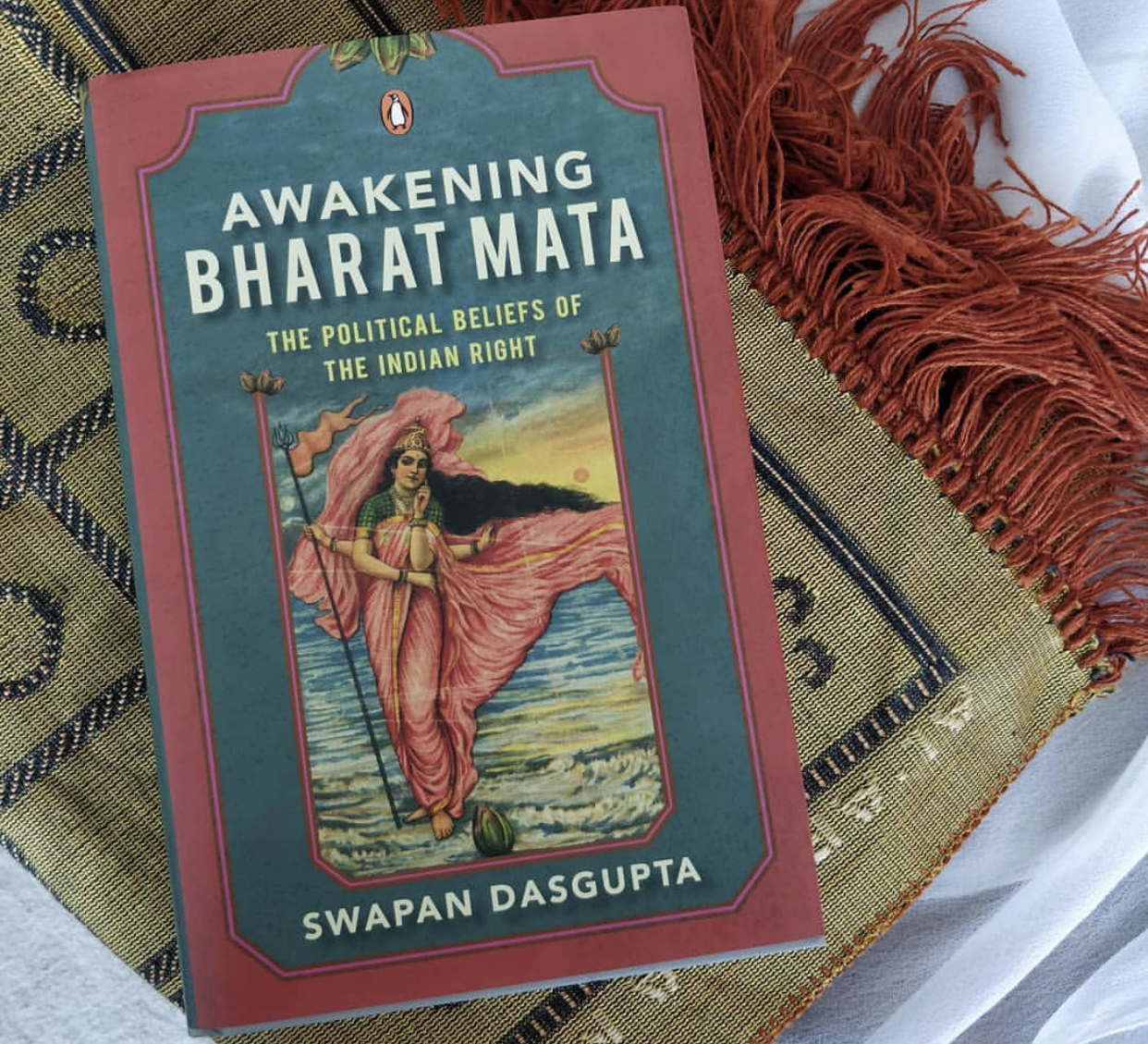
5 Things you learn about Hindu Nationalism from ‘Awakening Bharat Mata’

The inspiration for the right in India has come from multiple and, often, contradictory sources. The proprietorship of Hindutva does not, for instance, belong to Veer Savarkar, although his contribution is seminal. The Rashtriya Swayamsevak Sangh (RSS) too deserves serious attention, not merely for the influence it exercises on the BJP leadership, but for its approach to the larger question of national regeneration. Equally important is the influence of individuals such as Bankimchandra Chattopadhyay, Swami Vivekananda and Sri Aurobindo, not to mention the Arya Samaj movement.

In Awakening Bharat Mata, Swapan Dasgupta, BJP Rajya Sabha MP, brings an erudite insider account of the phenomenon of Hindu nationalism. Here are some points he brings forth:

  1. So intense was Nehru’s distaste for what he used to call the ‘RSS mentality’ that he even subordinated the challenge posed by the communist parties to the more pressing battle against ‘Hindu right-wing communalism’

  2. During the Jayaprakash Narayan–led movement (1973–75) against Indira Gandhi’s government and the patchy struggle against the Emergency (1975–77), a host of non-Congress parties, including Lohia-ite socialists, Gandhians, free-market liberals, and even a section of the communist movement, were willing to rub shoulders with the ‘Hindu right’.

  3. Under the Modi dispensation, when the BJP commands an absolute majority in the Lok Sabha and controls more state governments than ever before, the attacks against right-wing subversion have become sharper and to the point where the term ‘fascism’ is bandied about continually.

  4. Vajpayee, writing in 1973, he described the Jana Sangh a ‘centrist party’ that ‘has been subjected to attacks from both the extreme right as well as the extreme Left.

  5. Hindu nationalism was equated with fascism in Europe in the 1930s and a distinguished American professor of law, in an unexpected foray into Indian politics, described the BJP-led coalition government of Vajpayee as ‘increasingly controlled by right-wing Hindu

Swapan Dasgupta’s Awakening Bharat Mata is a collection that attempts to showcase the phenomenon of Hindu nationalism in terms of how it perceives itself. AVAILABLE NOW.

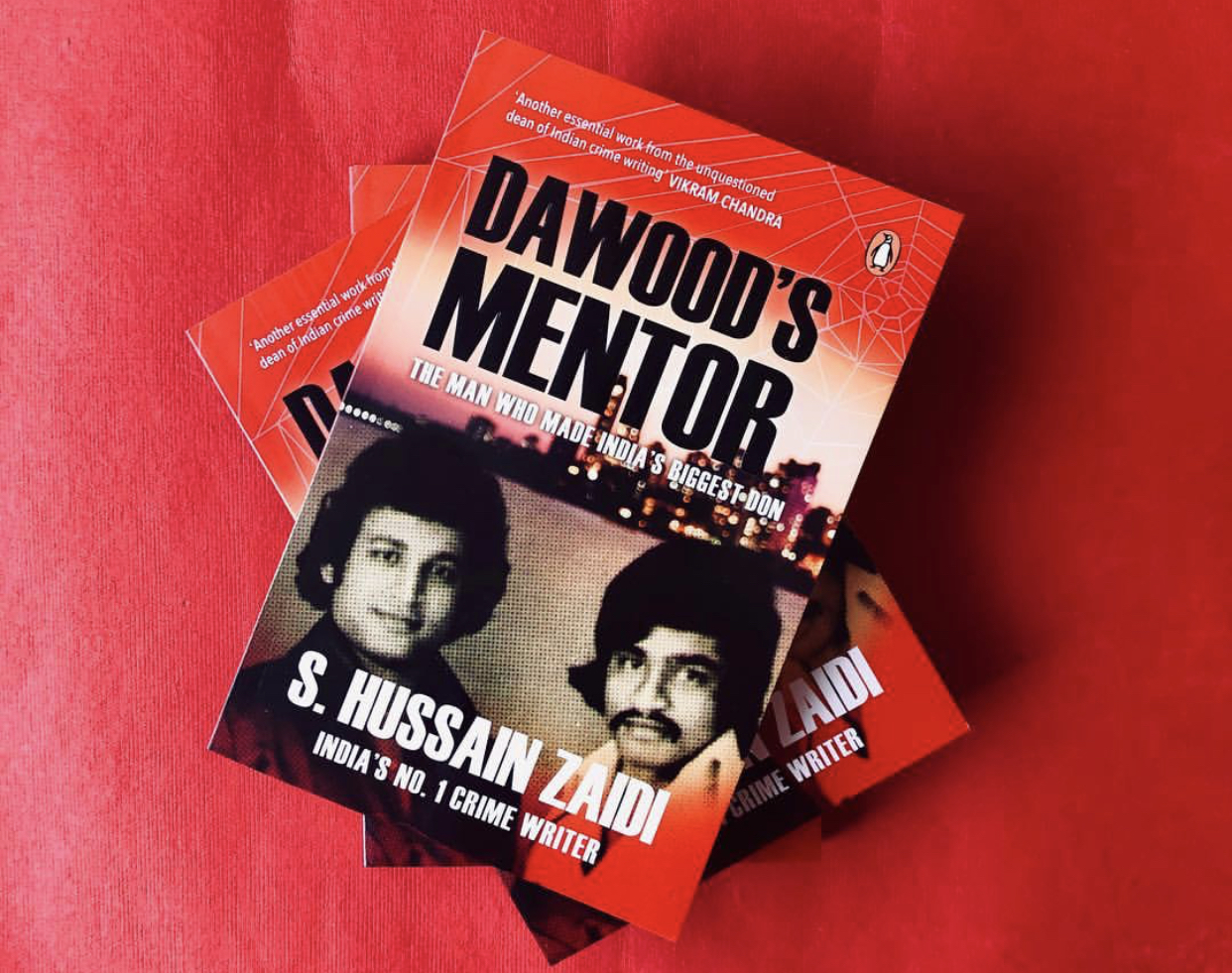
Six Things You Didn’t know about Dawood’s Mentor, Khalid

Tired of being bullied, a scrawny, impoverished Dawood Ibrahim is looking for a savior, Khalid Khan Bachcha, who would teach him the ropes of handling a bunch of hooligans. Instead, what he gets is a mentor who eventually transforms him into a cunning mafia boss.

In Dawood’s Mentor, Dawood meets Khalid and they eventually forge an unlikely friendship. Together they defeat, crush and neutralize every mafia gang in Mumbai. Khalid lays the foundation for the D-Gang as Dawood goes on to establish a crime syndicate like no other and becomes India’s most wanted criminal. Here are six things, we don’t think you would know about Dawood’s mentor, the man who made India’s biggest don.

  1. Khalid had managed to receive a unique title (Khalid Pehelwan ­– meaning ‘wrestler’). A pehelwan is not just a healthy man or a wrestler but a man with a massive physique. When his father stressed on wrestling and his mother emphasized on studies, Khalid secretly nursed the desire to become a police officer.

  2. Khalid was an economics graduate and he understood business economics and logistics. He possessed a sharp business acumen and began exploring permutations and combinations to take dealings further.

  3. Khalid was the first bona fide smuggler with properly monitored operations, which he supervised from coast to coast and vessel to vessel.

  4. Khalid’s childhood in Madhya Pradesh and the friendships he had forged during his college and wrestling days with Hindus had given him a progressive and secular outlook in life. It was an absolutely new and unheard-of philosophy in the Bombay mafia.

  5. Khalid never drank, even if there was intense pressure from his friends. While everyone around him got sozzled, he was seen sipping soft drinks.

Read the complete story about the mastermind’s journey in Dawood’s Mentor.

Introduce your Child to James Patterson with the ‘Middle School’ series!

James Patterson is the world’s bestselling author, best known for his many enduring fictional characters and series, including Alex Cross, the Women’s Murder Club, Michael Bennett, Maximum Ride, Middle School, I Funny, and Jacky Ha-Ha.

Here is a list of some of his most popular books, the Middle School series:

Middle School: The Worst Years of My Life

Rafe Khatchadorian has enough problems at home without throwing his first year of middle school into the mix. Luckily, he’s got an ace plan for the best year ever, if he can pull it off.


Middle School: Big Fat Liar

Georgia Khatchadorian–the sister of the star of the first two Middle School books, Rafe Khatchadorian–plans to excel at Hills Village Middle School in all the places her troublemaking brother failed. Will she be able to overcome her fears and win her bet with Rafe?


Middle School: Get Me Out Of Here!

After sixth grade, the very worst year of his life, Rafe Khatchadorian thinks he has it made in seventh grade. It’s more competitive than Rafe ever expected, and to score big in class, he needs to find a way to turn his boring life into the inspiration for a work of art.


Middle School: Save Rafe!

Rafe and the rest of the pack of ‘delinquent’ trainees are forced to cooperate as they prepare for the final test: a solo excursion in the deep woods. Can Rafe come out of the experience in one piece? And if he does, will anyone recognise him as the kid they once knew?


Middle School: Ultimate Showdown: Superhero

The Khatchadorian kids are an opinionated duo and as readers of the Middle School stories know, they don’t exactly see eye to eye. But when wild-card Rafe and mostly-straight-laced Georgia go at it, the only thing more fun than their ranting is getting to join in!


Middle School: How I Survived Bullies, Broccoli and Snake Hill

Rafe Khatchadorian, the hero of the bestselling Middle School series, is ready for a fun summer at camp – until he finds out it’s a summer school camp!


Middle School: Dogs Best Friend

It’s a dog-eat-dog world, and Rafe Khatchadorian is just trying to live in it. Life in middle school is finally starting to seem bearable – until Rafe spots his grandmother standing in the free-meal line at the local soup kitchen.


Middle School: Just My Rotten Luck

In this seventh Middle School episode, Rafe heads back to the place his misadventures began: the dreaded Hills Village Middle School, where he’s now being forced to take ‘special’ classes… He also finds himself joining the school’s football team – alongside his main tormenter, Miller the Killer!


Middle School: Born to Rock

When Georgia’s favourite rock band, Lulu and the handbags, advertise a major music competition where the winner gets to JAM with Lulu herself, Georgia will pull all the stops to make sure we Stink wins – even if it means asking her annoying older brother, Rafe, for help!


Middle School: From Hero to Zero

After a mostly-successful stint at Hills Village Middle School, Rafe is excited to visit the incredible city of London with his class. Sightseeing around a foreign country sounds like a blast, until Rafe finds out his roommate will be none other than Miller the Killer, bully extraordinaire!


The Magic Weight Loss Pill – Here’s all you Need to Know About it

The Magic Weight Loss Pill by Luke Coutinho and Anushka Shetty, is an exceptional guide to one’s healthier self. Talking about the reasons and ways to combat various diseases like diabetes, kidney and liver stones and the problem of excess weight, co-author Luke Coutinho states the advantages of maintaining a simple and healthy lifestyle. With the magic pill of a changed lifestyle, the authors give an easy hack to the secret of remaining fit, mentally and physically.

With sixty-two easy fixes to a happier and healthier body and life, the book makes for a great and an informative read. Here we tell you the wisdom of the magic weight loss pill as shared by Luke Coutinho:


Calorie-restriction diets are not as successful as they are made out to be. In most of these diets, there is too much emphasis on the intake and usage of calories without the knowledge of whether a person has the ability to burn fat or not. A smart food diet with a balanced nutritional value is thus, of utmost importance.
~
Going back to one’s staple food is a great way to keep a balance of nutrients in the body. Especially including Indian staple foods have been proven to be better than the junk food endorsed these days. For example, pure jaggery is a healthier substitute to white sugar.
~
Refrain from having fruit juice, as they lack most of the fruit’s fibre and nutrients. This further leads to heightened blood-sugar levels. A wiser option would be to have your fruits whole, and chew them well. The natural sweetness of fruits reduces the craving for other sweet foods too.
~
Before getting yourself into fancier and more extravagant fitness programs, try doing basic exercises like – squats, lunges, full unsupported push-ups, plank, 5 km walk or 4 km run, pull-ups, jumping jacks. These exercises use all the vital muscles of the body that are required for everyday movement, posture, and body alignment.
~
Sleep and the quality of one’s sleep is another reason which facilitates the burning of belly fat and losing weight. Getting the right amount of sleep is thus, quite significant.
~
Bottling of one’s emotions and stress (mental and physical) directly affects the immunity of the body. Emotional detoxification is hence, vital in order to lose weight. This helps people to not compare their bodies with others and become more gentle with their self-imposed stress of becoming fit in a certain amount of time or like someone else.

The Magic Weight Loss Pill by Luke Coutinho and Anushka Shetty is filled with sixty-two astonishingly easy and extremely practicable changes that will have you feeling healthier and happier!


error: Content is protected !!