Publish with Us

Follow Penguin

Follow Penguinsters

Follow Penguin Swadesh

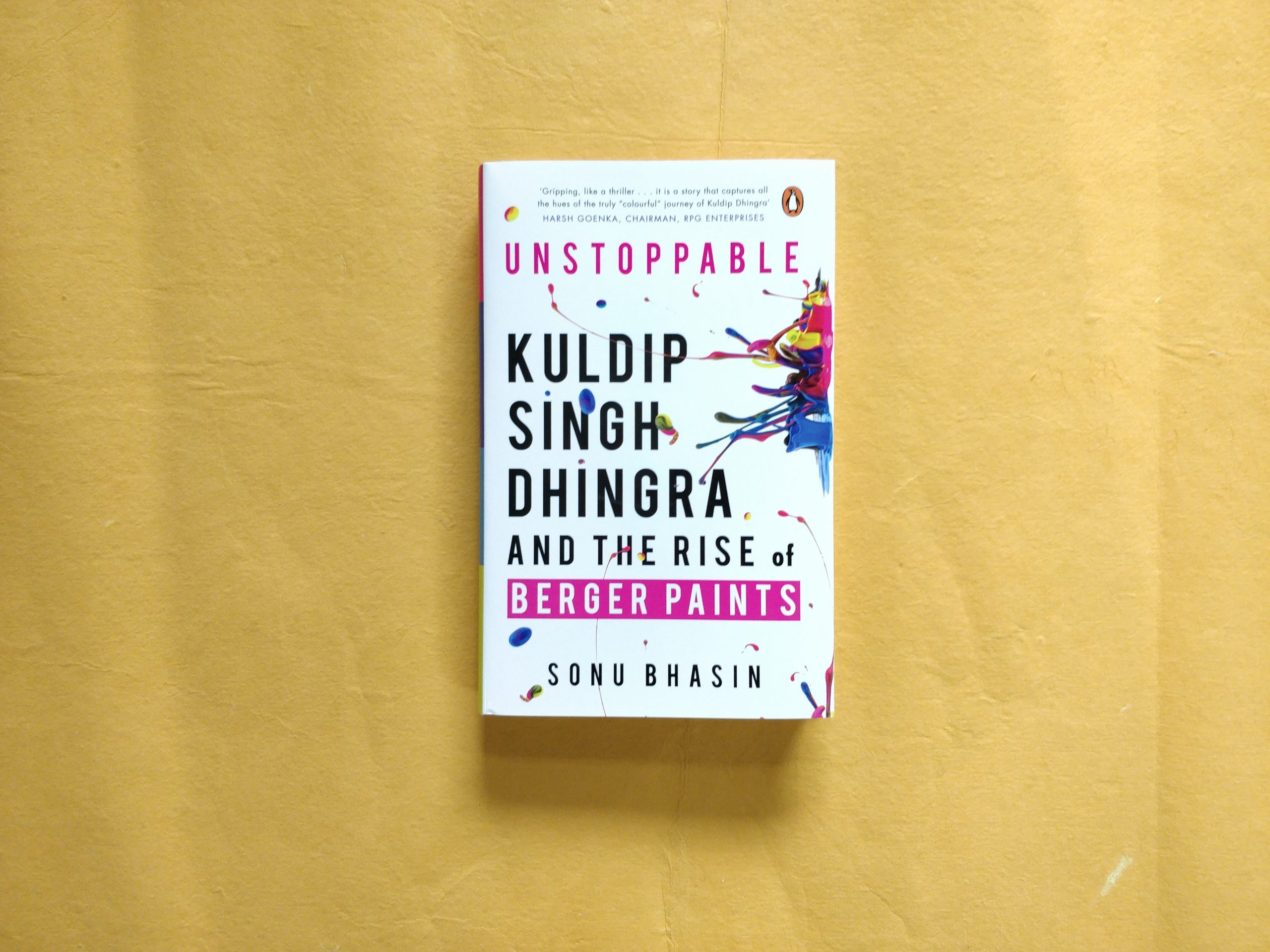
An Excerpt from ‘Unstoppable’

How do you go from being a shopkeeper to multi-billionaire in forty years?

Kuldip Singh Dhingra, the patriarch of the Dhingra family and the man credited with building Berger Paints, has remained a mystery. He is low-profile, eschews media and continues to operate from a small office in Delhi. In this candid and captivating biography Kuldip reveals his story for the first time – Unstoppable by Sonu Bhasin narrates what a man can achieve if he pursues his dreams relentlessly.

Read an excerpt from the book below:

——————————————-

The collapse of the Soviet Union was the last thing on Kuldip’s mind when he sat down to have his coffee and opened the financial daily for his morning update one late January morning.

‘I saw the news about Vijay Mallya selling Berger and I knew immediately that I had to buy that company,’ said Kuldip. ‘We had oodles of money. How much of property could I buy? We had to buy a business,’ he continued. He had been speaking with Gurbachan over the last few months about their future. The Rajdoot business had grown during the last ten years, but it was still in the range of Rs 10–15 crore annually.

‘We had many small factories, all under Rs 1 crore to reap the benefit of small scale. But the name Rajdoot was not a premium brand,’ explained Gurbachan. The two brothers had been bouncing around ideas about buying a running paints business.

‘We had been in discussions with some other paint companies.I even went to London to discuss the matter with the foreign owners of a well-known paint company,’ said Gurbachan. UK Paints was not a known company, Rajdoot was a small brand, and the Dhingras were low-profile people. The foreign promoters had a large business worldwide and were selling only their Indian operations. They did not like the idea of selling out to what they thought was a smaller company run by someone who did not understand corporate culture and had been running a shop in Amritsar till a few years ago.

‘I got the feeling that he was not even happy talking to us about it,’ said Gurbachan without any self-pity. The foreign owners eventually sold their company to a better-known and a bigger industrial family of Delhi.

‘But could you not use the money to focus on Rajdoot Paints which was your own company anyway?’ I asked Kuldip.

‘But Rajdoot would have to be managed by me if I wanted it to become even half as big as what Berger was then. And I simply did not have the time. Berger was a professionally managed company and had a good team—at least that is what I thought at that time. I believed that once we bought the company, apne aap chalti rahegi [it will run by itself],’ explained Kuldip.

Kuldip certainly did not have any time to manage any other business except his export business. The export business had given him ‘oodles of money’ as Kuldip put it, and it had also given Kuldip a world view of business. He was dealing with a cross section of professionals from around the world and he had become used to large businesses. Rajdoot, though one of the fastest-growing paint companies in India in the late 1980s, was at best a regional company. It was not a star or even an emerging star on the horizon. Kuldip, on the other hand, had become used to being a star! He was feted as an important businessman in the Soviet Union and was known as a big exporter in India. Should the export business wind down, he knew that he would continue to be very wealthy but he would feel stifled by the small, regional business of Rajdoot. He did not want to be clubbed in the ‘Others’ category in the domestic paints business. He realized he needed a larger canvas for his domestic business dreams.

‘I was doing business in hundreds of crores with the Soviet Union. And the total turnover of Rajdoot then was just Rs 10–15 crore,’ said Kuldip.

While he was exporting a variety of items to the Soviet Union, at heart he remained a paints-man. ‘There was only one business I understood well and that business was the paints business,’ said Kuldip. So when he saw the headlines about Berger Paints being sold, the instinct bulb in his head burnt bright.


Unstoppable narrates what a man can achieve if he pursues his dreams relentlessly.

What Kind of a Traveller are You?

Don’t you agree that travellers are basically of a diverse breed?  For some, it can be the destination of self-discovery, while for others travelling to the same destination is like broadening their cultural horizons or going on a culinary quest.

Regardless of the type of traveller you are, journeying to any new destination is a form of rejuvenation and re-inventing in the times of rapid urbanisation, rising inflation, perpetually stress, that we all are sucked into.

From venturing into the deserts of Iran and Uzbekistan, to going up the Annapurna and the Pamirs, Sudha Mahalingam reveals what happens when you make a habit of encountering the unexpected in her book The Travel Gods Must be Crazy!

Below is a very accurate quiz of different traveller categories that we all fall into! Take this quiz to find out your tribe!


Read The Travel Gods Must Be Crazy before planning your next trip!

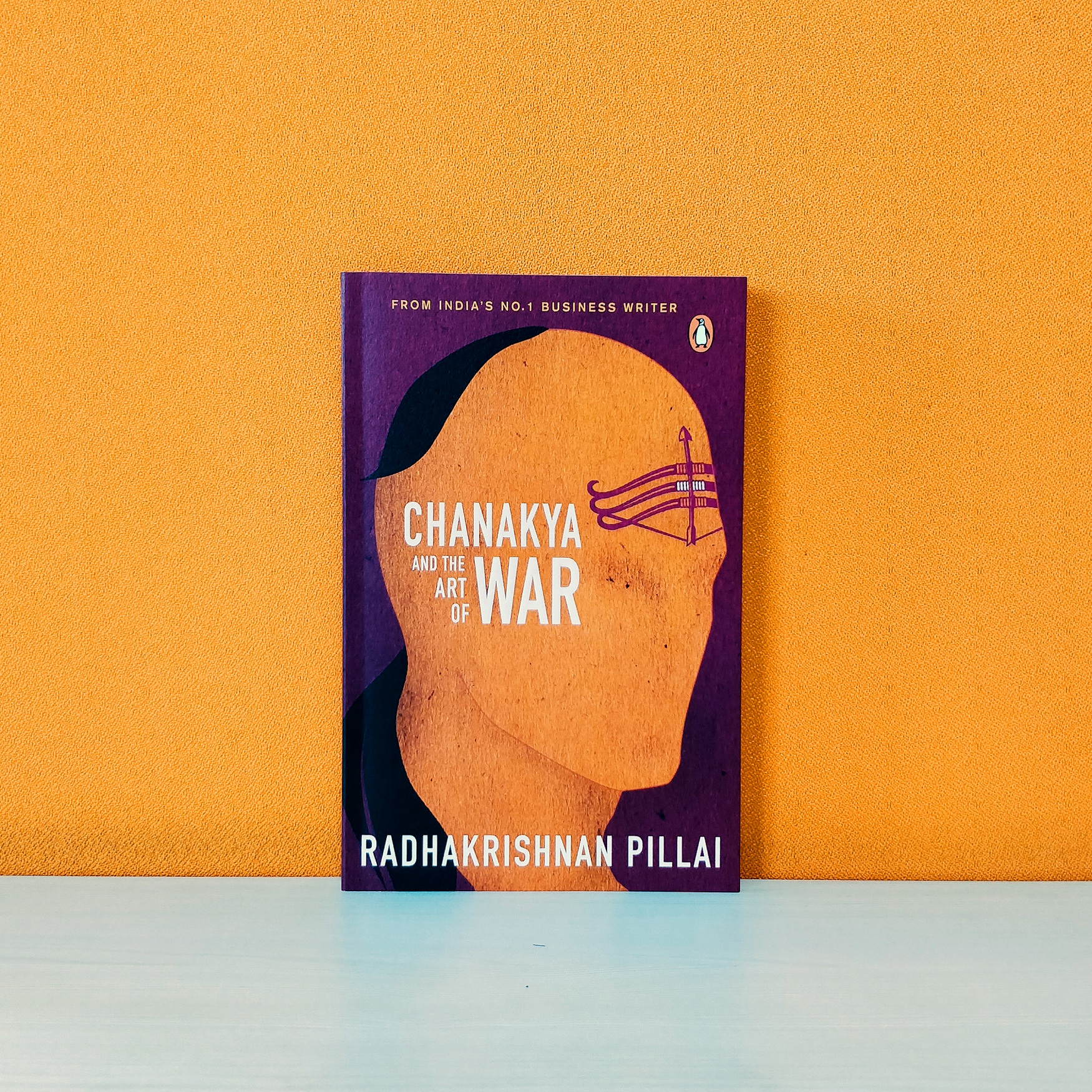
5 tips to emerge as a winner using strategies from Chanakya’s Art of War

We are constantly at war.

After a point, everyone realizes that they cannot walk away from such wars. Everyone has to fight—some win, some lose. This is where the difference in our attitude towards the war becomes known. We either accept defeat, or fight on to emerge a winner.

In Chanakya and the Art of War, Radhakrishnan Pillai takes us on a journey. The journey of Chanakya’s life experiences and challenges. We go back to his era and time. We draw inspiration and learn from his wisdom.

Here are five tips that you can follow to emerge as a winner:

Never fight a battle alone; take along a friend (mitra)

Chanakya’s solution for stress is as simple as talking to a friend. When we have a friend with whom we can share and express our problems, it makes a significant difference.

Listen to the wise (vriddha-sanyogah)

In the daily battles of life, senior citizens can be very helpful. The biggest advantage of senior citizens is that they have time and experience to offer. The younger generation has neither of the two. So, in reality, the two could fit together like a perfect jigsaw puzzle. It can be synergetic.

When dealing with the powerful, keep in touch with a higher power

Think through the situation and find out what makes the boss a boss after all.  The boss has more decision-making power than the employee. Now, what we need to remember is to learn how to crack the power of the boss.

Advisors can make you or break you

Gathering too much information is not good. We need to be selective in what we read and watch. We get into discussions that really do not matter to us. It’s ok to add our bit to some social updates happening around. But it is not worth thinking too much about such matters.

Know the strength and weakness of the opponent

Having a strategic mindset is an important skill one should be able to develop. A smart person is one who is able to accurately judge others. He is constantly studying and analysing, trying to understand what is going on in the mind of the person in front of him.


Chanakya and the Art of War draws upon lessons from the great teacher, philosopher and strategist Chanakya’s masterpiece, Arthashastra, which can help us overcome those speed breakers to become innovative and influential and realize our true potential.

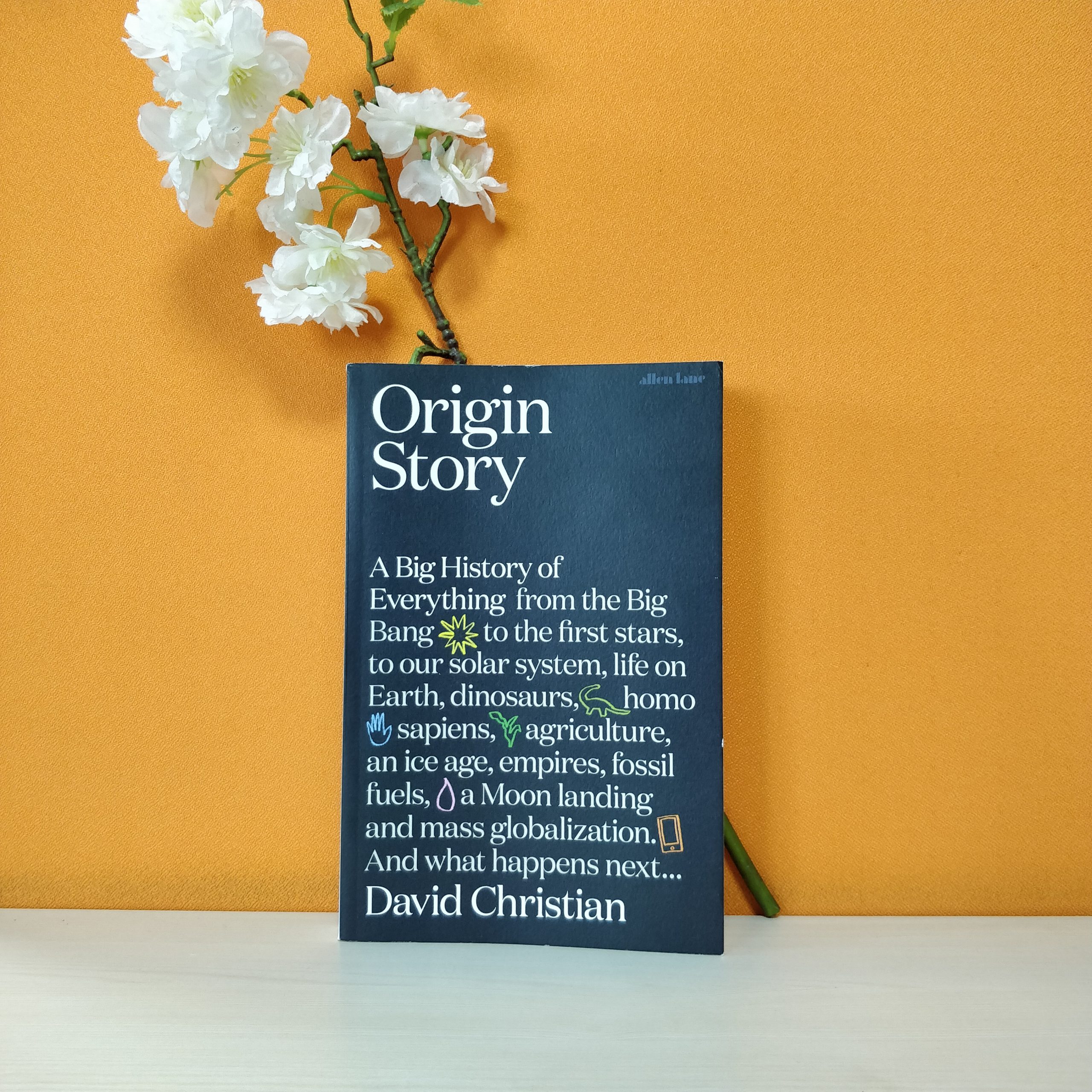
Did It All Start With a Big Bang? ‘Origin Story’ States the Facts

At the heart of the modern origin story is the idea of increasing complexity. How did our universe appear, and how did it generate the rich cavalcade of things, forces, and beings of which we are a part? We don’t really know what it came out of or if anything existed before the universe. But we do know that when our universe emerged from a vast foam of energy, it was extremely simple. And simplicity is still its default condition.

Timelines give some fundamental dates for the modern origin story using both approximate absolute dates and recalculated dates, as if the universe had been created 13.8 years ago instead of 13.8 billion years ago. When divided as per the amalgamation of changes and developments that have made the earth what it is today, each big period can be grouped under a threshold. This makes it easier to get a sense of the chronological shape of the story of our origin and also helps us understand how we arrived at where we are today.

THRESHOLD 1: Big bang: origin of our universe

“The bootstrap for today’s most widely accepted account of ultimate origins is the idea of a big bang. This is one of the major paradigms of modern science, like natural selection in biology or plate tectonics in geology.”

THRESHOLD 2: The first stars begin to glow

“Free energy drove the emergence of the first large structures: galaxies and stars. The crucial source of free energy for this part of our origin story was gravity. …….Together, gravity and matter provided the Goldilocks conditions for the emergence of stars and galaxies.”

THRESHOLD 3: New elements forged in dying large stars

“Our third threshold of increasing complexity yielded new forms of matter: all the other elements of the periodic table. A universe with more than ninety distinct elements could do so much more than a universe with just hydrogen and helium.”

THRESHOLD 4: Our sun and solar system form

“Planetary bodies were chemically richer than stars, and much cooler, so they offered ideal Goldilocks environments for complex chemistry. And on at least one planet (our own), and probably on many more, that chemistry would eventually generate life.”

THRESHOLD 5: Earliest life on Earth

“Life as we know it arose from exotic chemistry in the element-rich environments of the young planet Earth almost four billion years ago. …….. life is built from billions of intricate molecular nanomachines.”

THRESHOLD 6: First evidence of our species, Homo sapiens

The appearance of humans in our origin story is a big deal. We arrived just a few hundred thousand years ago, but today we are beginning to transform the biosphere.”

THRESHOLD 7: End of last ice age, beginning of Holocene, earliest signs of farming

“Our ancestors lived as foragers for the first two hundred thousand years or more of our history. ……. In the past ten thousand years, human lifeways were transformed by a cascade of innovations that we describe as farming or agriculture .”

THRESHOLD 8: Fossil fuels revolution begins

“In just a century or two….. we humans have stumbled into the role of planetary pilots without really knowing what instruments we should be looking at, what buttons we should be pressing, or where we are trying to land.”

THRESHOLD 9: A sustainable world order?

“If we successfully manage the transition to a more sustainable world, it will become apparent that human history really constitutes a single threshold of increasing complexity culminating in the conscious management of an entire biosphere.”

The sun dies

“After a long period as a red giant, it will eventually blow away its outer layers, turn into a white dwarf, migrate to the bottom of the Hertzsprung- Russell diagram, and then sit there, cooling, for hundreds of billions of years.”

The universe fades to darkness; entropy wins

“It will turn out that everything that seemed permanent in our universe was actually ephemeral. Maybe even space and time will turn out to be mere forms, mere wavelets in a larger multiverse. Entropy will have finally destroyed all structure and order. At least in one universe. But perhaps there are more to get working on.”


Origin Story: A Big History of Everything reveals what we learn about human existence when we consider it from a universal scale.

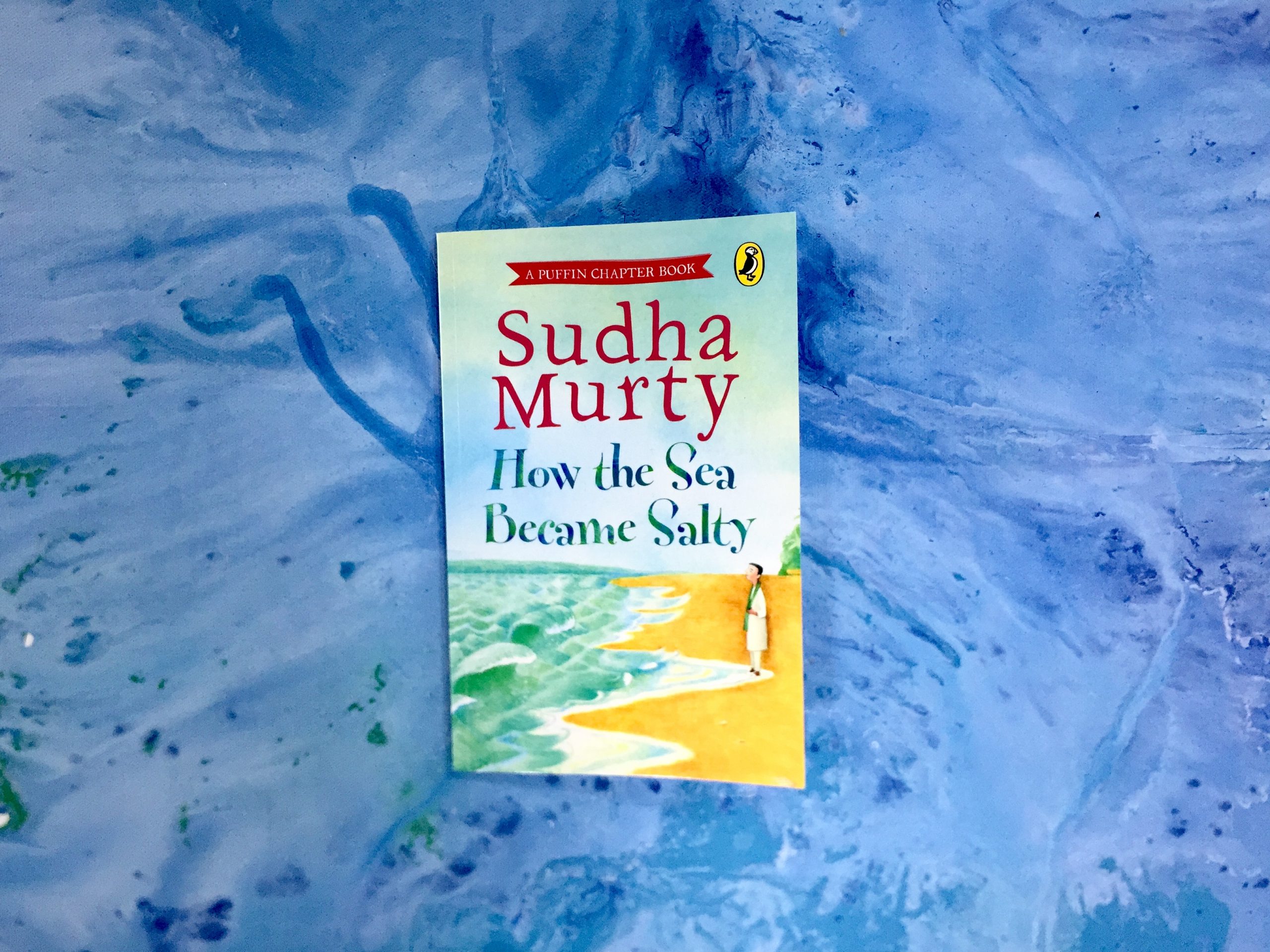
Beautiful Lines From Sudha Murty’s New Book for Children!

“A long, long time ago, seawater was sweet and drinkable. How it became salty is a remarkable story.”

India’s favourite storyteller brings alive this timeless tale with her inimitable wit and simplicity. Dotted with charming illustrations, this gorgeous chapter book is the ideal introduction to the world of Sudha Murty.

Here are some quotes from the book:


‘But by then the sea was full of salt, which had all dissolved into water. And the sea remained salty for ever after that.’

*

The night passed – with the dwarves dancing and Sridhar feeding the fire with fresh wood when it looked like it was dying.

*
He decided not to go to his brother’s house. Instead, he went to the beautiful town near the sea, and there, he built a house made money and never wanted for anything, thanks to the magic fan.

*
‘Suddenly, storm clouds gathered and rain started pouring down. Sridhar spotted a flicker light in the distance and ran towards it.’

*
‘The salt spilled into the sea. It rained salt sacks for many, many days, till the dwarves heard about it and used their magic to make the fan stop.’

*
‘That night, when everyone was asleep, she made Keshav creep into the room where the fan was kept and steal it.’


How the Sea Became Salty  is the ideal introduction for beginners to the world of Sudha Murty.

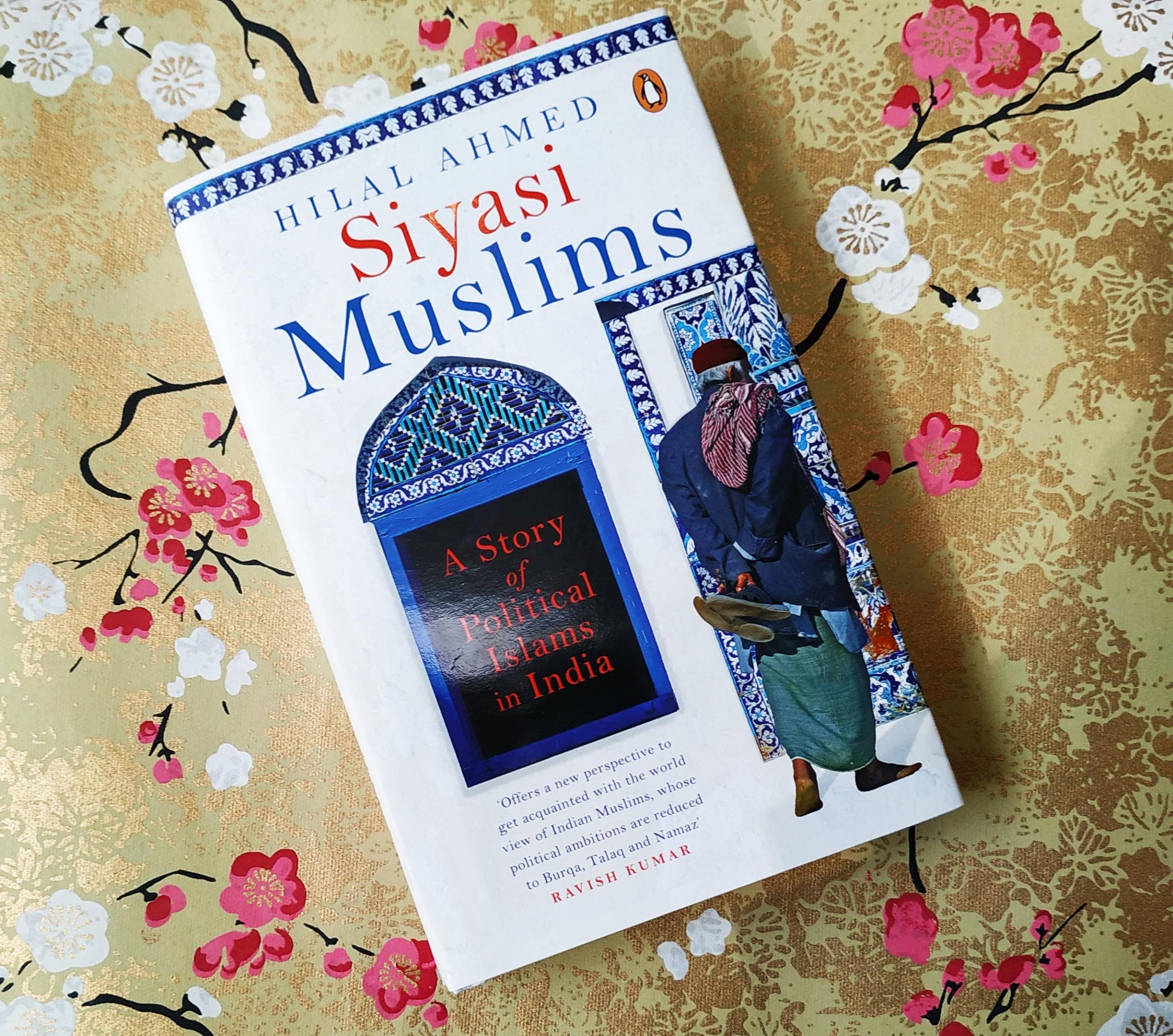
Five Reasons You Should Read ‘Siyasi Muslims’

Hilal Ahmed’s new book, Siyasi Muslims does not aim at defining Muslim politics in India. Instead, it looks at the ways in which Muslim politics as a template is used to describe statements, actions and processes. In other words, it studies Muslim politics as a political discourse—an intellectual mode through which certain specific notions of Muslim identity in contemporary India are produced and sustained.

This listicle highlights the reasons why one should read this book:

Number Game

‘Siyasi Muslims’ traces the story of the census that transformed Muslims into a numerical entity. It also identifies the paradoxes of modern Indian Muslim identity and tries to answer a very basic question—how to address the highly diversified Indian Muslim community in intellectual terms.

Muslims of Hindutva

The book makes an attempt to understand the historically constituted anti-Muslim rhetoric of different forms of Hindutva. It also underlines the genealogy of a few questions that are asked to evaluate the loyalty and patriotism of Muslims.

Minoritization of Muslims

The narrative unravels the structure of the concept of Siyasi Muslims by looking at the legal–constitutional technicalities to understand the much talked about status of Muslims as an official minority.

Beyond Talaq-Talaq-Talaq

A very close attention is also paid to the triple talaq debate. Instead of suggesting what Muslim men do, it looks at the complex argument made by the Muslim women’s groups.

Muslim elites

It is an effort to make a serious attempt to reveal the class structure among Muslims in India. Using the official data of the Government of India and seminal works on Muslim classes, it offers a contemporary conceptualization of the idea of the Muslim elite.


Examining the everydayness of Muslims in contemporary India, Hilal Ahmed in Siyasi Muslims offers an evocative story of politics and Islam in India, which goes beyond the given narratives of Muslim victimhood and Islamic separation.

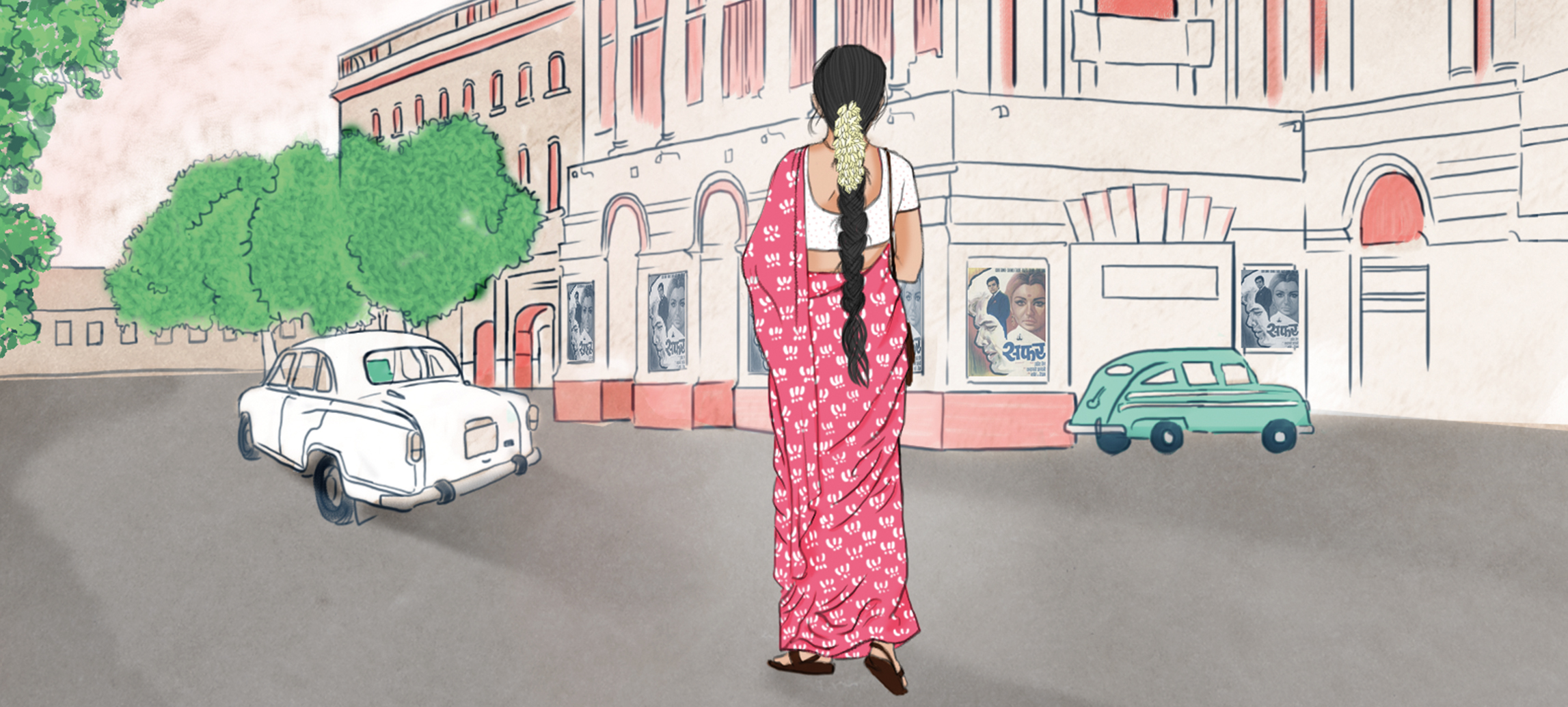
Memories from the 70s that take you back to your childhood!

If you grew up in the 1970s, then you’re probably used to the Gen Z assuming that you grew up  with fancy hairdos and listening to disco music. Although this assumption isn’t totally wrong, there was so much more to your childhood: The ’70s were a decade full of pre-Internet fun — like running around until sundown without anyone worrying.

The book Once Upon A Curfew talks about a turbulent period of Emergency and love amidst the difficulties. It is 1974. Indu has inherited a flat from her grandmother and wants to turn it into a library for women. Her parents think this will keep her suitably occupied till she marries her fiancé, Rajat, who’s away studying in London.  But then she meets  and falls in love with Rana, a young lawyer with sparkling wit and a heart of gold. When the Emergency is declared, Indu’s life turns upside down.

Now that you are starting to feel a little nostalgic, read on for some of good old 1970s memories! Here are some incidents from the book that will transport you back to the 70s India:


India Gate was an important meeting point for a stirring revolution.
 ~
The bylanes of Old Delhi would draw people, with famous haunts like Karim’s.
~
Indira Gandhi’s much-talked about campaign was in full-swing.
 ~
Hindi Sahitya was very popular back in the 70s.
 ~
When drinks were simply Campa Cola or the humble Shikanji.
 ~
Bollywood had become an intrinsic part of the pop-culture.
 ~
Kishore Kumar songs ruled the airwaves.
~
The eyeliner game was pretty strong back in the 70s.
~
The decade of 70’s gave birth to many fashion trends.
 ~
Inflation, crime and taxes kept pace with the political havoc that was being wreaked.
~
Regal was easily the most illustrious cinema hall in central Delhi and a sought after venue for ballets, plays and Bollywood talkies.
~
On June 26, 1975, the then Prime Minister Indira Gandhi announced National Emergency on All India Radio. 

Get your copy of Srishti Chaudhary’s  Once Upon A Curfew today!

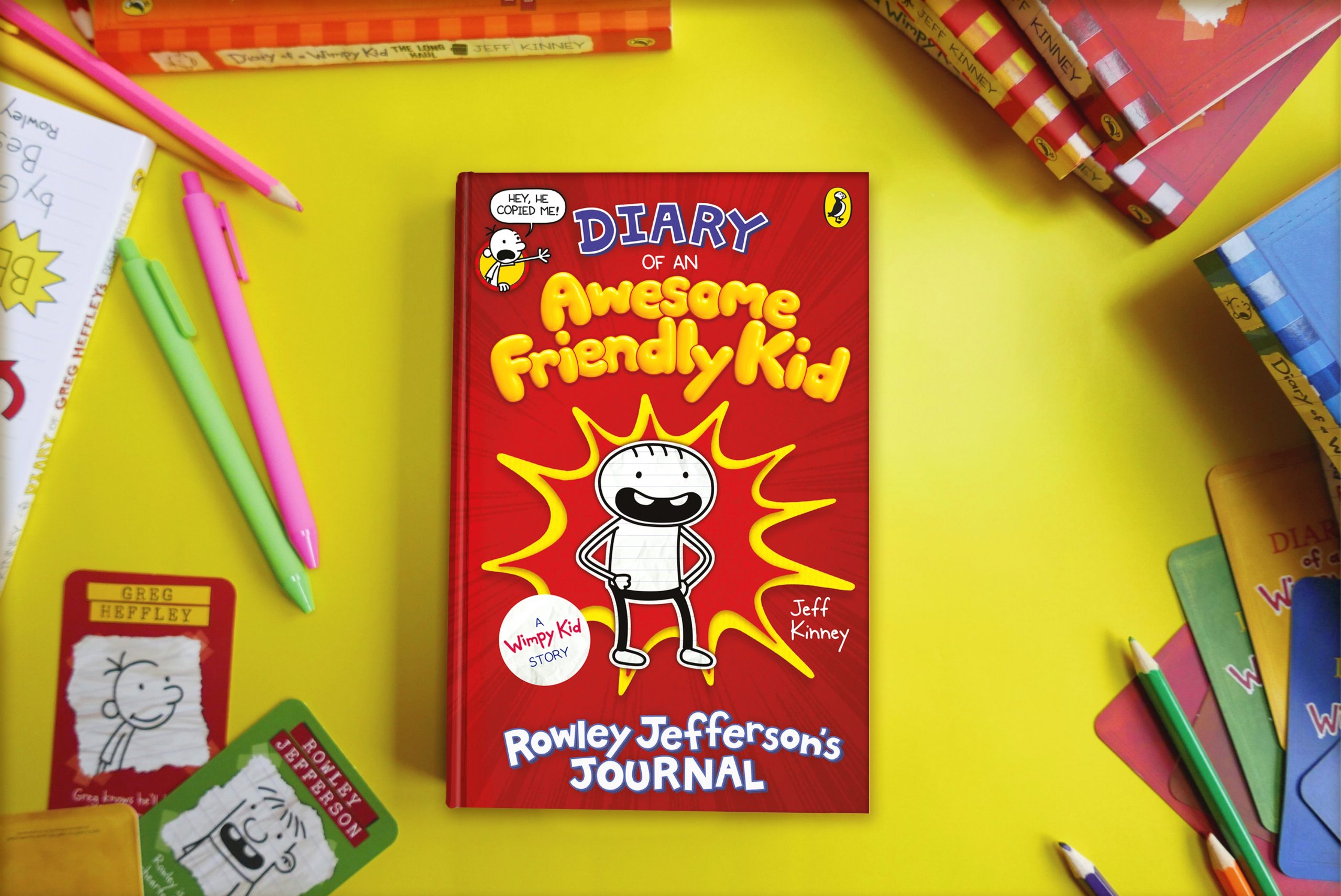
Meet the Wimpy Author of ‘Diary of an Awesome Friendly Kid’!

Here’s introducing the newest Wimpy Kid author – Rowley Jefferson! Rowley’s best friend Greg Heffley has been chronicling his middle-school years in thirteen diary of a Wimpy Kid journals… and counting. But it’s finally time for readers to hear directly from Rowley in a journal of his own.

In Diary of an Awesome Friendly Kid, Rowley writes about his experiences and agrees to play the role of biographer for Greg along the way. (After all, one day Greg will be rich and famous and everyone will want to know his life’s story.)

Let’s meet the author, Rowley Jefferson!


Rowley doesn’t like horror stories as we can tell from this incident.

“I’ve gotta tell the whole truth. I wet my pants when I was in the basement and heard those noises outside.”

*

Rowley has observed odd things about Greg’s stories.

“We’ve been friends for a long time and he’s told me a BUNCH of things that seemed a little shaky so now I’m kind of thinking not everything he’s told me is a hundred percent accurate.”

*

Rowley is composed.

“I knew that Greg was trying to make me mad but for some reason that song didn’t really bother me that much.”

*

Rowley might be a little naïve and gullible.

“Well I knew Greg was just trying to get out of giving me the candy he owed me so I tried to act like I thought this Good Boy award thing was dumb. But somehow Greg could tell I thought it was kind of COOL.”

*

Rowley is honest and doesn’t encourage cheating on tests.

“I whispered to Greg to go away because he was trying to CHEAT. But Greg said it’s not cheating since we were study partners and we both had the exact same information in our brains.”

*

Rowley is hardworking.

“I had to stay up for two more hours uncrinkling my notes and taping them into my notebook and was up ANOTHER half hour researching stuff on my dad’s computer.”

*

Rowley is a true friend to Greg.

“I know me and Greg don’t always get along but like Mrs Heffley said, sometimes friends get on each other’s nerves.”


Diary of an Awesome Friendly Kid: Rowley Jefferson’s Journal offers readers a new way to look at the Wimpy world—one fans won’t want to miss!

Books You Need to Read this Rainy Season!

There’s no better time than right now to sit down and curl up with a few good books and a steaming cup of tea by your side. Why not take a look at these versatile new reads coming up this July?

Roots to Radiance

Roots to Radiance

Do you wish you looked perfect, but don’t have the time or money for expensive treatments? Look no further than Roots to Radiance-your self-care bible to good skin, hair, teeth, nails, etc., and, most importantly, good health.
In Roots to Radiance, you will find 500+ tips and tricks that will help you stay in your ‘A game’.

By using its easy-to-make solutions drawn from traditional Indian wisdom, you can lessen and even replace chemicals with wholesome, natural ingredients that will enrich and enhance your daily beauty routine.
From refreshing life lessons to inevitable struggles and motivational inspiration, this book will help you sail through every beauty or life concern you’ve ever had.


Kargil

Kargil

Kargil takes you into the treacherous mountains where some of Indian Army’s bloodiest battles were fought. Interviewing war survivors and martyrs’ families, Rachna Bisht Rawat tells stories of extraordinary human courage, of not just men in uniform but also those who loved them the most. With its gritty stories of incomparable bravery, Kargil is a tribute to the 527 young braves who gave up their lives for us-and the many who were ready to do it too.


The Barefoot Surgeon

The Barefoot Surgeon

Sanduk Ruit was born into the lowest rungs of society in a tiny, remote Himalayan village in Nepal. After long and difficult treks to attend boarding school in Darjeeling and, later, the best of Indian medical colleges, he met the remarkable visionary and Australian ophthalmologist, Fred Hollows, whose invaluable mentorship would enable him to take on his lifelong mission to restore vision to the poorest of blind people across Nepal and the rest of Asia.

Despite relentless backlash from his shaken contemporaries in the global medical industry, Dr Ruit took his unmatched prowess in stitch-free cataract surgery, along with world-class medical care and equipment, to those whose lives were plunged into darkness; who were ostracized and abandoned for being blind with no access to proper treatment.

Dr Ruit is known as the ‘God of Sight’ for restoring the light to millions of people who have been prey to curable blindness and vicious poverty; this is his extraordinary story.


Bad Man

Bad Man

Growing up on the fringes of our capital city, Gulshan Grover moved to Mumbai to pursue a career in acting in the 1970s. At a time when most wannabe actors held out for the lead, he made a conscious choice to opt for villainous roles. He went on to portray many memorable characters, with a career-defining role in the 1989 blockbuster, Ram Lakhan, that established him firmly as the ‘Bad Man’ of Bollywood.

Many a mainstream potboiler of the era rode to success on his trademark one-liners and grotesque get-ups that have become part of Bollywood folklore. He subsequently moved on to the international arena, among the first actors from Mumbai to do so, in the process becoming one of India’s more recognizable faces in international cinema.

In this autobiography, Grover tells his story-the films, the journey, the psychological and personal toll of sustaining the ‘bad man’ image, the competition among Bollywood’s villains, the move to playing more rounded characters, and the challenge of doing international films.


The Rise of Goliath

The Rise of Goliath

What can best illustrate India’s journey in the last seven decades? Disruptions.

Almost every decade of India’s history since Independence has been marked by major disruptions.

India became independent through an act of disruption-Partition-that killed millions in communal violence and turned many more into refugees. The turn towards a model of state-led economic development delivered as big a shock to the economy as did the food crisis or the spike in crude oil price. If the Emergency in 1975 shook the foundations of India’s democracy, the unprecedented balance-of-payments crisis of 1990 turned India towards a path of economic reforms. Just as the reservation of jobs for backward castes changed the idiom of India’s politics, the movement for building a temple for Ram drove India closer to becoming a majoritarian state. No less disruptive have been the telecom revolution, the banking crisis, demonetization and the launch of the goods and services tax.

How did these disruptions impact India? How did they influence the rise of this Goliath?

This is the story of twelve disruptions that changed India. The book also provides a peek into the kind of disruptions India could face in the coming years.


The Making of Star India

The Making of Star India

When Rupert Murdoch, executive chairman, News Corporation, blew up more than $870 million buying Star TV from Richard Li in the early 1990s, analysts were dismayed. Why on earth had Murdoch invested in a pan-Asian broadcaster that was neither fish nor fowl?
More than twenty-five years later, with revenues of over $2 billion, Star India is one of the country’s three largest media firms. Murdoch’s instinct had done what a hundred investor summits could not: showcased the potential of the Indian media market to the world. Vanita Kohli-Khandekar tells the thrilling story of Indian television through its most notable protagonist: Star TV. The narrative is peppered with delicious anecdotes and a fascinating cast of characters that includes Rathikant Basu, Peter Mukerjea, Uday Shankar, Sameer Nair and the Murdochs, who loom large over every scene.


Unstoppable
Unstoppable

Kuldip Singh Dhingra, the patriarch of the Dhingra family and the man credited with building Berger Paints, has remained a mystery. He is low-profile, eschews media and continues to operate from a small office in Delhi. In this candid and captivating biography Kuldip reveals his story for the first time.

Kuldip lost his father to an accident early in his life. He and his brothers, Sohan and Gurbachan, started as shopkeepers in Amritsar. From an annual turnover of Rs. 10 lakh in 1970, the Dhingras have built a business with an annual turnover of over Rs. 7,500 crore today. They are among the top thirty richest families in India with a net worth of over $ 4.5 billion.

This never-before-told story of Kuldip moves from Amritsar to Europe to Delhi where he became the largest exporter to the Soviet Union in the 1980s. In 1990 the Dhingras bought Berger.

From dealing with KGB to negotiating with the flamboyant Vijay Mallya; from being pushed to sell arms to challenging big businesses-Unstoppable narrates what a man can achieve if he pursues his dreams relentlessly.
 

A Promised Land

A Promised Land

In the wake of the Partition, a new country is born. As millions of refugees pour into Pakistan, swept up in a welter of chaos and deprivation, Sajidah and her father find their way to the Walton refugee camp, uncertain of their future in what is to become their new home.

Sajidah longs to be reunited with her beloved Salahuddin, but her journey out of the camp takes an altogether unforeseen route. Drawn into the lives of another family-refugees like herself-she is wary of its men, particularly Nazim, the eldest son whose gaze lingers over her. But it is the women of the household whose lives and choices will transform her the most: the passionately beseeching Saleema, her domineering mother Khala Bi, the kind but forlorn Amma Bi, and the feisty young housemaid Taji.

With subtlety and insight, Khadija Mastur conjures a dynamic portrait of spirited women whose lives are wrought by tragedy and trial even as they cling defiantly to the promise of a better future.


Plastic Emotions

Plastic Emotions

Plastic Emotions is inspired by the life of Minnette de Silva-a forgotten feminist icon and one of the most important figures of twentieth-century architecture. In a gripping and lyrical story, Shiromi Pinto paints a complex picture of de Silva, charting her affair with the infamous Swiss modernist Le Corbusier and her efforts to build an independent Sri Lanka that slowly heads towards political and social turmoil.
Moving between London, Chandigarh, Colombo, Paris and Kandy, Plastic Emotions explores the life of a young, trailblazing South Asian woman at a time of great turbulence across the globe.

For the Love of God

For the Love of God

Between the third centuries BC and AD were written thousands of verses in Tamil that have collectively come to be known as Sangam literature. The expressions of love between a man and a woman in these love poems gave way to passionate expressions of devotional love, where the heroine became the devotee and the hero became God. Through the centuries of patriarchy, women negotiated varied levels of existence and largely went unnoticed until they found a path for self-expression through bhakti or devotion. While the dominant form of worship was to prostrate before God, women found innovative ways of personal expression, often seeing the lord as a lover, friend, husband, or even son. The individual outpourings and the unfettered voices of these women refused to be drowned in the din of patriarchy gathering momentum until this became a pan India movement.
In For the Love of God, Sandhya Mulchandani delves deep into historical accounts of these women who fell in love with God.


Caste Matters

Caste Matters

In this explosive book, Suraj Yengde, a first-generation Dalit scholar educated across continents, challenges deep-seated beliefs about caste and unpacks its many layers. He describes his gut-wrenching experiences of growing up in a Dalit basti, the multiple humiliations suffered by Dalits on a daily basis, and their incredible resilience enabled by love and humour. As he brings to light the immovable glass ceiling that exists for Dalits even in politics, bureaucracy and judiciary, Yengde provides an unflinchingly honest account of divisions within the Dalit community itself-from their internal caste divisions to the conduct of elite Dalits and their tokenized forms of modern-day untouchability-all operating under the inescapable influences of Brahminical doctrines.
This path-breaking book reveals how caste crushes human creativity and is disturbingly similar to other forms of oppression, such as race, class and gender. At once a reflection on inequality and a call to arms, Caste Matters argues that until Dalits lay claim to power and Brahmins join hands against Brahminism to effect real transformation, caste will continue to matter.


On Meditation
On Meditation

In today’s challenging and busy world, don’t you wish you knew how to quieten your mind and focus on yourself? In On Meditation, renowned spiritual leader, Sri M, answers all your questions on the practice and benefits of meditation. With his knowledge of all the various schools of practice and the ancient texts, he breaks down the complicated practice into a simple and easy method that any working man or woman, young or old, can practise in their everyday lives.


Manto and Chughtai: The Essential Stories

Manto and Chughtai

Ismat Chughtai and Sadat Hasan Manto were Urdu’s most courageous and controversial writers in the twentieth century. Featuring themes such as communal violence, the Partition, sex, relationships, and more, this collection features some of their most famous short stories.


The Body Myth

The Body Myth

Mira is a teacher living in the heart of Suryam, the only place in the world the fickle Rasagura fruit grows. Mira lives alone, and with only the French existentialists as companions, until the day she witnesses a beautiful woman having a seizure in the park. Mira runs to help her but is cautious, for she could have sworn the woman looked around to see if anyone was watching right before the seizure began.

Mira is quickly drawn into the lives of this mysterious woman Sara, who suffers a myriad of unexplained illnesses, and her kind, intensely supportive husband Rahil, striking up intimate, volatile and fragile friendships with each of them that quickly become something more.

The Best of Thomas Harris from his New Book, Cari Mora!

From the creator of The Silence of the Lambs, comes a yet another thrilling story Cari Mora. The author, Thomas Harris, in his new novel tells a tale of evil, greed and the consequences of dark obsessions.

Cari Mora makes for a compelling read binding its reader till the end. Here we give you a few intriguing quotes from the book:


“She sat for a little while beside the water. The wind off the bay was full of ghosts tonight—young men and women and children who had lived or died in her arms as she tried to stanch their wounds, fought to breathe and lived, or shivered out straight and went limp.”

*

“It was nice to be excited. To be going on a creep. To be getting back at Pablo in his infernal sleep . . .”

*

“He might just follow his heart. It was fun to see if he could keep from following his heart. Heart HEAD, head HEART, bump.”

*

“It is here. It is here. The gold is here. Es ist hier! He knew it. If the gold had ears it could hear him if he called to it from this spot where he stood in a parlor.”

*

“Monsters know when they are recognized, just as bores do.”

*

“A moment of reverie as he made up a little couplet.

I cannot see my reflection in the black pools of your eyes / You will be hard to break but, broken, what a prize!”

*

“’You are way too wicked to die,’ Antonio said, and poured the old man a drink from the bottle on the table.”

*

“The scars are more exotic than disfiguring. Like cave paintings of wavy snakes. Experience decorates us.”

*

“For that which befalleth the sons of man befalleth beasts; as the one dieth, so dieth the other; yes, they have all one breath; all are of the dust and all turn to dust again.”


 Cari Mora, Thomas Harris’ sixth novel, is the long-awaited return of an American master. Get your copy here!

Searching for a twenty-five million dollars in cartel gold, which is hidden beneath an imposing mansion on the Miami beach; many ruthless men have attempted to track it for years but in vain. Leading a group of men, Hans-Peter Schneider is on this quest. He is a man of unspeakable appetites and makes a living by catering to rich men with violent fantasies.

The caretaker of the mansion that sits on the coveted gold, Cari Mora, hails from a turbulent past wrought with violence. A native of Columbia, she is staying in Miami on a Temporary Protected Status. She catches the eye of Hans-Peter, owing to her beauty.

error: Content is protected !!