Publish with Us

Follow Penguin

Follow Penguinsters

Follow Penguin Swadesh

Can India Excel At Sports? Here Are 7 Challenges We Face

As we stand today, Indian sport is a fount of possibility— fast growing in opportunity, slow moving in delivering results, promising in its chaos. Sports management is a legitimate field of study that imparts knowledge on the business of all levels of sport, and is helping bright-eyed youngsters ‘follow their passion’ and channel it into specific directions of interest.

Go! India’s Sporting Transformation features never-before-seen collection of essays by leading athletes, sports writers and professionals, who together tell a compelling story of India’s ongoing sporting transformation.

Here are 7 challenges India faces that if addressed will help us reach new heights in sports:

————————————

Sport in India has been viewed as a form of leakage of capacity and intent. The time spent on sporting activity was time spent not doing something more meaningful. Devoting time and energy to sport was in effect drainage of potential; time and attention paid elsewhere would be deemed to pay richer dividends.

~


Sports as a career was a very high-risk choice, one in which being successful was no guarantee of being able to make a half-decent living.

~


The idea of engaging in sweaty physical activity was seen to be a lower-order pursuit. What was valorised were the preoccupations that involved the upper body. The mind and its exertions were exalted, and there was a strong class connotation attached to things physical.

~


The game of hockey had changed in character, and post the arrival of the astro-turf, the Indian lack of athleticism caught up with the team.

~


Sporting federations across different sports displayed the same craven need for power, combined with a callous disregard for the sportsperson. The people charged with the responsibility of promoting sports have traditionally been the single-most important reason for the state that sport has languished in.

~


We had a passive relationship with our bodies…..We increasingly think of our bodies as malleable and within our control. We can shape them, mould them as per our need, protect them, and use them to extract more life.

~


Apologies… do not come easily to sports federations in India. That would mean the admission of an error and accountability to someone other than themselves. That doesn’t happen enough—neither the governors of an Indian sport admitting errors, nor feeling the need to be accountable.

Go! India’s Sporting Transformation is available now!

Want to be Successful? Guy Kawasaki Tells you How!

“My stories do not depict epic, tragic, or heroic occurrences, because that hasn’t been the trajectory of my life. They do not depict a rapid meteoric rise, either. One decision. One failure. Hard work. One success. My goal is to educate, not awe, you.”

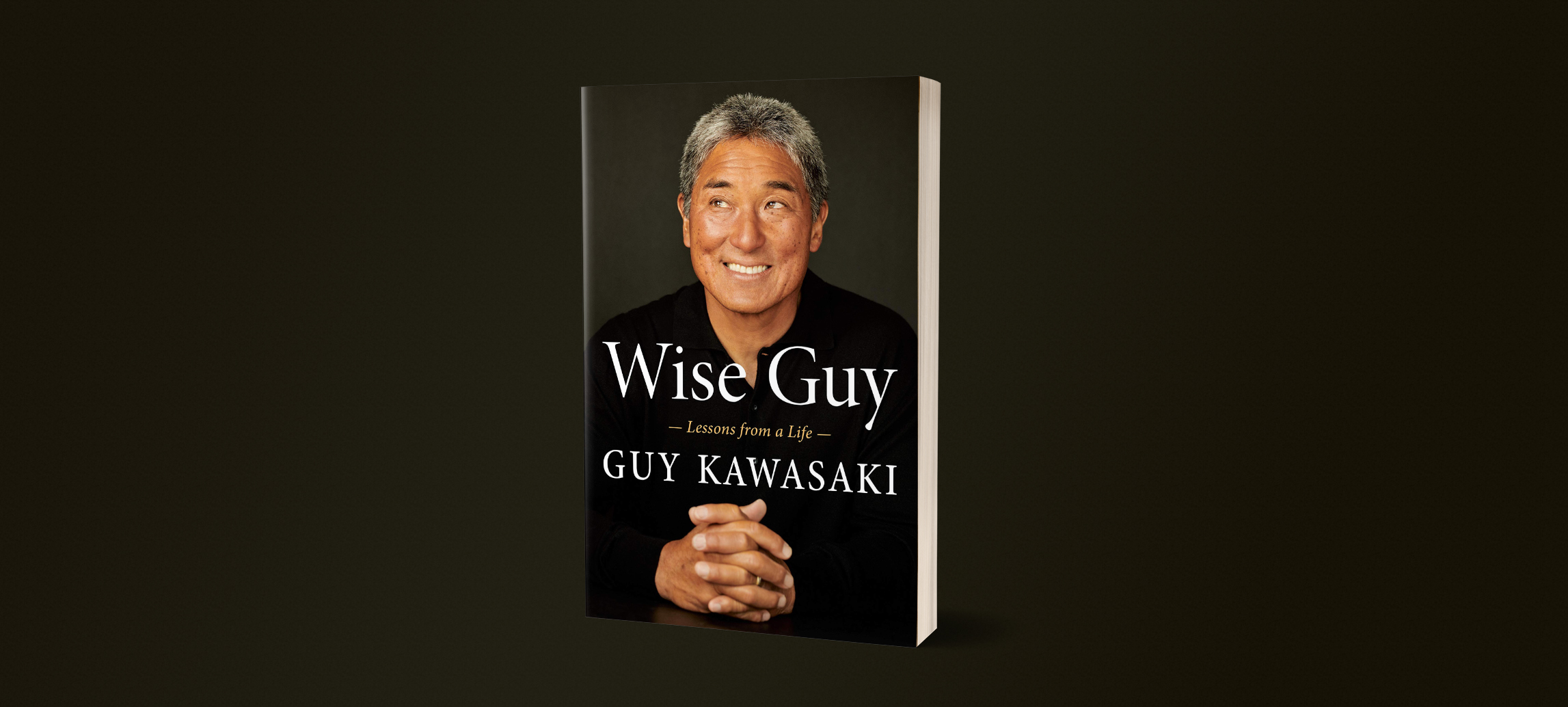
Guy Kawasaki has been a fixture in the tech world since he was part of Apple’s original Macintosh team in the 1980s. He’s widely respected as a source of wisdom about entrepreneurship, venture capital, marketing and business evangelism, which he’s shared in bestselling books such as the art of the start and enchantment. But before all that, he was just a middle-class kid in Hawaii, a grandson of Japanese immigrants, who loved football and got a C+ in 9th grade English. Wise guy, his most personal book, is about his surprising journey.

Here are some lessons from his book!


You should never underestimate the difference one person can make to your life. They can change the entire course of your future.

“Akau’s advice changed the trajectory of my life. If she would have not convinced my parents to send me to ‘Iolani, I would not have gone to Stanford. If I had not gone to Stanford, I would not have met the guy who got me interested in computers and gave me a job at Apple.”

*

Your life is a sum of all your decisions. It is up to you to trust your own instincts and actions. A person’s happiness is in their own hands.

“You must believe that you control your own fate. No one else is responsible for your success or failure. Her insights had a profound effect on who I believed was responsible for my happiness – that is me.”

*

What matters is how you sell the commodities that you have. And the person who masters the art of selling wins the game.

“Working for Nova was one of the best decisions I ever made because of the CEO of the company, Marty Gruber, taught me one of the most valuable skills I ever learned : how to sell. Jewellery is made of commodities – expensive commodities, but commodities nonetheless. As such, the ability to sell is crucial to success in that line of work.”

*

Every great innovation does not require rocket science. Sometimes simple ideas turn out to be the greatest innovations.

“The truth probably is that Bill Gates wanted to get IBM’s business for the IBM PC, and he wasn’t looking beyond that. And Steve and Woz wanted to sell some Apple Is to the Homebrew Computer Club. The long-term plan was “until we run out of money and have to get a real job.”

*

Every word can cost a person their career

” In front of everyone, Jobs told Clow not to give me a copy. I don’t know what got into my brain, but I said “Why, Steve, don’t you trust me?” and Steve responded, “No, I don’t.”

And I countered, “That’s okay Steve, I don’t trust you either.” That response may have cost me tens of millions of dollars, because I clearly burned a bridge for working at Apple when jobs returned.”

*

Honesty is the best policy

“’What do you think of a company called Knoware?’

I told Jobs that the company’s products were mediocre and that the company was not strategic for us. After all, they didn’t take advantage of the Mac graphical user interface and other advanced features.

After my diatribe, Jobs said to me, “I want you to meet the CEO of Knoware, Archie McGill.” I shook his hand, and Steve said to him, ‘See? That’s what I told you.’”


Guy Kawasaki covers everything from moral values to business skills to parenting. As he writes, “I hope my stories help you live a more joyous, productive, and meaningful life. If Wise Guy succeeds at this, then that’s the best story of all.”

Heartfelt lines from ‘The Carpet Weaver’ that encapsulate the spirit of #Pride

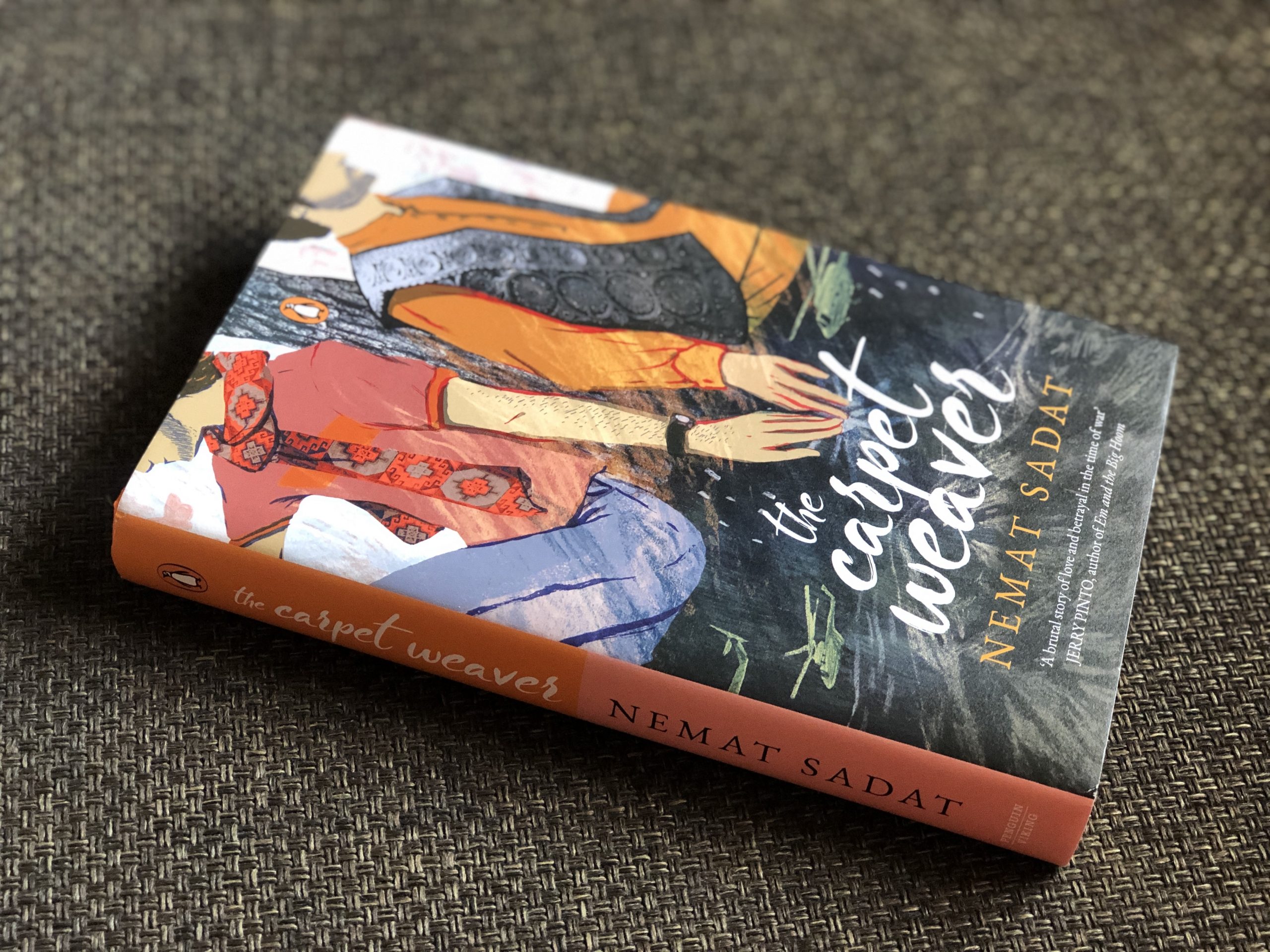
Afghanistan, 1977. Kanishka Nurzada, the son of a leading carpet seller, falls in love with his friend Maihan, with whom he shares his first kiss at the age of sixteen. Their romance must be kept secret in a nation where the death penalty is meted out to those deemed to be kuni, a derogatory term for gay men. And when war comes to Afghanistan, it brings even greater challenges-and danger-for the two lovers.

From the cultural melting pot of Kabul to the horrors of an internment camp in Pakistan, Kanishka’s arduous journey finally takes him to the USA in the desperate search for a place to call home-and the fervent hope of reuniting with his beloved Maihan. But destiny seems to have different plans in store for him.

Here are some soul-stirring lines from Nemat Sadat’s revolutionary new book, The Carpet Weaver!

“I took the bag from Faiz’s hand and pulled out a bra, rubbing the padding across my face and chest. ‘This is so nice. I love the way lace feels.’ Maihan draped the cup of the bra on my head. ‘Look how huge she was—like Marilyn Monroe!’”

“Maihan grabbed a fur throw from the armoire, wrapped it around his neck, and swung his hips while lip-syncing precisely to the Hindi lyrics. When the song was over, he asked, ‘How many stars do you give me?’ ‘Five stars!’ Theatrically, I blew him five kisses. ‘I love India,’ Maihan said, putting his hands over his heart. ‘When I grow up and get married, I want to celebrate my honeymoon there.’” 

“Maihan used a washcloth to buff Faiz’s lips and defined them with lipstick, then flecked his cheeks with rouge and rubbed it in. I opened a bottle and drizzled glitter on Faiz’s hair, put a gold dot on his forehead, and rubbed ambergris oil into his hands and neck. I snapped clip-on earrings onto Faiz’s ears, and when we were done, Maihan and I looked into the cheval mirror in front of us and saw Faiz transformed into a striking woman.”

“In the distance to the east, a flickering lazy sun climbed slowly over the arid mountains, dwarfing our existence. Like sunflowers, Maihan looked to it and so did I, our eyes flaring, as it painted our nascent love with approving warmth. Maihan had become mine, and I his.”

“I slipped my arms around him and hugged him tightly. Some of his drink spilled on my back. I was too intoxicated by his woodsy cologne to care. Maihan pulled away and gaped, and then smiled. I felt his warmth radiate into my soul. Since our voices capped over the unbearable decibel level, we funnelled our words directly into each other’s ears.”

“‘I’ve dreamt about you. Only about you.’ He held his gaze then and studied my face. ‘I think you have the most beautiful almond-shaped eyes in all of Asia.’”

The Carpet Weaver is a sweeping tale of a young gay man’s struggle to come of age and find love in the face of brutal persecution.

Meet Krishna: An Indian Feminist Icon of the Early 20th Century

Krishna Sobti is a magical being. From her experimental prose to her legendary parties to her unique sense of style to her male alter ego, the writer ‘Hashmat’, everything about her is deeply considered and infused with her special warmth.

Krishna Sobti tells stories in her writing, and in conversation, but she has an equal if not greater interest in language and style. Her preferred forms have been the novella and the essay, and this is perhaps because she has sought to boil sentences, phrases and entire narratives into the smallest number of words possible.

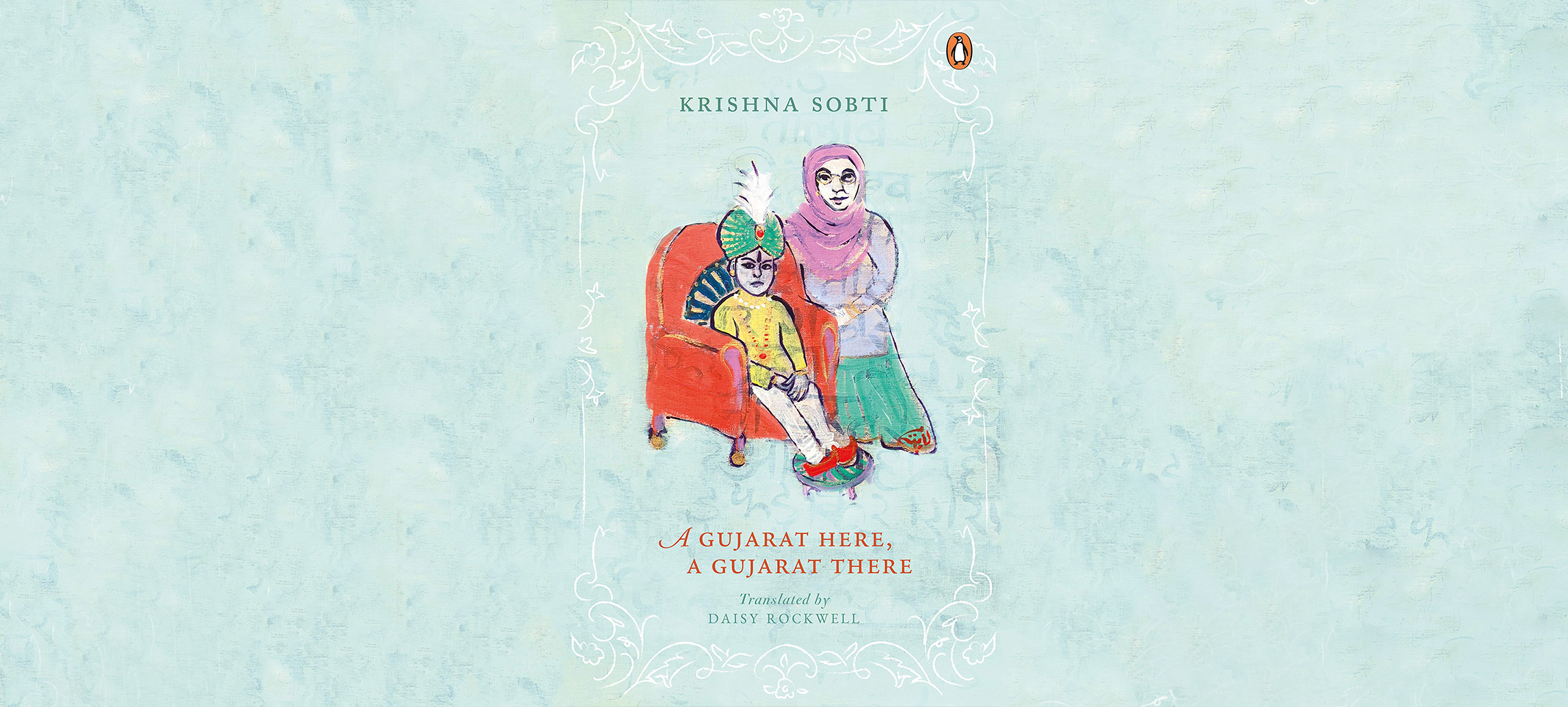
A Gujarat Here, A Gujarat There is a feminist partition novel. Rape and abduction play a huge role in most literary works about the Partition, and Krishna Sobti has not shied away from the topic either in this book or in her other writings. Writing as a young woman, in the more conventional style of her early years, Sobti is already experimenting with brevity and focusing on single words.

Read on to know why translator Daisy Rockwell considers Krishna Sobti as a feminist icon of her time, especially through her protagonist Krishna


Sobti does not like being considered a ‘woman author’, in the sense that adding in the word ‘woman’ somehow makes one a woman more and an author less. Indeed she regularly wrote essays from the perspective of Hashmat, her male alter-ego, as noted above—a method, perhaps, for shedding her lady-author identity.

~

Krishna, the protagonist, faces sexism and prejudice against refugees through what we would now call constant micro-aggressions. Yet these make her indignant. She never sees herself as weak, and it is that sense of strength and self-confidence, and not being a woman-hyphen-anything, which keeps her focused and protected throughout the narrative.

~

When the young protagonist becomes the governess of Tej Singh, the child Maharaja of Sirohi, she finds herself standing at the site of multiple fissures and contested territories. She is a migrant (from Delhi) and a refugee (from Lahore and Gujrat), newly arrived at a border in the process of being drawn (between Rajasthan and Gujarat), charged with the education of a maharaja whose legitimacy is being contested. Everything is in a state of flux, and no one knows quite where they stand. She is treated as an outsider because she is not from Sirohi, but also because she is a woman who has left home for employment, and additionally because she is viewed as a refugee. The Governess is made of stern stuff, however, and she stands her ground as long as she can, even as she copes with a sense of what has been lost with Partition.

~

The self-reliance of the protagonist mirrors that of the new nation. The flux of the historical moment, including the displacement of Partition, emboldens her to set out and find her own way. Though she is haunted by what has been lost, the sense of mourning gives way to a feeling of lightness—to a nimbleness and lack of encumbrance with ancestral baggage.

~

The protagonist Krishna goes through many trials and tribulations yet is not a victim of Partition; she has her own feminist self-image pretty much reflective of the author’s own identity as a strong feminist.


Part novel, part memoir, part feminist anthem, A Gujarat Here, A Gujarat There is not only a powerful tale of Partition loss and dislocation but also charts the odyssey of a spirited young woman determined to build a new identity for herself on her own terms.


Make Parenting A Cakewalk With These Dietary Tips for Your Tiny Tot

With practical, handy tips on topics such as introducing a sleep schedule, travelling with a child, weaning and advice on raising two children together, All You Need To Know About Parenting by Tanya Khubchandani Vatsa will see you through every sleepless night and temper tantrum.

Here are some handy tips for new moms, when it comes to feeding right!


The American Academy of Pediatrics recommends starting solids (mushy solids, of course) at around six months of age because children should be exclusively breastfed for six months.

The amount you are feeding your child should not go down even with solid food. Some moms believe this to be true till one year, but medically, your child should be getting three meals in addition to breast milk or formula by nine months of age.

Many paediatricians use their experience, combined with the guidelines, to recommend that solids be started between the ages of five and six months, as iron and vitamin D are nutrients that breastfed babies tend to be deficient in at this point.

You can start with veggies, fruits or cereal. However, if your child is getting gassy, using cereal(mixed with breast milk or formula) to dilute the quantity of vegetables can help.

There are some foods that are best avoided until one year of age: cow’s milk, wheat, strawberries, nuts or egg whites (can cause allergies), honey (can cause botulism), chocolate or caffeine, unpasteurized cheese (too much bacteria), shellfish and processed juice (more sugar than nutrition, healthier to give fruits).

 Children get fussier about food as they get older, so introduce different foods when they are young.

After one year, it is safe to offer sweets and cater to their tastes in moderation so that they do not feel deprived and instead have well-rounded palettes.


Read All You Need to Know About Parenting for more such helpful tips!

Sip your Way towards Good Health! A Special Tea from ‘The Magic Weight Loss Pill’

What’s the one remedy common to controlling diabetes, hyperthyroidism, kidney and liver stones and excess weight? Lifestyle. Luke Coutinho, co-author of The Great Indian Diet, shows us that nothing parallels the power and impact that simple sustained lifestyle changes can have on a person who’s struggling to lose excess weight or suffering from a chronic disease.

The first part of the book concentrates on the reason we get such diseases in the first place, while the second is filled with sixty-two astonishingly easy and extremely practicable changes that will have you feeling healthier and happier and achieving all your health goals without the rigour and hard work of a hardcore diet or fitness regime.

Here’s a simple recipe from the book to aid your weight loss!

********************************************************

The Magic Weight-Loss Tea

Add this magic tea to your daily regime and lifestyle. You can use a base of black or green tea, or just makean infusion with water and the following ingredients:

™™ 1 square-inch piece of fresh ginger root
™™ Squeeze of a lemon
™™ 2 cups of water
™™ 2–3 peppercorns
™™ 1 cinnamon stick
™™ 2 cardamom pods, crushed
™™ 2 cloves

Boil, simmer, reduce to half, strain and serve hot with or without pure honey.

This amazing potion is detoxifying and highly anti inflammatory, and has the power to rapidly decrease Candida and yeast infections that inhibit weight loss. Ginger is essential to this magic tea recipe due to its amazing benefits. It helps in boosting immunity and cellular health, controlling high blood pressure, lowering cholesterol and stimulating blood rush to sex organs. It also prevents and treats the flu, digestive issues, menstrual pain, PMS, cancer (by building immunity and cellular health), arthritis, joint/ bone pain and ageing.


Get a kickstart to reaching your fit self with Luke Coutinho and Anushka Shetty’s The Magic Weight Loss Pill

An Honest Conversation about the Mindset that Divides Us, Please?

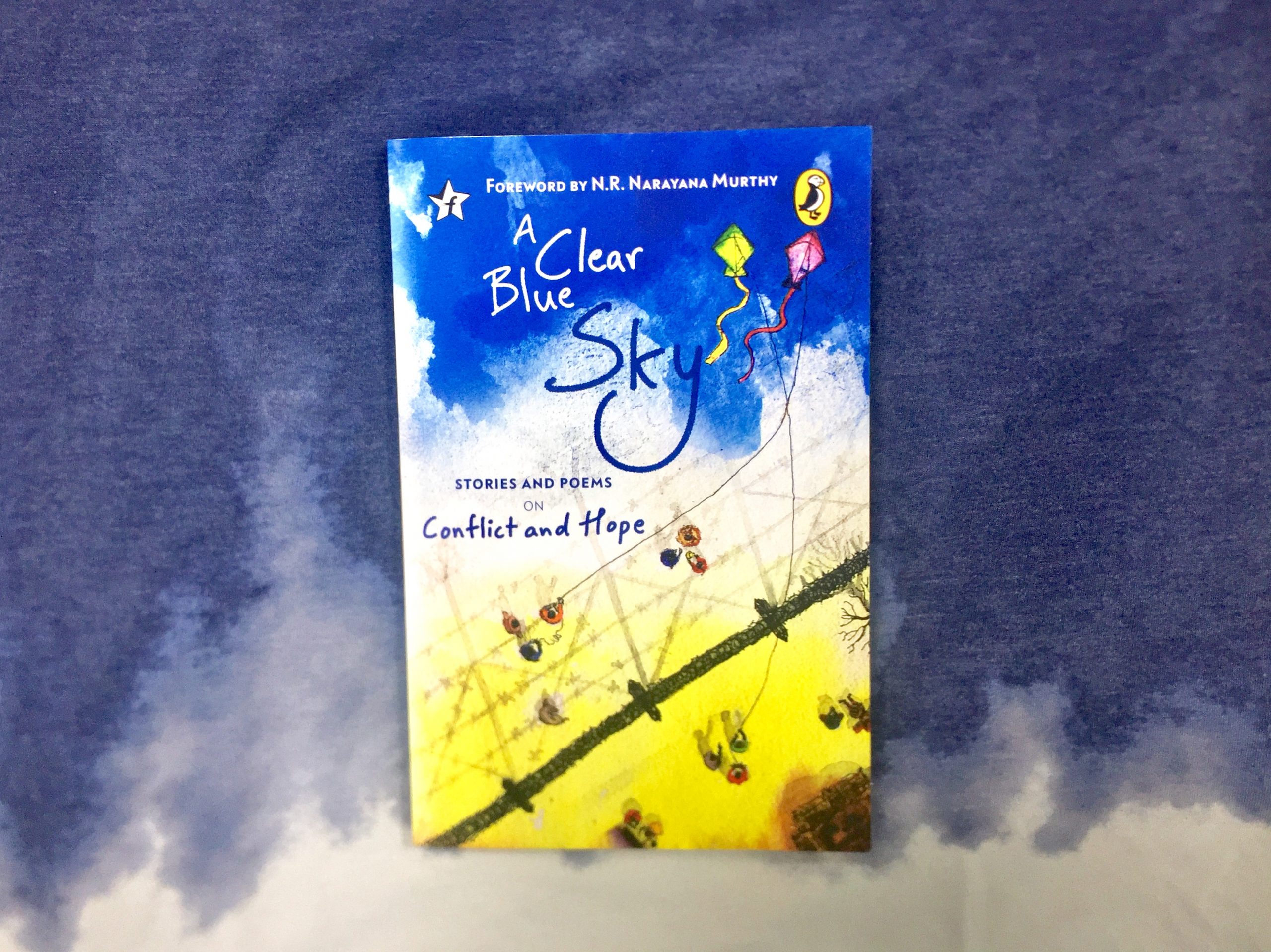
26/11, 9/11, 7//7 – these are the dates that have changed the way see ourselves and those around us. Dates that have changed the world, and not for the better. It’s about time we had an honest conversation about religion, race, caste and the mindset that divides us.

In this collection writers from India, Sri Lanka and Pakistan – Gulzar, Elmo, Jayawardena, Manjula Padmanabh, Poile Sengupta, Kamail Aijazuddin, Bulbul Sharna and others – write about various kinds of conflicts that plague are world today.

In exclusive partnership with Flipkart, we present you to quotes from A Clear Blue Sky.


“‘…There will be moments when we feel unsettled by someone who is different from us. We just need to remember that being different is not a bad thing. It’s not something that should frighten us.’”

*

“‘They are killing each other. Just yesterday we were all friends. Why this sudden madness?’”

*

“His world had split into two – into ‘them’ and ‘us’. ‘They’ were anyone who believed in the teachings of Mohammed. ‘Us’ was the rest of the world.”

*

“‘We cannot always know the wisdom of the Quran. It tells of jinns, of the Day of Judgement and also how to be a true Muslim. Allah will reveal all to those He wants…’”

*

“‘Once he is the deity in a temple only the high-caste priests, royalty and noblemen are allowed inside. Not a low caste like me.’”

*

“She taught me that I have a right to reject

What deep down in my heart I cannot accept

But first I must learn to practice the above

And to be heard by the world, I must say it with love.”

*

“Kartikeyan is forgotten and like him, very soon I will be forgotten too.”

*

“When he carves a goddess he can make the stone smile and when he creates the image of Nataraja, the dancing image of Lord Shiva, it is as if the stone begins to dance.”

*

“‘They are ready to kill,’ the sergeant shouted at them.

‘But we are willing to die if the need be.’”

*

“Life would have been different perhaps had I given him the answer he wanted. Instead I asked for time. I had wanted only a few days, to calm the seething emotions. But the gods granted me a lifetime.”


Get your copy here!

Perfect Reads for your Young Ones this Monsoon

This monsoon we have a list of books especially curated for you and your child! Curl up with your young ones during the rains with these fantastic titles:


Shrilok Homeless: The Ultimate Adventures Volume 2

India’s favourite teen detective is back!

After taking Mumbai by storm, Shrilok and his best friend, Rohan, are now chasing criminals far and wide, even landing up in London. The stakes are high for the chaiwala-turned-super-sleuth, with murder mysteries, secret codes, museum robberies, an exam-paper racket and a terrorist from the past. Will our desi Sherlock rise to the challenge?


101 Things to Know and Do (series)

These books contains important information, helpful tips and stories of people who have found ways to clean up the air, save animals, save water, save plants and the Earth. There are also lots of fun activities and do-it-yourself projects for you to try at home!


National Park Explorers: Chaos at Keoladeo

Experience all that the jungle has to offer with the first in The National Park Explorers series!

Sameera, Alex and Tarun are headed to Bharatpur with Uncle Avi. They’ve heard that the Siberian cranes have returned to Keoladeo National Park after more than twenty years. But things just don’t seem right at the park. The three young explorers find themselves in the midst of things wondrous and wild as they spot birds and animals, bump into wildlife biologist Rauf Ali and sleuth around to solve mysteries along the way.


How the Sea Became Salty

A long, long time ago, seawater was sweet and drinkable. How it became salty is a remarkable story.

India’s favourite storyteller brings alive this timeless tale with her inimitable wit and simplicity. Dotted with charming illustrations, this gorgeous chapter book is the ideal introduction for beginners to the world of Sudha Murty.


Let’s Do This Together

Let’s Do This Together is filled with stories that cleverly weave everyday maths problems into the narrative so children can easily solve them with the help of a parent, teacher or friend.

As they start with sums that are easy-peasy, move to mostly easy and then to ones that are not that easy, the book helps them build their self-confidence and number proficiency.


 Flyaway Boy

Kabir doesn’t fit in. Not in the wintry hill town he lives in, and not in his school, where the lines are always straight. Backed into a corner with no way out, Kabir vanishes.With every adult’s nightmare now coming true, finding this flyaway boy will mean understanding who he really is. Or is it too late?


My Sister is in the Indian Navy

Nikky’s sister is in the navy. When her ship is in port, she and Nikky get to do lots of fun things together. Nikky would like to spend more time with his sister, and he doesn’t want her to leave, but he knows that, eventually, her sailing orders will arrive… Read on to find out about the people and their families whose big and small acts of heroism make the Indian navy exemplary!


My Mother is in the Indian Air Force

Rohan thinks his mom is a bit like a a superhero-she flies in to save the day, she loops and swoops between the clouds, she even jumps off planes wearing parachutes! But her job demands that she keep moving from place to place, and Rohan doesn’t want to move again. Not this time. Can he find a way to stay?
Read on to find out about the people and their families whose big and small acts of heroism make the Indian air force formidable!


My Father is in the Indian Army

Beena’s dad is in the Indian army, which means that when duty calls, he’s got to get going at once. Beena knows her dad’s job is important, but her birthday is coming up. She really, really wants her dad to be at home to celebrate with her. Will he be able to make it back in time?
Read on to find out about the people and their families whose big and small acts of heroism make the Indian army inspiring!


Feel the Nostalgia of Autumn in Pico Iyer’s Words

Returning to his long-time home in Japan after a sudden death, Pico Iyer picks up the steadying patterns of his everyday rites: going to the post office, watching the maples begin to blaze, engaging in furious games of ping-pong every evening. As he does so, he starts to unfold a meditation on changelessness that anyone can relate to: parents age, children scatter, and he and his wife turn to whatever can sustain them as everything falls away.

After his first year in Japan, almost thirty years ago, Iyer gave us a springtime romance for the ages, The Lady and the Monk; now, half a lifetime later, he shows us a more seasoned place-and observer-looking for what lasts in a life that feels ever more fragile.

Here are some lovely quotes from his new book, Autumn Light


Get a copy of Autumn Light for more!

Do YOU have what it takes to be a detective?

‘The youngest and coolest teen detective in India’ is back!

No case is bizarre enough for detective Shrilok, a chaiwala with a penchant for deduction, disguises and drama, and his partner in crime, Rohan Doctor. India’s favourite teen detective is back! After taking Mumbai by storm, Shrilok and his best friend, Rohan, are now chasing criminals far and wide, even landing up in London. The stakes are high for the chaiwala-turned-super-sleuth, with murder mysteries, secret codes, museum robberies, an exam-paper racket and a terrorist from the past.

Our desi Sherlock always rises to the challenge, but can you do the same? To help you find out if you have what it takes to be a detective, we have conducted this detailed analysis of Shrilok’s brilliant methods and his fascinating personality to come up with The Ultimate Detective Test!

See how many of these questions you can honestly say ‘yes’ to, and use this foolproof scoring system to determine your Shrilok Quotient!

 0-3 Affirmatives—Innocent bystander

4-6 Affirmatives—Trusty companion and chronicler

7-10 Affirmatives—Youngest and coolest teen detective!


While a little advertisement is useful, a good detective needs to go undercover occasionally. Do you have the necessary discretion to refrain from wanting to spread the news of your talents far and wide?

“Shrilok Homeless is discreet and good for undercover work, I like blowing my own horn sometimes, I admit, but “Detective Shrilok would be like walking with an entire marching band!”

It’s nice to mind your own business, but a detective needs to poke his nose into other’s business and sniff out trouble. Is your nose just a little longer to enable this?

“He had grown an inch taller over the last month, but his straight nose was the same, half an inch longer than perfect.”

A good detective needs something to keep their energy up! Chai gives Shrilok wings! What about you?

“Shrilok finished three cups of tea before he got an idea.”

Even the best and most private of detectives needs some help from the police force to be taken seriously? Have you helped your friendly neighbourhood policeperson yet?

“Upon reaching, we met our friend, Divya Lokhande who had helped us with many of our cases in the past. She had been recently promoted as the assistant commissioner of police. We filled her in on the details of the case. She is usually very calm and collected but our news had her gushing with excitement.”

 A detective needs a hobby apart from detecting to look busy and stave off unnecessary questions. Do you have any musical talent—can you play the flute, the cello or perhaps the violin?

“Shrilok played his flute during the journey and avoided any talk about the case.”

 A detective does not dismiss the most mundane of evidence. Do you have the observational skills to spot even an unassuming bead of water, and analyze it correctly?

“Shrilok, who had been quiet till then suddenly commented, ‘He will not be able to read. He’s left his glasses near the bathroom sink.” “That I wear glasses is obvious from the marks they have left on the bridge of my nose. But how did you know I had left them in the bathroom quizzed Mr Ansari standing up to fetch his specs. “Simple hai! There is a bead of water on your neck. The AC is on so it cannot be sweat. Therefore it’s obvious you went to the bathroom to wash your face and took off your glasses. When you wiped your face you missed that spot.”

Sometimes it’s not very easy to see your friends as possible criminals. Can you set your feelings aside and analyze ALL possible suspects, even the ones you really like?

“My motto is to suspect everyone.”

While a true detective takes a while to trust people, he must be able to inspire trust in others, even criminals. Do you have the kind of persona that just makes people want to confide their deepest, darkest secrets to you?

“Bro you’re a pro at winning trust. So many people have confessed their crimes to you in the past’, I reminded him.”

 With great power comes great responsibility. You may be blessed with extraordinary deductive genius, but will you always choose the right path and remain a super sleuth and not turn into a criminal mastermind?

“Being an orphan and a chaiwala, spending my days on the streets of Mumbai, I had to make the choice between good and evil quite early in life’. And the choices he made transformed him into who he is today.”

 No man is an island, and detectives too need a sea of informers! Do you have the right networking skills to get you to the top of the detective league?

“Once fifteen eager kids were in the dining hall I laid out my plan. Shrilok had his own network of informers who collected information for him. I was going to use the very same network to find the detective himself.”

 And most of all, do you have a best friend and eternal companion, who praises your achievements unabashedly, whose friendship survives (fake) bullets, and who saves you at the very end?

“I ran to where Shrilok was standing. ‘Rohan bhidu you saved my life!’ he yelled, giving me a hug… Shrilok and I, stood side by side ready to face another day.”


Find out what happens next in Shrilok Homeless: The Ultimate Adventures Volume 2

error: Content is protected !!