Publish with Us

Follow Penguin

Follow Penguinsters

Follow Penguin Swadesh

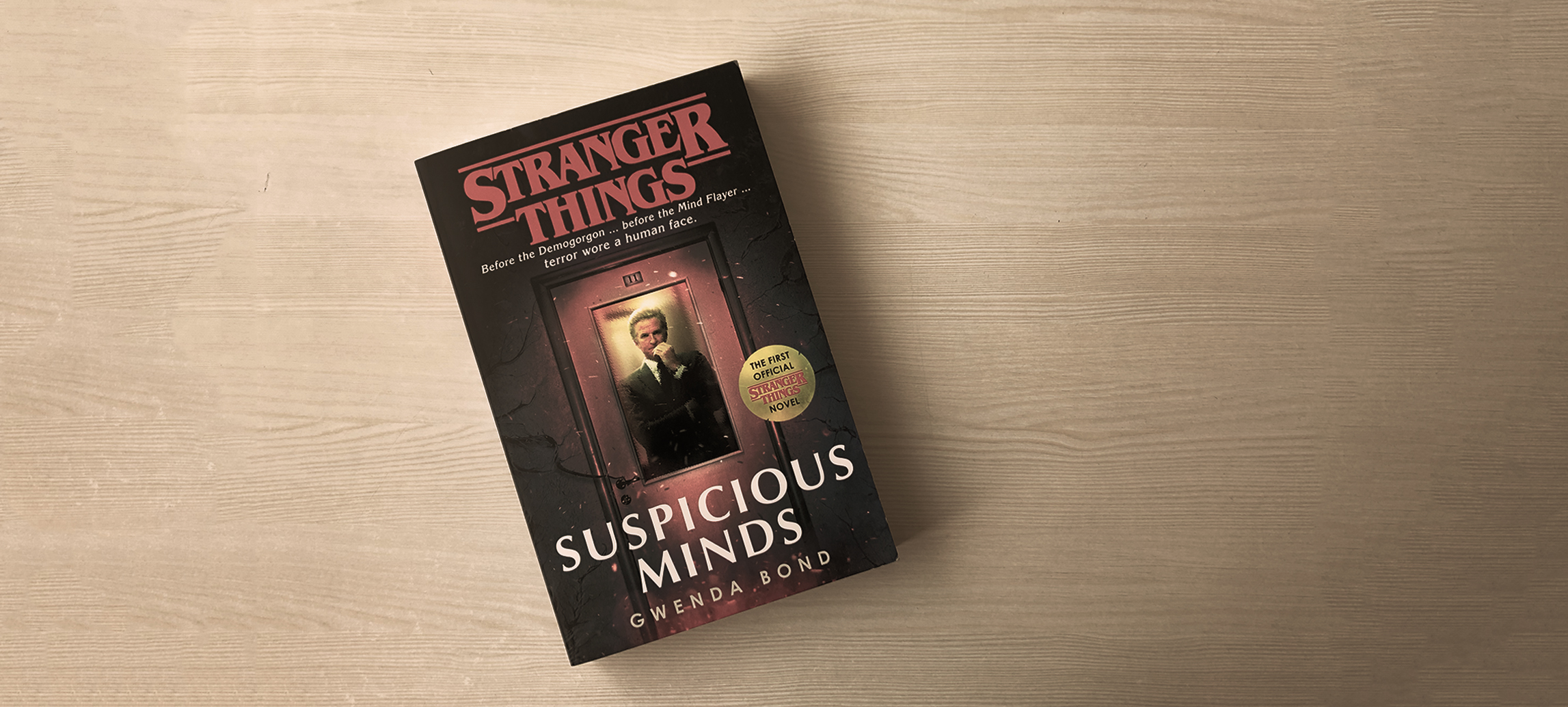
Six Reasons Why You Should Read ‘Stranger Things: Suspicious Minds’

It’s the summer of 1969, and the shock of conflict reverberates through the youth of America, both at home and abroad. As a student at a quiet college campus in the heartland of Indiana, Terry Ives couldn’t be farther from the front lines of Vietnam or the incendiary protests in Washington.

But the world is changing, and Terry isn’t content to watch from the sidelines. When word gets around about an important government experiment in the small town of Hawkins, she signs on as a test subject for the project, code-named MKULTRA. But behind the walls of Hawkins National Laboratory—and the piercing gaze of its director, Dr Martin Brenner—lurks a conspiracy greater than Terry could have ever imagined.

Are you excited to unravel the mysterious happenings in Stranger Things? Here are a few surprises that await you!

While the third season of Stranger Things will be released this coming July, after what feels like the longest wait for fans. But, if you’re missing much-needed news from Hawkins,  you can explore more of Eleven’s backstory in the book.

The book Stranger Things: Suspicious Minds is set much further back in time, in the year 1969 – 14 years before the TV show.

 It follows the journey of  Terry Ives, as she participates in the hush-hush CIA MKULTRA programme with Dr Brenner – not realising she was pregnant with Eleven, played by Millie Bobby Brown in the hit series, at the time. Fans will get to know the first glimpse at Eleven’s dad, and find out what exactly happened between Terry and him all those years ago.

While in season 2 of the show, viewers were introduced to Eleven’s sister, Kali, which proved to be quite divisive, Stanger Things: Suspicious Minds sheds light on some of the questions we all have about the show.

The book finally reveals how the Upside Down was first discovered, and why it’s so important to Dr. Brenner and the leaders of MKULTRA.


A mysterious lab. A sinister scientist. A secret history. If you think you know the truth behind Eleven’s mother, prepare to have your mind turned Upside Down in this thrilling prequel to the hit show Stranger Things.


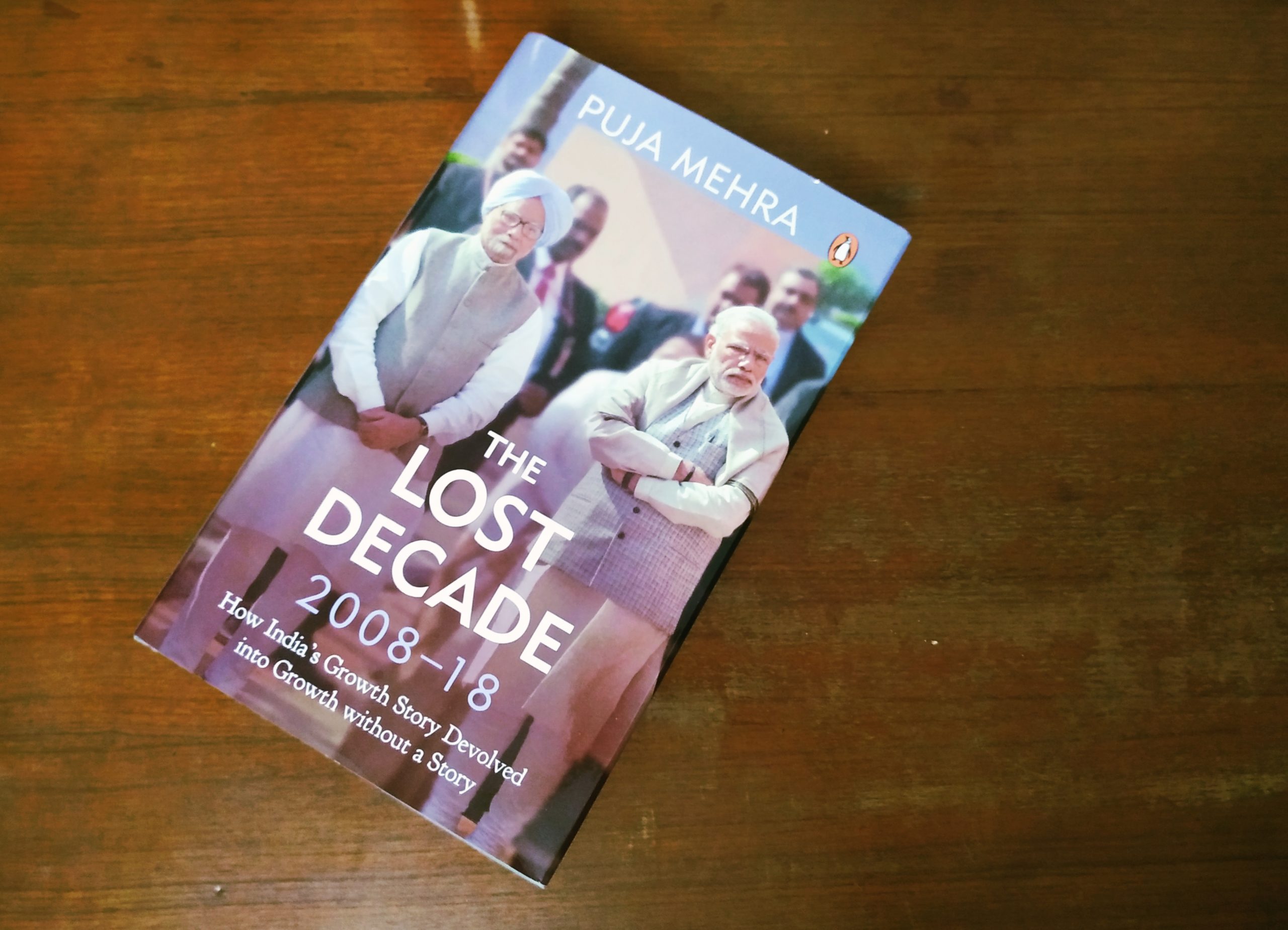
7 Reasons Why Indian Economy Didn’t Recover After the Global Financial Meltdown

Puja Mehra’s book The Lost Decade is a reconstruction of the ten years after the global financial  shock of 2008, in which the Indian economy could not achieve its potential or its pre-crisis growth momentum. Prior to the global financial crisis, India’s economy was growing impressively. But after the shock,  that momentum could not be achieved again due to the influence of politics on policies. Puja Mehra explains this failure of the Indian economy to regain the pre-crisis momentum in her book with sharp analysis and in-depth reporting, drawing on her journalistic experience, of the policy decisions taken by two different governments in the last ten year.

Here we chart a few of the reasons discussed in the book for the continued state of decline in the growth of the economy:

1. The shock of the financial crisis in September 2008 slowed the economy for one year. It rebounded a year later, but that recovery was not sustained.

2. In the following year after the financial crisis had hit the country, the then finance minister’s policy decisions and approach only weakened the recovery. Mr. Pranab Mukherjee, who the finance minister wrongly assessed the need of the hour and rolled out a third fiscal stimulus package even though two stimulus packages were already in place.

3. Furthermore, he sharply increased allocations for social-sector spending by the finance ministry without factoring in the revenue position. As a result, the fiscal deficit expanded even as the economy’s capacity for absorbing the fund releases in a productive manner failed to keep pace. 

4. The failure to focus on reforms  in the recovery period in 2009, further weakened the industrial sector that was already reeling under impact of the global economic downturn that followed the global financial shock. 

5. After a tedious and slow recovery of the country’s economy during the years 2012-15, economic growth was hampered yet again by the failure to address the problem of bad bank loans in a timely and effective manner.

6. The incumbent government chose to prioritise the infrastructure sector, rather than concentrating on the bad bank loans, resolving which was more important for building the growth momentum. 

7. Even by 2018, the rates of increase of investments, consumption and exports, the three engines of growth in the economy, were not robust enough, and the sustained high GDP growth seen in the runup to the September 2008 shock was still out of reach for the Indian economy. 


The Lost Decade tells the story of the slide and examines the political context in which the Indian economy failed to recover lost momentum.

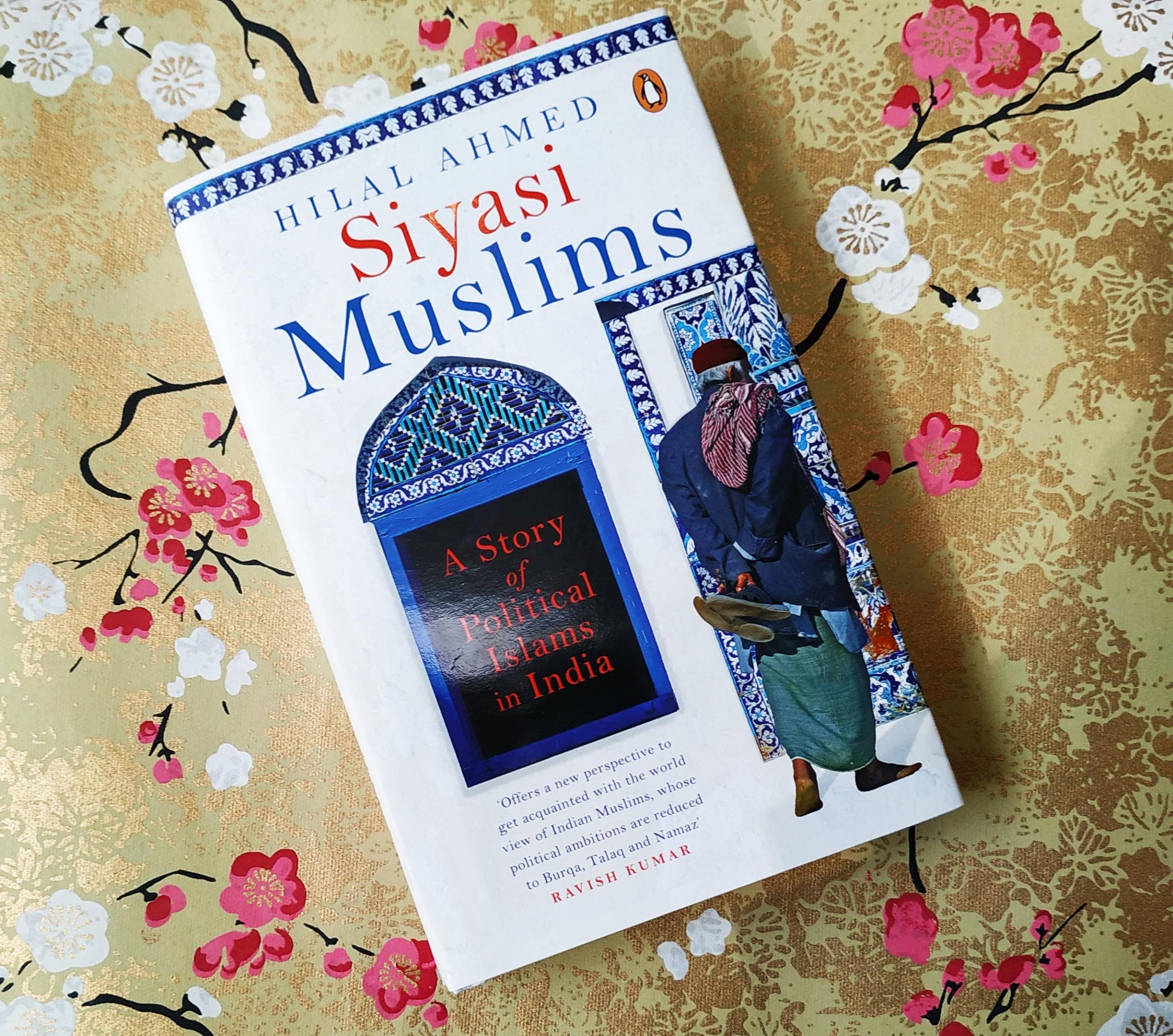
Examining the Muslim Demographic through ‘Siyasi Muslims’ – Excerpt

How do we make sense of the Muslims of India?

Do they form a political community?

Does the imagined conflict between Islam and modernity affect the Muslims’ political behaviour in this country?

Are Muslim religious institutions-mosques and madrasas-directly involved in politics?

Do they instruct the community to vote strategically in all elections?

What are ‘Muslim issues’?

Is it only about triple talaq?

While these questions intrigue us, we seldom debate to find pragmatic answers to these queries. Examining the everydayness of Muslims in contemporary India, Hilal Ahmed’s Siyasi Muslims: A Story of Political Islams in India offers an evocative story of politics and Islam in India, which goes beyond the given narratives of Muslim victimhood and Islamic separation.

Here is an excerpt from Siyasi Muslims Triple Talaq as an MCQ:

————————————————————————–

The question of ‘triple talaq’ is posed as an objective-type MCQ (multiple choice question)! We are given two options—support it (say yes) or oppose it (say no). The meaning of yes and no are also premeditated in this schema: Yes refers to closed Islamism, while No stands for gender equality and progress.

This dominant (and somewhat stereotypical) representation of the triple talaq issue is based on a  few strong assumptions about Muslims in general and Muslim men in particular:

  • The Muslims of India constitute a single, closed, homogeneous community, which is inevitably male-dominated.
  • This male-dominated community is governed by a few established Islamic norms which are highly anti-women in nature. Islamic religiosity as well as Islamic practices, hence, are intrinsically patriarchal.
  • The Islamic clergy functions as the true representative of the community. It has an ultimate right to interpret religious texts and, at the same time, speak on behalf of all Muslims.

These convictions, interestingly, are often presented to us as hard facts—not merely by the government, political parties and the ulema class but also by those who prefer to be identified as ‘liberals’. As a result, a media-centric discourse of political correctness emerges, which virtually freezes any possibility of a nuanced and meaningful discussion on the nature and functions of patriarchy among Muslims.

The recent debate on triple talaq is an example of such stereotypical public imagination. No one bothered to look at the arguments and positions of various Muslim women’s groups on the status of Muslim women in India, the internal debates among them on the question of Muslim patriarchy, their varied interpretations of the Quran and Hadith, their critical responses to the much-debated idea of the Uniform Civil Code and, above all, their critique of Muslim personal law and the role of the ulema in nurturing the anti-Muslim attitude of Hindutva politics.

The triple talaq debate, surprisingly, is seen as a battle between the conservative ulema represented by the All Indian Muslim Personal Law Board (AIMPLB) and the committed BJPled NDA government. The discussion in the Parliament on the triple talaq bill and, later, on the triple talaq ordinance seems to ignore the nuanced arguments made by Muslim women’s groups, especially the Bharatiya Muslim Mahila Andolan (BMMA). The purpose, therefore, of this chapter is to clarify and contextualize the public debate so as to make sense of the various aspects of the controversy. In addition, an attempt is made to analyse the politics of triple talaq in the wake of emerging Hindutva.

Let us begin with a few frequently used terms:

  • ‘Triple talaq’ refers to a practice which empowers a man to divorce his wife by saying ‘talaq, talaq, talaq’ in one go.
  • ‘Mehr’ is a sum of money or other property to be delivered to the bride by the bridegroom at the time of the nikah as a prerequisite for the solemnization of their marriage, as specified in the nikahnama.
  • ‘Iddat’ is the period of time (approximately three to four months) during which a divorced woman/widow cannot remarry another man.
  • Nikah’ is a contract of marriage between a man and a woman. The nikahnama is a document which specifies the terms and conditions of this agreement.
  • ‘Sharia’ or ‘shariat’ is a collection of rules and norms that have been codified following the Quran and Hadith (laying out the sayings and acts of Prophet Muhammad). Since this codification is subject to various interpretations, there are various shariats among Sunnis and Shias.
  • Nikah halala’ is also a frequently used term. Once a woman has been divorced, her husband is not permitted take her back as his wife unless the woman undergoes nikah halala, which involves her marriage with another man who subsequently divorces her so that her previous husband can remarry her.

The practice of triple talaq, we must note, is legitimate among Sunni Muslims of the Hanafi shariat. Although we do not have adequate statistical information about the sect-wise population of Muslims in India, it is believed that Sunni Hanafis are in the majority, at least in the northern states. But there are four other schools of Sunni shariat—Hanbali, Shafi, Maliki and Ahle- Hadith. These schools have their own interpretations of rituals and customs and specific norms for divorce.

The AIMPLB itself recognizes this Islamic religious plurality in India. In fact, one of the stated objectives of the AIMPLB is:

To promote goodwill, fraternity and the feeling of mutual cooperation among all sects and schools of  thought     among Muslims, and to generate the spirit of unity and coordination among them for the common  goal of safeguarding the Muslim Personal Law.1

There are two questions are important here: Does the AIMPLB determine the everyday conduct of the religiously diversified Muslim communities? If so, do Muslims, particularly the followers of the Hanafi shariat, practise triple talaq precisely because of their religious adherence to Islam?


Know more in Hilal Ahmed’s Siyasi Muslims: A Story of Political Islams in India

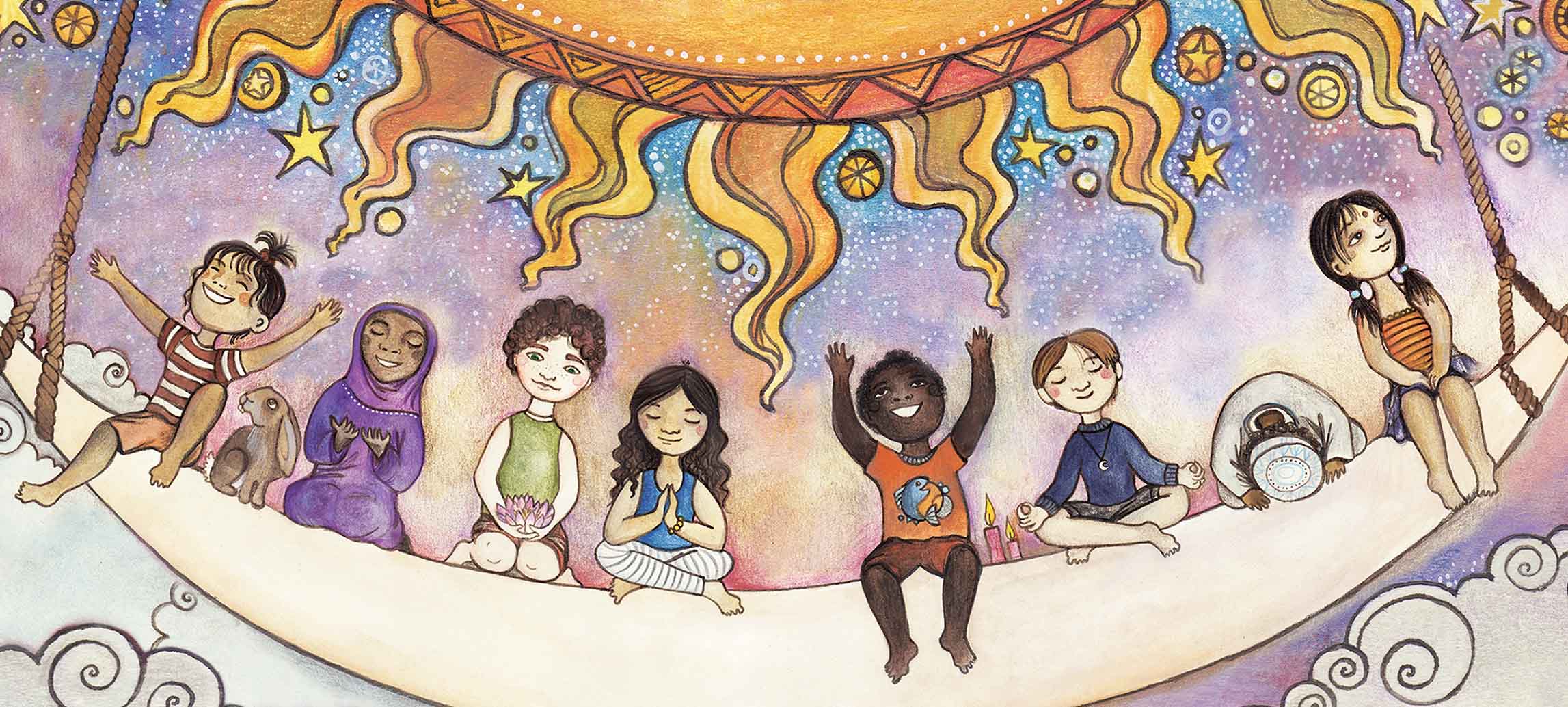
Why and How do People Pray across the Earth?

(The Sun and the Moon will tell you)

We all need a little time to re-affirm the healing, calming power of faith and to appreciate the plurality and flexibility of prayer, to appreciate prayers as a source of community rather than communalism. Children are usually already intuitively aware and accepting of spirituality and of individual differences and Trishla Jain’s Sunrise, Moonrise with its beautiful illustrations and lilting, flowing rhymes is a magical way to ensure that little ones understand and appreciate this further while retaining their instinctive wonder.

Join the most wonderful elemental forces of our universe, the sun and moon as they take you on a journey around Earth to see people joined in prayer across different cultures and faiths.

Read on to find out what families can learn about prayer when you read Sunrise, Moonrise together.


Travel with the sun and the moon in this heartfelt picture book to find out how people from different cultures and faiths pray. Read Sunrise, Moonrise aloud to spark a discussion with your young ones about the meaning of prayer and what it can do for us.

You might have misunderstood Muhammad Bin Tughlaq all your life. Read why in these 6 points!

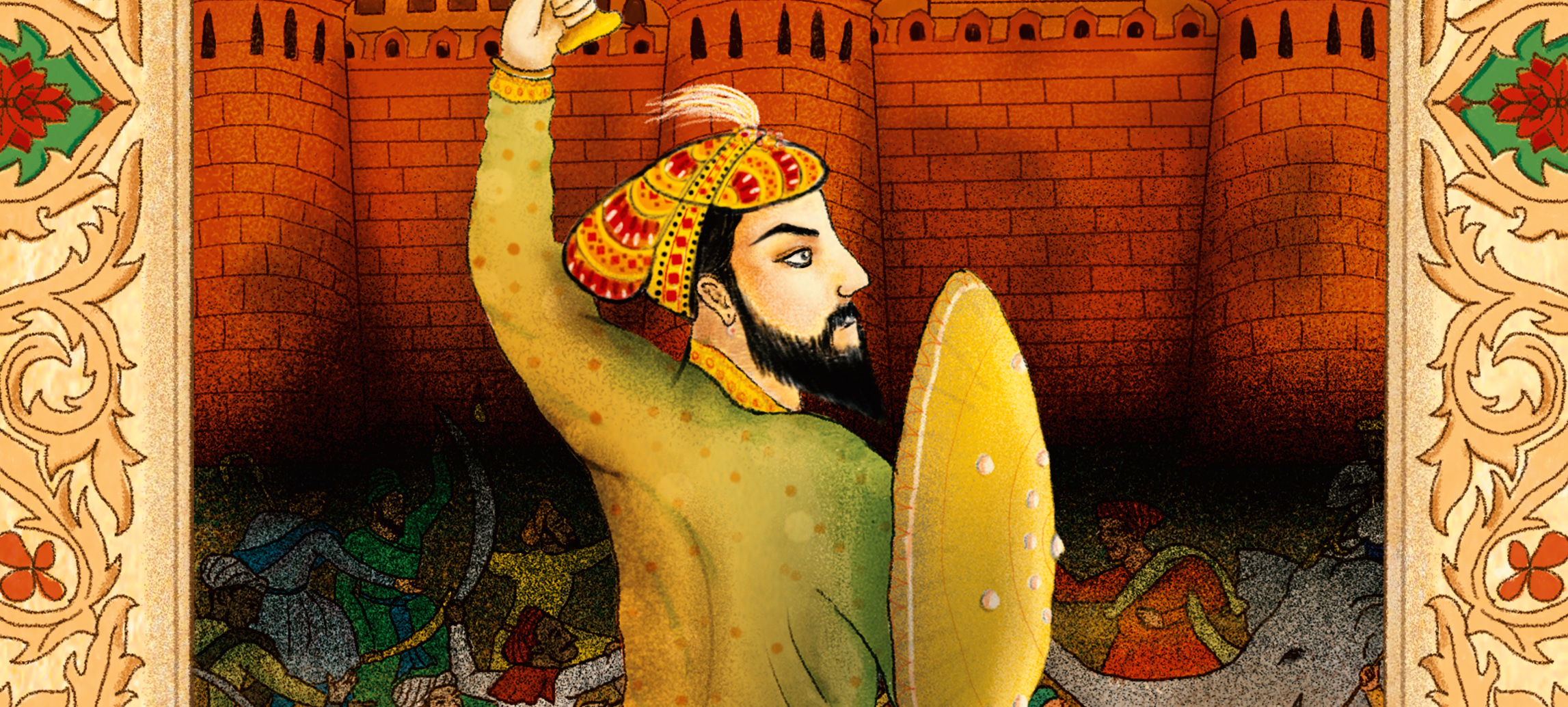
Muhammad bin Tughlaq – Tale of a Tyrant by Anuja Chandramouli is an attempt to recreate the life and times of Muhammad bin Tughlaq and clamber into the chaotic headspace of one who was considered to be a “mad monarch”.

Modern historians concur that he has been terribly misunderstood, and so-called scholarly accounts from the likes of Ibn Battuta, Barani and Isami reek of bias. He was exceedingly unpopular among the followers of his own faith for daring to be tolerant to his subjects who belonged to other religions, failing to zealously guard the principles of Islam from idolatry and heresy, and raising non-believers to high posts instead of dealing with them using the savagery he was infamous for.

This listicle attempts to demystify Muhammad bin Tughlaq:


The challenges of ruling an unwieldy empire where Tughlaq’s subjects in the various provinces had their own language and customs, and all of whom were uniformly proud and prickly about their roots, proved too much for him.


In this fictional retelling, Anuja Chandramouli, one of India’s best mythology writers, reimagines Muhammad bin Tughlaq‘s life and times in incredible detail to bring to life the man behind the monarch.

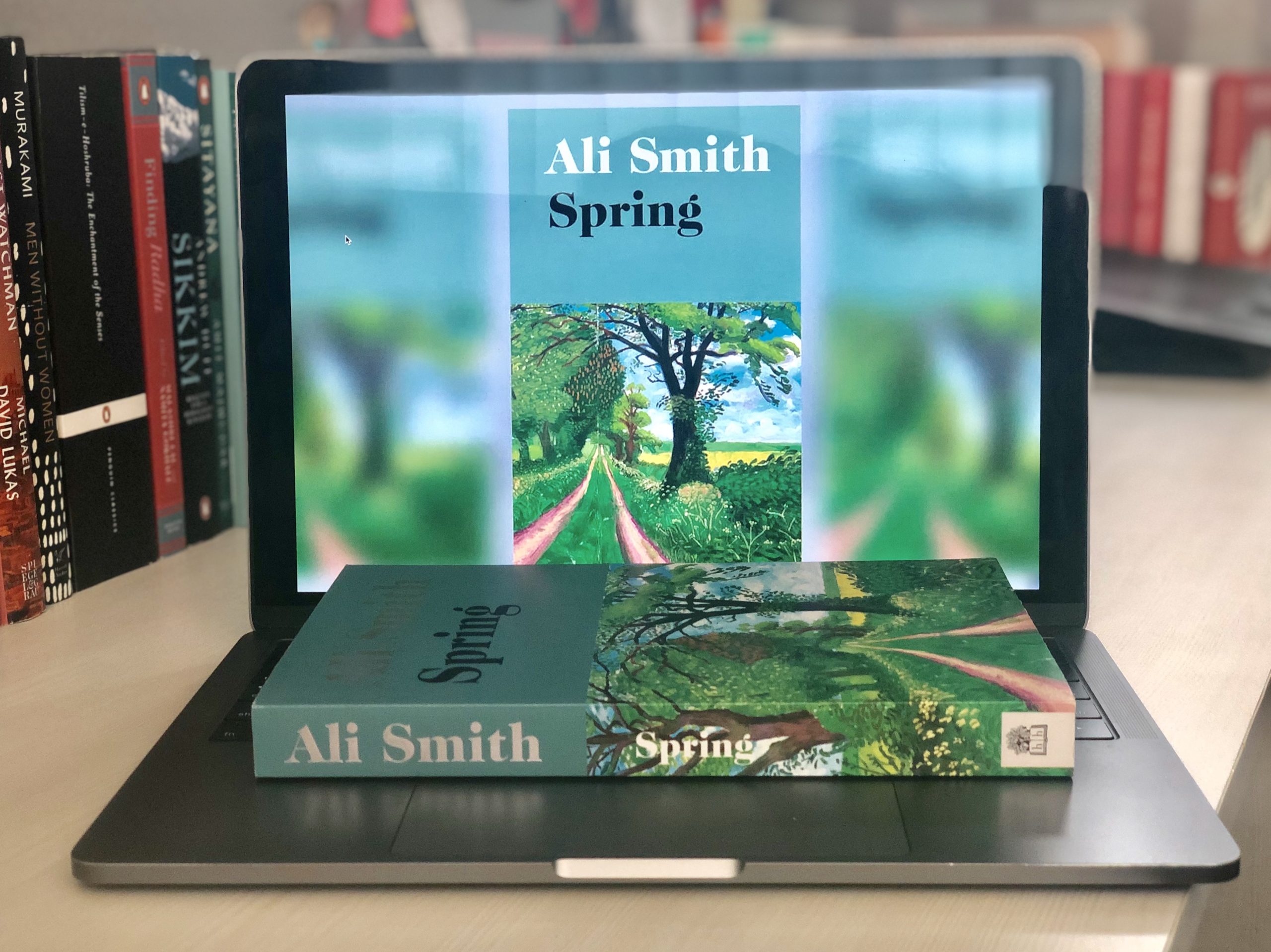
Getting off at a Place not Printed on the Ticket – an excerpt from Ali Smith’s ‘Spring’

Spring will come. The leaves on its trees will open after blossom. Before it arrives, a hundred years of empire-making. The dawn breaks cold and still but, deep in the Earth, things are growing. 


Yesterday morning, a month to the day since the memorial service (they’d had her privately cremated some time before the memorial, he doesn’t even know when, close family only), he is walking along the Euston Road and as he passes the British Library he sees a woman sitting against its wall, thirties, as young as twenties, maybe, blankets, square of cardboard ribbed off a box on which there are words asking for money.

No, not money. The words on it are please and help and me.

He’s passed countless homeless people even just this morning coming through the city. Homeless people are the word countless again these days; any old lefty like him knows that this what happens. Tories back in, people back on the streets.

But for some reason he sees her. The blankets are filthy. The feet are bare on the pavement. He hears her too. She is singing a song to nobody – no, not to nobody, to herself – in a voice of some notable sweetness, at a quarter to eight in the morning.

It goes:

a thousand thousand people

are running in the stre-eet

oh nothing nothing nothing

oh nothing nothing nothing

oh nothing

Richard keeps going. When he stops keeping going he is just past the front of King’s Cross station. He turns and goes in, as if that’s what he meant to do all along.

There is a stall in the middle of the concourse beneath the giant Remembrance poppy. The stall is selling chocolate in the shapes of domestic utensils and tools: hammers, screwdrivers, pliers, cutlery, cups and so on; you can buy a chocolate cup, a chocolate saucer, a chocolate teaspoon and even a chocolate stovetop espresso-machine (the stovetop machine is costly). The chocolate things are extraordinarily lifelike and the stall is thronged with people.  A man in a suit is buying what looks like a real kitchen tap, made of silver-sprayed chocolate; the woman selling it to him places it delicately into a box she first lines with straw.

Richard puts his card into one of the ticket machines. He inserts the name of the place that’s the furthest a train from here can go.

He gets on to a train.

He sits on it for half a day.

An hour or so before the train reaches this final destination he’ll see some mountains against some sky through the window and he’ll decide to get off the train at this place instead. What’s to stop him doing what he likes, getting off at a place not printed on the ticket?

Oh nothing nothing nothing.

King Gussie, to rhyme with fussy, is how he’d always thought it was said, like the robot announcer pronounces it over the speakers in London King’s Cross above his head before he boards the train.

Kin-yousee is how it’s said by the guest house people whose door he knocks on when he gets there. They will be suspicious. What kind of person doesn’t book ahead on his phone? What kind of person doesn’t have a phone?

He will sit on the edge of the strange bed in the guest house. He will sit on the floor and brace himself between the bed and the wall.

By tomorrow his clothes will have taken to the air-freshener smell of the room he’ll spend the night in.


Get a copy of Ali Smith’s Spring here!

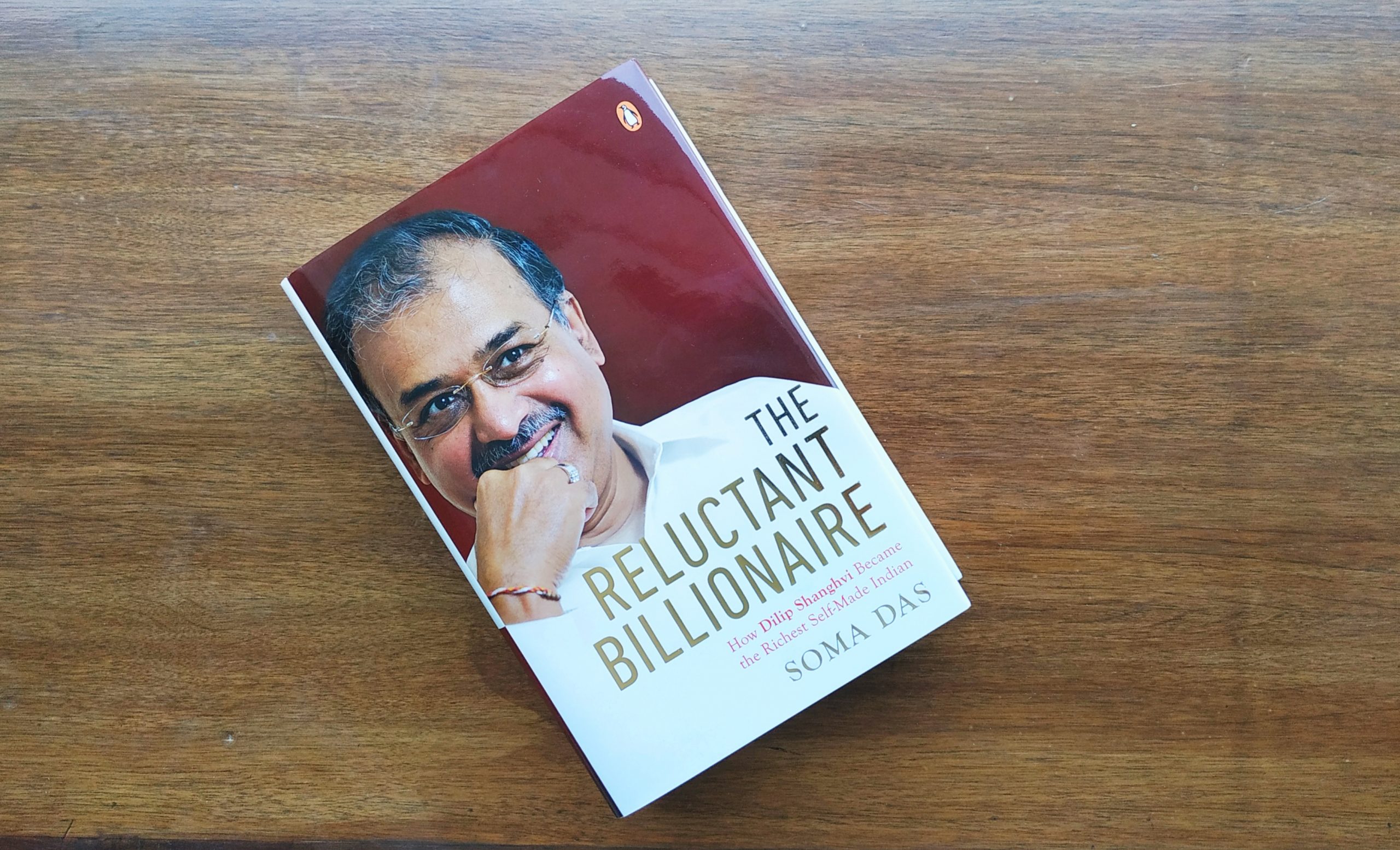
The Reluctant Billionaire – An Excerpt

Dilip Shanghvi is one of the most interesting and least understood business minds whose journey has been shrouded in mystery because of his reticence.

The Reluctant Billionaire reveals the riveting story of the fiercely intense personality that lies beneath his calm demeanour. Based on interviews with over 150 friends, family members, rivals, former aides and Shanghvi himself, it traces his transformation from a quiet, curious child working in his father’s small shop to an astute strategist, who built India’s largest pharma company, Sun Pharma, despite being untrained in science.

Here’s a gripping excerpt from the book that talks about the acquisition of Taro and Ranbaxy.


Should a story be told when the subject is unwilling? Maybe ‘not’ if it’s an ordinary story of a private person, or maybe ‘yes’ if it’s in the guise of fiction where it is easy to speak the truth. But what if the story happens to be of a man who arose from the anonymity of a small wholesaler to become the richest man in a country of a billion-plus people and as many dreams? And he did so, not by creating a conglomerate, which depends on cronyish connections and government concessions, but by building a global firm focused only on making medicines. Isn’t his story more than just his, a story that belongs to a generation, a nation?

And when he became the richest man of the country in 2015 and was asked how he felt, he replied, ‘Uncomfortable, very uncomfortable.’ Despite living what could be argued as one of the most remarkable life of his generations, his mind feels like a black box. Dilip Shanghvi is one of the most interesting and least understood business minds of India today. For someone, unschooled in degrees of sciences and management, who worked his way up from a tiny shop in the bylanes of Dawa Bazaar in Calcutta of the 1970s to create one of the country’s most valuable enterprises, he is also one of the least documented and least studied capitalists. One reason behind this is his own unwillingness to share his story.

He doesn’t care about being celebrated, and stubbornly disapproves, even casts off attempts to document him. Another part is because with no drama, no modulation in pitch, few words and fewer expressions, he neither fits the bill of a conventional inspiring pin-up business leader nor does he make for a great colourful flamboyant story. It is easy to miss the intensity of someone who is more presence than personality. What compounds this conspicuous absence from mainstream is a past yet unsearched but which, on the surface, doesn’t show up juicy controversies to merit an investigation, and a lifestyle that could appear normal enough to be boring. No wonder the media was ready to spare him the limelight he so avoided.

From time to time, when the need arose, he was profiled with a few recycled facts thrown in—that he borrowed 10,000 rupees from his father to start his firm Sun Pharma with two medicines for psychiatry and that in his sixties now, he is a fan of Harry Potter books. What happened in the interim was left to the imagination.

This un-deliberate arrangement of mutual disinterest worked fine till one day—the maths of life changed it all. That day in March 2015 his net worth crossed that of Mukesh Ambani and he was pronounced India’s richest man. The country was curious to know who this guy was, how he had done it.

If the search and discovery had been so easy, answers to these questions wouldn’t have remained so elusive. Shanghvi, known to shun press conferences, interviews and parties expressed his unwillingness for this book when approached initially. ‘You will probably put my face on the cover and I would be recognized by many more people on the streets and that’s always a problem. It takes away from my freedom.’


The Reluctant Billionaire is a tale for everyone who has once had a secret dream, an insanely bold one.

Meet the boy who will Change the Destiny of the World, and the others from ‘Astra: The Quest for Starsong’

“The world should burn . . . burn like a star!”

The balance of the world is askew.The winds speak of a terror from the south. Ravana, the Lord of Lanka, is on the march. Seers whisper that he has awakened Starsong, a mythical astra of the gods. And that he thirsts for this weapon that will make him invincible. But there is one thing that he hasn’t considered. Up high in the glistening tower of the city of Ulka is a boy, held captive.

Today is the day Varkan, the young prince of Ashmaka, will taste freedom. Today is the day he will lay claim to his destiny as the wielder of Starsong. And along the way, perhaps he will change the destiny of the world itself.

Meet the characters from Aditya Mukherjee  and Arnav Mukherjee’s new book, Astra: The Quest for Starsong 


Varkan’s father passed away mysteriously, taken by a ‘madness’. Then his mother seemed to succumb to the same madness and was imprisoned as his  uncle took over the kingdom. He was kept locked up in one of the towers in the palace. However, he never gives up. He plots again and again to escape, and finally does. When he finds the responsibility of the Astra on him, he embraces it since it is a mission given to him by his mother, and he feels the secret of his father’s demise lies with the Astra


Tara can’t help provoke people to get a reaction from them. She’s also very intelligent and deeply cares about nature, animals and her grandfather, even though she troubles him. Though she and her grandfather travel as gypsies, they are secretly the Regent and Princess of Gandhara, Ashmaka’s old ally.


All Princes of Ashmaka get an elephant, and Varkan got gifted Daboo when they were both children. However, as Daboo grew up he didn’t grow much physically, and he’s the smallest elephant in Ashmaka. That doesn’t stop him from being very brave, very loyal and always up for an adventure. (If anything he tends to overcompensate…)


Read Astra: The Quest for Starsong to find out what happens!

The Story Behind my New Book

by Tanaz Bhathena

The Beauty of the Moment began as a short story, one that I didn’t think I would write, because I’m usually uncomfortable writing about anything that’s too close to my own life.

The story, titled Last Days, First Days, was structured as a series of flashbacks and flash forwards, the flashbacks set in an Indian secondary school in Saudi Arabia, the flash forwards in a public high school in Canada. There was a girl named Susan, a boy who was not named Malcolm, and the story wasn’t about love, but about culture shock.

I grew up in the city of Mississauga, one of the most diverse cities in the greater Toronto area, with a large population of South Asians and Arabs, but the books that I read and the movies I saw catered primarily to a Caucasian demographic.

As a sixteen year old I realized quickly that wearing any Indian clothing made me stand out—and not in a good way. After a racist incident, where a girl tried to run me over with her bicycle, I eschewed my salwar-kurtas and stuck to Western wear for the longest time.

Now, over eighteen years after that incident, things have changed along with the demography. Indian culture has gained popularity in North America—largely thanks to the powers of Bollywood and globalization. Wearing Indian clothing doesn’t make you stand out any more than wearing Western clothing.

In publishing, things were changing, too. Writers in the YA community in America were the ones driving the change, forming an organization called We Need Diverse Books in 2015. In Canada, the Festival of Literary Diversity began in Brampton. Both organizations advocated for more inclusivity in the stories that were being produced and in the writers who were telling the stories. #OwnVoices, coined on Twitter by Corinne Duyvis, was turning into a revolution. More and more readers were demanding diverse stories—and that too by authors who had lived their characters’ experiences.

My first book, which you all know as A GIRL LIKE THAT, would likely still be languishing in a slush pile at a publishing house if not for these movements.

When the time came for me to write another book, I went back to Last Days, First Days and wondered: What if this were a novel?

I’d read a few books starring Indian American teen protagonists such as Tanuja Desai Hidier’s brilliant Born Confused. Yet, there were few if any books about first- or second-generation Indian Canadian teens. And there were no books that I came across that were actually set in Mississauga.

Back when I was a teenager—or even eight years ago (when I wasn’t), I wouldn’t have thought it possible to write a story about these things. I didn’t see myself on the page in North American fiction and I had grown used to my own exclusion.

So I went back to the story I had written, tore it apart and started rewriting a story that had my heart all over it.

I wanted to write a book that broke the monolithic view that North Americans can have of Indians, not realizing how diverse people from my birth country really are. I also wanted to show the world what life is like for Indians in the diaspora—with a focus on the griefs and the joys of displacement.

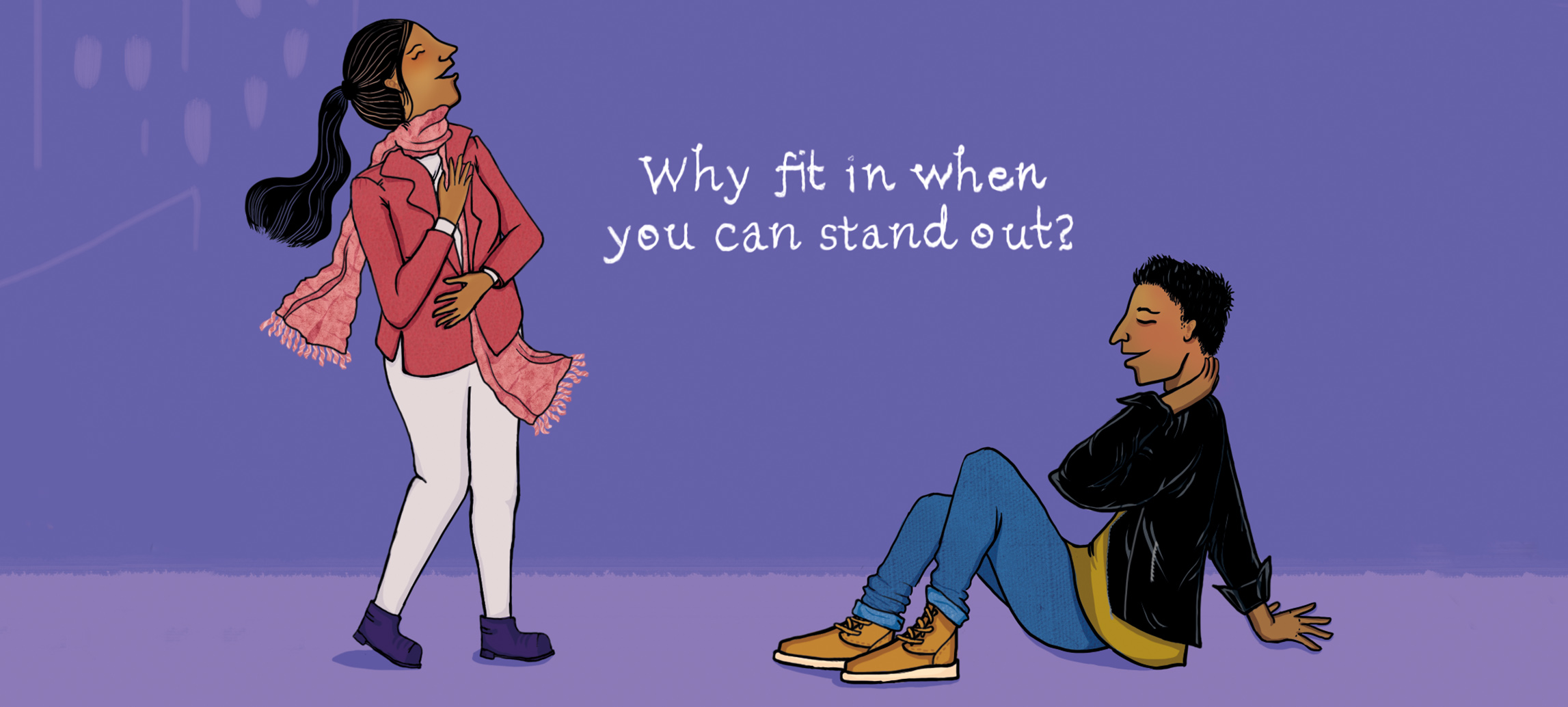
This book combines all three of my identities: Canadian, Saudi and Indian. Like Susan, I do not fit into a neat little compartment or category. But writing this book allowed me to realize that it is okay to stand out at times. To even step outside our comfort zones.

For me, writing a romance definitely was out of my comfort zone. So was allowing my characters to be teenagers and make the mistakes I made when I was that age.

The Beauty of the Moment is not perfect. It certainly isn’t the single best representation of Indian Canadian teens—and I don’t want anyone to see it that way. But I do hope that there will be teen readers who will be able to see themselves in the story and that there will be even more teens who will use the book as a window to cultures and experience different from their own.

Furthermore, I hope other writers—teens and adult—will be inspired add their tales to the repertoire of #ownvoices stories.

If the story you want to read hasn’t been told yet, the you must write it.

The world is waiting for you.


Tanaz Bhathena’s new book, The Beauty of the Moment tells the story of

The Best of Ruskin Bond’s Years with his Daddy

At age eight, Ruskin goes to live with his father in Delhi. His time in the capital is filled with books, visits to the cinema, music and walks and conversations with his father—a dream life for a curious and wildly imaginative boy, which turns tragic all too soon. 

This Father’s Day, we revisit the story in the form of quotes from the book!


Long Ago in New Delhi

“My father would come home – usually by pony-driven tonga – at five or six in the evening, and after having tea together (lots of bread and jam for me), I would help him sort and arrange his postage stamps. He was an avid stamp collector with separate albums for different countries.”

*

“There were four cinema halls showing the latest Hollywood and British films, and whenever my father came home early he would take me to the pictures. That year I must have seen at least twenty films with him!”

*

“It was impossible to escape the gnats and mosquitoes. My father fell ill with a sever attack of malaria. he had to be admitted to the military hospital, out at Palam. I was on my own.”

*

“But towards evening I began to feel lonely. I missed my father. I missed his presence at the dining table, the talks we had, the discussion about stamps, the visits to the cinema, the touch of his hand.”

*

“After nearly a fortnight my father came home from the hospital, looking very weak and tired…As winter set in, my father’s health improved, and we began visiting the bookshops and cinemas again. He took me to see the Red Fort in Old Delhi, and we wandered about the palaces and pavilions.”

*

The School in the Hills 

“I did not cry or make a fuss when my dad said goodbye. He had promised to come up and see me at the first opportunity, and I knew he would keep his word. Having spent many days on my own in the Atul Grove flat, I had developed a certain fortitude, an ability to stand alone, a dependence on myself rather than on others. I was devoted to only one person – my father. And when he wasn’t around, I got on with what I wanted to do.”

*

“A long letter came from my father – the first of many. He wrote about his plans for the future – of leaving India when the war was over, and of finding a good school for me in England.”

*

“My father came to see me towards the end of August… In spite of the mist and the rain, it was wonderful day – a day that I would never forget. It was to be the last time I saw my father – but, of course, I did not know that at the time.”

*

“Mr Young did his best. He put his hand on my shoulder and let me down past the school gate, down an avenue of young deodars.

‘Your dear father,’ he stammered. ‘Your dear father – God needed him for other things -‘

I knew what was coming, and I burst into tears. I had no one else in the world – just that one dear father – and he had been snatched away. We had been taught that God was a loving, merciful being, and here he was doing the cruelest possible thing to a small boy. Why did he need my father? What could be possible want him for? Did he want his stamp collection?”


For years, Ruskin Bond has regaled and mesmerised readers with his tales. In Looking for the Rainbow, Bond travels to his own past, recalling his favourite adventures (and misadventures) with extraordinary charm.

error: Content is protected !!