Publish with Us

Follow Penguin

Follow Penguinsters

Follow Penguin Swadesh

Prep Your Bookshelf! New Books Coming Your Way!

Summer has finally arrived and so have longer, sunny days, that beckon you to rejuvenate your senses with an all-new reading list to look forward to! Here are some new launches that will help you sail smoothly in this scorching heat.

A glance at some eagerly awaited books, which will be out soon!

Awakening Bharat Mata


The rise of the Bharatiya Janata Party (BJP) was much more than an ordinary electoral phenomenon: it brought to the fore two contrasting views of nationhood: between those who saw modern India in terms of secular republicanism and on the other hand were those who sought to blend technological modernity with the country’s Hindu inheritance.

This collection is an attempt to showcase the phenomenon of Hindu nationalism in terms of how it perceives itself. Many of the concerns that drive the Indian Right are located in the country’s nationalist culture. In trying to locate some of the ideas, attitudes and beliefs that define the Indian Right, Awakening Bharat Mata also seeks to identify the nature of Indian conservatism and identify its similarities and differences with political thought in the West.

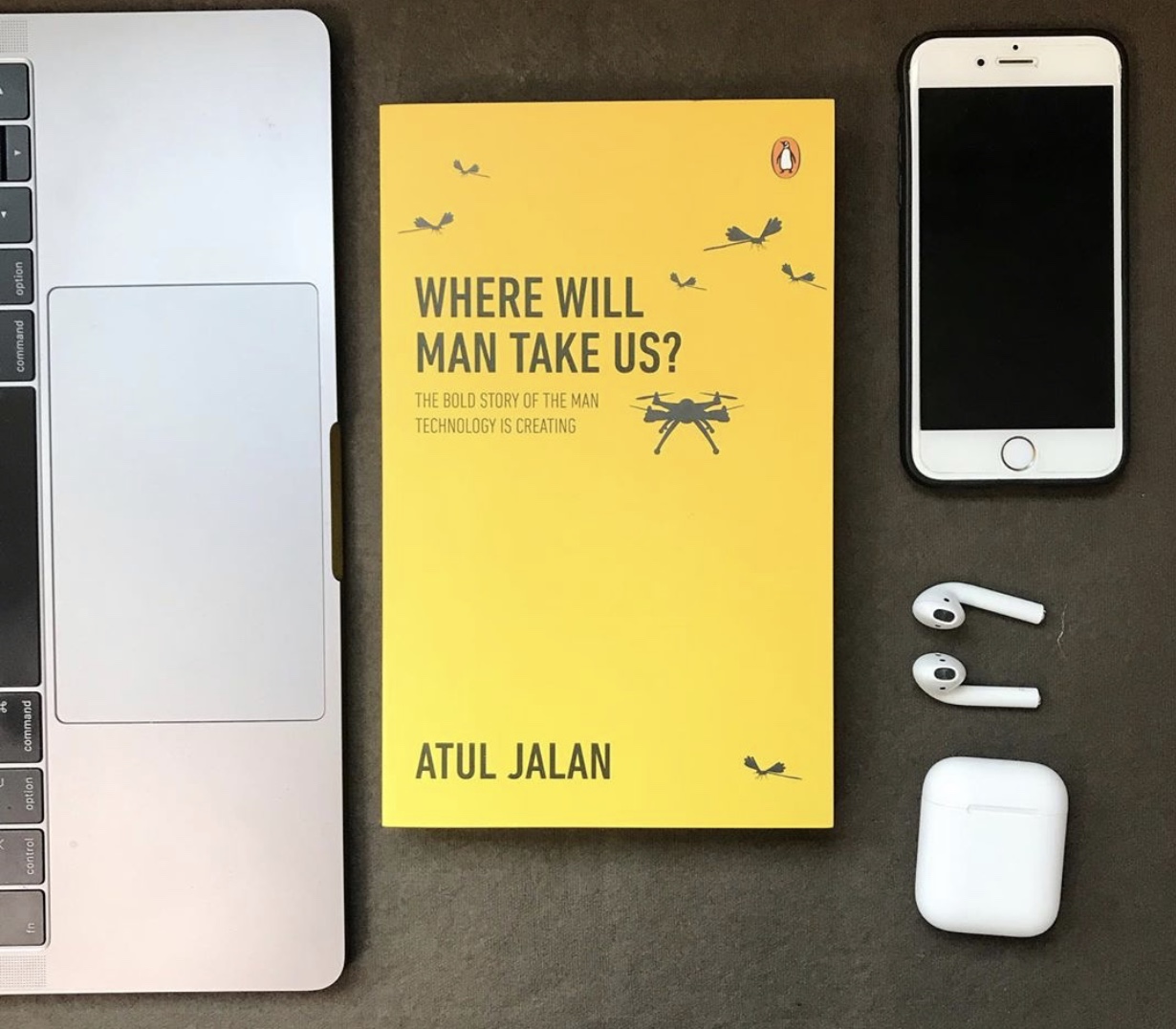
A Human’s Guide to Machine Intelligence

Through the technology embedded in almost every major tech platform and every web-enabled device, algorithms and the artificial intelligence that underlies them make a staggering number of everyday choices for us: from what products we buy to where we decide to eat, from how we consume our news to whom we date and how we find a job. We’ve even delegated life-and-death decisions to algorithms-judgments once made by doctors, pilots, and judges. In A Human’s Guide to Machine Intelligence, Kartik Hosanagar surveys the brave new world of algorithmic decision making and reveals the potentially dangerous biases to which they can give rise as they increasingly run our lives. He makes the compelling case that we need to arm ourselves with a better, deeper, more nuanced understanding of the phenomenon of algorithmic thinking.

Human’s Guide to Machine Intelligence is an entertaining and provocative look at one of the most important developments of our time and is a practical user’s guide to this first wave of practical artificial intelligence.

Delhi Darshan

Giles Tillotson provides a fascinating account of Delhi’s built heritage, from the traces of the earliest settlements at Indraprastha, through the grand legacies of the Delhi Sultans and the great Mughals to the ordered symmetries of Lutyens’ Delhi and the towering skyscrapers of Gurgaon. Filled with quirky details and original insights, as well as a section on important monuments, this is a lively and informed account of the many fascinating twists and turns in the national capital’s built history and an original reflection on the many transformations of its urban landscape.

The King of Kings

A mysterious emissary arrives in the port city of Bhrigukachchh. He has been sent by King Jaysinhdev of Patan with a secret message for Kaak, the valiant chieftain of the city. The king seeks to urgently enlist Kaak’s help in conquering the kingdom of Junagadh. However, Kaak has also received crucial summons from two others: Leeladevi, the firebrand princess whose marriage to Jaysinhdev Kaak himself facilitated; and Ranakdevi, the queen of Junagadh.

Caught in a web of conflicting loyalties, Kaak must navigate a treacherous terrain of political machinations where the slightest misstep could lead to grave consequences-where even he will not emerge unscathed.

K.M. Munshi’s magnificent conclusion to his beloved Trilogy, The King of Kings is a panoramic epic filled with adventure and intrigue, and a timeless classic with a nuanced insight into human nature and the complex links between statecraft and violence.

Cities and Canopies


Native and imported, sacred and ordinary, culinary and floral, favourites of various kings and commoners over the centuries, trees are the most visible signs of nature in cities, fundamentally shaping their identities. Trees are storehouses of the complex origins and histories of city growth, coming as they do from different parts of the world, brought in by various local and colonial rulers. From the tree planted by Sarojini Naidu at Dehradun’s clock tower to those planted by Sher Shah Suri and Jahangir on Grand Trunk Road, trees in India have served, above all, as memory keepers. They are our roots: their trunks our pillars, their bark our texture, and their branches our shade. Trees are nature’s own museums.

Drawing on extensive research, Cities and Canopies is a book about both the specific and the general aspects of these gentle life-giving creatures.

Defining India

From Amartya Sen to Aamir Khan, Raghuram Rajan, Sachin Tendulkar, His Holiness the Dalai Lama, Pranab Mukherjee, Arun Jaitley, Nirmala Sitharaman and Sania Mirza among others, in this book eminent journalist Sonia Singh opens a window to the myriad worlds of these stalwarts, who share their idea of India in freewheeling conversations. Chatty, candid and amazingly gripping these 15 interviews uncover the pivotal moments in their lives that have become defining moments in the history of the nation.

The Brotherhood in Saffron

Tracing the growth of the Rashtriya Swayamsevak Sangh (RSS) since its formation in the mid-1920s, the authors examine its ideology and training system. As the first significant book on its internal workings, this book is the prequel to RSS: A View to the Inside. It was for the first time in this book that readers received a glimpse into the inner workings of the RSS. Three decades later, the RSS is one of the most significant cultural organizations in India, making this book a powerful and important read.

The Young and the Restless

The 2014 Lok Sabha elections saw the involvement of India’s youth like never before. They were debating inside classrooms, sitting for dharnas on the street, having conversations in offices and on social media. The election in 2014 saw 150 million young voters—and the highest number of first-time voters in India.

And yet, the average age of our parliamentarians is sixty-three. Our leaders are almost four decades older than the average twenty-five-year-old.

In The Young and the Restless, Gurmehar Kaur, student activist and author of Small Acts of Freedom, follows the journeys of eight youth leaders, their aspirations for the country’s youth, their aspirations for themselves and, most importantly, their aspirations for the nation. She explores whether their politics only mimics that of the older party leaders or if they have the ideas, passion and motivation of the demographic they represent.

The Satapur Moonstone

India, 1922. A curse seems to have fallen upon the royal family of Satapur, a princely kingdom tucked away in the lush Sahyadari mountains, where both the maharaja and his teenage son have met with untimely deaths. The state is now ruled by an agent of the British Raj on behalf of Satapur’s two maharanis, the dowager queen and her daughter-in-law.

When a dispute arises between the royal ladies over the education of the young crown prince, a lawyer’s counsel is required to settle the matter. Since the maharanis live in purdah, the one person who can help is Perveen Mistry, Bombay’s only female lawyer. But Perveen arrives to find that the Satapur Palace is full of cold-blooded power play and ancient vendettas.

Too late she realizes she has walked into a trap. But whose? And how can she protect the royal children from the palace’s deadly curse?

Kidnapped

In 2016, approximately ten people were abducted every hour in India. Of them, six were children. Kidnapping is a crime where it is possibility to save the victim, which makes its treatment and results unique. Documenting ten cases of child abduction from across the country, Arita Sarkar investigates the bone-chilling details of the disappearance of each child. She delves into the trauma that the victims’ families went through, as they waited in the hope that their children would return.

This book brings to life investigations by the police, eyewitness accounts and the perspectives of the accused, recreating each case in painstaking detail. Some of the victims you read about will never come home, but their stories will stay with you.

 Queens of Crime: True Stories of Women Criminals From India

Dysfunctional families, sexual abuse, sheer greed and sometimes just a skewed moral compass. These are some of the triggers that drove the women captured in these pages to become lawbreakers.

Queens of Crime demonstrates a haunting criminal power that most people do not associate women with. The acts of depravity described in this book will jolt you to the core, ensuring you have sleepless nights for months.
Based on painstaking research, these are raw, violent and seemingly unbelievable but true rendition of India’s women criminals.

 Muhammad Bin Tughlaq

When his father dies, Prince Jauna Khan succeeds to the throne of Delhi as Muhammad bin Tughlaq. His reign will prove to be epic and bloody, but unsurpassed in splendour, innovation and defeat. A formidable strategist and remarkable scholar, the Sultan will go down in history for his brutality as well as his brilliance, unfairly remembered only as a cruel tyrant who might have been raving mad. His high-flown aspirations and grandiose ambitions may have met with crushing failure, but even so, Tughlaq was a great hero of the fourteenth century, albeit a tragic and fatally flawed one. In this fictional retelling, Anuja Chandramouli, one of India’s best mythology writers, reimagines Muhammad bin Tughlaq’s life and times in incredible detail to bring to life the man behind the monarch.

 All You Need to Know About Parenting

As parents, we all face fear and doubt about bringing up children. It helps to have a guide who can prepare and take us through every single aspect of the formative years. You can rely on All You Need to Know about Parenting to be your guide, best friend and window into this world, knowing you’re not the only one who’s on this incredibly difficult but also rewarding journey. From the day you step into the hospital and welcome your baby to the time they become toddlers, this book will help you develop your parenting instinct.

With practical, handy tips on topics such as introducing a sleep schedule, travelling with a child, weaning and advice on raising two children together, this book will see you through every sleepless night and temper tantrum.

99 Not Out!


Longevity along with wellness is a process of moving towards a higher equilibrium of physical, mental and emotional well-being to lead a long and fulfilled life, while preventing disease. This book explains the principles that govern each type of well-being: physical, nutritional and emotional-mental, and shares tips on how we can engage each principle to live longer. Finally, and critically, it explains the role stress plays in undermining the wellness equilibrium, and what we can do to heal from stress and prevent its accumulation from hampering our life’s journey.

While ageing and death are inevitable consequences of being alive, there are behavioural practices that can slow down the ageing process while keeping disease at bay. The book acknowledges that to be fully present in our lives and enjoy it without suffering, we need to be proactive and do the groundwork to prevent illnesses before they occur. It shares evidence-based practices-Ayurveda, yoga and Western medicine-that promote longevity, while keeping our bodies healthy and our minds alert.

Chanakya and the Art of War

Each and every one of us wants to become successful. We aim to fight and win in businesses, careers, relationships and, ultimately, in life. However, most of us fail to reach our full potential because of various speed breakers. Chanakya and the Art of War draws upon lessons from the great teacher, philosopher and strategist Chanakya’s masterpiece, Arthashastra, which can help us overcome those speed breakers to become innovative and influential and realize our true potential.
Author of the bestselling Inside Chanakya’s Mind, Radhakrishnan Pillai decodes the war secrets of Chanakya as relevant to our personal and professional lives. Be it an army fighting enemy soldiers across the border, the police encountering internal challenges, a politician who wants to win an election, or the common man fighting for survival, Chanakya has a plan for every situation. In the game of life, Chanakya teaches you the winning strategies by putting into practice the Art of War.

Love Knows No LoC

Zoya, a twenty-five-year-old Pakistani pop star, meets emerging Indian cricketer Kabeer while he is on tour in the country to play a match to promote Indo-Pak friendship.

One thing leads to another and soon Kabeer and Zoya are inseparable. As their love for each other grows stronger, Zoya leaves Pakistan to be with Kabeer, only to return a few months later following a misunderstanding.
In Pakistan, Zoya is gloomy and sulking, rethinking her connection with Kabeer.
In India, a confused Kabeer is still hopeful of meeting Zoya.

As their relationship is put to the test in the wake of mounting tensions between the two countries, they both stumble across a long-buried truth that will forever change the course of their lives.

Maoism: Eight Things You’d Like to Know as a Global Citizen

For decades, the West has dismissed Maoism as an outdated historical and political phenomenon. But Mao and his ideas remain central to the People’s Republic of China and the legitimacy of its Communist government.

In Maoism: A Global History, Julia Lovell re-evaluates Maoism as both a Chinese and an international force. Starting with the birth of Mao’s revolution in northwest China and concluding with its violent afterlives in South Asia and resurgence in the People’s Republic today.

Here are 8 things you learn from this landmark history of global Maoism:


The 1940s was a frightening time for those who were intelligent and liberal

“Those suspected of deviation from Mao’s line were arrested and ‘screened’…Torture and intimidation became commonplace; satire was outlawed.”

~

As entertainment was restricted by Mao, people turned to reading

“There was, quite simply, not much else to do but read and talk: there were no private radios and few film projectors. They were allowed free time on Sundays to wash in the river.”

~


Mao was harsh against intellectuals as he felt inferior to them

“Some of Mao’s closest colleagues listening to his lectures were embarrassed by his bêtises and blatant plagiarism from Chinese translations of Marxist texts. Perhaps as a result of all this, Mao long harboured a sense of inferiority towards intellectuals that no doubt shaped his harshness towards them once in power.”

~


Mao’s second wife was the last to know about her divorce

She only learned that she had been summarily divorced and replaced by Jiang Quing two years later when she heard a translation of an article in the Soviet press referring to ‘Mao and his wife’.”

~

Mao believed rebellion was justified (just not against him!)

 “Mao’s love for rebellion fed also into his passionate belief in voluntarism: that as long as you believed you could do something,you could accomplish it – regardless of material obstacles.”

~

An American journalist wrote about how the Chinese had been brainwashed to accept Communism and many in the US believed him

“…he likened Chinese mind control to ‘witchcraft’, with its incantations,trances,poisons and potions,with a strange flair of science about it all, like a devil dancer in a tuxedo,carrying his magic brew in a test tube.’ ”

~

In the 1950s any connection with China was feared in the US State Department

“‘Connection with China was so feared that even people who were probably giving the sanest,most lucid intelligence in the US about China were driven out of office,’ ”

~

Xi Jinping was the first to give access to the archives of Mao-era China to researchers

“In a move unprecedented for a Communist state, the archives of Mao-era China had opened up in the first decade of the new millennium. Both Chinese and non-Chinese researchers could access vast quantities of government documents from municipal, provincial and country archives…”


Maoism: A Global History is a landmark book that sheds light on the political legacy of Mao.


Meet the Protagonist of this Modern-day Muslim Pride and Prejudice

Ayesha at Last by Uzma Jalaluddin, is a big-hearted, captivating, modern-day Muslim Pride and Prejudice, with hijabs instead of top hats and kurtas instead of corsets. It introduces us to Ayesha, a woman who has a lot going on.

Her dreams of being a poet have been overtaken by a demanding teaching job. Her boisterous Muslim family, and numerous (interfering) aunties, are professional naggers. And her flighty young cousin, about to reject her one hundredth marriage proposal, is a constant reminder that Ayesha is still single. Ayesha might be a little lonely, but the one thing she doesn’t want is an arranged marriage. And then she meets Khalid… How could a man so conservative and judgmental (and, yes, smart and annoyingly handsome) have wormed his way into her thoughts so quickly?

Before you read the story, here are a few things to know about her:

She’s always in a hurry!

“Khalid had seen her several times since he had moved into the neighbourhood two months ago, always with her red ceramic mug, always in a hurry.”

~

She has a very demanding teaching job

They’re not my class, Ayesha thought. They need a circus trainer, not a teacher. She flushed, wiped sweaty palms on her pants and tucked the purple notebook back inside her bag. Mary stood outside, a look of pity on her face.”

~

She likes writing (bad?) poetry

“The other teachers were teaching, not hiding and writing poetry. She squinted at the page, rereading her words. Correction: writing bad poetry.”

~

She’s a little inexperienced but dreams of falling in love

“She remained silent about the other two items – exploring the world, falling in love- the first as impossible as the second. She had no money, and falling in love would be difficult when she had never even held someone’s hand before.”

~

She believes that CHAI is life

“All she wanted now was to go home, drink a cup of very strong chai and reconsider her life choices.”

~

She likes to PARTAY

“But not tonight. Tonight she was going to party like she was still an undergrad. Which meant takeout pizza and old Bollywood movies.”

~

She immigrated to Canada at young age and understands the importance of family

“ When they’d first immigrated from India to Canada, Ayesha and her family had moved into the three-bedroom townhouse with Hafsa’s family. It was a tight fit for everyone, but her uncle Sulaiman insisted on hosting them. He had immigrated as a young man almost two decades before, and he was happy to have his family join him in Canada, despite the devastating circumstances.”

~

She’s willing to make sacrifices for her best friend

“ The only thing she was looking forward to tonight was an early bedtime. But loyalty ran deep in the Shamsi clan, and Clara deserved a best friend who could stay up past eight.”


Ayesha at Last is enchanting, achingly funny and uplifting.

Who are the Characters in Tanaz Bhathena’s New Book?

Susan is the new girl and Malcolm is the bad boy. Susan hasn’t told anyone, but she wants to be an artist. Malcolm doesn’t know what he wants-until he meets her.

Love is messy and families are messier, but in spite of their burdens, Susan and Malcolm fall for each other. The ways they drift apart and come back together are the picture of being true to oneself.

Meet the characters from Tanaz Bhathena’s new book, The Beauty of the Moment


Susan

An academically brilliant young girl born in Saudi Arabia, Susan is living in Canada now. She dreads failing her upcoming driving test as failure has never been an option in her family. Her parents want her to be either a doctor or an engineer but Susan’s real desire and passion is art.

~

Malcolm

Malcolm has been through a rough patch in life when he lost his mother to cancer. As a fifteen-year-old he used to drink, smoke and do drugs, but has now come out of that phase. However, his reputation as a troublemaker still remains. He adores his younger sister, Mahtab, even though his sister teases and annoys him with her chatter.

~

Amma (Susan’s Mother)

Amma is a storyteller. She loves to share with her friends how she ran away to get married to the man who is now her husband and the father of her only child. She lives in Canada with her daughter and refuses to believe that her Happily Ever After is filled with long distance calls, fights and anger and despair.

~

Alisha

Alisha Babu is Susan’s best friend who still lives in Jeddah. She and Susan talk everyday inspite of the distance and the time difference and share every detail of their daily lives. She has strict conservative parents who want her to create a profile on a matrimonial site the year she turns eighteen.

~

Mahtab

Mahtab is Malcolm’s little sister who is very protective of her elder brother. She is the stronger one amongst the 2 siblings who held her grit even after losing their mother. She is the perfect Parsi girl with her daily prayers, her involvement in the ZCC Youth Committee and her perfect Parsi boyfriend Ronnie Mehta.


Find out more about the characters and their story in Tanaz Bhathena’s new book, The Beauty of the Moment!

Best of Bournvita Quiz for You!

The award-winning Bournvita Quiz Contest started as a radio programme in 1972, then shifted to television in the 1990s. Since 1994, it has been hosted by Asia’s best-known quizmaster, Derek O’Brien, in his inimitable style, and it holds the record for being the longest-running knowledge game show on Indian television. This definitive edition comprises a selection of the best Q & As from this iconic children’s show.

Here’s a super fun quiz carefully curated for you!

Featuring 1000 questions, carefully curated from the exhaustive twenty-year-old archives, The Bournvita Quiz Contest Collector’s Edition is dotted with heartening anecdotes, fun trivia and thoughtful essays by people who worked on this much-loved show.


How Well Do You Know ‘Stranger Things’?

A mysterious lab. A sinister scientist. A secret history. If you think you know the truth about Eleven’s mother, prepare to have your mind turned Upside Down. Are you the biggest fan of Stranger Things? Play this quiz and find out!


Get your copy of Stranger Things: Suspicious Minds today!

Games Indians Play – An Excerpt

Drawing examples from the way we behave in day-to-day situations, an all-new and revised edition of Games Indians Play tries to show how in the long run each one of us-whether businessmen, politicians, bureaucrats, or just plain us-stand to profit more if we were to assume a little self-regulation, give fairness a chance and strive to cooperate and collaborate a little more even if self-interest were to be our main driving force.

In a rare attempt to understand the Indianness of Indians-among the most intelligent people in the world, but also, to a dispassionate eye, perhaps the most baffling- V. Raghunathan uses the props of game theory and behavioural economics to provide an insight into the difficult conundrum of why we are the way we are.


Here’s an excerpt from the first chapter of the book!


NOT WHO BUT WHY

‘Who am I?’ is not a question that occupies me much. I have neither the intellectual curiosity nor the intellectual endowment to ask or answer that question. But, off and on, like when I have just returned from a visit abroad (by ‘abroad’ I mean not only countries like the USA, UK and UAE but also the Philippines, Malaysia and Indonesia or Botswana, Burkina Faso and Burundi), I find myself asking some less philosophical questions. For example:

Why is my sense of public hygiene so porcine? Why do I throw my garbage around with the gay abandon of an inebriated uncle flinging 500-rupee notes at a Punjabi wedding? Why do I spit with a free will, as if without that one right I would be a citizen of a lesser democracy? Why do I tear off a page from a library book, or write my name on the Taj Mahal? Why do I light a match to a football stadium, a city bus or any other handy public property, or toot my horn in a residential locality at 3 a.m.? Why do I leave a public toilet smelling even though I would like to find it squeaky clean as I enter it? Why don’t I contribute in any way to help maintain a beautiful public park? Why is my concern for quality in whatever I do rather Lilliputian? Why is my ambition or satisfaction threshold at the level of a centipede’s belly button? Why do I run the tap full blast while shaving even when I know of the acute water shortage in the city? Why don’t I stop or slow down my car to allow a senior citizen or a child to cross the road? Why do I routinely jump out of my seat in a mad rush for the overhead baggage even before the aircraft comes to a halt, despite the repeated entreaties of the cabin crew?

Why do I routinely disregard an airline’s announcement to board in orderly groups in accordance with seat numbers? Why does it not hurt my national pride that in international terminals abroad extra staff is appointed at gates from which flights to India are to depart? Why don’t I vote? Why don’t I stand up or retaliate against social ills? Why is it that every time the government announces a well-intended measure like a higher rate of interest for senior citizens I am not averse to borrowing my ageing parents’ names, or the old family maid’s for that matter, to save my money? Why is it that, every time the government announces no tax deduction at source for small depositors, I split my bank deposit into fifteen different accounts, with the active connivance of the bank manager? Why do I jump red lights with the alacrity of a jackrabbit leaping ahead of a buckshot? Why do I block the left lane, when my intention is to turn right? Or vice versa? Why do I overtake from the left? Why do I drive at night in the city with the high beam on? Why do I jump queues with the zest of an Olympic heptathlon gold hopeful?


Get your copy of Games Indians Play today!

5 Reasons You Can’t Run Away from Harlan Coben’s’Run Away’

You’ve lost your daughter, and she’s made it clear that she doesn’t want to be found…And then you see her – living on the edge, frightened and clearly in trouble.

You approach her, beg her to come home.

She runs.

And you do the only thing a parent can do. You follow her into a dark and dangerous world you never dreamed existed.

Here are 5 reasons to read Run Away by Harlan Coben:


This is Coben’s 31st Novel. 


Harlan Coben was the first ever author to win all three major crime awards in the US.This makes the new standalone thriller from the master of domestic suspense a must read!

~

The author was inspired to write the first line when he was in the exact same location 

“Simon sat on a bench in Central Park- in Strawberry Fields, to be more precise- and felt his heart shatter.”

~

Coben’s wife is a pediatrician, just like Ingrid, Simon’s wife, in the book. Does art imitate life in more ways? 

“…Ingrid, a wonderful mother,a caring pediatrician who dedicated her life to helping children in need, said, “I don’t want her back in this house.”

~

The book showcases how dealing with the seedier underbelly involves sticking to their unlikely schedules.

” Dave texted him:
11AM today. I never told you. I ain’t a snitch.
Then:
But bring my money at 10AM. I got yoga at 11.

~

Simon is a man on a mission, and that mission is getting his daughter back.

” ‘Is Paige hiding from us?’
‘I’m not going to tell you that.’
‘Would you tell me for ten thousand dollars?’ Simon asked.
That caused a hush.”


Run Away is a brilliant new thriller from the international bestselling author described by Dan Brown as ‘the modern master of the hook and twist’.

Know Sadhguru, the Yogi, Mystic and Visionary –A Spiritual Master With a Difference 

Yogi, mystic, and visionary, Sadhguru is a spiritual master with a difference. His book Flowers on the Path offers insights that spark you with their incisive clarity, delight you with humour, or even render you in profound stillness within. Whether the subject covers social issues and worldly affairs, individual challenges, or dimensions of the beyond, Sadhguru’s ability to delve to the root and look at life in its totality is evident.

Here we give you some interesting facts about Sadhguru:


Get your copy of Flowers On The Path today!

Books You Should Be Reading This Election Season!

With the General Elections going on in full swing, it’s needless to say that there’s no better time than now, to get updated with the current political environment, in order to vote consciously!

Here’s a list of books that will help you understand the A to Z of governance!

The Lost Decade (2008-18)

The Lost Decade (2008-18)

Before the global financial meltdown of 2008, India’s economy was thriving and its GDP growth was cruising at an impressive 8.8 per cent. The economic boom impacted a large section of Indians, even if unequally. With sustained high growth over an extended period, India could have achieved what economists call a ‘take-off’ (rapid and self-sustained GDP growth). The global financial meltdown disrupted this momentum in 2008.

In the decade that followed, each time the country’s economy came close to returning to that growth trajectory, political events knocked it off course.

In 2019, India’s GDP is growing at the rate of 7 per cent, making it the fastest-growing major economy in the world, but little on the ground suggests that Indians are actually better off. Economic discontent and insecurity are on the rise, farmers are restive and land-owning classes are demanding quotas in government jobs. The middle class is palpably disaffected, the informal economy is struggling and big businesses are no longer expanding aggressively.

India is not the star it was in 2008 and in effect, the ‘India growth story’ has devolved into ‘growth without a story’. The Lost Decade tells the story of the slide and examines the political context in which the Indian economy failed to recover lost momentum.


Didi: The Untold Mamata Banerjee

Didi

Mamata Banerjee, with her unique style of politics, was able to defeat the formidable three-decade-old Left Front Government in 2011. Exploring her struggles and achievements, Didi opens a window to the life and times of one of the most dynamic politicians of our country.

‘The general elections of 2019 can see [Mamata Banerjee] play kingmaker . . . She is the only regional leader who can claim to have that kind of clout. Jayalalithaa is no more and Nitish Kumar has changed over to the NDA. The year 2018 also witnessed the demise of another pedagogue of Dravidian politics, K. Karunanidhi. With the Congress showing signs of resurgence, and regional parties agreeing to forge a Federal Front, Mamata is more than aware that if she gets her electoral mathematics right, she could play a decisive role in the next Lok Sabha polls-maybe even stand a chance at prime ministership.’


Behenji

Behenji

“This revised edition of Behenji, first published in 2008, examines Mayawati’s record as chief minister since 2007. It pinpoints the reasons behind the BSP’s poor performance in the 2009 Lok Sabha polls, her return to the Dalit agenda prior to the 2012 assembly elections, as well as its surprising results. Also scrutinized are Mayawati’s performance as a Dalit leader and administrator, besides the rampant corruption and failure of her social engineering project during these years. Though no longer likely to become prime minister, the author sees Mayawati playing a pivotal role in UP, and, indeed, Indian politics post the 2014 elections.”


Rahul

Rahul

“Perceptions of Rahul Gandhi have ranged from the great Indian hope to that of an over- promoted dynastic scion. Everyone has an opinion, but the man himself remains opaque, his public persona confined to positions on political events, policies or programmes. Who is Rahul Gandhi—the real man—beneath the hype and the hatchet jobs? What are the ideas and influences that propel him? Who are his advisers? And how will he tackle his new responsibilities as his mother, Sonia Gandhi, makes way for him? Two young journalists, Jatin Gandhi and Veenu Sandhu, trace the evolution of the Rahul brand and explore the fascinating relationship between modernity and dynasty in this incisive political biography. ”


The Great Disappointment

The Great Disappointment

As the National Democratic Alliance (NDA) government completes its current term ahead of the General Elections 2019, it is time to evaluate its performance, specifically in terms of its management of the economy. This book is a critical assessment of five years of the brand of economics Prime Minister Narendra Modi has championed, often referred to as ‘Modinomics’.

Brought into power with the biggest political mandate in almost three decades, did the NDA government succeed in gainfully transforming India’s economic trajectory or did it squander a once-in-a-generation opportunity? The book conjectures it is the latter, and analyses why the Modi government’s stewardship of the economy is a ‘great disappointment’.


Half-Lion

Half-Lion

“When P.V. Narasimha Rao became the unlikely prime minister of India in 1991, he inherited a nation adrift, violent insurgencies, and economic crisis. Despite being unloved by his people, mistrusted by his party, and ruling under the shadow of 10 Janpath, Rao transformed the economy and ushered India into the global arena. With exclusive access to Rao’s never-before-seen personal papers and diaries, this definitive biography provides new revelations on the Indian economy, nuclear programme, foreign policy and the Babri Masjid. Tracing his early life from a small town in Telangana through his years in power, and finally, his humiliation in retirement, it never loses sight of the inner man, his difficult childhood, his corruption and love affairs, and his lingering loneliness. Meticulously researched and brutally honest, this landmark political biography is a must-read for anyone interested in knowing about the man responsible for transforming India. ”


Rajneeti: A Biography of Rajnath Singh

Rajneeti

Rajneeti mein “”neeti”” hai, to “”aneeti”” kyon?’ – Rajnath Singh

Rajnath Singh rose from a Swayamsevak in the RSS to the Chief Minister of Uttar Pradesh, and also served as a Cabinet Minister in the Vajpayee Government. Jailed during the Emergency, Singh was the president of the BJP’s youth wing, the Bharatiya Janata Yuva Morcha. A two-term President, Singh saw the elevation of Narendra Modi as the party’s PM candidate and delivered BJP’s biggest elections victory in 2014. Since then, as India’s Home Minister, he has ushered in a new phase in the country’s security where both internal and external threats have been minimised. Under Singh, the Red Menace from Naxalites and Maoists has been nearly wiped out, and the state of Jammu and Kashmir saw the first local body elections in over a decade. Read on to know more about one of the tallest politicians in present-day India. In a career spanning nearly fifty years, Rajnath Singh has not only witnessed but also played a significant role in shaping the history of this country. Drawing from a vast amount of research and in-depth interviews, Gautam Chintamani’s engaging narrative reveals for the first-time a politician who never shied away from doing the right thing.


Democracy on the Road

Democracy on the Road

On the eve of a landmark general election, Ruchir Sharma offers an unrivalled portrait of how India and its democracy work, drawn from his two decades on the road chasing election campaigns across every major state, travelling the equivalent of a lap around the earth. Democracy on the Road takes readers on a rollicking ride with Ruchir and his merry band of fellow writers as they talk to farmers, shopkeepers and CEOs from Rajasthan to Tamil Nadu, and interview leaders from Narendra Modi to Rahul Gandhi.

No book has traced the arc of modern India by taking readers so close to the action. Offering an intimate view inside the lives and minds of India’s political giants and its people, Sharma explains how the complex forces of family, caste and community, economics and development, money and corruption, Bollywood and Godmen, have conspired to elect and topple Indian leaders since Indira Gandhi. The ultimately encouraging message of Ruchir’s travels is that, while democracy is retreating in many parts of the world, it is thriving in India.


The Verdict

The Verdict

What are the key factors that win or lose elections in India? What does, or does not, make India’s democracy tick? Is this the end of anti-incumbency? Are opinion polls and exit polls reliable? How pervasive is the ‘fear factor’? Does the Indian woman’s vote matter? Does the selection of candidates impact results? Are elections becoming more democratic or less so? Can electronic voting machines (EVMs) be fiddled with? Can Indian elections be called ‘a jugaad system’?

Published on the eve of India’s next general elections, The Verdict uses rigorous psephology, original research and as-yet-undisclosed facts to talk about the entire span of India’s electoral history from the first elections in 1952. Crucially, for 2019, it provides pointers to look out for, to see if the incumbent government will win or lose.
Written by Prannoy Roy, renowned for his knack of demystifying electoral politics, and Dorab R. Sopariwala, this book is compulsory reading for anyone interested in politics and elections in India.


How to Win an Indian Election

How to Win an Indian Election

What role do political consultants play in election campaigns? How are political parties using technological tools such as data analytics, surveys and alternative media to construct effective, micro-targeted campaigns? How does the use of money impact election results? What aids in the en masse dissemination of divisive propaganda and fake news? What does it take to win an election in India today? What is the future of politics in the country?
Written by a former election campaign consultant for a major political party, How to Win an Indian Election takes readers into the forbidden world of election war-rooms and gives them a glimpse of how strategy is formulated, what works with voters on the ground and what doesn’t. Based on research, interviews and the author’s own experiences, this book is invaluable for its insight into the inner workings of politics, political parties and what really makes for a winning election campaign.

error: Content is protected !!