Publish with Us

Follow Penguin

Follow Penguinsters

Follow Penguin Swadesh

A Gujarat Here, A Gujarat Here – an excerpt about the author

Part novel, part memoir, part feminist anthem, A Gujarat Here, A Gujarat There by Krishna Sobti is not only a powerful tale of Partition loss and dislocation but also charts the odyssey of a spirited young woman determined to build a new identity for herself on her own terms.

Translated from Gujarat Pakistan Se, Gujarat Hindustan Tak by Daisy Rockwell, the introduction talks about the Sobti MagicHere is an excerpt from there!


I. Sobti Magic

Krishna Sobti is a magical being. Everyone knows this. From her experimental prose to her legendary parties to her unique sense of style to her male alter ego, the writer ‘Hashmat’, everything about her is deeply considered and infused with her special warmth. I myself only had the opportunity to meet her in her nineties, but I consider myself much improved as a result. Perched on one of her sofas, strategizing when I might start asking her the meanings of particular words I wasn’t able to find in the dictionary that no one else seemed to know, stuffing myself with the never-ending delicacies emerging from the kitchen, worrying that I would not be up to the task of translating her novel, I suddenly started to understand the answers to my questions without ever asking some of them at all. To sit in her presence is to open the Sobti lexicon and immerse oneself in Sobti logic. Complex turns of phrase, confusing references, it all made sense once I was there. Translating Krishna Sobti and learning from her made me understand how to use my instincts and creativity to translate things that seemed untranslatable before, and it also taught me how read Sobti style.

II. Krishna Sobti Is Not Here to Tell You Stories

Yes, Krishna Sobti tells stories—interesting ones too—in her writing, and in conversation, but she has an equal if not greater interest in language and style. Her preferred forms have been the novella and the essay, and this is perhaps because she has sought to boil sentences, phrases and entire narratives into the smallest number of words possible. She claims she has never been a poet, but her prose resembles poetry more than anything else. She will often use the fewest words possible in a sentence, sometimes just one, if she can find the perfect fit. The words are carefully considered, weighed out and often very difficult to define or translate into English with just one equivalent word. Sobti’s use of language is experimental and central to her writing, and unlike many women authors, she is not terribly bothered if you don’t understand what she means, or if you cannot entirely follow the story. She is not writing to help you understand, she’s writing to reveal and learn what language can do.

In the section of A Gujarat Here, A Gujarat There that most resembles poetry, Sobti talks of Partition in a stream of words and phrases, interspersing her own family’s experiences with observations about refugees and migrants. In these particular lines, so spare and elegant, Sobti enters the minds of the mobs, the migrants, those fleeing and those chasing, those attacking and those under attack:

Who’s the sinner?
Who’s the criminal?
Who is witness to the crime?
One dagger-plunging hand. Another, match-striking,
lighting an oil-soaked rag.
One stands far off, gathering a crowd.
A clutch of terrified men and women holding their breath in
a jungle of half-dead, frightened voices: They just came—we
just went—we just died—don’t make a sound. Let them pass by.
Piles upon piles of corpses, mounting ever higher.
A wake of vultures roots about.
Rings on hands grown cold; necklaces encircle throats.

Where other authors have spilled buckets of ink writing histories and novels about the Partition, Sobti attempts to use the smallest amount of ink possible, to cut the story of migrancy and violence down to the bone. Even Manto rarely managed so few words in his Siyah Hashiye (Black Borders), his ultra-short stories of the Partition.


To know more about the book, click here!

Eight Steps to Hacking your Corporation with Jugaad 3.0

Dr. Simone Ahuja – consultant, author, speaker and entrepreneur, is the CEO of Blood Orange where her mission is to empower innovators in large organizations and mobilize them with entrepreneurial tools for a single purpose: to transform the corporate culture from the inside out using design and lean principles. In Jugaad 3.0 Hacking the Corporation, she shifts the focus from ‘entrepreneurs’ to ‘intrapreneurs’, the incredible ‘corporate hackers’ who tap into and around the bureaucratic machinery surrounding them to advance their projects. Or we could call them ‘constructive disrupters’, since today’s intrapreneurs often seriously challenge existing business from product offering to business model, yet they do it actively from the inside and, by doing this, help keep the enterprise viable.

Based on hundreds of interviews, as well as the author’s consulting work within companies, Jugaad 3.0 Hacking the Corporation identifies the competencies these corporate hackers possess. It also offers a spectrum of carefully crafted archetypes to help people see themselves in this trend and allow organizations identify the innovators in their midst.

Read on to find out how to ‘hack’ your corporation from within itself with these eight essential principles

Keep It Frugal

Intrapreneurs actively solve problems and seek opportunities, relying on pre-existing elements and recombining resources for novel uses.

What organizations need now are the right tools and a ready mindset to innovate from within. The Jugaad 3.0 agenda items that follow directly support my main message: deep-six the deep pockets. Simple tools, small budgets and human ingenuity can deliver impressive results, including maximum agility with fewer ‘business as usual’ strings attached. Knowing that nothing innovative

is ever truly linear (or one size fits all), consider these to be á la carte strategies for keeping it frugal:

  1. Remain Asset-Based
  2. Keep It Simple
  3. Encourage Frugal Experiments
  4. Focus on Teams
  5. Rethink Incentives

~

Make It Permissionless

Lets leaders provide support without crushing the creativity and potential of upstart intrapreneurs. Companies need a culture of permissionless innovation a innovation isn’t something that you should be asking approval for.

Making intrapreneurship sustainable requires creating a permission-lite environment for intrapreneurs. It’s autonomy with guardrails. The goal is to establish a network of support rather than a system of tight control by leaders. This ‘support, don’t control’ mantra reinforces frugal funding and has two additional benefits. First, it is an easy fit for intrapreneurs, who want a safe space to pursue new ideas and side projects. Second, it doesn’t oblige large companies and their leaders to bend over backward to manage and measure early-stage projects. Here are the plays that put permissionless to work:

  1. Support, Don’t Control
  2. Say ‘Yes’ More Often
  3. Add Light Structure

 ~

Let Customers Lead

Even though being ‘customer-led’ might sound obvious, it isn’t put into practice by many would-be innovators. Rather than sitting in an ivory tower and thinking about what the customer needs, ask the customer what they want. Look at how the customer is using your product.

Organizations that allow intrapreneurs to take their cues from customers create an instant advantageand avoid many of the barriers that derail internal innovation. These are the plays that I have seen work best in industries and environments across the board:

  1. Create Leading-Edge Customer Focus
  2. Hack Better Access to Customers
  3. Turn Customers into Innovation Partners
  4. Make Intrapreneurship a Sales Priority

~

Keep It Fluid

Since fluid team formation does not happen naturally in most organizations, companies need light structures to enable new levels of information sharing, networking and mobility across their talent pools.

Fluidity delivers more control and autonomy to individual intrapreneurs and small groups, and less to the management layers above them. This tricky little paradigm switch packs a positive punch that promises to increase innovation if managed properly. The trouble is that the type of organizational structure that enables fluidity is less rigid than we are accustomed to today. Just as everything digital tears down existing walls, we need to eliminate artificial, outdated boundaries and allow intrapreneurs some latitude to selfdirect, self-manage and self-organize. Here’s a look at how

to make it work:

  1. Create a Team of Teams
  2. Make Management Fluid
  3. Support Agility Through Structure

 ~

Maximize Return on Intelligence

‘Return on intelligence’ is a reformulation of ROI that puts the short term emphasis on intellectual rather than financial gains.

Intrapreneurs rely on constant learning in an open, agile environment where the culture can balance structure with autonomy and metrics with flexibility as part of these J3.0 principles:

  1. When in Doubt, Test It Out
  2. Make Learning a Priority
  3. Measure Return on Intelligence
  4. Make Failure Feasible

 ~

Create the Commons

The corporation should create ‘the commons’, or a space where information is openly shared, for the whole development community,  involving many more types of people and thinking.


The idea that intrapreneurship should be open and inclusive should not surprise anyone. Still, we are left with the question of how to achieve that goal. My approach throughout this book has been to hold up principles to help you create your own J3.0 playbook. That approach reflects the realities that (a) best practices are forever changing, and (b) the ‘best’ answers will, in any case, never come down to cookie-cutter solutions but will be customized to particular settings. With that in mind, start your playbook with these field-tested, flexible ideas for inclusive intrapreneurship:

  1. Plan for Full Inclusion
  2. Make It Safe to Innovate
  3. Use Technology in Appropriate Measure
  4. Train Future Intrapreneurs
  5. Create Porous Networks

~

Engage Passion and Purpose

Passion is what motivates intrapreneurs to keep going when the work seems thankless or when seemingly insurmountable challenges arise.


Recognizing the passion and purpose parts of intrapreneurship allows companies to think more broadly about how to match their people with the problems they care most about. For employees, having the opportunity to work on passion projects creates greater engagement. For companies, it makes the most of creativity and ingenuity. Here’s how to put this win-win dynamic to work in a Jugaad 3.0 way:

  1. Make Purpose Programmatic
  2. Leverage Passion That Bubbles Up
  3. Push Passion Viral

~

Add Discipline to Disruption

There should be a full spectrum of innovation options for intrapreneurs in any organization, from eye-popping, potentially disruptive innovations to clever little hacks on existing solutions. They are all valid, and companies can create disciplined systems by thinking through three streams of innovation.

 The J3.0 approach requires structure and discipline in the right measure in order to extract the most value from each stream of innovation and install metrics that guide and measure success

without losing the learning or limiting the idea. The prescriptive plays look like this:

  1. Develop Multiple Streams of Innovation
  2. Create a Culture That Enables Hybridity
  3. Manage Disruption with Discipline

Jugaad 3.0: Hacking the Corporation will prove that every organization’s best chance, to survive and become better than ever, lies within itself.

Books to Read this Navroz!

In celebration of the Parsi New Year, we put some of our books together that will be perfect for you to read this Navroz, from authors Tanaz Bhathena, Sujata Massey, Bapsi Sidhwa, Rohinton Mistry and Roshen Dalal!

The Beauty of the Moment by Tanaz Bhathena

Love is messy and families are messier, but in spite of their burdens, Susan and Malcolm fall for each other. The ways they drift apart and come back together are the picture of being true to oneself.


A Girl Like That by Tanaz Bhathena

This beautifully written debut novel from Tanaz Bhathena reveals a rich and wonderful new world to readers; tackles complicated issues of race, identity, class and religion; and paints a portrait of teenage ambition, angst and alienation that feels both inventive and universal.


A Murder on Malabar Hill by Sujata Massey

A Murder on Malabar Hill is set against the backdrop of colonial Bombay and follows the gripping tale of an incomparable sleuth, a female lawyer, Perveen Mistry.


The Satapur Moonstone by Sujata Massey

When a dispute arises between the royal ladies over the education of the young crown prince, a lawyer’s counsel is required to settle the matter. Since the maharanis live in purdah, the one person who can help is Perveen Mistry, Bombay’s only female lawyer.


The Crow Eaters by Bapsi Sidhwa

Faredoon (Freddie) Junglewalla is either the jewel of the Parsi community or a murdering scoundrel. In this wickedly comic novel, the celebrated author of Ice-Candy Man takes us into the heart of the Parsi community, portraying its varied customs and traits with contagious humor.


Family Matters by Rohinton Mistry

When Nariman Vakeel’s condition worsens he is forced to take up residence with Roxana, his own daughter, her husband, Yezad, and their two young sons. The effect of the new responsibility on Yezad, who is already besieged by financial worries, pushes him into a scheme of deception. This sets in motion a series of events – a great unravelling and a revelation of the family’s love-torn past, that leads to the narrative’s final outcome.


Tales from Firozsha Baag by Rohinton Mistry

Here is a wonderful introduction to the residents of Firozsha Baag, an apartment complex in Bombay. We enter the daily routine and rhythm of their lives, and by the time we reach the final story we are as familiar with the people of Firozsha Baag as we are with our own neighbours. The crowded, throbbing life of India is brilliantly captured in this series of stories.


The Religions of India: A Concise Guide to Nine Major Faiths by Roshen Dalal

In India, the birthplace of some of the world’s major faiths and home to many more, religion is a way of life, existing as much in temples, mosques, churches and wayside shrines as it does in social laws, cultural practices and the political arena.

The Religions of India contains, in a single volume, a comprehensive account of every major faith practised in the country today.


Why Taxes? Understanding the Role of Government in an Economy – an excerpt

On 1 July 2017, Goods and Services Tax (GST) became a reality. The government hailed it as the biggest tax reform of independent India which would herald a new freedom for the nation and unify it with ‘One Nation One Tax’.

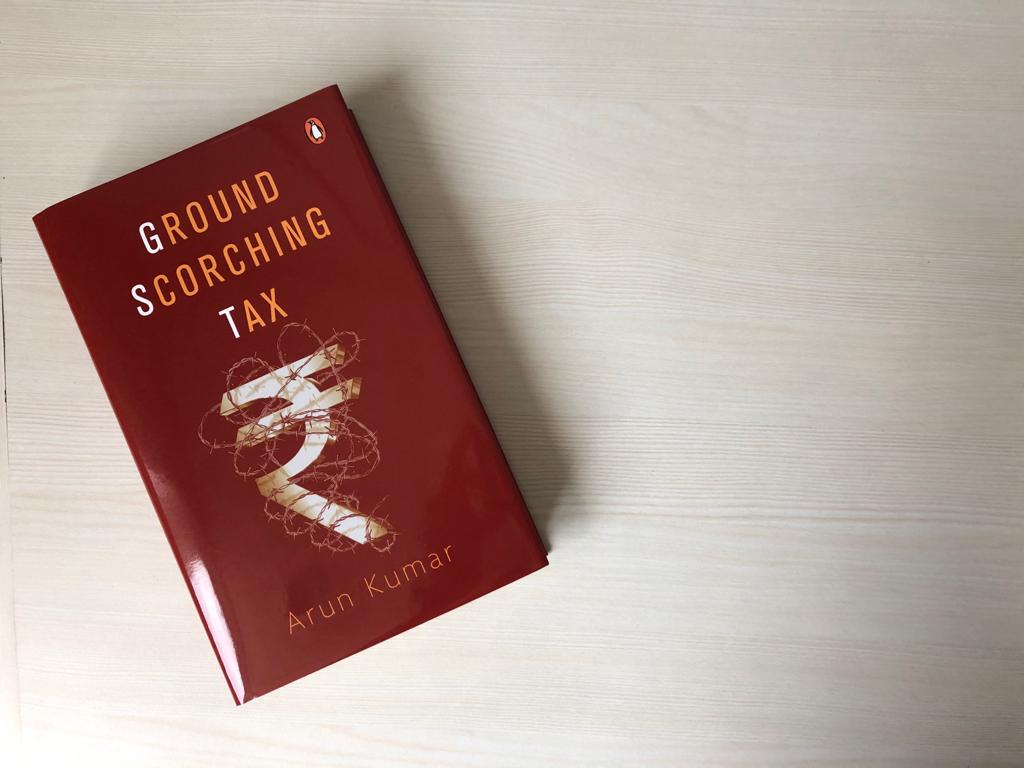
But why taxes? Here is an excerpt from the first chapter of Arun Kumar’s new book, Ground Scorching Tax to help understand the role of the Government in an economy and elaborates on the kinds of taxes.


GST is an indirect tax that is levied on goods and services. It is supposed to cover the entire chain of supply from raw material to the final stage of sale. By themselves, indirect taxes result in an increase in the prices of the goods and services on which they are imposed. So, why levy such a tax? And, what is the importance of putting a tax on goods and services?

In modern day economies, governments have to perform a variety of tasks which the markets are unable to perform efficiently. As societies have become more complex, the markets have not been able to perform many of the essential tasks and the public sector has been given a larger and larger role in the economy in most
countries. A key task in a poor country like India has been promoting development to overcome poverty and deprivation.

For a majority of the poor, the market does not provide a solution in crucial areas like education, health, drinking water, food, sewage and energy. So, the government has to provide these services in addition to what the individual cannot provide like defence, foreign policy, security and functioning of money. All these activities need to be financed and taxes are a source of revenue. So, people pay for the services that the government provides. In effect, services become available collectively rather than each one creating services on their own.

Kinds of Taxes: Direct and Indirect

GST has run into a plethora of problems from day one. But, there were difficulties with the earlier forms of taxes which were replaced by GST and that is why the need was felt for introducing the new tax. So, one could ask, why not do away with indirect taxes altogether. But then resources for running the government would be short. Are there other taxes that could substitute for indirect taxes? To understand whether one should replace one kind of taxes by another or not, it is necessary to understand the nature of the different kinds of taxes.

Broadly speaking there are two kinds of taxes—direct and indirect. Both fall on the income of the citizens but there is a difference as to how they work. As the name suggests, direct taxes fall on the income, the moment an income is earned. That is why they are called direct taxes. The indirect taxes fall on incomes when the goods and services are purchased/used.

Differences between Direct and Indirect Taxes

The implication is that direct taxes cannot be postponed while the indirect taxes can be postponed by not purchasing goods and services. As soon as an income is earned a direct tax becomes due. Due to this difference which at first glance appears to be small or inconsequential, the macroeconomic impact of these two kinds of
taxes on the economy is different.1 So, one is not equivalent to the other. Thus, one cannot replace direct taxes by indirect taxes without some (adverse) macroeconomic consequences.

Why do these differences arise when the tax is paid either way by the citizen? In the case of direct taxes, cost of production is not directly affected. It is paid on the income after costs are subtracted from the revenue earned. To explain better, let us consider this in greater detail. In the process of production, economic entities (individual and firms) earn an income—it can be profit or wage and salary. Out of profit, interest, rent and dividend are paid.

Profits are calculated as revenue minus costs, that is, revenue of the firm from the sales less the cost of production. When a tax (corporation tax) is levied on this business income, it does not change the cost of production. It only affects the firm’s income in hand (called disposable income). Similarly, when a worker gets a wage or a manager the salary, an income tax on this income does not impact the production cost. The employer does not adjust the wage or salary when the income tax changes (except in rare cases).

An indirect tax like excise duty or sales tax is levied on the value of the good or the service being sold and that raises the price of the good or the service. No wonder each time an excise duty is raised, the price of the good on which it is levied, rises. This leads to inflation and a fall in demand. All else remaining the same, indirect taxes are ‘stagflationary’, that is output stagnates while prices rise. No wonder, when the government wishes to stimulate the demand for a good, it cuts excise duty or sales tax on that item. During the global financial crisis starting in 2007, the Government of India cut excise duties.

In brief, indirect taxes add to the cost of a good or a service while direct taxes do not do so. Thus the former impacts production while the latter does not do so.


In this book, well-known economist Arun Kumar explains the reality behind GST. Known for not pulling any punches, the author explains why GST is a double-edged sword for the common man, why it will increase inequality across sectors and regions, why it will hurt small businesses-everything the government does not want you to know.

6 Things You Didn’t Know About Krishna Sobti

A Gujarat Here, A Gujarat There by Krishna Sobti is a tale of young Krishna and her journey of making an identity for herself in the state of Delhi in 1947. Krishna applies for a position at a preschool in the princely state of Sirohi, which is beginning to transition into the republic of India. She boldly faces various challenges that come her way regarding her refugee status and sexist backlashes by the man in-charge of hiring at the school.

An opportunity to serve as a governess to the child maharaja Tej Singh gives her the perfect chance to make Sirohi her new home. However, it remains to be seen how long this ideal job opportunity lasts. Immerse yourself into this exceptional tale of Partition loss and dislocation to know more.

Here we give you 6 interesting facts about the author:


Krishna Sobti was born in Gujrat which is now in Pakistan’s Punjab province.

~

Krishna Sobti spent her childhood in Delhi and Shimla.

~

Krishna Sobti won the Sahitya Akademi award in the year 1980 for her renowned book Zindaginama.

~

In the year 1996, Krishna Sobti was awarded the highest award of the Akademi, the Sahitya Akademi Fellowship.

~

Krishna Sobti had also written a few of her works under the name Hashmat.

~

Krishna Sobti is considered to be the grande dame of Hindi Literature.


Part novel, part memoir, part feminist anthem, A Gujarat Here, A Gujarat There is not only a powerful tale of Partition loss and dislocation but also charts the odyssey of a spirited young woman determined to build a new identity for herself on her own terms.


Sophie Kinsella on her New Book, Writing, and More!

Fixie, the protagonist in Sophie Kinsella’s new standalone, I Owe You One, can’t help herself from fixing things…she just has to put things right. It’s how she got her nickname, after all. After saving a stranger’s laptop from certain disaster, he scribbles her an IOU, as a thank you. Soon the pair are caught up in a series of IOUs.

Here is an interview with Sophie, as we talk to her about her book, writing and more!


The Pigeon asks…

What research did you do for the book?

I got inspiration for Farr’s store from visiting a wonderful shop in Dorset called Harts of Stur. Of course it’s nothing like Farr’s as far as organisation goes – it’s an amazingly thriving shop. But because it’s family owned, it showed me the potential for a family shop as a setting.


How important is setting for your writing?

When I start to write a book, I know that whatever setting I choose is a world I will be spending a lot of time in – so it’s vital! For me, setting is often a way to enhance the plot. I love the irony in I Owe You One that the family shop is all about creating a harmonious, beautiful home – but the family running it is far from harmonious!


How much of your writing is built on personal experiences, be they yours or of those you know?

I often use ideas from real life but build on them. For example, when I was planning I Owe You One I was sitting in a coffee shop, thinking ‘How should my protagonists meet?’ when an American man asked me to mind his laptop and I thought ‘That’s how!’ But I couldn’t leave it there – I had to create a far more dramatic fictional scene. I like my characters to go through quite extreme journeys and those are all from my head!


Name the first book first that forever changed your outlook on life?

The Hitchhiker’s Guide to the Galaxy was the first book that made me really laugh out loud. I couldn’t believe that so much comedy could come out of one book and it was definitely inspirational.


Do you live where you write?

I write where I live. Though my desk is not in the main part of the house, because if it was I would never write a single word!


What is your favourite book of the year and where were you when you read it?

I loved The Overstory by Richard Powers. I read it at home, where I can see lots of trees, and I became mildly obsessed with the amazing qualities of trees.


What is your go-to comfort food?

Marmite on toast. Or a cocktail. Or both.


What is the best music to write to?

Loud energetic music. I have a mini playlist for each book as I’m writing it – often with the same song on a perpetual loop.


Describe your writing day.

I plan for ages. Weeks, or months. During that time, I walk, think, sit in coffee shops and scribble notes. Then, when I get on to the actual writing, I aim for 1,000 words a day. If you do that for enough days, you’ll end up with a book. At least, that’s the theory…


Name your Sunday afternoon film (just one).

The Sound of Music.


What is your aim as a writer? How does a book do that? 

I aim to entertain – to make people laugh and cry and whip over the pages. If the story is good, the plot works and the characters are relatable, I hope that will happen.


What is the worst job you’ve done? 

I’m not sure about the worst job – but I can think of some things I was really bad at. I worked as a journalist at Pensions World magazine and I was like my Shopaholic heroine Becky Bloomwood: I would sit at financial press conferences, nodding my head and scribbling notes but not really understanding a word.


How do you unwind? 

I like to exercise, play tennis, play the piano and dance.


What keeps you up at night? 

Box sets.


The irresistible new standalone from Sophie Kinsella is a story of love, empowerment and an IOU that changes everything . . .get your copy here!

Know All About The New Silk Road in ‘Belt And Road’

China’s Belt and Road strategy is acknowledged to be the most ambitious geopolitical initiative of the age. Covering almost seventy countries by land and sea, it will affect every element of global society from shipping to agriculture, digital economy to tourism and politics to culture. Most importantly, it symbolizes a new phase in China’s ambitions as a superpower: to remake the world economy and crown Beijing as the new centre of capitalism and globalization.

Bruno Macaes in his book, Belt and Road traces this extraordinary initiative’s history, highlighting its achievements to date and its staggering complexity.

Here are some unique facts about the Silk Road:


Bruno Macaes asks whether Belt and Road is about more than power projection and profit. Will it herald a new set of universal political values, to rival those of the West? Is it, in fact, the story of the century?


Eight Things you need to know about the Delusional Politics of Brexit and its Aftermath

Hardeep Singh  Puri’s forty years of professional life as a senior diplomat, India’s permanent representative to the UN and Union Minister of State for Housing and Urban Affairs in New Delhi has given him a unique vantage point to see the fault-lines in political narratives and the ‘delusional’ idiosyncrasies of politicians.

Many democratically elected leaders of the twenty-first century have displayed streaks of recklessness, megalomania, bizarre self-obsession and political views that are difficult to characterize.

Delusional Politics studies the actions of these contemporary political leaders with the example of one of the most momentous events our times-Brexit-exposing the self-serving, poorly calculated behavior at the heart of significant governing decisions.

It traces the rise of the right-wing anti-immigration paranioa in Britain, pitted against a Prime Minister who despite his intentions failed as a leader of the Remain campaign. Puri describes Brexit as three supreme examples of delusional thinking and politics. One, calling a referendum that was not required. Two, allowing the referendum’s outcome to be shaped by the uncertainties of democratic politics without due diligence, hard work and safeguards being put in place to ensure the nation’s future. And finally, calling an election when it was not due and when the government had a comfortable majority.

Read on to find out more about the delusional politics of Brexit

 A poorly calculated and casually reached decision to decide the future of a nation and its place in the world

As the story goes, Cameron had been eating pizza at O’Hare while waiting for a commercial flight home following a NATO summit. He was with his Foreign Secretary William Hague and Chief of Staff Ed Llewellyn. The conversation that ultimately led to the unravelling of the United Kingdom apparently went something like this: We have a lot of Euro-sceptics in the party. Let us smoke them out. Let us have a referendum.

 ~

Dissent within Cameron’s own party, the Conservatives, reflected poorly on the party’s leadership

Members of Cameron’s party had essentially backed the agenda of the UK Independence Party (UKIP). UKIP had, over time, reframed its identity to become the party of the ‘leftbehinds’ of the country’s economic development. Their rallying cry became the face of the growing anti-immigrant sentiment that would pull the United Kingdom out of the EU. The rebel Tories supported Brexit for economic reasons, whereas UKIP supported it, at least in its messaging, for cultural reasons, calling for the UK’s identity to be reclaimed.

 ~

 Parties on the right capitalized on the blue-collar angst and anti-immigrant sentiments.

Right-wing populists maintained their economic agenda behind the scenes, while prioritizing—publicly, at least—anti-immigration. The UK Independence Party (UKIP) spearheaded this movement, with its primarily less-educated, blue-collar, white male base at its tail. Founded in 1993 during a transformational point in the UK, UKIP called its base the ‘left-behinds’ of the country’s economic growth and pledged itself as the people’s voice against the establishment that coddled the immigrants. UKIP’s base expanded in waves, most notably in the mid- 2000s, when some Eastern European countries joined the EU, bringing with them another influx of immigrants.

  ~

David Cameron failed to galvanize his youth voter base the way the pro-Brexiters captured the imagination of their own

In the 2015 referendum, the votes of Cameron’s ‘new generation’ were pivotal. Although the young people who did turn up at the booths voted in Cameron’s favour—to remain in the EU—their overall turnout was insufficient. As the Liberal Democratic leader Tim Farron put it, ‘Young people voted to remain by a considerable margin, but were outvoted.’ UKIP and the pro-Brexiters had successfully secured the older, less educated, working class votes.

  ~

David Cameron’s incredibly privileged and well-connected background made it difficult for him to combat populist sentiments

But it is undeniable that Cameron’s privileged upbringing, his confines to the upper legions of society, and his rapid-fire ascension up the political ladder detached him from the people he so earnestly desired to serve. Regardless of his intentions, Cameron was a perfectly unfit contender to combat the populist insurgency of the right-wing Eurosceptics.

  ~

The peculiar politics and character of Nigel Farage

On the other side of the battle, the Brexit campaign was led by Nigel Farage, a self-professed ‘middle-class boy from Kent’ with an arsonist tongue characteristic of a populist leader. He correctly felt the mood in parts of the country and rode the anti-immigrant tide. He tethered the resurrection of the British identity—a past-time homogeneous white identity that so many of the Leave voters yearned to return to—to the referendum. Privileged though his background is,  Farage convincingly painted himself as one of the ‘left-behinds’ who his party fought for. He fostered a connection with his base that in many ways Cameron failed to do with his. Farage’s brazen and open discontent with the establishment resonated with far too many people.

  ~

In calling the general election in April 2017, Theresa May made a decision that would turn out to be superfluously tumultuous path as Cameron’s.

On 18 April 2017, in an attempt to gain more power for the Tories in preparation for the Brexit negotiations, May called for general election, which was not due until 2020.60 Polls at the time had been showing promising figures for the Conservative Party’s success, and May thought she could turn these numbers into parliamentary seats. The election, she argued, was ‘necessary to secure the strong and stable leadership the country needs to see (it) through “Brexit” and beyond’. The elections took place less than two months after May’s announcement, on 8 June 2017. The Conservatives lost their parliamentary majority, and Labour gained seats. After the embarrassing results, May then resorted to forming a new government with the Democratic Unionist Party in order to secure a governing majority.

 ~

 The emerging consequences of a referendum that was won on a ‘campaign of lies’

As Inter Press Service founder Roberto Savio succinctly put it, ‘Only now the British are realizing that they voted for Brexit, on the basis of a campaign of lies. But nobody has taken on Johnson or Farage publicly, the leaders of Brexit, after Great Britain accepted to pay, as one of the many costs of divorce, at least 45 billion Euro, instead of saving 20 billion Euro, as claimed by the “Brexiters”. And there are only a few analysis on why political behaviour is more and more a sheer calculation, without any concern for truth or the good of the country.’


Delusional Politics brings to light the fact that at the heart of delusional politics is perhaps the delusional politician.

Tips to Not Lose your Mind over your Weight

There is no such thing as going ‘on’ or ‘off’ your diet. Eating correctly has to be a lifelong commitment, and the diet should be a reflection of this. This automatically rules out any extreme diet or crash diets which require you to go ‘off’ them.

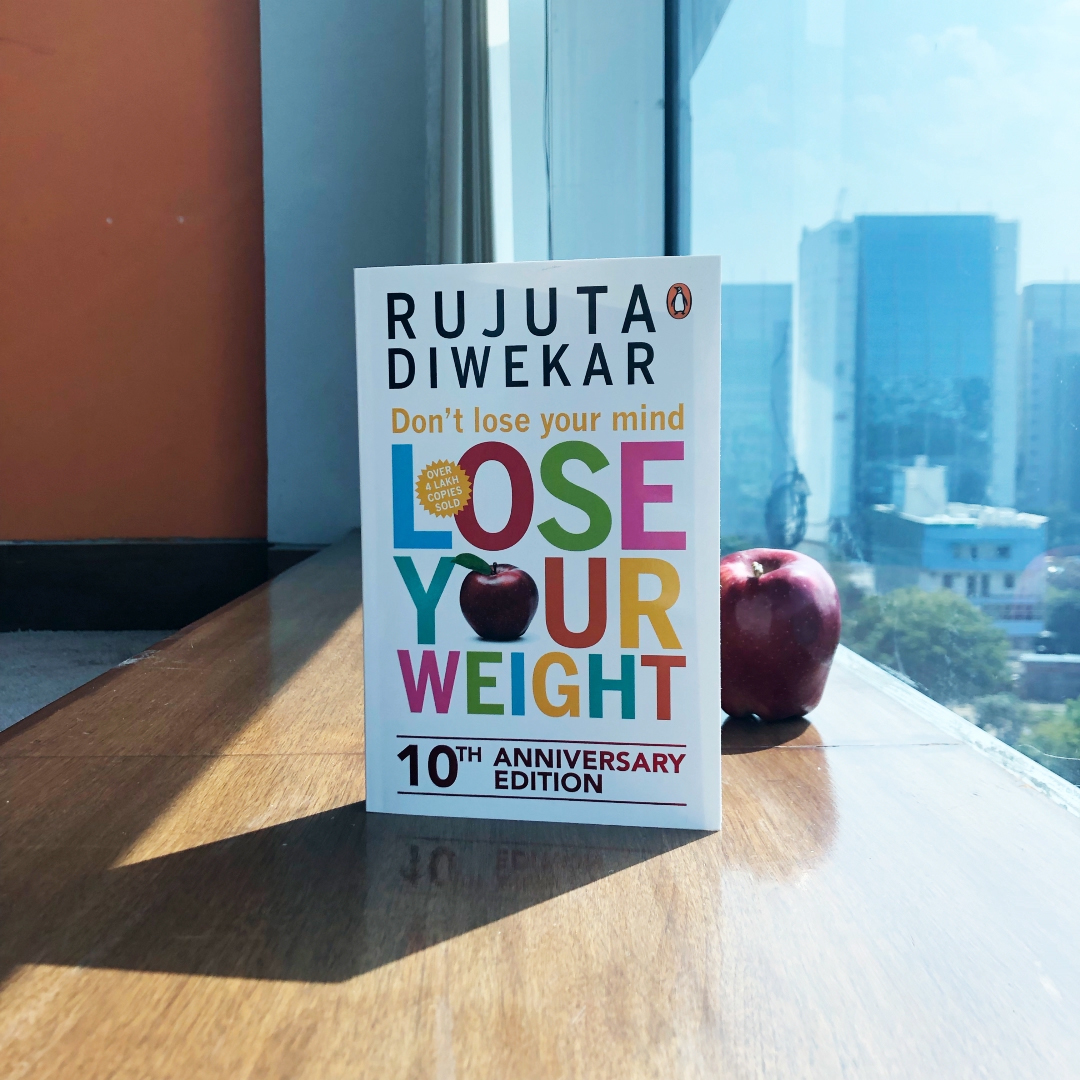
Don’t Lose Your Mind, Lose Your Weight has revolutionized the way Indians think about food and their eating habits. The author, Rujuta Diwekar is one of the country’s best nutritionists, with deep roots in yoga and Ayurveda.

Here are some things to remember from the book to not lose your mind over your weight

Extreme diets don’t work

Most diets are impossible to keep at because they always advocate something extreme. Besides being difficult to maintain, they’re harmful for you physically and mentally.

Any programme/plan which discourages you from exercising is worthless

Being on a diet might help you lose weight, but without exercise we lose our muscles and bone density. And loss of bone density and muscle is ageing. The human body is designed for continuous activity. The least we can do is give it 30 to 45 minutes of exercise for 3 days in a week to keep it in good shape and condition.

Low fat and sugar free options are not healthy

So should you not eat them at all? Of course you can eat them, but eat them knowing that they are just as harmful as the full fat, full sugar, fried items. Sometimes even more.

Having fruit as dessert isn’t the wisest idea

A few years ago, it was discovered that fructose (the sugar we get from fruits) gets converted to triglycerides (especially when eaten on a full stomach), a type of fat which circulates in our blood stream. High levels of triglycerides are responsible for heart disease, insulin insensitivity and of course lead to bigger fat cells.

Eat your fruit, but don’t think that it’s safer than eating a dessert. Its nutrients only work for us if we eat if as a meal by itself.

Be attentive while you eat

The key to staying within your threshold of how much your body can digest is to be attentive while you eat. Savour every bit of what you eat, slowly and mindfully, and you will naturally find your threshold. All you need to train yourself to do, is to be attentive to your stomach.


For more tips and lessons, grab your copy of Don’t Lose Your Mind, Lose Your Weight by Rujuta Diwekar


Behind the Scenes of Sarnath Banerjee’s ‘Doab Dil’

In his book, Doab Dil – employing a philosopher’s mind and an artist’s eye – Sarnath Banerjee takes us to still places in a moving world, the place where two rivers (do ab) meet and forests write themselves into history.

Here are some of the illustrations from the book – in their raw form!

From the chapter titled Library


Before
After

From the chapter titled Insomnia

Before
After

And a bonus illustration from Sarnath Banerjee!


Employing a philosopher’s mind and an artist’s eye, Sarnath Banerjee takes us to still places in a moving world, the place where two rivers (do ab) meet and forests write themselves into history.

error: Content is protected !!