Publish with Us

Follow Penguin

Follow Penguinsters

Follow Penguin Swadesh

Things you didn’t know about India’s Minister for Housing and Urban Affairs

In Delusional Politics, Hardeep S. Puri, studies contemporary political disruptions in three of the world’s largest democracies, namely United Kingdom, United States of America, and India; and how these events are mirrored in current conversations around global governance, terrorism and trade. Delusional Politics, the author’s second book, follows Perilous Interventions in its honesty, clarity, and incisiveness. Hardeep S. Puri, not known for mincing his words, delivers in his unique style a book that will come to be regarded as one of the finest analysis of democracy as a form of government; the role of democratically elected leaders and how their delusion decision-making can yield catastrophic results; and how these domestic upheavals reverberate in and impact the world order.

These interesting facts about the author and the current Minister for Housing and Urban Affairs will leave you ever more inspired to read his book!


Hardeep S. Puri has over forty years of experience in the world diplomacy, which began in 1974 when he joined the Indian Foreign Service.

~

He was India’s Ambassador and Permanent Representative to the United Nations, both in Geneva and New York. He has also held Ambassadorial level positions in London and Brasilia, and was also Secretary (Economic Relations) at the Ministry of External Affairs.

~

Puri chaired the United Nations Security Council and was also Chairman of its Counter-Terrorism Committee.

~

He has extensive experience with and specialization in trade-related matters and has also served on many Dispute Settlement Panels of the GATT and WTO.

~

Puri has served as Joint Secretary (Navy) at the Ministry of Defence.

~

As a young political officer stationed in Colombo, he met and negotiated with LTTE chief Prabhakaran on behalf of the Govt. of India.

~

Puri did his Bachelors and Masters in History from Hindu College, University of Delhi.

~

He briefly taught a St. Stephens College, University of Delhi

~

Hardeep S. Puri is married to Lakshmi Puri, a former Indian diplomat who served as India’s Ambassador to Hungary and accredited to Bosnia and Herzegovina. Until recently, she was the Assistant Secretary-General at the United Nations Entity for Gender Equality and the Empowerment of Women (UN Women).  


Delusional Politics brings to light the fact that at the heart of delusional politics is perhaps the delusional politician.

Books that will Fill your Heart on this Day of Love

The day of love is here, and in celebration, we’ve put together a list of books on the theme of love that we’re sure you’ll enjoy! Here are 7 books on different types of love.

Take a look!

Eleven Ways to Love

Pieced together with a dash of poetry and a whole lot of love, featuring a multiplicity of voices and a cast of unlikely heroes and heroines, this is a book of essays that show us, with empathy, humour and wisdom, that there is no such thing as the love that dare not speak its name.


Kama: The Riddle of Desire

In Kama: The Riddle of Desire, Gurcharan Das examines how to cherish desire in order to live a rich, flourishing life, arguing that if dharma is a duty to another, kama is a duty to oneself. It sheds new light on love, marriage, family, adultery and jealousy as it wrestles with questions such as these: How to nurture desire without harming others or oneself? Are the erotic and the ascetic two aspects of our same human nature? What is the relationship between romantic love and bhakti, the love of god?


Colours of My Heart

The Colours of My Heart introduces readers to little-known gems that display Faiz’s extraordinary flair for tender hope and quiet longing. A rich cornucopia of delights, The Colours of My Heart celebrates Faiz’s greatest work. Baran Farooqi’s superb translation is accompanied by an illuminating introduction to Faiz’s incredible life and enduring legacy.


Ninety-Seven Poems

This is a book of pictures.

Of a park bench and a prescription. And a toothbrush in a mug. It’s got half-lit cigarettes and broken geysers. And a cute apartment in Prague. There’s a fortune cookie, some pigeons in cages and stars tumbling from the sky. There’s the usual traffic, a digital wristwatch and a violin from Uncle James.

We can go on, but you’d rather see for yourself.


The Rabbit and the Squirrel

A story of thwarted love, and an ode to the enduring pleasures of friendship, The Rabbit and the Squirrel is a charmed fable for grown-ups, in which one life, against all odds, is fated for the other.


In My Heart

A very special story to be read with loved ones, In My Heart takes us on a child’s journey of discovering who she really is and where she comes from. Warmly illustrated and deeply felt, this is a fearless and tender celebration of the magical ways in which different kinds of families are born.


Vanara: The Legend of Baali, Sugreeva and Tara

The love triangle between Baali, Tara and Sugreeva is arguably the world’s first. Written by Anand Neelakantan who gave a voice to Ravana in Asura, Duryodhana in the Ajaya series and Sivagami in the Baahubali series, Vanara is a classic tale of love, lust and betrayal. Shakespearean in its tragic depth and epic in its sweep, Vanara gives voice to the greatest warrior in the Ramayana-Baali.


I Owe You One – an excerpt

The irresistible new standalone from Sophie Kinsella is a story of love, empowerment and an IOU that changes everything . . .when a handsome stranger in a coffee shop asks Fixie Farr to watch his laptop for a moment, she not only agrees, she ends up saving it from certain disaster. To thank her, the computer’s owner, Sebastian, scribbles her an IOU  – but of course Fixie never intends to call in the favour. That is, until her teenage crush, Ryan, comes back into her life and needs her help – and Fixie turns to Seb.

Soon the pair are caught up in a series of IOUs – from small favours to life-changing debts – and Fixie is torn between the past she’s used to and the future she deserves.

Here is an excerpt from chapter three of Sophie Kinsella’s new book, I Owe You, where she talks about Ryan Chalker!


I don’t know how many times a heart can be broken, but mine’s been shattered again and again, and every single time by Ryan Chalker.

Not that he’d know it. I’ve been pretty good at concealing my feelings. (I think.) But the truth is, I’ve been in love with Ryan pretty much solidly since I was ten years old and he was fifteen and I came across him and Jake with a group of boys in Burger King. I was instantly fixated by him. How could you not be fixated by him, with that blond hair, that profile, that glow?

By the time I joined secondary school, Ryan and Jake were best friends and Ryan used to hang around our house every weekend, cracking jokes and flirting with Mum. Unlike every other boy in that year, he had flawless skin. He knew how to style his hair. He could make our school uniform look sexy, that’s how hot he was.

He had money, too. Everyone whispered about it. Some relative had left him a small fortune. He always hosted parties and he got a car for his seventeenth birthday. A convertible. I’m twenty-seven years old and I’m sure I’ll never own a convertible. Ryan and Jake used to drive around London in it, roof down, music blaring, like a couple of rock stars. In fact, it was Ryan who introduced Jake to that posh, flash, hard-partying set. The pair of them used to get into the kind of clubs that you read about in tabloids, and would boast about it at our house the next day. When I was old enough, Mum let me go out with Jake and Ryan sometimes, and I felt like I’d won the lottery. There was such a buzz around them, and suddenly I was part of it too.

Ryan could be genuinely kind as well. I’ll always remember one evening when we went to the cinema. I’d just broken up with a boy called Jason, and a bunch of his friends were behind us. They started to laugh at me and jeer, and Ryan whipped round before anyone else could, and lashed into them. People heard about it at school the next day, and everyone was saying, ‘Ryan loves Fixie!’

Of course I laughed along. I treated it like a joke. But inside I was smitten. I felt as if we were connected now. I kept thinking, ‘Surely we’ll end up together? Surely it’s meant to be?’

There were so many moments over the years when I thought I had a chance. The time in Pizza Express when he kissed me lingeringly on greeting me. The time he squeezed my thigh. The time he asked if I was single at the moment. Dad’s funeral, when he sat with me for a while at the reception and let me talk endlessly about Dad. At my twenty-first birthday party he sang a karaoke version of ‘Don’t Want To Miss A Thing’ straight to me, while my heart fluttered like a manic butterfly and I thought, ‘Yes, yes, this is it . . .’ But that night he got off with a girl called Tamara. Over the years I watched and secretly wept as he dated what seemed like every girl in West London and never looked my way.

Then, five years ago, he moved to LA to be a movie producer. An actual movie producer. You couldn’t pick a more glamorous or unattainable job. I’ve still got the business card he gave me before he left, with an abstract logo and an address on Wilshire Boulevard.

It would have been easier to forget him if he’d disappeared for ever – but he didn’t. He flew back to London all the time and he always came to see Jake, in a blast of light and excitement. His wavy blond hair was permanently sun- bleached. He had endless stories of celebrities. He’d casually say ‘Tom’ and I’d think, ‘Tom? Who does he mean, Tom?’ And then I’d suddenly realize he meant Tom Cruise and my heart would be gripped and I’d think, ‘Oh my God, I know someone who knows Tom Cruise ?’


The Shape of the Modern Sea – an Excerpt from ‘Unruly Waters’

Asia’s history has been shaped by its waters. In Unruly Waters, historian Sunil Amrith reimagines Asia’s history through the stories of its rains, rivers, coasts and seas – and of the weather-watchers and engineers, mapmakers and farmers who have sought to control them.

Looking out from India, he shows how dreams and fears of water shaped visions of political independence and economic development, provoked efforts to reshape nature through dams and pumps and unleashed powerful tensions within and between nations.

Here is an excerpt from the first chapter, titled The Shape of the Modern Sea.


Looking down from orbit, the lens of a NASA satellite lands upon this patch of Earth. In the upper half of the picture lies the curve of a Himalayan mountain range, fringed by the iridescent lakes of the Tibetan plateau.

The satellite picture is a snapshot of a single moment on October 27, 2002. But there are layers of history embedded within it. It shows us the outcome of a process that unfolded in deep time. Approximately 50 million years ago, the Himalayas were created by the collision of what would become the Indian peninsula, which had detached from Madagascar, with the Eurasian landmass. The island buckled under the edge of Eurasia, pushed up the Tibetan Plateau, and eradicated a body of water later named the Tethys Sea. “Geology, looking further than religion,” E. M. Forster wrote in A Passage to India, “knows of a time when neither the river [Ganges] nor the Himalayas that nourish it existed, and an ocean flowed over the holy places of Hindustan.”

Volcanic activity under the Indian Ocean kept the pressure up, forcing layers of rock to crumple under the Indian margin to create the largest mountain chain on Earth.

So massive are the mountains, so heavy is their concentration of snow, ice, heat, and melting water that they shape Earth’s climate. Asia’s great rivers are a product of this geological history. They flow south and southeast, and they have shaped the landscape that is visible here: the force of the rivers descending from the mountains eroded rock, creating the gorges and valleys. Over centuries the rivers have carried silt and sediment from the mountains; they have deposited them along Asia’s valleys and floodplains to sustain large human populations. Writing in the 1950s, guided by maps and not yet by satellite photographs, geographer Norton Ginsburg described Asia’s “mountain core” as the “hub of a colossal wheel, the spokes of which are formed by some of the greatest rivers in the world.”

And then your eye comes to rest on what was invisible to the satellite but is now superimposed—evidence of a more recent history lies in the borders that dissect the rivers, their shapes governed by bureaucratic, not environmental, logic. Within the frame of this image alone, the mountains run through southwestern China, Nepal, Bhutan, and northeastern India. The rivers are more unruly; they spill beyond the frame of the photograph. From mountain peaks flow ten great rivers that serve a fifth of humanity—the Tarim, the Amu Darya, the Indus, the Irrawaddy, the Salween, the Mekong, the Yangzi, the Yellow River, and, at the heart of this photograph, the Ganges and the Brahmaputra. The Himalayan rivers run through sixteen countries, nourished by countless tributaries. They traverse the regions we carve up as South, Southeast, East, and Central Asia; they empty out into the Bay of Bengal, the Arabian Sea, the South and East China Seas, and the Aral Sea.

Look at the left of the picture and you can see a more compressed history. The haze of pollution that hangs over North India is a composite “brown cloud” of human-produced sulfates, nitrates, black carbon, and organic carbon. Aerosol concentrations over the Indian subcontinent are the highest in the world, especially in the winter months when there is little rain to wash the skies clean. Individual particles remain in the atmosphere only for a matter of weeks, but cumulatively the cloud lasts for months—what we see here is a fleeting archive of every domestic stove, every truck and auto-rickshaw exhaust pipe, every factory smokestack and crop fire that burned across the Gangetic plain after the end of the monsoon rains that year. But the location of the cloud, and its contributing sources, testify to a longer twentieth-century history of population growth, urban expansion, and uneven economic development through that belt of northwestern India. Over time, a constant succession of transient “brown clouds” may have attenuated rainfall over South Asia over the past half century, transforming the water cycle that binds the clouds, the mountains, and the rivers.

Finally, look at the snow on the mountain peaks visible from outer space. The time horizon this gestures toward is the future. The descent of water is vulnerable, now, to the ascent of carbon. As Earth’s surface warms, the Himalayan glaciers are melting; they will melt more rapidly in the decades ahead, with immediate consequences for the flow of Asia’s major rivers—and for the planet’s climate.


In an age of climate change, Unruly Waters is essential reading for anyone seeking to understand not only Asia’s past but its future.

A Conversation with the Author of ‘Ganga’, Sudipta Sen

The Ganga enjoys a special place in the hearts of millions. In his new book, Ganga: The Many Pasts of a River, historian Sudipta Sen tells the fascinating story of the world’s third-largest river from prehistoric times to the present.

We had a conversation with him about the book. Take a look!


What is your history with the River Ganga? Why did you choose to write a book on the river?

I grew up in Calcutta. The section of the Ganga that runs by the city and meets the Bay of Bengal across the expansive muddy flats of the Diamond Harbor is called the Hugli and also the Bhagirathi. I traveled with my parents to the pilgrim towns of Haridwar and Rishikesh by the Ganga in the Garhwal Himalayas as a child in the early 1960s and had the great fortune of experiencing their contemplative quiet and their natural setting. These journeys left a deep impression on my mind for years to come.

Gori Ganga (also known locally as Bhagirathi) descending through the Garhwal himalayas. photograph by Debal Sen.

I revisited the history of the Ganga and its delta during the period of the expansion of British rule in India spearheaded by East India Company, when I was studying for my PhD at the University of Chicago. My revised doctoral thesis, published as Empire of Free Trade: The English East India Company and the Making of the Colonial Marketplace, was about the conflict over markets and marketplaces between the Company and indigenous regimes. Researching the history of bazaars and ganjs and various sites of worship and pilgrimages along the river in northern and eastern India, I delved into old travel accounts in Persian, Urdu, Hindi and Bengali that brought to life for me the antiquity, vibrancy and wonderful complexity of Indian economic and cultural practices of the greater Ganga Valley. When Yale University Press approached me for the first time, almost fourteen years ago, with a request to write a history of the Ganga, I could not turn down the offer.


What was the research process for the book? How long did it take to write?

When I agreed to write this book, I had not fully realized how daunting and difficult the undertaking was going to be. First of all I had to get back to my old Sanskrit grammars and dictionaries and start rereading the stories of the descent of the river across all the major Hindu Puranas. It also dawned on me very quickly that I had not seen many parts of the river that I was writing about, which is why I had to trek to places like Gaumukh and Tapovan in the Himalayas, or the low-lying mangrove-rich flats of the Sunderbans, and travel by land and boat in various places along the river between Allahabad (now Prayagraj) and Banaras, Patna and Bhagalpur, Rajmahal and Kolkata. It was my good fortune to have my friend and cousin, the eminent cardiologist and wildlife photographer Dr. Debal Sen with me on some of these journeys, and many of his wonderful photographs appear in my book.


The cave of Gaumukh. Photograph by author

I thought that I would be able to write this book in the space of five or six years. It has actually taken me more than twelve years! You can say that at times it felt like I was drowning (forgive the pun) in the Ganga project. Now that the book has seen the light of day, I hope that my wanderings, research and writing over these long years have led to something of value. I pray that I might be leaving something behind for my students and younger people, the next generation perhaps, who have not had the same joy and thrill of having seen the Ganga in her full and glorious majesty – before the advent of dams and barrages, or the contamination of cities and factories. The holy river could once be seen cascading down the mountains through places like Gangotri or Rishikesh, or meandering through northern Indian plains after a monsoon flecked with migratory swans and overgrown with tall prairie grass at the onset of autumn. It is for them to rediscover the rich and diverse history of this sacred body of water, the record of one of the most important riparian ecologies on this planet, and the wonderful mosaic of cultures that it has been able to sustain over the centuries.


Can you tell us about some of the things you are hoping to achieve from the publication of this book?

I want to remind my readers how the history and ecology of the river have at times been almost taken for granted over the last five decades since India’s independence, amounting to a historic neglect of the environment and ecology that has sustained and been sustained by this great river. I want our younger enthusiasts of Indian history and nature to find out, on their own terms, why and how the Ganga has remained such a sacred and venerated body of water, and how her historical memory is strewn across such a diverse array of faiths and traditions in the Indian subcontinent. One of the recent reviews of my book states that it is “an obituary” of the Ganga. I do not believe so. If there is a genuine groundswell of concern and outrage, I am convinced that we can at least stem the tide of contamination and overuse. The depletion of the Himalayan snowpack and siltation are more intractable problems, but here too, I believe the new generation can make a difference. I will consider myself blessed if this book can make even a small difference.


Are we to see another book by you soon? Have you thought of the subject for this?

I am always writing more than one book at a time. I have been working for almost two decades now on another book tentatively titled Law and the Imperial Order: Crime and Punishment in Early British India that shows how criminal law and punishment in India was reshaped during the rise of the East India Company’s rule, resulting in the proclamation of the Indian Penal Code in 1862. It is mostly focused on the late eighteenth and early nineteenth centuries, especially on the work of the first Supreme Court of Judicature in Calcutta. It looks at early methods of trial, sentencing and forms of penalty including incarceration, use of convict labour, deportation and executions. Much of this work is based on lesser known accounts of law and history in Persian, archival records in Calcutta and London, along with thousands of pages of a diary left by one of the earliest judges of the Calcutta Supreme Court, Justice John Hyde.

I am also preparing to write a shorter book of popular history on the meteoric rise and dramatic fall of Nawab Mir Qasim placed on the throne of Bengal as the second puppet by the British. Prior to this, after the Battle of Plassey in 1757, Robert Clive had installed his father-in-law Mir Jafar on the throne of Bengal. It is the story of how Qasim turned out to be much more ambitious and independent-minded than what the British had bargained for. Unlike other puppets he was a soldier of fortune who tried to adapt to the changing political times during this tumultuous period of European overseas expansion and the frantic duel for territorial supremacy between France and England in the wake of the Seven Years War.


What were some of the challenges that you faced while writing this book?

The sheer weight of the secondary scholarship and primary research required for a two-thousand-plus year history of the third-largest river in the world has occupied a significant portion of my life and labour for more than a decade. Some of the most demanding work went into deciphering and translating primary sources in various languages such as Sanskrit, Prakrit and Persian. Travel to high-altitude sites and pilgrimages such as Tapovan and Gaumukh was also a challenge for a first-time trekker such as me, as was learning the rudiments of handling a digital SLR camera for the first time. I am immensely grateful, nevertheless, for the fact that writing this book has taken me out of the archives and libraries, away from my desk and the classroom, on to the railroads, roadways and dusty trails along the Ganga, for some of the most memorable journeys through the mountains, plains and the last remaining wildernesses of northern India.


Seamlessly weaving together geography, ecology and religious history, this lavishly illustrated volume paints a remarkable portrait of India’s most sacred and beloved river.

5 Reasons to Read Haruki Murakami’s ‘Birthday Girl’

“One rainy Tokyo night, a waitress’s uneventful twentieth birthday takes a strange and fateful turn when she’s asked to deliver dinner to the restaurant’s reclusive owner.”

Haruki Murakami’s new book, Birthday Girl is published to celebrate Murakami’s 70th birthday and makes for an fascinating read.

Here are 5 reasons to read the book!

1. You get all of Murakami’s master storytelling in just 42 pages!

The story of the waitress on her twentieth birthday, whose life is about to change, is told with all of Murakami’s charm in only 42 pages!

2. The owner of the restaurant where the girl waits is an interesting character with some odd habits.

“Every night at eight, the manager had to bring dinner to the owner’s room…they’d load the dinner on to one of those carts that hotels use for room service, the manger would push it into the lift wearing a respectful look on his face, and fifteen minutes later he’d come back empty-handed. Then, an hour later, he’d go up again and bring down the card with empty plates and glasses. Every day, like clockwork. I thought it was really odd the first time I saw it happen. It was like some kind of religious ritual, you know? But after a while I got used to it, and never gave it another second thought.”

3. There is a change in routine when the manager suddenly falls sick – an unusual occurrence in itself.

“One of the waiters held the manager steady and climbed into the car with him to take him to a nearby hospital. Before ducking into the cab, the manager said to [the girl] hoarsely, ‘ I want you to take a dinner up to room 604 at eight o’clock. All you have to do is ring the bell, say, ‘Your dinner is here,” and leave it.’”

4. The anticipation of what may happen next, when the girl takes over from the manager to carry out this odd task and finds herself in the company of the owner…

“The old man slid the cork from the bottle and dribbled a little wine into his glass for her. Then he took an ordinary drinking glass from a glass-doored cabinet and poured some wine for himself.

‘Happy Birthday,’ he said. ‘May you live a rich and fruitful life, and may there be nothing to cast dark shadows on it.’

They clinked glasses.”

5. A wish is granted…

“The old man suddenly fixed his eyes on a spot in the air. The wrinkles of his forehead deepened: they might have been the wrinkles of his brain itself as it concentrated on his thoughts. He seemed to be staring at something – perhaps all-but-invisible bits of down – floating in the air. He opened his arms wide, lifted himself slightly from his chair, and whipped his palms together with a dry smack. Settling in the chair again, he slowly ran his fingertips along the wrinkles of his brow as if to soften them, and then turned to her with a gentle smile.

‘That did it,’ he said. ‘Your wish has been granted.’”


Birthday Girl is a beguiling, exquisitely satisfying taste of master storytelling, published to celebrate Murakami’s 70th birthday.

Do You Want To Be An RJ? Here Are Five Things To Note!

Let’s Talk On Air is the perfect book for you if you have always dreamed of becoming a radio jockey! Take a deep dive into the lives of fourteen eminent radio presenters to learn about the people behind the iconic voices that have entertained us via the airwaves-one of the oldest forms of communication. Get to know the challenges, ideals, inspirations, favourite songs and icons of the popular radio jockeys of our time, including the legend Ameen Sayani, and maybe this can be a career which inspires you too!

Here are some useful bits of wisdom imparted by these famous radio presenters!

RJ Ameen Sayani

“A radio host should be able to make their listener not only hear but also feel. The listener should be able to comprehend what you mean. What you say on-air must be factual. So always remember to do your homework! If you know your facts, you will naturally speak with confidence.”

RJ Anuraag Pandey, Radio Nasha 91.9 FM and Fever 104 FM

“Be original. And don’t become a radio jockey for instant fame. The key to longevity is to keep in touch with the pulse of the people you are catering to. Read about them, meet them. Only if you know common people can you connect with them like an old friend.”

RJ Prithvi Vishwanath, Fever 104 FM

“Radio to me is not about the voice as much as it is about the personality! Don’t hesitate to be you. Remember, you cannot always please everyone. Just work on your language, diction and communication.”

RJ Rohini Ramnathan, Radio Nasha 91.9 FM

“As a jockey, you analyse song lyrics and film dialogues. It is literature, poetry and philosophy. You have to understand rhythm, rhyme and verse. And if you read a lot, you can successfully have a better conversation with your guests, irrespective of which “field they belong to.”

RJ Yunus Khan, Vividh Bharati 102.8 FM

“One good quality to have is being interested in many different things, like music, literature or sports. You must have a fairly good knowledge of diverse matters that concern most people, and you must have a good vocabulary. You must love talking to people, particularly strangers. And you must really love music and songs.”


Do you want to be an RJ and entertain tons of listeners? Then this book is for you!


Elected Books For This Month!

February is the month of love, and we’re all set to celebrate our love for books! Penguin brings to you a wide range of books this month, by authors including Simone Ahuja, Shravya Bhinder, Krishna Sobti and Novoneel Chakraborty.

In addition to this, with the elections around the corner, we’ve got more than one book that will help you understand the political system of the country better and prep you up on what to expect this 2019.

Take a look!

The Verdict

Published on the eve of India’s next general elections, The Verdict uses rigorous psephology, original research and as-yet-undisclosed facts to talk about the entire span of India’s electoral history from the first elections in 1952. Crucially, for 2019, it provides pointers to look out for, to see if the incumbent government will win or lose.
Written by Prannoy Roy, renowned for his knack of demystifying electoral politics, and Dorab R. Sopariwala, this book is compulsory reading for anyone interested in politics and elections in India.


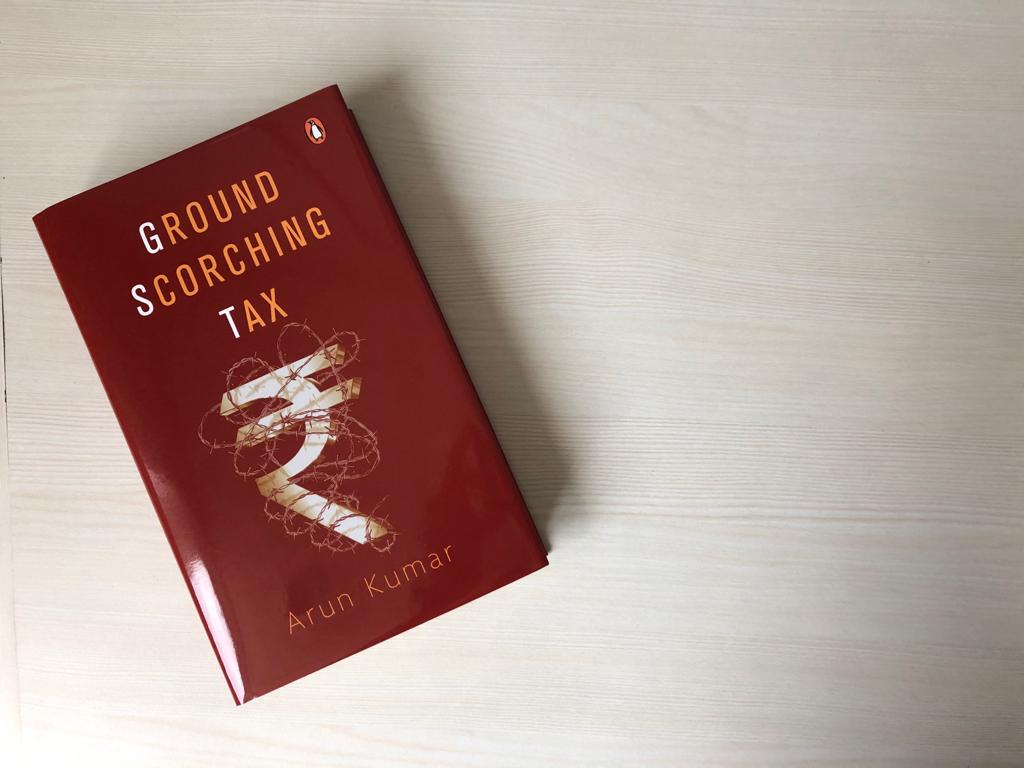
Ground Scorching Tax

In this book, well-known economist Arun Kumar explains the reality behind GST. Known for not pulling any punches, the author explains why GST is a double-edged sword for the common man, why it will increase inequality across sectors and regions, why it will hurt small businesses-everything the government does not want you to know.


Game India

Through chapters, at once ambitious and engaging, Game India outlines seven key unrealized opportunities India can pursue to remain a leading player on the world economic superhighway: solar power; an enviable coastline and waterways; milk; agriculture; a huge population that, among other things, can yield methane; innovation; and unleashing human potential through education, justice and health.


Jugaad 3.0 Hacking the Corporation to Make it fast, Fluid and Frugal

Based on hundreds of interviews, as well as the author’s consulting work within companies, Jugaad 3.0 Hacking the Corporation identifies the competencies these corporate hackers possess. It also offers a spectrum of carefully crafted archetypes to help people see themselves in this trend and allow organizations identify the innovators in their midst.


How to Win an Indian Election: What Political Parties Don’t Want You to Know

Written by a former election campaign consultant for a major political party, How to Win an Indian Election takes readers into the forbidden world of election war-rooms and gives them a glimpse of how strategy is formulated, what works with voters on the ground and what doesn’t. Based on research, interviews and the author’s own experiences, this book is invaluable for its insight into the inner workings of politics, political parties and what really makes for a winning election campaign.


Half Torn Hearts

Half Torn Hearts is a coming-of-age tale of three layered individuals coming in terms with their first loss, which bares the devil that we all possess but are scared of encountering and which eventually becomes the cause of our own ruins.


Something I Never Told You

Ronnie knew that his first crush was way out of his league, and yet he pursued and wooed Adira. Shyly and from a distance in the beginning, and more persuasively later. Slowly, as they get close and comfortable with each other, life takes on another hue. Things begin to change for the worst. Ronnie and Adira will probably never find their forever after . . .


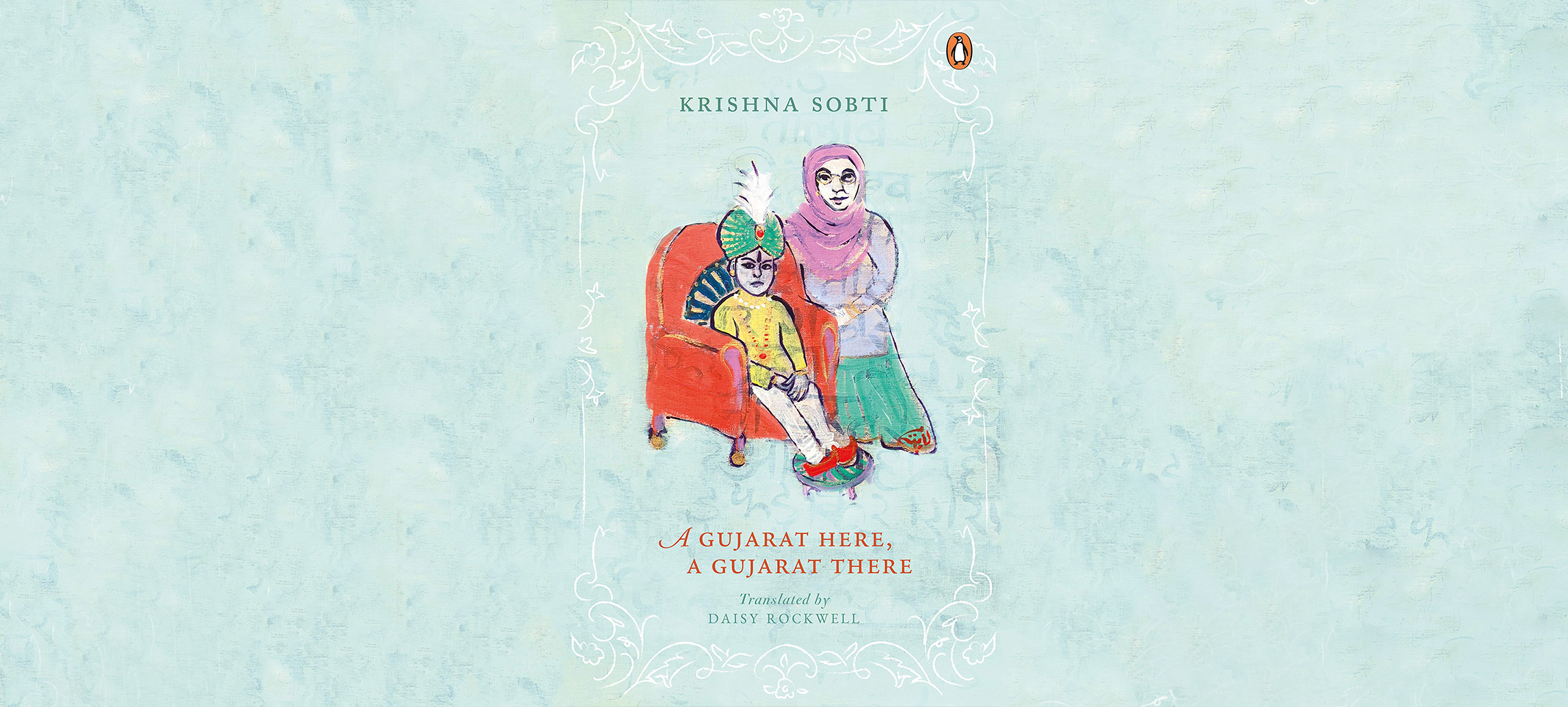
A Gujarat Here, A Gujarat There

Part novel, part memoir, part feminist anthem, A Gujarat Here, A Gujarat There is not only a powerful tale of Partition loss and dislocation but also charts the odyssey of a spirited young woman determined to build a new identity for herself on her own terms.


Animal Intimacies: Interspecies Relatedness in India’s Central Himalayas

What do we really know of the intimate-and intense-moments of care, kinship, violence, politics, indifference and desire that occur between human and non-human animals? Whether it is through the study of the affect and ethics of ritual animal sacrifice, analysis of the right-wing political project of cow protection, or examination of villagers’ talk about bears who abduct women and have sex with them, Govindrajan illustrates that multispecies relatedness relies on both difference and ineffable affinity between animals.


The Beauty of the Moment

Love is messy and families are messier, but in spite of their burdens, Susan and Malcolm fall for each other. The ways they drift apart and come back together are the picture of being true to oneself.


Get Better at Getting Better – an Excerpt

To achieve extraordinary success, you need something other than core capabilities like analytical skills, people skills, conceptual and intuitive skills, hard work and hunger for success. Chandramouli Venkatesan identifies this as developing the capability to succeed and continuously improve that capability. He calls this the Get Better Model, or GBM-your model to continuously improve how good you are.

Here is an excerpt from his new book, Get Better at Getting Better


Success is not about how good you are; it is about how powerful and effective a model you have to improve how good you are—that model is your Get-Better Model, or GBM. The automatic  question that follows is, how easy is it to build that model? I got the answer from golf.

I am a passionate golfer. A fabulous aspect of the game is that amateur golfers can spend a lifetime trying to get better at it. Even if you set out to play for recreation, the game consumes you in no time because it is so difficult and challenging. Players practise, hire coaches and take lessons, watch hours of online content on how to swing the club better, observe the professionals on TV and try to learn from that, and so on. But in the end, I observed that despite all these efforts, most people—including myself— don’t really get better. This observation about others’, and also my own, efforts set me thinking—is getting better at golf that difficult? Could it be that getting better is more than just trying? Is it about identifying and implementing the right model of improvement?

Let’s consider youngsters who are fresh to golf. I observe these youngsters taking to the game and mastering it easily—kids of 10–12 years start learning and by the time they are fifteen or so, they are playing the game at a level I can’t manage after decades of trying. Why is getting better so easy for these kids, but so difficult for me? The obvious reason is age: they are starting at an age at which learning new skills is easy. Thereafter, it becomes progressively more difficult and can border on the impossible after the mid-thirties. This seems to suggest that if we want to get better at something, we must achieve the desired level of proficiency ideally when we are young.

What about work, then?

 We start work only in our mid-twenties, when we are already past the most effective learning phase of our life. And we have to sustain that get-better journey late into our lives, usually till our sixties. Building a model to getting better at work is crucial for you and me, but we begin that endeavour at an age when we are possibly past our best learning phase. The implication of this troubled me greatly. Did this mean we cannot easily get better at work, much like me at my golf?

The first and most obvious conclusion I reached was that yes, indeed, the best learning happens at a younger age, and it is difficult to get better at the same pace as one ages. Compare a high-achieving sportsperson who started young with a high achiever at work. A high-achieving sportsperson performs at a level of excellence and effortlessness in their sport that very few people can achieve at work. That is because sportspersons start mastering their craft at a very early age, while we start trying to master work at a much later age. Is there anyone who can claim they are as good at their job as Sachin Tendulkar was at cricket or Tiger Woods at golf or Pele at football? A Virat Kohli possibly learnt more about cricket as a teenager, between the ages of fourteen and nineteen, than I have about work in over twenty-five years of effort in my middle age.

Once I reached that conclusion, the next obvious question was ‘What does it take to get better at work?’ And as I looked around for the answer, I observed that what I saw at golf was what was largely happening at work. People were trying very hard to get better at work and mostly not making much progress.

I looked around workplaces and found that most people were committed to getting better at work. They implicitly understood that success was about continuously improving how good you were. They were trying to learn new tools and techniques, hiring coaches, mining the experiences and advice of friends, managers and mentors, attending training programmes and online tutorials and diligently reading articles in online and offline media. But similar to my disappointing progress in golf, I saw that most people were making limited progress. Efforts at improvement were made, but the results were not proportionate.

The only difference between golf and work was the lack of a reference point at work. In golf, as I laboured to get better, I could measure myself against the fourteen- year-old next to me. I could see the young kid who, just one month ago, was much worse than me, but had made so much progress that I could not hope to catch up in even a few years. However, at work, there are no such ready reference points. Our reference points are all other people like us—people in their twenties, thirties and forties—trying to get better and making limited progress when measured against the effort they make. Because we don’t have the reference point of somebody else who is getting better much faster with much less effort, we never realize that our model for getting better at work is broken. We do not see that it is an inefficient model that takes a lot of effort and produces meagre results compared to the effort invested.


If you’re interested in knowing more about how to get better and succeed in your career, be sure to read Get Better at Getting Better!


In a Nursing Home in Cuttack, 2018 – an excerpt

Novoneel Chakraborty’s new novel – Half Torn Hearts – is a coming-of-age tale of three layered individuals coming in terms with their first loss, which bares the devil that we all possess but are scared of encountering and which eventually becomes the cause of our own ruins.

Here is an excerpt of the prologue of the book, titled In a Nursing Home in Cuttack, 2018


The nursing home was a small one. The patient’s disease was a serious one. She had acquired a rare skin disorder
when she had gone to help cyclone victims in one of the coastal villages of eastern Odisha. It was a village that couldn’t be located on any map of India. The patient had no family. Not any more. Except for the girl sitting beside her.

The girl sat stock-still at the same place from the time she admitted the patient to the nursing home, which was forty-eight hours ago. She murmured a prayer whenever she felt something calamitous was about to happen. Looking at the patient, the girl wondered why one failed to fathom the bond with someone until that person began slipping away. Did death sever the inner attachment to the near and dear as well? People who meant the world to us at one time, seemed like a distant memory at another. Our own reality changed its face, and a huge part of our life went into accepting that change.

The girl didn’t realize when tears began rolling down her cheeks. She brushed them away impatiently. Why couldn’t things just remain the way they were? she wondered. She swallowed a lump realizing the futility of the question. Not every relationship is about flowing together forever. Sometimes, one just takes a little bit of the other person, surrenders a little bit of oneself to the other person and then continues flowing independently, sensing those acquired bits within oneself and cherishing them always.

Soft, helpless moans broke into her musing and the girl quickly went over to the bed. She caressed her friend’s forehead. The moans grew a little louder.

‘Sister?’ the girl hollered. Nobody came. She walked out of the room and espied a nurse at the far end of the corridor. By the time they returned to the room, the whimpering had stopped. The nurse checked the pulse and then the heartbeat. And then shut the gawking eyes with her palm. The girl plonked down on the chair, knowing fully well what this meant. The nurse rushed out, saying, ‘Call the doctor. The patient in room number 9—Raisa Barua—is dead.’

The girl in the room looked at the body. She felt strangely light but broken.


To find out what happens next, grab a copy of Half Torn Hearts!

error: Content is protected !!